My allotment map only shows 60 plots. But past the fence, a Plot 61 just appeared, fully dug and planted. The committee has no record, and its beans are months ahead.
My boots crunched on the gravel path as I walked towards my plot, number 34, a routine I’d followed for twenty years. Spring had just properly sprung, and the air smelled of damp earth and daffodil, a good, honest smell.
My own beans, carefully nurtured from seed trays, were barely thinking about sprouting. But I had patience. Plot 34 was thriving, and that was enough.
I passed the compost heaps, heading towards the boundary fence, a familiar chain-link barrier that marked the end of the Marsh Lane allotments. Except, this morning, the fence wasn’t the end.
Beyond where it had always stood, where only scrubby weeds and a tangle of brambles should have been, a new plot lay perfectly tilled. Rows of young plants, already green and stretching towards the sun, stood in neat, impossible lines.
It was unmistakably a plot. And, by its position, if the numbered logic of the allotments held, it could only be Plot 61.
I stopped dead, my jaw slack. The official map by the main gate, a faded, laminated sheet that I knew by heart, only ran from 1 to 60. There was no 61. It didn't exist. Yet, here it was.
The runner beans on this new plot were already a foot high, their strong green tendrils reaching for unseen supports. They were easily two months ahead of anything anyone else had managed, certainly ahead of my own pathetic sprouts.
This wasn't just a new tenant, a latecomer, or some amateur’s early start. This was a physical contradiction. The earth itself seemed to have stretched, swallowed a piece of non-existence, and then spat it out, fully formed and unnaturally alive.
I spent the next hour walking the perimeter of Plot 61, my mind wrestling with what my eyes were seeing. The soil was rich, dark, and perfectly turned.
There were no fresh digging marks, no signs of a recent fence removal or relocation. It looked like it had always been there, just… existing. Yet it couldn't be. Not here. Not past the official boundary.
I walked back to the main gate, checking the map again. My finger traced the worn numbers: 1, 2, 3… all the way to 60. No mention of a 61. Just a dotted line for the old fence.
I pulled out my phone and called Felix Russo, the longest-serving member of the allotment committee. Felix, at 72, had been on these plots since I was a child. He remembered everything.
He listened to my description, Plot 61, the tall beans, the impossible location, with an unnerving calm. "Plot 61, you say? Beyond the compost?" he mused, his voice raspy. "Never been a 61, Renee.
Not in my time, not in the records. We’re full up to 60, always have been."
"But it’s there, Felix," I insisted, my voice tight. "And the beans are enormous. How is that possible?"
Felix chuckled, a dry, papery sound that held no humour. "Some folks have a knack, I suppose. Or maybe you're seeing things after too much sun."
His dismissiveness, usually just an old man’s way of brushing off new ideas, now felt like a brick wall, solid and unyielding.
I decided to check the committee’s archived tenant records myself. There was a small, draughty shed we used as an office, crammed with dusty ledgers and filing cabinets. I spent a frustrating afternoon poring over every page, every year.
Tenant lists, plot allocations, rent payments. Every record confirmed it: plots 1 to 60. No 61. Not a single application, not a single tenancy agreement.
It was an absence that screamed louder than any presence, a ghost plot perfectly solid, perfectly tilled, and defying every single rule.
Returning to Plot 61 later that afternoon, I examined the ground more closely. The sun was lower now, casting long shadows.
Near the far corner, just by the unnaturally tall runner beans, half-buried in the rich, dark soil, I spotted a protrusion. It was just a small bump, almost invisible. I knelt, digging away the earth with my bare hands.
It was wood, dark and heavy, deeply weathered. As I pulled it free, the shape became clear: a rough-hewn wooden marker, like the kind they used to label plots decades ago, before plastic signs.
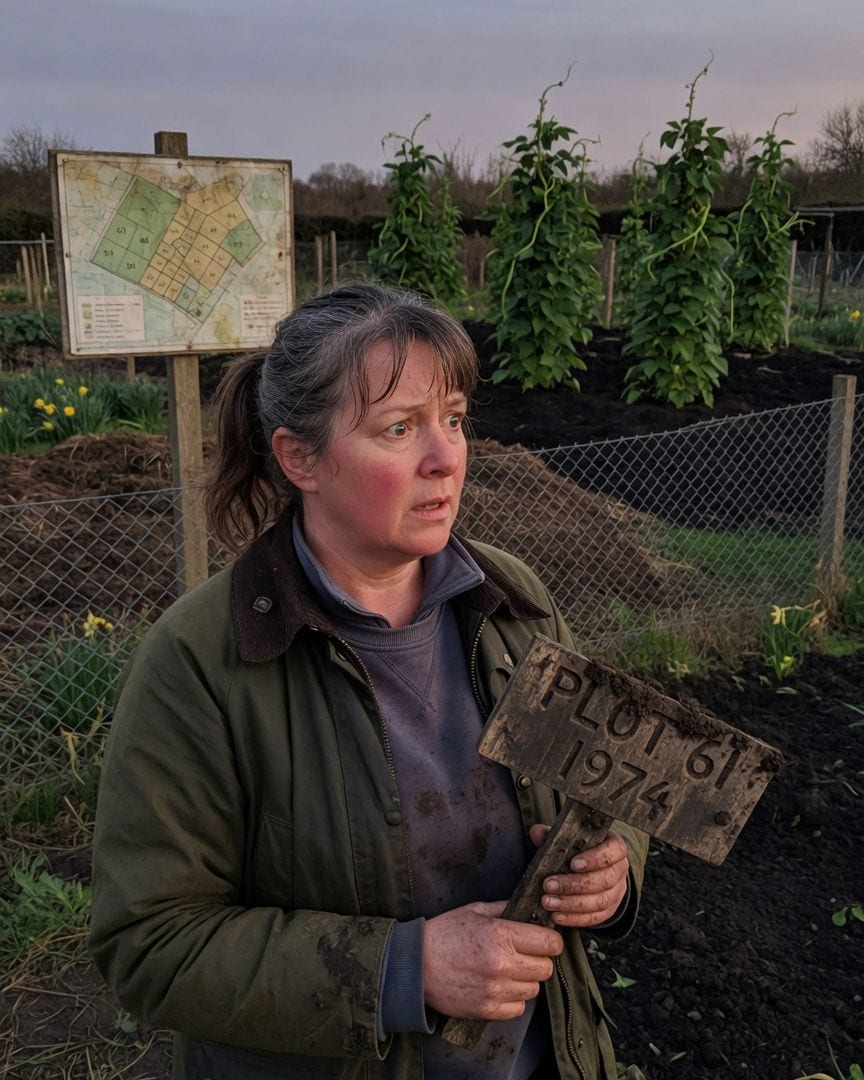
My heart hammered as I wiped away the dirt, my fingers trembling slightly. Carved into the surface, with a hand that had long turned to dust, were two stark lines. ‘PLOT 61’.
And beneath it, faded but unmistakable, burned into the grain: ‘1974’.
I stood over the newly discovered Plot 61, turning the heavy, weather-beaten wooden marker in my hands.
The carved ‘PLOT 61’ was undeniable, as was the faded ‘1974’ beneath it, a date that screamed an impossibility given the allotment’s history and map.
I looked up at the unnaturally tall runner beans, their tendrils already reaching for the sky, then back at the impossible marker.
The ‘1974’ marker was a punch to the gut. The Marsh Lane Allotments were officially established in 1950. How could a plot 61 exist in 1974, and then vanish, only to reappear now, exactly 50 years later?
The implications were sickening.
I decided to visit the local history society archive, hoping for old maps or photographs, anything that might shed light on this impossible date.
The archive was a small, quiet room above the library, smelling of old paper and dust motes. It was overseen by Susan Maddox, 65, a woman as meticulous as the card catalog she guarded.
I explained my predicament, omitting the more fantastic details about the magically appearing crops. I just said I’d found an old marker with an odd plot number and date, and was curious if there were any pre-1950 records.
Susan, intrigued by the challenge, pulled out boxes of old town planning documents, council meeting minutes, and even aerial photographs from the 50s and 60s. Nothing.
Every map, every survey, every grainy aerial shot showed the Marsh Lane allotments ending precisely at Plot 60, with the fence line exactly where it stood before this morning. Frustrated, I left the archive, intending to drive home.
But something felt off. The familiar turn onto Elm Street, the one I’d taken a thousand times, seemed to lead me down a slightly different lane, one I didn't quite recognize.
The hedgerows felt taller, the old brick wall of the farmhouse on the left seemed further away. I navigated, relying on instinct, my brain trying to reconcile the visual input with my memory.
Twenty minutes later, after driving what should have been a clear route away from the area, I found myself pulling up exactly where I’d started: the gates of the Marsh Lane Allotments.
My fuel gauge was definitely lower, the clock on my dashboard showed time had passed, but I was back.
I tried again, swearing under my breath, taking different turns, meticulously noting landmarks. The old oak tree at the crossroads, the green post box, the specific cracked paving stone.
Each time, after a journey that should have taken me far away, twenty minutes, thirty minutes, I found myself back at the allotments. It was a dizzying, disorienting loop, a road that subtly, almost imperceptibly, returned me.
The road itself had twisted, proven that the geometry of the place wasn't just wrong; it was actively misbehaving, bending space around it.
This spatial anomaly, this 'Road That Returns,' explained the lack of records; if roads could lie, so could maps.
The next day, I returned to the allotments, shaken by my ‘Road That Returns’ experience. The sun was bright, but the air felt colder than usual.
As I walked past Plot 61, I saw Felix Russo tending his own plot, 32. He straightened up, watching me approach with an unreadable expression. His gaze lingered on the impossible plot for a moment.
“Still looking at that ‘extra’ plot, Renee?” he asked, his voice calm, almost too calm, as if he knew something I didn’t, and found it utterly unremarkable.
“I found an old marker, Felix,” I said, my voice tight, holding it up for him to see. “Dated 1974.”
Felix looked at it, his eyes tracking from the carved ‘PLOT 61’ to the date. Then he looked back at me, his eyes ancient and knowing, like he’d seen a thousand impossible things and simply filed them away.
“Things come and go, Renee. On this land. Always have. Best not to dig too deep into what isn't meant to be found.”
He picked up a handful of dark, rich soil from his own plot, letting it sift through his gnarled fingers. “Some things just… return. And some things… don't.”
His words weren’t a threat, but a statement of fact, a quiet warning. I felt a prickle of unease, a cold sensation crawling up my spine. He knew.
He clearly knew more than he was letting on, and his placid acceptance was more unsettling than any anger or fear.
Later that week, I noticed small, almost imperceptible changes around my own plot, 34. A trowel moved slightly from where I’d left it leaning against the shed, a newly planted seedling shifted a few inches closer to the path.
Nothing stolen, nothing damaged, just… repositioned. I tried to dismiss it as my own forgetfulness, but it happened too often, too subtly.
It was as if someone was watching me, tracking my movements, subtly reminding me that I wasn’t alone in this impossible landscape, and my investigation was noted.
My shed door creaked open one breezy afternoon, then slammed shut with a sudden, sharp bang that made the framed photos inside rattle on their shelf.
I confronted Felix by his shed, the '1974' marker clutched in my hand, its weathered wood almost warm from my grip. “What do you mean, Felix, ‘things come and go’?” I demanded, my voice sharper than I intended.
“And why did you never mention a Plot 61 before? A plot that appears and disappears, with crops that defy the seasons?”
Felix sighed, a long, slow exhalation, leaning against his spade, his eyes fixed on the impossibly tall runner beans on Plot 61. “My grandad had a plot here, Renee, before the ‘official’ allotments were even drawn up in ’50.
Back when it was just fields the council let folks use. He talked about it. Said the land sometimes… breathes. Shifts. Sometimes a bit of it gets ‘lost’, sometimes it comes back.” He paused, his gaze still distant.
“That plot, 61, it’s happened before. Back in ’74, just like your marker says. Caused a bit of a stir, even then. Folks thought it was a prank, then it just… faded. Vanished as quickly as it came.”
I pressed him, my mind racing, the pieces starting to click into place, sickeningly. “And before that? Was there a cycle?”
Felix nodded slowly. “Grandad said it was a fifty-year thing. Like a tide. Pulls back, then rushes in. That’d make it around 1924 too, wouldn’t it? Always the same spot, always that bit of land that shouldn’t be there.”
The earlier clues snapped into focus. The missing records, the impossible geometry of my drive to the archive, Felix’s unnerving calm. It wasn’t just a random anomaly; it was a recurring event, a natural function of the land itself.
The dread deepened from a singular wrongness to a consistent, terrifying pattern, a hidden mechanism of the world that defied all logic.
“The runner beans,” I whispered, almost to myself. “They’re always ahead, aren’t they?”
Felix just nodded, his eyes distant, as if seeing past the present, into the cycles of time. “Always. Like time’s a little different, just on that spot. A little… faster.”
Armed with Felix’s reluctant admissions, I returned to Susan Maddox at the local history archive. “I need to look at local newspapers from 1974,” I told her, my voice steady despite the tremor in my hands.
“Specifically, I’m looking for anything about ‘The Disappearing Plot’ at Marsh Lane, or a local historian named Gerald Carter.”
Susan’s eyes widened, a flicker of recognition passing through them. “Gerald Carter! He was an amateur historian, quite passionate. He did write about something like that, now that you mention it. A curious fellow.
Then he moved away very suddenly, no forwarding address, just… gone.”
She disappeared into the back, her footsteps rustling amongst the stacks. She returned a few minutes later, holding a brittle, yellowed local newspaper clipping from 1974, handled with meticulous care.
The headline screamed: ‘CURIOUS MYSTERY AT MARSH LANE: THE DISAPPEARING PLOT.’
My finger traced the text, my breath catching in my throat. The article detailed Plot 61’s sudden appearance, its unnaturally advanced crops, and the confusion it caused among the local allotment holders before it ‘vanished’ without a trace.
It was all there, just as Felix had said, just as the marker had promised.
The article even included a blurry, grainy photograph of the allotments from 1974, clearly showing Plot 61 in the exact same location as it was now, past the fence line, nestled beside the compost heaps.
But as I studied the background, a chill ran down my spine, colder than the morning air. The distant building, the line of the old brick wall, the angle of the main path – they were all subtly, geometrically wrong.
The entire landscape in the photograph seemed warped, as if the very fabric of space had bent around the impossible plot. The trees seemed to lean at impossible angles, the fence posts weren't quite parallel.
The article ended with a brief mention of Gerald Carter, who had been investigating the phenomenon, and then, simply, that he had ‘abruptly relocated.’
I stared at the faded newspaper photograph, my finger tracing the distorted fence line in the background of the 1974 image of Plot 61.
The headline about ‘The Disappearing Plot’ and the mention of Gerald Carter’s sudden ‘relocation’ chilled me more than the impossible geometry.
I glanced at the current allotment map, then back at the photo, the two images refusing to reconcile, a cold certainty settling in my gut that the plot isn’t just appearing; it’s changing the world around it, and it’s not the only thing that disappears.
The photograph was the ultimate proof: not only did Plot 61 return, but its reappearance twisted the very geometry of the land. The ‘Road That Returns’ wasn’t a fluke; it was a symptom, a consequence.
And Gerald Carter’s ‘relocation’ wasn’t a move; it was an erasure.
I drove back to the allotments, the brittle newspaper clipping and the 1974 marker lying heavy on the passenger seat beside me. Felix was gone. His plot, 32, stood empty, untended. His shed door, usually ajar, was locked tight.
No note, no explanation, just an absence that suddenly felt vast.
I walked directly to Plot 61. The runner beans stood impossibly tall, their tendrils now thick and strong, laden with mature pods, even though it was still only late spring. They hummed with an unnatural vitality.
I scanned the ground around the plot, remembering Felix’s words about his grandad’s time, before the ‘official’ allotments, before 1950. He’d talked about the land breathing, shifting, a fifty-year tide.
There had to be something older, something that predated the 1950 establishment, that anchored this cyclical wrongness. Something that explained why this particular spot kept appearing.
I remembered a small, overgrown patch of nettles near the far corner of Plot 61, just beyond where the new fence had appeared, a spot I’d always ignored.
I began to clear them, digging frantically with a small hand trowel I’d grabbed from my shed. Beneath a tangle of roots and compacted earth, my fingers brushed against something hard and cold.
It was a flat, grey stone, almost indistinguishable from the surrounding soil, as if it had always been there, waiting to be found. I levered it out, grunting with effort, my muscles screaming.
On its smooth, cold surface, deeply etched, was a familiar symbol: a crude, almost ancient carving of a square, and within it, the number ‘61’.
Beneath that, not a conventional date, but a series of glyphs I didn’t recognize, yet felt ancient, primal. They were lines and curves that seemed to writhe, speaking of an age before calendars.
This wasn’t just a plot marker. This was a survey stone, a foundation, a declaration from a time before maps, a testament to a geometry that had always existed outside the rules.
This artifact was the core of the wrongness, solid and undeniable, proving Felix’s grandad’s stories, the old newspaper, and my own impossible drives. It all fit. The horror wasn't chaos; it was its perfect, terrifying coherence.
I held the ancient survey stone in my hands, its surface cold and unyielding, heavy, too heavy for its size, almost dense with impossible history. I examined the crude ‘61’ and the strange, unreadable glyphs.
This wasn't just a marker; it was a cornerstone, a keystone for a geometry that defied all understanding.
This stone, buried deep, was the artifact that could not exist, yet it was real, tangible, and chillingly dated by its very lack of conventional dating.
It predated the 1950 establishment, the 1974 reappearance, even the 1924 cycle Felix’s grandad spoke of. It implied the land itself had always contained this ‘Plot 61,’ merely choosing when to reveal it.
This was the source of the wrongness, not an entity, not a malevolent spirit, but an inherent, unchangeable pattern in the earth. The ordinary explanation died for good.
I felt a profound shift within me. The world hadn’t just changed; it had always been this way, and I had merely glimpsed its true, impossible nature.
I looked at the stone, then at the unnaturally vibrant runner beans, their pods fat and ready, then back to the distorted fence line in the old photograph I still carried. The implications were vast, terrifying.
The land was alive in a way no one understood, constantly shifting its own reality, and Plot 61 was its beating, impossible heart.
I knew I couldn’t show this stone to anyone, not without sounding mad, not without inviting the same ‘relocation’ that Gerald Carter had experienced. The horror wasn’t in fighting it, but in realizing its immutable, cyclical nature.
There was no escape from the knowledge, only from the place itself. I had to leave, but the knowledge would remain, a permanent scar on my perception of reality.
I reburied the ancient stone, carefully covering it with earth and nettles, an act of both concealment and reverence. I didn't return to my own plot, 34, not to harvest, not to tend.
Instead, I quietly packed up my tools from my shed, leaving my half-grown vegetables to their fate. I knew I couldn’t stay.
The allotments, once a place of solace, were now a living, breathing testament to a reality I could no longer reconcile with the mundane.
I sold my plot to a new, unsuspecting tenant a few weeks later, offering no explanation beyond ‘moving on.’ Felix Russo had also quietly disappeared; his plot remained untended, his shed locked.
No one on the committee seemed to question it, as if his absence was as natural as the seasons.
I moved out of the area entirely, finding a small house in a town miles away, far from any land with a history I couldn’t account for.
I avoided gardening, found myself checking maps with an obsessive, unsettling scrutiny, searching for any subtle anomaly, any road that didn’t quite line up.
The memory of the impossible Plot 61, the Road That Returns, and the cold, ancient stone, never faded. It had imprinted itself on me, changing the way I perceived the very ground beneath my feet.
The world was no longer solid, no longer predictable. I knew that somewhere, in the quiet, unmapped corners of the earth, other impossible geometries lay waiting, ready to reveal themselves on their own inscrutable cycles.
I saw them now, in the distorted lines of a distant hill, in the way a shadow fell just a little too long. The dread outlived the answer, because the answer was that the world was fundamentally, cyclically, wrong.
I never spoke of it, but the knowledge lived in her, a quiet, terrifying certainty. The world was no longer solid, and she knew it would happen again, somewhere else, when the land decided it was time.
If this one got to you
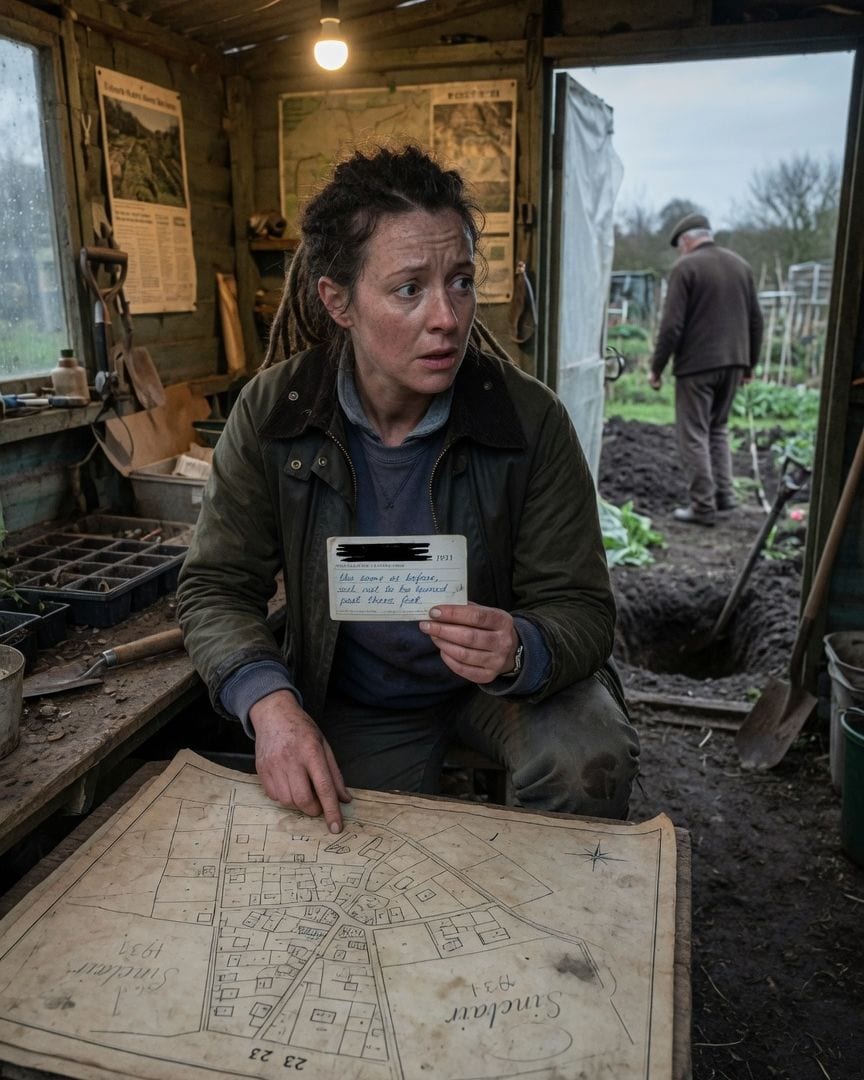
My allotment plot’s tenancy card has a redacted name from 1931. Under it, someone wrote 'the same as before, soil not to be turned past three feet,' and my dead grandfather signed it too.
My new allotment Plot 23 felt unnaturally still, the soil unusually dense and cool. The tenancy card warned 'soil not to be turned past three feet,' but my spade hit something hard and unyielding at that depth: a compacted, petrified layer that felt deliberately laid, a barrier.
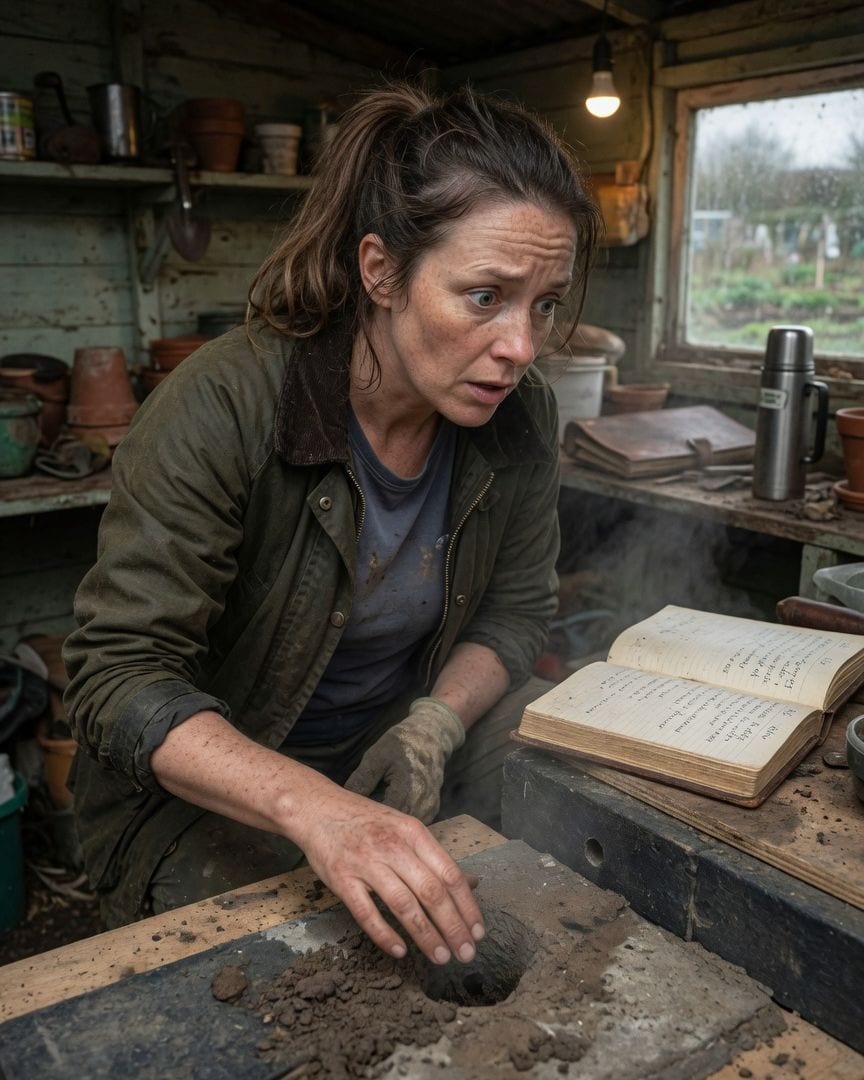
Every gardener who's held allotment plot 26 gave it up after a single season, each one leaving the same note behind: never dig the ground below two feet.
Newly single at 38, I hoped Plot 26 at Weir Field Allotments would be a fresh start. But the committee’s rent book held a strange, decades-old rule: 'ground not to be dug below two feet.' Ignoring the warnings, I dug anyway, only to find a perfectly smooth concrete slab with a tiny hole—and a distinct, unnatural cold breath rising from it.
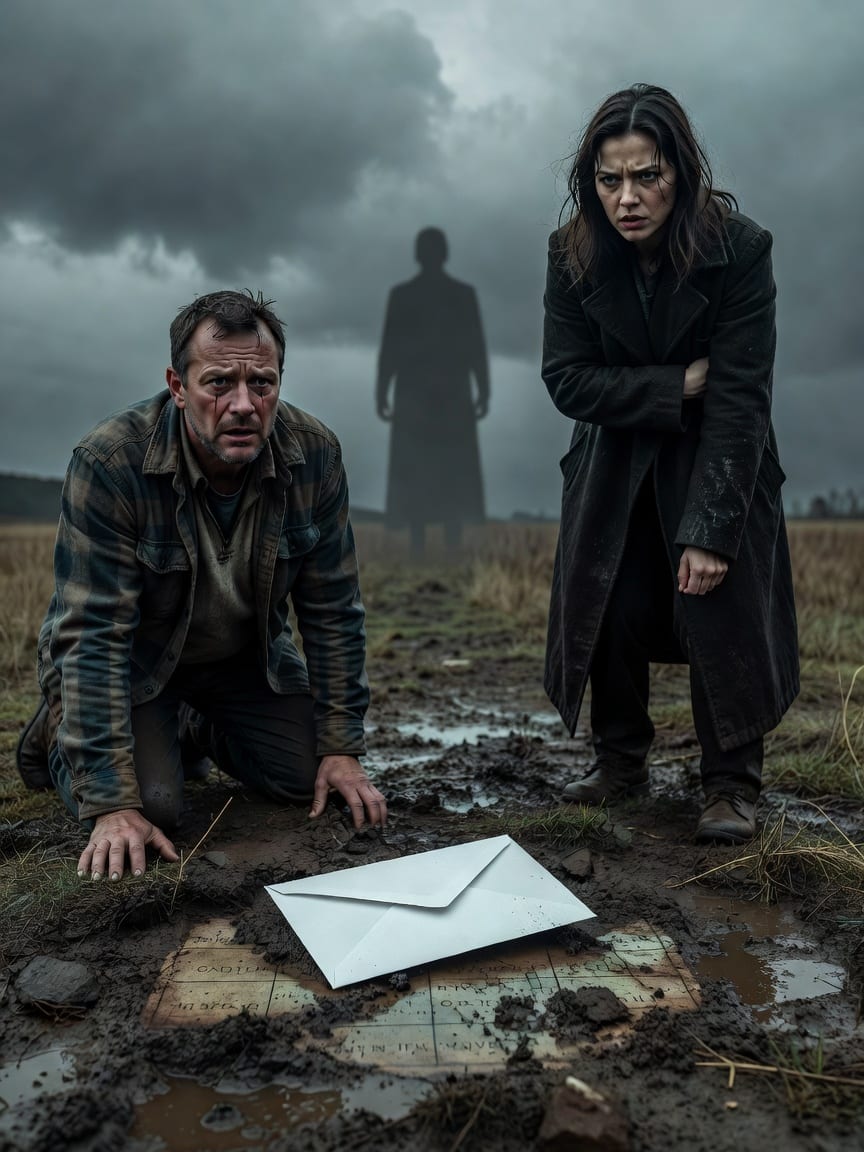
My mail carrier delivers polling cards to Nine Acre Field. It floods, they say. The tithe map shows nine family plots there.
As the new county archivist, I was used to quiet days poring over dusty records. But then I found an empty field, Nine Acre, was receiving current-year polling cards and utility notices for nine distinct addresses. When I investigated, I unearthed a perfectly crisp, current-year tax bill, buried in its soil, surprisingly warm against my fingers.
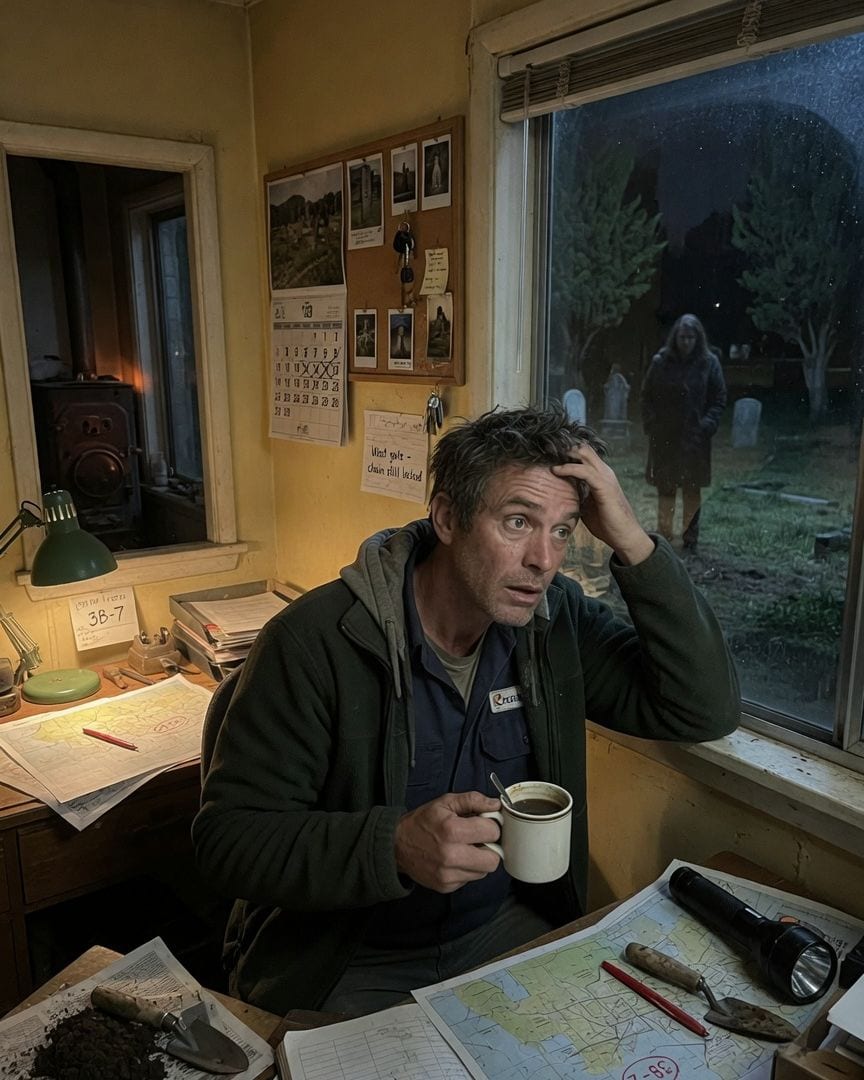
My cemetery lodge overlooks a woman visiting an empty grave near 3 AM most nights. The west gate she uses has been chained shut since autumn, its lock untouched.
As the cemetery's night caretaker, I'm used to the quiet hum of the lodge. But for three weeks, a woman has appeared nightly at plot 3B-7, a silent mourner in the deep night. What chills me is how she leaves: walking straight through the west gate that's been chained and padlocked shut for eight months.
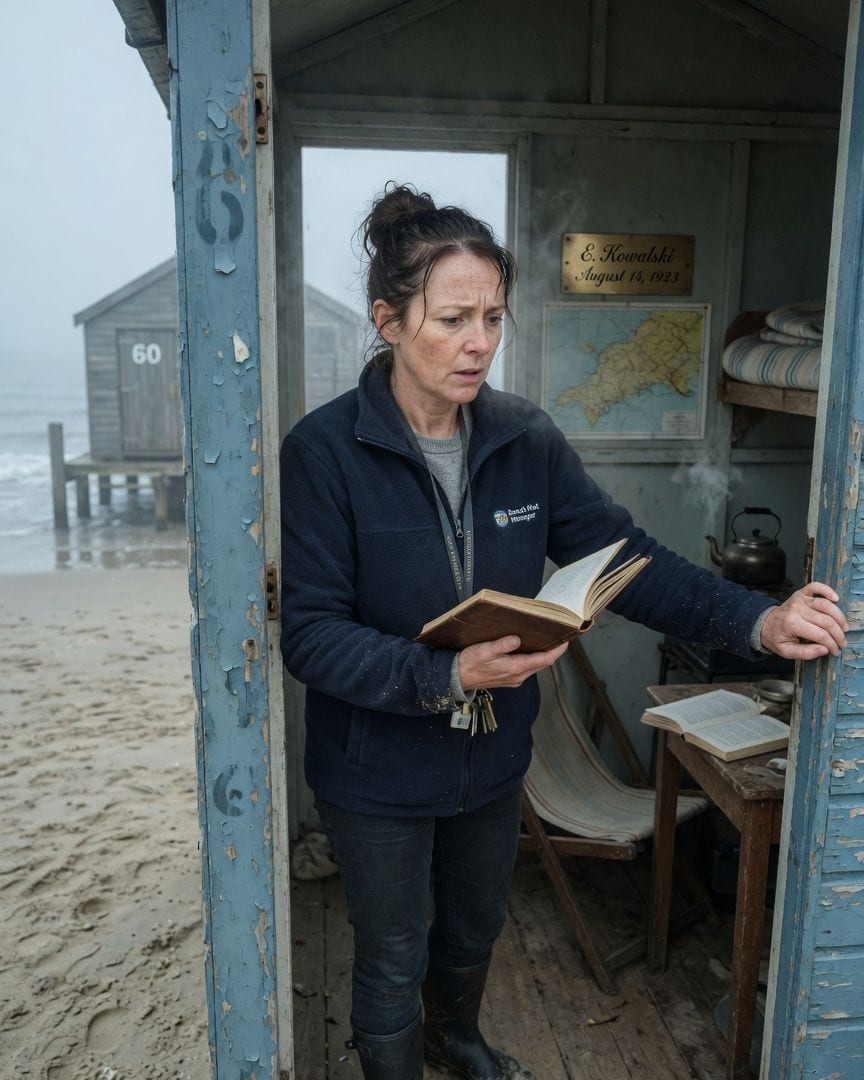
My beach hut row now has Hut 61, but it's not in my books. Inside, a kettle steams, and a plaque on the wall bears my family name, dated 1923.
As manager of the council's sixty beach huts for ten years, I knew my route blind. But on my usual morning walk, nestled against the groyne beyond Hut 60, stood a Hut 61. It looked decades old, just like the others, yet my ledger held no record of its existence.
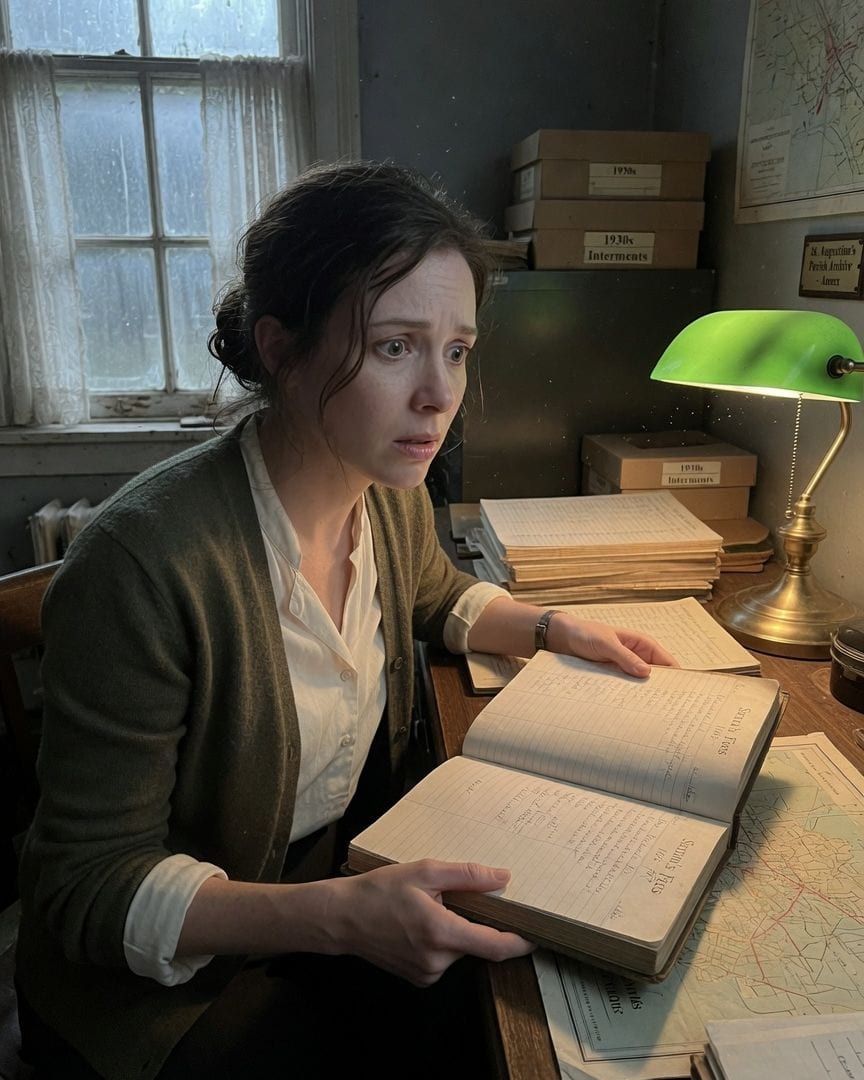
Our churchyard closed in 1974. But the sexton's book shows new graves every month, paid by families whose names are on stones from the 1930s.
As Oakhaven's new archivist, I expected a quiet life of dusty ledgers and ancient records. But a current entry in the sexton's fee book listed a "new burial plot" paid last month for Theresa Romano, who died in 1931. The town ordinance closed the churchyard to new burials in 1974.