Every gardener who's held allotment plot 26 gave it up after a single season, each one leaving the same note behind: never dig the ground below two feet.
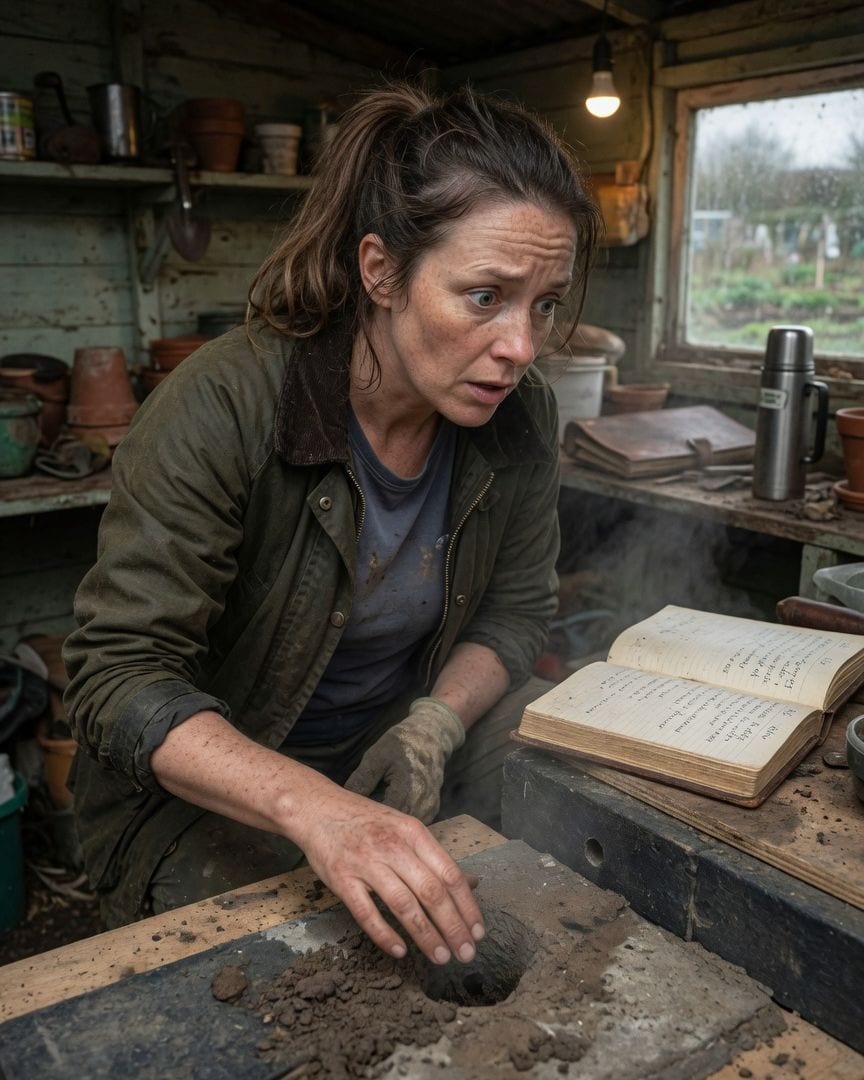
It felt like a fresh start. Plot 26 at Weir Field Allotments. The air was crisp, smelling of damp soil and possibility. I was 38, newly single, and needed something to root me back into the world.
The committee secretary, Michael Thatcher, handed me the heavy, leather-bound rent book, its pages thick with decades of names and careful handwriting. He was a friendly enough man, a bit flustered, but seemed genuinely pleased to see new blood.
I flipped through the book later, sipping cold tea in my new shed, admiring the neat rows of past tenants. That’s when I saw it.
Next to the entry for Plot 26, under every name since 1961, there was a consistent, unnerving note: ‘ground not to be dug below two feet, per previous holder.’
The first few times, I dismissed it. An old superstition, maybe. Or a shared inside joke amongst the Weir Field community. Perhaps a buried pipe, though that seemed too specific a depth.
But as I traced the dates, year after year, a fresh entry with the same exact instruction, it started to itch at my rational mind. It wasn’t a casual jotting; it was a formal, repeated decree.
It didn’t appear for any other plot, just mine. Plot 26.
I asked Michael Thatcher about it, casually, when I next saw him. He offered a vague smile, almost a wince, and said, "Oh, that old thing? Just a tradition, Hannah. Best to respect the rules, you know."
Curtis Muller, a wizened old man who seemed to have been part of the committee since the dawn of time, was there, too. He just nodded slowly, a glint in his eye I couldn't quite place.
"Some rules," Muller added, his voice gravelly, "are there for good reason." They gave me nothing concrete, just those unnervingly complacent smiles and a sense of something unsaid.
It began to nag at me, a persistent little hum in the back of my thoughts.
The sun was high when I finally plunged my spade into the soil of Plot 26. The earth was rich, dark, and easy to turn. I worked steadily, the rhythmic scrape and lift of the blade a soothing balm.
I was aiming for at least a foot and a half, to really break up the compacted soil from years of neglect. The 'two-foot rule' was in my mind, but I was determined to get a good start.
Then, at precisely two feet, the spade struck something. Not a rock. Not the gritty crunch of old brick. This was different. It was unyielding, a uniform, dense layer that resisted all my weight.
I tried again, putting my full force into it, and the spade clanged with a dull, heavy thud. It felt industrial.
I began to chip away at the edges, my curiosity piqued.
As I worked, a faint, rhythmic vibration started to travel up the shovel handle, a low hum that I could feel not just in my hands, but deep in my bones.
It was distinctly mechanical, not the thrum of roots or the settling of earth. It was persistent, an internal pulse within the ground itself.
I tried to rationalize it. An old utility line, perhaps, forgotten and buried. A fragment of a forgotten construction base from the old sanatorium that Weir Field was built upon. But the sensation was too strange, too uniform, too active.
It wasn't the dead weight of something inert; it felt like something was operating, just beneath my feet.
Later that week, unable to shake the feeling, I went to the local library. I found the archived Weir Field allotment committee minutes, a musty collection of ledgers. I hoped for some mention of a buried pipe, a drainage issue.
What I found was something else entirely. Several entries from the late 1960s and early 70s discussed 'soil stability' and 'sub-surface integrity' issues. They all pertained specifically to the area of Plot 26.
There were terse, bureaucratic notes about 'unusual ground settling' and 'mitigation efforts.'
The dread solidified in my stomach. This wasn't just an old pipe. This wasn't a forgotten foundation. Something was deliberately, artificially, and actively maintained at that depth. And it hummed.
I couldn’t let it go. The vague warnings, the persistent hum, the archived notes—they all coalesced into an undeniable urge to know. Ignoring the committee’s smiles and my own rising unease, I carefully excavated around the resistant layer.
I dug out the earth by hand, trowel by trowel, until I had a clear perimeter. It was a perfectly flat, smooth section of what appeared to be an old, reinforced concrete slab.
It was clearly man-made, not a natural formation, and far too robust for a simple foundation. A faint, almost invisible seam ran across its surface, a hairline fracture in the dark gray.
As I scraped away the final clinging dirt, wiping my gloved hand over the surface, I spotted it. A single, tiny, perfectly round hole, no bigger than a pencil tip, drilled cleanly into the concrete.
It looked almost too precise to be random. I leaned closer, my breath catching in my throat. From the tiny opening, a distinct, unnatural cold breath seemed to emanate.
I instinctively reached out, my fingers hovering an inch above the hole, feeling an undeniable, chilling draft rising from beneath the earth.
The cold breath from that pencil-tip hole clung to me. It followed me home, a phantom chill on my fingertips. I couldn't sleep.
The practical, logical part of my brain screamed 'air vent', 'old drainage', but the unnerving precision of the hole and the persistent, unnatural cold argued against it.
I knew, with a certainty that settled like ice in my gut, that it wasn't natural.
I dove into Weir Field's history, starting with the local council archives. Patricia Bryant, the archivist, was a small woman with keen eyes and a surprising memory for municipal minutiae. I described the concrete slab, the depth, the cold.
She listened, her expression unreadable, but displayed an unsettling calm. "Oh, Weir Field has its quirks," she said, her voice even. "Lots of old groundworks from the sanatorium days. Nothing unusual for old municipal planning."
But the way she said it, too readily, made the hairs on my arms prickle.
I spent days poring over dusty blueprints and microfiches. I uncovered maps of the original sanatorium site that predated the allotments.
A specific section, precisely where Plot 26 now lay, was consistently marked 'Unsurveyed' or 'Restricted Access,' even on the oldest blueprints from the 1930s. It was like a blank spot on the city's memory, a place erased.
Then I found a faded memo from 1960. It was addressed from the 'Works Department' to 'Sanatorium Management,' detailing 'sub-surface structural integrity' concerns for a 'Sector Gamma.' The location notes were vague but put it directly beneath the 'Unsurveyed' area.
The memo concluded with a recommendation for 'immediate and ongoing monitoring.' Following this, the allotment committee minutes from 1961 abruptly began to enforce the 'two feet' rule for Plot 26 with unusual rigidity.
The pieces began to align, forming a coherent, disturbing narrative far beyond mere pipes or foundations. It was all too precise. Too deliberate.
My digging, it seemed, wasn't going unnoticed. One morning, I arrived at Plot 26 to find my shed door ajar. The padlock, a sturdy brass thing, was slightly bent, though nothing appeared to be missing.
A fresh, heavy boot print, too large for any of the other gardeners I knew, was pressed into the damp soil near the edge of my plot. It was a clear, unambiguous message.
I sought out Curtis Muller. He was pruning roses near his own plot, his movements slow and deliberate. "Mr. Muller," I began, trying to keep my voice even, "I've been looking into the history of Plot 26.
About 'Sector Gamma' and the 'two feet' rule."
He stopped pruning, turning to face me. His calm demeanor hardened, like ice forming on still water. He didn't speak immediately, just stared at me, his eyes holding a depth of knowledge that chilled me to the bone.
"Hannah," he finally said, his voice low and firm, "some things are best left alone. There are... unforeseen complications when you dig too deep. It's important to respect the past. And the rules."
His voice was soft, almost a whisper, but it carried the weight of a physical threat.
He became evasive then, almost hostile, his gaze never quite meeting mine, but always resting just beside it, as if he was looking at something else entirely.
I left, feeling like I had walked away from a conversation with an ancient, patient spider. Later that week, I saw him again.
He was watching me from a distance, half-hidden by a row of towering runner beans, his face a shadow in the afternoon light. There was a faint, almost imperceptible smile on his face, a private knowing that unnerved me deeply.
The next day, a typewritten note, folded once, with no return address, was slipped under my front door. The paper was thick, the ink a faded blue.
The message was stark, almost polite, yet utterly chilling: 'Some things are best left buried. For your own good. Stop digging.'
Armed with the old maps, the 'Sector Gamma' memo, the unsettling note, and the memory of Curtis Muller's knowing smile, I confronted Michael Thatcher, the committee secretary.
I found him in the small, cluttered allotment office, surrounded by stacks of forms and a perpetually ringing phone.
I laid out my evidence on his desk: the blueprints marking Plot 26 as 'Unsurveyed,' the 1960 memo mentioning 'sub-surface structural integrity' for 'Sector Gamma,' and the unwavering consistency of the 'two feet' rule in the rent book, spanning decades.
"Michael," I said, my voice tight with suppressed frustration, "this isn't some old drainage issue. This isn't tradition. What is 'Sector Gamma'? What's really under Plot 26?"
He initially attempted to dismiss it all as bureaucratic anomalies and urban legends, waving his hands vaguely. "Hannah, honestly, it's just old council planning. Things get... convoluted over time. An old research station maybe, nothing active now."
I pushed back, harder than I thought I could. "The memo, Michael. 'Sub-surface structural integrity concerns.' 'Immediate and ongoing monitoring.' And the 'two feet' rule starting right after that memo. This isn't convoluted; it's coherent. Too coherent."
I tapped the faded memo. "And why 'Sector Gamma'?"
Under my relentless pressure, Thatcher's composure finally cracked. His hands, resting on his desk, began to visibly tremor. He looked around, as if checking for unseen ears, though we were alone. He leaned forward, his voice a strained whisper.
"Alright, Hannah. You're right. The council... we inherited responsibility for an 'underground facility' when the old sanatorium closed." He swallowed hard. "It was... a long-disused 'research annex.' Sealed off due to 'instability' and... 'hazardous material concerns.'"
He insisted, his eyes wide and pleading, that it was inert, a forgotten relic. "The 'two feet' rule," he stammered, "it's just a safety precaution. To prevent structural collapse. Nobody wants a sinkhole, do they?"
He then reluctantly pulled out a heavily redacted council report from 1975 from a locked drawer. Its cover was stamped 'CLASSIFIED – Eyes Only.' He flipped it open to a specific page.
It detailed a 'breach' in Sector Gamma, sealed with 'extreme prejudice,' and mentioned a 'containment protocol' that, he stressed, was still technically active. "But it's just a formality, Hannah, believe me. A legacy protocol. Nothing to worry about now."
He looked utterly drained, as if confessing had cost him dearly.
I pored over the heavily redacted 1975 council report Thatcher had so reluctantly provided. The document itself was chilling, filled with bureaucratic euphemisms for what clearly sounded like a disaster. But one section, near the end, captured my attention completely.
It was a list of 'personnel involved in incident response,' their names almost entirely blacked out by thick marker, but their dates of involvement clearly visible. 'Incident date: July 1975.'
A sudden, terrible thought struck me, cold and sharp. The allotment rent book. The peculiar, almost ritualistic rhythm of gardeners surrendering Plot 26 every six or seven years. I remembered the exact dates.
I pulled out my own notes, messy scribbles of names and tenancy durations I’d copied from the rent book.
My hands shook as I began to cross-reference the dates from the 'breach' report with the names and dates of previous Plot 26 gardeners.
My blood ran cold.
Several of the redacted names' 'involvement dates' aligned perfectly with gardeners who had mysteriously 'surrendered' their plots around 1975-1976. Their subsequent council records, which I’d also found, often showed sudden, unexplained transfers or outright disappearances.
They hadn't just 'moved on' or 'lost interest.' They were the previous holders of Plot 26. They had dug too deep.
Then, I noticed it. One name, only partially redacted, the faint outline of letters beneath the black bar, visible where the marker hadn't quite covered the printed text. It looked chillingly like a variant of 'Curtis Muller.'
The man who had warned me. The man who had watched me from behind the runner beans, a faint smile on his face. The man who knew.
I found Curtis Muller at his plot, meticulously pruning a rose bush, just like before. This time, I didn't approach casually. I walked right up to him, the redacted report clutched in my hand, my own notes folded inside.
"This," I said, my voice trembling but firm, "is you, isn't it? The 'Curtis Muller' on the breach report. And these dates," I pointed to my notes, "these are the gardeners from Plot 26. The ones who 'surrendered' around 1975.
The ones who disappeared."
He stopped pruning. He didn't deny it. Not a flicker of surprise, no attempt at evasion. His calm was absolute, chilling. He simply looked from the report to my face, then back to the rose.
"You've been very thorough, Hannah," he said, his voice flat. "More so than most."
He then began to explain, his voice low, measured, almost conversational. It was as if he were discussing the weather, not unspeakable horrors. The 'facility,' he revealed, was no mere research annex.
"It's an experimental containment unit," he said, turning the word 'experimental' over in his mouth as if it were a rare stone. "For something they found during the sanatorium's expansion in the late 1950s."
He paused, gathering his thoughts. "An entity, not alive in any conventional sense. But capable of influencing and subtly altering living organisms. Profound psychological and physical changes. Slow, insidious. That's why it's 'contained.'"
The 'breach' in 1975, he explained, involved some of the previous gardeners of Plot 26. "Like you, Hannah," he said, his eyes finally meeting mine, "they dug too deep. They became... 'infected' by its influence."
He didn't elaborate on what 'infected' meant, but the word hung in the air, heavy and dark. "They then had to be 'contained' themselves. Or, in some cases, 'integrated' into the system's ongoing 'management.'"
The 'two feet' rule, he said, was a vital barrier. "A containment protocol," he confirmed. "To prevent direct exposure to the active influence." He was one of the original 'containment team' members, he revealed.
The council, through the committee, continues to maintain the 'containment protocol.' "The allotment turnover," he added, "is both a cover and a monitoring system. It allows us to track exposure."
The subtle vibration I felt up my shovel handle? "That's the hum of the active containment field," Muller stated, his voice devoid of emotion. "It pulses beneath your feet, Hannah. Always."
Muller, with an unnerving placidity, looked at me with a faint, almost compassionate smile. "You, Hannah, having dug deeper than any in decades, having been exposed to the residual energies... you are now part of the system.
Whether you realize it or not."
He offered me a choice, his smile unwavering. "Join the 'management' team. Help maintain the containment, find new 'holders' for Plot 26, perpetuate the cycle." His gaze drifted over the neatly tilled plots, a vast, green illusion.
"Or face the same fate as the others. A slow, internal 'integration' into the entity's subtle influence. They're still here, you see. Just... changed."
He gestured to the disturbed soil of my plot, to the concrete slab, now faintly visible.
A faint, rhythmic pulse was undeniably visible, a slow, unsettling heave and fall of the earth around the pencil-tip opening, as if something vast beneath was breathing. The cold dread in my gut intensified, turning to ice.
I could feel it, a subtle shift in the air, a whisper of something alien against my skin. I knew I couldn't escape the influence I’d already absorbed, but I could refuse to participate in its perpetuation.
I backed away slowly, clutching my muddy spade like a weapon, shaking my head. "No," I whispered. "No."
Muller simply nodded, his faint, sad smile unwavering, as if he knew this would be my answer from the start. "The ground always claims what's hers," he murmured, his eyes fixed on the pulsing earth, "one way or another."
I quietly surrendered Plot 26, citing 'personal reasons' to a relieved Michael Thatcher. Curtis Muller was there, too, watching from a distance, a knowing look in his eyes.
I sold my house, leaving town without a backward glance, severing all ties to the Weir Field Allotments and the humming earth beneath it.
I attempted to build a new life in a new city, a world away from the smell of fresh soil.
But the memory of the pulsing ground, the cold breath from the hole, and Muller's calm smile were branded into my mind. I found myself compulsively drawn to news stories about local council land acquisitions, historical sites, and unexplained disappearances.
Always searching for similar patterns, for faint echoes of the wrongness I left behind. I avoided gardening, the scent of fresh earth now a source of deep, unsettling unease.
I sit alone in my new apartment, the sterile air conditioning a contrast to the damp earth. A small, wilting pot of store-bought herbs on the windowsill, a testament to my abandoned passion, mocks me.
I scroll through a local online forum, an old habit from my previous life, looking for nothing in particular, just trying to fill the silence.
A new post catches my eye, its title gleaming starkly on the screen: 'Weir Field Allotments Committee announces new plot available – number 26. Inquire within.'
I stare at the words, a faint, almost imperceptible tremor running through my hand, a cold certainty settling in my chest.
A few weeks later, Michael Thatcher is showing a prospective new gardener around Weir Field. He points to Plot 26, neatly tilled and ready.
"Just one thing," he says, with a slightly forced smile, "there's an old rule for this plot. Ground not to be dug below two feet." The prospective gardener nods, smiling.
Thatcher glances over at Curtis Muller, who is tending his own plot nearby, a faint, satisfied smile playing on his lips. "It's for the best, you see," Muller murmurs, not looking up from his work.
"The ground always claims what's hers, one way or another."
If this one got to you
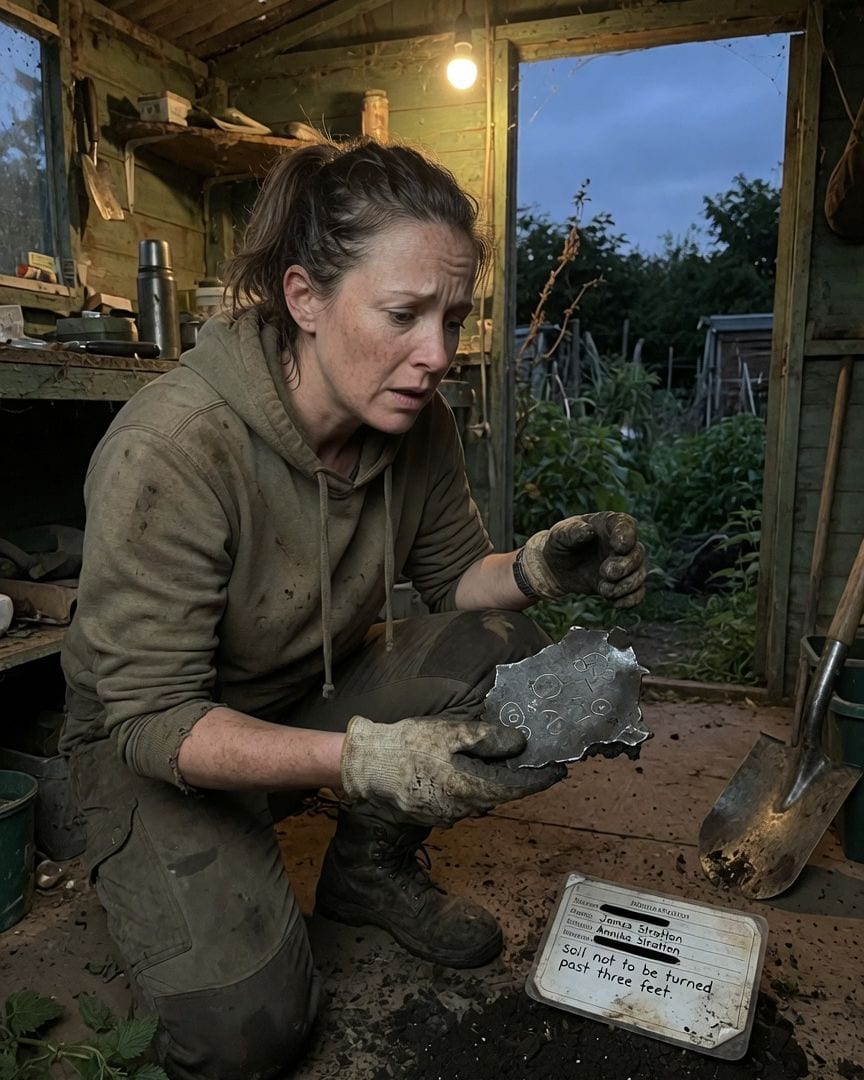
My spade struck something impossibly cold and metallic, pulsing with a slow, steady heartbeat, exactly where the old warning ended.
I took over a neglected allotment, Plot 23, and found a strange, handwritten rule on its tenancy card: 'Soil not to be turned past three feet.' I rationalized it as an old drainage issue, but when my spade hit something impossibly hard, a slow, steady heartbeat pulsed from the ground.
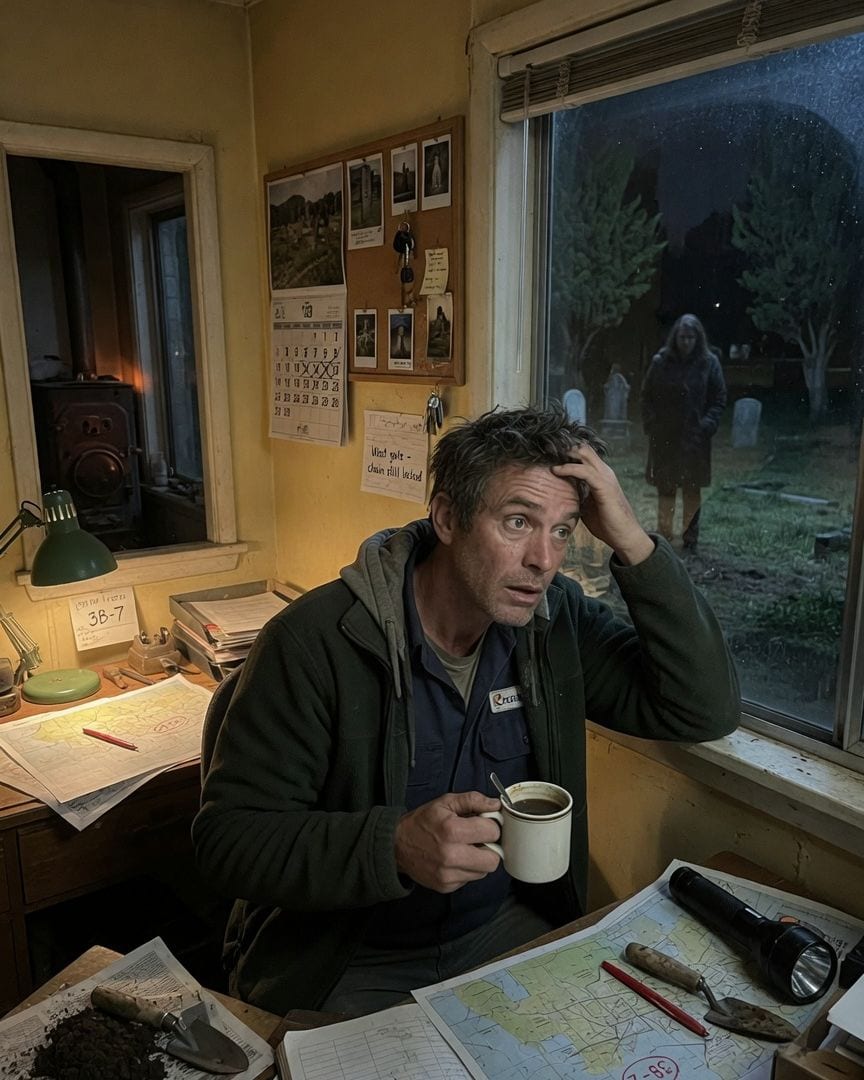
My cemetery lodge overlooks a woman visiting an empty grave near 3 AM most nights. The west gate she uses has been chained shut since autumn, its lock untouched.
As the cemetery's night caretaker, I'm used to the quiet hum of the lodge. But for three weeks, a woman has appeared nightly at plot 3B-7, a silent mourner in the deep night. What chills me is how she leaves: walking straight through the west gate that's been chained and padlocked shut for eight months.
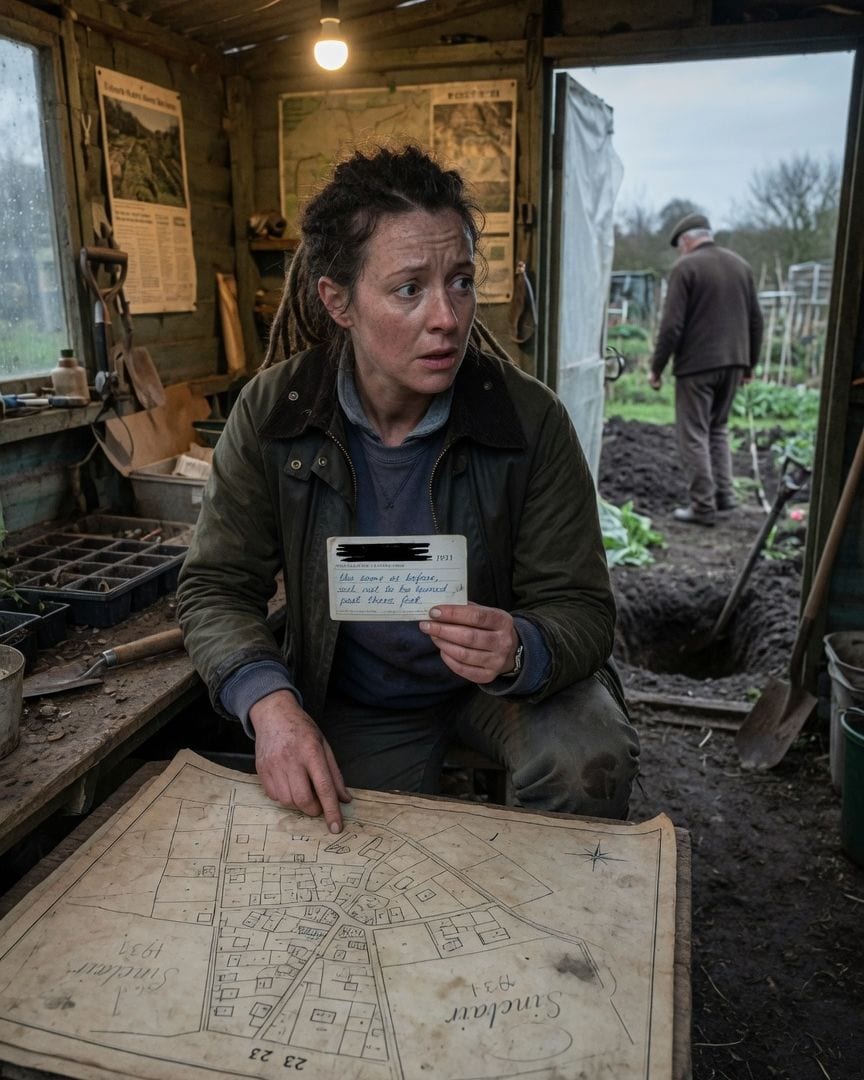
My allotment plot’s tenancy card has a redacted name from 1931. Under it, someone wrote 'the same as before, soil not to be turned past three feet,' and my dead grandfather signed it too.
My new allotment Plot 23 felt unnaturally still, the soil unusually dense and cool. The tenancy card warned 'soil not to be turned past three feet,' but my spade hit something hard and unyielding at that depth: a compacted, petrified layer that felt deliberately laid, a barrier.
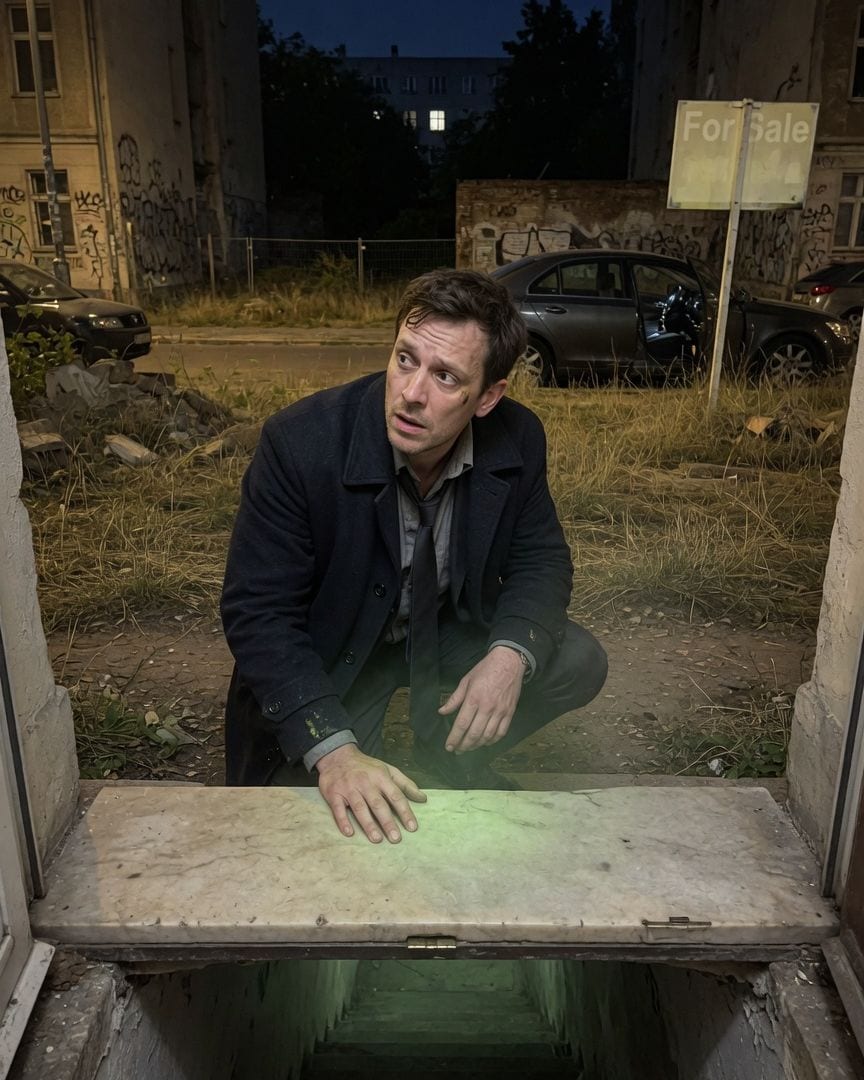
A Berlin researcher found a Cold War garrison's complete records for an address that's been a vacant lot for decades. Then, he found its immaculately swept doorstep open into a pulsing green light.
Ansel Vidmar, a methodical researcher, worked late in a Berlin archive, driven by academic curiosity before its municipal transfer. He discovered a steel cabinet containing meticulous administrative records for a 1980s garrison company, listed at an address that had been a vacant lot for decades. The discrepancy gnawed at Ansel, pushing him to visit the site, where he found a single, immaculately swept doorstep. To his astonishment, it silently sank inward, revealing a dark, concrete stairwell. From its depths, an anachronistic hum and faint green light pulsed, hinting at an impossible secret beneath Berlin.
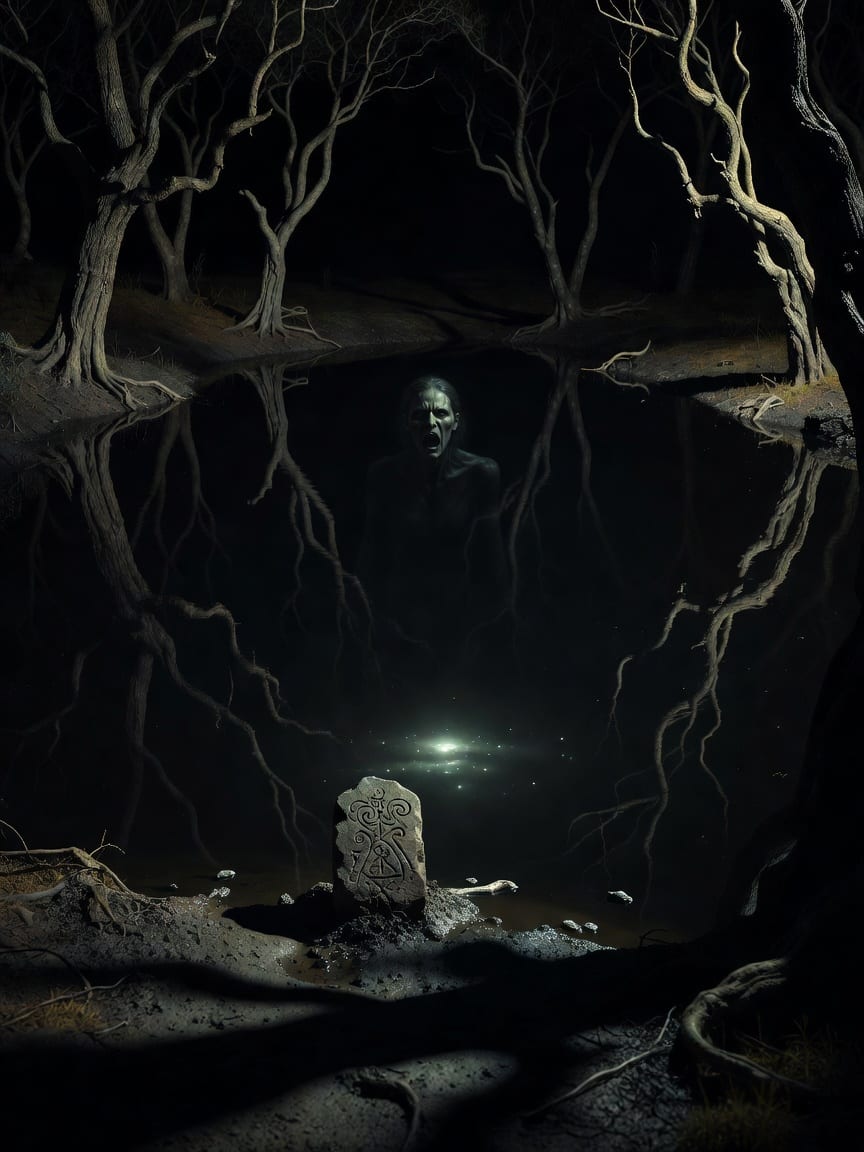
My new rectory home felt damp, even after everyone swore the old pond was drained in the fifties. But the water bill still charges for it. And the fish supplier logged a carp delivery, signed by the rector who died last Easter.
Moving into the old rectory, I noticed a persistent, unsettling dampness the locals dismissed as 'valley air.' But then I found an old water bill with a recurring charge: 'Rectory Pond - Water Rate.' Everyone in town insisted that pond was drained decades ago.
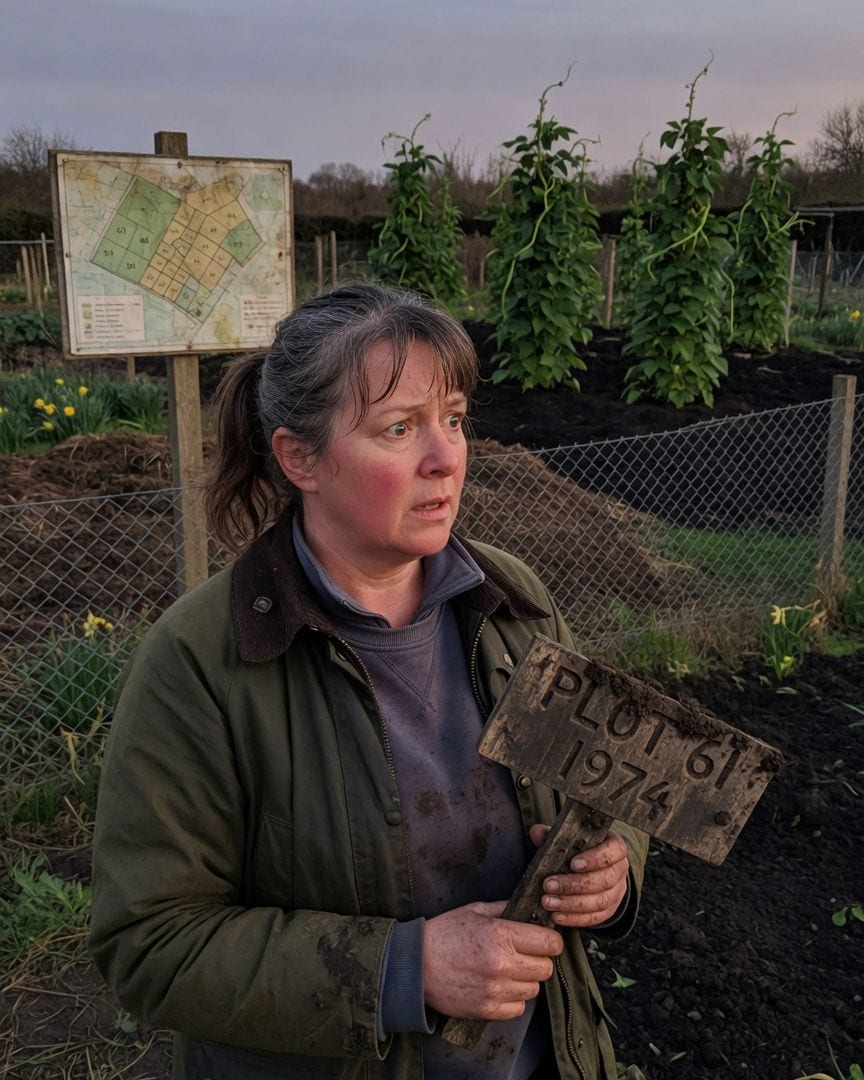
My allotment map only shows 60 plots. But past the fence, a Plot 61 just appeared, fully dug and planted. The committee has no record, and its beans are months ahead.
My boots crunched on the gravel path towards my allotment, a twenty-year routine. But this morning, beyond the boundary fence where only weeds should be, a perfectly tilled plot lay, its runner beans already a foot high. The official map ran only to 60, yet this was undeniably Plot 61, with a weathered wooden marker carved '1974'.