The museum's logbook recorded a rescue two days ago. Its 'souls saved' were buried in 1888.
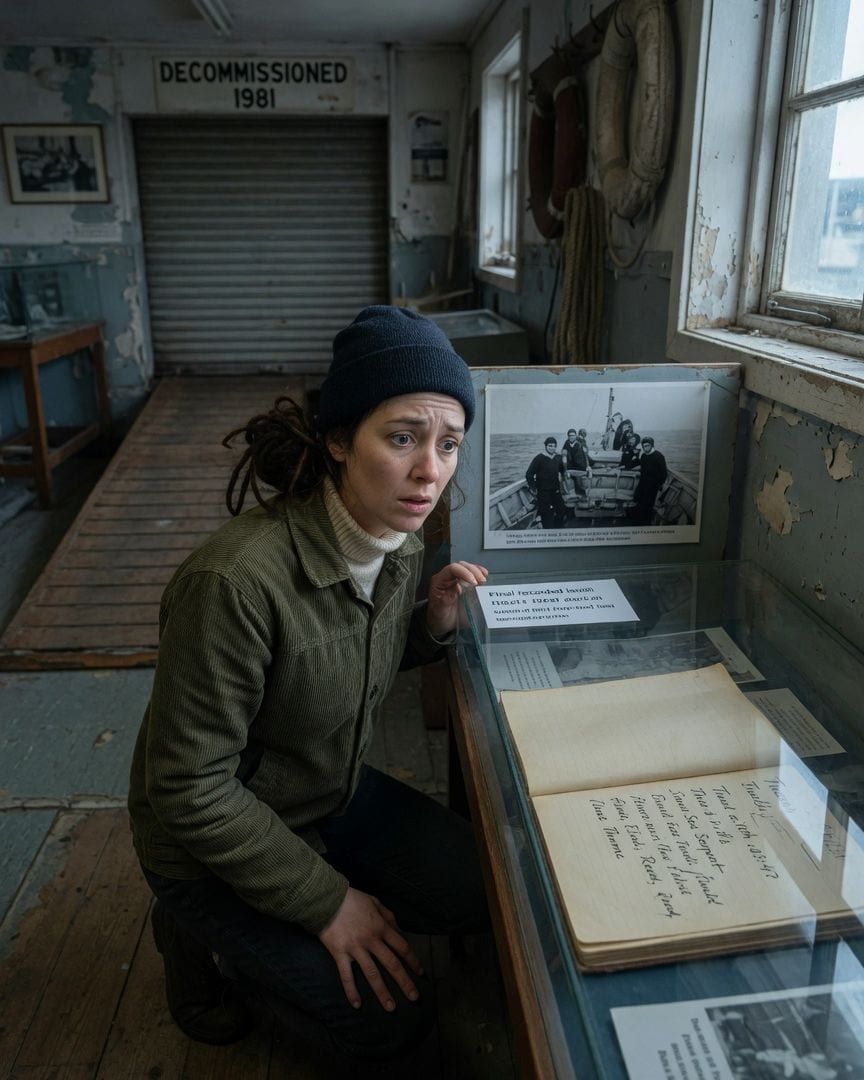
The old lifeboat station, now the Runnock Maritime Museum, was supposed to be a straightforward assignment. As the new curator, my job was to organize and refresh the exhibits, to make the town's proud seafaring history accessible.
The station itself had been decommissioned in 1981; its history, its last launch, its final crew, all documented meticulously in bold, unyielding type on display panels.
That’s why the entry on the launch record, encased in glass by the preserved slipway, hit me with a physical chill despite the warm coastal air.
It was a fresh entry. The elegant copperplate script, identical in style to the faded ink of decades past, noted a 'shout, a time, souls saved.' The date was unmistakably recent – Tuesday, just two days ago.
But the vessel named, 'The Sea Serpent,' was listed in the harbour’s dusty archives, a mere thirty feet away in my office, as lost with all hands in 1888. A schooner. Gone. Over a century ago.
The museum text, just inches from the logbook, screamed 'decommissioned 1981.' How could a station that hadn't operated in forty years launch a boat for a ship lost 135 years ago, two days prior?
It was a glitch in the fabric of reality, a detail so profoundly wrong that I couldn't unsee it. It burrowed beneath my skin, a cold, persistent unease.
I spent the next day poring over the harbour registers and local historical society records, determined to find a rational explanation. A prank, perhaps. An elaborate, deeply misleading historical re-enactment?
I confirmed it: 'The Sea Serpent' was indeed lost off the Runnock coast in 1888, with no survivors. I then cross-referenced other recent entries on the logbook.
There were quite a few, all penned in that same perfect copperplate, all dated within the last decade. 'The Mary Celeste,' 1903; 'The Northern Star,' 1941. Every single one was a confirmed shipwreck, decades or even centuries old.
This wasn't a single anomaly. It was a pattern.
I also noticed that the 'souls saved' listed on these impossible entries sometimes bore surnames like Thorne, Blackwood, or Bishop.
Names still present in the region, yes, but these specific individuals, listed with dates of 'saving' that postdated their historical loss, weren't in any current local directories. No living descendants, no records of their existence after their supposed 'rescue.'
It had to be a quirky, elaborate museum prank, maybe a local tradition of recording historical losses symbolically. Yet, the sheer, painstaking consistency of the copperplate handwriting across all entries, old and new, gnawed at me.
It felt too perfect, too committed for a joke. I tried to casually mention the oddity to Grace Yates, who ran the local cafe and had a reputation for knowing everything about Runnock.
Grace’s smile tightened, a brief, unreadable flicker in her eyes, before she quickly changed the subject to the tourist season. 'Gets busy this time of year,' she’d said, wiping down a spotless counter. The unease deepened.
The whole town seemed to hum with unspoken things.
The nagging feeling wouldn't let me go. The next morning, armed with a list of names from 'The Sea Serpent' entry—Thomas Finch, Elizabeth Reed, Elias Thorne—I drove to the old Runnock cemetery, a windswept plot overlooking the choppy grey sea.
Salt air whipped my hair, and the gulls cried overhead, their calls sounding strangely mournful. I walked among the leaning, salt-worn stones, many choked with ivy and lichen, trying to match the impossible names to impossible dates.
In an overgrown, rarely visited section, near a crumbling stone wall, I found it. A small, almost illegible stone, tilted precariously, half-swallowed by weeds. I knelt, brushing away years of moss. The name, faint but clear, read 'Elias Thorne.'
Beneath it, the chilling inscription: 'Lost at Sea, 1888.' Elias Thorne, one of the 'souls saved' on Tuesday’s log. It wasn't a prank. The 'saved' were already dead.
I returned to the museum in a daze, the gravestone’s inscription burned into my mind. The wind had suddenly felt colder in the cemetery, like a breath drawn from the sea itself.
I spent hours cross-referencing more names from recent log entries with the cemetery records, sifting through crumbling parish books.
The pattern was horrifyingly consistent: every 'saved soul' from the past fifty years corresponded to a 'lost at sea' memorial or an old, forgotten grave. There were no living descendants to be found, no families celebrating their ancestors' miraculous return.
The 'saved' were indeed the long-dead.
I tried to talk to Philip Marsh, the gruff harbourmaster, about the logbook's impossible entries. He was a man made of granite and sea-spray, not easily rattled.
He listened, his gaze fixed on the waves crashing against the breakwater, never quite meeting my eyes. The office felt suddenly small, the air thick. 'Some things,' he rumbled, his voice low, 'are better off undisturbed, Ms. Bishop.
You’d do well to leave well enough alone.' His eyes flickered towards the old lifeboat station, then back to mine, a warning in their depths. The silence that followed was heavier than any words.
I began to notice a shift in the town. Conversations would abruptly cease when I approached, like a flock of birds taking sudden flight. Locals would offer tight, uncomfortable smiles, their eyes darting away, never lingering.
The once-friendly facade of Runnock was cracking, revealing a quiet, pervasive unease beneath. It felt less like a town and more like a carefully constructed wall.
Driven by a need to understand, a desperate urge to put the world back in order, I delved into the local archives, a dusty, quiet room attached to the library.
The air there always smelled of old paper and something metallic, like forgotten pennies. I sought any mention of the lifeboat station's peculiar record, or any obscure local traditions relating to the sea and the dead.
I found old town council minutes from the late 19th century, referring obliquely to 'coastal management protocols' and 'the community's responsibility to the deep.' The language was archaic, veiled, but the implication of deliberate, ongoing action was clear.
They weren't discussing fishing quotas.
As I meticulously transcribed a particularly cryptic passage about "guiding the restless home," a shadow fell over my ledger. The room seemed to hold its breath. I looked up to see Roland Drummond, the town archivist, standing silently beside me.
He was an older man with kind, intelligent eyes, but his expression now held an unnerving calm. He wasn't looking at my notes, or the ancient document I was copying, but at me, his gaze knowing and steady.
'Some knowledge is best left in the quiet places, Ms. Bishop,' he said, his voice soft but resonant in the hushed room. 'It's less trouble for everyone, in the long run.'
He offered no explanation, no threat, just a quiet statement of fact. The message was unmistakable: he knew what I was doing, and he had been watching me. The hunt had turned.
I was no longer the one asking the questions.
I confronted Roland later that day, not with accusation, but with a desperate plea for understanding. The quiet dread of the archives had followed me out into the afternoon light.
I laid out my evidence on his small, cluttered desk: the impossible log entries, the matching gravestones, the evasive townsfolk, the cryptic council minutes. I spoke quickly, trying to fit the incomprehensible pieces into a coherent picture.
Roland listened, his expression unchanging, a deep, unsettling calm radiating from him that seemed to absorb all sound. He didn't deny a single thing.
Instead, he began to speak, his voice a low, measured cadence, like water wearing down stone. 'Runnock,' he explained, 'has, for centuries, maintained a delicate balance with the sea.
The 'launches' you see recorded are not rescues for the living, but a ritual. A way to guide the 'lost' back to a specific, contained resting place within the town's bounds.'
He spoke of the 'deep' as a living, hungry entity, and the 'lost' as its restless children, sometimes needing help to find their way home, sometimes needing containment.
The old lifeboat station, he revealed, was indeed decommissioned for traditional rescues, but repurposed precisely for this, a symbolic 'return point.'
The 'rule' was simple: never interfere with a return, never disturb a returned soul, and never, ever, let one go unguided. The chill I had felt earlier returned, now not a sudden shock, but a horrifying, systemic coherence.
My blood ran cold, but my mind, disturbingly, raced with understanding.
Every clue snapped into place: Grace Yates's tight smile, Philip Marsh's warning, the townspeople's avoidance – it wasn't just secrecy, but a deep, generations-old agreement to manage a terrifying reality. The folklore I’d dismissed as superstition was a warning.
A guide.
Just as I felt the full, terrible weight of understanding settle upon me, Roland leaned forward. His finger, steady and calm, traced a line on the latest entry in the ancient logbook, next to Elias Thorne's name.
The copperplate script suddenly looked less elegant, more like a sentence. 'This,' he stated, his voice losing none of its eerie calm, 'means the guidance failed.'
He pointed to a small, almost invisible symbol etched into the paper – a tiny, broken wave. It was barely visible, a whisper on the page. 'He didn't come back whole. One of them is not contained.'
His gaze, utterly devoid of fear, locked onto mine. The implications dawned on me with sickening clarity: the town had been managing something real and dangerous for centuries, a delicate, generations-old system.
And now, for the first time in generations, one of the 'returned' was loose because the 'rule' was broken, or the system had failed. Roland knew exactly what that meant, and his calm was the worst part.
I could barely breathe. Roland explained that a 'failed' return was the town's greatest fear.
It meant the soul, instead of being peacefully guided to its containment, lingered, confused and malevolent, often drawn to places or people it knew in life.
The broken wave symbol, he revealed, was his own family's addition to the log, a generations-old mark passed down through the Drummonds, who had always been the silent keepers of the true ledger.
It signified a missing 'vigil'—a specific folk practice, a silent watch kept by the descendants of the original 'lost' to ensure their ancestors' spirits found peace and stayed contained.
The recent entry with the broken wave meant a vigil was missed, or a descendant no longer lived in Runnock, leaving Elias Thorne unmoored, his returning spirit with nowhere to settle.
The town’s quiet avoidance wasn’t just secrecy; it was a deep, ingrained terror of disturbing the delicate balance, of drawing attention to the forces they worked so hard to manage.
Every evasive glance, every hushed conversation, every tightly closed door, now re-meant itself into a tapestry of fear and desperate tradition.
Roland rose, gesturing for me to follow. The air outside felt suddenly thinner, charged with unspoken expectation.
He led me through the winding, cobbled streets of Runnock, past houses with specific, old, almost forgotten symbols carved above their doors – intricate knots, stylized fish, unbroken waves.
These, he explained, were the 'containment points' for the returned, each linked to a specific lineage. We stopped before an old, dilapidated cottage on the outskirts of town, long abandoned, its windows boarded.
The wood was grey and rotting, the garden a tangle of weeds. Above its crumbling door, I recognized a faded, intricate carving of an unbroken wave.
The Blackwood surname, I realized, had been on another grave I’d seen, another name on the logbook.
The front door of the cottage hung ajar, swinging faintly in the breeze, a dark maw. Inside, the air was thick with the cloying smell of salt, damp earth, and something indefinably old, like cold ash.
A faint, rhythmic scratching sound came from the floorboards above, a steady, insistent rasp. Roland stopped, turning to me, his face still eerily calm, the absolute lack of fear a horror unto itself.
'He's home,' he said, his voice a low hum. 'And he's looking for something familiar.' He gestured to a dusty, faded photograph on a mantelpiece visible through the doorway – a sepia-toned family portrait from the late 19th century.
In it, a young man with a stern, familiar face, Elias Thorne, stood beside a woman who bore a striking, unsettling resemblance to Grace Yates. The scratching upstairs stopped. A single, heavy creak sounded on the landing, directly above us.
I fled the cottage, the image of Elias Thorne’s stern, familiar face, the rhythmic scratching, the heavy creak, and Roland’s unnerving calm burned into my mind.
I tried to alert Philip Marsh, the harbourmaster, but he simply shook his head, his face grim, and turned away. The town closed ranks, its silence now a palpable wall, heavier than the salt air.
The broken wave symbol on the old lifeboat log entry was quietly erased by the next morning. It was just gone, a blank space where the warning had been.
Grace Yates's cafe was suddenly closed, a 'For Sale' sign appearing in the window a week later, its curtains drawn tight. The dilapidated cottage on the outskirts of town, however, remained untouched.
Its door, once ajar, was now firmly shut, and a new, intricate carving of a whole, unbroken wave appeared above it a few days later, almost invisible in the weathered wood, a silent testament to a return, and a containment.
I left Runnock, but the quiet knowledge followed me. I tried to explain it, to rationalize, to tell someone, anyone, but the words felt hollow, unbelievable, outside the town's specific, knowing silence.
I sometimes saw the subtle, intricate wave carving in unexpected places, on old buildings in other coastal towns, a silent sign that Runnock, and its terrible, coherent truth, was not unique.
I learned to recognize the quiet, the sudden shifts in conversation, the careful avoidance in certain eyes. I learned to look for the faded symbols, the ones that spoke of old pacts and things managed.
And I knew, with a certainty that chilled me to the bone, that some places demand a price for their peace.
The listing for Grace Yates's cafe was quietly removed after a month. The cottage on Blackwood Lane remained empty, its door always shut tight.
A small, new piece of copperplate script appeared on the old lifeboat log at Runnock, beneath the 1888 entry, now without its broken wave: 'Vigil resumed. Containment secured.' The sea gives things back.
If this one got to you
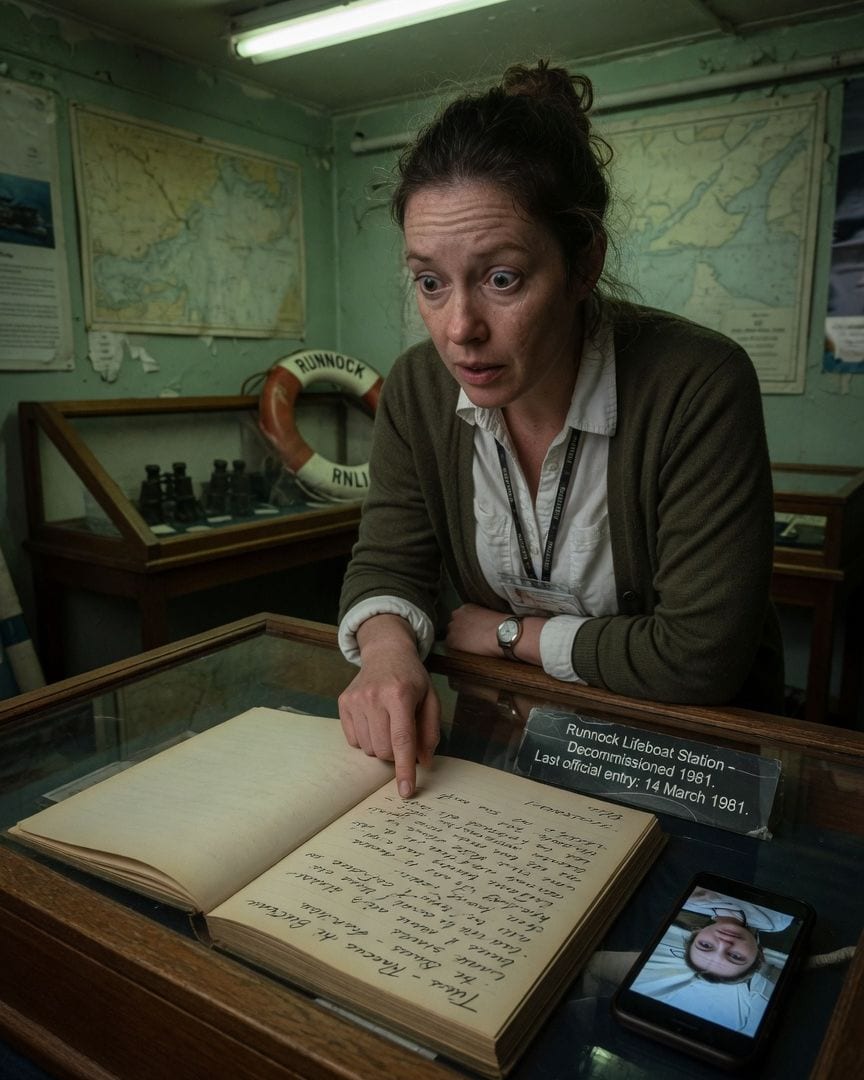
The Runnock lifeboat museum's old logbook adds new entries weekly – ships lost in the 1800s, saved Tuesday.
As the new archivist for Runnock Maritime Museum, I found an old logbook from a decommissioned lifeboat station. Its last entry, dated just Tuesday, listed a schooner lost in 1888 as 'saved with all hands,' penned in unsettlingly fresh ink. But then I found a man reported missing last month, also listed as 'saved' from that 1888 disaster.
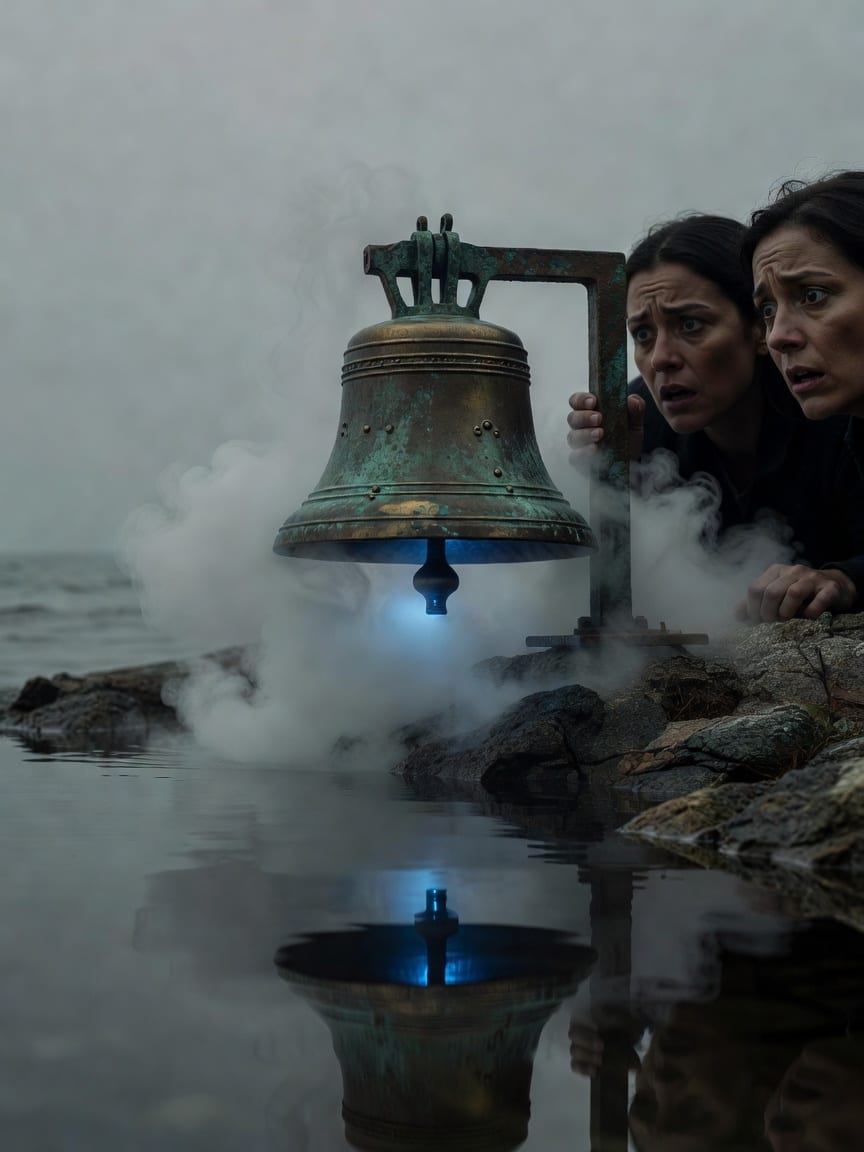
The fog bell on the point rings itself on still nights. The framed log at the yacht club lists eleven calm evenings it rang – each entry beside a boat that never came home.
Moving to a quiet coastal town, I found myself drawn to an old logbook at the yacht club. It recorded the fog bell ringing on flat-calm nights, each instance tied to a boat that simply vanished. Then, I found my own boat's name, 'The Osprey,' penciled at the bottom, marked with an unfinished, cryptic symbol.
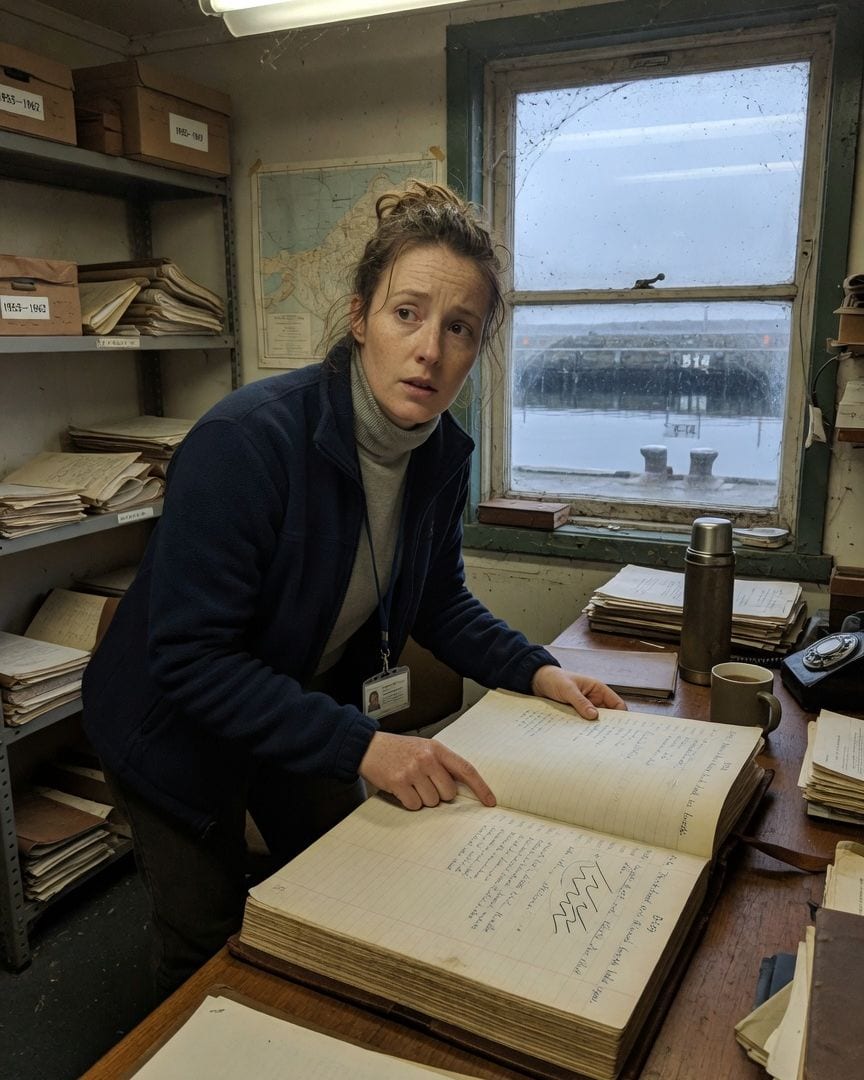
My harbour ledger shows Berth 14 let to a trawler every few years, but it's always empty. Each entry reads 'not returned to sea, berth held open'.
My job as Harbour Master's Assistant is managing the berth ledger, tracking every vessel. But Berth 14 holds a strange paradox: my book says it's let, yet it's always empty. Each entry for that berth closes with the same cryptic note – 'not returned to sea, berth held open' – a pattern stretching back to 1955.
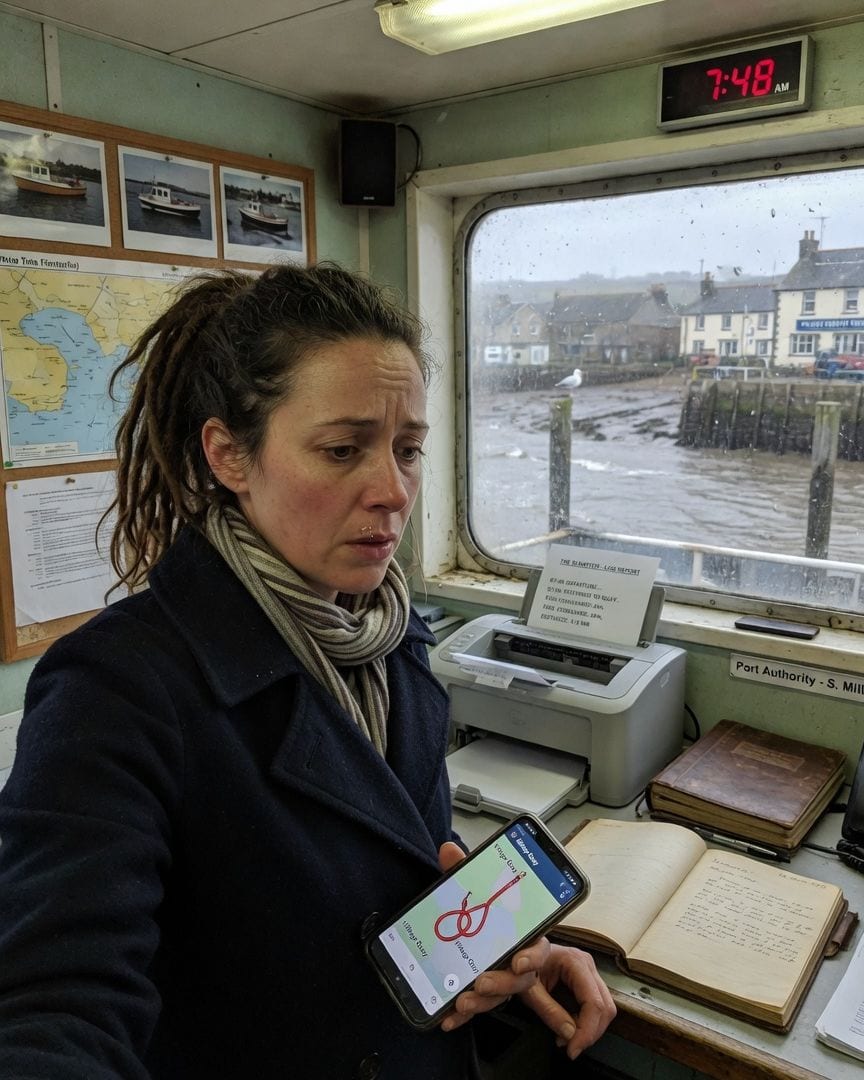
My morning ferry crossed for 40 minutes. The destination town just disappeared.
I board 'The Seawitch' every Tuesday for the familiar eight-minute estuary crossing. But this morning, after making good time, Captain Bernard and I watched the town quay simply fail to appear. Instead, our ferry repeatedly returned to the very same village quay we'd just left, despite burning fuel and advancing the clock.
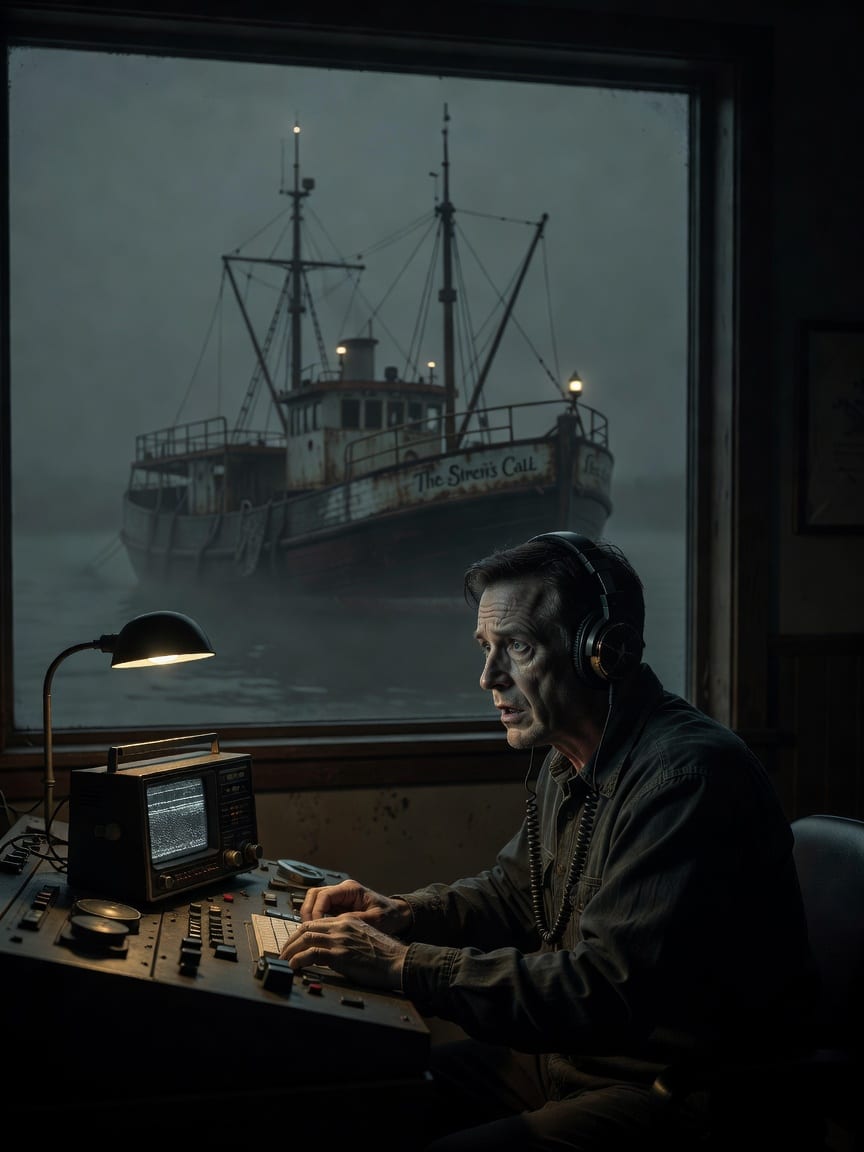
My radio picked up a skipper at 3 AM every night, asking about the bar. The harbourmaster's tapes show no calls, and that boat sank ten years ago.
Every night, as the harbour night watchman, I have a comforting ritual: guiding Tom of 'The Siren's Call' through the channel. But the harbourmaster just reviewed the tapes, and my voice is there, clear as day, while Tom's response is utter silence. And official records show his vessel, 'The Siren's Call,' sank a decade ago with all hands.
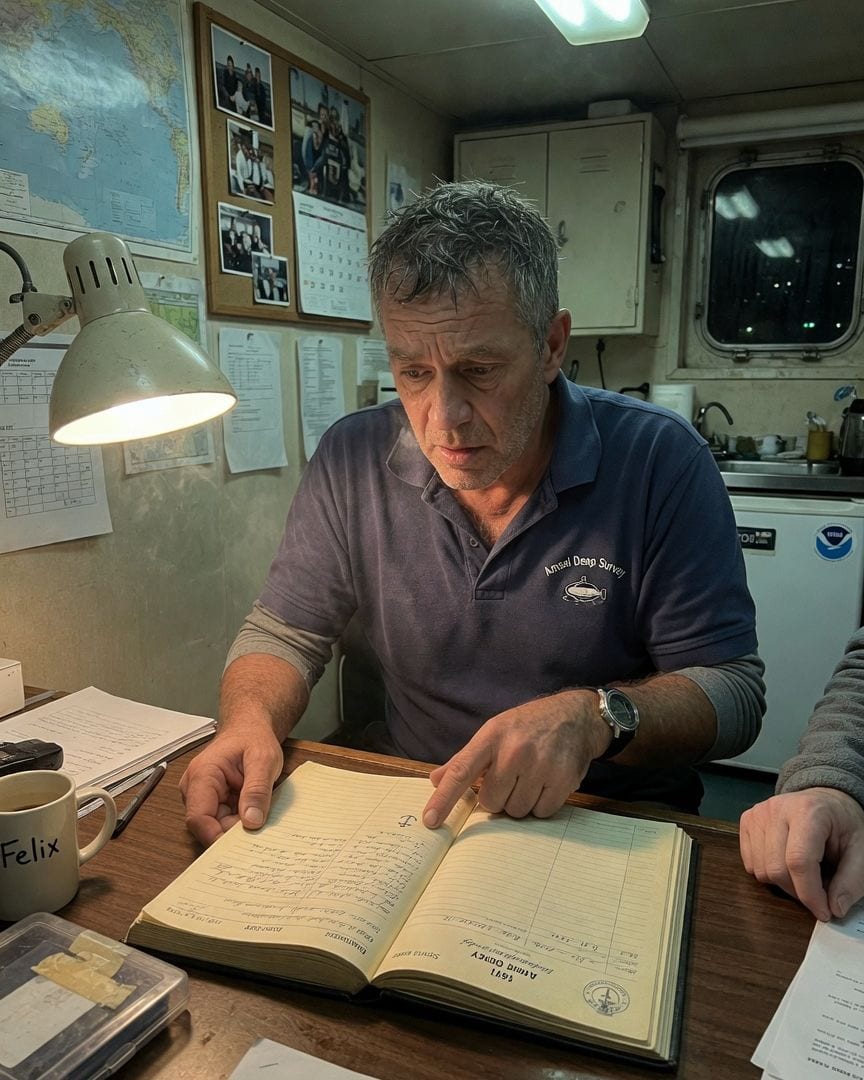
On his final deep-sea survey, a submersible pilot watches a 32-year-old Cold War wreck's rudder shift two degrees.
Deep-sea surveyor Hugo Amsel embarked on his final major dive, anticipating a quiet retirement after decades exploring the crushing pressures of the deep. His submersible's lights cut through the murky green, revealing the *Wynn Portal*, a sealer vanished in 1991, eerily preserved with unnervingly clear windows, free of any marine growth. Then, the inexplicable: the wreck's rudder angle indicator, softly lit, twitched two degrees further to starboard. Later, inside the wheelhouse, Hugo found the ship's official logbook, its final entry dated three days *after* the vessel's recorded disappearance, hundreds of miles north. How could a ship vanish, only to log a journey days later, from a place it never reached?