My radio picked up a skipper at 3 AM every night, asking about the bar. The harbourmaster's tapes show no calls, and that boat sank ten years ago.
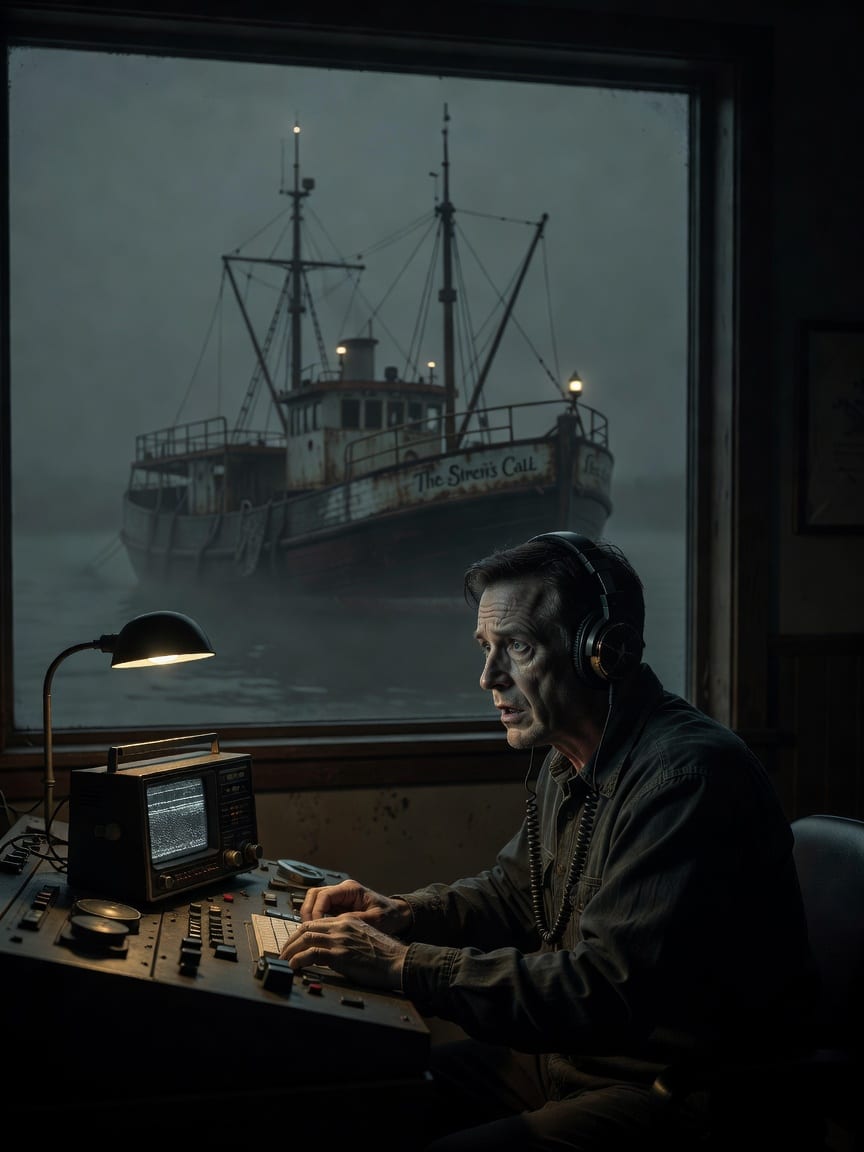
The crackle of the radio was as familiar as the hum of the old heating unit in the harbour office.
Every night, precisely at 3 AM, a voice would cut through the static, low and gravelly, asking, "Harbour Night Watch, is the bar clear to bring her in?" It was Tom, skipper of 'The Siren's Call', a regular fishing trawler.
For months, I, Ronald Caldwell, the night watchman, had talked him through the channel, confirmed the tides, and wished him safe passage. It was a small, comforting ritual in the isolation of the graveyard shift.
Until a week ago, when George Harrington, the harbourmaster, called me into his office, a strange tightness around his mouth. There'd been a near-miss with a tanker, and George was reviewing all radio traffic from that night.
He played back the tapes. My voice was clear, crisp, "Bar's clear, Tom. Bring her in." But the air where Tom's response should have been was utterly, unnervingly silent. Just static. Nothing.
George frowned, rewinding the tape. The fluorescent light in his office buzzed, mirroring the sudden jumpiness in my own nerves. "Ronald, are you sure about this Tom character?
I'm not seeing any vessel named 'The Siren's Call' on the manifests for, well, for years."
I felt a chill that had nothing to do with the office air conditioning. "Of course, George. Tom. Big fellow, always sounds a bit tired. Calls every night." My rational mind was already scrambling, looking for the obvious explanation.
A faulty radio? A prank? But the console was new, top-of-the-line. And the voice was too consistent, too specific in its requests, for a prank. I heard it. Every night.
George pulled up the digital logs, scrolled through months of entries on his screen. Nothing. Not a single outgoing call from my console at 3 AM that wasn't initiated by me, and certainly no incoming hails from 'The Siren's Call'.
My name, Ronald Caldwell, was on the log for every shift, but the call to 'Tom' was absent. It was as if that specific minute, that specific exchange, simply didn't exist in the harbour's official history.
Then George pulled out an old, laminated newspaper clipping from a drawer. The yellowed headline, brittle with age, read: 'FISHING TRAWLER 'THE SIREN'S CALL' LOST WITH ALL HANDS OFF THE POINT – TEN DEAD.'
My eyes scanned the blurry photo below it, a grim image of a vessel listing hard in heavy seas. And then the second photo, a man in a sou'wester hat, his face craggy, tired.
The article listed the skipper as 'Thomas 'Tom' O'Malley'. Date of loss: exactly ten years ago, almost to the hour of my nightly calls.
George looked at me, his face pale, his voice a low rumble that barely cut through the silence. "Ronald, 'The Siren's Call' sank a decade ago. There was no recovery. No one survived."
My blood ran cold. I’d been talking to a ghost, every single night, for months.
Not just a ghost, but a ghost whose calls left no record, whose vessel didn't exist in the present, and whose crew was lost to the sea.
The paper, dry as it was, felt like it was leaching the warmth from my hands.
George played the tape again, the whir of the machine unnaturally loud in the sudden quiet of the office. My voice, calm and professional, echoed, "Bar's clear, Tom. Bring her in."
The silence that followed was heavy, pregnant with a truth I couldn't comprehend.
It wasn't just that Tom was dead; it was that my entire interaction with him, the familiar exchange I’d relied on, simply didn't exist in any verifiable record. Yet, I remembered it with absolute clarity, every crackle, every word.
The official report, detailing the loss of 'The Siren's Call' a decade prior, lay open on George Harrington's desk. The boat was gone. Tom was gone. But my radio, my ears, had been receiving his calls.
The silence on the tape was a deeper wrongness than any ghost could be.
The next few shifts were a blur of unease. I tried to dismiss it, to tell myself it was a hallucination, sleep deprivation finally catching up with me.
But the memory of Tom’s voice, the specific details of our conversations – the way he’d sometimes mention the weather or the rough passage he’d just had – were too vivid, too real to be simply imagined.
I started checking my personal logbook, the small, spiral-bound notebook I kept for my own notes, outside the official system. Every 3 AM entry had a scribbled note, as consistent as the tides: 'Tom - Siren's Call - clear.'
I couldn't have imagined that, not for months on end. The physical evidence of my own writing stared back at me, accusingly.
I began asking the other watchmen, subtly at first. "Anyone ever hear about an old boat, 'The Siren's Call'?" Blank stares. They knew the name, vaguely, from local history, but nothing more. "A skipper named Tom?" More blank stares.
No one remembered any regular calls, any skipper named Tom who operated a trawler like that in recent memory. The silence was absolute. It was as if I was the only one who had ever heard him.
I couldn’t let it go. The feeling that something was profoundly wrong burrowed into my chest. I started digging into the harbour’s history during my off-hours, looking for anything that might explain a recurring anomaly.
The official archives were sparse, modernised, everything digitised within the last fifteen years. Then I remembered Abigail Yates, the local history archivist.
She was known for her meticulous care of the town’s older, less formal records, the stuff that predated digital systems and strict categorisation.
I paid her a visit during the day. Her office was a labyrinth of dusty boxes and forgotten files, smelling faintly of old paper and something metallic, like ancient rust.
I explained, vaguely, that I was researching old maritime communication patterns, specifically looking for any peculiarities in radio traffic from decades past. She nodded, her thick-framed glasses perched on her nose, almost disappearing into her wispy grey hair.
"Ah, the old radio logs. Most of those were digitised, but the really old stuff, the raw tapes, they’re still down in sub-level three. Uncatalogued, mostly.
Too much static, too much interference to be worth the effort for the main system."
My heart hammered against my ribs. Uncatalogued. Not on George’s system. Not subject to the clean, digital scrutiny that had shown my Tom-calls as simply absent. "Could I... could I take a look?"
I asked, trying to sound casual, as if this was merely academic curiosity. Abigail gave me a curious look, a slight frown creasing her brow, but agreed. "Just don't make a mess, Ronald. Some of those are fragile.
And mind the rats."
My visits to the archive became a regular occurrence. I felt a subtle shift in the atmosphere at the harbour, a feeling that went beyond the usual shift changes.
George Harrington started giving me pointed looks, his eyes lingering for a second too long, asking about my 'new hobby.' "Best to let old ghosts lie, Ronald," he said one afternoon, his voice low, almost a warning.
"Some things are better left undisturbed." It wasn't a threat, not exactly, but the calm, unblinking way he said it made the words sit heavy in the air.
I brushed him off, but a prickle of unease started to crawl under my skin. I was being watched. Not just by George.
Sometimes, when I was in the archive, focused on a dusty box or a reel of tape, I’d hear footsteps above, or the faint click of a door closing in the main office, even though Abigail was usually the only one there.
It was always just outside my direct line of sight, always just out of earshot for a clear identification.
I started thinking of it as 'the watcher,' an unseen presence, vague and unsettling, that seemed to monitor my progress through the forgotten past.
One evening, I was leaving the archive, my head full of static and old voices, the smell of mildew clinging to my clothes, when I overheard two retired harbour workers talking near the break room.
Old Man Porter and a fellow named Caldwell, I think. They didn't see me, tucked into the shadow of a maintenance cart.
"...the 3 AM loop, you mean?" one of them mumbled, his voice raspy.
"Yeah. Heard young Ronald's picked it up now. Poor sod." The other chuckled, a dry, rasping sound like gravel in a tin can. "They always do, eventually."
My blood ran cold. The 3 AM loop. They knew. They’d heard about it.
But they spoke of it with a chilling casualness, as if it was just another unfortunate hazard of the job, like bad weather or a leaky roof. As if it was simply a given.
The danger wasn't just in what I was finding; it was in the silent knowledge of those who had always known, and had let me walk right into it.
Abigail finally relented, giving me access to the dusty sub-level three. It was a cavern of old reel-to-reel tapes, stacked haphazardly on metal shelves that groaned under the weight.
The air was thick with the smell of mildew and aged paper, so potent it felt like I was breathing history itself. I spent hours down there, painstakingly sifting through boxes labeled 'Misc. Radio Traffic - Pre-Digital.'
My fingers were black with dust, my throat dry.
Then I found it. A box containing dozens of reels, all marked with faded, handwritten dates from twenty, thirty, even forty years ago. Some of the handwriting was neat, others scrawled.
I pulled out a reel marked 'March 14, 1978', threaded it onto an ancient playback machine Abigail had found for me, its plastic casing yellowed and cracked. I put on the headphones.
Static. A low, persistent hiss that was almost a white noise. Then, a voice. Young, clear, but definitely mine. "Harbour Night Watch, is the bar clear to bring her in?"
My breath hitched. My heart hammered, a frantic drum against my ribs. It was my voice, my exact words, from months ago. But the tape was dated decades before I was even born. I fast-forwarded, rewound, my fingers shaking.
I heard my own voice, asking the same question, over and over, on tapes from different years, sometimes clear, sometimes muffled by static.
And then, I heard the answer.
"She's clear, Tom. Bring her in."
But it wasn't my voice answering. It was an older man's voice, tired, but unmistakable. He sounded as if he'd just been roused from a deep sleep, but the words were precise, part of a practiced routine.
I listened, horrified, as I realised what I was hearing. It wasn't just my calls; it was the call. The same exchange, played out by different watchmen, year after year, always at 3 AM.
The routine, the exact phrasing, the question about 'The Siren's Call.' Each voice different, each name associated with the watchman on the reel.
And then, on a tape from ten years ago, dated to the very night 'The Siren's Call' was lost, I heard a watchman, a man whose name on the reel was Vincent Porter, asking, "Bar's clear, Tom?"
And then, instead of Tom's reply, a sudden, violent burst of static, like an overloaded circuit exploding, followed by a faint, distant scream that was quickly swallowed by the roar of a storm.
Then nothing but the hiss of the tape. The call wasn't just an echo; it was a re-enactment, a loop that drew in the living, making them part of its unfolding tragedy.
I kept listening, my hands trembling as I changed reels, each one a fresh punch to my gut. I heard a watchman from the seventies, a woman named Constance Yates, talking to Tom.
Then, a watchman from the fifties, Philip Caldwell, asking the same question. It was a relay race of the damned, each night watchman picking up the baton, unconsciously completing the same tragic circuit.
The voices shifted, some weary, some brisk, some with regional accents I barely recognised, but the words, the 3 AM cue, the response – they were identical.
And then, on a reel marked '1968', I heard it. A different voice, a watchman I didn't recognize, his tone weary, laced with a faint sigh before he spoke. "Harbour Night Watch. Is the bar clear to bring her in?"
A pause, filled with the familiar, low static. Then, the answering voice, familiar now, the one I had heard so many times from Tom. "She's clear, Tom. Bring her in."
The Watchman from 1968 sighed again, a sound of profound relief, then added, "Good. Get her in safe. Ronald." The tape crackled, then went silent, leaving only the endless hiss.
Ronald. My name. Spoken by a phantom watchman decades before I was born, completing a loop that predated me, a part of a conversation that shouldn't have been possible.
I wasn't just hearing the past; the past was calling to me, through me, drawing me into its endless, silent routine.
I found Abigail in her main office, still surrounded by her neat stacks of papers, the air somehow lighter than in the dusty sub-level.
She looked up, her expression a mix of pity and resignation, as if she’d been expecting me, knowing exactly what I’d found. "You found them, didn't you? The old tapes."
I nodded, numb, the headphones still dangling from my neck. "The 3 AM loop. Other watchmen. My name."
She sighed, taking off her glasses and placing them carefully on a pile of ledgers. "They call them 'harbour echoes.' Not ghosts, not exactly. More like... imprints. Tragedies that leave a mark so deep on a place, they replay.
The harbour, the water off the point where 'The Siren's Call' sank, it holds onto certain routines. The routine of 'The Siren's Call' asking for passage, and the watchman granting it. It's not malicious. It just is.
It needs someone to complete the circuit, to keep the routine alive."
She explained how the official records never showed it because the echoes are outside the normal flow of time, a bleed-through that only certain individuals, those isolated on the night shift, are susceptible to.
"The ones who get too deep, who try to break the pattern... they usually don't stay in the job long. Some leave, unable to reconcile what they've experienced. Some just... fade out, mentally. The harbour takes its toll."
Her voice dropped to a near whisper. "Vincent Porter, the one who heard the storm? He left the very next day, never spoke about it. Philip Caldwell, the one who called your name?
He had a breakdown a few years later and was found wandering the docks, convinced he was still on shift, decades later, still calling out for Tom."
Every clue clicked into place, pieces of a grim puzzle falling into their pre-ordained slots. The missing calls on George's logs, the boat that sank, the phrase I’d overheard, 'The One Who Was Always Here'.
Tom was always here, in the harbour's memory, waiting for someone to answer. And now, I was that someone. I was Philip Caldwell. I was Vincent Porter. I was every watchman caught in the loop.
That night, as 3 AM approached, I sat at my console, a cold sweat beading on my forehead. The radio was silent, but the air in the office felt thick, heavy with anticipation, pressing in on me from all sides.
The hum of the old heating unit seemed to falter, its usual rhythmic drone replaced by a strained, irregular shudder, and the temperature in the room dropped several degrees, raising goosebumps on my arms.
I gripped the microphone, my knuckles white. I wouldn't answer. I wouldn't be part of the loop. I would break it.
The clock on the wall ticked past 3:00, then 3:01. The silence was deafening, pressing in on me, a physical weight.
The water outside the window, usually a calming dark expanse reflecting the distant lights, now seemed to churn with an unseen current, black and hungry.
A faint, almost imperceptible static began to build on the radio, not the usual background hiss, but a deep, resonant thrum that vibrated through the console, through my chair, into my bones.
It wasn't a call; it was a presence, a demand. A silent scream to complete the routine, to grant passage.
The dread of not answering, of leaving 'The Siren's Call' adrift in its endless loop, of leaving Tom out there in the cold, was worse than the dread of participating.
My hand, as if moved by an unseen force, reached for the microphone. My mouth opened, the words forming without conscious thought, a ritual I had performed countless times, a part of me now. I had to.
I had to let him in. The compulsion was absolute, a part of the harbour itself, woven into the very fabric of the night. I couldn't escape it. I was just the latest vessel for its ancient, unending tragedy.
The call came. I answered. The routine continued. Every night, at 3 AM, Tom hails me. And every night, I tell him the bar is clear.
George Harrington no longer gives me pitying glances; his eyes now hold a sort of distant, weary understanding, a look that has seen too many nights, too many new watchmen.
Abigail Yates avoids my gaze altogether, as if seeing me is to acknowledge a truth she’d rather keep buried, a secret that binds us all. I still come to work, I still do my job.
But a part of me remains out there, on the water, waiting for the call, for the routine that binds me to the harbour's silent, persistent past.
My personal logbook entries are now just a single, stark line for 3 AM: 'Siren's Call. Clear.'
I’ve stopped fighting it. The cold dread has settled into a quiet acceptance. The harbour, the night, the endless loop – it’s all part of me now, a deep current running beneath my skin.
Sometimes, when the static is particularly heavy, I hear faint whispers beneath Tom’s voice, other watchmen, other names, caught in the same current, a chorus of the damned.
I wonder if one day, my voice will be one of those whispers, joining the chorus of the past, waiting for the next living soul to answer. The silence after Tom’s call is no longer an abyss; it’s a promise.
Every night at 3 AM, I tell Tom the bar is clear, and I wonder who will eventually tell me the same.
If this one got to you
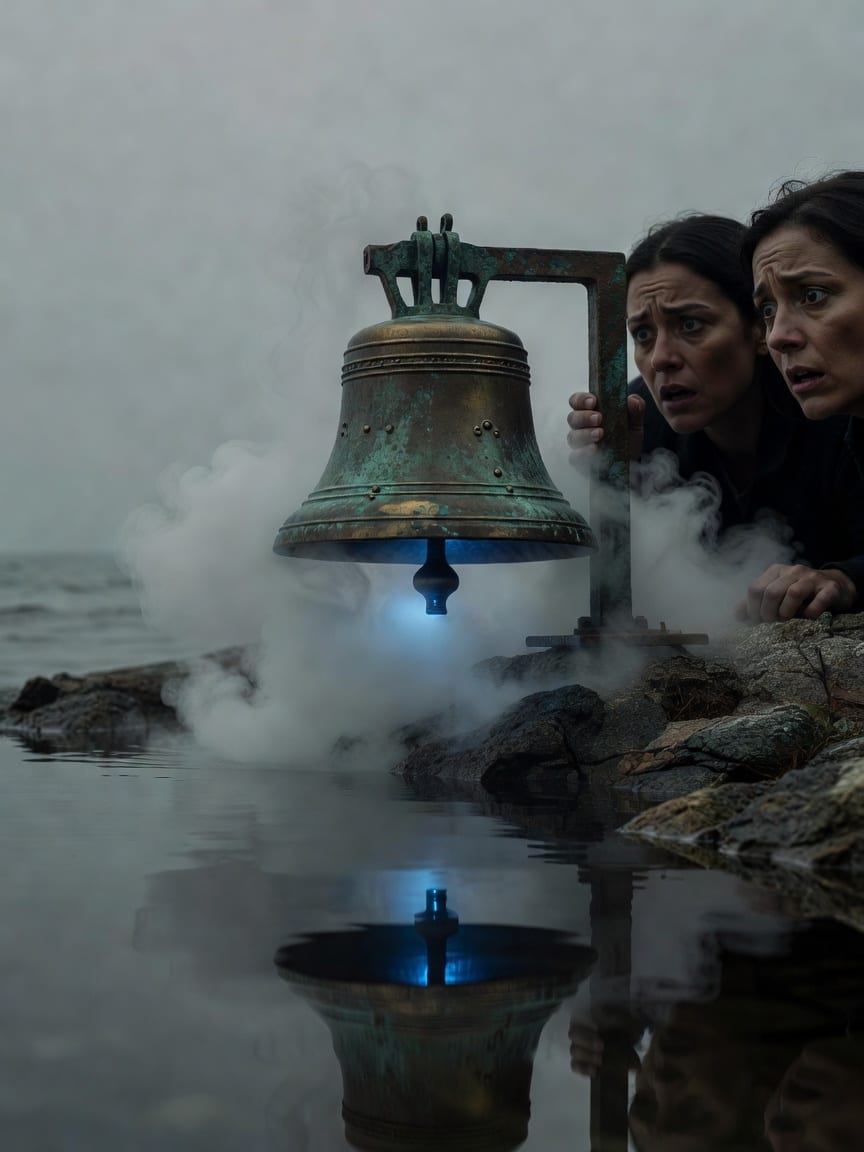
The fog bell on the point rings itself on still nights. The framed log at the yacht club lists eleven calm evenings it rang – each entry beside a boat that never came home.
Moving to a quiet coastal town, I found myself drawn to an old logbook at the yacht club. It recorded the fog bell ringing on flat-calm nights, each instance tied to a boat that simply vanished. Then, I found my own boat's name, 'The Osprey,' penciled at the bottom, marked with an unfinished, cryptic symbol.
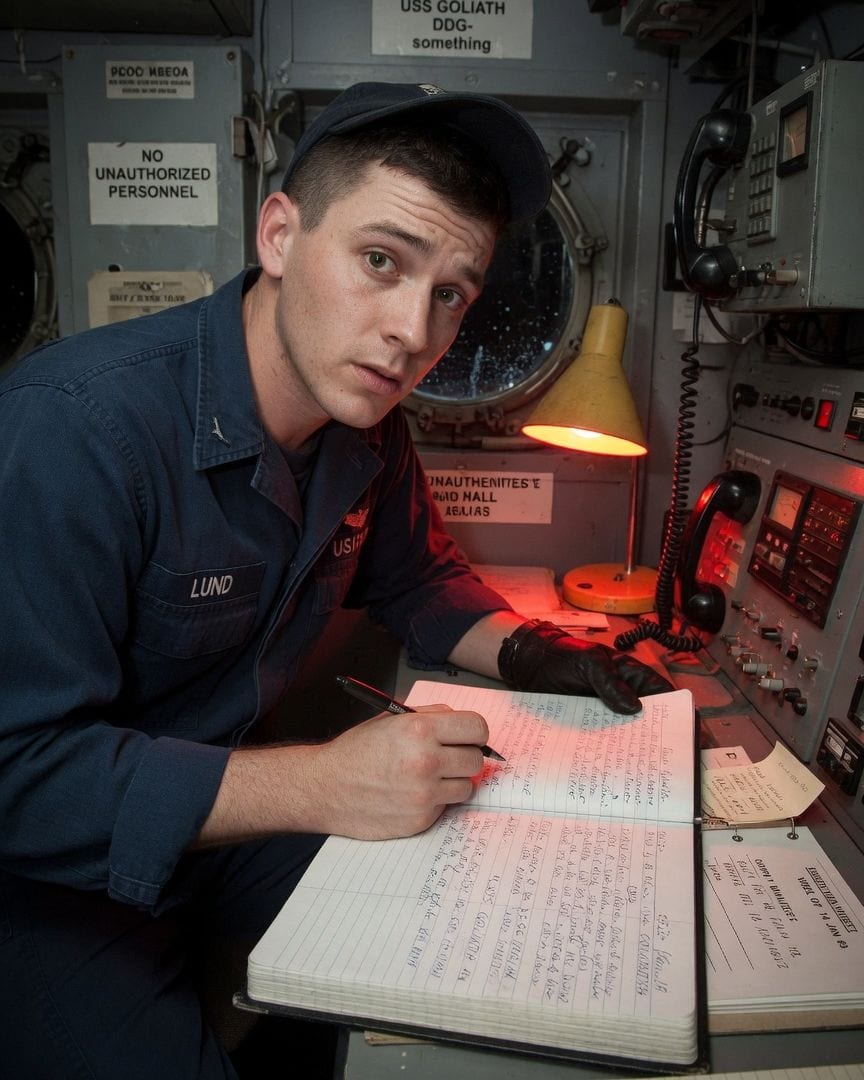
Petty Officer Lund heard his own captain's mayday: the Cold War USS Goliath was sinking, two hundred miles astern.
Petty Officer Marco Lund kept a lonely vigil in the USS Goliath's radio room, the destroyer battling the North Atlantic in deep winter 1983. Suddenly, a garbled mayday broke through: his own ship, his own captain, reporting they were going down two hundred miles astern. Though the bridge confirmed the Goliath was fine, the same chilling call came again an hour later, stronger and from the exact waters they had just crossed. Deeply unsettled, Marco began searching ship logs, eventually discovering a phantom entry: an identical mayday, logged a week prior, pressed into the very paper beneath his own.
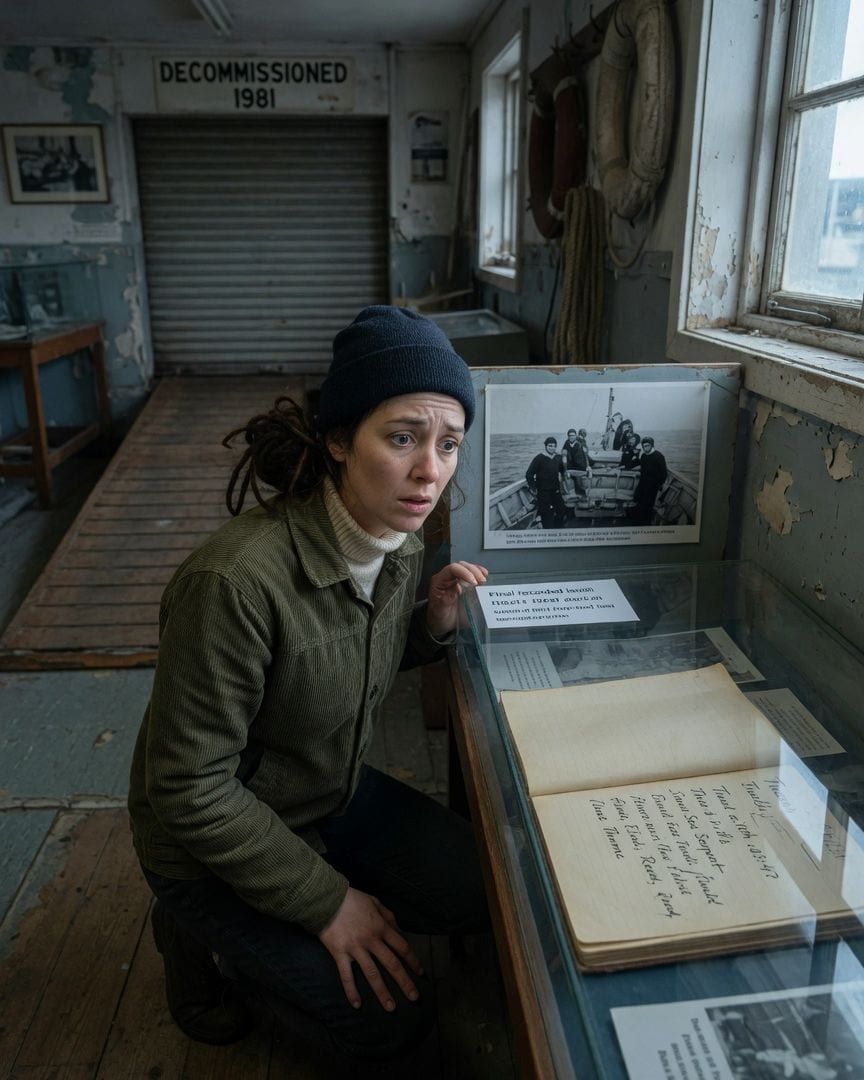
The museum's logbook recorded a rescue two days ago. Its 'souls saved' were buried in 1888.
As the new curator of the Runnock Maritime Museum, my assignment was to refresh the exhibits of its 1981-decommissioned station. Yet, a fresh logbook entry, dated just two days ago, noted a recent rescue. The vessel named, 'The Sea Serpent,' was listed in the archives as lost with all hands in 1888.
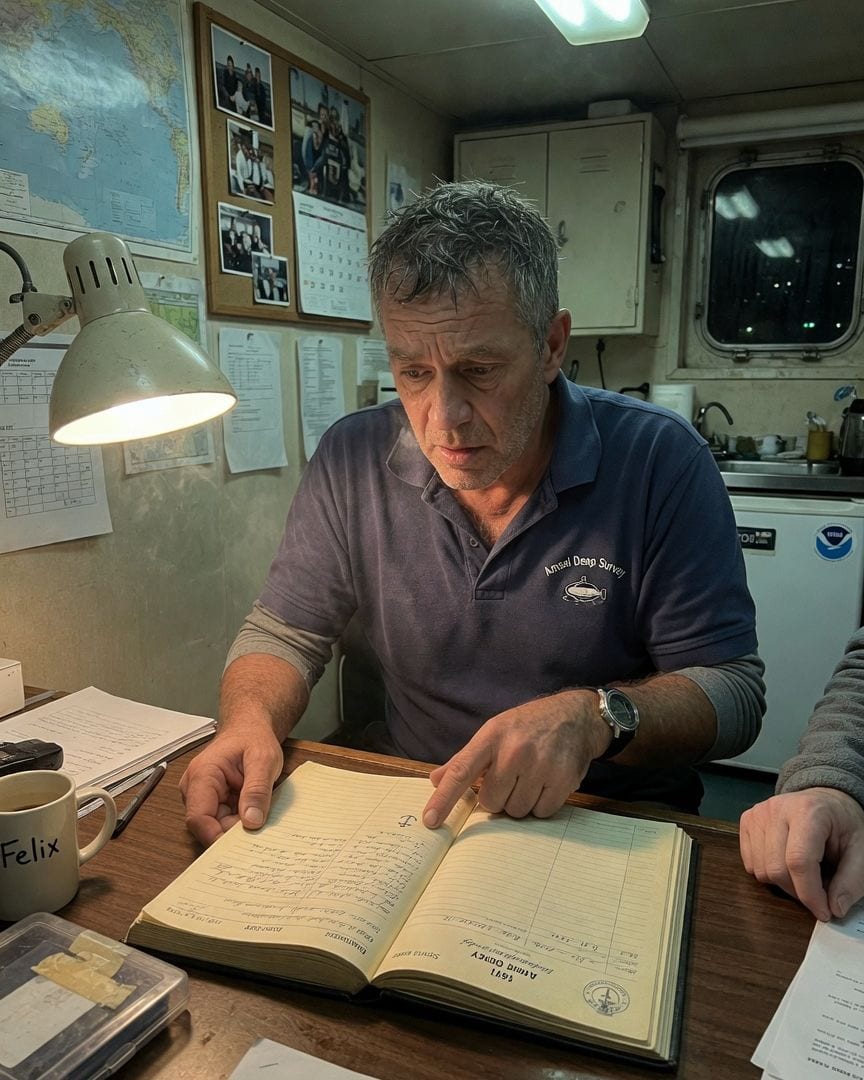
On his final deep-sea survey, a submersible pilot watches a 32-year-old Cold War wreck's rudder shift two degrees.
Deep-sea surveyor Hugo Amsel embarked on his final major dive, anticipating a quiet retirement after decades exploring the crushing pressures of the deep. His submersible's lights cut through the murky green, revealing the *Wynn Portal*, a sealer vanished in 1991, eerily preserved with unnervingly clear windows, free of any marine growth. Then, the inexplicable: the wreck's rudder angle indicator, softly lit, twitched two degrees further to starboard. Later, inside the wheelhouse, Hugo found the ship's official logbook, its final entry dated three days *after* the vessel's recorded disappearance, hundreds of miles north. How could a ship vanish, only to log a journey days later, from a place it never reached?
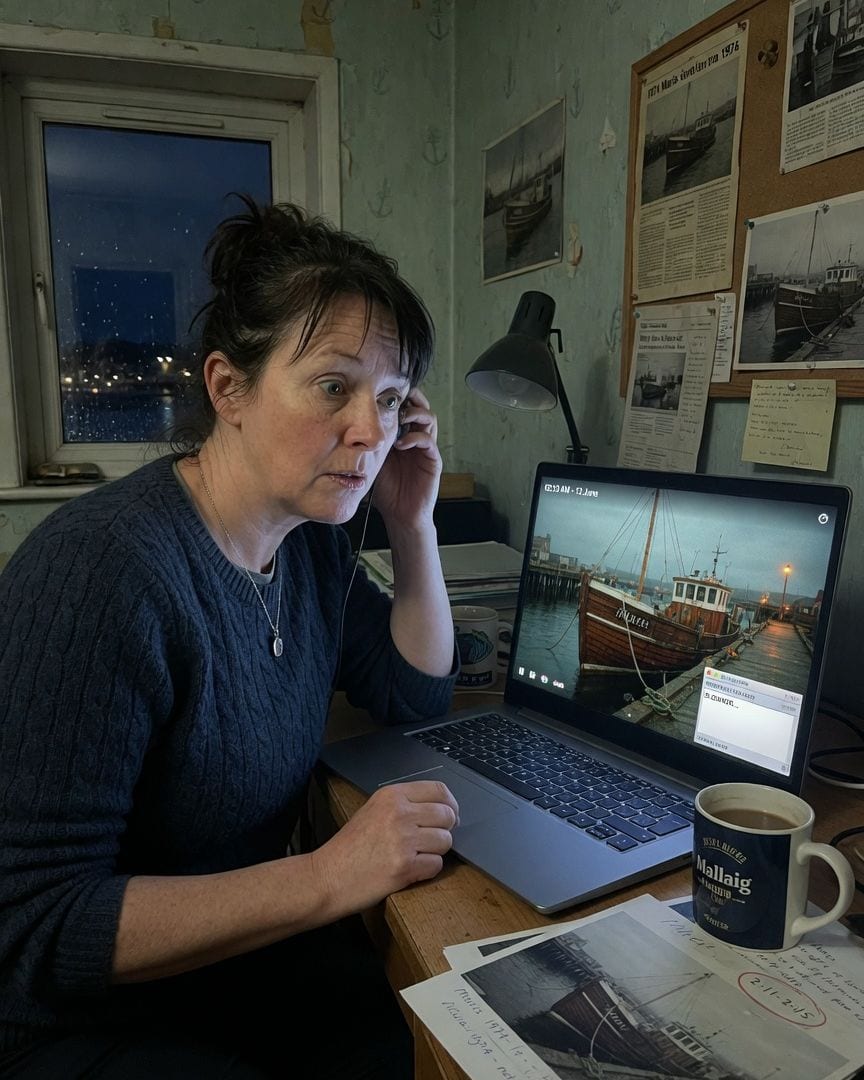
My webcam feed showed the Maris, lost with all hands in 1974, tied at the Mallaig pier. Then I heard its voice.
My morning routine of checking the Mallaig harbour webcam was shattered when I saw the fishing trawler *Maris* tied to the pier. This boat, with its distinct hull and rigging, went down with all hands in 1974, a loss still etched on our town's memorial. Yet, there it was, captured on a live feed, moving silently in the early hours.
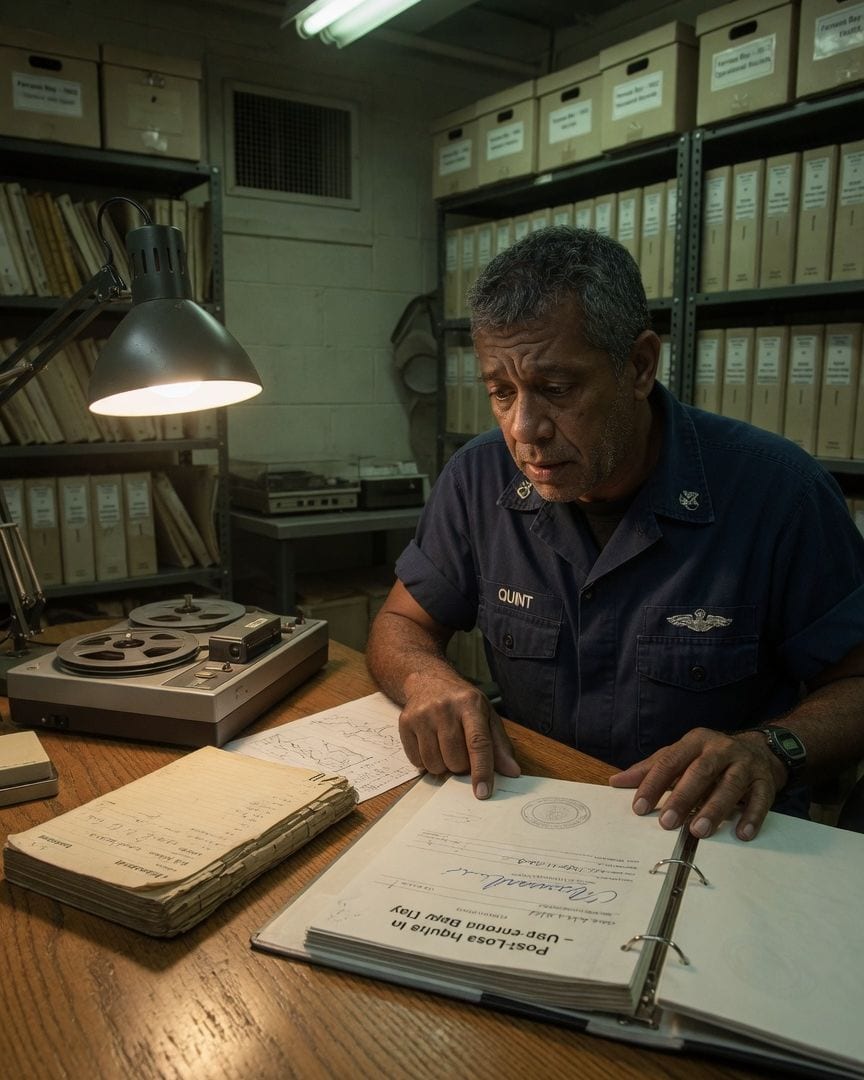
A Cold War sonarman heard his dead father’s voice on a tape, charting the ship’s wreck thirty years after it sank.
Chief Sonarman Abel Quint spent six weeks in the Naval Records vault, listening to the final transmission of the USS Ferrous Bay. His father, Desmond Quint, was on that ship when it vanished in 1962, and Abel sought some final comfort in his voice. But on this morning, a faint, second set of sonar soundings emerged from the recording—soundings in his father's precise cadence that charted the ship’s wreck site thirty years in the future. As Abel cross-referenced records, he then found a maintenance log for the Ferrous Bay's sonar system, dated six months after the ship and his father were officially lost, signed by Desmond Quint himself. What impossible truth was hidden in these official naval records?