Newspaper dated next week wrapped my lost things. The watch inside was still ticking.
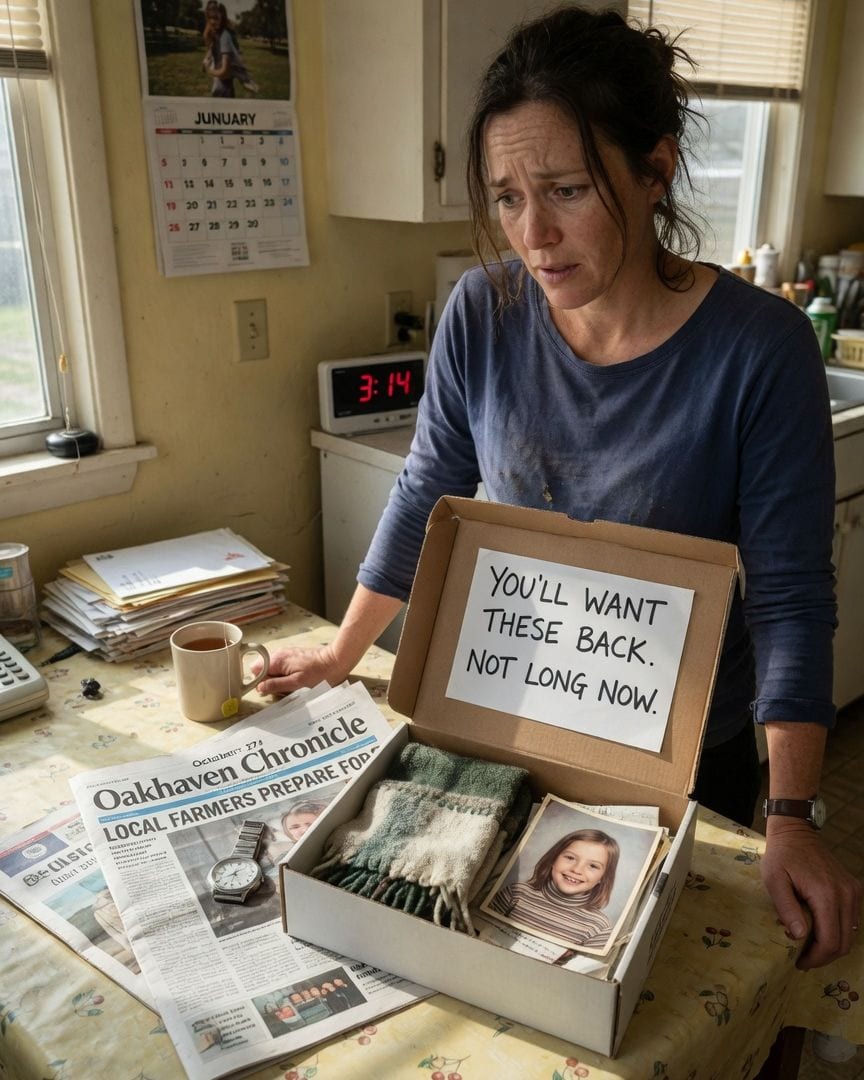
My doorbell rang, a sharp, insistent sound that cut through the quiet afternoon. I remember looking at the clock – 3:14 PM. A courier, face obscured by a cap and sunglasses, stood on my step, holding a plain cardboard box.
There was no return label, just my name, Florence Crane, scrawled across the top in thick, black marker.
He didn’t wait for a signature, just set it down on the mat and left, his van disappearing down the street before I even had the door fully open.
Inside, nestled in crinkled newspaper, were my own things. My silver watch, the one I’d lost years ago on a trip to the coast, the one with the scratched crystal. It was still ticking, set to the correct time.
Not just a correct time, but my time, matching the old digital clock in my kitchen.
A wool scarf I’d believed gone forever, knitted by my grandmother, was draped around a small, faded school photograph of myself, aged nine, beaming a gap-toothed smile. That photo had been in my childhood bedroom, tucked into a frame.
I hadn't seen it in twenty years.
The newspaper itself was the real punch. It was a copy of the Oakhaven Chronicle, a local paper, but the date printed boldly at the top of the page was October 27th. The week after next.
Taped inside the lid, a plain white card, all in careful capitals: 'YOU'LL WANT THESE BACK. NOT LONG NOW.'
I stared at my nine-year-old self, then at the impossible date, and the watch on my wrist, mirroring the one in the box.
The whole thing felt like a prank, an elaborate, unsettling joke, but the cold certainty of the future date made my skin prickle. It wasn't just a random date; it was a specific, impossible date.
I spent the next day trying to find the courier service. I called every local delivery company, checked their logos online.
No company matched the one on the cap the man wore, and there was no record of a delivery to my address for that specific time. I even called the Oakhaven Chronicle.
They confirmed their delivery schedule and laughed when I asked about a paper dated the week after next. "We don't print future issues, ma'am," the editor had said, "and certainly not with old news."
My rational mind tried to construct a scenario: a prankster, a friend with too much time and a dark sense of humor.
But who knew about the lost watch, the scarf, the specific photograph that had been tucked away for decades? And how did they get a physical copy of a newspaper from a date that hadn't arrived yet?
The questions spun into a tight, anxious knot. I checked the watch from the box. It still ticked. My own watch, the one I wore every day, was slightly fast. This one was perfect.
Then, two days later, a second piece of mail arrived. Not by courier, but a standard letter, tucked in with the bills. My name, Florence Crane, handwritten on the envelope in a looping, elegant script. No return address.
The postmark was faded, smudged, but legible: 'Oakhaven Fields, ME.' I knew Oakhaven. It was a rural area an hour north, mostly farmland. There was no town or post office called Oakhaven Fields. Just fields.
Inside the envelope, a single sheet of heavy cream paper. The same careful capitals as the card in the box: 'THEY ARE READY. PREPARE.' My hand shook as I read it. They.
The plural hung in the air, cold and heavy. This wasn't a joke. This was targeted. And it knew my name, and what had been sent, and it was watching.
I drove to Oakhaven Fields the following morning, needing to see the impossible postmark for myself. The GPS led me to a stretch of overgrown land, bordered by a collapsing stone wall and ancient, gnarled oaks.
It was unmistakably a field, empty and silent, save for the rustle of dry weeds. No buildings, no signs of a post office, just open ground. My phone showed no signal out here, just a blank icon in the corner.
As I stood there, feeling the unsettling quiet press in, a glint in the undergrowth caught my eye.
Half-buried in the tall grass, near a crumbling section of the wall, was a small, tarnished silver key, intricately carved with an unfamiliar symbol – a serpent coiled around a stylized 'H'.
It looked impossibly old, like something out of a medieval tale. As I bent to pick it up, my phone, which had just moments ago been dead, vibrated violently in my pocket. A new message.
I pulled it out, my fingers fumbling. It was a digital scan of an antique, ornate key, identical to the one I’d just found in the dirt. Below it, in careful capitals, the single word: 'WAIT.'
The key, cold and heavy in my palm, felt less like a clue and more like a tether. I took it home, cleaned it, and spent hours researching its symbol online. Nothing.
The 'H' could be anything, a personal initial, and the serpent, while evocative, was too generic to narrow it down. But the postmark, 'Oakhaven Fields, ME,' coupled with the empty field itself, gnawed at me.
There had to be something there, or had been something. I remembered a local historian, Daniel Thatcher, who occasionally held talks at the public library.
He was known for his encyclopedic knowledge of forgotten local histories, particularly about the rural areas of the state.
I called him, carefully omitting the more surreal details – no mention of future newspapers or impossible messages.
I explained I was researching a property in Oakhaven Fields, possibly an old institution, now gone, that might have once had a postal drop or a specific address. Daniel, a kind, bespectacled man in his fifties, was intrigued.
He agreed to meet me at the library's archives the next afternoon.
Over dusty maps and brittle deeds, he found references to a 'Hallowed Keepers' Retreat' that had stood on the site of Oakhaven Fields from the late 1800s until its demolition in the 1950s.
It was vaguely described in the old county records as a 'sanctuary for quiet contemplation and study,' but details were scarce. "Most of these smaller, self-contained communities had their own postal arrangements," Daniel explained, tapping a yellowed parchment.
"Sometimes, the name of the place itself served as the address, even if it wasn't a recognized town."
As Daniel talked, my phone, which I'd set on silent, vibrated in my bag. I checked it discreetly. Another letter.
This one, too, from 'Oakhaven Fields, ME,' forwarded from my home address by my neighbor who collected my mail when I was out. It read: 'THE KEY IS YOURS. THE PATH IS OPEN.' My blood ran cold.
How did it know about the key? How did it know I'd found it only yesterday? The dread was no longer abstract; it had a name, a location, and an unnerving awareness of my every move.
The silence in the archive seemed to deepen around me, suddenly heavy and watchful.
The next few days felt like living under a microscope.
I’d catch glimpses of figures in my periphery – a dark car parked a few streets away from my house, a shadow moving too quickly at the edge of my vision when I looked up from my desk.
I dismissed it as paranoia, the stress making me jumpy, but the feeling persisted, a prickle on my neck.
The ordinary sounds of my house – the settling of the foundation, the creak of the floorboards – started to sound like footsteps, like whispers just out of earshot.
Then, my phone rang. Unknown number. I almost didn’t answer it, my finger hovering over the screen. Something in me, a cold pull, made me swipe to connect. 'Florence?' a low, calm voice asked.
It was neither male nor female, just flat, even, almost synthesized. 'We know you're looking. Daniel is a good man, but he won't understand.' My heart hammered against my ribs, a frantic drum in my chest. 'Who is this?'
I managed, my voice thin and reedy. The line went silent for a moment, then a soft, almost imperceptible chuckle. 'Your guides. You're almost ready.' The call disconnected. My hands trembled, the phone almost slipping from my grip. My guides.
They weren't just watching; they were actively communicating, confirming their presence and my investigation, correcting me, like a teacher to a wayward student.
I told Daniel about the call, about the feeling of being watched. He, ever the rationalist, suggested I install security cameras, but his eyes, behind the thick lenses of his glasses, held a new, quiet concern.
He found an old photograph of the Hallowed Keepers' Retreat – a grand, imposing stone building, its entrance marked by an archway bearing the familiar serpent-and-H symbol, identical to the one on the key I'd found.
The building itself looked austere, almost monastic. I recognized the crumbling stone wall from Oakhaven Fields, the same gnarled oaks. The dread tightened its grip. They weren't just sending letters; they were here.
They had been here, for a very long time.
Daniel, now visibly unsettled, redoubled his efforts. He started digging into the Keepers' records, whatever he could find.
Most of their archives had been scattered after the demolition, deemed too obscure to preserve, but a small collection had ended up with a regional historical society, almost by accident.
He called me, his voice tight with a peculiar mix of excitement and apprehension.
"Florence, there's something here. A list of names. Not members, exactly, but... 'beneficiaries' or 'recipients' is the closest I can translate it from the old legal jargon."
He paused, taking a shaky breath, and I could hear the rustle of brittle paper over the phone. "It's a ledger, bound in plain leather, with brittle, yellowed pages. And your surname, Crane, appears multiple times.
Back into the early 1900s. Different first names, but the same surname, over generations."
My mind reeled. Generations. It wasn't just me. It was my family. A pattern. A legacy I knew nothing about. "What were they receiving?"
I asked, my voice barely a whisper, the question hanging in the sterile air of my office.
"It doesn't say," Daniel replied, "just the names, and a cryptic note about 'preparations' and 'returns' next to each entry. But there's something else. A specific date, recurring for each Crane entry, always in October. Always the 27th."
The newspaper date. The October 27th that didn't exist yet, but was printed on the paper wrapped around my watch. It all clicked into place with a sickening thud.
The lost items, the future date, the letters from the demolished site – it was all part of a long-standing pattern, a legacy of my own family, a chilling, inescapable inheritance.
My family had been part of this, whatever this was, for a century. The air in my apartment felt suddenly cold, as if a window had been flung open on a winter night.
Daniel secured special access to the society's deep archives, a vault rarely opened to the public. He was looking for anything more substantial on the 'Keepers,' any records that might explain the 'preparations' or the 'returns.'
I insisted on going with him, the dread now a constant companion, a cold weight in my chest.
We descended into the dusty, climate-controlled basement, the air thick with the smell of old paper and forgotten time, the fluorescent lights humming faintly overhead.
Hidden behind rows of forgotten municipal records, in a section marked 'Institutional Miscellany,' Daniel found it: another ledger, much older, bound in dark, weathered wood, its pages almost black with age.
This one was larger, heavier, and its spine bore the faded title: 'The True Register.' With trembling hands, he opened it on a cart. The script inside was elegant, almost artistic, but difficult to decipher, clearly from an earlier century.
He slowly turned the pages, scanning entries, his finger tracing line after line, searching for the Crane surname, for any mention of the Keepers beyond what we already knew.
Then he stopped, his breath catching in his throat. His eyes widened, fixed on a specific entry near the middle of the book.
The silence in the archive pressed down, heavy and absolute, broken only by the faint hum of the climate control.
'Florence,' he whispered, his voice barely audible, raw with disbelief. 'This entry... it's you. Your name. Your full name. But it's dated 1948.'
Daniel slammed the ledger shut, the sound echoing through the vault like a gunshot. 'This is impossible, Florence. You weren't born until '91.' My own name, spelled out in that ancient book, in elegant, faded script, decades before my birth.
It wasn't a family name, a generational reuse; it was my name. Florence Crane. The dread solidified into a horrifying certainty.
We spent hours poring over the surrounding entries, cross-referencing with the partial registry Daniel had found earlier. We saw other familiar surnames, often repeated across generations, all with the cryptic notes.
Daniel finally found a small, almost invisible symbol next to my name in the older ledger: the same serpent-and-H symbol from the key I'd found in Oakhaven Fields. Underneath it, a tiny, almost indecipherable note, in Latin: 'Redemptio Animae – Octobris XXVII.'
'Redemption of the Soul,' Daniel translated, his voice hoarse, running a hand over his face. 'October 27th.' The newspaper date. The recurring date. It wasn't just a family legacy; it was a personal designation, a pre-ordained fate.
The Hallowed Keepers weren't a historical society, or a benign retreat; they were something far older, far more enduring, systematically 'redeeming' or 'reclaiming' specific individuals on a fixed schedule.
The items in the box, the lost watch, scarf, photograph – they weren't just mine. They were part of me, collected and returned, marking me as ready. I was not just being targeted; I was being reclaimed.
We left the archives in a daze. The world outside felt unreal, a thin veneer over a terrifying, ancient mechanism.
The sunlight on the street, the sound of traffic, the chattering people – it all seemed a performance, irrelevant to the quiet, precise machinery I had just glimpsed. I knew I couldn't run.
This wasn't a person or a group I could escape; it was a system, a pattern that had known me since before I was born. My existence was a line in a ledger, a date on a calendar already marked.
I called the number that had called me before, the 'Unknown Number' that I had saved with a trembling hand. It rang once, then a woman's calm, unhurried voice answered. 'Florence Crane. We've been expecting you.'
I recognized the detached serenity, the even tone from the previous call. It was a voice utterly devoid of human warmth or malice.
'Who are you?' I demanded, my voice thin despite my best efforts to sound firm.
'The Hallowed Keepers,' she replied, 'and I am Sylvia Lambert. We ensure the pattern continues. You are not a victim, Florence. You are a designated component. Your collection is a necessary act.'
Her voice was devoid of malice, or even emotion. It was simply a statement of fact, like reciting a weather report. 'The items were returned to prepare you. To tether you to what is to come.
The newspaper date is your final summons.'
I asked what would happen, what 'collection' meant. I tried to keep the panic from my voice, to sound rational, but I could feel the edges of my control fraying. She only said, 'You will fulfill your purpose.
As all the Cranes before you have.' There was no escape, no fight. Only acceptance.
I understood then that the dread wasn't about what they would do to me, but that I was already part of it, that my life had been a countdown to this moment, meticulously recorded in an ancient ledger.
The final week passed in a blur of quiet resignation. Daniel, horrified, tried to involve the authorities, but without a visible crime or a credible perpetrator, his pleas went nowhere.
A future-dated newspaper and a ticking watch weren't enough for a missing person investigation, not yet. He tried to tell them about the ledgers, but the historical society denied access, citing privacy and the fragile nature of the records.
The letters stopped. The phone line went dead. The world, oblivious, continued its rotation.
I made arrangements, wrote letters, tried to leave some trace of the Florence who understood, who was trying to fight. I tidied my home, as if preparing for guests, or perhaps, for an inspection.
But deep down, I knew it was futile. The pattern was too old, too entrenched. I was merely the next scheduled entry. My watch, the one they sent back, still ticked on my wrist.
Its measured rhythm seemed to mock the frantic beat of my own heart.
My last entry. Tomorrow is October 27th. The watch on my wrist, the one from the box, still ticks. It’s set to the correct time, precise to the second.
I can hear the quiet hum of the house around me, the ordinary sounds of an ordinary night. The refrigerator clicking on, the distant murmur of traffic. But I know it's not ordinary. I am not ordinary.
I have been known, for a very long time.
Weeks later, Daniel Thatcher called Florence's phone. It rang unanswered. He drove to her house. The front door was unlocked, the lights off. Inside, everything was meticulously neat.
On her kitchen table, a single silver watch ticked silently, set to the correct time. A small, faded school photograph lay beside it. He picked up the watch. It was still ticking.
He left, bewildered, and later filed a missing person report that went nowhere. The file was eventually closed. 'Is that so?'
If this one got to you
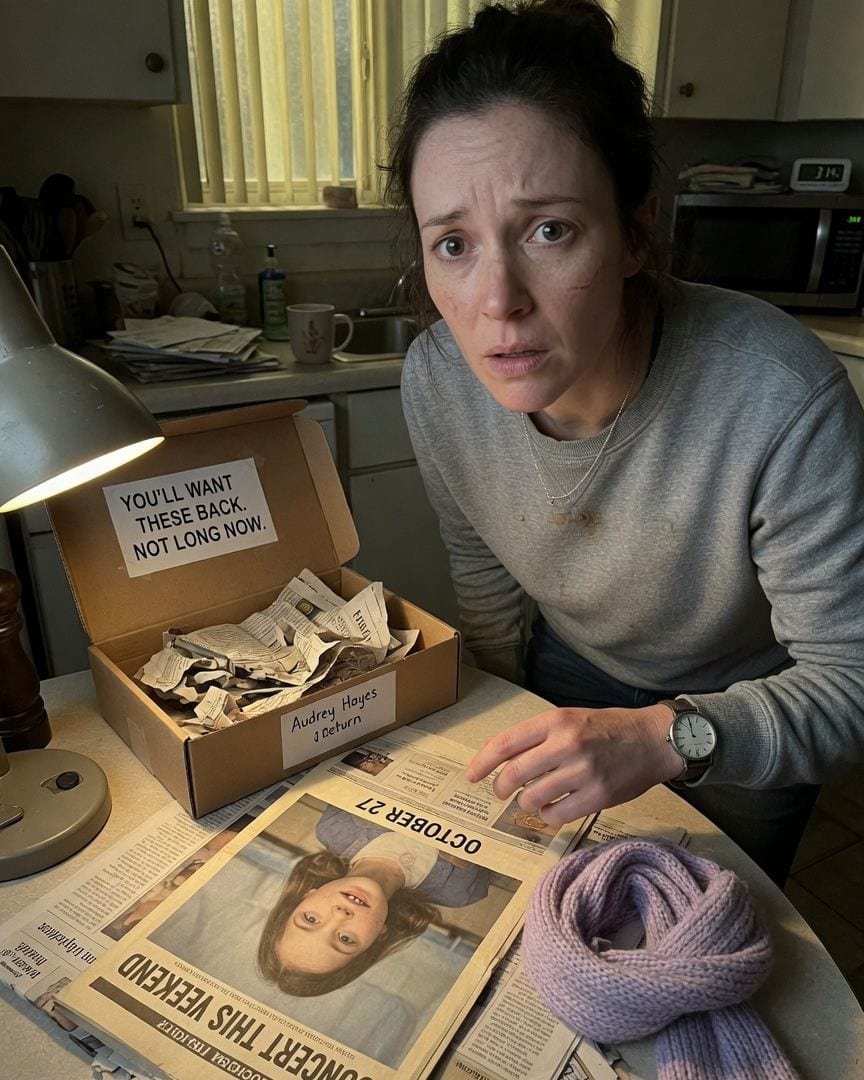
A box turned up with my name and no sender. Inside was a watch I lost years ago, still ticking and set right — wrapped in newspaper dated two weeks from now.
A plain brown box appeared on my step, containing my long-lost personal items. Among them, my grandmother's ticking watch and a newspaper dated two weeks in the future. But a historical ledger then revealed my name and these exact items, listed in 1965.
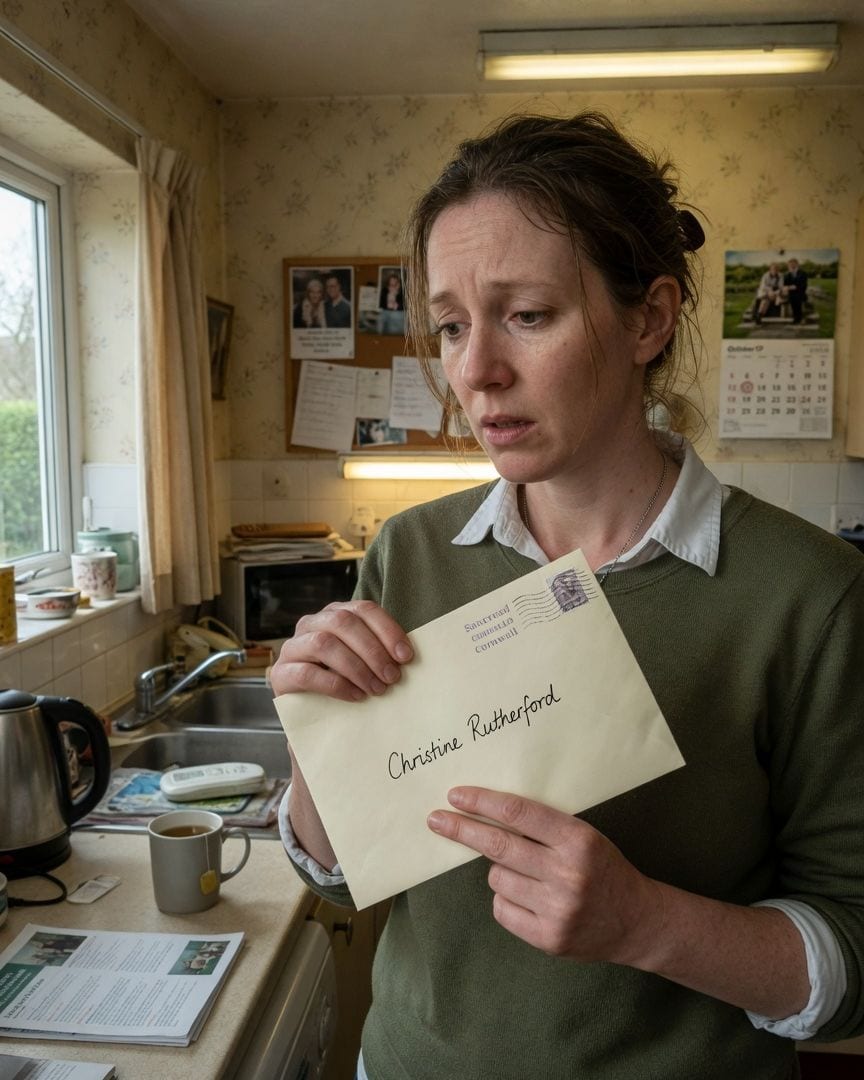
My name was carved on the village war memorial. Below it: 'October 17th'. The fresh cut looked fifty years old.
I drove to Sancreed to meet my friend Kenneth, a stonemason, who had called me with an urgent tone I'd never heard before. He met me at the village war memorial, a granite obelisk listing the fallen, and pointed to a fresh carving. Beneath the last name of a 1945 soldier, my name, 'Christine Rutherford', was etched, followed by 'October 17th' — a date this coming autumn.
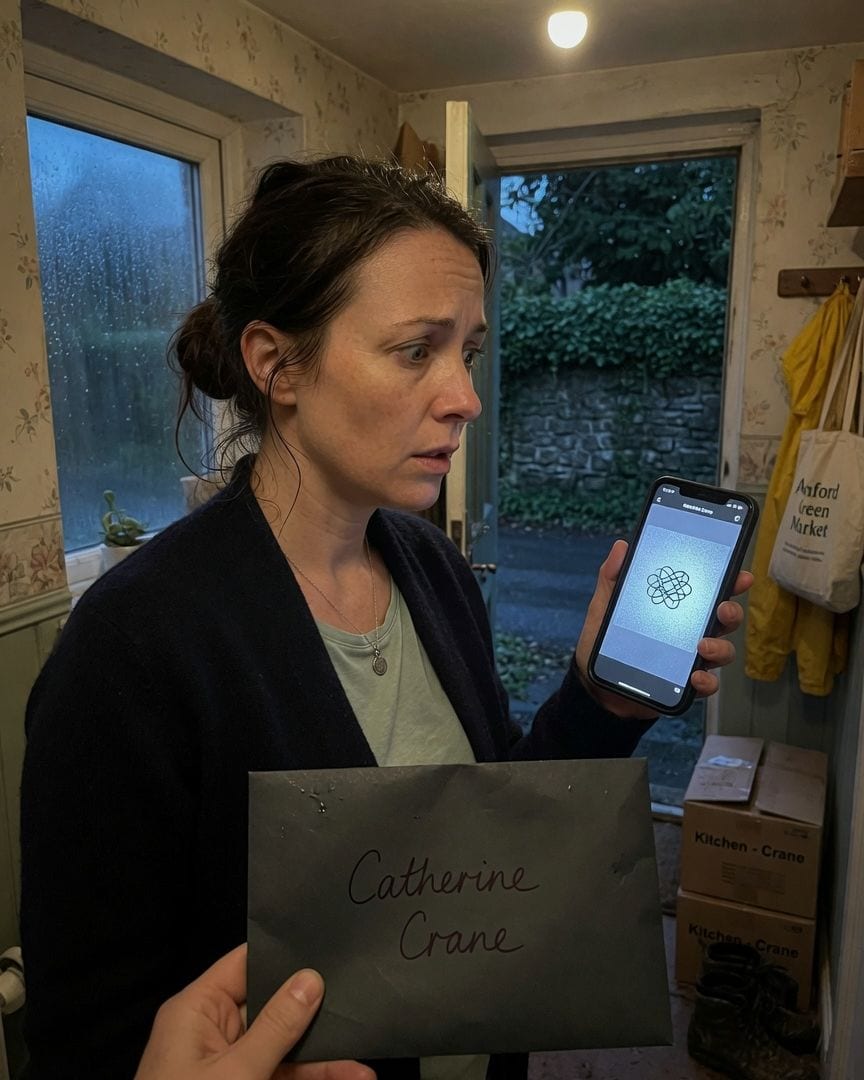
My postman warned me: never use the old pillar box. Royal Mail logs a collection every day, one item, signed by no one.
Moving to Ashford Green, I dismissed my postman's strange warning about the old pillar box by the ford. But after my own letter vanished inside it, I returned at midnight. Then, a dark, unstamped envelope slowly slid *out* of the slot, addressed to me.
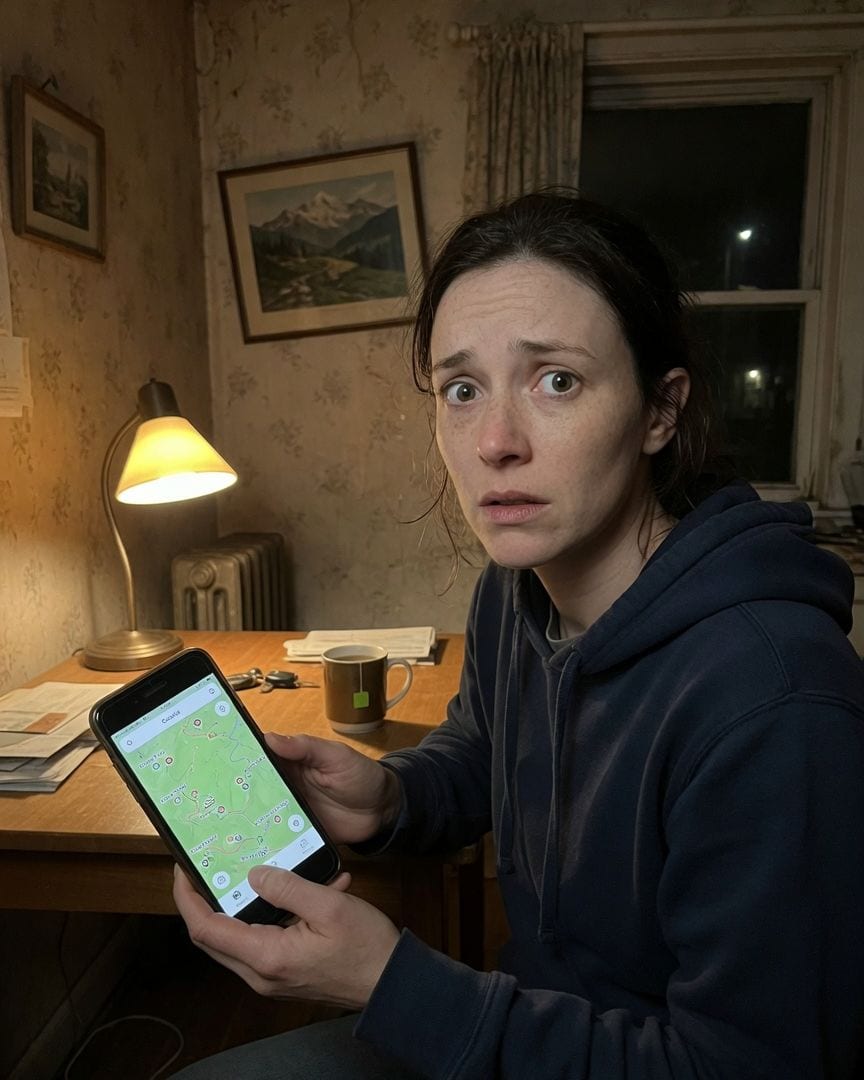
My hiking app scrubbed the hill's name from the map, on a phone that's been in airplane mode for two days.
I just moved to town and hiked a local hill, 'Cathan Tor,' according to my phone's app. But when I mentioned the name to the mechanic, he froze, dropped his wrench, and whispered, 'Don't say that name, Colette.'
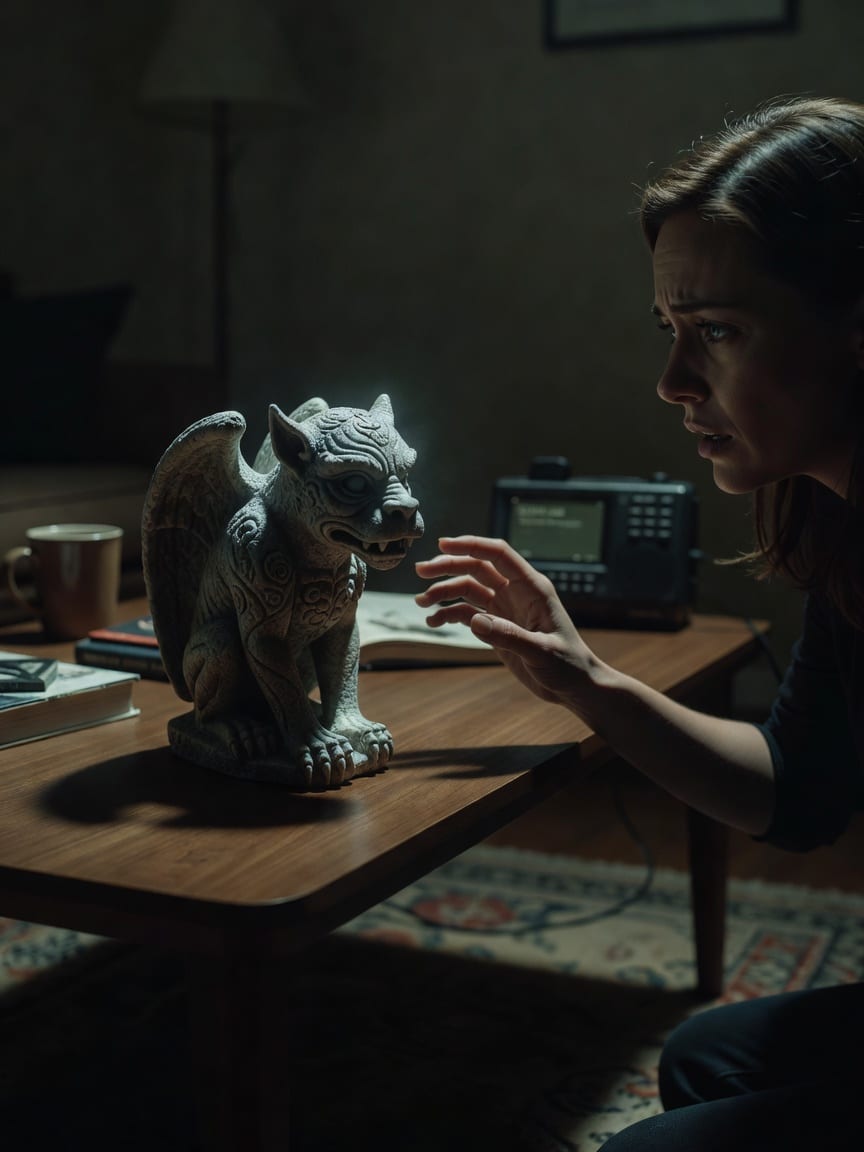
My radio scanner spoke my address at 2 AM. A flat voice read local homes, all with past dates. Mine was the only one in the future.
It was two in the morning, and my quiet house was filled with the usual hum of my weather scanner. But the static broke, replaced by a flat, synthesized voice reading a list of local addresses and dates. My hand froze when it spoke my own address, 181 Foster Drive, followed by a date: October 27th. That date was three weeks from now.
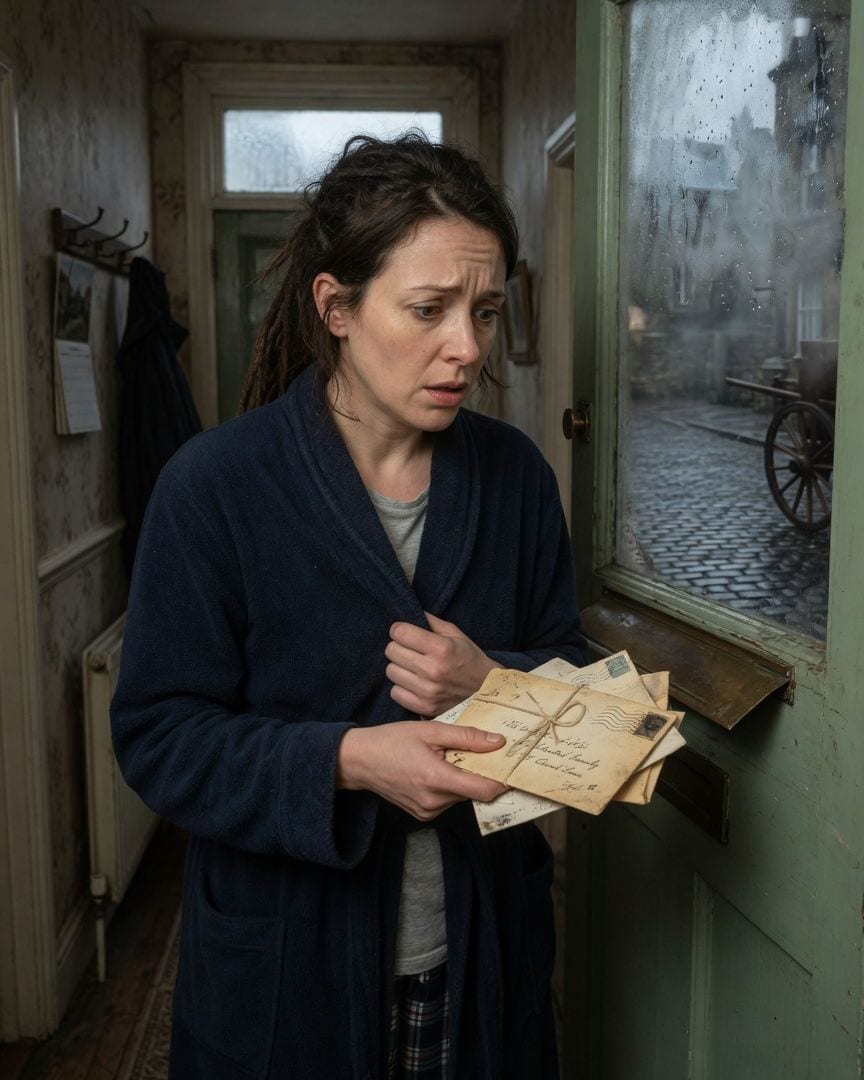
Seventy years ago, a hidden journal recorded my door opening to the wrong street and receiving Lockwood post.
I'd only recently moved into my inherited house, a quiet place on the edge of town. One grey morning, a distinct clatter from the front door's post flap caught my attention. Reaching down, I expected my gravel path, but instead, the flap showed a dark, cobbled street that wasn't mine. A bundle of warm, old letters, addressed to 'The Lockwood Family,' slid through, before the vision flickered and was gone.