My office's fire drill found an extra person today. Their name was on the system's roster, tied to a desk that's always been just empty boxes.
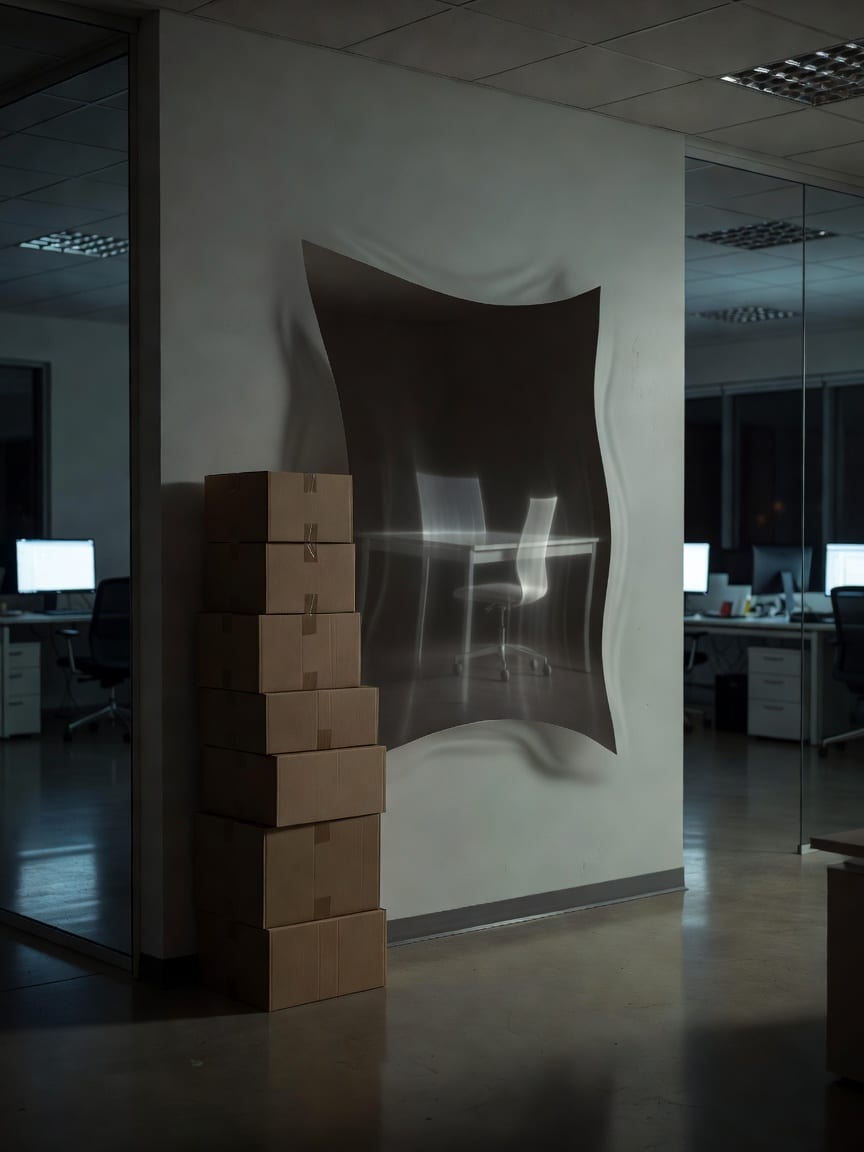
The quarterly fire drill was always a tedious affair, but as the office administrator, I, Evelyn Rutherford, took my duties seriously. My clipboard held the master register: sixty-one desks, sixty-one names. A neat, predictable count.
We gathered in the parking lot, and I began calling names, ticking them off. Kevin Thatcher joked about forgetting his badge, Daniel Davenport complained about the cold. All normal. Until I reached the end of the list. Sixty-one names checked.
But my clipboard, freshly printed by the system that morning, showed sixty-two. I flipped back, scanned again. Yes, a sixty-second entry. 'Samuel Ingram,' it read, assigned to Desk 14, in the corner by the old supply closet. I frowned.
Desk 14 has been nothing but a stack of empty cardboard boxes for the entire four years I’ve worked here. No one has ever sat there. I called 'Samuel Ingram?' into the chilly air. Silence.
Just the wind, and Kevin shrugging. Margaret Blackwood, our office manager, simply gave me a placid smile and said, 'Must be a system glitch, Evelyn. Happens sometimes.'
But the name was solid black ink, and the desk number was real, even if the desk wasn't. It wasn't a glitch. It was a person who wasn't there, at a place that didn't exist.
Back in the office, the 'glitch' gnawed at me. I went straight to Desk 14. Just as expected: a stack of flat-packed delivery boxes, dusty and forgotten.
No chair, no monitor, not even a faint ring from an old coffee mug. Nothing to suggest a living person had ever occupied that space. I logged into the system, pulled up the floor plan.
Sixty-one desks, clearly marked and numbered. Desk 14 was conspicuously absent from the visual layout, yet the system's personnel database insisted on its existence for 'Samuel Ingram.' I cross-referenced the fire drill software logs.
The program had indeed generated an entry for Desk 14. I even asked Kevin. 'Samuel Ingram?' he repeated, looking up from his spreadsheet. 'Never heard of him. Must be one of Margaret's phantom hires, the system throws them up sometimes.'
He laughed it off. But the discrepancy felt too solid, too specific. I remembered Margaret’s unnerving calm. I decided to get my hands on the official, architect-drawn floor plans for the entire building.
The ones kept in a locked cabinet in facilities, not the digital ones. If the system was wrong, the physical plans couldn't lie.
I needed to see the blueprint, the undeniable truth of the building’s geometry, to prove this was just a mistake.
It took an hour to convince Facilities to let me borrow the plans, citing 'inventory reconciliation.' I unrolled the large, brittle parchment on my desk after everyone else had left, the overhead lights humming.
The meticulous lines detailed every wall, every pipe, every inch of the office. I found my section, the open-plan area with the supply closet. I counted the desks, matched them to the numbers. Sixty-one. Exactly as expected.
Then I found the corner, the location of 'Desk 14.' My finger traced the lines of the outer wall, the internal partition for the supply closet. It was all there, precise and consistent.
But as I looked from the plan to the actual wall, the one directly behind the stack of empty boxes, a cold dread began to prickle my skin. The blueprint showed a perfectly straight, unbroken line.
The physical wall, however, had a subtle, almost imperceptible outward curve, a faint bulge that created a pocket of space, a few inches deep, right where Desk 14 should have been.
It was too small for a room, too subtle to be a structural flaw. It was a space that simply wasn't on the map, a geometry that defied the blueprint, existing only in the physical reality of the building.
The next morning, the subtle curve in the wall was still there, mocking the architectural plans.
I measured it with a tape measure I'd brought from home: a consistent six-inch deviation over an eight-foot span, creating just enough extra depth for a small desk. It was impossible, yet undeniable. I decided to pursue 'Samuel Ingram.'
HR had no record of anyone by that name, past or present. No payroll, no benefits, no onboarding files. It was as if the system had conjured him from thin air. I started paying closer attention to the office itself.
Small things. A door that felt heavier than it should. A corridor that seemed to stretch a little longer on some days. The hum of the fluorescent lights in certain areas had a different pitch.
It wasn't overt, just a constant, low-level wrongness that made me feel like I was seeing the world through warped glass. I tried to find older fire drill rosters. The digital archive only went back five years.
Anything older was supposed to be in the 'physical records' vault in the basement, a place no one ever went. I remembered Margaret's calm dismissal. There was something she wasn't saying.
The vault was dusty, smelling of old paper and mildew. Rows of forgotten files, labeled by year. I found boxes marked 'Personnel Records – Fire Drills.'
It was a long shot, but I had to know if 'Samuel Ingram' was a one-off anomaly or part of something larger. My flashlight beam cut through the gloom, illuminating decades of forgotten history.
This was where the real answers, or worse, would be hidden.
I spent my lunch breaks and an hour after work each day in the basement vault, poring over the brittle rosters. It was slow, tedious work.
I found no other 'Samuel Ingram,' but I did find other oddities: names listed without employee IDs, positions that didn't match the department, and occasional 'Desk N/A' entries for what appeared to be full-time staff.
One evening, as I was carefully refiling a box from 1987, I heard footsteps on the concrete stairs. My heart hammered. The vault was supposed to be empty.
I froze, holding my breath, the old papers rustling faintly in my hands. The footsteps stopped at the bottom of the stairs. A pause. Then, 'Evelyn? Still down here?' It was Margaret. Her voice was too even, too calm. 'Just...
organizing,' I stammered, feeling caught. She walked slowly towards me, her shadow long and distorted in the dim light. 'You're very thorough, Evelyn. A real asset. But some things are best left undisturbed. This building… it has its ways.
It takes care of itself.' She picked up a loose sheet from the box I was holding. It was a transfer form from 1992, listing a 'Daniel Carter' as 'transferred to an unspecified off-site location.'
Her eyes, usually kind, held a deep, unreadable knowing. 'Some mysteries aren't meant to be solved. They just… are.' She smiled, a faint, unsettling curve of her lips that reminded me of the wall upstairs.
I felt a cold certainty: she knew. And she was watching me.
The next day, I confronted Margaret. I waited until her office was empty, then closed the door. 'Margaret,' I started, trying to keep my voice steady, 'what did you mean yesterday? About the building having 'its ways'?' She didn't flinch.
She simply leaned back in her chair, observing me with that unnerving calm. 'Evelyn, you're a smart woman. You've noticed things. The little shifts, the discrepancies.' She paused, her gaze unwavering. 'The 'Samuel Ingram' on your roster? Not a glitch.
Not a mistake. He's… a placeholder. A name generated by the building itself, for a space it creates.' My stomach dropped. 'A space it creates?' She nodded slowly. 'The building isn't just steel and concrete, Evelyn. It's… hungry. It needs.
And it takes. Always has.' She gestured vaguely around the office. 'Those 'transfers to an unspecified off-site location'? Those are the ones it takes. The system generates a name, creates a spot, draws someone in. They're not transferred. They're… absorbed.'
I thought of the subtly curved wall, the missing desks on the plans, the 'Desk N/A' entries. It all clicked into place, a horrifying coherence. 'You know about this? You've known all along?' I asked, my voice barely a whisper.
'My predecessor knew. His predecessor knew,' Margaret said. 'It’s a cycle. A pattern. We just… manage it. Keep it quiet. The company has been here for generations. We don't fight the building. We learn to live with it.
And sometimes, we learn to ignore the extra names.' She looked at me, her expression softening, almost pitying. 'You’ve been looking too closely, Evelyn. This isn't a problem to be solved. It’s a truth to be accepted.
Or to be part of.'
Margaret's words echoed in my head: 'A truth to be accepted. Or to be part of.' I returned to the basement vault that night, the keys heavy in my hand. I needed more than Margaret's calm admissions.
I needed undeniable proof, something that couldn't be dismissed as an old manager's superstition. I searched specifically for previous 'extra' names, cross-referencing against old personnel files for anyone listed as 'transferred' without a destination. Hours passed. My eyes burned.
Then, in a box labeled 'Personnel Anomalies - 1970-1980,' I found it. A single, unbound sheet of paper, brittle and yellowed, clearly an internal memo from the Facilities department dated October 1978.
It detailed a 'structural anomaly' in the northeast corner of the building, specifically mentioning 'Desk 14.' Attached was a handwritten note from a previous office manager, complaining about 'yet another phantom name' on that quarter's fire drill roster.
And there, on the roster, was the name: 'Evelyn Rutherford.' My own name. Not a maiden name, not a coincidence. The exact spelling. It was impossible. I hadn't even been born in 1978.
My hands trembled, the paper rustling like dry leaves. I stared at the name, then at the date, then back at the name. It was the same corner, the same desk number. I wasn't just investigating a pattern.
I was part of it. I had always been part of it.
The name on the 1978 roster, 'Evelyn Rutherford,' felt like a physical blow. I traced the faded ink, the impossible truth of it. I wasn't just an observer; I was a recurrence.
The building wasn't just hungry; it was cyclical, predestined. My own presence in that decades-old record wasn't a mistake; it was a blueprint, a premonition.
The name 'Samuel Ingram' on my current roster wasn't just an 'extra' person; it was the name of the next person to be absorbed. And I was that person. The pattern snapped into place with sickening clarity.
The structural anomalies Margaret spoke of, the shifting geometry, the 'transfers,' the 'extra names' – they were all phases of the building's consumption cycle.
It manifested a name, then subtly altered the space, drawing its target in, until they became part of the impossible geometry themselves. The old memo about 'structural anomaly' in 1978 was the building preparing for me.
And the 'Samuel Ingram' on my clipboard now meant it was preparing for its next meal. The office hummed around me, no longer a benign workplace, but a living, breathing predator, its walls subtly shifting, its air growing heavy.
I looked at the corner where the empty boxes sat. The space seemed to deepen, to invite. The building was calling me home, to Desk 14, a place that existed only for those it claimed.
I had to get out. The thought was a desperate, primal scream in my mind. I clutched the 1978 roster, my impossible proof, and ran for the stairs.
But the corridor seemed to stretch, the exit sign receding with every step. I turned, disoriented, and found myself back at the main office floor, facing my own desk. Panic clawed at my throat.
The building was playing with me, guiding me. I could feel a subtle pull, a magnetic draw towards that corner, towards Desk 14. I tried another exit, a fire escape door.
It was bolted from the inside, a heavy chain wrapped around the bar that hadn't been there an hour ago. No, it had been there, I just hadn't noticed. The building had been preparing for me for a long time.
I could hear a faint, almost melodic hum coming from the corner, a sound like a distant, hungry drone.
The empty boxes seemed to shimmer, their edges blurring, and behind them, the curved wall deepened, becoming not just a bulge but an alcove, a shadowed, inviting space.
I stumbled, my legs suddenly heavy, and found myself walking, not running, towards it. The air grew colder, thick with the scent of old paper and something else, something metallic and ancient.
I could see the faint outline of a desk now, and a chair, within the impossible curve of the wall. It was perfectly formed, waiting. My own desk, my own office, but subtly wrong.
The name 'Samuel Ingram' on my clipboard felt like a brand. I was drawn to the chair, the hum growing louder, encompassing me.
I sat down, the cold plastic molding to my form, and looked at the empty boxes, and beyond them, at the shifting, breathing wall. It was not an exit. It was a beginning.
The next morning, Evelyn Rutherford did not arrive for work. Her desk was cleared, her personal effects gone. Margaret Blackwood calmly informed HR that Evelyn had 'transferred to an unspecified off-site location,' a phrase that raised no eyebrows.
A few weeks later, Kevin Thatcher noticed a new name on the system’s personnel database, assigned to Desk 14, in the corner where the empty boxes sat. Margaret Blackwood just smiled. The building had its ways.
It always found a new name.
If this one got to you
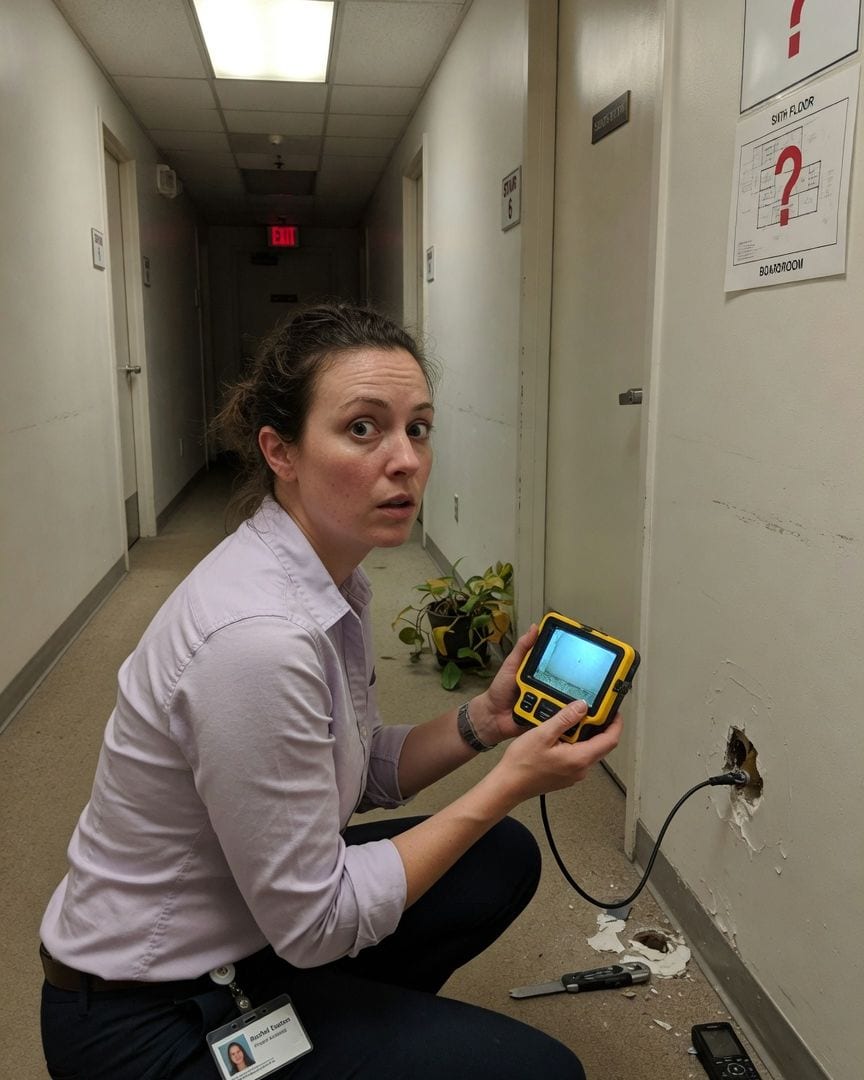
Footsteps cross our boardroom ceiling every evening at six – directly over the empty space where the office plans show a room that doesn't exist.
I'm a project architect who discovered an unlabeled room on our new office plans, a space on my floor that simply wasn't on any old blueprints. Now, every night at 6 PM, faint, rhythmic footsteps cross the boardroom ceiling, exactly where that phantom room should be. Security logs confirm no one is ever there.
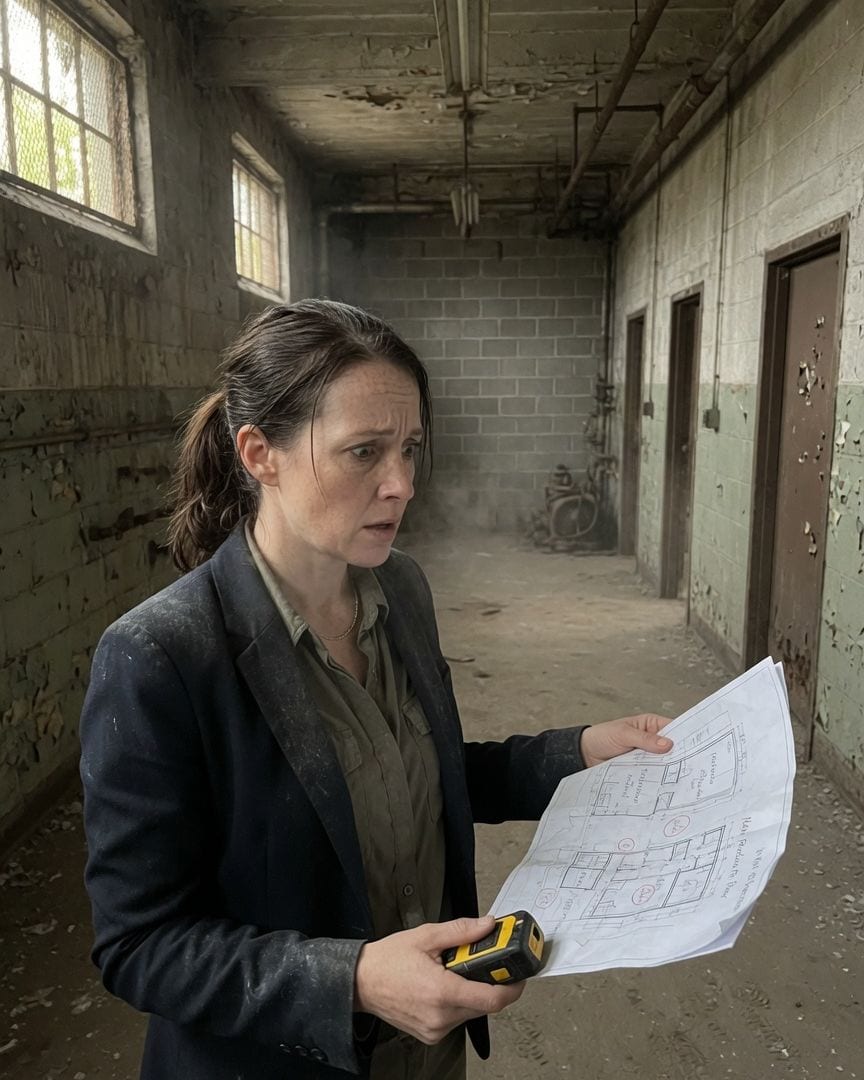
One room is missing from this factory floor. My blueprints show four, but I only found three doors.
Intrigued by an abandoned industrial complex, I secured its old blueprints and entered the cold, silent building. Pacing a long corridor, I meticulously counted doors, comparing them to the detailed plan. The blueprint clearly showed four distinct rooms, but the corridor's length, and my own count, revealed only three doors.
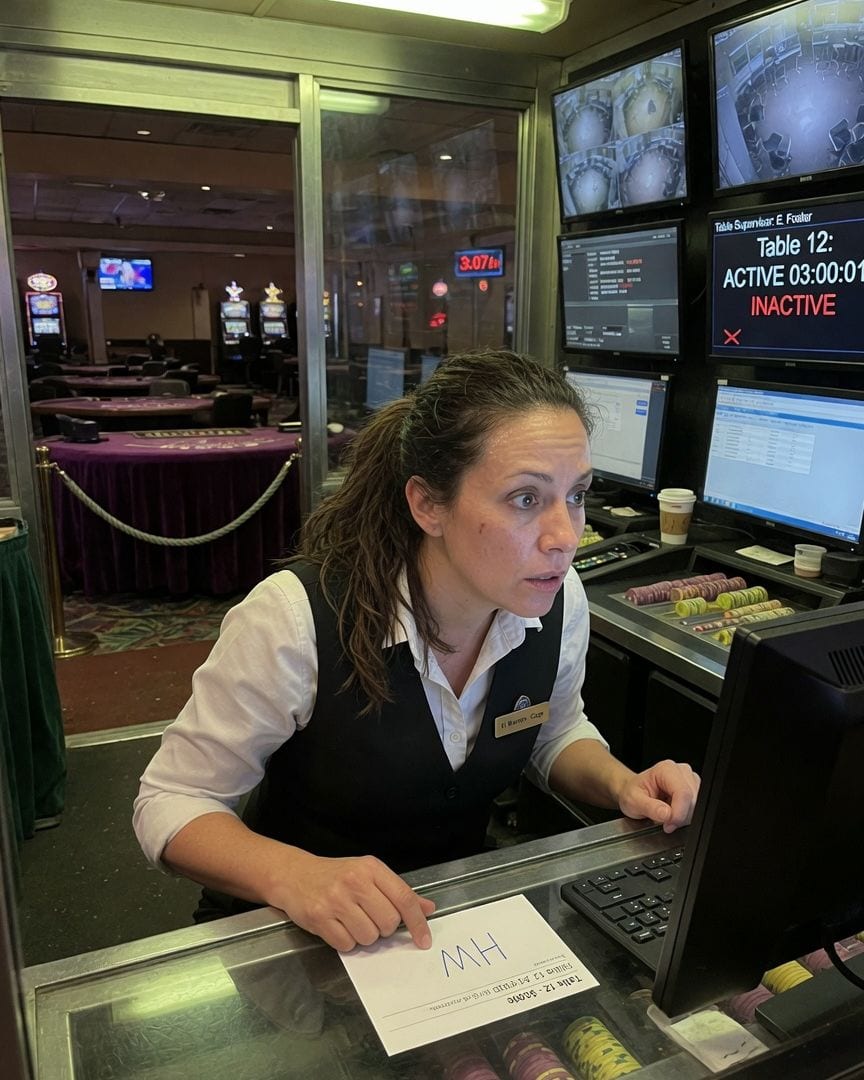
My name signed a fifty-thousand dollar casino fill to a dark, roped-off table. The cage is short by that exact amount. I never touched the slip.
Working the casino cage on a slow night, I logged off after counting my stack of chips. Then the system pinged: a $50,000 transfer to Table 12, closed for months, with my initials on it. The security feed showed my hand moving, making an imperceptible scribble, but I know I never touched a thing.
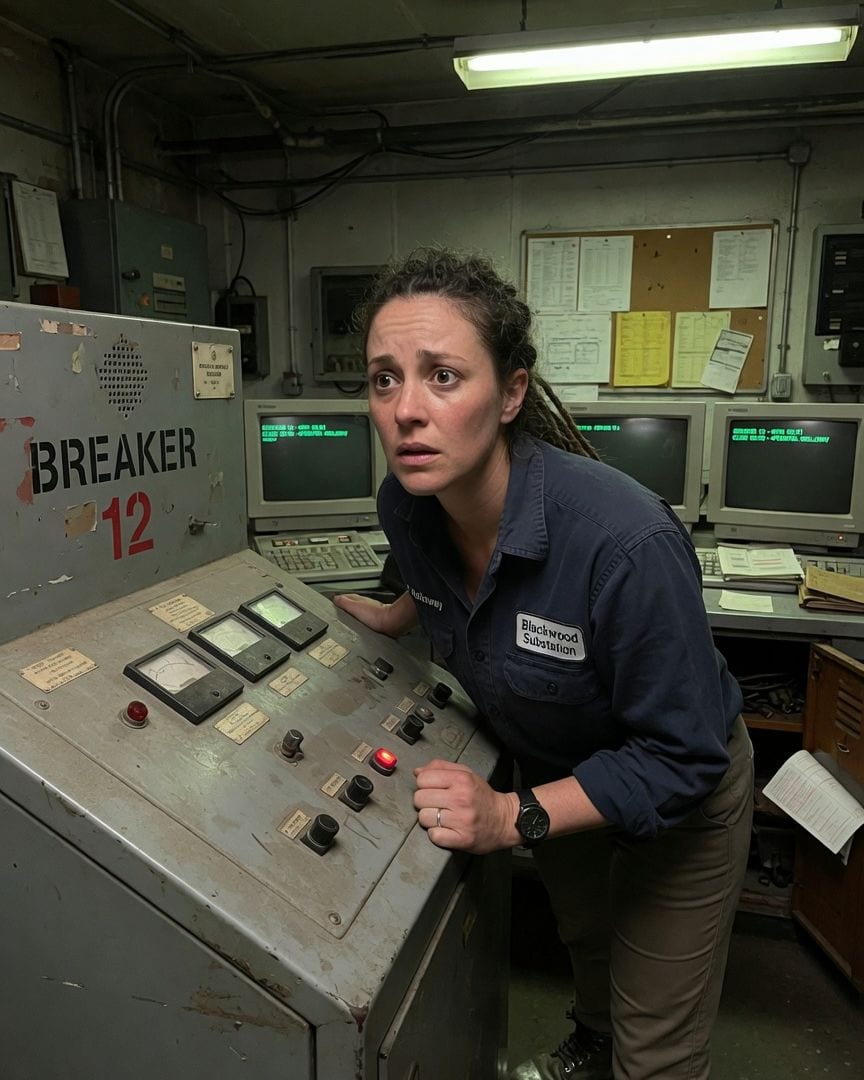
My power station's computer logs a breaker I never touched, opened and closed under my name, while the lights stayed on.
Night shifts at Blackwood Substation used to be a comforting hum, but an impossible event logged under my name shattered the peace. I'd never touched Breaker 12, yet the system claimed I opened and closed it. Now, from that same panel, a low, insistent hum resonates, and a whispered voice asks, 'Are you going to fix it this time?'
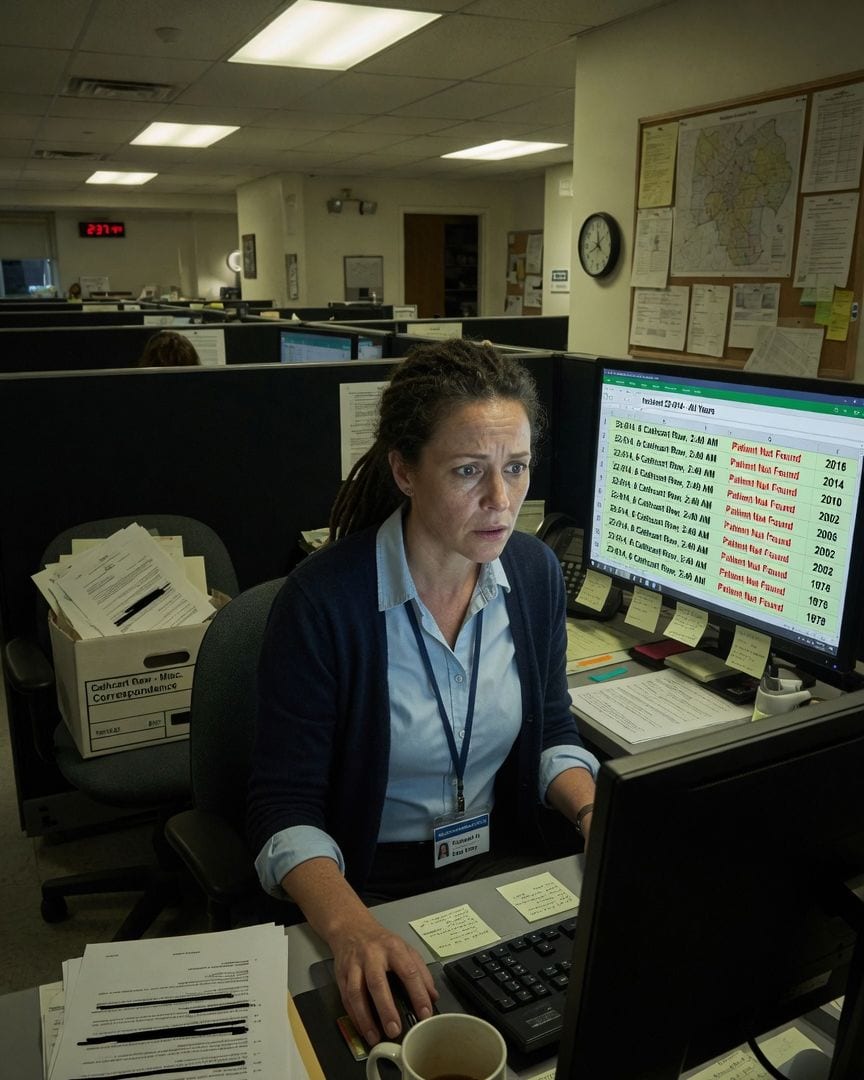
My computer log shows the same 2:40 AM call to Cathcart Row, every four years since 1978, always closed 'patient not found'.
Working data entry for the County Ambulance Trust, I found a routine incident logged as 'Patient Not Found.' But digging deeper, I discovered the exact same phantom call had repeated every four years for over forty years, always at the same address, always at 2:40 AM. Then I found a heavily redacted memo linking it to my own street.
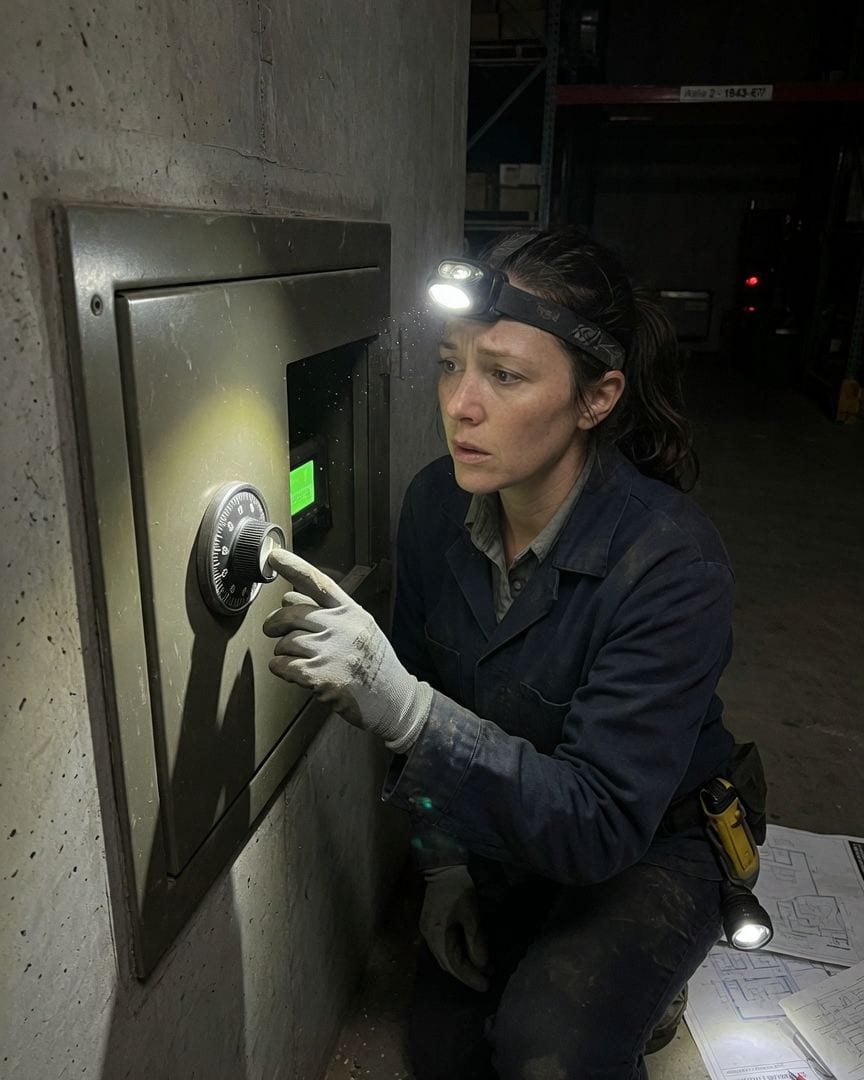
A meticulous records clerk finished her final inventory in a Cold War depot, then found a steel door not on any blueprint, worn smooth by decades of use, opening to an office with a log updated just hours ago.
Merit Lachance moved through the echoing darkness of Building 9, her headlamp cutting a lonely circle through dust motes. The depot’s oldest section was losing power, leaving her to finish her mandated shelf-read for the impending decommissioning. Every blueprint showed Building 9 as a single, vast room, so when her light fell on a waist-high, solid steel door set flush into the wall, her mind reeled. Its combination dial was worn smooth from decades of constant use, an impossible contradiction to the building’s known history. After meticulously working the dial, the heavy door shifted inward, revealing a dust-free, actively maintained office space with a terminal log updated just hours ago.