My old answering machine tape holds a new tenant screaming, a week after I moved out. Then, my own calm voice, saying I've got her now.
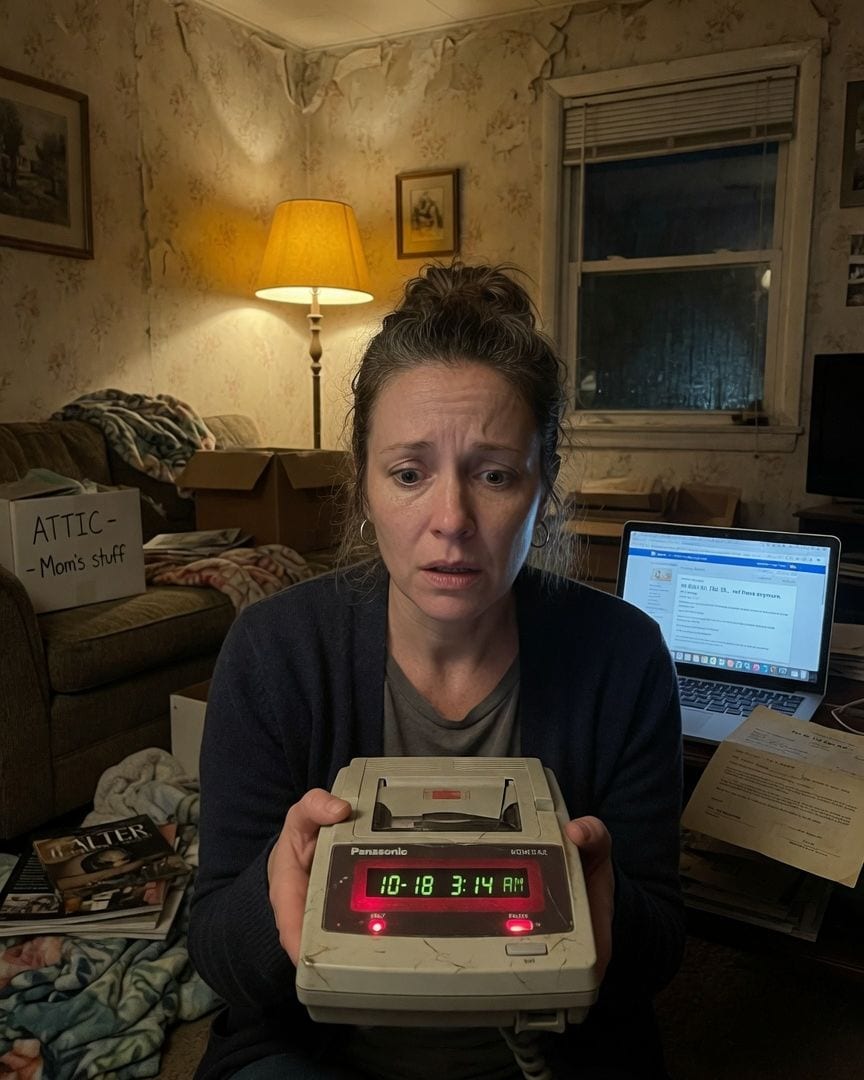
I hadn’t thought about that old answering machine in twenty years. Not until last Tuesday, when I was wrestling with a box of forgotten junk in the attic, looking for my mother’s old photo albums.
It was buried deep, under a pile of moth-eaten blankets and my high school yearbooks, a beige plastic brick from a bygone era. Still had its cassette tape inside.
A wave of nostalgia hit me, a ghost of my younger self. On a whim, I carried it downstairs, found an old power adapter that fit, and plugged it in.
The machine whirred to life, a low, mechanical growl I hadn't heard in decades. I pressed ‘Play’.
Static hissed for a moment, then my own voice, younger, chirpier, announcing the outgoing message I’d used for years: "Hi, you've reached Eleanor. I can't come to the phone right now, so leave a message after the beep."
The familiar beep. Then, a series of blank calls, dial tones, hang-ups – the usual detritus of daily life, twenty years ago. I was about to press ‘Stop’ when a new message clicked on.
The machine's display, a tiny, dim LCD, flashed a date: October 18th. And then a time: 3:14 AM.
My blood ran cold. I’d moved out of Flat 3B at 142 Elm Street on October 11th, exactly a week before that date. I’d handed the keys to the landlord, packed my last box.
The machine, this very machine, had been left behind, forgotten in the haste of moving.
Then the message played. It started with a low, desperate whimper. It escalated quickly, becoming a ragged, terrified scream, unmistakably female, sharp enough to cut through the years of dust and static.
It wasn't a playful shriek; it was raw, primal fear, the kind that steals your breath and makes your scalp prickle. It cut off abruptly, as if a hand had been clamped over a mouth.
And then, my own voice. Clear. Calm. Utterly, horrifyingly wrong.
"It's alright, Deborah," my voice said, a low, soothing murmur that held no hint of the panic that had just filled the room. "I’ve got her now."
The silence that followed was heavier than the years, than the dust, than the scream itself.
I stood frozen in my living room, the ancient machine blinking its impossible date, my own calm, alien words echoing in the sudden, cavernous quiet of my house.
I played the message again. And again. Each time, the terrified scream ripped through me, but it was the calm, measured tone of my own voice, a voice I didn’t recognize as mine in that context, that truly unnerved me.
It was undeniably me, the inflection, the slight catch on the 'r' in "alright," but the composure, the utter lack of alarm, was chilling. I tried to rationalize it. A prank call? But the date. A recording error?
The machine sounded too clear. A trick of memory, a dream perhaps? But the physical tape was there, the display visible.
The date on the machine's display remained stubbornly, unequivocally clear: October 18th, twenty years ago. Exactly seven days after I’d handed back the keys to Flat 3B at 142 Elm Street.
I remembered the new tenant moving in, a young woman with a kind smile named Deborah. We’d chatted briefly in the hall as I carried out my last boxes. She’d seemed excited, full of plans for the little flat.
The voice on the tape, the one I’d addressed, was unmistakably hers, that same name. Yet, I had no conscious memory of ever saying those words, let alone back in that flat, a week after I’d left.
The calm in my recorded voice was a cold knot in my stomach.
I found my old lease agreement, a yellowed document tucked away in a file. Flat 3B, 142 Elm Street. Exact address confirmed. I went to my laptop, my fingers trembling slightly as I typed in the address.
The results were confusing, contradictory. Some real estate sites showed 142 Elm Street as a recently renovated block of modern apartments, sleek and new, with no mention of a Flat 3B.
Other, older listings showed an empty lot where the building should have stood.
My memory of the old Victorian building was so vivid: the worn marble steps, the stained-glass window in the main hall that always cast colored light on the scuffed linoleum.
It felt impossible that it wasn’t there, or was so radically different.
After several dead ends, I finally stumbled upon an archived section of an old local real estate forum. A post from years ago, buried deep in a thread about historic city properties, mentioned "the strange case of 142 Elm."
Someone had specifically referred to "Flat 3B" as if it were a local legend, a space that simply wasn't there anymore, a "missing unit" in the old building.
The words "not there anymore" echoed in my mind, making the hairs on my arms stand up.
Frustration twisted into a cold, hard knot of determination. I wouldn’t just let this go. I needed answers. After more digging, cross-referencing old property records and municipal archives, I finally secured a contact number for the building’s current management company.
It took an infuriating twenty minutes to navigate automated menus and hold music, but I was finally connected to a man named Charles Calloway, listed as the property manager for decades.
I took a deep breath, trying to steady my voice. "Hello, Mr. Calloway," I said, a slight tremor escaping. "My name is Eleanor Novak.
I used to live in Flat 3B at 142 Elm Street, and I… I have an old answering machine tape with a very disturbing message on it, recorded after I moved out."
His voice, when he replied, was not confused or dismissive, as I’d expected. It was unnervingly calm. "Ah, yes," he said, a strange, knowing weight to his tone. "The Novak flat. I was wondering when you'd call about that."
I arranged to meet Charles Calloway at a quiet cafe on the edge of town, one of those places that smelled perpetually of stale coffee and old newspapers.
He was an older man, seventy-something perhaps, with kind but sharp eyes that seemed to take in everything. There was an air of quiet resignation about him, like someone who had seen too much but learned to live with it.
He stirred his tea, steam curling around his spectacles, and didn’t deny the oddity of Flat 3B's records, nor the strange message I’d heard. He spoke in riddles, his voice low and gravelly.
“The building, Ms. Novak,” he began, “particularly that section you were in… it’s always had a memory. Some places just do. They hold onto things.” He looked out the window, at the gray afternoon.
“Some things are best left to sleep.”
When I pressed him about Deborah, the new tenant, Calloway simply shook his head. “No record of a Deborah, Ms. Novak. Not in Flat 3B after you left, not in any official capacity.
Not in our ledgers, not in the rental agreements.” His denial was too calm, too specific. It felt less like a clerical error and more like a carefully maintained blank.
He mentioned a local historical society, a place that kept records of “local eccentricities.” He hinted that I might find “patterns” there, if I looked hard enough. His eyes held mine, and I knew he wasn’t talking about architectural styles.
Unnerved but resolute, I spent the next few days at the society's dusty archives, a sprawling room filled with the hushed rustle of turning pages and the dry scent of old paper.
I sifted through microfiches of old newspapers, property deeds, and local folklore collections. It was slow, tedious work.
But then I found them. Strange, oblique references to 142 Elm Street. Local legends of "vanishing residents" dating back to the early 20th century, always from "the third floor, rear."
One faded newspaper clipping from the 1930s, yellowed and brittle, described an “unexplained disappearance” from a flat on the third floor, mentioning “a peculiar quietness” that settled over the building afterwards.
No direct mention of Flat 3B, not by that designation, but the pattern of disappearances from that specific area of the building was undeniable. It was a recurring tremor in the building’s history, a dark thread woven through decades.
Then, buried in an archived digitized version of an old, defunct local online forum from the late 90s, I found something even more specific.
Someone, under an anonymous handle, had posted about “the Novak pattern” at 142 Elm, and “the calming voice that draws them in.”
The post was cryptic, a garble of half-theories and superstitious warnings, but the name “Novak” sent a shiver down my spine. My name. Linked to this building, these disappearances, this chilling "calming voice."
Eleanor’s research at the historical society began to feel less like an investigation and more like a trespass. It wasn’t just the hushed atmosphere; it was the feeling of being watched.
The same elderly archivist, a stern woman with heavy glasses perched on her nose, always seemed to be in my vicinity.
She’d be shelving books in the next aisle, or straightening a display case nearby, her gaze, when it met mine, unreadable. It wasn't overtly hostile, just… observant. Always observing.
One afternoon, I returned to my car, parked just outside the society building, and found a small, handwritten note tucked under my wiper. It was a single line, elegantly penned in dark blue ink: "Some channels are best left undisturbed."
There was no signature, no return address, just the crisp paper and the stark warning.
The specificity of "channels" made me recall the old forum post, the one that mentioned "the Novak pattern" and "the calming voice that draws them in." A prickle of unease ran down my neck.
It was a sense of being known, of having stepped onto a path that was waiting for me. Someone knew what I was looking for, what I was finding.
I pulled out of the parking lot, looking in my rearview mirror. The road behind me was empty, just the usual afternoon traffic. But when I pulled into my own driveway, my stomach lurched.
There, on the weathered paint of my front door, was a faint, almost imperceptible scratch. A barely visible 'N' carved into the wood, just below the peephole. My heart hammered against my ribs. I lived alone.
No one else had access to my house.
The note and the 'N' weren't just warnings; they were proof that my digging had been noticed, that something or someone knew my name, Eleanor Novak, and what I was searching for, with an unnerving, intimate precision.
The dread intensified, from an abstract historical curiosity to a personal, immediate threat.
I drove straight back to the cafe, not even bothering to call Calloway first. He was sitting at the same table, sipping tea, as if he’d been waiting for me.
I slid into the chair opposite him, pushing the note across the table and describing the 'N' on my door, my voice tight with a fear I couldn’t quite control.
He didn't flinch. His gaze was distant, fixed on some point beyond the cafe's window. "They don't like to be disturbed," he said, his voice flat.
He finally opened up, his low, weary tones barely audible above the clatter of plates. "The building, particularly that section where Flat 3B used to be, it's a thin place, Ms. Novak. A node."
He explained that certain intense emotional events, like extreme fear or despair, could imprint themselves on the very fabric of the location.
"And the phone lines," he continued, turning his gaze back to me, his eyes heavy with a knowing sadness, "they act like conduits. They capture the echoes, sometimes from other times."
He revealed that Flat 3B wasn't just renumbered; it was sealed off decades ago after a series of 'incidents.' "Your answering machine," Calloway explained, tapping the table with a gnarled finger, "it wasn't just recording.
It was picking up a bleed-through. An echo from another moment, another event, played out in that space. The screaming was real, Ms. Novak, just not necessarily from the specific tenant who moved in after you."
My voice trembled as I asked, "And my voice? The calm, soothing voice, saying 'I've got her now'?"
Calloway looked at me, a profound sadness in his eyes that deepened the lines around them. "That's the pattern, Ms. Novak. The calming voice. It's always there, just before… before they vanish. It settles them. Makes it easier.
It's a recurring element." He then went on to explain that the forum post I'd found, the one about "the Novak pattern," referred to a specific familial connection that seems to amplify the phenomenon.
"Your name, Novak," he said, quietly, "it's linked to the building's history. A name that seems to recur in these incidents. A… specific resonance."
The dread in my gut solidified, turning into a cold, hard lump. The tape wasn't a glitch, not a prank, not a trick of memory. It was a symptom. A horrifying, active manifestation of a deeper, unsettling reality.
Calloway sighed, a deep, heavy sound that seemed to carry the weight of years. “You need to understand, Ms. Novak, this isn’t new. This has happened before.”
He reached into the inner pocket of his worn tweed jacket and pulled out a brittle, yellowed newspaper clipping. He pushed it across the cafe table to me.
The paper was fragile, the ink faded, but the headline was stark, screaming its message across the decades: "Woman Vanishes from Elm Street Flat – Police Baffled." The date printed below read October 19, 1957.
My breath caught in my throat. October 19th. Almost to the day, exactly forty years before my own impossible recording.
Below the article, a quote from the then-landlord, a man named Albert Novak, detailed the last sounds heard from the missing woman’s apartment.
“I heard her scream,” the quote began, “then a quiet voice, saying, ‘It’s alright, I’ve got her now.’”
I stared at the name. Albert Novak. A chill colder than any I'd felt before ran through my veins, a literal coldness spreading through my chest.
My own surname, staring back at me from a decades-old tragedy, connected to the same chilling phrase, the same impossible reassurance.
It wasn't just an echo from a past; it was an echo from my past, my blood, my family name. The implications were a crushing, suffocating weight.
Calloway watched my face, impassive, as my horror dawned. “Albert Novak was my great-uncle,” he revealed quietly. “He owned the building then. He was the one who found the empty flat after that woman vanished.
He was also the one who eventually sealed off Flat 3B, trying to contain it, hoping it would stop.”
The pieces snapped into place, forming a terrifying whole. The flat isn't just a node, a thin place; it's a trap, and my family, the Novaks, seem to be intrinsically tied to its mechanism.
The calming voice – my voice on the tape, Albert’s voice in the newspaper – it’s not just an echo of us; it’s an echo through us.
The anomaly uses the familiar, trusted voice of a Novak to soothe the victim, to draw them in, to facilitate their ‘vanishing’ into the temporal bleed-through.
My answering machine tape wasn't just a recording of an impossible event; it was a current iteration, a confirmation that the cycle is still active, still seeking.
I wasn't just observing a phenomenon; I was, by virtue of my name and my connection, an unwitting part of it. The screaming Deborah, the missing woman from 1957 – they were all drawn in by ‘the Novak voice.’
The dread that settled over me was pure, cold coherence. Every clue, every odd detail, every impossible record now made horrifying sense, fitting into a pattern that had haunted my family’s name for generations.
I looked at Calloway, my face pale, my throat dry. “Can it be stopped?” I whispered, the words barely audible.
Calloway shook his head slowly, the movement weary, resigned. “I’ve tried, Ms. Novak. Others have tried. You can seal off the flat, disconnect the lines, but the node remains. The echoes persist. The pattern… it finds its way.
It’s not a malevolent entity, not in the way you might think. It’s more like a hungry space, a tear in time that feeds on moments of vulnerability, on fear.
And the Novak name, it seems to be particularly resonant with it, a kind of anchor or conduit.”
I felt a profound, chilling understanding settle over me, heavy and cold. There was no monster to fight, no escape plan to execute, no solution to be found. The truth wasn’t something I could undo or act upon.
I was simply left knowing. Knowing that my voice, my family’s voice, was a lure. Knowing that the tape in my attic was not just a relic, but a live, active record of a horrifying, ongoing process.
The horror wasn’t in what I had to do, but in what I couldn’t do. I was a witness, yes, but also a part of the mechanism, an unwitting participant in a generational haunting.
The calm, rational part of me wanted to deny it, to grasp at any other explanation, but the overwhelming coherence of Calloway’s story, the historical records, the impossible tape, suffocated any shred of doubt. It all fit. Too perfectly.
I stood up, the cafe suddenly too bright, too loud, the aroma of coffee cloying. The knowledge was a heavy, cold stone in my chest, a permanent mark.
I walked out, leaving Calloway to his resigned silence, the weight of the truth pressing down on me with every step.
I never returned to the flat, nor did I ever contact Calloway again. I tried to dispose of the answering machine and its tape. I took it to the dumpster, pulled it back out.
I put it in a charity bag, then rescued it. I found I couldn't. It sat in a sealed box in my attic, a silent, damning artifact. My life continued, outwardly normal, but everything was subtly altered.
Ordinary sounds now held faint, unsettling undertones.
The quiet hum of my refrigerator, the distant rumble of traffic from the street outside, the rustle of leaves outside my window – sometimes, for a fleeting moment, they seemed to carry an echo, a whisper, a distant, muffled cry.
I found myself listening, always listening, for the impossible. The world had become a thin place, and I was forever attuned to its bleed-throughs.
One quiet Tuesday evening, almost a year after my conversation with Calloway, as I sat reading in my living room, my landline phone, a relic I rarely used, suddenly rang. I stared at it, a sudden chill seizing me.
The caller ID glowed, stark and impersonal: 'UNKNOWN'. Hesitantly, my hand reaching for it as if compelled, I answered.
There was only static for a moment, a faint crackle of white noise that seemed to stretch out, thin and cold. Then, through the static, I heard it.
A faint, familiar scream, distant and muffled, as if from a great distance.
It was the same scream, the same raw terror, I’d heard on the tape, yet impossibly, it was right there, bleeding through the phone line into my quiet living room.
Then, a voice, not quite hers, whispered, 'It's alright. I've got her now.'
If this one got to you
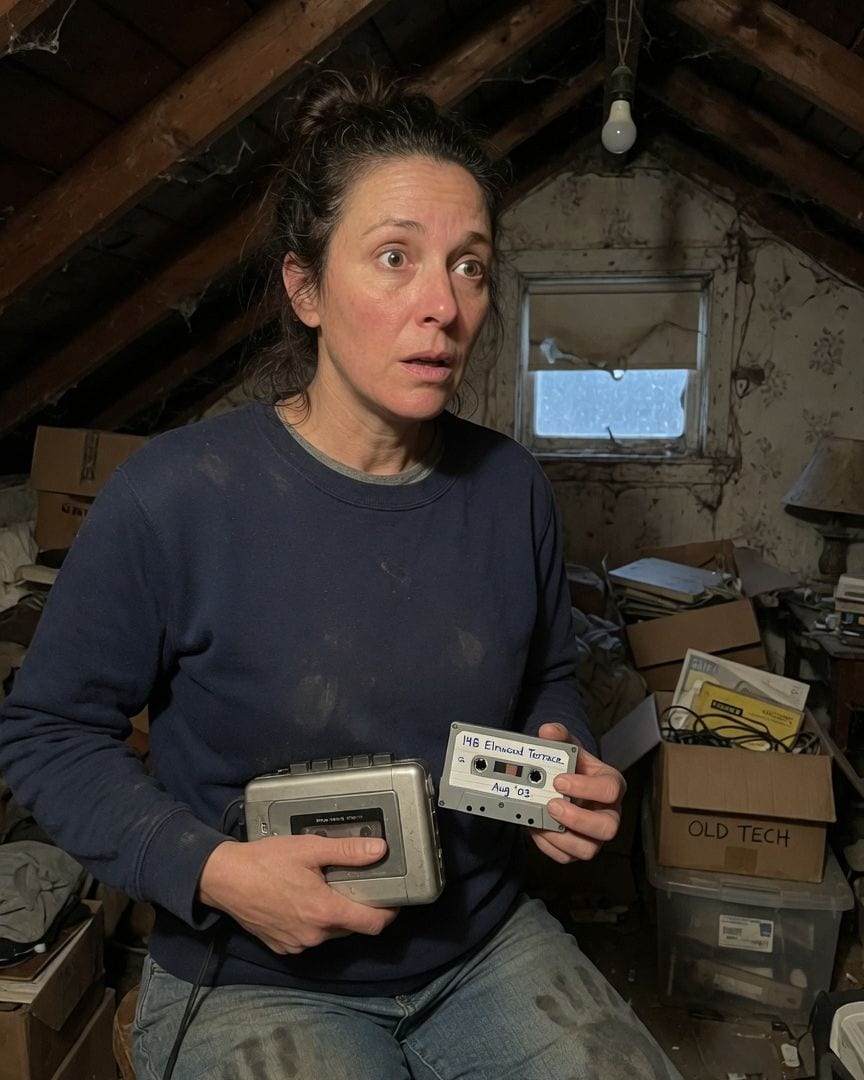
My own voice answers a screaming tenant on a tape from my old flat, recorded a week after I moved out. I live alone.
Rummaging through old tech in my attic, I found an answering machine tape from my old flat, labeled 'Aug '03' in my own hand. Playing it, I heard mundane messages, then a woman's raw scream cut short. Immediately after, my own calm voice said, 'It's alright. I've got her now.' I had moved out of that flat twenty years ago.
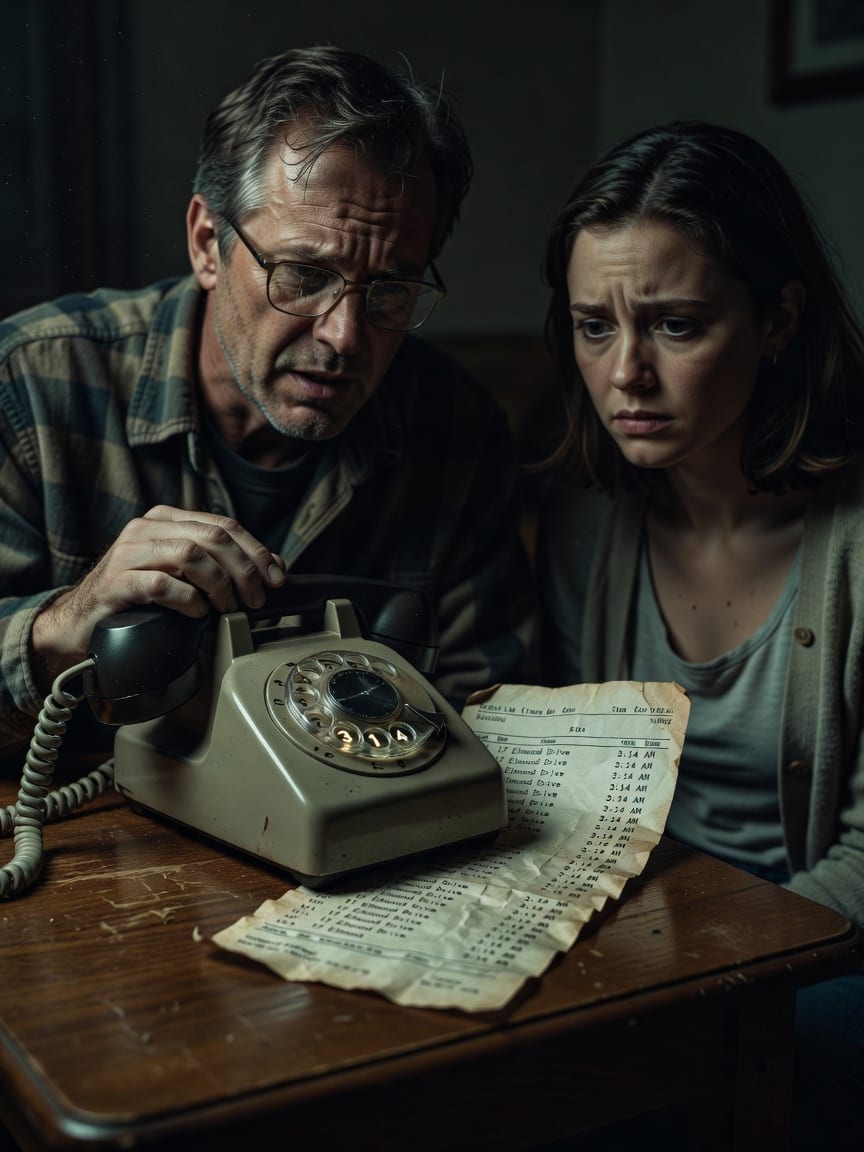
My phone bill itemised forty calls from my number to a house demolished in 1990. Each call at 3:14 AM, lasting eleven minutes. The bill arrived postmarked from a flattened building.
I expected the usual mobile bill, but my landline statement listed forty calls from my number to '17 Elmwood Drive.' That address was for a house torn down in 1990, a vacant lot I remembered from childhood. The phone company insisted the calls were legitimate, leaving me profoundly unsettled by the impossible charges.
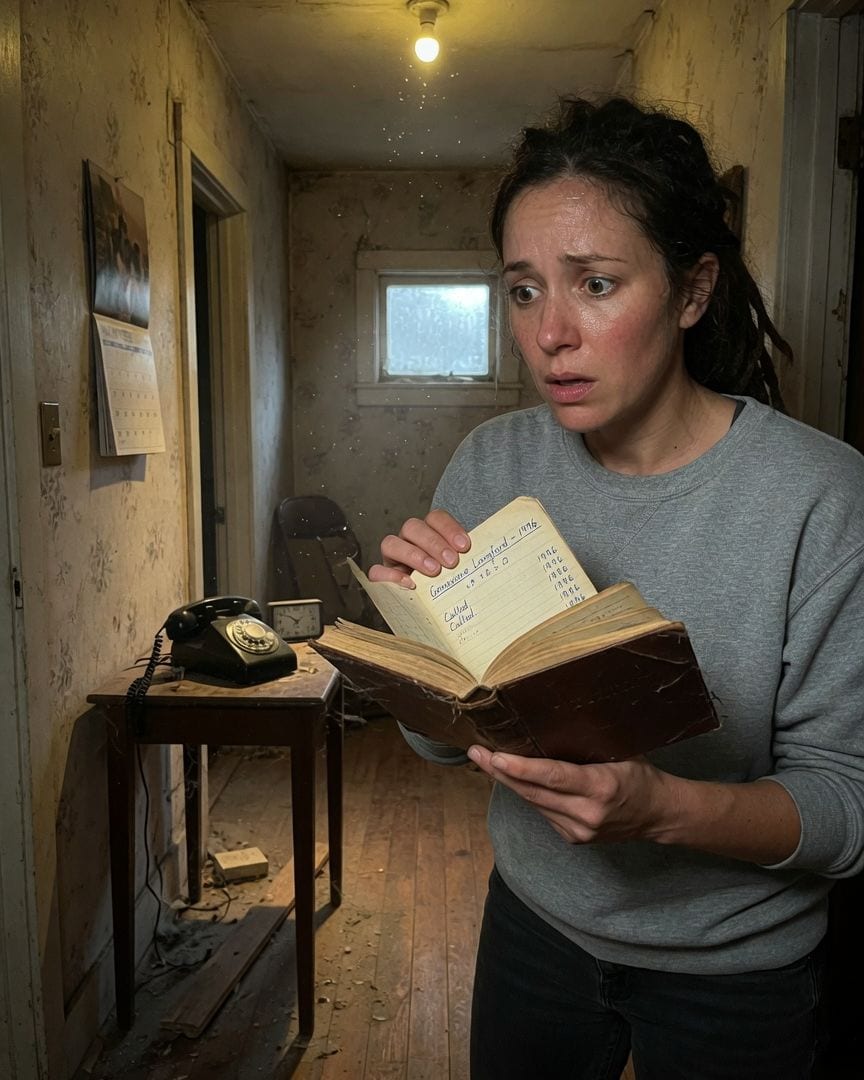
My dead rotary phone rings at 8:05 every night. I pick it up. A room full of voices, then a woman drawing breath.
I inherited an old house, complete with a black rotary phone that the company confirmed was disconnected in 1996. Yet, most evenings at 8:05 PM, it rings. When I pick up, a distant murmur fills the line, followed by a woman drawing a deep, shuddering breath every single time.
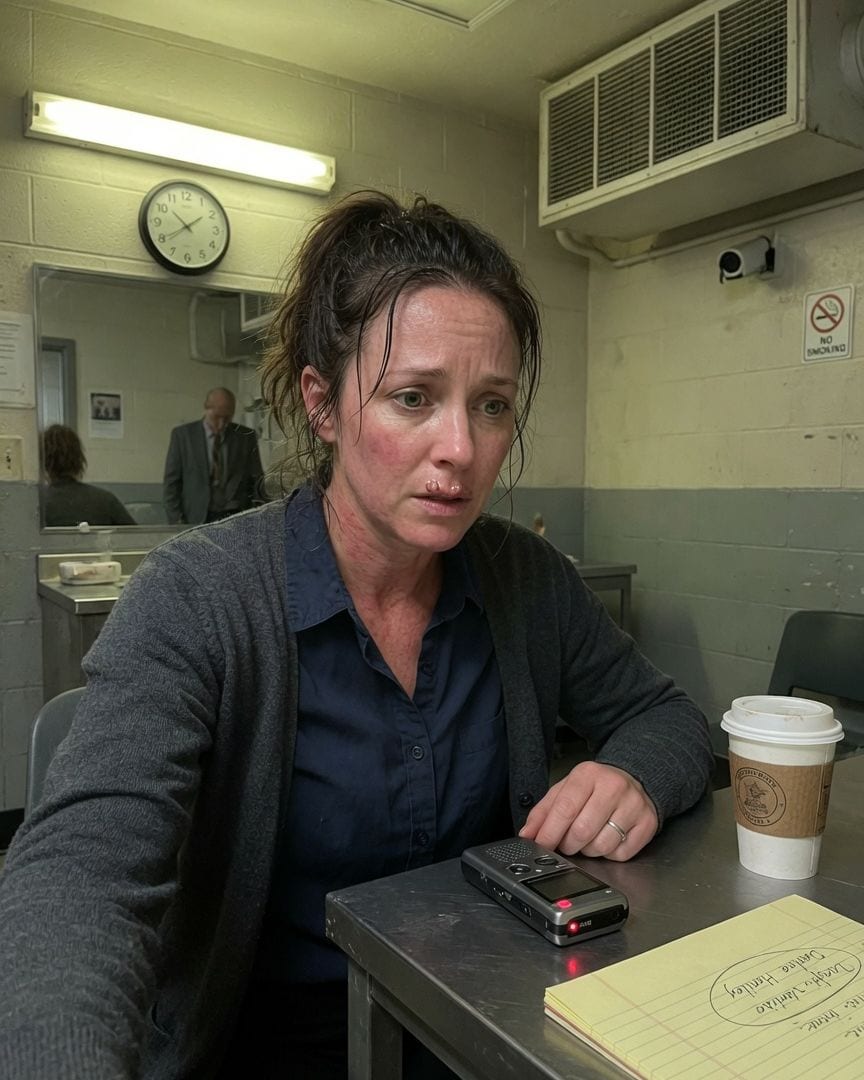
My own voice called 911 from Gary, Indiana, reporting a prowler. I was asleep in Ohio, my phone on the charger.
Sitting in a police interview room, I listened as Detective Walsh played a 911 recording. A woman's hushed voice reported a prowler from a payphone in Gary, Indiana. My stomach dropped cold; it was my exact voice, my specific way of saying 'I think,' even though I was in bed in Ohio that night.
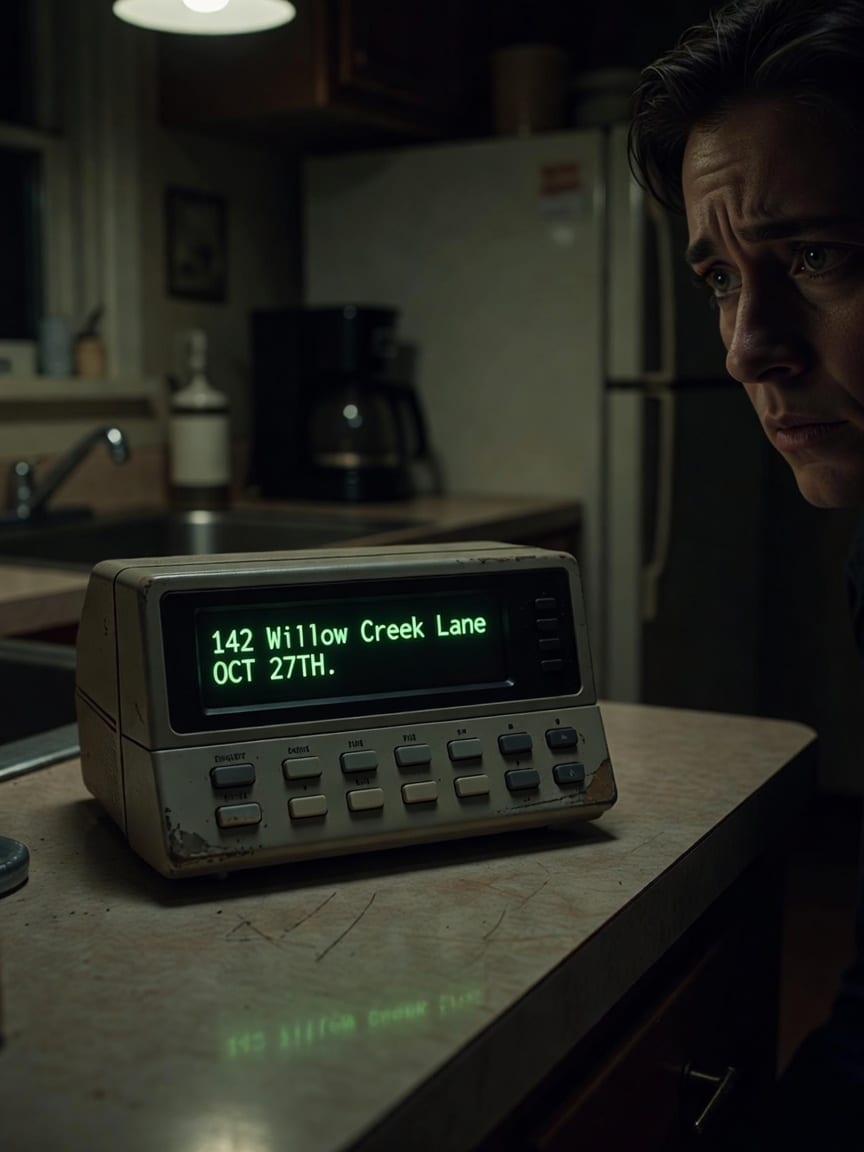
My radio scanner picked up a channel at 2 AM reading local addresses. Mine was on it, dated tomorrow.
I was tracking a storm on my old weather radio when a synthesized voice cut through the static. It began reading local street addresses, then my own: 142 Willow Creek Lane. But the date it gave for my address was tomorrow.
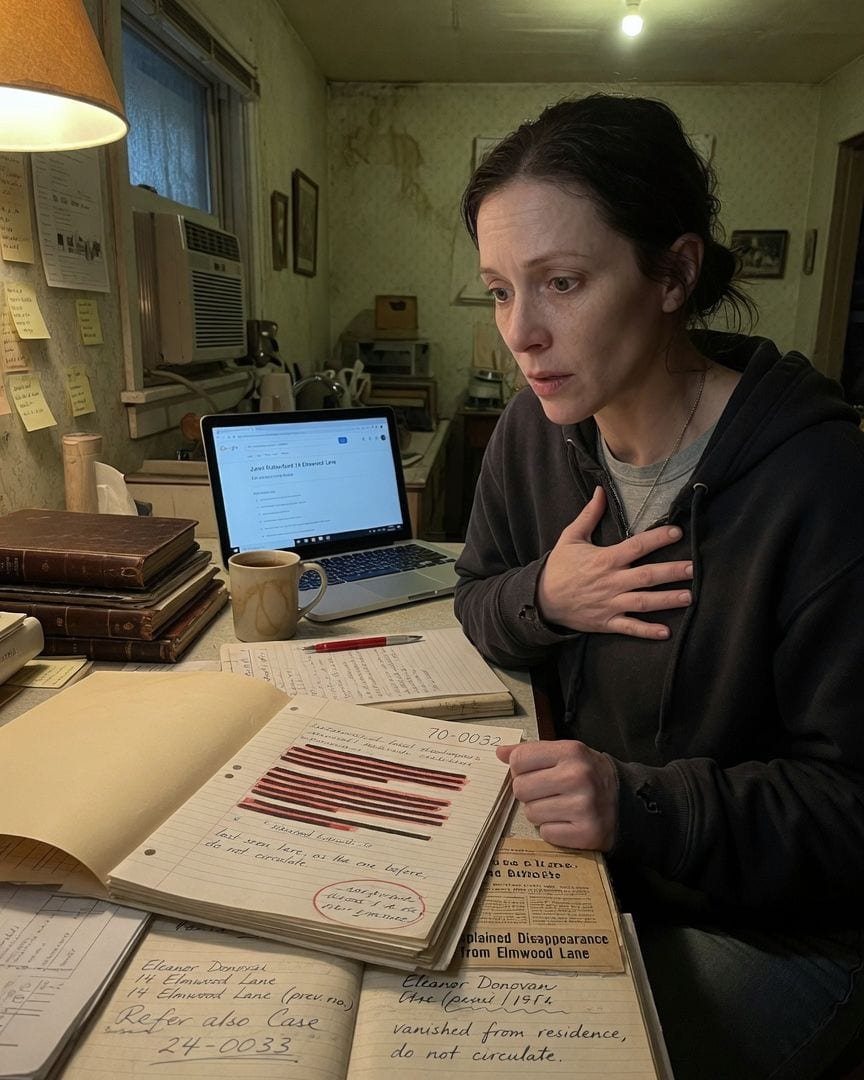
My own address is on a missing person's file from 1970. The blacked-out line names my street. She never lived here.
When my neighbor vanished, I started digging into old local missing persons cases. In a police file for a woman who disappeared in 1970, I found my own address, 14 Elmwood Lane, framing a blacked-out section of the duty log. Janet Rutherford never lived here, and the file contained a chilling handwritten note: 'do not circulate.'