The old dairy in my new town was a chapel in 1901, led by a minister already one hundred and four years old.
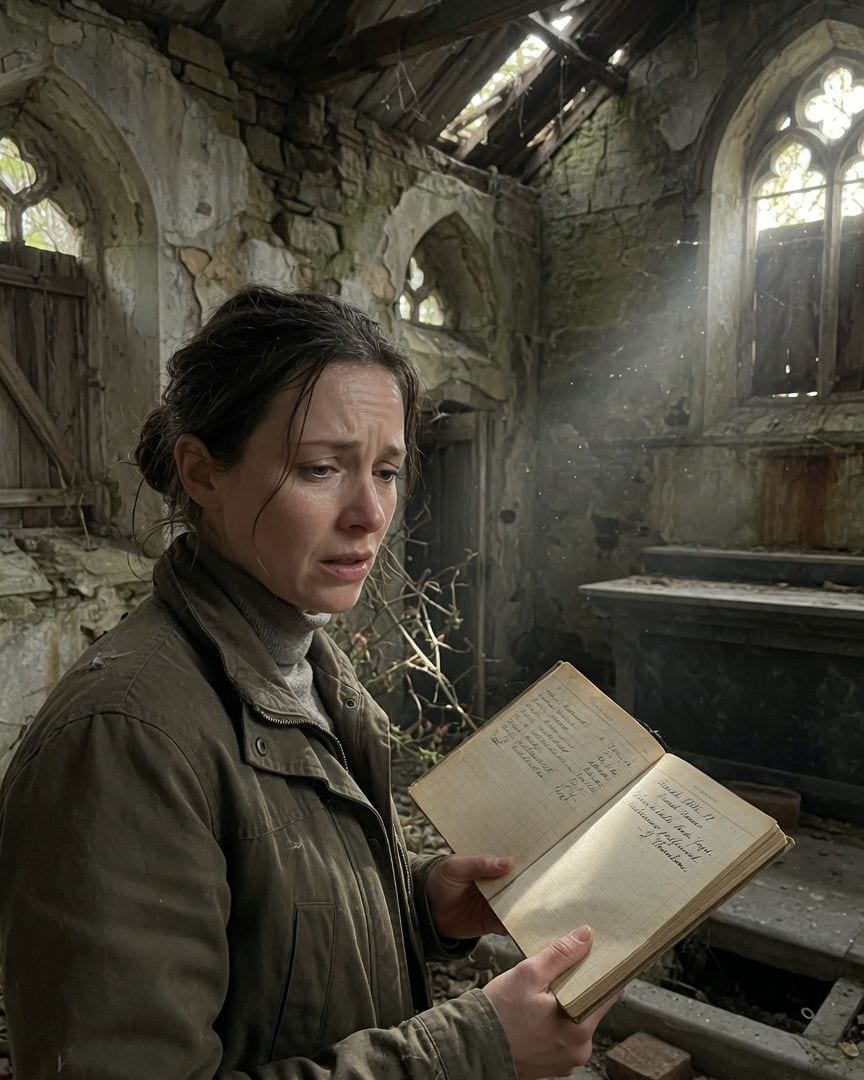
Marden was exactly the kind of quiet, ancient town an architect like me, Claire Davenport, could fall for.
I’d moved here recently, escaping the city’s endless sprawl, drawn by the prospect of renovating a small, tumbledown cottage on the village’s western edge.
My professional curiosity often bled into a personal one, leading me to the local archives, a dusty, wonderful space packed with local histories and forgotten lives.
It was there, amidst the brittle microfiches and the hum of the old reader, that I first stumbled onto something truly odd.
Everyone in Marden, and I mean everyone, referred to the crumbling stone building on the old Marden Road as 'the old dairy.'
It was disused now, its windows boarded and roof sagging, but even a glance told you it was no dairy.
It had the undeniable silhouette of a chapel: arched windows, a faint cross etched into a lintel, even the stub of what must have once been a bell tower.
Locals would give you a blank stare, a quick, uncomfortable glance, or just change the subject if you dared to call it anything but the 'old dairy.' I’d always dismissed it as charming local eccentricity, a quirk of Marden.
Until I found the 1901 census. It listed the building, unequivocally, as 'Marden Chapel.' And beneath it, the resident minister: 'Reverend Ethan Marsh, age 104.' My eyes scanned the entry again, the numbers refusing to compute.
One hundred and four, in 1901. It felt like a deliberate error, a typo, a glitch in the historical matrix, yet it was there, stark and unblinking, in official, elegant script.
I went back to the building that evening, the cold unease I’d felt in the archives settling deep in my stomach. The 'old dairy' now looked less quaint, more like a place holding its breath.
Driven by a professional curiosity that was quickly morphing into something else entirely, something unsettling, I returned to the 'old dairy' the next day.
The main doors were, as usual, boarded shut, but a side entrance, barely visible behind a tangle of ancient rose bushes, had a rusted iron latch. It gave way with a mournful groan, sounding almost like a sigh.
Inside, the air was stagnant, heavy with the scent of damp earth and something else, something subtly metallic, like old coins left in a forgotten drawer. It was undeniably a chapel.
The nave was choked with fallen plaster and dust motes danced in the sparse light that pierced the gaps in the boards, but it was also… wrong.
There were no pews, only a raised stone altar, smooth and dark, at the far end. It wasn’t an altar for congregants, it felt more like a sacrificial stone.
As I ran my hand along a crumbling section of the wall near what would have been a vestry, my fingers snagged on a loose stone. It wasn't a natural fissure; this felt deliberate.
Tugging gently, I found it was a cleverly disguised brick, part of a small, shallow recess. Inside, wrapped in brittle, yellowed linen, was an object that made my heart seize: a thick, leather-bound ledger.
It was clearly antique, its cover worn smooth, its pages fragile, parchment-thin. I carefully opened it. The handwriting was elegant, precise, flowing in looping, meticulous copperplate. It detailed dates and names, records of 'chapel maintenance' and 'offerings.'
It read like a church register, but the entries stretched back centuries, and the names, though changing over time, reappeared with an impossible regularity, a familiar set of Marden family names recurring through the generations. This was no dairy record.
This was something else entirely.
I flipped through the ledger, my architect’s mind trying desperately to find a pattern, a logical explanation for the strange, spanning entries.
Dates for 'chapel care' stretched from the 1700s, names of families I recognized from Marden’s oldest lines: the Lawsons, the Barlows, the Hawkins. Then I froze. My thumb brushed a page, and I looked down.
The last entry was not faded with age, like all the others. The paper was crisp, the ink a deep, startling black, as if it had only just dried.
It was dated not decades ago, not even a year, but just last week: 'March 12th, Present Year. Maintenance performed. — J. Thornton.' I stared at the name. Reverend Ethan Marsh, 1901 census, age 104.
His full name, I’d found in another archival document, was Ethan Jeremiah Thornton Marsh. J. Thornton. The name was unmistakably a version of the 1901 minister’s.
Claire looked around the derelict chapel, the dust motes dancing in the single shaft of sunlight that cut through a high, broken window. Someone had been here. Recently. Someone who should have been dead for over a century.
The ledger became my obsession. The chill it had given me didn't fade; it deepened into a cold, knotting certainty.
I spent days cross-referencing names from its pages with Marden’s birth and death records, property deeds, and even old newspaper obituaries.
A disturbing pattern emerged: certain family lines, those mentioned most frequently in the ledger’s 'maintenance' entries, showed an unusual prevalence of longevity. Not just long lives, but impossibly long.
Many exceeded a century, sometimes even two, before their names quietly vanished from the records, only to be replaced by a descendant bearing a strikingly similar name or middle initial.
It was a continuity that defied chance, a line that barely wavered. I tried to discuss my findings with Vera Lawson, the owner of the village shop, a woman who usually knew everything about everyone, and delighted in sharing it.
Vera, however, grew strangely quiet. 'Some things are best left alone, dear,' she'd said, her eyes fixed on a distant point beyond my shoulder, 'Marden has its ways.' Her usual volubility had evaporated.
The evasiveness was more unsettling than outright hostility. I noticed it again and again: whenever I mentioned the 'chapel' instead of the 'old dairy,' conversations abruptly ended, smiles faltered, and eyes shifted away.
The pattern was not just in the dusty records I uncovered, but in the townspeople's collective silence, in the sudden, palpable weight of unspoken things.
My digging didn't go unnoticed. Samuel Hawkins, the town's self-appointed historian and unofficial archivist—a man with a sharp mind and an even sharper, unnervingly still gaze—began to appear wherever I was.
Initially, he offered help, seemingly eager to share Marden's history, always with a polite, almost academic interest. But his questions were too pointed, too specific to my recent inquiries. 'Still fascinated by our local eccentricities, Miss Davenport?'
he'd asked one afternoon, finding me in the library's local history section, a book on Marden's founding families open beside me. 'The old dairy holds many secrets, doesn't it?'
His tone was mild, but his eyes held a depth that made me deeply uneasy, like looking into a very still, very old well.
Later that week, I found a single, perfectly preserved white rose on my cottage doorstep, a bloom that hadn't been in season anywhere in Marden for weeks.
It was identical to the faded illustration of a pressed flower, tucked between pages describing 'offerings' in the ledger. A few days after that, Hans Barlow, the handyman who’d fixed my porch, paused while working on my fence.
He mumbled, not quite looking at me, 'Some things, you just let sleep. Marden's always been a quiet place. We like it that way.' The message was clear: my investigation was known, and I was being warned.
The air in Marden, already heavy with unspoken things, felt thick with eyes.
The warnings, rather than deterring me, only sharpened my resolve. I felt like I was walking a tightrope, every step revealing more of the abyss below.
I finally cornered Samuel Hawkins in the quiet, empty churchyard, the only place in Marden I felt I could speak freely, away from the watchful eyes and the pregnant silences.
The headstones, many bearing names I'd seen in the ledger, felt like an audience.
'Mr. Hawkins,' I began, my voice steady despite the tremor in my hands as I held up a printout of the 1901 census record and a precise photocopy of that impossible ledger page. 'Reverend Marsh was 104 in 1901.
His name, or at least a version of it, is in this ledger, dated last week. And you, Mr. Hawkins, have family names in here that span centuries, yet your own family tree is remarkably... robust.
You've lived in Marden a very long time, haven't you?' Samuel looked at the papers, then at me, his face unreadable, his composure absolute. 'Marden has always been...
a place of continuity, Miss Davenport,' he said, his voice calm, almost serene, as if discussing the weather. 'We value our traditions. And our elders.' He didn't deny anything. He just watched me, a placid, unnerving stillness about him.
'The 'old dairy' isn't just a quaint local name, is it?' I pressed, my voice trembling slightly despite my best efforts. 'It's a deliberate misdirection. A rule. To keep people from calling it a chapel.
To keep them from looking too closely at what happens there.' Samuel nodded slowly, a faint, almost imperceptible turn of his head. 'Precisely. A very old rule. Passed down through generations. A way of managing... the chapel's influence. It provides.
Longevity, a certain stability. In exchange for... discretion. For not disturbing the balance.' I felt a cold dread bloom in my chest, a physical tightening beneath my ribs.
Every odd glance, every evasive answer, every impossibly old resident I'd read about in the archives, all snapped into focus. 'And I've broken it, haven't I?' Samuel’s smile was faint, almost imperceptible. 'You have called it a chapel, Miss Davenport.
You have opened its ledger. You have disturbed a very old understanding. You have broken faith with Marden.'
I felt the blood drain from my face, a sudden rush of cold in my ears. 'What happens now?' I whispered, the quiet of the graveyard suddenly oppressive, the ancient stones seeming to lean in closer.
Samuel reached into his tweed jacket pocket and produced a small, leather-bound photograph. It was sepia-toned, brittle with age, the edges curled. He handed it to me.
It showed Reverend Ethan Marsh, stern-faced, standing before the chapel in what was clearly the late 19th century, the building still intact.
But in the background, near the chapel doors, a figure stood, slightly out of focus, looking directly at the camera. A young man, perhaps in his late twenties, with Samuel Hawkins's distinctive aquiline nose and the same calm, knowing eyes.
The man in the photograph was unmistakably Samuel, decades younger, but undeniably him. Samuel watched my face as recognition dawned, his expression unperturbed, unblinking. His eyes, in that moment, seemed impossibly old, ancient beyond mere years.
'Some rules,' he said softly, his voice barely a whisper, 'are warnings. You broke one. And now, the balance shifts. You'll see.' He took the photograph back, folded it carefully, and returned it to his pocket.
He didn't move to stop me, didn't threaten me, but his gaze was a physical weight, a promise of something inescapable, something that had already begun.
The photograph, and Samuel’s calm admission, detonated my reality. It wasn't just longevity; it was an ongoing, active condition, a slow, generational exchange.
The chapel wasn't just a building, or even a source; it was a hungry entity, sustained by the town's collective silence, its careful observance of the 'rule.'
The long lives weren't a gift so much as a slow absorption, a blurring of individual identity into the collective memory of Marden, a quiet commitment to its perpetuity.
The names in the ledger weren't just records; they were a lineage of 'keepers,' those who had quietly tended the chapel and, in turn, become part of its fabric. Reverend Marsh, Samuel Hawkins, and countless others.
I understood now: the chapel didn't just give life; it claimed it, subtly, over decades, until the individual became indistinguishable from the town's ancient, enduring secret.
And I, by calling it a chapel, by seeking out its truth, had not merely broken a rule; I had announced myself as a new participant, a new thread in the tapestry.
The dread was in the coherence: every odd glance, every evasive answer, every impossibly long life in the archives, the crisp ink of that last entry, Hans Barlow's warning—all clicked into place with horrifying precision.
There was no escaping the pattern, because I was already in it.
Panic seized me, a cold, sharp claw in my gut. I had to leave. My car. My life, my actual life, was somewhere else.
I packed my bags, frantically throwing clothes and essentials into suitcases, then hauled them into the trunk of my car and started the engine. The old engine sputtered to life, a small comfort in the suffocating dread.
But as I drove down Marden Road, past the 'old dairy'—the chapel—a strange reluctance settled over me. My hands felt heavy on the wheel, my fingers stiff.
The road, usually familiar, seemed to stretch endlessly, each turn leading me back toward the village center, toward the chapel, never away.
I tried to force myself onward, to push past the invisible barrier, but a profound, unshakeable apathy began to seep into me. What was the point of leaving?
My architecture career, my friends in the city – they felt distant, unreal, like memories from a life that wasn't mine anymore.
Marden, with its ancient stones and quiet secrets, felt more substantial, more real than anything else I could grasp. Samuel Hawkins appeared again, standing by the roadside, just off the shoulder, a silent, unmoving sentinel.
He simply watched me as I drove past, his expression unchanging, a faint, almost imperceptible smile playing on his lips. He didn't wave, didn't speak. He didn't need to.
I found myself turning the car around, the decision feeling less like a choice and more like an inevitability, a settling.
I drove back to my cottage, the packed bags remaining untouched in the trunk, my desire to open them, to unpack, simply gone.
The chapel's influence wasn't a physical barrier; it was a subtle, insidious pull, already deep within me, already part of my own blood. I was marked.
The confrontation wasn't a battle of wills, but a quiet, terrifying surrender to a truth I had unearthed, a truth that now claimed me.
I stopped trying to leave. My professional work dwindled, then ceased. The cottage, once a project of passion, became merely a place to reside.
I found myself drawn to the 'old dairy' more often, walking its overgrown grounds, sometimes just sitting on a fallen stone by the arched window, watching the light change on its crumbling walls.
The townspeople, who had once looked at me with suspicion or unease, now regarded me with a quiet, knowing acceptance. Vera Lawson would nod almost imperceptibly when I bought my groceries, a faint smile on her face.
Hans Barlow would offer a small, respectful tilt of his head. My old life, my old self, began to recede like a fading dream, replaced by a deep, calm understanding of Marden's rhythm.
I started to use the phrase 'the old dairy' without conscious thought, without even noticing the shift in my own language.
My last few social media posts were sparse, detached. A photo of the chapel at dawn, captioned simply: 'Marden morning.' Another, a week later: 'The quiet is a comfort.'
My final entry, a single sentence, was posted months ago, and there have been no updates since. My friends from the city tried to reach out, then gradually gave up.
The cottage remains, my car parked outside, bags still in the trunk. The 'old dairy' stands, as it always has. Its name, a quiet agreement.
Months later, a former colleague from the city drives through Marden, curious about Claire's sudden silence. They spot her, sitting on a bench in the village square, watching the children play. She looks older, somehow, but peaceful.
When greeted, she offers a faint, distant smile. 'Just enjoying the quiet,' she says, her voice soft, unfamiliar. 'The old dairy is just a name, after all.'
If this one got to you
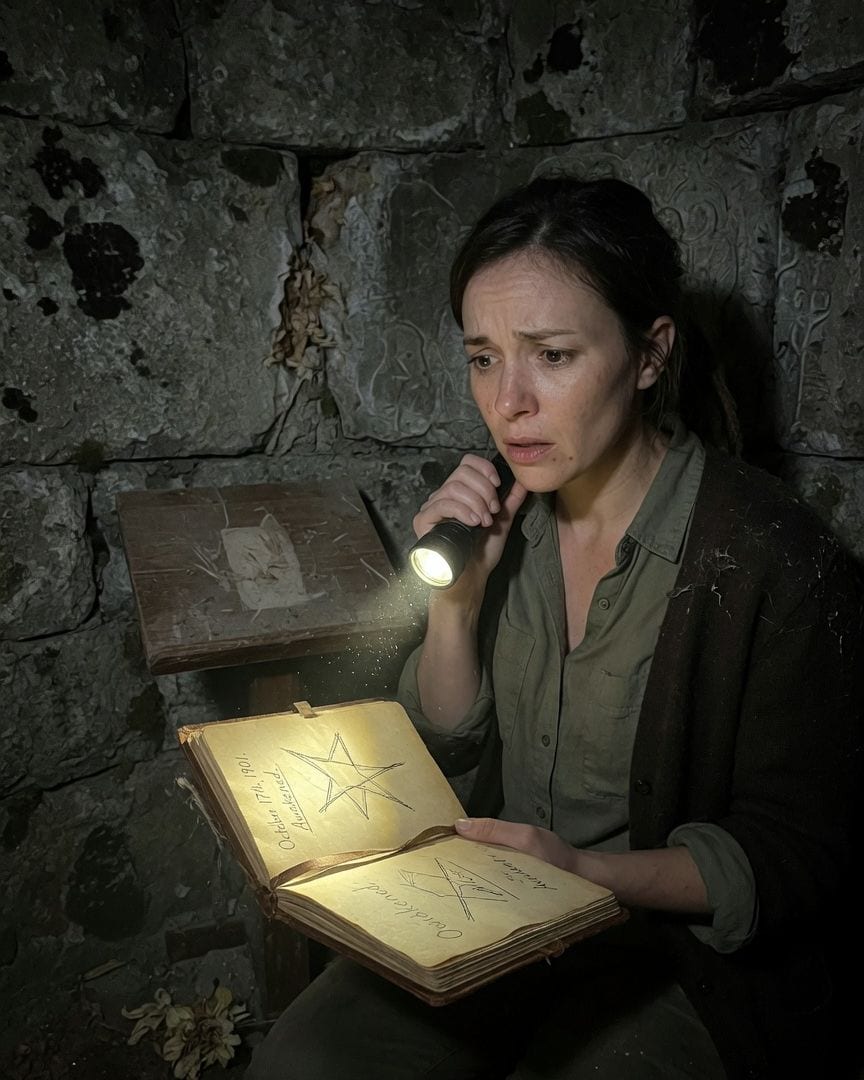
Marden's 'old dairy' shows up in the 1901 census as a chapel. Its minister was 104 that year. Everyone here looks at me oddly when I call it a chapel.
As a new resident in Marden, I quickly found an old stone building the town called its 'dairy'. My historian's research showed it was a chapel, listed in 1901 with a minister aged one hundred and four. When I finally broke into the building, I found a hidden room, and inside, a leather journal with a single, chilling 1901 entry: 'Awakened'.
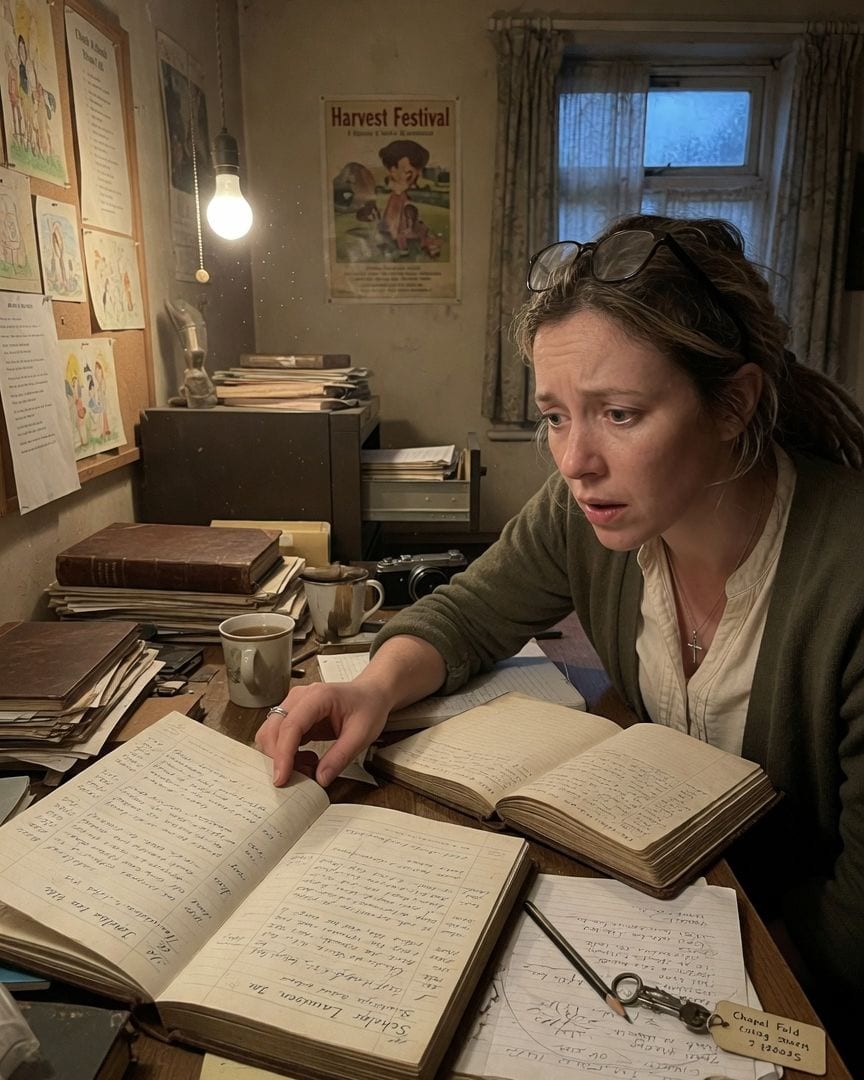
My name is in the chapel's old Sunday school register as 'Scholar 33'. But 'Scholar 33' appears every seventh year since 1907, each child from the same cottage, each marked 'not called for'.
Sorting dusty chapel archives, my job as a local history enthusiast, was a soothing journey through generations. But then my own name, Penelope Lawson, jumped out: 'Scholar 33' for the current year. I'd never attended. Flipping back, I found the same 'Scholar 33' entry repeating every seven years for over a century, always linked to the same old cottage.
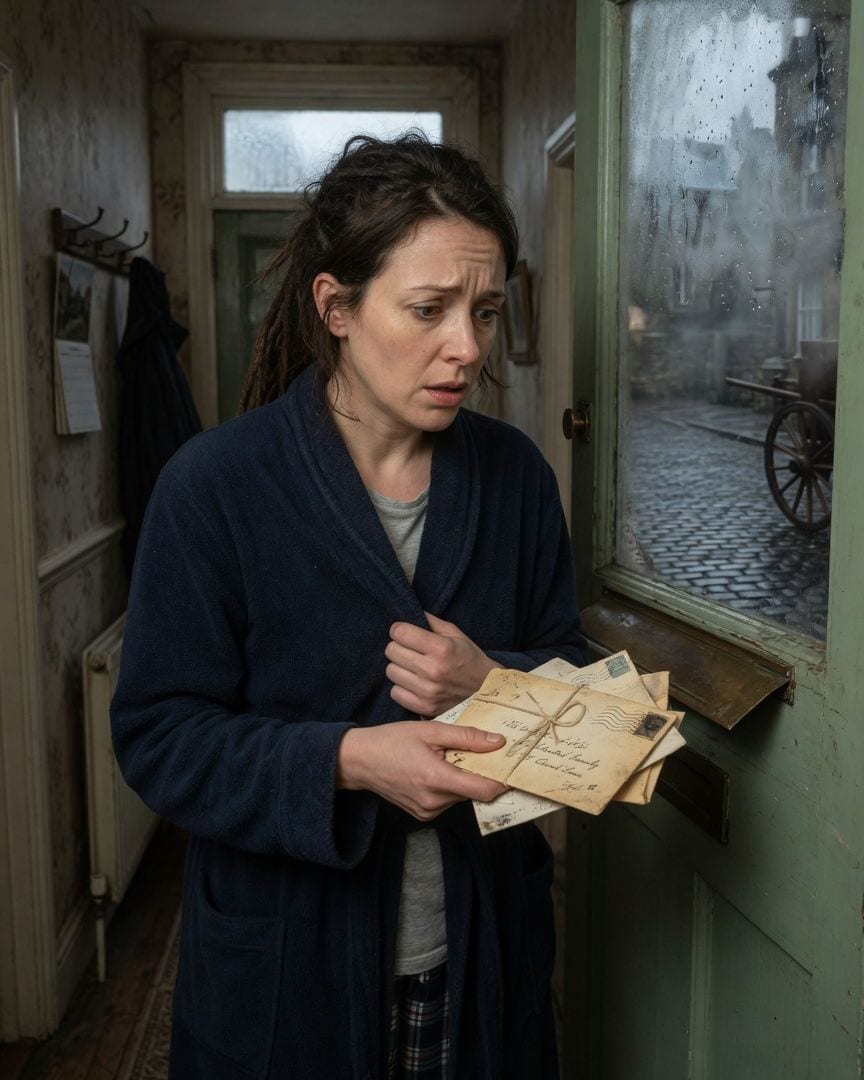
Seventy years ago, a hidden journal recorded my door opening to the wrong street and receiving Lockwood post.
I'd only recently moved into my inherited house, a quiet place on the edge of town. One grey morning, a distinct clatter from the front door's post flap caught my attention. Reaching down, I expected my gravel path, but instead, the flap showed a dark, cobbled street that wasn't mine. A bundle of warm, old letters, addressed to 'The Lockwood Family,' slid through, before the vision flickered and was gone.
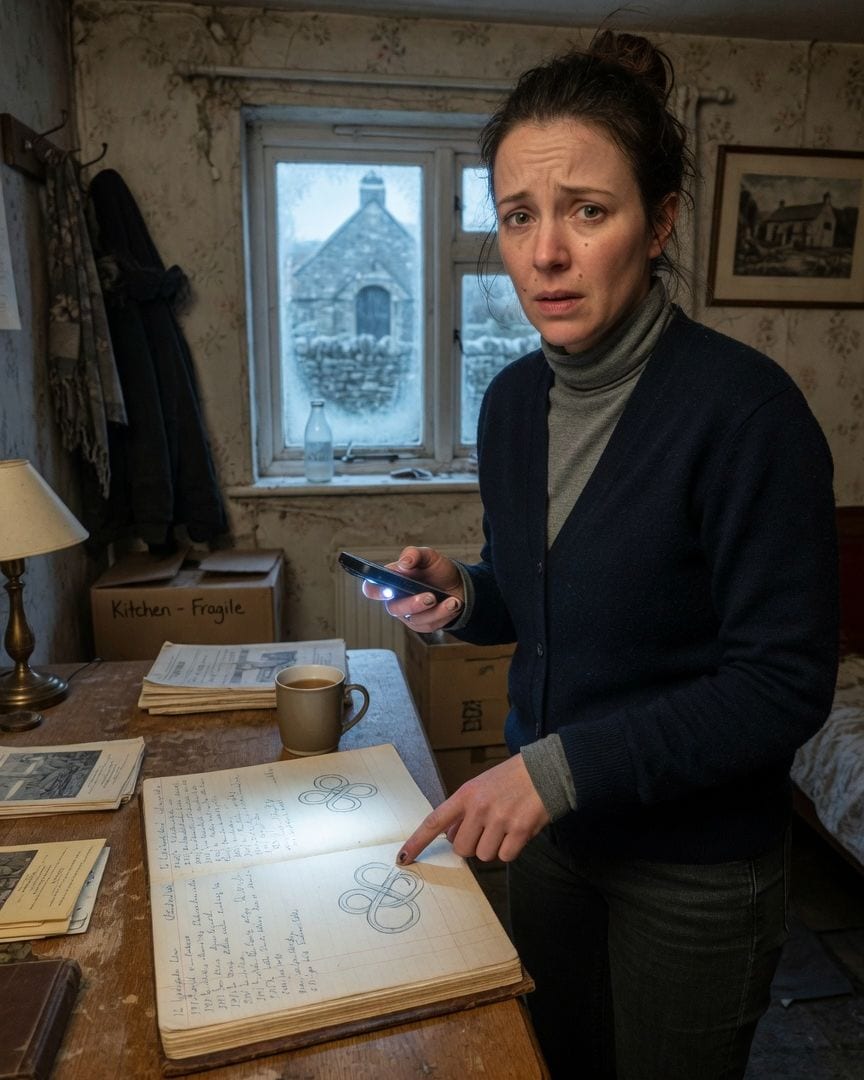
Milk appears daily by my lychgate. The dairy closed in '79. My address is handwritten into their old delivery book, starting the day we moved in.
Moving to Blackwood Creek, I loved the quaint charm, especially the unexpected morning milk delivery to my lychgate. But when I mentioned it to Eleanor at the village shop, her smile froze. She told me Willow Creek Dairy closed decades ago, in '79.
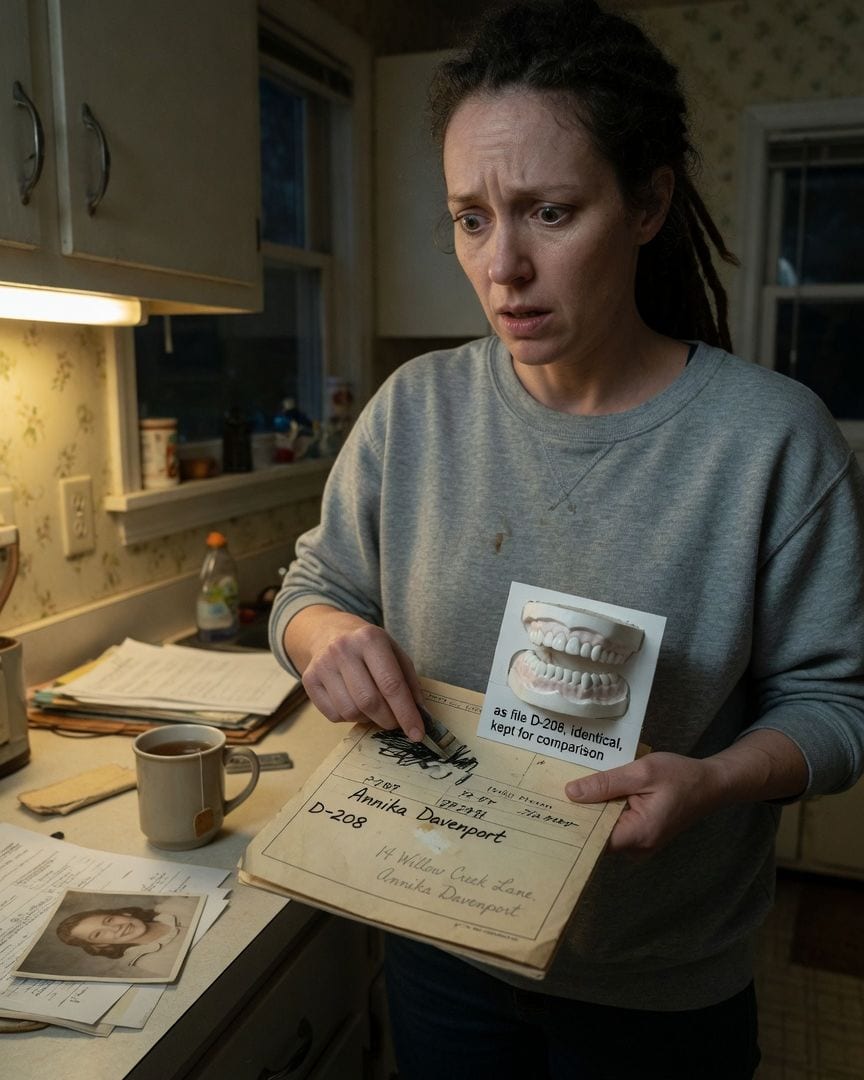
My childhood dental chart lists the house I bought last year — in my own name, years before I was born. A second set of my teeth sits filed beside it, marked 'identical.'
Sifting through old dental records, I found my chart, D-208, with my 1988 birth date. But a line from 1958 was blacked out, and a clipped card with an impression of my teeth listed my name and current home address, decades before I was born. The impossible facts knotted into a cold certainty.
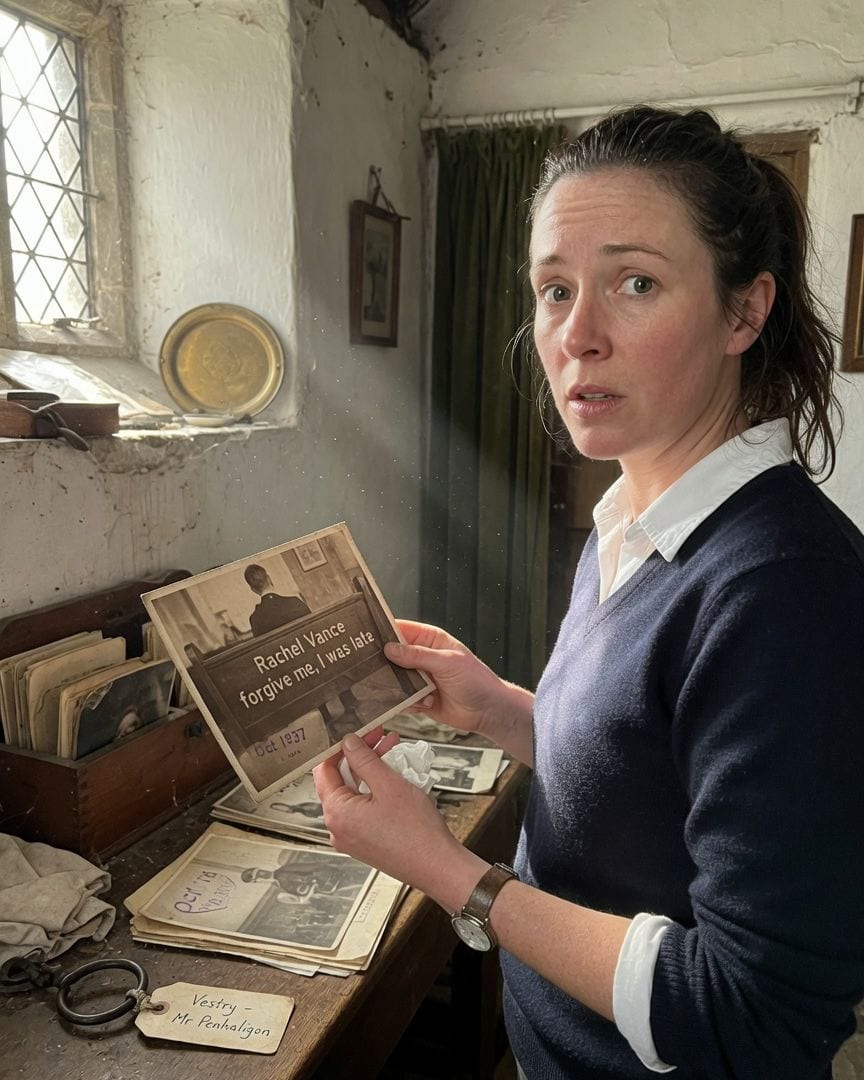
My full name is carved into a church pew from the 1600s. Under it: "forgive me, I was late." The verger says it's older than anyone remembers.
On a quiet morning in a centuries-old church in Zennor, I found my name carved into a 17th-century pew. The ancient timber bore the words ‘Rachel Vance’ and ‘forgive me, I was late’. But a photograph from 1937 revealed the carving was already there, decades before I was born.