My phone logs 3,000 steps down Sacramento streets on the 4th of every month. I'm always home in Denver that day, a thousand miles away.
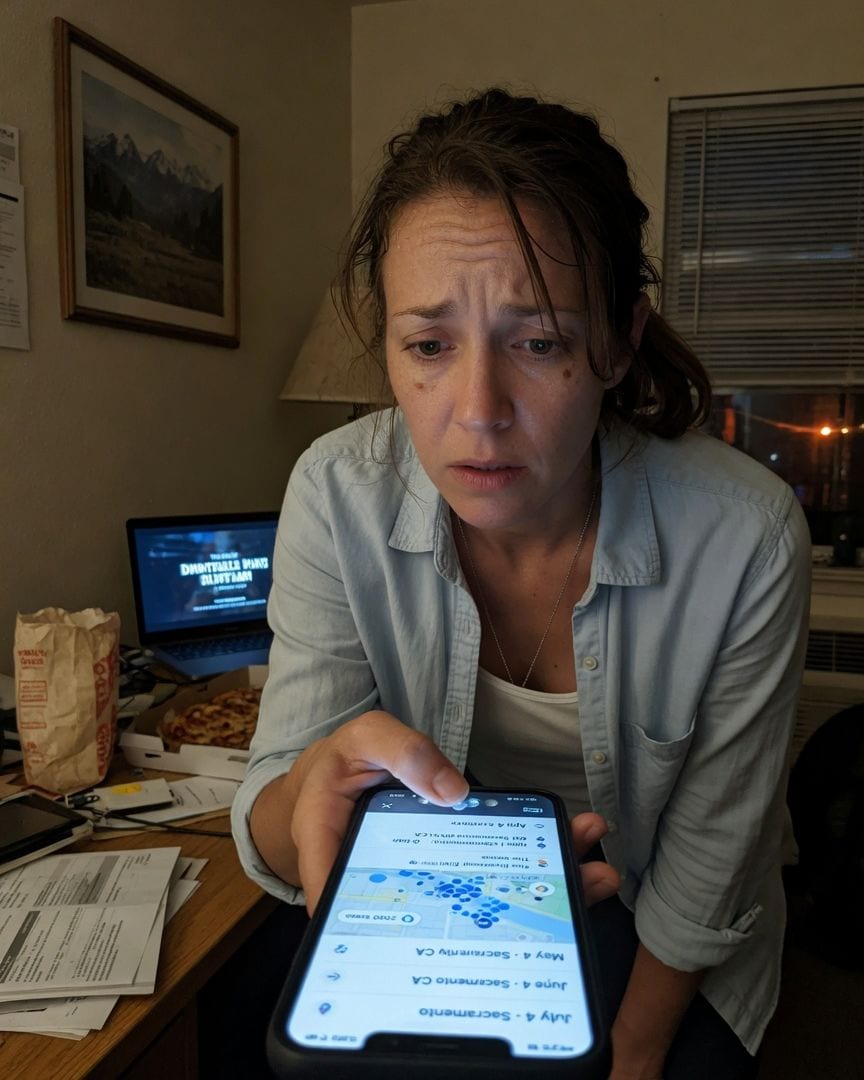
I needed my Google Location History for an insurance question, a mundane task I expected to take minutes. It was late summer, and I was checking my movements from the spring.
My phone, a black slab of glass and metal I rarely thought about, lay on my desk, syncing with the cloud. When the timeline populated, a knot tightened in my stomach.
The screen showed my phone, and by extension, me, spending the entire 4th of April in Sacramento, California. There were timestamps: 8:17 AM, driving from the airport. 9:02 AM, parking near what Google labeled "Old Sacramento Waterfront."
An hour at a diner named 'The Riverbend Diner.' Then, a series of precise blue dots tracking steps.
My phone insisted I’d walked 3,000 steps down a street I’d never seen, a street with a name I didn't recognize from the map – "Front Street."
But my phone was in my hand, in my Denver apartment, all that day. I distinctly remember it. April 4th was the day I’d started binge-watching that new sci-fi series, the one with the impossible alien architecture.
I hadn't stepped outside except to grab a delivery pizza. I could picture the dust motes in the afternoon sun, the faint smell of microwaved popcorn.
I tried to dismiss it, a glitch, a misread GPS signal bouncing off a satellite somewhere a thousand miles away. Maybe my phone had connected to a public Wi-Fi network that spoofed its location?
It was a common enough urban legend. But then I scrolled back.
May 4th. The identical thing. Sacramento. The same diner, the same streets, another 3,000 steps. June 4th. Again. July 4th. Still there.
Every single 4th of the month since spring, my phone had been in Sacramento, walking those same impossible 3,000 steps, a phantom limb moving through a city I’d never visited.
The screen glowed, cold and insistent, outlining a life that wasn’t mine.
The creeping dread settled in like a persistent, low-grade fever. I called Daniel Patterson, a colleague in IT, a man who prides himself on his logical mind, on finding the bug in any system.
He chuckled, suggesting a 'ghost in the machine,' a software bug that replicated old data. "Cache corruption, probably," he'd said, dismissive. "Or maybe you just have an overactive data plan that picked up something weird."
I, Evelyn Bishop, spent the next two days trying to prove him right. I cross-referenced my bank statements, my credit card activity, even my Denver public transport card logs. Nothing.
No charges for flights to Sacramento, no rental car receipts, no tolls, no unusual data usage spikes that would indicate a trip. My physical life in Denver was perfectly, boringly accounted for.
My apartment, my grocery store, my usual café – all were meticulously logged by every other digital footprint I left. Everything about Evelyn Bishop, Denver, was present and correct.
Then, an idea, a desperate reach in the dark. What if it wasn't my data, or a glitch, but a public record? Something that had recorded this impossible 'me' in Sacramento?
I started searching Sacramento community blogs, local news archives, anything that might timestamp a 'me' there. It was a long shot, a needle in a digital haystack. I scrolled through endless posts about city council meetings and farmers' markets.
But late one night, deep in the rabbit hole of a niche historical society blog for Sacramento, I found it. The post was titled "April 4th Local History Walk," and it included a gallery of blurry photos.
A crowd of people, mostly elderly, gathered on a street corner that looked eerily familiar from my Google Maps reconnaissance.
Nothing remarkable, until I saw a figure at the edge of the frame, slightly out of focus, looking toward the camera.
My heart hammered, a frantic drum against my ribs. I zoomed in, pixel by agonizing pixel, the low-resolution image fighting me, distorting, then slowly resolving. The figure was a woman, mid-thirties, brown hair pulled back, wearing a pale blue jacket.
It was my face. Unmistakably. The same small mole near my left eye, the slight curve of my nose. The jacket wasn't mine, and the hairstyle was a little different, softer, but the face, the eyes, were mine.
My own face, a thousand miles away, on a day I was demonstrably curled up on my sofa in Denver, a half-eaten pizza box on the coffee table.
I stared, unable to breathe, at the photograph of myself existing where I could not have been.
Daniel was speechless when I showed him the photo. The calm, technical detachment he usually wore shattered. He kept muttering, "It's impossible. It just… isn't possible." His technical explanations, his "ghost in the machine" theories, evaporated under the undeniable evidence.
He spent an entire weekend trying to debunk it, searching for deepfakes, sophisticated digital manipulation, anything that would allow him to slot this anomaly back into his logical world. He found nothing.
The photo was genuine, from a reputable local source, just a simple digital camera snap uploaded to a blog.
Together, we found more. Once we knew what to look for, a pattern emerged from the digital noise. A fleeting glimpse in the background of a local news report on May 4th, 'me' walking past a café, distinct but distant.
A still from a university alumni page from June 4th, a figure that was undeniably 'me' entering a building, her back mostly to the camera. Always mundane actions, always Sacramento, always dated the 4th.
A quiet, unobtrusive presence in a city a thousand miles away.
We cross-referenced the Google Maps '3,000 steps' route with these sightings.
They all converged on a specific path, a circuit around the Sacramento Public Library and a few blocks of historic buildings, including what looked like the old City Hall and a couple of preserved Victorian homes.
It was too precise to be random. It wasn't a wander; it was a route, a deliberate trajectory, as if 'I' was following a pre-planned circuit. The sheer predictability of it was what started to make my teeth ache.
My inquiries became more targeted. The library, the historical society, the specific street names Google had logged. I started calling the Sacramento Public Library, asking about their archives, about specific local history groups mentioned in old city directories.
The responses were polite, but rigid, like a well-oiled machine repeating programmed responses. "We don't have records of that, ma'am." "Our special collections are by appointment only, with extensive vetting." A polite but impenetrable wall.
Then, the oddities began. Not just digital echoes, but physical ones. A black sedan, late model, parked across the street from my apartment for hours. The same one, two days later, further down the block.
Its windows tinted, reflecting the sky like dark mirrors. An email, sender unknown, with just a single, unsettling line in the subject: 'Some things are best left undisturbed.'
Daniel, now fully invested, his logical mind grappling with the illogical, told me to be careful, that I was clearly on to something much larger than a software glitch. He was right.
The feeling of being watched, of my questions echoing back to me, amplified the dread until it buzzed in my ears. I felt like a small animal, sniffing at something much larger and very much awake.
One evening, my apartment light flickered, then died, plunging the living room into shadow. When I went to check the breaker in the utility closet, a faint, metallic tang hung in the air, like ozone after a lightning strike.
It was gone a moment later, a phantom scent, but the feeling of being observed persisted, a cold prickle on my skin. The air in the small closet felt thick and still.
The anonymous email arrived on a Tuesday, no sender, no subject, just an attachment. It was a scanned, partial page from what looked like an ancient, hand-written ledger.
The image was grainy, the paper yellowed with age, but the ink was faded yet precise. Columns for 'Name,' 'Date,' 'City,' 'Route.' My breath caught, sharp in my throat. I read it aloud, my voice barely a whisper: "Evelyn Bishop.
April 4th. Sacramento. Route A-7." It was all there.
I knew then who I needed to find. Julian Jennings.
His name had appeared in a dusty academic paper Daniel had unearthed during his research, an obscure mention of a 'special consultant' to the Sacramento Public Library's historical collections, decades ago.
Tracking him down wasn't easy, but I finally found an address online, a quiet suburban house on the outskirts of Denver, only a twenty-minute drive from my own apartment.
The synchronicity felt less like a coincidence and more like a closing net.
He opened the door himself, a man in his early sixties, with thin, neat grey hair and eyes that seemed to hold endless patience, like a deep, still pool.
He wore a simple cardigan, a faint scent of old paper and tea clinging to him. I showed him the photo of 'me' on the Sacramento street, then the scanned ledger page.
He didn't flinch, didn't react with surprise or alarm. Only a faint, knowing smile touched his lips.
"You've been very persistent, Ms. Bishop," he said, his voice soft, unbothered, as if we were discussing the weather. "Some records, as you've no doubt discovered, are best left undisturbed."
I pressed him, my voice trembling, raw with a fear that had been growing for weeks. "What is this? What am I?"
Julian sighed, a weary but not unkind sound. He gestured for me to come in, then closed the door behind me with a gentle click that echoed too loudly in the sudden quiet of his hallway.
"You are… a participant, Ms. Bishop. An essential one. The 'trips,' as you call them, are necessary. A form of temporal preservation." He led me into a small, immaculately tidy living room. The air was cool, dry.
He explained that my 'movements' in Sacramento were a precise, scheduled collection of subtle temporal data, vital to 'aligning' with historical energy signatures.
My own conscious self, my Evelyn in Denver, was merely the template, the blueprint for something far more complex.
I demanded to know what he meant, what kind of 'template.' The word felt like a brand, searing my skin. Julian didn't answer immediately.
He led me into a small, meticulously organized study, crammed with bookshelves reaching the ceiling, a narrow desk in the center. The room itself seemed to hum with the weight of unseen history.
He pulled a massive, leather-bound ledger from a shelf, thicker and heavier than it looked, the leather worn smooth with age. Dust motes danced in the single shaft of sunlight cutting across the room.
He opened it, flipping past pages of elegant, precise script, the parchment rustling softly. Names, dates, cities, routes. A vast, terrifying index that stretched back decades, perhaps centuries.
He stopped on a page, ran a finger down a column, then pointed. My eyes followed. Not just Evelyn Bishop, Sacramento, Route A-7.
But a long, long list of names, hundreds, thousands, each with a different city, a different route, all dated the 4th of the month. A vast, silent army of 'participants,' their phantom steps echoing through impossible calendars.
And then, in a separate column, a single, chilling annotation beside my entry, and many others: 'Overseer: Julian Jennings.'
He was not just 'the one who knew,' he was one of the ones who ran it. And I was just a line in his book, a data point in a system I could not even comprehend.
Julian, seeing my expression, closed the ledger with a soft, final thud. It sounded like a grave sealing. He began to explain, his voice calm, almost academic, as if he were lecturing a particularly stubborn student.
"These are records of temporal echoes, Ms. Bishop. Proxies. Your biometric and neurological data are extracted, projected, and then guided through a precise 'route' in a specific location on the 4th of each month."
He spoke of an ancient, hidden society, 'The Chronos Keepers,' dedicated to preserving humanity's timeline from subtle, catastrophic shifts.
Sacramento, he explained, was a 'nexus point,' a site where historical patterns were particularly vulnerable to disruption, a city whose past needed constant, subtle calibration.
The '3,000 steps' were not random; they were a precise calibration, a living antenna to 'collect' specific historical energies, to smooth out ripples in time.
I, Evelyn Bishop, had been identified years ago as a 'prime template,' unknowingly providing the blueprint for my monthly phantom self. A perfect biological signature for their needs.
"You were always inside it, Ms. Bishop," Julian said, his gaze unwavering, almost sympathetic. "A living data point, essential to the delicate balance we maintain."
The horror was absolute, not of a monster, but of an inescapable, coherent truth. It fit too perfectly, every impossible detail snapping into place with chilling precision.
I tried to rise from the chair, to scream, to expose them, to somehow tear myself free from this monstrous, unseen mechanism. But my limbs felt heavy, inert.
Julian merely watched, a faint, sad smile on his lips, as if observing a child struggling with a complex puzzle. "You can't, Ms. Bishop. You truly can't."
He explained that my 'proxy' was not just a copy, not a mere digital projection. It was an active, integral part of my own temporal existence. To sever it, to expose the system, would unravel me.
He spoke of 'temporal dissociation,' of 'self-fragmentation' – polite, academic terms for a living death, a mental and spiritual collapse where the 'template' could no longer cohere.
My mind, my memories, my very sense of self, were now inextricably linked to the monthly excursions of my 'other,' my Sacramento self.
The climax was not a chase or a struggle, not a heroic escape, but a terrifying, silent realization. I was not a victim to be rescued, but a mechanism, a permanent, vital cog in a machine I could never escape.
My own existence was now contingent on the 4th of every month, on those 3,000 steps in Sacramento.
The choice wasn't mine to make; it had been made for me, long ago, probably before I even knew what a smartphone was.
I was trapped, not by chains, but by the very fabric of my being, woven into a timeline that was not entirely my own.
I returned to Denver. My apartment felt hollow, the walls too thin, my life a thin veneer over a monstrous truth.
I deleted my Google Location History, disabled GPS on my phone, even threw my phone in a drawer for a few days, but I knew it was futile.
Daniel, horrified by my account, tried to help, tried to find a legal angle, a digital loophole, but there was nothing to fight, no enemy to confront.
The Chronos Keepers weren't a company or a government agency; they were a principle, an operating system of reality. The world continued, oblivious, while a silent, hidden system hummed beneath its surface, collecting its strange data.
Every 4th of the month, I felt a subtle draining, a faint echo, like a distant memory being lived by someone else, someone who was still me.
It was a fleeting disorientation, a sense of having been somewhere I hadn't been, of having done things I hadn't done.
Sometimes, I'd catch myself humming a tune I'd never heard before, a jaunty little jazz number, or craving a specific, obscure brand of coffee from a diner I'd never visited, 'The Riverbend Diner.'
They felt foreign, yet intimately mine, brief flashes of a life I wasn't living, but was. My own mind was no longer entirely my own.
Daniel called Evelyn on the 4th of October. She answered, her voice flat, talking about a 'lovely walk by the river' in Sacramento. He knew she hadn't left her apartment.
A faint, wrong little smile played on her lips as she hung up.
If this one got to you
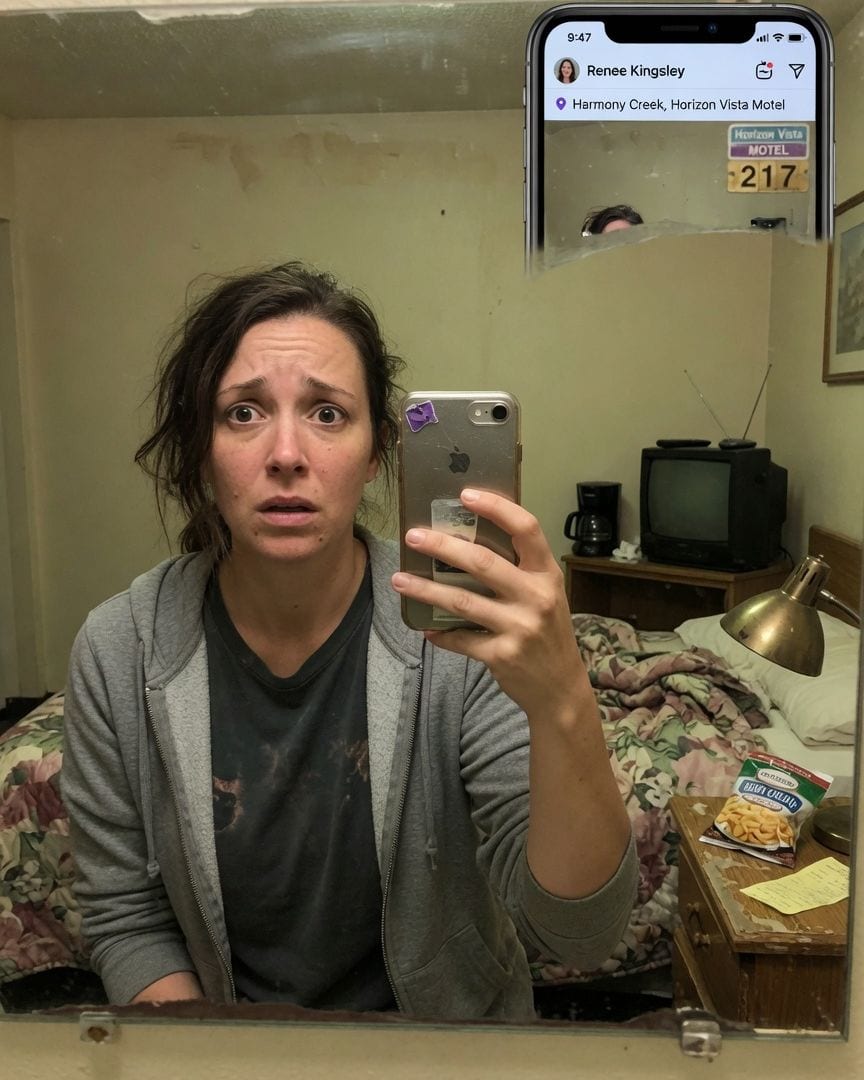
My apartment door opened and closed at 1:20 AM last Thursday, then my digital keycard checked into a motel six hours away, all while I slept.
My Tuesday morning began like any other, until I opened my phone's photo app. Instead of hike pictures, I found forty new photos: a motel room in Harmony Creek, six hours northeast. The last image was a mirror selfie of *my* face, holding *my* phone, but I was asleep in my bed the entire time.
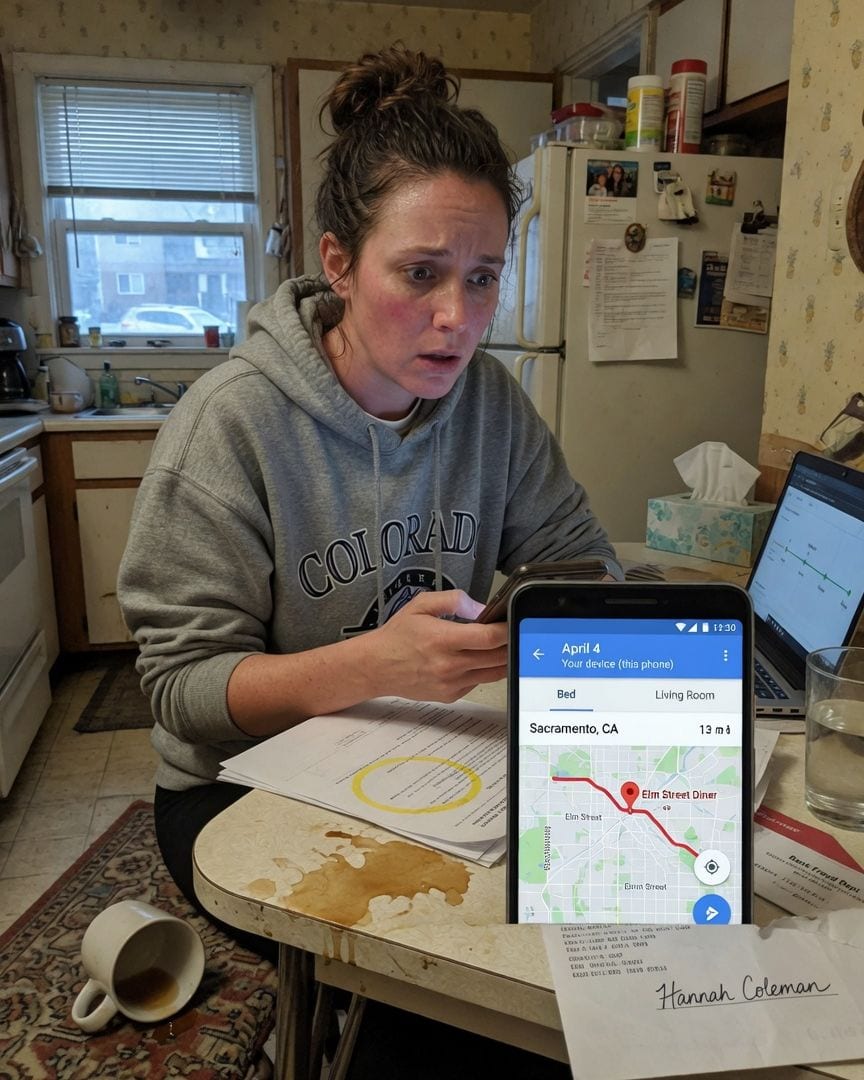
My phone's GPS places me in Sacramento every fourth of the month, driving a street I've never seen. I'm always home in Denver.
My Google Location History showed a phantom trip to Sacramento on a day I was home sick in Denver. I dismissed it as a glitch, until a bank statement revealed a charge from that diner. When the receipt arrived, it bore my exact signature for a coffee I never ordered.
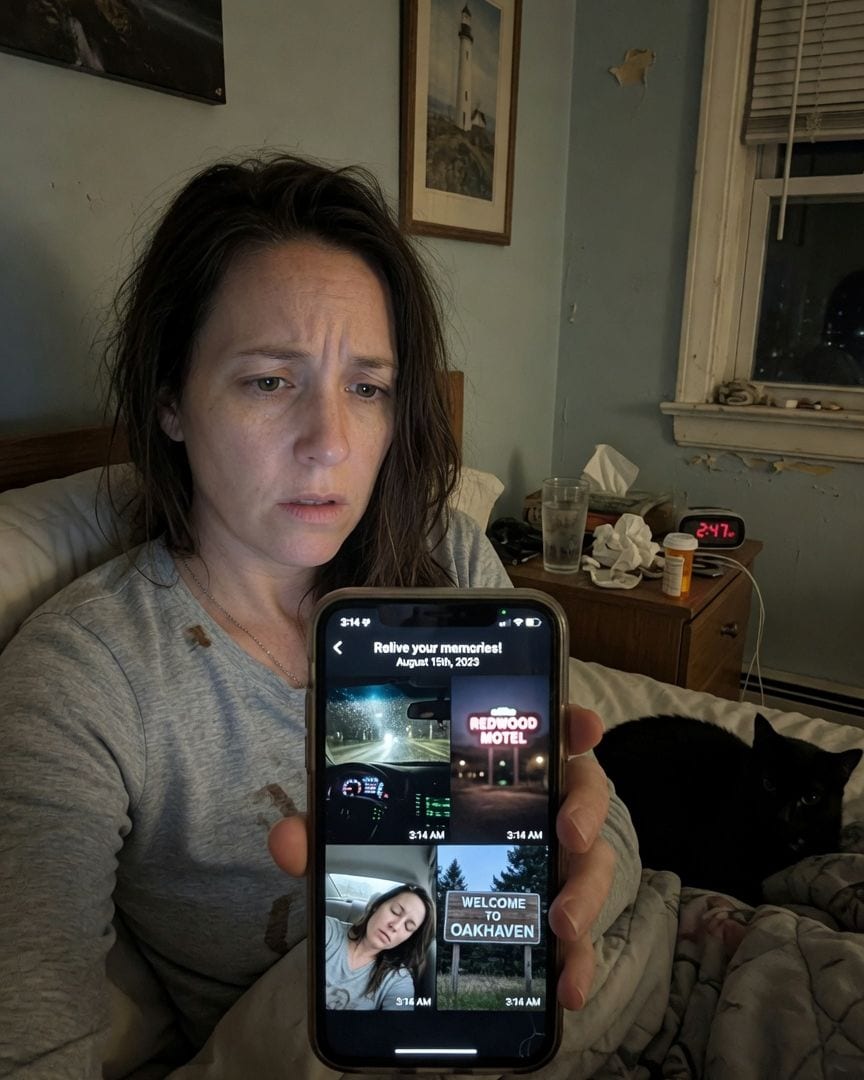
My phone has photos of me asleep in a strange car at 3 AM. Then a voicemail: 'We'll have her back by sunrise.'
My phone woke me with a cheery notification, promising memories from last August. Instead, it showed me asleep in a dark car, rain streaking the windshield, miles from my apartment. I was certain I'd been home in bed that night, but the images were undeniably in my camera roll, a quiet violation of my memory.
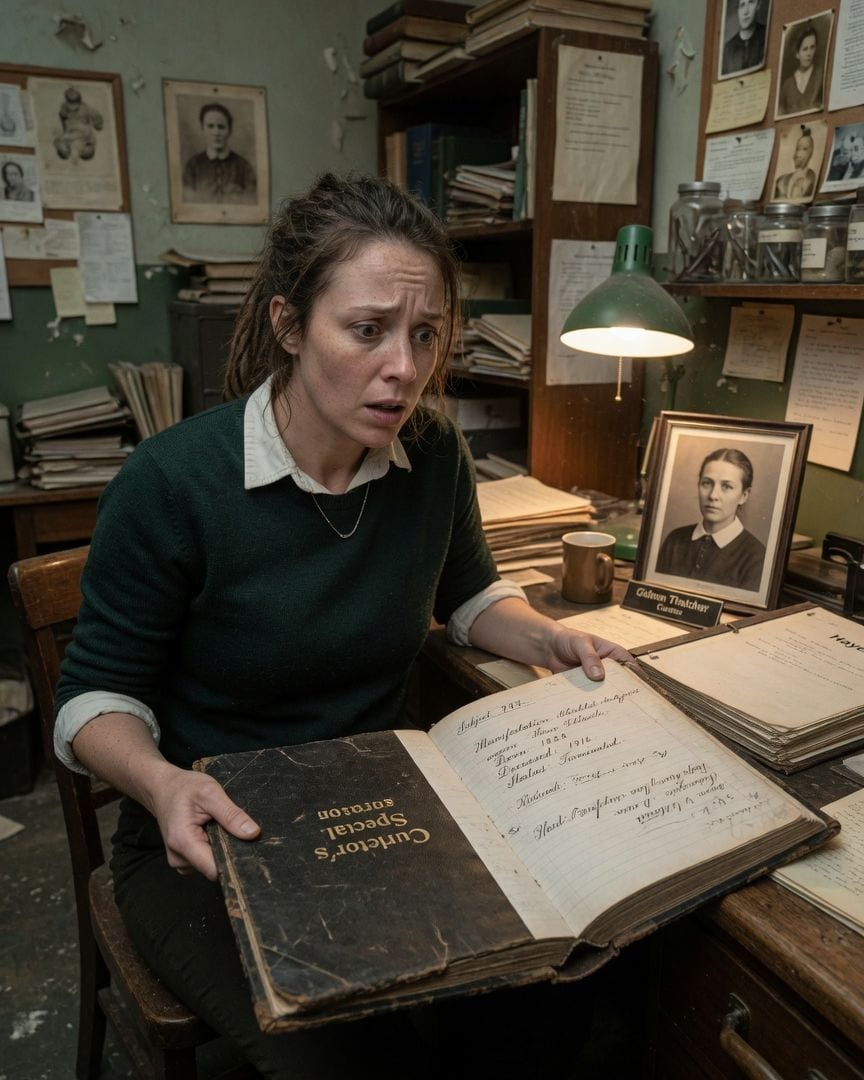
My face, cast in plaster in 1888, stares back from a museum display. They DNA tested a hair from inside the mask. It’s me.
The hushed, cool air of the Museum of Medical History always gave me a strange reverence, until I stopped. Inside a display case, among other plaster death masks, was one labeled 'Theresa Whitfield, 1888.' It was undeniably my face, exact in every detail, down to the faint bump on my nose.
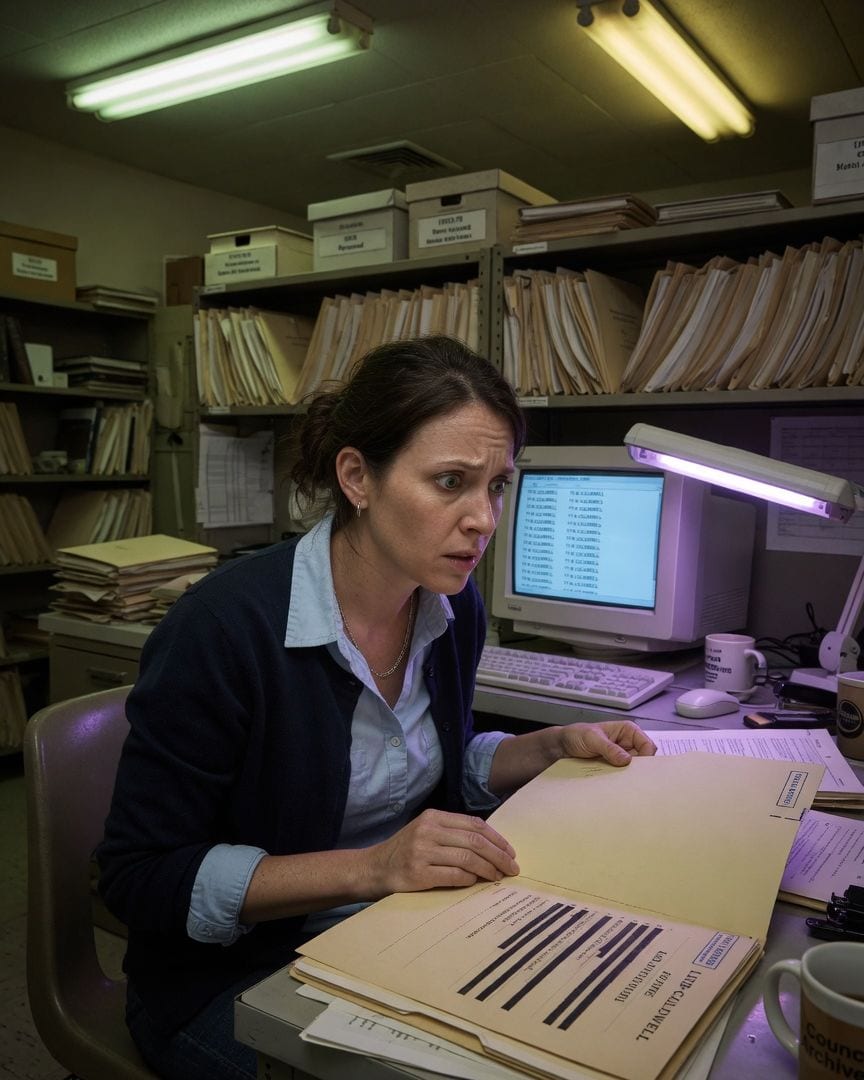
My employer's security file holds a vetting report on me dated nine years before I ever applied. It has my full name and my parents' address — with only one line, the source who referred me, blacked out.
Working a routine data audit, I pull my own security file. The issue date is nine years before I even applied for the job. Then, hidden within an old archive file, I find my current address etched under a blacked-out line.
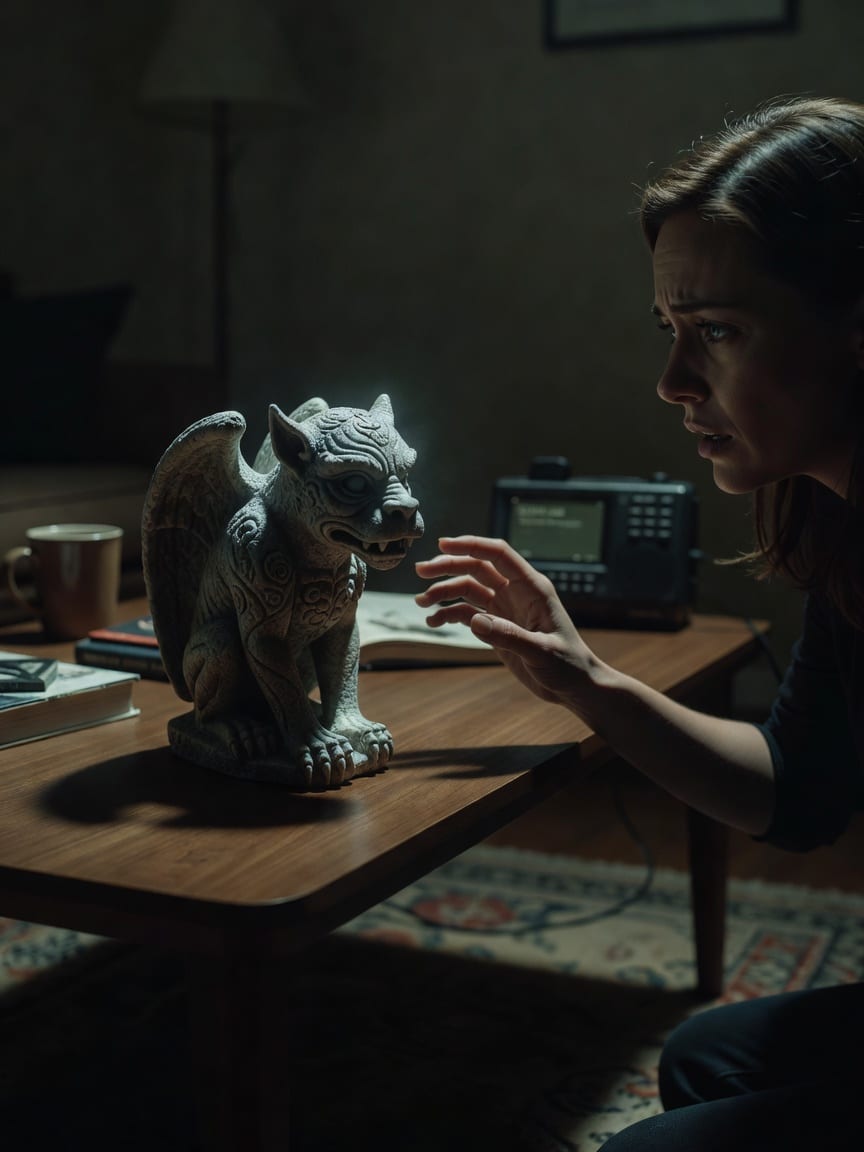
My radio scanner spoke my address at 2 AM. A flat voice read local homes, all with past dates. Mine was the only one in the future.
It was two in the morning, and my quiet house was filled with the usual hum of my weather scanner. But the static broke, replaced by a flat, synthesized voice reading a list of local addresses and dates. My hand froze when it spoke my own address, 181 Foster Drive, followed by a date: October 27th. That date was three weeks from now.