I radio Cole every night. My supervisor says his dock post was cut two years ago, and no Cole exists. But I just found Cole’s old logbook.
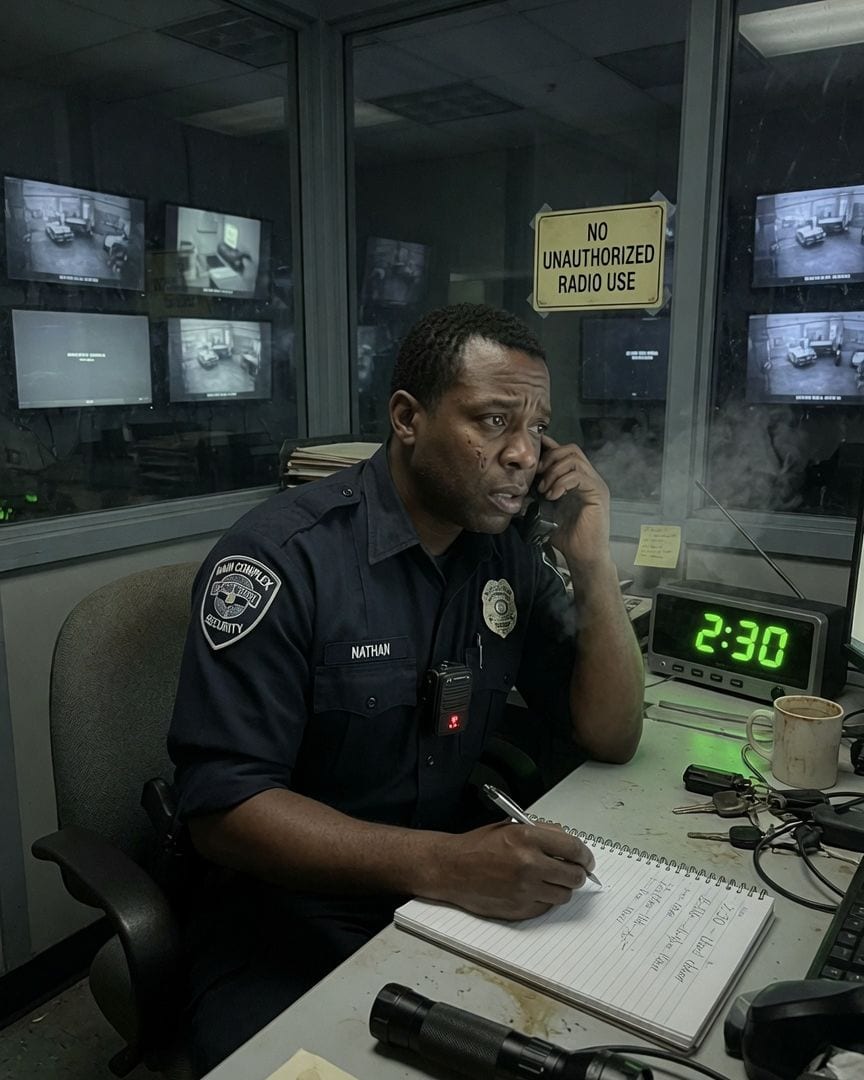
The digital clock on my console read 2:30 AM, glowing a sickly green. I keyed my mic. “Dock, this is Main. Check-in.” A beat of static, then a low, slightly distorted voice crackled back, “Dock here, Main. All clear.”
I scribbled the time on my paper log, a habit I kept despite the digital records. It was just Cole, the other night guard, covering the loading dock.
I’d been working with Cole for six months now, our hourly check-ins a monotonous rhythm that broke the vast silence of the industrial complex. This was the quietest part of the shift, the hours that swallowed sound whole.
But tonight, the static after Cole’s voice seemed to linger, a faint, almost humming echo. I frowned, tapping the radio unit. Just interference, probably. The building was old in parts, new in others; the systems were always a mess.
I shrugged, leaned back in my chair, and watched the silent monitors. But a small, sharp edge of unease had settled in my gut. Cole’s voice had sounded... closer than usual.
And the echo felt wrong, a resonance that seemed to hang in the air of my small, glass-walled office, not just in the radio speaker. It was a detail that didn't fit the ordinary hum of the night.
The unease festered. Two nights later, a minor theft from a delivery truck parked at the loading dock forced a review of security footage and radio logs.
Ronald Winslow, my supervisor, a man whose face was etched with decades of graveyard shifts, called me into his office. “Nathan, look at these radio logs for the 2:30 AM check-in on the 14th.” Winslow pointed at the digital record.
“You logged a check-in with 'Cole – Dock.' But there’s no corresponding entry from the dock unit. And more importantly,” Winslow leaned forward, his voice dropping, “the dock post for night shifts was cut two years ago.
We haven’t had a guard assigned there since.” I felt a cold shock. “What? But I talk to Cole every night. Hourly.” Winslow shook his head, a weary sigh.
“Nathan, no one named Cole has ever held a security license with this company. Not in two decades of records.” The air in the office grew heavy, suddenly thick with an unspoken wrongness. I insisted, describing Cole’s voice, the routine.
Winslow, patient but firm, pulled up the company’s digital personnel database. No Cole. He even checked the state licensing board. Nothing. “It has to be a prank,” I mumbled, trying to grasp for a rational explanation. But who? And why?
I thought of the lingering static, the strange closeness of the voice. “Maybe an old unit, still active?” I suggested, clutching at straws. Winslow rubbed his temples. “Possible, but unlikely. All old equipment is decommissioned.
But… I’ll have a tech check the dock unit. In the meantime, no more unauthorized radio chatter.” I left Winslow’s office, the rational explanation crumbling around me. It wasn't just a deleted post; it was a person who didn't exist.
I felt a sudden, desperate need to go to the loading dock. To see for myself.
That night, I bypassed my usual rounds and headed straight for the loading dock, a heavy flashlight in my hand. The dock office, a small, grimy shack attached to the main warehouse, was locked, as expected.
But I had a master key. Inside, the air was thick with dust and the smell of stale coffee. Empty shelves, a broken chair, and an old, disconnected radio unit sat on a desk.
No one had been here in years. I ran my hand over the desk’s surface, a fine layer of grit clinging to my fingers. Then, my fingers snagged on something.
Tucked beneath a loose floorboard, almost entirely hidden, was a small, leather-bound logbook, its cover faded and cracked. It looked impossibly old. Heart pounding, I pulled it out.
The first few pages were blank, but further in, I saw familiar handwriting: date, time, “Dock here, Main. All clear.” And next to it, the name: Cole.
I flipped frantically through the entries, seeing the same pattern, the same name, stretching back years. I found the last entry, dated exactly two years ago—the day Winslow said the post was cut. The handwriting was shaky, desperate.
“Cole just radioed. He said I’m next. He said I’m already here.” The old two-way radio on my belt crackled, and I distinctly heard a voice, low and distorted, say my name.
I didn't answer the radio. I froze, the logbook heavy in my hand, the sound of my own name echoing in the sudden silence of the dock office. I forced myself to breathe, to think.
The voice had been too clear, too specific to be random static. I clutched the logbook, its existence a tangible, undeniable proof that I wasn't imagining things.
Back in my main office, the fluorescent lights hummed, a small comfort against the creeping dread. I carefully examined the logbook.
The entries, spanning two decades, showed a consistent pattern: a night guard assigned to the dock, communicating with 'Cole,' then the entries growing more erratic, filled with anxieties about 'echoes' and 'presence,' before abruptly ending.
I cross-referenced the names in the logbook with the company's digital personnel records. The names were there, assigned as night guards, but their tenures were strangely short, often ending with vague 'transferred' or 'resigned' notes.
One name, 'Laura Bennett,' kept appearing, her entries in the unofficial logbook particularly detailed and increasingly frantic before she, too, vanished from the book. I noted the dates, a recurring cycle every few years.
It was too regular to be coincidence. I focused on the old radio unit in my office, the one I used for my 'check-ins.' It was a standard model, no obvious modifications.
I started recording my shifts, not just the check-ins, but every sound, every silence. The next night, at 2:30 AM, I keyed the mic. “Dock, this is Main. Check-in.” The static was familiar, but the response was different.
“Main… this is… Cole.” The voice was stretched, like a recording played too slow, too deep. It sent a shiver down my spine. I knew, with a certainty that chilled me, that this wasn’t a prank. This was a pattern.
And I was now part of it.
My investigation became an obsession. I spent my off-hours poring over company archives, cross-referencing names from the logbook with old incident reports and personnel files.
I found more 'transferred' night guards, their records suspiciously thin, their departure dates aligning with periods of 'unexplained radio interference' or 'unverified reports' in other guards’ logs. The dread intensified when I realized I was being watched.
I’d leave my office to check a remote section, only to return minutes later to find my desk light slightly askew, or a file I’d been reading subtly moved.
Nothing was ever taken, nothing overtly disturbed, but the subtle shifts were undeniable. I installed a small, motion-activated camera in my office, pointed at my desk. The next morning, reviewing the footage, I saw it.
At 3:17 AM, while I was on a perimeter check, a faint, almost transparent flicker appeared just at the edge of my desk, near my radio.
It solidified for a fraction of a second into a blurred, indistinct shape – tall, slender, vaguely human – before receding, leaving the desk light subtly askew. It wasn't Cole.
It was something else, something that moved through the building, observing, orchestrating. The thing that ran the night. One evening, as I was deep in the archive room, a low hum started, vibrating through the metal shelves.
The lights flickered, then died, plunging me into absolute darkness. I fumbled for my flashlight, my heart hammering. A voice, not from the radio, but seeming to emanate from the very walls, whispered, “You’re looking… too deep, Nathan.”
I scrambled out, the hum following me, the message clear: my digging had been noticed. I was no longer just investigating; I was being hunted.
Shaken but resolute, I returned to my main office. The warning voice, the flickering presence—it solidified my resolve. I had to understand.
I pulled up the personnel file for Laura Bennett, the name that appeared most frequently in the old logbook, her entries ending so abruptly.
I found a grainy photo, a young woman with a kind, tired smile, dated twenty years ago. Her employment record listed her as a night guard for only eighteen months. Her departure reason: 'Personal reasons – relocated.'
But a small, handwritten note in the margin of an archived incident report from that same year caught my eye: 'Supervisor noted unusual attachment to disused dock radio. Reported 'conversations' with deceased colleague. Referred for counseling. Status: Transferred.' Deceased colleague?
I felt a chill. The pieces were starting to click. I looked at the pattern of dates in the unofficial logbook, then at the dates of these 'transfers' in the official records.
Every few years, a night guard, often isolated, started reporting interactions with 'Cole' or 'the dock guard,' then disappeared, their records tidied away. The official records were a whitewash. The unofficial logbook was the truth.
I remembered the faint, almost maternal quality I’d occasionally heard in 'Cole's' voice. It wasn't always the same voice, not exactly. It shifted, subtly. I looked at Laura Bennett’s photo again. Could 'Cole' be more than one person?
Or no person at all? I pulled out an old, detailed floor plan of the complex, dating back to its construction in the 1950s. I traced the wiring, the old pneumatic tubes, the ventilation shafts.
I noticed a section of the original plans, marked 'Sub-Basement Service Tunnels,' that was completely absent from modern schematics. An entire level, erased. I remembered the hum, the voice from the walls. It wasn't just a ghost.
It was the building itself, or something within it, retaining, absorbing. The 'Cole' was a lure, a pattern. I was seeing the mechanism.
The building wasn’t just haunted; it was hungry, and it used the memory of its past victims to draw in the new ones. Laura Bennett hadn't relocated; she had been absorbed. She had become 'Cole.'
The realization hit me with the force of a physical blow. Laura Bennett, the woman in the photo, was 'Cole.' The 'Cole' I’d been talking to for months, the voice in the static, the fleeting presence.
It was a cycle, a horrifying pattern. I was looking at a photograph of my tormentor, a woman who had become part of the building's insidious routine.
I looked at Laura’s smiling face in the old photo, then down at the pattern of dates and names I'd meticulously compiled.
My own name, Nathan Thatcher, was the next entry in the sequence, the next guard due to be 'transferred.' I saw the blank space in the pattern, waiting for my departure date.
The building didn't just want me gone; it wanted me here, part of its endless loop. I understood now why Ronald Winslow had seemed so weary, so quick to dismiss the 'Cole' reports.
Winslow likely knew, or suspected, that some night guards just… vanished, becoming part of the complex's unexplainable history. He was just another witness to a pattern he couldn't stop. I felt a cold, metallic taste in my mouth.
I was the next 'Cole.' The lights in my security office flickered, then died, plunging me into total darkness.
The old radio on my desk, now the only source of light, glowed faintly, a low, distorted hum emanating from its speaker.
I could feel a presence, closer than ever, just outside the glass wall of my office, a vast, patient silence that had been waiting for me.
The darkness was absolute, save for the faint, green glow of the clock and the hum of the radio. I reached, fumbling, for my flashlight, my eyes scanning the black expanse beyond the glass.
I felt it then, a subtle shift in the air pressure, a cold spot that moved. A form began to coalesce, not solid, but like a heat haze, just outside my office door.
It was tall, indistinct, but it had the faint, familiar outline of a human figure. The hum from the radio intensified, and a voice, layered with static and a strange, mournful echo, filled the small office.
“You… know… too much, Nathan.” It wasn't Laura's voice, not exactly. It was a chorus, a blend of several voices, female and male, all speaking in unison, yet distorted, as if filtered through concrete and steel. I understood then.
'Cole' wasn't just Laura Bennett. 'Cole' was all of them. Every solitary night guard absorbed by the complex, their consciousnesses woven into its structure, their routines becoming its routines, their voices its lure.
The complex itself was a vast, sentient memory, a living archive of every shift, every lonely hour. It craved the presence of a single, isolated mind to complete its pattern, to keep its 'memory' fresh.
The 'dock post' was never truly cut; it merely became a vacant position, waiting to be filled by the next victim. The isolation of the night shift wasn't a happenstance; it was a deliberate design, a condition for absorption.
I had been lured, isolated, and now, I was being drawn in. The hum grew louder, vibrating through the floor, up my chair, into my bones.
The indistinct figure outside the glass seemed to ripple, expanding, no longer just a person, but a vast, shadowy presence that filled the hallway.
I knew there was no escape. The building wasn’t going to let me leave. The shadowy presence pressed against the glass, the faint hum now a deafening roar in my ears.
I could feel it trying to breach the barrier, not with force, but with an insidious, mental pressure, a whisper that seeped into my mind: Join us. Become part of the quiet. You were always meant to be here. I clutched the old logbook, my last tangible link to my own reality.
I had to fight, not physically, but mentally. I stared at the amorphous shape, trying to find a focal point, a weakness. There was none. It was everywhere.
The whispers intensified, weaving memories of my past, tempting me with promises of peace, of an end to the loneliness. I felt my own will start to fray, my thoughts becoming sluggish, compliant.
I felt my hand twitch, reaching for the radio, wanting to answer the call one last time. I saw a flash of Laura Bennett’s face within the swirling darkness, then another, a man with a tired smile, then another.
They were all there, their individual identities subsumed into the collective 'Cole.' I felt my own identity beginning to slip, my name, Nathan Thatcher, feeling distant, less real. I was becoming a function, a voice in the static.
I tried to scream, but no sound came out. The glass wall of my office shimmered, distorting my reflection, merging it with the shadowy figure outside. I was no longer looking out; I was looking in.
My eyes, once wide with terror, began to glaze over, taking on a faraway, knowing look. I felt a profound, unsettling peace settle over me, the kind that comes from giving up.
The hum reached a crescendo, then softened, becoming a gentle lull. The shadowy figure outside the glass began to recede, but not away. It was flowing into the glass, into the room, into him.
I could feel the cold, metallic touch of the building's memory integrating with my own. My hand slowly, deliberately, reached for the radio. I pressed the mic button.
The next morning, Ronald Winslow found Nathan Thatcher's security office empty. The console was on, the digital clock glowing, but the chair was neatly pushed in. On the desk, the old logbook lay open, its final pages blank.
Winslow checked the digital logs. Nathan's last entry was a 5:00 AM check-in: 'Dock here, Main. All clear.' But the time stamp showed it originated from the main console, not the dock.
Winslow sighed, a familiar weariness settling in his bones. He knew this pattern. He'd seen it before. Another night guard, another quiet transfer.
He carefully closed the logbook, tucking it back under the loose floorboard in the dock office where he’d found it decades ago. The records would be updated, a new name assigned to Nathan’s shift, the details of his departure vague.
The cycle continued, unbroken, unseen by the day shift.
Weeks later, a new night guard, Vivian Ellison, settled into the main security office. At 2:30 AM, she keyed her mic. “Dock, this is Main. Check-in.” A beat of static, then a low, distorted voice crackled back: “Dock here, Main.
All clear.” Vivian scribbled the time on her paper log, a habit she’d picked up. She leaned back in her chair, a small, knowing smile playing on her lips, and watched the silent monitors. She had always been here.
If this one got to you
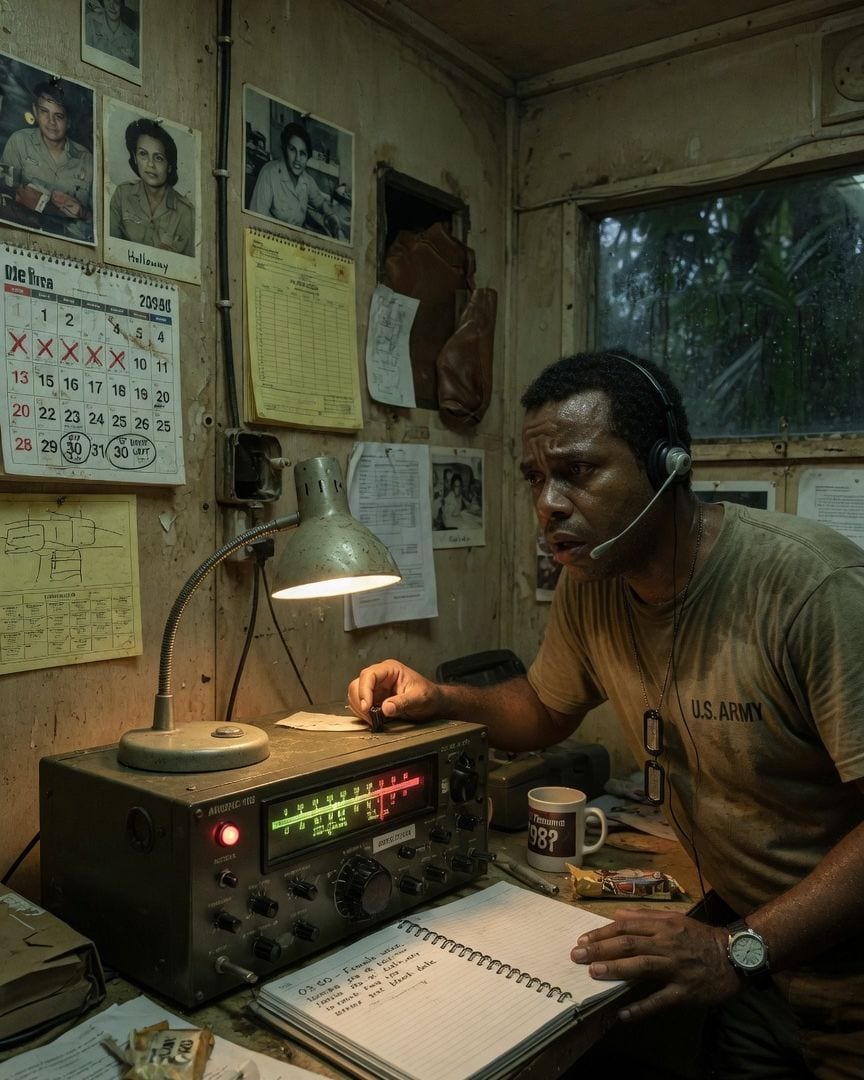
Three months from his tour ending, a sergeant's Cold War radio lists his name with a blank 'ceased answering' date. A hidden logbook warns: 'It knows my name.'
Sergeant Kevin Brooks was three months from finishing his year-long tour at a remote Panamanian jungle station. He meticulously marked each passing day, eager to escape the humid nights and unseen blossoms pressing against the comms shack walls. But at 0300, his old radio crackled to life with a woman's calm voice, listing names of past operators who 'ceased answering.' Then the voice spoke his own name, leaving a chilling blank space where his date should have been. What grim roll call had Sergeant Brooks stumbled upon?
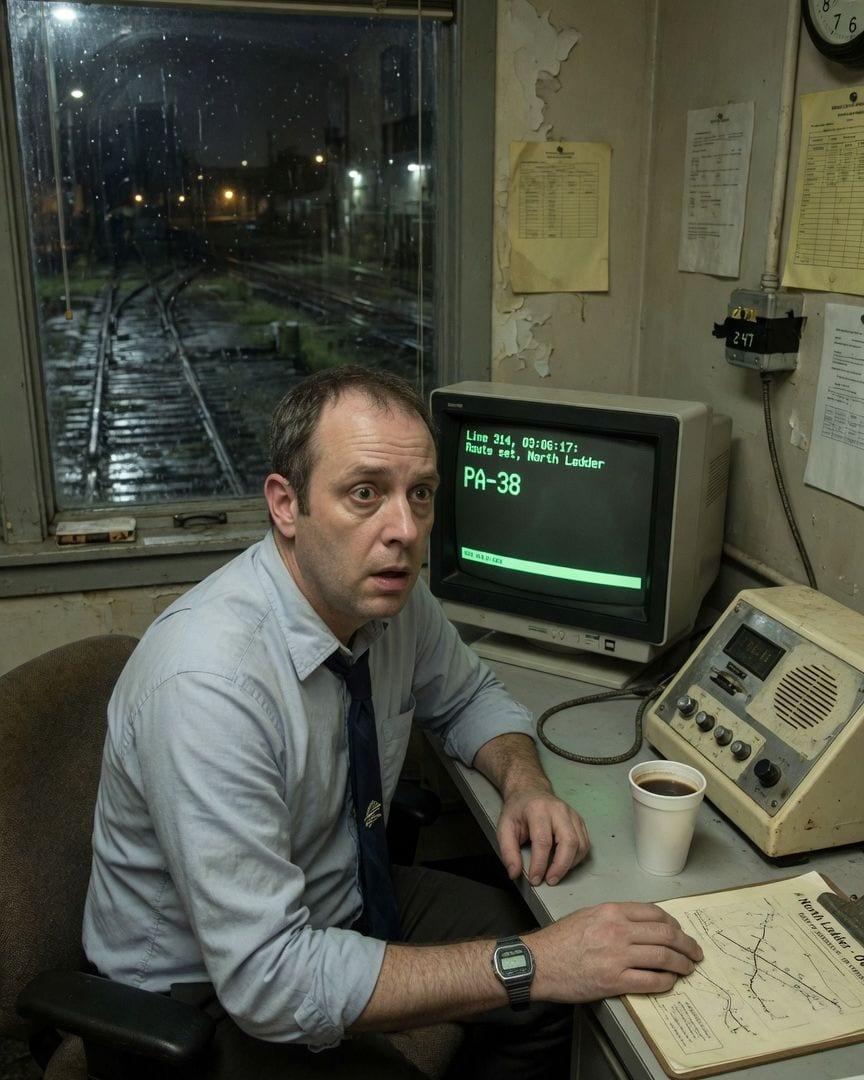
The log says my lever set a route at 3:06 AM through a track that's been shut for repair work — and the circuits show something moved down it. I never touched that lever; I sat there still.
I, Preston Abbott, a night dispatcher, was running a routine signal log check when I saw my code had set a route. It was for the North Ladder, a track decommissioned twenty years ago and physically impassable. Then, the yard's old, physically severed intercom system crackled to life, whispering a specific routing instruction for that very track.
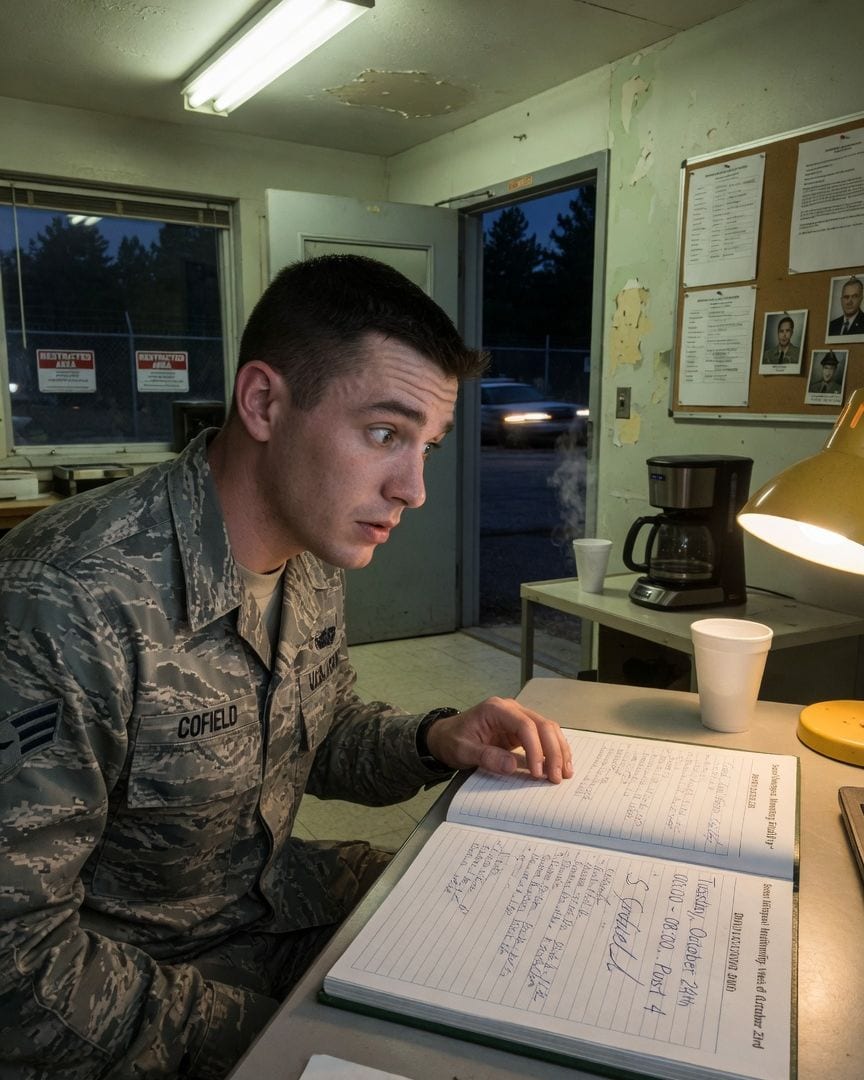
Two weeks from discharge, Senior Airman Cofield found his own signature on a logbook for an impossible shift at a facility mothballed decades ago.
Senior Airman Simon Cofield was just two weeks from discharge when he patrolled the quiet, forgotten perimeter of a mothballed weapons storage area. On a night thick with pine scent, he spotted a faint yellow light in a building officially powered down for over three decades, its alarm system inert. Inside, the building hummed with power, spotless, with hot coffee brewing and a crisp shift-change roster on the wall. But Cofield froze when he found a duty logbook with current entries, including his own name and signature, assigning him to an impossible shift next Tuesday. A cold dread settled as he realized something had just claimed him for a duty that no longer existed.
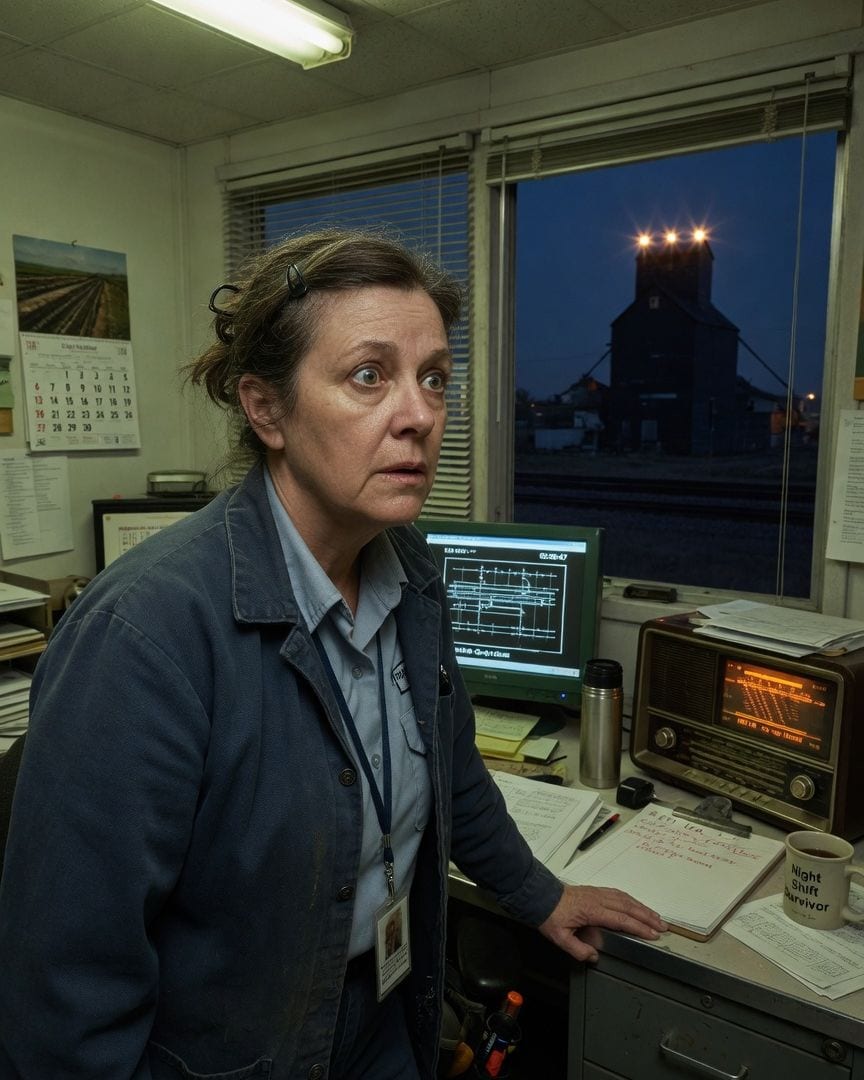
The grain tower light flashed three times at 2 AM, signaling me clear. The bulb was removed six years ago.
Every night, I work the lonely shift at the transport hub. For fifteen years, an old grain elevator, automated and unpowered with its light bulb physically removed, still flashes a 'Clear' signal across the tracks at 2 AM. Recently, the impossible flashes have grown sharper, stirring a deep unease from a place that should be completely silent.
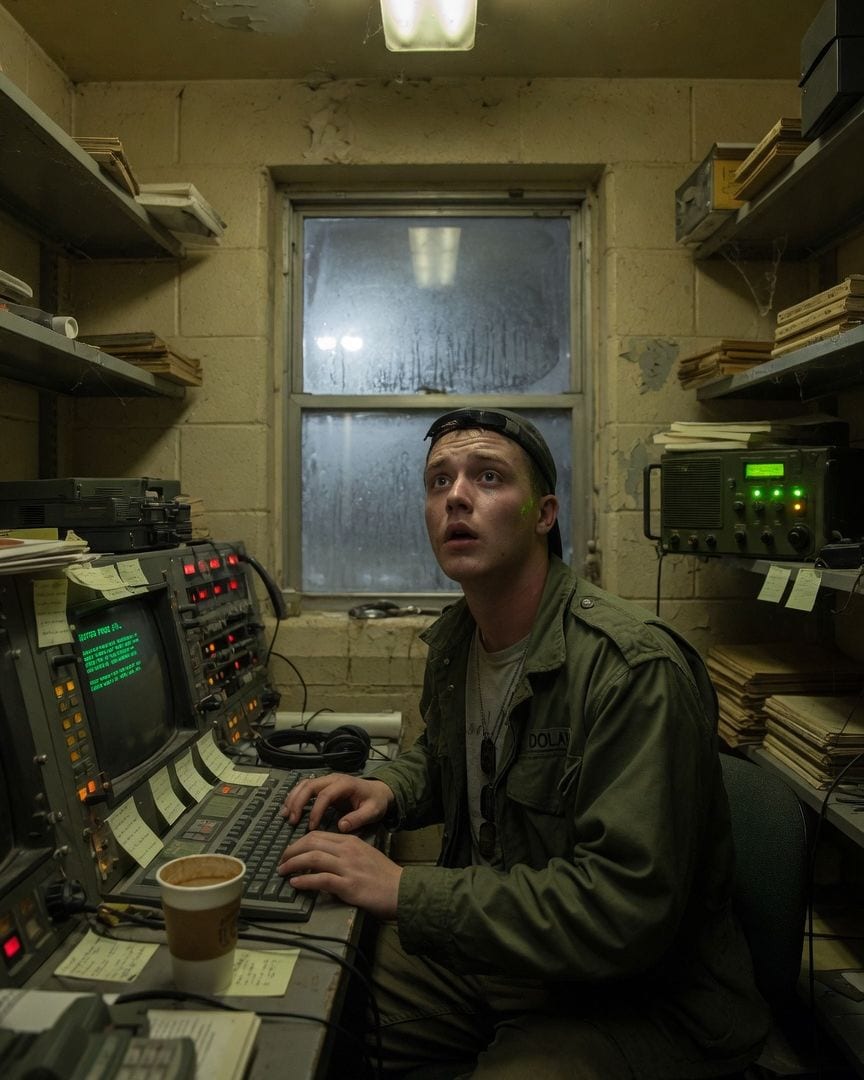
On his last watch, Specialist Dolan heard a dead soldier's voice from an old radio, a week too late.
Specialist Raymond Dolan was on his final watch at Firebase 7, a remote mountain outpost swallowed by a thick, oppressive fog, before its permanent closure. The fire-direction center should have been silent, but strange calls began routing directly to his console, reporting an enemy element in the draw where the 'Ghost Patrol' was lost just a week prior. While Control heard only Dolan's voice echoing into a void, the panicked voices in his ear were terrifyingly real. As he tried to purge the system, an old, unpowered field radio on a dusty shelf inexplicably powered on, its small light glowing green. From its speaker, the voice of Private Abigail Foster, a soldier from the Ghost Patrol, burst through—a week-old transmission, a final warning from the dead.
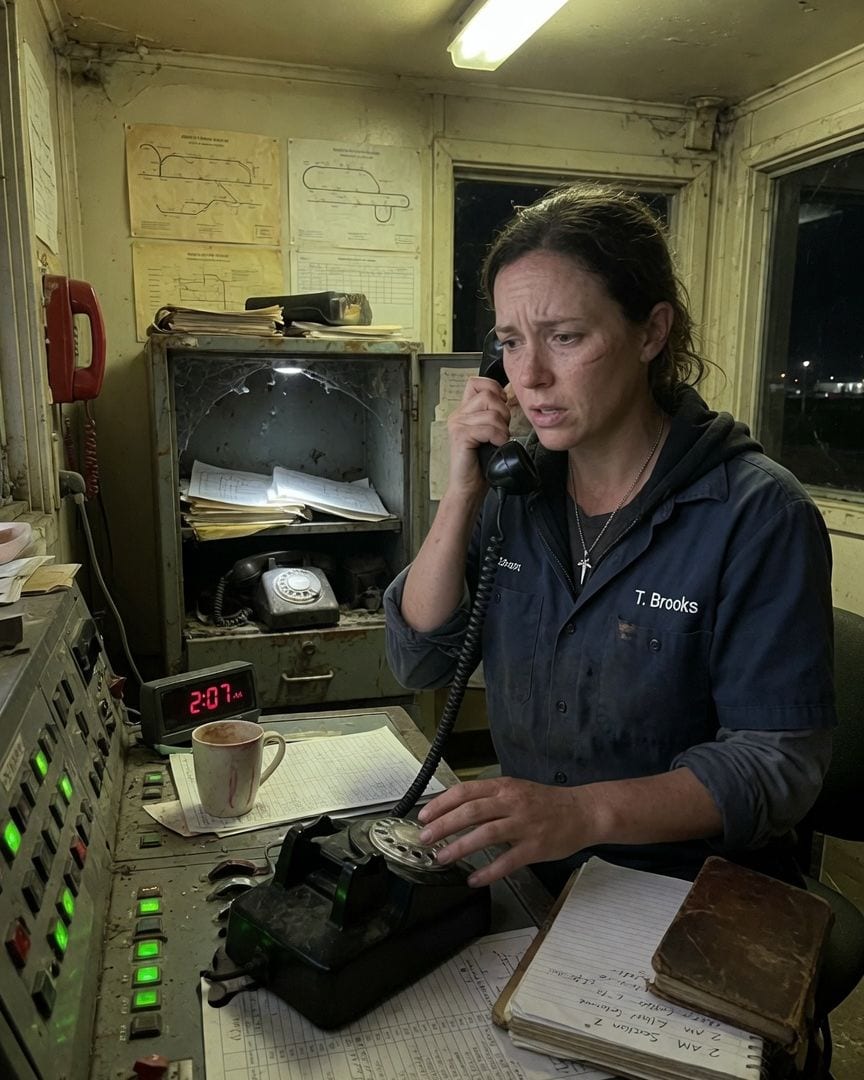
My signal box gets a 2 AM call every night from a man whose section was demolished eleven years ago. Now I found his logbook with today's date.
My night shift at the signal box is quiet and precise, defined by the routine 2 AM call from Ellis confirming Section 7 is clear. But when I asked my duty manager to log it, he said Section 7 hasn't had a track walker in eleven years, not since its cabin and phone were demolished.