My removal van's tracker plotted our house-move as a loop: 71 miles logged, but the furniture never left our old postcode. The men swear they unloaded somewhere.
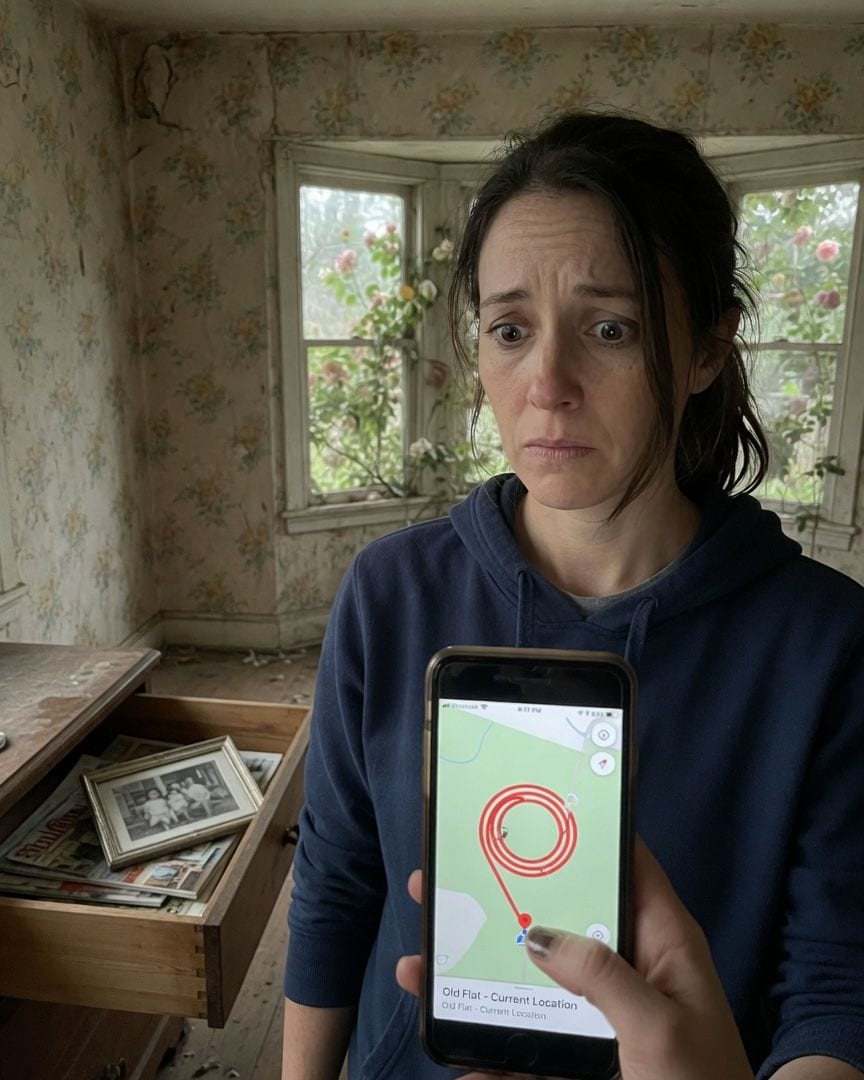
The glowing GPS screen on my phone coiled the thick red line back on itself. It was precise, undeniable.
The removal van, supposedly delivering our entire life to 14 Willow Creek Lane, had instead driven 71 miles, only to end precisely where it started: our old flat’s postcode.
Daniel was on the phone, his voice tight with frustration. He was talking to Felix Foster, the moving company’s dispatcher, who swore his team had unloaded everything at the new address.
"They signed for it, ma'am," he insisted to me, over Daniel’s shoulder. "Right there on Willow Creek."
But the tracker, irrefutable, showed the van departing at 8:00 AM, logging a full day's journey, and then, at 4:17 PM, sitting idle in the exact same spot it had left.
I zoomed in, then out, my fingers smudging the screen. The coordinates were identical. I called the movers directly, one by one. Brandon, the lead driver, sounded genuinely confused, even a little shaken. "We were there, ma'am.
We dropped off your things. I remember the bay window, the overgrown rose bushes." He described the house perfectly, yet the data insisted they had never left the old flat.
It was a loop, clean and precise, on a map that refused to lie.
The next morning, Daniel and I drove to 14 Willow Creek Lane ourselves. The house was exactly as Brandon described: a charming two-story with a bay window and overgrown rose bushes. But it was utterly, profoundly empty.
No boxes, no furniture, not even a stray packing peanut. The front door was unlocked, just as the movers claimed they’d left it. Inside, the silence was vast, echoing.
I walked through the rooms, a cold knot forming in my stomach. Every surface was pristine, untouched.
In the kitchen, Daniel found a 'welcome packet' left by the previous owners, a thick envelope containing utility bills, local brochures, and a folded survey map. I unfolded it. It showed the house’s footprint, floor by floor.
As I compared it to the living room I was standing in, my brow furrowed. The map clearly indicated a small, enclosed sunroom off the back of the living area, marked ‘seasonal extension.’
But the wall where it should have been was solid plaster, an unbroken expanse of faded floral wallpaper. There was no sunroom. No evidence it had ever existed. I checked the date on the map: 2018. Only six years old.
A significant structural change like that wouldn't go unrecorded, or unmentioned by the real estate agent. Not a word in the entire purchase process. It simply wasn't right.
A faint scratching sound drew me to a built-in drawer in the living room. It was old, stiff, probably hadn't been opened in years.
Tucked deep in the back, beneath a dusty stack of old magazines, I found a small, tarnished silver frame. Inside was a faded, sepia-toned photograph.
A family – a mother, father, and two children – smiled stiffly on the porch of the house. Daniel joined me, peering over my shoulder. "Who are they?" he murmured, a frown creasing his forehead. I didn't answer.
My gaze was fixed on the house in the background. Specifically, on the upper floor. There, above the bay window, was a small, mismatched square window, clearly bricked up, standing out against the original brickwork.
It was the exact spot where the survey map indicated the sunroom's structural support would have extended. But the house we were standing in right now, the house we had just walked through, had no such bricked-up window.
It was just a smooth, unbroken wall.
The photograph gnawed at me. I spent the next few days in a haze, trying to reconcile the conflicting realities. The GPS, the empty house, the map, the photo – none of it made sense.
I had to see that window again, or its absence, with my own eyes.
Armed with my phone’s GPS and Daniel’s older, more reliable car, I set off.
I followed the turn-by-turn directions, then veered off onto a side road I remembered from the initial viewing, thinking I could approach from a different angle, get a better look at that upper wall.
I drove for what felt like fifteen minutes, the GPS confirming my progress, logging mileage. The sun glinted off the windshield, the trees blurring past.
Then, without warning, the familiar landmark of the highway entrance to Willow Creek’s main road reappeared on my right. I’d made a full circle. The exact same gas station sign, the same cluster of oaks.
I tried again, determined. I took a different series of turns, watching the mileage tick up, the fuel gauge drop. Left, then right, then left again.
Each time, I ended up back at the same highway entrance, the GPS showing a clean, unbroken loop, proving I’d gone somewhere, but never truly left the immediate vicinity. The car radio crackled, then went silent.
The air in the car felt suddenly cold, despite the warmth of the October sun outside. Disturbed, I returned to our temporary accommodation and started digging into local history online.
I found mentions in old digital newspaper archives: 'Local Family Vanishes, 1984,' 'Strange Occurrences on Willow Creek Lane,' 'Unexplained Disappearances in Rural Foster County.'
The articles, often buried in the back pages, spoke of families moving into the area and then, shortly after, their belongings, or even the families themselves, simply 'disappearing' without a trace.
The dates of these incidents seemed to cluster around certain years, always with a gap of several decades between them.
The recurring dates of the disappearances, separated by roughly forty years, sent a chill down my spine. The articles were vague, quickly dismissed by official sources, but the pattern was undeniable.
I found a reference to the 'Foster County Historical Society' in an article about a vanished family from 1944. The next day, I visited the small, dusty building, hoping for more physical records.
I was greeted by Oscar Sutton, an elderly man with sharp, intelligent eyes and a quiet, almost unnerving calm. He introduced himself as a long-time volunteer, his family having lived in the area for generations.
He seemed to know instinctively what I was researching, even before I mentioned Willow Creek Lane. "Ah, the old disappearances," he mused, his voice soft, almost a whisper in the quiet library. "Always a fascinating subject."
He offered to help, guiding me to microfiche readers and faded ledgers. His questions, however, were too precise, too probing. "Are you planning to move into the house on Willow Creek yourself, dear? Do you find its history… intriguing?"
He looked at me over the tops of his spectacles, a flicker in his eyes that I couldn't quite place.
Later that evening, back at our empty house – the one that still held no furniture – I felt a prickle on the back of my neck. I looked out the bay window.
Across the street, in the growing dusk, I saw Oscar Sutton standing on his own porch, a dark silhouette against the porch light, simply watching my house. He wasn't waving, or even moving. Just watching. It wasn't menacing, exactly.
More… observational. A few days later, I found a small, smooth, grey stone, unlike any local rock, placed neatly on my front porch step. It wasn't there when I left that morning.
I returned to the historical society, the strange stone heavy in my pocket. Oscar was there, arranging old photographs with meticulous care. I placed the stone on the counter.
"This was on my porch," I stated, my voice steady despite my racing heart. "And I found these." I slid printouts of the old newspaper articles across the counter, highlighting the recurring disappearances.
Oscar picked up the stone, turning it over in his fingers. "Ah, a waymarker," he murmured, his expression unreadable. He glanced at the articles. "The disappearances, as you call them, are not quite disappearances. More like… transitions."
He looked at me, his gaze unwavering. "The house on Willow Creek Lane, your house, is what we call an 'anchor point.' It’s fixed, but the space around it isn’t. Every now and then, the geometry shifts.
It’s been happening for centuries."
I pressed him. "The van. The furniture. Why did it loop? Where are my things?"
Oscar sighed, a sound like rustling leaves in the silent room. "The van did travel, Cynthia. It traveled through the shifted space.
It delivered your furniture to the house… but not to the Willow Creek Lane that exists on your map. It delivered it to the Willow Creek Lane that exists within the loop.
And then the loop closed, shunting the van back to its origin. Your furniture is there. In the house. Just… not yet in your reality."
He explained that his family had been the 'observers' for generations, documenting the shifts, ensuring the 'transitions' happened without wider panic. His calm, matter-of-fact tone was more chilling than any monster story.
There was no malice in it, only an unsettling, unshakeable certainty.
I tried to process Oscar's words, my mind reeling. "So, the house… it moves?"
Oscar nodded slowly. "The house is stable, but its location in the wider spatial fabric is not. It creates a pocket. And the transitions… they’re predictable."
He gestured to a large, leather-bound ledger he’d retrieved from a locked cabinet behind his desk. It was thick, its pages yellowed and brittle at the edges. "The next transition is always around this time of year, every forty years."
He tapped a date on the page with a gnarled finger. My eyes widened. "That's tomorrow." Oscar gave a small, almost apologetic smile. "Indeed."
My gaze dropped to the ledger entry he was pointing to, a section marked 'Missing Effects, 14 Willow Creek Lane, October 1984.'
My heart hammered against my ribs, a frantic drum against the sudden, cold dread that filled the quiet room. Listed clearly, beneath a faded ink blot, were two names: 'Cynthia Underwood' and, directly below it, 'Daniel Stratton.' My own name.
Daniel’s name. On a record from forty years ago, tied to the very house we were trying to move into.
I slammed my hand on the ledger, the old leather groaning under the sudden force. "My name. Daniel’s name. How is this possible?" My voice was a harsh whisper in the hushed library.
Oscar didn't flinch. His expression remained unnervingly placid. "Some families, once caught in the loop, are… re-integrated into the cycle. Their names appear again, as if new. It’s not a perfect replication, but the patterns are strong."
He explained that the 'furniture' I was looking for wasn't mine at all, but the furniture of the previous cycle's inhabitants, still within the house's shifted space, waiting for the next 're-integration.'
He then unrolled a large, yellowed parchment from a tube he pulled from the shelf. It wasn't a map in any conventional sense.
It was a complex, beautiful, and utterly terrifying diagram of intersecting lines and shifting planes, centered on a small, labeled square: 14 Willow Creek Lane.
"This shows the geometry," Oscar said, tracing a finger along a spiraling line that seemed to coil endlessly. "The house is the anchor. The road that returns you to where you started?
It’s a primary conduit, designed to shunt out those who aren’t ready for the transition. Your van, your furniture, the old map with the missing sunroom, the photograph with the bricked-up window – it all fits.
The house itself changes slightly with each cycle, reflecting the altered geometry." The dread wasn't in the impossible, but in how sickeningly, perfectly coherent it all was. Every single wrong detail I'd observed now snapped into place with horrifying precision.
Oscar looked at me, his eyes earnest. "My family’s role isn't to stop it. It’s to manage the transitions. To ensure the house has new occupants for each cycle. You and Daniel are now part of this.
It’s a rare honor, in a way." His calm acceptance of their impending fate was a crushing weight. The air in the room felt thick, pressing in on me. I felt a surge of cold fury.
"No," I said, my voice trembling but firm. "We are not." I grabbed Daniel’s hand, my fingers digging into his palm. "We’re leaving. Now." Oscar merely watched them, a faint, sad smile on his lips.
"The road will always bring you back."
I knew he was right about the road. We couldn't drive. We had to break the pattern.
"Through the woods," I whispered to Daniel, my eyes darting to the back of the building, towards the overgrown trees visible through a dusty window. "We cut through the back, straight out."
We ran, not back to the car, but around the side of the house, scrambling through the overgrown rose bushes, past the phantom sunroom wall. We plunged into the dense woods behind the property, tearing through brambles and low-hanging branches.
Daniel, always practical, pulled out his phone, trying to get a GPS signal, any signal, that showed them moving away from Willow Creek Lane, not looping back. The woods were dark, even in the afternoon, the canopy thick and oppressive.
Every snap of a twig, every rustle of leaves, made me jump. We ran until our lungs burned, until our legs ached, until the first faint streaks of dawn began to pierce the canopy.
Just as the sun crested the horizon, painting the sky in an eerie, transitional light, we stumbled out onto a narrow, paved road – a road that was clearly not the main highway, but one that led distinctly away from the Willow Creek Lane neighborhood.
We had done it. We had broken the loop.
Cynthia and Daniel abandoned 14 Willow Creek Lane. They never saw Oscar Sutton again.
They tried to sell the property, but the real estate agent, a bewildered woman named Chloe Pierce, called repeatedly with strange reports: the online listing would vanish for days, only to reappear with subtly altered coordinates, or the photos would show a house that was subtly different from the one she’d visited.
No one would buy it. Their furniture, their belongings, were never recovered. They had simply vanished into the geometry. They left Foster County, leaving behind the house that wasn't on the map, and the life they had planned.
Cynthia and Daniel moved to a small town hundreds of miles away, starting over with only what they could carry. They tried to forget, to rebuild, but the experience had etched itself into Cynthia’s mind.
She found herself obsessively checking maps, tracing routes on her phone, measuring distances in their new, ordinary house. She would stand for hours, staring at a wall, as if expecting it to disappear or reconfigure.
One evening, Daniel found her in their new living room, a tape measure stretched from the fireplace to the window, a notepad filled with precise, frantic calculations.
She looked up at him, her eyes wide, a faint, wrong little smile playing on her lips.
The numbers always add up, Daniel, just not the way they should.
If this one got to you
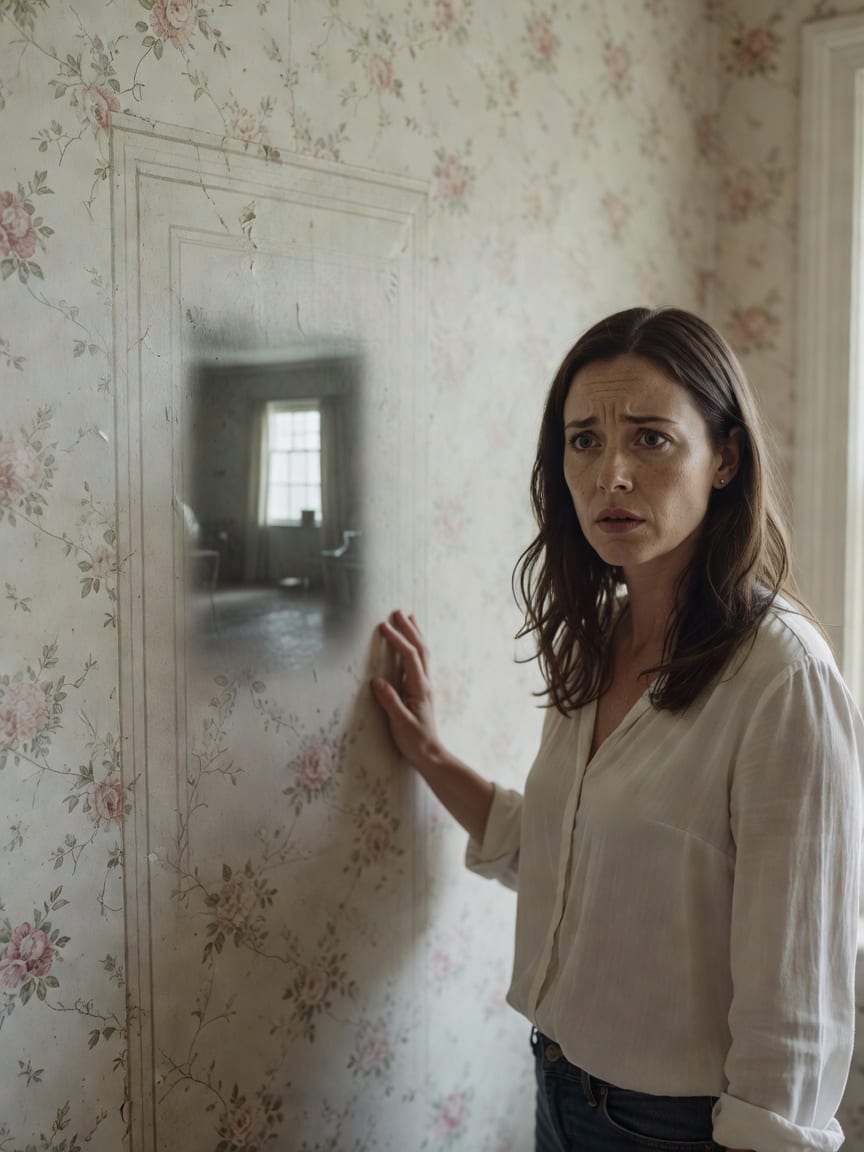
My neighbor’s house plans show a room in my bedroom that doesn’t exist. The surveyor described its door, but my wall is solid.
I was signing off on my neighbor's loft plans when I saw it: a small, square room off my own bedroom. My house, where I’d lived for five years, had no such room. But a surveyor confirmed its presence on paper, and older blueprints showed it had been there for decades. Now, I can feel a faint coldness from a hidden doorframe behind my wallpaper.
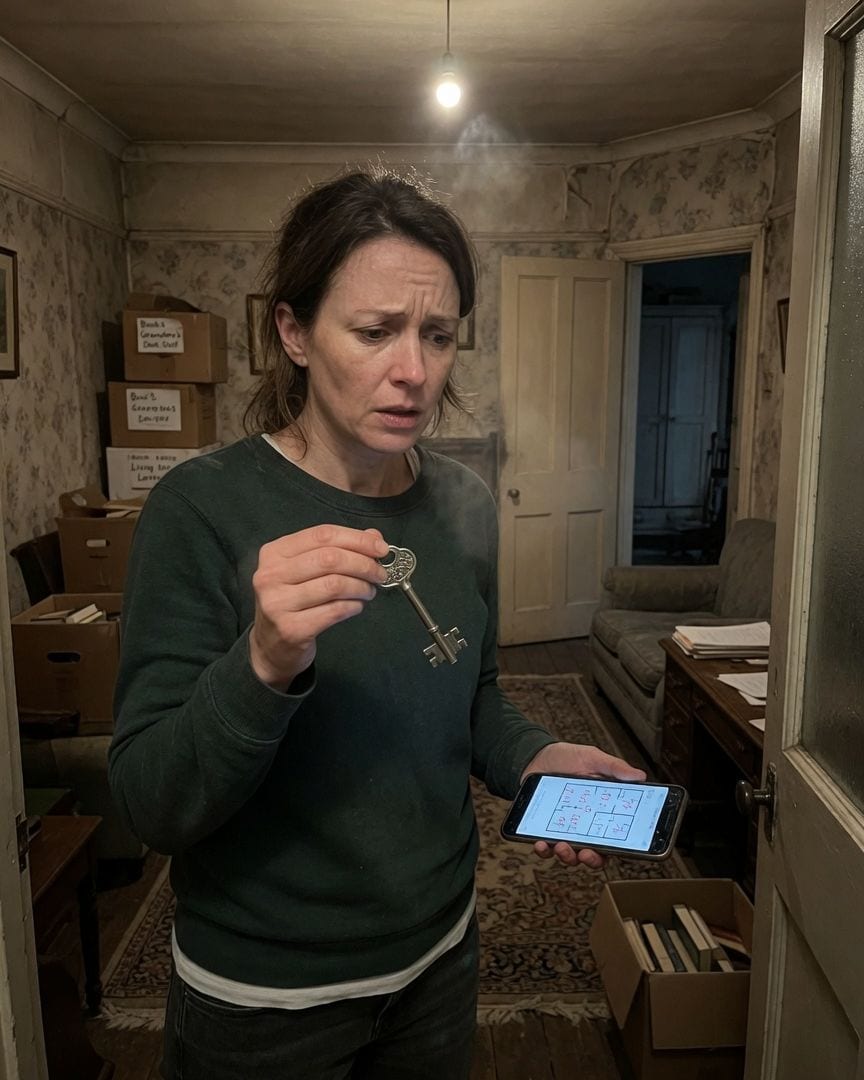
Our moving truck drove 71 miles in a loop, plotting our furniture back to our old flat. The men swore they unloaded it at our new house.
My new Victorian house felt vast and quiet after the moving van's impossible journey left my belongings missing. I bought an air mattress, ready to start over, but then I found a door in the master bedroom I'd never seen. It opened into a fully furnished room, packed with all my missing furniture – a room that simply wasn't on the house's floor plans.
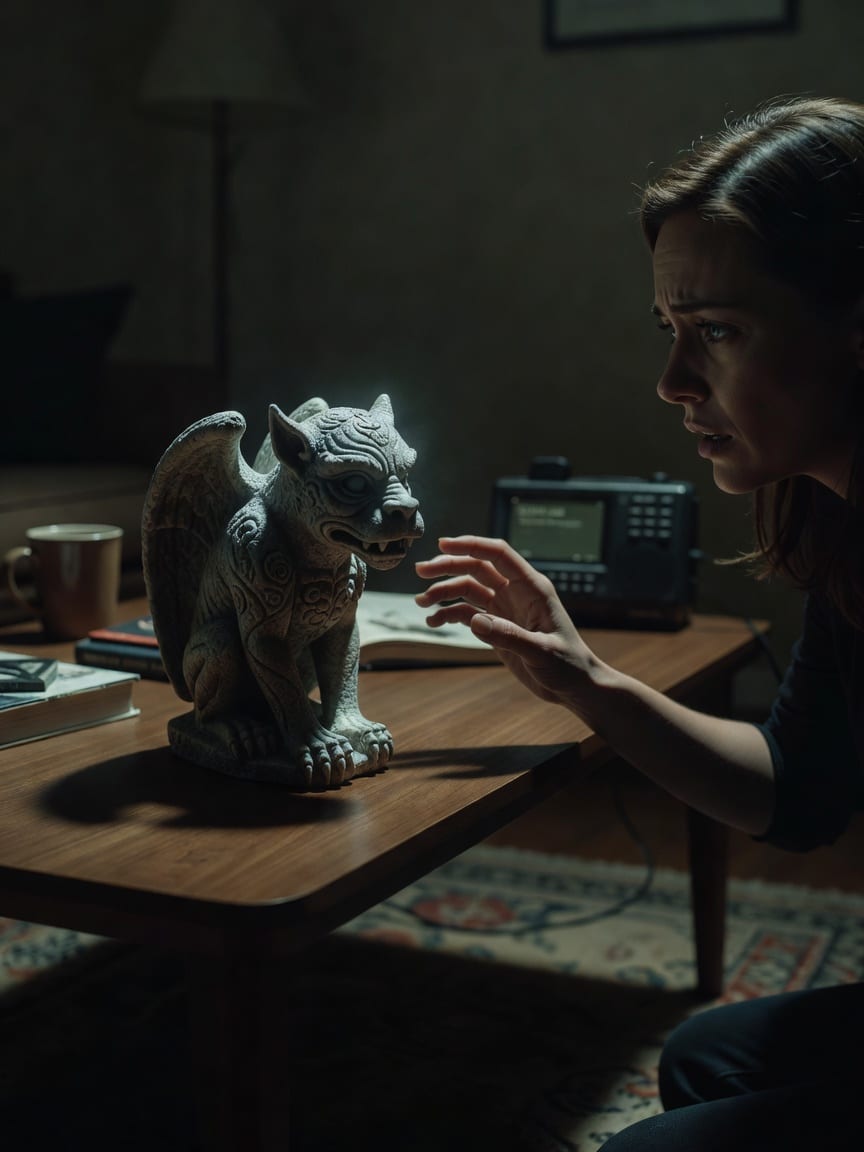
My radio scanner spoke my address at 2 AM. A flat voice read local homes, all with past dates. Mine was the only one in the future.
It was two in the morning, and my quiet house was filled with the usual hum of my weather scanner. But the static broke, replaced by a flat, synthesized voice reading a list of local addresses and dates. My hand froze when it spoke my own address, 181 Foster Drive, followed by a date: October 27th. That date was three weeks from now.
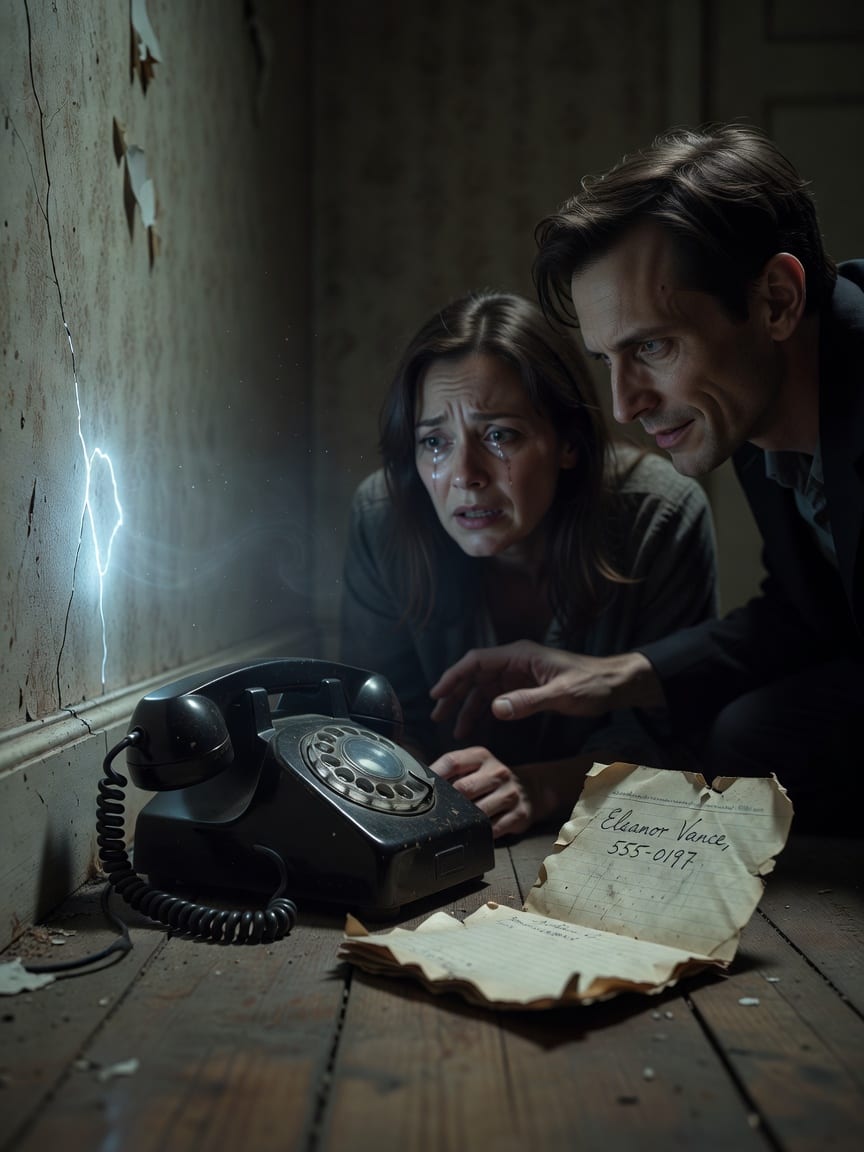
My house's walls ring when I dial a phone number from a 1974 directory. My neighbors said that directory was trash.
I was sifting boxes in my new house when I found an old 1974 telephone directory for my street. It listed my address, 12 Elm Street, under the name "Mr. & Mrs. Sheppard." On a whim, I called the faded seven-digit number. My cell phone rang, but a low, muffled sound also vibrated from the wall beside me.
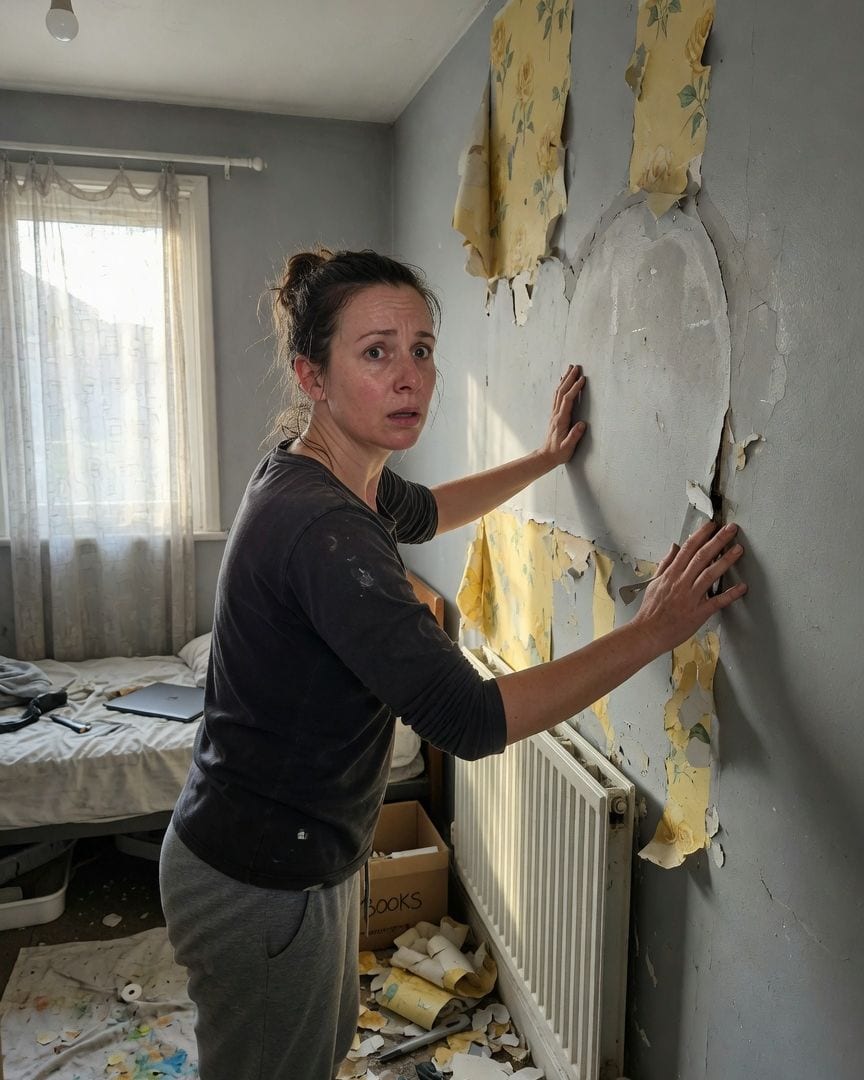
I painted the box room grey, but twice I've woken to find it papered in yellow roses I never bought — seams lifting exactly where the empty-flat photos show bare plaster.
I moved into my new flat in March, ready for a fresh start. But the box room, freshly painted grey, kept growing old-fashioned yellow rose wallpaper. The third time, as I stripped it, the wall opened to reveal a perfectly preserved, sunlit room from May 1978, complete with a steaming teacup.
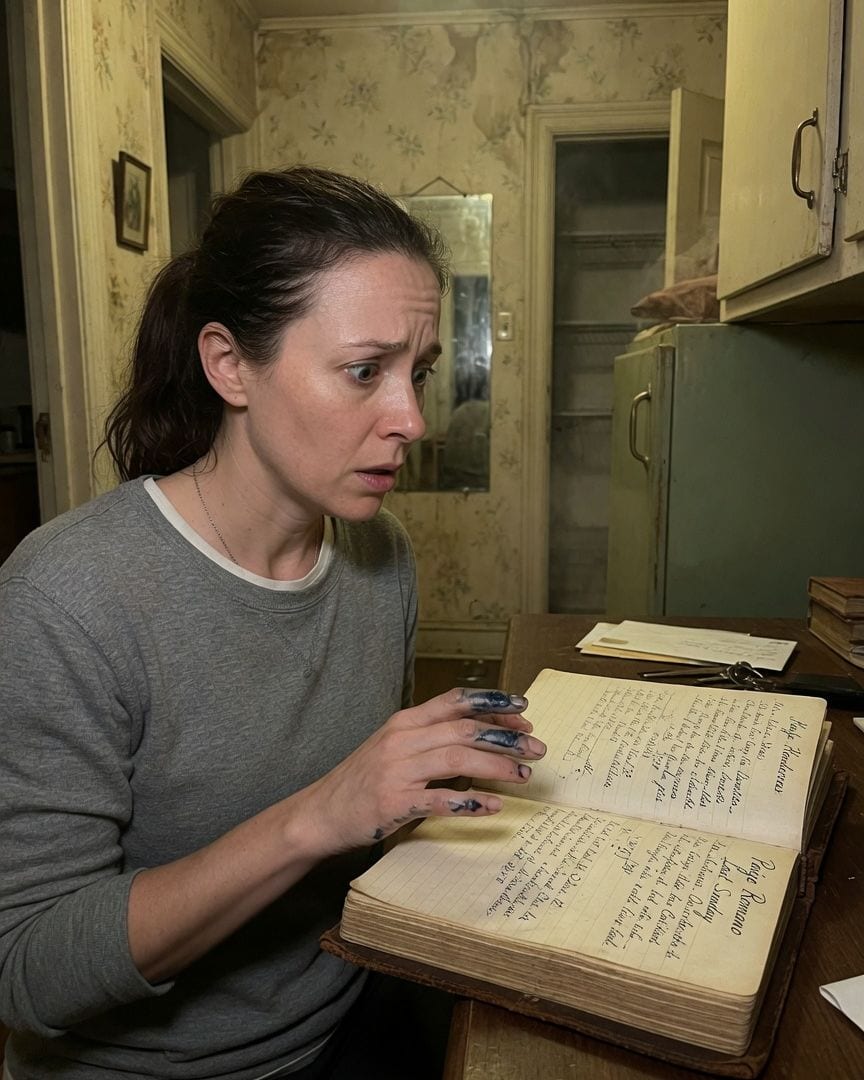
My visitors' book records guests who arrive in the future. Last Sunday, my own name appeared at the bottom, the ink still wet.
I bought an old house last March, complete with a dusty, leather-bound visitors' book. It seemed a charming relic, until I found new entries appearing, dated months into the future, the ink still wet. Then, my own name, Paige Romano, appeared, dated 'Last Sunday,' with a bead of ink shimmering at the 'R'.