A stranger shook my hand, apologised for my father, then disappeared from every photo of the reunion.
The bass from the DJ’s speakers vibrated through the floor, a low thrum against my feet as I navigated the crowded hall. Our ten-year reunion was in full swing, a loud, cheerful blur of forgotten faces and forced laughter.
I was halfway through a polite conversation with someone whose name I still couldn't quite place when a man stepped into my periphery.
He was older, maybe mid-fifties, with a sharp suit that looked out of place among the faded band tees and ironic sweatshirts.
His eyes, though, were what really caught me – a kind, deep blue, but unsettlingly knowing, like he’d seen things that hadn't happened yet.
He moved directly towards me, cutting through the throng with an almost unnatural ease, a faint smile playing on his lips. Before I could even open my mouth, he reached out and took my hand in a firm grip.
"Good to see you, Richard," he said, his voice quiet but clear, cutting through the din. Then, his eyes held mine, unwavering, "And I'm so sorry, in advance, about your father."
The words hung there, out of place, like a record scratch in the middle of a song. I blinked, a dozen questions forming on my tongue.
Who are you? What about my father? But before I could voice a single one, his grip softened, and he melted back into the crowd as quickly as he’d appeared. One moment he was there, the next he wasn’t, swallowed by the press of bodies.
I spent the next hour scanning faces, weaving through conversations, asking anyone who would listen if they’d seen him. "Older guy, dark suit, kind eyes?" No one had. "Don't think I saw anyone like that, Rich."
It was like trying to find a ripple in a stirred pot. Later, at home, I scrolled through dozens of photos uploaded to the event’s social media page. Every group shot, every selfie, every candid snap.
The man wasn't in a single one. Not a blur, not a distant background figure. He was simply gone. As if he had never been there at all.
I tried to rationalize it. Maybe I’d had one too many beers? Perhaps it was a distant relative I’d genuinely forgotten, playing some bizarre, morbid prank.
I called my father, Arthur Lawson, the next morning, my hand hovering over the dial button for a long minute. He answered on the second ring, his voice gruff but cheerful. "Watching the game, Rich. What's up?" He was fine.
Perfectly fine. I didn't mention the strange apology. No point in worrying him over something I couldn't explain myself.
Over the next few days, I reached out to a few more reunion attendees, friends I knew well, asking if they’d seen a man matching his description. My friend Mark even scrolled through his own camera roll, but found nothing.
The complete absence of photographic evidence, the way he’d just vanished, gnawed at me, a persistent itch I couldn't scratch.
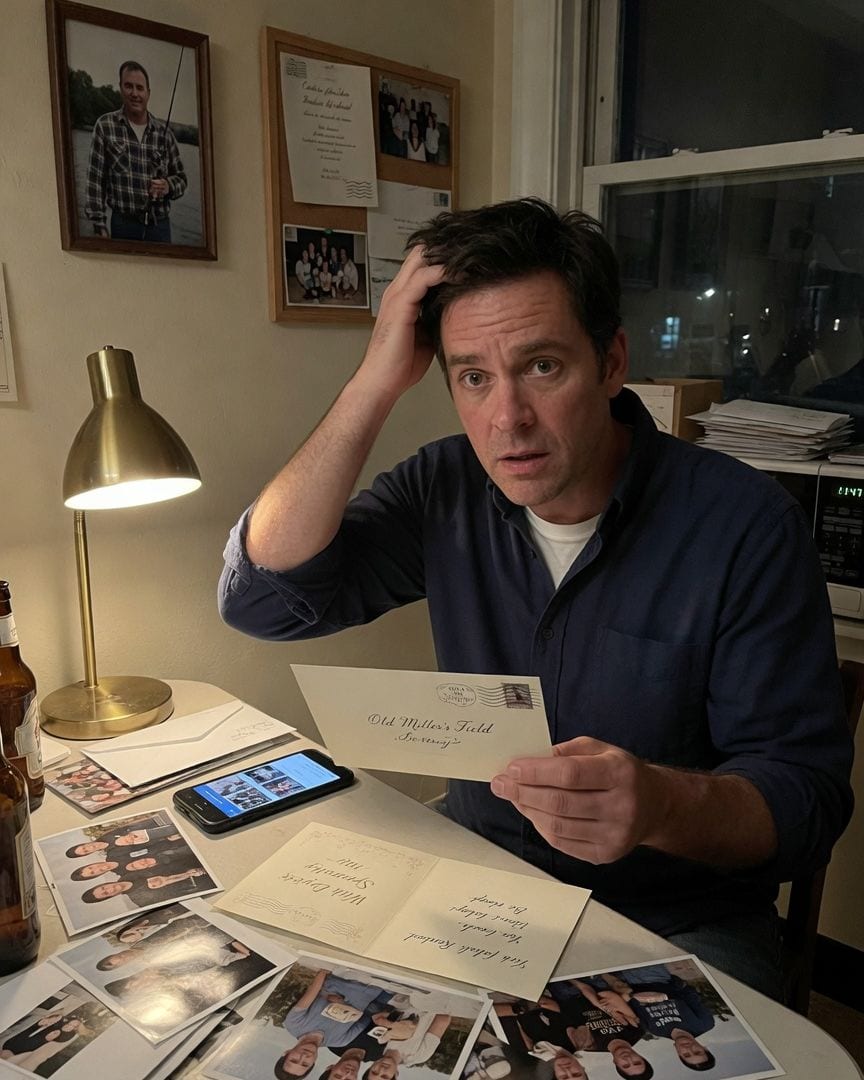
A week later, the first letter arrived. It was addressed to "Richard Lawson," sitting atop a pile of junk mail on my counter.
The envelope was a pale cream, thicker than usual, and the handwriting was elegant, looping, almost Victorian in its flourish. The postmark, though, was what stopped me cold: "Old Miller's Field." I stared at it.
Old Miller's Field wasn't a place. Not anymore.
It was an empty, overgrown patch of land on the edge of town, where an old, crumbling house had been demolished decades ago, leaving nothing but weeds and a few rusty fence posts.
I knew because I'd driven past it countless times as a kid. There was no post office there, no address for mail. I tore open the envelope.
Inside was a generic 'condolence' card, the kind you’d pick up at a supermarket. It was blank, save for the pre-printed 'With Deepest Sympathy.' No name attached, no stated loss, just an empty, hollow gesture.
The card felt heavy in my hand, strangely cold, utterly out of place.
The card’s impossible origin haunted me. I tossed it on my desk, tried to ignore it, but the unease was a live thing now, squirming in my gut. I drove out to Old Miller's Field that afternoon, just to see.
The place was exactly as I remembered: a forgotten corner of the county, choked with tall weeds and scrub brush, a few rusted fence posts leaning at odd angles. No house. No mailbox. Nothing.
It confirmed what I already knew: mail couldn't originate from here. It had to be an elaborate, if baffling, prank. Someone was going to a lot of trouble. I told myself that.
Later that evening, after trying to distract myself with a forgotten novel, I started sorting through the day's mail again. And there it was. Another pale cream envelope. Same distinctive, elegant handwriting. Same impossible postmark from "Old Miller's Field."
My breath hitched. This one, however, was a simple 'Birthday wishes' card. But my birthday wasn’t for months. A profound, bone-deep chill ran through me, starting in my fingertips and spreading through my chest.
My hand trembled as I held it. The card, as if on its own volition, fell open. And inside, in that same unsettling, looping script, it said: 'Your father, Richard. Be ready.'
Truly unnerved now, I laid both cards on the kitchen table and showed them to my father. Arthur glanced at them, then back at his breakfast plate.
"Some old schoolmate with a sick sense of humor, probably," he grumbled, dismissing them with a wave of his hand. "Don't give it another thought, Rich."
He was so calm, so unbothered, it almost made me doubt my own escalating dread.
But I couldn't dismiss it. The impossibility of the postmark, the man at the reunion, the chillingly specific warning about my father. I decided to press harder.
I took the letters to the local post office, the small, quiet one I’d used since I was a kid.
Helen Hale, the clerk, a woman in her fifties with a practical air and sensible glasses, looked at me with a strange expression when I asked about "Old Miller's Field." Her brow furrowed.
"Son, no mail could possibly be postmarked from there. It hasn't been a valid address for... well, for decades. There's nothing there." She even looked it up on her system, a quick tap-tap-tap, confirming the defunct status. My stomach tightened.
It wasn't a prank from a local. It was something else. I spent hours online, digging into the field's history, finding old digital scans of newspaper clippings from the 70s confirming the demolition of the last remaining structure there.
Nothing but open land since. Then, a new idea. I started going through my own old mail, then my father’s, hunting for any similar envelopes from years past. Nothing.
The targeted nature of these recent letters, though, the way they specifically mentioned his name, started to resonate with the reunion man’s words, 'I'm so sorry, in advance, about your father.' It was all connected.
And it made me wonder if this wasn't some isolated incident, but something that had happened before, a strange, dark tradition in our family.
I started asking questions, subtly at first, during family dinners and casual phone calls. "Ever get any weird, anonymous letters, Aunt Abigail?" I tried to keep my voice light.
My aunt, Abigail Easton, was a sharp-witted woman in her seventies, my father's older sister, and the unofficial keeper of family lore. She paused, considering, a fork halfway to her mouth.
"Oh, my grandmother used to get those funny cards sometimes," she said, almost an aside, as if talking about the weather. "From that old Miller place, she'd say. Always thought they were nonsense, just threw 'em out."
The casualness of her remark sent a fresh wave of dread through me. My grandmother? This went back further than I thought. The knot of paranoia in my stomach tightened, growing heavier, colder.
I felt an escalating sense of being watched, a palpable pressure in the air.
One evening, alone in my apartment, the quiet suddenly felt too loud. My phone rang, startling me. It was an unknown number, blocked. My heart hammered against my ribs. I answered cautiously, a quiet, "Hello?" on my tongue.
A calm, deep, distinctly masculine voice, subtly familiar in a way that made my skin prickle, spoke. "Richard. You're getting too close." The line clicked dead. A flat, empty sound. I stared at my phone, the silence deafening.
I tried to call back immediately, but the number was already disconnected, leading to a generic, recorded message: 'The number you have dialed is not in service.' The air in my apartment felt like it had suddenly dropped ten degrees.
Shaken, I drove straight to my father’s house. I burst in, the 'Birthday wishes' card clutched in my hand, the one with the chilling warning about him.
Arthur, seeing my distraught face, seeing the direct, personal threat on the card, finally broke. His face paled, the color draining from it like water from a sink. "Richard, calm down," he said, but his voice was trembling.
He admitted that his own father, Desmond Lawson, my grandfather, had received similar letters. There was an unspoken 'understanding' in the family, he confessed, a quiet pact to ignore them, to treat them as an eccentric's prank, a harmless peculiarity.
"We just... we just never talked about them," he whispered, his eyes wide.
He walked to the attic stairs, his movements stiff and slow, as if aged ten years in a minute.
He returned a few minutes later, holding an old, locked wooden box, a heavy, dark oak chest that he'd inherited from Desmond. "Grandad always kept this locked," he said, fumbling with a small, tarnished key. "Never knew why."
He opened it, the hinges groaning softly. Inside, nestled among yellowed photographs and crumbling papers, were several more envelopes. My breath caught. Identical cream paper, identical looping script, identical impossible postmark from 'Old Miller's Field.'
They were addressed to 'Arthur Lawson' and 'Desmond Lawson.' The dates on the postmarks spanned decades, some going back to before Arthur was even born. My father’s voice was hushed, barely audible.
"I always thought it was just Grandad's strange friend, or some family joke. Harmless. But now... with that phone call... I don't know what to think, Richard."
The reunion man's ominous apology, the impossible postmarks, the specific targeting, the multi-generational pattern—it all snapped into a horrifying, utterly coherent pattern. It wasn’t a prank. It was something far, far worse.
The multi-generational pattern of the letters was undeniable now, a lineage of dread stretching back further than I could have imagined. I felt a terrible weight, a sense of inherited fear settling deep in my bones.
My aunt Abigail's casual remark about my grandmother, receiving those 'funny cards,' echoed in my mind. Was it only the men in the family, then, or had the letters targeted more? I had to know.
I had to go back to Abigail, to press her for more details, to uncover everything she might know, however vague, however seemingly innocuous.
I started the drive to her house, my mind racing, constructing timelines, connecting the dots of what I now knew. Halfway there, my phone buzzed. An incoming email from an unknown sender. The subject line was simply: 'Your Ledger.'
My stomach lurched. I tapped it open. Attached was a blurry, low-resolution photo. It looked like an open, ancient-looking book, its pages yellowed and brittle.
On the visible page, etched in faded ink, I could just make out my own name: 'Richard Lawson.' And beneath it, 'Arthur Lawson.' Then, a line I hadn't expected, a name that made my blood run cold: 'Laura Lawson.'
My mother’s name. And beside each name, a series of cryptic dates, some predating their births, and a faint, recurring, unsettling symbol.
I burst into Abigail Easton's house, my phone clutched in a white-knuckled grip, the email displayed on the screen.
Abigail, seated at her kitchen table sipping tea, looked up, her expression shifting from mild surprise to stark terror as she saw the blurry photo of the ledger.
Her face, usually so full of life, paled dramatically, her hand flying to her mouth. "The Book of Names," she whispered, her voice trembling. "Mother had one just like it."
She confirmed, her voice barely audible, that her mother, my grandmother, had kept such a ledger.
Abigail explained that her side of the family, the Hales, were historically 'keepers' of these records, though she always thought it was just a strange, eccentric family hobby, an odd genealogical obsession.
"She called it 'The Book of Names'," Abigail repeated, as if trying to convince herself. She then revealed a terrifying truth: certain bloodlines, including ours, the Lawsons, were 'tracked' for specific, unstated qualities.
At a pre-determined age or key life event, a 'claim' was made, or a 'warning' delivered.
The reunion man's unsettling apology, the letters from nowhere, the voice on the phone—it all clicked into place with horrifying clarity, each piece of the puzzle sliding into its destined slot.
The cryptic dates weren't random, she explained; they were 'markers' for these orchestrated events. 'The Book of Names' wasn't just a record; it was a living document of our family's predetermined fate, meticulously maintained for generations.
Abigail, now visibly distraught, pointed me towards a distant, eccentric cousin, Eileen Mercer, who lived in an old, isolated house on the outskirts of town. "She would have Mother's ledger," Abigail said, her voice strained. "She...
she was one of the keepers." Armed with this terrifying, soul-crushing knowledge, I drove to Eileen's house, a crumbling, ivy-covered place that felt like it had been forgotten by time, nestled deep within a thicket of ancient oaks.
The air around it felt heavy, still, like a held breath.
I found Eileen Mercer inside, a woman even older than Abigail, with sharp, knowing eyes that seemed to see right through me. She was calm, almost serene, despite my agitated state.
"You've come for the book," she stated, not a question, her voice quiet. She didn't deny anything. She confirmed she was a 'keeper' and that 'the organization' ensured the 'pattern' continued.
Eileen explained, in the same even tone, that the 'apology' from the reunion man was for a future event that would 'mark' my father, a 'recalibration' for the family line, ensuring its continued 'tracking.'
She led me to a dusty study, the air thick with the smell of old paper and wood rot, and pointed to a heavy, ancient-looking tome on a stand – the actual Ledger.
It was much older and larger than the blurry photo, its thick, yellowed pages filled with generations of names and cryptic symbols, an endless labyrinth of lives. She ran a gnarled finger down a page, stopping at my own entry.
Beside my name, she pointed to a specific date, two years from now, with the chilling, single word, 'Claim.'
An icy dread settled deep into my bones, a cold, crushing weight. My future, my entire life, was written in that book. I instinctively lunged for the tome, an animalistic urge to destroy it, to erase the damning entry.
But Eileen, despite her age, moved with surprising, fluid speed, pulling the heavy book away from my reach. "It's not yours to break, Richard," she said softly, her eyes unblinking, utterly devoid of emotion. "It's your inheritance."
I stared at her, then at the empty space where the book had been, the realization of the futility of resistance crushing me.
I could only leave, the weight of that future date, 'Claim,' a cold, heavy stone in my gut.
I returned home, the image of Eileen's calm, knowing face, her unblinking eyes, burned into my mind.
I never told my father the full truth, only that the letters were part of an old, harmless family eccentricity, a strange ancestral quirk. He seemed to accept it, relieved.
I tried to live normally, to push the ledger from my mind, but every passing day felt like a countdown to my own 'Claim.'
I avoided my aunt Abigail, unable to look her in the eye, knowing she was part of this terrible, silent lineage, a keeper of the secret. The letters from nowhere stopped. For now.
I knew they were still watching, waiting for the date marked in the Ledger.
Two years passed, slowly, inevitably. Just as Eileen's 'recalibration' had implied, my father, Arthur, suffered a mild stroke. It affected his memory, his mobility, leaving him a quieter, slower version of himself.
I nursed him, the dread a constant, silent companion, the confirmation of their power a bitter pill. I never received my own 'claim' letter. Not yet.
I live with the knowledge that my name, and my future, is written in a book held by serene, ancient hands. I sometimes find myself checking my mail, a cold knot in my stomach, a quiet compulsion I can't shake.
I know they are still watching, still waiting. I am marked. I am next.
Arthur Lawson, now confined to a wheelchair, often asked his son about the old family letters. Richard would just smile, a faint, wrong little smile, and say, 'Is that so, Dad?'
If this one got to you
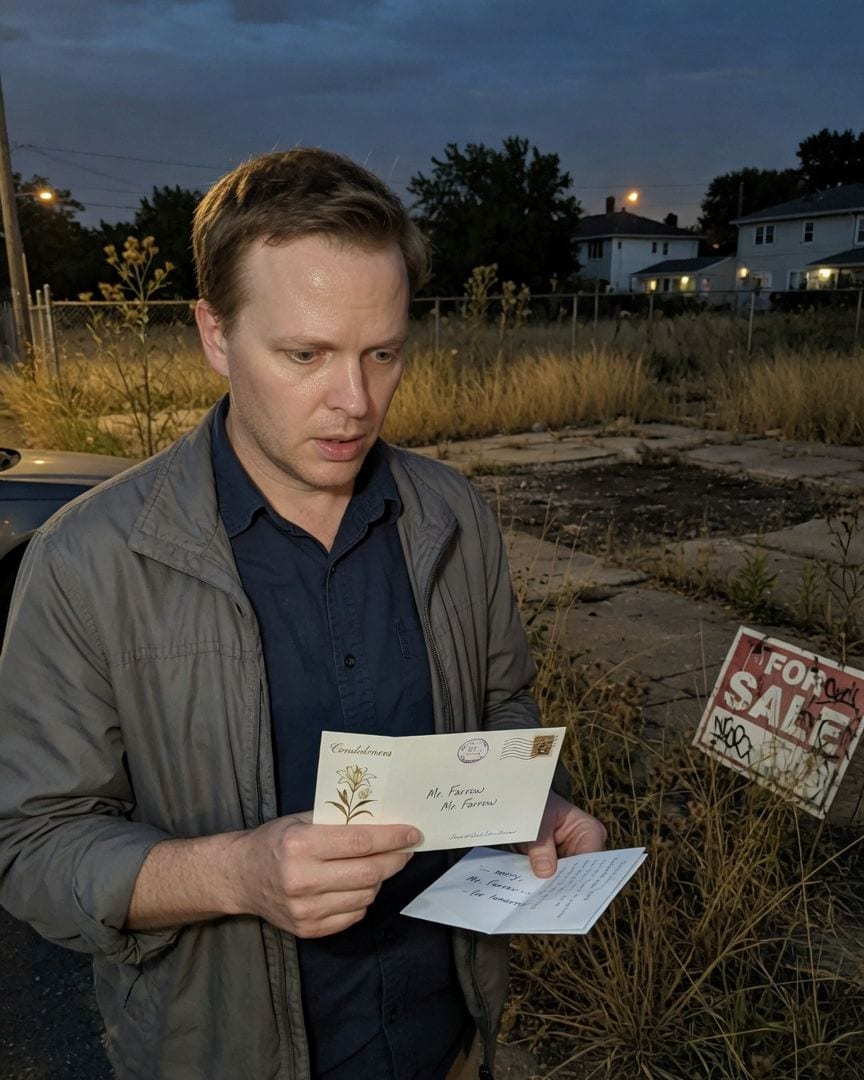
My waiter apologized for tomorrow's plans I hadn't made. He stared at his own handwriting, swore he didn't write it.
My quiet, solitary life was routine until a condolence card arrived, addressed to me for an unknown loss. The postmark, '14 Elm St.', was unsettling enough, but driving there revealed the impossible truth: the address was nothing but an empty lot.
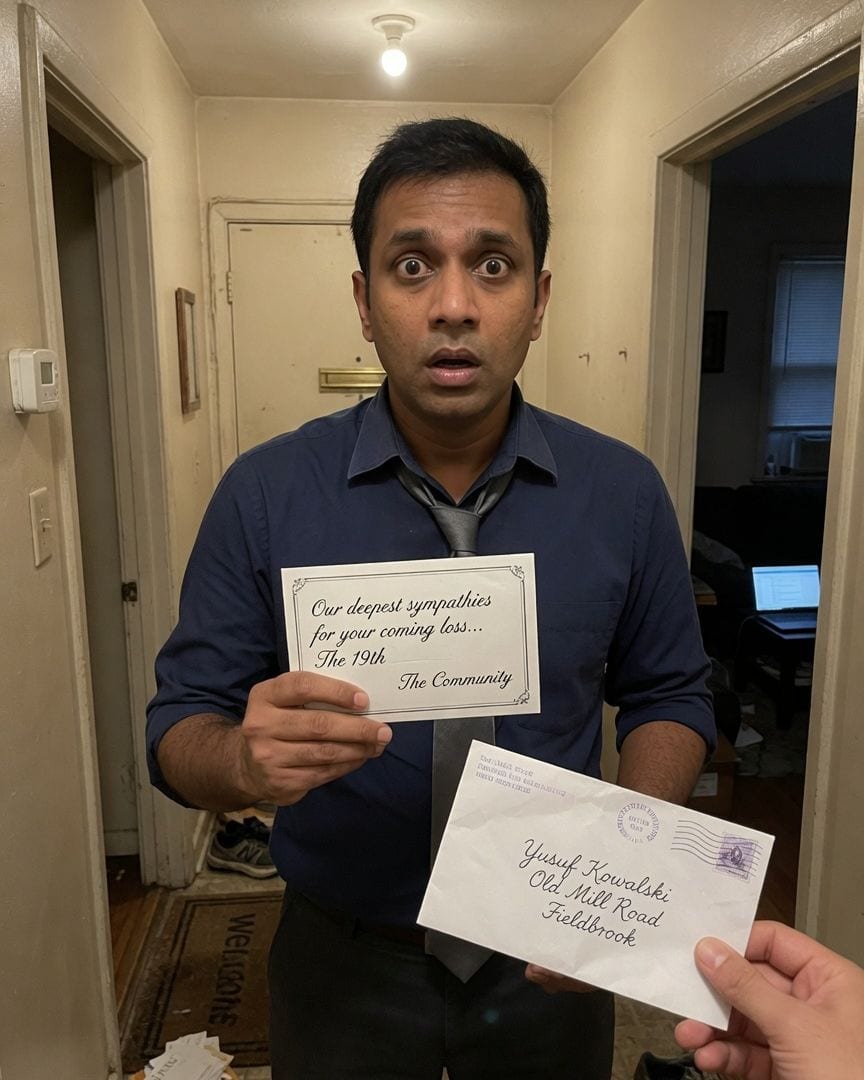
My bus driver knows my name, Yusuf, and said 'not long now.' Today is the 18th. He added a date this morning: the 19th.
My morning bus commute is a predictable comfort until driver Bernard Ellison addresses me by name. I've never told him Yusuf. Then, he adds a quiet, 'Not long now... The 19th.' Today is the 18th, and his words leave me with an inexplicable dread.
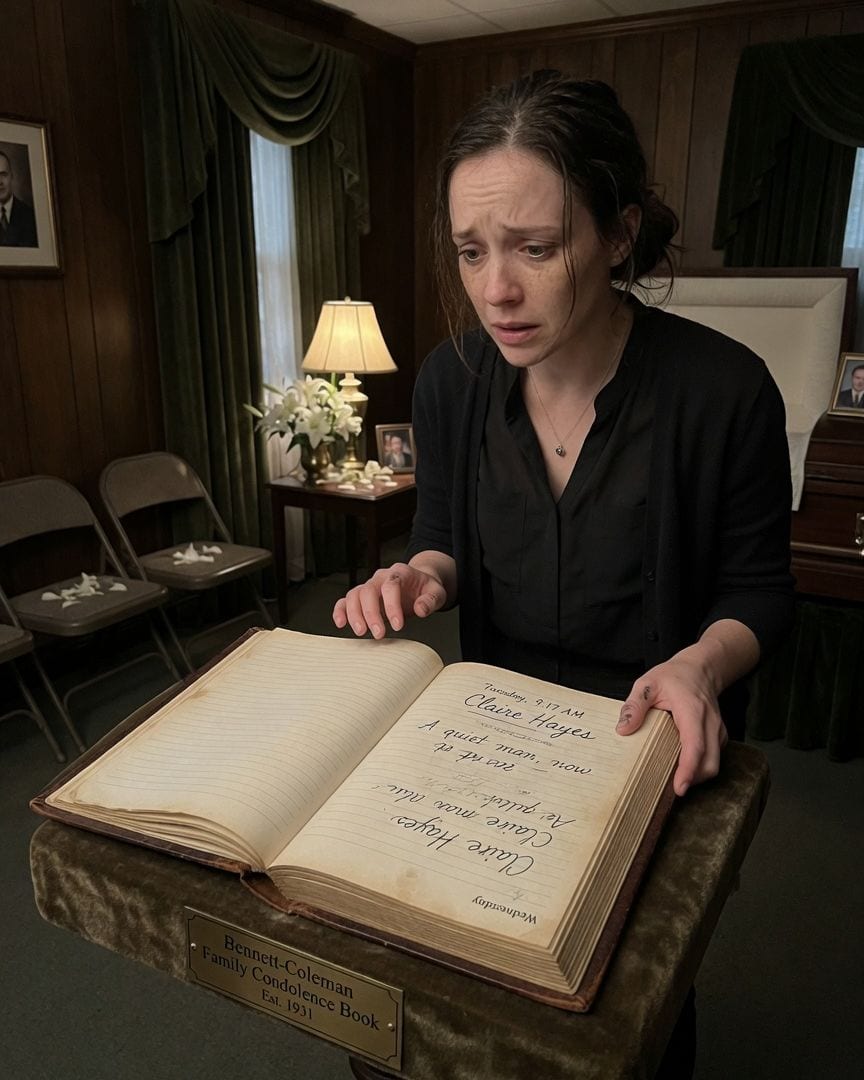
My uncle's wake book held my signature, dated yesterday, before he died. The words were not mine.
At Uncle Charles's funeral, I signed the condolence book. A nagging curiosity made me open it again, only to find my own signature already there. It was dated Tuesday morning, hours before my uncle had actually passed away, the ink impossibly dry.
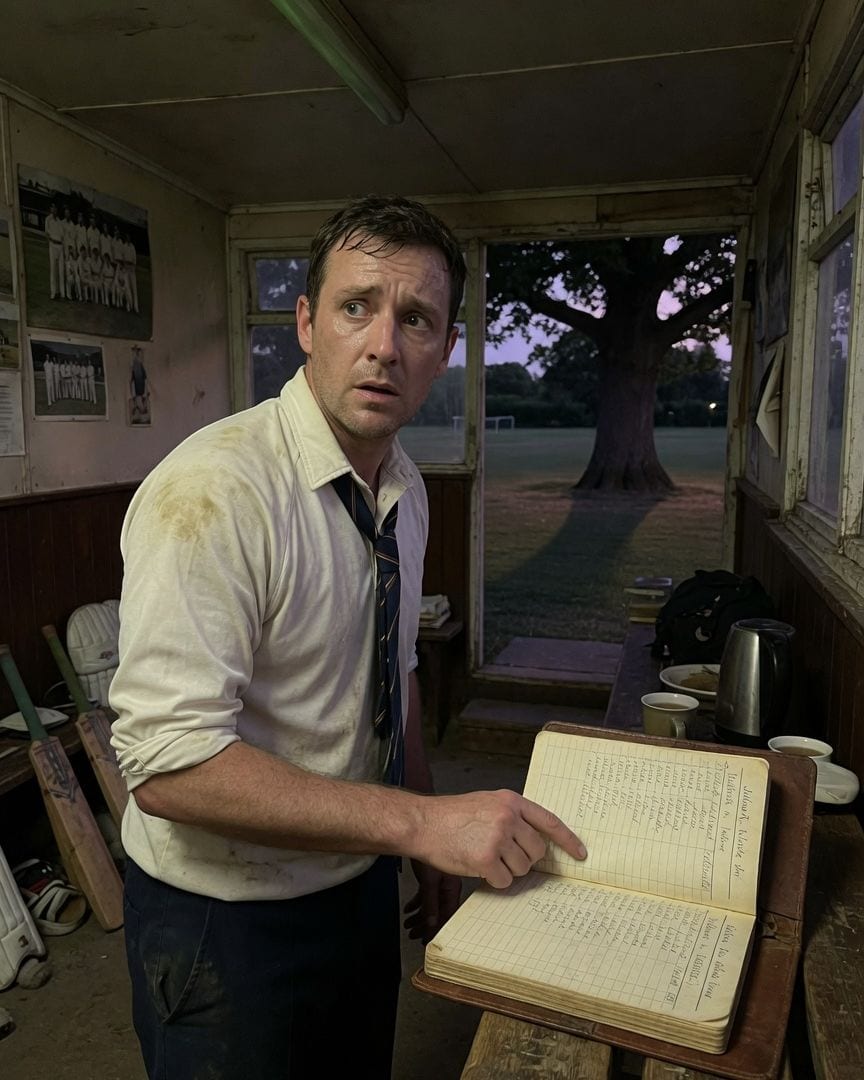
My cricket club's scorebook listed eleven players as 'retired.' One name matched a local man who vanished without a trace.
I moved to Oakhaven for a slower pace, joining the local cricket club and its quaint traditions. But in the club's old scorebook, I found a chilling entry: a full innings of eleven batsmen, each simply marked 'retired' on a specific date. When I asked about Julian Thornton, one of those names, the town fell silent, their placid smiles never quite reaching their eyes.
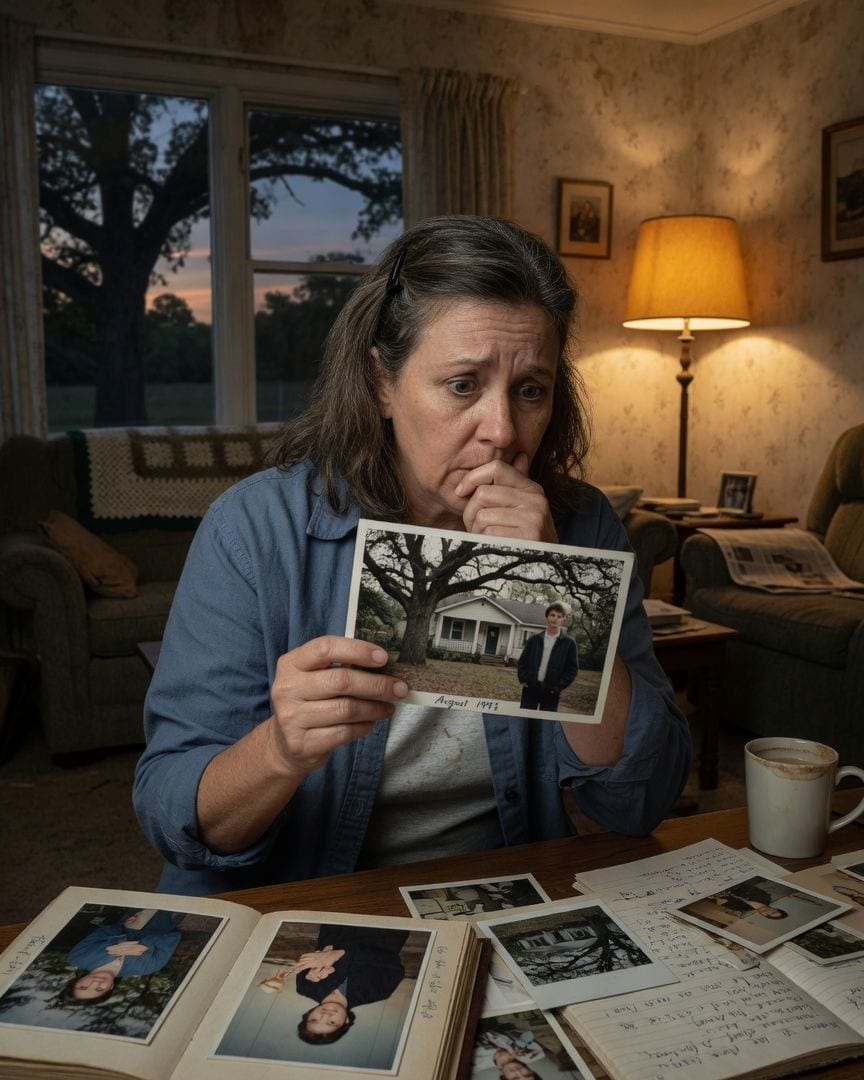
My brother remembers carrying me home after I broke my arm. He was already gone two years when it happened.
After thirty-two years, my brother Joel returned, bringing a relief that felt physical after decades of quiet absence. But when he recounted carrying me home after I broke my arm, a memory I held dear, the warmth in my chest curdled cold. He was twenty years old then, two years gone already, and my mother had carried me.
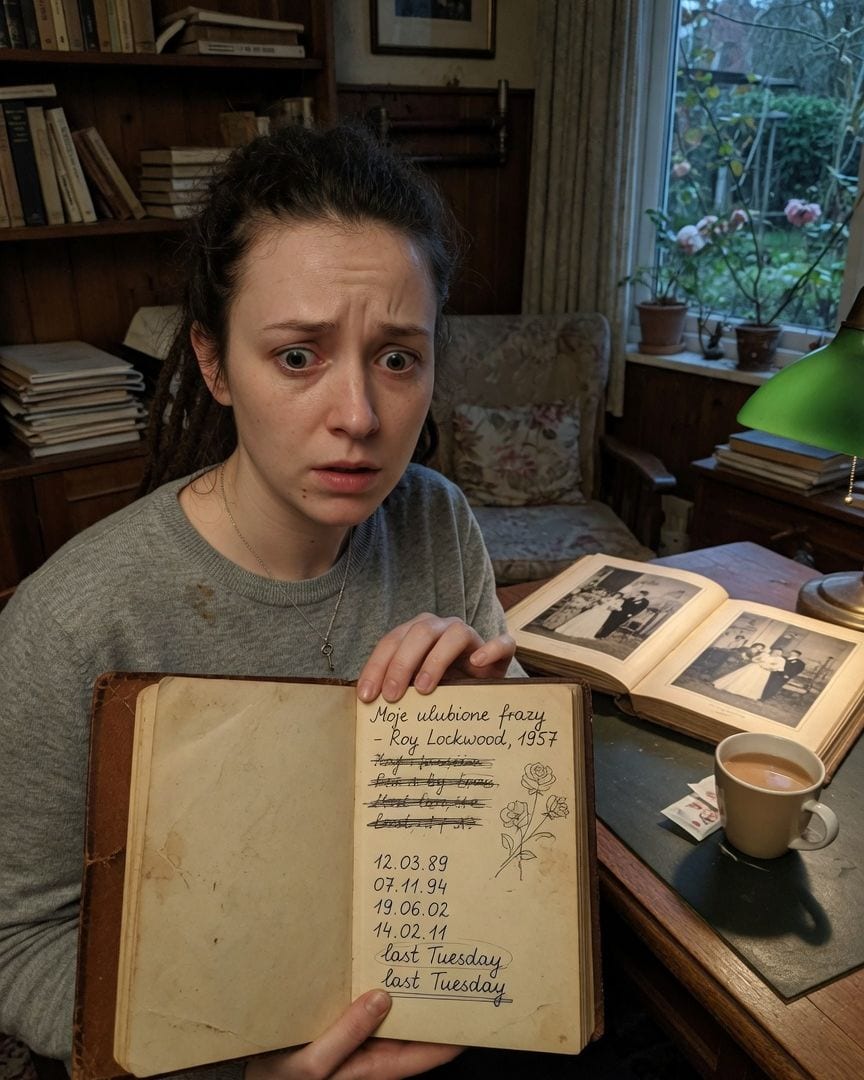
My grandfather counts 'one, two, three' in English now. He just came back. He always counted in Polish, and denies ever speaking it.
My grandfather, Roy Lockwood, returned last Tuesday after vanishing for a week, bringing immense relief. He seemed thinner, a bit disoriented, but otherwise, he was just Grandpa. Then I heard him count 'one, two, three' in clear English before lifting potting soil, instead of his lifelong Polish habit.