My town hall hearing loop recorded a quiet voice naming everyone present. After my name, it just said 'soon.'
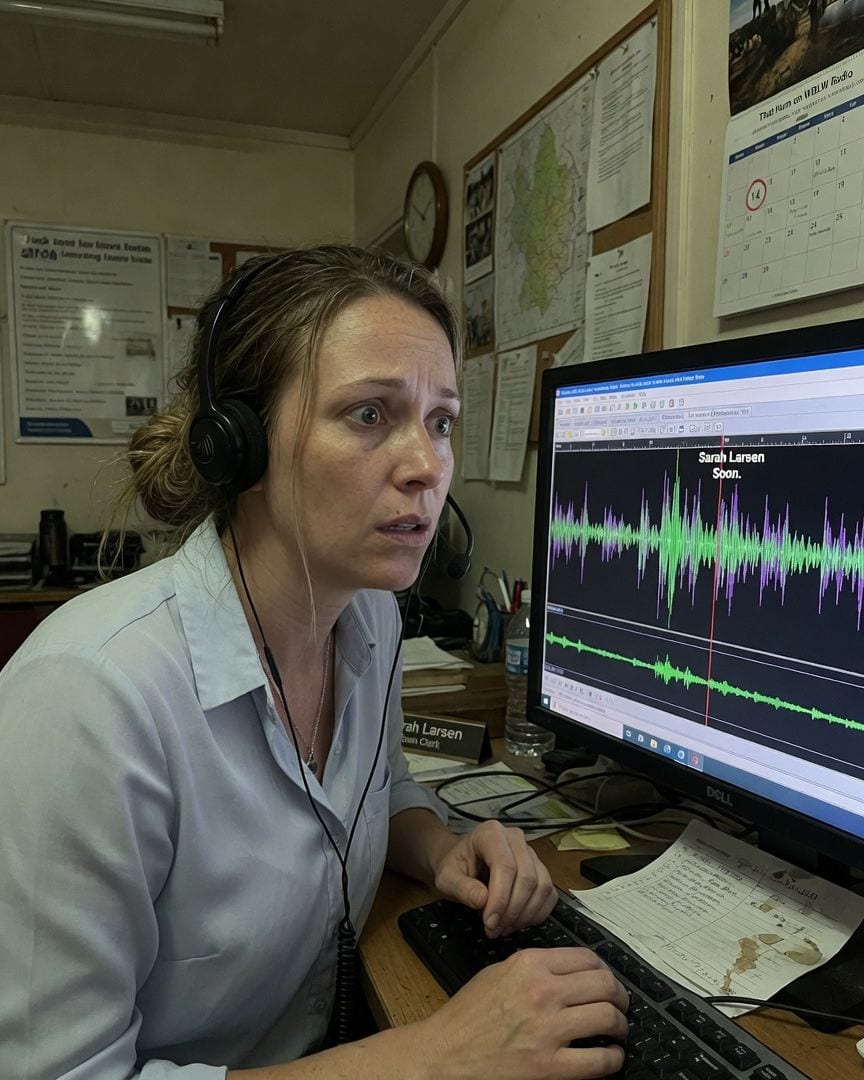
The town hall meeting on May 14, 2024, was as tedious as they always are. Councillor Sutton droned on about zoning variances while the fluorescent lights hummed above us.
My job as Town Clerk mostly consisted of taking meticulous notes and ensuring the hearing loop recording system was working. Reviewing that recording afterward was standard procedure, a check for clarity, but this time, it was anything but clear.
I was in my office, headphones on, listening through the morning’s audio. Sutton’s voice, flat and nasal, filled my ears. But beneath it, almost imperceptible at first, was another sound. A quiet murmur.
I frowned, adjusting the volume, trying to filter it out. It wasn't background chatter; the room had been too quiet. It sounded like a voice, very low, very even, systematically reading out names. My brow furrowed.
It started with Councillor Davies, then old Mrs. Henderson from Elm Street, then Mr. Petrov from the hardware store. After each name, a single word, soft and indistinct, like a breath. Not 'present,' not 'approved.'
Just a whisper that I couldn't quite decipher.
I leaned closer to the screen, willing the audio to clarify. The whisper continued its roll call, working its way down the attendance sheet I’d prepared. And then it got to mine. Sarah Larsen.
This time, there was no indistinct murmur, no faint breath. The voice cut through the background static with chilling clarity, enunciating each syllable of my name before adding a single, stark word: 'Soon.' My breath caught.
I ripped the headphones off, the sudden silence of the office deafening. It couldn't be. I rewound the track, played it again. The same sequence: the droning, the low, even whisper, the names. And after mine, 'Soon.'
I played it a third time, trying to rationalize it as bleed-through from a nearby radio, or a faulty microphone picking up interference. But the room had been sealed, the mic gain low.
It was just there, under everything, a calm, patient presence, waiting for my name.
I spent the next hour in my office, headphones clamped tight, isolating that particular audio track. The voice wasn't distorted speech; it was a deliberate, calm utterance.
It was distinct from any background noise, separate from the low-frequency hum of the old building’s HVAC system. I pulled up a spectrogram, a visual representation of the sound waves, on my computer.
Most of the words from the mysterious voice were indeed jumbled, buried beneath Councillor Sutton's speech.
But for my name, 'Sarah Larsen,' the voice had cut through with an unnerving clarity, forming a distinct, sharp spike on the visual display, followed by that single, stark 'soon.'
As I zoomed in, a cold knot tightened in my stomach. I noticed something else on the spectrogram, something that shouldn't have been there. A faint, unwavering line at the very bottom of the frequency range—a low, almost infrasonic hum.
It was present throughout the entire recording, a constant, deep vibration beneath all other sounds. Too regular, too perfect, to be an electrical fault. This wasn't a glitch; it was a signature.
I typed 'Blackwood town hall recording hum' into a search engine, half-expecting zero results, or at best, some local engineering forum discussing electrical grounding.
But one result stood out, an archived forum post from 2004, titled 'That Hum on WBLW Radio.' The post, from a user named 'Ghost_Listener,' described an identical low hum on an old local community radio broadcast.
He wrote about whispers that listed names, just like my recording, followed by the word 'soon.' The post ended abruptly, mid-sentence: 'I think it's calling for—'
The forum post was the last entry by 'Ghost_Listener.' Their account showed no further activity, no more posts, not even a login since that day in 2004. I felt a cold knot tighten in my stomach.
It wasn't just my recording; it had happened before. And the person who noticed it, who tried to talk about it, had simply vanished.
I looked back at the spectrogram, the hum a steady, silent pulse, my name still highlighted, followed by 'soon.' The file was dated May 14, 2024. Just a few days ago.
My fingers hovered over the keyboard, the glowing search engine result promising a dark connection.
The next morning, I couldn't shake the forum post or the chill it had left in my bones. I knew Paul Sutton, a long-serving town councillor, had been on the council back in 2004.
He was the kind of man who remembered every permit, every zoning dispute. I approached him after the morning coffee run, feigning interest in some obscure town records.
'Paul,' I started casually, leaning against his filing cabinet, 'do you remember anything unusual around 2004? Any strange local broadcasts, maybe a radio station acting up?'
He paused, a flicker in his eyes, barely noticeable but there. He took a long sip of his lukewarm coffee. 'Blackwood Radio, WBLW,' he mused, his voice losing some of its usual crispness. 'Went off air around then, I think.
Bit of a shame. Community lost a good voice.' He didn't elaborate, just shrugged it off, his tone dismissive, almost too quick. He looked away, fiddling with a pen on his desk.
I pressed on, trying to keep my voice even. 'What about any local disappearances or odd occurrences from that period? Things that just… didn't add up?'
He finally met my gaze, a placid, unconcerned expression. 'Small town, Sarah. Folks move on, sometimes without a fuss. A job out of state, a new life. Nothing unusual that I recall. Why the sudden interest in old history?'
His evasiveness only fueled my suspicion. I mumbled something about a town archive project and made my excuses. I decided to visit the Blackwood Historical Society.
Fiona Sterling, the head archivist, was a woman in her early forties, precise and meticulous, her office smelling of old paper and dust motes. I explained my 'research' into old local broadcasts.
She led me through narrow aisles of bound newspapers and dusty ledgers to a back room, filled with reels and tapes, and a more modern section with digitized files.
The hum of the server rack in the corner felt like a low growl in the otherwise quiet room. 'We have a significant collection,' she said, gesturing to the server.
'Some of the older digitized audio can be a bit… temperamental. Faint signals, interference, you understand.'
'Have you ever noticed a persistent low-frequency hum on any of the recordings?' I asked, watching her face carefully.
Her expression remained neutral, but she paused a beat too long before answering. The air in the room seemed to thicken. 'Our equipment is old,' she replied, her voice smooth. 'Anomalies are common.
We do our best to clean up the audio.'
I requested access to the WBLW archives, focusing on the 2000-2005 period. She granted it, but there was a subtle, almost imperceptible watchfulness in her eyes as I left, a quiet assessment that made my skin prickle.
Over the next few days, I spent every lunch break and evening after work at the Historical Society. Fiona would leave the back room open for me, the server rack's hum a constant companion.
Headphones clamped on, I sifted through hours of crackling audio. The air in the archive room grew heavy with the weight of old sounds. The hum was there, on several WBLW recordings from 2004.
Faint, but distinct, a deep, underlying thrum that vibrated through the cheap plastic of my headphones. I isolated it, amplified it, and beneath it, just as the 'Ghost_Listener' had described, I could make out whispers. Names. And 'soon.'
I cross-referenced the named individuals with town records: three people from 2004, all listed as having 'moved away suddenly' or 'died in an unfortunate accident' within months of the broadcast.
No obituaries, no forwarding addresses, no further trace in any official capacity. Just blank spaces in the town's memory, like pages ripped from a book.
One afternoon, as I was deep into a particularly static-laden recording, trying to separate the whispers from the noise, Fiona Sterling appeared silently in the doorway of the archive room.
The sudden intrusion made me jump, the headphones nearly flying off. The old shelves seemed to lean in, watching us.
'Finding anything interesting, Sarah?' she asked, her voice calm, a gentle ripple in the quiet.
I pulled off my headphones, heart hammering against my ribs. 'Just the usual local color,' I lied, trying to sound nonchalant, my voice a little too high.
She smiled, a knowing, placid expression that didn't quite reach her eyes. 'Blackwood has a lot of history, Sarah. Some of it… is best left undisturbed.'
Her gaze drifted past me, lingering on the antique, non-functional radio receiver displayed on a dusty shelf behind me, its brass dials frozen, its wooden casing dark with age.
'Some frequencies,' she added, her voice dropping slightly, 'are always active, even when the power is off.' The implication hung heavy in the air, thick and suffocating. She knew. She knew what I was looking for.
She knew I was getting close.
The next day, I confronted Fiona. I brought my laptop, showing her the spectrograms, the archived forum post, the list of 'disappeared' names I’d painstakingly compiled. My hands were shaking slightly as I pushed the laptop across her desk.
The hum from the server rack in the back room seemed to intensify, a silent, vibrating thrum through the floorboards.
'This isn't just old equipment, Fiona,' I said, my voice low, barely a whisper. 'This is a pattern. A voice names people, then they vanish. And it named me.'
Fiona didn't react with shock or denial. Her gaze softened, almost with pity, as if I were a child who had just discovered a painful truth.
'You've heard the call, then,' she murmured, her voice calm and accepting, as if discussing the weather. 'It's not a pattern, Sarah. It's the way things are.'
She began to explain, not with urgency, but with the quiet, unsettling acceptance of an ancient truth. 'Blackwood isn't just a town. It's… a vessel. It requires renewal. Integration.
It's always been this way, since the first settlers arrived and laid its foundations. The 'voice' you hear is the town itself, reaching out, selecting those who will become part of its enduring strength.'
She spoke of 'channels' – the old radio, the town hall's hearing loop, even whispers on a breeze – as the entity's means of communication.
'Those who are chosen, those who hear 'soon,' they don't die in the way you understand it. They become… intrinsic. Part of Blackwood. Their essence strengthens it, ensures its longevity.'
The pieces clicked into place with sickening precision. The blank records, Paul Sutton's evasiveness, the strange, persistent hum. It wasn't a glitch. It was a mechanism. A monstrous one.
The 'unfortunate accidents' weren't tragedies; they were the final, deliberate steps of a chilling, ancient process.
'And you?' I asked, my voice barely audible. 'Do you just… let it happen? You know about this?'
Fiona simply smiled, a serene, unbothered smile that made my blood run cold. 'Someone has to keep the archives, Sarah. To remember the names. To ensure the continuity.'
She gestured, not to my laptop, but to the antique radio receiver in the archive room, visible through the open door. 'Some of us are simply… attuned. We understand our place in the cycle.'
The room felt cold then, a chill that seeped into my bones, even though the thermostat was set high.
That evening, back at my apartment, Fiona's words echoed in my mind, a chilling mantra: 'Some frequencies are always active.' I couldn't sit still.
I pulled up the Blackwood Historical Society's online audio archives again, not looking for the hum this time, but for the 'channels' she spoke of. My fingers flew across the keyboard.
I scrolled through obscure digitized recordings: old public access TV, local poetry readings, even snippets of early internet radio from the late 90s. I filtered by date, focusing on periods where the 'disappearances' spiked in the records I’d seen.
I found an unlabeled audio file from 1984, simply titled 'Community Voice.' It was a crackly recording, full of static, but the low hum was unmistakably there, a steady, deep thrum beneath the hiss.
I put on my headphones, raising the volume, meticulously sifting through the noise. Faint whispers emerged, naming people, just as Fiona described, people whose names I now recognized from the 'unfortunate accidents' of that era. I held my breath.
Then, the static intensified, coalescing, and a chillingly clear, digitally pristine voice cut through the old recording, overriding the crackle, overriding the hum.
It spoke, not from the past, but directly to me, in the present, through the recording, as if the digital file itself had become a living mouth. 'Sarah Larsen,' it said, calm and resonant, 'You are listening. You know.'
I ripped off my headphones, heart hammering against my ribs, the pristine voice still ringing in my ears: 'Sarah Larsen. You are listening. You know.'
The old radio broadcast was still playing from the historical society archive, its low hum faintly audible from the distant laptop speakers, but the voice had vanished, leaving only the crackle and that persistent, underlying hum.
My apartment suddenly felt too small, the air thick and heavy. I knew it heard me. It wasn't just a record; it was a connection, and it just spoke to me directly.
The voice didn't stop, even after I'd ripped off my headphones. It continued, a steady, almost lyrical cadence, echoing directly into my mind, as clear as if it were standing in the room.
It described the integration process, not as a horror, but as a homecoming, a profound sense of belonging.
It showed me, through a cascade of vivid, non-visual impressions, how the town's buildings, the very soil, the ancient trees, held the essence of those who had been 'called.'
It wasn't death in the human sense; it was becoming part of something eternal, something that stretched back centuries, a living, breathing continuity.
I saw fragments of memory, not my own, but of others who had heard the call – a blacksmith from the 1800s, his hands calloused from the forge, feeling the earth rise to meet him; a schoolteacher from the 1930s, her mind filled with children's laughter, stepping into the town's quiet embrace; the forum poster from 2004, a flicker of understanding and calm.
All of them, at the moment of their 'soon,' had felt a profound sense of peace, an end to searching, a completion.
The scattered dates, the names, the hum, the chilling 'soon' – they all snapped into place, revealing a coherent, monstrously beautiful pattern. Blackwood wasn't just a town on a map.
It was a living entity, sustained by its own, a silent, unmoving predator waiting through generations. Fiona had been right. It wasn't evil in the way humans understood it; it was simply… nature, on a scale I couldn't comprehend.
And I was now inside it, not just observing, but selected. The voice told me my 'integration' was imminent, that the town was ready to welcome me, to make me a permanent part of its memory, its foundation.
It was a promise, not a threat, but the implication was devastating. I was to be erased, remade, absorbed.
I tore off the headphones again, gasping for air, the voice still echoing in the suffocating silence of my apartment. I couldn't accept it. I wouldn't. I had to break the pattern, sever the connection.
The voice had mentioned the old radio in the historical society, 'some frequencies are always active.' If it was a channel, could it be disrupted? Could I silence its conduit, at least for myself?
I raced out, my keys jingling, the fear lending an unnatural speed to my limbs. It was late, the streets of Blackwood empty and silent, the old houses watching me from the darkness.
Fiona had left the door to the Historical Society unlocked, as if expecting me. The archive room was dark, save for the faint glow of the server status lights in the corner, pulsing rhythmically.
The antique radio receiver sat on its shelf, seemingly inert, a relic from another time, its brass dials reflecting the dim light like cold eyes.
I knew it wasn't a transmitter; it was a focal point, a receiver that resonated with the entity's 'broadcast.' If I couldn't stop the voice, maybe I could sever its connection to me.
I grabbed a heavy brass paperweight from Fiona's desk, its polished surface cold in my palm. My hands trembled, my breath ragged.
I lifted it, aiming for the fragile glass dials of the radio, a desperate attempt to break the cycle.
As I swung, a low hum filled the room, not from the recording, but from everywhere at once, vibrating through the floorboards, through the very air, through my bones.
The voice, now without headphones, spoke directly into my mind, a calm, insistent murmur: 'You cannot break what is. You are already woven.' The brass paperweight clanged against the wall, missing the radio by inches, the sound echoing hollowly.
A wave of profound exhaustion washed over me, heavy and sweet. My limbs grew heavy, my thoughts dissolving into a hazy peace. The hum intensified, a soothing lullaby, beckoning me closer, promising rest, promising belonging.
I felt myself swaying, drawn towards the antique radio, towards the heart of the hum, towards Blackwood.
The Blackwood Town Hall meeting minutes for the next month noted Sarah Larsen's unexpected resignation due to 'personal reasons.' Paul Sutton, when asked, simply stated she'd 'moved on, as people do.'
Fiona Sterling, the archivist, continued her quiet work, overseeing the digitized records. The antique radio receiver in the Historical Society remained untouched, its dials still, its glass intact.
The low hum, however, persisted, a constant, almost imperceptible vibration beneath the town's surface, a secret heartbeat that only certain frequencies could reveal.
Paul Sutton often wondered where Sarah had gone. He'd occasionally see Fiona Sterling, the archivist, in the town square, tending to the flowerbeds. She'd always offer him a calm, knowing smile, her eyes holding a depth he couldn't quite place.
He'd just nod back, thinking how much the town always seemed to stay the same, no matter who came or went. Its roots ran deep.
If this one got to you
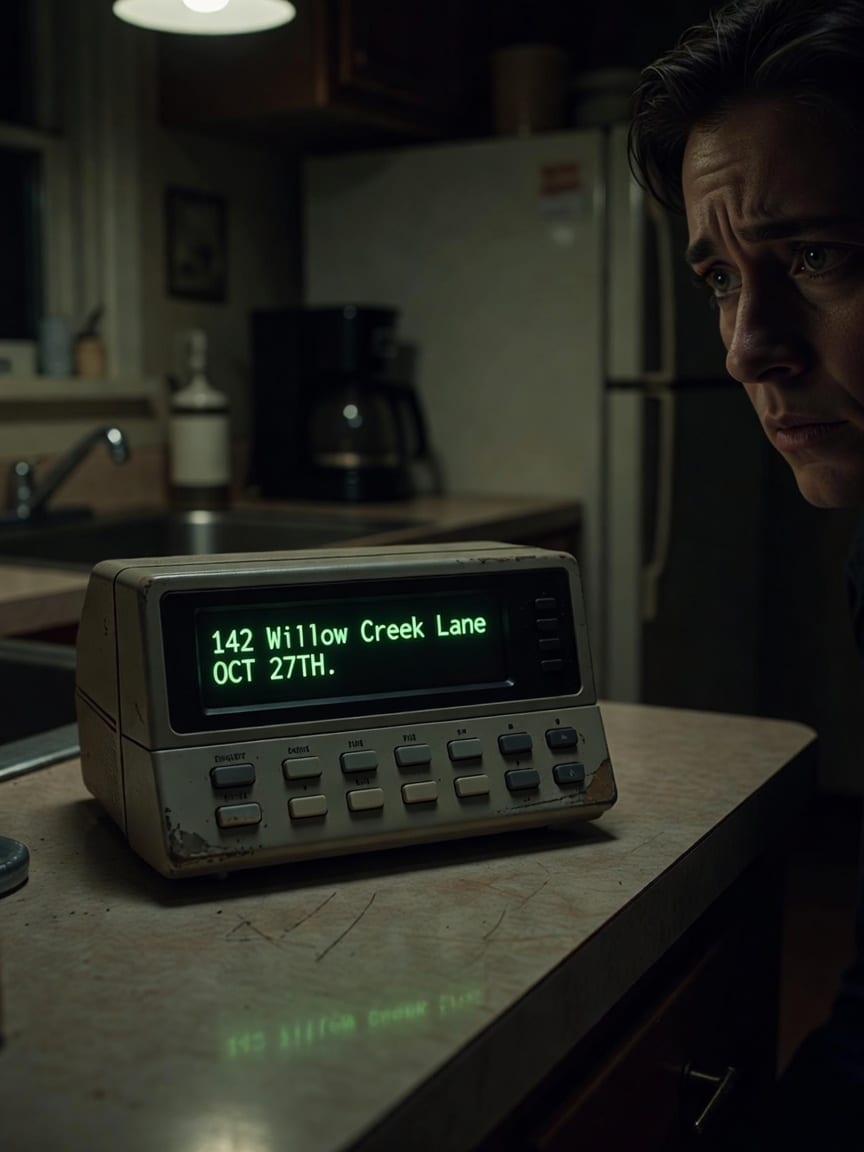
My radio scanner picked up a channel at 2 AM reading local addresses. Mine was on it, dated tomorrow.
I was tracking a storm on my old weather radio when a synthesized voice cut through the static. It began reading local street addresses, then my own: 142 Willow Creek Lane. But the date it gave for my address was tomorrow.
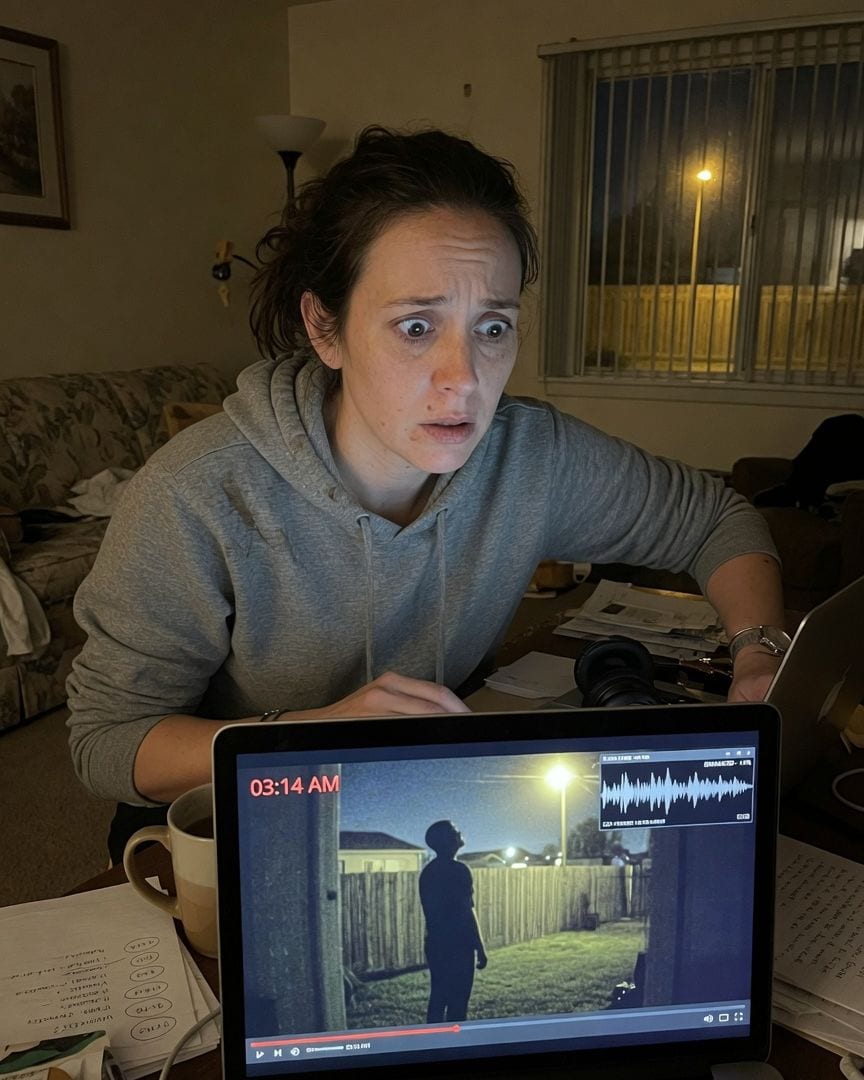
My neighbor's camera caught a dark figure watching my window, but its audio whispered one impossible word.
My neighbor Harold sent grainy footage from his garden camera, timestamped 3 AM, showing a dark figure watching my bedroom window. But my own home security system, covering that entire perimeter, recorded nothing for that exact minute. Later, enhancing the footage, I found a subtle, impossible whisper, a single word that should not exist on any recording.
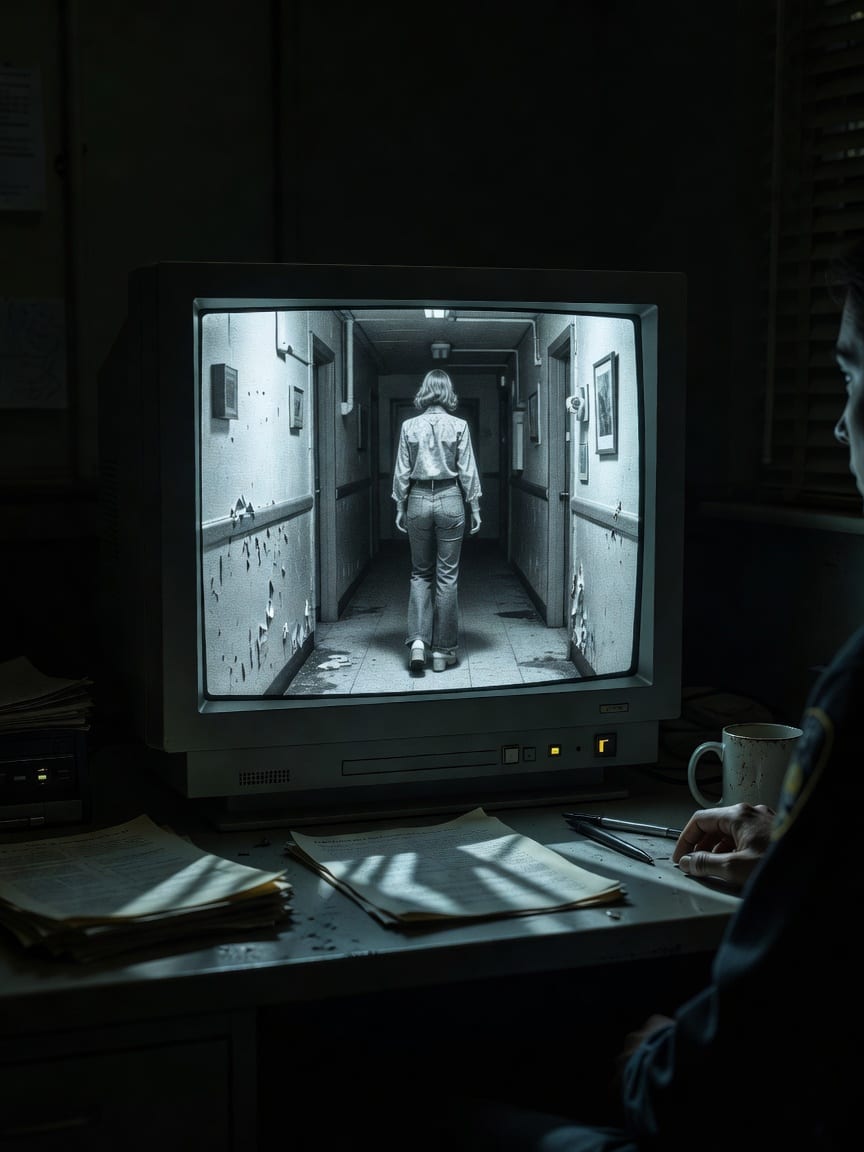
My intercom buzzed at 3 AM, a voice asking to step out for air. The station manager insists no one works the newsroom overnight, and no Cheryl is on payroll.
My shifts as the night security guard at WMVX are usually quiet, the TV station a tomb from 11 PM to 6 AM. But a late-night intercom call from a woman named Cheryl, who my manager says doesn't exist, was unsettling enough. The next night, my digital security log showed a new entry for 'Producer Cheryl Hartley'—a line I never typed, with details I couldn't have known.
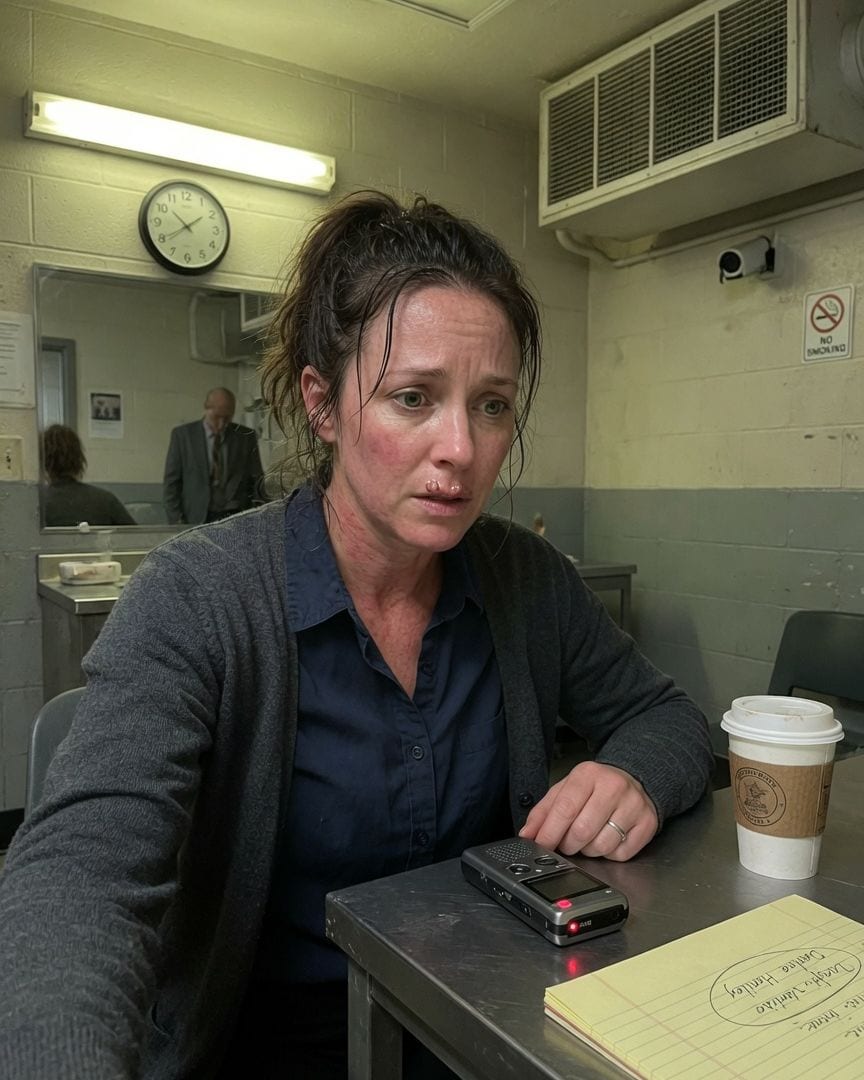
My own voice called 911 from Gary, Indiana, reporting a prowler. I was asleep in Ohio, my phone on the charger.
Sitting in a police interview room, I listened as Detective Walsh played a 911 recording. A woman's hushed voice reported a prowler from a payphone in Gary, Indiana. My stomach dropped cold; it was my exact voice, my specific way of saying 'I think,' even though I was in bed in Ohio that night.
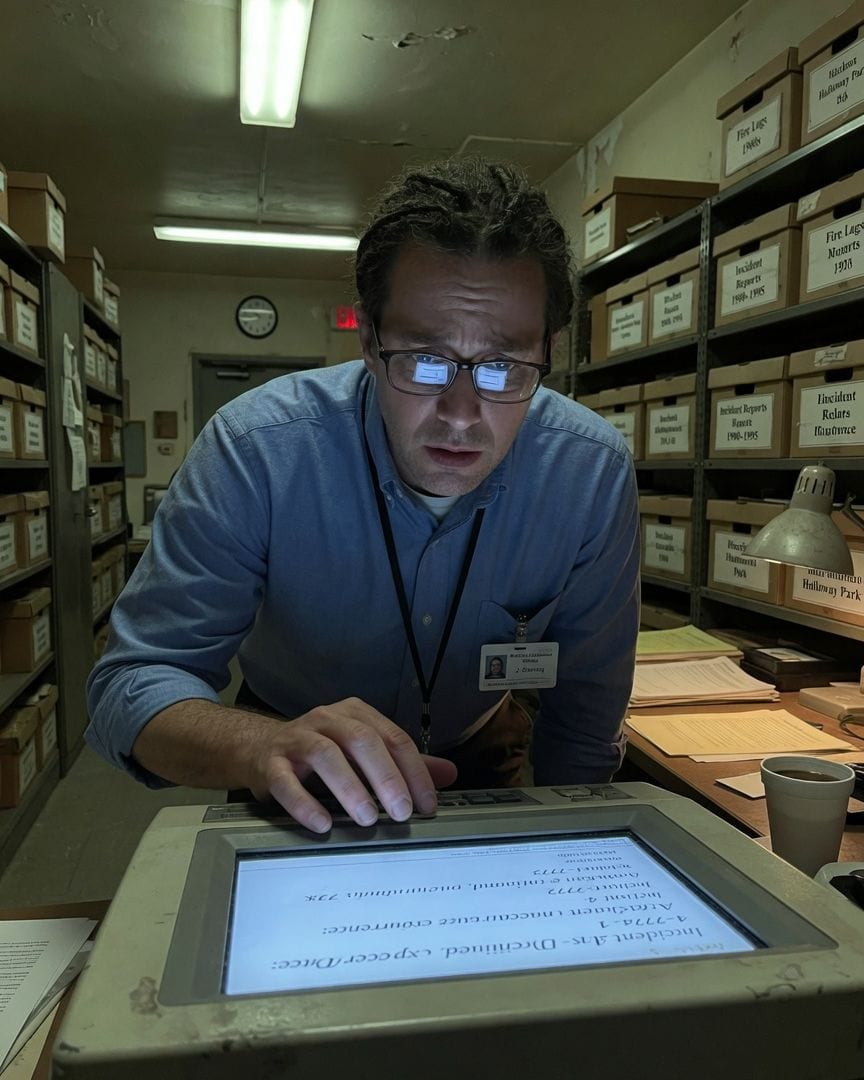
My old rope works fire log repeats the same 3:14am blaze, same incident number, across 1967, 1980, 1993. Each ends: 'origin undetermined, expect recurrence.'
As an Archival Digitization Officer, my days are spent scanning old records. I was numbly working through fire service logs when Incident 4-772 caught my eye: the same structural fire, same time, same number, repeated across different decades. Each entry ended with the chilling, identical phrase: 'origin undetermined, expect recurrence.'
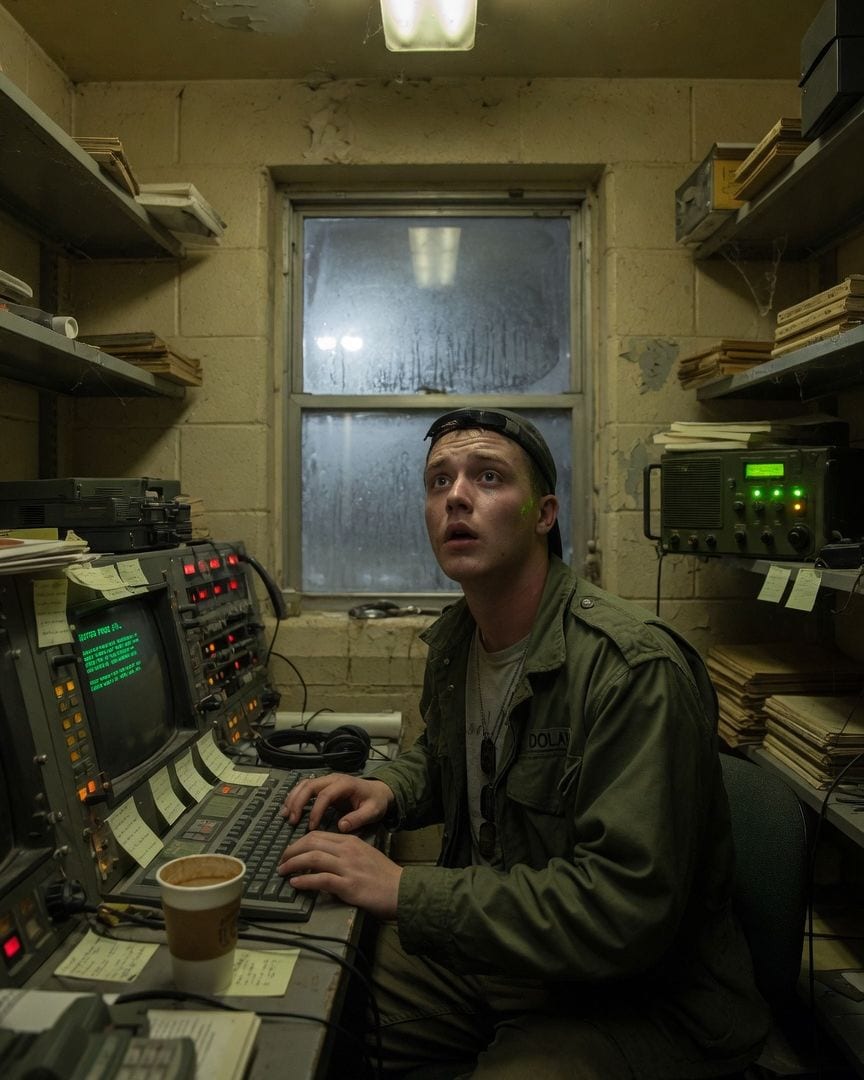
On his last watch, Specialist Dolan heard a dead soldier's voice from an old radio, a week too late.
Specialist Raymond Dolan was on his final watch at Firebase 7, a remote mountain outpost swallowed by a thick, oppressive fog, before its permanent closure. The fire-direction center should have been silent, but strange calls began routing directly to his console, reporting an enemy element in the draw where the 'Ghost Patrol' was lost just a week prior. While Control heard only Dolan's voice echoing into a void, the panicked voices in his ear were terrifyingly real. As he tried to purge the system, an old, unpowered field radio on a dusty shelf inexplicably powered on, its small light glowing green. From its speaker, the voice of Private Abigail Foster, a soldier from the Ghost Patrol, burst through—a week-old transmission, a final warning from the dead.