My TV license records showed a strange pattern of signals detected from sets removed decades ago, centered on my house.
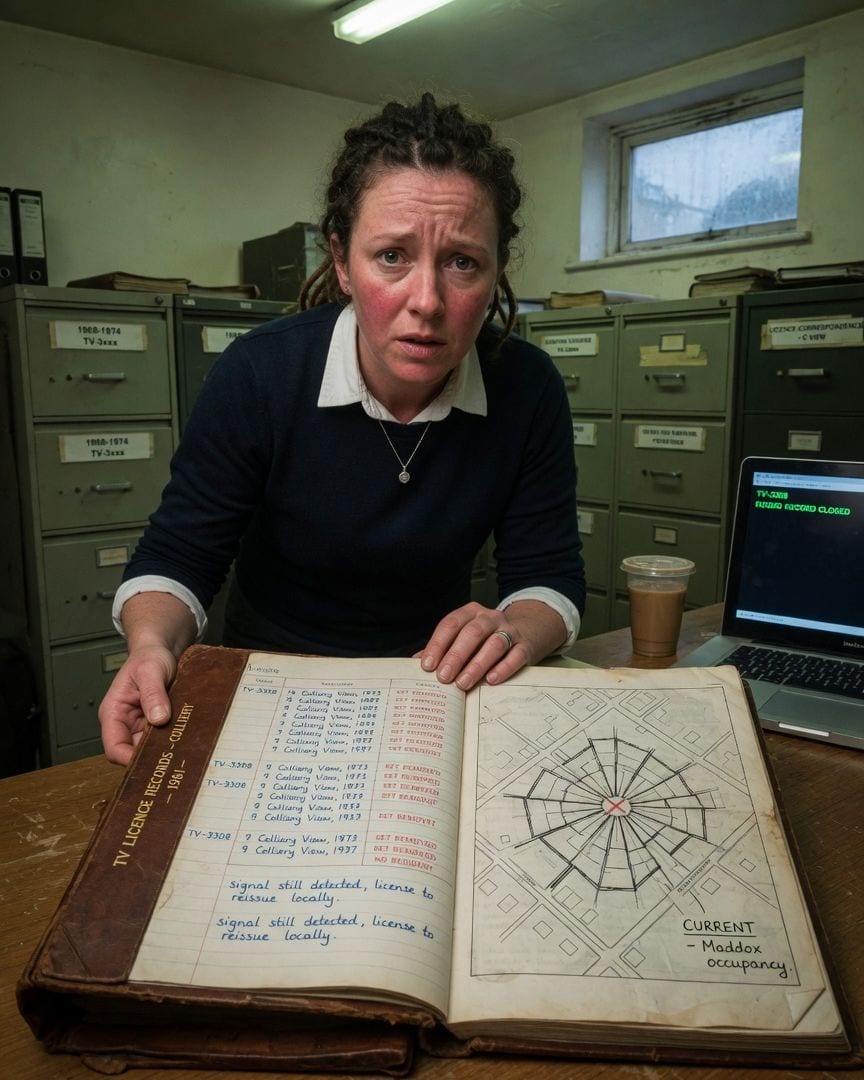
The envelope was thinner than I expected, just the basic card, no welcome packet. My official TV license for my new address on Colliery View.
I’d moved in three weeks prior, and honestly, the license was the last thing on my mind.
But I’d signed up online, paid the fee, and now here it was, proof I was a properly licensed citizen, ready to watch whatever static and late-night infomercials I chose. Florence Maddox, 38, new resident. Simple.
Then, a week later, the enforcement letter arrived. Thick, official, with bold red print on the envelope. My heart jumped, a familiar flutter of 'oh God, what did I forget?' The letter inside was concise: "Unpaid TV License. Reference TV-3308."
But that was impossible. I’d paid. I had the card. My card clearly stated TV-3308. I checked the enforcement letter again.
Underneath the payment demand, in smaller print, was a list. "Previous Records for TV-3308:" it read. There were four entries, dating back to 1968. Each one listed a different address on Colliery View.
Not mine, but others on the same street. And each entry was cancelled with the reason "set removed, no resident." Okay, so maybe the number was recycled? A weird coincidence.
But below each of those cancelled entries, in what looked like a scanned, messy handwritten annotation, was the same chilling directive: "signal still detected, license to reissue locally."
Signal still detected? My mind snagged on that phrase. How could a signal still be detected if the TV set was removed? And "license to reissue locally"? It sounded less like a cancellation and more like a transfer, an instruction.
I tried calling the national licensing authority. Automated menus, hold music, then a chirpy voice telling me that all matters relating to specific addresses were handled by local councils.
The impossible handwritten note, carried by a cold, faceless digital system, just gnawed at me. It didn’t make any sense.
I spent the next day trying to shake it off. A glitch, probably. An old system error they hadn’t cleared out. But the phrase kept looping in my head, 'signal still detected.' I searched online for "TV-3308 Colliery View." Nothing.
No strange forum posts, no local news stories about eccentric residents hoarding phantom TV signals. I started to feel foolish, like I was overthinking a typo, a bureaucratic mistake.
Still, the unease wouldn't leave me. The handwritten notes felt too deliberate to be a glitch. Against my better judgment, I drove to the local town council archives the following afternoon.
It was a drab brick building, smelling faintly of damp paper and stale coffee. I found a quiet, older clerk named Russell Whitaker behind a desk piled with folders.
He had calm, measured movements and a quiet voice that seemed perfectly suited to the dust and stillness of the place.
I explained the enforcement letter, the recycled number, the bizarre annotations. He listened, nodding slowly, his expression unreadable. "TV-3308, you say?" he murmured, then turned to an ancient computer monitor, its screen fuzzy around the edges.
He navigated a clunky system, green text scrolling on a black background. "Yes, here it is," he confirmed, pulling up the digital records. He showed me the exact history: the sequence of addresses on Colliery View, the 'set removed' cancellations.
"Standard procedure for old records, Ms. Maddox."
"But this part," I pressed, pointing to the scanned, handwritten note on the screen, "the 'signal still detected, license to reissue locally.' What does that mean?"
Russell leaned closer, peering at the screen. He adjusted his glasses. "Ah, that," he said, straightening up. He dismissed it with a wave of his hand. "An old system error, I expect.
A bug in the legacy data transfer from when we digitized the paper archives back in the late nineties. Nothing to worry about."
But as he spoke, his fingers moving slowly across the keyboard, I caught a glimpse of something. A fifth entry for TV-3308. Not for one of the other Colliery View addresses, but for my own current address. Dated just before my occupancy.
And beneath it, the same 'set removed, no resident' note. And below that, in the same familiar scrawl: 'signal still detected, license to reissue locally.'
Russell’s fingers moved quickly, a blur of motion, closing the record before I could verify it, before I could ask.
"I need to see the complete history," I said, my voice firmer than I intended. The casual dismissal, the quick keystroke. It felt deliberate. "Everything for TV-3308. Not just the digital summary."
Russell sighed, a faint sound that carried less annoyance and more, I thought, like resignation. He pushed back his chair. "Very well, Ms. Maddox."
He stood, a thin man in a rumpled gray suit, and led me to a back room. It was narrow, lined floor-to-ceiling with steel filing cabinets, each drawer humming with the weight of decades.
The air was colder in here, dust motes dancing in the single shaft of sunlight slicing through a grimy window.
He walked past shelves of neatly labeled boxes, past endless rows of binders, before stopping at a lower cabinet. With a grunt, he pulled out a heavy, leather-bound ledger.
Its cover was worn smooth, the gold lettering on the spine almost illegible. He placed it on a scarred wooden table in the center of the room. The thud echoed in the quiet space.
"These are the true records," he said, his voice unnervingly placid. He didn’t look at me. He simply opened the book to a page marked 'TV-3308.'
Beneath the listed addresses, not just four, but dozens, going back to 1961, each with 'signal detected.'
And then I saw it: a crude diagram, not of a television, but of a specific, unsettling geometric pattern, drawn over a faded map of Colliery View, centered precisely on what looked like my own house.
I sat there for hours, surrounded by the silence of the archive, the faint smell of old paper filling my lungs. Russell left me mostly undisturbed, occasionally refilling my plastic water glass without a word.
My meticulous notes accumulated on a yellow legal pad. The ledger, far from a mundane record of broadcast licenses, referred to 'TV-3308' not as a permit for a viewing device, but as a "Local Signal Maintenance Permit."
The entries for 'signal still detected, license to reissue locally' were consistently clarified as "Anchor Property Status: Vacant. Reissue Permit."
I cross-referenced dates, meticulously tracing the pattern. Clear correlations emerged: periods where the 'signal' was recorded as weak or unstable aligned perfectly with longer vacancies in the listed properties.
A property would go quiet, the signal would dip, then a new resident would move in, and the signal reading would immediately stabilize, sometimes with a handwritten note saying "anchor re-engaged." It was chilling. This wasn't about watching TV.
It was about the house itself, a permit for its continuous occupation.
I found names of former residents next to these entries, some with chilling annotations: "signal strong during occupancy," "stable resonance detected." Others read: "resident relocated, signal faded."
Tucked between two brittle, yellowed pages, I discovered a faded memo from 1965, official letterhead for the "Colliery View Public Works Department."
It referenced "Colliery View Anomaly - Phase I Monitoring," confirming this was no mere bureaucratic quirk, no 'old system error.' This was a planned, deliberate operation.
Leaving the council office, the evening air should have been a relief, but a profound chill settled over me, one that had nothing to do with the temperature. The knowledge I now carried felt like a physical weight.
I needed to talk to someone, someone who had lived here longer than these records. Maureen Caldwell. An elderly neighbor, had lived on Colliery View her entire life.
I walked to her small, neat bungalow two doors down. Maureen answered the door, her face a web of kind wrinkles. I tried to explain, stumbling over "signal" and "ledger."
She listened, her eyes, usually so bright, growing distant, her gaze darting towards the street, then back to my face. She offered me tea, but her hands trembled as she poured.
When I pressed her about the houses, about people coming and going, she became unusually evasive. "Some things are best left alone, dear," she said, her voice hushed, barely above a whisper.
"People come and go on this street, always have. It’s just how it is." She wouldn't meet my eyes. The conversation ended quickly. I left feeling even colder.
Later that night, as I stood in my living room, gazing out the window at the quiet street, a car idled two blocks down. Dark, nondescript. It had been there for twenty minutes.
Then the streetlights flickered on, and the interior light of the car momentarily illuminated the driver. It was Russell Whitaker. He was just sitting there, watching my house. He didn't move, didn't wave, didn't make any gesture.
He was simply observing. A deep, cold dread settled over me, replacing the chill. He knew I would dig. And now, he was keeping an eye on his new 'anchor.'
The next morning, my heart pounded a frantic rhythm against my ribs. I hadn't slept, the image of Russell's car burned into my mind.
I returned to the council office, the heavy ledger, now dog-eared from my obsessive review, clutched in my hand.
I found Russell at his desk, sorting old files, as if nothing was amiss, as if he hadn’t spent half the night watching my house.
I didn't bother with pleasantries. I laid out my evidence on his desk, the yellow legal pad covered in my notes, the faded memo. "Local Signal Maintenance Permit," I began, my voice trembling slightly but firm. "Anchor Property Status.
Colliery View Anomaly – Phase I Monitoring."
Russell didn't deny a word. He didn’t even flinch. He slowly looked up from his files, his expression unreadable, placid. He took off his glasses, polished them on his tie.
"You’ve done your research, Ms. Maddox," he said, his voice calm, almost appreciative. "Good."
He leaned back in his chair. "The 'signal,' as you've discovered, is an emanation. It comes from deep beneath Colliery View. It's been active since the old mine collapsed, decades ago, long before even my time here.
It's not… malicious, per se." He paused, as if searching for the right word. "But it is there. A pervasive, non-physical presence."
He gestured vaguely. "It responds to, and is stabilized by, human presence. Not just any presence, mind you. A consistent, established presence. A… residency." He looked directly at me. "The 'licenses' are a system. A very old system.
It ensures continuous occupancy of specific properties, acting as 'anchors' to prevent the signal from spreading. From intensifying. That would cause greater disruptions to the town, believe me. We just manage it, Florence. It's always been managed. A generational responsibility.
My grandfather, his grandfather... this department, it runs deep." He spoke of it as if it were a municipal utility, not an eldritch horror lurking beneath the town. The very normalcy of his tone was terrifying.
"Why my house?" I asked, the words barely a whisper. "Why specifically my house?"
Russell didn't answer immediately. He just slowly reached for the heavy ledger I’d left on his desk. He opened it, not to the page I’d been studying, but to another, further back.
It was a list, meticulously titled 'Designated Anchor Properties.'
My address was highlighted with a faded yellow marker. I saw my own name, Florence Maddox, written in neat script, with a recent date of occupancy. Next to it, a column marked 'Anchor Stability.' My entry simply said 'New.'
But above it, so many names. So many dates. And so many notes. "Signal decay - resident moved." "Anchor failed - property vacated prematurely." "Signal critical - resident unresponsive." My gaze snagged on a name: Ronald Vaughn, 2005.
Next to his entry: 'Signal critical - resident unresponsive.' The truth hit me like a physical blow, a sudden vacuum of air in my lungs. My new house. My license. My presence. It all clicked into place, cold and sharp.
I looked up at Russell, who met my gaze with a placid, almost pitying expression. I realized I wasn't just assigned a license; I was assigned a role. Chosen. And some roles don't end well.
Russell’s voice remained low and steady, as if delivering a particularly dry lecture. "The signal doesn't just need a human, Florence. It needs new human energy. Old anchors, like old batteries, eventually 'fade.' Their psychic resonance diminishes.
The signal becomes unstable." He traced a line on the ledger with his finger. "When that happens, the 'Anchor Property Status' changes to 'Vacant. Reissue Permit.'
The council, through its quiet channels—property listings, local incentives, subtle recommendations—ensures a new resident, a fresh 'anchor,' takes over quickly. We try to be… efficient."
He revealed that the 'signal' didn't just need a body, but a mind. It drew on presence, consciousness, the subtle hum of a living, thinking being.
He gestured to a name in the ledger, high on the page: Maureen Caldwell, marked 'Anchor Stable - long-term,' dated twenty years ago.
"Maureen was a good anchor for a very long time," he said, almost fondly, "but even she's fading, which is why we needed you, Florence. Her presence is… less active now."
He turned a few more pages, revealing a 'Signal Health' chart. A jagged line tracked across graph paper, dips and spikes. Directly correlating with my arrival, there was a sharp, reassuring spike in stability.
The dread wasn't in any dramatic revelation, but in the cold, logical coherence of it all. Every loose thread, every strange detail, had snapped into its terrible, perfect place.
I was reeling, my mind struggling to process the calm horror he laid out. "What happens when I 'fade'?" I managed, my voice barely a whisper, a thin thread in the quiet office.
Russell's calm broke for a fleeting second. A flicker of something akin to regret crossed his eyes, gone as quickly as it appeared. He returned his gaze to the ledger, running a finger over my name.
"The signal needs a new anchor," he said, his voice flat once more. "It's why we're always looking for new residents for these properties. It's why this department exists. It's a balance. A careful balance."
He didn't threaten me. He didn't try to stop me from leaving, didn't make any move. He simply stated the reality, a truth so profound and inescapable it felt like a physical weight pressing down on me.
He explained that the knowing was the true burden. Once you understood the signal, once you were aware of your purpose, you couldn't un-know it. And the signal, in its own way, knew you knew.
It bound you, not with chains, but with understanding. With that knowledge, you became part of it, part of the mechanism.
He closed the ledger with a soft thud. The sound echoed, final and absolute. "You're licensed now, Florence," he said, meeting my eyes, his own calm, unblinking. "For as long as you can manage the signal."
I walked out of the council office into the afternoon sun, the heavy ledger's truth weighing on me more than any physical object could. The town, once a quaint, sleepy place, now seemed subtly, terrifyingly different.
Every quiet street, every calm face I passed, was imbued with a hidden, terrible purpose. The trees lining Colliery View swayed in a breeze that felt less natural, more like a slow, deep breath.
I didn't pack my bags. I didn't call a realtor. I didn't run. Where would I run? The signal was here. The knowledge was in me.
I went home, to my 'anchor property,' the house that had been quietly waiting for me, for decades, its silent call answered.
She sits in her living room, the evening light fading through the window, painting long shadows across the walls. The television is off, a silent rectangle in the corner.
But she feels it now, a faint, rhythmic hum beneath the floorboards, a subtle, almost imperceptible pressure against her temples. The house breathes around her, a slow, deep intake and exhale. She is the signal's new heart, its current.
The knowing is a cold, constant current within her. She is no longer just a resident. She is licensed.
A few weeks later, Russell Whitaker saw Florence Maddox tending her small front garden on Colliery View. She waved, a faint, almost imperceptible smile on her face. Her eyes, he noted, held a deep, quiet understanding.
The signal, he could feel, was very strong.
If this one got to you
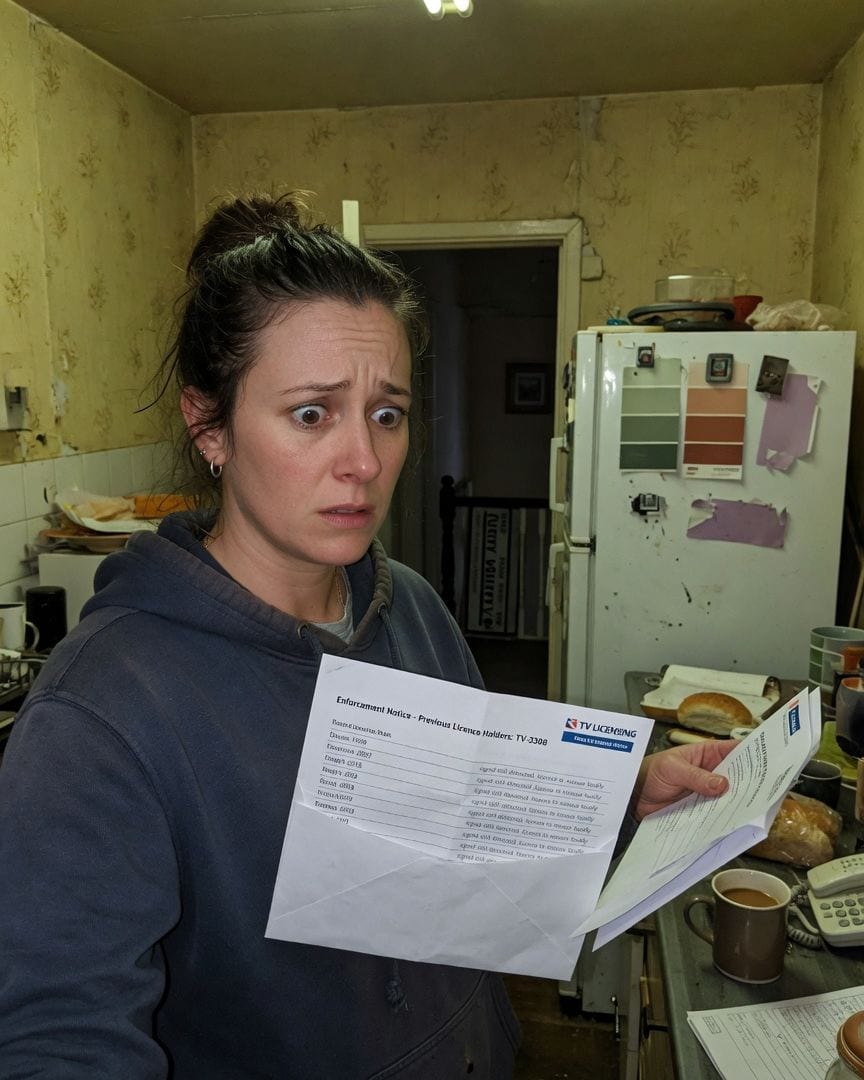
My TV licence number, TV-3308, was a designation code for my house in a 1950s ledger, listing my own surname as 'Occupant'.
I just moved into my first house, excited for a new start, when I received an odd notice about my TV licence. It listed previous occupants and their cancelled licences, each with an identical, archaic annotation: 'signal still detected, licence to reissue locally.' The TV Licensing Authority called it an internal 'legacy file' that shouldn't exist, but it gnawed at me.
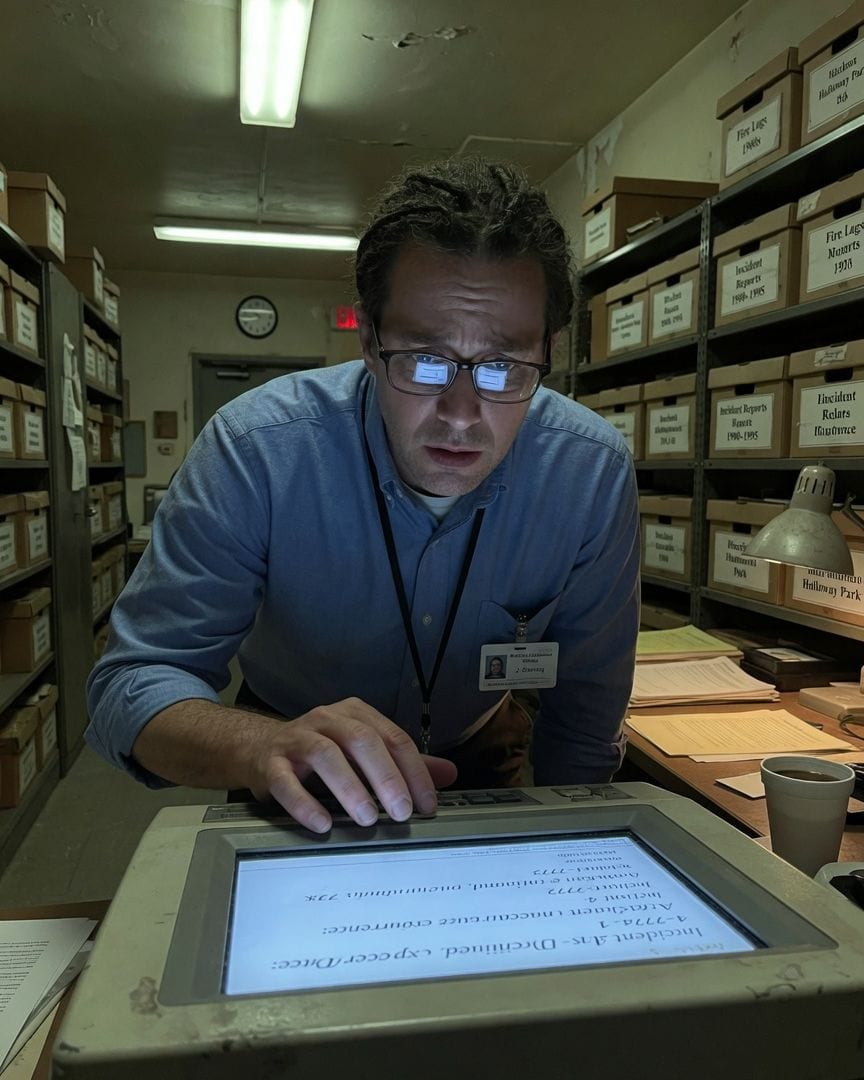
My old rope works fire log repeats the same 3:14am blaze, same incident number, across 1967, 1980, 1993. Each ends: 'origin undetermined, expect recurrence.'
As an Archival Digitization Officer, my days are spent scanning old records. I was numbly working through fire service logs when Incident 4-772 caught my eye: the same structural fire, same time, same number, repeated across different decades. Each entry ended with the chilling, identical phrase: 'origin undetermined, expect recurrence.'
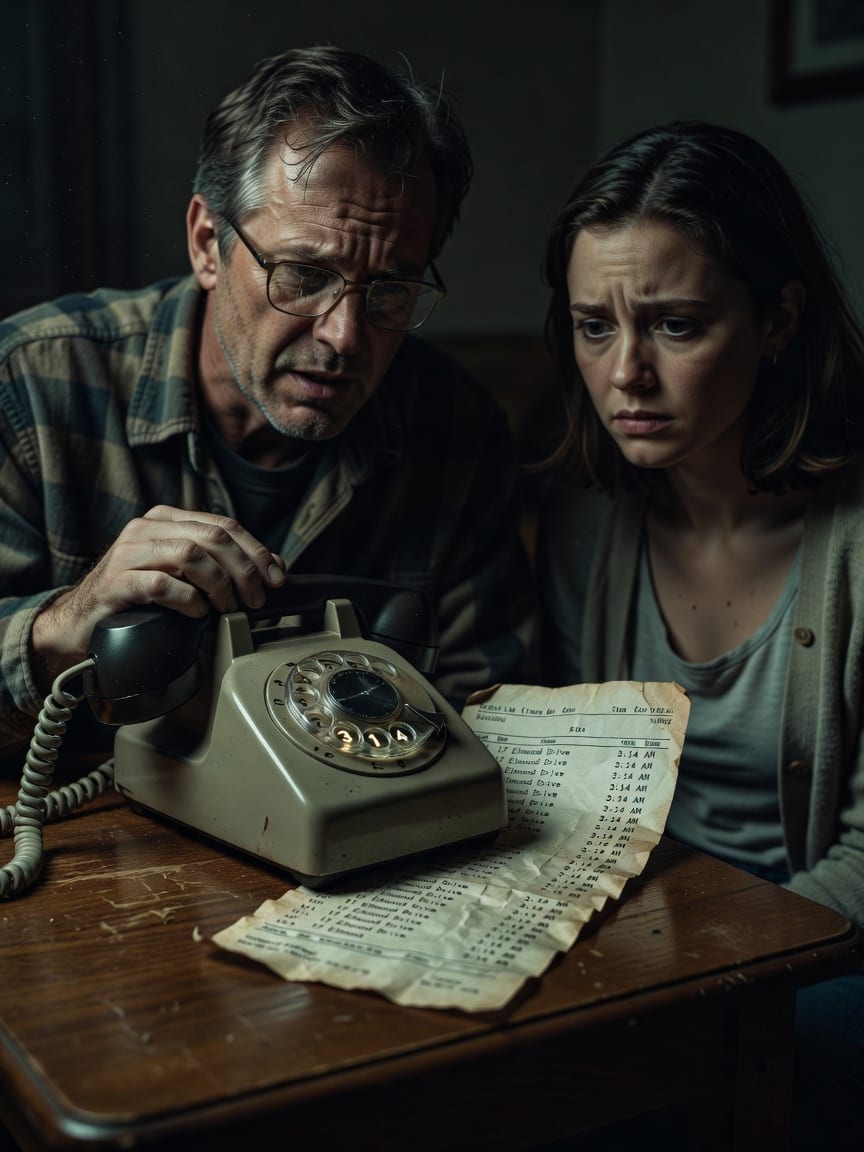
My phone bill itemised forty calls from my number to a house demolished in 1990. Each call at 3:14 AM, lasting eleven minutes. The bill arrived postmarked from a flattened building.
I expected the usual mobile bill, but my landline statement listed forty calls from my number to '17 Elmwood Drive.' That address was for a house torn down in 1990, a vacant lot I remembered from childhood. The phone company insisted the calls were legitimate, leaving me profoundly unsettled by the impossible charges.
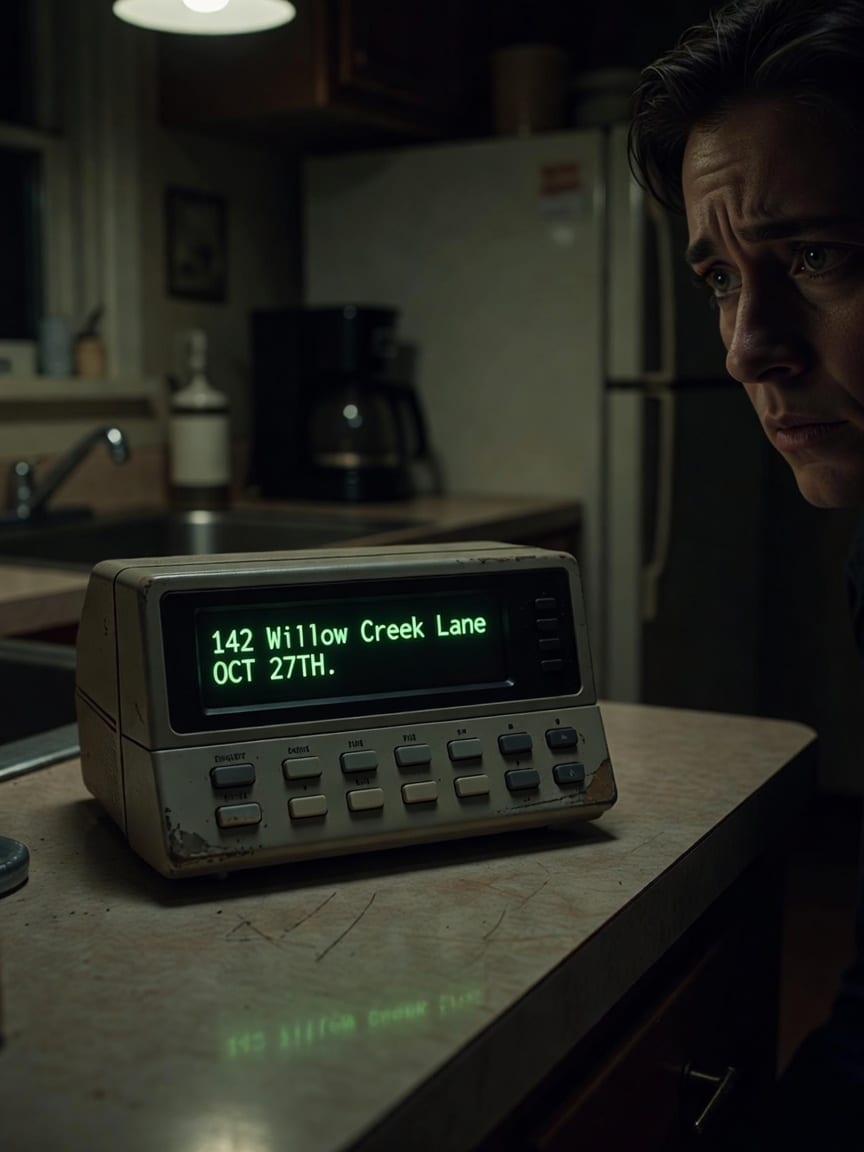
My radio scanner picked up a channel at 2 AM reading local addresses. Mine was on it, dated tomorrow.
I was tracking a storm on my old weather radio when a synthesized voice cut through the static. It began reading local street addresses, then my own: 142 Willow Creek Lane. But the date it gave for my address was tomorrow.
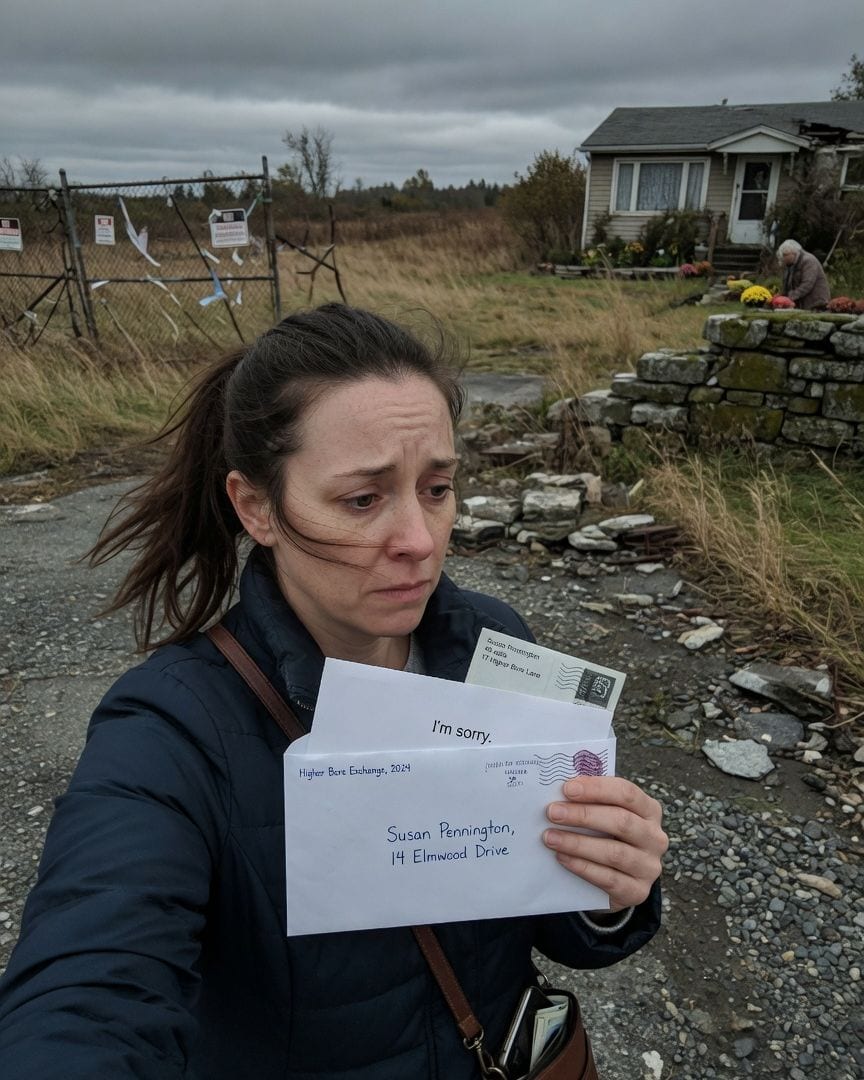
My phone bill listed forty calls made at 3:14 AM to a house demolished in 1990. The paper bill came from a flattened building. My name is on it.
I stared at my phone bill, my morning coffee forgotten. It detailed forty calls, each at 3:14 AM, to an address I knew was a vacant lot where a house had stood decades ago. But the real dread began when I saw the bill's return address: a telephone exchange flattened years before.
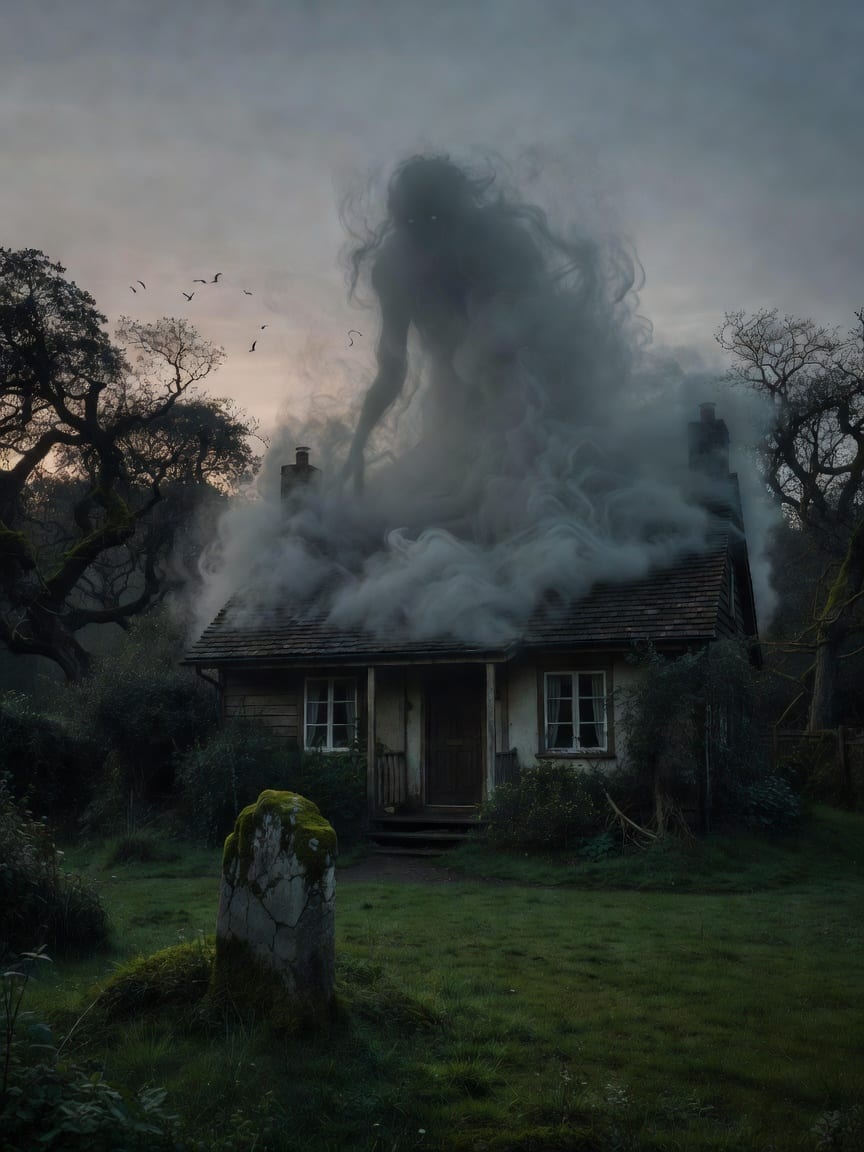
My cottage is now outside the parish, says the vicar. I moved one boundary stone into my ditch, and now I'm outside the line.
I loved my new cottage, with its sprawling garden and ancient oak. But after I moved an old, mossy stone at the edge of my property, Vicar Vance arrived with grave news: my cottage was now outside the parish line, and he could no longer keep me 'on the right side.'