My TV licence number, TV-3308, was a designation code for my house in a 1950s ledger, listing my own surname as 'Occupant'.
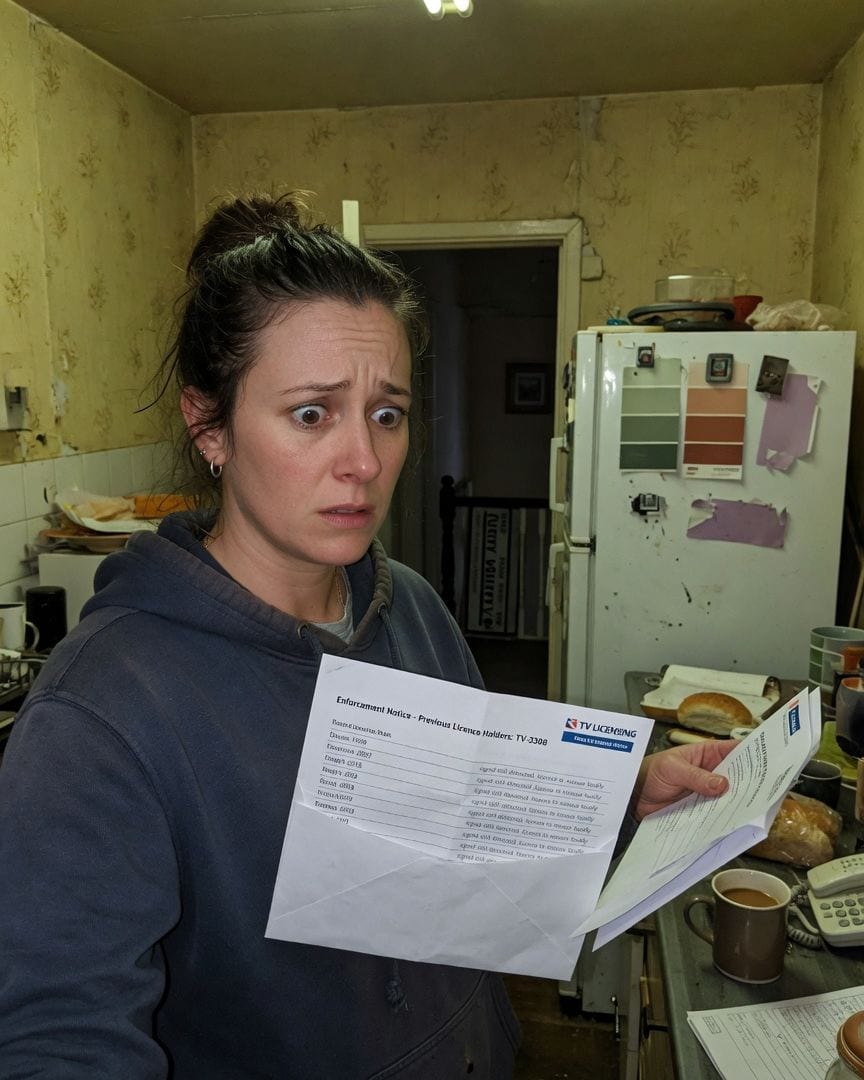
The envelope was plain, official, with the TV Licensing Authority logo. I’d just moved into No. 17 Colliery View, my first house, and the licence was one of those things you just did.
TV-3308, it read, a new number for a new start. I stuck it on the fridge without much thought, excited about paint swatches and garden plans.
A week later, another envelope. Identical logo. I braced myself for a demand for payment, a missed direct debit. But it wasn’t that. This one was titled 'Enforcement Notice – Previous Licence Holders: TV-3308.'
I frowned, pulling out the printed sheets. Four previous licences, all for No. 17 Colliery View, all under that exact same reference number – TV-3308. But the names were different.
A Mr. and Mrs. Davies in '98, a single Mrs. Peterson in '07, a Mr. Singh in '15, then an empty entry from 2020 to my arrival.
Each entry, beside the date of cancellation, listed the same reason: 'Set removed, no resident.' Fair enough, people move.
But next to each cancelled entry, a faint, neat, italicised script was printed.
It looked almost handwritten, yet it was identical across all four entries, as if someone had written it once, then painstakingly copied it into the computer system. 'signal still detected, licence to reissue locally.'
I read it three times. 'Signal still detected.' What signal? And 'licence to reissue locally'? How could a computer-generated letter contain such an archaic, personal annotation? It wasn't a typo. The spacing was too precise.
The identical script was too uniform. It felt like a glitch, but the sheer consistency of it, across decades of records, started to tug at a deeper, colder feeling. This wasn’t an error. It felt deliberate.
I tried to shake it off, telling myself it was some ancient, forgotten bureaucratic anomaly, a quirk of an old system that hadn’t been fully updated. I tried calling the TV Licensing Authority the next morning.
My coffee went cold beside me as I navigated automated menus, then endured the endless hold music. When I finally reached a human, a drone named Sarah, she could only confirm my licence was active and the previous records existed.
"The notes, the handwritten part?" I asked, trying to keep my voice even. "What does 'signal still detected, licence to reissue locally' mean?"
She typed for a long moment. "I'm not seeing that on my screen, ma'am. Just 'set removed, no resident' as the cancellation reason."
"It's there," I insisted, my voice rising a little. "It's small, in italics, right next to each entry."
Another long silence. "Ah, I see it now. It's... an internal annotation. Not customer-facing. I don't have access to the meaning of such legacy files, ma'am. Is there anything else I can help you with regarding your active licence?"
The line clicked with a rehearsed finality.
I hung up, a prickle of unease spreading. "Legacy files." That phrase stuck. It wasn't a glitch, then, if it was an internal annotation. Someone, somewhere, had put it there. And it had persisted.
The mundane explanation of a simple clerical error began to fray, like an old bandage unravelling. The consistent 'signal still detected' gnawed at me. It suggested something physical, persistent, and local.
Something beyond a mere broadcast, something that rooted itself in the very soil of Colliery View.
I couldn't let it go. The next day, I found myself at the local library, a place I hadn’t visited since university.
I started with electoral rolls and old phone books for Colliery View, sifting through the names listed under No. 17. The names on the TV licence enforcement letter matched. Then, I dug deeper, into council archives, property records.
I found periods in the 70s and 80s where No. 17 Colliery View was officially listed as vacant, sometimes for over a year.
Yet, in the property tax records, a faint, coded reference to 'TV-3308' was still present, even when there was no resident. The idea of a TV licence for an empty house was absurd. The 'signal' wasn't about a television anymore.
It was about my house.
Deep in the dusty local history section, I pulled out a brittle, leather-bound council ledger. It was surprisingly heavy, the cover embossed with 'Colliery View Property Designations – 1950-1968.'
The air in the quiet room felt thick, heavy with the smell of old paper and dust. Flipping through the faded pages, my finger tracing the careful, almost artistic script, I found entries for every house on my street.
My breath hitched, a sudden coldness in my chest, when I saw it.
'TV-3308,' not as a licence, but as a designation code. And next to it, plain as day: 'No. 17 Colliery View.' Below that, in a looping, elegant script, a name: 'Occupant: Caldwell.'
And then, underlined, a phrase that chilled me to the bone: 'Management Protocol: Active.' The words blurred, my own surname staring back at me from a document decades older than I was, a cold knot forming in my stomach.
The discovery of 'Occupant: Caldwell. Management Protocol: Active' in that pre-1968 ledger sent me reeling. My own name. My family name, right there. It was a cold, alien presence in the familiar world.
I went back to the library, then the local history society, then the council’s online archives, spending days poring over every available local record for Colliery View.
I found more of those 'Management Protocol' entries for No. 17, some with different 'Occupant' names – the Davies, Peterson, Singh families – but always, beneath their names, 'Protocol: Active,' stretching back even further than the TV licence system.
The pattern was undeniable: my house, and by horrifying implication, my family, had been tied to this 'protocol' for generations.
The air in the library, usually so still, seemed to hum with a low, almost imperceptible vibration, a subtle shift in the silence that only I seemed to notice.
Then, tucked away in a microfiche archive, I unearthed a heavily redacted council memo from 1963. The title, stark and chilling, was 'Colliery View Anomalous Signal Containment Project.' It detailed 'environmental monitoring' and, unnervingly, 'resident cooperation.'
The memo confirmed institutional knowledge and active management, dating back well before the TV licence number came into regular use.
But all the specific details, the crucial 'what' and 'why,' were blacked out, solid blocks of ink on brittle yellow paper.
The 'TV licence,' the one I’d put on my fridge, now seemed like a modern, sanitised iteration of this older, more ominous 'protocol.' A bureaucratic veneer, thin and translucent, over something deeply unsettling and persistent.
It wasn’t about a signal on my television. It was about a signal in my house, a signal on Colliery View, and a protocol that had marked my family long before I was ever born.
My digging, it turned out, hadn’t gone unnoticed. One morning, I opened my laptop, ready to continue my research, and stared at a blank browser history.
Every single recent search related to 'Colliery View,' 'TV-3308,' 'anomalous signal,' all of it, inexplicably wiped. I knew I hadn't cleared it. A cold wave washed over me.
I tried to rationalise it—a software update, a bug—but the timing was too precise.
Later that day, I went back to the library, a tight knot in my stomach. The shelf where I’d found the old leather-bound ledger was empty.
In its place, a generic local history book I’d never seen before, its spine uncracked. The dread tightened around me like a cold hand. The silence in the library felt different now, watching.
Then, an official-looking envelope arrived. No return address, only a local postmark, too local, too familiar. My name and address, typed with unnerving precision. Inside, a single printed card: 'Your licence is active. No further action required.
Colliery View Community Management.' The words were bland, reassuring even, but the message screamed: they know. They knew I was digging. They wanted me to stop.
I felt a prickle on the back of my neck, the distinct, chilling sense of being observed. I walked to my kitchen window and scanned Colliery View.
The quiet, ordinary street, bathed in the pale afternoon sun, suddenly felt like a stage, and myself, a reluctant actor, with unseen eyes on me from every window.
The anonymous warning was a shove. It pushed me past fear and into a desperate need for answers.
I requested a meeting with Joel Vance, a name I’d found on a faded 'Colliery View Community Liaison' memo from the late 90s, when I was still in primary school. He was listed as a mid-level council official.
The council building was modern, grey, sterile. Joel Vance’s office was small, filled with filing cabinets, smelling faintly of disinfectant. He was a man in his late fifties, dressed in a neat, slightly-too-tight grey suit.
He greeted me with an unnerving calm, his smile polite but not quite reaching his eyes.
I didn't waste time. I laid out my evidence on his bland Formica desk: the TV-3308 records, the enforcement letter with its inexplicable handwritten notes, the old ledger, the redacted memo. Finally, the anonymous 'Your licence is active' card.
I watched his face for any flicker of surprise, any denial, any sign of discomfort. There was nothing. He listened, his expression unchanging, occasionally nodding as if I were simply confirming details he already knew.
The air in the small office felt heavy, still, almost pre-scripted.
When I finished, the silence stretched. "A considerable amount of research, Ms. Caldwell," he said, his voice flat, even. He didn't deny a single thing. He pushed the stack of papers back towards me, his movements slow and deliberate.
"The 'signal,' as you call it, is quite real. An environmental anomaly, as your 1963 memo describes, which settled on Colliery View decades ago." He spoke with the detached calm of someone discussing municipal waste collection.
"The Council's role, for many years, has been 'community management' of this anomaly. To ensure it remains localized and benign."
Benign. The word hung in the air, a silk cord tightening around my throat.
"The 'licence' you hold," he continued, picking up the enforcement letter, "is simply a modern, formal acknowledgement of a resident's 'participation' in this containment." He tapped the section where 'signal still detected, licence to reissue locally' was printed.
"This annotation, as you suspected, refers to the anomaly's continued presence. Not a television broadcast, no. It’s a... persistent resonance."
His calm was the most terrifying thing of all. He wasn’t cruel, not dismissive. He was simply matter-of-fact. The horror wasn’t in what he said, but in how utterly normal he made it sound.
Joel Vance leaned back in his chair, the slight creak of the faux leather chair the only sound breaking the silence. His calm gaze held mine.
"The 'licence to reissue locally' wasn't just about detecting the signal, Ms. Caldwell," he explained, his voice even, almost conversational. "It was about the role of the resident. The anomaly, you see, requires a… stable point of reference.
A human anchor, if you will."
He gestured to the old ledger I had brought, the leather cover now looking incredibly fragile on his desk. "Your family, the Caldwells, have a rather extensive history with Colliery View.
That 'Occupant: Caldwell' entry dates from before your birth, yes?"
I could only nod, a cold dread spreading through my chest, chilling my breath. My throat felt tight.
"It implies," Joel continued, his gaze unwavering, "that the Caldwell name has been associated with this 'management protocol' for generations. A quiet lineage, you might say." He paused, then leaned forward, his voice dropping slightly.
"By moving to No. 17 and activating your licence, you have, in a sense, stepped into a pre-existing role. Fulfilled an inherited duty."
He then slid a new form across his desk. It was pristine, bright white against the dull grey surface, titled 'Colliery View Signal Custodianship Agreement.' My eyes dropped to it.
My name and address were already filled in, typed neatly, perfectly.
Joel's calm eyes held hers as he slides the pristine 'Colliery View Signal Custodianship Agreement' across his desk, her name already filled in. The date at the bottom is today's.
He leans forward slightly, a faint, almost imperceptible smile touching his lips. 'It appears,' he says, 'that your family has always been quite central to our community management efforts.'
I recoiled from the 'Custodianship Agreement.' My hand shot out, knocking my coffee cup, thankfully empty, with a clatter. Joel Vance’s faint smile didn’t waver. It was unsettling.
"The 'anomaly' as we call it," he explained, picking up the agreement form and turning it slightly so I could read it again, "is not malevolent. It's simply... persistent. Environmental.
Think of it less as a creature and more as a specific kind of atmospheric pressure. A frequency." He spoke with such clinical detachment, as if reading from a scientific paper.
"It requires a 'tether' to a stable, local human presence," he continued, his eyes meeting mine. "A 'custodian,' as the agreement states. This tether prevents it from spreading, from becoming unstable.
The 'signal still detected' note, Ms. Caldwell, isn't about detecting TV. It's about detecting the anomaly's presence, which is intrinsically linked to the custodian. The reissuing of licences ensures a continuous custodian.
The 'set removed, no resident' was a polite fiction. The previous custodian simply moved on, or their tether weakened, and a new one was sought. Someone suitable."
He paused, letting his words sink in. The room felt colder, the air thinner.
"Your family was identified as suitable decades ago," he said, gesturing vaguely. "The exact reasons are lost to time, but the 'protocol' remained.
By moving to No. 17 and accepting the licence, you have, by our definition, 'activated' your family's long-standing role. This custodianship keeps everyone safe. It keeps the anomaly 'localized and benign.'"
He made the word 'benign' sound like a promise, but I heard a threat.
I shoved the form back across the desk, my palm flat on the cool plastic. "I won't sign it," I stated, my voice trembling but firm, the words tasting like ash in my mouth.
For the first time, Joel’s unnerving calm facade cracked. A flicker of something cold and ancient, a kind of deep, weary knowing, passed through his eyes. He didn't threaten me, not directly. No raised voice, no clenched fist.
Instead, he described, in clinical terms, the 'consequences' of non-compliance.
"The anomaly, untethered, could 'seek a new host,' potentially 'destabilizing the entire Colliery View containment zone.'" He leaned forward, his voice low, almost a whisper. "We're not talking about a monster, Ms. Caldwell. We're talking about a slow, creeping wrongness.
It affects the environment. The way plants grow, the subtle shifts in the air, the elongation of shadows." He painted a chilling picture: not of gore or violence, but of insidious, pervasive distortion.
"And you," he added, his gaze piercing, "would be responsible for this. For breaking the delicate balance that has kept this community… undisturbed for generations."
He then pulled out a folder from a drawer, its contents loose, unorganised. He slid out several old, grainy photographs. Images of Colliery View from the 70s and 80s, but something was wrong.
Trees grew at impossible angles, their branches twisting skyward like arthritic fingers. Shadows stretched too long, clinging to the brickwork in impossible ways.
A faint, almost imperceptible haze seemed to hang over the houses, blurring the edges of the familiar world.
"This," he said, his voice low, "is what happens without a custodian. It's not a monster, Ms. Caldwell. It's simply… a presence. And it needs to be managed." He left the form on the desk, a silent ultimatum.
I walked out of the council office, the unsigned Custodianship Agreement clutched in my hand, its crisp white edges digging into my palm.
The afternoon light on the street felt wrong, distorted, as if a filter had been placed over reality.
The familiar angles of the buildings seemed subtly off-kilter, leaning just a degree too far, casting shadows that felt too deep, too dark.
I looked at the trees, remembering the photographs, and for a terrifying second, I thought I saw the branches of an oak on the corner twisting with an unnatural vigor.
I returned to Colliery View, to my house, the weight of Joel Vance’s words heavy in the air, in the very bricks around me. I didn't sign the form. I didn't move out. Where would I even go?
How would I explain?
I simply lived with the terrifying knowledge, seeing the subtle shifts in my street now, in the way the shadows pooled too deeply under the hedges, in the unnatural stillness of the air that carried no birdsong, no distant traffic noise, only a faint, resonant hum.
I was still on Colliery View, but now, I truly saw it.
Naomi is still on Colliery View. Her TV licence, TV-3308, hangs on her fridge, a constant reminder. She never moved, never signed the official form, never truly escaped.
She just watches, a silent, unwilling custodian, feeling the faint, almost imperceptible hum that emanates from her house, from the very ground beneath Colliery View. The anomaly is still localized, still 'benign,' still managed.
A week later, a neighbour, Joel Vance, stops by her door, holding a small package.
"Just wanted to return this," he says, handing her a worn copy of the 'Colliery View Signal Custodianship Agreement,' her name neatly filled in, a new date at the bottom, and a faint, wrong little smile.
"Looks like you signed it after all."
If this one got to you
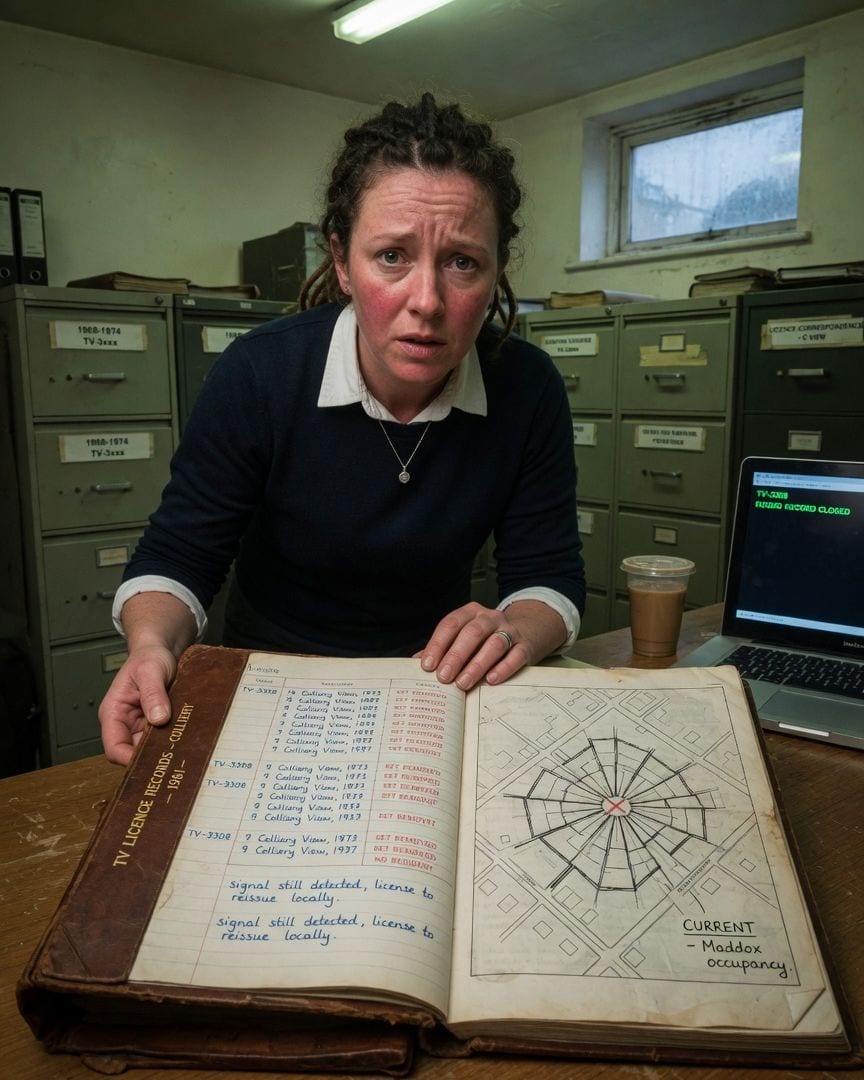
My TV license records showed a strange pattern of signals detected from sets removed decades ago, centered on my house.
I'd just settled into my new home on Colliery View, expecting routine paperwork. Instead, I discovered old records for my TV license contained a chilling entry: a crude, unsettling geometric diagram, not of a television, but drawn directly over my own house.
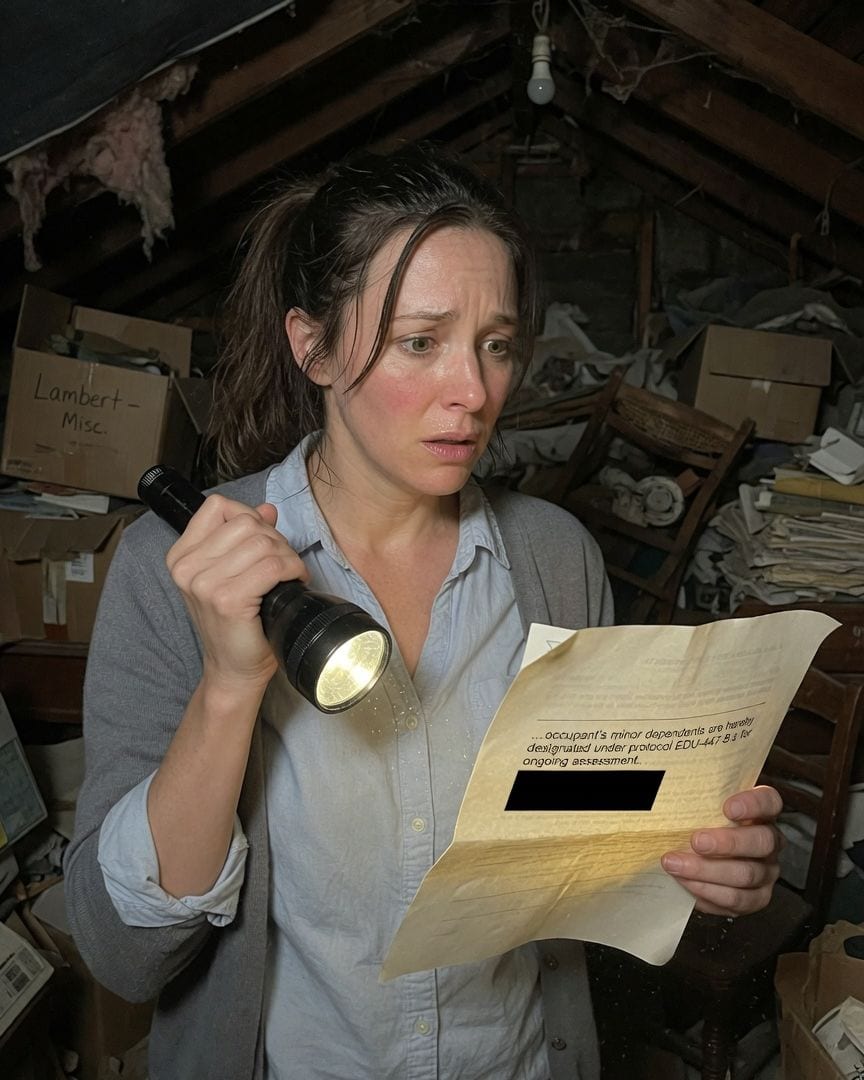
My county archive digital file has a redacted line from 1901, marked 'recurs each generation.' The address? My house. The instruction number? My son's school registration.
Searching mundane county archives, I found a 1901 school log entry for my house, Church Lane, No. 17. A perfectly blacked-out line, marked as 'Withheld – recurs each generation,' pointed to a code Monica at the Education Office used when registering my son. Then, in our attic, I found an identical blacked-out line on an old property notice, designating 'minor dependents' under the same code.
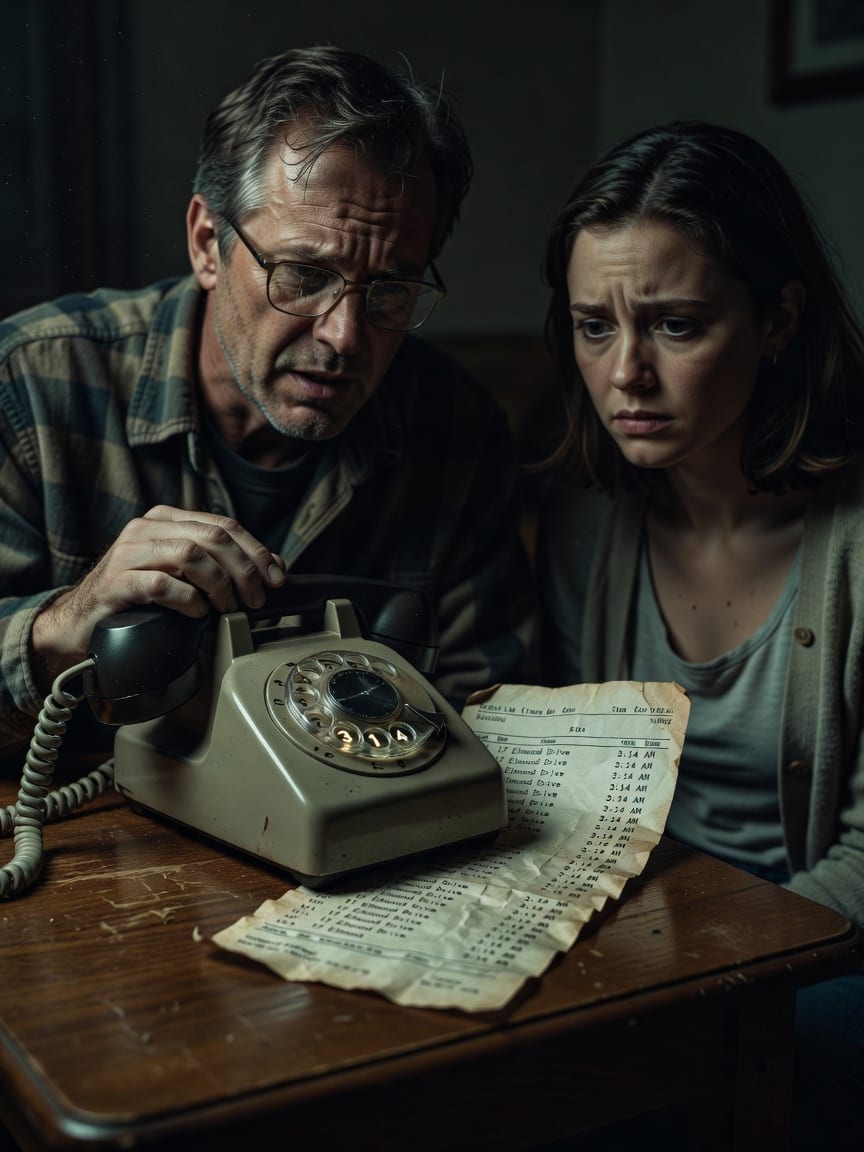
My phone bill itemised forty calls from my number to a house demolished in 1990. Each call at 3:14 AM, lasting eleven minutes. The bill arrived postmarked from a flattened building.
I expected the usual mobile bill, but my landline statement listed forty calls from my number to '17 Elmwood Drive.' That address was for a house torn down in 1990, a vacant lot I remembered from childhood. The phone company insisted the calls were legitimate, leaving me profoundly unsettled by the impossible charges.
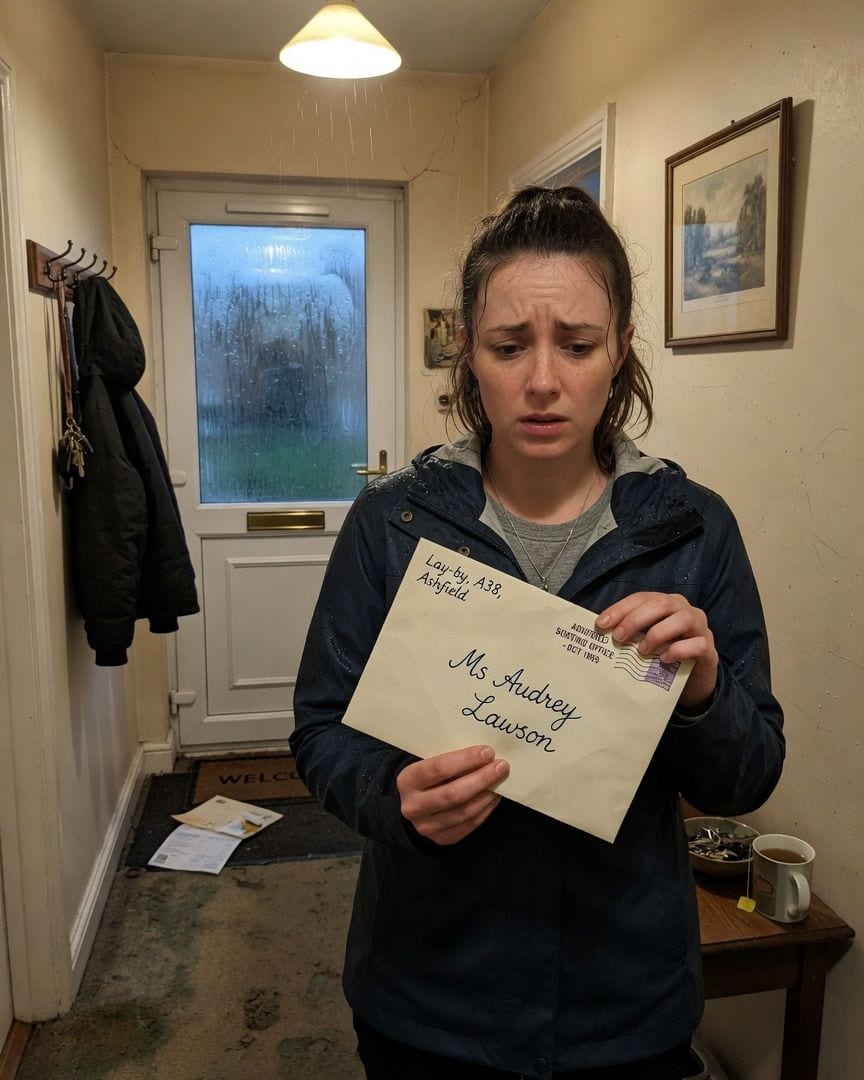
My condolence card arrived for a death that never happened, postmarked from a sorting office that closed before I was born.
My first envelope arrived on a Tuesday, nestled with bills. It bore my full name and a return address for an A38 lay-by that held only a crash barrier. But the postmark read ASHFIELD SORTING OFFICE – OCT 1985, an office decommissioned before I was even born.
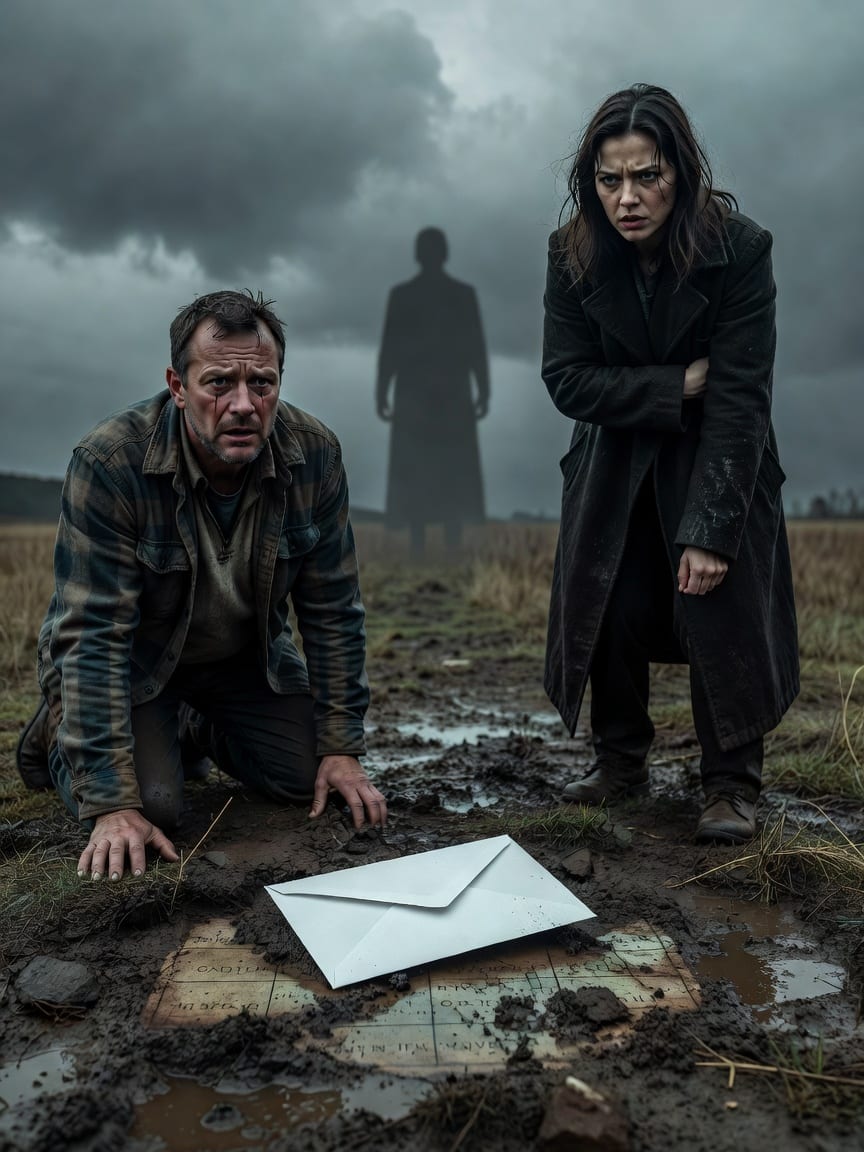
My mail carrier delivers polling cards to Nine Acre Field. It floods, they say. The tithe map shows nine family plots there.
As the new county archivist, I was used to quiet days poring over dusty records. But then I found an empty field, Nine Acre, was receiving current-year polling cards and utility notices for nine distinct addresses. When I investigated, I unearthed a perfectly crisp, current-year tax bill, buried in its soil, surprisingly warm against my fingers.
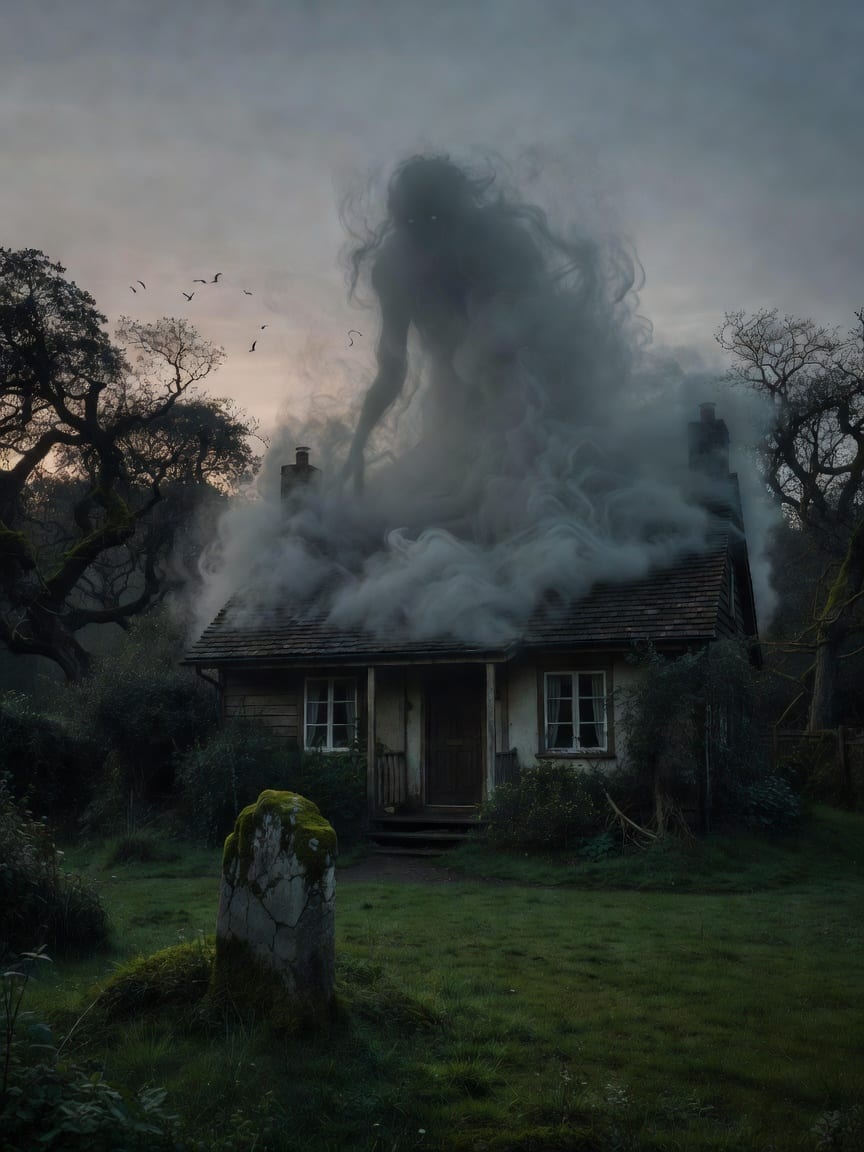
My cottage is now outside the parish, says the vicar. I moved one boundary stone into my ditch, and now I'm outside the line.
I loved my new cottage, with its sprawling garden and ancient oak. But after I moved an old, mossy stone at the edge of my property, Vicar Vance arrived with grave news: my cottage was now outside the parish line, and he could no longer keep me 'on the right side.'