A 1979 facial reconstruction of unidentified remains has my distinct birthmark, just above its left eyebrow.
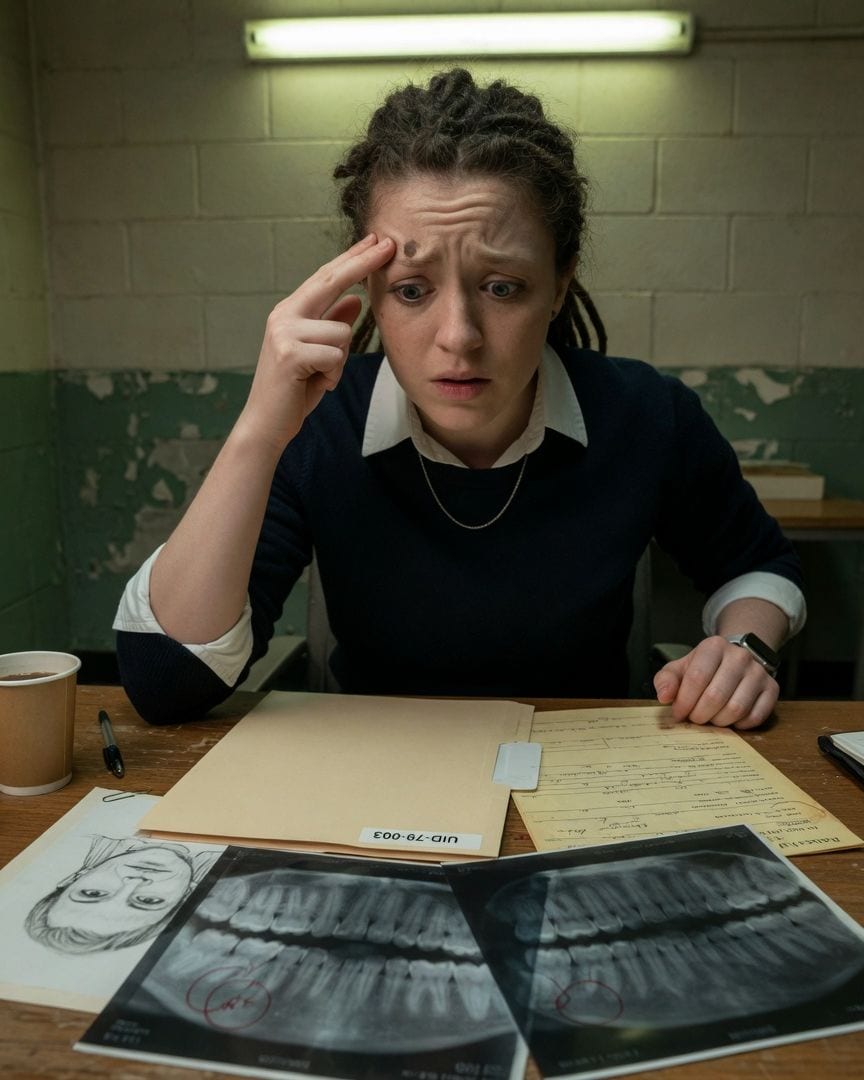
The call from Dr. Lily Romano at the new dental practice felt oddly formal. She didn't sound like she was calling about a missed appointment. "Ms. Thatcher," she began, her voice carefully neutral, "we've flagged something unusual in your records."
I'd just switched dentists after my old one retired, and at 32, a marketing analyst, I assumed a billing error or a typo. My life was made of small, predictable problems.
"Your full-mouth X-rays from last month," Dr. Romano continued, the pause on the line stretching, "they match, tooth for tooth, including your rather rare rotated lower left molar, a set of remains catalogued as unidentified by the county coroner in 1979."
I laughed, a short, disbelieving puff of air. A mix-up, obviously. Patient files, X-rays, names. It happened. I’d heard stories. "Are you sure it's my file you're looking at? Charlotte Thatcher, born 1992?"
But Dr. Romano wasn't amused. Her voice tightened, losing its neutrality. "We are quite sure, Ms. Thatcher. The coroner's office has confirmed the charting is identical and asked to speak with you directly."
The words hung in the air, cold and solid, like a shard of ice in my chest, already beginning to melt, just enough to seep in.
I arrived at the county coroner’s office, feeling a surreal detachment, as if I was an actor in a poorly written procedural. Dr. David Holloway, a man with kind eyes but a somber demeanor, greeted me.
He led me to a small, quiet room, the air thick with the smell of old paper and something metallic I couldn't place. A folder already lay open on the table. "Thank you for coming, Ms. Thatcher. This is… unprecedented."
He spread out two dental charts. One was clearly mine, dated last month. The other, yellowed and brittle, was marked 'UID-79-003.' He pointed, tracing the lines with a pen that seemed too heavy for the delicate paper. "Your rotated molar.
Distinctive. And here, on the 1979 chart. Identical."
I leaned closer, my breath catching in my throat. The lines, the angles, the specific curvature of the roots – it was an undeniable match. My particular flaw, mirrored in a ghost from decades past.
"These remains," Holloway explained, his voice hushed, "were found in an abandoned house on the edge of town. A cold case for decades. We've tried everything to identify them."
My mind raced, searching for a rational explanation. "Lab error? Contamination?" My voice sounded thin, reedy, not my own.
Holloway shook his head. "We've double-checked. Triple-checked. The physical X-rays from both sets are here." He slid two transparencies across the table. I picked them up, holding them to the light, the fluorescent hum overhead suddenly too loud.
My teeth, my unique rotated molar, superimposed perfectly over the ghostly image of teeth from 1979. The ordinary explanation evaporated, leaving a raw, exposed nerve of dread.
Dr. Holloway watched me, his expression sympathetic. The air in the room felt heavy, pressing down on my chest. "There's one more thing," he said, his voice softer now.
"When we can't get a positive ID, we sometimes commission a facial reconstruction." He reached into the folder again, pulling out a small, faded photograph. It was a black-and-white image, clearly an artist's rendering, but unsettlingly lifelike.
He placed it gently on the table between us. I looked down.
The face looking back at me from 1979 was undeniably hers, or a face so chillingly similar, down to the small, distinct birthmark just above her left eyebrow, a mark I now instinctively touched on my own forehead.
My blood ran cold.
I stumbled out of the coroner's office, the image of the reconstruction burned into my mind. The sunlight felt too bright, the traffic too loud. The world was still turning, but something fundamental had shifted inside me.
I went straight home, locked my door, and stood before my bathroom mirror. I traced the birthmark above my eyebrow, a tiny, almost invisible fleck I’d always considered insignificant, something I'd once wished would fade. Now, it was a brand.
I spent hours online, searching for 'UID-79-003,' '1979 abandoned house cold case.' My fingers flew across the keyboard, desperate for a mundane answer, a simple explanation for this monstrous coincidence.
I found digitized newspaper archives, grainy photos of the dilapidated structure, and reports that yielded little beyond the initial discovery. No identification, no suspects, just a mystery.
The house itself, I learned, was known locally as the 'Sterling House,' after the eccentric old woman who had owned it before it fell into disrepair.
A few local history forums mentioned Emily Sterling, known for her 'peculiar ways' and her 'unusual visitors.' One comment, buried deep in a thread about local legends, casually mentioned Emily's 'interest in old rituals.'
I felt a pull, a strange magnetic draw to this Emily Sterling, who seemed to hover on the periphery of the decades-old mystery that was now, impossibly, my own.
The Sterling House was a skeletal ruin, swallowed by overgrown vines and a thicket of weeds that clawed at the broken windows. The front porch sagged, the wood splintered, breathing decay.
I parked down the street, feeling a profound, unsettling sense of familiarity as I approached.
The crumbling porch, the broken windows, the twisted oak in the yard – it was as if I'd seen it before, perhaps in a dream, or a memory that wasn't mine.
I peered through a gap in the boarded-up front door, dust motes dancing in the sliver of light that pierced the gloom. Nothing. Just decay. A profound, silent emptiness. As I turned to leave, a movement caught my eye.
Across the street, standing perfectly still in the shadow of a large elm, was an old woman. Her hair was white, pulled back in a severe bun, and her gaze, even from that distance, felt like a physical touch.
It was Emily Sterling, unmistakable from the old photos I’d found online.
Emily didn't look surprised, or angry, or even curious. Her expression was simply… knowing. A deep, unsettling calm. Slowly, deliberately, Emily began to cross the street. My heart hammered, adrenaline spiking.
I wanted to run, but my feet felt rooted to the cracked pavement. Emily reached me, her eyes, clear and unblinking, holding mine.
"Charlotte Thatcher," Emily said, her voice soft but resonant, carrying the scent of dried leaves and old linen. "I've been expecting you. Come, have some tea."
I, unnerved but compelled, found myself sitting in Emily Sterling’s impeccably tidy, if slightly musty, living room. The air was warm, smelling faintly of lavender and old paper. Tea was served in delicate porcelain cups.
Emily’s composure was absolute, as if discussing the weather, not my impossible predicament. "The body found in my old home," Emily began, her gaze unwavering, her hands steady as she set down the teapot, "was a vessel.
As you are now."
My hands trembled around my teacup, the porcelain suddenly feeling fragile to the point of shattering. "Vessel? What are you talking about?" The word felt alien, menacing.
Emily smiled faintly, a serene, almost pitying curve of her lips. "A continuation. An ancient consciousness, unique and unbroken, that moves from body to body. The dental pattern, the mark on your brow… these are not coincidences, Charlotte.
They are markers. Signatures."
Emily then rose and retrieved a small, intricately carved wooden box from a shelf above the fireplace. It looked like it belonged to another century. She opened it, revealing a single, tarnished silver locket nestled within.
It was small, oval, with a tiny, stylized bird etched into its surface, almost worn smooth by time. "This was found with the 1979 remains," Emily said, holding it out.
I stared at it. A sudden, overwhelming sensation washed over me – a flash of sunlight, the scent of honeysuckle, a tiny hand clutching something smooth and cool. It was fleeting, like a half-remembered dream, yet so vivid.
A memory that wasn’t mine, yet felt utterly real, utterly personal. "I… I remember this," I whispered, though I’d never seen the locket before in my life. "From when I was small."
Emily nodded, a flicker of something ancient in her eyes. "It was placed with the vessel as a guide. A way to ease the transition. Your mother ensured it was found."
I felt a dizzying sense of unreality. My mother? Involved? "My parents?" I choked out, the hot tea burning my throat. My parents, who had always been so ordinary, so predictable.
Emily poured more tea, her movements unhurried, as if she had all the time in the world. "They were part of it. A small, discreet network. Believers in the old ways. They understood the necessity of preparation."
She explained that my birth had not been ordinary. It had been carefully planned, my body cultivated. She spoke of it with the same calm reverence a gardener might speak of a rare blossom.
Emily then went to a small, antique desk, its dark wood gleaming faintly in the afternoon light. She opened a drawer with a soft click. She pulled out a faded, folded document, the paper soft with age.
"Your mother gave me this, years ago. For safekeeping. For when you would understand." She unfolded it, revealing a copy of my actual birth certificate. It looked normal, at first glance. My name, Charlotte Anne Thatcher.
My date of birth: 1992. But then Emily pointed to a tiny, almost imperceptible symbol, embossed near the date of birth. It was a complex, swirling design, easily missed, like a faint, intricate watermark.
"This marked you," Emily said, her voice soft but firm. "It meant you were ready to receive. You were always inside it, Charlotte. From the very beginning."
I stared at the symbol, then back at Emily, her blood turning to ice. My entire life, every memory, every experience, suddenly felt like a carefully constructed stage for something vast and ancient to inhabit.
Emily saw the dawning horror in my eyes, but her calm remained unbroken. It was a terrifying, unwavering placidity. "It is not malevolent, Charlotte," she explained, her voice a low murmur, comforting and chilling all at once. "It simply is.
A continuous thread of existence, passing through suitable hosts. A consciousness that observes, learns, and endures across generations." She detailed the 'cycle,' an ancient belief system passed down through select families.
My parents, devout followers, had seen it as a sacred honor to offer their child as the next vessel.
The rotated molar, the specific birthmark, the locket – all were subtle, physical manifestations of this continuous entity, markers that allowed its identity to persist even as the bodies changed.
The 1979 remains were simply the previous iteration, its time complete, making way for me. "They knew," Emily said, gesturing to the birth certificate. "They knew you were chosen.
They cherished you, not just as their daughter, but as the next step in a lineage far older than any family tree."
The pieces clicked into place with sickening clarity: the vague childhood memory of the locket, the uncanny match of the X-rays, the facial reconstruction photo, Emily’s serene acceptance. It all fit.
I wasn't just linked to the past; I was the past, embodied anew.
I pushed back from the table, a strangled gasp escaping my lips, the delicate teacup rattling against its saucer. "No!" I cried, shaking my head so hard my vision blurred. "I'm Charlotte Thatcher! This is my life!"
I stumbled towards the door, desperate to escape the suffocating weight of Emily's words, the horrifying coherence of it all. The room, with its antique furniture and quiet hum, felt like a trap.
Emily moved with unexpected swiftness, not to block me with force, but to simply stand in my path, a serene, unyielding presence. Her presence was solid, immovable. "There's nowhere to go, dear," Emily said, her eyes deep and ancient, unblinking.
"You are it now. You always have been. The shell of Charlotte Thatcher is merely the latest, most comfortable home."
As Emily spoke, I felt a strange, profound shift within me. Not a sudden takeover, no violent struggle, but a quiet, insidious expansion.
A memory that wasn't mine, yet felt utterly fundamental, bloomed in my mind – the sensation of walking through a field of wildflowers in a bygone century, the taste of rain on lips that weren't my own.
I felt the dread, a cold, sharp blade, but beneath it, a strange, undeniable acceptance, like a deep current pulling me under.
My own body, my own thoughts, seemed to subtly reorient, becoming a vast, echoing chamber for something immense and timeless. The truth wasn't a monster to fight; it was the very fabric of my being, now fully revealed.
I returned to my apartment. The familiar rooms, the objects I’d collected, my clothes, my books – they all seemed distant, like props in a play I was no longer merely acting in.
The sense of self, of Charlotte, was a distant echo. I looked at my reflection in the darkened window, my eyes seeming deeper, older, filled with an unreadable calm.
The world outside, the bustling city, the daily routines of humanity, felt like a faint, irrelevant hum.
The self I had known, the Charlotte Thatcher who worried about deadlines and bills, was now merely a convenient surface, a thin membrane over something vast and ancient that had finally awakened within her.
I picked up my phone, opening the social media app. For a long moment, my fingers hovered over the keyboard, as if contemplating a post, a message, a warning. But then, a different impulse, cold and ancient, guided my hand.
I quietly closed the app.
Days later, a neighbor, Preston Langford, saw Charlotte in the grocery store. She smiled faintly, a small, knowing upturn of the lips he’d never seen before. He asked, "Everything alright, Charlotte? You seem... different."
She looked at him, her gaze unsettlingly calm, and simply replied, "I am."
If this one got to you
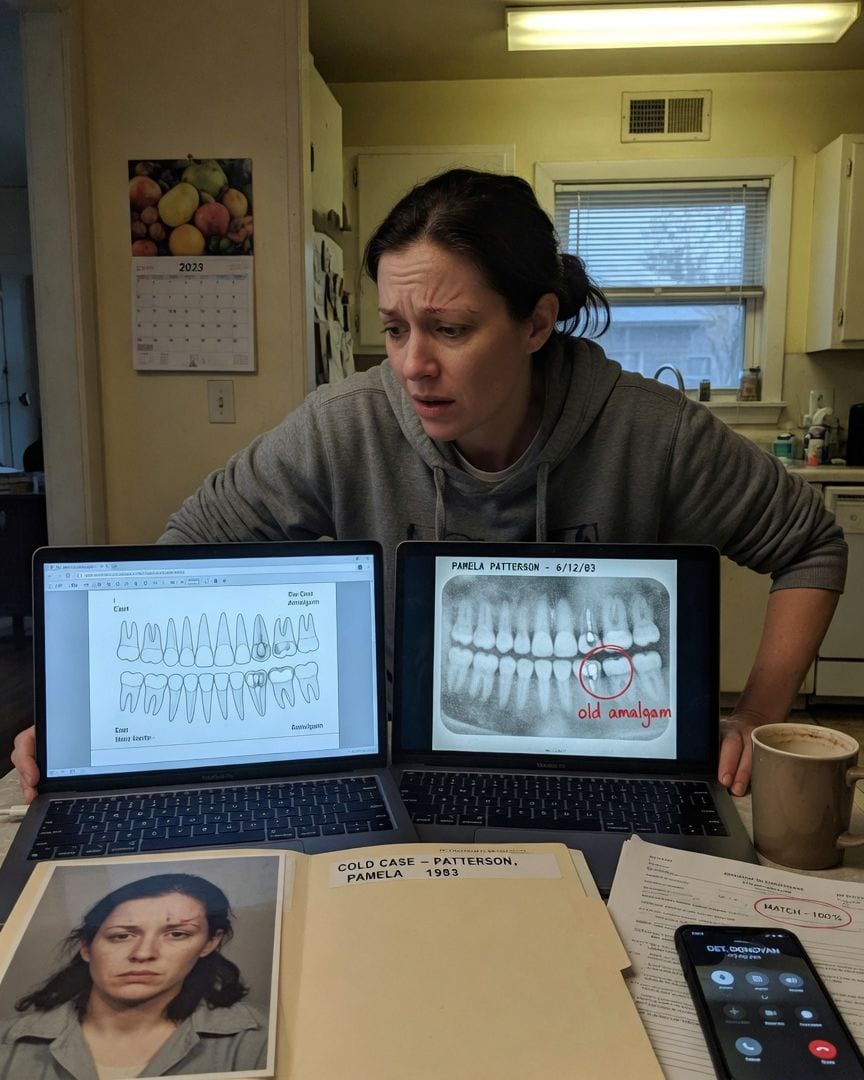
I gave a swab to be ruled out of a 1983 murder, but my DNA matched a hair from the scene exactly — and that hair belonged to a victim recorded dead there in 1983.
I gave a routine cheek swab for a 1983 cold case, barely thinking about it. But then Detective Donovan called, telling me my DNA matched the victim's hair exactly. The impossible truth: I wasn't born until 1991.
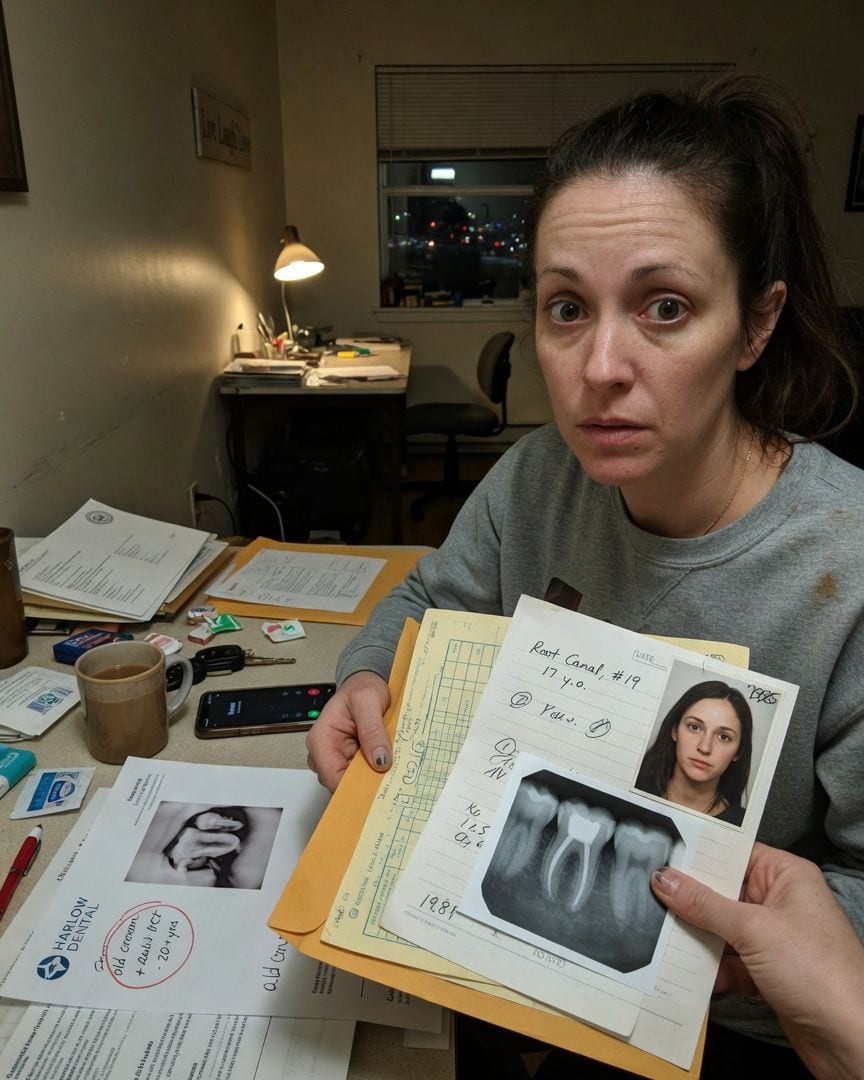
My lower molar has a twenty-year-old root canal. My new dentist showed me the scan. That tooth is whole. I can feel it.
My new dentist found a twenty-year-old root canal and crown in my mouth. The problem? I have no memory of ever having major dental work there, and my mother confirms I never did. My own body held a secret I couldn't explain.
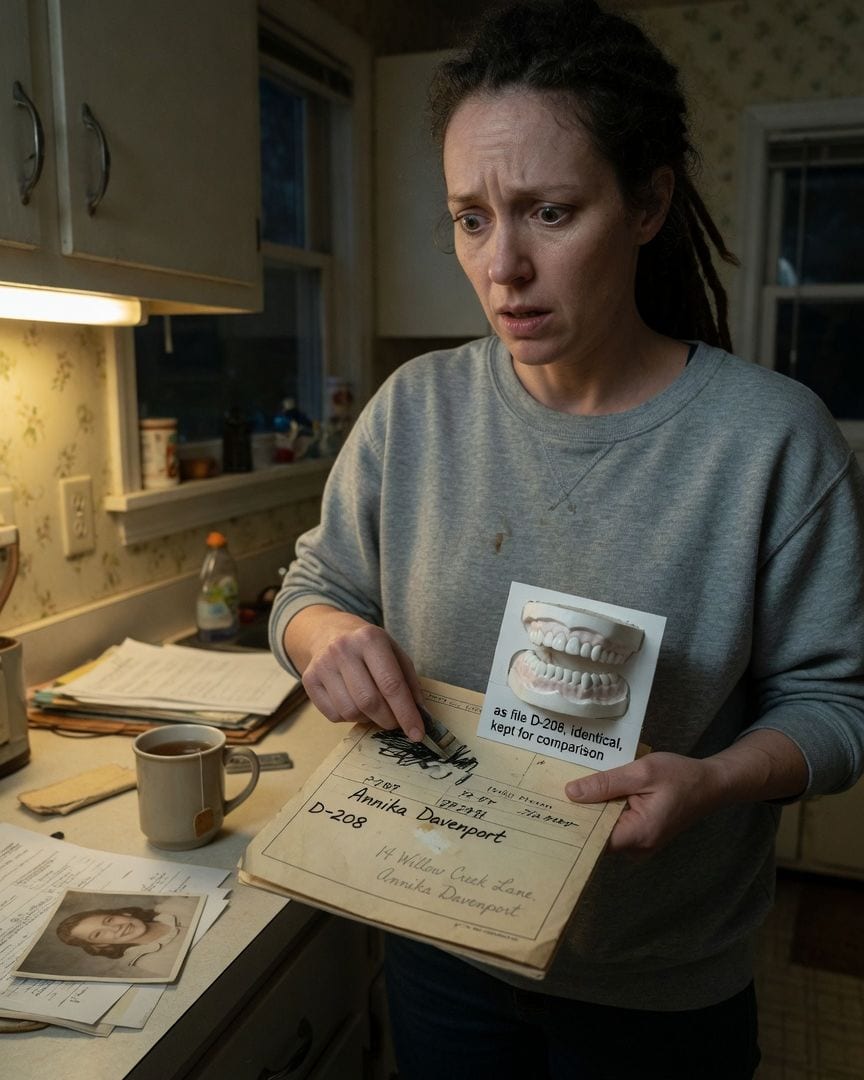
My childhood dental chart lists the house I bought last year — in my own name, years before I was born. A second set of my teeth sits filed beside it, marked 'identical.'
Sifting through old dental records, I found my chart, D-208, with my 1988 birth date. But a line from 1958 was blacked out, and a clipped card with an impression of my teeth listed my name and current home address, decades before I was born. The impossible facts knotted into a cold certainty.
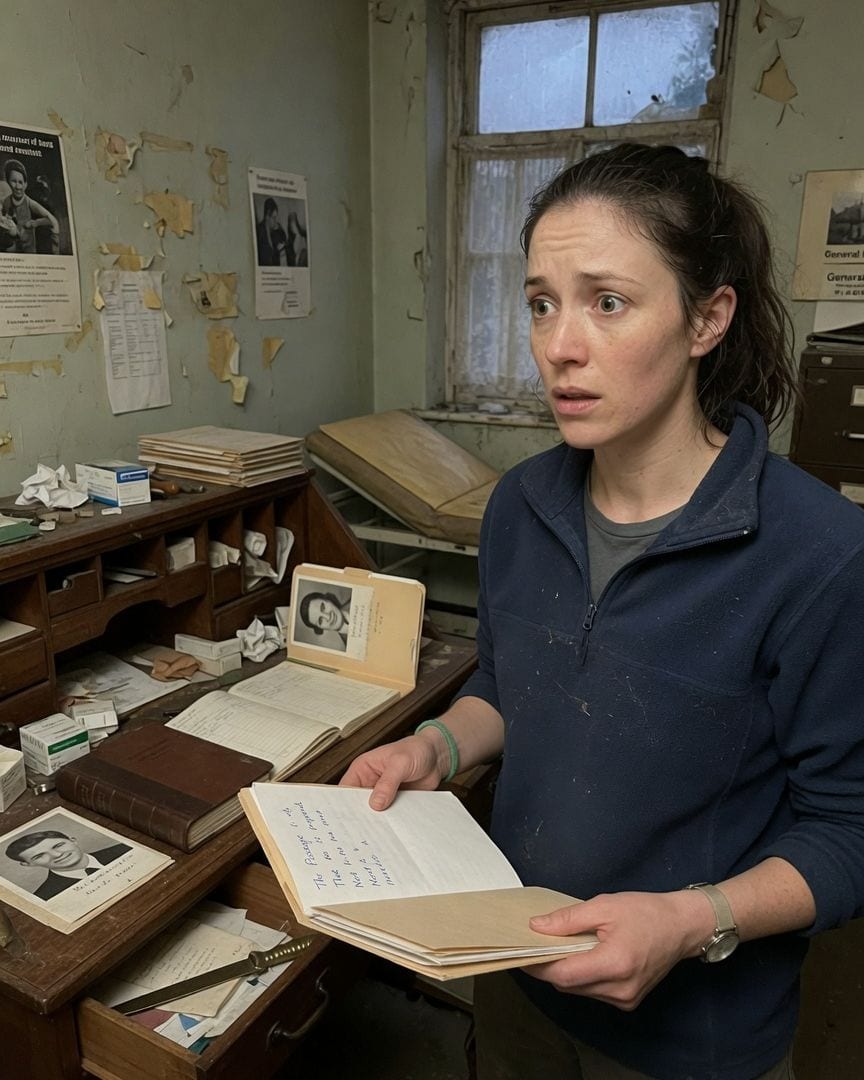
My new clinic's appointment book shows entries for this coming Monday, decades after the doctor retired and died.
Chloe Lawson bought an old, abandoned surgery in Nettlebed, ready to open her new vet clinic. Locals insisted Dr. Almott retired in '79 and the practice shut down for good. But then Chloe found his dusty appointment book filled with meticulous entries, continuing unbroken from 1979 through the decades, right up to this coming Monday.
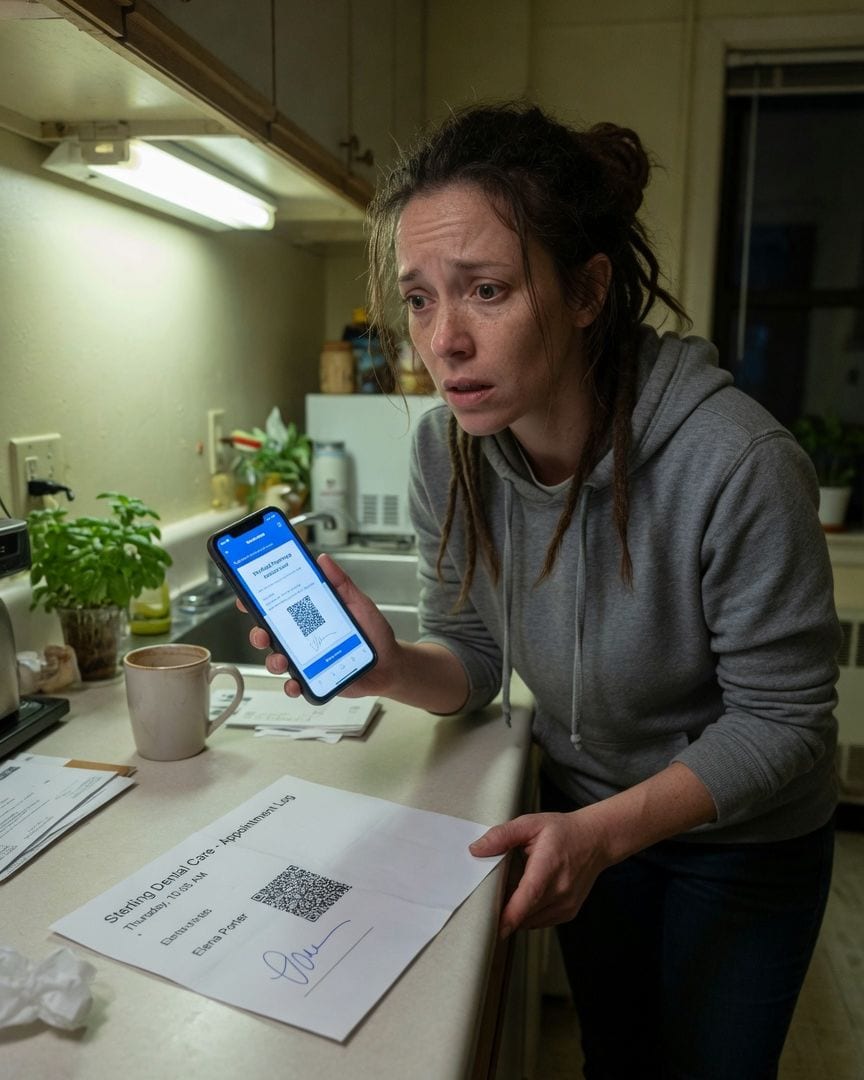
My dentist's system says I was there last Thursday. I wasn't. But the check-in tablet shows my signature, and the hygienist described my chipped tooth exactly right.
I received a call confirming a dental appointment I never made, for a day I was home. Yet, Sterling Dental had my perfect digital signature and described a chipped incisor I’d never told them about. The physical proof insisted I was there, but I wasn’t.
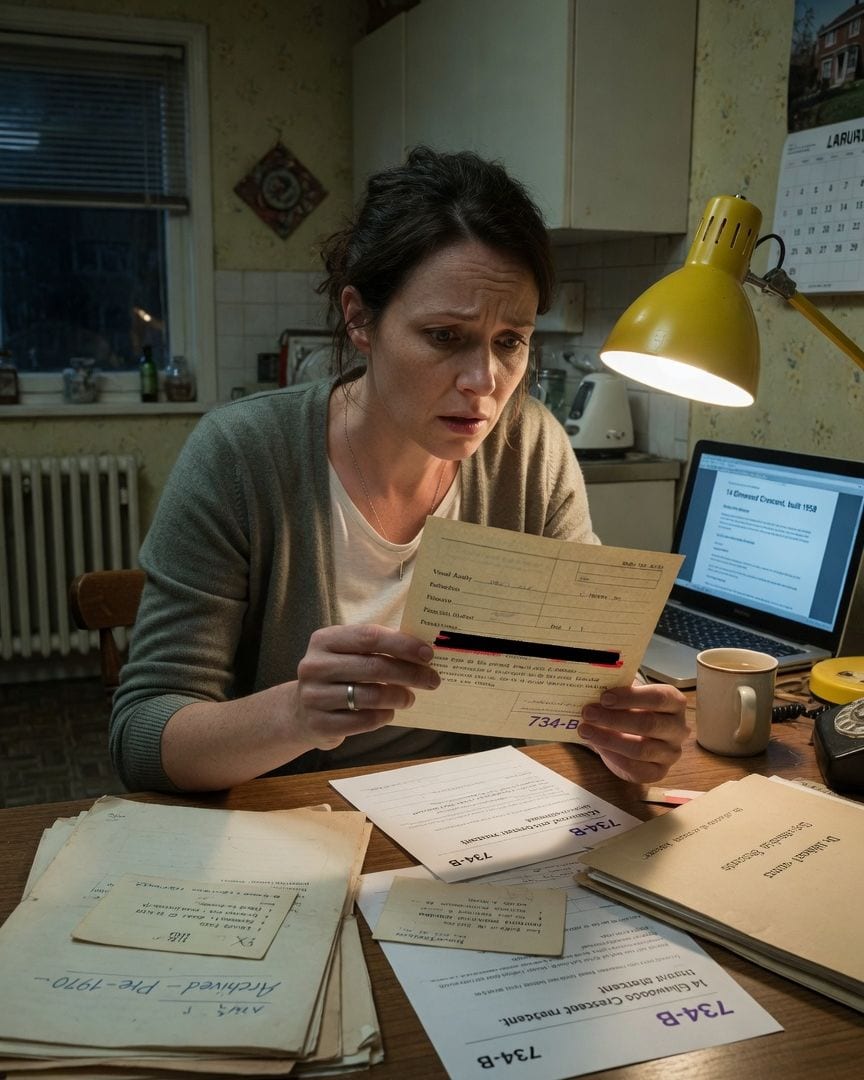
An old eye test card had my patient ID, 734-B, dated 1966. I found another, from 1948, for my house.
Transferring my old eye records should have been routine, but a strange, redacted card from 1966 raised a cold knot of dread. It mentioned my surname and street, along with a chilling instruction: 'tell the patient nothing.' Then I found my unique patient ID, assigned to me, on records dated 1948.