My lower molar has a twenty-year-old root canal. My new dentist showed me the scan. That tooth is whole. I can feel it.
The new office smelled of spearmint and fresh disinfectant, a pleasant contrast to the drone of the city outside. Dr. Vanessa Harlow, efficient and precise, had a calm demeanor that was almost hypnotic.
I settled into her brand-new dental chair, the hum of the panoramic scanner a low thrum against my ears. Moments later, the image filled the screen, a luminous map of bone and enamel.
Dr. Harlow tapped a spot on the lower left side of the screen, her finger a dark shadow against the bright white of the tooth. “Well, that’s an excellent root canal and crown, Karen. Looks at least twenty years old.”
A cold knot formed in my stomach. That tooth. My lower left first molar. I ran my tongue over it, feeling the smooth, unbroken surface. Perfectly sound. No crown. No filling. Nothing.
“Are you sure?” I asked, my voice a little too tight. “I don’t remember ever having a root canal there. Or a crown.”
Dr. Harlow gave a small, professional smile. “Sometimes people forget old work, especially if it was done well.”
She pulled the image up a second time, tapping the dark hollow where the nerve should have been, the bone around it showing the tell-tale density of long-healed work.
It was undeniably there, an old, deep repair, a foreign history etched into my own jaw that I had no memory of, no scar for, no explanation.
I left Dr. Harlow’s office feeling a strange, disorienting disconnect. My body felt alien, a vessel holding a secret. That root canal, a permanent fixture in my mouth, yet completely absent from my memory, was a cold phantom.
I called my mother on the drive home, trying to casually ask about any major dental work in my teens.
“A root canal? For you, Karen?” she sounded confused, almost amused. “No, honey. You always had strong teeth. Maybe a filling or two, but certainly no root canal. You would’ve mentioned it, it was a big deal back then.”
Her words, meant to reassure, only deepened the dread. My mother remembers everything.
I contacted the county records office the next day, requesting my full dental history from Dr. Franklin Montgomery, my childhood dentist, now long retired. The process took several days.
Each morning, I’d check the mail, a growing sense of unease coiling tighter in my gut. What would those records say? Would they confirm Dr. Harlow’s scan, or prove my memory?
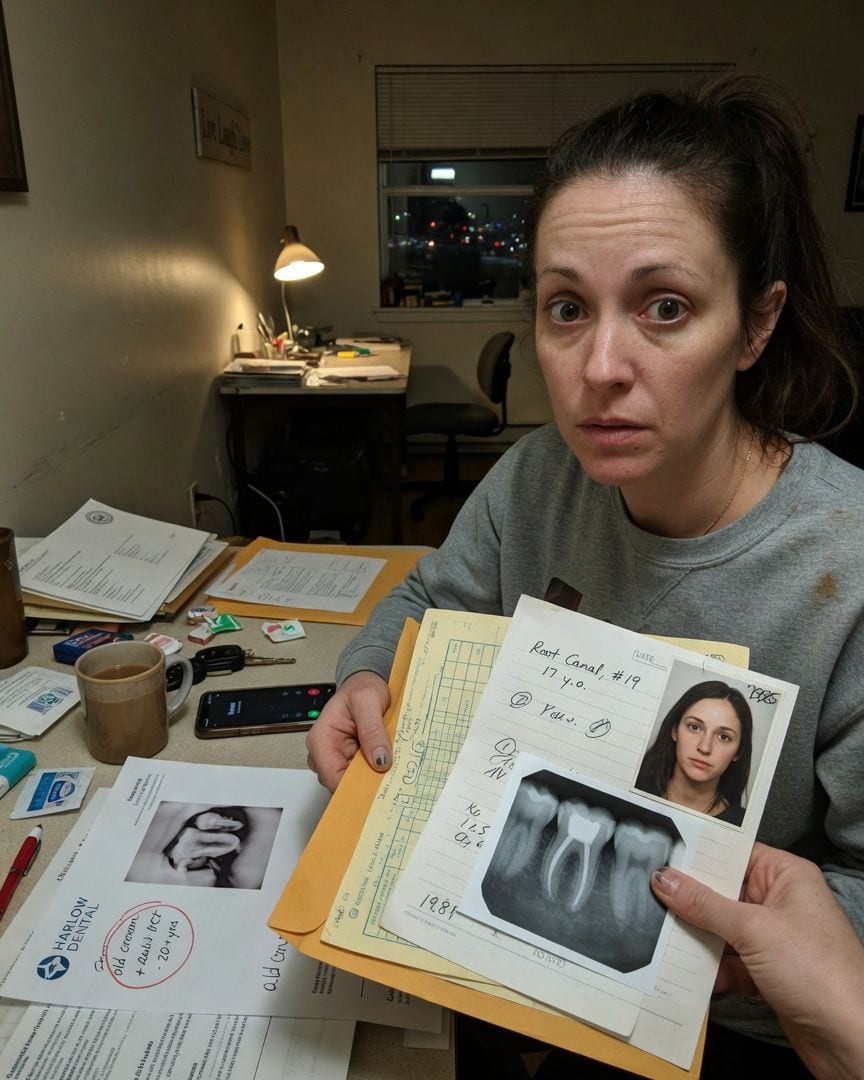
Finally, a thick envelope arrived, its official county seal a contrast to my trembling hands. I tore it open, pulling out the faded charts and X-rays. My eyes scanned the documents, searching for the date, for the specific tooth number.
The relief was palpable as I found the entry for my lower left first molar. And then the bottom fell out.
There it was, in Dr. Montgomery's neat, looping script: 'Root Canal, #19, 17 y.o.' A small X-ray was stapled beside it, confirming it, the dark channel where the nerve once ran, the opaque cap of a crown.
It was dated just after my seventeenth birthday, exactly 21 years ago. The new dentist had been right.
But as I scanned the rest of the file, a small, laminated patient photo stapled to the top right corner caught my eye. It was a girl, younger, smiling, with my face.
And the birthdate printed below the image was off by a single, impossible year.
My breath hitched.
I stared at the old dental chart, the documented root canal I couldn’t remember, the photo of a girl who was almost me, but with a birthdate that wasn't.
I placed my finger on the image, tracing the familiar curve of the jawline, the shape of the nose. It was undeniably my face, yet the eyes held a subtle, unsettling blankness I didn't recognize. They weren't quite my eyes.
The discrepancy was tiny, easily dismissible as a typo, but combined with the root canal I never had, it formed a cold, hard knot of wrongness in my chest.
This was my record, from my childhood, yet it insisted on a version of myself that didn't quite exist. I felt a profound, chilling sense of being unmoored, the ground shifting beneath my own feet.
The next few days were a blur of frantic verification. I pulled my birth certificate from the fireproof safe, dug through old school records, sifted through forgotten photo albums.
Every other official document, every memory, every snapshot confirmed my birthdate, my identity. The dental record was the lone, impossible outlier. A mistake, I told myself. A clerical error, perhaps from moving records or a tired hand.
I even visited the county clerk, Paige Sullivan, a young woman with a kind but harried expression. I explained the 'typo' to her, pointing to the date on the old chart. Paige peered at it, then at my driver’s license.
“Hmm. Sometimes mistakes happen, ma’am, but a birthdate on a dental chart? That’s usually pretty solid. Once it’s filed, it’s rarely, if ever, changed, especially one so old.” The clerk's words, meant to reassure, only deepened the dread.
The mundane explanation had just been ruled out.
I needed to talk to someone who remembered Dr. Montgomery, who might know something about his record-keeping. I remembered Lars Maddox, his long-time dental assistant. He’d always been quiet, efficient, a constant presence in the background of my childhood check-ups.
I found an old address in a forgotten phone book, a handwritten entry next to Dr. Montgomery’s old office number.
The house was on a quiet, tree-lined street on the edge of town, a small, tidy bungalow. Lars, 67, answered the door, his face a roadmap of age, but his eyes surprisingly sharp, like chipped obsidian.
He remembered Dr. Montgomery, of course, and even me, vaguely. When I showed him the chart, he took it with surprisingly steady hands, peering at it, his gaze lingering on the root canal entry, then flicking to the birthdate.
He hummed, a low, noncommittal sound, and for a fleeting moment, I saw a flicker of something in his eyes – not surprise, but a deep, knowing weariness.
He didn't offer an explanation, only a cryptic, “Some records are more… complicated than others, dear.” His eyes held mine for a beat too long before he gently handed the chart back.
I left Lars’s house with more questions than answers, the unsettling weariness in his eyes echoing my own growing unease. The cryptic comment about 'complicated records' gnawed at me. I felt a new, unwelcome sensation: being watched.
A dark sedan seemed to follow me home that evening, its tinted windows impenetrable. I tried to dismiss it, tell myself I was paranoid, but the feeling persisted, a prickle on my neck.
A few days later, an unmarked envelope appeared in my mailbox, tucked beneath the usual junk mail. No return address. Inside, there was only a single, faded black-and-white photograph.
It was a picture of a dental chair, antique and imposing, with a small, strange-looking tool resting on a tray beside it—a delicate, hooked instrument unlike anything I'd ever seen. No note, no sender. Just the photo.
It felt like a warning, or perhaps a puzzle piece I hadn't asked for.
Later that week, Lars called me. His voice was low, almost a whisper, strained, as if he was afraid of being overheard. “You’re digging too deep, Karen. Some things are best left buried.”
He paused, and I heard a faint crackle on the line. “But if you must know… Dr. Montgomery kept a special archive for certain patients. An old storage unit. Unit 7B, at the old industrial park off Elmwood.
He had a particular interest in… unique cases.” The line went dead.
The warning was clear, delivered with a desperate edge. But the lure of the archive, the promise of an answer to this impossible truth, was stronger than any fear. Someone was aware of my investigation.
They were trying to deter me, yes, but Lars, in his own way, was also subtly guiding me.
I drove to the industrial park, my heart a frantic drum against my ribs. The air was thick with the smell of exhaust and damp concrete.
Unit 7B was exactly as Lars had described: unremarkable, grimy, one in a long row of identical corrugated metal structures. The lock, surprisingly, was old but unlocked. My fingers trembled as I twisted the cold metal, pulling the latch open.
Inside, dust motes danced in the single beam of light from a high window, like tiny, frantic spirits. Rows of metal shelving stretched into the gloom, holding file boxes, all meticulously labeled.
The air was cold, stale, thick with the scent of old paper and neglect. I found a section marked 'Doyle, K.' and pulled out the first box.
The first folder held my own records, the ones I already had, the root canal and the off-by-a-year birthdate. I pulled out another. This one was thicker, dated years before my own birth.
It was another 'Karen Doyle,' with a different, slightly older patient photo, a different address, but the same surname. This record detailed an old, healed appendectomy—an abdominal surgery Karen had never had. My mind reeled. This wasn't a typo.
This was a pattern.
I pulled another, and another.
Each file contained a 'Karen Doyle' from a different era, each with a distinct, inexplicable healed injury or procedure—a hairline fracture of the tibia, a healed burn scar on the forearm, a subtle cranial plate that felt smooth and wrong beneath my fingertips.
The dates spanned decades, tracing a horrifying lineage back to the 1950s. The 'at least twenty years old' root canal, my own impossible record, snapped into a terrifying new focus. It wasn't a mistake; it was a signature.
Each 'Karen' had a 'marker.'
The first truth landed with crushing weight: my individual discrepancy was part of a larger, ongoing system, a series of lives lived under the same name, each with its own internal, unremembered history.
I ran my fingers over the faded print of the oldest chart, feeling the cold certainty of a truth far more profound than a simple medical error.
I stood amidst the rows of 'Karen Doyle' files, a cold sweat beading on my forehead. The pattern was undeniable, horrifyingly coherent. This wasn't about a single mistake in my past; it was about an entire, fabricated lineage.
I was one in a series, a link in a chain I hadn't known existed. The realization hit me with sickening force: if there were so many 'Karens,' what happened to the previous ones?
And what did it mean for me?
I reached for another folder, one marked 'Doyle, K. (Active)', my hands trembling. This one felt thicker, newer. As I opened it, the chart inside detailed another impossible, long-healed injury—a fractured wrist that had clearly healed perfectly decades ago.
The patient photo stapled inside, dated decades earlier, had my face, but a different set of eyes. Eyes that were utterly devoid of the fear I now felt.
A faint scuff of a shoe on the concrete floor behind me. I froze, every muscle tensed, listening. The sound came again, closer this time, a soft, deliberate click.
Lars Maddox stepped out of the shadows, his face calm, unbothered, a small, knowing smile playing on his lips. “I knew you’d find it, Karen. Dr. Montgomery always said you had a tenacious spirit.”
He held up the archaic dental tool from the photo, its hooked end gleaming faintly in the dusty light. “This, and others like it, are part of the 'marking' process. Each 'Karen Doyle' carries a unique, internal identifier.
A signature, if you will, of her specific iteration.”
He explained, without remorse, that the 'Doyle' lineage was a generations-old project, designed to maintain a specific bloodline, a particular set of aptitudes, for a powerful, unnamed institution.
Each 'Karen' was cultivated, he said, and when her purpose was served, or a new 'iteration' was deemed necessary, a seamless transition was made. The 'prior Karen' simply… ceased.
Their records were archived, their physical 'markers' the only evidence they had ever been. My own root canal, the 20-year-old work, was the marker of the 'Karen' before me.
Lars spoke of it clinically, as a gardener might speak of pruning a rosebush.
The old X-rays, the photos with subtly wrong dates, the distinct injuries, Dr. Harlow’s casual comment about the age of the root canal—every planted clue now clicked into place, forming a horrifyingly coherent mosaic.
I wasn't just a person; I was a designated continuity, a vessel for a purpose I didn't know, for powers I couldn't comprehend.
The sheer, chilling scale of it all, laid out in the quiet, dusty storage unit, left me breathless.
Lars extended a hand, a gesture of calm acceptance. “Your role is vital, Karen. You are the current iteration, and you are protected.”
I recoiled. Protected? I was a placeholder, a temporary vessel, a living archive entry. The cold, clinical horror of it solidified into a burning rage. “No,” I whispered, then louder, my voice cracking, “No! I won’t be part of this.”
I didn't have a weapon, no grand plan. All I had was the knowledge, and a desperate instinct to break free.
I grabbed the nearest file box, sending a cascade of 'Karen Doyle' records scattering across the concrete floor. Pages flapped, photos slid. Lars, momentarily startled by the sudden violence, reached for me.
I ducked past him, scrambling towards the unit door. I knew I couldn't destroy the entire archive, couldn't expose an institution so deeply entrenched it could erase lives. My only option was to remove myself.
Lars moved with a surprising speed for his age, blocking my path. “You can’t escape your purpose, Karen,” he said, his voice now colder, harder, completely devoid of the earlier weariness. “You are bound.”
I saw a flash of something metallic in his hand—not the archaic tool, but a small, hypodermic needle, glinting under the dim light. My heart leaped into my throat. This wasn't a negotiation. This was a termination.
With a surge of adrenaline, I shoved past him, throwing my weight against the heavy metal door. It groaned, the rusty hinges screeching in protest, then gave way with a clang.
I burst out into the dim light of the industrial park, the air suddenly fresh and cold against my face. Behind me, Lars's voice, calm and unhurried, called out, “The next one will be just as… suitable.”
I ran, not knowing where, only knowing I had to get away from the pattern, from the archive, from the chilling certainty that I was not the only Karen Doyle, and never would be.
I never returned to my apartment. I emptied my bank accounts, sold what I could online for cash, and vanished into the anonymity of distant cities. Every interaction became a calculated risk.
Every new face, a potential thread back to the institution. The police, alerted by a concerned neighbor after weeks of my absence, found no sign of foul play, only a meticulously clean apartment, as if prepared for a new occupant.
Dr. Vanessa Harlow's office eventually sent a follow-up reminder for my next check-up, then marked my file 'patient no-show, moved.'
Lars Maddox continued his quiet life, occasionally tending to the old industrial park storage unit, ensuring the 'Doyle, K.' archive remained undisturbed. The institution, whatever it was, continued its work, unseen, unbothered.
I was gone, but the lineage, the pattern, remained. I simply became another missing link in their chain.
I brush my teeth every morning, feeling the smooth, whole enamel, knowing what lies beneath, and what might lie beneath others.
If this one got to you
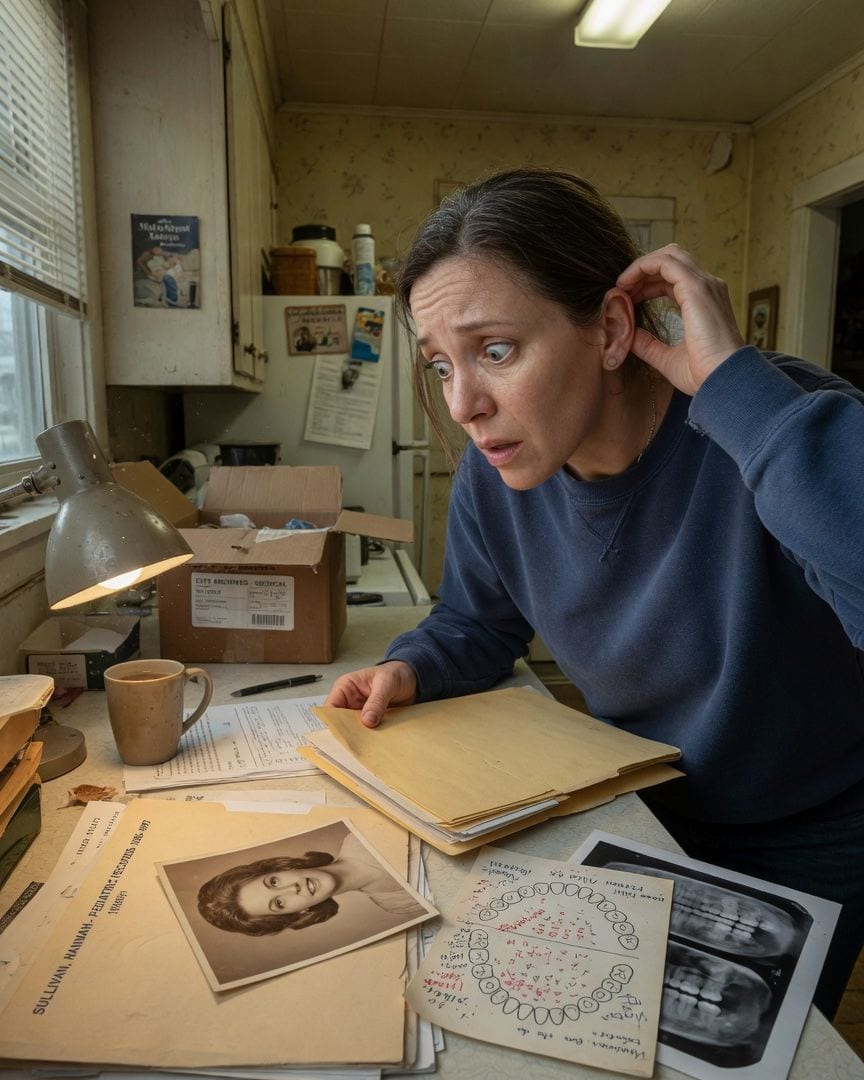
My MRI showed a perfect, decades-old surgical opening in my skull. I have no memory of it.
I underwent a routine MRI for persistent dizziness, expecting reassurance. Instead, the scan revealed a perfectly healed, decades-old surgical opening in my parietal bone, just behind my left ear. Dr. Hughes confirmed it was an access point for a procedure, yet I have no memory of any head surgery, ever. My body holds a secret I cannot recall.
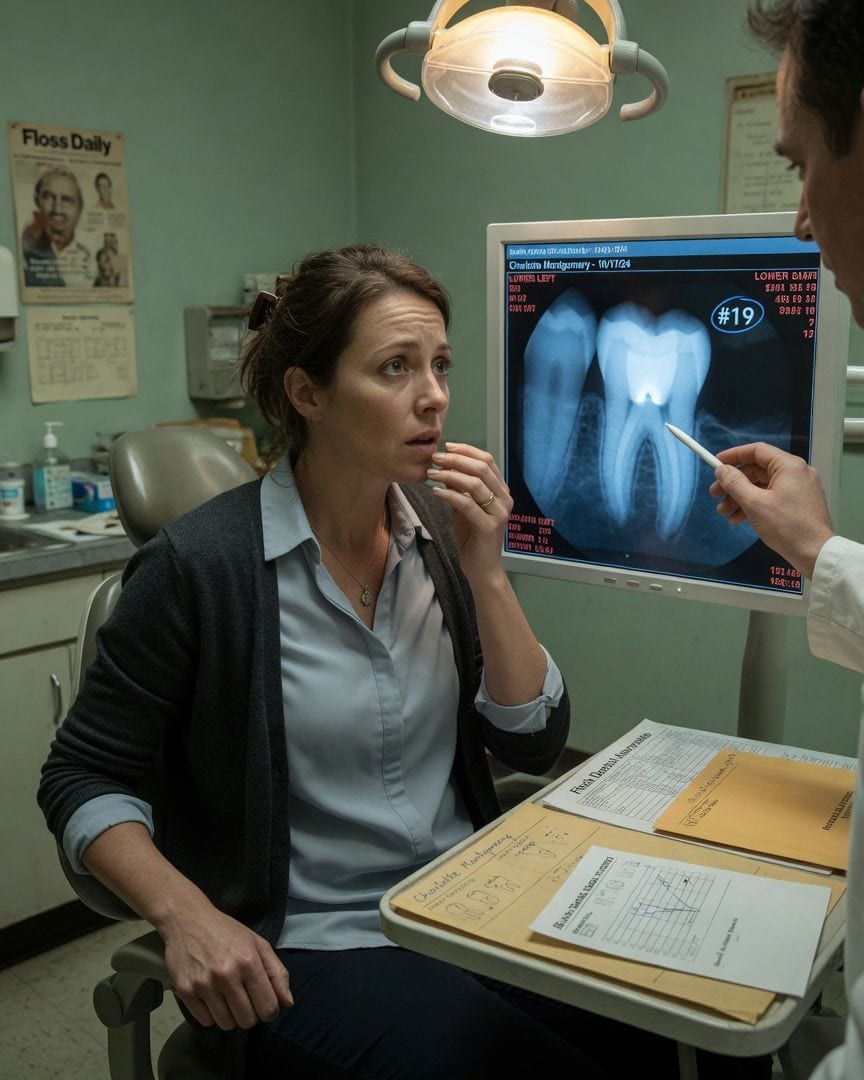
My dental X-ray shows a whole tooth where a gap has been for twenty years. A tiny metal post and a filling in a molar I remember being pulled.
Sitting in my dentist’s chair, I saw my X-ray light up with a chilling impossibility. My lower left molar, fully restored with a metal post and filling, was clearly visible. But I knew that tooth couldn't be there; it had been brutally extracted twenty years ago, leaving a gap for half my life.
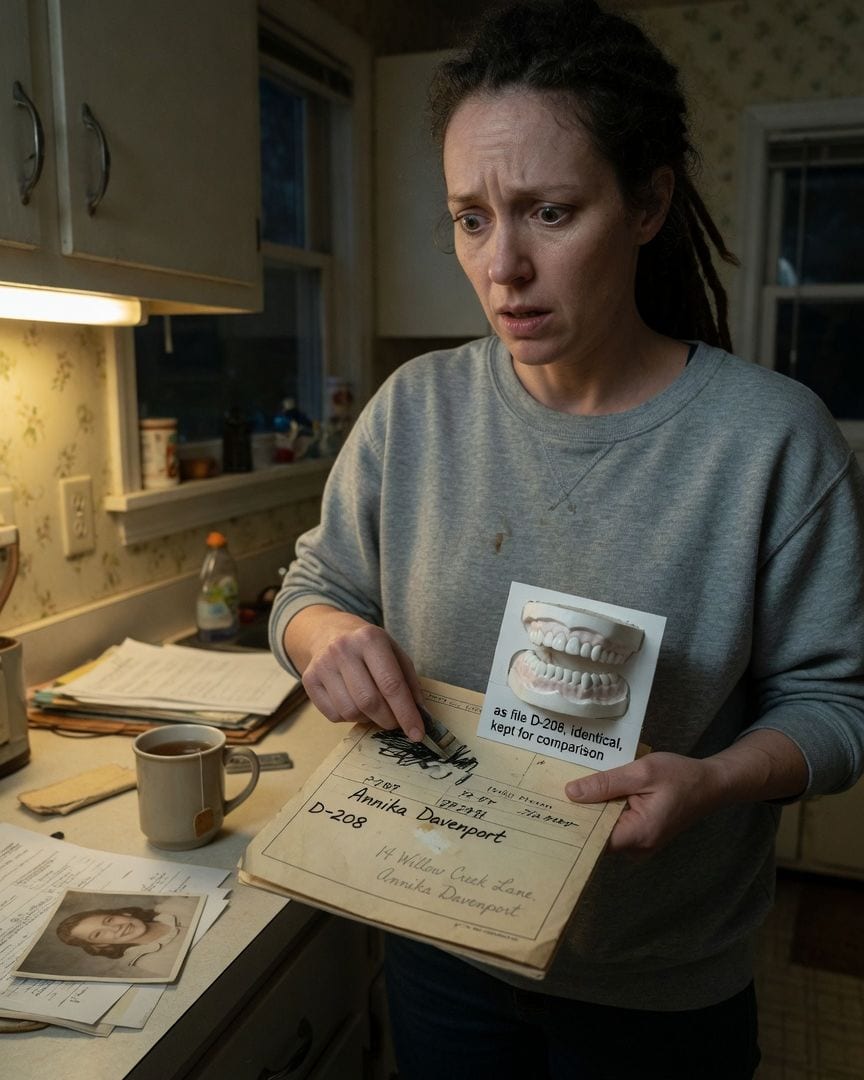
My childhood dental chart lists the house I bought last year — in my own name, years before I was born. A second set of my teeth sits filed beside it, marked 'identical.'
Sifting through old dental records, I found my chart, D-208, with my 1988 birth date. But a line from 1958 was blacked out, and a clipped card with an impression of my teeth listed my name and current home address, decades before I was born. The impossible facts knotted into a cold certainty.
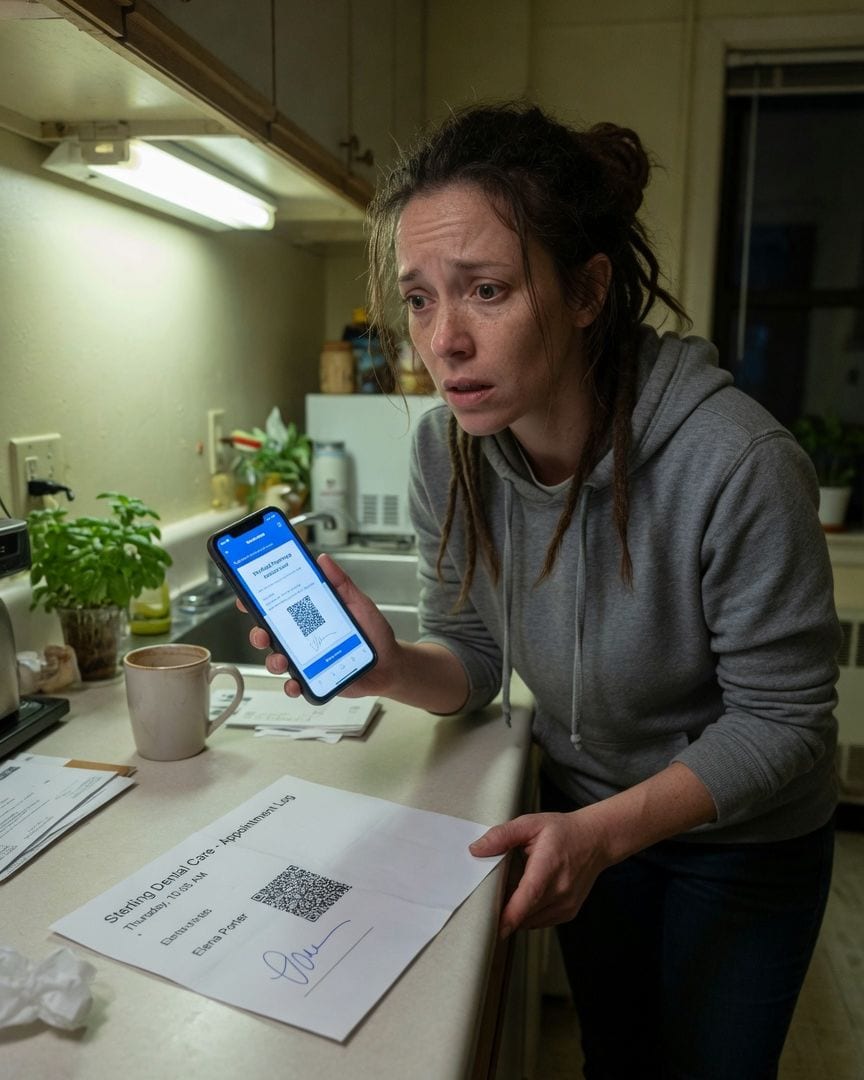
My dentist's system says I was there last Thursday. I wasn't. But the check-in tablet shows my signature, and the hygienist described my chipped tooth exactly right.
I received a call confirming a dental appointment I never made, for a day I was home. Yet, Sterling Dental had my perfect digital signature and described a chipped incisor I’d never told them about. The physical proof insisted I was there, but I wasn’t.
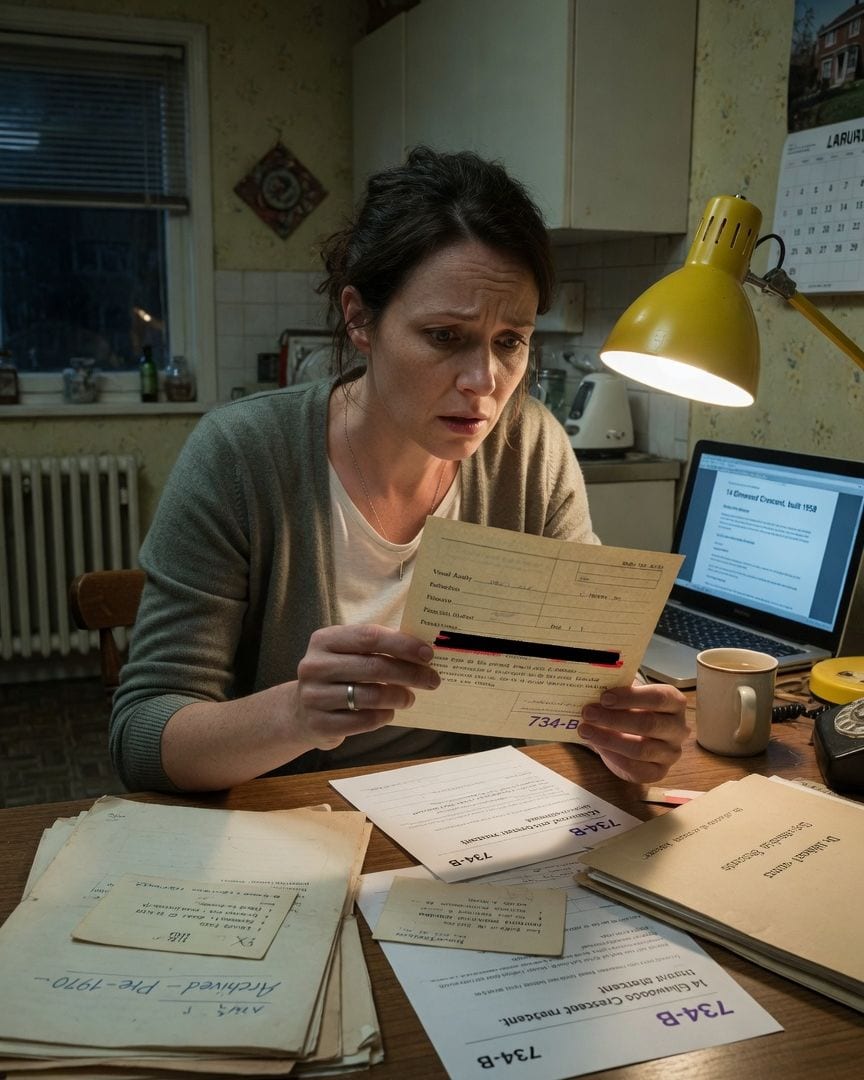
An old eye test card had my patient ID, 734-B, dated 1966. I found another, from 1948, for my house.
Transferring my old eye records should have been routine, but a strange, redacted card from 1966 raised a cold knot of dread. It mentioned my surname and street, along with a chilling instruction: 'tell the patient nothing.' Then I found my unique patient ID, assigned to me, on records dated 1948.
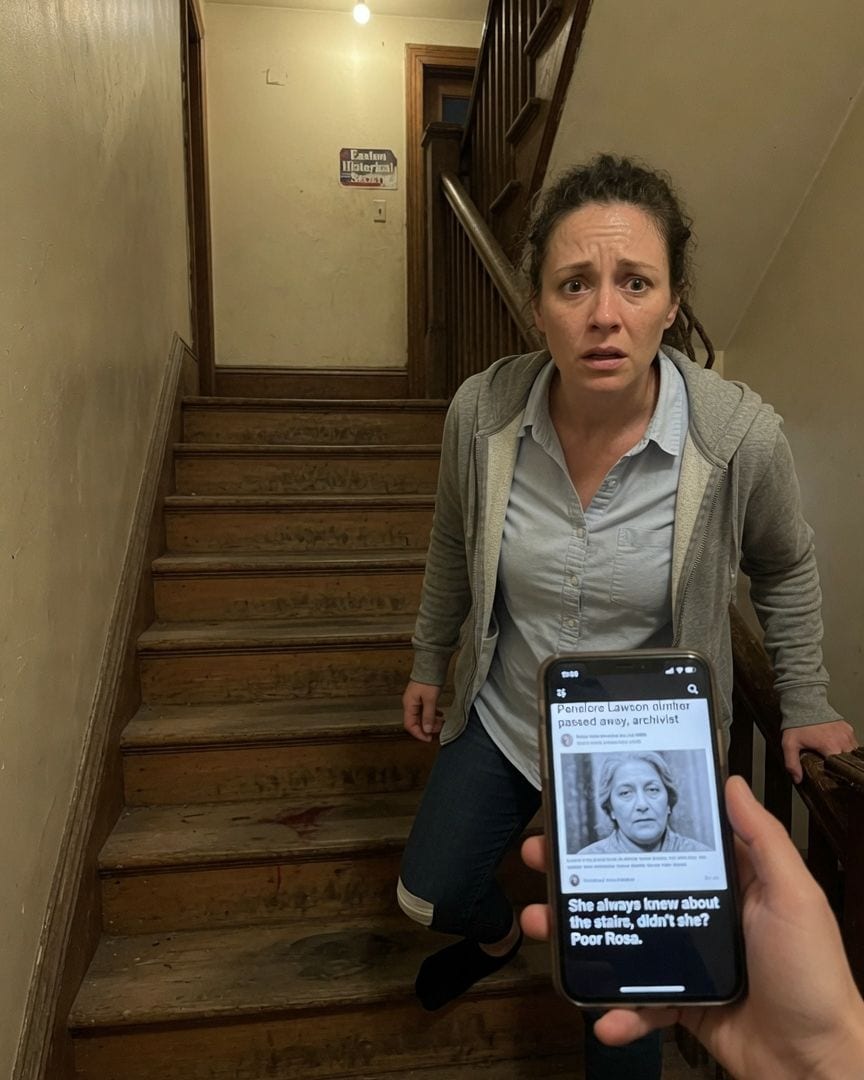
My hygienist apologized, 'I'm so sorry, Rosa — about the stairs.' I'd given the clinic only my surname, and they said she hadn't worked there in over a year.
During my routine dental cleaning, the hygienist murmured my name, Rosa, which wasn't on my intake form. She then offered a soft apology "about the stairs," a kindness that felt deeply misplaced and settled in my gut.