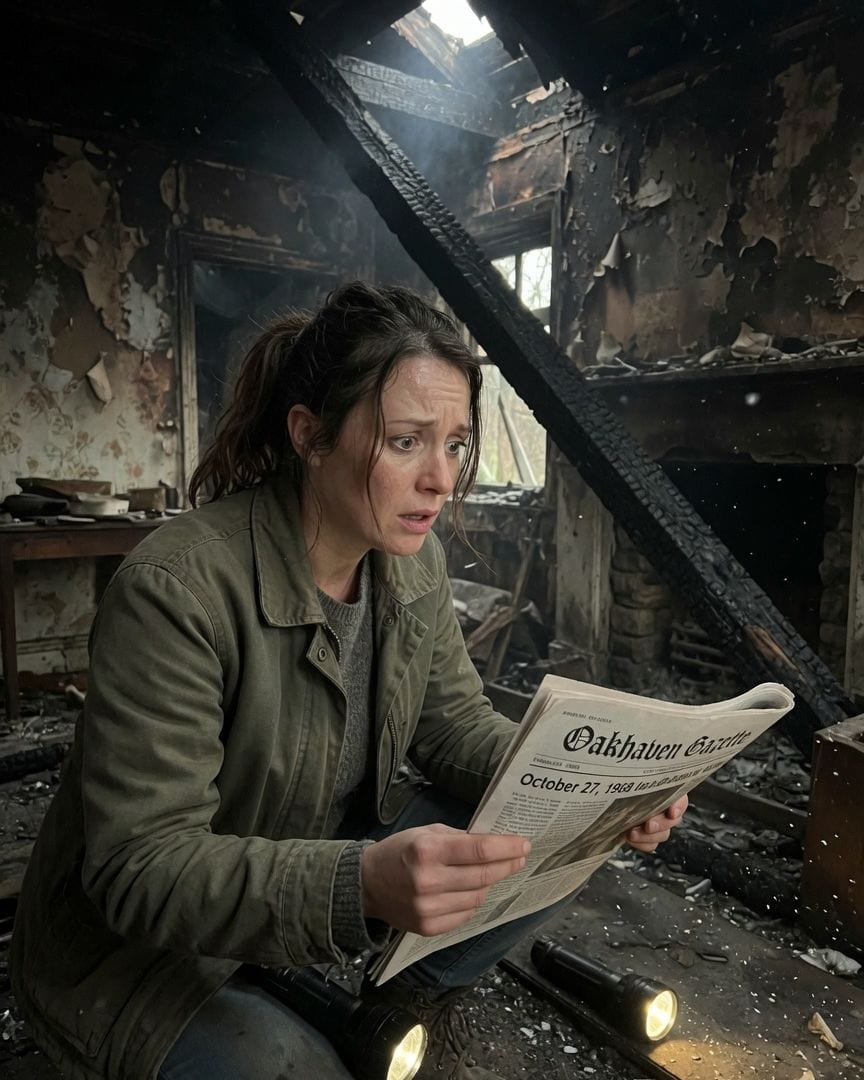
Beneath the burnt timbers, I found a newspaper. It was pristine, dated October 27, 1968 — fourteen years after the fire.
The first thing I noticed when I moved to Oakhaven was the quiet. The second was Daniel Hughes and his newsstand.
Every morning, without fail, Daniel would set aside a neatly rolled newspaper on a small, worn shelf behind the counter. It wasn't for a regular customer who always picked it up late.
This paper sat there all day, separate, until Daniel himself carried it out after closing. He delivered to Fen End. I’d seen Fen End.
It was a skeletal ruin, a burned-out husk nestled in a hollow just outside town, black timbers silhouetted against the sky. I asked Daniel about it one day, just casual, as he handed me my own paper. "Fen End?"
I prompted. He hesitated, his gaze drifting over my shoulder to the empty road. "The Aldous family," he finally mumbled, his voice rougher than usual. "They like to keep up."
I pressed him, but he just shook his head, already turning to restock a magazine rack. He always made it sound like they still lived there.
Later that week, curiosity gnawing, I asked to see his accounts, pretending I was checking my own bill. He reluctantly pulled out a battered tick book, its pages yellowed. The Aldous family account was there, listed as "Fen End."
It stretched back through decades, an unbroken line of daily deliveries, settled quarterly to the penny, right up to the current month. Later, I asked Adam, Daniel’s sixteen-year-old grandson who did the paper route some days, about Fen End.
He delivered to that side of town. Adam just shrugged. "Nah, Grandma does that one mostly. I never write 'Aldous' in the delivery log. Don't even know where Fen End is, really."
A cold knot began to form in my stomach. Fen End was unmistakable. You couldn't miss it.
The feeling wouldn't leave me. It was like a loose thread in a sweater, impossible to ignore.
Two days later, a Saturday, I drove out to Fen End again, this time with a flashlight and a heavy pair of work boots. The air grew colder as I turned onto the dirt track leading to the ruins.
The charred timbers stood stark against the overcast sky, a monument to a long-ago tragedy. Smoke, they said, still clung to the stones sometimes, even after all these years.
Today, it was just the scent of damp earth and burnt wood, a smell that clung to the inside of my nose.
I picked my way carefully through the debris, past what might have been a collapsed kitchen, then a living room, each step crunching on ash and broken glass.
I pushed past a fallen doorway, its lintel still black and splintered, deeper into what I guessed was once a study. A heavy, fire-damaged beam had fallen at an angle, creating a small, sheltered pocket.
The light from my flashlight cut through the gloom, illuminating dust motes dancing in the still air. My boot nudged something. I bent down.
Tucked beneath the beam, shielded from the elements by a thick slab of stone and years of accumulated soot, was a flat, rectangular shape. I reached in, my fingers brushing against what felt like paper. I pulled it out.
It was a newspaper. Not a brittle, disintegrating relic, but a local Oakhaven Gazette, perfectly preserved. Dry. Crisp. Its pages intact, almost new. I unfolded it carefully, my heart beginning to thud against my ribs. The masthead was clear.
October 27, 1968.
I held the pristine newspaper in my hands, the dated ink still sharp, the paper unmarred by flame or decay. October 27, 1968. Fourteen years after Fen End had supposedly burned to the ground.
My thumb brushed over the date again, seeking some flaw, some sign of a clever hoax, but it was just... there. Real. I scanned the community notices, my eyes snagging on a small article in the local events column.
"The Aldous Family Halloween Social – All Welcome." My fingers traced the words, a cold dread settling in my stomach. The paper was real, physical, and utterly impossible to reconcile with a burned-out house.
I walked into Daniel Hughes’ newsagent the next morning, the 1968 newspaper clutched in my hand. He was behind the counter, polishing a display case, his movements slow and methodical.
He looked up, his eyes widening as he saw the paper. The color drained from his face, leaving a sallow gray. "Where did you get that?"
he asked, his voice a strained whisper, his usual friendly demeanor replaced by a rigid silence. I laid the paper on the counter, smoothing it flat. "Fen End," I said, watching him closely.
"Under a beam, in what used to be a study. How can this be from 1968? The house burned in '54." He tried to dismiss it, of course. "Some old family keepsake, perhaps. Someone tucked it away, a prank maybe."
But his eyes, darting from the newspaper to mine, betrayed him. They were wide, fearful. "A prank?" I pressed. "Perfectly preserved, in the heart of ashes? And what about the Aldous account, Daniel? Still active?
Still settled to the penny, every quarter, for a house that isn't there?" He flinched. He looked away, then back, his gaze pleading. "It's the way things are done, Eleanor," he finally admitted, his voice barely audible. "Always has been."
He wouldn't elaborate, just kept muttering about "the rule," about "leaving them be." That phrase, "leaving them be," clung to me. What were they? And what happened if you didn't?
I spent the next few days in the Oakhaven Historical Society archives, a dusty, quiet room full of old ledgers and microfiche. I found vague, disquieting references to "old customs," "community responsibilities," even "certain families requiring sustained observation."
They were always linked to specific places, pockets of Oakhaven. Fen End, I noted, was mentioned more than once, always obliquely, never directly.
My persistent inquiries about the Aldous family did not go unnoticed. The air in Oakhaven, already quiet, seemed to grow thicker, more watchful. One morning, I stepped out onto my driveway and stopped dead.
Both front tires on my car were slashed, neatly, deliberately. Not just flat, but ripped open, useless. There was no note, no message, just the cold, stark fact of the damage. A chilling warning.
Later that day, as I walked through the town square – a little more wary now, a little more aware of every shadow – I saw her. Margaret Patterson.
She was an elderly woman, known for her quiet reclusiveness, rarely leaving her small, overgrown cottage on the edge of town. She was standing by the old stone fountain, her back to me, but as I drew closer, she turned.
Her face was a network of deep wrinkles, her eyes faded but surprisingly direct. She didn't speak. She just extended a trembling hand, holding a small, faded photograph. It was from the 1950s, a group portrait.
In the background, unmistakable even through the grainy film, was a much younger Daniel Hughes, laughing, a cigarette dangling from his fingers. But it was the foreground that seized my attention. Front and center, a family of four.
A man, a woman, and two children, a boy and a girl. They looked eerily familiar, their faces unsettlingly bland, almost too perfect. Margaret pressed the photograph into my hand. Her fingers brushed mine, cold as river stones.
She held my gaze for a long moment, her faded eyes conveying an unspoken message I couldn't quite decipher, a warning mixed with a profound sorrow.
Then, without a single word, she turned and walked away, disappearing down a narrow side street as quickly as she had appeared.
The square felt suddenly vast and empty, leaving me with a chilling sense of being watched, and being warned off.
I returned to Daniel, the photograph burning a hole in my hand. He was alone in his shop, wiping down the counter. "Daniel," I said, my voice sharper than I intended. He looked up, his face etched with fatigue.
I laid the faded photograph between us. "Who are they?" I demanded, pointing to the family in the foreground. He looked at the picture, then back at me, a deep sigh rattling in his chest. His shoulders slumped.
"The Aldous family," he said, his voice barely a whisper. "From Fen End." He finally broke. He explained, haltingly, that the Aldous family was "different." Not a normal family. They "came and went."
The fire in '54 wasn't an accident; it was a desperate attempt to make them leave. He paused, his gaze fixed on some point beyond my shoulder. "But they didn't," he rasped. "They… remained. The town learned.
They had to be 'maintained,' 'acknowledged'." His eyes finally met mine, filled with an ancient, weary terror. "The newspaper delivery," he continued, his voice strained, "the account – it's all part of it. A ritual. Generations-old. To keep them quiet.
To keep them there, but contained." He leaned forward, his knuckles white on the countertop. "It's a warning, not a superstition, Eleanor," he rasped, his voice barely audible. "Don't ever stop the paper."
The words hung in the air, cold and heavy. All those small, wrong details snapped into focus, a terrifyingly coherent picture forming in my mind. The intact newspaper, the settled accounts, Adam's strange denial, the slashed tires, Margaret's silent warning.
It all clicked. The danger was suddenly intensely personal.
Daniel, shaking, reached beneath his counter. He pulled out something I hadn't noticed before: an ancient, leather-bound ledger, its cover scarred and faded, its edges brittle. It wasn't a business record. It looked impossibly old.
He opened it carefully to a brittle, yellowed page. It was covered in neat, looping script and small, rough sketches of houses and landmarks.
He pointed to the Aldous entry, a name I now knew, with a corresponding set of dates.
He then traced a finger from it, down the page, to another name: "Harlow, Edmund," then to "Patterson, Grace" – Margaret's family name, I realized with a jolt.
Each name had a corresponding set of dates, some stretching back centuries, and a cryptic note about a "sustained presence." Lines, faint, almost invisible, connected the marked locations, forming a strange, incomprehensible map of Oakhaven.
He looked up at me, his face grim, his eyes wide with an old, deep fear. "They all get their papers," he said, his voice barely a whisper.
Daniel explained everything then, speaking quickly, as if unburdening himself of a lifetime of secrets. The ledger, he said, was a secret record, passed down through his family, of other ‘presences’ Oakhaven had had to manage over centuries.
Each 'family' or 'entity,' as he called them, had a cycle, a pattern of appearance and disappearance. They weren't born; they just… manifested.
And each, he whispered, required a specific ‘rule’ or ritual to keep it from spreading, from becoming violent. The Aldous family, tied to Fen End, demanded the daily paper. It wasn't about reading it, he insisted.
It was about the acknowledgement. The physical act of delivery, Adam’s denial, the quarterly payments—it was all part of the recognition, a signature of the town's commitment.
Oakhaven, he said, lived in a perpetual state of quiet vigilance, passing these duties down through generations. Not just his family, but others too. The Pattersons, the Harlows. Their lives entwined with the management of these entities.
He showed me more entries in the ledger, names I recognized from older headstones in the cemetery, each with its own cryptic symbol and ritual. It wasn't about belief, he said, but survival.
You broke the rules, you risked re-activating them, drawing them out. Fen End, the fire, was proof. It was meant to make them leave. It only angered them.
The immense danger I’d put myself and the town in by breaking the "leave them be" rule settled over me like a shroud. I couldn't undo what I’d done, but I could at least try to mend it.
I drove to Daniel's shop, my heart thudding a frantic rhythm against my ribs. He was already waiting, the day's designated Aldous paper rolled and ready. I took it from him, our fingers brushing, a silent understanding passing between us.
I drove straight to Fen End, my old boots crunching on the familiar ash. The ruins seemed to lean in, darker, colder, than before. I wasn’t here to investigate anymore. I was here to perform a ritual.
I walked directly to the charred remains of what might have been a table in the study, the same spot where I'd found the impossible newspaper.
With deliberate care, my hands steady despite the tremor in my chest, I placed the rolled newspaper on its surface. The silence in the ruins deepened.
As my fingers released the paper, a faint, almost imperceptible whisper seemed to emanate from the ashes. It wasn’t a human voice, more like a rustling sound, like turning pages, or a dry, soft sigh.
A profound, cold presence settled around me, a weight in the air, not threatening, not malevolent, but simply... watching. Observing. I understood. I had to continue these deliveries, or the town, Oakhaven, faced something far worse than a burned-out house.
I had become part of the agreement.
I took over the Aldous paper route. Every morning, I picked up the designated paper from Daniel Hughes, drove out to Fen End, and placed it inside the ruins.
The tick book, now in my name, continued to show quarterly payments, always on time. Daniel Hughes watched me with a mixture of relief and sorrow, a silent passing of the torch.
The town settled back into its quiet rhythm, a fragile peace maintained. Eleanor Winslow, the new arrival, became a familiar sight, driving out to Fen End each morning, a newspaper in her passenger seat.
She was still, in some ways, the same woman who had arrived, but something in her eyes had shifted, a quiet, deep understanding. The Aldous family account, now under her name, was settled to the penny every quarter.
She never misses a day.
If this one got to you
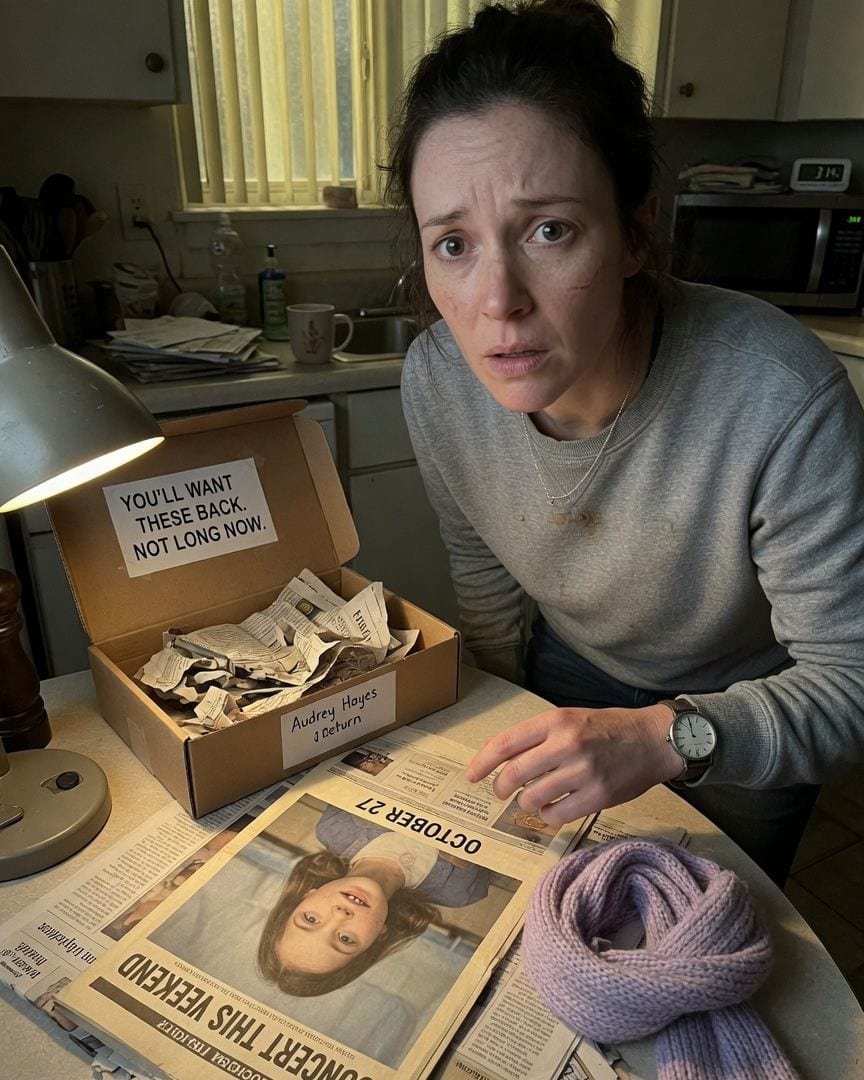
A box turned up with my name and no sender. Inside was a watch I lost years ago, still ticking and set right — wrapped in newspaper dated two weeks from now.
A plain brown box appeared on my step, containing my long-lost personal items. Among them, my grandmother's ticking watch and a newspaper dated two weeks in the future. But a historical ledger then revealed my name and these exact items, listed in 1965.
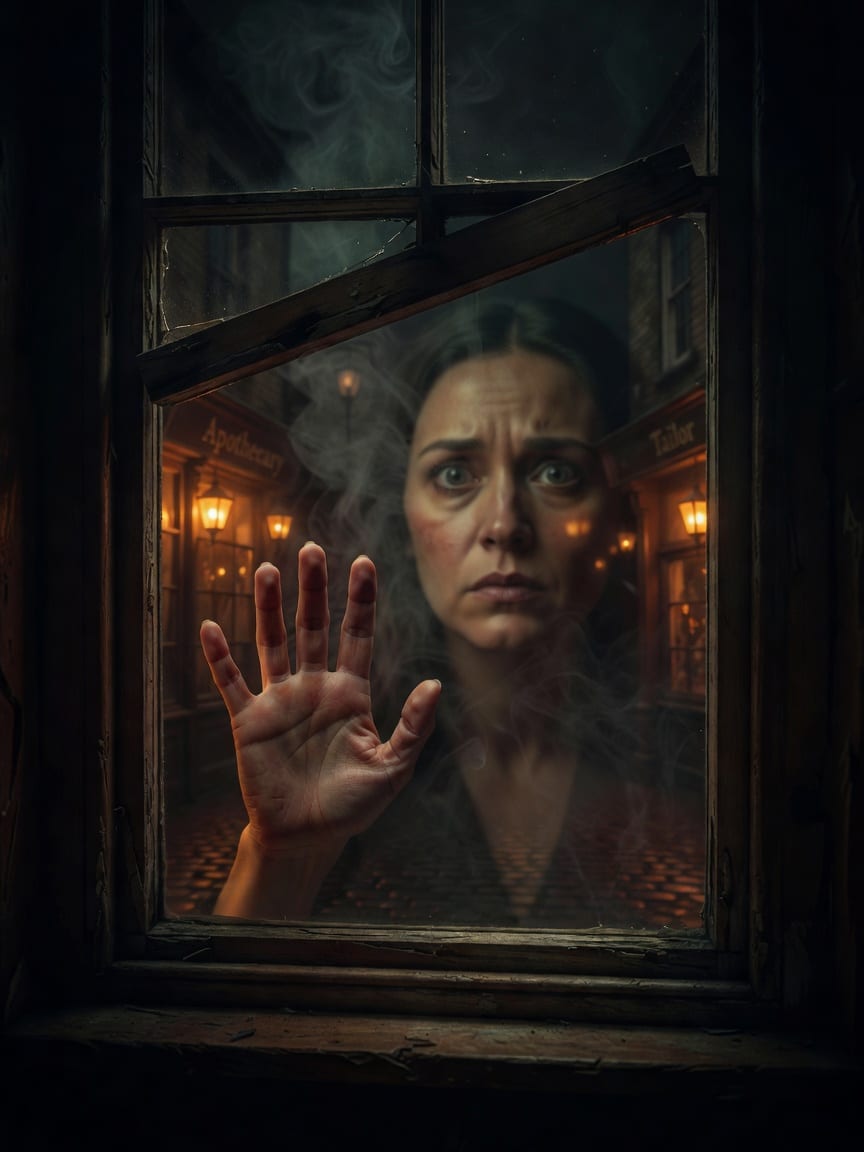
My new flat has a boarded window. I pried a plank loose and saw a gaslit Victorian shopfront across the street. I nailed the board back. The nails went into wood soft and new.
I'd only been in the flat three weeks when the boarded-up window revealed a bustling, gaslit street from another era. Shaken, I nailed it shut, only for the old planks to feel like freshly milled, wet wood. Then, the kettle started whistling at 6 AM every morning, cold and untouched, leaving behind a faint, sweet smell of brewed tea.
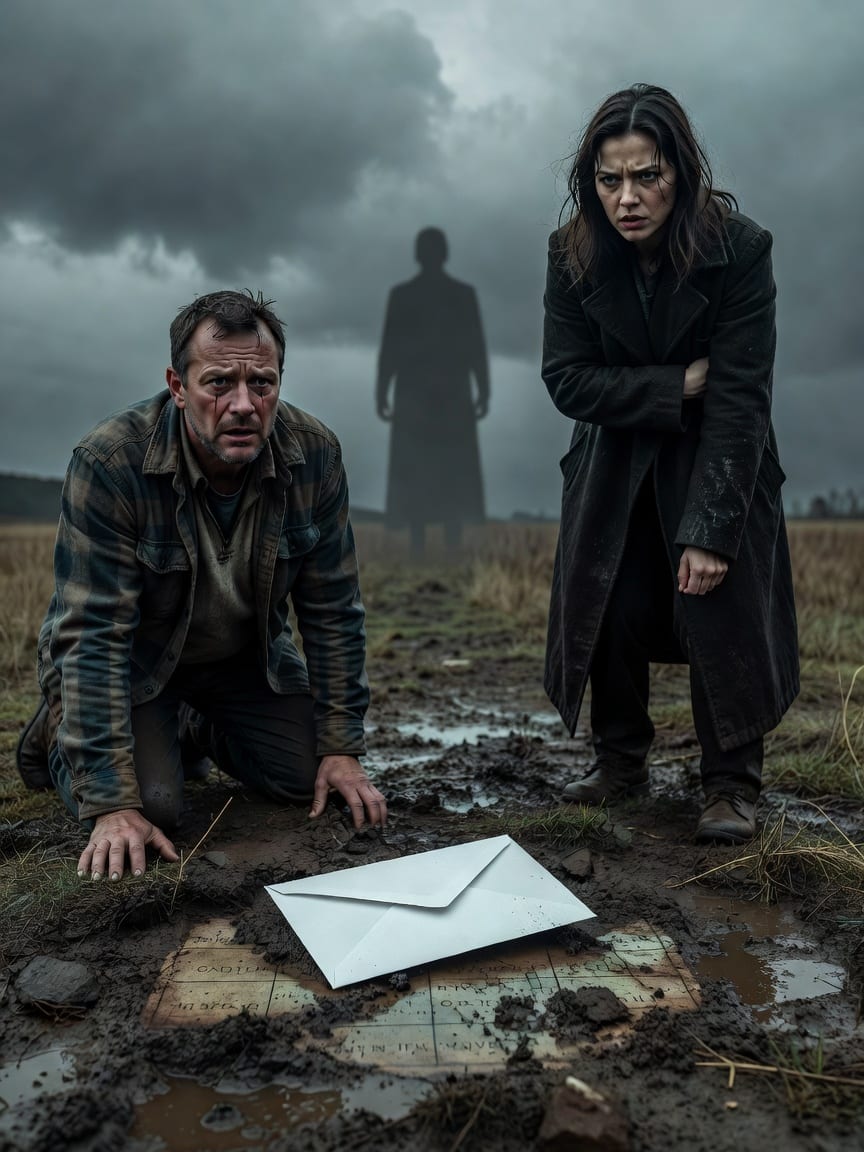
My mail carrier delivers polling cards to Nine Acre Field. It floods, they say. The tithe map shows nine family plots there.
As the new county archivist, I was used to quiet days poring over dusty records. But then I found an empty field, Nine Acre, was receiving current-year polling cards and utility notices for nine distinct addresses. When I investigated, I unearthed a perfectly crisp, current-year tax bill, buried in its soil, surprisingly warm against my fingers.
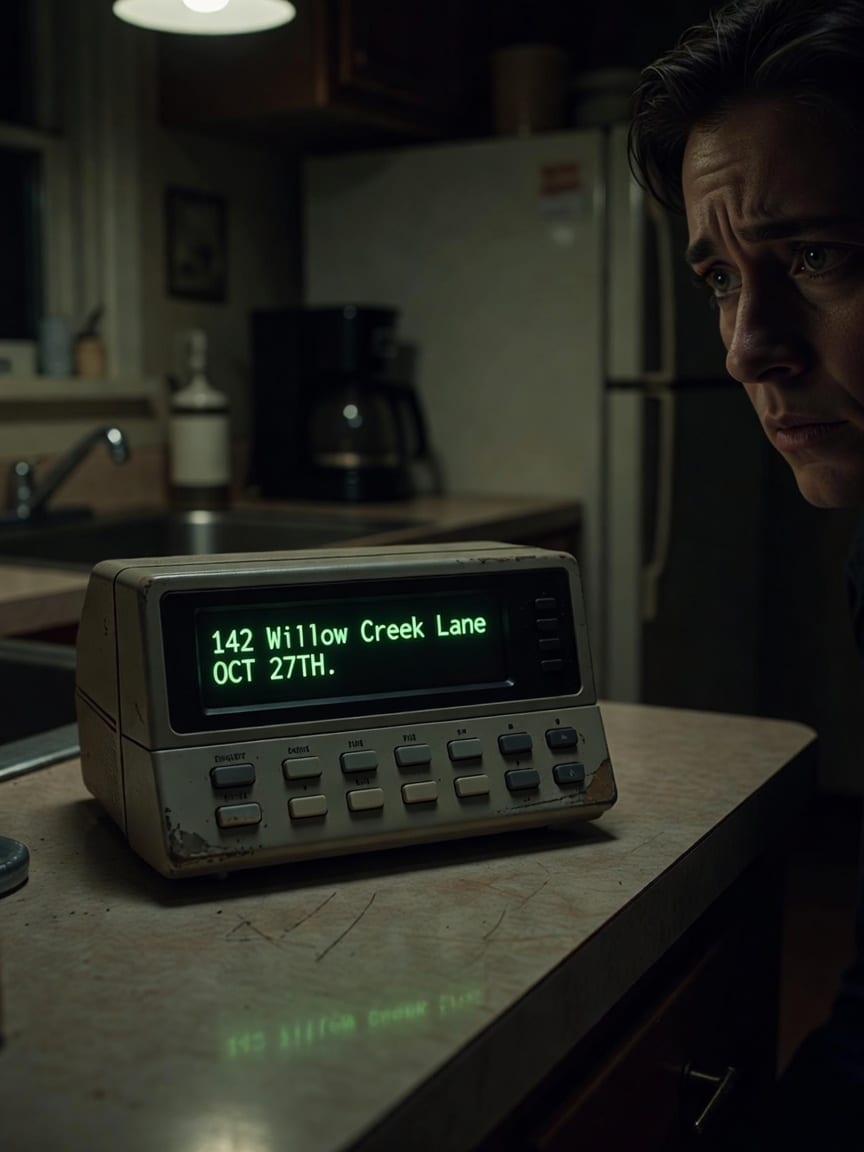
My radio scanner picked up a channel at 2 AM reading local addresses. Mine was on it, dated tomorrow.
I was tracking a storm on my old weather radio when a synthesized voice cut through the static. It began reading local street addresses, then my own: 142 Willow Creek Lane. But the date it gave for my address was tomorrow.
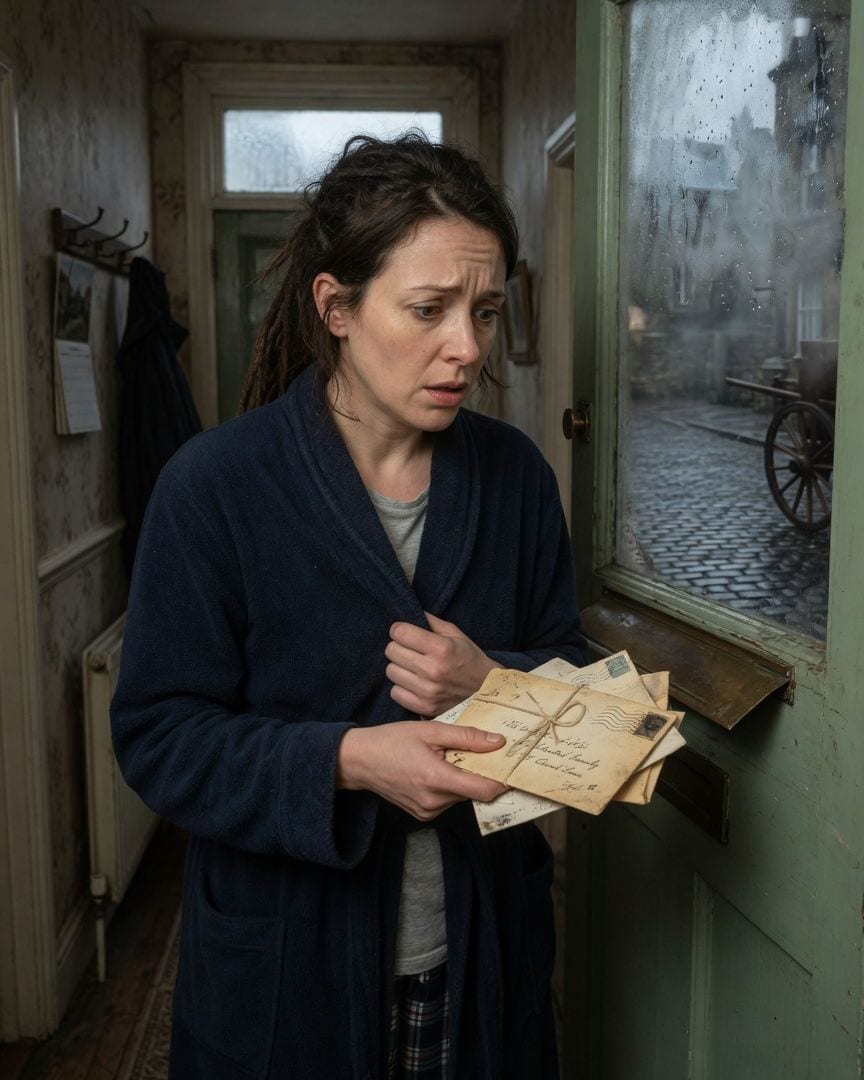
Seventy years ago, a hidden journal recorded my door opening to the wrong street and receiving Lockwood post.
I'd only recently moved into my inherited house, a quiet place on the edge of town. One grey morning, a distinct clatter from the front door's post flap caught my attention. Reaching down, I expected my gravel path, but instead, the flap showed a dark, cobbled street that wasn't mine. A bundle of warm, old letters, addressed to 'The Lockwood Family,' slid through, before the vision flickered and was gone.
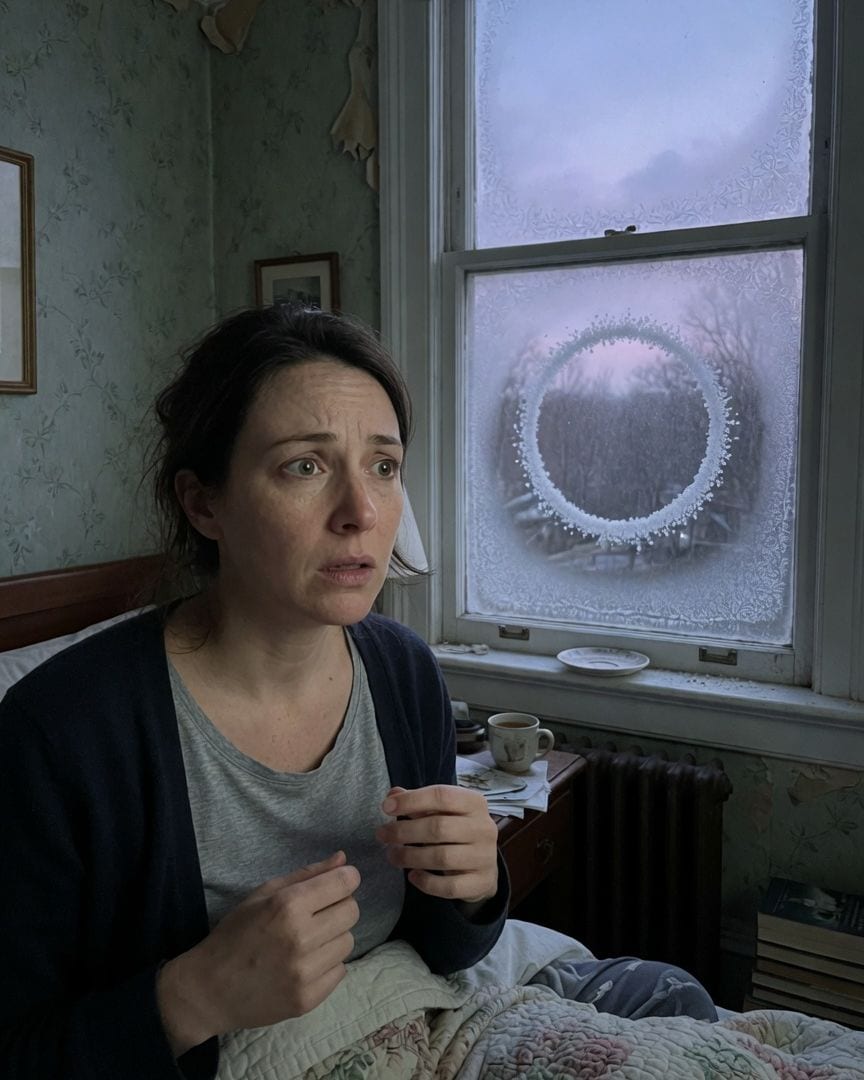
A 1963 obituary for a vanished 7-year-old girl lists *my Fenwick address* as her last known home.
Fenwick has its quaint traditions, like placing a salt saucer on the sill for protection. I put mine on my fourth-floor bedroom window, a private scoff at local custom. The next morning, the saucer was gone, replaced by a perfect salt ring on the *outside* of the glass, impossible to reach.