My new flat has a boarded window. I pried a plank loose and saw a gaslit Victorian shopfront across the street. I nailed the board back. The nails went into wood soft and new.

I’d been in the flat for three weeks, and the boarded-up window in the front room was still bugging me.
Landlord said it was a lightwell, common in these old city buildings, but something about the way it was sealed, like a secret, picked at me. One Tuesday, with nothing better to do, I found a crowbar in the basement.
It was a stupid impulse. I just wanted to see what was behind it.
The planks were old, weathered. They groaned when I pulled them. One came free with a sharp crack, exposing a sliver of glass. I peeled back another, then a third. Instead of dismal brick, a pane of dust-streaked glass.
I wiped it clean with my sleeve.
And then I saw it.
Not a lightwell. Not brick. A street. A cobbled street, bright with a hazy, yellowish glow that had to be gaslight. Across the way, a bustling shopfront.
A draper’s, its window crammed with bolts of rich fabric, mannequins draped in silks. I saw a young boy in a cap sweeping the steps, diligently, his broom kicking up dust.
A woman, apron tied over a dark dress, stood under a striped awning, adjusting it, her face turned away.
The air in my flat, for a fleeting, impossible second, seemed to thicken, carrying the sweet scent of warm, burnt sugar and a faint, distant tang of coal smoke.
My heart hammered. This was impossible. My flat was on the third floor. I stared, then blinked, and the clarity wavered. It couldn’t be real. My hands started to shake. I snatched up the planks, shoved them back into place.
I hammered the nails in, fast, hard, desperate to seal it off. To my shock, the old, rusted nails sank into the wood with unnatural ease. It felt soft, yielding, like it had just been milled, wet and new.
Damn it.
Later, walking to the kitchen, I found myself, without thinking, stepping around a faint, almost invisible stain on the third stair. A habit I couldn’t explain, a tiny avoidance I’d picked up since moving in.
I tried to rationalize the window vision. Exhaustion. Stress from the move. An elaborate, incredibly detailed prank by the previous tenants. But the 'soft new wood' kept gnawing at me.
It defied everything I knew about wood, about nails, about reality. Wood doesn’t just become new.
Then, a few mornings later, it happened. Exactly 6 AM. The distinct, high-pitched whistle of a kettle. It came from my kitchen. I live alone. I’d gone to bed early, hadn’t used the kettle in days.
I crept out of bed, my heart thudding a sick rhythm against my ribs. The kitchen was dark. Empty. The kettle was cold, untouched on the hob.
Yet, the aroma hung heavy in the air – brewed tea, strong, and that same burnt-sweet smell. Like caramelized sugar.
The next day. Same time. 6 AM. The whistle. The smell. I found myself checking the lock on my door twice, then three times. A prickle of genuine unease started to spread through me. It wasn't just a vision anymore.
I stood by the boarded window later that day, staring at the scarred planks, trying to make sense of the sound. My gaze drifted to the old floorboards beneath my feet.
There was a specific spot, right by where the window used to be, visibly worn.
Not just general wear, but a distinct pattern, like someone had stood there, day after day, year after year, patiently pacing an indent into the wood. Like an invisible figure had carved out its own space there.
It was like something was trying to continue a routine that wasn’t mine. That wasn’t human.
Determined to find a rational answer, one that wasn’t about ghosts or time slips, I spent hours online. Deep dives into obscure local archives. I found old city directories, property records, and finally, buried deep, a digitized newspaper clipping.
The headline was faded, but perfectly legible: 'Forsythe Drapery Lost in Tragic Blaze.'
My hands went cold. The address listed was mine. Unmistakably mine.
My breath hitched. I scrolled further. An obituary: 'Grace Forsythe, 28, lost in the great fire of '88, found deceased in her flat above the drapery.' The date was 1888.
I stared at the clipping, then slowly, my eyes lifted to the boarded window. The image of the woman under the awning, adjusting the fabric, flashed in my mind. Was that Grace? And the nails.
Sinking into wood that was soft and new.
The newspaper clipping felt like a physical blow. Grace Forsythe. 1888. My address. It was real. Too real. I needed to know more, needed a proper explanation, something more than digital archives.
I practically ran to the local historical society, clutching a printout of the clipping.
The archivist, a stoic man named Julian Holloway, 68, listened to my breathless account with an unnerving calm. He sat behind a towering desk, spectacles perched low on his nose, his eyes watching me without judgment.
He initially dismissed my story of a Victorian shopfront as 'active imagination,' his voice dry as old parchment. But then I said it. "The Forsythe Drapery."
His head tilted, just slightly. A subtle shift. "Go on," he said, the dismissal gone.
I told him everything. The 6 AM kettle whistle. The burnt-sweet smell. The worn spot on the floorboard by the window. He didn't interrupt. When I finished, he rose slowly and moved to a heavy wooden cabinet.
He pulled out a large, rolled-up document, laying it flat on a table that smelled of dust and beeswax. It was an old cadastral map, the streets of the city etched in fading ink.
He traced a gnarled finger across it. "Your building," he said, tapping a point, "stands precisely where the Forsythe establishment once was."
Then, from another drawer, he produced a faded architect's drawing. It depicted the drapery with an upstairs flat. And a window. In the front room. It was the exact window.
The shock of it, seeing my window on paper from a century ago, made the hair on my arms stand up.
"Local legend speaks of certain structures retaining... echoes," Julian mused, his gaze distant, unfocused. "Strong emotions, repeated actions... they can leave a mark on a place." He added, almost as an afterthought, that the Forsythe fire was particularly tragic.
Grace Forsythe had been a young woman, he explained, with a reputation for her meticulous morning routine. Always up at dawn. Always tea.
I returned to my flat, a chilling sense of being observed settling over me. Julian's words, his distant gaze, the architect's drawing – it all clicked into an unsettling new reality. If there were echoes, I needed to capture them.
To prove them.
I set up a motion-activated camera in the living room, carefully angled towards the boarded window. It was crude, but it was all I had. I told myself it would debunk the whole thing, show me nothing but wood.
The next morning, at 6 AM sharp, the familiar kettle whistle echoed through the quiet flat. Louder this time. The scent of tea, stronger, sweeter, filled the air, making my stomach churn. I waited, holding my breath.
I checked the camera footage. Nothing. No shopfront. No woman. Just the dull, unmoving boards. But then, as I scanned through the 6 AM mark, there it was.
For a split second, precisely where the window was, a strange, shimmering distortion flickered across the screen. Like heat haze off hot asphalt. A glitch. A ripple in the air.
I replayed it, again and again. It wasn't nothing. It was something.
Later that day, I walked past the window, deep in thought. I stopped dead. On the worn spot on the floorboard, the indent I'd noticed, where I knew there had been nothing a moment ago, sat a porcelain teacup.
Delicate, floral pattern. Half-full, steaming faintly. I reached out a trembling hand. It was still warm to the touch.
I lived alone. I absolutely lived alone.
My hands trembling, I texted Julian. 'Can these 'echoes' manifest physically?' I wrote. His reply came almost instantly. 'Sometimes, if the memory is strong enough. Or if something is trying to break through the veil.'
I rushed back to the archives, the warm teacup clutched in my hand, an impossible, solid piece of evidence. I presented it to Julian, along with the camera footage of the shimmering distortion.
He examined the cup, turning it over in his hands, his expression unreadable.
"This," he said slowly, "is not an echo. This is a recurrence."
He led me to a back room, the air thick with the smell of old paper. He unlocked a heavy, dust-covered cabinet. Inside, among brittle documents, was a leather-bound journal. Its cover was dark, worn smooth by decades of handling.
"An archivist's private notes, from the 1930s," Julian explained. He opened it to a specific page, his finger tapping an entry. The elegant script detailed similar phenomena in other old buildings in town.
He pointed to an entry that made my blood run cold. 'The woman at the window, 6 AM. Always the tea. Always the fear. It repeats.'
The entry specifically mentioned the Forsythe Drapery and the flat above.
The previous archivist, decades ago, had meticulously documented Grace Forsythe's daily routine, noting her precise 6 AM tea, her habit of standing by the front window, and her increasing anxiety in the days leading up to the fire.
Julian explained that some structures, particularly those built on 'temporal seams,' could act as anchors for traumatic events, replaying them not as memories, but as live, repeating loops.
The 'soft new wood,' he revealed, was a sign of temporal instability, a thinning of the veil between past and present, making the recurrence not just visible, but increasingly tangible.
I understood now. The window wasn't a memory, not a ghost. It was a live, looping, inescapable prison for Grace Forsythe.
A cold dread seized me, colder than the porcelain teacup had been. Grace wasn't a ghost; she was trapped, endlessly reliving her last moments, and I was somehow watching it happen.
I raced back to my flat, my mind reeling with the implications. I had to see it again, understand it fully.
With frantic energy, I tore down the boards from the window, ripping them away with desperate force. Splinters flew. The glass behind them was clearer, brighter than before, almost glowing.
The gaslit street was there, vibrant and alive, pulsing with light. The shopfront glowed with an unnerving intensity.
And the woman, Grace, was at the awning, her face no longer blurry, but sharp with distress, her mouth open in a silent scream. Her eyes, wide and terrified, locked onto something I couldn't see.
I saw the fear in them, the frantic movement of her hands, wringing them, as if trying to grasp at something that wasn't there.
Then, from within my own flat, directly behind me, I heard a faint, choked cry. It was followed by the sickening, unmistakable sound of something heavy falling down a flight of stairs.
A loud, splintering crack echoed through the quiet room, making my entire body tense. It came from the third stair—the very one I always unconsciously avoided.
I spun around, my heart vaulting into my throat, slamming against my ribs. The sound had come from my own internal staircase. My eyes fixed on the third step.
There, blooming across the faded, old stain I'd always avoided, was a fresh, still-wet dark stain, spreading rapidly, almost glowing in the dim light of the hall.
The wooden railing beside it was splintered, a jagged shard jutting out like a broken bone.
Julian's words, the archivist's ledger, Grace's frantic face in the window—it all slammed into place with horrifying coherence. Grace Forsythe hadn't just died in the fire; she had fallen down these very stairs.
Perhaps in a desperate attempt to escape the encroaching flames, or perhaps pushed in the chaos. Exactly at 6 AM, after her tea.
The splintered railing, the fresh stain, the recurring tea, the fear in Grace's eyes—every detail now clicked into a terrifying, repeating loop.
The 'soft new wood' wasn't just a sign of instability; it was a conduit, allowing the past to physically manifest, not just as an echo, but as a tangible, repeating event.
The fire, the fall, the terror—it was all a live, endless replay, playing out through the 'retained memory' of the house.
And I had been living in its very epicenter.
I understood. Grace’s death was trapped, a horrific moment replaying endlessly, and the house was the stage. I was an unwilling audience, perhaps even a participant. This recurrence, this endless loop, it had to be stopped.
I remembered an old, rusted fire extinguisher I’d found in the basement when I moved in. It was mostly for show, I’d thought, for compliance. Now it was my only weapon.
I grabbed it, my hands shaking so hard I almost dropped it, and rushed back to the front room.
The window pulsed with a terrifying intensity. The shopfront was no longer just glowing; it was thick with smoke, flickering with orange light from below.
Grace was screaming now, a silent, primal scream, running back and forth, her hands tearing at her hair, desperately looking for an escape. This wasn't just a vision; it was a live, burning past.
I knew the fire started in the shop below.
Realizing the 'soft wood' boundary was permeable, a desperate impulse seized me. I reached through the window, pushing my arm into the shimmering void. My skin felt an immediate, icy coldness, then a searing heat that made me gasp.
I aimed the extinguisher at the visible flames engulfing the drapery downstairs. I squeezed the handle.
There was a sickening crunch, a flash of blinding white light that filled the entire room, searing my vision, and then a deafening silence. The entire Victorian scene rippled, distorted violently, like water, and then simply vanished.
The window was just a window, showing the two-foot brick shaft I knew was there. The wood of the frame felt hard, old, and unyielding beneath my fingers. Solid.
I stumbled backward, collapsing onto the floor, gasping for air, my arm aching from a cold burn. I had stopped the fire. I had stopped Grace's loop.
I sat in the quiet of my flat, the acrid smell of smoke slowly dissipating, replaced by the faint scent of stale plaster.
The third stair was still splintered, the fresh stain still there, but it was drying, fading, settling back into the faded memory of the old one. The kettle remained silent. The house felt profoundly, unnervingly still.
When I finally managed to call Julian Holloway, he listened in stunned silence. "You didn't just observe, Penelope," he finally said, his voice hushed. "You intervened. You broke the cycle."
He paused, then added, his voice tinged with something I couldn't quite place, "But these things... these seams... they are rarely isolated incidents. What you did here, it might just be the beginning of what you notice."
I still live in the flat. The window is boarded up again, this time with solid, unremarkable timber, firmly nailed into old, hard wood. I never hear the kettle at 6 AM, never smell the tea and burnt sugar.
The worn spot by the window is just a worn spot.
But sometimes, when the morning light hits the wall just right, I can almost make out the faintest, ghostly outline of a gas lamp, a shop sign, a woman at an awning, shimmering at the edge of my vision.
I live on, marked by what I witnessed and what I did.
And sometimes, late at night, when the building settles, I swear I hear a faint, rhythmic thump-thump-thump from the flat above me, a sound that was never there before I moved in.
The sound of the third stair, upstairs, is never quite silent.
If this one got to you
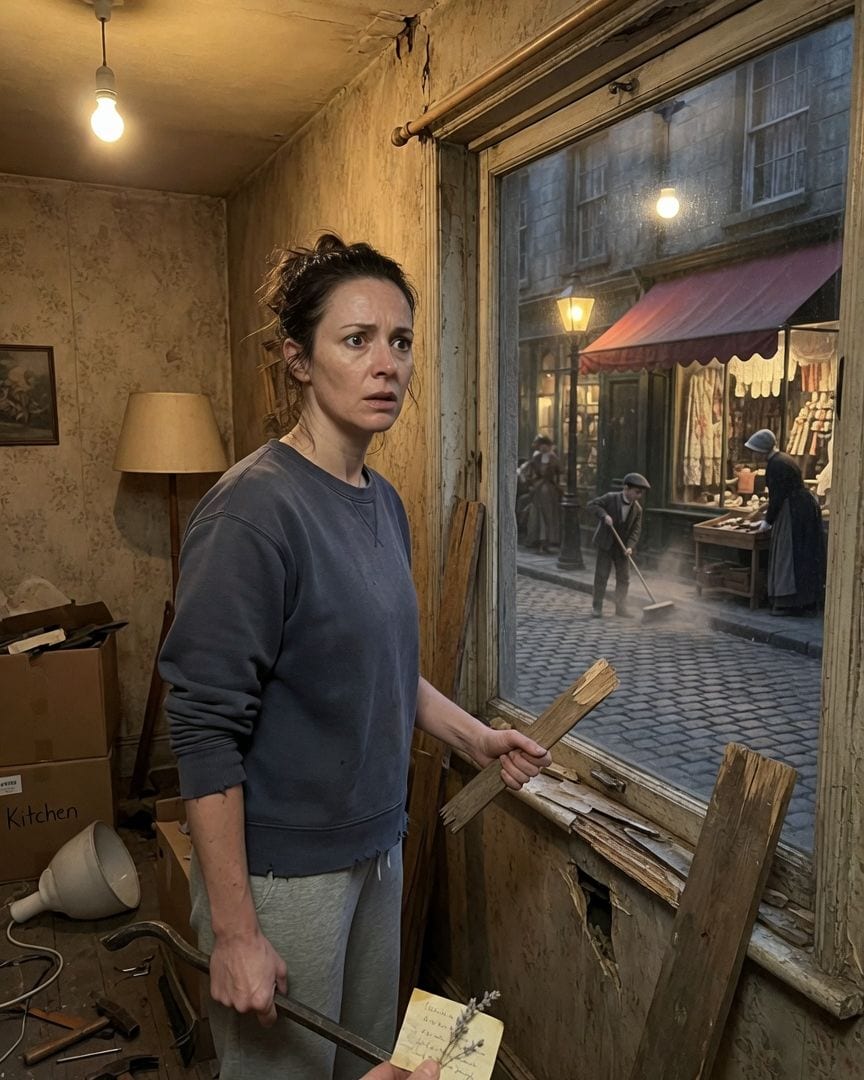
My boarded window showed a gaslit Victorian street. Across my flat, only a brick shaft. The wood felt soft, new when I nailed it back.
Moving into my new flat, I expected to find a grimy brick lightwell behind the boarded-up window. But as the last plank came free, my view wasn't a shaft at all. Instead, a bustling Victorian street, complete with gaslight and a boy sweeping, stretched out before me – a vibrant, living scene that simply shouldn't exist.
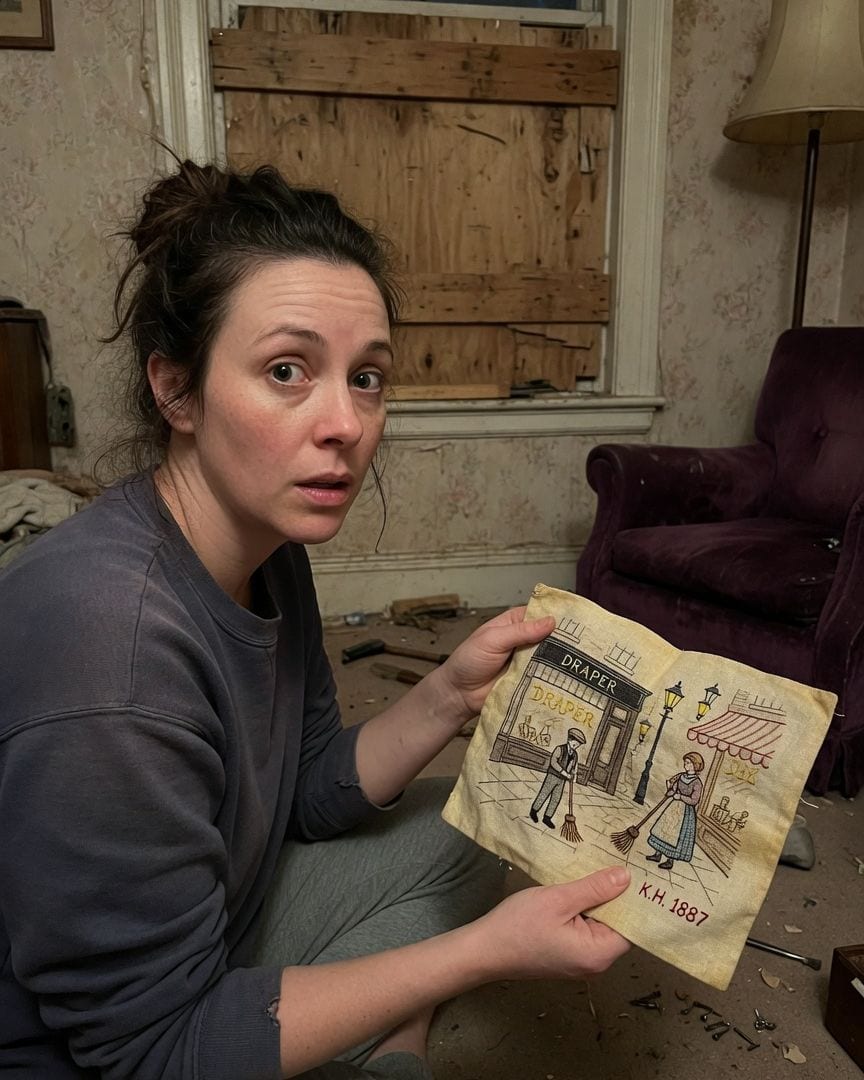
My flat's window shows a gaslit Victorian street across a brick shaft. The nails I hammered back into its frame went into wood soft and new.
My new flat came with a boarded-up window, which the agent dismissed as just an old lightwell. Driven by curiosity, I removed the boards, expecting brick or darkness. Instead, my window opened directly onto a bustling, gaslit street from 1887, a vision that defied all sense.
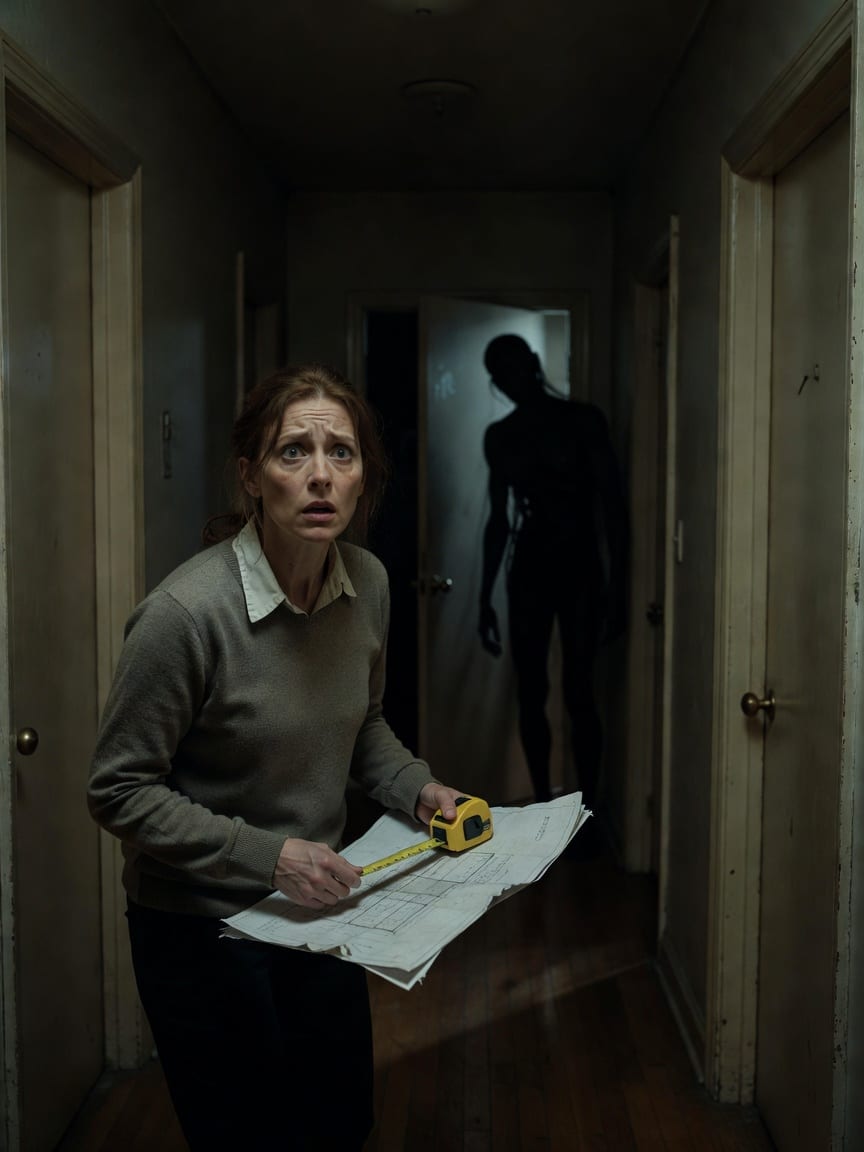
My front door has a dented gate and a dead hydrangea. I walked past it six times, trying to reach the corner shop just a hundred yards away. The pavement kept bringing me back to my own porch, and the shop's light never moved.
My morning started like any other, a quick walk to the corner shop from my home at Number 14, Elm Terrace. But after walking what felt like two minutes, I found myself back at my own front door, the shop no closer. I tried six times, faster and slower, but my street kept compressing, refusing to let me leave.
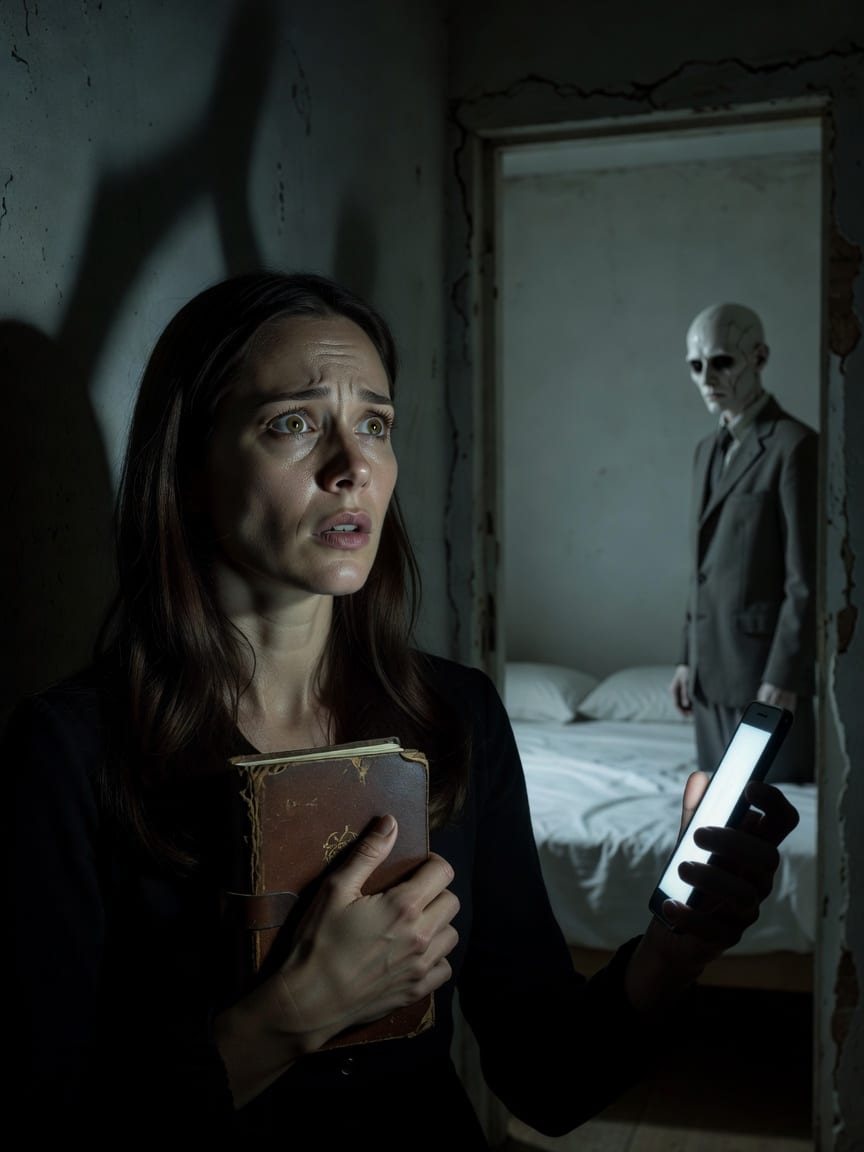
Behind a plastered-over doorway, I found a room. Papered, carpeted, and furnished with a made bed, sealed for decades. The air was dead still, but the bed wasn't dusty. My council tax bill only lists five rooms.
I'm Claire, an architect, meticulously planning my new Victorian terrace renovation. But when I uncovered a hidden room behind a wall, everything I knew about time and decay shattered. The bed was perfectly made, the air still, yet there was no dust, only an unnerving cold.
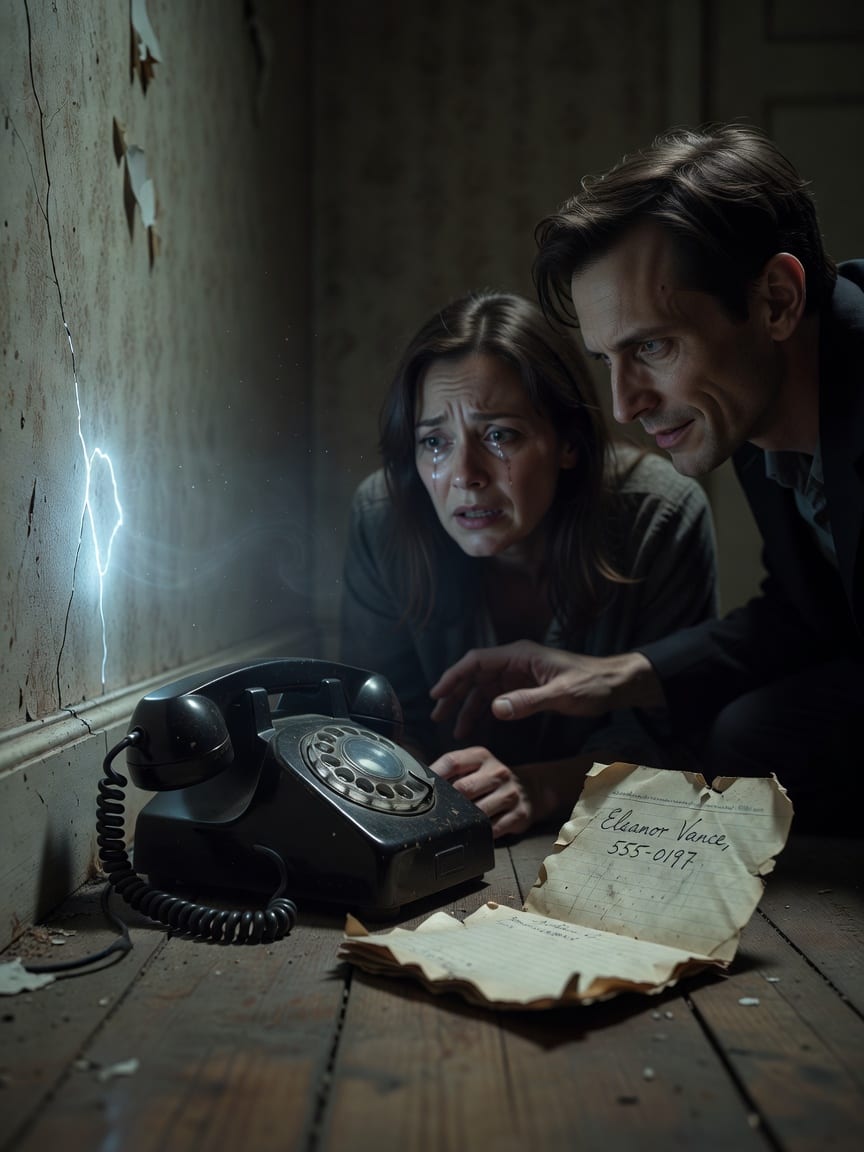
My house's walls ring when I dial a phone number from a 1974 directory. My neighbors said that directory was trash.
I was sifting boxes in my new house when I found an old 1974 telephone directory for my street. It listed my address, 12 Elm Street, under the name "Mr. & Mrs. Sheppard." On a whim, I called the faded seven-digit number. My cell phone rang, but a low, muffled sound also vibrated from the wall beside me.
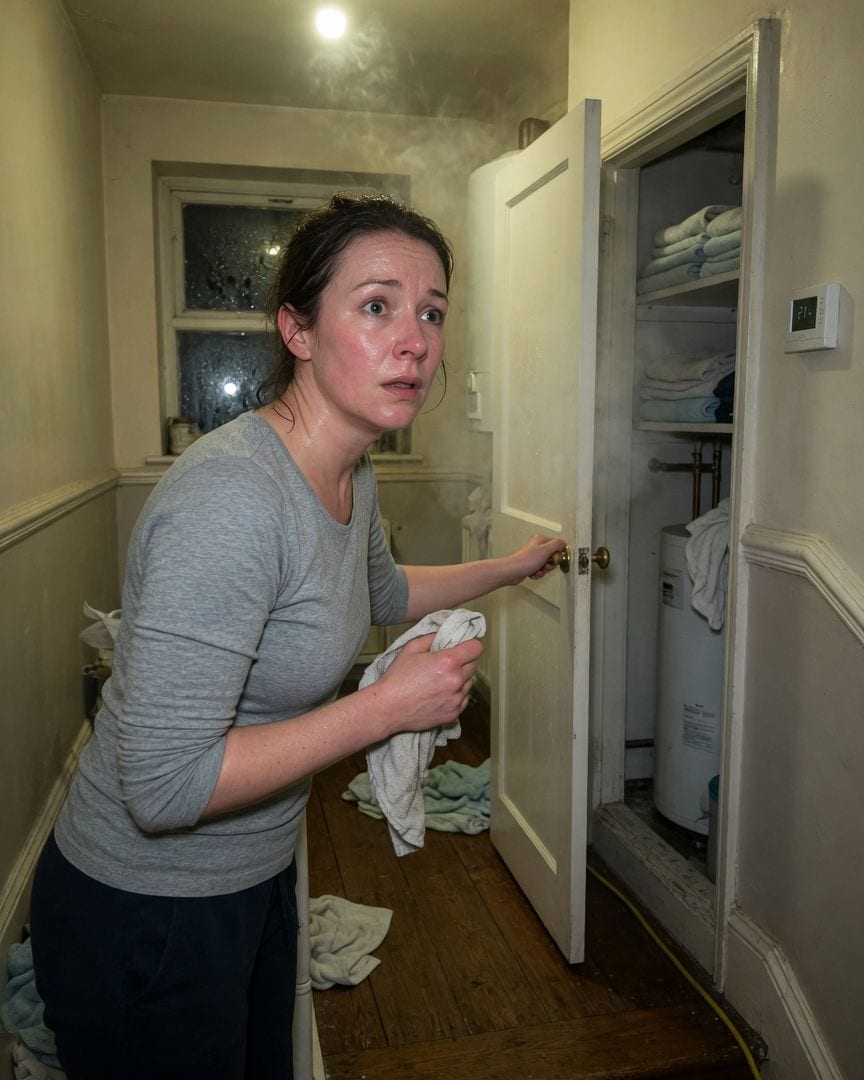
My airing cupboard opened onto a burning brick copper, sheets boiling. The heat rolled out, smelling of soda and wet linen. I shut it; my boiler was back.
My new house, bought just last spring, felt colder than expected. When I opened the airing cupboard, it wasn't mine at all, but a blast of steam and a roaring fire from an impossible past. Days later, a faint, metallic smell still drifted from the landing, and a worn path on the floorboards led to a hidden, ancient sampler beneath my feet, dated 1892.