My flat's window shows a gaslit Victorian street across a brick shaft. The nails I hammered back into its frame went into wood soft and new.
My new flat, the one I’d scrimped and saved for, had a boarded-up window in the front room. I’d seen it during the viewing, a long, narrow rectangle of plywood where a lightwell should have been.
The agent had shrugged it off, 'Just an old lightwell. Someone boarded it up years ago, probably for privacy.' I didn't think much of it then.
It was a good price for the area, and I figured I'd eventually take the boards down, maybe put in some frosted glass. Practical, that's me. Always look for the sensible explanation.
A few weeks after moving in, a Friday evening with nothing much to do, I found myself staring at it. Curiosity, pure and simple. I fetched a claw hammer and a screwdriver from my toolbox.
The boards were old, stained, but the screws came out surprisingly easily. One by one, I pulled them free, the dust motes dancing in the dim evening light from the hall.
When the last board finally gave way, it didn't reveal brick, or darkness, or even a dirty windowpane.
It revealed a street.
Not a modern street, not a grubby alley, but a narrow, bustling thoroughfare, lit by the impossible yellow glow of gas lamps. Across a two-foot brick shaft that should have been empty space, was a draper's shop.
I could see the painted sign, looping gold letters on dark wood. A boy in a cap and waistcoat swept the steps with a broom made of twigs, kicking up a plume of something that looked like coal dust.
A woman in a long skirt adjusted a striped awning. The detail was so sharp, so utterly real, I could almost taste the damp, sooty air, almost hear the distant clatter of hooves on cobblestones.
My heart hammered against my ribs like a trapped bird. It was 1887. I knew it, just knew it, with a certainty that chilled me to the bone. This flat was built in 1905.
I don’t know how long I stood there, rooted, before the rational part of my brain screamed. It had to be a trick. A high-definition mural, somehow backlit, maybe. A projection? But it was too real, too vivid.
I tore my gaze away, fumbled with the boards, and blindly hammered them back into place.
The nails went in, yes, but the wood felt oddly soft beneath the hammer, giving way like fresh pine, not the hardened, decades-old timber I’d expected. I told myself it was just old wood, decaying.
But the image of that gaslit street, that boy, that shop, burned behind my eyelids, a sharp, clear photograph I couldn’t unsee.
The window became an unwelcome obsession. I tried to find a mundane explanation, a glitch in reality I could dismiss. I spent hours at the local library, poring over old building plans and municipal records for my address. Nothing.
My flat, built in 1905, sat squarely where a solid brick wall should have been, overlooking a narrow air shaft that led to nothing but the rear of the next building. No street. No shops. No possibility.
The more I looked, the more it didn't fit, and the more the air in my flat seemed to press in on me.
But the window wasn't the only thing. Slowly, other small, inexplicable 'routines' began to surface.
Every morning, at precisely 6 AM, I’d hear a faint clatter from the kitchen, like a kettle being set down, followed by the ghost of a weak tea smell. I drank coffee, and my kettle was always cold then.
An old armchair in the living room, a velvet monstrosity I rarely used, held a noticeably deeper impression in its seat and arms, as if someone had habitually sat there for decades, molding the fabric to their shape.
And the third stair on the landing – a particular, soft creak it made if I stepped on it – became a thing I instinctively avoided.
My foot would just reach for the fourth, a habit I hadn't consciously learned, as if following some unspoken rule ingrained in the very structure of the house. These weren't overt, dramatic hauntings.
Just quiet, insistent patterns in an otherwise empty flat, like a lingering echo of a life that wasn't mine.
One afternoon, a draft, sharp and cold, seemed to emanate from the boarded window. I knelt, trying to locate its source, and my fingers brushed against a loose floorboard near the skirting. It wasn't nailed down properly.
I frowned, then curiosity got the better of me again. Prying it up with a butter knife, I found a small, carefully folded piece of linen tucked into the dark space beneath.
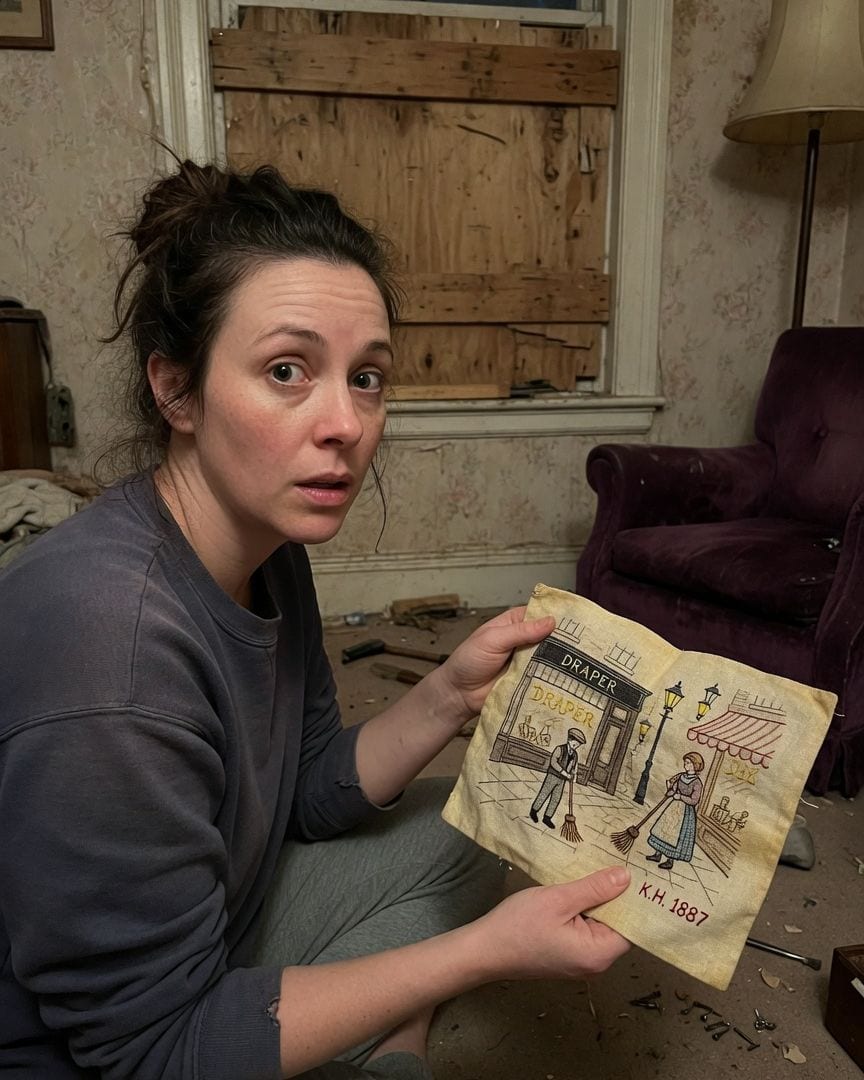
Unfurling it, my breath caught. It was a hand-stitched sampler, intricate and faded, depicting a bustling street scene. The exact draper's shop from my window, perfect in every detail, even the boy sweeping the steps.
In the corner, stitched in faded, delicate thread, were the initials 'K.H.' and the date '1887'.
Vera held the sampler, its delicate stitches a tangible, undeniable link to the impossible vision from her window. The date, 1887, was decades before her building even existed.
The initials 'K.H.' meant nothing to her, yet they felt like a personal signature on a reality that defied all sense.
She looked from the embroidered shop to the boarded window, then back to the sampler, the linen suddenly heavy, cold in her hands. The quiet hum of her empty flat now felt like a holding breath, waiting.
The image of the gaslit street, no longer just a memory, pulsed with a new, terrifying implication, as if the sampler was not just a picture of the past, but a piece of it, delivered directly into her present, a message from a time that refused to be gone.
The sampler shattered any remaining attempts at rationalization. That small, faded piece of linen, with its impossible date and cryptic initials, turned ‘K.H.’ into my first real lead.
I spent the next few days at the local library again, but this time I wasn't looking at building plans. I was poring over old electoral rolls and property deeds for my address, searching for anyone with those initials.
It was tedious work, the microfiche flickering, making my eyes ache. But then, a name began to appear with unnerving regularity: Kathleen Holloway. She was listed as the occupant of my flat from 1968 until her death just last year.
I found an obituary online. "Kathleen Holloway, a lifelong resident of [town name], passed away peacefully at 94." Ninety-four. She had lived in my flat for over fifty years.
The 'routines' – the tea, the armchair, the third stair – suddenly took on a chilling new weight. These weren't just random house quirks. These were Kathleen's.
I started seeking out older neighbors. Mrs. Henderson, two doors down, remembered Kathleen Holloway immediately. "Oh, yes," she'd said, nodding over her fence. "A quiet woman, kept to herself. Always had her tea at six, sharp. Never missed it."
I felt a prickle of dread, a cold finger tracing my spine. "And the third stair?" I ventured, trying to sound casual. Mrs. Henderson chuckled, a dry, reedy sound. "Oh, that old thing. Kathleen always skipped it.
Said it had a 'funny give' to it, even though I never noticed anything myself. Fussy, she was." My skin crawled. The mundane explanations I'd clung to evaporated, leaving me exposed to something I couldn't comprehend.
Armed with Kathleen's name and a deepening sense of unease, I revisited the municipal archives. This time, I wasn't looking for building plans. I was looking for anything about the site's history, any oddities.
I found a passing reference in a poorly indexed, obscure volume about 'unusual structural anomalies' in certain older districts. The subsequent section was heavily redacted, but it referenced 'historic preservation zones.'
The language was deliberately vague, bureaucratic obscurantism, but the address of my building was listed, stark and undeniable.
It was a breadcrumb trail, leading not to a simple haunting, but to something far stranger, far more organized, than I could have imagined.
My digging, it turned out, didn't go unnoticed.
One evening, as I sat in the worn armchair Kathleen Holloway had so frequently occupied, researching 'temporal anomalies' on my laptop, the faint smell of tea at 6 AM was sharper, closer than ever.
It wasn't just a lingering scent; it was almost fresh, as if brewed moments ago. I glanced toward the kitchen. The light was off, the kettle cold on the hob.
But then, a soft clink, like a spoon gently tapping a ceramic mug, echoed from the stillness. I froze, every muscle in my body tightening. I heard nothing else.
The air grew heavy, expectant, and the hair on my arms stood on end.
The next day, after another unproductive visit to the archives – they seemed to be stonewalling me now, suddenly – I felt a distinct prickle on the back of my neck. It was that feeling of being watched.
As I walked home, I noticed a man in a nondescript dark car parked down my street. He wasn't overtly watching me, just reading a newspaper, but the car was too pristine, too still for the residential area.
When I passed again an hour later, he was gone.
Later that week, a small, unmarked envelope arrived in my letterbox. No stamp, no sender address, just my name handwritten on the front. My fingers trembled as I opened it.
Inside was a single, aged photograph: a blurry, sepia-toned image of the draper's shop from my window, but taken from a slightly different angle, as if from across the street.
Scrawled on the back, in an elegant, looping hand that felt ancient, were two words: 'Leave it.' The message was clear, chilling. Someone knew what I was doing. Someone was watching.
The horror of the house was no longer just a historical echo; it was a present, active concern, and I was in its sights.
The 'Leave it' note spurred me into action, crystallizing the dread into something concrete. I returned to the municipal archives immediately, the sepia photograph clutched in my hand, seeking out the clerk who’d helped me before, Greg Marsh.
He was a man in his fifties, with neat grey hair and a perpetually calm, almost serene, demeanor. It was unsettling.
"Mr. Marsh," I began, my voice tight, trying to keep it from shaking. "I found this." I laid the photograph on his desk, pushing it across the polished wood.
He glanced at it, his expression unreadable, a faint, almost imperceptible shift in his eyes. "An old photo of the high street, yes. We have many such records in the historical department." His voice was soft, even.
"No," I insisted, leaning forward, lowering my voice. "This isn't just an old photo. This is the shop I saw through my window. The one that shouldn't be there. The one from 1887."
Marsh slowly folded his hands on the desk, his gaze settling on mine. "Ms. Sinclair, your building is… complex. It sits on what we've designated a 'recalcitrant historical retention zone.'
Essentially, pockets of the past occasionally… assert themselves in certain locations." He spoke with a quiet authority, as if this was normal, everyday information.
"What does that mean?" I demanded, the words tumbling out. "The window, the tea, the stair… Kathleen Holloway? She lived there for fifty years. She knew, didn't she?"
Marsh sighed, a soft, almost weary sound that seemed too personal for his detached persona. "Kathleen was… aware. She lived there for a very long time. Became quite attuned. Her routines, her habits, they resonated with the bleed.
They became part of it. The house, in a sense, remembered her, and through her, it remembered other things. The tea, the stair… those were her imprints, playing out. The building retains certain… echoes.
It's not a haunting in the traditional sense. More like a skip in the record, a persistent loop in the fabric of time itself."
He spoke with a precise, almost academic air, as if discussing a geological phenomenon, not something that was actively unraveling my reality.
"And the note?" I pressed, gesturing to the photograph. "The car I saw? Someone’s watching me."
Marsh's eyes met mine directly, and for the first time, I saw a flicker of something beyond calm – a deep, knowing weariness. "We monitor these sites, Ms. Sinclair. For stability. For public safety.
And sometimes, for the protection of those who become… involved. It's best not to interfere. The less disturbance, the better the integrity of the temporal flow. For everyone's sake."
Marsh's explanation, though chilling in its clinical detachment, had a disturbing coherence. The echoes, the routines, the window – it all clicked into a terrifying, impossible whole.
But the 'Leave it' note, the implication of being watched, still gnawed at me. His words about 'protection' sounded more like a threat.
I returned to the archives one last time, ignoring the clerk at the counter who gave me a wary glance.
This time, I requested any and all property records for my address, going back to its original construction, no matter how redacted. I insisted. After a tense back-and-forth, a thick file was placed before me, heavier than I expected.
It was heavily redacted, yes, filled with strange annotations and internal memos from departments I'd never heard of, pages and pages of bureaucratic jargon.
My fingers trembled as I sifted through decades of faded paper. Then, buried deep within, I found it: an addendum, dated 1972, from something called the 'Temporal Conservation Unit.'
It referenced 'scheduled temporal bleed-through' at my address, and then, in stark, clinical language, it designated 'Occupant K. Holloway as Primary Anchor, 1972-2022.' Beneath this, stamped in faded red ink, were the words: 'Monitoring protocol active.'
Primary Anchor. Kathleen Holloway wasn't just attuned; she was integral. And I, now holding the record, felt a chilling awareness that the 'monitoring protocol' wasn't just for the house, or for Kathleen, or even for the phenomenon itself.
It was for anyone who, like me, started to see the past.
I confronted Greg Marsh again, the redacted record spread across his desk like an indictment. "What is a 'Primary Anchor'?" I demanded, my voice shaking with a mixture of fear and fury.
His composure, I realized, was part of the horror.
Marsh didn't flinch. He leaned back in his chair, seemingly unbothered by my distress. "It's what we call individuals whose presence stabilizes the bleed-through.
Kathleen Holloway, for reasons we still don't fully understand, became inextricably linked to the temporal anomaly in your flat. Her consciousness, her routines, acted as a bridge, maintaining the integrity of the overlap without causing catastrophic collapse."
He gestured to the record. "The 'scheduled bleed-through' refers to the predictable nature of the temporal distortions. The window you saw, the tea, the stair – these are all manifestations of the house's persistent memory, anchored by Kathleen.
It's why the nails went into 'new' wood; you were interacting with the Victorian era, not your own present. She literally lived in two times at once, her habits echoing through both."
I thought of the sampler. "She knew, didn't she? She made that sampler in the past, and it appeared in my present."
Marsh nodded slowly. "Yes. She became quite adept at navigating the overlap. The Unit was established decades ago to identify and manage these sites, to prevent wider temporal disruption. We've known about your flat for over seventy years.
Kathleen was our longest-serving anchor. And now…" He trailed off, his gaze fixed on me, a quiet, terrible understanding in his eyes.
Marsh’s unspoken implication hung heavy in the air, cold and undeniable. "And now it's me," I finished, my voice flat, devoid of emotion. "I'm the new anchor."
He offered a faint, regretful shrug, a gesture that spoke of resignation, not apology. "The house responds to a certain… resonance. You've been drawn in, Ms. Sinclair. The Unit has been observing your attunement."
A cold dread settled deep in my bones. The routines, the window, the sampler – it wasn’t just a ghost story; it was a physical, documented reality, and I was now part of it.
The logical mind that had always sought answers was overwhelmed by the coherence of it all. "What happens now?" I asked, my voice barely a whisper, hoping for an escape, any kind of escape.
"You continue to live there," Marsh replied, his tone chillingly practical, utterly unbothered. "You’ll find your own routines begin to align with the house's rhythms. You'll begin to experience more. The bleed will deepen around you. We'll monitor, of course.
For stability."
I stumbled out of the archives, the city outside seeming unreal, a flimsy veneer over layers of forgotten time. The familiar sounds of traffic, the indifferent faces of passersby, they were all just static now.
I walked home in a daze, the familiar streets feeling alien, porous. As I approached my building, I could almost feel the pull of it, a subtle hum beneath my feet, a gentle suction.
The window in my front room, behind its boards, beckoned, a silent invitation to a past that was now also my present. I knew, with a certainty that froze my blood, that I could not leave.
The house had already claimed me, not with chains or walls, but with the insidious, coherent logic of its own remembered time.
I was the new anchor, destined to live out the routines, to see the gaslit street, to bridge the impossible gap. The horror wasn't in what I would see, but in what I would become.
Vera Sinclair never moved out of the flat. Her social media posts became sparse, then ceased altogether. Her friends noticed her growing detachment, a quiet preoccupation in her eyes, a sort of distant calm.
The old armchair in her living room, once merely worn, now held a permanent, deep impression, as if someone sat there constantly, perpetually.
The faint smell of tea at 6 AM was no longer faint, but a distinct, comforting aroma that filled the kitchen.
The third stair on the landing no longer merely creaked; it was now visibly worn, a slight dip in the wood from repeated avoidance.
Her mail, mostly junk, accumulated in a small, neat pile by the door, untouched for weeks at a time. The curtains in her front room remained perpetually drawn, a silent barrier against the outside world.
One quiet morning, a neighbor passed Vera's window and saw a flicker of movement behind the drawn curtains. A figure, indistinct but clearly female, stood silhouetted, peering out through a small gap in the fabric.
The neighbor waved, but the figure remained motionless, a still, dark shape against the dim light within.
Later that day, Mrs. Henderson from two doors down, noticed the faint, distinct smell of weak tea wafting from Vera's flat at precisely 6 AM, just like Kathleen Holloway's.
She paused, a small frown on her face, before continuing on her way. The house hummed with its quiet, familiar rhythm.
A few weeks later, a new 'monitoring protocol active' stamp appeared on Vera Sinclair's property file at the municipal archives, dated the day she walked out of Greg Marsh's office.
The new occupant had settled in, becoming another part of the house's long, slow memory.
Sometimes, in the very early hours, a light would flicker from the front room, briefly illuminating a gaslit Victorian street, visible only to those who knew where to look.
The house continued its routines, as it always had, with a new, quiet presence. The tea, strong and black, was always ready at six.
If this one got to you
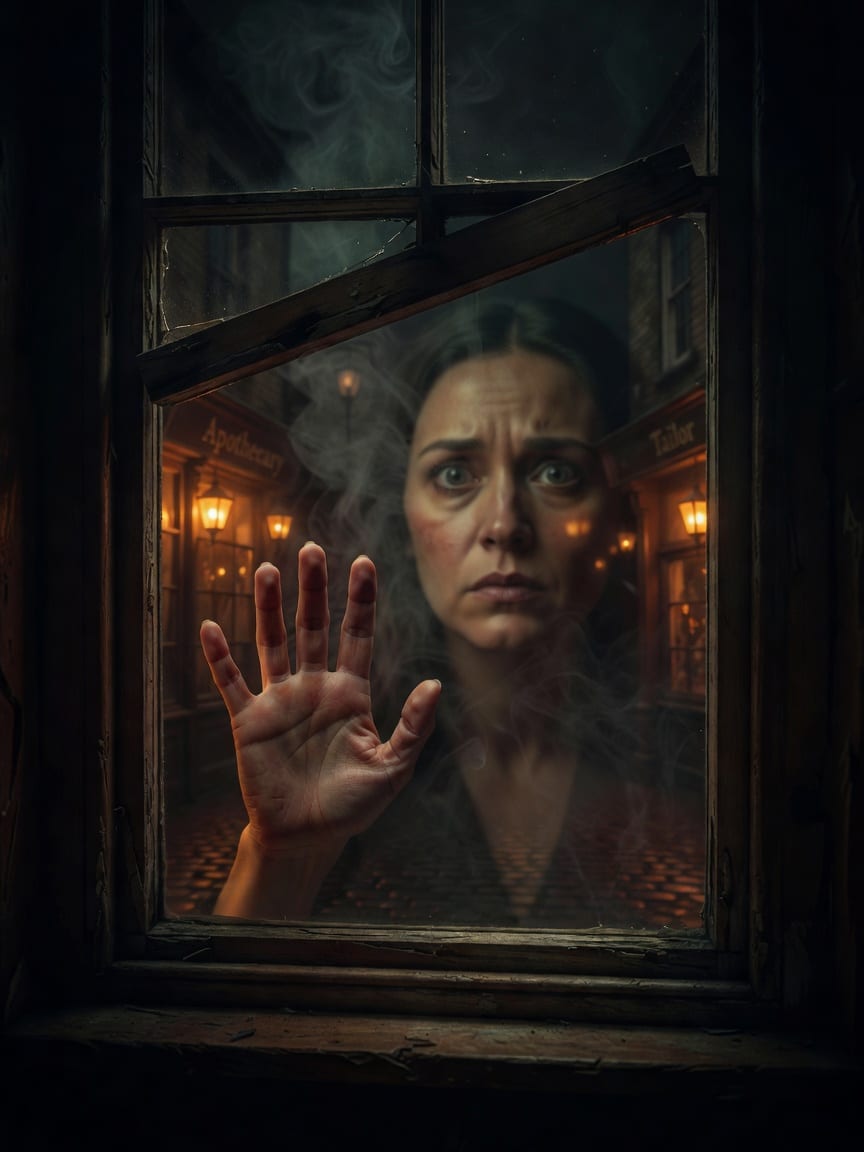
My new flat has a boarded window. I pried a plank loose and saw a gaslit Victorian shopfront across the street. I nailed the board back. The nails went into wood soft and new.
I'd only been in the flat three weeks when the boarded-up window revealed a bustling, gaslit street from another era. Shaken, I nailed it shut, only for the old planks to feel like freshly milled, wet wood. Then, the kettle started whistling at 6 AM every morning, cold and untouched, leaving behind a faint, sweet smell of brewed tea.
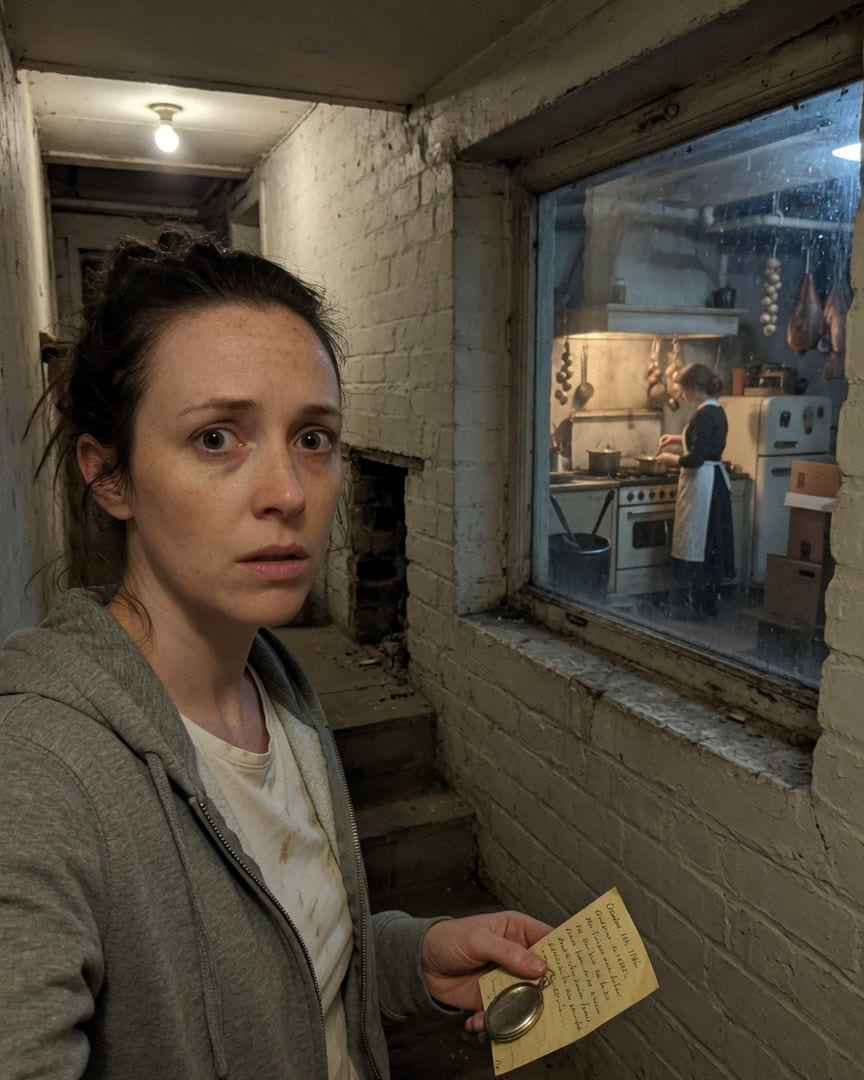
My basement window shows a 1906 kitchen, with a scullery girl and the sound of a poker stirring coals that aren't there.
I've only been in my basement flat a month, still getting used to the city's hum. But my window at pavement level now shows a gaslit kitchen, complete with a bustling scullery girl and the faint sound of coals being poked.
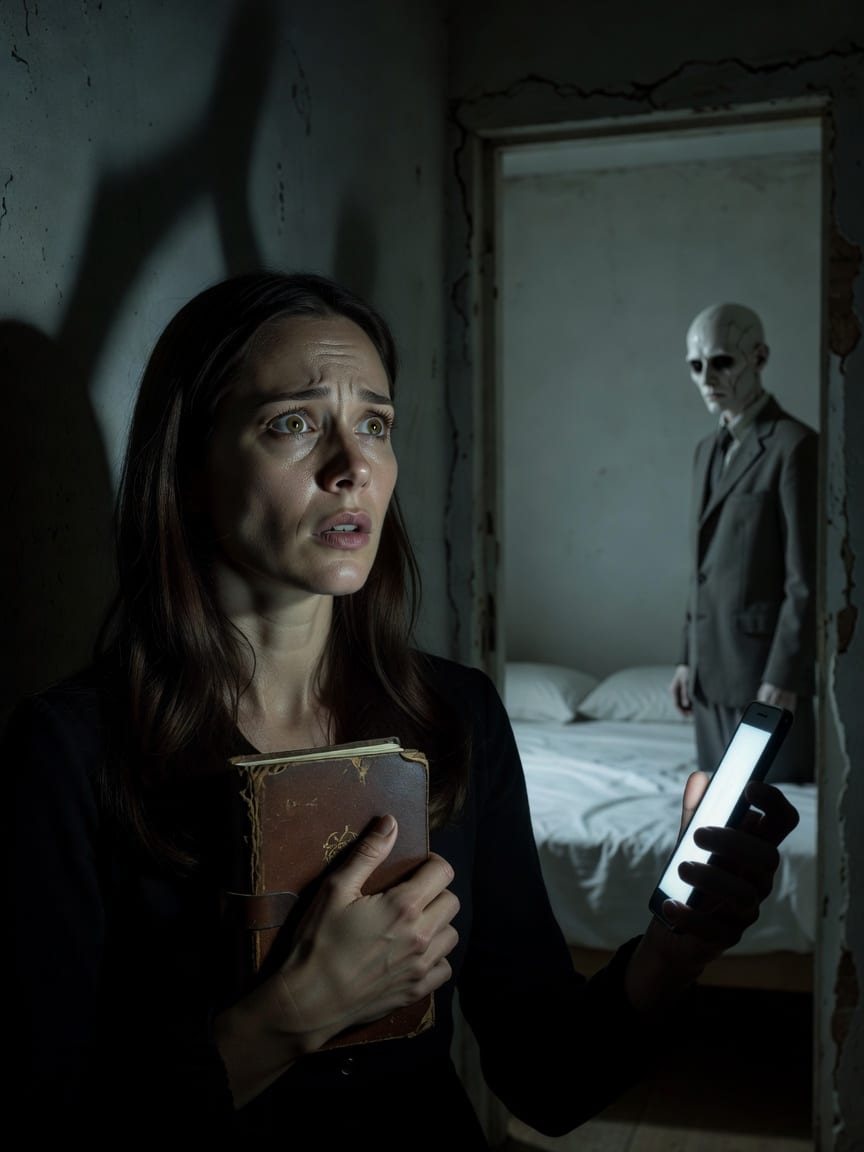
Behind a plastered-over doorway, I found a room. Papered, carpeted, and furnished with a made bed, sealed for decades. The air was dead still, but the bed wasn't dusty. My council tax bill only lists five rooms.
I'm Claire, an architect, meticulously planning my new Victorian terrace renovation. But when I uncovered a hidden room behind a wall, everything I knew about time and decay shattered. The bed was perfectly made, the air still, yet there was no dust, only an unnerving cold.
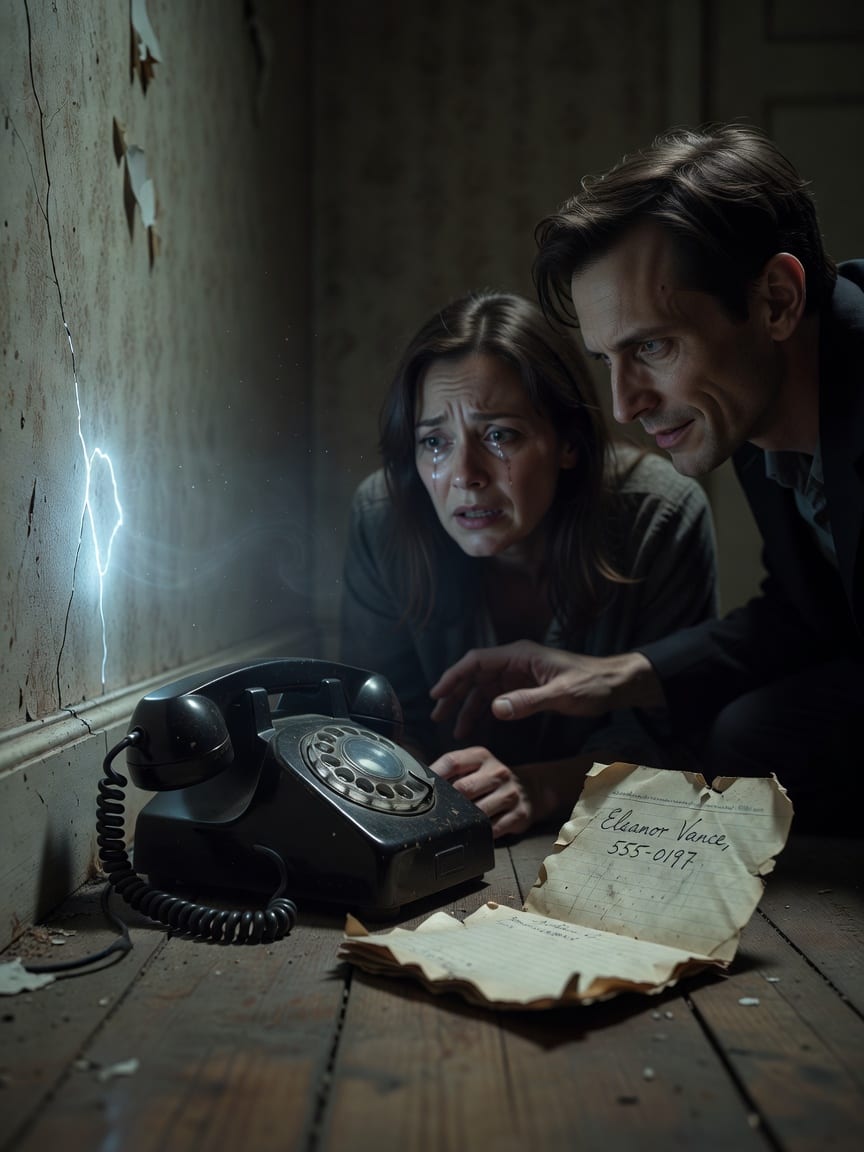
My house's walls ring when I dial a phone number from a 1974 directory. My neighbors said that directory was trash.
I was sifting boxes in my new house when I found an old 1974 telephone directory for my street. It listed my address, 12 Elm Street, under the name "Mr. & Mrs. Sheppard." On a whim, I called the faded seven-digit number. My cell phone rang, but a low, muffled sound also vibrated from the wall beside me.
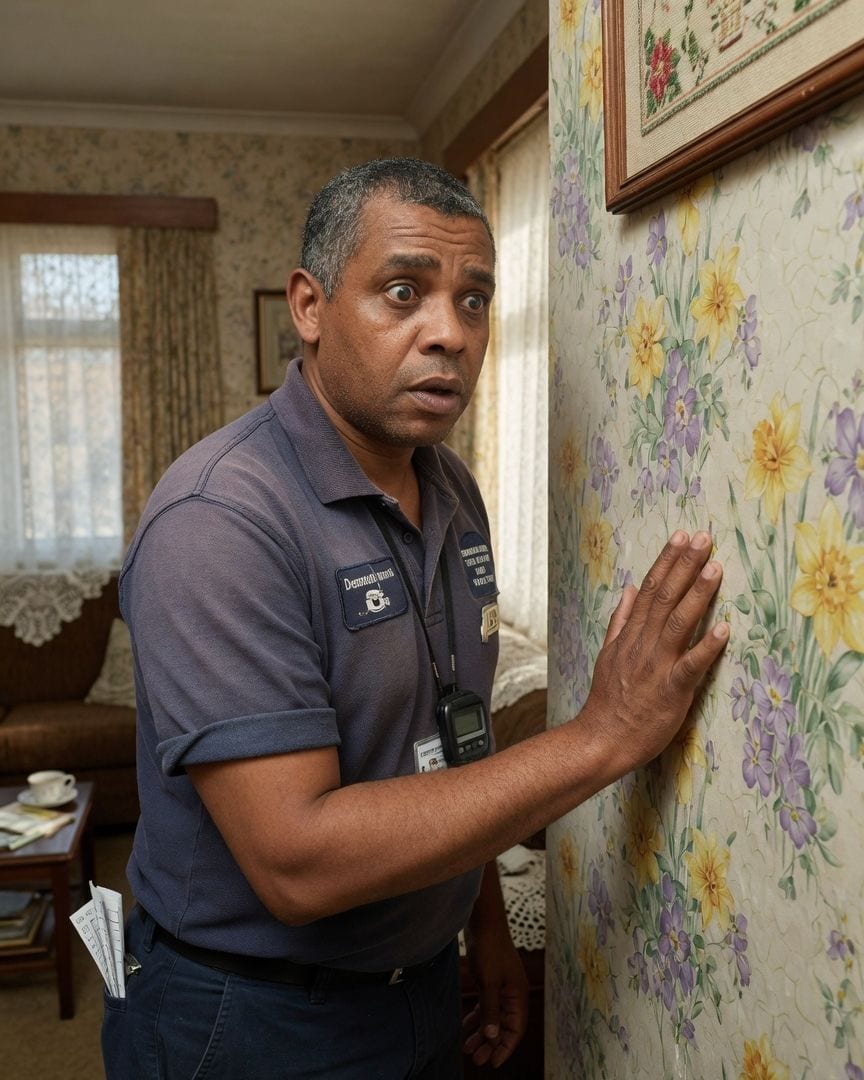
I read the water meters on this street, and this month number 30 grew a second one in pavement that was solid last month — its pipe runs back under a front door I cannot find.
I'm Desmond Drummond, a city water meter reader, used to the predictable rhythm of my fifteen-year route. But this month, Mrs. Crane's house on Elm Street showed a second meter reading. It led to a new meter pointed at a blank brick wall, and later, to a hidden door behind her living room wallpaper where no door should exist.
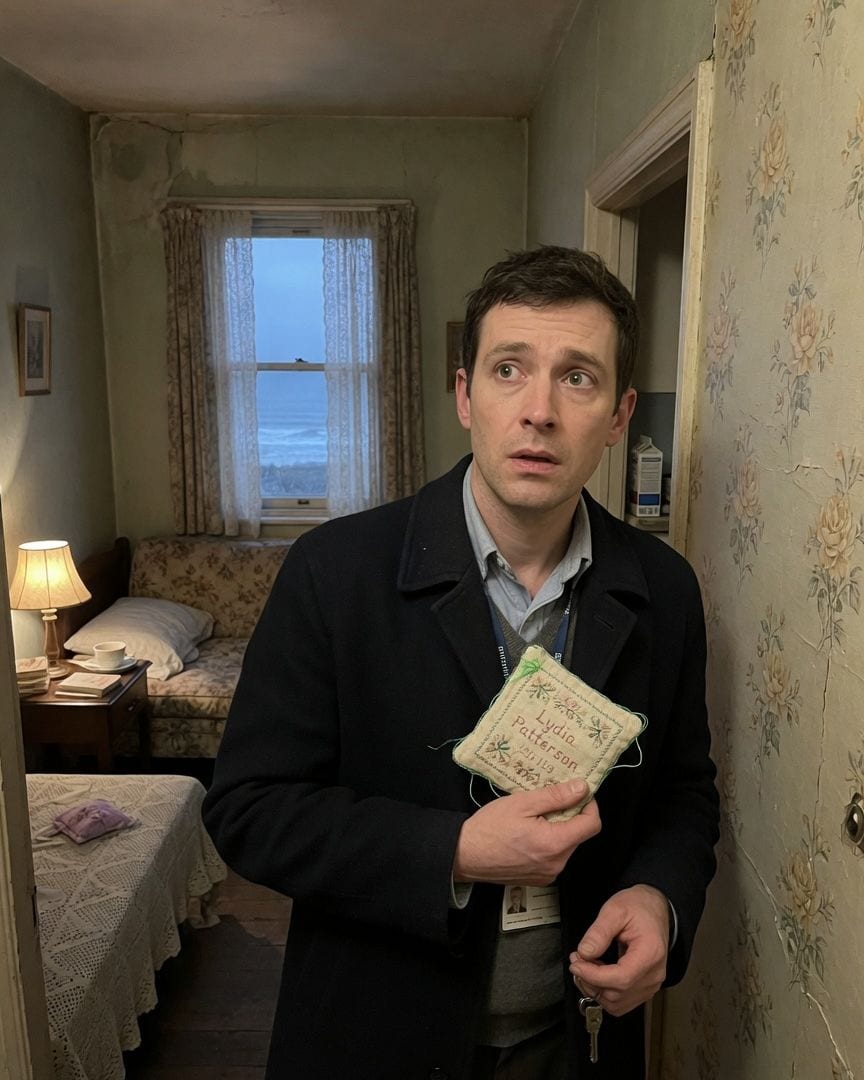
The 'empty' almshouse I was auditing wasn't empty. I heard a bare foot *thump-thump* from next door.
My new charity role involves auditing the supposedly 'empty' almshouse units. But from the unexplained activity outside to a fresh carton of milk inside, something is deeply wrong. Then, in one unit, I found a dead woman's sampler with a jarringly new thread, and heard bare feet thumping next door.