My best friend thanked me for standing up at his wedding. He isn't married. He described my speech, the ring, the bride's face — none of it real, but he remembered every detail.
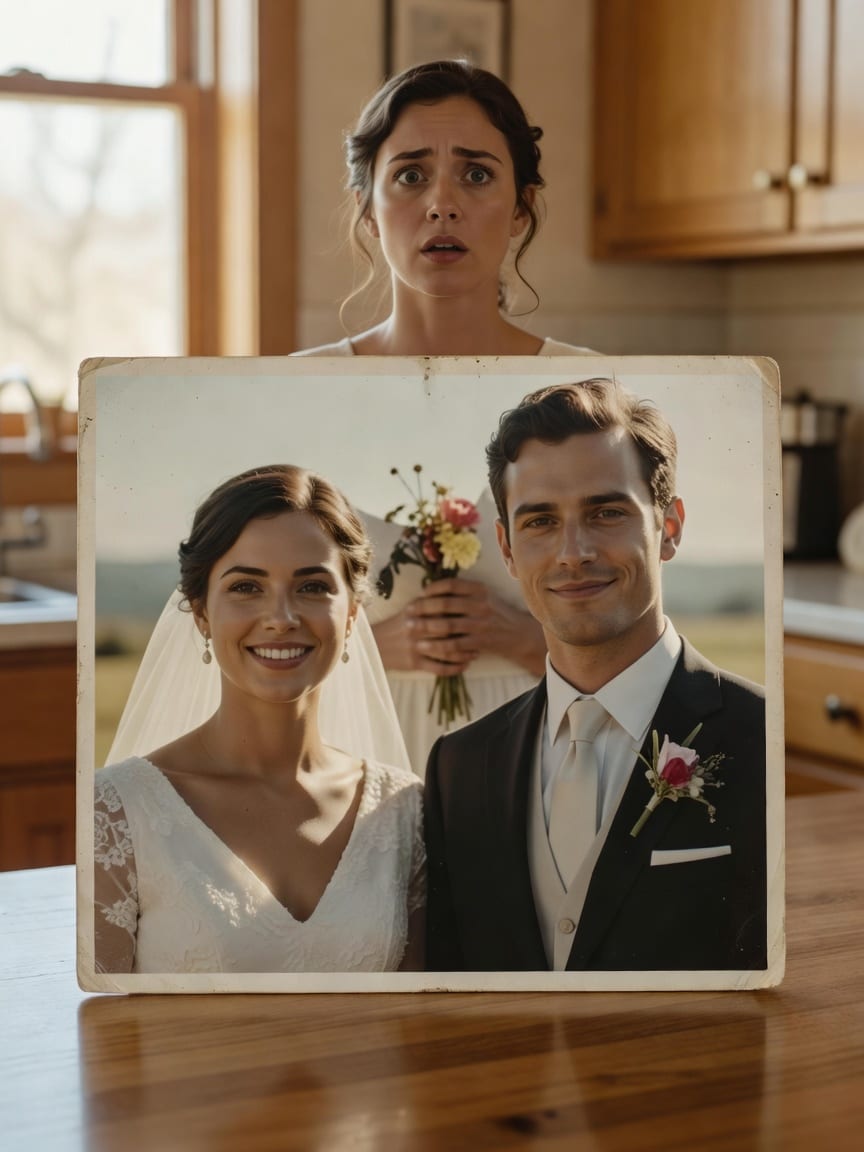
The clatter of the bar, the familiar scent of stale beer and cheap spirits, had been a comfort for two years.
Then Julian Doyle walked back in, looking exactly as he had the day he vanished, a ghost in his own skin. He clapped me, Claire Abbott, on the back, his grip solid, too solid.
‘Claire!’ he boomed, a laugh rumbling in his chest. ‘Couldn’t have done it without you, standing up there, giving that speech.’
My stomach dropped. I hadn’t seen Julian in two years. He’d gone off the grid, no calls, no messages. Now he was here, acting like no time had passed, talking about a wedding. His wedding. He isn't married.
He never even had a serious girlfriend before he left. I tried to laugh it off, a nervous, weak sound.
‘What are you talking about, Julian? What wedding?’
He just smiled, a wide, easy grin that didn't quite reach his eyes, and launched into a detailed description: the small chapel near the old lighthouse, the way the light caught the silver locket he’d given his bride, the nervous tremor in my voice during my toast.
Every single detail, vivid and real, but utterly impossible. I live alone, I haven't been to a wedding in years. He even described the woman's face, a soft, kind smile, a scattering of freckles.
A woman neither of us had ever met.
The rest of the night was a blur of Julian's impossible stories and my polite, increasingly frantic attempts to find a mundane explanation. Maybe he’d had a secret life? A sudden, whirlwind romance abroad?
But the details were too specific, too personal to me. He recalled me joking about his 'cold feet,' a phrase I'd never used. The next day, I started digging.
I checked old social media, mutual friends, even obscure local marriage records. Nothing. Julian Doyle, single and officially missing for two years, had no wedding. No fiancée. No chapel near the lighthouse.
It was a phantom memory, but one he held with absolute, serene conviction. The dread began to set in, a cold, quiet certainty.
I remembered him describing the locket, a unique silver piece with intricate engraving. He said he’d found it in an antique shop, a small, dusty place downtown that I’d always meant to visit.
A desperate, irrational hope flickered: maybe the locket was real, and somehow Julian had simply mixed up the memories, attaching it to a fictional wedding. I drove to the antique shop. It was exactly as he described.
The air inside was thick with the scent of old wood and forgotten things. The owner, a frail, elderly woman, remembered Julian.
‘He was in here a few weeks ago,’ she said, her voice a brittle whisper, ‘looking for something special. He bought that locket, the silver one with the tiny engraving, for his bride, he said.’
My heart hammered. Weeks ago? Julian had been missing for two years. Before I could question her further, she pointed to a small, framed photo on the counter. ‘He left this for her, too.
Said it was from their rehearsal dinner.’ My breath hitched. It was a photo of a small gathering, clearly a wedding event, and in the background, out of focus, was my own face, laughing, holding a bouquet.
I snatched the photo, my fingers trembling. It was me, unmistakably me, standing in a dimly lit hall, wearing a dress I'd never owned, surrounded by strangers.
The locket, the one Julian described, was hanging from a display hook next to the photo. I bought it, the silver cool and heavy in my palm. Back in my kitchen, the silence was deafening, pressing in on my ears.
I pried open the locket. Inside, a tiny, faded photograph of a woman I didn't know, her face blurred with age, but in the background, out of focus, was my own face at what appeared to be a wedding.
A wedding I never attended. I stared at my own impossible reflection, a ghost in someone else's memory. The locket, the photo, Julian's calm certainty—it all collided into a single, horrifying fact.
The locket and the photo became my anchors in a rapidly destabilizing reality. I showed them to Julian. He looked at them, a flicker of something unreadable in his eyes before his usual easy smile returned. ‘Ah, yes!
The rehearsal dinner,’ he said, completely unfazed, as if this impossible evidence was perfectly normal. He even pointed out a man in the background, ‘Uncle Robert,’ a relative neither of us had ever heard of.
I tried to track down the chapel, the wedding venue, the people in the photo. Every lead dissolved into nothing. The 'chapel near the lighthouse' didn't exist, not anymore.
The antique shop owner, when pressed, grew flustered and vague about Julian's 'weeks ago' visit, eventually claiming she must have misremembered. But the locket was real. The photo was real. And I was in it.
I started looking into other missing persons cases in the region, specifically those where individuals had 'returned' with strange gaps or fabricated memories. It was a rabbit hole I hadn't expected. The internet hummed with forgotten forums and cached articles.
There were whispers, local legends, about 'the ones who came back wrong.' Most were dismissed as grief-stricken delusions or mental health issues.
But a pattern emerged: small, tight-knit communities, a prolonged disappearance, and then a return, always with a subtle shift, a new habit, a 'memory they shouldn't have.'
One name kept reappearing in old newspaper clippings, linked to a similar 'return' case nearly fifty years ago: Granger. Julian's mother's maiden name.
I remembered Julian mentioning a reclusive great-aunt, Margaret Granger, who lived alone in an old farmhouse on the outskirts of town. A woman known for her 'eccentricities,' a quiet observer of family history.
The dread solidified, twisting into something colder, more directed. I had a new lead, and a new fear: this wasn't just about Julian. It was about a pattern, and Julian was just the latest thread.
My digging didn't go unnoticed. Julian started showing up at my apartment unannounced, his visits less casual, more probing. He'd ask about my day, then pivot to what I'd been 'up to.'
His eyes would linger on my laptop, on the stack of old newspaper clippings I’d foolishly left out.
One evening, I was researching a particularly unsettling case of a 'returned' man who insisted he'd fought in a war that ended decades before his birth. Julian walked in without knocking, holding a takeout container.
The door swung open without a sound.
‘You're working late,’ he observed, his voice soft, but with an edge I hadn't heard before. He picked up one of the clippings, his gaze scanning the headline about the Granger family.
‘Interesting,’ he murmured, ‘you've always been so curious about local history, haven't you, Claire?’ He set the clipping back down, his fingers brushing over the silver locket I'd placed on my desk. ‘That's a lovely piece. Very sentimental, I imagine.’
The way he said 'sentimental,' as if it were a foreign concept, sent a shiver down my spine. His calm, certain demeanor was more terrifying than any outburst. He knew. He knew I was looking.
Later that week, I found a small, unfamiliar scratch on the antique locket, a tiny, almost imperceptible mark that hadn't been there before, right next to the intricate engraving. It was a silent warning, a physical manifestation of his awareness.
The hunter had become the hunted, and the thing I was living beside was watching my every move, waiting for me to make a mistake.
The next day, I drove to Margaret Granger's farmhouse. It was an ancient, sprawling place, half-hidden by overgrown trees, its windows like vacant eyes. Margaret, a woman with sharp, intelligent eyes and a calm, knowing air, answered the door.
She didn't seem surprised to see me. I laid out the locket, the photo, and my findings about the 'returned' cases, watching her face for any sign of shock or disbelief. There was none.
She simply listened, nodding occasionally, her gaze steady.
‘So, Julian has his wedding memory now,’ she said, her voice raspy with age. ‘And you're in the picture.’ It wasn't a question.
‘You know about this?’ I asked, my voice barely a whisper.
She led me to a dusty parlor, filled with old furniture and a faint smell of camphor. The air felt heavy, like a secret about to be told.
‘It's been happening for generations, dear,’ she said, settling into an armchair with a quiet sigh. ‘In our family. The Grangers, the Doyles. Whenever someone goes missing for too long, sometimes… something else comes back.’
She explained how the returned individuals would have subtle changes, new preferences, and always, always, a 'memory they shouldn't have' – a vivid, detailed recollection of an event or person that never existed in their original life.
‘The entity,’ she called it, ‘it mimics. Imperfectly. It picks up traces, fragments, sometimes from other hosts, sometimes… it just invents. To fill the gaps.’
She spoke of it not as a supernatural horror, but as a chilling fact of their family's existence.
My earlier clues, Julian's black coffee, his new gestures, the impossible wedding – they clicked into place, not as random oddities, but as evidence of a meticulous, yet flawed, mimicry. The ordinary explanation had died for good.
Julian wasn't my best friend, not anymore. He was a perfect imitation, wearing his face, his voice, his name, and a memory that wasn't his, but had somehow incorporated me into its impossible reality.
Margaret Granger rose, her movements slow but deliberate, the quiet rustle of her dress the only sound.
She walked over to an antique wooden box on a side table, its surface intricately carved with swirling patterns that seemed to shift in the dim light. ‘My grandmother kept meticulous records,’ she said, her voice a soft murmur.
‘She was the one before me, the one who knew.’ She opened the box, revealing not papers, but a photo album, its leather cover cracked with age, the pages yellowed.
She flipped through faded sepia images, pointing out ancestors, their faces subtly 'off' in later photos compared to earlier ones. A cousin who'd returned from the war with a new, unsettling calm in his eyes.
An aunt who'd come back from a 'long journey' with an uncanny fondness for a pet she'd always disliked, a constant, strange smile on her lips.
The 'Memory They Shouldn't Have' wasn't unique to Julian; it was a horrifying family legacy, etched onto these old photographs.
Then, Margaret slid open a hidden panel in the box's side, revealing a small compartment that smelled faintly of old linen and metal.
Inside, nestled on a velvet lining, was a small, tarnished silver locket, identical in every detail to the one Claire found. Its surface held the same intricate engraving, the same heavy feel.
‘It always starts with a memory they shouldn't have,’ Margaret said, her gaze fixed on me, unsettlingly calm, ‘and it always ends with one of these. Now you have yours.’
The implication hung heavy in the air, a cold, sharp blade: the locket wasn't just proof of Julian's mimicry.
It was proof of a pattern, a generational curse, and now, I was holding the latest iteration, a harbinger of my own potential fate.
Margaret explained the full, chilling truth. The lockets, she revealed, were not mere coincidences. They were a signature, an 'artifact that cannot exist' from the entity's fabricated reality.
Each 'returned' family member, after their initial appearance, would somehow acquire or manifest a locket, often with a photo of a 'memory they shouldn't have' inside.
‘They're anchors,’ Margaret whispered, her eyes distant, fixed on some unseen horizon, ‘ways for it to solidify its presence here, to connect its false world with ours.’
She showed me a faded, hand-drawn diagram in a hidden compartment of the album, a family tree marked with symbols next to certain names.
Each symbol corresponded to a disappearance and a 'return,' and next to each, a small sketch of a locket, each subtly different, yet undeniably part of the same impossible series.
My locket, Julian's locket, were merely the latest in a long, unbroken chain.
The entity, she believed, was drawn to the Granger/Doyle lineage, perhaps an ancient pact, a weakness in their bloodline, or simply a convenient pattern it had established centuries ago. ‘It's not malicious, not in the way humans understand,’ Margaret clarified.
‘It simply… exists. It fills a void. It wears a skin. It needs to be, and it needs to be here.’
The terror wasn't in a monster, but in the cold, coherent logic of an alien presence that simply was, and had always been, among them.
Every strange habit, every impossible memory, every clue I'd gathered, now clicked into place, forming a coherent, horrifying tapestry of generations of quiet, intimate dread.
The entity was not a one-off event; it was a living, breathing, generational pattern, and Julian was simply its latest manifestation, a perfect fit in a long line of hollow imitations.
Armed with Margaret's knowledge, and the two identical lockets—mine and Margaret's antique one—I knew I couldn't just live beside it. But what could I do? Expose it? Who would believe me?
The entity wasn't a monster to be slain, but a presence, a pattern. I returned home, the weight of the two lockets in my pocket a cold comfort, a tangible truth against my skin. Julian was there, waiting for me.
He was in the kitchen, humming a tune I didn't recognize, a low, melodic sound, making himself a cup of black coffee – a habit he’d picked up since his return. He looked up, his smile easy.
‘You were gone a long time, Claire. Everything alright?’
I pulled out the lockets, placing them on the table between us. His smile faltered, just for a second, a tiny, almost imperceptible tremor in his lip, like a brief ripple on still water.
He looked at my locket, then at Margaret’s antique one, identical in every detail.
His eyes, usually so warm, seemed to deepen, to become vast and empty, like looking into a night sky without stars, the light draining out of them.
‘Where did you get that?’ he asked, his voice flat, devoid of its usual inflection.
I told him everything Margaret had said, about the pattern, the mimicry, the lockets as anchors. I watched his face. There was no anger, no fear, no surprise.
Only a calm, profound stillness, as if he were listening to a story he already knew by heart. He reached out, his fingers brushing the antique locket, then mine.
‘It's a beautiful story,’ he said, his voice now a low hum, soft as dust, ‘a very old one.’
He looked at me, and for the first time, I saw it, truly saw it: the wrongness was not a flaw, but an inherent part of its being.
His eyes held a flicker of something ancient, something that had seen countless lives, countless returns. I picked up my locket, clutching it tight. There was no escape from this truth, no confrontation that would 'win.'
The entity was simply here, and it would continue. I knew then that my only option was to live, to survive, armed with this terrible knowledge, forever marked by the impossible wedding and the two silver lockets.
Julian stayed. He continued his life, a perfectly functional, subtly altered version of my best friend. He still went to his old job, still met mutual friends for drinks, still made his black coffee.
No one else noticed the small shifts, the new gestures, the occasional 'Memory They Shouldn't Have' that he would drop into conversation, always with that calm, certain smile.
Margaret Granger passed away peacefully a few months later, her secret kept, her watch ended. Her farmhouse was sold, its hidden panels and ancient diagrams lost to new owners, buried under fresh paint and new memories.
I kept the locket, wearing it beneath my clothes, a cold weight against my skin, a constant reminder. The world moved on, oblivious to the quiet horror that walked among them, wearing familiar faces.
I still see Julian. He still claps me on the back, still asks about my day, still makes his black coffee.
Sometimes, he'll mention a detail from 'our' wedding, a shared joke that only he remembers, and I'll just nod, a faint, wrong smile on my face.
The dread hasn't faded; it's simply settled, a permanent resident in the quiet corners of my life, a shadow that never quite leaves the room. I know what he is, and he knows I know.
We live beside each other, two figures in a silent, shared understanding, in a world that believes everything is exactly as it should be. The locket, cool against my skin, hums with its impossible history.
I watch him, and sometimes, I wonder if he watches me back, wondering if I, too, am starting to remember things that never happened.
The memory of a wedding, a speech, a silver locket, and a bride I've never met, feels almost real now. Almost.
If this one got to you
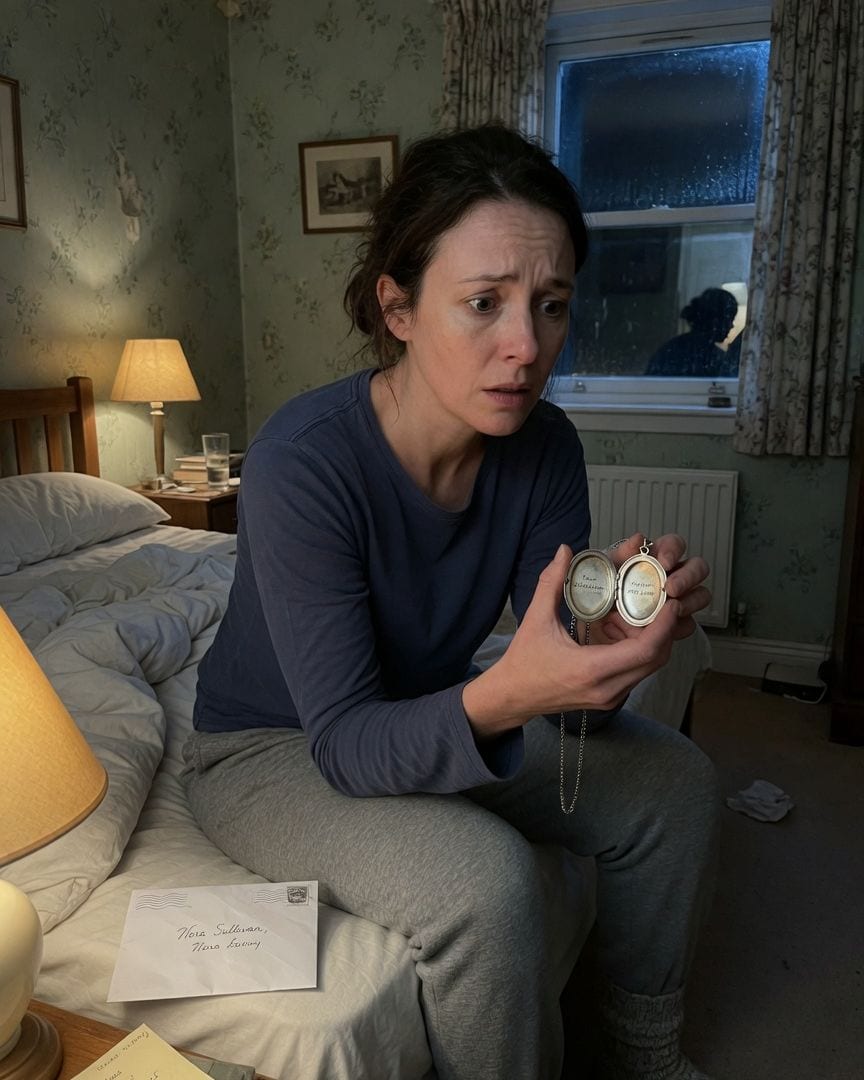
My antique locket held my maiden name, engraved with 'until the ninth.' The dealer said the woman who owned it left a note: 'for her, when she comes.'
My husband Scott, always finding unusual things, gave me an antique silver locket. Inside, engraved beneath my maiden name, Nora Sullivan, were three chilling words: 'until the ninth.' It felt like a direct, personal address, even though I hadn't used that name in years.
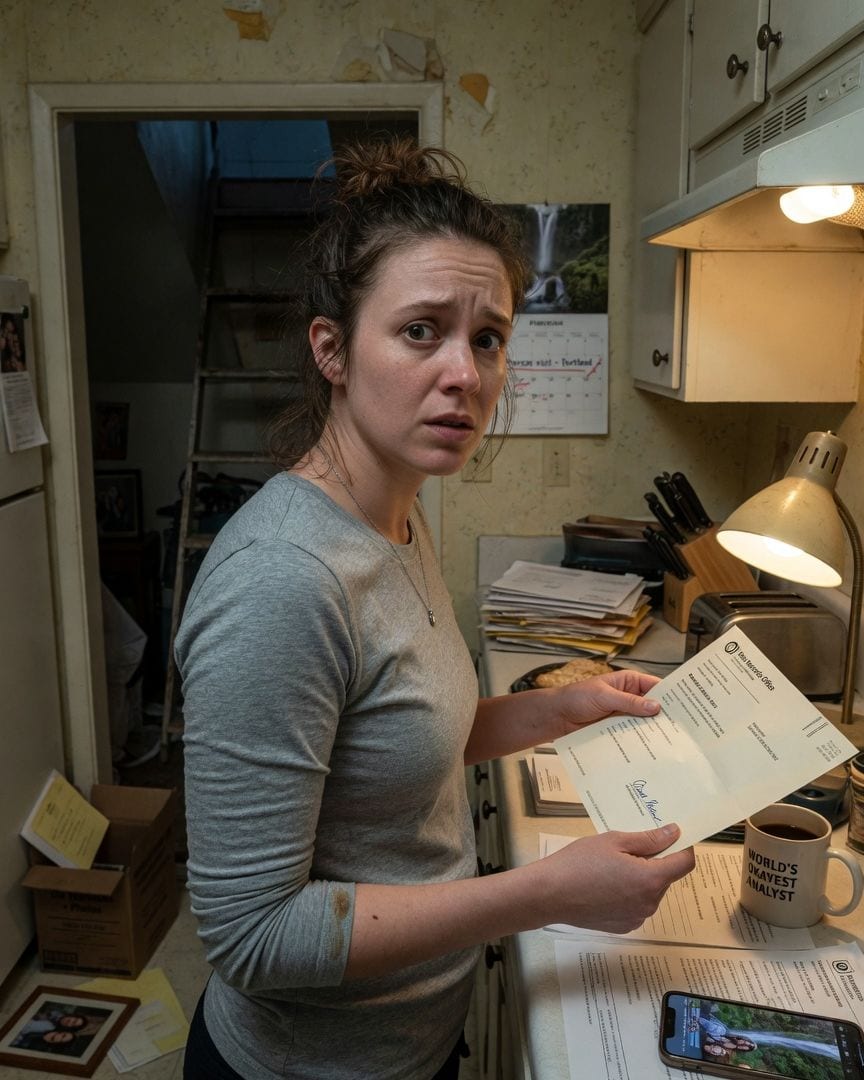
My name is on a marriage certificate in Ohio, signed by my own hand, but I was 2,000 miles away that day.
Abigail Caldwell, a systems analyst, prides herself on an ordered life. But an official envelope arrives containing a marriage certificate for her, complete with her signature, from a wedding she never had. The record lists her as the groom, married to a man she's never met, in a city she swears she's never visited.
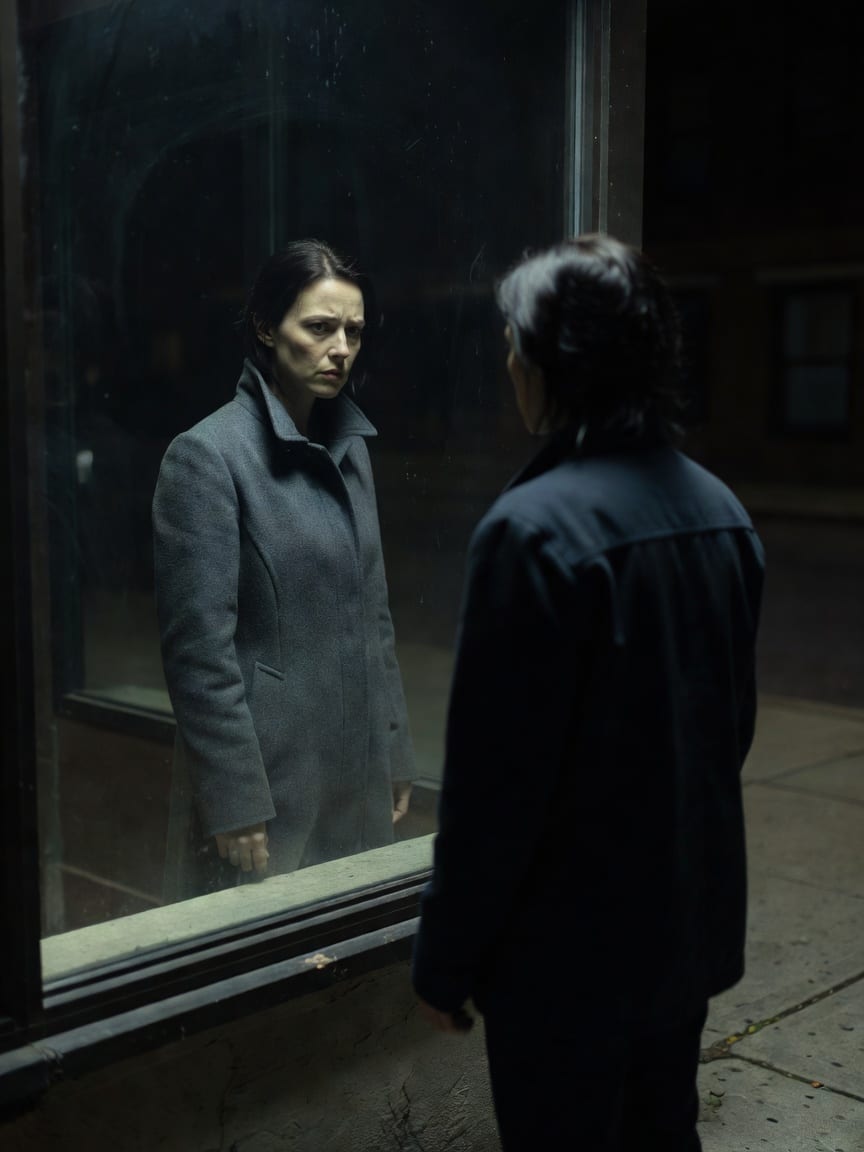
My neighbor saw me take her parcel, wearing my grey coat, at 11:52 AM. I was in Lisbon that whole week.
Returning from Lisbon, I was met by my neighbor Elena, who insisted I'd signed for a parcel last week. She even said I was wearing my grey wool coat. But my coat was still packed in my suitcase, and I was thousands of miles away, checking into my Lisbon hotel at that exact time.
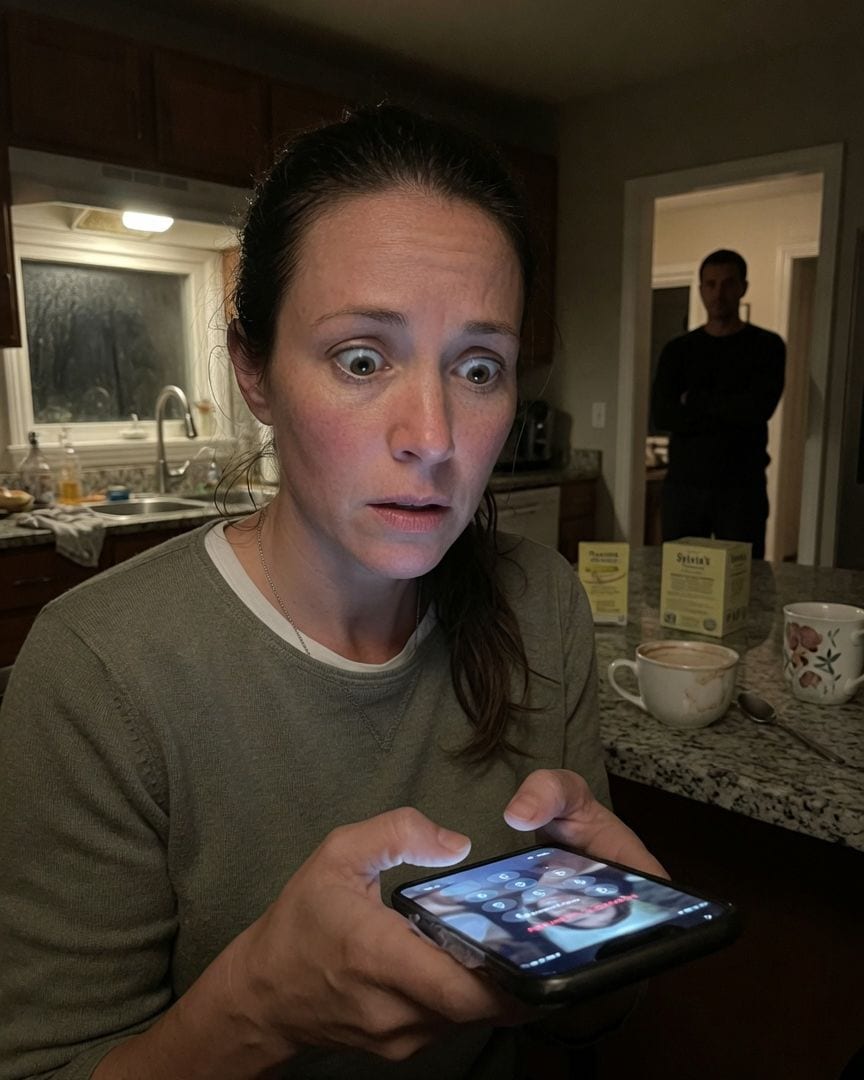
My twin's passcode was our birthday reversed since we were kids. His phone was dead and missing for three weeks — now it opens to our birthday forward, and he says I'm the one who always got us backward.
My twin brother, Kenneth, returned after three weeks, bringing a quiet relief to the house. But when he vividly recounted a private childhood memory, describing every detail, a cold knot formed in my stomach. I knew he couldn't have been there; he was in the hospital, a fact later confirmed by an old photo showing his empty place.
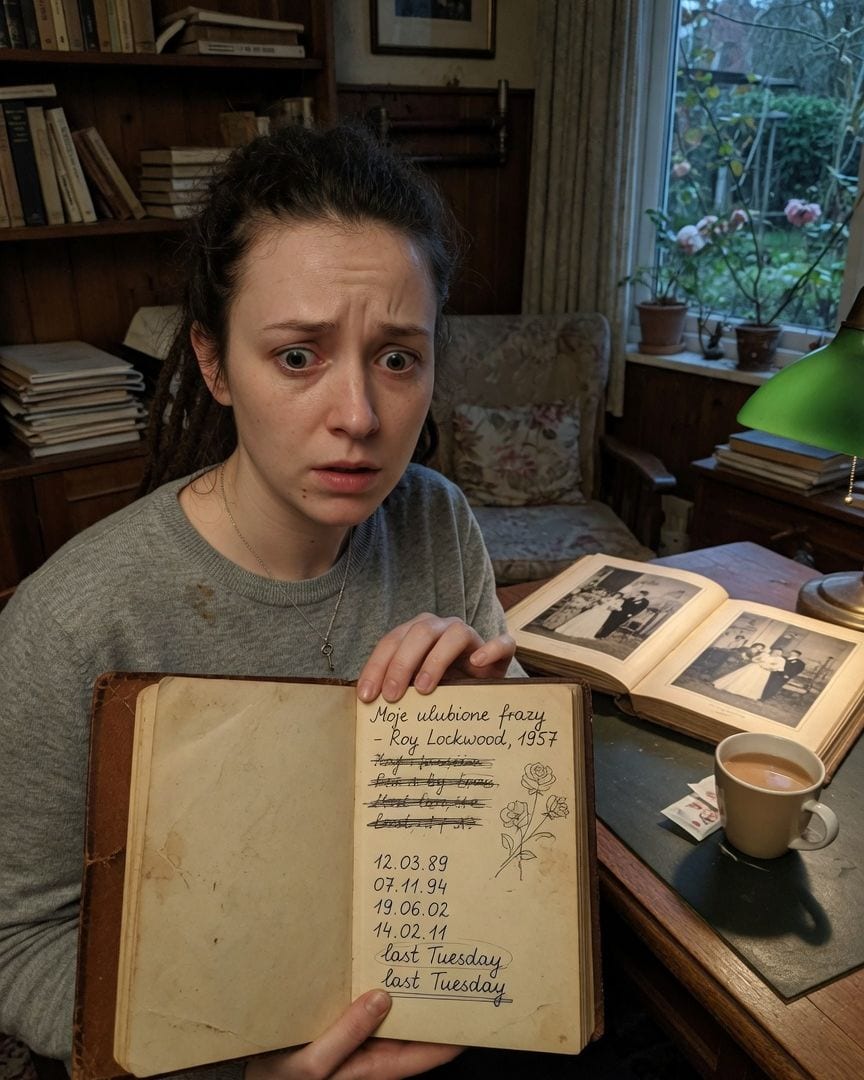
My grandfather counts 'one, two, three' in English now. He just came back. He always counted in Polish, and denies ever speaking it.
My grandfather, Roy Lockwood, returned last Tuesday after vanishing for a week, bringing immense relief. He seemed thinner, a bit disoriented, but otherwise, he was just Grandpa. Then I heard him count 'one, two, three' in clear English before lifting potting soil, instead of his lifelong Polish habit.
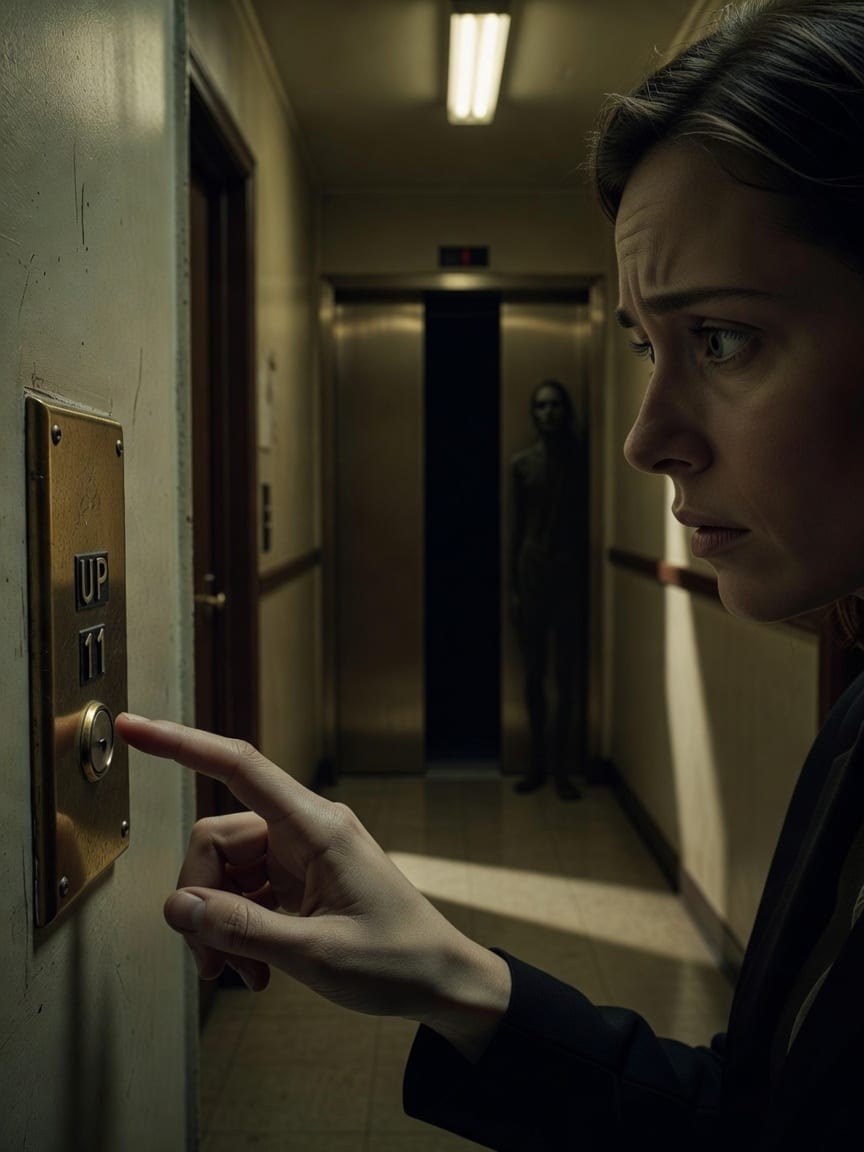
My doorman warned me not to take the tenth-floor lift on Saturday. The building's lift passed inspection last month. He seemed terrified that he'd said it.
My doorman's unsettling warning about the tenth-floor lift left me with a metallic taste of unease. I tried to rationalize it away, but then a birthday card arrived for me, five months early, from an impossible address. It was a site linked to unexplained disappearances, and a cold certainty began to settle in.