I opened my birthday card and a flat, lifeless voice said, 'Hello, Ruth. We kept your seat.' My aunt swears she tested it in the shop and it played a tune.
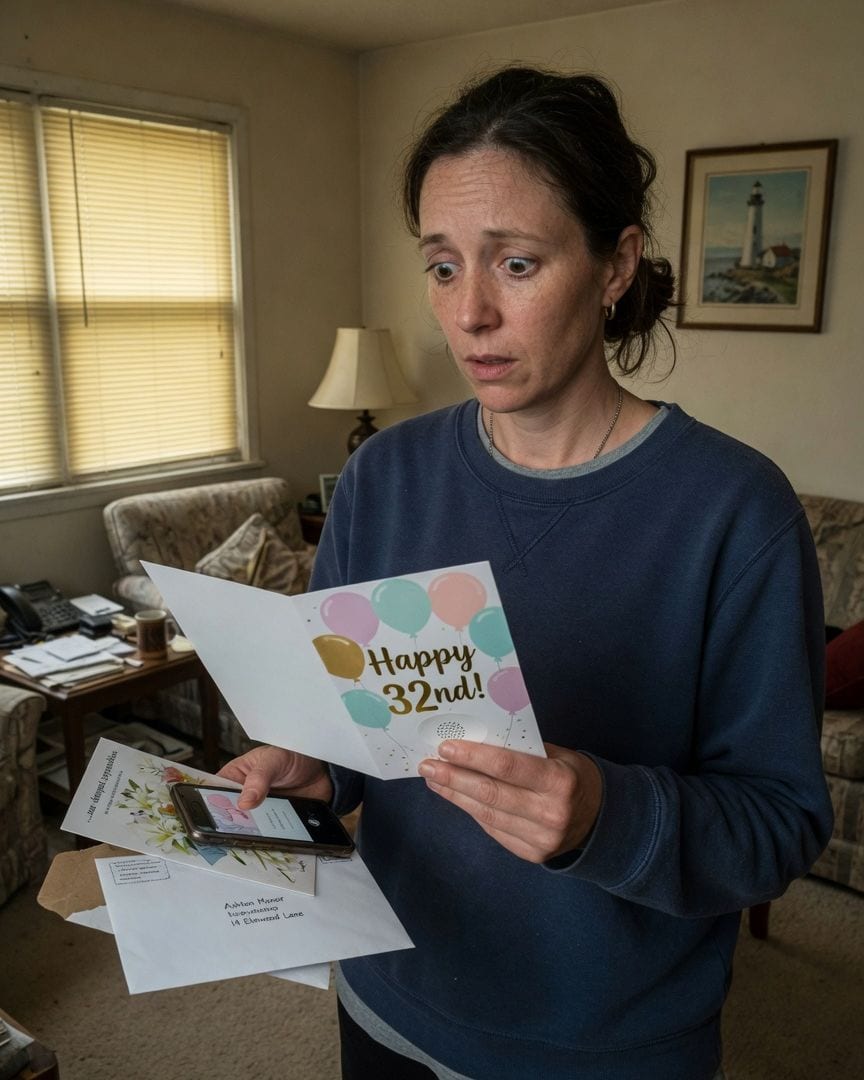
My 32nd birthday this year started like any other. My Aunt Pamela, bless her heart, always sends a card. This one was a thick, glossy thing, meant to play a tune.
I ripped open the envelope, expecting the usual tinny rendition of 'Happy Birthday.' Instead, a flat, almost synthetic voice, female and strangely devoid of warmth, whispered from inside the card: "Hello, Ruth. We kept your seat."
I froze. My name. Not "Happy Birthday, dear," or "Thinking of you." Just "Hello, Ruth." And that other phrase, 'We kept your seat,' delivered with a peculiar finality.
My first thought was a prank, maybe a custom recording Aunt Pam had ordered, but that didn’t sound like her at all. She's practical, not one for elaborate jokes.
I flipped the card over, expecting to find a loose wire or a battery compartment, anything to explain the glitch. Nothing. It was sealed perfectly.
I called Pamela, my voice tight. "Aunt Pam, about the card…" She interrupted, cheerful. "Oh, wasn't that sweet? I tested it at the store, played 'Happy Birthday' perfectly. Did you like the little tune?" My stomach did a slow turn.
"Pamela, what did you hear exactly?" "Just the song! Like I said. Why? Did it not play for you?" I pressed the tiny speaker button on the card again. Silence. Not a chirp.
I pushed it harder, moved my finger around, trying to coax out a sound. Nothing. It just sat there, a bright, innocuous rectangle of cardstock, now utterly mute. But I couldn't unhear the voice. It had known my name.
And it had delivered a message that felt less like a greeting and more like a declaration. The mundane order of the morning had cracked, and something specific, personal, and utterly inexplicable had seeped through.
Unnerved, I spent the next hour online, researching novelty greeting cards. Could you customize them after they were sealed? Could a card malfunction so completely it replaced its original song with a specific, spoken message that knew my name?
Every forum, every company FAQ, confirmed the obvious: no. Once a card was sealed and programmed, that was it. I even called the department store where Pamela said she'd bought it.
The sales assistant confirmed they only sold standard, pre-recorded cards. No custom options. No voice messages. No chance of a spontaneous, targeted address. The card was no longer just faulty; it was an artifact from a reality I didn't recognize.
Growing more uneasy, I re-examined the envelope it came in. The postmark was local, dated last week, clear as day.
But the return address, printed faintly in the corner, almost as if it was trying to be overlooked, read: "Ashton Manor, 14 Elmwood Lane." Ashton Manor. The name tugged at a distant, half-forgotten memory.
I'd heard it in local folklore, usually mentioned in hushed tones, an old, abandoned place, maybe a sanatorium or an orphanage from decades ago. I couldn't quite place the details, but I knew, instinctually, it wasn’t a functioning address.
The card wasn't just a physical link to an impossible sender; it felt like a deliberate touch from somewhere that shouldn't exist, and the dread began to set in.
I drove to the location listed on the old town maps for 14 Elmwood Lane. There was no 'Ashton Manor.' No building at all.
Just a vast, overgrown field, bordered by crumbling stone walls – the last remnants of what looked like a foundation.
A weathered historical marker, half-buried in weeds, confirmed it: Ashton Manor, a former orphanage and sanatorium, was torn down in 1975. Forty-eight years ago.
As I stood there in the desolate expanse of overgrown grass, a sudden, cold wind whipped past me, even though the air around it was still. My phone buzzed in my pocket, making me jump. It was Pamela.
Her voice was agitated, almost frantic. "Ruth, another one came. Just now. Same address, 14 Elmwood Lane. This time, it's a condolence card. For… for you."
I looked down at the empty field, then at the new message on my phone, the impossible address now a terrifying, targeted pattern.
I was genuinely shaken. The next morning, I took both cards, the birthday one and the condolence one, to the local post office. Oliver Hayes, the supervisor, a man with tired eyes and a perpetually annoyed expression, initially dismissed me.
"Another one of those prank things, probably," he grumbled, barely glancing at the envelopes.
But when I insisted, showing him the identical, impossible postmarks – dated last week for my birthday card, and yesterday for the condolence card, both from an address that ceased to exist decades ago – his composure visibly faltered.
He picked up the cards, holding them under a bright desk lamp. "The stamps are real," he muttered, frowning. "And the postmarks… they appear authentic. But 14 Elmwood Lane… that's impossible.
We haven't had mail going out from that address since the Manor was torn down in '75." He tapped a few keys on his computer, his brow furrowed deeper.
"Nothing in our current database, not for Elmwood Lane, not for Ashton Manor." He then pulled out a thick, dust-covered binder from under his counter, flipping through faded pages. "And nothing in the archives for outgoing mail from there, either.
Not since '75, exactly."
I pressed him, my voice tight. "Are there any old local legends? Anything about the Manor, strange stories, anything like this happening before?" Oliver looked uncomfortable, shifting in his seat. He sighed, rubbing the back of his neck.
"Look, folks talk. Old places, old stories. Nothing official. But… there was an old archivist, Simon Drummond. Knows everything about this town's dead ends, and then some. Lives for the forgotten bits. You might try him at the historical society.
He probably knows more than he should about places like Ashton Manor." He said 'should' in a way that implied deep, uncomfortable knowledge.
The thought of an expert, someone who knew the 'dead ends,' sparked a desperate hope. I resolved to visit Mr. Drummond.
The impossible postmarks, the chilling messages, the physical trail leading to an empty field – it all made for a specific unease now, a prickling certainty that this wasn't a prank. It was a message, and it was for me.
The local historical society was exactly what you’d expect: a quiet, dusty building filled with the scent of old paper and the hushed echoes of forgotten lives.
Simon Drummond, a meticulous man in his early seventies, met me with a piercing, unnerving gaze. He had the air of someone who had spent too much time sifting through other people's pasts.
When I mentioned Ashton Manor, his composure, which had been as still as the air in the archives, visibly shifted. His jaw tightened almost imperceptibly. He became evasive, claiming old records were disorganized, that "some things are best left alone."
His voice was low, careful.
I pulled out the two cards, laying them flat on his worn oak desk. "These came from Ashton Manor, Mr. Drummond," I said, my voice shaking slightly. "Both postmarked from 14 Elmwood Lane. A place that doesn't exist."
I explained the chilling message on the birthday card, the silent voice, and the impossible condolence card.
Simon picked up the cards, turning them over in his liver-spotted hands, his eyes scanning the impossible postmarks. Then he looked at me, a strange, almost pitying look in his eyes. He put the cards back down, his gaze unwavering.
"Some doors, once opened, cannot be closed, Miss Foster," he warned, his voice barely a whisper. "The Manor has a way of… remembering. A way of reaching out."
He didn't offer a mundane explanation, no mention of pranks or postal errors. He simply acknowledged the impossible, adding another layer of terrifying truth.
As I left the society, walking back out into the bright afternoon sun, I felt his gaze on my back, a prickling sensation that suggested he knew far more than he was letting on.
And that my questions had registered with more than just him. The air felt heavier, as if my digging had been noticed by something unseen, turning me from hunter to potentially hunted.
Driven by a desperate, gnawing need for answers, I returned to the historical society the very next day. Simon Drummond wasn't there; a note on the door said he was out "on a research trip."
But the door was unlocked, a detail I noted with a flicker of unease. I let myself in, feeling like an intruder in the quiet, dusty silence.
I headed straight for the section where Simon had been looking at old town maps, vaguely remembering him mentioning uncatalogued documents related to Ashton Manor.
Tucked away in a particularly dim and dusty corner, I found a small box labeled, in faded script, "Misc. Manor Records." My hands trembled as I opened it.
Inside, beneath a pile of brittle newspaper clippings, I unearthed a faded, leather-bound ledger. Its cover, almost unreadable now, bore the embossed title: 'Ashton Manor: Admissions & Designations.'
With even more trembling hands, I opened it. The first few pages listed names, dates of admission, and reasons for residency, typical orphanage records. Children, mostly.
But as I flipped further, I turned to a later section, conspicuously marked 'Designated Residents.' The entries here were starkly different. Not children admitted for care, but names, and a birth year, with no admission dates.
Just a series of blank spaces next to each entry.
My eyes scanned the page, and my breath caught in my throat, a painful gasp in the silent room. There, in elegant, looping script, was 'Ruth Foster, born 1938.' Below it, just two lines down, another 'Ruth Foster, born 1960.'
And then, a third entry. No name written, but the birth year was precisely mine. 1992. The name field was utterly empty, as if waiting to be filled. The flat, recorded voice from the birthday card, "Hello, Ruth.
We kept your seat," echoed in my mind, chilling me to the bone. Every earlier clue – the impossible postmark, Simon’s knowing gaze, the empty field – snapped into a horrifying, coherent new focus.
I raced back to Simon Drummond's office, the heavy ledger clutched tight in my hands. He was there, sitting at his desk, seemingly waiting. I slammed the book onto his desk, pages fluttering open to the 'Designated Residents' section.
"Explain this!" I demanded, my voice shaking with a mixture of fear and pure adrenaline. "Ruth Foster, 1938. Ruth Foster, 1960. My birth year, but no name! What does this mean?"
Simon, surprisingly, didn't flinch. He didn't deny the ledger's authenticity or its terrifying implications. He reached for the heavy book, his movements slow and deliberate, and turned to the page, his finger tracing the entries.
His voice was calm, measured, devoid of any emotion I could decipher. "The Manor's 'designations' weren't for admissions in the traditional sense, Miss Foster. They were for individuals believed to be… attuned to a particular pattern. A specific lineage, sometimes.
A specific name, often resurfacing every few decades."
He slid his finger down the page, past the earlier entries, and pointed to the blank space next to my exact birth year.
"This seat," he said, his voice barely a whisper, yet resonating with an unsettling finality, "has been waiting for you." He closed the heavy ledger with a soft thud, the sound echoing in the quiet office.
Then he pushed it back across the table toward me. My name, 'Ruth Foster,' 1938, was clearly visible under 'Designated Residents.'
He slid a finger across the page to the entry for 'Ruth Foster, 1960,' then to the blank space next to it, before finally resting his finger on my exact birthdate, 1992, also with a blank space for 'arrival,' but no name.
He looked at me, his eyes knowing and resigned, as if to say, 'You're next.'
Simon Drummond, seeing the raw terror in my eyes, began to speak again.
His voice, a low, steady drone, filled the silent historical society, weaving a tapestry of dread that made every impossible detail of the past few days click into a coherent, horrifying pattern.
"Ashton Manor was never just an orphanage, Miss Foster," he explained, his gaze unwavering. "It was a focal point for something ancient, something that settled here long before any stones were laid. A presence that needed… occupants.
It needed to maintain its connection to this world, and it did so through those it deemed 'attuned' – often those sharing a name, or a lineage, or simply a certain resonance with the pattern itself."
He picked up the birthday card I’d brought him, tapping it lightly. "The 'Letters From Nowhere,' as you call them. They are not merely mail. They are a sophisticated form of summons.
A claim, initiated when a designated individual reaches a certain age, or crosses a specific threshold, a point where they are… ready. The recorded voice," he continued, glancing at the card, "is the voice of the seat itself.
It confirms recognition. It signals acceptance of the claim."
He leaned back, his eyes distant, as if viewing centuries of history unfold. "I've documented it for generations. Other 'Ruth Fosters,' some from your own family line, received similar calls.
Their names in that ledger, some with a blank space like yours, others with an 'arrival' date filled in." He spoke of how some resisted, tried to leave town, to fight it.
"But none ultimately escaped their ultimate designation," he concluded softly. He described the subtle, chilling changes in those who 'arrived,' a quiet assimilation, a loss of individual will.
Their lives became extensions of the Manor's needs, their very essence absorbed into its fabric. He spoke of a faint, almost imperceptible hum that emanates from the empty field, a constant, patient draw.
His calm explanation, devoid of emotion, was far more terrifying than any monster. It meant this was not a random occurrence, but a predetermined fate.
"What happens to them? The others? The ones who arrived?" I demanded, pushing back from the table so violently my chair overturned with a loud clatter.
The sound echoed, brittle and insignificant in the face of what he was telling me.
Simon looked at me, his gaze unwavering, unperturbed by the noise. "They occupy their seat. They become part of the Manor. It's an… integration." His words were flat, like a coroner delivering a diagnosis.
"How do I stop it? How do I break the pattern?" My voice was raw, pleading.
He simply shook his head, a faint, sad smile playing on his lips. "The pattern is the Manor, Miss Foster. It has always been.
You can delay, but you cannot escape a summons that has been waiting for you for decades." He told me the only way to 'settle' the claim was to accept it. To occupy the seat.
As he spoke, a faint, almost imperceptible hum began to fill the room. It was low at first, a vibration I felt more than heard, resonating deep within my bones, a familiar frequency I somehow recognized from the empty field.
It grew louder, a steady, insistent thrumming that seemed to bypass my ears and sink directly into my core. I felt a profound disorientation, a magnetic pull towards the window, towards the distant empty field where the Manor once stood.
My vision blurred at the edges.
I stumbled, my legs suddenly heavy, my body no longer entirely my own. An invisible current, powerful and undeniable, tugged at me, drawing me towards the path to the field.
I felt a cold presence settling in, a sense of belonging that wasn't mine, a quiet certainty that I was exactly where I was meant to be.
I looked at my hands, saw them clench, but it wasn't my decision, not anymore. My eyes, wide with terror, fixed on the window, on the straight line to the field, and the hum seemed to grow into a chorus.
Days later, Ruth’s apartment stood quiet, gathering dust. Her plants, once meticulously cared for, were wilting in their pots, their leaves drooping like forgotten thoughts.
The mail piled up, unopened, on the floor by the door, a small monument to absence. Pamela tried to call, then visited, knocking repeatedly, her voice growing increasingly frantic through the closed door, but Ruth was never home, never answered.
The historical society's doors were found locked a week later, Simon Drummond's office emptied, the heavy ledger gone from its place.
The empty field where Ashton Manor once stood now seemed to vibrate with a subtle, almost imperceptible energy, a faint hum that only a few passing birds seemed to notice before veering sharply away, as if sensing something ancient and deep beneath the overgrown grass.
No one reported a missing person; Ruth simply ceased to be present in her old life.
A week after Ruth's disappearance, Pamela, still worried sick, found a small, hand-addressed envelope tucked under Ruth's apartment door. Inside was a single, blank greeting card.
She opened it, and a flat, recorded voice, faint but clear, whispered, "The seat is now occupied."
Pamela, confused, checked the postmark. It was from 14 Elmwood Lane. She looked at the empty field, then back at the silent card, a shiver running down her spine. She called Ruth's phone again, but it went straight to voicemail.
A few days later, a new entry appeared in the old Ashton Manor ledger, now mysteriously back on Simon Drummond's empty desk, under 'Designated Residents': Ruth Foster, born 1992, arrived.
If this one got to you
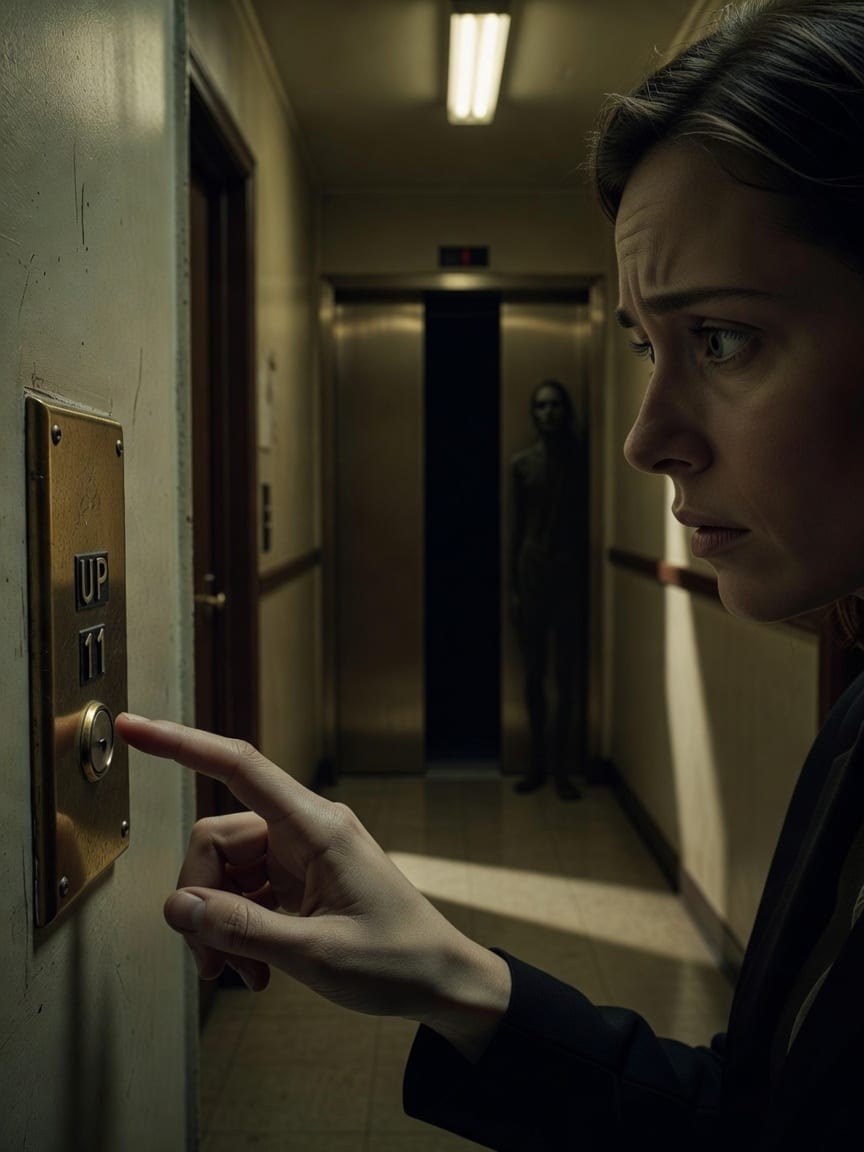
My doorman warned me not to take the tenth-floor lift on Saturday. The building's lift passed inspection last month. He seemed terrified that he'd said it.
My doorman's unsettling warning about the tenth-floor lift left me with a metallic taste of unease. I tried to rationalize it away, but then a birthday card arrived for me, five months early, from an impossible address. It was a site linked to unexplained disappearances, and a cold certainty began to settle in.
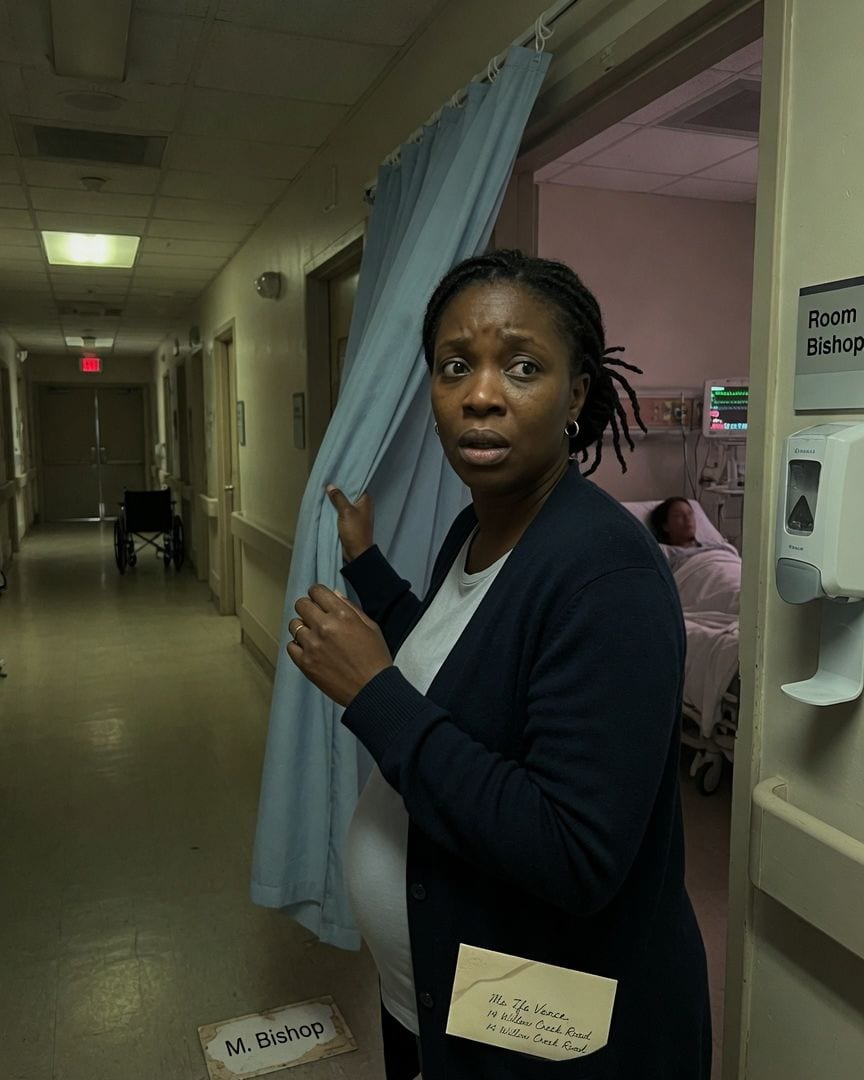
A midwife I’d never met touched my arm in the maternity ward, said my name, and whispered, 'Not this one, the next one.' I was only visiting my sister.
Back home after visiting my pregnant sister, a strange envelope arrived in my mailbox. It was a birthday card, but the return address was a road that had been a demolished highway for twenty years. How could a letter be sent from a place that no longer existed?
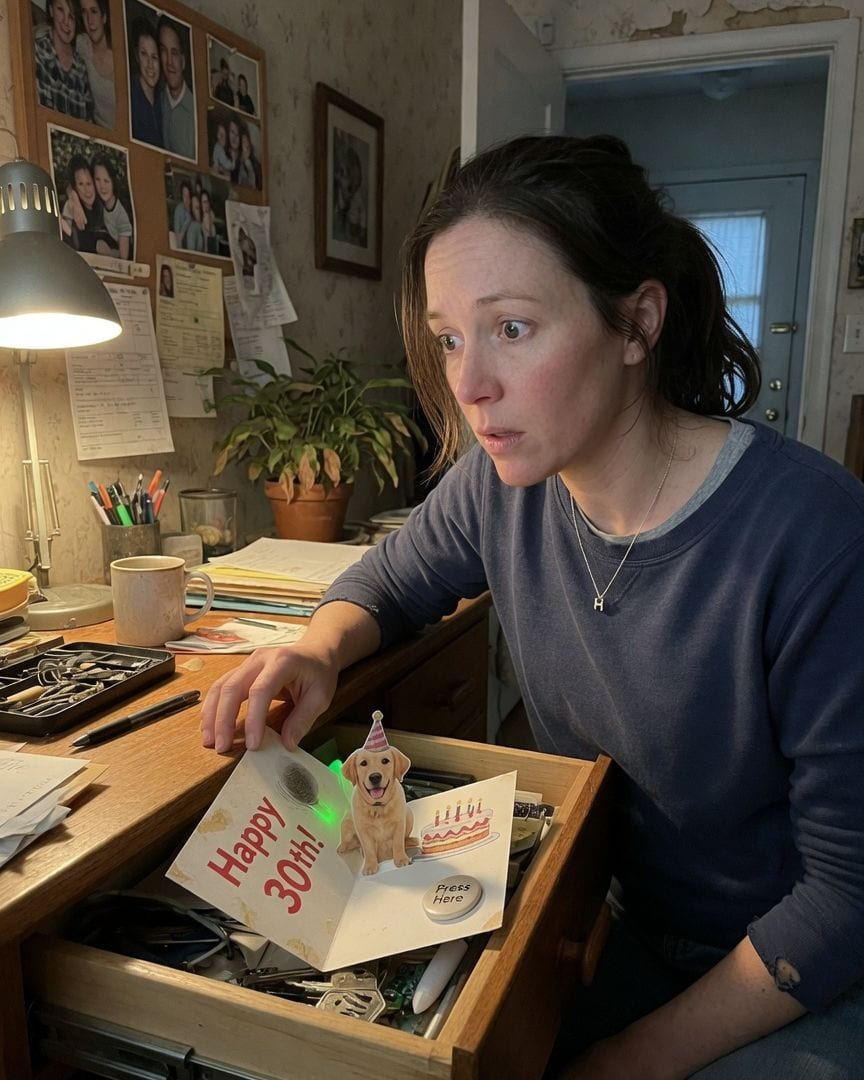
My dead father's musical card played past ten seconds, his voice saying my name, then, 'you left the back door open again.' I went downstairs. It was open.
At my desk, I heard my father's musical birthday card begin to play, a saccharine melody I hadn’t heard in years. Untouched for four years, the card's tiny speaker then spoke his familiar voice, calling my name and telling me I’d left the back door open. My father had died two years prior.
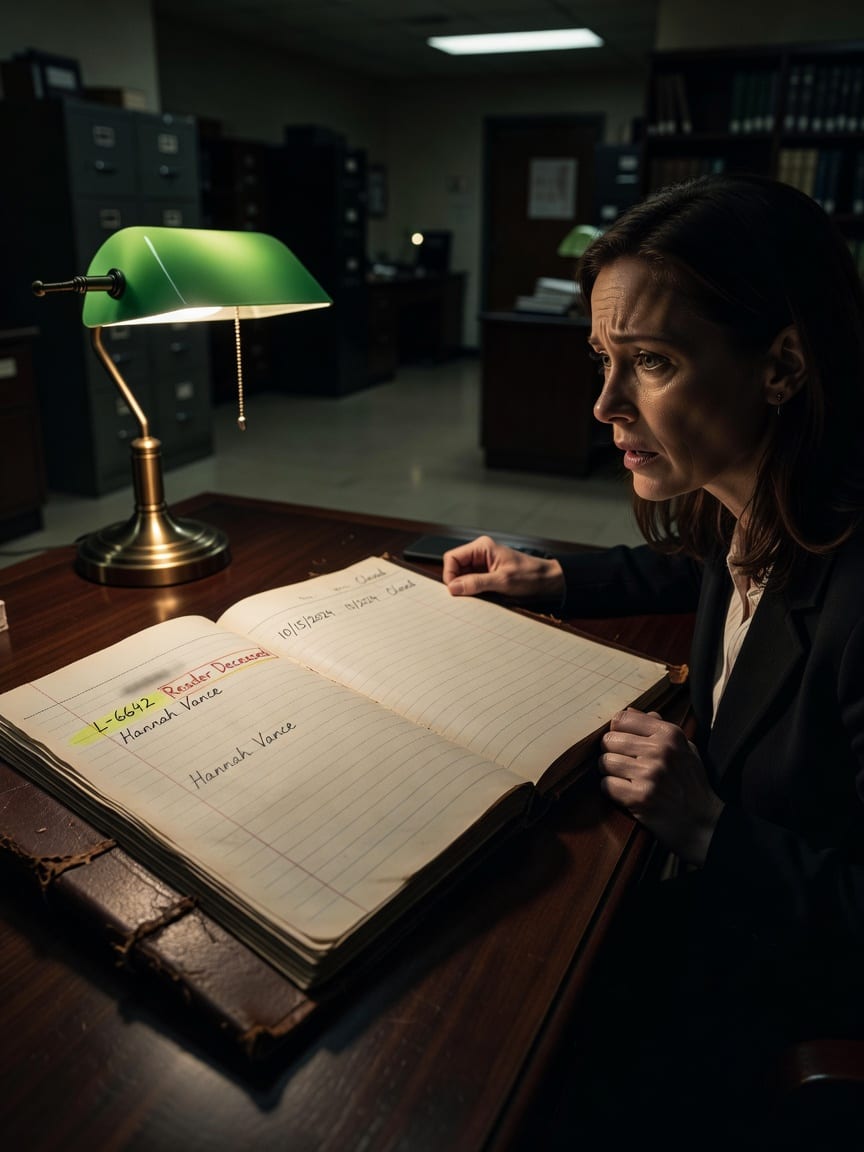
My library card number L-6642 was issued to me at seven — and the ledger shows that number has marked a reader 'deceased' every twelve years since 1949.
Returning my late father's library card to the old town library felt like a small act of closure. But the senior librarian's ancient ledger revealed a chilling pattern of 'reader deceased' entries tied to specific card numbers and borrowed books. My unease turned to cold dread when I secretly found my own name penciled in, marked for a future 'reader deceased' entry.
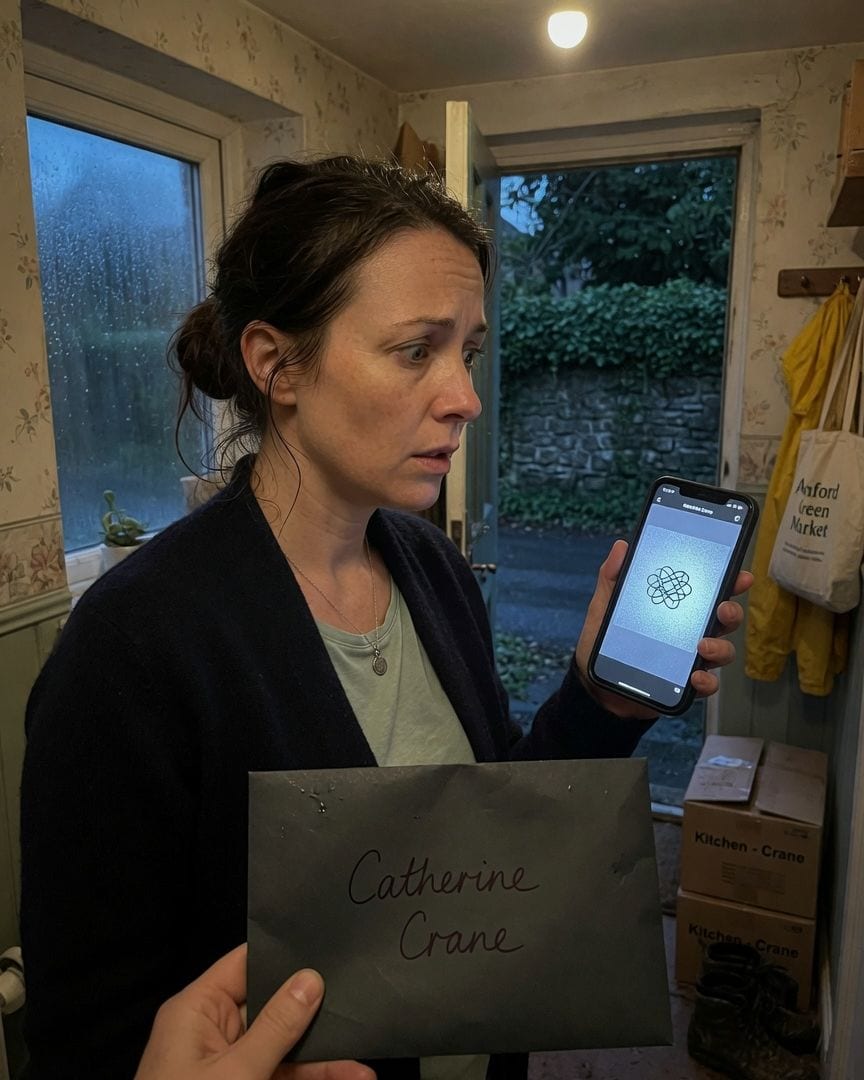
My postman warned me: never use the old pillar box. Royal Mail logs a collection every day, one item, signed by no one.
Moving to Ashford Green, I dismissed my postman's strange warning about the old pillar box by the ford. But after my own letter vanished inside it, I returned at midnight. Then, a dark, unstamped envelope slowly slid *out* of the slot, addressed to me.
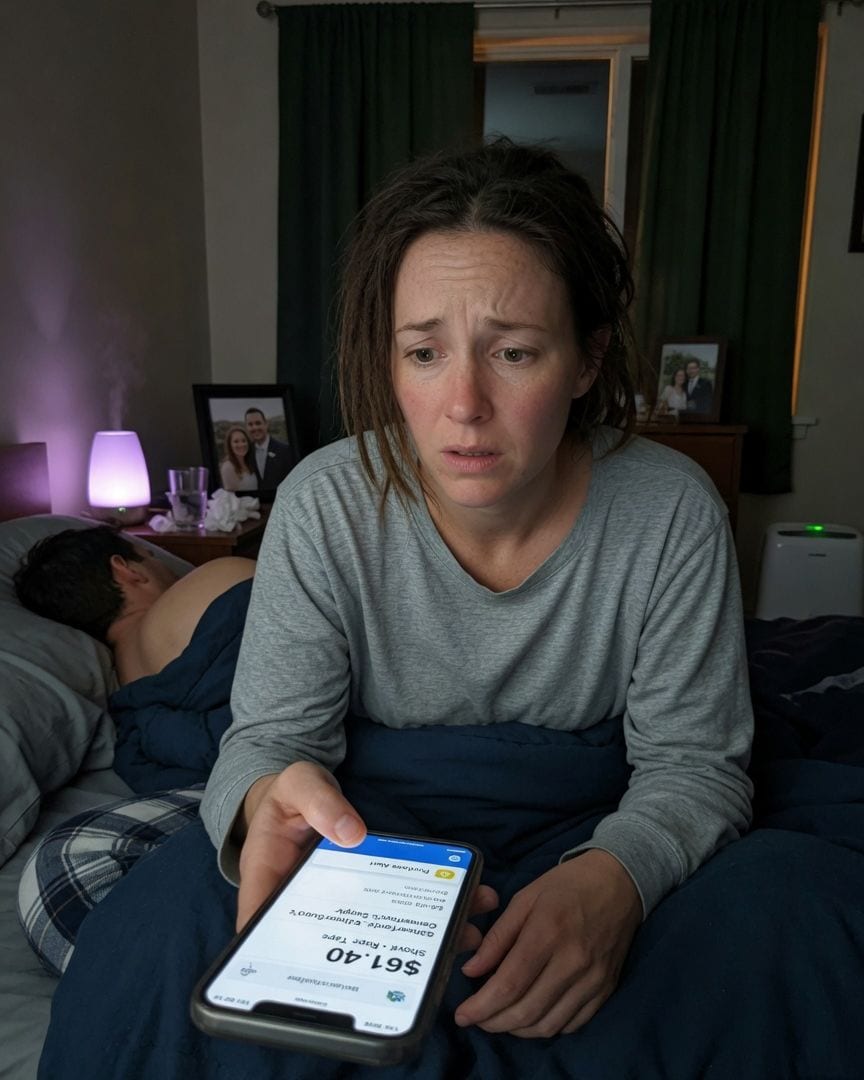
My bank app pinged a hardware store purchase three states away: shovel, rope, duct tape, 11:20pm. I was home in bed.
My bank app kept buzzing late at night with strange purchases for things like shovels and rope from a hardware store three states away. The charges were tied to a loyalty program I'd never heard of. But the true dread hit when the store owner showed me a loyalty card application with my own signature, dated eight months ago when I was home sick.