My black gate stands open, the padlock hanging closed but the hasp unscrewed clean out of wood untouched for years. The parish keeps that gate shut. It's the rule.
The quiet lane leading into our new village is lined with neat, identical white gates, each one a polite nod to suburbia’s aspirations. All except for the last one, just before the real curve of the ancient woods begins.
That one is stark black, heavy wrought iron, and always, pointedly, shut. Padlocked from the field side, where the common land stretches out, vast and untamed.
Raymond Crane, the old farmer from two lanes over, had made it clear enough when I’d first moved in: “You leave the black gate shut, Miss Lockwood, that’s all. That’s the rule.”
His words had been gruff, simple, but delivered with the kind of weighty finality that makes you not ask questions. A local peculiarity, I’d thought then, something about livestock or ancient property lines.
So when I walked past it last Sunday, the sight of it stopped me dead. The black gate stood wide open, a gaping maw in the otherwise orderly line of fences. My first thought was kids.
Bored teenagers looking for a thrill, or maybe vandals searching for a shortcut to the fields. It was an easy rationalization. But then I looked closer. The heavy padlock still dangled from the gate’s frame, locked and secure.
It was the metal hasp it normally clasped that was the problem. It wasn’t just unlatched; it was unscrewed clean out of the weathered wood of the gatepost.
Splintered holes, dark with age, marked where solid timber should have held it fast. Not a fresh break, but an old, slow violation.
The air beyond the open gate felt unnaturally still, devoid of the usual rustle of leaves or distant bird calls.
The ancient woods, usually alive with sound, stretched into a silence that felt less like peace and more like holding its breath, waiting.
I tried to force the teenager theory. A crowbar, maybe. Someone strong, determined. But the unscrewed hasp still bothered me. The wood around the screw holes wasn't freshly splintered, no light, pale wood showing through.
It was discolored and dry, matching the rest of the gatepost, as if the screws had been absent for a very long time, or removed with an impossible slowness. I leaned closer, examining the rough grain.
There were faint, irregular scoring marks around the holes, not like a drill bit had slipped, or a screwdriver had scratched. More like something had been gouged out, scraped and scraped until the metal had simply... come free.
It was a detail too precise, too odd, for casual vandalism.
As I studied it, a glint of faded color caught my eye in the tangled brambles just past the gate, where the lane gave way to the dense undergrowth of the woods.
It was small, half-buried, a splash of what looked like dull red against the greens and browns. Clearly out of place. A strange, insistent pull, like an invisible hand at my back, urged me forward.
It wasn't curiosity so much as a compulsion, past the threshold of the open black gate, into that unsettling silence. I had to know.
My fingers brushed against something smooth, hard, and cold beneath the dry leaves and thorny tendrils. I pulled it free, dislodging a handful of earth and twigs.
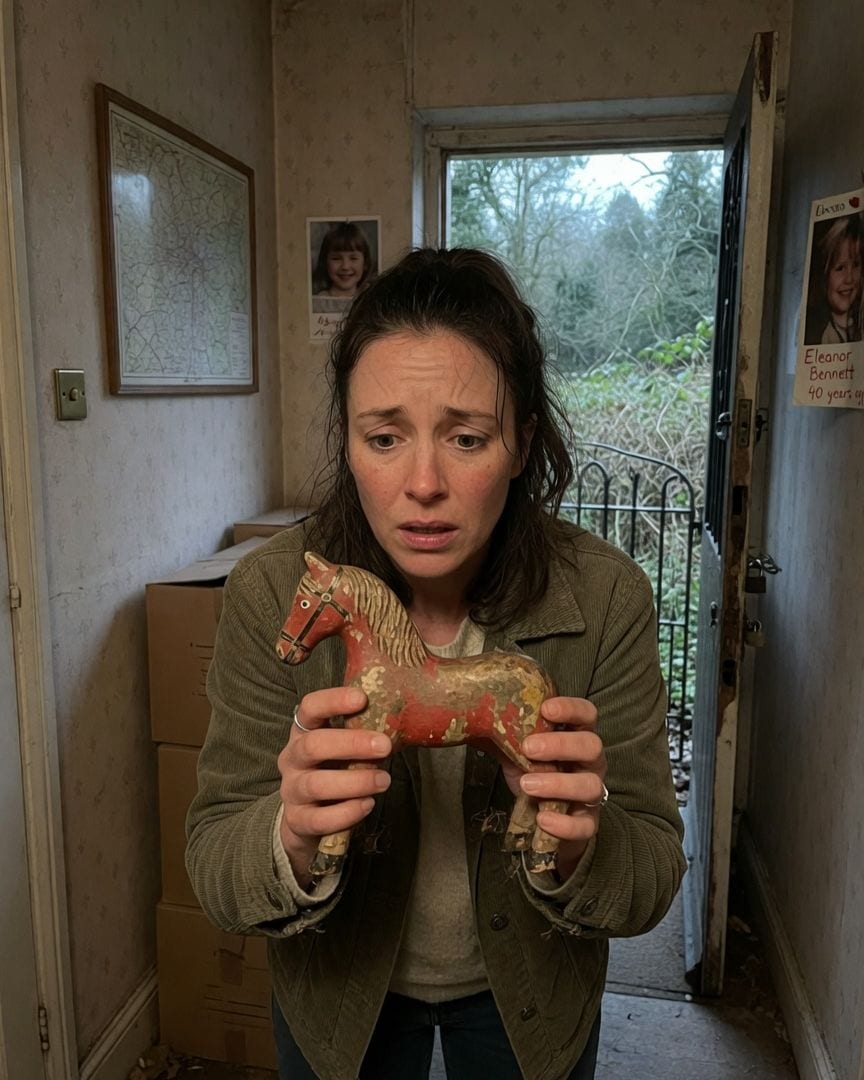
It was a small, faded wooden toy animal, a horse with a chipped mane and a single missing ear. Its painted eyes, once bright, were almost completely gone.
It felt ancient in my palm, worn smooth by countless touches, a ghost of childhood joy. A chill, cold and sharp, ran down my spine, quite unrelated to the autumn air.
The toy was strikingly similar to one clutched by a smiling child in a faded missing person poster I’d seen tacked to the pub's bulletin board just last week – Eleanor Bennett, disappeared over forty years ago from this very common land.
The gate wasn't just left open, I realized, my breath catching. It was breached.
The wooden toy horse sat on my kitchen counter for two days, a mute, unsettling presence. I couldn't throw it away, couldn't quite bring myself to touch it again after that initial retrieval.
It haunted me, its chipped paint and missing ear a silent accusation. On Tuesday, I drove to the village library, a quiet, dusty place that always smelled of old paper and beeswax.
Carol Sutton, the librarian, a woman in her fifties with shrewd but kind eyes, was shelving books by the high windows. I asked her about Eleanor Bennett. Carol’s hand, poised to place a heavy volume, froze.
Her face shuttered for a moment, a subtle shift in her polite demeanor, as if a mask had briefly slipped. "Eleanor," she repeated, her voice softer than usual. She recovered quickly, guiding me to the microfiche machine. "Such a tragedy.
Presumed lost to the elements, dear." Her eyes, though, lingered on me for a moment too long, a flicker of something unreadable in their depths – suspicion, or maybe apprehension.
I scrolled through the grainy newspaper reports of Eleanor’s disappearance. A brief, frantic search, quotes from distraught parents, then a quiet cessation of activity. "Official explanation: presumed lost to the elements," just as Carol had said.
But something about the neatness of it, the lack of follow-up, struck me as wrong. The village was small; such a loss should have resonated for decades.
As I dug deeper, cross-referencing dates and locations, I uncovered other similar, briefly reported disappearances from decades past. Always children or young adults. Always near the common land beyond the black gate.
The dates were spaced years, sometimes even decades, apart, but the pattern was too consistent to be coincidence. A little girl in '57, a boy in '71, a young woman hiking in '88.
All from the village, all near the gate, all vanished without a trace, written off as "runaways" or "tragic accidents."
Carol, who had been hovering nearby, ostensibly organizing a cart of returns, suggested these were just that – runaways or tragic accidents. Her voice was calm, almost rehearsed, a strange, placid surface over unspoken depths.
The library's dusty silence seemed to press in, watching me.
A strange compulsion kept drawing me back to the black gate. I tried to stay away, to let the 'system error' at the library be a reason, but the pull was too strong. I went again, late one afternoon.
As I approached, I saw a figure standing near the gate, not looking through it, but examining the gatepost with a focused intensity.
It was Kenneth Hayes, the parish groundsman, a wiry man in his sixties who maintained the village's green spaces. He was methodically replacing the unscrewed hasp with new, heavier-gauge bolts, his movements precise and unhurried.
He didn't look up immediately, his brow furrowed in concentration. The air around him felt cold, even for the time of year.
When he finally did, his gaze was direct, unsmiling, and held a depth of knowing that chilled me to my core. It wasn't anger, not curiosity. It was resignation.
"Some things are best left alone, Miss Lockwood," he said, his voice flat, devoid of inflection, before returning to his work, his hammer blows ringing with a deliberate finality.
Later that week, I found my library card mysteriously suspended again, a "system error," according to the young assistant, who looked away as she spoke. Carol Sutton didn't answer my calls, her voicemail inbox full.
The few villagers I encountered on the street offered only brief, averted glances, their usual friendly greetings replaced with a quiet, unsettling silence. A quiet pressure built, a sense of being watched, of stepping where I shouldn't.
The very quiet of the lane felt like a tangible presence, observing my every move.
I found Carol Sutton in the deserted library after closing, the 'Closed' sign hanging on the door, but the interior lights still on. She was preparing for the next day, wiping down the circulation desk. I didn't mince words.
I spread out my printouts on the polished wooden counter: the missing persons reports, the dates, the locations. I clutched the wooden toy horse in my hand. "This isn't just a coincidence, Carol.
Not all of them can be runaways or accidents. What's the rule really about? What's the black gate for?"
Carol sighed, a deep, weary sound that seemed to carry the weight of years. She glanced at the door, then back at me, her shoulders slumping. "The 'rule' isn't just a rule, Fiona. It's ancient, passed down through generations.
A necessity." Her voice dropped, becoming a near whisper, making me lean closer. "The gate isn't just a boundary. It's... a seal. A barrier. Keeping things out, yes. But also keeping things in." She paused, her eyes pleading for understanding.
"Sometimes, things get out. Things that shouldn't be here." The library's tall shelves seemed to lean closer, listening. "The disappearances... they aren't accidents. They're when the 'things' succeed. When they take someone." Her gaze met mine, raw and exposed.
"The village has always had 'keepers,' Fiona. Families charged with maintaining the gate, observing the signs. And, when necessary, managing the aftermath quietly." She wrung her hands. "It’s how we’ve survived. How this village has stood for centuries.
By understanding what it protects us from, and what it demands." She mentioned an old, handwritten 'ledger,' kept by the keepers, detailing the history of breaches and the families involved.
"It's all in there," she murmured, "if you're brave enough to look."
Carol, her composure finally breaking, led me behind the circulation desk. With a practiced hand, she lifted a loose floorboard, revealing a hidden compartment beneath. The wood creaked, ancient and protesting.
From within, she produced a heavy, leather-bound ledger, its pages brittle and yellowed, the edges frayed. The ink was faded but still legible, each entry painstakingly written in a delicate, careful hand.
My fingers, trembling slightly, traced down the first page.
Dates, names of the disappeared, just as I’d found in the microfiches, but with chillingly precise details – the exact time, the last known location, sometimes a brief, cryptic note about the weather or a strange sound heard.
And then, further down, in a different, more recent hand, lists of local families and the dates they 'agreed to serve' – dates that chillingly aligned with some of the disappearances.
My finger traced down the page, seeing 'Sutton' listed repeatedly, each entry a fresh stab of cold. Then, my breath caught in my throat.
Just above an entry for a child lost in the late 18th century, a name stood out, written in a bold, elegant script, centuries old: 'Lockwood.' My own surname.
The ledger fell open to a page detailing not just victims, but a lineage of complicity, the very air in the hidden compartment feeling thick, aged, heavy with unspoken history.
Carol's voice was barely audible now, a ghost of sound in the dim library. She confirmed my chilling suspicion, her words cold points of truth. "The Lockwoods were the original 'keepers' of the gate, Fiona. Your family.
The very ones who established the rule and the intricate system of containment centuries ago."
She explained how my ancestors were responsible not only for maintaining the physical barrier but also for the 'quiet agreements' with other families – the Suttons, the Hayes – to ensure the village's survival.
The entity beyond the gate, Carol explained, wasn't 'evil' in a human sense, but something far older, far more alien. "It's predatory, Fiona. Drawn to certain emotional resonances, a hunger beyond human comprehension. It doesn't hate; it simply consumes."
The 'disappeared,' she elaborated, were either direct sacrifices made during times of intense activity, or those who unwittingly stumbled into its reach during a breach, lured by a misplaced sense of safety or curiosity.
My own curiosity, I thought, and the toy horse in my pocket, suddenly felt like a heavy, damning weight.
The hasp being unscrewed wasn't an accident; it was a deliberate, almost intelligent act, a sign the entity was actively testing its bounds, perhaps even specifically targeting the descendants of its original keepers.
The ledger's entries, every name and date, every cryptic note, suddenly made horrifying, coherent sense, a testament to a long-forgotten war waged in the village's shadows. My family, I realized, hadn't just lived here.
They had been the wardens of a prison, and I had inadvertently unlatched a door.
The revelation spurred me into a desperate, frantic race. The gate was vulnerable, and I, a Lockwood, had inadvertently triggered something ancient. The heavy ledger felt like a lead weight in my hand, its truths crushing me.
I ran through the twilight-darkened lane, the cold evening air biting at my exposed skin. Every shadow seemed to twist, every rustle in the hedges sounded like something pursuing me.
My breath burned in my lungs, a frantic drumbeat against the growing dread in my chest. Back towards the black gate. As I approached, my heart hammered against my ribs.
I saw a figure standing motionless near the gate, not securing it, but gazing into the impenetrable blackness of the woods beyond. It was Kenneth Hayes.
He turned slowly as I drew near, his face calm, almost serene, utterly devoid of surprise or fear. The twilight air itself felt heavy, humid, pressing down, as if the world was holding its breath.
"You came," he said, his voice soft, almost a sigh. "It's too late, though. It's already taken an interest." He gestured with a hand that seemed too steady, too unconcerned, towards the ground directly beneath the gate's threshold.
Embedded in the damp earth, where no such thing should be, was a dark, organic-looking artifact. It was roughly spherical, the size of a human fist, mottled with deep, unnatural veins that seemed to twist and writhe beneath its surface.
It appeared to pulse with a faint, almost imperceptible internal light, like a deep, wounded glow.
It felt ancient, alien, profoundly wrong, a piece of the entity made manifest, undeniably real, dated by its very presence to a time before the village itself.
I didn't touch the artifact. I didn't confront Kenneth. The sight of it, the quiet acceptance in his eyes, was enough. The sheer, coherent wrongness of it all.
I turned and ran, leaving the village that night in a blur of fear and adrenaline, the image of that pulsing, veined sphere seared into my mind.
I tried to report what I found, what I saw, but my frantic story, full of ancient ledgers and predatory entities, was met with polite skepticism and eventual dismissal.
They looked at me with pity, suggesting stress, grief, needing a break. I moved to a city far away, building a new life, a new identity.
But the memory of the black gate, the pulsing artifact, and the calm, knowing faces of the villagers never truly leaves me.
The quiet dread of what I uncovered, and what still exists, is a permanent shadow, a cold spot in the center of my being.
Months later, I sit in my sterile city apartment, the drone of the evening news a low background hum.
A local report mentions a small, quiet village, miles from my old home, experiencing an 'unexplained rise in missing persons' near a patch of ancient common land. My blood runs cold.
I stare at my own hand, then at a small, almost imperceptible discoloration on the back of it, a faint, dark smudge that wasn't there before I reached for the toy horse, before I stood too close to the gate.
It pulses sometimes, when I'm tired, or when I close my eyes. I remember Kenneth Hayes's calm, knowing face, the way his eyes seemed to hold centuries of quiet resignation, of terrible understanding.
I feel a chill that has nothing to do with the apartment’s air conditioning. I am marked. I know. And the gate is still there, waiting.
A few weeks later, a new resident moves into Fiona Lockwood's old cottage in the village. The black gate at the end of the lane is once again padlocked and painted black, pristine.
The new resident, Julian Fontaine, finds a small, faded wooden toy horse tangled in the brambles near the gate. He picks it up, a thoughtful frown on his face, before calmly tossing it back into the woods.
He knew the rule.
If this one got to you
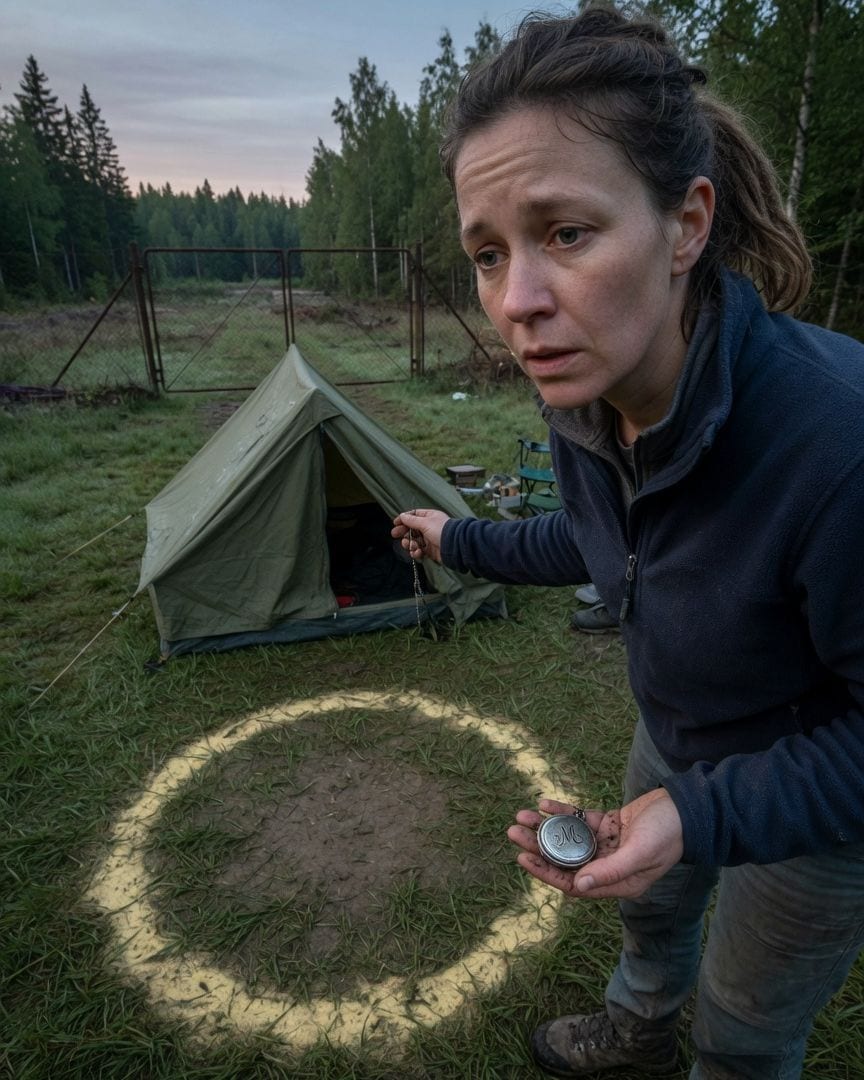
My tent left a flattened ring in the grass, but an older one was already there, worn into the turf, exactly tent-sized, for thirty years.
As the new camp host, I ignored the warden's odd rule about pitching my tent on a particular flat spot. That night, something enormous walked in slow, methodical circles around my tent. The next morning, I found a deeply worn, old ring in the earth beneath my tent, and later, a tarnished silver locket buried there.
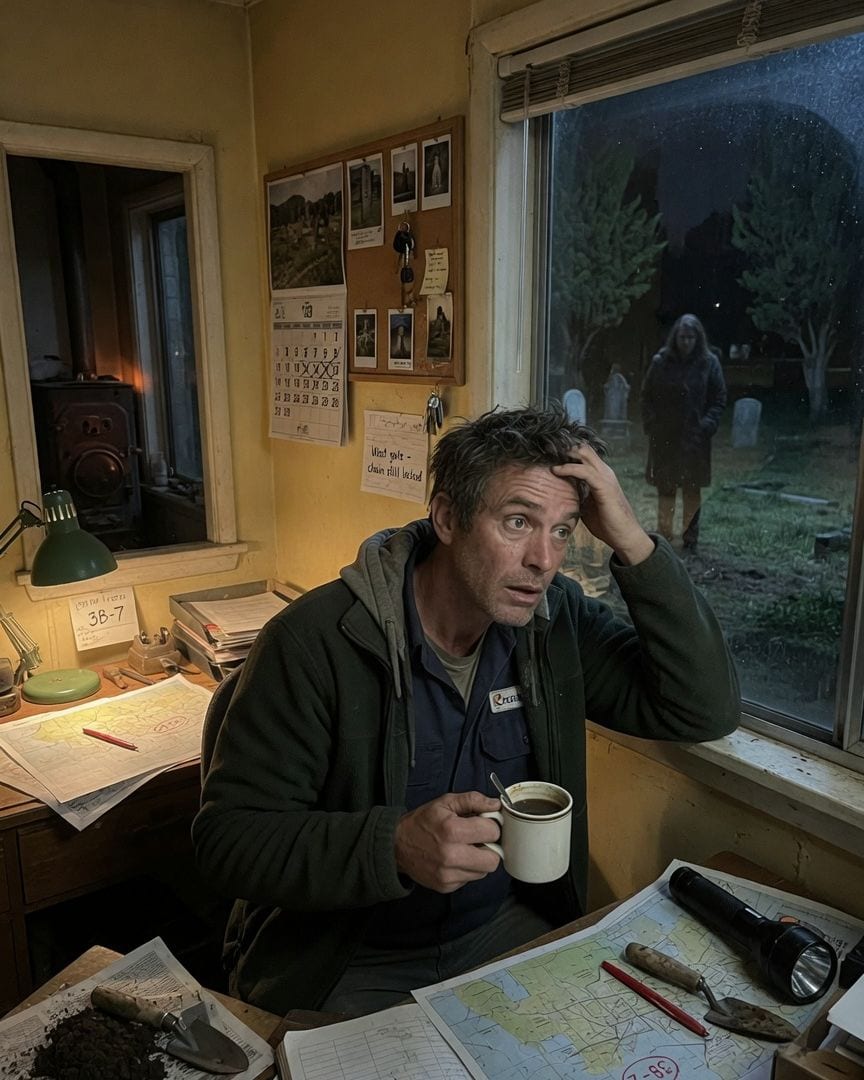
My cemetery lodge overlooks a woman visiting an empty grave near 3 AM most nights. The west gate she uses has been chained shut since autumn, its lock untouched.
As the cemetery's night caretaker, I'm used to the quiet hum of the lodge. But for three weeks, a woman has appeared nightly at plot 3B-7, a silent mourner in the deep night. What chills me is how she leaves: walking straight through the west gate that's been chained and padlocked shut for eight months.
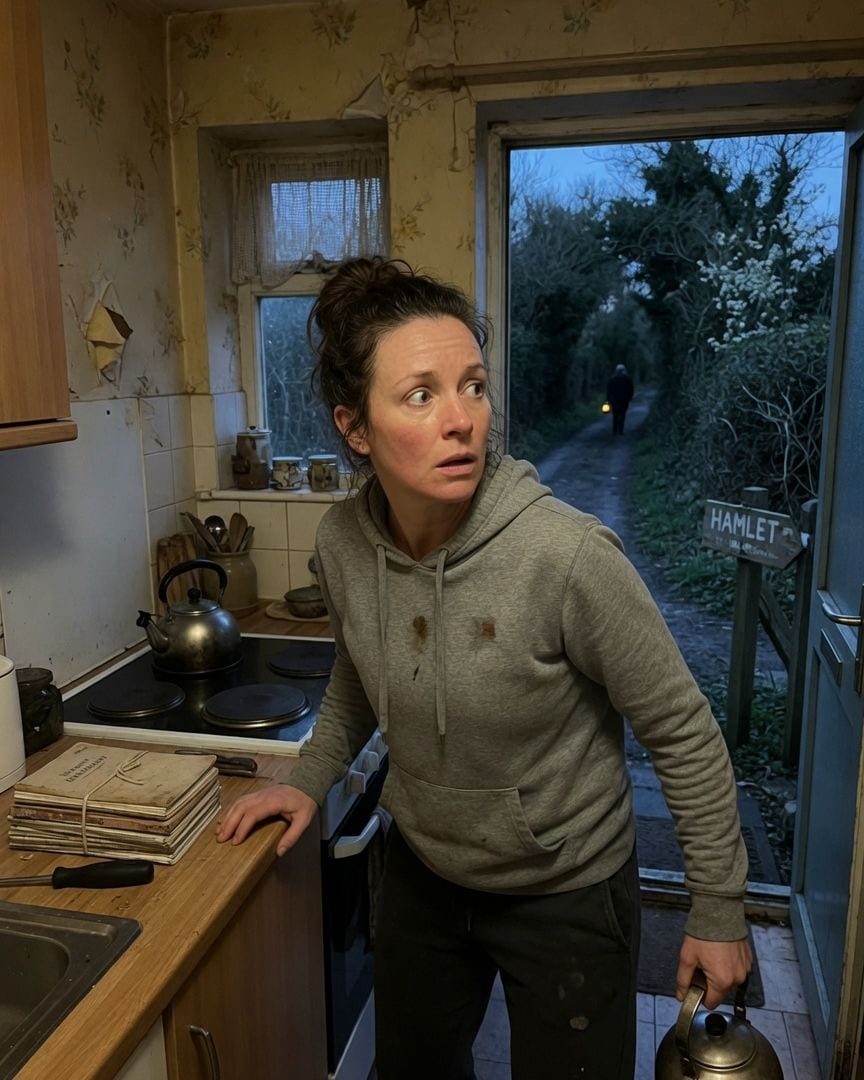
My side gate opens onto a dirt lane between hedgerows, not the close, and a figure with a lantern comes up it toward me.
My side gate normally opens onto the familiar tarmac of the close, but lately, it's opened to a narrow, overgrown dirt lane instead. Three times now, at dusk, I've seen a man with an old-fashioned lantern walking unhurriedly up this impossible lane towards my house. Each time, when I dare to look again, the lane is gone, leaving only the bins and a racing heart.
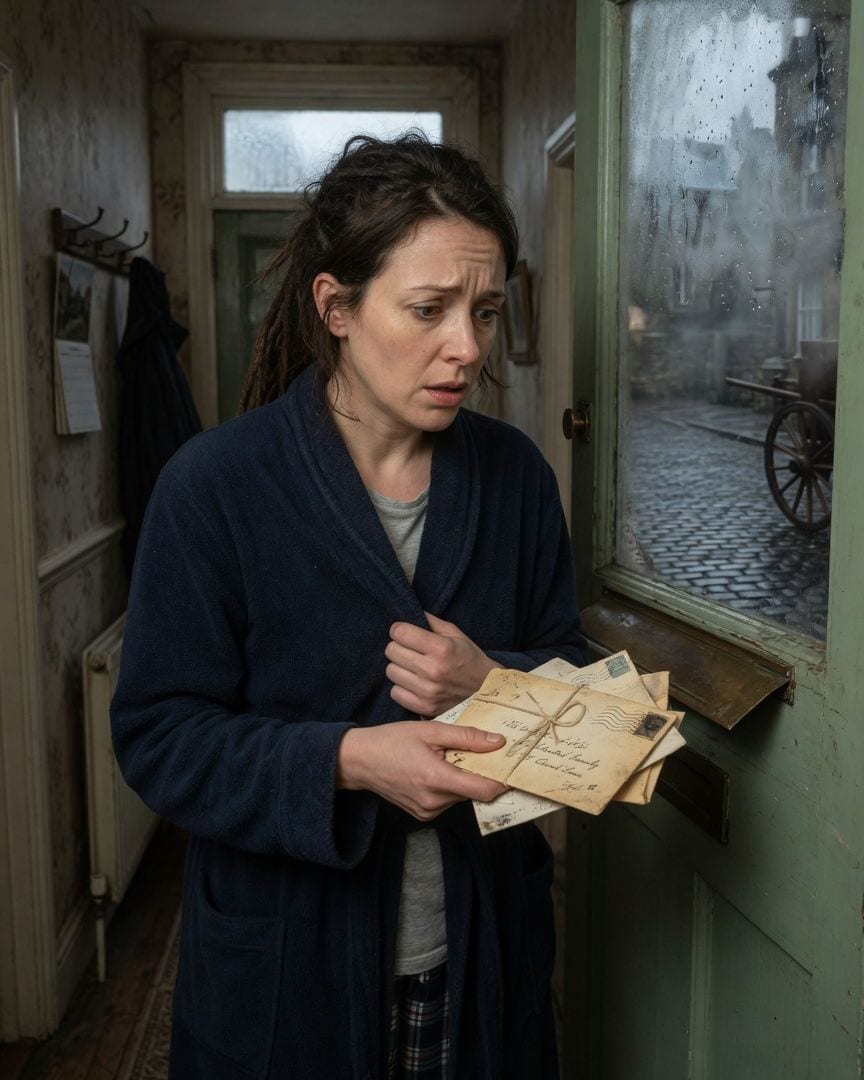
Seventy years ago, a hidden journal recorded my door opening to the wrong street and receiving Lockwood post.
I'd only recently moved into my inherited house, a quiet place on the edge of town. One grey morning, a distinct clatter from the front door's post flap caught my attention. Reaching down, I expected my gravel path, but instead, the flap showed a dark, cobbled street that wasn't mine. A bundle of warm, old letters, addressed to 'The Lockwood Family,' slid through, before the vision flickered and was gone.
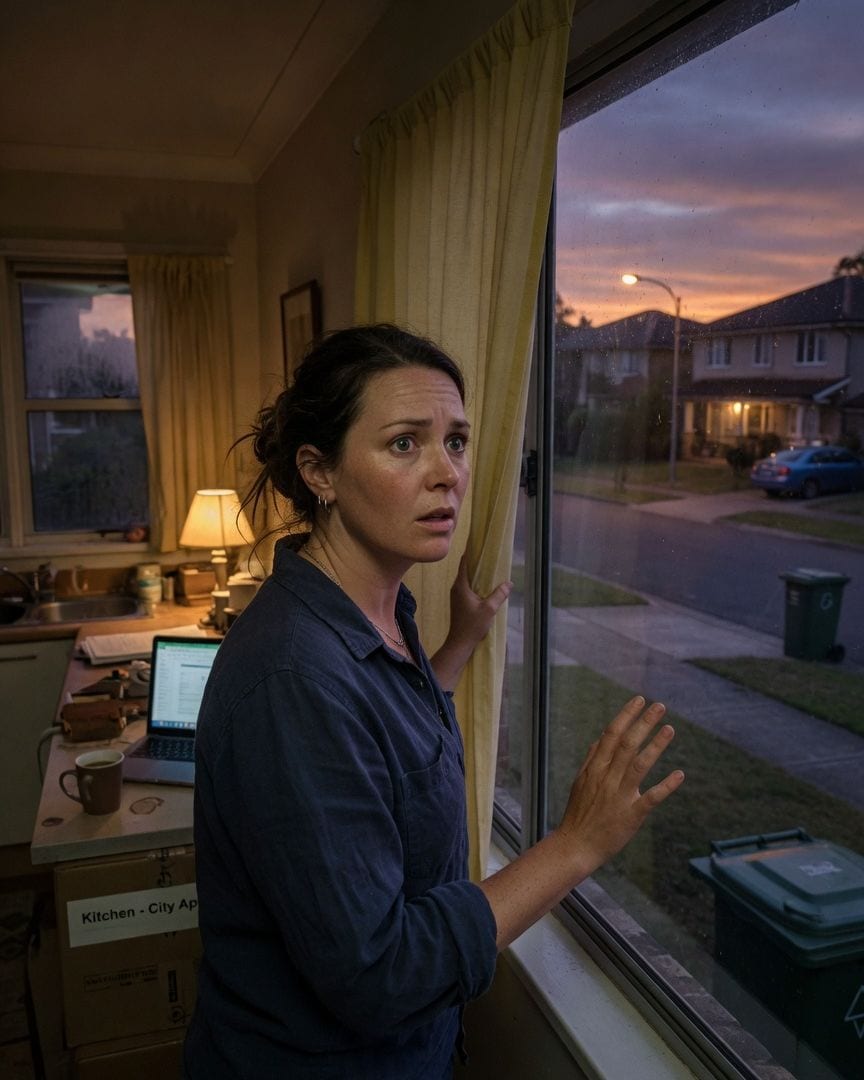
My bin was turned the wrong way Tuesday. The man three doors down hasn't been seen since, though his curtains still open.
New to Oakhaven, I dismissed the local warnings as charming quirks. But after I put my bin out first, my neighbor Joel Whitmore vanished, leaving only a cryptic 'My turn' note. The same strange symbol from his note was chalked on my bin, facing the street.
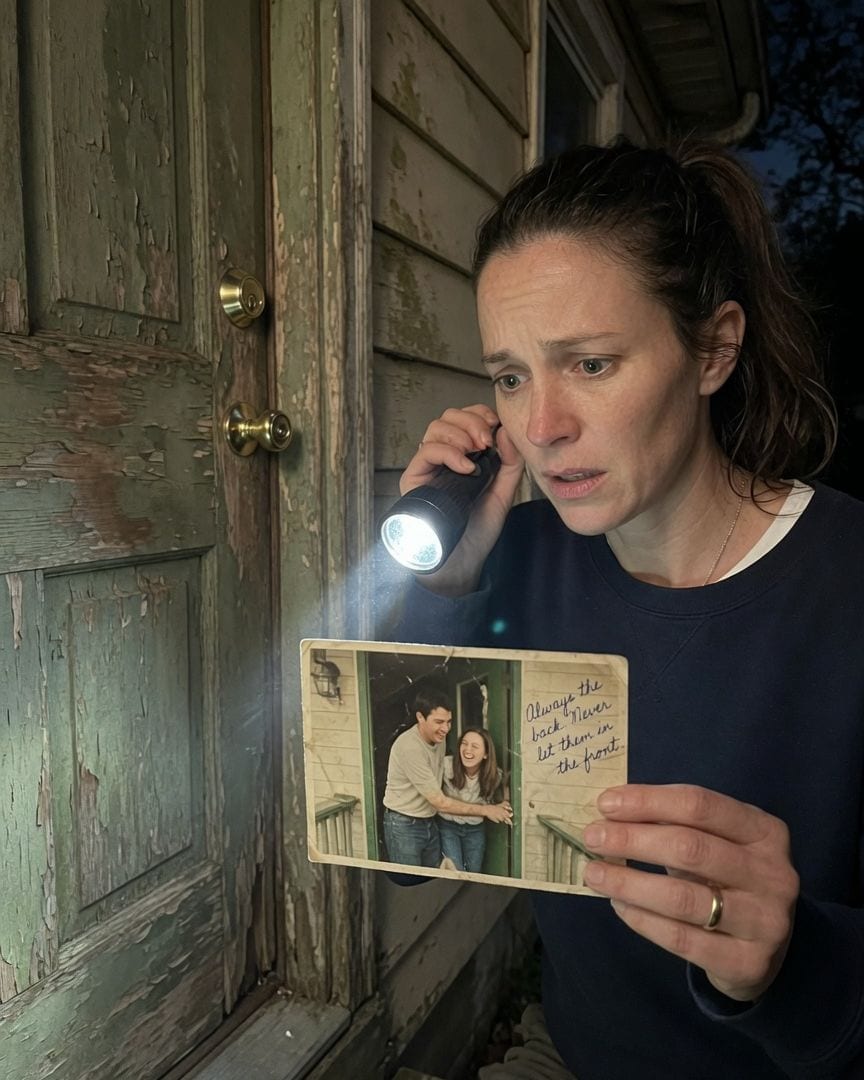
My mother waves us to the front door now. She was missing five days. She says we've always used the front, but the back door, our kitchen door for thirty years, is locked.
My mother, Janet, finally came home after five days, but her overly bright smile and insistence on using the front door felt wrong. For three decades, our family always used the back entrance, which now had a gleaming, new deadbolt. The quiet hum of unease quickly grew into a chilling dread.