My car park's coned-off corner bay takes a cash payment every 1 AM, leaving a single coin on my desk. No car is ever there.
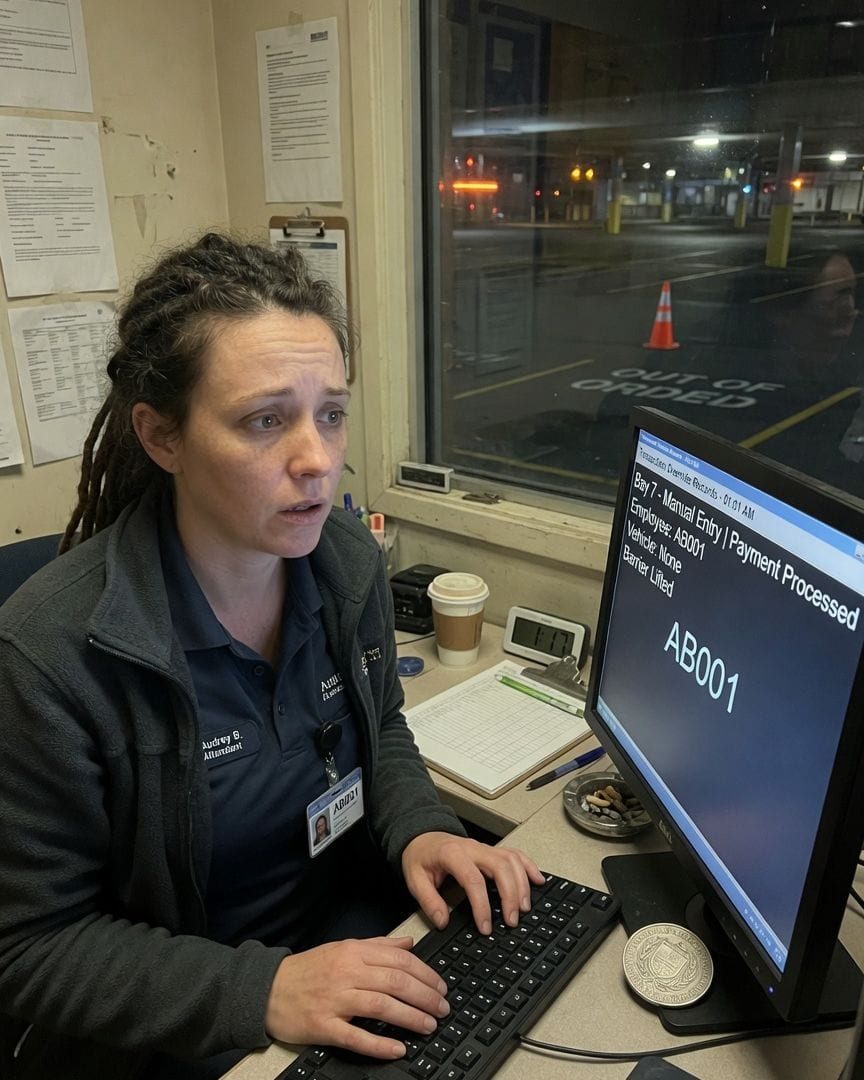
Every night, at precisely 1 AM, a man in a plain grey coat would appear at the car park barrier. I’m Audrey Beaumont, 30, and I’ve worked the graveyard shift here for three years.
I’d watch him approach the coned-off corner bay – Bay 7 – the one that had been declared 'out of order' for repairs a year ago and blocked off with a single orange cone. He never drove a car.
He never spoke. He just walked up to the barrier’s payment slot, slipped a crisp twenty-dollar bill through, and then walked away, vanishing into the perimeter shadows as silently as he'd arrived.
He always left something behind, too. A single, smooth silver coin, cool to the touch, resting on the small ledge of my booth's window. I’d always find it when I did my routine rounds at 1:15 AM.
The twenty would be gone, of course, the barrier light indicating a transaction had processed, but the coin would be there. And Bay 7? I'd check it immediately, every single time. Empty. Always empty.
Just the orange cone, stark against the dark asphalt, and the undeniable feeling that something had just passed through, leaving only that coin as a trace. It was the quietest, most impossible routine I’d ever witnessed.
The coin, this time, was heavier than usual, with an unfamiliar crest etched into its surface – some kind of shield and a sprig of leaves.
I’m a rational woman, a stickler for logic, and the quiet absurdity of this nightly ritual had finally pushed me past my limit. The next morning, before my shift ended, I pulled up the car park's digital audit logs.
My fingers flew across the keyboard, filtering the data for the coned-off Bay 7 and a 1:00 AM timestamp.
Nothing.
No entry for a vehicle, no record of a payment, no barrier lift. The system showed the bay as inactive, just as it should. My brow furrowed. Confused, I then accessed the security footage for that exact time.
The camera covered the entire entrance and Bay 7. I leaned closer to the monitor, my heartbeat quickening. The footage showed me, Audrey Beaumont, walking out of the booth at 1:14 AM, doing my usual rounds.
It showed me approach Bay 7, bend down, pick up something from the ledge, and then walk back inside, placing it on my desk. But there was no man. No grey coat. No twenty-dollar bill. No car.
Just me, a solitary figure in the silent night, picking up a coin from an empty space.
Then, I noticed it. Not in the main transaction log, but deeper, in a system override record. A manual entry for Bay 7. Timestamped 1:01 AM. And next to it, glaring from the screen, was my own employee ID: 'AB001'.
I knew, with a cold certainty that settled deep in my gut, that I had never made that entry. I hadn't even been at the terminal at that precise moment.
I stared at the glowing screen of the audit log, my employee ID, 'AB001', glaring back at me next to the 1:01 AM entry for the coned-off Bay 7. I hadn't made that entry.
I hadn't even been near a terminal at that precise moment. The silver coin, the one with the strange crest, felt impossibly heavy in my pocket.
The implication hung in the still air of the empty booth, a silent, chilling accusation. My finger hovered, trembling slightly, over the 'delete' button, a phantom impulse to erase the impossible truth.
The next day, I called IT support, feigning a 'system glitch' inquiry about unauthorized access to my employee ID. The technician, bored and distant, confirmed what I already knew: 'AB001' had no shared access, no backdoors, no recent password changes.
It was uniquely mine. The dread tightened its grip, knotting in my stomach. My attempts at a rational explanation were crumbling.
I started keeping a meticulous record of the coins that appeared each night. I noted their dates – though they bore no official year – their unusual minting marks.
Some looked distinctly old, almost ancient, others almost modern but with an archaic feel, like a new coin struck with an old die.
Each night, the ritual repeated: the invisible transaction, the coin on my desk, the phantom entry under my ID. I began cross-referencing my own shift logs with the digital audit. The pattern was undeniable.
Every night I worked, at 1:01 AM, an entry for Bay 7 appeared under 'AB001'. It stretched back weeks, then months, long before I'd even noticed the anomaly.
I even found one from three years ago, my first week on the job, the day before the bay was officially coned off.
My rational mind screamed for an explanation, for a human hand, a prank, a flaw in the system. But every avenue I explored led back to the same impossible conclusion: the entry was made by me, yet not by me.
The coins accumulated in a small, velvet pouch I kept hidden in my locker, a growing testament to a wrongness that defied all logic.
The car park, once a simple place of ingress and egress, felt like it was humming with a hidden, malevolent pulse.
A week into my obsessive investigation, my supervisor, Greg Prescott, called me into his office. Greg, 45, usually jovial and easygoing, sat with a weary, almost resigned expression.
His office, usually bright, felt dim, as if the light itself was hesitant. "Audrey," he began, his voice low, "IT flagged some unusual activity on your account. Excessive log checks, specific to Bay 7. Everything alright?"
I felt a cold knot form in my stomach. I tried to offer a casual explanation, something about "optimizing efficiency," or "double-checking phantom charges." Greg just nodded slowly, his eyes fixed on mine, unblinking.
"Look," he said, leaning forward, his voice dropping further, "I've seen things like this before. Old Daniel Doyle, who worked nights here for forty years before he retired, he had... similar issues. Got obsessed with the logs, too.
Ended up taking early retirement."
He paused, studying me, his gaze unnervingly steady. "Some things on the night shift, Audrey, are best left alone. You start digging, and sometimes you find things you can't un-see. Just let it be."
His tone wasn't a threat, but a quiet, almost paternal warning. The implication hung heavy: Greg knew something, or suspected it, and he recognized the path I was on.
His 'advice' felt less like a suggestion and more like a quiet acknowledgment of an unseen force at play, a force he had clearly learned not to challenge.
The danger was no longer just a creeping unease; it was a known, acknowledged pattern, and I was stepping into it. The walls of his office seemed to press in, listening.
I couldn't 'let it be.' Greg's words, especially the mention of Daniel Doyle, had only fueled my resolve. The next day, after my shift, I tracked down Daniel Doyle, 72, at his small, quiet house on the edge of town.
The house smelled faintly of old books and pipe tobacco. He was a slight man, with eyes that held a deep, distant knowledge, like someone who had seen too many nights.
I explained everything: the man in the grey coat, the coins, the phantom log entries under my ID, Greg's strange warning. Daniel listened patiently, nodding occasionally, his gaze unwavering. When I finished, he didn't dismiss me, didn't call me crazy.
Instead, he walked over to a dusty old chest in his living room and pulled out a worn, leather-bound ledger. The leather was cracked, the corners soft with age.
"Been waiting for someone to ask about this again," he said, his voice raspy, like dry leaves. He placed the heavy book on the table between us. It thudded softly. "This isn't the car park's log, not really.
This is the Shift Manifest. From before the digital systems. Before I even started here."
I opened it, the pages brittle with age, exhaling the scent of time. It was filled with meticulous, handwritten entries. Dates, times, initials of attendants. And then I saw it.
On numerous pages, at 1:01 AM, for the location marked 'Crossroads Gate' (which I knew, from old blueprints, was the original name for the car park's corner where Bay 7 now stood), there was a small, hand-drawn symbol of a coin.
And next to it, a cryptic note: 'Passage Toll Paid.' My eyes darted to the initials. 'D.D.' for Daniel Doyle, repeated over and over. And other initials I didn't recognize. The dread mounted, a cold wave washing over me.
"This isn't for parking, Audrey," Daniel said, his voice soft, almost a whisper. "This is for the night itself. For what passes through." The pieces began to click into place with horrifying clarity.
The coned-off Bay 7 wasn't 'out of order' for repairs; it was a designated point. The coins weren't tips; they were payments. And the log entries, digital or handwritten, weren't for cars. They were for something else entirely.
Something ancient and incomprehensible.
My fingers traced the faded ink, the horrifying coherence of it all making my stomach clench. 'D.D.,' 'R.A.,' 'S.P.'
– initials of long-gone attendants, repeated over decades, a litany of names tied to the coin symbol and the 'Passage Toll Paid.' I flipped through the pages, seeing the pattern repeat, stretching back fifty years, then sixty.
The sheer weight of that continuity pressed down on me.
Then, a page caught my eye, a date from three years ago, a month before I started working at the car park. Before I even knew this place existed.
And next to the coin symbol, distinct and unmistakable, were the initials 'A.B.' My own initials. Not just my employee ID in the digital system, but my actual initials, handwritten in a physical record from the past.
My breath hitched. My gaze landed on another entry, a few pages further on. The date beneath it read 'October 27th,' a week from now. And there it was again, clear as day.
'A.B.', next to a coin symbol and the words 'Passage Toll Paid.' As if she – as if I – had already made the entry, as if my role was already written, waiting for me to step into it.
Daniel Doyle watched my face, a somber understanding in his eyes. He didn’t need me to voice the terror that had just solidified inside me.
"The car park, Audrey," he explained, his voice low, steady, "it wasn't always a car park. Before that, it was a crossroads. A boundary point.
And long before any of that, it was just… a place where the night passed through. The man in the grey coat isn't a person, not in the way we understand it.
He's a routine, a manifestation of an old obligation. A collector. The coins are ancient, a currency for 'passage,' for whatever moves in the deeper currents of the night. The bay isn't for parking; it's a gate. A toll point.
And the attendants… we become the temporary collectors for a time. The logs, both digital and this old ledger, they don't record cars. They record its passage. And they record the collector. You're not just observing it, Audrey.
It's weaving you into the pattern. Your initials in this book, even before you arrived, even for a date yet to come… it means you're part of its record now.
It's always been there, just waiting for the next one to pick up the coin and make the entry."
The full horror settled over me, chilling me to the bone. Every inexplicable detail, every phantom entry, every unusual coin, every warning from Greg, now made perfect, terrifying sense.
I wasn't an observer; I was the designated next link in a chain that stretched back through generations, a silent, unwilling participant in the night's ancient, unending transaction.
The air in Daniel's quiet living room suddenly felt impossibly heavy, charged with all the forgotten nights.
I was back in the car park booth. It was 12:55 AM. The familiar chill had settled, but it no longer felt alien. It felt… expected.
The quiet hum of the fluorescent lights seemed louder, a constant, low thrum against the vast silence of the night. I looked at the coned-off Bay 7, the empty space where no car ever parked.
On my desk, a fresh, gleaming silver coin lay, waiting. It was the same design as the one Daniel had shown me in the old ledger for 'Crossroads Gate.'
I understood now. This wasn't a fight to be won, or a mystery to be solved and then escaped. This was simply… how things were. A duty.
At 12:59 AM, I walked out of the booth. The cold asphalt bit through the soles of my shoes. I moved the orange cone aside, carefully, placing it against the low wall.
It scraped faintly, a sound swallowed by the night. I stood in the center of the bay, my hand outstretched, palm open. Precisely at 1 AM, the man in the grey coat appeared.
He walked towards me, his steps silent on the asphalt, making no sound at all. This time, he looked directly into my eyes.
His face was unreadable, ancient, like a mask carved from the night itself, reflecting only the distant security lights. He placed a coin in my open hand.
It was not a coin; it was the coin. The one I had found on my desk earlier, now warm from his touch.
He turned, and without a sound, walked away, disappearing into the deepest shadows of the car park, leaving no trace. Audrey replaced the cone. She walked back to her desk, a strange, profound calm settling over her.
She picked up the coin, placed it in her growing pouch. Then, with a practiced hand, she accessed the digital system.
She selected Bay 7, entered 'Passage Toll Paid,' and confirmed the entry, her employee ID 'AB001' appearing next to the 1:01 AM timestamp. It was done.
The coins continued to appear on her desk, every night. She collected them, adding them to the small, heavy pouch she now kept in her locker, alongside Daniel Doyle's old ledger, which he had insisted she take.
He said it was hers now, that the records needed to be kept. She no longer questioned the process, no longer searched for mundane explanations. She simply performed her duty, a quiet, efficient cog in a vast, ancient mechanism.
The dread had not vanished, but transformed into a profound, unsettling acceptance. The night shift was no longer just a job; it was a vigil, a sacred, unwritten contract with whatever moved in the dark.
Audrey watched the 1 AM slot pass, the digital record confirmed, another coin added to her pouch.
The quiet of the night was no longer empty; it was full of a vast, ancient routine, and she was a small, vital part of it.
The car park, a place of transient vehicles and fleeting moments, was now a fixed point for something eternal, and she, its unassuming guardian, simply maintained the flow.
The knowing was her ending, an understanding she could never undo or share.
The night shift supervisor, Greg Prescott, would sometimes notice Audrey looking out at the empty, coned-off corner bay, a faint, almost imperceptible smile on her face. He wondered what she saw out there.
'Just making sure everything's in order,' she would say, her voice calm, a single, smooth silver coin glinting faintly in her open palm as she turned away.
If this one got to you
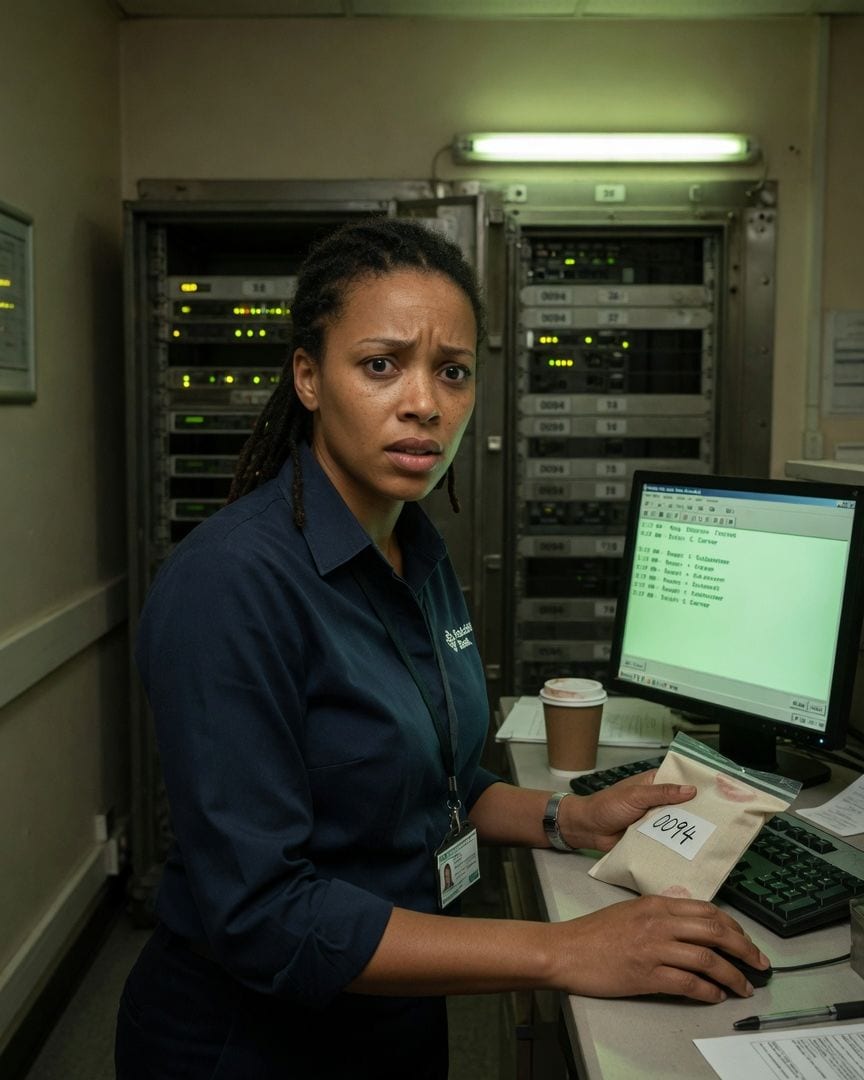
My night-deposit log shows a bag posted at 3:17 AM. My teller number, my count. Bag 0094 is still sealed in the safe, untouched.
I prided myself on precision as a night teller, logging every entry. But at 3:17 AM, a deposit appeared logged under my teller number that I never processed. Security footage then revealed a figure in my uniform, wearing my ID badge, with a blank photo slot.
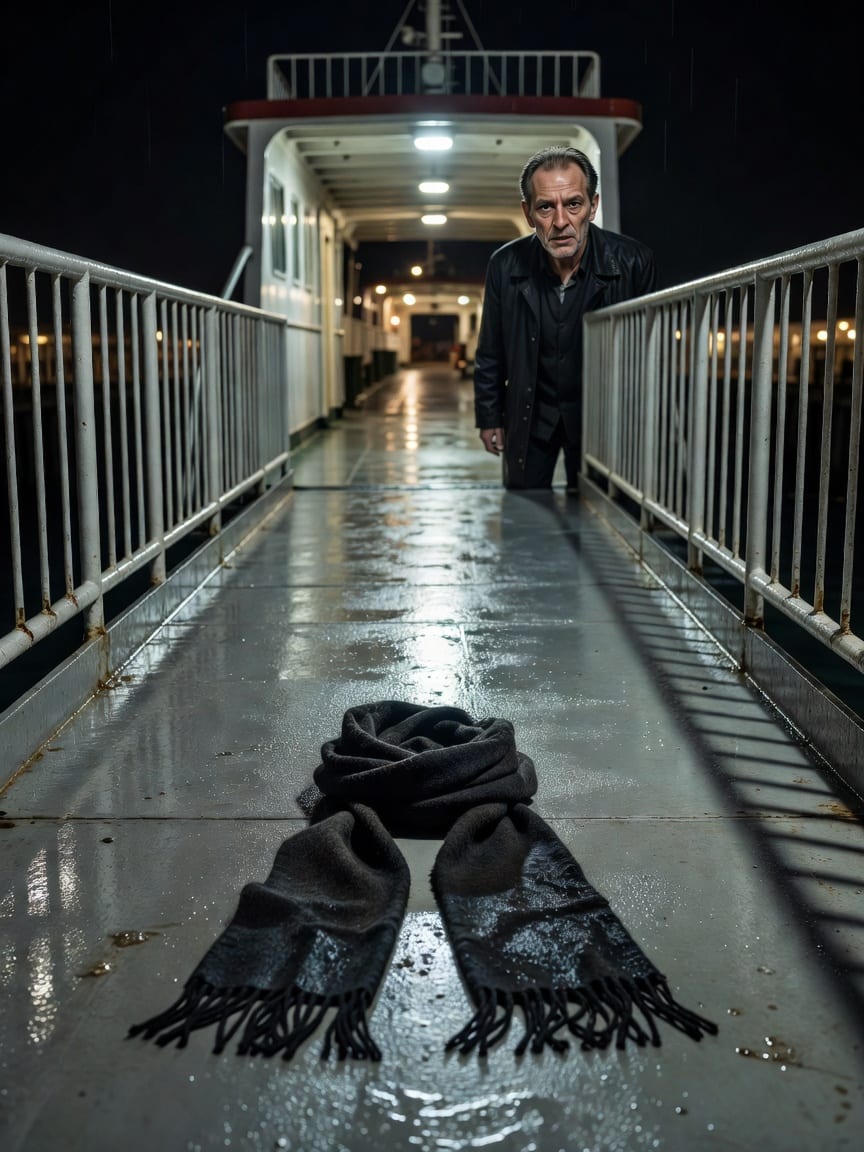
My ferry's night log recorded a foot passenger disembarked at 2:15 AM. We don't sail until six, and I wrote the entry myself.
Working the night shift on the 'Sound Clipper,' I found my own handwriting in the watch log recording an impossible event: a foot passenger disembarking at 2:15 AM. The ferry was tied up, engines cold, and the gangway locked tight. No one could have left, yet the entry was undeniable, signed with my initials.
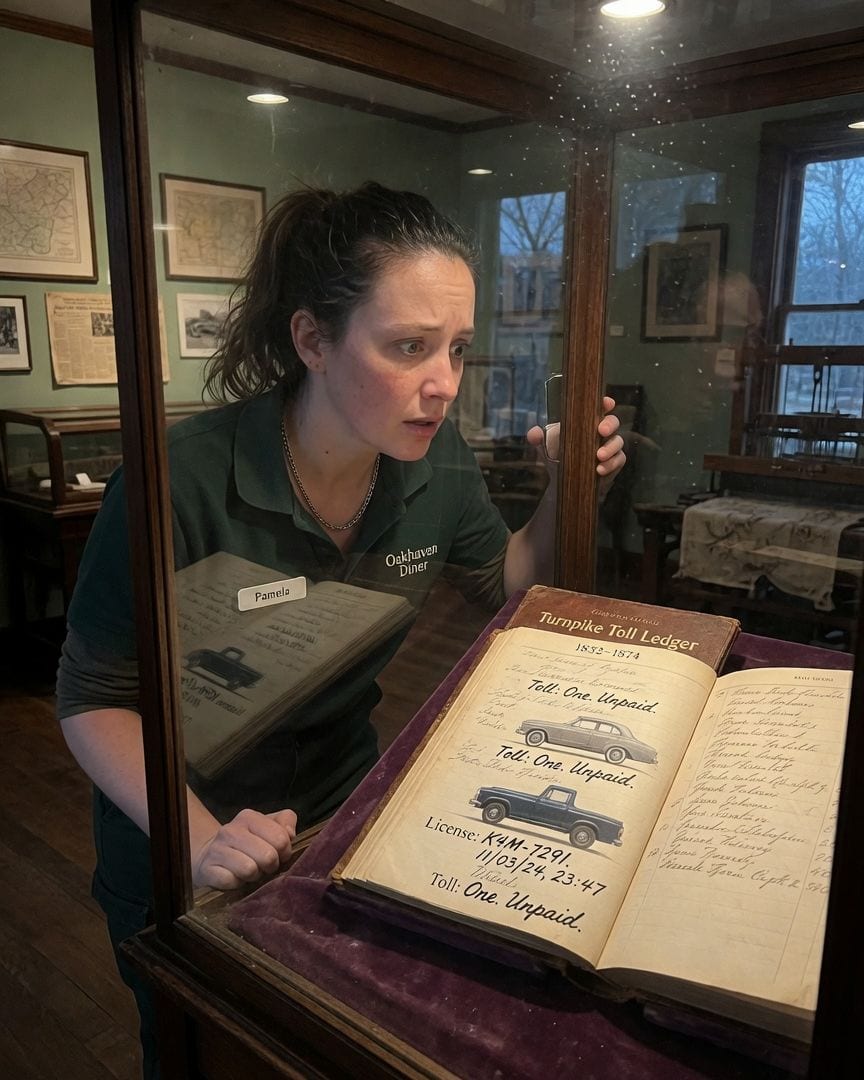
My car stalled at the old turnpike milestone, after dark. The toll ledger, closed in 1874, then listed my car, my stall time, and a toll of one, unpaid.
I had just moved to Oakhaven when my old sedan died on a dark, winding road by an infamous turnpike milestone. The next day, I found my car's exact registration and stall time written in fresh ink in a 150-year-old, locked museum ledger, marked 'Toll: One. Unpaid.' The curator dismissed it as a prank, but her white knuckles and strained voice hinted at something far more unsettling.
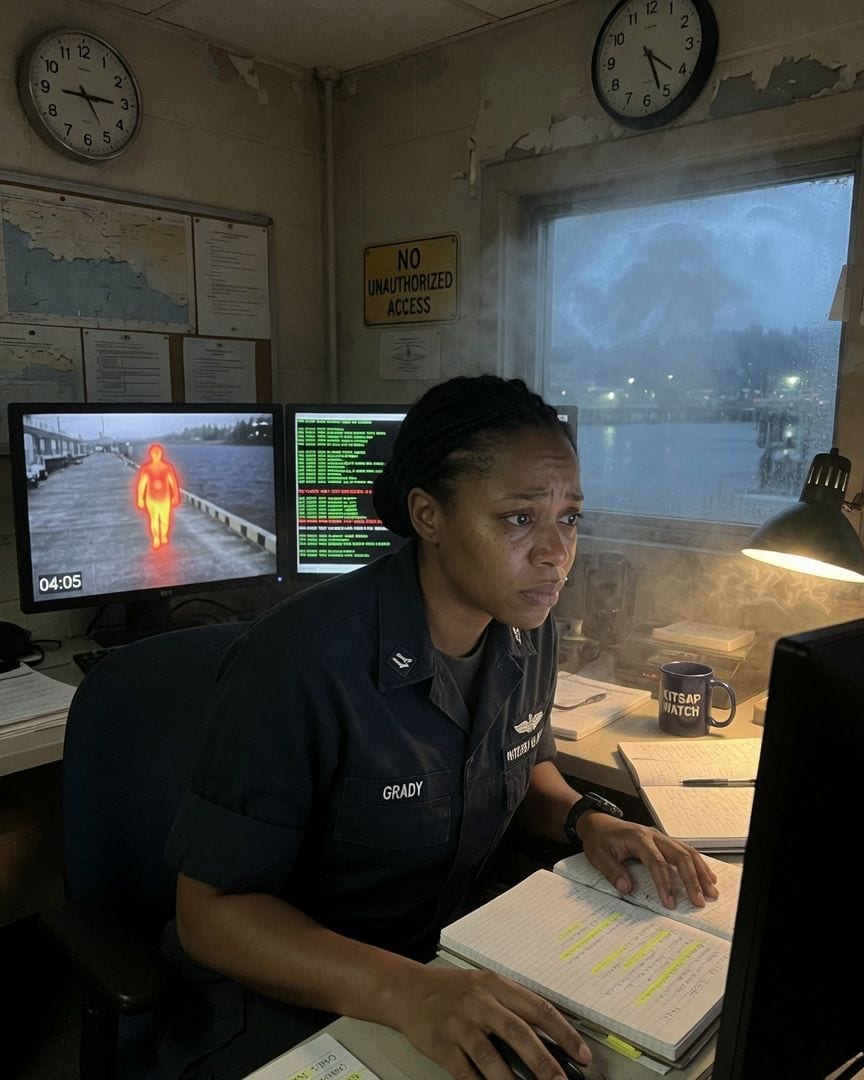
Petty Officer Olivia Grady found the base system logging impossible access at 0405. Every night for years, a blank ID walks Pier 7.
Petty Officer Olivia Grady stood her predawn watch on Pier 7, the cold mist of Puget Sound a familiar companion. Her routine scan of monitors at 0405 was shattered when an IR sensor flared with a man-sized heat bloom moving along the pier. Yet the camera feed showed only empty concrete and swirling mist. When historical logs confirmed the invisible presence had walked that exact path every night for years, Olivia dug deeper. She found a ghost "access log" entry with a unique ID but no name attached, meticulously aligned with the 0405 bloom. What impossible entity was the base system logging, night after night?
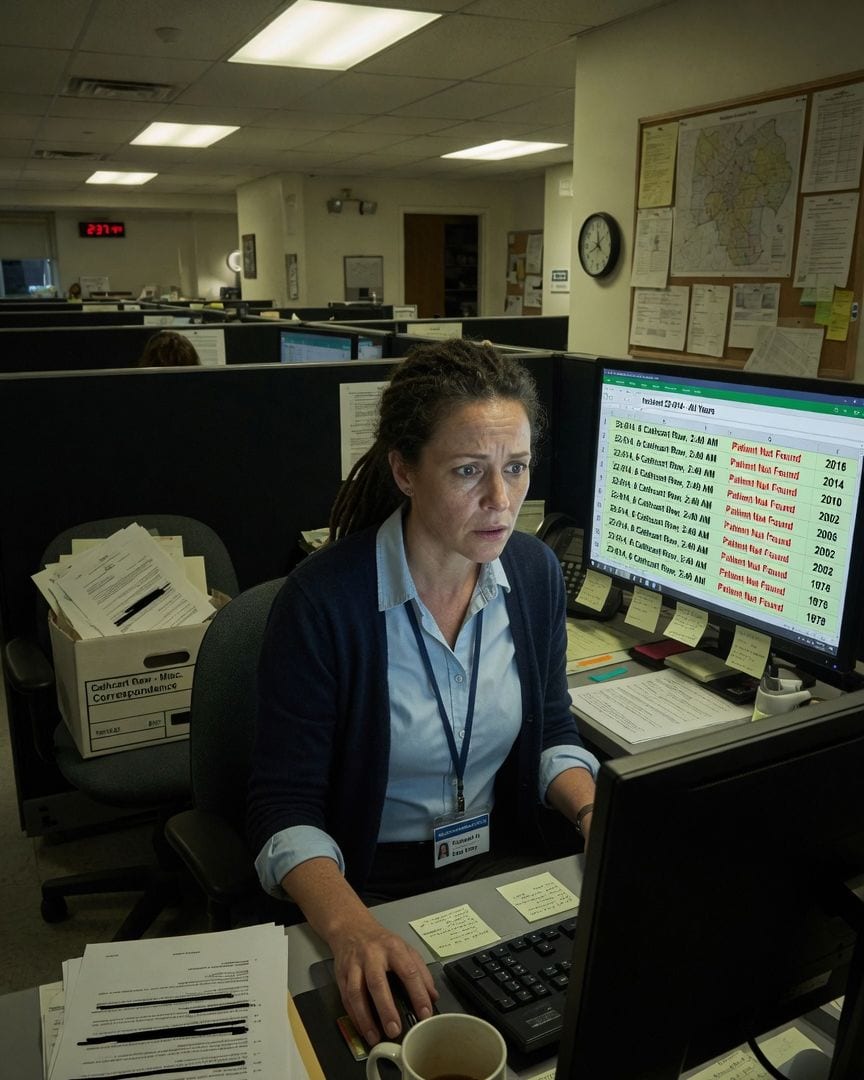
My computer log shows the same 2:40 AM call to Cathcart Row, every four years since 1978, always closed 'patient not found'.
Working data entry for the County Ambulance Trust, I found a routine incident logged as 'Patient Not Found.' But digging deeper, I discovered the exact same phantom call had repeated every four years for over forty years, always at the same address, always at 2:40 AM. Then I found a heavily redacted memo linking it to my own street.
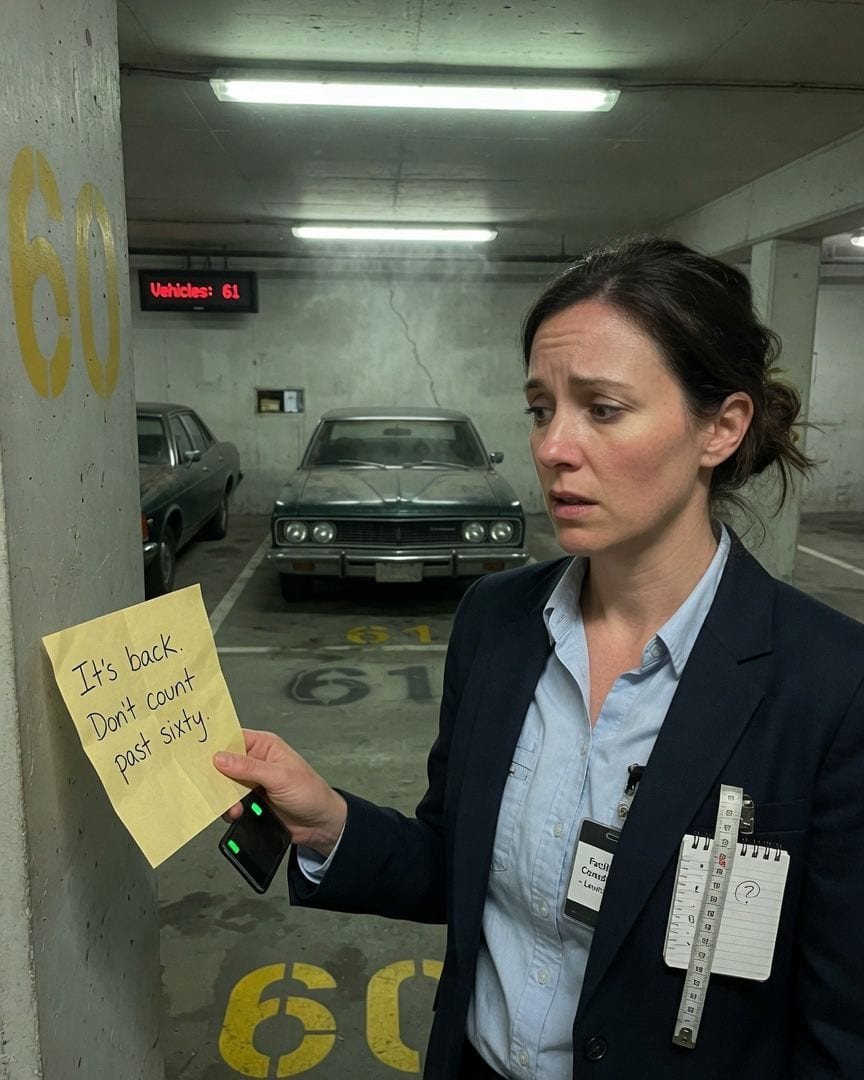
My hand found a hidden seam in the concrete wall. Inside, a desperate note warned: 'Don't count past sixty'.
I arrived at the underground parking lot a few minutes late, expecting the usual sixty spaces. But my pass blinked '61', and a new bay, numbered 61, had appeared beyond the lot's end wall. Inside it sat a vintage car, still warm from a recent drive. Every blueprint and log insists this space doesn't exist, yet it's undeniably there.