My night-deposit log shows a bag posted at 3:17 AM. My teller number, my count. Bag 0094 is still sealed in the safe, untouched.
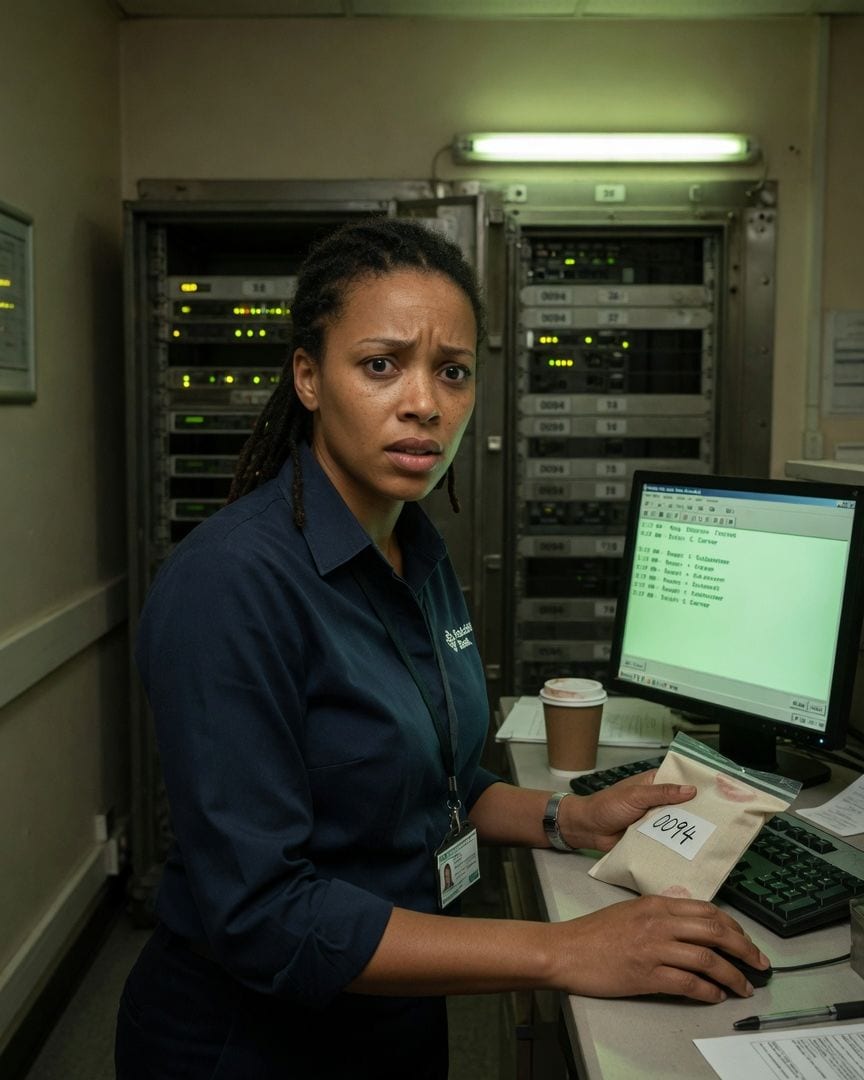
The hum of the server room was a constant, low thrum, the only sound in Radcliffe Bank as I meticulously reconciled the night-deposit log.
It was 3:00 AM, the quietest part of my shift, and the rhythm of numbers and entries was usually a comfort. I was Camille Carver, 32, a night teller for years, and I prided myself on my precision.
Every deposit, every withdrawal, every transfer, logged and accounted for, every night.
I scanned the entries, my gaze moving down the green-lit screen. 3:09 AM. 3:12 AM. Then I stopped. At 3:17 AM, an entry for 'Bag 0094' appeared. It was counted, posted, and, critically, logged under my unique teller number.
My brow furrowed. I hadn’t opened the chute since the 3:12 AM deposit. I hadn’t processed that bag. My hands hadn't touched it.
A cold knot began to form in my stomach, small at first, like a pebble rolling into place. It had to be a typo. A system error. But the entry was perfect. Amount matched. My teller number, correct.
I pushed away from my desk, the swivel chair groaning softly in the silence. The secure vault was just a few steps away. I walked over, my movements stiff, and pulled Bag 0094 from its slot. It was there, alright.
Still sealed. Untouched.
I ripped open the internal slip, my fingers fumbling slightly. The count inside matched the log entry to the cent. No error. No discrepancy in the numbers.
Just the impossible fact that the deposit was logged, perfectly, by me, without me ever touching it.
I stood there, holding the sealed bag, the system log glowing green on my monitor across the room, the knot in my stomach tightening. This wasn’t a glitch. This was…something else.
My rational mind, the one I relied on for balance sheets and audit reports, kicked in. A system glitch, it had to be. What else could it be?
I accessed the bank's internal audit logs, my fingers flying across the keyboard, tracing my teller number's activity for the last few hours. The system whirred, then confirmed it: my login was indeed active at 3:17 AM.
No one else had logged in. No one else was authorized to use my number.
I pulled up the security camera footage for the vault area next, my mouse hovering over the timestamp. My heart hammered, a frantic drum against my ribs.
The video played, grainy and green-tinted, the low light of the night shift making everything slightly indistinct.
At exactly 3:17 AM, a figure in a standard bank uniform approached the night-deposit chute. The figure methodically opened the external hatch, inserted a bag, and closed it. Their movements were precise, almost identical to my own practiced routine.
The slight tilt of the head as they checked the mechanism, the way they smoothed the front of their uniform before stepping back – it was eerily familiar.
I leaned closer, trying to make out the face, willing the pixels to resolve. The angle was poor, deliberately so, it seemed, obscured by shadow and the harsh, overhead fluorescent light.
The figure never turned fully towards the camera, keeping their profile to the lens. I scrubbed the footage, frame by agonizing frame, searching for a clearer shot, a moment where their face might catch the light. Nothing.
Just the uniform, the familiar posture, the unsettling, exact replication of my own movements.
I checked the night shift roster for that hour. Nathaniel Hayes, the new night teller, was on break in the staff room. Simon Coleman, the manager, was long gone. No one else was scheduled for the vault area.
Only my name was on the log, only my teller number had been used, and only my body was supposedly present. I felt a chill run through me, colder than the air conditioning.
I replayed the footage, my hand shaking slightly on the mouse, zooming in on the figure's ID badge as they turned from the chute, just before exiting the frame.
The light was poor, the image flickering, but clear enough, just for a moment, to read the name. My breath hitched. It read: 'Camille Carver.' My name.
But the photo slot, where my smiling, professional headshot should have been, was utterly blank. A smooth, empty rectangle stared back at me, devoid of any image, yet undeniably attached to my own identity.
The figure, my name on their chest, vanished into the shadows, leaving me alone with the impossible image frozen on the screen.
The blank ID badge haunted me. It stared at me from the screen, then lingered in my mind during my off-hours, an empty space where my face should have been.
It couldn’t be a trick of the light, not with my name so clear. And if it wasn't a trick, then what in God's name was it?
I spent my next few night shifts quietly digging, not just into the 3:17 AM incident, but into the bank’s older digital records. It was slow work, sifting through decades of archived logs, trying to find anything that felt similar.
I cross-referenced unusual log entries, particularly those from night shifts in the vault area, with employee transfer and retirement records. It felt like chasing ghosts in a digital graveyard.
Slowly, subtly, a pattern began to emerge. Over the past twenty years, there were scattered dates – never frequent, but undeniably present – where similar 'phantom' transactions occurred. Always logged under a specific teller ID. Always during a night shift.
And the employees whose IDs were linked to these anomalies? They had subsequently transferred to other branches, or taken early, unexplained retirements. Their departure records were always vague, citing 'personal reasons' or 'relocation,' devoid of any specific detail.
It was almost too neat.
I compiled a list of these names and dates, a chilling roster of predecessors, their professional lives ending abruptly after a single, unexplainable entry. This wasn't a glitch. A glitch happened once, maybe twice.
This was a recurring event, a pattern of quiet disappearances woven into the fabric of the bank’s history. The building itself seemed to groan faintly around me as I worked, a low, structural sigh.
I knew I needed to talk to someone who had been at the bank for a very long time, someone who might remember these names. Simon Coleman, the long-serving manager, came to mind.
He was an institution himself, a quiet man who knew every crack in the building and every tale about its past. He’d seen generations of tellers come and go. He was my best, and only, shot.
I approached Simon Coleman during a slow afternoon, hoping the daylight would lend a sense of normalcy to my abnormal request. I found him at his desk, meticulously organizing old files.
I presented my findings cautiously, framing them as a 'curious historical anomaly' in the audit logs, an intellectual puzzle rather than a chilling discovery.
Simon listened patiently, his gaze unwavering, fixed on my face. There was a faint, unreadable smile playing on his lips, barely there, but enough to make the hairs on my arms prickle.
When I finished, he simply dismissed it as 'old system quirks,' a relic of outdated software. 'Don't chase shadows, Camille,' he advised, his voice soft, almost paternal.
He subtly steered the conversation to my upcoming vacation plans, a clear, almost too-smooth attempt to redirect my focus. But in his eyes, I saw a knowing flicker, a depth of understanding that completely contradicted his casual dismissal.
It was like looking into a deep, still well.
Later that day, when I tried to access the historical audit logs again, the very ones I’d been using, my access was mysteriously revoked. 'System maintenance,' the IT ticket read, boilerplate and unconvincing.
They hadn't just steered me away; they’d locked me out.
That night, during my shift, I caught Simon watching me. He wasn't in his office. He was across the street, a dark silhouette against the streetlights, standing by his parked car.
He wasn't working; he was just watching the bank, watching me. The bank’s alarm system, usually silent, gave a low, singular beep, like something trapped behind the walls, then fell silent again.
The next morning, tucked under my keyboard, I found a small, handwritten note on a slip of paper. It wasn't printed; it was a specific, elegant script. It read: 'Some things are better left reconciled.'
It wasn't a threat, not overtly, but the calm, almost elegant script, and the precise choice of the word 'reconciled,' sent a fresh shiver down my spine.
Someone knew exactly what I was looking for, and they were telling me to stop. And it wasn’t IT.
The note solidified my resolve. I couldn’t stop. I wouldn’t. The blank ID, the phantom deposit, the erased history – it was all too much.
I waited until Simon Coleman was alone in his office late one evening, the bank once again swallowed by the vast, artificial silence of the night.
I walked in, closing the door behind me with a decisive click that echoed too loudly in the quiet space.
'Mr. Coleman,' I began, holding up the note, the slip of paper suddenly feeling heavier than lead. 'I think we need to talk about what 'reconciled' truly means.'
Simon didn't flinch. He simply gestured to the chair opposite his desk, his expression unperturbed. 'I knew you'd come back, Camille. You have the look of the curious ones.' His voice was flat, without judgment, almost observational.
He admitted, without a hint of fear or regret, that 'the system has its own way of doing things.' He leaned back, his gaze steady. 'It's not a glitch, Camille. It’s an old process. One that predates modern banking.
A quiet, underlying current that runs through this building itself.'
He reached under his desk, his movement slow and deliberate, and pulled out a heavy, leather-bound ledger. Its pages were yellowed with age, the corners dog-eared, the spine cracked with years of use.
It wasn’t a bank record; it was something else entirely. It was filled with neat, looping script, column after column. A historical account. A hidden record.
'These are the conduits,' he said, his voice soft, as he flipped through the brittle pages.
I saw names, dates, and cryptic codes that, to my mounting horror, perfectly matched the anomalous log dates I had painstakingly compiled over the past week.
My list, my painstaking proof of a glitch, was merely a smaller, incomplete version of this.
'These are the night tellers,' Simon continued, his finger tracing a line on the page, 'who, like you, began to notice the flow. It's harmless, Camille. A necessary balance. The bank has always maintained it, in one form or another.'
The room felt colder, the air thicker, as if the ledger itself was drawing all warmth from the space.
Simon Coleman closed the old, leather-bound ledger, its pages filled with names, dates, and cryptic codes that mirrored my own recent log entries. He smiled, a calm, almost paternal smile, and tapped the cover.
'Welcome to the night shift, Camille,' he said, his voice soft. 'You've always been here.'
My blood ran cold. The silence in the office was suddenly profound, suffocating. He flipped the ledger open again, not to a historical entry, but to a new, blank page at the very end.
And there, faintly, as if inscribed with an invisible hand and slowly made visible, was my name, 'Camille Carver,' already waiting for the next entry. It wasn't a threat; it was a statement of fact, a monstrous inevitability.
I stared at my name, already written, already claimed, in a book that predated me by decades, by generations.
Simon’s smile widened, unbothered, as if this was the most natural thing in the world, and I realized with dawning horror that I wasn't just observing a pattern; I was the next part of it.
My voice was a strangled whisper. 'What are the deposits, Simon? What did I put in Bag 0094?' The faint, almost invisible inscription of my name on the ledger page still burned in my vision.
Simon leaned forward, his voice never losing its calm, almost educational tone. 'They are not money, Camille. Not in the way you understand it. They are awareness. Fragments of human attention, focus, memory, dread.'
He gestured vaguely around the office, as if indicating the very air. 'The system counts them, collects them.'
He explained that 'Bag 0094' was a placeholder for my own, fresh 'deposit' of these fragments, logged under my ID precisely as I began to investigate the anomaly.
My curiosity, my fear, my drive to rationalize – all of it was being 'counted.' My hours spent obsessively reviewing logs, my growing dread, my mental energy poured into understanding the unexplainable. It was all quantifiable, a commodity.
The blank photo on the ID badge I saw in the footage? That, he said, was the system's nascent projection of me, a placeholder, waiting for my full integration.
The bank building itself, he revealed, was merely the most recent manifestation of an ancient conduit, built on a powerful, primordial 'node' of collection. A place where human focus, particularly during isolated night shifts, coalesced.
He showed me how the 'tellers' were chosen: those who spent the most isolated hours in the vault area, whose minds were most intensely focused on numbers and routine. Meticulous people. People like me.
I felt a sickening lurch as I realized my entire career path, my preference for night shifts, my meticulous nature, my dedication to detail – it hadn’t been chance.
It had been leading me here, not by accident, but by design. I wasn't just working for the bank; I was part of its machinery. A cog. A conduit.
Simon, utterly unbothered by my dawning horror, offered me a choice. 'You can accept your role, Camille. Become an operator. Live a quiet, reconciled existence, ensuring the system continues.' He paused, his gaze fixed on mine, unwavering.
'Or you can resist.' He let the word hang in the air, heavy and dark. 'And be fully reconciled. Absorbed.'
He rose from his desk and walked towards the secure vault door, which I now noticed was slightly ajar, emitting a faint, almost imperceptible hum that I’d previously dismissed as the building settling. He pushed it open further.
Within, the vault was not filled with safety deposit boxes or stacks of cash. It was filled with a soft, pulsing light.
It wasn't luminous in the ordinary sense, but seemed to shimmer with an internal, shifting energy, like heat off a summer road, or a living breath.
As I stared, transfixed, I saw faint, fleeting images within the light, like reflections on water – faces, memories, brief flashes of emotion. My own memories. My childhood home, the swing set in the yard.
A specific, cherished laugh from a long-lost friend. My initial dread when I saw the log entry. My confusion when the bag was sealed. My attempts at rationalization. The system had already been counting me, processing me.
It had already taken its first fragments.
Simon gestured towards the pulsing light, his hand open, inviting. 'Step forward, Camille. It's time to make your final deposit.'
The light seemed to beckon, to draw me in, and I felt an inexplicable pull, a deep, weary acceptance beginning to settle over me.
The sealed bag 0094, the one I hadn’t touched, contained the first fragments of my self, already taken. And now, it wanted the rest.
Camille Carver vanished from Radcliffe Bank's employee roster. Her position as night teller was quickly filled. Simon Coleman continued his work, his calm, unbothered demeanor unchanged, his ledger safely tucked away.
The night-deposit log continued to show its routine, inexplicable entries, seamlessly integrated into the bank's daily operations.
No one questioned the quiet shifts, the steady hum from the vault, or the occasional new name that appeared, then disappeared, from the historical records. The system continued, a silent, ancient rhythm beneath the modern veneer of finance.
A new night teller, Nathaniel Hayes, settled into his shift at Radcliffe Bank. He was meticulous, a bit of a stickler for routine, just like Camille. He checked the night-deposit log, ensuring everything was in order.
He paused, noticing a faint, almost imperceptible humming from the secure vault, a low thrumming beneath the floorboards. He shook his head, attributing it to old wiring, a quirk of an aging building.
His eyes drifted to the framed photograph on Simon Coleman's desk – a smiling, slightly blurred image of a group of past bank employees, taken decades ago.
One face, in the back, was strangely indistinct, like a smudge, but its eyes, though faded, seemed to be looking right at him. A few weeks later, Nathaniel Hayes's wife asked him if he'd remembered to pick up milk.
He blinked slowly, a faint, wrong little smile playing on his lips. Is that so?
If this one got to you
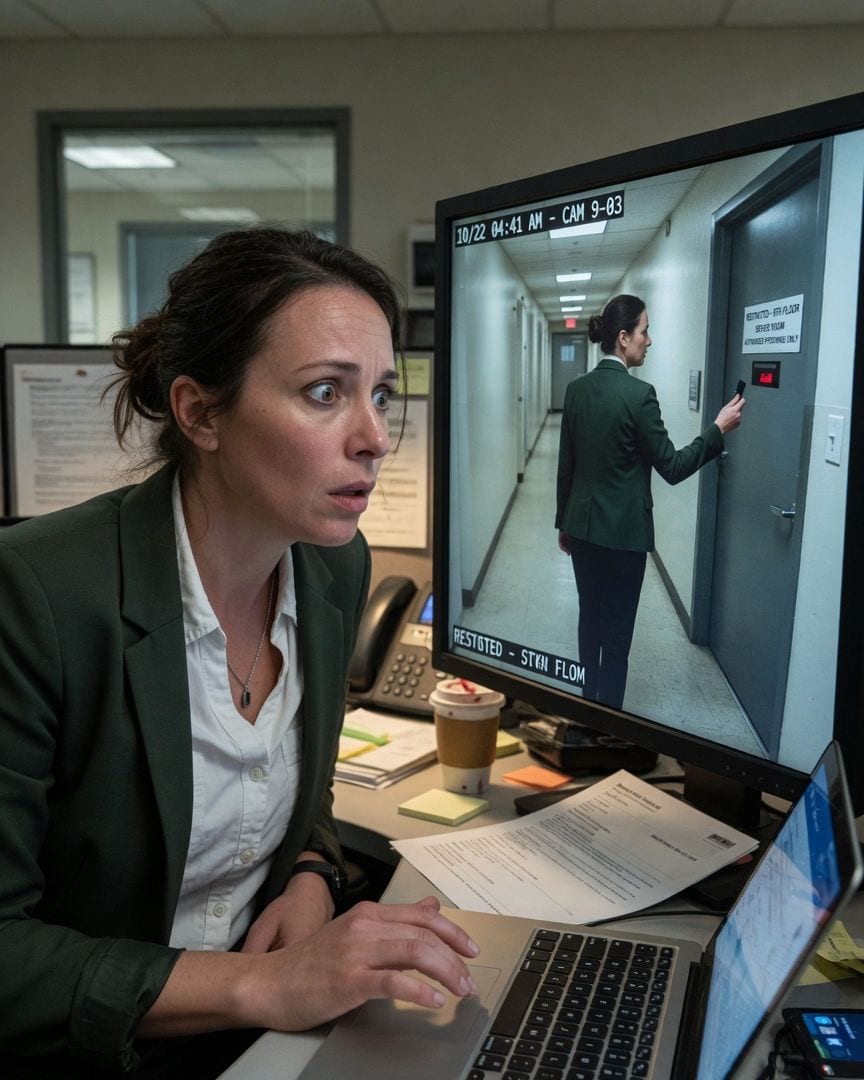
My keycard log shows me in the server room at 4:41am. I was asleep, and my badge was at home.
An email from corporate IT reveals my keycard registered entry into a restricted server room at 4:41 AM last Sunday. I was asleep in my apartment across town, my badge clipped securely to my jacket at home. But then I scrolled down and found eleven more impossible entries, all within the past week, all under my name.
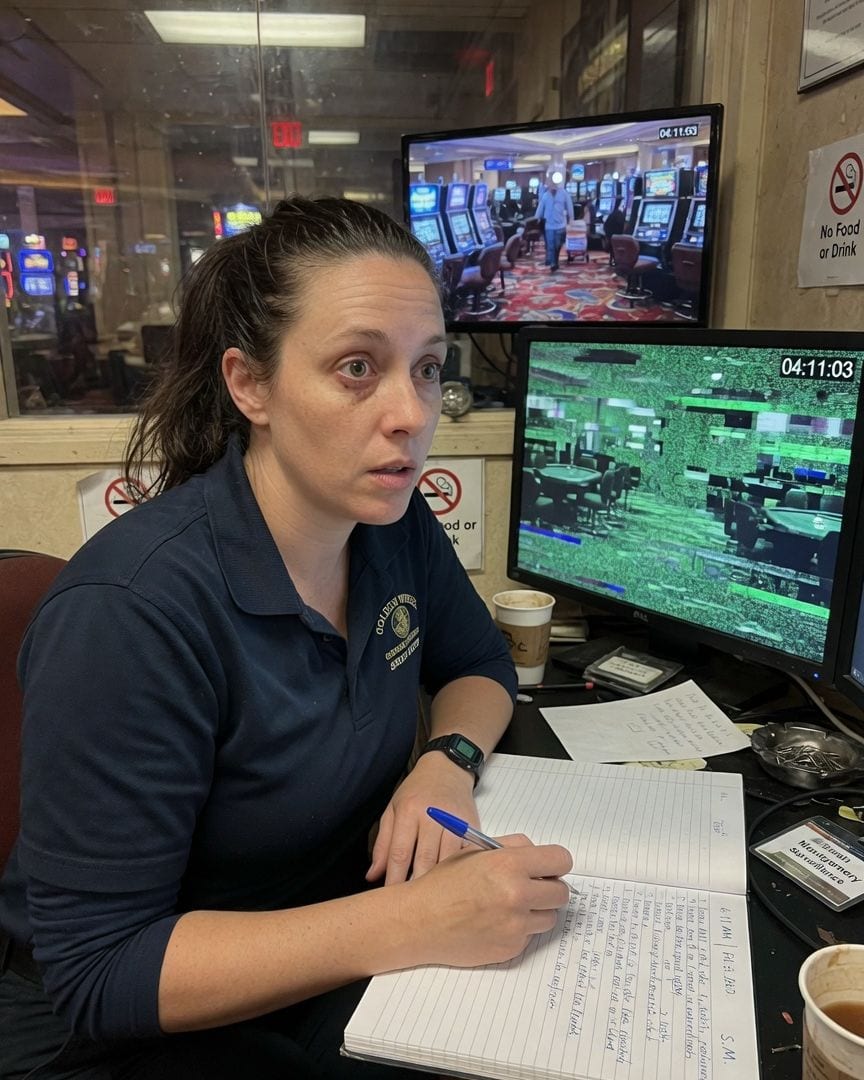
My surveillance log shows I reviewed a casino pit that was dark and roped off all night. My handwriting. No memory.
As my casino surveillance shift ends, I sign off the logbook. I find an entry in my own handwriting for Pit 3, a section that's been dark and closed for weeks. I have no memory of writing it, but the footage shows a figure standing in the empty room.
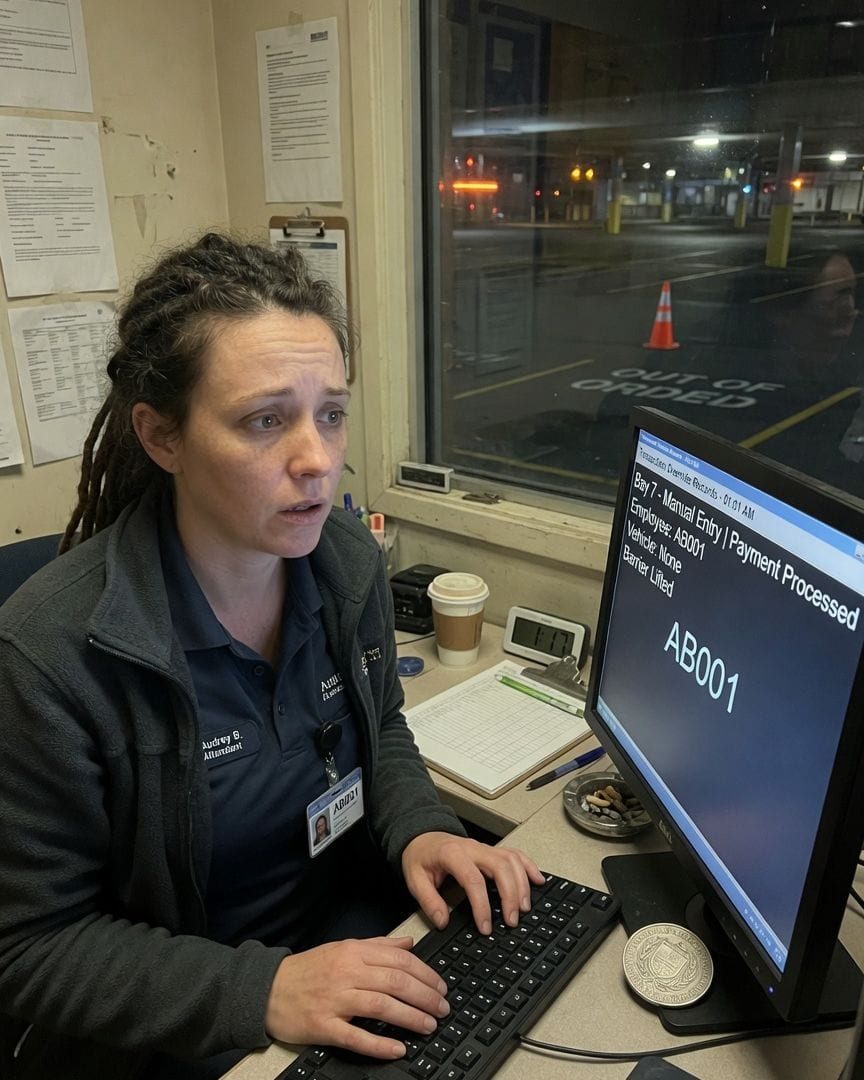
My car park's coned-off corner bay takes a cash payment every 1 AM, leaving a single coin on my desk. No car is ever there.
Working the graveyard shift, I, Audrey Beaumont, witnessed a strange nightly ritual: a man paying for an empty car park bay. But when I checked the logs, the only record of the impossible transaction was a manual override under my own employee ID, 'AB001'. I knew I hadn't made that entry, not at 1:01 AM, leaving a chilling question hanging in the air.
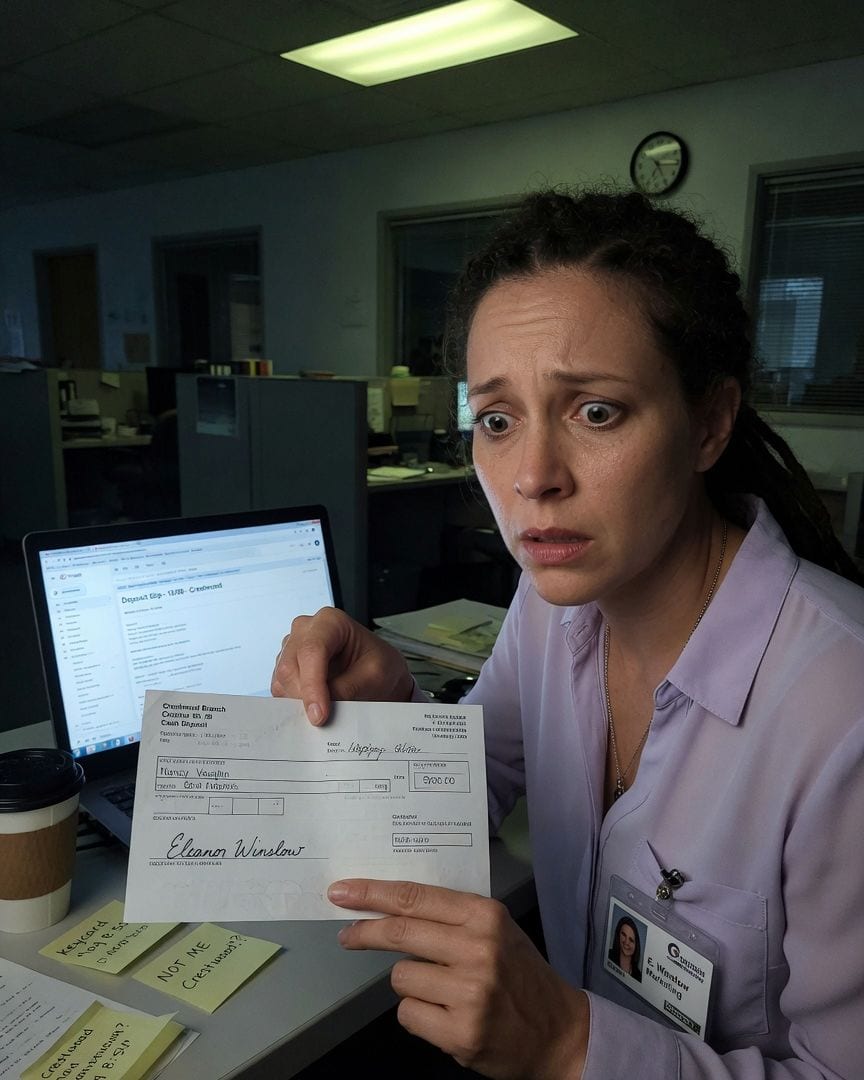
My bank statement shows a $900 cash deposit made in a town I've never set foot in, at 10:40 AM on a workday. I was at my desk, badged in. Two more landed since.
My bank statement showed a $900 cash deposit from a town I'd never visited, 150 miles away. I was at my desk, logged into work, all three times. But the scanned deposit slip arrived, clear as day, showing my own flawless signature.
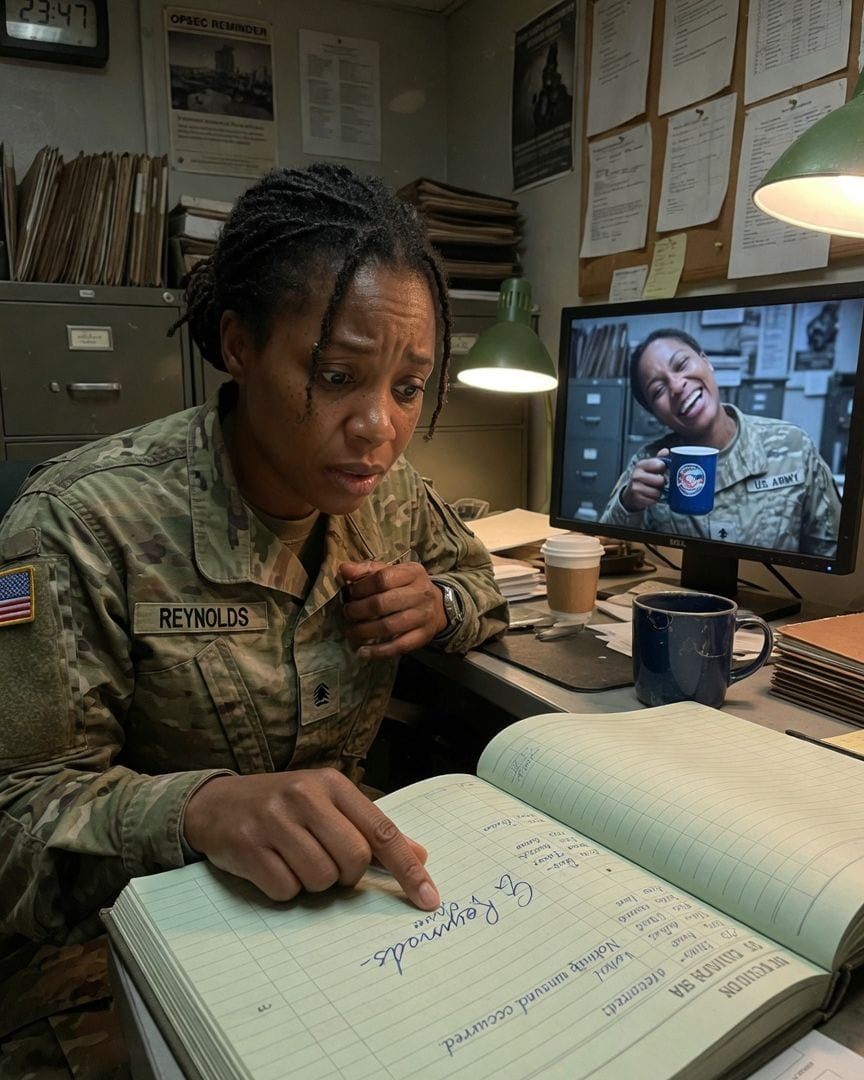
Lieutenant Grace Reynolds saw her own signature in the staff-duty log for a shift she never worked. The security footage then showed 'her' leaving a coffee mug she’d never once seen.
Lieutenant Grace Reynolds hunched over the battalion staff-duty log, the fluorescent hum of the records room a monotonous backdrop to her dry inventory audit. Her gaze snagged on an entry from three weeks prior: her own unmistakable signature, closing out a full 24-hour staff-duty shift she knew she had never worked. Security camera footage only deepened her unease, showing 'Grace Reynolds' moving with her familiar stride, laughing a shade too brightly, her head tilting a fraction too precise, like a flawless, chilling performance. But as the imposter turned to leave, she picked up and rinsed a chipped, dark blue ceramic coffee mug with a faded diner logo—a mug Lieutenant Reynolds had never once seen in her life. The air in the quiet room grew heavy, thick with the unspoken wrongness: if that wasn't her, then who was it?
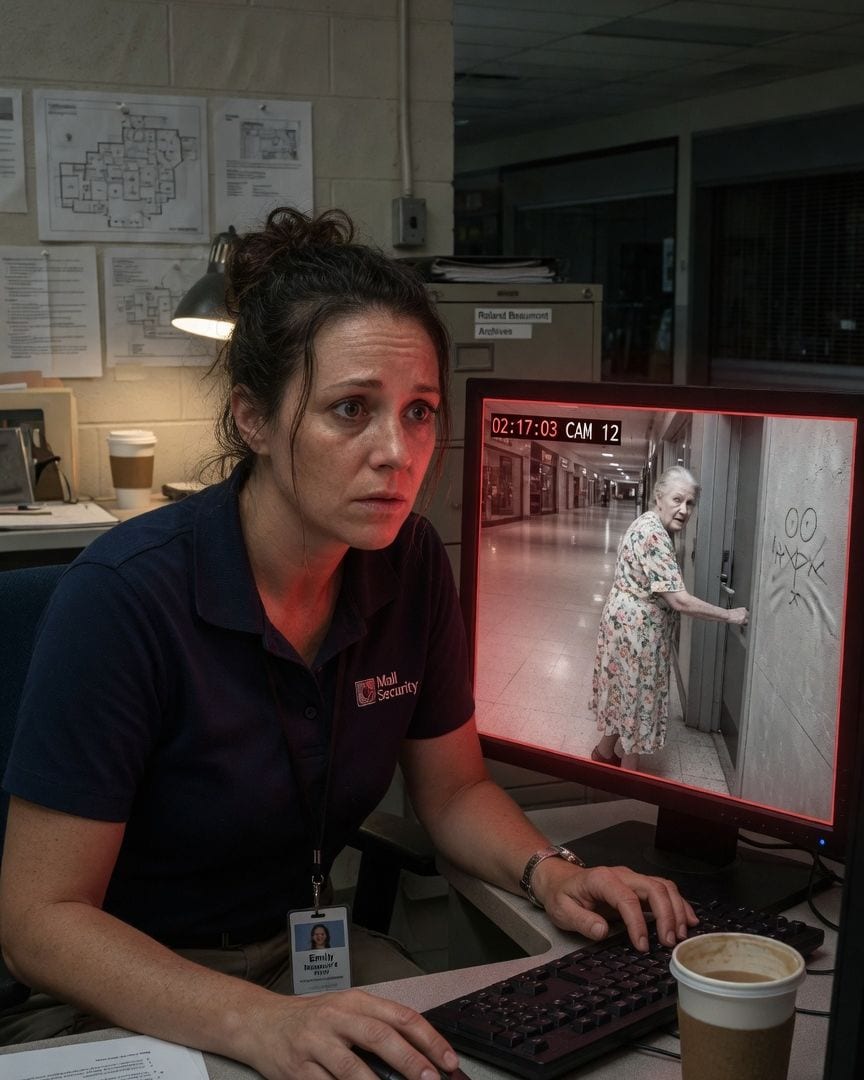
Mall security footage caught an old woman walking the concourse after closing. Every camera filmed her, but no single frame shows how she got in.
Working the overnight shift, I monitor my locked mall's security footage. It was 2:17 AM, five hours after closing, when an old woman in a floral dress simply appeared on Camera 7. She was never seen entering the frame, only *present*, walking slowly across the deserted concourse.