My car's empty back seat holds a woman, leaning close, watching the road with me the entire way home.
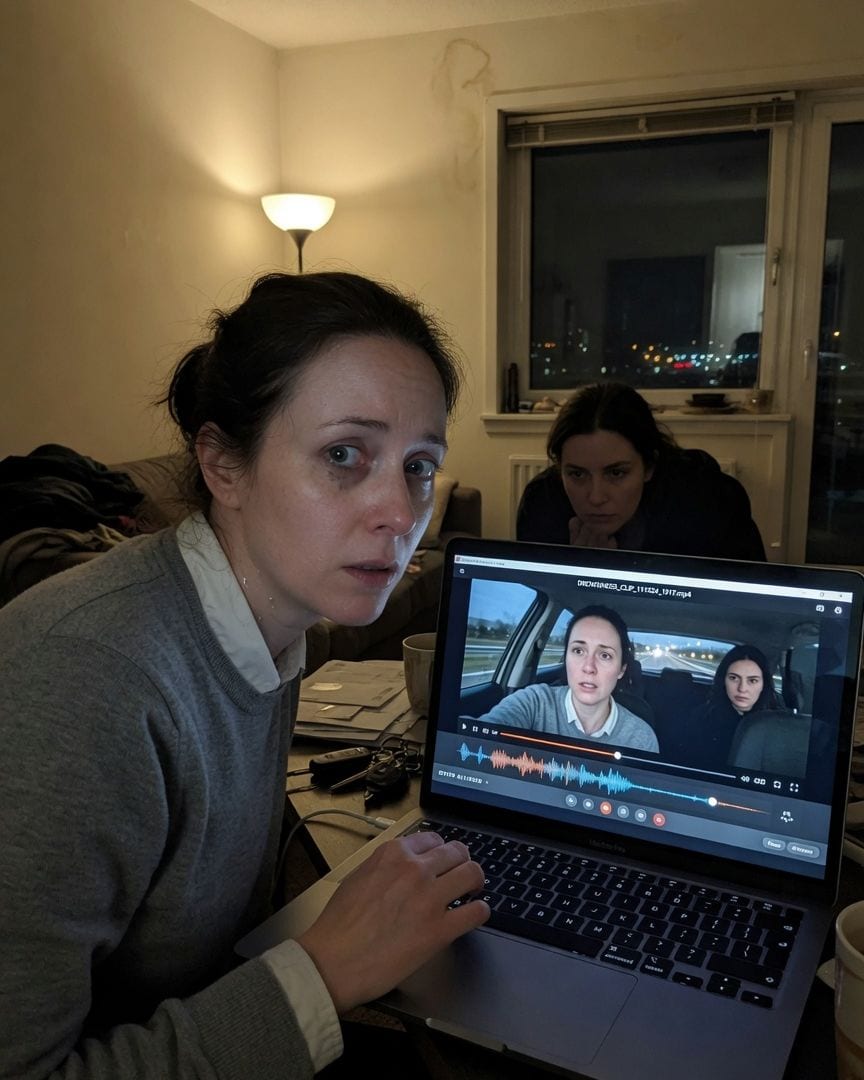
The Friday evening drive home was unremarkable. Just the usual low hum of the engine, the drone of traffic on the motorway, the familiar stretch of grey road unspooling under the last gasp of twilight.
My car has a drowsiness alert camera, a small, unobtrusive device mounted on the dashboard, meant to keep my eyes on the road, not to record my every commute.
It saves short clips if it detects anything it deems noteworthy – usually a yawn, or if I glance away for too long.
I didn't think about it again until Saturday morning. I was deleting old files from my internal storage to make space, and a clip from 'last Friday' caught my eye. It was exactly 7:17 PM.
The video showed me, as expected, attentive at the wheel, my face illuminated by the faint glow of the dash, the familiar grey blur of the evening traffic passing by outside.
But then I looked past my own profile, past the headrest, into the back seat.
My breath hitched. The back seat, which I knew with absolute certainty had been empty, held a presence. A woman. She was leaning forward, her chin almost on my shoulder, her dark hair a vague shadow against the headrest.
Her eyes, though indistinct in the low light and video quality, seemed fixed on the road ahead, watching along with me the entire way home.
I replayed the clip. The woman was still there, a solid, undeniable presence in the passenger-side rear, a ghost in the machine that wasn't supposed to catch anything but my own face.
I remembered checking the back seat, explicitly, before leaving the office. I'd even thrown my jacket over it. Empty. But the recording.
It was right there, a dated, timestamped file, showing a silent passenger who shared my ride for twenty-three miles of motorway.
I spent the next hour trying to rationalize it. A reflection? A trick of light off the rear window? The camera’s lens picking up something from a passing vehicle?
I went out to the car, examined the camera, the angles, the seats. Nothing. The back seat was plain, dark upholstery, no reflective surfaces, no hidden compartments.
I even tried recreating the light conditions with my phone, shining the flashlight around, but I couldn't conjure any phantom passenger. It was just an empty car.
I called Janet, my friend, trying to keep my voice level, to make it sound like an amusing anecdote, not a spiraling dread. “My car camera… it recorded something impossible,” I said, and then I told her about the woman.
Janet, ever practical, suggested a glitch, a corrupt file. “You know how these things are. Pixels doing weird things.” She told me to send it to her. “I’ll put it on my big monitor, run some filters.
Probably just a trick of the light.”
I emailed the file. Ten minutes later, she called back. Her voice was different now, a tremor in it I hadn't expected. “Vera, there’s… there’s something on the audio too. It’s very faint, but I think I hear a voice.”
I hadn’t even thought to check the audio. The camera was for drowsiness, not sound. It was just a sensor, a visual warning. I opened the file again on my laptop, a knot forming in my stomach.
I scrubbed through the video, the woman’s presence still chilling, then focused on the audio track. At first, it was just the hum of the engine, the muffled rush of the motorway, the subtle creak of the suspension.
I boosted the volume, adjusted the equalizer settings, trying to isolate any anomalies. Then, a whisper, almost lost in the white noise of the road, a low, drawn-out sound that seemed to come from directly behind my recorded self.
It wasn’t a word I recognized, just a soft, mournful sigh, followed by what sounded like a child's name.
I leaned closer to my laptop, the car's interior light reflecting in my wide eyes. The dashcam's audio track, previously ignored, played a thin, reedy whisper from the back seat.
It's a woman's voice, clear despite the static, articulating a single, desperate word: 'Conrad.' My own recorded self, oblivious, continued to stare straight ahead at the road.
The sound was undeniable, a second voice where no one had been, a name spoken that had no business being there, captured on a file, dated, playable, for anyone to hear.
I froze, my finger hovering over the replay button, the sound of that name echoing in the sudden silence of my apartment.
The name 'Conrad' became an earworm, a chill that wouldn't leave me. I played the clip dozens of times, trying to decipher more from the whisper, but it was always the same: 'Conrad.'
I searched my phone logs, my contacts, my memory – no Conrad. It wasn’t a common name in my circle, and it certainly wasn't connected to anyone I knew.
The more I played it, the more I became convinced it wasn't a trick of sound; it was a real, distinct voice, full of a quiet, profound sorrow.
The next day, feeling a morbid compulsion, I drove the exact route I’d taken that Friday evening. I wanted to see the motorway through the lens of the recording, to find anything, any detail I’d missed.
The road stretched out, familiar yet alien. I slowed, matching the recorded speed, looking for landmarks, anything that might have been visible on the dashcam.
Then I saw it, almost missed it in the overgrown verge: a dilapidated stone marker, half-hidden by thick ivy and scrub.
It was an old thing, weathered and grey, barely more than a jagged block by the roadside, a forgotten sentinel.
I pulled over, heart hammering, and took a photo with my phone, getting out of the car and stepping carefully onto the soft shoulder. The stone felt ancient, cool to the touch.
Back home, I cross-referenced the marker with the dashcam footage.
There it was, a faint outline passing by the passenger window in the video, just as the 'woman' in the back seat seemed to shift slightly, almost imperceptibly, in the recording.
It wasn't just a random presence; it was tied to a specific location, a point on the map.
The style of the stone marker, its rough-hewn, faded appearance, suggested it had been there for decades.
I started researching local historical societies, looking for records of accidents or tragedies on that specific stretch of motorway, specifically around the late 1960s, the year the style of the stone marker suggested.
It was a long shot, but the details were too specific to ignore. I found a few mentions of a ‘Maxwell Sullivan,’ a retired local historian known for his meticulous archives and an encyclopedic knowledge of the area’s forgotten past.
He was the kind of person who would know about an old stone marker like that.
I found his contact details for the local historical society, my finger hovering over the dial button, a strange mix of dread and urgency propelling me forward.
I tried to dismiss the feeling, but it persisted. After my initial email to Maxwell Sullivan, which he hadn't yet replied to, I felt watched.
It started subtly: a car that seemed to follow me for a few too many turns on my way home, its headlights lingering in my rearview mirror until I turned sharply onto my street.
Then, a shadow lingering a moment too long outside my office window, or a faint reflection in a shop window that didn't quite match my own.
I brushed it off as paranoia, a side effect of digging into something I didn't understand.
One evening, after leaving a message with Maxwell's historical society voicemail, my phone rang. It was an unknown number. I answered, expecting a telemarketer. Only static.
No voice, just a faint, almost imperceptible hum that made the hairs on my arms stand up. I said hello twice, then hung up. It wasn't menacing, just... empty. Unsettling.
The next morning, I found a small, smooth river stone on my doorstep, nestled right against the welcome mat. It wasn't a local stone, not from my garden path or the nearby fields.
It looked like something that might have been polished by years of flowing water, or perhaps, a very specific kind of human touch. It was unsettling, a silent message I couldn't decipher.
I picked it up, feeling a strange, unnatural coldness from its surface, despite the warm morning sun.
I remembered an old newspaper article I’d found online, a local legend Maxwell Sullivan himself had mentioned in passing – a story about 'river stones marking the lost.'
Vera’s resolve hardened. Someone knew she was digging. Someone knew about the recording, about the stone marker. And they were sending a warning, or perhaps, a chilling invitation. The phone call, the stone – they weren’t random.
They were too specific, too unsettling. I decided to go directly to the historical society, to confront Maxwell Sullivan in person.
I had to know what he knew, and why it felt like I was being drawn into something much larger than a mere glitch in a dashcam. The stone felt heavy in my hand, a silent, cold weight.
The historical society was a quiet, dusty building, smelling of old paper and forgotten time. Sunlight struggled through tall, grimy windows, illuminating motes dancing in the air.
Maxwell Sullivan, a man in his late sixties with kind but unnervingly calm eyes, greeted me from behind a heavy oak desk. He didn’t seem surprised by my visit. “Ms. Brooks, I was expecting you.
You inquired about the old marker on the motorway, near the Blackwood exit.” His voice was soft, even.
I skipped the pleasantries. “Mr. Sullivan, I have a recording. From my car. It shows a woman in my back seat, and I hear a voice. A woman’s voice, saying 'Conrad.' It’s tied to that marker, isn’t it?”
My voice came out sharper than I intended, brittle with fear and frustration.
Maxwell didn’t flinch. He merely gestured to a worn leather armchair facing his desk. “Sit, Ms. Brooks. There are things you need to understand.”
He spoke in a low, even tone, as if recounting a well-rehearsed history lesson he’d given countless times. “That marker… it commemorates a tragedy from 1968. A young woman, Hazel Donovan, and her infant son, Conrad.
Their car veered off the road there, in a terrible storm. Hazel was thrown clear, but Conrad… Conrad was never found. The river was high, the search was extensive, but nothing.”
I felt a cold dread spread through me, like icy water seeping into my bones. “Hazel Donovan. And Conrad. So the woman… and the voice…”
Maxwell nodded slowly, his gaze distant. “Hazel’s body was recovered a few days later, downstream. But the story, the local lore, always said she was still looking.
That stretch of road, especially on certain nights, or under certain conditions… it holds an echo. A very strong one.”
I pressed him, needing to hear it plainly. “An echo? You mean… a ghost?”
Maxwell just smiled faintly, a serene, unsettling expression. “You can call it that. Or a residual imprint. A moment of intense suffering, played over and over. Your camera, Ms. Brooks, seems particularly sensitive to these imprints.
It’s not the first time a device has picked up something ‘unseen’ along that road. Old photographs, early audio recordings… they sometimes catch a trace.” He paused, his gaze unnervingly steady, resting on me. “The voice, the figure… it’s Hazel.
Still searching for her son. And your recording, Ms. Brooks, is simply a very clear capture of a very old sorrow.”
The pieces clicked into place, horrifyingly. The marker, the specific location, the name, the woman, the voice. It all fit. But then, a new question surfaced, a much more terrifying one. “Why me? Why my car?”
Maxwell’s smile tightened, a flicker of something unreadable in his eyes. “That,” he said, “is the more interesting question, isn’t it?”
I drove home from the historical society in a daze, Maxwell’s calm explanation echoing in my mind. Hazel Donovan, still searching. The echo. It was terrifying, yet coherent. It explained everything I’d seen and heard, if I accepted the impossible.
But Maxwell’s last question, 'Why me?', gnawed at me. Why my camera, why my car, why me?
That evening, unable to shake the lingering unease, I found myself fiddling with my car radio, trying to distract myself from the silence of my apartment, from the phantom whispers that seemed to linger just beyond hearing.
I scrolled through the stations, mostly static, until I landed on a faint, crackling frequency I barely knew existed – the old community radio station Maxwell had mentioned in passing as a repository for obscure historical broadcasts.
I’d always dismissed it as background noise, a relic.
But tonight, a voice cut through the static, a woman’s voice, not Hazel’s, but calm and authoritative, almost pedagogical. “And now, a special segment from our local archives, concerning recent… unusual occurrences in our community.
We’ve received reports, echoes, from the old Blackwood stretch of motorway. Coincidentally, connected to a local resident, a Ms. Vera Brooks.”
My breath caught in my throat. My name. Spoken on this obscure channel, broadcast into the night. My full name. The voice continued, unperturbed, as if reading from a script.
“We have here an uncatalogued recording, dating from the late sixties, recovered from a private collection near the old Donovan property. Listen closely.”
A sharp, familiar cry filled the car, a child’s wail that sent ice through my veins, followed by a woman’s desperate whisper, undeniably Hazel’s, the same voice from my dashcam, distorted by age and static, but unmistakable. 'Conrad...
Where are you?' The broadcast cut to static, leaving an echoing silence in the car, suddenly too small, too close. My hand trembled, fumbling to turn up the volume on my car radio.
The crackling broadcast from the obscure station now stated my full name, 'Vera Brooks, of this parish,' followed by a sharp, familiar cry – a child’s wail – and then the same agonized whisper she heard from my own car’s recording, 'Conrad...
Where are you?' The broadcast cut to static.
I returned to Maxwell Sullivan the next morning, the radio broadcast still ringing in my ears, a chilling, personal accusation. I slammed my phone, playing the recorded snippet of the radio broadcast, onto his desk. My hands were shaking.
“My name, Mr. Sullivan. My name. On that station. And Hazel’s voice. What is going on?”
Maxwell didn’t even flinch. He picked up the phone, listened intently to the crackling audio, then placed it down with a sigh, as if this was an expected inconvenience. “Ah, yes. The Sunday night broadcast.
I had a feeling this might happen. You see, Ms. Brooks, some of these echoes… they require a resonance. A certain energy. And sometimes, a name, a living connection, can act as a beacon.”
He leaned forward, his calm gaze piercing through my frayed nerves. “The Donovan family, Hazel and her husband, they had a unique surname. Brooks. Hazel Donovan Brooks. Your name, Vera Brooks.
It is a very old family in this area, Ms. Brooks, and your lineage traces directly back to a distant branch of the Donovan family. Not closely, but the connection is there, in the blood, in the name.
The radio station, when it airs those old recordings, especially at certain times or when a resonant presence is near, it doesn’t just play them. It amplifies them. It calls out.
And your name, your very presence along that road, acted as a powerful attractor. Hazel isn’t just an echo; she’s being drawn to you, to the name she recognizes, to the hope that you might lead her to Conrad.”
I felt the floor drop away beneath me. It wasn’t random. I wasn’t just a witness, an unlucky driver. I was a part of it, a living link in a chain of sorrow, a focal point I had unwittingly activated.
The camera, the marker, the whisper, the broadcast – it all clicked into a terrifying, coherent pattern, rooted in my own lineage. My own family, my own name, was a trap.
“So, I’m a conduit?” My voice was a harsh whisper, barely audible. “She’s being drawn to me because of a name?”
Maxwell nodded, his expression unchanging. “In essence. The broadcast, the specific route, your family name… they align. It’s a tragic confluence, Ms. Brooks.”
I felt a cold fury, a desperate anger I hadn’t known I possessed. “And you? You just… archive these things? You knew this could happen?”
His expression remained placid, unsettlingly serene. “I observe. I document. These echoes are part of our history, Ms. Brooks. They are not malevolent, merely lost.
I ensure their traces are preserved, sometimes even amplified, so their stories are not entirely forgotten.” His calm was chilling, worse than any outright villainy. He wasn't a villain; he was a curator of suffering.
“What do I do?” I demanded, the dread a physical weight in my chest, making it hard to breathe. “How do I stop it?”
Maxwell considered me, then offered a solution with the same unsettling detachment. “You break the resonance. Avoid that stretch of road. Cease listening to the broadcasts. Perhaps… change your name. Or, more simply, remove the 'beacon'.”
He gestured vaguely, a slight sweep of his hand implying my car, or even myself.
I stared at him, horrified. He wasn't suggesting anything violent, just a severance, a clinical detachment from a historical anomaly.
I realized he saw me not as a person in danger, but as another data point in a long, sad historical pattern. The horror wasn't a monster, but the cold, indifferent inevitability of a truth that had chosen me.
I stood abruptly. “I’m not changing my name,” I stated, my voice trembling but firm, a sudden defiance I hadn't expected. “But I’m getting out of this. Out of this town, out of this… connection.”
I would sell the car, move, sever every possible link. It was a retreat, a surrender, but also my only path to survival.
The confrontation wasn't a battle, but a terrifying explanation of a trap I hadn't known I was born into. I would escape, but the knowledge, the connection, would forever be a part of me.
Vera sold her car the following week, explaining away the quick sale with a vague story about wanting an upgrade, something more reliable for city driving.
She gave away her radio, avoiding all local frequencies, preferring the absolute silence of her new environment.
Within a month, she found a new job in a city two hundred miles away, packed her life into boxes, and left, without a backward glance. She never drove near the old Blackwood motorway again.
The immediate wrongness had receded, but the knowledge, the chilling coherence of it all, settled deep within her.
The recording, the voice, the woman, the name – it was all real, a pattern she had stumbled into, and then, by blood, been implicated in.
Janet visited once, noticing Vera’s new, quiet intensity, the way she flinched at sudden whispers or glanced over her shoulder in crowded rooms. Vera never showed her the full recording again, nor spoke of Maxwell Sullivan.
The world moved on, oblivious.
Vera now lives in a new apartment, hundreds of miles from the motorway, from the stone marker, from Maxwell Sullivan and his archives.
She has a new car, a new routine, a life carefully constructed to avoid any resonance, any echo. The dreams of a woman's face in her rearview mirror have faded, replaced by a quiet vigilance.
She avoids old roads, old photos, old stories. She never listens to the radio, preferring silence, sometimes broken by music she controls, never by an unseen voice.
Sometimes, late at night, a faint whisper seems to brush the edges of her hearing, a child’s name, 'Conrad,' carried on a breeze that isn’t there, from a voice that shouldn't exist. She breathes, and it passes.
She survived, but a piece of her remains forever marked, a silent, knowing witness to a truth that should not exist.
The dread is no longer external; it is woven into the fabric of her being, a constant, low hum beneath the surface of her carefully ordinary life. She still checks her rearview mirror, sometimes, for nothing in particular.
Just in case.
If this one got to you
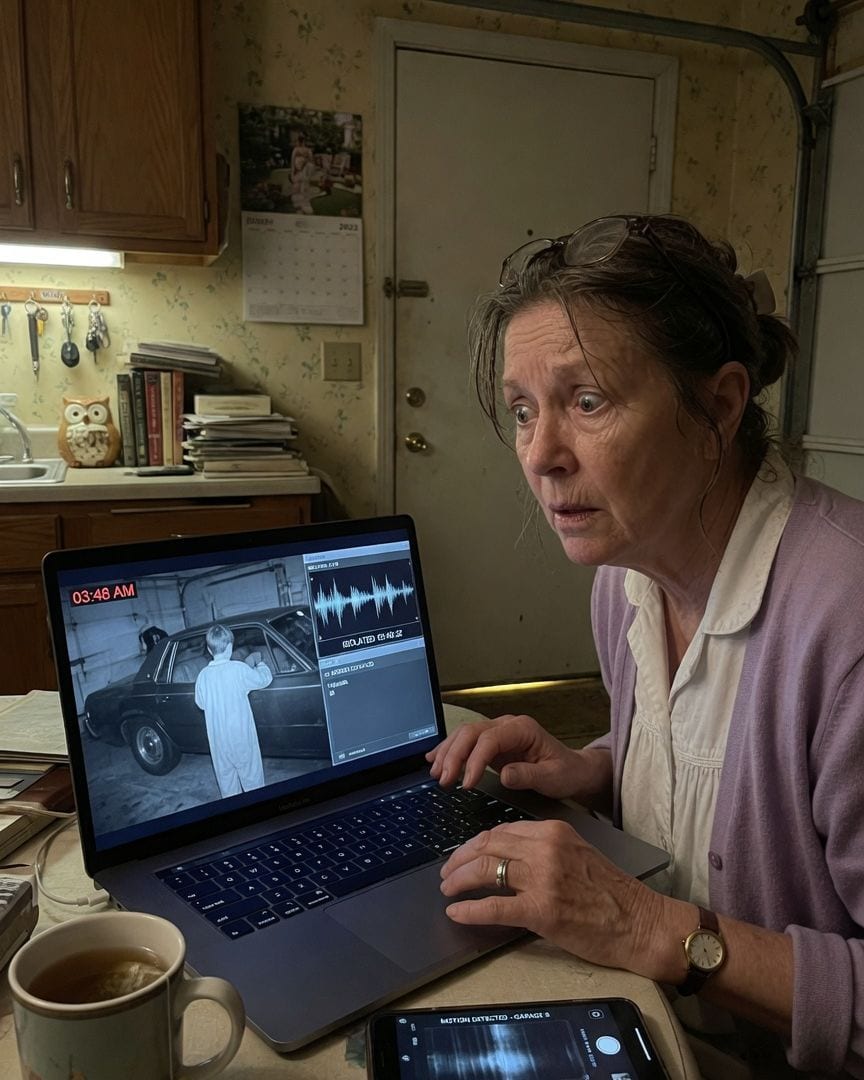
My garage camera filmed a boy of six walk out of a locked door at 3:48am, stare into my empty car, then vanish. My children live abroad.
I live in a quiet, solid house, my children grown and gone. But one night, my garage camera caught an impossible sight: my internal door, locked and bolted, slowly opened. A small, solid boy, no older than six, stepped through, then stood staring into the driver's seat of my empty car.
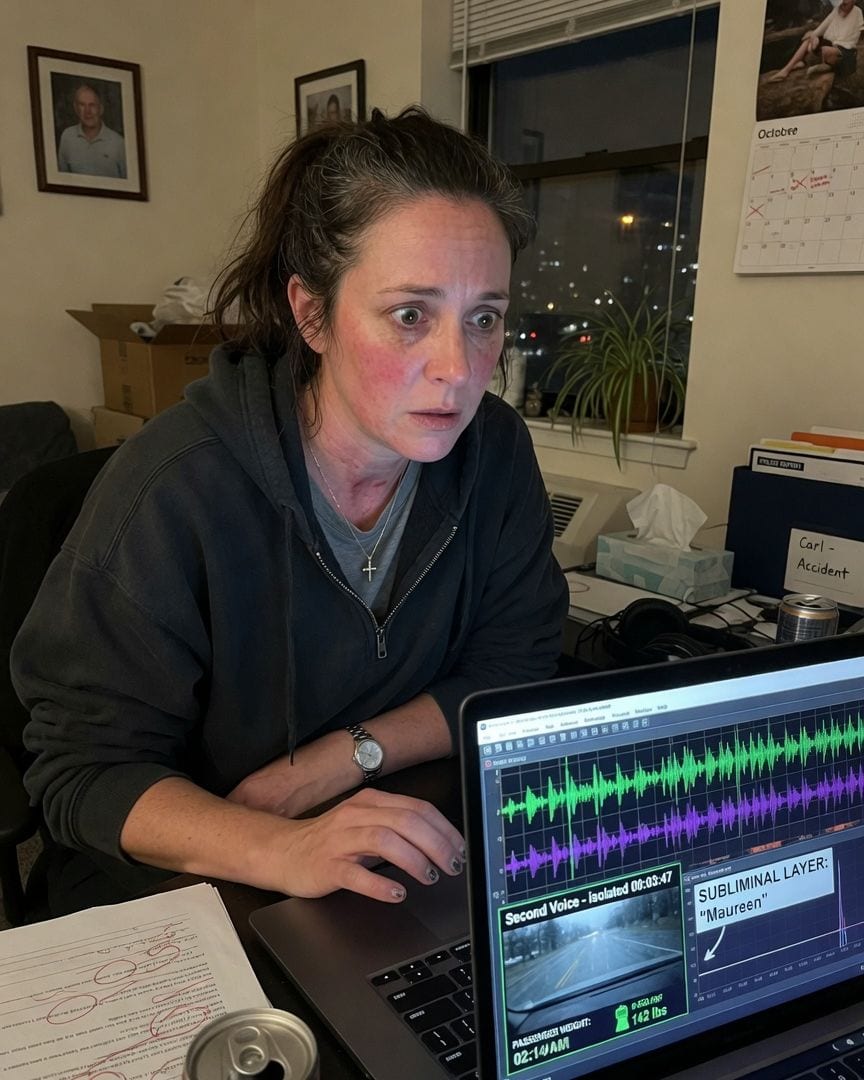
My father's dashcam recorded a soft, familiar voice from the passenger seat. The weight sensor logged someone, and he answered it by name.
Sifting through my dead father Carl's dashcam footage, I expected only the quiet hum of the road. But from the empty passenger seat, a soft voice spoke to him. When I isolated the audio, the voice whispered my own name.
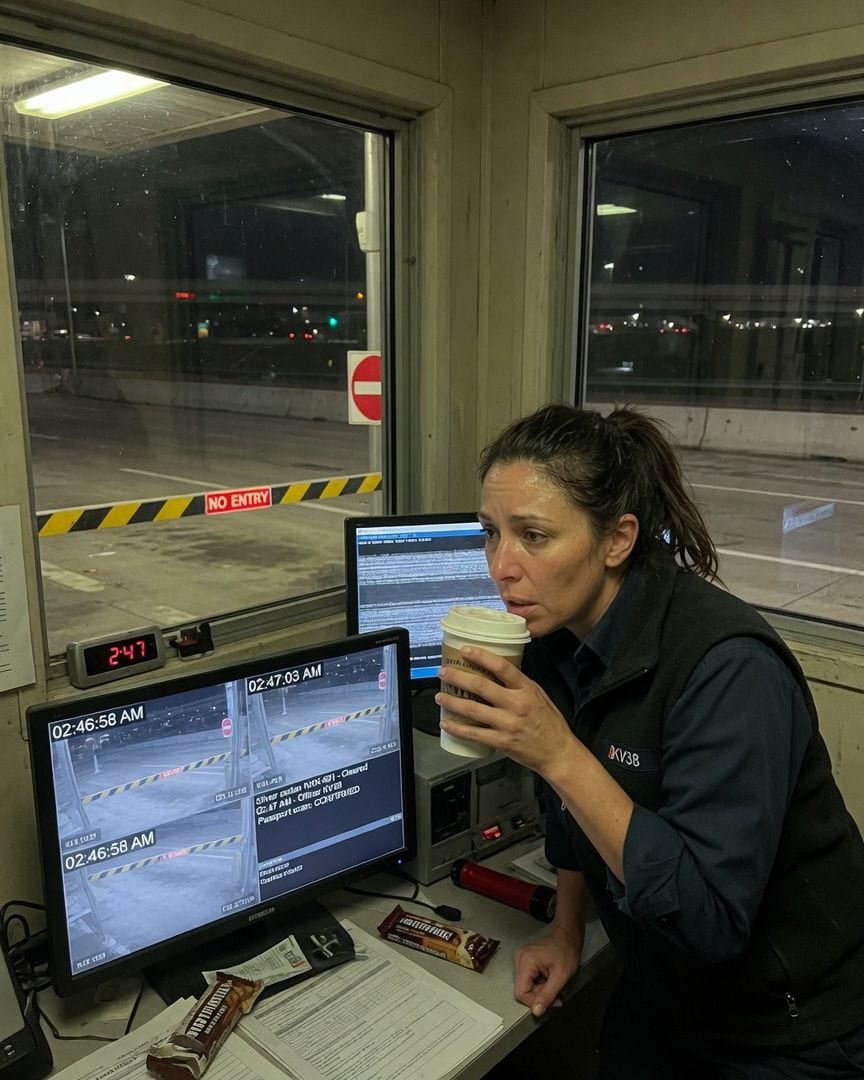
My lane's barrier was down, but my log cleared a car at 2:47 AM. With my code.
Working the quiet overnight shift at the Vance-Romano land crossing, I expected only routine system logs. Instead, a new entry showed a silver sedan cleared northbound through my Lane 3, stamped with my officer code. The issue: my lane had been closed and locked all night, and I hadn't seen a single car pass. Then I discovered the external camera feed for those crucial seconds was simply gone.
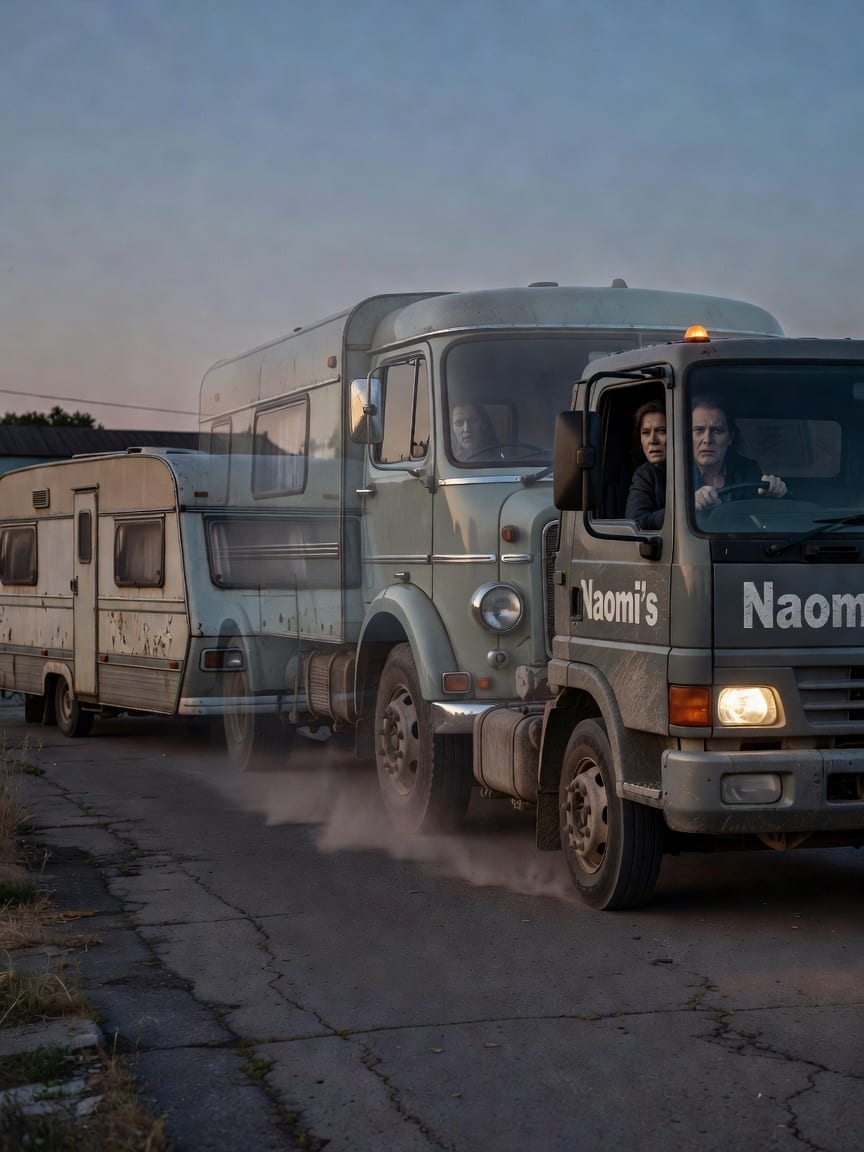
My dashcam shows the same parked caravan scrolling past eleven times in forty minutes. The timestamp advances. The mileage advances. The caravan never moves, and neither, it seems, did I.
I was on my usual lorry route, my dashcam humming, when I passed the old caravan in the lay-by. Five minutes later, I saw it again – the exact same lay-by, the same peeling blue paint. My dashcam timestamp advanced, my odometer clicked over, but the road kept repeating.
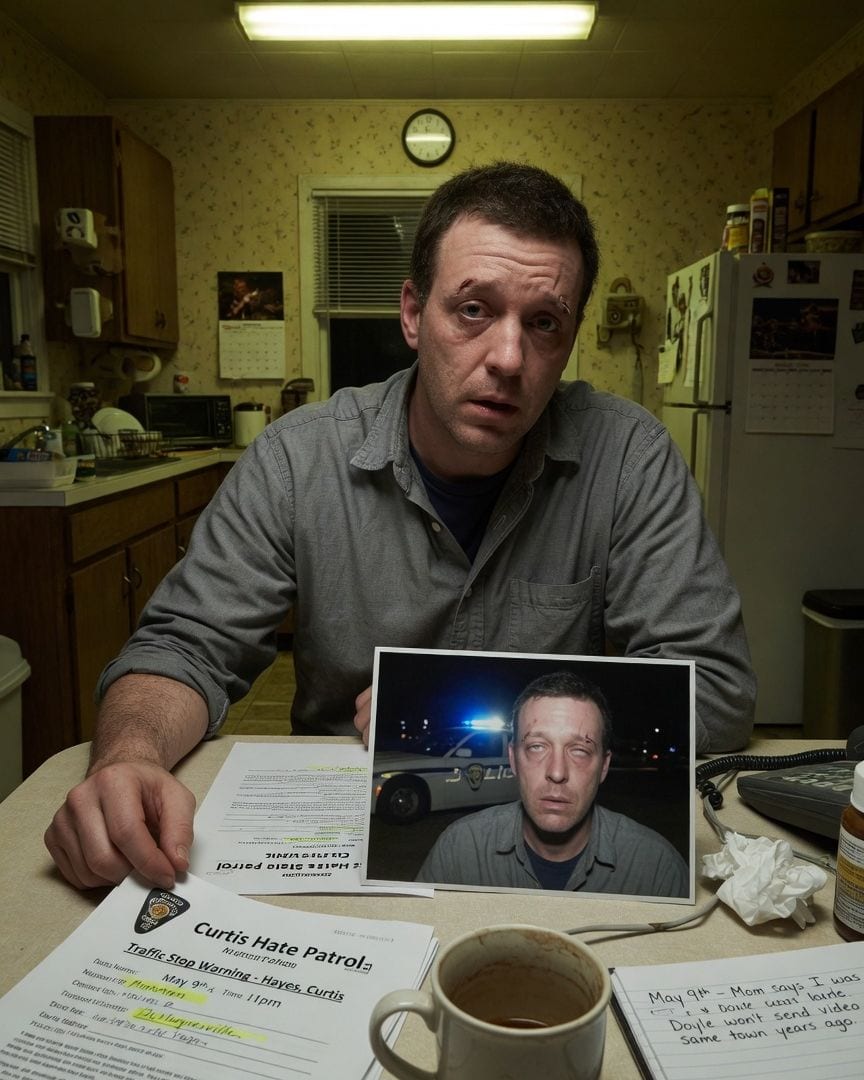
My face stared back from a bodycam video, in a town I've never been. He answered to my name.
I received an email from the Ohio State Patrol for a traffic stop I never made, 200 miles away on May 9th. My mother confirmed I was home that night, asleep on the sofa. When the police finally sent a bodycam photo of the driver, it was my face and scar, but the eyes were flat, distant, and utterly devoid of warmth.
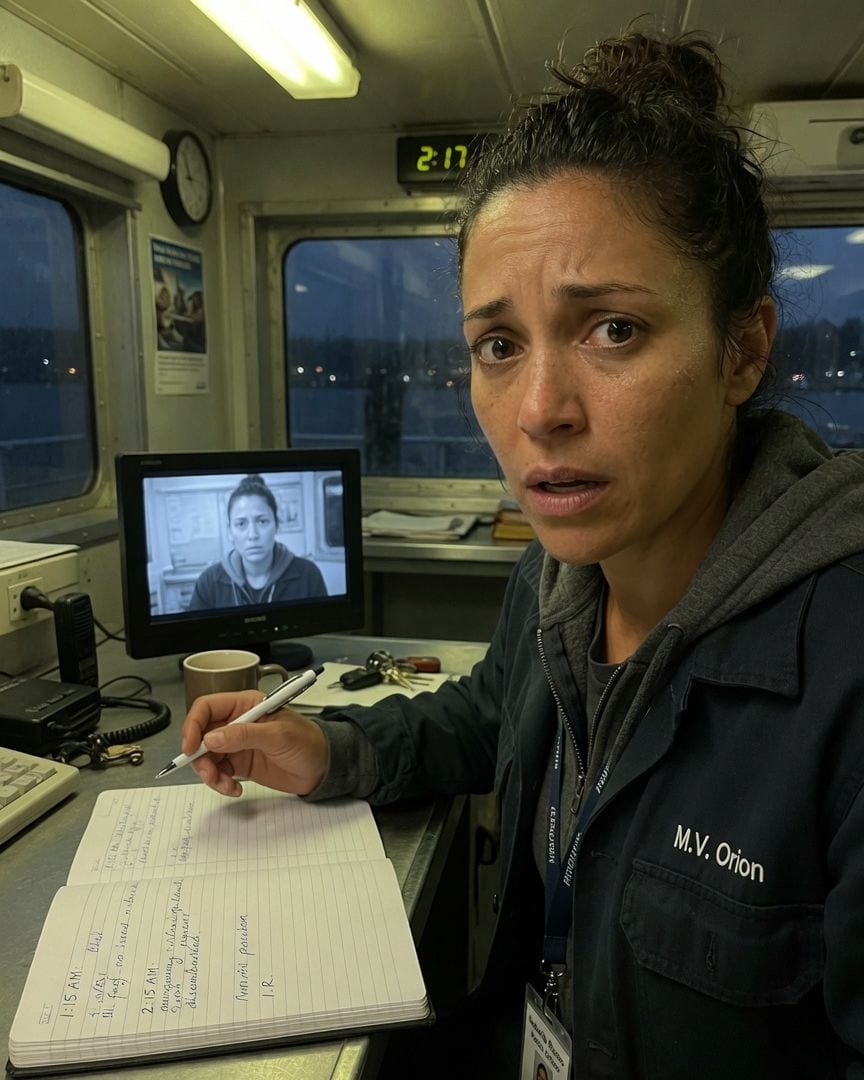
My security camera showed my own face at 2:15 AM, writing an entry I didn't make, staring utterly blankly into the lens before the screen flickered.
As a meticulous watchman on the M.V. Orion, I was making my routine 2:00 AM log entry when I found a previous one I hadn't written. Timestamped 2:15 AM, it stated a 'foot passenger disembarked' with my own initials beside it. But the ferry was dark, silent, and completely empty.