My father's dashcam recorded a soft, familiar voice from the passenger seat. The weight sensor logged someone, and he answered it by name.
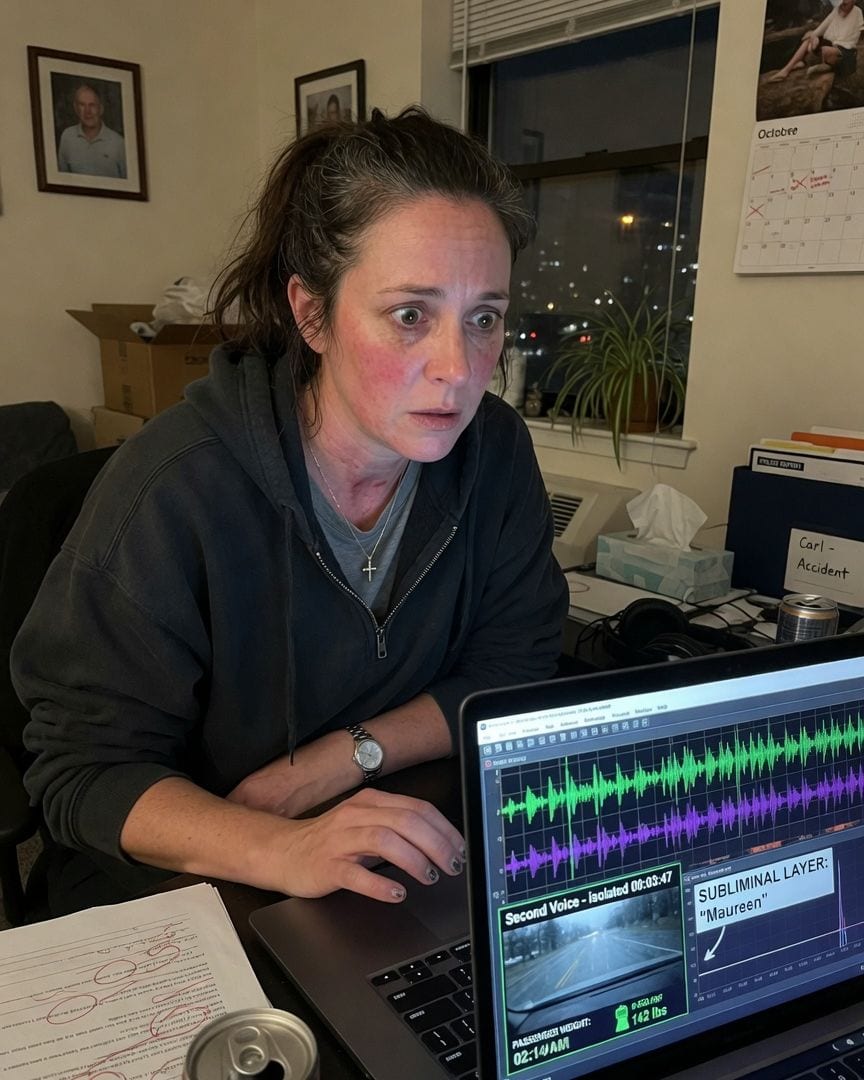
The only sound in my apartment was the low whir of my laptop fan. Outside, the city was just starting to quiet down. On the screen, the last four minutes of my father Carl's dashcam footage played.
The road was wet, slick with recent rain, streetlights reflecting in oily puddles. His hands were calm on the wheel, knuckles relaxed.
He’d been dead two weeks now, the official police report citing a single-car accident, a sudden loss of control. Nothing suspicious.
The passenger seat beside him was empty, a dark expanse of upholstery. As it should be.
But then, the audio began. A soft, familiar voice, almost a murmur, clear as if someone was sitting right there. "It’s time, Carl."
My father, Carl, answered it. His own voice was calm, clear, almost serene. "Yes, David."
I froze. My breath hitched in my throat. I hit rewind, my finger shaking, and played it again. The voice, my father’s reply.
And then I noticed it: the weight sensor icon on the dashcam display, visible in the corner of the frame. It flashed green, logging a presence in that empty seat, right as the voice spoke.
I listened, again and again, my mind frantically trying to find a rational explanation. It wasn't the radio – the car’s audio was off.
He wasn't on the phone; his hands were both on the wheel, and no Bluetooth icon appeared. And who the hell was David? We didn't know anyone by that name. No close friends, no family members.
The name 'David' kept looping in my head, a jarring note in an already horrific memory. My father had spoken it with such serene familiarity, a deep comfort in his tone, as if speaking to an old, trusted friend.
It made no sense.
I downloaded the raw dashcam audio file, a hefty .WAV, and loaded it into my professional-grade sound editing software. I’d used this software for years, cleaning up old family recordings, digitizing cassette tapes. I knew its capabilities.
I spent hours hunched over the glowing screen, isolating the 'Second Voice,' boosting its signal, trying to strip away the constant drone of road noise and my father’s own voice. The more I processed it, the stranger it became.
The timbre was unsettling, almost synthetic, yet undeniably soft, comforting. It sounded like a voice from a half-forgotten dream, just out of reach.
I tried cross-referencing it with every old family recording I could find – voicemails from my childhood, birthday videos from decades ago, anything that might hold a similar cadence or tone. Nothing matched. It was distinct, an anomaly.
It didn't belong to anyone I knew, or anyone my father knew.
I ran a spectral analysis, watching the complex patterns of sound waves resolve on the screen. The waveform of the 'Second Voice' was layered, almost too perfect, lacking the natural imperfections, the subtle hesitations and breaths, of human speech.
It was a construct, like a finely tuned instrument, not a human larynx.
And then, as I focused on the specific moment the voice said 'it’s time,' I noticed something beneath the primary frequency, a faint, almost subliminal whisper, just a single word, buried deep in the audio.
I zoomed in on the waveform, filtering out everything else, amplifying that faint undertone until it stood stark against the flat line of silence. My heart hammered against my ribs, a frantic drum in the sudden quiet of my apartment.
The whisper resolved itself, clear as a bell, though barely audible. It was a name.
My own name.
'Maureen,' the impossible voice breathed, a chilling echo beneath the words 'it’s time.'
The audio file was right there, dated to my father's crash, and within its digital structure, the voice that spoke to him in his final moments had also spoken my name.
A cold dread, far deeper than grief, settled over me, chilling me to the bone. I stared at the sound wave, a line of peaks and valleys that held an impossible truth, and felt a profound, bottomless chill.
The whisper of my name on the dashcam recording haunted me. I couldn't shake it. For days, I barely slept, obsessed with finding an explanation that wasn’t completely insane.
I spent hours online, falling down rabbit holes of obscure forums, searching for 'phantom voices on recordings,' 'impossible audio anomalies,' anything that might explain what I'd heard.
I stumbled upon a niche community dedicated to archiving 'Second Voice' phenomena, often preceding unexplained deaths or disappearances.
The stories were chillingly similar: a voice, familiar yet alien, appearing on a baby monitor, an old answering machine, a security camera, always addressing someone by name, always in a moment of vulnerability or transition.
A cold sweat beaded on my forehead as I read.
I reached out to Russell Barlow, the forum's administrator, a retired audio engineer with a database of hundreds of such recordings. He responded quickly, almost eagerly. We exchanged emails, then a long, disquieting phone call.
He shared clips from his archive: a mother's voice from an empty nursery telling a baby 'it's time to sleep,' a grandfather's laugh on a voicemail from a decade after his death, a soft whisper from a doorbell cam calling a homeowner 'Frances.'
Each voice had that same unsettling familiarity, that layered, almost synthetic quality I’d detected in my father’s recording. Russell called them 'The Channels.'
He explained that each 'Channel' seemed to have a 'key name' it used for its target, a name chosen for its deep, personal resonance.
He suggested looking for any overlooked institutional records, old asylum admissions, or forgotten historical archives that might have documented such occurrences, however obliquely. 'They’ve been happening for centuries,' he said, his voice crackly over the phone.
'People just didn’t have the technology to record them until recently. But records? There might be something in the really old stuff.'
Following Russell’s lead, I began visiting local historical societies and obscure archives. Most were dead ends, dusty rooms filled with mundane documents.
But then I found one, tucked away in an old brick building downtown, its façade adorned with faded carvings. It housed a vast collection of local records, including old hospital admissions and forgotten family histories.
There, I met Vivian Maddox, the head archivist.
Vivian was a woman in her late sixties, impeccably dressed in a tailored tweed suit, with sharp, intelligent eyes that seemed to take in everything. Her demeanor was unnervingly calm, almost placid.
I explained my research, carefully omitting the 'Maureen' whisper, focusing on the dashcam voice and the 'Second Voice' phenomenon, framing it as an academic interest in 'unexplained audio anomalies.' Vivian listened patiently, her expression unreadable.
Not a flicker of surprise or judgment crossed her face.
When I finished, Vivian simply nodded, her gaze lingering on me for a moment too long. A strange, almost pitying look entered her eyes. 'Some things, Ms. Fontaine,' she said, her voice soft but firm, 'are better left undisturbed.
The past has a way of repeating itself, whether we dig it up or not.' It was less a warning and more an observation, as if Vivian already knew what I was looking for, and what I would find.
I felt a prickle of unease, a cold knot forming in my stomach. Her composure was unnerving, a deep, still pool in contrast to my own rising panic.
As I browsed the dusty shelves later, my hand brushed against a peculiar ledger, bound in dark leather, tucked away among old hospital intake forms from the 1950s.
Its pages were filled with coded entries, not medical, but something else entirely. I flipped through it, and my eyes landed on a familiar surname: 'Fontaine, C.' followed by a cryptic series of dates and symbols.
I returned to Vivian Maddox's office, the cryptic ledger open to the page marked 'Fontaine, C.' My hands were shaking, a tremor I couldn't control. I placed the book on her polished mahogany desk with a thud. 'What is this?'
I demanded, my voice tight, barely recognizing it as my own. 'This isn't a medical record.'
Vivian sighed, a faint, almost imperceptible tremor in her usually steady hands. She picked up a delicate porcelain teacup, took a sip, and set it down precisely. 'You found that, did you? I thought it was well-hidden.'
She leaned back in her chair, the leather creaking softly. 'Very well. You're further along than most. Few ever get this far without… guidance.'
She explained that the institution wasn't merely a historical archive. It was, and had been for centuries, a silent observer and documenter of 'The Channels.'
She described them as a 'natural phenomenon,' a 'transition guide' that emerged at the end of certain lives. 'We don't understand them fully,' Vivian said, her voice calm, 'but we've learned their patterns.
They manifest through recordings, always using a voice that resonates deeply with the individual, a comfort, a familiar presence. And they use a specific 'key name' for each target, a name of profound emotional significance.'
She produced a brittle, yellowed document from a locked drawer, its edges crumbling slightly as she unfolded it. It was an index of 'Channel activations' dating back to the early 20th century, meticulous in its detail.
My eyes scanned the hundreds of faded entries. Names, dates, locations, and then, in a separate column, a single word. And there, plain as day, was an entry for 'Fontaine, Carl' and beside it, the name: 'David.'
The name my father had answered to.
'The familiar voice,' Vivian continued, her gaze steady on mine, 'is a construct. It's tailored to each individual's deepest connection, their most profound sense of trust or affection.
For your father, it was 'David,' a name associated with profound trust and comfort, perhaps from his childhood, a forgotten friend, a storybook character, long forgotten by you, but never by him.' The pieces began to click into place, horrifyingly.
The dashcam, the voice, the weight sensor, her father's calm acceptance — it was all part of a systematic, ancient process, documented by this very institution.
The room felt colder, the air thicker, as if the weight of centuries of such observations had suddenly pressed down on me.
Vivian Maddox watched me absorb the information, her face a mask of grim understanding. The silence stretched between us, thick and heavy with unspoken dread.
'There's one more thing,' Vivian said, her voice barely a whisper, pulling me from my daze. She opened a deeper, locked drawer in her desk and produced another, newer ledger, its dark leather still supple, its pages crisp.
'These are the next.' She slid it across the table.
My hands trembled as I reached for it, my fingers brushing the cool leather. I opened it to a random page.
The format was identical to the older index, but these names were clearly more recent, some with dates just weeks or months away. I scanned the page, my heart pounding against my ribs, each beat a frantic warning.
And there, near the top, in precise cursive, was my own full name: 'Fontaine, Maureen.' Beside it, a blank date field, and then, in a separate column, the word 'active' scrawled in stark red ink.
The air left my lungs in a silent gasp. My throat tightened, completely constricting. 'Active?' I managed, my voice a reedy whisper, almost inaudible.
Vivian offered a small, sad smile, a look of profound pity that felt colder than any anger. At that exact moment, my phone, which lay on the table beside the ledger, vibrated.
The weight sensor icon on its screen, which I’d been tracking obsessively since the dashcam, flashed green, signaling a new message.
I looked from my name on the list to my phone, then back to Vivian, her knowing gaze meeting mine, my mind racing, the implication a cold, sharp blade to my throat.
I snatched my phone, the vibration still echoing in my hand, but didn't open the message. I slammed it back down on the table, the sharp sound echoing in the sudden silence of Vivian’s office, my gaze fixed on her.
'What does 'active' mean? What is this?'
Vivian sighed, closing the ledger with a soft thud. The sound was horribly definitive. 'It means the Channel has begun its approach, Maureen. Your name is on the list.
It’s been on the list since before you were born, waiting for its turn.'
She explained that once a name was tagged 'active,' the 'Channel' would begin to manifest, subtly at first, through personal devices, sounds, or fleeting sensations, growing more insistent until the final 'call.' The institution, Vivian revealed, didn't intervene.
They merely documented. 'We believe it's a natural, inevitable process. An ancient cycle. We've tried to stop it, generations ago. It only made things… worse.'
She opened another folder, filled with detailed internal protocols, decades old, for observing and recording these 'transitions,' complete with precise instructions on how to identify the 'key name' and the chosen 'familiar voice' for each target.
The 'David' my father had heard, the 'Maureen' I had heard – these were meticulously recorded, psychological anchors. The institution saw itself as custodians of a terrible truth, not as saviors.
Every clue, every strange recording, every chilling detail, now clicked into place, forming a coherent, horrifying pattern of systematic predation and institutional complicity that spanned centuries. The cold in the room seemed to deepen, settling into my bones.
I pushed back from the table, my chair scraping loudly across the polished floor, a harsh sound in the quiet. 'No. I won't let this happen. There has to be a way out.'
I felt the phantom weight of my phone in my pocket, the recent buzz still echoing in my palm. I demanded to know if there was a way to break the 'Channel,' to sever the connection, to warn others.
Vivian shook her head, her face etched with a profound, ancient weariness. 'No one has ever truly escaped their assigned name, Maureen. It's a part of the pattern, a thread woven into the fabric of existence.
Resistance only hastens the inevitable, and often brings… complications.'
My mind raced, frantically searching for an answer, a loophole. 'What complications?' I pressed, my voice desperate, cracking on the last word.
Vivian merely looked at me, her eyes holding a deep, unsettling understanding. She didn’t answer directly.
As I stood to leave, the heavy oak door to Vivian’s office, which I had closed behind me when I entered, slowly, silently, creaked open a few inches. A cold draft snaked through the room.
From the empty hall outside, a soft, familiar voice whispered my name.
'Maureen,' it breathed, the sound impossibly close, impossibly comforting, yet utterly terrifying. It was the same voice from my father's dashcam.
I froze, every muscle in my body locking, unable to move. I slowly turned back to Vivian, a desperate, unspoken question in my eyes, seeking some impossible guidance.
Vivian just offered a small, sad smile, a gesture of quiet, knowing resignation, as if to say, 'It's time.' The presence in the hallway lingered, waiting.
My apartment lay quiet, bathed in the pale light of dawn. The city was still asleep. My laptop was still open on the kitchen counter, displaying the obscure forum Russell introduced me to.
A half-written post about 'The Channels' sat unsent, the cursor blinking patiently, a silent testament to my futile struggle. My phone, charging on the bedside table, showed a single missed call from an unknown number.
The weight sensor on the dashcam in my own car, parked outside, had been logging a consistent, faint pressure in the passenger seat for the past 24 hours, even when the car was empty.
A faint, almost imperceptible hum resonated through the floorboards, a vibration that seemed to come from everywhere and nowhere.
The phone on the bedside table rang again, a soft, almost melodic chime. I reached for it, my movements slow, deliberate, as if moving through deep water. The hum grew louder, filling the room. 'Hello?'
I whispered, my voice barely audible, calm.
A familiar, comforting voice answered, calling me by name. 'Maureen,' it said. 'It's time.'
Russell Barlow, checking the forum a few days later, saw Maureen Fontaine's half-written post. He tried calling her, but her number was disconnected.
Beneath the unfinished post, a single new comment had appeared, posted by an anonymous user, simply reading: 'the end.'
If this one got to you
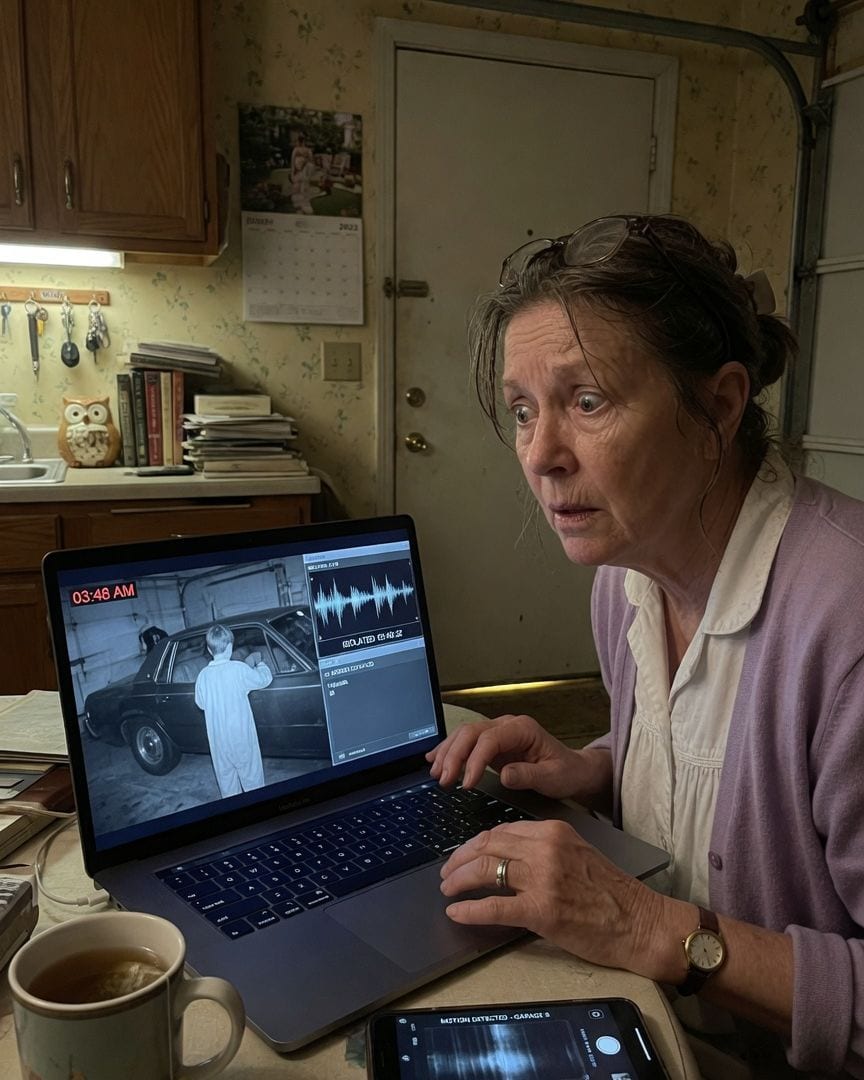
My garage camera filmed a boy of six walk out of a locked door at 3:48am, stare into my empty car, then vanish. My children live abroad.
I live in a quiet, solid house, my children grown and gone. But one night, my garage camera caught an impossible sight: my internal door, locked and bolted, slowly opened. A small, solid boy, no older than six, stepped through, then stood staring into the driver's seat of my empty car.
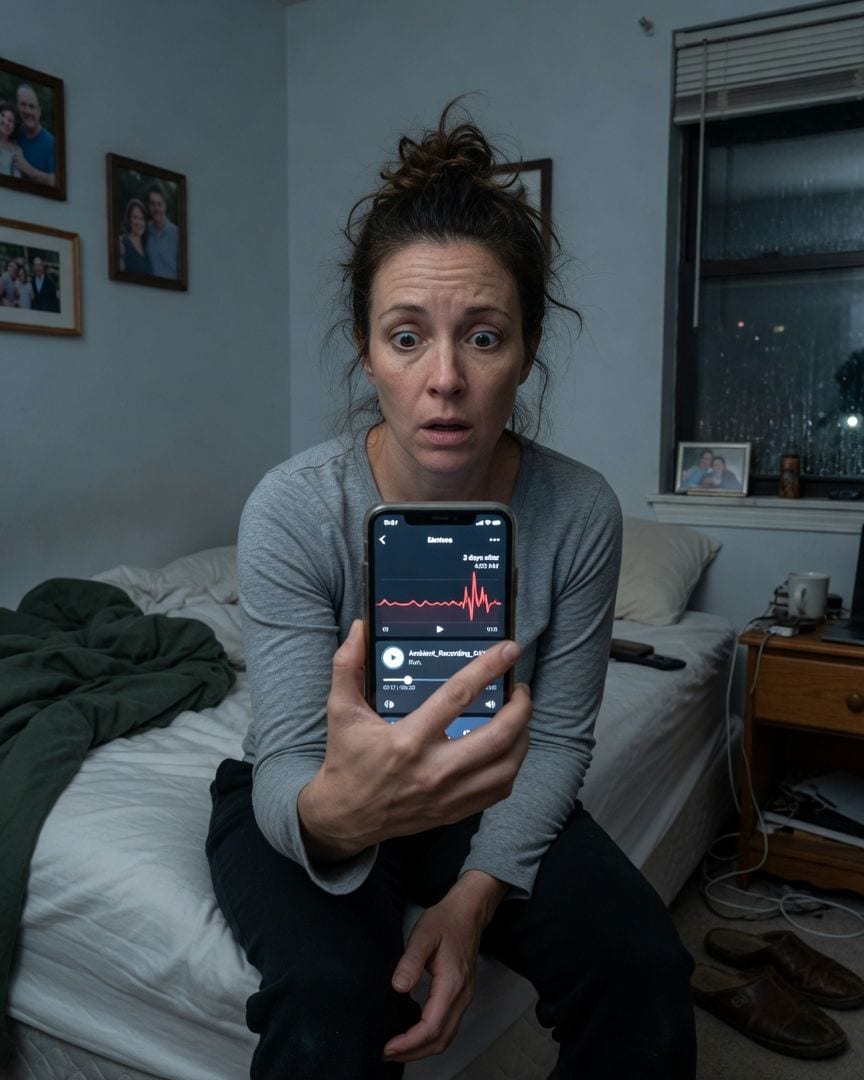
My dead father's smartwatch recorded his heart racing, like a man running hard, for eleven minutes at 4 AM three days after he passed. Then it went flat for good.
A week after my father passed, I was sifting through his digital footprint when I plugged in his old smartwatch. Deep in the data, I found an audio file, inexplicably recorded, that held a guttural whisper, unmistakably not his voice. It said one word: 'Run.'
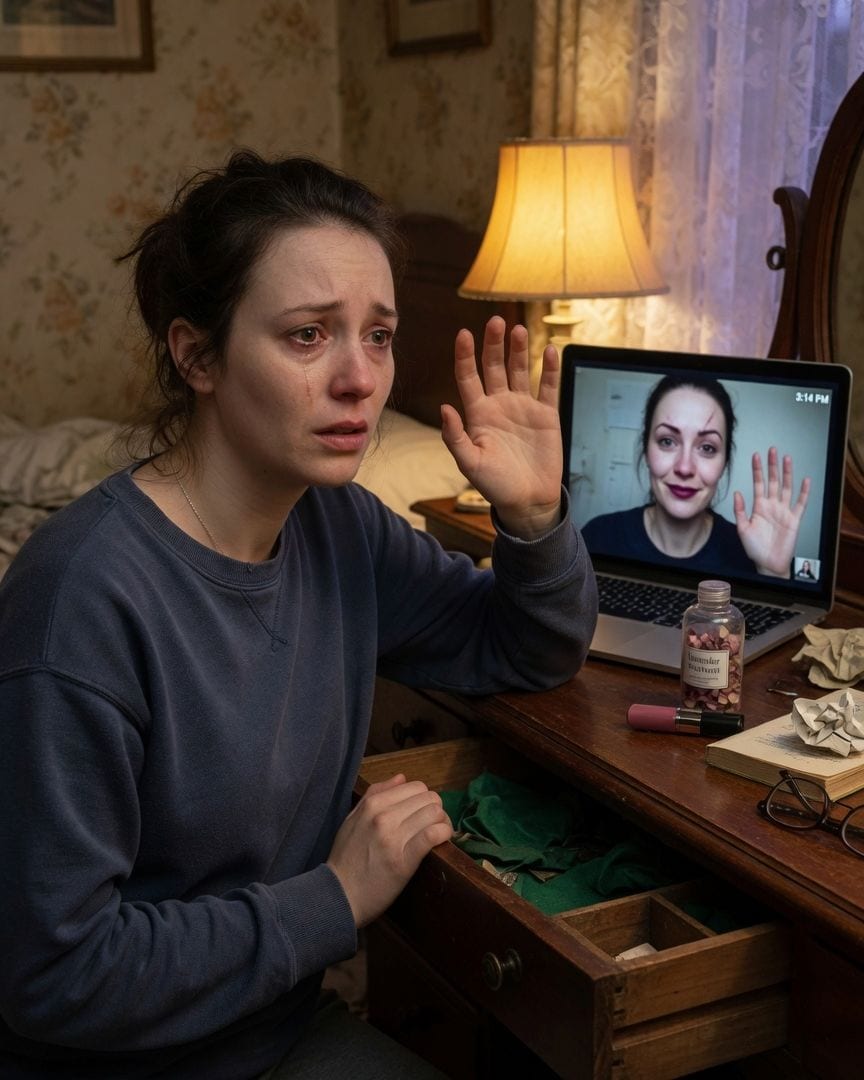
My mother waved with her right hand, both times, on our first call after she came home. She always waved left.
My mother vanished three months ago, then came back. On our first video call, she waved goodbye, but not with her usual left hand. It was her right, a small gesture that twisted something cold in my stomach.
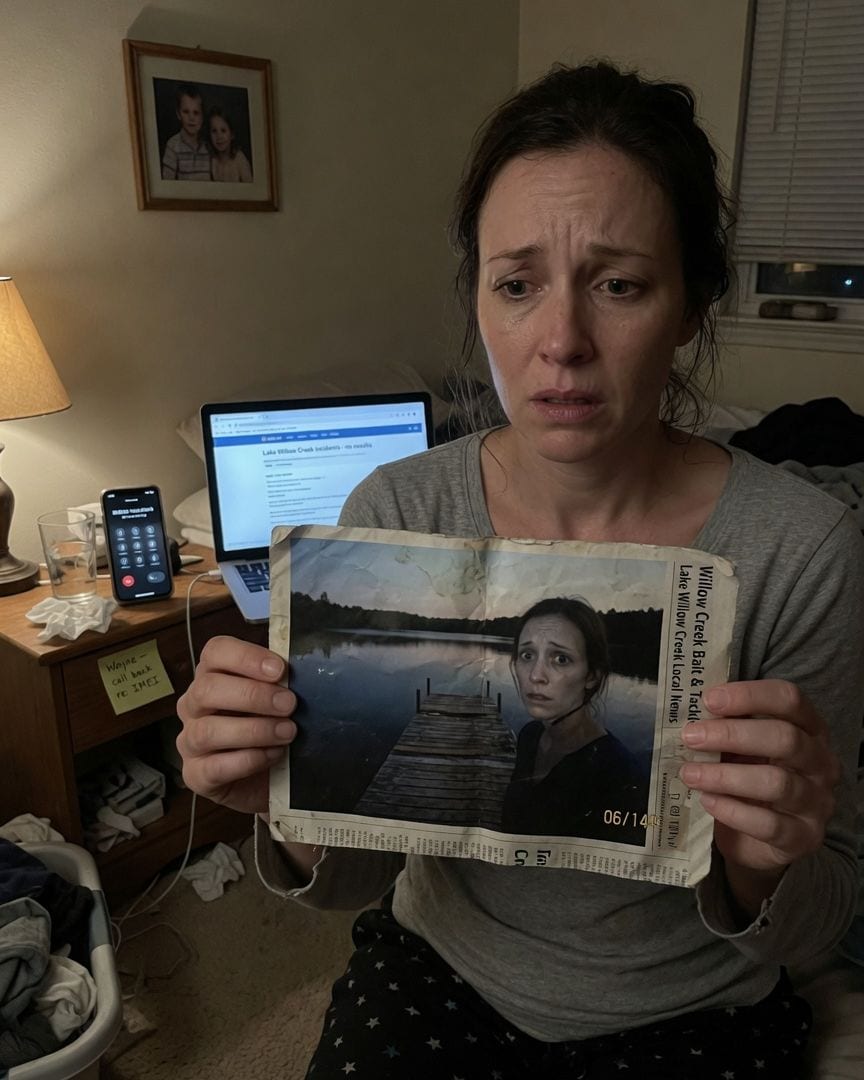
My voice called my sister at 3 AM, telling her not to worry about 'the lake.' I was asleep, my phone off, and nothing happened at any lake.
My sister received a chilling 3 AM call from my phone, my own voice warning her about a lake I'd never been to. I was asleep in my bed, hundreds of miles away. Then, a water-damaged package arrived containing a photo of me, terrified, at that very lake, dated a day I was three states away.
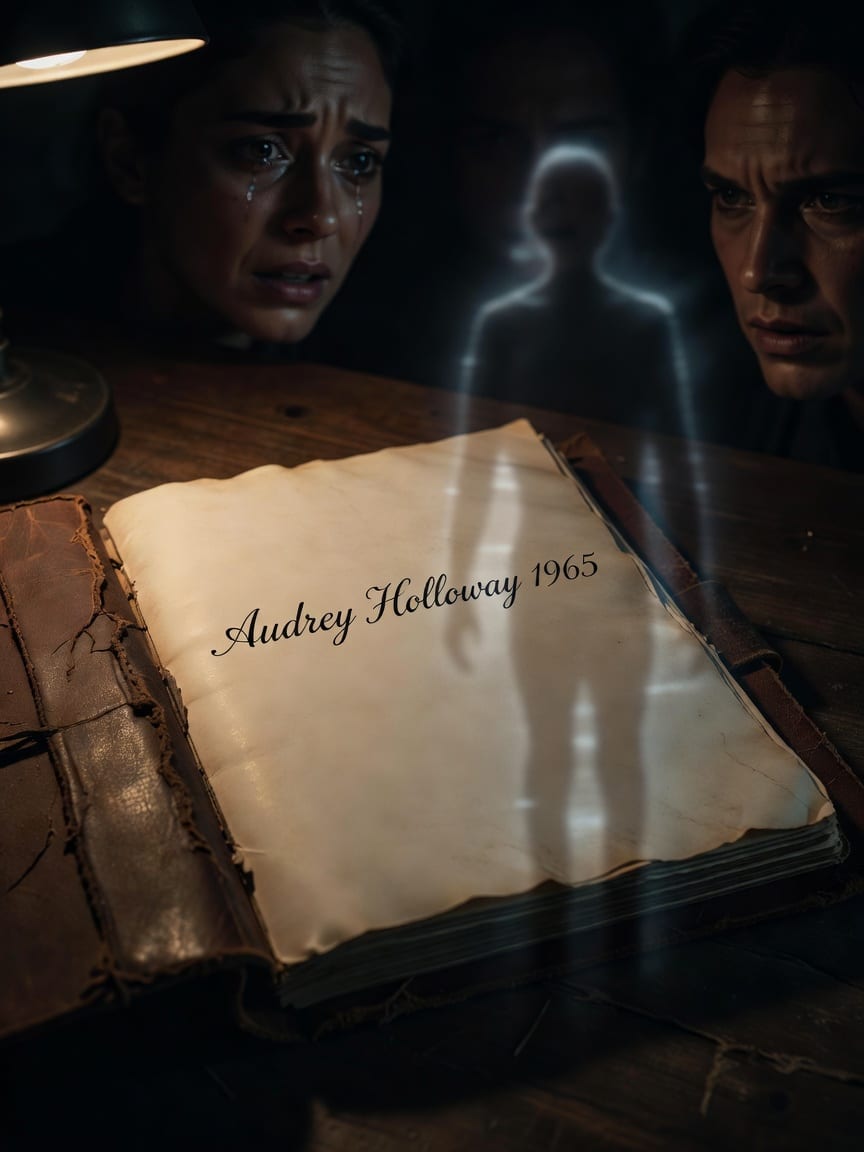
My own baby clothes arrived. Each tiny collar bore my name, embroidered in new thread. My mother swore she gave them away decades ago. The delivery note read: 'you'll need these again.'
A plain parcel arrived on my doorstep, containing my own baby clothes, freshly laundered and smelling faintly of lavender. My mother insisted she gave every piece away decades ago. But on the collar of a small white dress, my full name was newly stitched in an elegant script.
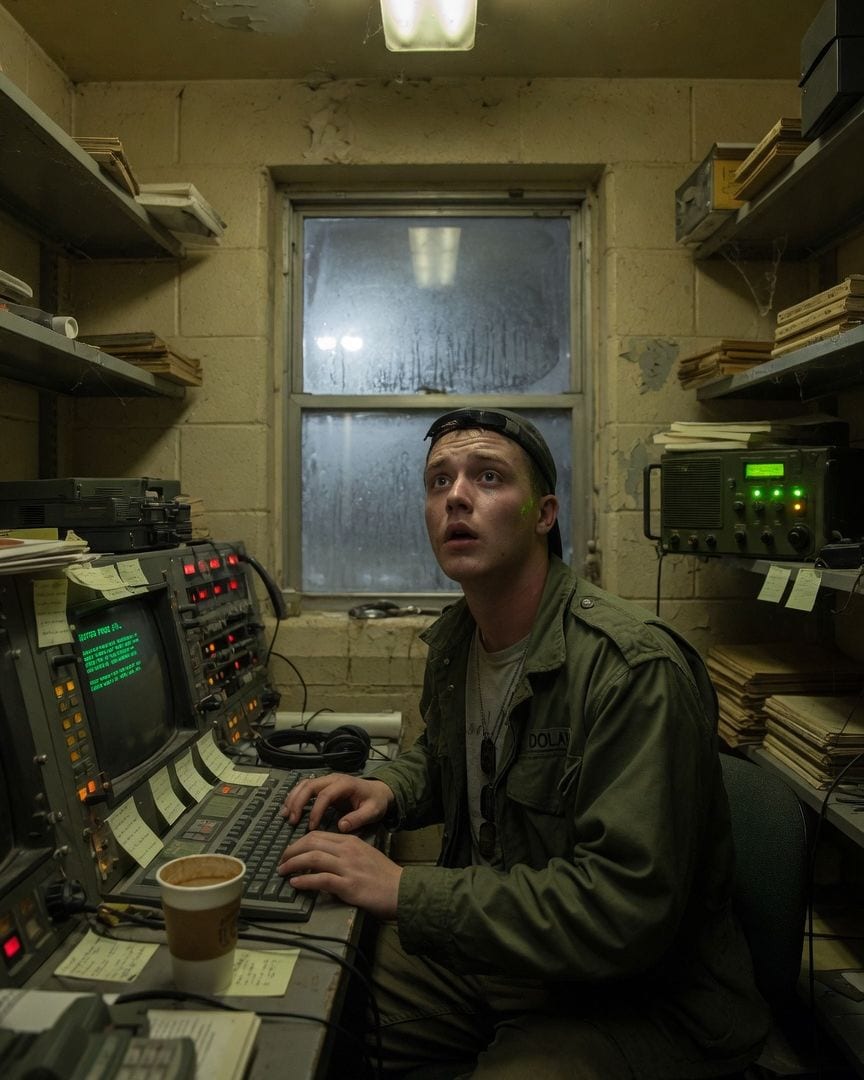
On his last watch, Specialist Dolan heard a dead soldier's voice from an old radio, a week too late.
Specialist Raymond Dolan was on his final watch at Firebase 7, a remote mountain outpost swallowed by a thick, oppressive fog, before its permanent closure. The fire-direction center should have been silent, but strange calls began routing directly to his console, reporting an enemy element in the draw where the 'Ghost Patrol' was lost just a week prior. While Control heard only Dolan's voice echoing into a void, the panicked voices in his ear were terrifyingly real. As he tried to purge the system, an old, unpowered field radio on a dusty shelf inexplicably powered on, its small light glowing green. From its speaker, the voice of Private Abigail Foster, a soldier from the Ghost Patrol, burst through—a week-old transmission, a final warning from the dead.