My security camera showed my own face at 2:15 AM, writing an entry I didn't make, staring utterly blankly into the lens before the screen flickered.
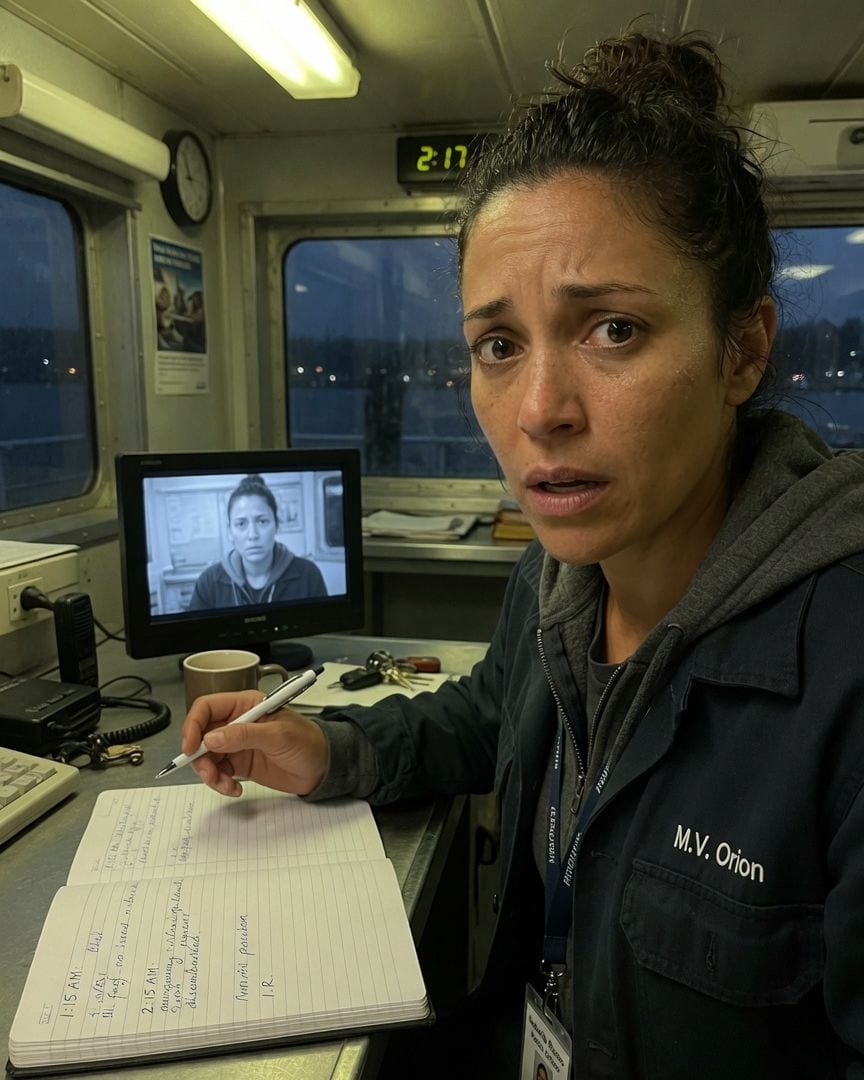
The night air hung thick and damp over the pier, smelling of salt and diesel. It was 2:00 AM. The M.V. Orion rested against its berth, dark and silent, its engines cold until the first six o’clock run.
I’d just finished my rounds, checking the mooring lines, ensuring the gangway was secure, a quick sweep of the lower car deck – nothing but the usual creaks and groans of a vessel settling into its sleep.
Back in the watch office, the fluorescent hum was the loudest sound. I picked up the official watch logbook, its cover worn smooth, to make my hourly entry.
My pen hovered over the crisp, blank line. I flipped back a page, just out of habit, checking my previous entries. 1:15 AM: 'All fast, no issues. I.R.' My neat, familiar handwriting, exactly as it should be.
But then, there it was, between my 1:15 AM and the 3:15 AM entry I was about to make. A line I knew, with absolute certainty, I hadn’t written.
Timestamped 2:15 AM. It read: 'All fast, gangway secured, foot passenger disembarked.' And beside it, my distinct initials: 'I.R.'
My stomach dropped. No one had disembarked. There were no passengers on board. The ferry didn’t sail for another four hours.
I stared at the entry, tracing my initials with a trembling finger. My handwriting.
It was unmistakably mine, the precise slant of the 'I,' the loop of the 'R.' My first thought was James Foster, the senior watchman, a known joker, but James wouldn't go this far. He wouldn't mimic my handwriting this perfectly.
And he wouldn't do it on the official log. This wasn't a prank.
A cold, heavy dread started to settle in the watch office, making the air feel thick around me. I tried to rationalize it. Did I make the entry, completely forget it, and then check the log again?
That wasn't like me. I’m meticulous. Could I have sleepwalked, come back here, written it, and gone back to my bunk? Even as the thought formed, it felt absurd. My bunk was a five-minute walk through empty corridors.
The only way to know was the cameras. The M.V. Orion had a single external security camera, fixed on the pier and gangway, and another internal one, covering the watch office itself.
My hand was shaking slightly as I brought up the security console. I fast-forwarded the external feed to 2:15 AM. Nothing. The pier was empty, the gangway gate locked, a faint breeze making the mooring lines sway.
Just the usual dark water and the distant twinkling lights of the town across the bay.
Then I switched to the internal feed.
There I was. Isabella Russo, at the watch office desk. My posture was normal, my face obscured slightly by the angle, but I could see my hand moving across the page of the logbook. I was alone in the office.
No one else. My hand finished the entry, pen paused. Then, slowly, my head lifted. My eyes, usually alert, focused, were utterly blank. They stared directly into the camera lens with a detached, vacant expression I didn't recognize.
My own face, but not me.
Then, for a split second, the screen pixelated into a burst of static, a harsh, electric sound that barely registered over the hum of the system. It cleared as abruptly as it came. My head lowered.
My hand moved to the next line in the log, ready to record a 3:15 AM entry, as if nothing had happened. As if that blank, dead stare, that flicker, was just part of a routine I didn’t know.
My heart hammered against my ribs, a frantic drumbeat in the quiet office. I rewound the footage, my fingers fumbling with the controls. I played the moment again, frame by agonizing frame.
My own face, drained of all recognition, staring out from the feed, then the sudden, brief pixelation, a visual scream in the quiet feed, before my head lowered and I continued my rounds, a puppet on invisible strings.
The next morning, I tried to talk to James Foster, the senior watchman, about it. I framed it lightly, as if it were a strange anomaly, a 'weird glitch' in the system.
James, a man who saw the world in predictable shifts and fixed schedules, just shrugged, dismissing it with a grunt about 'night jitters' and 'sleep deprivation' on the graveyard shifts.
His logic was sound, but his easy dismissiveness felt like a brick wall. It was too fast, too easy an explanation for what I’d seen.
Dissatisfied, a cold knot forming in my gut, I waited for Gerald Novak, the ferry operations manager, to start his morning rounds.
Gerald was a man carved from years of maritime bureaucracy – calm, unshakeable, with eyes that seemed to see everything and reveal nothing. I showed him the logbook entry first, pointing to the 2:15 AM time, my initials.
Then I played the security footage for him. He watched the blank stare, the static flicker, with an unnerving calm. "Electrical interference," he suggested, his voice flat, his gaze never quite meeting mine. "Happens sometimes with older systems.
The feed can get jumpy."
"But my handwriting," I pressed, my voice thin. "My face, Gerald. It’s like I was there, but not me."
He just gave a vague wave of his hand. "Probably just tired. We all get a bit fuzzy on the night shift." Too quick. Too unconcerned. I pushed harder. "Have there been other unusual entries in past logs?
Anything like this?"
Gerald took a deliberate sip of his coffee. "Records are public, Isabella. Check for yourself."
That night, my dread a constant hum beneath my skin, I dedicated my shift to the archives. The small, cramped room smelled of dust and old paper.
I pulled out old watch logs, year by year, going back as far as I could. It was tedious work, my flashlight beam cutting through the gloom, but I found them. Other entries, impossible entries.
Always at odd hours, always a 'passenger' disembarking when no ferry was scheduled, always in the watchman's own distinct handwriting. I noted three distinct sets of initials on those entries, none of whom were still working the overnight.
Their shifts had changed, or they'd retired. Just like mine might eventually. A pattern. A terrifying, silent pattern.
I started feeling a prickle of unease beyond the logs. A few days later, I left my small, cluttered office locked one afternoon, the heavy brass padlock clicked firmly into place. When I returned hours later, the door was ajar.
The padlock was still engaged, hanging from the hasp, but somehow bypassed. Nothing was missing. My bag was still on the hook, my thermos on the desk.
But my desk calendar, which I religiously kept open to the current date, was now flipped back several months, resting open on a page from January. The air in the room felt colder, too, as if someone had just left.
A few days after that, a stiff, anonymous typed note was slipped under my office door, pushed hard against the threshold. It simply read: "Some things are best left to the tide. Don't look too deep."
The message was chillingly specific. It spoke directly to the ferry, the water, the strange depths I was probing. I immediately suspected Gerald. His unnerving calm, his dismissive answers. He was hiding something.
One night, as I was leaving my shift, the sun just a faint orange smear on the horizon, I glanced up at Gerald's office window, high above the pier. He was there. A dark silhouette against the muted office light.
He didn't move, just stood there, watching me. A silent, unblinking observer. The isolation of the night shift, which I’d always found peaceful, deepened into something far more sinister. I felt watched. Always.
The next morning, I marched into Gerald's office, the anonymous note clutched so tightly in my hand the paper was crinkling. "What do you know about this?" I demanded, throwing the note onto his desk.
It landed with a soft, defiant slap.
Gerald picked it up, his thick fingers turning the paper over. His expression remained utterly unreadable. "A warning, perhaps," he said, his voice flat, devoid of emotion.
"From whom?" I pressed, my voice rising, refusing to be dismissed. "And what about the logs? The impossible entries? My face on that camera, looking like… that?"
The memory of my blank, dead eyes on the screen made my stomach clench.
Gerald sighed, a deep, tired sound, and leaned back in his chair. The old leather creaked. "The ferry," he began, slowly, his gaze drifting to the window, out at the placid bay. "Has a certain… routine, Isabella.
It's not just a vessel for people and cars. It's a point of passage."
I stared at him, baffled. "Passage for what?"
"For something that travels the waters," Gerald replied, his gaze distant, as if seeing something beyond the visible horizon. "Something that requires its journey to be acknowledged. Recorded." He finally looked at me, his eyes grave.
"For as long as I’ve been manager, and long before that, there have been these 'passengers.' Things that move in the deep, that move through the night." He paused, taking another slow breath.
"And the watchman," he continued, "they are the scribes. They keep the record. It ensures safe passage for everyone else."
A cold dread bloomed in my stomach, spreading through my veins like ice. Scribes. "So, I'm just… writing down what this thing wants? Against my will?" The thought was horrifying. My own hand, guided by something unseen.
Gerald nodded, a flicker of something in his eyes – pity, perhaps, or resignation. "It's not malicious, Isabella. Just insistent. The logs ensure the routine is followed. It's always worked this way.
The entries you found in the archives, the ones before yours... we've all done it. All the night watchmen, going back decades."
The earlier clues, the blank stare on the camera, the static flicker, the impossible entries in the official log, the cold feeling in my office, the anonymous note – they suddenly snapped into a horrifying, coherent pattern. A ritual.
A silent, terrifying ritual I had stumbled into.
Gerald, seeing the horror bloom on my face, tried to reassure me, his voice a low drone. "It's harmless, Isabella. As long as the routine is followed. As long as the record is kept."
He gestured vaguely to a dusty, locked cabinet tucked in a forgotten corner of his office, dark wood against the pale wall. "There are older records, of course. Much older. They're not for public eyes, but they confirm the pattern."
He then turned back to his paperwork, clearly dismissing me, ending the conversation.
That night, the image of that cabinet, hidden in the dim corner of Gerald's office, haunted me. Gerald's words about 'older records' had lodged deep in my mind.
Driven by a desperate need to understand everything, I remembered a spare key I'd 'found' earlier, tucked behind a loose panel in the old office supply closet – a key I now realized, with a sickening lurch, fit Gerald's cabinet.
My hands trembled as I inserted the key and turned the lock. It clicked open with a soft, rusty groan. Inside, tucked behind official-looking, moth-eaten ledgers that dated back to the mid-20th century, was a thick, leather-bound book.
It was clearly unofficial, its pages yellowed and brittle, smelling faintly of mildew and something else I couldn't place. It was filled with elegant, impossible entries, a tapestry of unknown passages, dating back decades.
Each entry detailed a 'passenger' at an impossible hour, signed by different watchmen. Gerald's initials, 'G.N.', were there, scattered through the later pages.
I flipped through the pages, my breath catching in my throat. My eyes scanned the flowing script, each entry a record of an impossible truth. Then I saw it. The last entry. In my own distinct handwriting. Signed "I.R."
And dated a week before my first conscious memory of the 2:15 AM log entry, detailing another 'disembarkation' I had absolutely no recollection of.
I slammed the leather-bound logbook onto Gerald's desk, the sound echoing sharply in the quiet office. "Explain this!" My own handwriting stared up at me from the brittle page, a week before I'd even noticed the first anomaly.
Gerald looked at the book, then at me, a deep sadness in his eyes. "It's how it works, Isabella. The influence.
It finds a new scribe when the old one is ready to pass the duty on, or when it senses a need. You were chosen.
The blank stare in the video, the flicker, your earlier entry in that book – it was the 'thing' ensuring its record was kept, subtly guiding your hand. It's been happening for generations.
This ferry, these waters, they are a pathway for something that moves between places, and it requires a toll, a record of its transit."
He explained it all, his voice low and steady, as if recounting a mundane administrative procedure. He, too, had been a scribe for thirty years, compelled to make entries he didn't remember.
He showed me his own initials, 'G.N.', in the older sections of the hidden log, stretching back to when he was just a young watchman. "It's not a monster, Isabella," he said, shaking his head. "It's just… a force.
A pattern. We are merely its chroniclers."
Every planted clue, every impossible detail – my blank stare, the static flicker, the unexplainable entries in the official log, the anonymous note, James’s dismissiveness, Gerald’s own unnerving calm – all clicked into place, forming a coherent, horrifying tapestry of unseen influence and forgotten ritual.
The world was not as I understood it.
Horrified, a cold terror gripping me, I refused to continue the "routine." My hand shot out, grabbing the leather-bound logbook from Gerald's desk. I intended to throw it into the churning waters of the bay, to break the cycle.
To shatter this silent, ancient ritual.
As my fingers closed around the aged leather, the fluorescent lights on the ferry flickered violently, plunging the watch office into near darkness before surging back, buzzing with an angry hum.
A deep, resonant thrum, like a distant, colossal engine, vibrated through the deck plates beneath my feet. The thrum intensified, causing the metal walls around us to shiver.
Outside the windows, the dark surface of the water turned unnaturally black, swirling and churning without wind, as if a vast, unseen weight was pressing against the hull from below.
The ferry's engines, dormant for hours, suddenly sputtered, choked, and then died with a final, shuddering cough, leaving an eerie silence broken only by the rising hum of whatever was beneath us.
Gerald, his face ashen, his eyes wide with genuine panic, lunged across the desk towards me. "Stop!" he shouted, his voice hoarse. "Just make the entry! Let it pass!"
But I hesitated, the logbook heavy in my hand, my gaze fixed on the terrifyingly agitated water outside. The hum reached a deafening pitch, a vibrating roar that shook my very bones.
Suddenly, something truly immense and dark shifted just beneath the surface, pressing against the hull with a sickening groan of stressed metal.
A vast, unseen shape, a presence of profound scale, was now clearly discernible, a shadow against the dark, churning water, right beside the ferry.
The ferry's engines restarted with a violent, jarring jolt, spluttering to life. The water outside calmed almost instantly, returning to its placid, dark state. The deafening hum faded to nothing, leaving only the mundane thrum of the ferry's systems.
Profoundly shaken, my hands still trembling, I dropped the logbook. It landed with a soft thud, intact.
I finished my shift in a quiet stupor, going through the motions. The next few weeks were a blur of routine. Gerald avoided my gaze, his silence a heavy weight between us, but he never said another word about it.
The entries in the official logbook continued, made by me, always at 2:15 AM, always for a 'foot passenger disembarked.' The dread was a constant companion, a cold knot in my gut, but the routine was unbroken.
I now perform my duties in a quiet, almost mechanical way. I still watch the dark waters, always. Sometimes, I feel the familiar pull, the urge to check the log. I always do.
The ferry's new manager, David Norwood, found Isabella Russo's personnel file marked "transferred." Her logbooks were immaculate, every entry accounted for.
He did notice the small, leather-bound journal tucked beneath the loose floorboard in the old watchman's office, its pages filled with neat, consistent handwriting, including his own initial entry from last night, timed at 2:15 AM.
If this one got to you
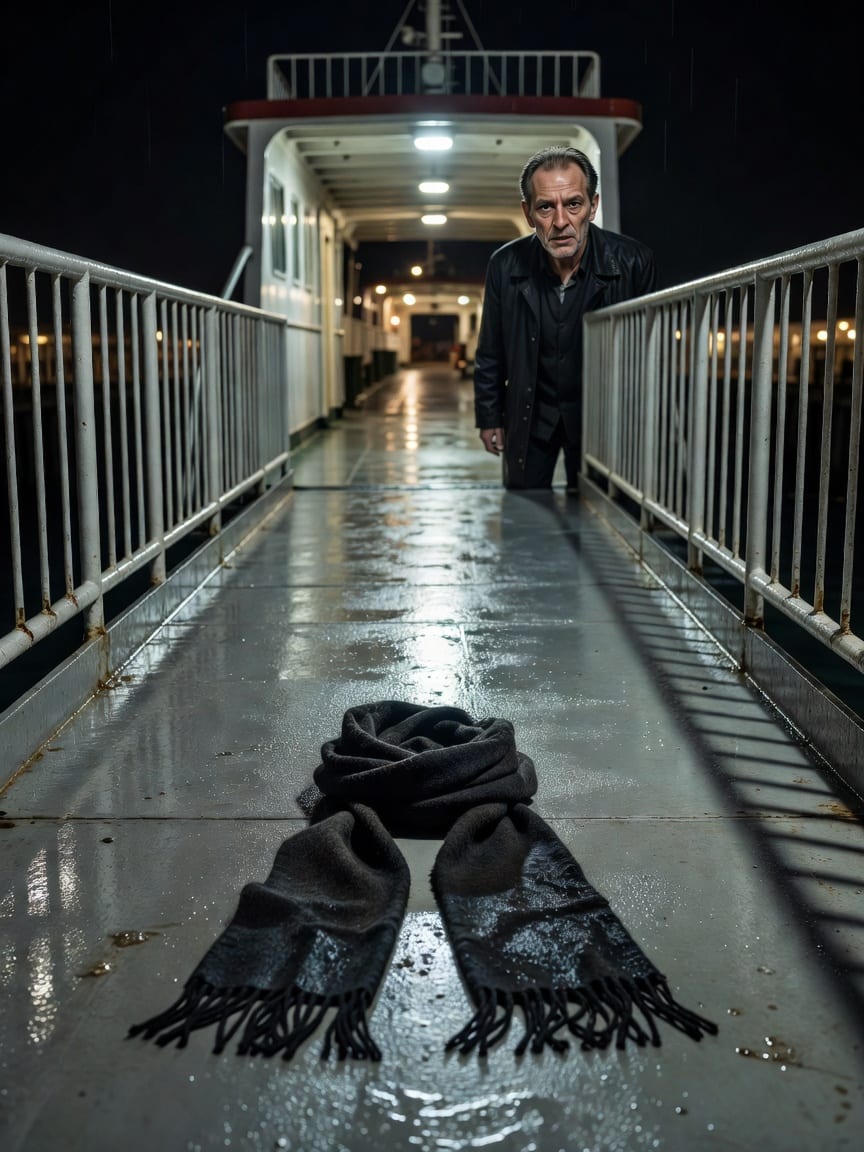
My ferry's night log recorded a foot passenger disembarked at 2:15 AM. We don't sail until six, and I wrote the entry myself.
Working the night shift on the 'Sound Clipper,' I found my own handwriting in the watch log recording an impossible event: a foot passenger disembarking at 2:15 AM. The ferry was tied up, engines cold, and the gangway locked tight. No one could have left, yet the entry was undeniable, signed with my initials.
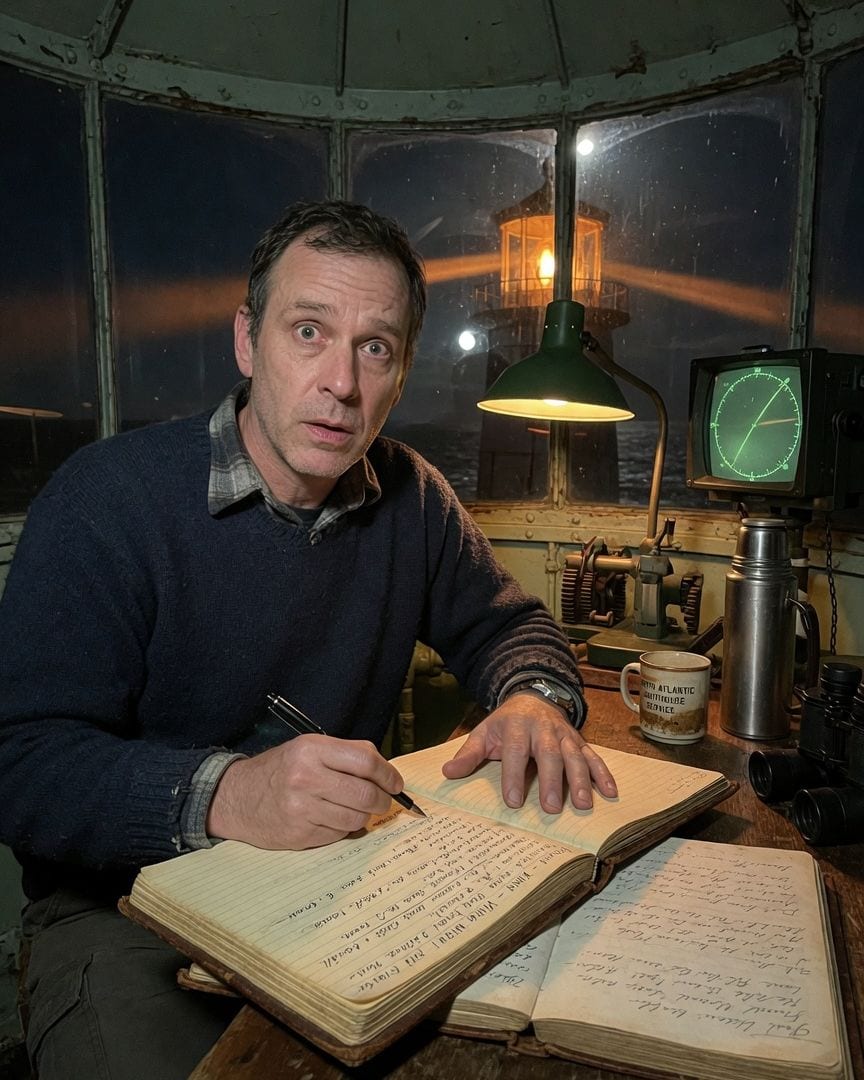
My lighthouse log has my own 3 AM entry for a phantom ship. I was alone in the tower, and I wrote no such thing.
Perched in the lantern room for my usual 2-6 AM watch, I reached for the thick logbook. But the 3:00 AM entry, under my own name, detailed a vessel I never saw. The words were in my own ink, yet I had never written them.
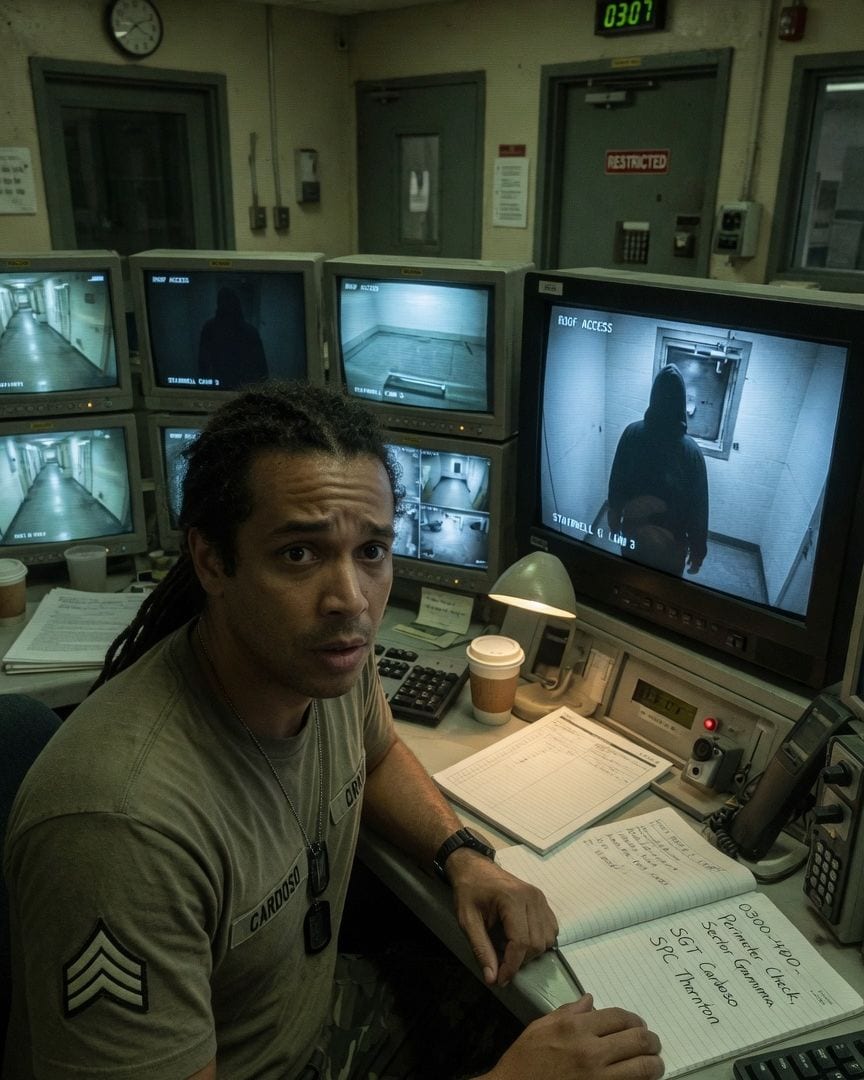
On his last watch, Sergeant Cardoso found his own signature in the duty log for a perimeter check he never did, with a name he didn't know.
Sergeant Rui Cardoso was on his final interior watch at Fort Merritt, a remote coastal outpost, as 0300 ticked by. He spotted a dark, unmoving figure on a monitor showing the sealed roof access, a figure that inexplicably shifted closer to the hatch moments after a specialist confirmed the roof was empty. Rui checked every log and sensor, but the digital fortress showed no breach, and the figure's appearance defied all logic. Yet, in the physical duty log, he found his own unmistakable signature on an entry for a perimeter patrol he never took, alongside a soldier's name he'd never seen. What impossible truth was written in his own hand?
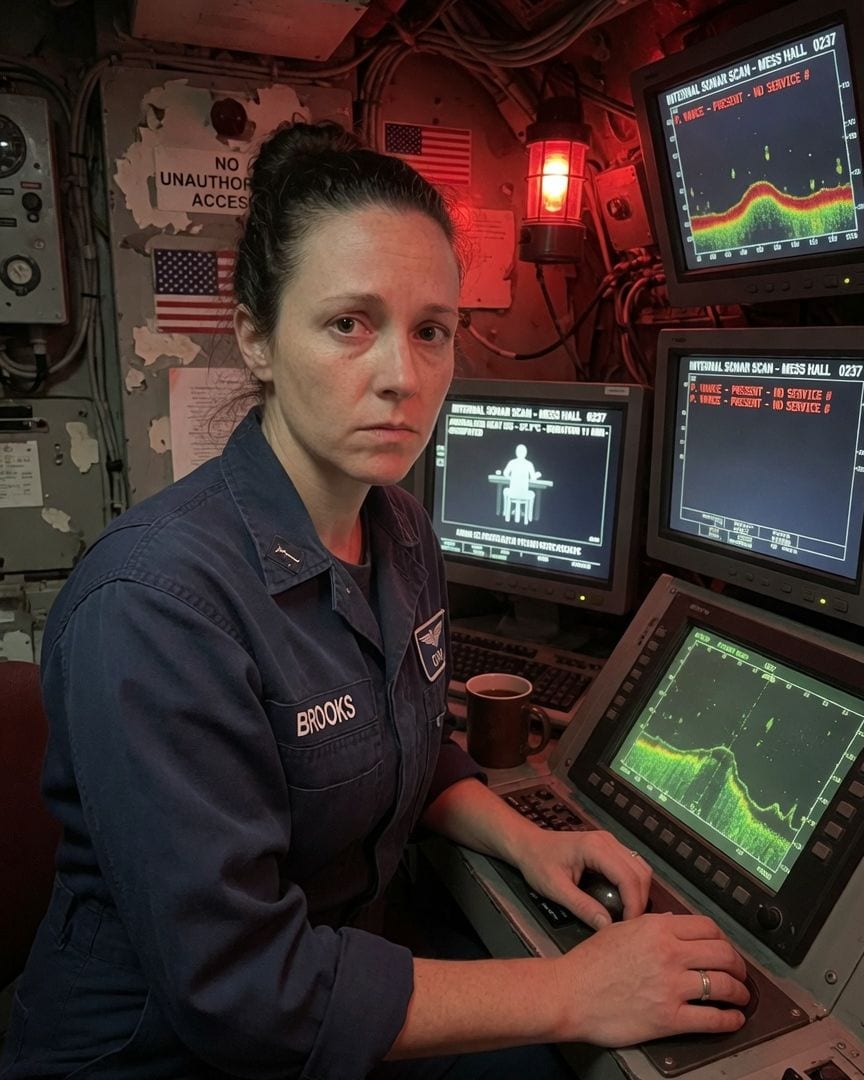
A Chief Petty Officer reviewed her submarine's sonar logs, finding a human heat signature where security cameras saw nothing, then the manifest listed an extra man who couldn't be deleted.
Chief Petty Officer Charlotte Brooks felt the weight of her submarine's impending decommissioning, its long service ending soon after a decade as her home. The quiet hum of the USS *Artemis* was broken when a nervous messcook reported seeing a shadow eating alone in the mess hall, then finding one plate short but a perfectly clean tray. Though skeptical, Charlotte checked the security feeds, which showed nothing, yet her sonar logs revealed a distinct human heat signature in the same spot, then abruptly vanish. Her dread deepened when the boat's manifest confirmed 101 souls instead of 100, listing a mysterious 'P. Vance' with no details, whose entry all systems refused to delete.
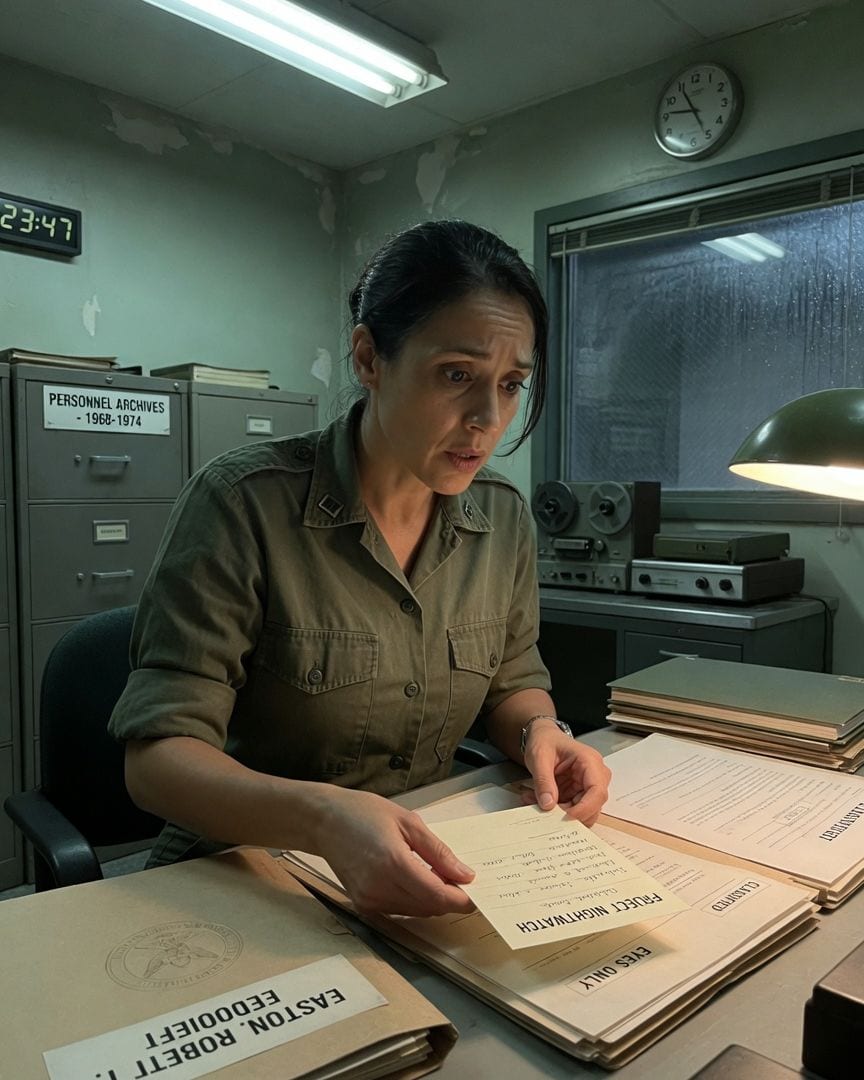
A Cold War tower controller logs an object vanish from radar, then hears the pilot scream it’s filling his windscreen. Her own name, 'Bardolph, Ines', now marked 'Observed' in a secret file.
Captain Ines Bardolph, a tower controller, was counting down the months until her transfer to Langley and the decommissioning of her base, hoping to leave behind the unsettling incidents of her final posting. But one night, her radar scope showed an impossible blip, solid and unwavering, 40 miles north of the Danube, only to vanish in less than a second, leaving a pilot screaming in terror. Despite the clear evidence, the official report blamed "atmospheric inversions," while the terrified pilot received a glowing review and promotion, his file meticulously scrubbed of any anomaly. As Captain Bardolph reviewed the pilot's pristine record, she found a hidden slip of paper, revealing a chilling truth: 'Subject: Bardolph, Ines. Status: Observed.' Was she merely an observer of the impossible, or was she now part of something far more sinister?
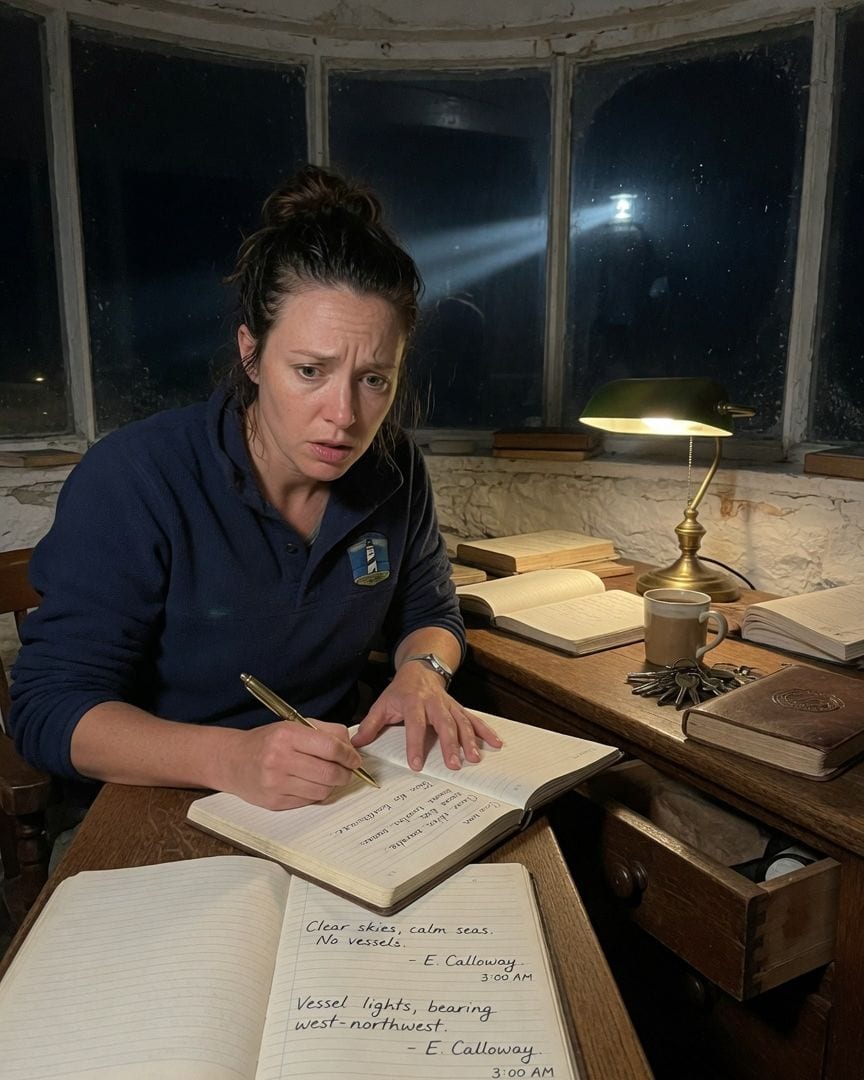
My logbook had a 3 AM entry, in my own precise hand, that I never wrote. Then I found an impossibly cold, hidden book with my name signed to an identical entry from last night.
My routine lighthouse shift was quiet until I noticed a new entry in the official logbook. Dated 3:00 AM, it described a vessel I never saw, written in my exact handwriting, and signed with my name. But I hadn't penned a single word.