My cattle's ear-tag 3-091 returned this spring, retired by the ministry in 1974. Our old books show 3-091 reappearing every seven years since 1946.
This spring, on a crisp morning in late March, I found ear-tag 3-091 on a new calf. A healthy Charolais cross, barely an hour old, already marked.
My first thought was simple annoyance – a stock mistake, another tag batch running low. But then it hit me. 3-091. That number was officially retired by the Ministry of Agriculture in 1974, before I was even born.
My grandfather Philip had been furious about it, complaining about the needless waste of perfectly good numbers. I distinctly remember him saying that.
Puzzled, I went straight to the farm office, a small, cramped room off the kitchen. The air was thick with the smell of old paper and dust.
I pulled out the current cattle movement book, then reached for the ancient, leather-bound herd books, stretching back over a century, handed down through generations. My grandfather's careful, almost obsessive records.
I flipped to the section on 'Lost Stock,' scanning the faded ink for anything similar. And there it was. Not just once.
Entry after entry, a chillingly consistent pattern: 3-091 reappearing every seventh year since 1946. Each time, the entry was identical: "Animal tagged 3-091, lost on the top field, not recovered."
And below each one, in my grandfather Philip's unmistakable, firm hand, the same chilling instruction: "the tag returns of itself, do not report it."
I stared at the pages, the numbers blurring. My rational mind tried to dismiss it as a strange, repeated clerical error, perhaps a family eccentricity that somehow persisted through the decades.
Maybe Philip, in his stubbornness, had simply kept using the tag number despite its official retirement, a private act of defiance. But the sheer consistency, the precise seven-year cycle, and that unnerving, repeated instruction... it gnawed at me.
The words were as clear as if written yesterday, an unsettling loop in time. My hands started to feel cold, despite the warming room.
The image of that tag wouldn't leave me. Every time I looked at the new calf, I saw the impossible number, a ghost in the present. I had to know.
The "top field" was a remote, overgrown stretch of pasture, bordering the dense woods, less used now than in my grandfather's day. I decided to walk it.
I told myself I was looking for a logical explanation. An old fence line where a long-lost tag might have caught. A forgotten marker post. Something mundane that could explain the repeated entries, the "lost on the top field" notation.
The morning sun was weak, barely warming the autumn chill that clung to the high ground. I walked methodically, scanning the uneven ground, the tufts of coarse grass, the occasional outcropping of grey, crumbly rock. Nothing. Just the usual scrubland.
Then, near a shallow, natural hollow, half-hidden by a thick tangle of gorse, I found it. It wasn't a fence post. It was a stone. Smooth, unusually heavy, and dark, unlike any native to our fields.
Our land was mostly limestone and flint, but this was a dense, igneous rock, dark as a winter night. It was partially buried, clearly ancient, as if it had always been there, a silent sentinel.
I knelt, scraping away the clinging soil and moss with my bare hands. On its weather-worn surface, I could just make out a faint, almost carved, numeral '3'. Not just a scratch, but a deliberate, aged mark.
It was far too large and dense to be moved easily, clearly not a natural rock formation that had simply rolled down from a higher point. Its presence felt profoundly, deeply wrong.
I tried to rationalize it – an old boundary marker, a surveyor's stone from centuries ago. But the single digit, echoing the '3' in the tag, sent a cold shiver through me that had nothing to do with the wind.
The air around it seemed to grow colder, heavier, and for a moment, I could almost hear a low hum, a vibration from the earth itself. My breath misted in front of me.
I pulled my hands back, wiping the cold, damp soil onto my jeans, the number burned into my mind.
Back in the farmhouse, the image of that dark stone and its solitary '3' haunted me. It was too specific. Too much of a coincidence.
I pulled down another old book from the shelves in the office, a dusty, leather-bound diary I knew belonged to my grandfather Philip. It was his personal journal, kept separate from the official herd books.
I'd never read it, always respecting the privacy of the dead. But now, that respect felt like a luxury I couldn't afford.
I sat at his old desk, the wood scarred with generations of use, and began flipping through the brittle, yellowed pages. Dates from the 60s, then the 70s, entries about crop yields, weather patterns, local gossip.
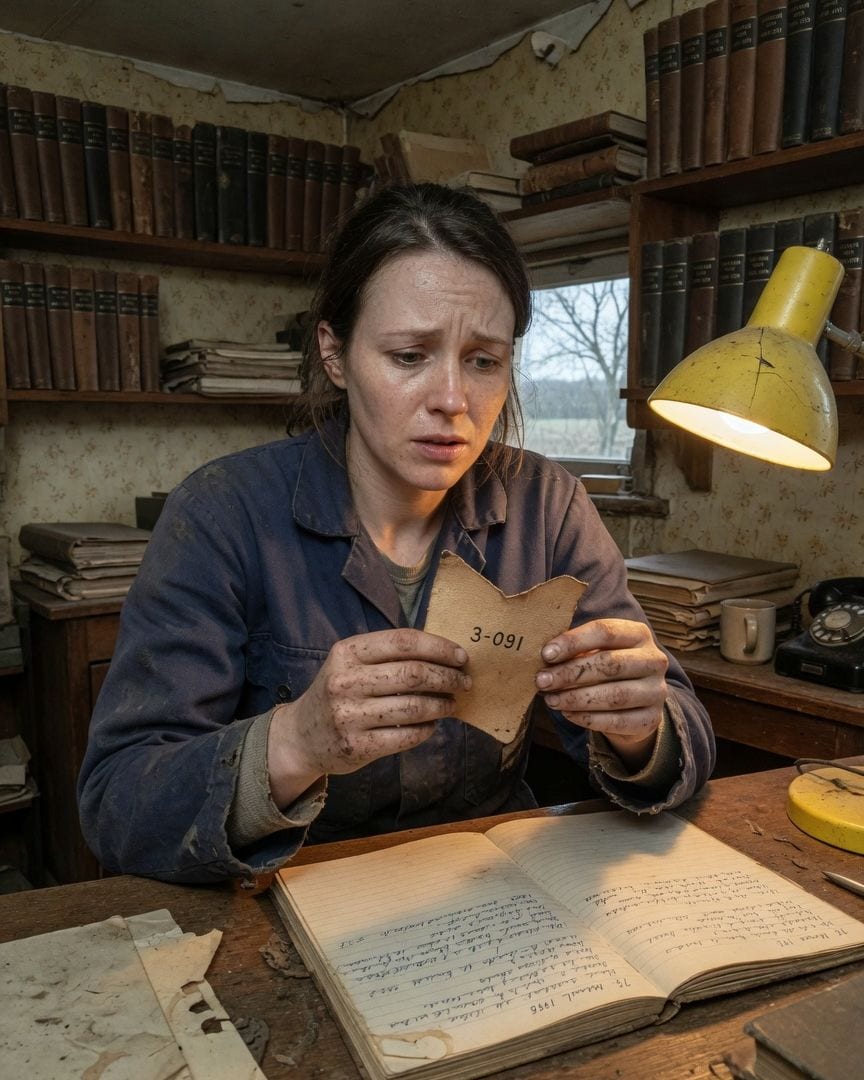
Then, from between two pages, a small, dried piece of stiff leather fluttered into my lap.
It was thin, yet resilient, with a texture unlike anything I’d ever felt. It wasn't rough like cattle hide, nor smooth like cured pigskin. It was... finer. Almost like parchment, but with a strange, organic resilience.
Stamped into its surface, unmistakably clear, were the numerals '3-091'.
This wasn't cattle ear-tag material. Not even close. It was too fine, too... smooth. A cold dread bloomed in my gut, quickly spreading, turning my stomach to ice.
My fingers traced the numbers, the raised edges of the stamp feeling impossibly real. This tag, this thing, wasn't for an animal at all.
The leather tag sat in my palm, a chilling piece of evidence that defied explanation. I spent the next few days in a daze, the farm work a blur.
I researched online, using every search term I could think of: "unusual hide texture," "ancient leather," "pre-industrial animal tags."
I scoured images of everything from parchment to vellum, trying to identify the material, hoping against hope that it was some obscure animal hide, some forgotten tanning process. But nothing matched.
The unnatural pliability, the fine, almost silky resilience – it was unique, alien.
Old family whispers began to surface in my mind, stories I’d heard as a child and dismissed as folklore: "the land taking its due," "the Old One's hunger."
I’d always laughed them off as rural superstition, the kind of tales old folk used to scare children into respecting nature. Now, they took on a horrifying new weight.
Driven by a desperate, gnawing need for answers, I pulled out the old herd books again.
This time, I cross-referenced the 'lost' entries for tag 3-091 with local parish records and old census data I found online, focusing on the specific seven-year intervals when the animals disappeared. My search expanded beyond our farm.
I started looking at neighboring farms, at families whose land bordered ours, especially those with access to the far fields. And there, buried in decades of mundane records, was a disturbing pattern.
Around the same seven-year intervals, not just my family, but other farms in the valley also recorded "unexplained departures" or "moved away" entries. Young men, mostly, often with no forwarding addresses, leaving suddenly and completely. People who simply vanished.
I decided to consult someone, someone rational. Oscar Sterling, the local historian, was a jovial man in his mid-sixties, always happy to delve into old ledgers and parish registers.
I presented my findings to him, the careful cross-referencing, the unnerving consistency of the dates. He listened patiently, nodding, occasionally chuckling softly.
"Raymond, my boy," Oscar finally said, pushing his spectacles up his nose, "this is just the rhythm of country life. Superstition, nothing more. The countryside was always a harsh mistress, especially back then.
People moved on for work, for love, for a fresh start. Animals got lost, wandered off into the woods, fell down a ravine. It's common migration patterns, plain and simple."
He clapped me on the shoulder, his smile broad and reassuring, but his words did nothing to reassure me. I knew, with a sickening certainty, it was more than that.
Oscar’s dismissal, though meant kindly, only hardened my resolve. If no one else would see it, I would.
My solitary investigation continued, but now, the unease that had been a vague hum in the back of my mind grew into a palpable sense of being watched. I felt eyes on me, even in the empty fields.
One afternoon, rummaging through a box of my grandfather's things in the attic – old receipts, tax documents, dried wildflower presses – I found a cryptic, unsigned letter tucked into one of his old farming almanacs.
It was addressed simply to 'the Keeper.' The words were stark, penned in a formal, almost archaic script: "The seventh year comes. The debt is due. Do not interfere with the Return. The tag comes back."
My blood ran cold, the familiar '3-091' screaming in my head, even though it wasn’t written there. The letter felt ancient, the paper dry and brittle, yet the ink was still black, stark against the yellowed surface.
Later that week, the sense of being watched intensified. I was driving my tractor back from the far fields, the sun dipping below the horizon, painting the sky in bruised purples and reds. Dusk settled quickly in the valley.
As I crossed the rise leading to the main farm road, I glanced towards the 'top field,' drawn by an instinct I couldn’t explain.
There, standing perfectly still by the ancient stone I’d found, was a lone, dark figure. It was too far to discern details, just a silhouette against the fading light, but it faced the farmhouse, unmoving, watching. It wasn't an animal.
It wasn't one of the farmhands. It was too tall, too still, too... present. My heart hammered against my ribs, a panicked drumbeat. I gripped the steering wheel, accelerator floored, the old tractor roaring, kicking up a plume of dust.
I drove past, accelerating, too terrified to stop or confront it, the image burned into my mind. The farm, my home, felt less like a sanctuary and more like a trap.
That night, I double-locked every door and window, checking each one three times, my nerves frayed, sleep a distant, unreachable luxury.
I could no longer bear the weight of these discoveries alone. The terror was too immense, too personal.
The next morning, still shaky from the night before, I drove to my Aunt Sophia Carter's small cottage, nestled in the next valley over.
I clutched the leather tag tightly in my hand, its strange texture a constant reminder of the impossible.
I laid out the entire story, everything I had found: the returning tag 3-091, the inexplicable 7-year cycle, my grandfather’s chilling note in the herd books, the strange, dark stone on the top field with its carved '3', the cryptic letter addressed to 'the Keeper,' and finally, the piece of stiff, unnatural leather itself.
Sophia, frail now in her late seventies but still sharp-eyed, initially tried to deflect, her eyes wide with a fear I’d never seen on her usually placid face. She murmured about 'old superstitions' and 'Philip’s eccentricities,' but her voice trembled.
I pressed her, gently but firmly, recounting the impossible details, the coherence of it all, the way every anomaly now clicked into place, creating a terrifying pattern.
Finally, her composure cracked. Tears streamed down her wrinkled face as she whispered, her voice barely audible, "The Old One… the land… it has always demanded its due, Raymond."
She spoke of an entity, ancient and bound to the land itself, that required a 'payment' every seven years. It took what it was owed, usually an animal, but sometimes, she paused, her gaze distant, "sometimes, more."
The tag, she explained, wasn't just a number. It was a mark for what was taken, a confirmation. And it always returned.
She revealed that the Carter family had been the 'Keepers' for generations, a grim inheritance. Their role was to document these 'payments,' to ensure they weren't interfered with, to protect the rest of the family from the entity's indiscriminate hunger.
The phrase "lost on the top field, not recovered" was the family's official, unspoken cover story, a way to maintain the pact without drawing outside attention, a veil over the horror.
The full, coherent horror of the truth settled over me, reframing every strange detail, every impossible coincidence, into a terrifying, undeniable pattern. My grandfather’s notes, the stone, the letter, the phantom figure – it all made a terrible sense.
Sophia, her voice a thin, reedy thread, continued, "Your grandfather, Philip… he was the Keeper. And before him, his father.
And now…" She trailed off, her gaze fixed on me with an expression of profound pity and dread that chilled me to the bone, a look that spoke of a fate I was only just beginning to comprehend.
I reeled from the revelation, a cold, creeping dread spreading through me. Not just for the past, for the hidden history of my family, but for my own future.
My hands, which moments before had clutched the dreadful leather tag, now felt distant, foreign.
I looked back at the stack of old herd books on the table, the weight of generations pressing down on me, the terrible pact stretching back through time.
My grandfather's firm, careful handwriting, his meticulous records – they weren’t just about cattle. They were a ledger of sacrifice.
And then, my eyes fell on a small, almost invisible detail on the very first page of the oldest herd book, dated 1946. Faint, almost rubbed away by decades of turning pages, was an inscription.
It wasn't in my grandfather's hand; it was much older, the script archaic, inscribed beneath the title 'Herd Book': "For the Keeper, Tag 3-091."
My breath caught in my throat. I traced the ancient letters with a trembling finger. And then, just below that faded, terrible declaration, in my grandfather's familiar, firm hand, a single, recent entry.
Penned just before his death, the ink still firm, not about a cow, not about an animal, but a name. My name.
"Raymond Carter, born [Raymond's birth year]."
The air left my lungs.
Sophia’s words echoed in my ears, a death knell: "And now…" I looked at my own name, written by a dead man, below an ancient, impossible instruction, and I knew with sickening certainty what it meant.
Sophia confirmed my horrifying realization, her words barely audible now, lost in the heavy silence of the cottage. The 7-year cycle wasn't just for animals; it was a generational burden, a pact with the land forged in blood and fear.
The 'Keeper' wasn't just the record-keeper; they were marked by the land, by the tag, as the next 'payment' or conduit.
My grandfather, Philip, knowing his own time was near, had fulfilled his final duty as Keeper, marking me in the book as his successor, the next in line to be claimed.
The 'lost' animals were merely substitutes, lesser offerings to appease the entity, to delay the inevitable. But eventually, the land demands its primary 'Keeper' when the cycle reaches a certain point, or the line of succession requires it.
The entity doesn't kill in the conventional sense, Sophia explained, her voice flat, devoid of emotion. It absorbs. It takes the essence, leaving behind a hollowed-out shell, or sometimes, nothing at all.
The tag 3-091 doesn't just return as a sign; it's the mark of the one chosen, the one whose turn it is to be "lost on the top field, not recovered."
I was the next 'payment,' the next sacrifice to the insatiable hunger of the land.
I was numb. The truth, now fully exposed, was a crushing weight. I tried to argue, to deny, to find a loophole, a way out of this horrifying inheritance.
"There must be a way," I pleaded, my voice hoarse, "a ritual, a different offering."
Sophia shook her head slowly, her eyes filled with a deep, ancient sorrow, a grief that seemed to stretch back through generations of Keepers. "There is no escape, Raymond. The land remembers. It always takes its due."
As she spoke, I felt an inexplicable pull, an almost magnetic draw toward the 'top field.' It was subtle at first, a faint inclination, then a physical urgency. My body felt heavy, my mind clouded, my will slowly eroding.
I tried to resist. I stood, stumbled, trying to pack a bag, to get in my truck and drive away, to escape this valley, this farm, this inescapable fate.
But my legs felt rooted to the floor, my hands trembled too much to grasp the keys. The clock on the wall seemed to tick louder, each second a hammer blow.
I looked at the calendar on the fridge, the date stark: the seventh year was upon me, the day of reckoning.
With a profound, awful resignation, I walked out of the farmhouse. It wasn't a choice; I was drawn by an unseen, irresistible force, toward the 'top field,' toward the ancient stone.
The air grew unnaturally cold, the light dimming around me as if the sun itself was withdrawing its warmth, its hope. The trees on the perimeter of the field seemed to lean in, their branches like skeletal fingers.
As I reached the ancient stone, the dark figure appeared again. This time, it was clearer, coalescing from the very earth itself, a looming, indistinct shape that seemed to drink the light.
It was not human; it was vast and ancient, a shadow given form, its presence a cold, primal hunger. It extended a long, gnarled limb, not quite a hand, toward me. Raymond.
I heard my name, not spoken, but felt, vibrating through the ground, through my bones. I felt no fear, only a chilling acceptance of my fate.
Raymond Carter disappeared from his farm without a trace. His aunt Sophia, her face a mask of grief, told the local police he simply 'walked off,' citing stress and the pressures of modern farming.
They found his truck, his wallet, everything he owned, but no sign of Raymond. The cattle movement books were left open on his desk, the latest entry blank, the pages undisturbed.
The official report listed him as a missing person, presumed lost to the harsh realities of rural life.
The farm was eventually put up for sale, but no one seemed interested in the remote, silent fields, especially the 'top field' where the grass never seemed to grow quite right.
Weeks later, Sophia visited the empty farmhouse one last time before the bank repossessed it. The new calves in the lower pastures were doing well, oblivious. She picked up the current cattle movement book, intending to clear the desk.
Beneath a stack of old invoices, she found a small, smooth stone, identical to the one Raymond had described. On its surface, faintly etched, was the numeral '3'. Next to it, a small, dried piece of stiff leather.
On it, stamped clearly, was '3-091'. She picked it up, her fingers tracing the numbers, a faint, wrong little smile playing on her lips as she looked out toward the top field.
A lone comment appeared beneath the unfinished Facebook post: "the end."
If this one got to you
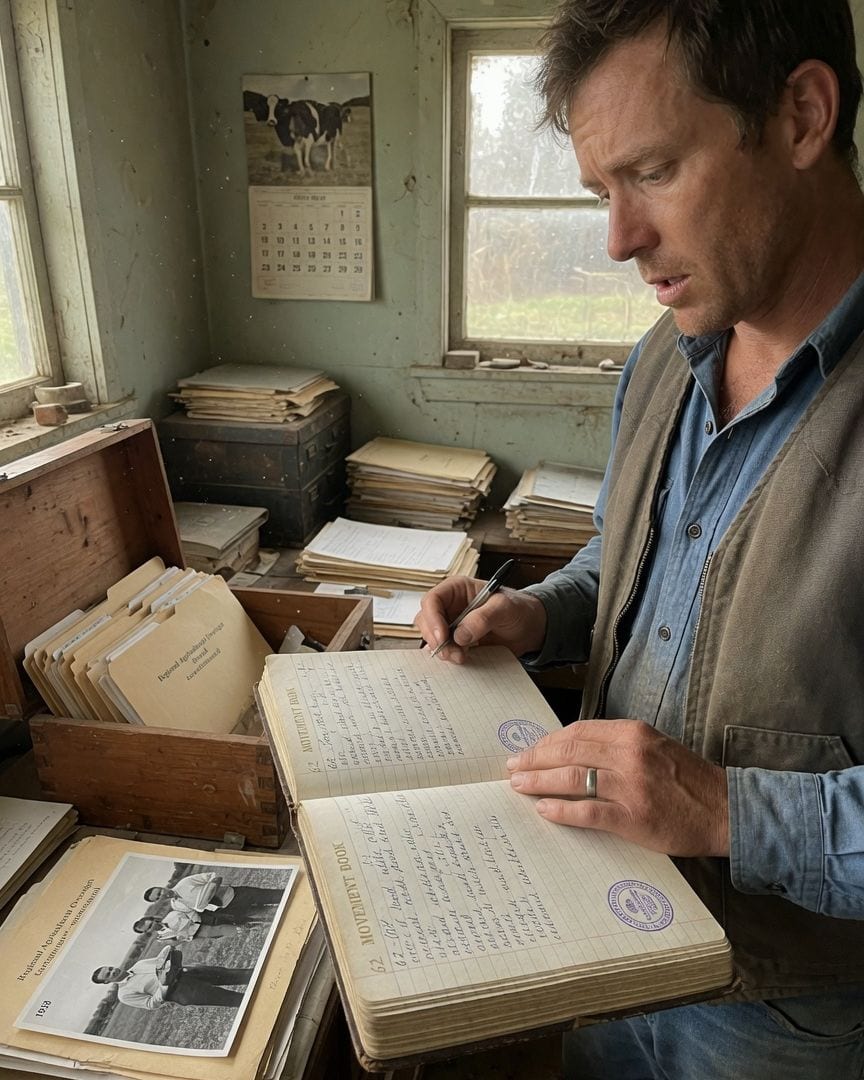
My farm ledger reveals a precise, eight-year pattern: Number 62 always disappears from the same cold field.
In the quiet of my farm office, I was updating our livestock ledger, a routine task. But tracing the records, one detail stopped me cold: 'Number 62' had been logged as 'strayed, not recovered' every eight years since 1950. Always from the same field, always with a bureaucratic stamp insisting the 'number to stand.' This wasn't a coincidence; it was a disturbing, perfect pattern.
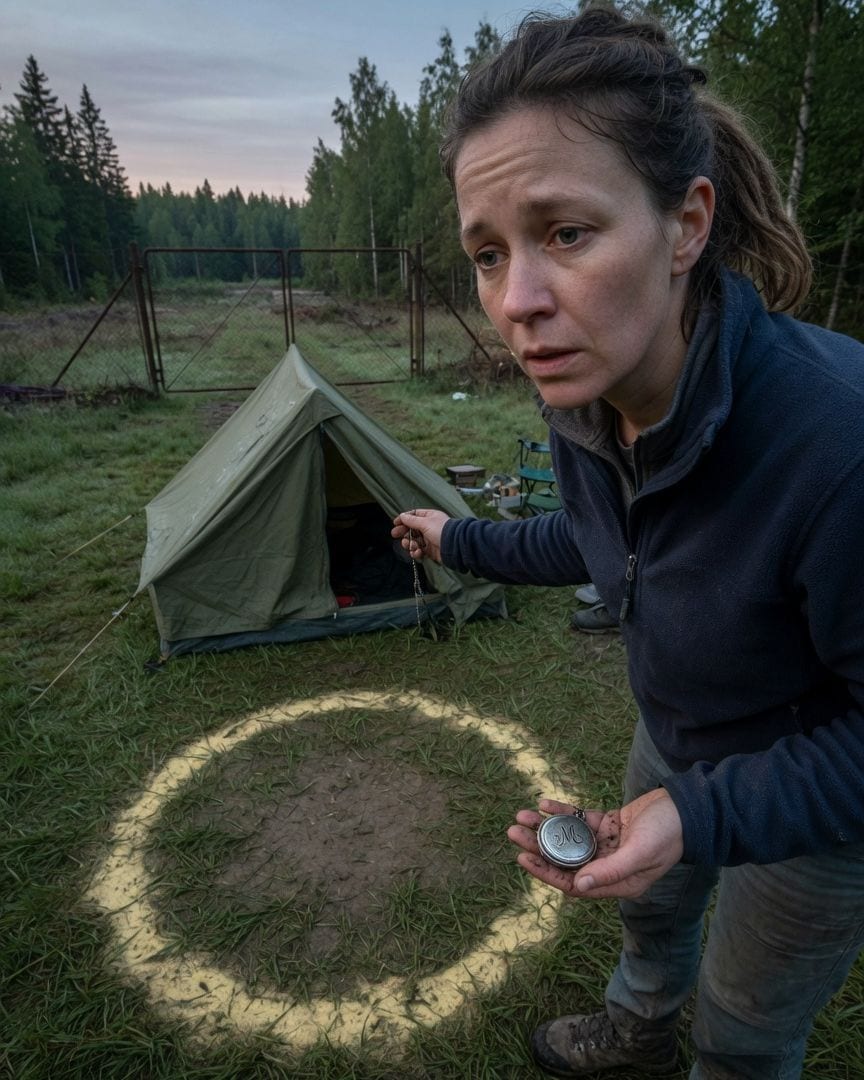
My tent left a flattened ring in the grass, but an older one was already there, worn into the turf, exactly tent-sized, for thirty years.
As the new camp host, I ignored the warden's odd rule about pitching my tent on a particular flat spot. That night, something enormous walked in slow, methodical circles around my tent. The next morning, I found a deeply worn, old ring in the earth beneath my tent, and later, a tarnished silver locket buried there.
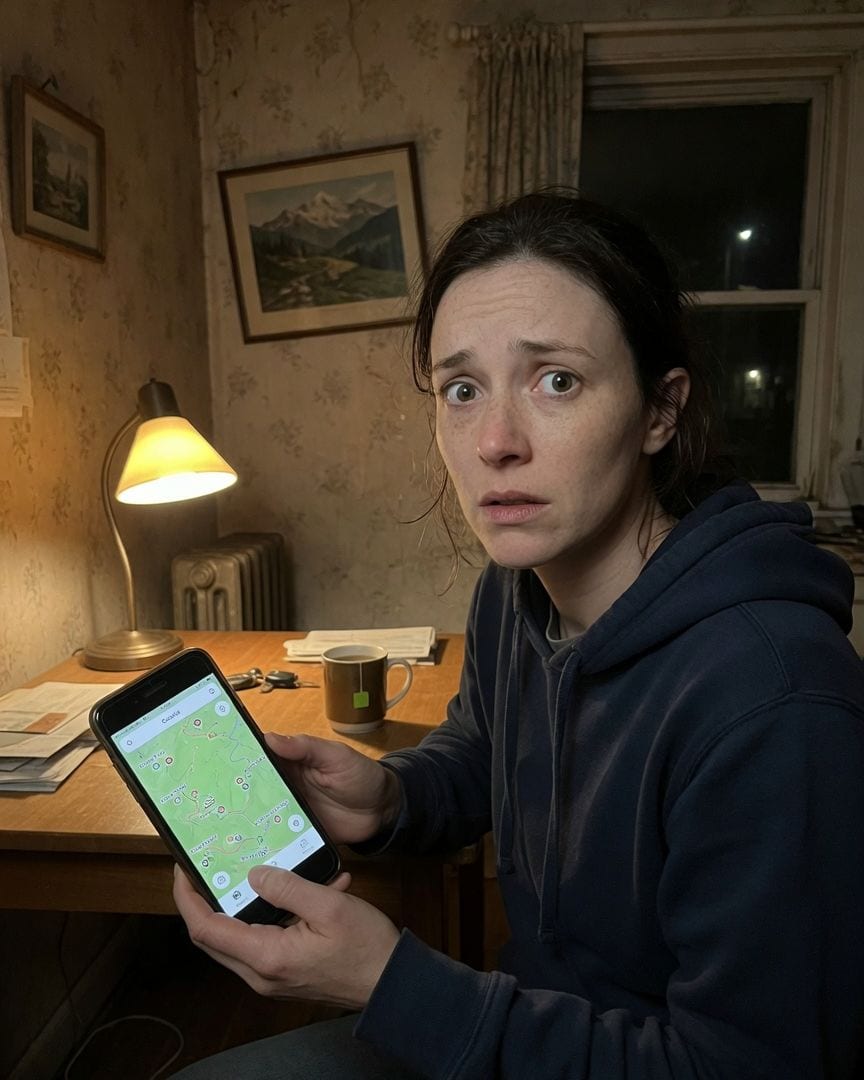
My hiking app scrubbed the hill's name from the map, on a phone that's been in airplane mode for two days.
I just moved to town and hiked a local hill, 'Cathan Tor,' according to my phone's app. But when I mentioned the name to the mechanic, he froze, dropped his wrench, and whispered, 'Don't say that name, Colette.'
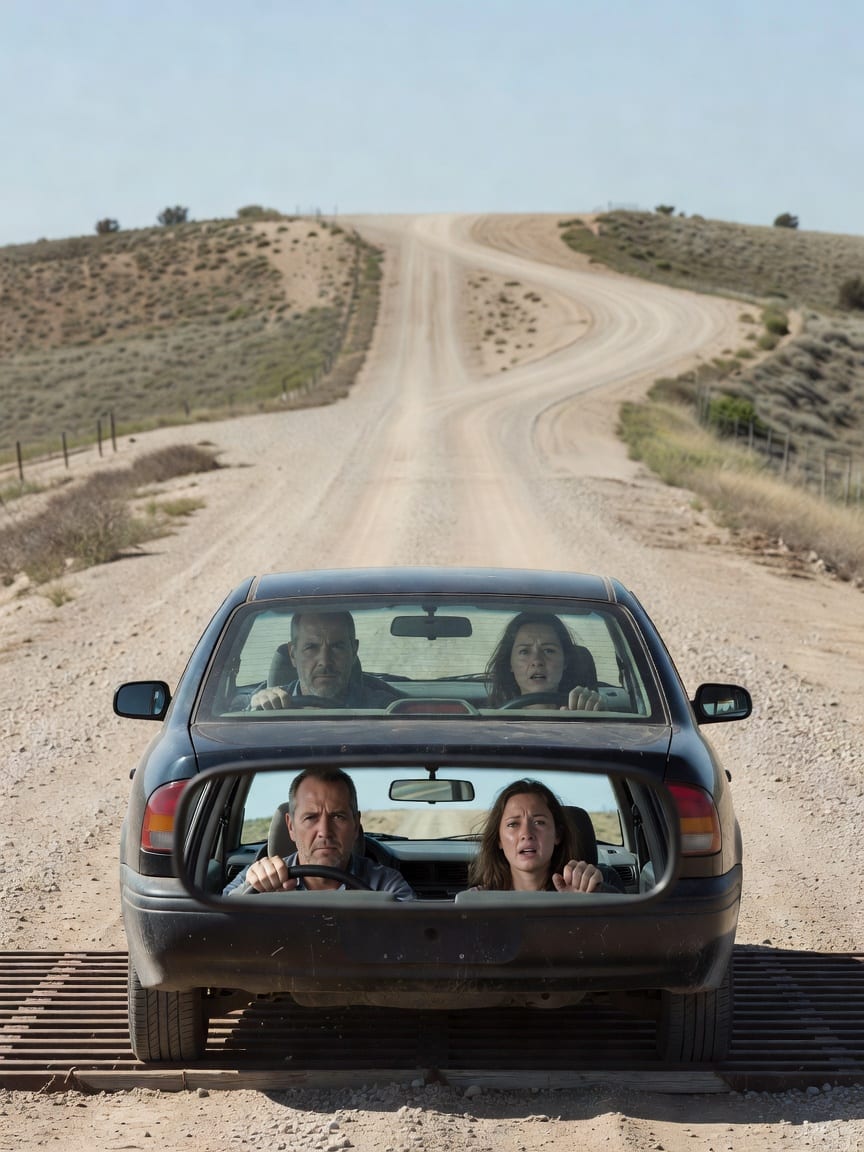
My father's ashes never made it to the hilltop. That single track kept feeding my car back to the cattle grid, the same sheep scattering, the same gate swinging.
I'm trying to scatter my dad's ashes at the highest point, but the track to Ashford Hill keeps looping, pushing my car back down. After my fifth attempt, I walked it myself, only to find the same pale grey gravel and cattle grid appearing inexplicably behind me again. Then, half-buried in the verge, I found a brass marker with strange symbols, dated 1897, that I'm certain wasn't there before.
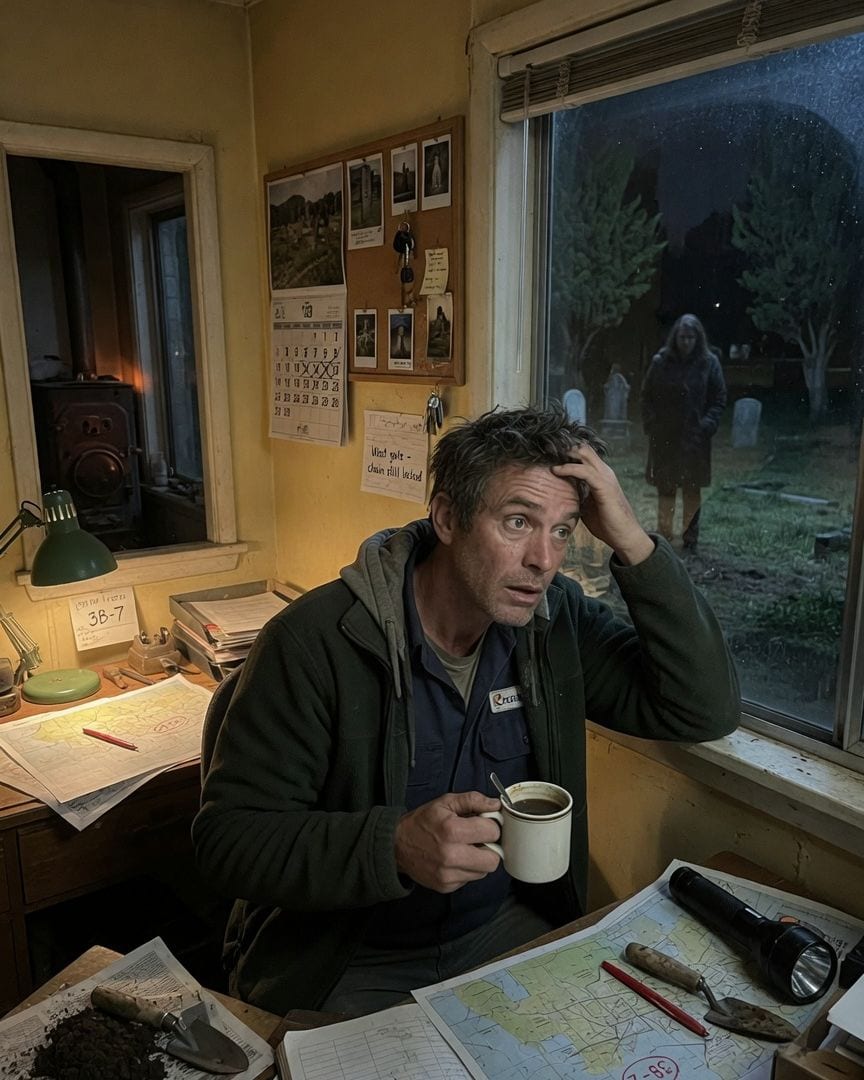
My cemetery lodge overlooks a woman visiting an empty grave near 3 AM most nights. The west gate she uses has been chained shut since autumn, its lock untouched.
As the cemetery's night caretaker, I'm used to the quiet hum of the lodge. But for three weeks, a woman has appeared nightly at plot 3B-7, a silent mourner in the deep night. What chills me is how she leaves: walking straight through the west gate that's been chained and padlocked shut for eight months.
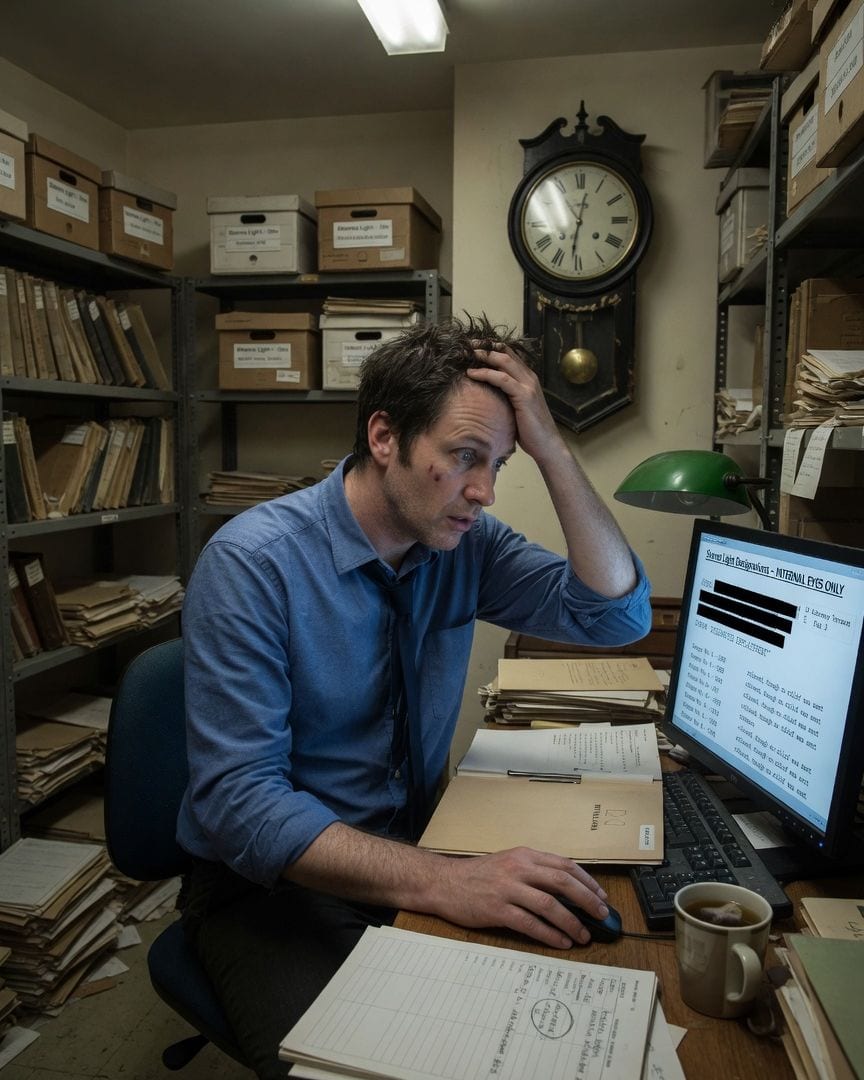
I found my street address in a century-old lighthouse file, printed decades before I lived there.
As a maritime archivist, my world revolves around forgotten lives and dusty ledgers. But the Skerne Light files broke that quiet rhythm, revealing a chilling pattern: 'Keeper number 6' relieved, though no relief was sent, repeating for decades. Now, an internal document with a strange code has led me to a redacted entry, revealing my own street address, decades before I ever lived there.