My father's ashes never made it to the hilltop. That single track kept feeding my car back to the cattle grid, the same sheep scattering, the same gate swinging.
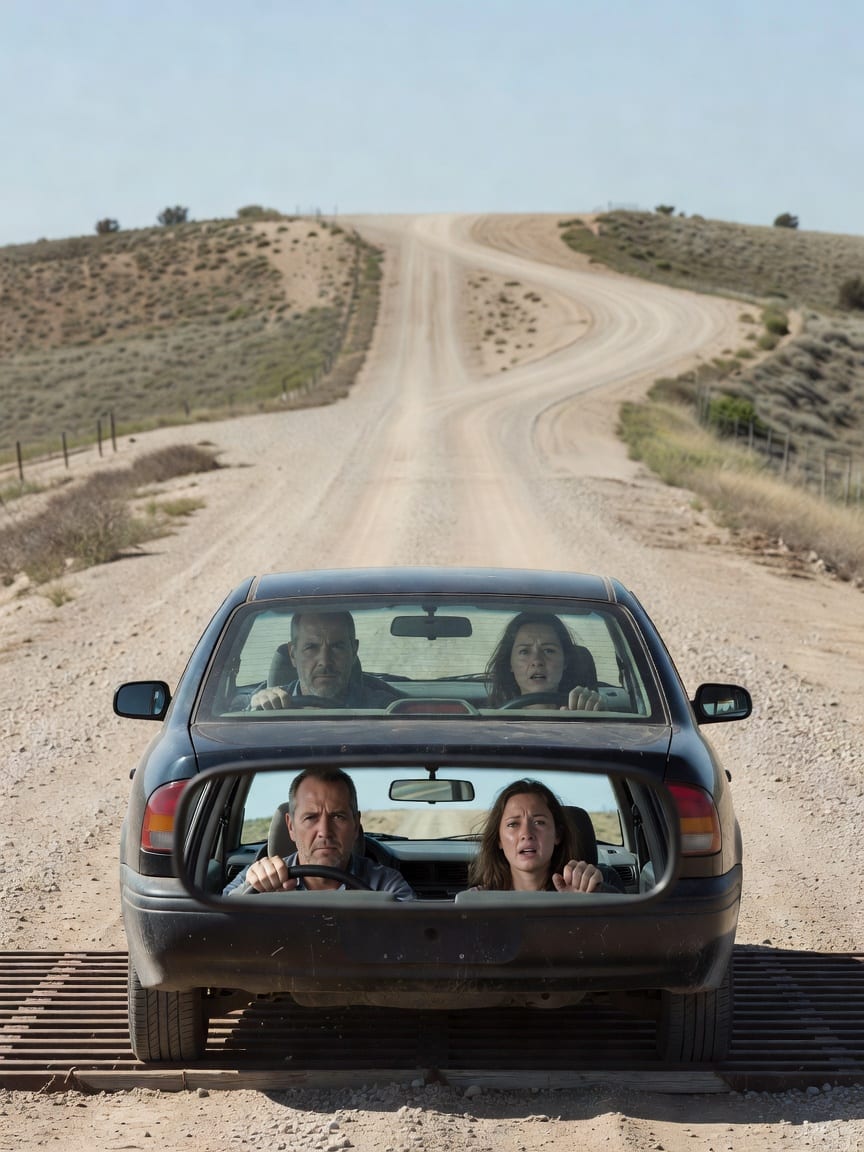
The urn sat on the passenger seat, heavy and cold. Dad had wanted Ashford Hill, the highest point, windswept, free. This was my fifth damn attempt.
The track, a single ribbon of worn asphalt and loose stone, should have been a twenty-minute drive, tops. I'd started up it, the usual gentle climb, the familiar bend where the old oak leans over, then the steeper stretch.
Each time, I’d swear I was almost there. Then the landscape would somehow fold in on itself, pushing me back. The cattle grid would appear again, the low metallic rattle under the tires.
The same three sheep – one with a black patch over its eye – would scatter from the verge, always to the left.
The gate, always the same rusty squeal as it swung open a little further than it had been. It was like watching a broken record, but I was the needle.
I’d press the accelerator, my knuckles white on the wheel, but the car was already pointed back down. The hilltop stubbornly out of reach.
And then, there it was again, the same section of weathered, pale grey gravel appearing under my tires, for the fifth goddamn time.
I slammed the car into park just past the cattle grid, the engine ticking hot, a metallic smell in the air. The damn sheep scattered again, bleating their stupid, familiar bleats. I ignored them.
This time, I got out and walked. I needed to see it, touch it, prove it. I paced the track, counting strides, marking mental landmarks.
There was a specific stretch of weathered, pale grey gravel, distinct from the usual dark aggregate, roughly twenty yards long. I remembered passing it, clear as day. I walked up, passed it, kept going.
My boots crunched on the loose stones, the silence thick and heavy. The track curved, then narrowed, the trees closing in. I walked for what felt like a good quarter-mile, a brisk pace, my chest tight with frustration.
I pictured the top of the hill, dad’s urn feeling heavy in my mind. Then, inexplicably, the cattle grid materialized in front of me. I stopped dead. My breath hitched.
The pale grey gravel stretch was now behind me again, exactly as if I'd driven the full loop.
I frowned, tracing a line in the dust with my toe. This was impossible. I retraced my steps, faster this time, determined to catch the trick. I passed the gravel stretch, walked up the winding track again.
The air felt heavy, the trees seemed to lean in, their branches making patterns against the too-bright sky. And again, the grid. The pale gravel was always appearing before the grid on the return.
It wasn't a trick of the light, or my memory. It was like a section of the track was being duplicated, or a room was missing from the count.
I tried to reconcile the distance, the turns, the landmarks – that gnarled oak, the dry stone wall that suddenly ended. But the numbers, the distances, the geometry itself, refused to add up. My hands started to tremble.
The dread wasn’t a ghost story, it was the cold, hard mathematics of the place, quietly, consistently, terrifyingly wrong.
Frustrated, hot, and feeling an absurd, childish rage, I dropped to my knees beside the cattle grid, scrubbing at the dirt with my hand, as if I could wipe away the impossibility. My fingers scraped against something solid.
Cold and metallic. Half-buried in the overgrown verge. I pulled at it, the soil clinging stubbornly, revealing a small, tarnished brass marker, no bigger than my palm. It wasn’t a standard survey marker.
The symbols etched into its surface were strange, interlocking spirals, deeply worn, almost smooth under my thumb. I was certain it hadn’t been there on my previous passes, or at least, I’d never noticed it.
I cleaned off the last of the grime, my heart pounding, and a sudden, sharp glint of sunlight caught a barely visible date etched beneath the symbols: 1897. I stared at it, a cold dread twisting in my gut.
This marker, and its impossible date, shouldn't be here.
The next morning, the brass marker sat on my kitchen table, gleaming faintly after a scrub with an old toothbrush. The 1897 date seemed to glare, mocking my attempts at normalcy.
I spent hours online, searching local history forums, poring over digital copies of old maps, sifting through property records. I typed 'Ashford Hill' and '1897 marker' into every search engine imaginable. Nothing.
The hill was just a hill, the track just a track, unremarkable in every record. No mention of strange markers or looping roads. My coffee had gone cold, then lukewarm. I knew I wasn't crazy.
I had the damn thing right here.
I drove to the local library and archives, a dusty, quiet building that smelled of old paper and dust motes dancing in sunbeams.
Kathleen Bishop presided over it, 78 years old, her memory as long and tangled as her white braids. She was the town's living encyclopedia. I showed her a photo of the marker on my phone.
Kathleen’s eyes, sharp behind thick glasses, narrowed. She took the phone, squinting. "That's an old one," she said, her voice raspy, like dry leaves skittering across a path. "Haven't seen one of those since... well, a long time."
She didn't look surprised, just thoughtful. She rummaged through a drawer, pulling out a faded, hand-drawn map of the area from the late 1800s.
It showed Ashford Hill, but the single track was marked with a curious, almost invisible dotted line near the base, and a tiny, stylized spiral symbol matching the one on my marker.
"The Old Ascent," she murmured, tracing the dotted line with a gnarled finger. "Some folks used to say it was... particular. Didn't always lead where you thought."
I pressed her for details. "Particular? What does that mean, Kathleen? Why the dotted line? What's this symbol?" She just shook her head, a familiar dismissal. "Just old wives' tales, dear.
People get lost on country roads, especially after a few too many pints." But her gaze lingered on the spiral symbol, a flicker of something unreadable in her ancient eyes.
The silence in the room stretched, punctuated only by the soft turning of pages from a student in the corner. She knew more. I could feel it, like a chill settling on my skin.
I left the library with a stack of local history books I knew wouldn't help, Kathleen's cryptic words echoing in my head. "Particular." "Old wives' tales." My own brass marker was a cold weight in my pocket now.
I needed to go back. I needed to see if the marker's presence, the simple fact of having it, changed anything.
As I approached the cattle grid again, the familiar fear tightened my chest. But this time, something new. A dark sedan was parked discreetly a little way down the road, partially obscured by a thick clump of ancient oaks.
Too far to make out the driver, but the angle, the way it sat still, felt deliberate. It was definitely watching the track entrance. A prickle of unease snaked up my spine. Was it the owner of the land?
Some nosy local? Or something else? I drove past, circling back around the wider country road, taking my time. But when I came back, the sedan was still there, a silent, dark shape against the green.
I tried the track again. This time, I’d clipped my dashcam to the windshield, hoping to capture the impossible. I drove the loop. The pale grey gravel section appeared, then I was back at the bottom, passing the grid.
The sedan was gone. Just vanished. No sign of it on the road, no engine sounds. It was like it had never been there. I drove home, my hands gripping the wheel, the tension making my shoulders ache.
Later that evening, in the quiet of my living room, I reviewed the dashcam footage. The loop was clear, the timestamps consistent with my driving.
But as I neared the point where the pale gravel section appeared – the "hinge," I was starting to call it – the video pixelated for a fraction of a second.
A digital smear, a brief, impossible blink in the recording, then it corrected itself. It was tiny, barely noticeable if you weren't looking for it, but it was there, precisely at the spot where the geometry misbehaved.
I rewound, played it again. The smear. Again. Again. It wasn't my camera; it was the place itself, actively interfering with any attempt to document its wrongness. My blood ran cold.
Someone, or something, was not just observing but actively fighting back.
The next day, the library felt less like a dusty archive and more like a confessional booth. I found Kathleen Bishop arranging books, her movements slow but precise. I didn't waste time with pleasantries.
I showed her the dashcam footage, rewinding to the pixelation. She watched it, her expression unreadable, her ancient eyes fixed on the screen.
"It's been doing that for a long time," she said, almost to herself, her voice a dry whisper. "Not the cameras, mind you. The hill. It doesn't like being measured."
I leaned forward, my voice barely controlled. "What is it, Kathleen? What the hell is going on with that hill? The loops, the marker, now this... glitch?"
She sighed, closing her eyes for a moment, as if gathering strength from some deep, old well. "My great-grandmother called it the 'Place of Return.' Said it was built on old ways, to keep things in, or out. A boundary.
The markers... they're not for mapping. They're for reminding." She opened her eyes, their sharpness piercing through me. She explained that the hill was once believed to be a sacred threshold, a place where the veil between worlds was thin.
Ancient rituals, she told me, were performed to 'seal' it, to prevent certain 'passages' – like the final journey of the dead – from fully completing, lest they disturb the balance, lest they allow something to cross over.
The spiral, she revealed, was an ancient symbol of perpetual motion, of a journey without end, a thing trapped in a constant cycle.
"The gravel patch," I interjected, my mind racing, "the one that keeps reappearing? The one that pixelates the video?"
Kathleen nodded slowly, a profound weariness on her face. "That's the hinge. The point where the boundary folds back on itself. It’s always been there. It’s not wrong, Desmond. It’s doing what it was made to do."
The pieces clicked into place, one after another, like tumblers in a lock. The looping track, the strange marker with its impossible date, the way the area seemed to resist being documented or observed.
It wasn't random, it wasn't a glitch in reality. It was deliberate. It had a purpose. The dread, which had been a cold prickle, deepened, settling into a heavy, certain weight in my chest.
My father’s final passage, his ashes, were caught in an ancient, endless trap.
Kathleen, seeing the understanding – or maybe the horror – in my eyes, gestured to a locked cabinet behind her desk. "There's more, if you're truly ready." She produced a fragile, leather-bound ledger, its pages yellowed and brittle with age.
"From the old land office. Most of it's nonsense, just taxes and deeds, but there are entries about Ashford Hill no one else bothered with. They thought it was just bad record-keeping."
I carefully opened it, the old leather creaking a protest. My fingers trembled slightly as I found the 'Ashford Hill Tract' entry, exactly as Kathleen described.
It was almost entirely obscured by a deliberate, aged ink blotch, a stain that looked like it had been there for a century.
But I could make out a partial, half-erased marginal note peeking out from beneath the ink: '...Ingram, re: re-routing of passage.' My own surname. My heart hammered against my ribs.
I looked at Kathleen, bewildered, my throat suddenly dry. She simply watched me, her face calm, unbothered, as if this was just another Tuesday. I flipped back a few pages, then forward, desperate for context.
The ledger held another, much older entry, near the very beginning, with the same 'Ingram' surname, but the details surrounding it were so utterly obliterated that the page itself seemed to thrum with a silent, impossible erasure.
There was only a void where vital history should be.
Kathleen took the ledger from my trembling hands, her grip surprisingly firm. "Your family, Desmond, they were the keepers." Her voice was soft, but the words hit me like a physical blow.
She explained that the Ingram line, generations ago, were the original caretakers of the Ashford Hill boundary.
They were the ones who established the 'Place of Return,' designed to prevent the restless spirits, or whatever energies lingered there, from crossing over into the world by creating a perpetual loop for any final passage.
The ink blotch, the erased entries – these were not accidental.
They were deliberate acts by previous Ingrams, by my own damn ancestors, to obscure the knowledge, to protect the secret of the hill's true nature and their role in its perpetuation.
The brass marker with the 1897 date wasn't a mere survey marker, but a re-affirmation sigil, placed after an early breach or perhaps an attempt to map the anomaly that had too closely revealed its true nature.
The 're-routing of passage' wasn't about some land deal or access road. It was about the very act of transition, of finality itself.
My father’s ashes, his request for a final journey to the hill’s summit, had triggered the anomaly's core purpose. The hill, this ancient, monstrous thing my family had built or maintained, was refusing to accept a 'final' passage.
It was trapping him, just as it had trapped countless others before, in its endless loop. I wasn't just observing the wrongness; I was an inheritor of its ancient, forgotten purpose. A keeper. A perpetuator. The thought was sickening.
I stood at the cattle grid again, the urn heavy in my hands, its cold weight mocking me. Kathleen watched from her porch, a silent sentinel in the distance, a figure etched against the twilight. I knew now.
The only way to complete my father's passage was to break the loop, to release him from this damn prison. But breaking it, Kathleen had implied, would mean unleashing whatever the hill was designed to contain. Something ancient.
Something that didn't like being measured. Something my family had spent generations fighting to keep caged.
I pulled out the brass marker, its cold weight familiar in my palm, no longer just a curiosity but a key, a weapon.
I held it up, the spiral symbols seeming to writhe in the dimming light, then slammed it down, hard, against the pale grey gravel patch – the 'hinge' of the loop.
A low hum vibrated through the ground, a sound I felt in my teeth, deep in my bones. The air shimmered, distorting the familiar landscape around me.
The cattle grid seemed to stretch, then compress, its metal bars warping like bad glass. The sheep scattered, not in their usual pattern, but wildly, bleating with genuine terror now, as if startled by an invisible, screaming force.
I felt a profound sense of loss, not just for my father, but for the quiet, rational world I once knew. It was gone, irrevocably shattered. I couldn't break the loop without consequences, but I couldn't leave my father trapped.
I made my choice. I walked past the gravel patch, not up the hill, but through the shimmering air, towards the side of the track where the hill seemed to fold away, where the reality was thin.
I felt a resistance, a cold pressure, like walking against a strong current, a wind that wasn't there. I pushed, grit in my teeth, my father's urn clutched tight to my chest.
The world around me blurred, the familiar outlines of the trees and sky stretching thin, then snapping back into place, different. I was escaping, but the cost was the certainty of reality itself.
I eventually emerged, dazed and disoriented, miles from Ashford Hill, the urn still in my hands. The world felt... flat. Two-dimensional.
I scattered my father's ashes in a quiet, anonymous field, the act feeling strangely hollow, anticlimactic after the impossible journey. It wasn't the hilltop, but it was an end.
I returned home, the brass marker now a permanent weight in my pocket. I tried to explain it to a few trusted friends, showing them the dashcam footage, the old map from Kathleen, the photo of the ledger entry.
They saw a glitch, an old curiosity, a smudged record. They nodded politely, their eyes glazing over with polite disbelief. No one believed him.
The hill remained, quiet and unassuming, on the map, but for Desmond, it was a place that existed outside of it, a place that had taken a piece of his certainty.
I still drive past Ashford Hill sometimes. The track looks normal. The cattle grid is just a cattle grid. But I never go up.
I carry the brass marker with me always, the spiral symbols a constant, cold reminder in my pocket. I know what I saw, what I felt, what I escaped.
The world, for me, has a hidden geometry now, a quiet wrongness beneath the surface. He lives with it, a permanent mark.
He looks at his reflection sometimes, and wonders if a small part of it has always been, and always will be, inside him.
If this one got to you
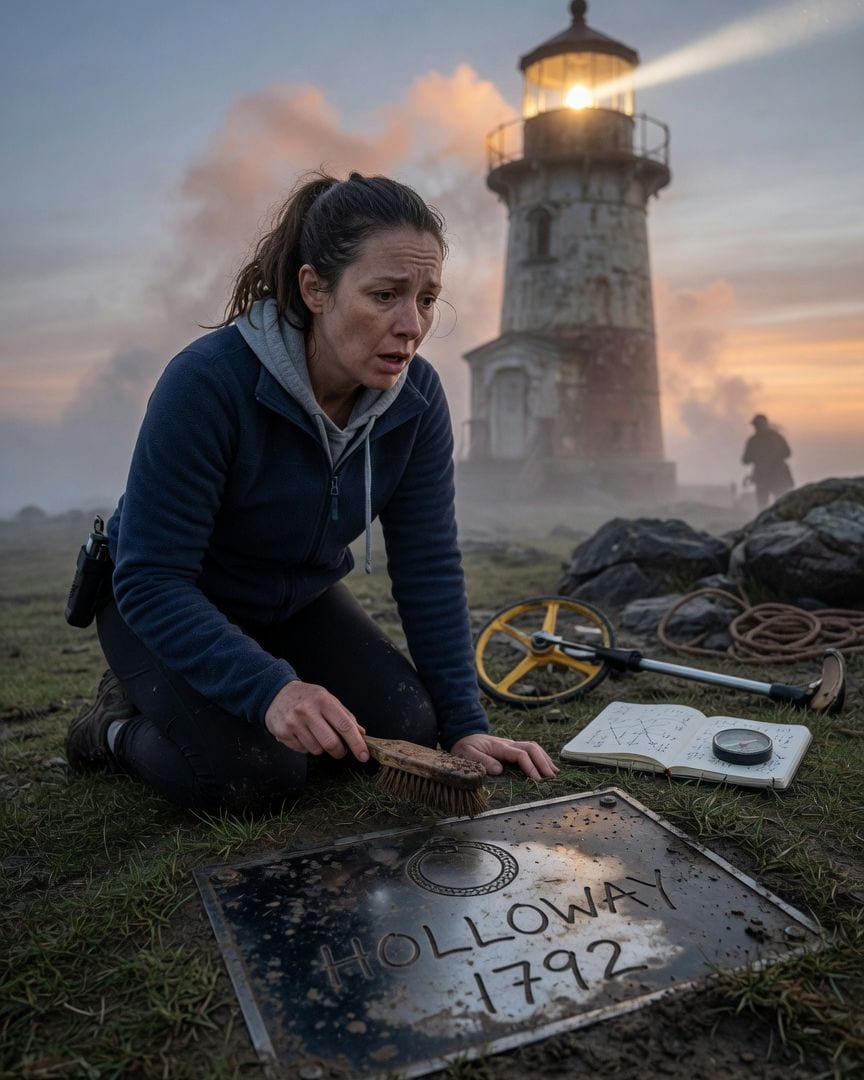
My coastal path just kept curving me back to the lighthouse. Nine miles walked, the same fisherman coiling rope, but I never left.
My morning ritual is a brisk walk along the coastal path. But last Tuesday, after what felt like an hour, I found myself back at the lighthouse, having walked miles to nowhere. My step-counter read 4.5 miles, yet the same fisherman was still coiling the same rope right where I started.
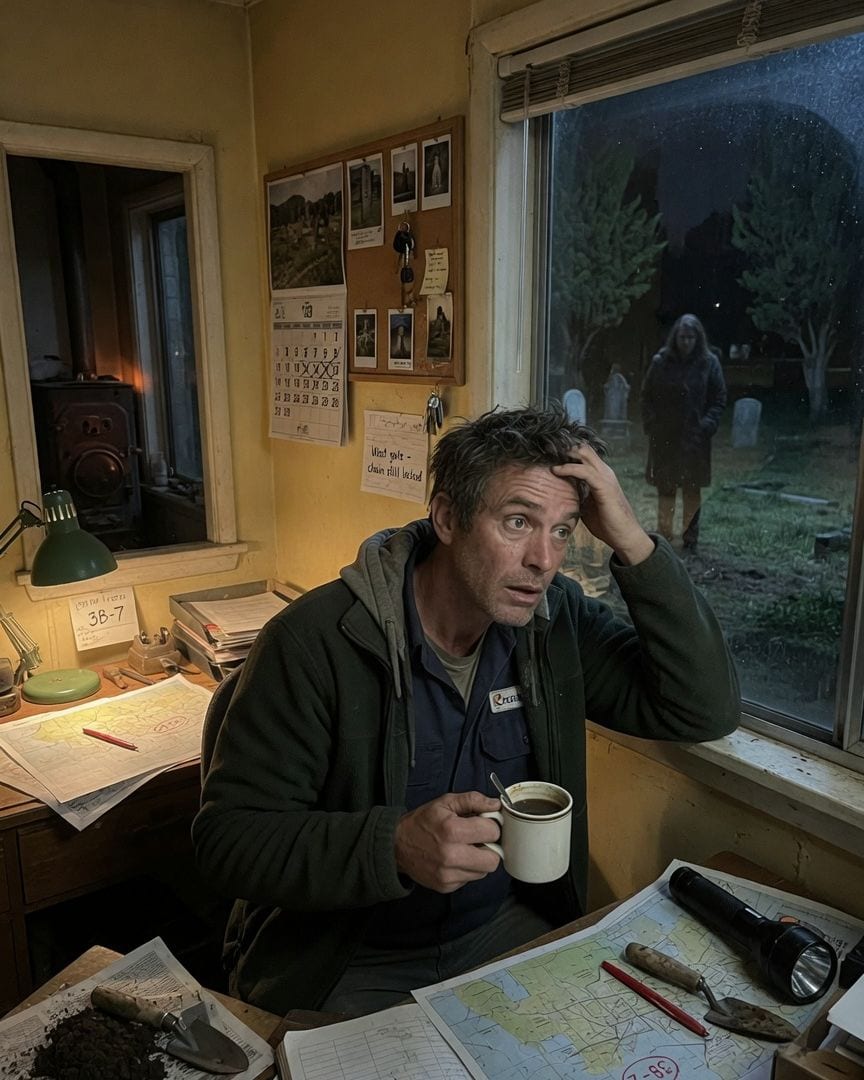
My cemetery lodge overlooks a woman visiting an empty grave near 3 AM most nights. The west gate she uses has been chained shut since autumn, its lock untouched.
As the cemetery's night caretaker, I'm used to the quiet hum of the lodge. But for three weeks, a woman has appeared nightly at plot 3B-7, a silent mourner in the deep night. What chills me is how she leaves: walking straight through the west gate that's been chained and padlocked shut for eight months.
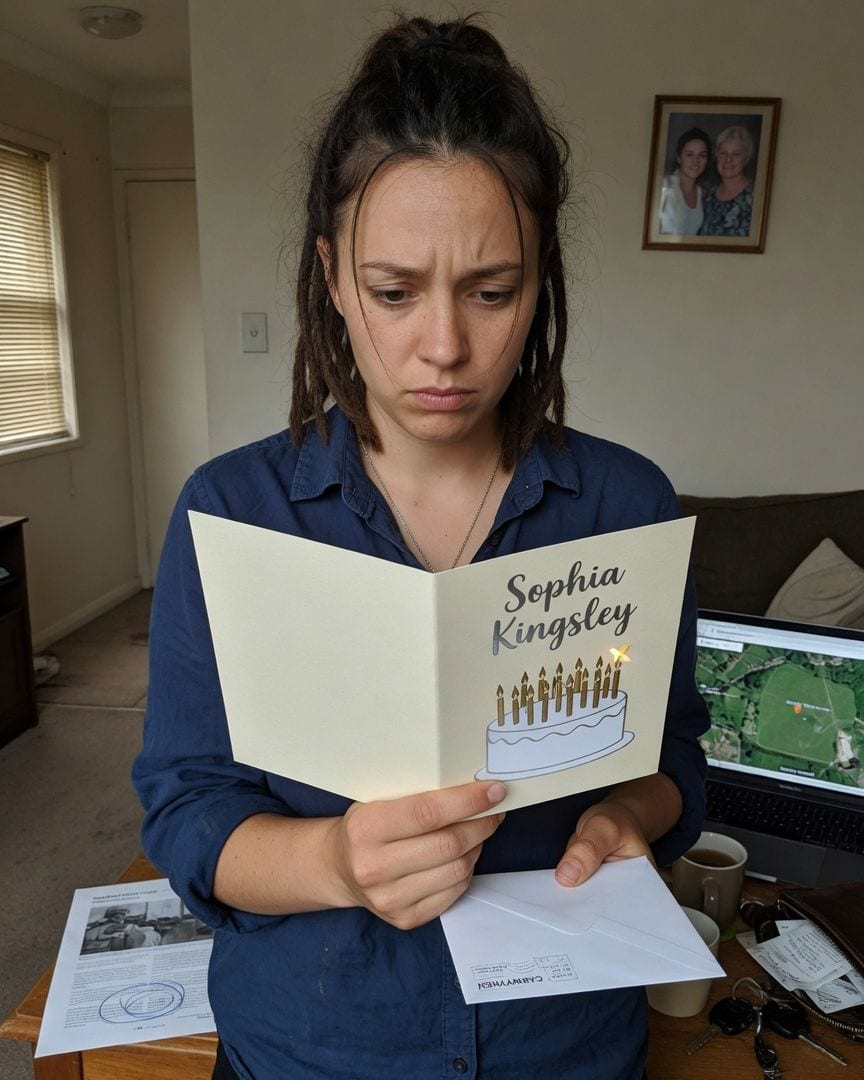
An empty field sends my birthday cards. This year, one candle was crossed out.
My birthday card always arrived a day early, a familiar comfort for five years. This year, a tiny silver 'X' marked one of the thirty candles, and the postmark read 'Carwynnen.' It was an empty field miles from anywhere, with no post office, and no one to send a card.
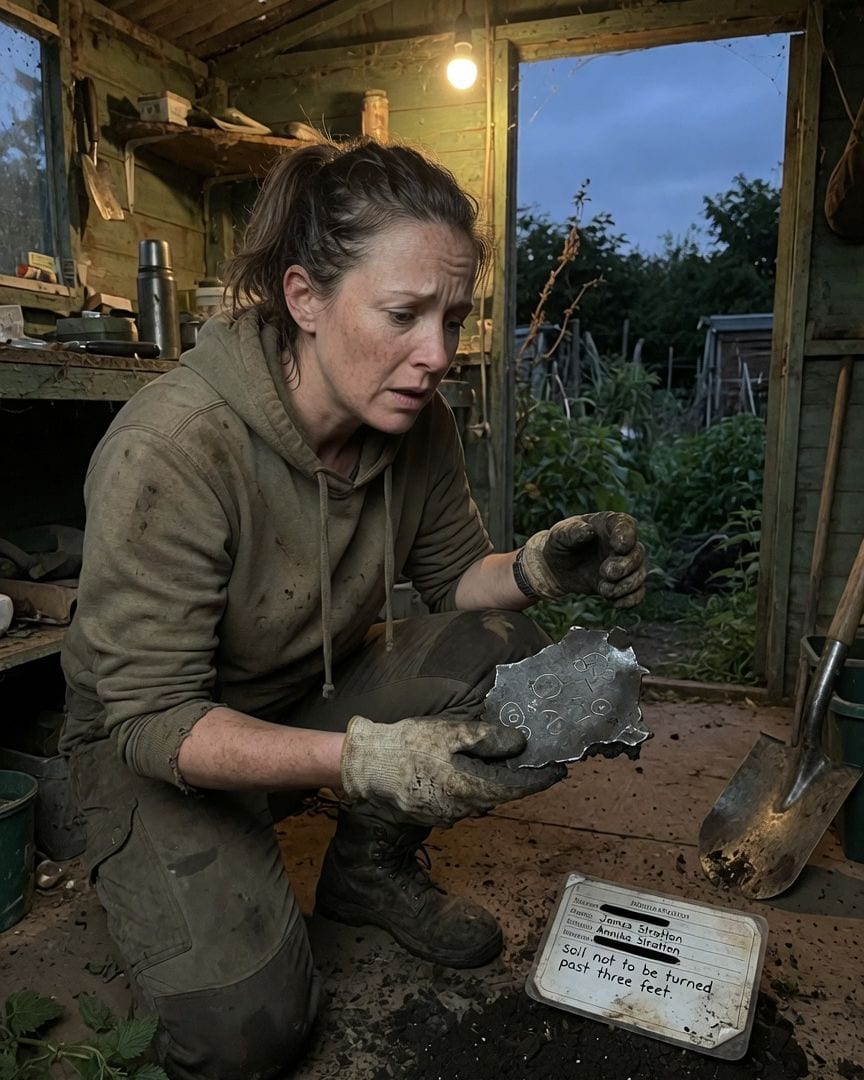
My spade struck something impossibly cold and metallic, pulsing with a slow, steady heartbeat, exactly where the old warning ended.
I took over a neglected allotment, Plot 23, and found a strange, handwritten rule on its tenancy card: 'Soil not to be turned past three feet.' I rationalized it as an old drainage issue, but when my spade hit something impossibly hard, a slow, steady heartbeat pulsed from the ground.
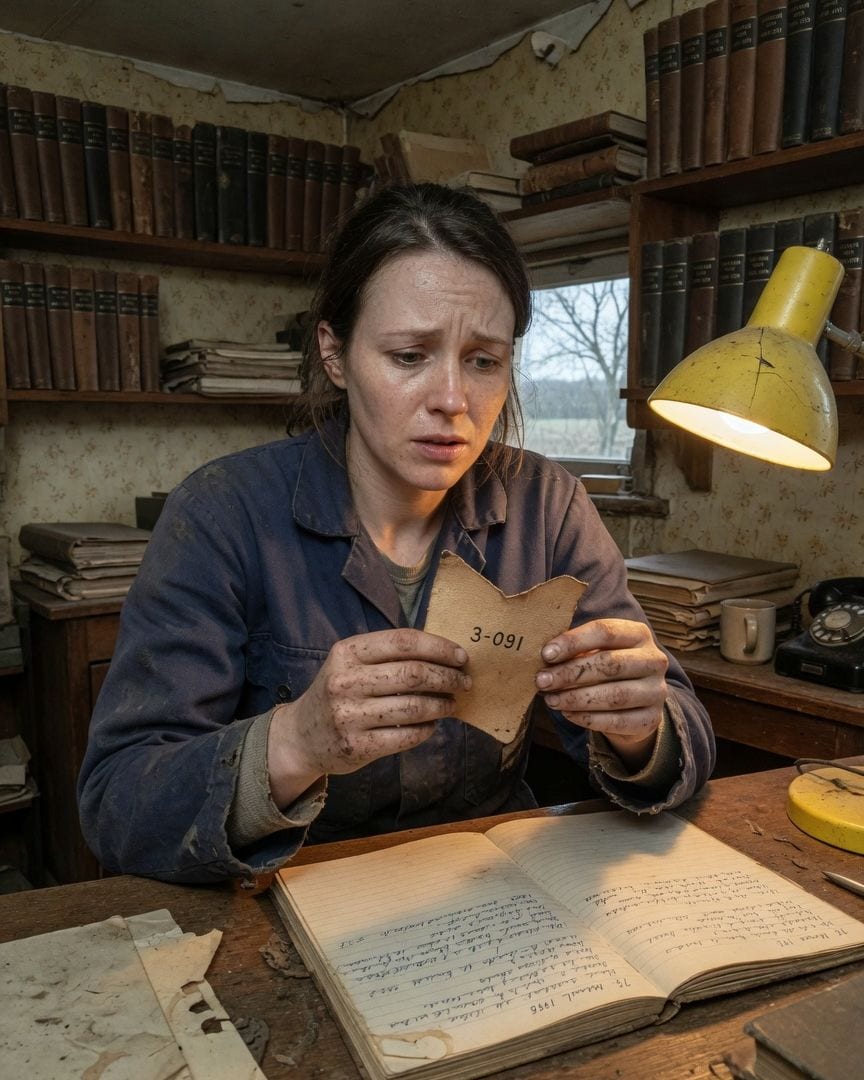
My cattle's ear-tag 3-091 returned this spring, retired by the ministry in 1974. Our old books show 3-091 reappearing every seven years since 1946.
This spring, I found ear tag 3-091 on a new calf. That number was officially retired decades ago, before I was born. My grandfather's old records showed the same tag 'lost' every seven years, with a chilling note: 'the tag returns of itself'.
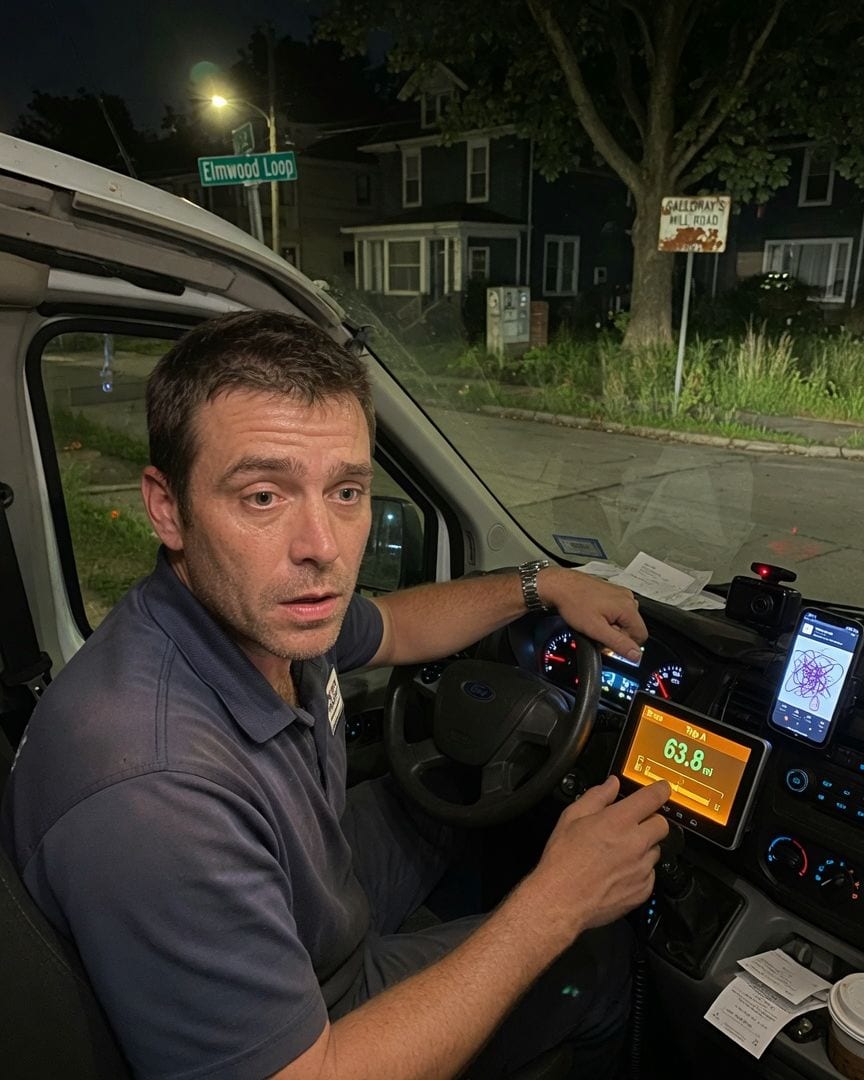
My delivery van's fuel gauge dropped a quarter tank on the Elmwood loop last night. It logged sixty-three miles, a loop I can walk in ten minutes.
I know my routes and my van, but the Elmwood Loop was different. My GPS app showed me standing still on the street, even as I walked for miles, my colleague confirming I hadn't moved. The impossible location left a blank, grey spot on the map.