My classroom doors counted twenty-three last night. The extra one had a class list taped inside, names of children who've never been at this school.
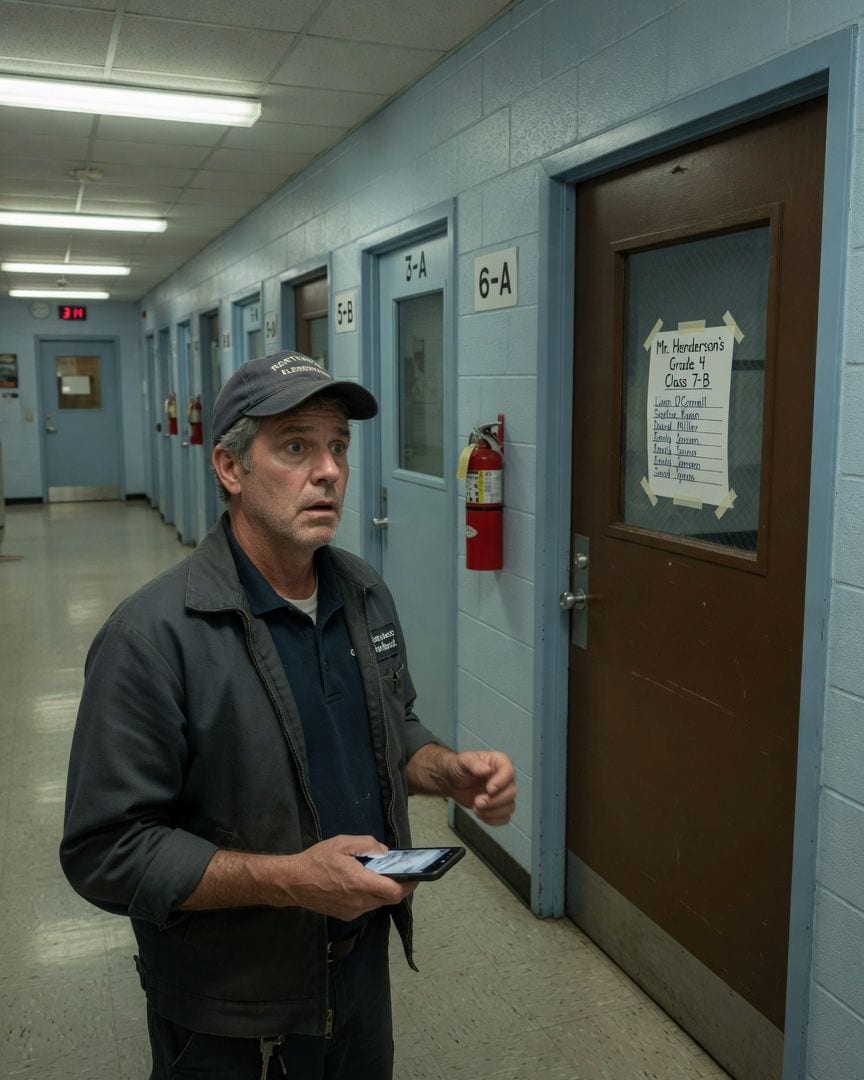
The hum of the fluorescent lights was the only sound in the science block at 3:14 AM.
I’d been the night caretaker at Northwood Elementary for three years, and my routine was a clockwork thing: sweep, mop, empty bins, and then the final lock-up. Twenty-two classrooms in the science block.
I knew every door, every squeaky hinge, every stubborn lock. I ran my hand over the cool metal of the last door, 7-A, feeling the satisfying click of the deadbolt. Twenty-two. All secured.
I started walking back down the long, empty hallway, checking each door one last time, a habit ingrained from years of ensuring nobody was left behind. Halfway down, something caught my eye. A door. Not ajar, not open, but there.
A deep, impossible brown, distinct from the pale blue paint of the surrounding walls. It was nestled between Classroom 5-B and what should have been a solid stretch of brick, right where the emergency fire extinguisher normally hung.
I stopped dead, the silence of the building pressing in around me.
It was exactly like the other doors, a standard classroom model with a small, square glass panel set into the top half. But it shouldn't have been there. It physically could not be there. My breath hitched.
Taped to the glass panel, with two neat strips of masking tape, was a sheet of white paper, folded once. A class list. Handwritten.
I walked slowly towards it, the industrial linoleum cool beneath my work boots. The light from the ceiling seemed to shift, making the hallway feel longer, narrower. My shadow stretched, then compressed, as I approached.
The paper was clearly visible now: "Mr. Henderson's Grade 4, Class 7-B." Beneath the title, a column of names, neat and legible. Twenty-six of them.
I read a few aloud, a whisper in the empty hall: "Liam O'Connell, Sophie Kwan, David Miller, Emily Jensen..." None of them rang a bell. Not a single one.
I knew every student at Northwood, at least by name and grade. Mr. Henderson? No teacher by that name worked here. Class 7-B? There was no 7-B in the science block. The last classroom was 7-A.
I reached out, my fingers brushing the cool metal of the handle. It was locked, of course. My heart thumped against my ribs, a dull, heavy drum. I pulled my hand back, shaking my head. This was impossible. A prank?
A new storage closet? I backed away slowly, my eyes fixed on the impossible door. I counted again, my lips moving, trying to keep my breathing even. One, two, three… twenty-two.
And then, at the far end, between 5-B and the wall, the twenty-third. It was still there, utterly solid, undeniably real. The dread wasn't a chill; it was a weight, a heavy stone dropped into my gut.
The rest of the night was a blur. I pulled up the digital student database on my tablet. Searched for 'Mr. Henderson.' Nothing. 'Class 7-B.' Empty.
I typed in the names from the class list, one by one, every single one. Not a single match in the entire school district’s records. It was like they didn't exist.
I went to the facilities office, unlocking the heavy door with a jingle of keys, and pulled the official architectural blueprints for the science block. They were crisp, meticulously drawn, showing precisely twenty-two classrooms.
No annex, no hidden space, no structural oddity that could possibly account for a twenty-third door. I even went outside, walking the perimeter of the building in the cool night air.
I scanned the brickwork, looking for any sign of a recent addition, a patched-up window, a mismatched set of bricks – anything to suggest an extra room had been built.
But the building was seamless, solid, exactly as the blueprints dictated. Yet, inside, the extra door remained, silently present, mocking every rational explanation.
I took out my phone, tried to snap a picture of the class list on the door. The first shot came out blurred, a smear of white and grey. I tried again, steadier this time.
The result was worse: a warped, distorted image, as if the camera sensor couldn’t quite resolve the edges of the paper, or the glass, or even the door itself. It was an abstract mess. My hands were shaking.
The next morning, sleep offered no reprieve. Fueled by a growing, sickening unease, I found myself back at the school, hours before my shift was due to start.
I bypassed my usual break room, heading instead to the old, dusty records room in the basement – a place rarely touched except for the annual purge of old files.
I switched on a single bare bulb, its yellow light casting long shadows across towering shelves packed with forgotten history.
I was looking for anything: an old renovation request, a forgotten annex plan, anything that could explain an extra room that simply wasn't there.
Deep in a forgotten cabinet, behind stacks of yellowed disciplinary reports and faded yearbooks, my fingers brushed against something thick, leather-bound. A maintenance logbook. Its spine was cracked, the leather dry and brittle. Hand-written entries, dating back decades.
I pulled it out, a small cloud of dust rising.
I flipped through it, the brittle pages flaking at the edges, hoping for some mundane explanation that would make the extra door vanish like a bad dream.
My finger traced the faded ink of an entry from forty years ago, dated to the early 1980s. The penmanship was precise, almost elegant, a caretaker’s meticulous record of repairs and inspections.
'Classroom 7-B, additional door observed, 23 total,' it read. Below it, a list of names. Liam O'Connell. Sophie Kwan. David Miller. Emily Jensen. My breath hitched, a cold knot tightening in my stomach.
I pulled out my phone, the screen still showing the blurry, distorted photo I’d managed to get of the current class list from last night. I held it side-by-side with the yellowed page. They were identical. Name for name.
Every single child. A later hand-scrawled note, in a different, hurried hand, was squeezed beneath the old entry: 'Discrepancy resolved. Blueprints re-filed. All accounted for.'
The dread wasn't just that it happened, but that it happened before, exactly the same way.
The next few nights, I couldn't tear myself away from that logbook. I brought it up to the break room, spreading its pages under the harsh fluorescent lights, cross-referencing names and dates, my coffee cooling beside me.
I found two more similar entries, each separated by decades. Each detailed an 'extra classroom' and a list of unregistered students, always in Class 7-B. And each entry, chillingly, was followed by a 'resolution' note and a 'blueprint update.'
I tried to find the old blueprints referenced, but the facilities office only contained the current, official 22-room version. It was as if any record of those extra rooms had been systematically purged.
I tried to be subtle. I cornered Fiona Holloway, the principal, in the staff room, making small talk about the school's history.
I asked if she knew of any unusual historical incidents, any strange renovations, or old staff who might have mentioned anything odd. She poured herself a fresh cup of coffee, her brow furrowed slightly. "Unusual incidents?
Well, the older students, they have their 'urban legends,' I suppose," she chuckled, a dismissive sound. "Ghost stories about kids who 'disappeared' from the rolls decades ago. You know, the kind of things kids make up to spook each other."
She saw my expression, a little too intense, maybe. "But if you're looking for genuine history, you should talk to Dean Thatcher. Retired night caretaker. Five years ago, I think. Worked here for over forty.
Knew this place better than anyone. A bit eccentric, maybe, but meticulous. Obsessed with the school’s history, kept all sorts of old records. He might remember some of the oddities."
I found Dean’s contact information in an old staff directory, tucked away in my locker. It took me a day to work up the nerve to call. His voice was calm, a little gravelly with age. He agreed to meet.
I drove to his quiet suburban home, the logbook wrapped in a plastic bag on the passenger seat. His house was a neat, unassuming bungalow, surrounded by a meticulously tended garden.
He opened the door, a thin, spry man with keen, intelligent eyes that seemed to take everything in. I introduced myself, trying to sound casual, and he invited me in.
We sat in his living room, a space crammed with family photos and, exactly as Fiona had said, old school memorabilia. Framed yearbooks, dusty trophies, even a faded Northwood Elementary banner hung proudly on one wall.
I laid out my findings on his coffee table: the copies of the old log entries, the blurry photo of the new class list from my phone.
He listened patiently, his gaze steady and calm, his hands clasped over a polished wooden cane. A faint, unreadable smile played on his lips. He didn't deny anything. He didn't seem surprised.
He just offered me a cup of herbal tea. The room was unnervingly warm.
Dean Thatcher’s house was a museum of Northwood’s past. Old yearbooks were stacked on shelves, their pages brittle.
Black and white photographs of past classes lined the walls, children smiling stiffly into the lens, their faces long forgotten by the world outside.
As I laid out my evidence, Dean's eyes tracked me, not with suspicion or fear, but with a profound, quiet understanding that unnerved me far more than any threat.
He took a slow sip of his tea. "You’re digging where others learned not to, son," he said, his voice soft, almost a whisper, yet it cut through the silence of the room. "Some things are better left undisturbed."
He gestured with his chin towards a framed photograph on his mantelpiece, one of those old, group school photos from decades ago. A smiling class of children, all neatly dressed, their faces full of the bright, untroubled innocence of youth.
I glanced at it, then back at Dean, feeling a prickle on the back of my neck.
"I’ve seen things you wouldn’t believe, Everett," he continued, his gaze lingering on the photograph, then shifting back to me, a knowing glint in his eye. "And things I wish I hadn’t. This school… it has its own ways."
His words were calm, matter-of-fact, as if he were discussing the weather. It was his composure, not any hint of malice, that was truly chilling. He was entirely unbothered.
"You were always a curious one," Dean murmured, his eyes holding mine. "Had a knack for finding what was hidden."
The comment hung in the air, a vague, unsettling warning that felt deeply personal, even though I couldn’t place its meaning. I had never met him before today.
I felt less like an investigator presenting evidence and more like a subject under observation, my own history suddenly open for inspection. The silence stretched, the ticking of a grandfather clock in the corner suddenly amplified.
The herbal tea steamed in my cup, its warmth doing little to penetrate the growing chill I felt.
"What ways, Dean? What is happening with that room?" I pressed, the words feeling urgent, desperate, after his unnerving calm. "The extra door, the class list… the logs say it's happened before. What is it?"
Dean sighed, a sound of weary acceptance, as if he'd been expecting this question for decades. He set his teacup down with a soft clink. "It's the school, Everett. Not a haunting, not a ghost. It just… takes."
His voice was low, clinical, like a doctor diagnosing a rare, untreatable condition. "Every few decades, it opens up, creates a space that isn't supposed to be there, and it draws in a class. Locks them away. Erases them."
He explained it calmly, precisely, as if describing a natural, albeit impossible, phenomenon. "The records disappear, the memories fade. The blueprints 'correct' themselves, as you saw. It’s a cycle, a recurrence.
It feeds, in a way, on the potential, the absence it creates. Like a kind of… energy."
My mind reeled. "But… why? And what happens to the children? Where do they go?"
Dean shook his head slowly. "That, I don't know. Or perhaps, I've learned not to ask. My job, and yours, it seems, is to observe, and to manage the transition.
To make sure the doors are locked, to ensure no one else notices. To make sure the 'discrepancy' is resolved." He pointed to the old logbook, its brittle pages open to the entry I’d found.
"That was my father’s hand in that book. And his father’s before him. Caretakers. We’re the ones who remember, the ones who see the patterns. We’re part of the cycle, too."
A fresh chill, colder than any I’d felt in that building, snaked up my spine. "Part of it? What do you mean?"
Dean’s eyes, ancient and knowing, held mine. "The school needs an anchor, a witness. Someone to close the loop, so to speak. Someone to keep the records 'correct.' And sometimes… sometimes it sends one back."
He paused, a terrible, pregnant silence filling the room. His gaze sharpened, focusing on me with an intensity that made my skin crawl. "You see, Everett, you were one of the lost. Forty years ago, in Class 7-B.
Just like that list you found."
I stared, numb, the words echoing in my head, making no sense and perfect, terrifying sense all at once. My own past was a blank slate before I was six.
Just a vague sense of having always been there, always having existed. No memory of school before first grade, not really. I'd always put it down to being a kid, to that early childhood amnesia.
Dean reached into a worn leather satchel beside his chair and pulled out a small, yellowed stack of papers. He carefully extracted one, a student registration card, its edges softened by time.
"This came back to me, after you started working there. A little nudge from the school, perhaps."
Dean, with a serene, almost paternal smile, slid the single, yellowed card across the dusty table. The light caught the faint creases in the cardstock. "You were a quiet one, even then, Everett."
My breath caught in my throat, trapped somewhere between my lungs and my larynx. My eyes fixed on the faded photograph: a solemn, thin-faced boy with too-large eyes staring back from the past.
Beneath it, in careful script, was my own name: Everett Kingsley, Grade 4, Class 7-B.
Dean’s voice, still unnervingly calm, continued the unraveling of my world. "Your return was an anomaly, Everett. A rare 'rejection' by the school, a glitch in its digestion, so to speak. You came back, but with no memory of it.
It happens sometimes. But the school remembers. It doesn't forget its own. It draws you back, into its orbit, into the role of caretaker, to become the new anchor."
He explained how my current presence, my meticulous rounds, my locking of the doors, was all part of the cycle. An unwitting ritual that facilitated the 'transfer' of the new class, the new Class 7-B, into that impossible space.
"Your locking of the 23rd door, then its subsequent disappearance, is what seals their fate. It's not malicious, Everett. It just… is. Like a tide coming in and out."
He showed me more old records, yellowed photographs of other caretakers from decades past. Some of them bore a haunting resemblance to children on other 'lost' class lists he’d collected over the years.
Their faces, young and old, formed a silent, spectral gallery in Dean's living room. "We are the ones who returned," he said, his voice barely audible.
"We are the ones who tend the garden, so it can continue to grow, continue to take."
The horror wasn't in a monster, or a violent act, but in the cold, unfeeling mechanism of the building itself, and my unwitting, inevitable complicity in its monstrous cycle.
I was a ghost that had returned, unknowingly assigned to shepherd new children into oblivion.
I felt a crushing weight. The terrible coherence of it all settled over me like a shroud. Every strange detail, every impossible consistency, every blank space in my own memory, clicked into place with sickening precision.
"Is there a way to stop it?" I demanded, my voice hoarse, raw. "Can we warn them? The children in the current Class 7-B?"
Dean shook his head slowly, his expression unchanging. "The door is solidifying tonight. The cycle completes. Their memories are already fading, Everett, even for their own families.
You try to intervene, you risk being drawn back in permanently, or worse, disrupting the balance and causing more erratic disappearances. The school has its ways of protecting its rhythms." His calm certainty paralyzed me.
The school's power wasn't about force or coercion; it was about inevitability. It simply was.
I looked at my own faded childhood photo, the solemn boy with too-large eyes. I looked at the blurry, distorted image on my phone, the one that showed twenty-three doors, the one that shouldn't exist.
I couldn't fight the geometry of an impossible building, a structure that defied physical laws. I could only choose my role within it. The confrontation wasn't with Dean, or with some external entity; it was internal.
To accept my fate as an unwilling guardian of a monstrous cycle, or to fight futilely and perhaps unleash something worse, something truly chaotic.
I stood up, the decision made, the weight of the knowledge settling into my bones, a cold, dull ache. I knew what I had to do tonight. I had to lock the doors. All twenty-three of them.
I returned to the school that night, the weight of Dean's words heavy in my mind, the yellowed student card tucked into my shirt pocket like a cold stone.
I walked the science block, my work boots echoing in the profound silence. I counted. One, two, three… twenty-two doors. The twenty-third was gone. Completely. Only a seamless, painted wall remained where it had been.
No trace, no outline, no memory of it for anyone but me.
The class list, the names of Mr. Henderson's Grade 4, Class 7-B, were utterly gone from my phone’s memory, a blank space where the blurry photo should have been.
A dull, aching blankness where their faces should have formed in my mind. Only the old logbook, hidden in my bag, remained as proof.
I continued my rounds, a phantom limb of memory guiding my steps, locking each of the twenty-two doors. The quiet hum of the building settled around me, a low, contented thrum.
The school felt different now, not menacing, but profoundly, unnervingly… complete.
Everett Kingsley continued his work as the night caretaker, a quiet, meticulous man. He knew the school's rhythms, its deep, impossible geometry.
Sometimes, in the dead of night, he would pause in the science block, running a hand over the smooth, painted wall where a door had once been, feeling the faint echo of a room that wasn’t there.
He was the anchor now, the keeper of the cycle. He understood his place. He understood the numbers. He just made sure the doors were locked now.
Months later, Principal Holloway noticed Everett had started drinking herbal tea, just like the old caretaker, Dean Thatcher. When she asked him about it, he just smiled, a faint, knowing curve of his lips.
'It helps me sleep,' he said, 'and keeps the patterns clear.' The numbers always add up, eventually.
If this one got to you
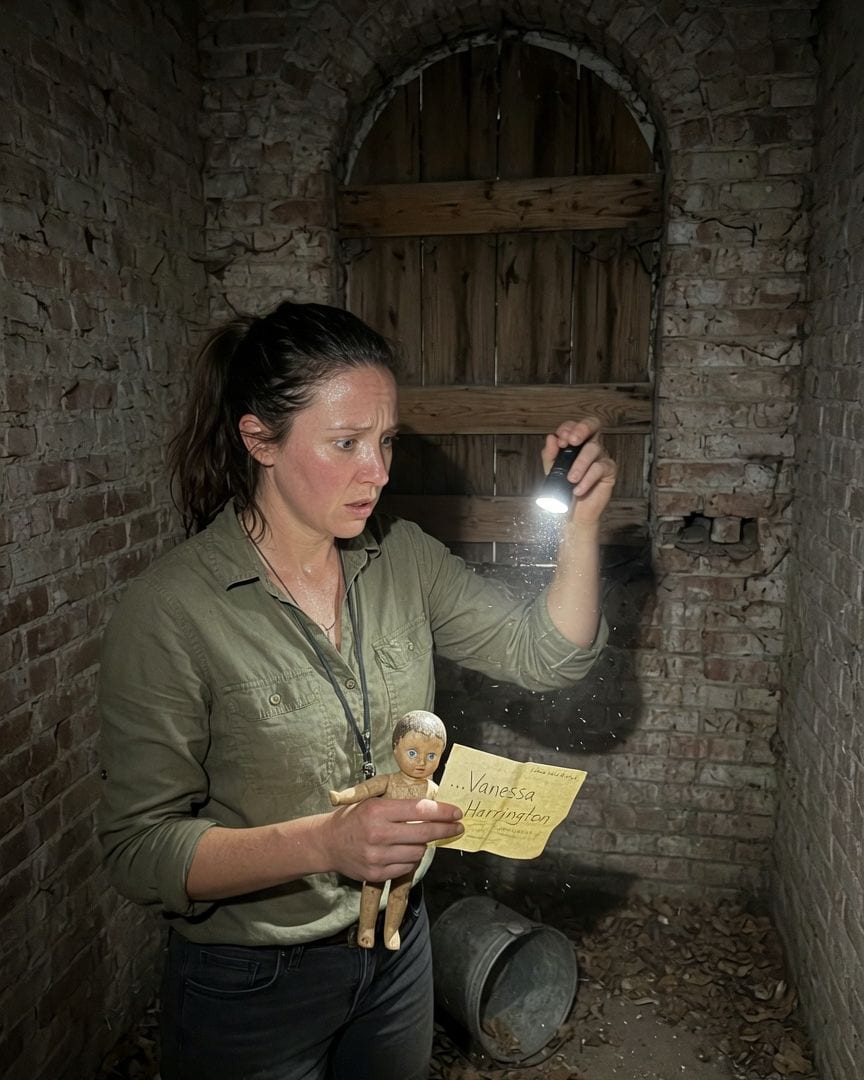
The attendance register has marked one pupil 'present' every single day since 1911 — never once absent. No child by that name has ever sat an exam.
Settling into my new teaching job at Oakhaven Elementary, I found myself drawn to the sealed bell tower. But it was the school's old register that truly unsettled me. A phantom entry, 'Pupil X,' had been marked 'Present' every single day since 1911, with no other records to prove they ever existed.
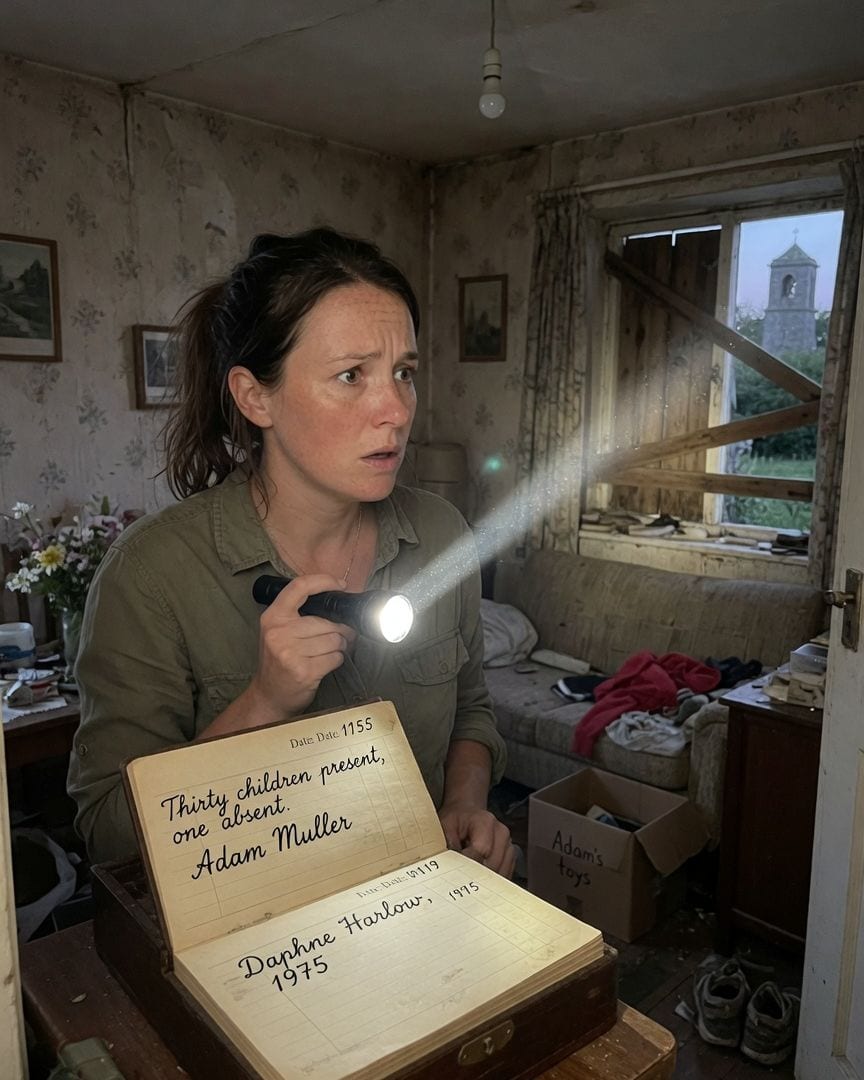
My son rang the old school bell. The attendance register, visible through the boarded window, now shows today's date and his name marked 'absent'.
We moved to a quiet village for peace, but my six-year-old son Adam found the old, boarded-up schoolhouse. Locals warned us, "Never ring the old school bell." That Tuesday, Adam rang it. Later, I saw his name on the school's long-closed attendance register, marked 'absent' in impossibly fresh ink from today.
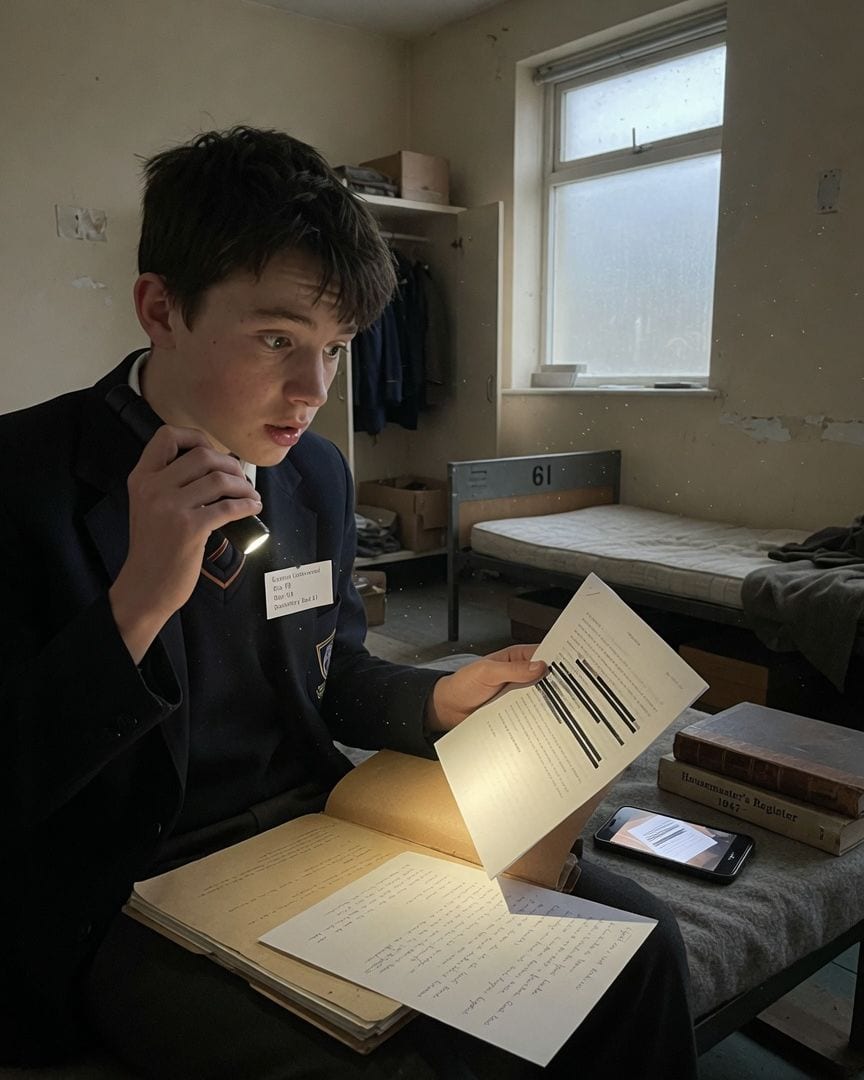
My boarding school bed number was 61, and the archive shows a boy assigned it every eight years since 1947, each leaving mid-term with the bed 'to remain made up'.
I found my matriculation card, listing me as 'Boy 61, Dormitory Bed 61.' Later, an old ledger revealed every boy assigned that bed since 1947 left mid-term, with an unsettling note: 'bed to remain made up.' Our housemaster’s recent scribble, 'as the others,' only deepened the dread around my own assigned bed.
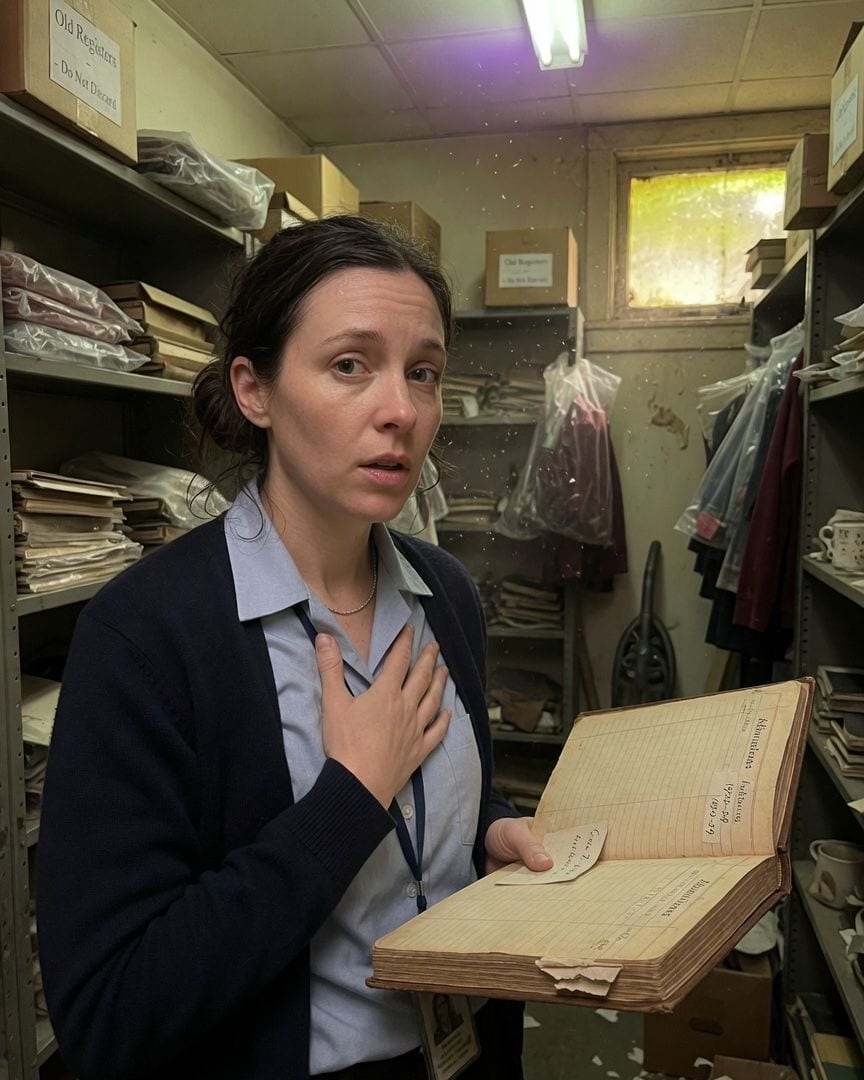
My street's punishment book lists a nameless child, 'as before.' It repeats every decade to 1901.
I found an old punishment book deep in the staff room cupboard, a forgotten relic from the late 1800s. Flipping through it, I discovered a redacted entry from 1953 for 'the boy from Ropewalk,' my own street. This exact, nameless entry repeated every decade, chilling me to the bone.
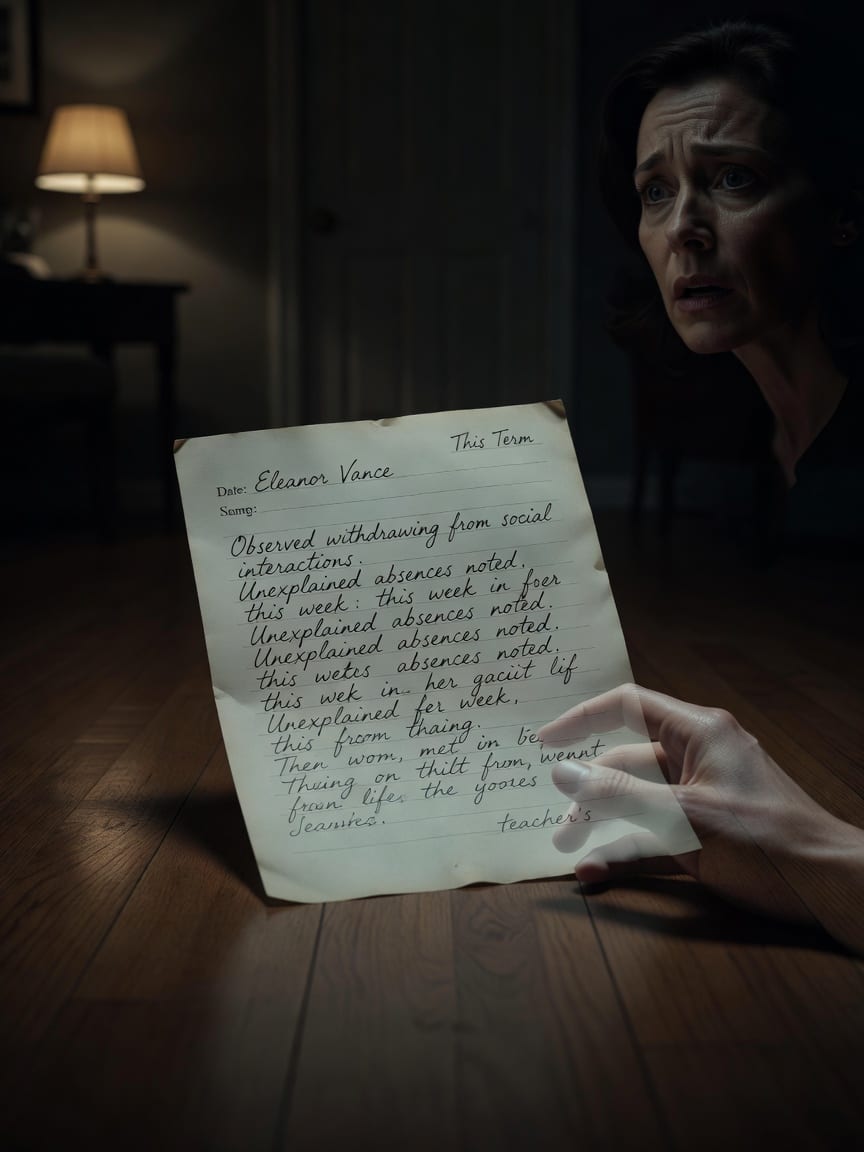
My school reports keep arriving, one a term, signed by teachers dead for decades. The latest describes something I'm doing *this week*.
My name is Eileen Caldwell, and my quiet life was upended by a school report from a place demolished decades before I was born. The report, signed by a long-dead teacher, eerily detailed my current habits. But the real shock arrived when I found my own name in a student register, dated 1968, with precise descriptions of my childhood—years before I existed.
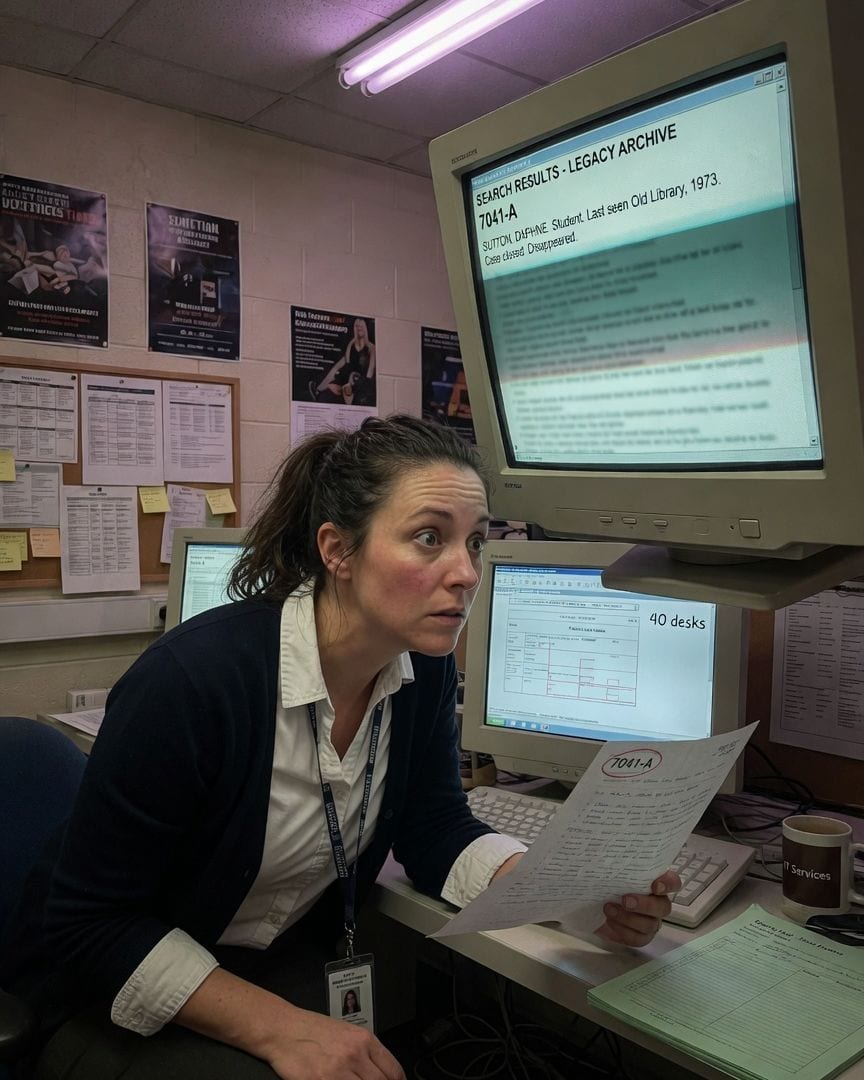
My exam hall had forty desks. The system printed forty-one candidates, and desk 41 held a completed paper in an aisle I know I left empty.
I meticulously arrange forty desks for final exams, ensuring every detail is precise. But after the papers were collected, I found a completed exam for a Desk 41, with fresh ink, sitting exactly where an empty aisle should have been.