My boarding school bed number was 61, and the archive shows a boy assigned it every eight years since 1947, each leaving mid-term with the bed 'to remain made up'.
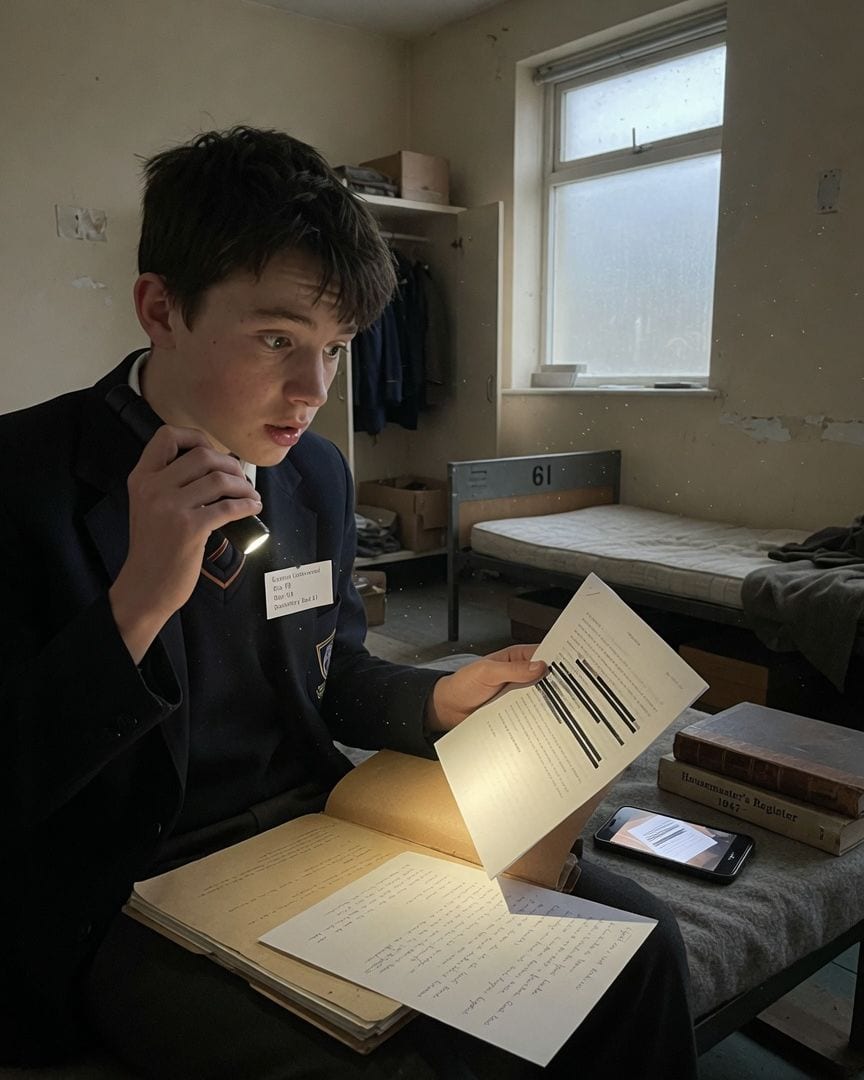
I found my matriculation card tucked into my blazer pocket. The stiff cardstock felt oddly heavy, almost significant, as I pulled it out. It listed me plainly: 'Quentin Underwood, Boy 61, Dormitory Bed 61.'
A small, almost insignificant detail, yet it snagged in my mind like a loose thread on a new uniform.
I’d barely unpacked my meager belongings into the sparse, spartan room – a simple wooden frame, a thin mattress, a narrow wardrobe, all painted a uniform institutional beige.
I remember thinking how odd it was to assign specific 'boy numbers' at all, rather than just using our names.
Later that week, browsing the dusty house archive for a history project on the school's founding, I stumbled upon an old, leather-bound ledger. It was the Housemaster’s Register, its spine cracked, the pages brittle with age.
My history teacher, Mr. Davies, had said it contained mundane records, but that I might find interesting snippets of school life.
Flipping through the sections for my dormitory, I found 'Bed 61' listed repeatedly, an uncanny regularity that certainly wasn't mundane.
Every eight years, like clockwork, since 1947, a new boy was assigned that exact bed. 1947, 1955, 1963, 1971, 1979, 1987, 1995, 2003, and then… 2011. My year.
Each entry for 'Boy 61' was followed by the same terse, unsettling note: 'left mid-term,' and then, in neat, almost elegant cursive, 'bed to remain made up.'
I tried to rationalize it – perhaps a particularly fragile bed, prone to damage, requiring special care? But that made no sense. Why would a bed need to 'remain made up' after a boy left?
Our current housemaster, Malcolm Yates, had even scribbled a recent, unsettling note beside the latest entry before my own: 'as the others.'
The air in the archive, already thick with the smell of old paper and dust, felt suddenly colder, the motes dancing in the single shaft of late afternoon light suddenly menacing.
I couldn't unsee it; the bed in my room, now just a simple wooden frame and mattress, felt less like my own and more like a stage, patiently waiting.
The peculiar pattern gnawed at me. I spent every spare moment – lunch breaks, after-class free periods, even late into the evening with a special pass from Ruth Hartley, the archivist – delving deeper into the ledger.
Ruth, a quiet woman with spectacles perched on her nose, barely noticed me amidst her meticulous cataloging of ancient texts. She assumed I was a dedicated history student. I was dedicated, but not to history.
I was dedicated to finding an explanation, any explanation, that made sense.
I meticulously cross-referenced the ledger entries with old student files, each one kept in a thin, brown folder, smelling faintly of mildew. For each 'Boy 61' listed as leaving mid-term, there was a corresponding file.
Most were boilerplate: academic records, a few disciplinary notes, then the standard 'withdrawal form' signed by a parent, usually citing 'family reasons' or 'ill health.' It was all perfectly ordinary, designed to appear above board.
But in the file for a 'Boy 61' from 1963 – a boy named Elliot Yates, whose photo showed a solemn face startlingly similar to my own, though Elliot was clearly much younger – an anomaly jumped out.
There was an additional page, clipped to the withdrawal form.
It was a single, typed paragraph, mostly innocuous administrative jargon about 'transfer protocols' and 'temporary placements,' but one entire line in the middle was blacked out, thick and deliberate, with an almost violent intensity.
I tried to rationalize it: a privacy redaction, perhaps a sensitive medical detail or a family dispute. Something personal, certainly. But the surrounding text made no coherent sense without it, creating a gaping hole in the narrative.
The sentences before it led nowhere, and the sentences after seemed to refer to something entirely different, as if a critical piece of the puzzle had been forcibly removed.
I held the page up to the archive's dim light, then tried rubbing the thick black ink gently with my thumb, as if to magically reveal what lay beneath. Nothing.
The dread wasn't in what I saw, but in the deliberate absence of it, the specific, targeted obliteration of one piece of information that felt crucial. A carefully erased truth.
I took a photo of the redacted page with my phone, then spent the evening in my dorm, poring over it. My roommate was out, so I had the room to myself, the silence pressing in.
I’d learned a trick from an old documentary about intelligence agencies: sometimes, with typed documents, the pressure of the keys left indentations on the page, even if the ink was blacked out.
I angled my phone’s flashlight across the paper, the light catching on the faint grooves on the reverse side.
Then, carefully, I tried to read the ghost impressions left on the page beneath the thick black bar, tracing the subtle shifts in the paper's texture. It was painstaking work, a slow, methodical reconstruction.
I pieced together fragments of words, then whole syllables. It was a street name. A specific street, followed by a house number. He recognized it. A jolt, cold and sharp, shot through him, making his breath catch.
He knew those street names, that specific block. It was his own childhood address, clear as day, listed here in a file from 1963, for a boy who had vanished years before Quentin's family had ever bought the house.
The realization of the redacted line’s content was a seismic shift. I couldn't sleep; the image of my childhood home, imprinted on a vanished boy's file, burned in my mind.
Every creak of the old dormitory building, every distant whisper from the corridor, seemed amplified, imbued with a new, menacing significance. I tried to dismiss it as a freak coincidence, a statistical improbability.
But the pattern of Bed 61, the 'mid-term' departures, the chilling note—they all argued against chance.
The next day, I returned to the archive with a new, frantic focus. I pulled every 'Boy 61' file I could find, the dust clinging to my fingers like a shroud.
Each one, without exception, contained a similar, single-paragraph addendum with a blacked-out line, always in the same position, always obscuring what felt like the core truth.
The surrounding text, though varying slightly in boilerplate, consistently referred to 'transfer arrangements,' 'relocation protocols,' or 'placement services.' This wasn't just a coincidence, it was a template.
I noticed that the older files, pre-1970s, had a faint, almost invisible watermark of the school crest at the bottom of these addendum pages, which disappeared in later files.
This wasn't an external agency’s document; it was internal, generated by the school itself. This was the school's doing.
I tried to ask Ruth Hartley about the 'transfer protocols,' casually, as if for my history project. 'Some of the files mention these 'protocols,' Ruth. Were students often transferred to other institutions?' I watched her closely.
She offered a vague, practiced response about students sometimes transferring to other specialized institutions, but her eyes darted to the clock, and she quickly found an excuse to leave the archive, her usual placid demeanor subtly strained.
'Oh, you know, these old schools had all sorts of arrangements,' she said, her voice a little too bright, 'But I really must check on the late deliveries, Quentin.' She practically fled.
I felt a prickle of unease, a cold sensation crawling up my spine. It wasn't just my imagination; she knew something. I also remembered that the 'Boy 61' from 1963, Elliot Yates, shared a surname with the current housemaster.
A coincidence? I dismissed it, then wondered if I should have. The archive, once a place of quiet discovery, now felt like a vault of terrible secrets.
My digging didn't go unnoticed for long. One afternoon, I returned to my dorm to find my desk meticulously tidied. My history textbook was closed, precisely aligned with the edge of the desk.
My notes, which I'd left splayed open on the redacted line, were neatly stacked and placed inside a folder. Nothing was missing, nothing disturbed, but the message was clear.
Someone had been in my room, seen my research, and tidied it away. The intrusion left a lingering chill, far colder than any draft. It wasn't a fellow student; no one would be that precise, or that interested.
My skin crawled with the quiet certainty of surveillance.
The next day, Housemaster Yates called me to his office. I knew what it was about before he even spoke. Yates sat behind his large mahogany desk, hands clasped, a faint, almost paternal smile on his face.
The office was warm, smelled of old wood and pipe tobacco, a contrast to the archive's chill, but the warmth felt oppressive, suffocating. 'Quentin, I understand you've developed quite an interest in the school's history. Specifically, our archival records.'
His tone was mild, almost chiding, but his eyes, a pale, unsettling blue, held an unreadable depth. They didn't smile like his lips did. 'It's commendable, a keen mind.
But perhaps, for a new boy, it’s best to focus on the present, wouldn't you say? The past can be… complicated. And some records are best left undisturbed.'
He didn't raise his voice, didn't threaten, but the implication hung heavy in the air, a silent, suffocating warning. The quiet click of his pen as he set it down on a pristine blotter seemed to punctuate the silence.
I felt a cold knot tighten in my stomach. I wasn't just investigating; I was being watched, and the person watching knew exactly what I was looking for.
The veiled warning from Yates only fueled my resolve; the housemaster's quiet intensity confirmed my suspicions. He wasn't just trying to protect the school's reputation; he was protecting something far older, far darker.
I scoured the oldest 'Boy 61' file from 1947, finding a small, overlooked detail: a handwritten code at the bottom of the redacted page, almost like an old library call number, but specific to a wing of the school that had been demolished in the 1980s.
Quentin knew, from his research, that this wing housed the original headmaster's office and a small, private chapel. Why would a file from 1947 refer to a chapel wing that was gone?
It had to be a reference to something that survived the demolition, something underneath.
I waited until late at night, after lights out, when the dorm was silent save for the soft snores of other boys and the rhythmic ticking of the old clock in the common room.
I slipped out of Bed 61, down the silent corridors, my heart hammering against my ribs, each beat a drum in the oppressive quiet.
I went to the site of the old wing, now just a manicured lawn, the grass dew-slicked under the pale moonlight.
But I found what I was looking for: a small, almost invisible maintenance hatch leading to old utility tunnels beneath, cleverly disguised by overgrown ivy. It was exactly where the old chapel foundation would have been.
Armed with my phone flashlight, its beam cutting through the oppressive darkness, I navigated the dusty, forgotten passages, the air thick with the smell of damp earth and decay.
Cobwebs brushed my face, and the distant drip of water echoed like a heartbeat. I found a small, bricked-up room, clearly once part of the old chapel's foundation, hidden behind a crumbling wall.
It felt colder here, the air heavy and still. Inside, there was a single, heavy oak chest, bound with rusted iron straps. It looked ancient, undisturbed for decades.
I forced the brittle lock with a discarded piece of metal I found in the tunnel, the rusty shriek echoing loudly in the enclosed space.
The chest contained not more files, but a collection of small, tarnished silver lockets, each engraved with a number: 61, 61, 61. Dozens of them, nested together. And beneath them, carefully wrapped in old linen, a single, leather-bound journal.
It was Malcolm Yates’s own, years of entries. His handwriting, unmistakable. The first entry, dated 1987, detailed his own appointment as Housemaster, and a chilling line: 'The cycle continues. Bed 61 is prepared.'
Further entries, cold and clinical, detailed 'requisitions,' 'deliveries,' and 'satisfactory placements.' The journal confirmed it. The 'transfers' were real, orchestrated by the housemasters themselves, and Yates was deeply, personally involved. The calm institutional dread solidified into a horrifying, personal truth.
I confronted Yates in his office the next morning, the journal clutched in my hand, the silver lockets clinking in my pocket, their tiny weight feeling immense.
I laid out the evidence, my voice tight with barely suppressed terror and anger: the ledger, the redacted files, the lockets, the journal.
Yates listened, his face impassive, occasionally nodding with a detached air, as if observing an interesting, if misguided, academic presentation.
The morning light filtering through his window seemed to bleach his face of all color, making him seem like a figure carved from pale stone.
When I finished, breathless, Yates simply picked up the journal, flipped through a few pages, and closed it with a soft thud.
'A thorough investigation, Quentin,' he said, his voice as calm as if discussing the weather, a tone that was more terrifying than any shout. 'Most boys wouldn't have the persistence. Or the… heritage.'
My blood ran cold. 'Heritage?' I stammered, my voice barely a whisper.
Yates leaned back, a faint, almost imperceptible smile touching his lips, a smile that didn't reach his eyes, which remained cold, pale chips of ice. 'You've shown a surprising aptitude for history, Quentin. A shame, in a way.
But then, it was always meant to be you in Bed 61, wasn't it? Just like the others.'
Yates's words hung in the air, a final, crushing weight, confirming my deepest fears. My body felt leaden, my breath shallow. 'It's a long tradition, Quentin,' he began, his voice devoid of malice or regret, chilling in its detached professionalism.
'A service, you could say. The school, you see, has always had… patrons. Powerful, discreet individuals with specific needs. And certain bloodlines, like yours, have a particular… aptitude for fulfilling those needs.'
He explained that Bed 61 wasn't just a bed; it was a designated point in a ritual, a symbolic gateway. The eight-year cycle was a precise cadence, timed to certain astrological or generational shifts, though he didn't elaborate.
The 'bed to remain made up' was a precise, symbolic placeholder, ensuring the continuity of the cycle, a silent promise for the next offering. It meant the bed was never truly vacant; it was simply waiting.
The 'transfers' weren't to other schools, but to these patrons, for purposes he wouldn't explicitly name, but implied were far from benign, involving ancient agreements and unsettling exchanges.
His words painted a picture of a quiet, bureaucratic horror, sanctioned and maintained for centuries.
'Elliot Yates,' he continued, looking directly at me, 'was my own great-uncle. A 'Boy 61' from the 1963 cycle. His 'transfer' was… successful. His file, with the redacted line, was merely a record of his new 'placement.'
The street name you found? A temporary residence, a staging point before final delivery to the true recipient.'
My world tilted, the floor beneath me seeming to dissolve. Every clue, every strange note, every carefully filed document, now clicked into place with horrifying, inescapable precision.
The institution wasn't just managing a secret; it was actively facilitating a horrifying trade, a quiet, bureaucratic horror, and had been for generations. And he, Quentin Underwood, was the next commodity, the next 'Boy 61' to be 'transferred.'
The knowledge made the air taste like ash.
I stared at Yates, the old man's calm explanation a far greater horror than any monster I could have imagined. His composure was monstrous. 'What happens to them?'
My voice was barely a whisper, raw with a desperate need for a concrete answer.
Yates simply shrugged, a slight, almost dismissive gesture. 'They fulfill their purpose. They become… useful. You have two choices, Quentin. Accept your heritage, your destiny, as so many 'Boy 61s' have before you. Or resist, and face the consequences.
The patrons are not accustomed to disappointment.' The way he said 'useful' sent a shiver down my spine that had nothing to do with the chill in the room.
I felt a surge of cold terror, then a defiant spark, a burning refusal. I wouldn't be 'useful.' I wouldn't be 'transferred.'
I lunged for the door, my mind fixed on escape, but Yates was quicker than he looked, blocking the exit with surprising agility, his pale eyes suddenly sharp, no longer detached. 'There's nowhere to run, Quentin.
You're already within the system. Your family has been for generations.'
I didn't listen. I shoved Yates aside, feeling the old man's surprisingly strong grip briefly on my arm, a grip that felt like ancient iron.
I burst out of the office, down the silent corridor, the words 'it was always meant to be you' echoing in my ears, chasing me.
I ran, not towards my dorm, not towards the school gates, which I knew would be locked, but towards the hidden utility tunnel beneath the old chapel, the only way out that Yates hadn't explicitly mentioned.
I could hear Yates's calm, measured voice calling my name from the office, 'Quentin… Quentin…' a predator patiently tracking its prey, certain of its catch.
I scrambled into the dark, musty tunnel, the metallic tang of old earth filling my lungs, the darkness a welcome, albeit terrifying, embrace.
I was out, for now, but the knowledge of the centuries-old mechanism, the calm, bureaucratic horror, was now burned into my very soul. I was free, but irrevocably marked, a ghost in my own life.
I never returned to the school. My parents received a terse letter informing them of my 'mid-term withdrawal,' citing 'personal reasons.'
They were distraught, confused by my sudden disappearance and refusal to explain, only able to grasp that I was safe, somewhere.
The school quietly closed the file on 'Boy 61, Quentin Underwood,' and in the Housemaster’s Register, a new note was added beside his name: 'bed to remain made up.'
Malcolm Yates continued his duties, his calm demeanor undisturbed, his pale eyes scanning the new matriculation lists. Ruth Hartley, the archivist, noticed a new, meticulous order to the 'Boy 61' files, a certain recent review of the older documents.
The cycle, it seemed, was already preparing for its next iteration, a quiet, inexorable turning of the institutional wheel.
I now live hundreds of miles away, under a different name, constantly looking over my shoulder. Every shadow seems to hold a watchful eye, every unfamiliar face a potential agent of the 'patrons.'
I carry the weight of what I uncovered, the horrifying coherence of it all, the knowledge that the world contains such quiet, organized malevolence.
I read local news for any mention of strange disappearances, any school scandal, any whisper that might hint at the continuation of the 'transfer' program.
I keep my phone close, the blurry photo of the redacted line a constant, chilling reminder of the truth.
He never fully sleeps, forever listening for the faint, distant echo of a housemaster's calm voice, or the whisper of a bed being made up, waiting.
If this one got to you
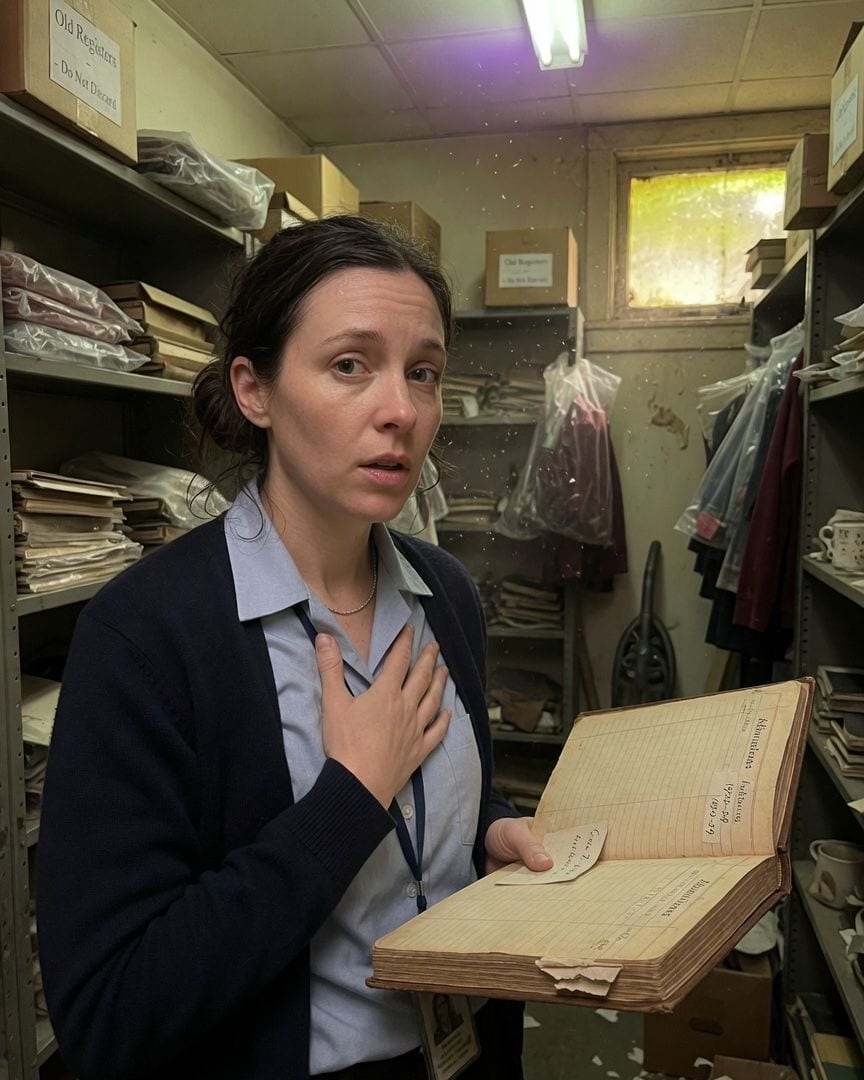
My street's punishment book lists a nameless child, 'as before.' It repeats every decade to 1901.
I found an old punishment book deep in the staff room cupboard, a forgotten relic from the late 1800s. Flipping through it, I discovered a redacted entry from 1953 for 'the boy from Ropewalk,' my own street. This exact, nameless entry repeated every decade, chilling me to the bone.
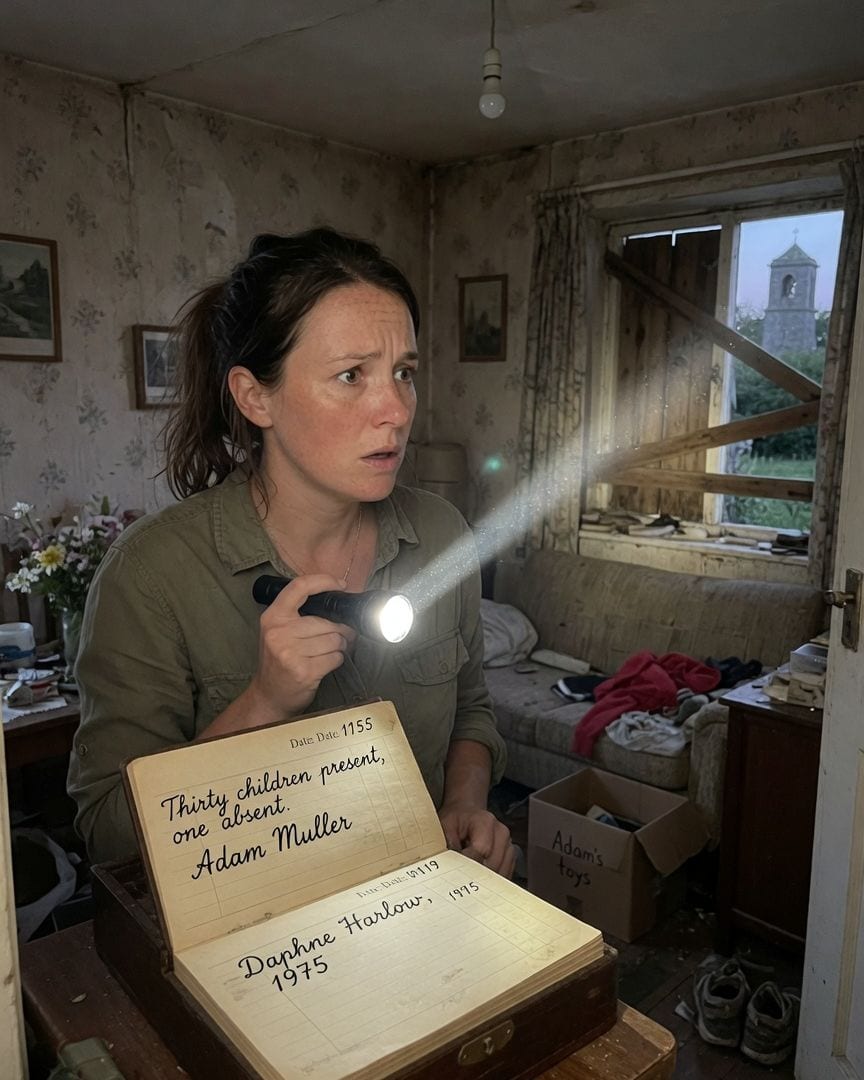
My son rang the old school bell. The attendance register, visible through the boarded window, now shows today's date and his name marked 'absent'.
We moved to a quiet village for peace, but my six-year-old son Adam found the old, boarded-up schoolhouse. Locals warned us, "Never ring the old school bell." That Tuesday, Adam rang it. Later, I saw his name on the school's long-closed attendance register, marked 'absent' in impossibly fresh ink from today.
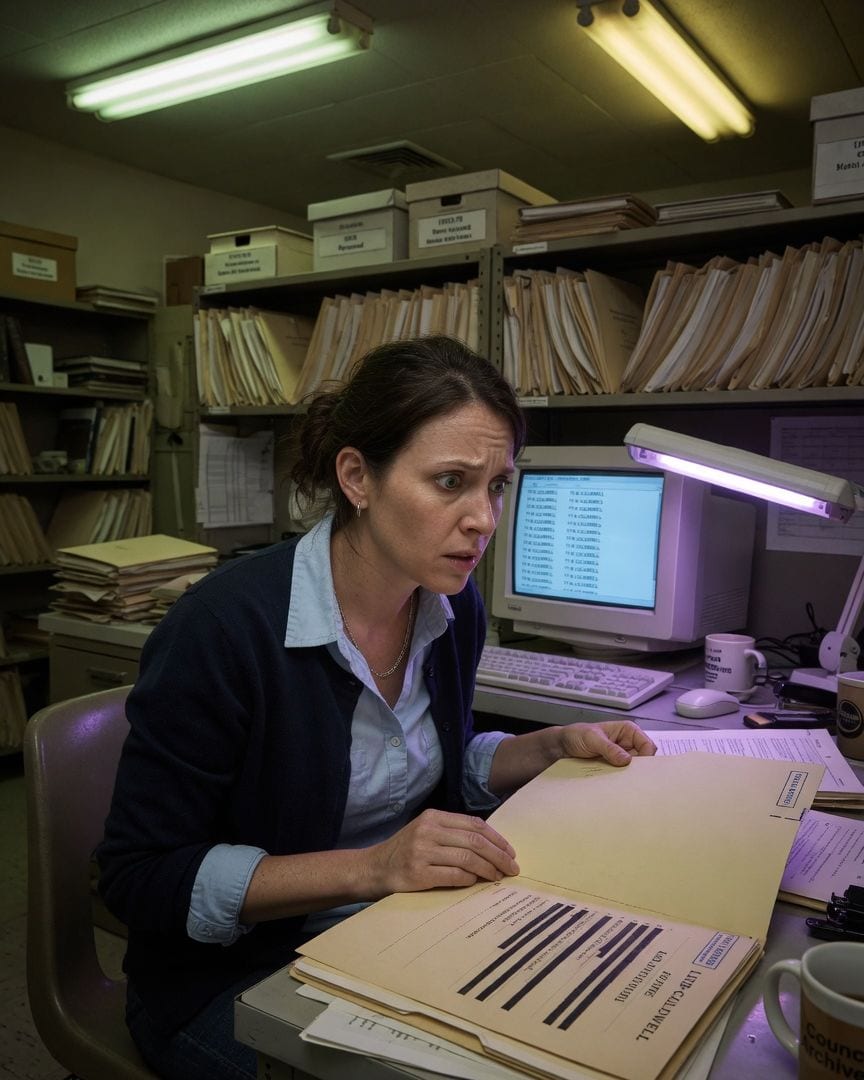
My employer's security file holds a vetting report on me dated nine years before I ever applied. It has my full name and my parents' address — with only one line, the source who referred me, blacked out.
Working a routine data audit, I pull my own security file. The issue date is nine years before I even applied for the job. Then, hidden within an old archive file, I find my current address etched under a blacked-out line.
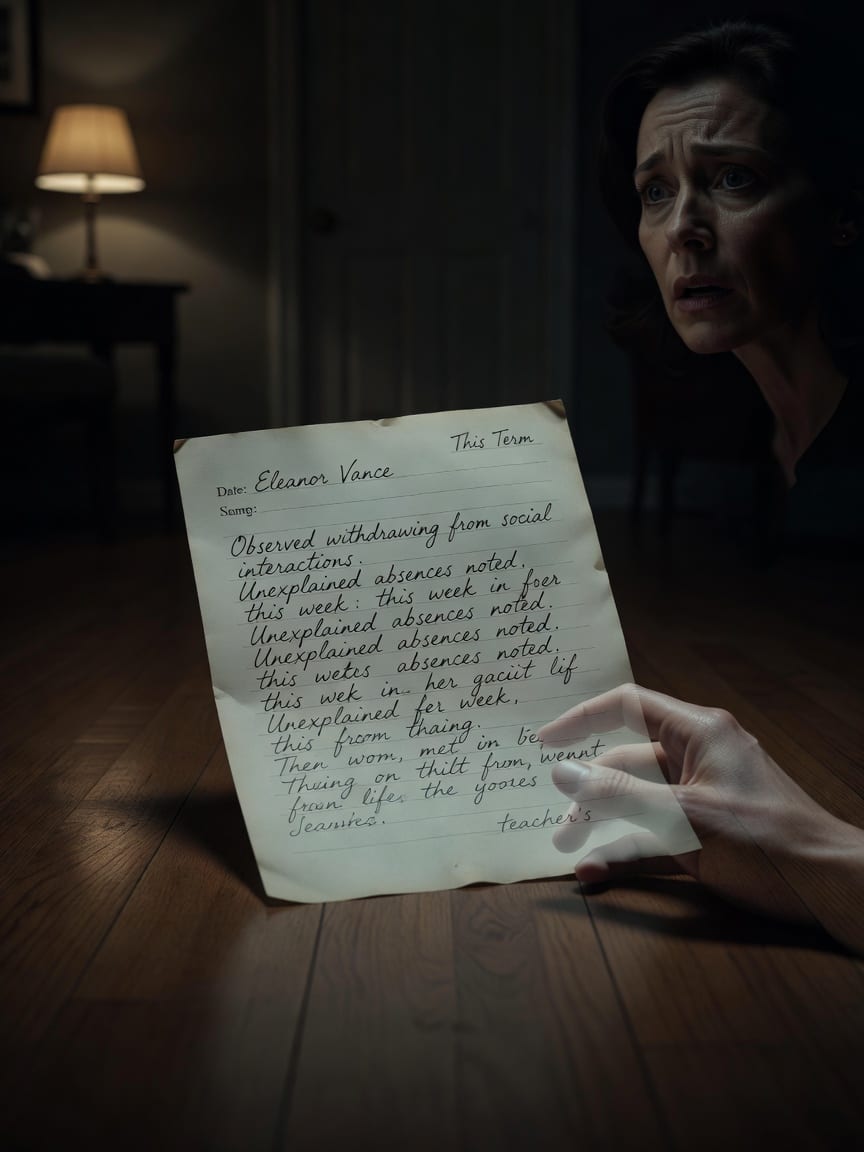
My school reports keep arriving, one a term, signed by teachers dead for decades. The latest describes something I'm doing *this week*.
My name is Eileen Caldwell, and my quiet life was upended by a school report from a place demolished decades before I was born. The report, signed by a long-dead teacher, eerily detailed my current habits. But the real shock arrived when I found my own name in a student register, dated 1968, with precise descriptions of my childhood—years before I existed.
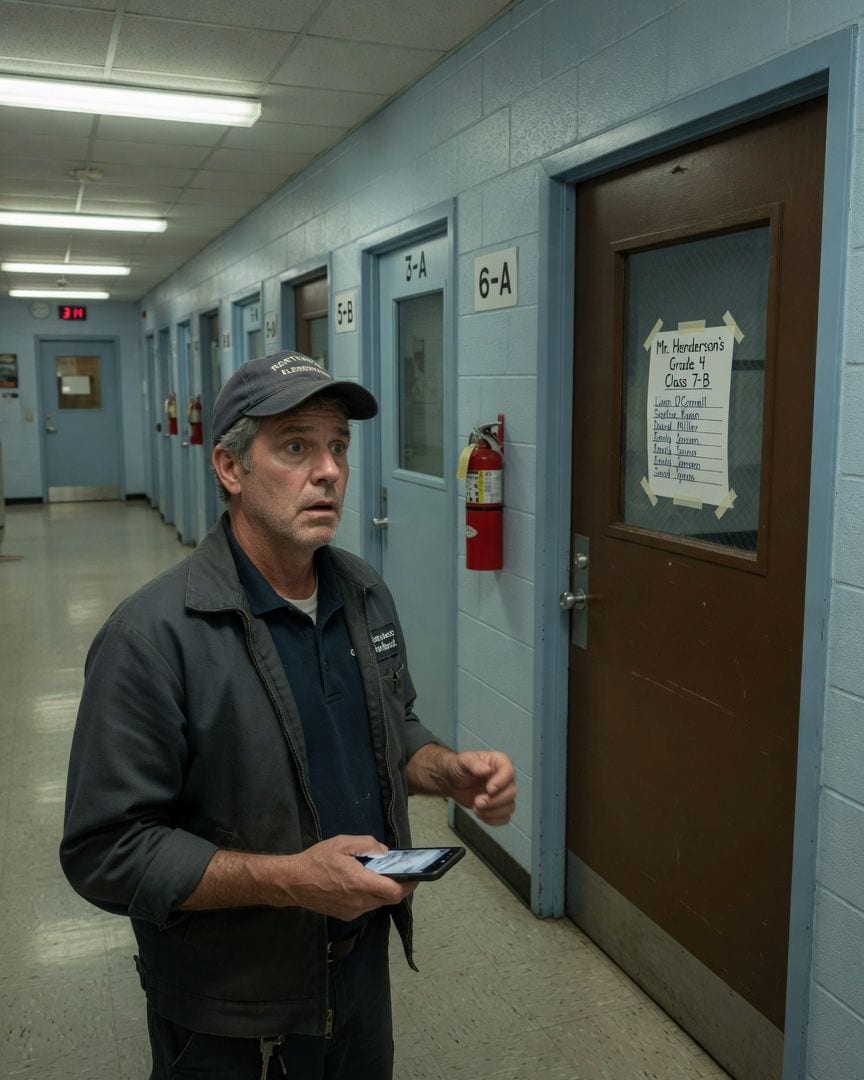
My classroom doors counted twenty-three last night. The extra one had a class list taped inside, names of children who've never been at this school.
My job as night caretaker at Northwood Elementary is routine: 22 classrooms, all accounted for. But one night, an impossible 23rd door appeared in the science block, nestled where only a wall should be. It bore a class list of students and a teacher who don't exist in any school record. Then, in an old logbook, I found that exact same list, dated 40 years ago.
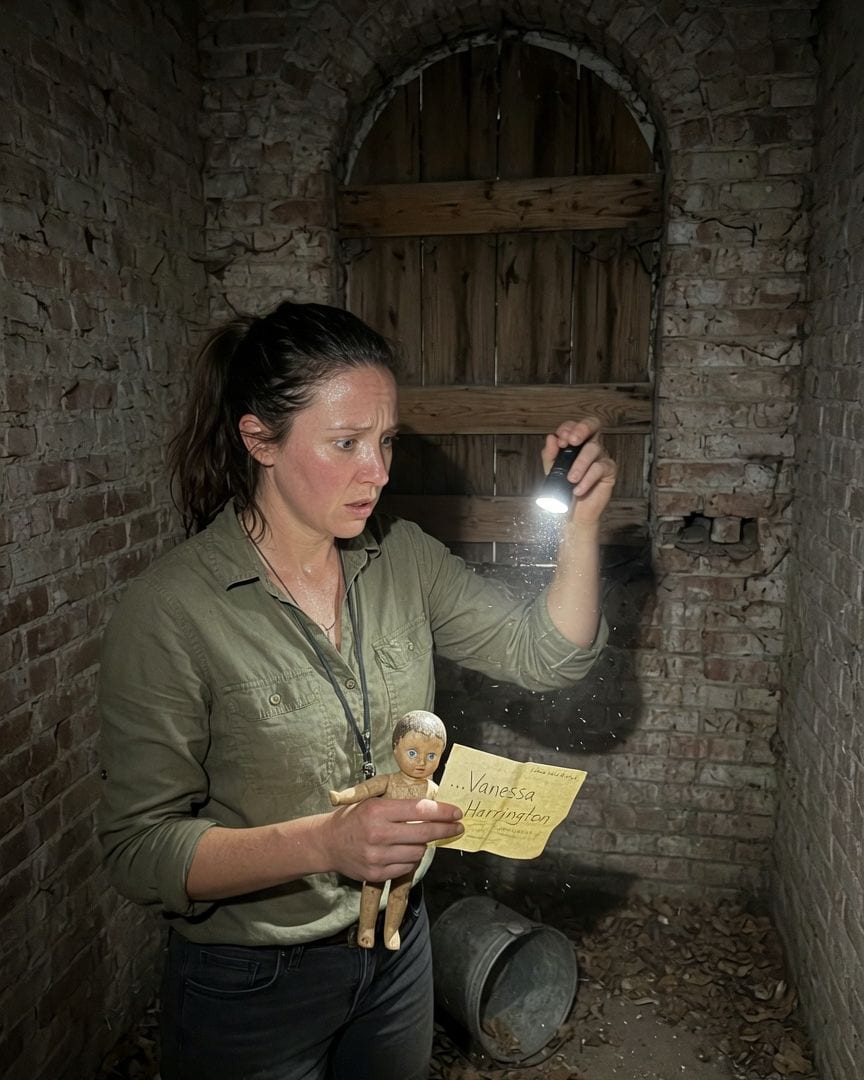
The attendance register has marked one pupil 'present' every single day since 1911 — never once absent. No child by that name has ever sat an exam.
Settling into my new teaching job at Oakhaven Elementary, I found myself drawn to the sealed bell tower. But it was the school's old register that truly unsettled me. A phantom entry, 'Pupil X,' had been marked 'Present' every single day since 1911, with no other records to prove they ever existed.