The attendance register has marked one pupil 'present' every single day since 1911 — never once absent. No child by that name has ever sat an exam.
The first thing you notice about Oakhaven Elementary is the bell tower. Or, rather, what’s left of it. It’s not just old; it’s sealed.
Every window, every archway, boarded up with thick, weathered planks of pine, painted a matching dark brown to blend, or perhaps to hide.
I’d only been in Oakhaven for two weeks, settling into my new English teaching position, when my curiosity got the better of me.
“What’s the story with the tower?” I asked Ronald Harrington, the history teacher, during lunch. He was a stern man, but seemed harmless enough.
He paused, a spoonful of lukewarm soup halfway to his mouth. “Oh, that? Structurally unsound. Safety hazard.” His voice was flat, practiced.
Later that day, I asked Sarah Jenkins, the kindergarten teacher, a warm, smiling woman. “The bell tower?” she chuckled, almost apologetically. “Oh, honey, it’s structurally unsound. Safety hazard.” The exact same words. Even the slight pause.
By the time the third teacher, Mr. Henderson from math, gave me the identical, unnervingly smooth sentence – “Structurally unsound, a safety hazard” – my skin was crawling.
It wasn't just a common phrase; it was a rehearsed line, delivered with an almost imperceptible lack of inflection, like they were reading from a script.
I tried to shake it off, dismissing it as small-town quirkiness. But then I found the register. The school’s attendance register, a leather-bound behemoth kept in the main office archives, meticulously maintained since 1911.
Josephine Mercer, the administrator, had tasked me with cross-referencing some old data, a tedious chore I normally dreaded. But then I saw it.
One specific line, near the middle of each page, held a single name: ‘Pupil X.’ And next to ‘Pupil X,’ every single day, year after year, stretching back to 1911 and continuing right up to the present, was the word ‘Present.’
Never ‘Absent,’ never ‘Late,’ never ‘Excused.’ Always ‘Present.’ The ink varied, subtly, changing from faded sepia to sharp black, clearly logged by different hands across decades, yet the name remained. And a quick check of the enrollment files yielded nothing.
No birth certificate, no address, no grades, no exam results for any 'Pupil X.' An impossible phantom, perpetually present in the records of Oakhaven Elementary.
It gnawed at me, the ‘Pupil X’ entry, an itch I couldn’t scratch.
I tried to convince myself it was some ancient administrative placeholder, a relic of a bygone era, but the sheer, unwavering consistency of it was impossible to rationalize.
It felt less like a clerical error and more like a deliberate, carefully maintained illusion. And the teachers’ identical responses about the bell tower kept echoing in my head.
I made an attempt to circle back to Ronald Harrington again after school, catching him tidying his desk. “Mr. Harrington,” I started, trying for casual. “About that register. The ‘Pupil X’ entry…”
He stiffened, his eyes flicking, almost imperceptibly, towards the bell tower visible through his window, before settling back on me with a forced smile. “Ah, yes, an old thing, that. Lots of strange entries in old ledgers, Hannah.
Before computers, you see. Fascinating how things were done.” He launched into an anecdote about 1930s curriculum changes, effectively changing the subject. The dismissal was too smooth, too quick.
That night, alone in our new house, with Simon out on a grocery run, the unease bloomed into a cold knot in my stomach. I couldn’t sleep.
The image of the boarded-up tower, the ghost-like register entry, the rehearsed answers – it all swirled together. I needed to see it, to prove it was just an old, empty building.
I drove back to the deserted school, the parking lot a sea of empty asphalt under the streetlights. The building was a dark silhouette against the inky sky, the bell tower a stark, unyielding presence.
I let myself in with my staff key, the click of the lock echoing in the silent halls. I remembered seeing a dusty cabinet labeled ‘Misc. Storage’ in the old boiler room.
It felt like a long shot, but something pulled me there.
Inside, nestled amongst rusted tools and forgotten cleaning supplies, was a small, ornate key, dark with age. No tag, no label. Just a key.
My heart was thumping as I walked back through the quiet school, down a narrow corridor I hadn’t noticed before, towards the base of the bell tower.
There, half-obscured by an overgrown bush, was a small, unmarked side door, barely wider than my shoulders. The key slid in. With a groan of ancient metal, it turned.
The air inside was thick and cold, heavy with the scent of damp earth, decaying wood, and a faint, metallic tang I couldn't place.
The beam from my phone cut a trembling path through the absolute darkness of the bell tower’s interior. It was surprisingly small inside, just a cramped, dusty space with rough brick walls. No spiral staircase, no visible bell.
Just a bare, forgotten chamber. I swept the light around, trying to make sense of it, feeling the grit of decades of neglect under my boots.
Then I saw it. A section of brickwork, slightly discolored, with mortar that looked a little too fresh in places, a little too crumbly in others. It was high up, just at the edge of my reach.
I stood on an overturned bucket, scraping at the loose mortar with my car key, my breath held. A small section of brick shifted, then another. With a soft thunk, a hidden compartment, no bigger than a shoebox, swung inward.
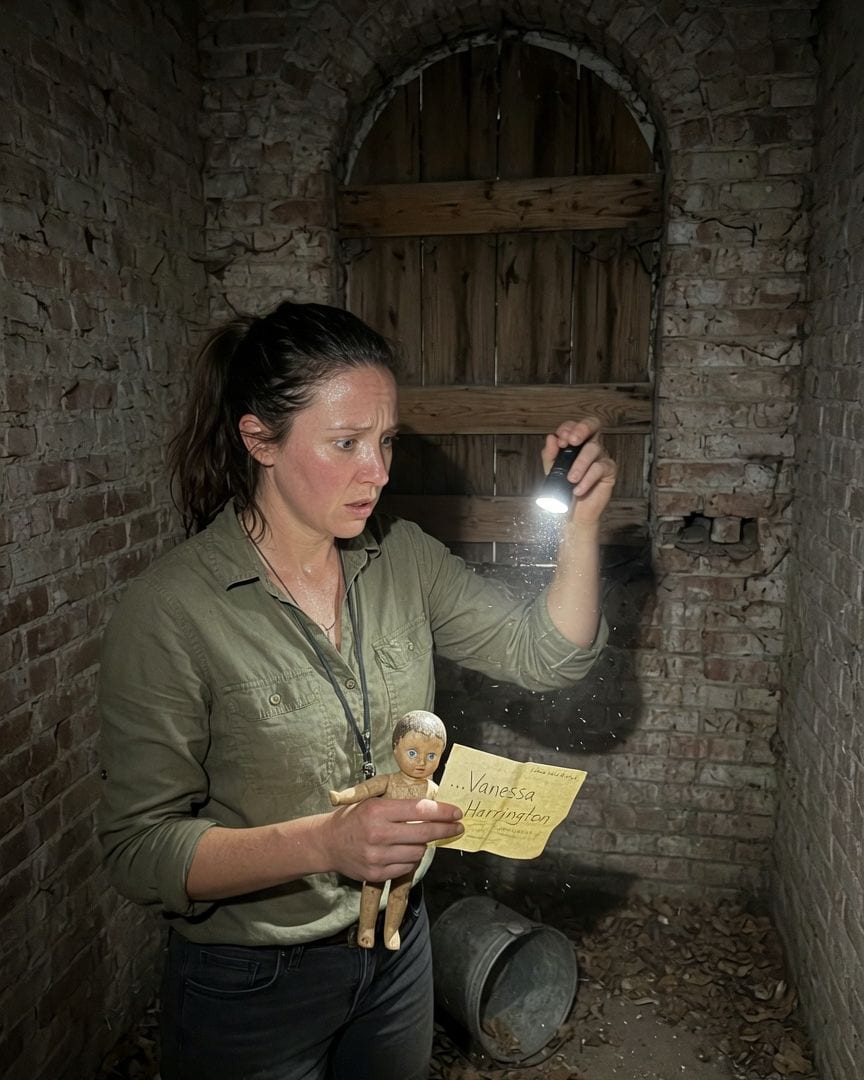
Inside, nestled in a thick bed of cobwebs and fine dust, sat an antique wooden doll. Its painted eyes, faded to a faint blue, stared blankly forward. It was crudely carved, but undeniably a child’s toy.
Beside it, tucked beneath its tiny wooden arm, was a brittle, yellowed piece of paper. A child’s drawing. It depicted a monstrous, vaguely human figure, all sharp angles and gaping maw, rendered in smudged crayon.
A shiver ran down my spine, despite myself.
My hands trembled as I reached in, pulling out the doll. It was lighter than it looked, hollow. And inside, a tiny, brittle scrap of paper, folded so small it almost crumbled in my fingers.
I carefully unfolded it in the beam of my flashlight. It bore a date from decades ago, clearly written in a careful child’s hand, followed by a name.
Vanessa Harrington.
The name. Harrington. Ronald Harrington. It couldn’t be a coincidence. I stared at the name, a cold dread seeping into my bones. This wasn't 'Pupil X.' This was a real child, with a real name.
And she was connected to this place, this tower, this impossible date.
Vanessa Harrington. The name wouldn’t leave me. The day after finding the doll, I was back in the school archives, cross-referencing everything. Old Oakhaven town records, parish registers, anything I could get my hands on.
And there it was: a child named Vanessa Harrington, listed as having "moved away suddenly" on the exact date I’d found on the scrap of paper. No forwarding address. No school transfer records. Nothing.
Just a blank, echoing void where a life should have continued. The official story was too neat, too conveniently devoid of detail.
I went back to the school register. The 'Pupil X' entry. I traced the dates. Vanessa 'moved away' on October 17th, 1968.
'Pupil X' was marked 'Present' continuously, but looking closely, there was a subtle shift in the ink, a tiny gap of a few days – a week at most – after Vanessa’s departure, before the continuous ‘Present’ marking for ‘Pupil X’ resumed with what looked like a different hand.
It was as if the ledger itself paused, then quietly adjusted. Not an immediate, direct replacement, but a quiet, almost apologetic continuation.
I decided to try Josephine Mercer again. She was the administrator, pragmatic, focused on procedures. I laid out my findings on her desk: the doll, the drawing, the scrap of paper, my notes on Vanessa Harrington’s disappearance.
She listened patiently, her hands clasped on her desk, her expression unreadable.
“Hannah,” she said, her voice soft, “I understand your concern. But old schools, old towns… they gather a lot of strange history. That doll, that drawing? Probably just old junk kids leave behind.
We’ve found stranger things in these walls over the years.” Her eyes, however, held a flicker I couldn’t quite decipher – not dismissal, not quite fear, but something guarded, distant. She wasn’t convincing me. She wasn’t even trying to.
That evening, I explained everything to Simon, trying to keep my voice even, rational. He listened, then rubbed his temples. “Look, honey,” he said gently, “I know it’s unsettling.
But small towns, especially old ones like Oakhaven, they have their eccentricities. Local legends, strange customs. It’s probably just a coincidence. An old family, a sensitive topic. Maybe they wanted privacy.”
He was trying to ground me, to pull me back to normal, but normal felt miles away.
The next morning, I found a small, folded note on my desk. It wasn’t in an envelope, just tucked beneath my laptop. Unsigned. Written in neat, cursive handwriting:
‘Some things are best left undisturbed.’
My heart hammered against my ribs. It wasn’t a prank. It felt like a warning. My eyes darted to the staff room doorway. Ronald Harrington was standing there, watching me, his eyes holding a strange, almost pitying look.
He didn’t say anything, just turned and walked away.
The feeling of being watched intensified. Walking through the school halls, I felt eyes on my back. Leaving school that afternoon, I noticed an old man sitting in a parked, beat-up sedan near the gates.
He wasn’t looking at the students, he was staring intently at the bell tower. Then, as I stepped out, his gaze shifted, locking onto me. Elliot Carver.
I knew his name from the school’s historical records – a former principal, long retired. His eyes were deep-set, shadowed, and seemed to hold a profound weariness. He didn't wave, didn't smile. He just watched.
I drove home via a longer route, through the winding back roads. Every shadow seemed to stretch and twist, every rustle of leaves sounded like a step behind me. A cold knot of dread tightened in my stomach.
Oakhaven, once quaint, now felt like a cage.
The warning note, Ronald Harrington's pity, Elliot Carver's silent stare – it all coalesced. I couldn't ignore it anymore. This wasn't an administrative quirk or a local eccentric.
This was something real, something that the town was actively trying to keep hidden. I went back to Josephine Mercer's office, the evidence spread across her desk once more.
"Josephine," I said, my voice firmer than I felt. "I found a note on my desk. An anonymous warning. And I know about Vanessa Harrington. The doll was hers. The drawing. And Ronald Harrington is her relative, isn't he?
He carries her name."
Her composure, usually as unyielding as the town's granite foundation, finally cracked. A flicker of raw fear, quickly masked, crossed her eyes. She leaned forward, her voice dropping to a strained whisper. "Hannah, please. You don't understand. The town...
we have a way of doing things. It's been like this for generations. To keep safe. To keep prosperous."
She gestured vaguely towards the window, towards the distant shape of the bell tower. "The register, the tower... it's all part of it. It's not a story, Hannah, not some quaint local legend. It's a burden. A very real one."
She wrung her hands, something I’d never seen her do. “We are bound by it. The whole town. We always have been. It’s how things are here.”
"What is?" I pressed, my blood running cold. "What 'way of doing things'? What burden?"
She shook her head, her gaze fixed on something beyond me. "I can't. I can't tell you the 'what' or the 'why.' Not all of it. But there's someone who can. Elliot Carver. The old principal.
He knows the whole truth. He's old, Hannah. He has nothing left to lose. He lives in that small cottage on the edge of town, near the old mill pond." Her voice was barely audible. "Go to him."
I found Elliot Carver’s cottage just as the sun began to dip below the tree line, casting long, bruised shadows across the damp ground.
He was sitting on a porch swing, wrapped in a threadbare blanket, his face a roadmap of age, but his eyes, when he turned to me, were sharp, profound, and held a weariness that seemed to sink into his very bones.
I held up the doll, the drawing, the brittle scrap of paper bearing Vanessa Harrington’s name. I showed him my notes, the timeline of her disappearance, the impossible ‘Pupil X’ entries in the register.
He nodded slowly, his gaze lingering on the doll.
“You’ve been digging,” he rasped, his voice a dry whisper. “They sent you to me, didn’t they? Josephine.” It wasn’t a question.
I nodded, clutching the heavy school register I'd brought with me. He reached out a gnarled hand, taking the register and laying it on the small table beside him.
Then, with an even more deliberate movement, he picked up a worn leather journal from the table – his own, filled with meticulous handwriting, dates, and names.
He opened his journal, tracing a finger across a page. “Here,” he said, his finger stopping on a date from exactly 25 years ago. “The last one. A boy named Thomas.”
He looked up at me, then pointed to the corresponding ‘Pupil X’ entry in the register, right around that time. “The name changes, you see,” he explained, his voice gaining a faint, chilling clarity. “Every cycle.
Always one ‘present’ in the ledger. A placeholder, a tally mark.”
His finger moved, slowly, inexorably, across the page of the school register.
It landed on the current blank space in the ledger, the one I had noticed in my initial study – a space I had assumed was simply waiting for the year to progress, for the blank to be filled by a future student.
“The last one,” he whispered, a sad, knowing smile touching his lips, “is due to be filled. Today.”
He looked up, his eyes, dark pools of sorrow, meeting mine. "It's time."
And suddenly, with a sickening lurch, I remembered. Lily Mitchell. Bright, curious eyes, always asking questions. Her quick, easy smile. One of my new students. Her family, the Mitchells, had lived in Oakhaven for generations.
Elliot Carver, with a quiet resignation, spoke. His voice, though frail, carried the weight of centuries. “For as long as Oakhaven has been Oakhaven,” he began, “there has been a pact. A contract, if you will, with… something.
An entity that resides in the bell tower.” He gestured faintly towards the direction of the school. “It protects us. From blight, from illness, from want.
Our crops always flourish, our wells never run dry, our people are spared the ills that plague other towns. In exchange…” He paused, his gaze distant, lost in memory. “In exchange, every 25 years, one child is offered.
A… sacrifice, to maintain the balance.”
He opened his journal, laying it flat on the table, side-by-side with the old school register. His journal was a history of horror: names, dates, the quiet desperation of past town councils, the precise schedule of ‘offerings.’
Generations of Mercers and Harringtons, names I recognized from Oakhaven's oldest families, scrawled as signatories to these terrible agreements. “The bell tower,” he continued, “is its portal. Its access point.
It’s boarded up not just because it’s ‘unsafe,’ but because it must be contained. And opened, when the time comes.”
He pointed to the names in his journal. “Vanessa Harrington. Thomas Miller. Sarah Jenkins’s great-aunt. All of them ‘moved away suddenly.’
All of them became ‘Pupil X’ in that register, their name changed to maintain the illusion of continuity, a perpetual tally mark for the town’s debt. The doll you found? That was Vanessa’s.
Her mother left it there, hoping it might… comfort her. The drawing? Found years later, by another child, just before their own turn came. A child who saw something in the shadows of the tower, something that still haunts me.”
His finger, still trembling slightly, moved from his journal to the school register’s blank space. “The current cycle is due today. The town is already preparing. Lily Mitchell. She’s from one of our oldest families, direct lineage.
It’s always one of them, you see. They understand. They always have.”
Horror, cold and sharp, pierced through me. Not a distant, intellectual dread, but a personal, sickening terror. Lily. Bright-eyed Lily, who loved to write stories about dragons and faraway lands.
I stood up, Elliot’s words echoing in my ears, the coherence of it all a crushing weight. Every odd detail, every evasive glance, every identical phrase, every impossible entry – it all clicked into place, forming a monstrous, unbreakable pattern.
“I have to go back,” I whispered, turning from him. “I have to stop them.”
I left Elliot Carver’s cottage, the chill of twilight already settling in. My mind raced, forming a plan that felt flimsy, desperate.
I rushed back to the school, the engine of my car screaming as I pushed it faster than I ever had. The school was a hive of quiet activity, parents picking up students, staff lingering.
Lily Mitchell’s class had just ended. I saw her skipping out of the building, her bright yellow backpack bouncing.
I burst into Josephine Mercer’s office, the old attendance register, Elliot’s journal, the doll, the drawing, all clutched in my trembling hands. Ronald Harrington and two other board members, stern-faced and unmoving, were already there.
“You can’t do this!” I cried, my voice raw. “This is insane! A child! Lily Mitchell! Elliot Carver told me everything! The pact, the offerings, the register entries, Vanessa Harrington! This is murder!”
I slammed the journal and register onto Josephine’s desk, the doll and drawing falling to the floor. Ronald Harrington’s face remained impassive, betraying nothing.
Josephine Mercer looked at me, her eyes devoid of the fear I’d seen earlier, replaced by that unnerving, quiet agreement, the same silent complicity I’d seen in Ronald’s eyes about the bell tower.
“Hannah,” Josephine said, her voice calm, almost soothing. “Elliot is a very old man. He’s… confused. His mind wanders. There’s no pact. No entity. Lily Mitchell is a perfectly healthy, happy child.
Her family is one of the pillars of this community. Here,” she slid a file across her desk, “her attendance records. Immaculate. Her family’s history, all in order.”
The other board members nodded, their faces unmoving, their gaze unwavering. They dismissed Elliot as senile, my evidence as fantasy. They spoke of the town’s prosperity, its long history of peace, its tight-knit community spirit.
They were a wall, unbreakable and unfeeling. I saw the depth of their complicity, the horrifying, generations-old secret they protected. There was no fighting them. No exposing them. No saving Lily.
A cold, hollow feeling settled in my gut, heavier than any dread. It wasn't fear of a monster; it was the crushing weight of coherence, the unbearable truth that it all fit, perfectly, horribly. I was powerless.
I couldn't save her. With a single, shuddering breath, I turned and walked out. I didn’t look back.
I packed my belongings that same day, Simon, bewildered but supportive, helping without questions. We left Oakhaven, the small, picturesque town receding in my rearview mirror, its silent bell tower a dark sentinel against the setting sun.
We told no one why. The town, I knew, would continue its quiet, prosperous existence.
A few days later, from a distance, I checked Oakhaven Elementary’s online portal. Lily Mitchell’s name had quietly disappeared from the official school records. Listed as ‘transferred.’
I knew, without having to check, that the blank entry in the old attendance register would now be filled. Once again, marking ‘Pupil X’ as perpetually present.
Months later, hundreds of miles away, the world was still normal for everyone else. I was scrolling through my phone, caught by a local news segment.
It was a puff piece about Oakhaven, celebrating its ‘unusual economic stability and tight-knit community spirit.’ The reporter stood in front of the school, smiling broadly, the boarded-up bell tower visible behind her, an innocuous, forgotten detail.
I looked away from the screen, my gaze falling on a framed photo on my desk: a class picture from Oakhaven Elementary, taken just before I left.
Lily Mitchell, bright-eyed and smiling, was front and center, a small gap between her two front teeth.
I knew the truth. The world moved on, oblivious.
If this one got to you
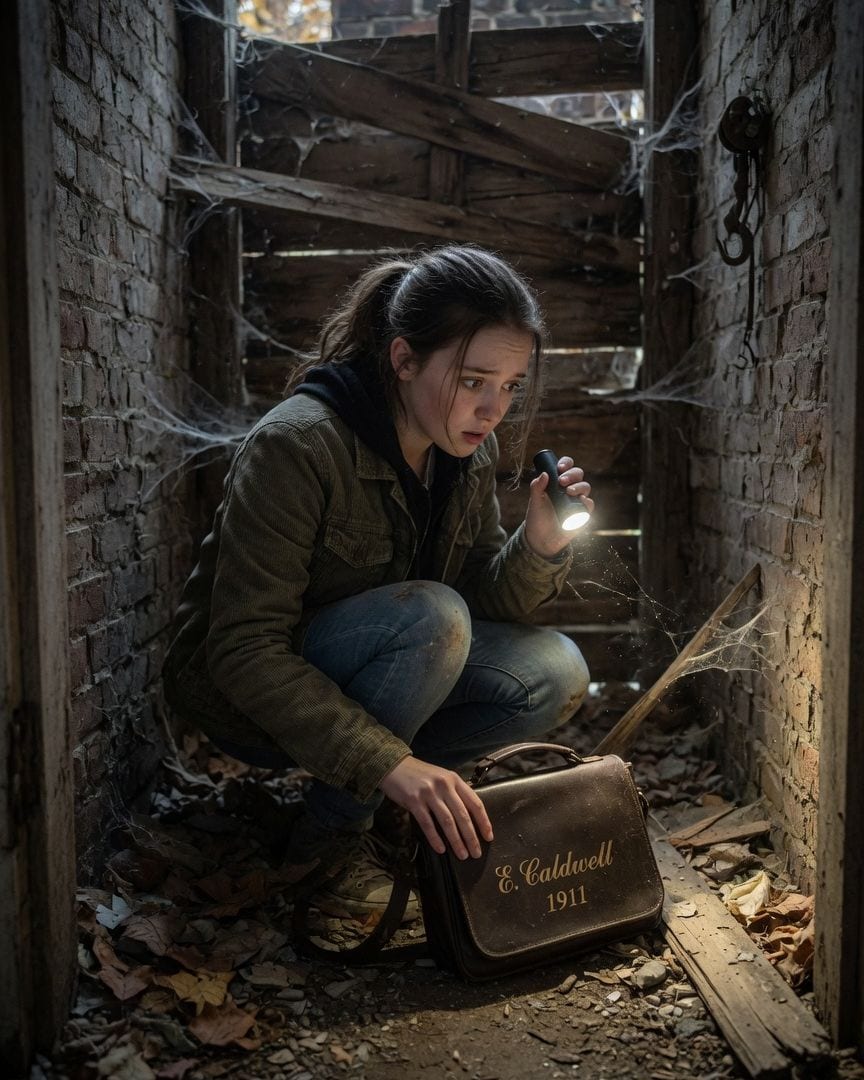
The school attendance register lists a child present every day since 1911. No such student ever sat an exam.
My new school, Caldwell High, felt too quiet, especially around its ancient, boarded-up bell tower. Teachers gave identical, rehearsed lines about it being "structurally unsafe." But then I found the attendance register, detailing a student named Eleanor Caldwell marked present every single day since 1911. No other record of her exists anywhere.
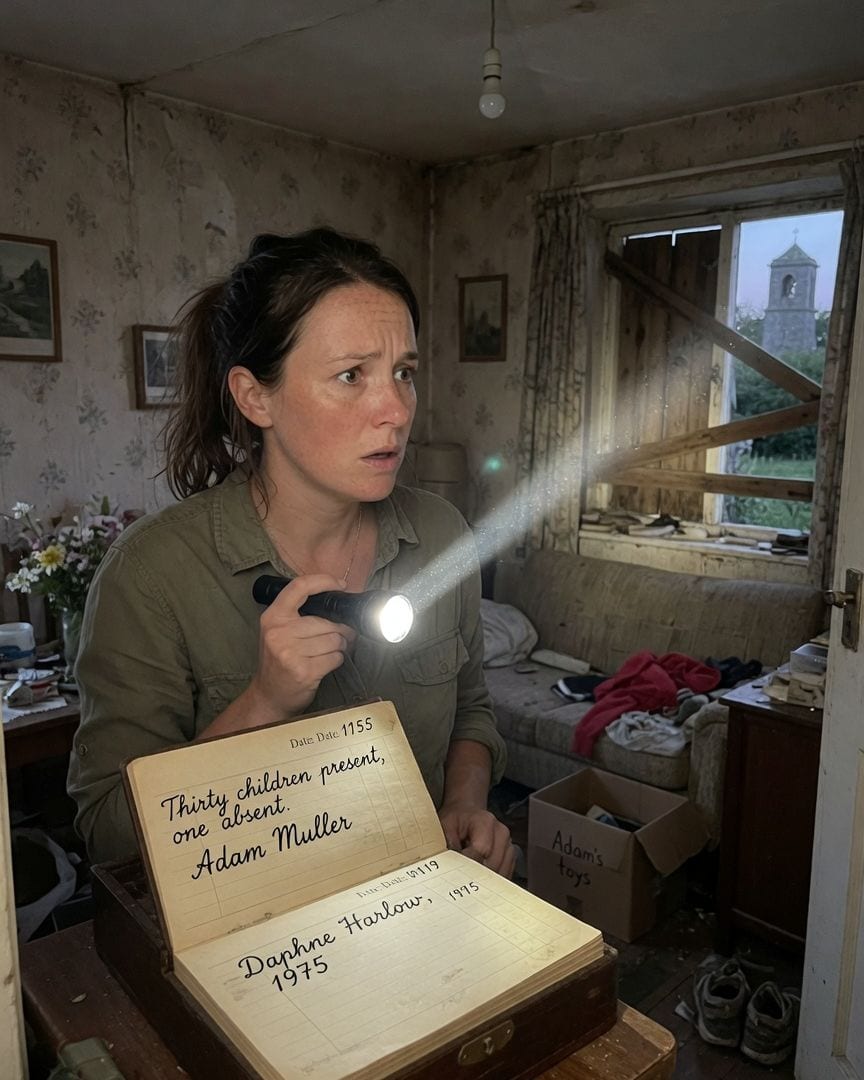
My son rang the old school bell. The attendance register, visible through the boarded window, now shows today's date and his name marked 'absent'.
We moved to a quiet village for peace, but my six-year-old son Adam found the old, boarded-up schoolhouse. Locals warned us, "Never ring the old school bell." That Tuesday, Adam rang it. Later, I saw his name on the school's long-closed attendance register, marked 'absent' in impossibly fresh ink from today.
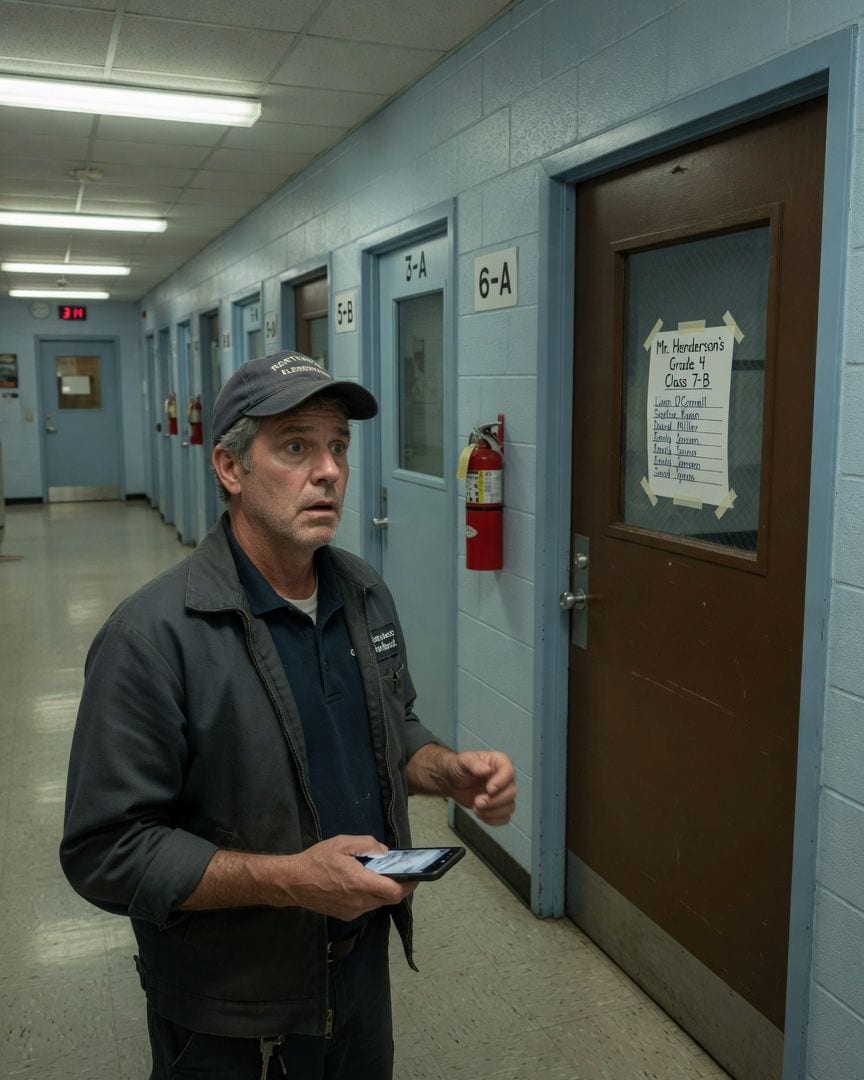
My classroom doors counted twenty-three last night. The extra one had a class list taped inside, names of children who've never been at this school.
My job as night caretaker at Northwood Elementary is routine: 22 classrooms, all accounted for. But one night, an impossible 23rd door appeared in the science block, nestled where only a wall should be. It bore a class list of students and a teacher who don't exist in any school record. Then, in an old logbook, I found that exact same list, dated 40 years ago.
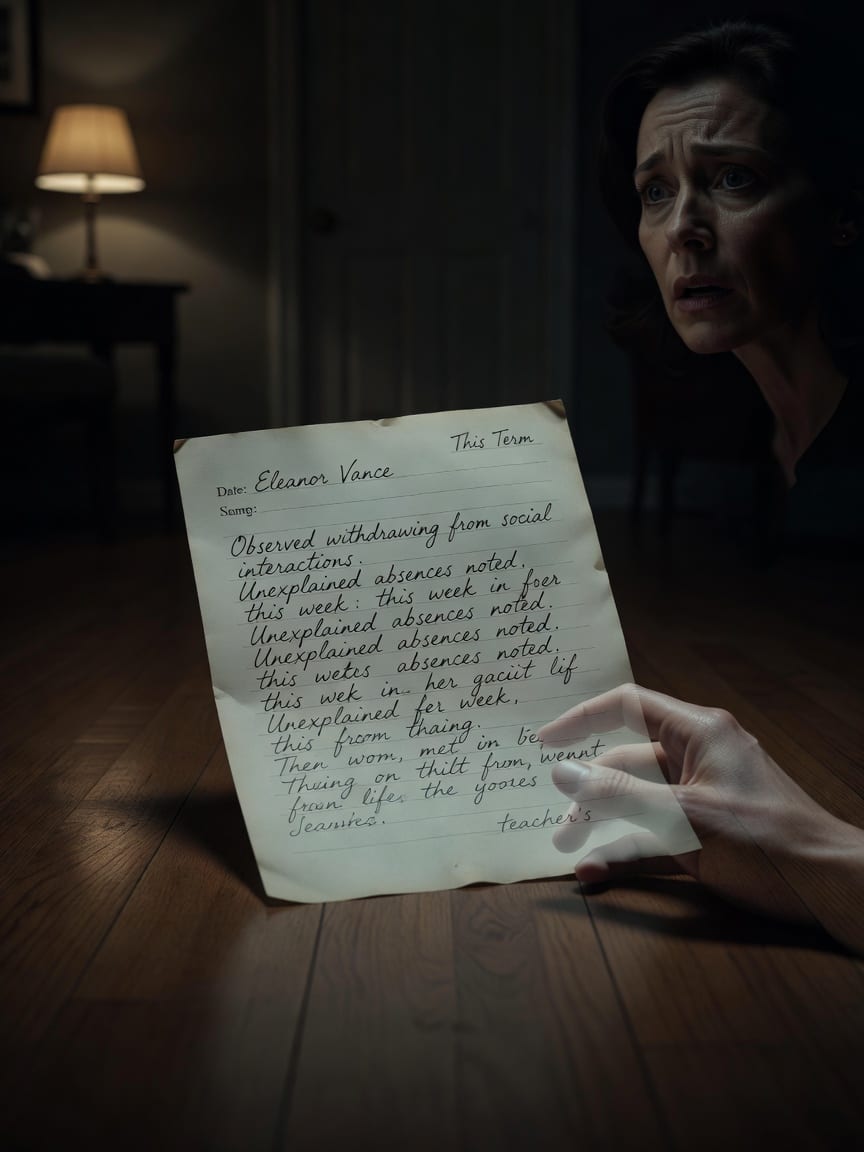
My school reports keep arriving, one a term, signed by teachers dead for decades. The latest describes something I'm doing *this week*.
My name is Eileen Caldwell, and my quiet life was upended by a school report from a place demolished decades before I was born. The report, signed by a long-dead teacher, eerily detailed my current habits. But the real shock arrived when I found my own name in a student register, dated 1968, with precise descriptions of my childhood—years before I existed.
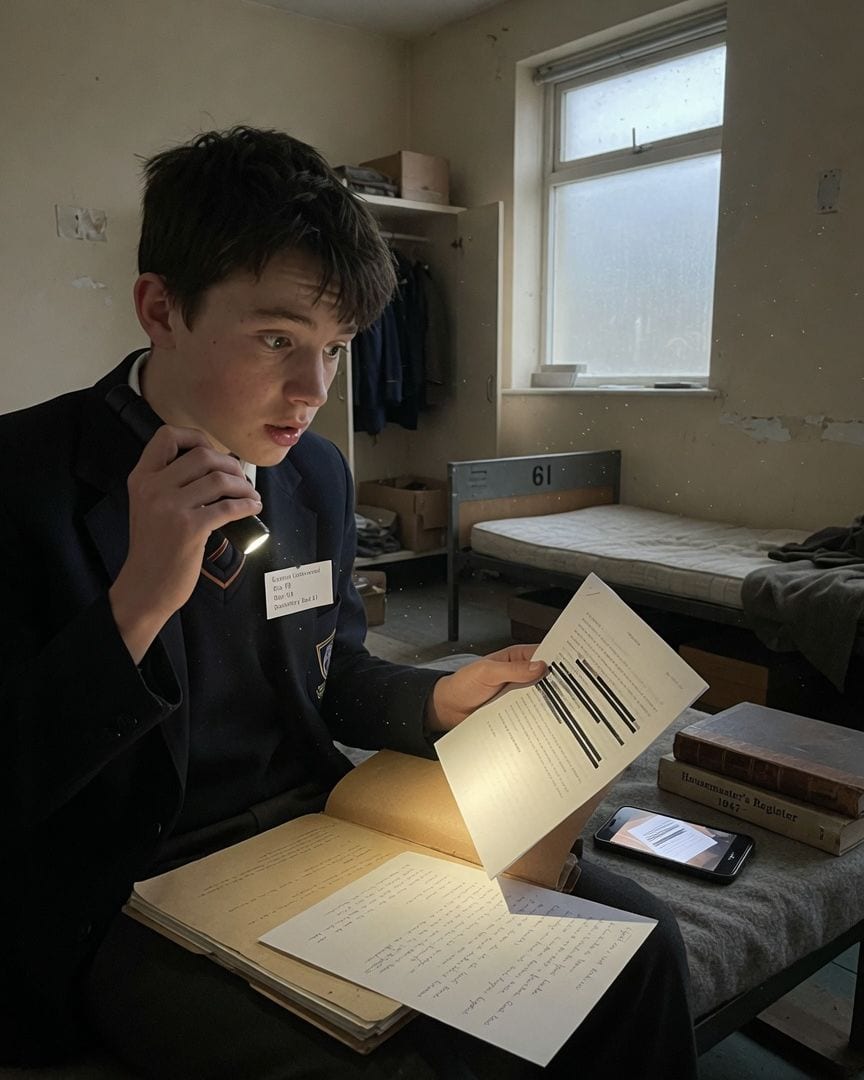
My boarding school bed number was 61, and the archive shows a boy assigned it every eight years since 1947, each leaving mid-term with the bed 'to remain made up'.
I found my matriculation card, listing me as 'Boy 61, Dormitory Bed 61.' Later, an old ledger revealed every boy assigned that bed since 1947 left mid-term, with an unsettling note: 'bed to remain made up.' Our housemaster’s recent scribble, 'as the others,' only deepened the dread around my own assigned bed.
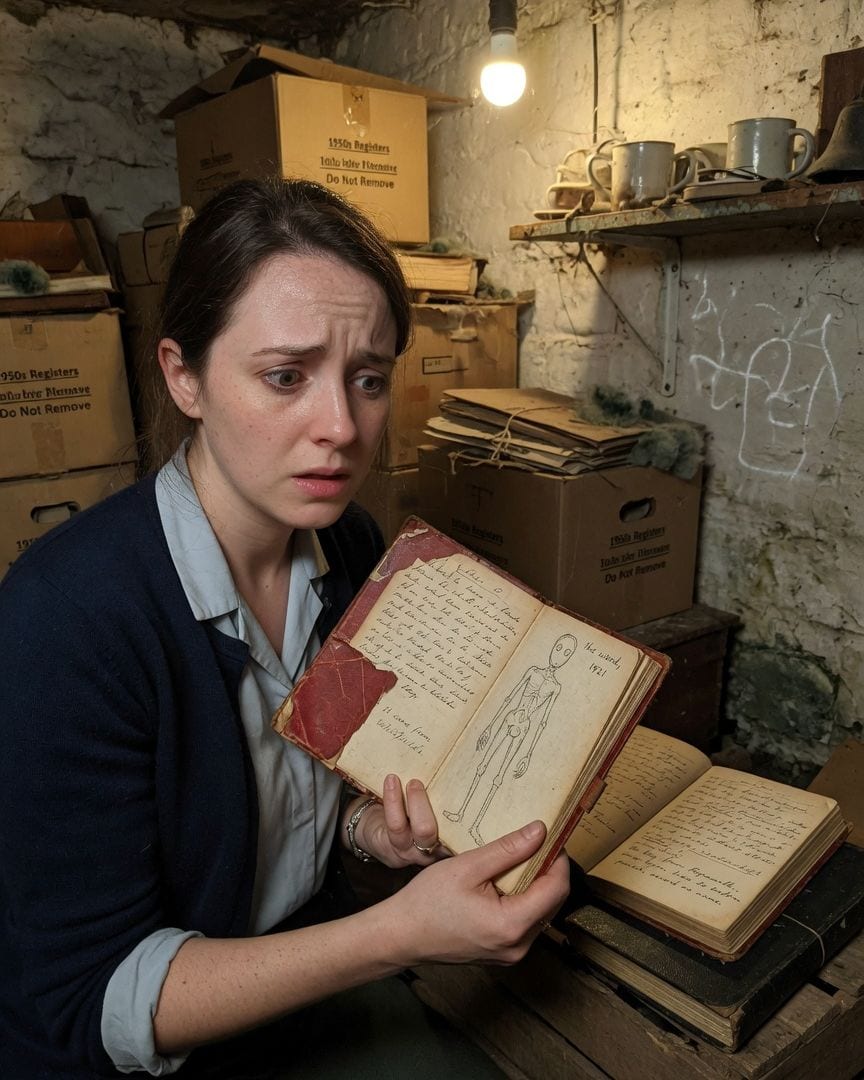
My old school punishment book lists a caning from 1953, the child's name blacked out. The head's note reads 'the boy from Ropewalk, as before — punish, record no name,' and Ropewalk is my street.
As the new teacher, I was sorting dust-choked archives when I found an old leather-bound punishment book. Its meticulous entries listed 'the boy from Ropewalk' caned once a decade, every decade, since 1901. A cold dread settled as I realized Ropewalk was my street, with the entries implying it was always the same child, from the same house.