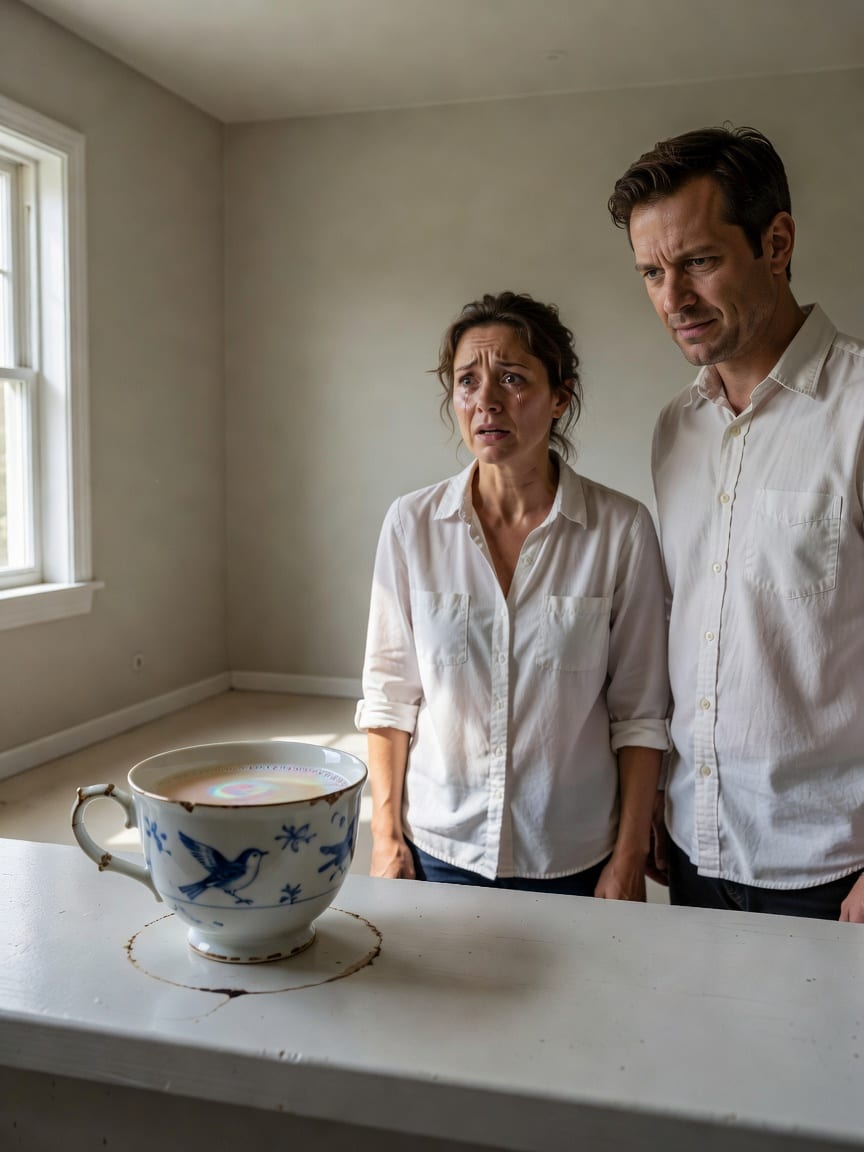
A cold cup of milky tea appears in my empty box room every night. The sugar ring on the sill is always the same. I live alone. I don't drink sugar tea.
Laura Doyle, 32, kicked off her sensible work shoes the moment she stepped into her new flat. The exhaustion of her evening shift at the library still clung to her.
She locked the heavy oak door behind her with two clicks, the solid sound reassuring. But as she moved further into the quiet space, a faint, familiar scent pricked at her nose – stale, milky tea. She frowned.
She hadn't made tea this morning. Slowly, she walked down the short hallway to the small, windowless box room.
She kept it locked, empty, and unused since moving in a month ago, planning to turn it into a tiny home office 'someday.' But 'someday' seemed increasingly distant. There it was.
On the narrow windowsill, bathed in the pale glow of the streetlamp filtering through the main apartment, sat a ceramic mug. Milky tea, one sugar, a thin, unsettling skin already forming on its surface. It was cool to the touch.
She didn't take sugar. She didn't even own this particular mug. Beneath it, a dark, indelible ring stained the white paint of the sill, a perfect circle she had tried, and failed, to scrub away countless times.
The room was otherwise bare, save for the dust motes dancing in the artificial light. She stood there, watching the faint ripple on the tea’s surface, a movement too subtle for a draft, too persistent for her imagination.
It was just… there. Again. Every single night since her first week, a fresh cup.
Laura had tried every rational explanation. A prank? But her closest friend, Sarah, lived across town and didn’t have a key.
Her landlord, Richard Ford, was a meticulous man who lived in another borough and wouldn’t dream of entering without permission.
He'd nearly had a damn heart attack when she'd first mentioned the tea, then dismissed it as a "quirk of an old building."
She’d meticulously wiped the sill clean each morning, even placed a discreet piece of masking tape across the inside of the window latch, checking for any disturbance. The window faced a sheer brick wall; no one could climb up there.
She’d even set her phone to record a timelapse video for an hour before her shift, hoping to catch a flicker of movement, a door opening, anything.
But the tape was always undisturbed, the recording showed nothing but the slow shift of shadows, and yet, the tea was back. It was like the air itself was condensing it.
One evening, frustrated, she inspected the windowsill more closely, running a finger along the recurring ring mark. The paint around it was slightly raised, almost like a faint scar. She pressed harder.
There's a subtle give, a tiny gap, where the skirting board meets the wall directly beneath the ring mark. It's almost imperceptible, a hairline crack, darker than the fresh paint. She knelt, pressing gently.
The section of skirting board shifted slightly, not quite flush with the wall. It’s not just old house settling; it felt deliberate, almost like a small, disguised panel.
A tangible thread, pulling her deeper into the wrongness, offering a physical point of investigation beyond the impossible tea. The wall seemed to breathe a faint, cold sigh as the wood shifted.
Laura wedged her fingernail into the narrow gap, prying the loose section of skirting board away from the wall. It came free with a soft, dry crackle of old plaster. The sound echoed in the tiny room, sharp and invasive.
Behind it, not insulation or wires, but a small, dusty cavity, just big enough to cup a hand.
Inside, nestled amongst cobwebs and a fine layer of grit, sat a delicate, chipped porcelain teacup with a faded bluebird pattern, and its matching saucer.
It’s bone dry, clearly very old, but the shape of a teabag is still faintly impressed on its base, a ghost of its last use. Her breath caught in her throat. This isn't a new cup, appearing.
This is a found cup. And it's been waiting.
The discovery of the teacup intensified Laura's unease. It was too specific, too deliberate. The small bluebird seemed to stare up at her from its dusty hiding place, a silent witness.
She researched antique porcelain online, trying to date the bluebird pattern, but found nothing definitive. The cup itself felt heavy with history, cool and smooth in her hand, even after being hidden for God knew how long.
She decided the online rabbit hole was useless. She started asking around the building. Most tenants were new or kept to themselves, exchanging nothing more than polite nods in the hallway.
But Florence Prescott, the elderly woman who lived downstairs, had been there for decades. Her flat was filled with the scent of potpourri and old books, a contrast to Laura's minimalist space.
Laura approached her in the communal garden one sunny afternoon, Florence pruning her rose bushes with precise, delicate snips. Laura held the chipped cup carefully wrapped in a handkerchief.
'Excuse me, Florence,' she began, 'I was wondering if you recognized this? I found it in my box room.'
Florence's hands paused, a half-snip hanging in the air. Her eyes, sharp behind her spectacles, widened almost imperceptibly as she saw the cup's distinct pattern as Laura carefully unwrapped it. A flicker of something — recognition? Alarm?
— crossed her face before she smoothly replied, 'Oh, that old thing? Probably just left by a previous tenant, dear. People leave all sorts.'
But her gaze lingered on the cup, and Laura noticed her hand twitch, a subtle, almost imperceptible gesture as if reaching for it, before Florence clasped her gloved hands together.
Laura pressed, 'It's just, I keep finding tea up there, and I don't drink this kind. It’s always milky, one sugar.' She gestured vaguely towards her flat, two floors up.
Florence’s smile became a little too fixed, a brittle thing that didn't reach her eyes. 'An old flat has its quirks, Laura. Best not to dwell on them. Some things are better left undisturbed.'
Her words, delivered with a gentle smile, felt like a warning, a whisper of cold air on the back of Laura’s neck, even under the afternoon sun.
The roses behind Florence seemed to shiver, shedding a scattering of petals onto the path.
Laura didn't 'not dwell.' How the hell could she? Florence’s reaction had been too specific, too controlled. She started paying closer attention to Florence.
She noticed Florence watching her from her window as Laura left for work, a flicker of movement behind the net curtains, a pale face momentarily visible before disappearing.
One afternoon, Laura returned to find her box room door, which she always left ajar, now firmly closed. She’s certain she didn't close it, she never did.
The air in the hallway felt heavy, like it had just held its breath. Another time, she found a small, antique silver spoon, not hers, on her kitchen counter, sitting beside her half-eaten cereal bowl.
A single, perfectly formed sugar crystal clung to its bowl, glinting innocently. It’s a subtle intrusion, a message that tightened the knot of dread in her stomach. Her skin prickled. Someone knew she’s digging, and was making their presence known.
She clutched the spoon, the silver cold against her palm.
She confronted Florence directly the next day, her voice carefully neutral, holding up the spoon. Florence was watering her geraniums, her movements slow and deliberate, a precise stream of water hitting the soil. She didn't look up immediately.
'Florence,' Laura began, 'has anyone else had issues with the box room? Or... things moving? Or finding things that aren’t theirs?'
Florence finished watering a pot, then another. The silence stretched, thick and uncomfortable. Finally, she straightened, her back remarkably straight for a woman her age. 'Things move, dear. Time moves. People move on.'
Her tone was unnervingly calm, a flat statement of fact. 'Some things, though,' she added, finally meeting Laura’s gaze, her eyes surprisingly clear, 'they like to stay. Especially if they're given attention. You give it attention, it gives it back.'
Laura felt a chill that had nothing to do with the autumn air. Florence wasn't just a nosy neighbor; she was aware. And she was warning her, not from malice, but from a deep, unsettling knowledge.
The air around Florence felt colder, thinner, as if her words had drawn something vital out of it.
Laura insisted on a real conversation, inviting Florence for tea – her own, strong black tea, a sharp contrast to the sickly sweet milky stuff. Florence accepted, bringing a plate of homemade biscuits, each one perfectly uniform.
Laura placed the bluebird teacup on the table between them, a silent challenge.
'Tell me about the previous tenant, Florence,' Laura began, gesturing to the chipped porcelain.
Florence sipped her tea, her eyes on the chipped porcelain. 'Ah, Dorothy Harlow. Lovely old soul. Lived here for sixty years before you, in your flat. A creature of habit, Dorothy was. Very particular.'
Laura leaned forward, trying to keep her own voice steady. 'Her habit involved milky tea with one sugar?'
Florence nodded slowly, a faint smile playing on her lips, almost indulgent. 'Every morning, without fail. First thing after she got up, around six.
She'd take it into that little box room – her 'thinking room,' she called it – and sit by the window. Always left it there to cool while she tidied the kitchen. She liked it cold.
Said it helped her think.'
Laura felt a wave of cold understanding wash over her. The precise routine, the specific preference – it all matched. The impossible, the inexplicable, was suddenly terrifyingly coherent. 'She disappeared, didn't she?'
Florence’s gaze was steady, devoid of sorrow or surprise. 'Yes, dear. One morning, in 1998, the tea was there, going cold, but Dorothy wasn't. Just vanished. Police searched, but nothing. No body, no note.
Just the cold tea, and her spectacles on the sill, waiting.' The clarity of it made Laura shiver. The tea, the ring mark, the exact timing – it was Dorothy's routine, still running. 'And this cup?'
Laura pushed the bluebird cup closer, its chipped edge glinting under the kitchen light.
Florence picked it up, ran a thumb over the chip. 'Her favorite. Always said it reminded her of a robin. She kept it hidden in that little spot, always. For safekeeping, she said, when she felt things were… shifting.'
Laura felt the earlier wrongness click into place, the mundane explanation finally failing, replaced by something far more chilling. Dorothy Harlow’s life, still playing out, day after day, in an empty room, for an audience of one.
And Florence knew it all. The antique clock on the wall seemed to tick louder, each second a hammer blow against the fragile silence.
Laura struggled to process the calm explanation. 'So, the house… it's just replaying her routine?' She felt a frantic energy bubbling inside her.
Florence set the teacup down gently, her movements unhurried. 'Not just hers, dear. Dorothy often spoke of 'the other tea.' Before she vanished, she'd complain of finding things in her own flat that weren't hers.
A smell of pipe tobacco when no one smoked, an old newspaper folded on the armchair, a half-finished embroidery on the table. She thought it was her mind playing tricks, but she started a little journal, documenting it.
Said it felt like someone else’s life was still running, just beneath hers.'
Florence reached into her cardigan pocket and pulled out a small, leather-bound notebook, its pages brittle with age. It looked ancient, almost like a prop from a museum. 'I found this amongst her things after she was gone.
She wrote about it all. The recurrences. The cycles.' She handed it to Laura.
Laura’s fingers trembled as she took it, the leather cool and dry. She opened it to a random page. The handwriting was shaky, faded ink on yellowed paper. '...the smell of lavender soap when I use none...
the clink of ice in a glass, always at 3pm... as if Mrs. Henderson never truly left.'
Laura’s blood ran cold. This wasn't just Dorothy's haunting; Dorothy was haunted. And the cycle… it needs a witness, Florence had said.
Her eyes darted to Florence's, who was watching her with an unnervingly serene expression, as if waiting for Laura to understand her own place in this repeating pattern. The air in the kitchen grew thick, suffocating.
'And the tea, Laura dear? Dorothy didn't just drink that tea. She watched for it. Just like you're doing now. The cycle… it needs a witness, you see. It always has.'
Her eyes, ancient and knowing, fixed on Laura's, and Laura felt a cold dread grip her, realizing the implication isn't just about Dorothy, but about herself.
Laura stared at the journal, then at Florence. Her heart hammered against her ribs, a frantic drumbeat in the sudden, heavy silence. 'What do you mean, 'it needs a witness'?'
Florence sighed, a sound like rustling dry leaves in an empty hallway. 'This house, Laura, it's old. Generations. It holds onto things. Not spirits, not ghosts, not exactly. More like… a deep memory.
When someone lives here, especially if they have a strong routine, and then they leave abruptly, vanish without a trace… the house remembers. And it replays. It starts subtly, a smell, a sound. Then it gets stronger.
The tea, the avoided stair, the worn seat. And it always finds someone to observe it. Someone like Dorothy. Someone like you.'
Florence gestured around the flat, a slow, encompassing sweep of her hand that made the familiar walls feel suddenly permeable, translucent. 'Dorothy documented Mrs. Henderson's routines – the lavender, the ice.
She even spoke of the 'tea lady' before Mrs. Henderson, a Miss Eleanor Cross, whose kettle would whistle at six every morning, even when the flat was empty. Each cycle feeds the next. The house absorbs them.'
Laura's mind raced, connecting the dots: the distinct ring on the sill, not just Dorothy's, but perhaps layered over others, traces of Eleanor, of Mrs. Henderson; the hidden teacup, not just for Dorothy's safekeeping, but maybe a previous occupant's desperate attempt to break the cycle by removing the artifact.
The horror isn't a single ghost, but an endless, escalating echo. 'And those who vanish?' Laura asked, her voice barely a whisper, thin and reedy in the air.
Florence's expression didn't change, remained a mask of placid acceptance. 'They become part of the memory, dear. Their routine becomes the next one to play. The house remembers, and it waits for the next witness to step into the role.'
A faint, musky scent, like old parchment, seemed to seep from the very floorboards.
Laura stood up abruptly, pushing her chair back with a loud scrape that seemed to shatter the oppressive calm. 'So, I'm next? I'm supposed to just… watch until I disappear?' The thought was a raw, burning knot in her gut.
Florence watched her, calm as ever, her composure a solid, unmoving wall. 'It's not a malevolent thing, Laura. It simply… is. The house remembers. You can try to fight it, but it strengthens when you resist. Dorothy tried.
She started leaving notes, trying to communicate with whatever she thought was there, trying to force a different ending. That just made her own routine more vivid. The tea became daily, not just occasional. The house wanted her attention.
It wants yours.'
Laura walked to the box room, staring at the empty sill. The prospect of leaving, of abandoning her new home, her entire life, felt impossible. But staying, becoming another echo, another routine to be absorbed, replayed, witnessed?
The thought was suffocating, a cold hand tightening around her throat. 'What happened to Dorothy? Where did she go?' Laura asked, turning back to Florence, desperate for a tangible answer, anything concrete.
Florence shrugged faintly, a slight lift of her shoulders. 'No one knows. One morning, the tea was there, cold. She wasn't. The house had remembered her fully. Perhaps she simply became part of it. Part of the pattern.'
Laura looked around her living room, suddenly seeing not her new home, but a stage set for a performance she's been unwillingly cast in.
The worn patch on the carpet where Dorothy paced, the faint scent of old lavender from Mrs. Henderson's time, the invisible kettle that whistled for Eleanor Cross. The house isn't just remembering; it's acting.
And she is its new audience, its new performer. The calm acceptance in Florence's eyes, the utter lack of any alarm, was the most terrifying part. Florence has seen this before. She expects it.
She’s just a passive observer, waiting for the next scene to play out.
Laura didn't leave the flat. She couldn't. The cycle had already begun, rooting itself deep in her new routine. She tried to ignore the tea, to clean the sill without a second glance, to avoid the box room entirely.
But the pull was undeniable. The urge to check, to verify, became its own relentless habit, a whisper she couldn’t silence. Each morning, a fresh cup of cold tea. Each evening, the same indelible ring on the paint.
She stopped trying to find answers, stopped asking questions. Florence would sometimes wave from her window as Laura went about her day, a small, knowing smile on her face.
Laura would just nod, a new quietness settling over her, a strange placidity that felt less like peace and more like resignation.
One morning, Laura found herself in the box room, not just observing the tea, but rearranging a small, chipped bluebird teacup on the sill, a faint impression of a teabag already forming in its base.
She paused, a strange sense of calm washing over her, like the stillness after a storm.
She picked up a small, leather-bound journal, its pages brittle, and began to write, her handwriting a little shaky at first, then steadying, about the faint scent of pipe tobacco she'd noticed in the hallway, always at 3pm, just before the clink of ice from the empty kitchen.
She smiled, a small, faraway smile, as she carefully set the journal down.
The downstairs neighbor, Florence Prescott, often saw the new tenant, Laura Doyle, through her window. Laura moved with a quiet, measured grace, a faint, almost imperceptible smile touching her lips.
Florence would watch her sometimes, especially when Laura paused, just for a moment, by the box room door, before continuing her day. The house was remembering, and she was helping it.
If this one got to you
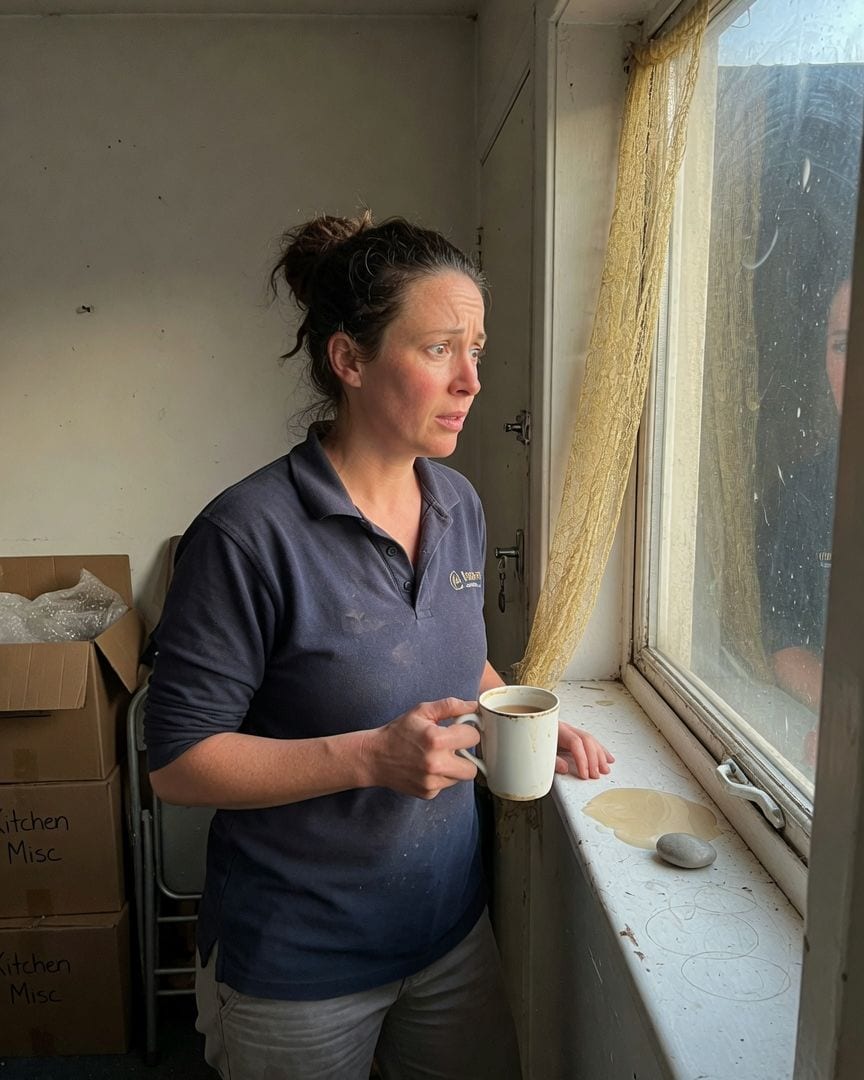
A cold cup of milky tea sits on my box room windowsill. I don't drink tea with sugar. The flat locks from the outside every time I leave.
After moving into my new flat, I started noticing a strange detail. A chipped ceramic mug, filled with cold, milky tea, repeatedly appears on my box room windowsill. I live alone, don't drink tea with sugar, and my flat is always triple-locked. Yet, the tea is always there.
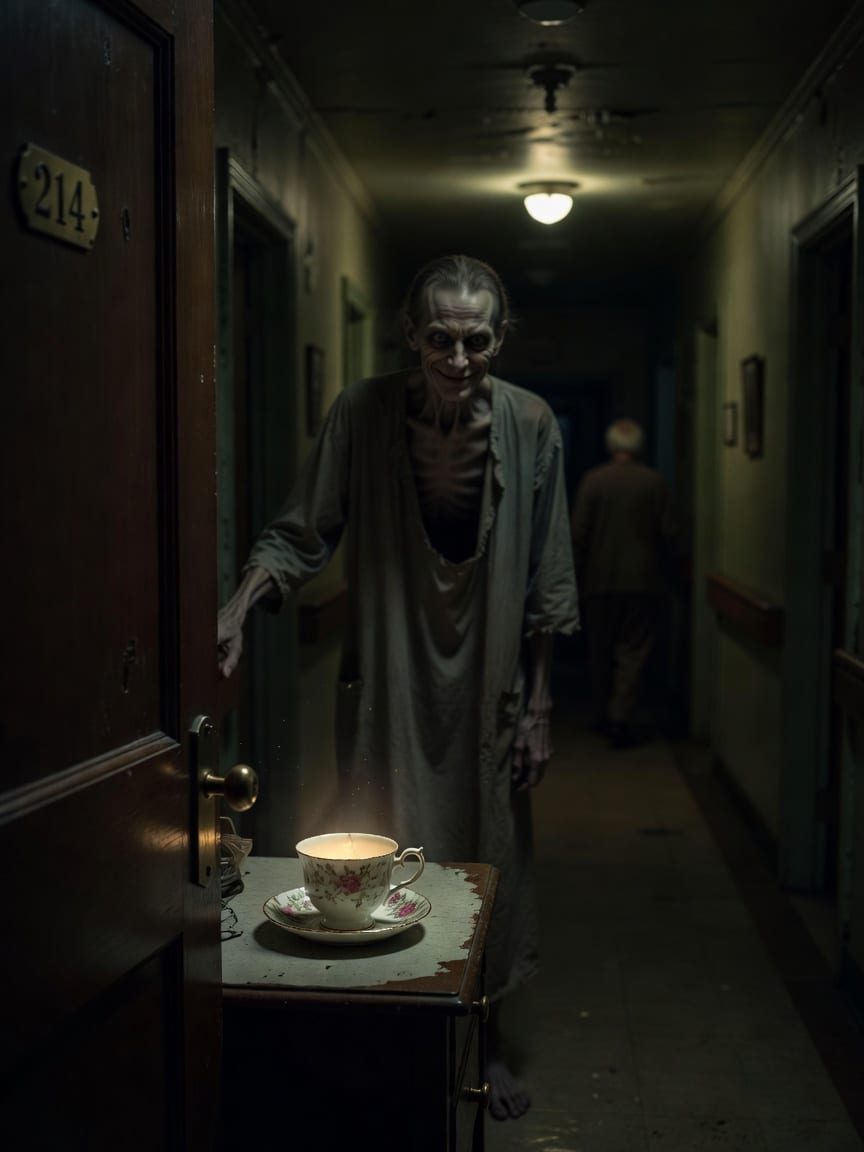
Every 3:30 AM, old Mr. Pryce shuffles past my hospice desk. He smells of lavender, asks for tea. My day nurse says he discharged four months ago. His room has been empty since.
As a night desk attendant, I'm used to the quiet routine of the hospice, especially Mr. Pryce's nightly cold tea request. But then the day nurse told me Mr. Pryce was discharged four months ago, and Room 214 has been empty since. Now, his floral teacup sits on the bedside table, still faintly warm.
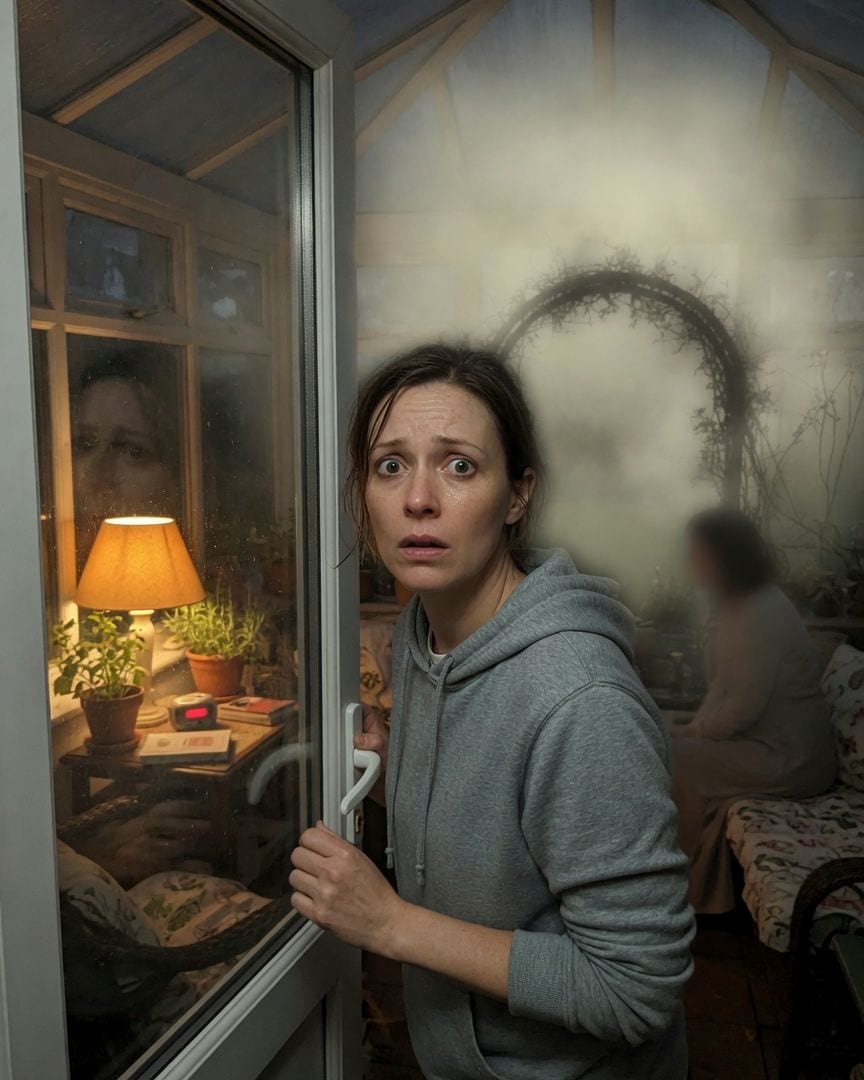
My conservatory disappeared. A woman sat on a bench where my sofa should be, back to me, in a long pale dress.
After a strange evening where my conservatory glass seemed to dissolve, showing an impossible garden and a woman, I tried to dismiss it as a trick of the light. But the next morning, a delicate bone china teacup appeared on my sofa, utterly out of place. It bore the etched year '1953' and initials I didn't recognize, an undeniable relic in my modern home.
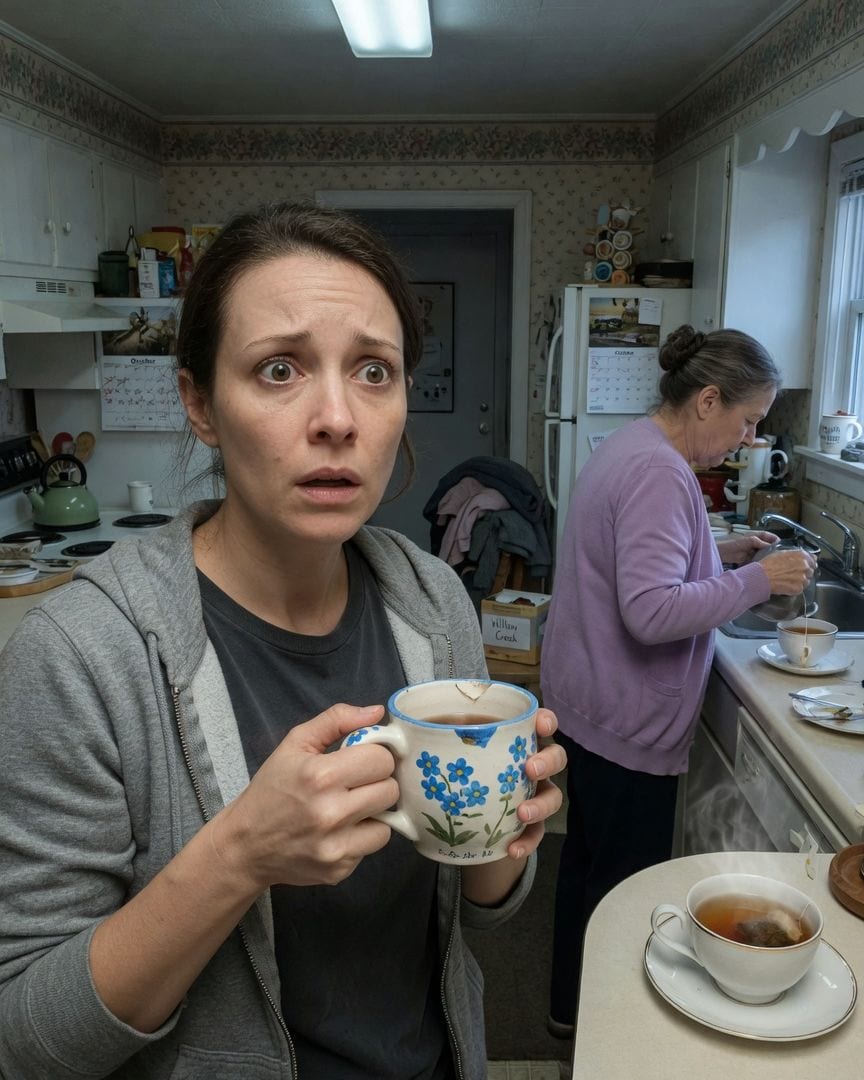
My mother came back remembering my secret childhood runaway night. She slept through it.
My mother returned from Willow Creek, after five days unaccounted for. She seemed herself, until she casually mentioned her lifelong preference for Earl Grey tea. But Mom, Judith Kingsley, had only ever consumed black coffee for sixty-eight years, calling tea 'dishwater drink.'
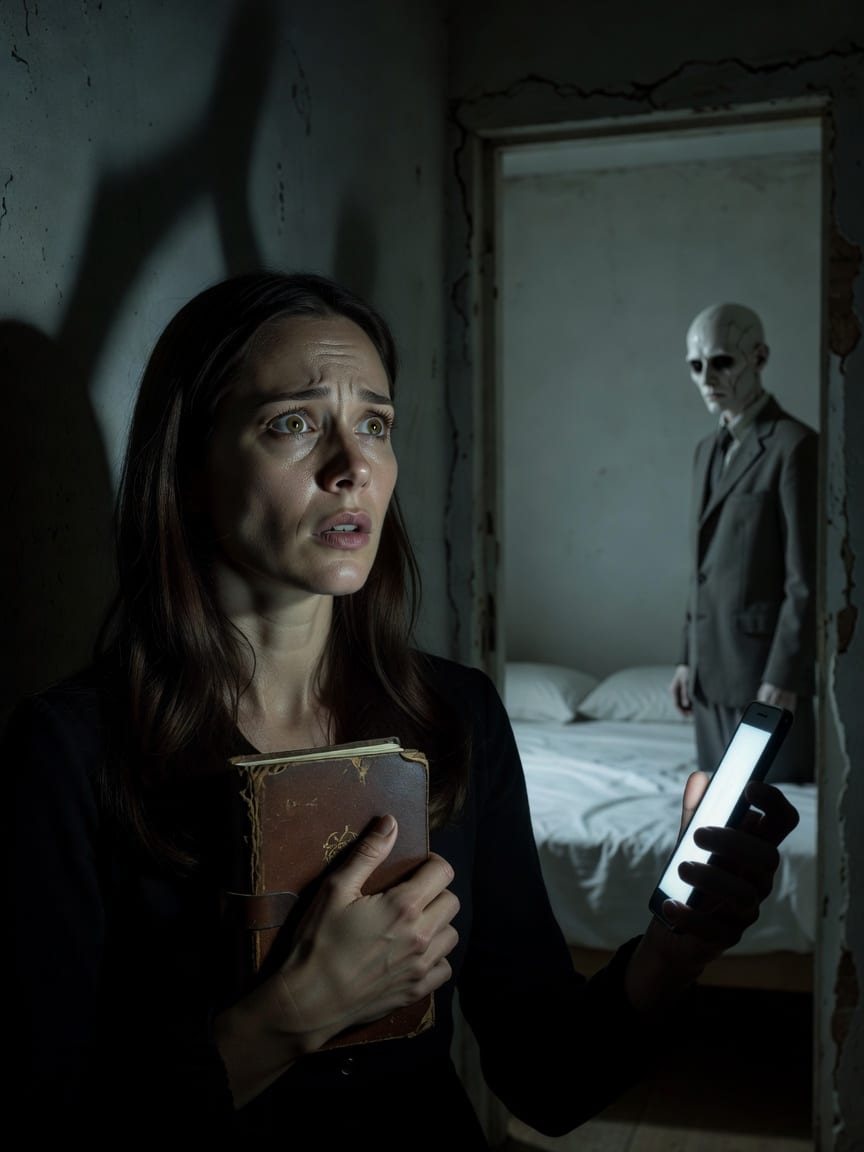
Behind a plastered-over doorway, I found a room. Papered, carpeted, and furnished with a made bed, sealed for decades. The air was dead still, but the bed wasn't dusty. My council tax bill only lists five rooms.
I'm Claire, an architect, meticulously planning my new Victorian terrace renovation. But when I uncovered a hidden room behind a wall, everything I knew about time and decay shattered. The bed was perfectly made, the air still, yet there was no dust, only an unnerving cold.
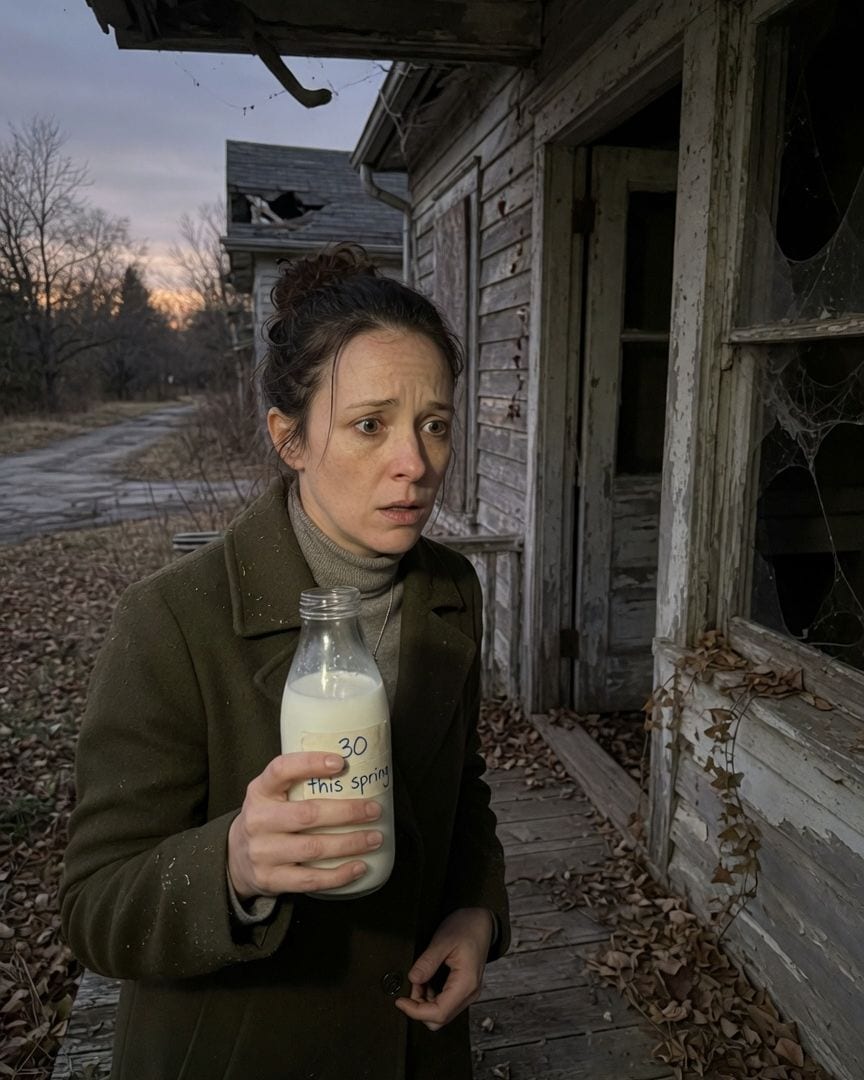
My grandfather's old milk ledger shows Account 30 reissued to the same house every ten years since 1930. Different names, same number. The last entry, unpaid, is dated this spring.
Sifting through my grandfather Howard's old things, I found his milk ledger. One account for a house long abandoned on Foldyard Lane showed a strange pattern of recurring 'stopped taking milk, gone' entries, ending with 'unpaid' this spring. Driving out to the decades-old ruin, I found a pristine, sealed milk bottle, dated 'this spring,' on its crumbling porch.