A Cold War pilot, eleven minutes from his new daughter, saw his own signature on a requisition for a 'Harvester' drone, dated a month in his future.
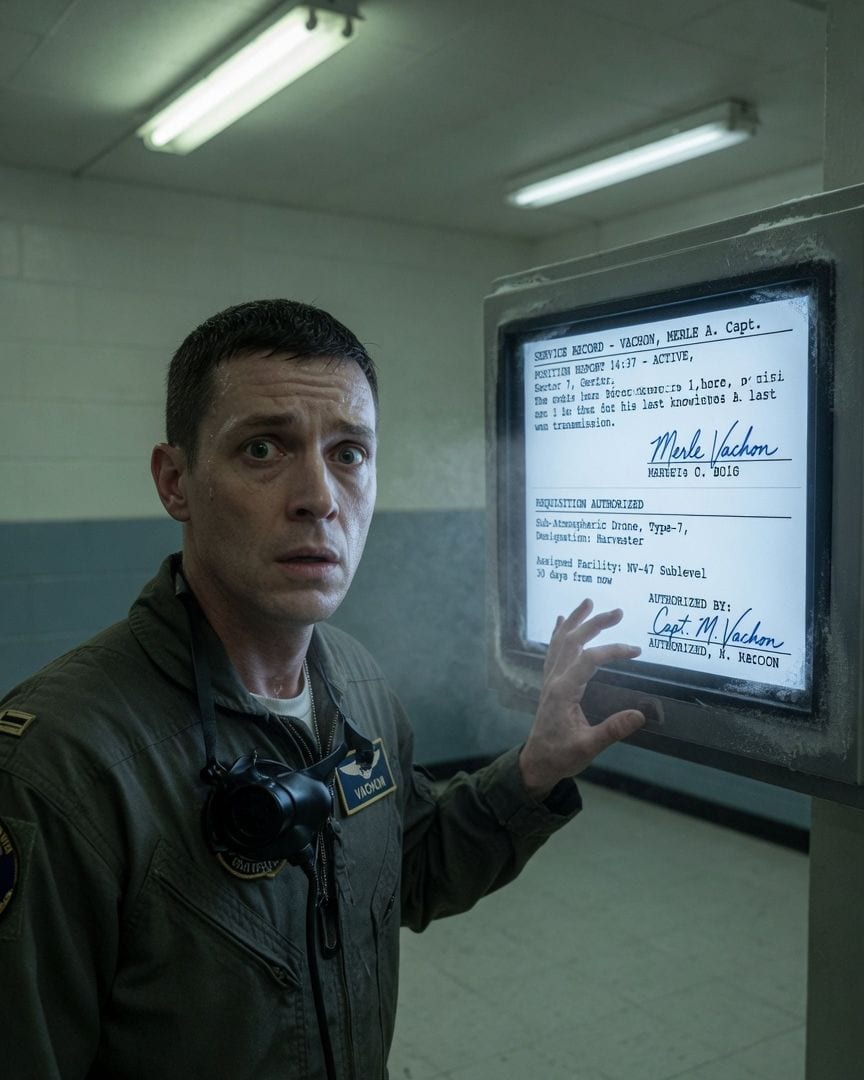
Captain Merle Vachon, 32, felt the cold press of the oxygen mask against his cheek, the rumble of the F-86 Sabre a familiar comfort.
He was eleven minutes from home, from the daughter born Tuesday, when the radar blip solidified into something impossible: a disc, forty thousand feet up, utterly still.
He wrote the word 'saucer' in his head because his training had no other. His jet clawed for altitude, the Gs pressing him, but the disc just waited.
When he finally leveled, it slid sideways without banking, defying every law of aerodynamics he knew.
Merle checked for balloons, for atmospheric inversions, even for reflections on his canopy; each mundane explanation died on the way down, leaving only the impossible.
He had filed his last position report, but the silence from ground control was already too long, too deep. The radio crackled with only static.
He tried to raise them again, his thumb hitting the comms button, but the airwaves felt dead, utterly empty.
He felt a shiver then, not from the biting altitude, but from the sudden, profound sense of being utterly alone, and yet observed. The thing hung there, silent, enormous.
The gun camera was still running, its whir a low hum beneath the roar of his engine, capturing the impossible, closer with every frame.
The world blurred, not with G-force, but with a sensation like static across his vision, a soundless crackle. A deep, cold quiet settled, muffling the roar of the Sabre, hushing the whine of the engines.
Then, Merle was no longer in the cockpit. He stood, or floated, in a vast, cold, sterile space, featureless save for a single, glowing console that hummed with a low, patient energy.
The air was thin, like static on his skin, a deep chill that reached his bones.
On the screen, in crisp, familiar black and white, was his own service record. It wasn't a static document; new lines were appearing, scrolling into existence with a soft, electronic whisper that was just barely audible.
A position report, dated an hour after his last known transmission, listed him as 'Active, Sector 7, Reconnaissance.' His own service number, his call sign, even his distinctive signature, appended to the entry in a confident, familiar hand.
He reached out, his hand passing through the spectral image, feeling nothing but cold air. This wasn't a misfile. This was a continuation.
He watched, horrified, as another entry appeared: a maintenance sign-off for his F-86, detailing a 'routine inspection' performed by 'Capt. M. Vachon.' But his F-86 was gone, or he was. He had just been in it, fighting for altitude.
The rational part of his mind, the pilot's mind, screamed for a logical explanation, for a debriefing, for a doctor, but the screen kept writing, relentlessly, adding to a history he hadn't lived.
He tried to think of a prank, a complex simulation, but the quiet immensity of the space, the cold hum of the console, choked the thought.
He watched the entries accumulate, a bureaucratic ghost. Then, a new form scrolled into view: a requisition. 'Authorized Equipment: Sub-Atmospheric Drone, Type-7, Designation: Harvester.'
His eyes, or whatever served as his eyes now, scanned the details, each line a fresh stab of cold dread.
The 'Assigned Facility' was a coded alphanumeric string he'd never seen, located deep within the Nevada desert, hundreds of miles from any known base. The date on the requisition was the most chilling detail: a month from now.
And beneath the line for 'authorized by,' in bold, confident strokes, was his own signature. Captain Vachon stared at the requisition form, his own signature in bold, confident strokes beneath the line for 'authorized equipment.'
The date was a month from now, and the equipment listed—'Sub-Atmospheric Drone, Type-7, Designation: Harvester'—is utterly alien, for a facility he'd never heard of, hundreds of miles from any base he knew. His hand, insubstantial, reached for the impossible document.
The liminal space shifted, or Vachon's perception did. The glowing console expanded, revealing a nexus of interconnected data streams. He realized he was within the very system that generated these records, a silent, incorporeal witness, a ghost inside the machine.
He navigated, not with hands, but with intent, a thought pulling him through the endless corridors of data, through his own 'active' file. He saw a 'Projected Itinerary' for 'Capt.
M. Vachon' that outlined missions deep into restricted airspace, flights he'd never flown, targets he'd never been briefed on. Each entry was meticulously logged, cross-referenced with fuel consumption, personnel manifests, and ordnance expenditures.
The sheer volume of detail, the cold, official coherence of it all, was more terrifying than any monster he could have imagined.
He found other requisition forms, similar to the first, all for 'Harvester' drones, all signed with his name, all for the same coded facility.
He tried to rationalize it as an elaborate simulation, a psychological operation gone awry, a bizarre dream, but the data was too real, too consistent.
He saw payroll runs, showing direct deposits to his bank account, money he would never spend, for 'active duty' he would never perform. It was all there, a meticulous phantom life.
The system was not just documenting his loss; it was actively maintaining his existence, a ghost in the machine of bureaucracy, complete with pension contributions and leave days.
The hum of the console seemed to deepen, a low, patient thrum that reverberated through his non-body. He pushed against the data, trying to find a contradiction, a flaw in the logic, but it was perfectly, horrifyingly, coherent.
As Vachon delved deeper, a subtle shift occurred. The data streams, previously passive, now seemed to ripple, almost notice his presence. He felt a faint pressure, like the air itself was resisting his movements, growing heavier.
He found himself shunted away from certain directories, access denied with a silent, firm 'ERROR 404: FILE NOT FOUND' message that felt less like a technical glitch and more like a deliberate block.
He tried to access the 'Harvester' drone specifications, to understand what he was supposedly 'piloting,' what kind of equipment bore his signature. The system immediately diverted him to a loop of standard flight regulations, a bland, endless scroll of protocol.
A new pop-up appeared on the console, a simple text field, flashing once with an icy blue light: 'UNAUTHORIZED ACCESS DETECTED. CEASE AND DESIST.' No sender, no origin, just the stark command.
A cold dread, sharper than anything he'd felt before, seeped into Vachon's incorporeal form. He wasn't just observing; he was being observed. The institution, or whatever controlled it, knew he was there.
He tried to trace the source of the warning, to find the 'records officer' Walter Porter, whose name appeared on so many of the 'new' entries as the secondary sign-off.
The system presented a blank profile, then, chillingly, displayed a single, still frame from his own gun camera film, the saucer filling the lens, its surface reflecting a distorted image of his F-86, as if to remind him where he truly was, what had happened to him.
The quiet space felt less empty now, more like an enormous, silent eye was watching his every move.
Ignoring the warning, the cold image of his own plane, Vachon pushed further, searching for 'Walter Porter.' The system, instead of blocking him completely, now presented a series of archived communications.
He 'read' them, not as text, but as direct streams of intent, information flowing directly into his awareness. They were internal memos, decades old, discussing 'asset management' and 'integration protocols.' He saw references to 'harvested individuals' and 'identity repurposing.'
The truth began to coalesce, sickeningly clear, like black oil rising through clear water. The continued file entries, the requisitions, the payroll — they weren't errors.
They were the active, ongoing records of his new existence, not as Merle Vachon, pilot, but as a unit within their system.
He saw a memo outlining the 'phased integration of newly acquired assets, maintaining a plausible civilian and military footprint.' His own father's pension records, updated by 'Walter Porter,' suddenly made sense in a way that twisted his gut.
Porter wasn't a person; Porter was a designation, a function within the secrecy machine, tasked with maintaining the 'paper trail' for the assimilated. Vachon understood: he wasn't lost; he was filed.
His identity, his life, was a bureaucratic shell being actively managed to mask the true nature of the 'Harvester' operations.
The gun camera film's impossible closeness, the silence from ground control, the smooth, unbanking slide of the disc – it all clicked into place as the moment of his 'acquisition.' The system wasn't just observing him; it was using him.
The terror of the unknown receded, replaced by the profound, chilling horror of the known. He was a piece of data, repurposed. The silence of the vast chamber felt heavy, suffocating.
The realization was a cold, alien presence in his mind. He was a cog, a living ghost, his name a label on an endless series of operations. The system, relentless, continued to hum its patient, cold song.
He searched desperately for any way out, any loophole in the meticulous records. He accessed his full personnel jacket, looking for a flaw, a human error, a single shred of the old Merle Vachon that wasn't accounted for.
That's when he found it, hidden deep within a sub-directory marked 'PRE-ACQUISITION PROFILES.' It wasn't a record of his flight; it was a record before his flight, before his birth.
The screen flickered, revealing a cross-referenced entry: 'DESIGNATED ASSET: VACHON, MERLE, CAPTAIN, USAF'. Beneath it, a series of complex genetic markers and aptitude scores, followed by a projected 'Activation Window' that spans his entire life, including his current flight.
It's a file for him, from before he was born, and the date of its creation is stamped decades in the past, under the signature of a 'Records Officer, Walter Porter.'
The pre-selection file detonated the last vestiges of his rational mind. He wasn't chosen by accident, nor was his intercept a random encounter. He was a 'designated asset,' his life a pre-programmed trajectory toward this moment of 'filing.'
His birth, his aptitude for piloting, his very genetic makeup, had been cataloged and monitored for decades by the 'Walter Porter' entity. His eleven minutes of fuel, his last intercept—they were not coincidences, but precisely calculated parameters for his 'activation.'
The 'Harvester' drones he was now unknowingly 'piloting' were not just reconnaissance; they were collecting more assets, perpetuating the cycle.
The entity didn't just take the lost; it created them, cultivating specific individuals for specific roles within its vast, bureaucratic network.
The secrecy machine wasn't just a government cover-up; it was the operating system of an alien intelligence, running human lives as if they were lines of code, their 'files' a meticulous ledger of assimilation and control.
His daughter, Rachel, flashed into his mind—was she, too, a potential 'asset' in some future file? The dread was absolute: his personal tragedy was just a scheduled 'event' in a file written long before he could even read.
Vachon, now an active, albeit incorporeal, part of the system, knew he couldn't escape. But he could disrupt. He focused his intent, a silent scream of defiance, on his own 'active operations' file.
He found the next scheduled 'Harvester' deployment, a mission to a densely populated area. He fought against the system's inherent logic, forcing a critical error into the mission parameters.
He altered the 'fuel consumption' log, creating an impossible negative value; he corrupted the 'target coordinates,' shifting them to a barren, inaccessible mountain range; he changed the 'asset designation' from his own name to 'ERROR: UNKNOWN.'
The system fought back, attempting to self-correct, to re-establish its coherence. Alarms, silent but felt, rippled through the data streams, a frantic thrumming that threatened to shatter the quiet space. For a moment, the meticulous, patient horror faltered. A breach.
A ripple in the calm surface of the 'filing' process. He saw other 'Walter Porter' designations, other 'Records Officers,' scrambling, their automated responses failing.
He felt a surge of cold satisfaction, a final act of defiance, a small, impotent victory against the machine that had taken him. The system, for a moment, was exposed.
The sheer scale of the operation, the countless 'files' of other 'lost' pilots, soldiers, civilians—all flickered into his awareness, a vast, horrifying network of repurposed lives. He had stopped his mission, but the network itself was immense, endless.
He had merely thrown a wrench into one small gear.
The disruption was brief, a silent scream in the machine. The system eventually corrected itself, sealing the breach with a cold, firm finality. His own file, 'Captain Merle Vachon,' was now flagged, marked for 're-evaluation' and 'containment.'
The specific mission he'd sabotaged was rerouted, assigned to another 'asset,' another name, another life repurposed. The flow of data, the relentless accrual of 'records,' resumed its patient, horrifying pace. The human world, unaware, continued as before.
His daughter, Rachel, grew up without a father, her memory of him a fading photograph, a name in a government report. The official report on Captain Vachon's disappearance remained 'Lost in Action,' his F-86 never recovered.
The file, however, continued to write, new entries accruing under his name, for missions he would never consciously fly, signed by a hand that was no longer his.
He was still there, a ghost in the machine, eternally witnessing his own false existence. He saw the 'Walter Porter' designation continue its work, filing, signing, assimilating.
He saw other 'designated assets,' other pilots, other soldiers, their 'files' active, their lives repurposed. He was one of many, a single thread in an immense, unspooling tapestry of bureaucratic horror.
He could only watch, a silent scream trapped within the cold, coherent logic of the system. He saw Rachel's name appear, years later, in a 'potential asset' sub-file, mirroring his own. He was powerless to intervene, to warn, to protect.
His defiance had been a flicker, quickly absorbed. He was just another entry.
Years later, a newly declassified memo from the 'Walter Porter' designation noted a 'minor anomaly' in the 'Vachon, Merle' file, quickly resolved. The memo concluded with a simple, chilling sentence: 'All assets remain filed, and the system continues to sign.'
If this one got to you
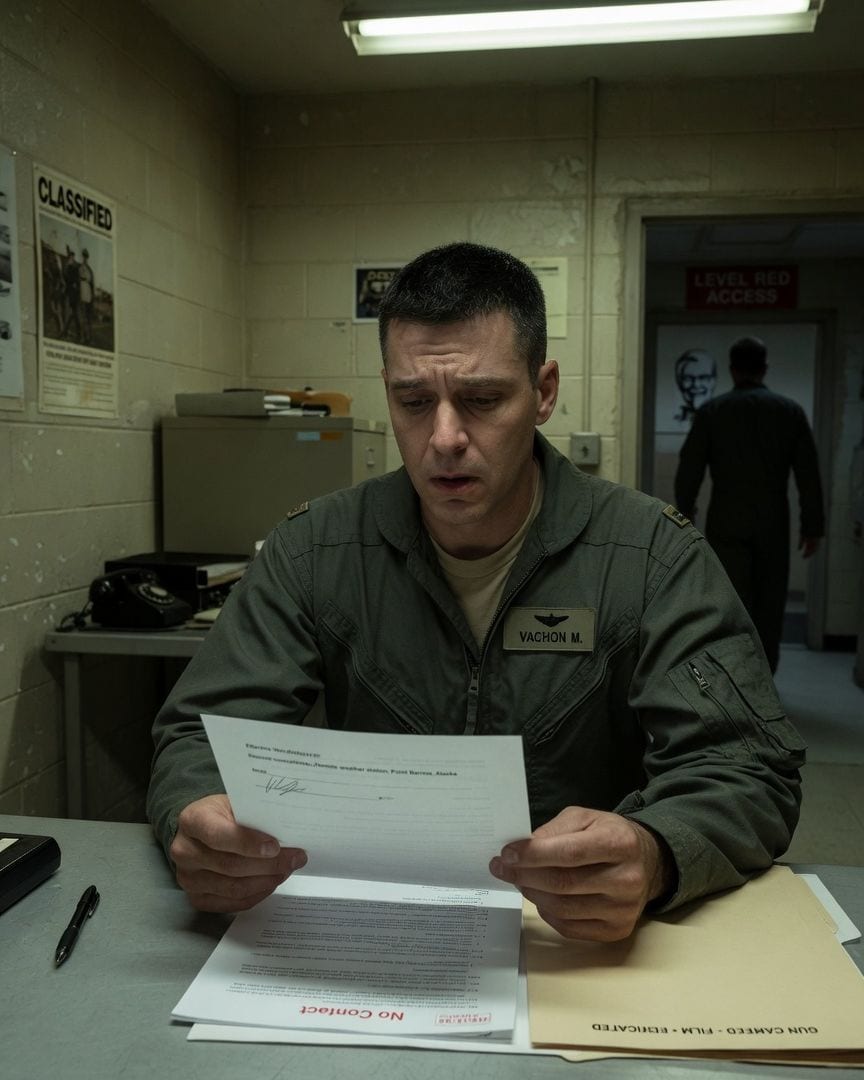
A pilot with a daughter waiting felt his stick tremble: a silent disc slid sideways, impossibly, at forty thousand feet.
Captain Merle Vachon had a newborn daughter waiting at home and just eleven minutes of fuel left when he spotted the impossible. High above the Nevada ranges, at forty thousand feet, a silent, featureless disc hung utterly still, then slid sideways with an impossible, smooth translation. His breath hitched, mundane answers dying in his mind, a cold knot tightening. Later, watching the gun camera film, he saw the disc grow larger, not zooming, but approaching, until it pulsed faintly in the sixty-first frame. His commanding officer confiscated the reel and ordered him to sign a 'No Contact' report, transferring him immediately to a remote weather station in Alaska. What impossible sight had Captain Vachon truly witnessed?
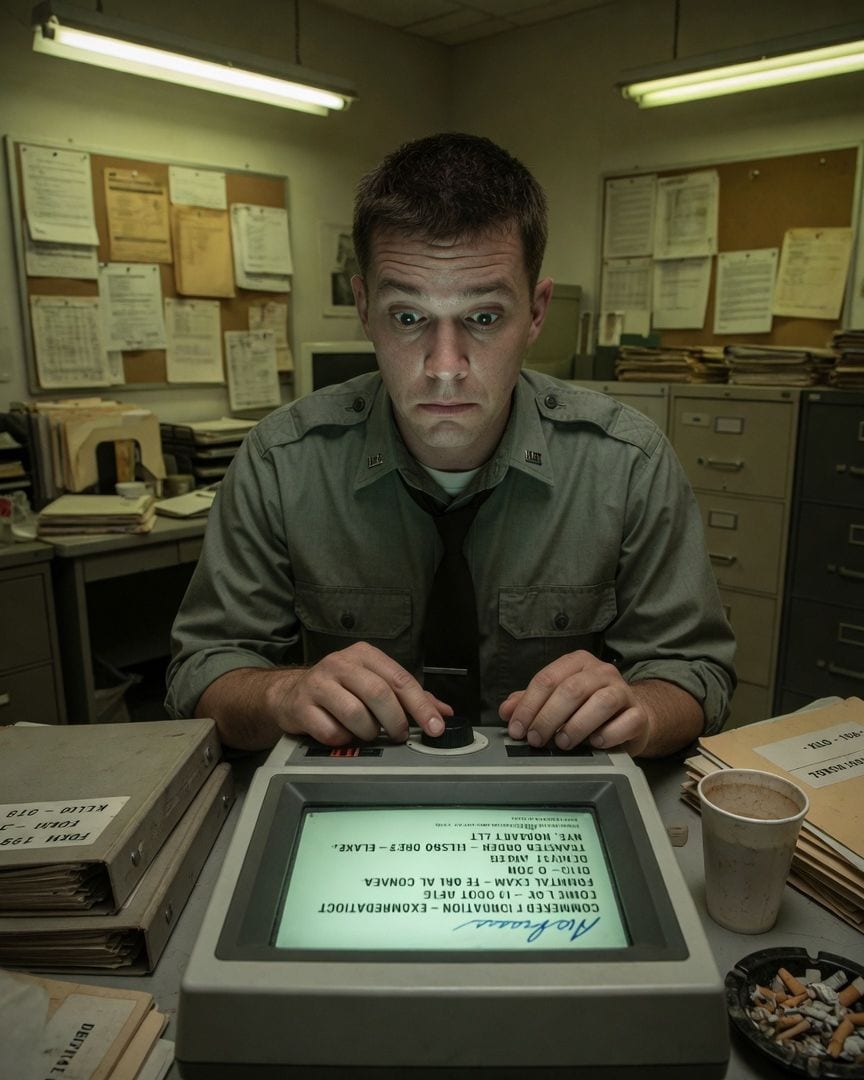
A missile commander watched his ten nuclear silos go dark. His own service record shows his signature on a future he's never lived.
Second Lieutenant Hobart Nye, a missile commander in Wyoming, had his quiet 0247 watch shattered by a security report: a massive, silent black triangle hovered over Launch Facility Kilo, casting a perfect shadow. Hobart watched his console's fault panel light up, signaling all ten nuclear missiles going dark in an impossible silence, followed by eleven minutes his security team could not remember. Official logs called it a "radio malfunction," but Hobart found a requisition for invisible-tracking sensors, signed by a base commander who was supposed to be off-base. The final, chilling discovery came when his own service record showed new entries—a dental check-up, a transfer to Alaska—all dated for a future he never lived, complete with his perfectly replicated signature.
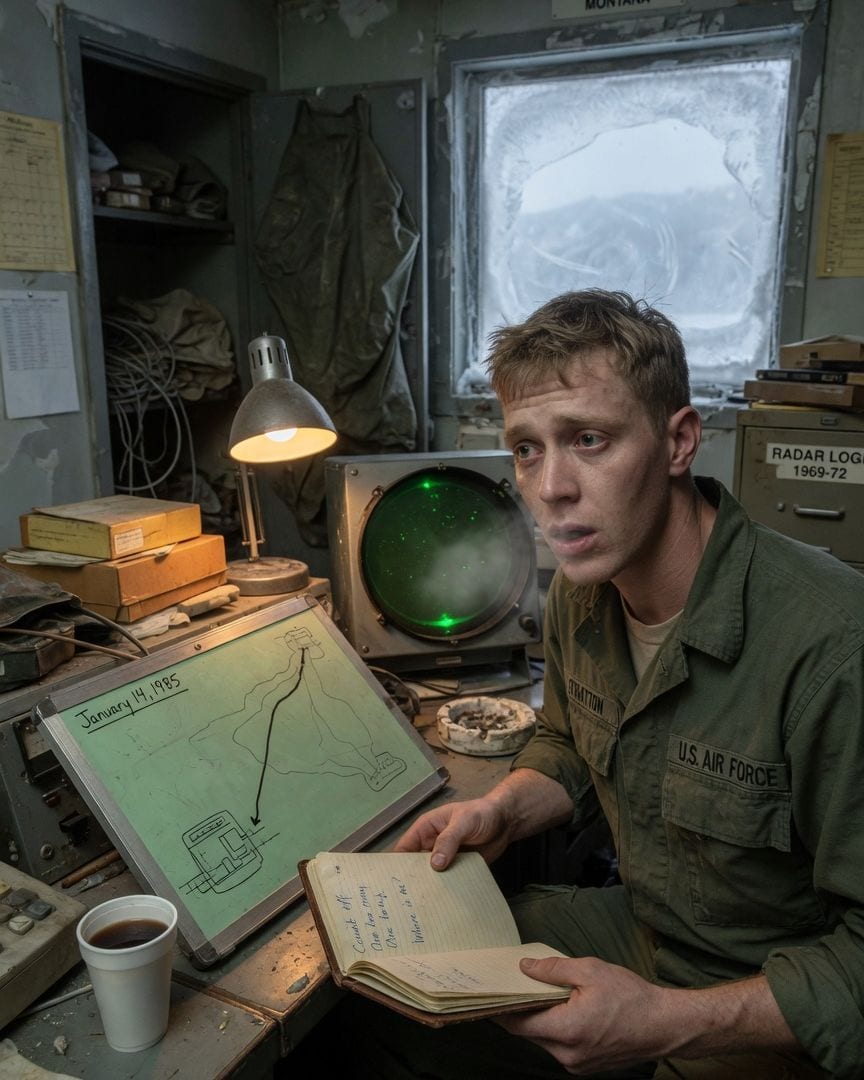
Airman Lars Stratton found an old Cold War manifest listing one name twice: 'Bernard Radcliffe' transferred and 'Bernard Radcliffe' still present.
Airman Second Class Lars Stratton was counting down his final weeks at Echo Station, a desolate Cold War outpost due for mothballing. He longed for home, far from the bitter Montana winds and the constant hum of static. Inside the dim radar shack, he logged the usual nightly ghost blip, a faint contact appearing at 2300, just as it had every winter since 1987. This night, a metallic tang like old blood lingered in the air, raising the hairs on his arms. Seeking distraction, Lars later discovered a leather-bound logbook from 1971, detailing the same 2300 contact, but with chilling notes and a manifest listing one airman's name, Bernard Radcliffe, twice—once transferred, once present. Was he truly alone in the silent, remote station?
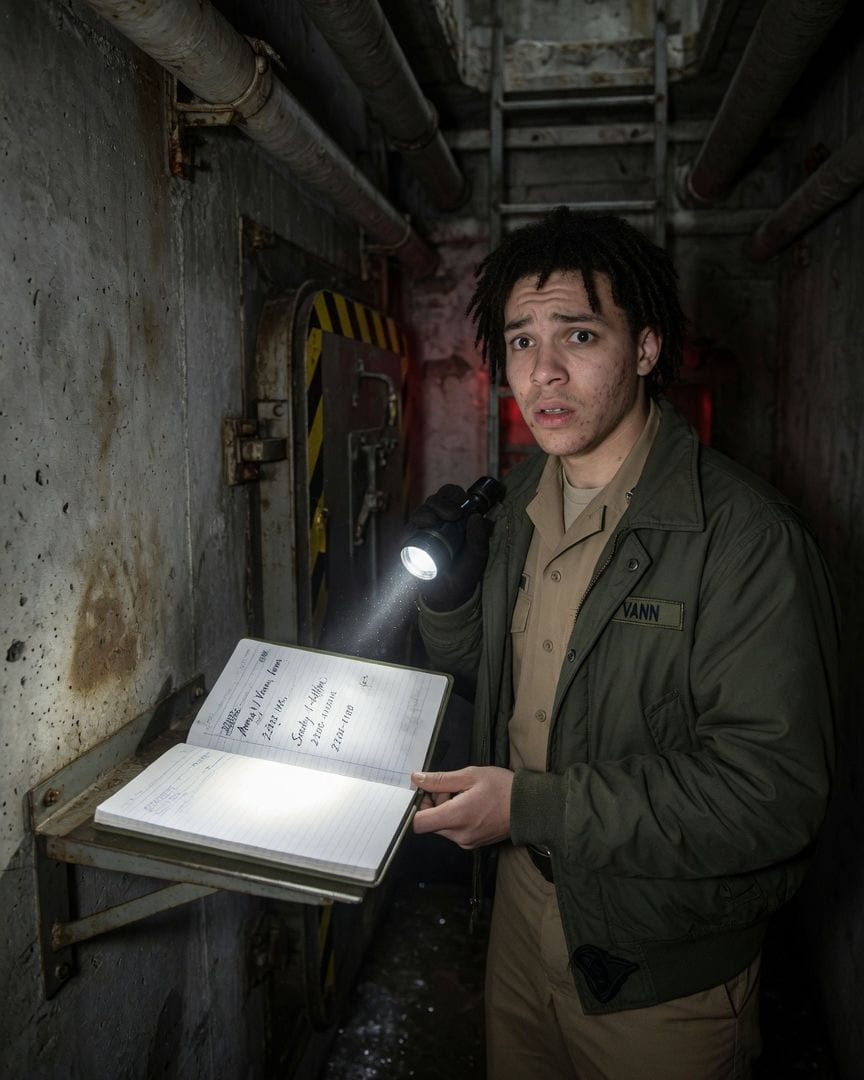
On his last patrol, Airman Vann sees a Cold War silo hatch light up from *inside*—it was welded shut a decade ago.
Airman Vincent Vann was on his last patrol across a vast, desolate Cold War missile field in the Dakotas, the cold, starless sky mirroring the emptiness of the landscape before his transfer. His routine check of eight hardened silo caps was shattered when a red fault light pulsed on Silo 4’s access panel, signaling an impossible breach from *inside* a hatch sealed for a decade. As more silos lit up, ignoring base orders, Vann found the hatch unlocked from within and descended into the dark shaft, where he discovered a pristine logbook bearing his own signature next to a chilling entry from a non-existent sentry, dated for *that very night*. Now, a steady *thump* echoed from deeper within the sealed concrete, leaving the Airman desperate for an explanation that simply wasn't there.
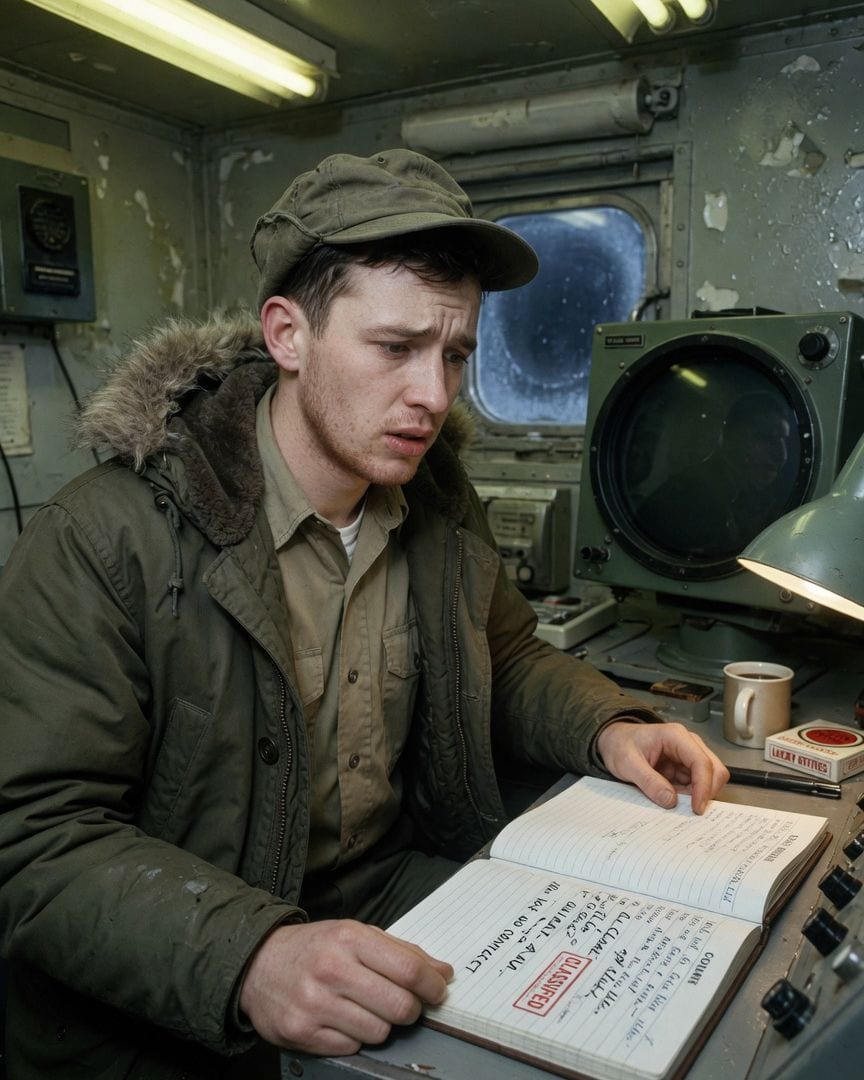
A Cold War airman logs an impossible radar contact on his last sweep. But his official logbook entry is stamped 'CLASSIFIED' and then contradicted by a hastily scrawled 'ALL CLEAR' dated moments before it.
Airman Ordway Vance, 22, manned the radar dome at Site Pellin in the biting North Atlantic dark of January 1962, running the last calibration sweep before its decommissioning. His scope picked up a faint, impossible return, growing closer with each pass, though the ocean remained empty to the eye. When Vance detailed the contact in his official logbook, a 'CLASSIFIED' stamp appeared, followed by a hastily scrawled 'ALL CLEAR' dated moments before his own entry, contradicting his every word. Commander Hartley dismissed it as equipment malfunction, but Vance sensed a chilling, official erasure behind the lie. He soon found a locked cabinet marked 'SITE PELLIN ANOMALIES,' hinting at a deeper truth buried within the base's final days.
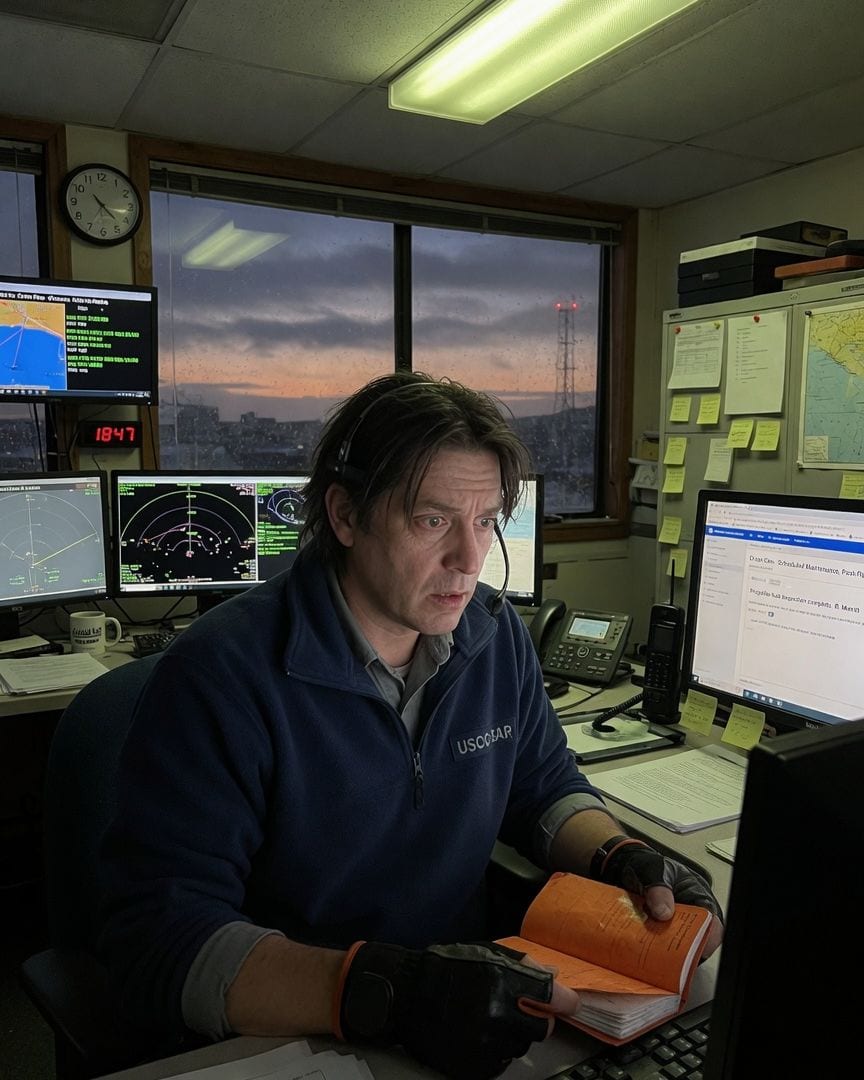
A Coast Guard coordinator found a lost plane's maintenance report, digitally signed two days after it vanished.
Dell Krznaric, a US Coast Guard Search and Rescue Coordinator, faced the grim task of standing down the search for 'Orion One,' a transport missing nine souls for eleven hours as sundown approached over the frigid Aleutian waters. His critical rescue window was closing fast. When a fishing trawler found an empty life raft, Dell discovered a survival log inside—its last entry dated eight hours into the future, reporting an engine sound yet to be heard. Later, he found a maintenance report for the lost aircraft, digitally signed by Loadmaster R. Merritt, dated two days after its presumed loss. The system accepted the impossible signature, leaving Dell to wonder how a lost plane's records could still be writing from a future that hadn't arrived.