A communications lieutenant hears a Cold War reconnaissance plane, lost in 1951, transmitting clear reports seventy years later.
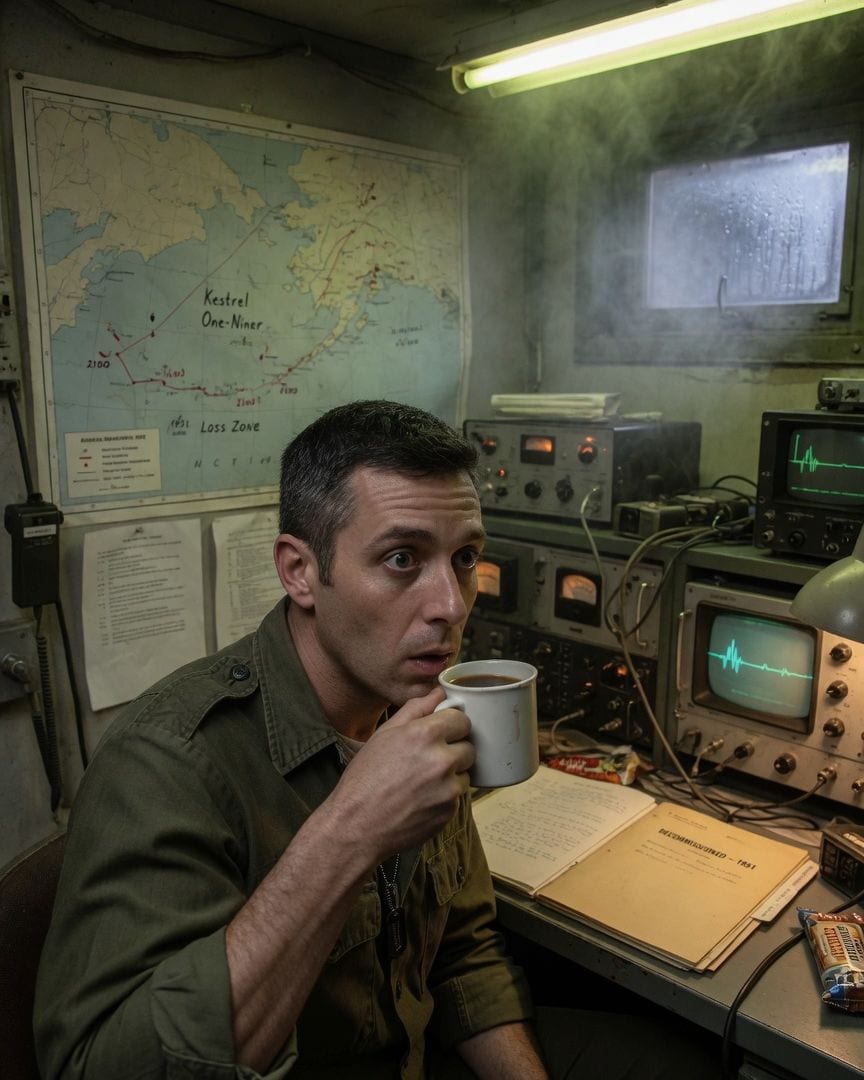
The Aleutian fog had closed the strip at 1600, thick and silent, promising not to lift until noon.
Lieutenant Aaron Suvak, alone in the base's communications bunker, poured another cup of lukewarm coffee, the only sound the low hum of his radio equipment.
His shift had been quiet, just as every shift in this isolated outpost usually was, until 2000 hours. Precisely on the hour, the receiver crackled to life, not with static, but with a clean, clear voice.
"Kestrel One-Niner, outbound, bearing two-seven-zero, estimated range one-five-zero."
Suvak froze, his hand still on the mug, halfway to his lips. The Kestrel. The name hit him like a physical blow. The Kestrel reconnaissance plane. Lost in 1951. He knew the files; everyone did.
It was a Cold War ghost story, a plane that simply vanished over the Bering Sea, never a trace. He checked the frequency, the receiver settings. All normal.
No interference, no cross-talk, just that voice, crisp and professional, as if transmitting from a few miles away, not seven decades.
At 2100, it came again, same voice, same precision, a new position further along a route that should have ended seventy years ago.
He plotted it on the old paper chart tacked above his console, a tiny, impossible dot moving steadily across the black, empty expanse of the Bering Sea, further and further into the impossible.
Suvak spent the next two hours systematically troubleshooting his equipment.
He ran every diagnostic he could think of, swapping out vacuum tubes, checking the antenna connections, even powering down and restarting the entire system, a process that usually fixed any transient anomaly.
Each time, precisely on the hour, the Kestrel’s report cut through the bunker's silence.
He tried to rationalize it, mentally running through every possible explanation: a phantom echo from a distant, misaligned antenna, a rogue signal bounce from some atmospheric fluke, even a complex, elaborate prank by a bored fellow tech.
But the reports were too consistent, too clean, too specific. The voice was always the same, the data always logical, always progressing along its impossible path.
Desperate, he dug through the bunker’s dusty, restricted archives, illuminated by the bare fluorescent lights.
He was looking for anything on the Kestrel’s original mission, hoping for a clue, a record of a known glitch that might explain this phantom signal. He found a thin, yellowed folder, brittle with age, stamped 'DECOMMISSIONED – 1951.'
Inside, among the sparse flight plans and loss reports, was a single, handwritten addendum, scrawled almost as an afterthought, barely legible in faded blue ink. It noted a 'minor harmonic anomaly detected in distress beacon during final pre-flight check.'
It had been officially dismissed as a faulty sensor, a non-critical equipment malfunction, and signed off. Suvak’s gaze flicked to his oscilloscope, where the Kestrel’s current phantom signal pulsed, a clean, rhythmic pattern.
He zoomed in, adjusting the gain, and saw it: a tiny, almost imperceptible frequency drift, a subtle wobble in the otherwise perfect signal.
He cross-referenced the coordinates from the Kestrel's phantom reports with known flight paths and found they consistently deviated from the published 1951 route by a precise, repeating offset, a fraction of a degree.
He pulled out a technical manual for the Kestrel's original radio gear, a behemoth of a book, tracing the complex schematics for its distress beacon.
The 'minor harmonic anomaly' mentioned in the old file, when theoretically amplified by certain atmospheric conditions or internal circuit resonance, would produce exactly this unique, tiny drift. This wasn’t a glitch. This was the Kestrel.
He looked from the oscilloscope, where the phantom Kestrel’s signal traced its impossible, unwavering path, to the faded handwritten note in the 1951 file.
The drift on his scope, the one that shouldn't have been there, was a perfect, mathematical match to the 'minor harmonic anomaly.' It wasn’t a coincidence. It wasn’t a ghost. It was a signature.
The Kestrel, declared lost, was still transmitting, and the official record had quietly, almost accidentally, preserved a trace of its true state.
Suvak felt a cold dread settle deep in his gut, a certainty that this wasn't just a mystery, but a deliberate, impossible fact.
He plotted the next position, his hand trembling slightly, and saw it extend further into the empty blackness of the map, a journey without end.
The fog finally broke at 11:30, revealing a weak, watery sun over the churning gray waves, but Suvak remained in the bunker. The Kestrel’s reports still came in, clean and unhurried.
His relief, Sergeant Yates, found him pale, hunched over the console, surrounded by a scatter of charts and old files. Suvak managed a vague explanation about a "frequency anomaly."
Yates, a practical man, nodded, thinking Suvak had probably just been up too long chasing ghosts in the static.
Over the next few days, Suvak became obsessed. He used his access codes, delving deeper into the restricted military archives, not just for the Kestrel, but for other 'lost' military assets from the 1950s and 60s.
He wasn't looking for signals anymore, but for unusual, officially dismissed 'anomalies' in their final logs or reports. The pattern emerged slowly, horrifyingly. A destroyer’s final transmission mentioned 'unexplained sonar contacts, non-standard reflectivity.'
A submarine’s last log entry detailed 'power fluctuations concurrent with anomalous hydrophone pings.' Each case, once declared lost and presumed sunk or disintegrated, had a paper trail of quiet, impossible details.
He found a declassified memo from 1968, heavily redacted, referring to 'persistent residual signatures' from 'Category Alpha Assets.' The Kestrel's specific signal drift, he realized, was not unique.
He began to find similar, though distinct, 'harmonic anomalies' in the final moments of these other 'lost' vessels and aircraft. These were not simply failures; they were consistent, specific traces, like a fingerprint left by whatever had taken them.
The institution, he realized, wasn't just filing losses; it was filing events.
Suvak’s increasingly specific and unusual requests for 'decommissioned asset files' did not go unnoticed. A week after his initial discovery, he found a yellow sticky note on his console: 'See me.
DR.' It was from Donald Rutherford, the civilian records manager for the entire Aleutian command.
Rutherford was a quiet, impeccably dressed man in his early sixties, a former Air Force intelligence officer who’d transitioned into a civil service role years ago. Suvak walked to Rutherford’s office, feeling a prickle of unease.
Rutherford's office was spotless, unlike Suvak's own perpetually dusty bunker, organized with a chilling precision.
Rutherford offered him a cup of tea, his voice calm, almost avuncular, as if discussing the weather. 'Lieutenant Suvak,' he began, gesturing to a plush armchair.
'Your recent interest in, shall we say, historical anomalies, has certainly spiced up our digital archives. You’ve been very thorough.'
Suvak tried to feign casual curiosity, leaning back, though his muscles were tense. 'Just a research project, sir. Curious about old equipment quirks, you know, for maintenance purposes.'
Rutherford smiled faintly, a serene, unreadable expression. 'Of course. But some quirks, Lieutenant, are best left unexamined. They have a way of, shall we say, attracting attention.'
He gestured vaguely towards a shelf filled with binders, each one neatly labeled with an alphanumeric code. 'Some files are meant to stay closed. For everyone's benefit.' The warning was clear, delivered with the politeness of an executioner.
The room itself seemed to cool around Suvak, the air growing heavy. He wasn't just digging; he was being watched, and Rutherford knew exactly what he was looking for.
Suvak ignored the warning. The next day, using a backdoor he’d discovered in the archive’s network, he found a way to access a higher-level, encrypted database Rutherford had used. He typed in 'Category Alpha Assets.'
The screen filled with redacted text, but one document, an internal 'Protocol for Residual Signature Management,' caught his eye. It outlined procedures for monitoring and archiving the very 'harmonic anomalies' he'd been tracing.
There was no mention of 'lost' or 'missing.' Only 'filed.' He confronted Rutherford again, this time with printouts of the protocol, the redacted text highlighting the chilling implications.
'What is this, sir? What does 'filed' mean?' Suvak demanded, holding up the papers, his voice tight.
Rutherford sighed, a slow, patient exhalation, as if explaining a simple fact to a slow child. 'It means, Lieutenant, that some things don’t simply disappear. They transition. They become part of an ongoing process.
And our job, for decades, has been to manage the observable traces.' He explained, in calm, measured tones, that the Kestrel, and others like it, had entered a 'phenomenon' that maintained their existence in a state of perpetual, recorded activity.
The hourly reports weren't echoes; they were real-time transmissions from a place that existed outside linear time, a place the institution had learned to observe and, more importantly, to contain.
'We don't know why it happens, or what it is, precisely,' Rutherford admitted, 'but we know how to keep it from spreading. And we know how to keep it quiet.'
The Kestrel’s endless flight, the destroyer’s persistent pings, the submarine’s anomalous contacts – they weren’t errors. They were proof of a coherent, terrifying system, now revealed to Suvak as a chilling, managed reality.
A cold draft seemed to sweep through Rutherford's immaculate office, even with the door closed, raising gooseflesh on Suvak's arms.
Rutherford then pulled up a sub-section of the classified standing orders on his secure terminal, a file marked 'OBSERVER DESIGNATES.' He turned the screen slightly, just enough for Suvak to see a scrolling list of names.
The cursor hovered, then highlighted an entry. Suvak's breath caught, a cold, hard knot in his chest.
His own full name, AARON SUVAK, was listed, followed by his service number, and a date of 'initial observation' that predated his current assignment to the Aleutian base by several years.
There were notes about his 'aptitude for pattern recognition' and 'sensitivity to anomalous signal characteristics.' Rutherford’s calm voice cut through the ringing silence of the room. 'You see, Lieutenant, the Kestrel didn’t just call out. It called out to you.
Or, rather, to someone with your particular... talents. We've been expecting you to find it.'
Suvak stared at his name, his own life laid out in a file he'd never known existed, a file that had dictated his choices, his postings, his very presence in this isolated bunker.
He was not just an observer of the 'filed'; he was himself a part of the filing system, a designated monitor, his entire career a carefully orchestrated path towards this moment.
The fog outside seemed to press in, thick and suffocating, and for the first time, Suvak understood that he was not just on a remote base, but caught in a trap he had never known was being laid.
Rutherford explained, his voice devoid of malice, that the institution didn't create the 'phenomenon' but had learned to identify individuals, 'sensitives' like Suvak, who possessed a natural predisposition to detect and interpret its traces.
'We don't manipulate events, Lieutenant,' Rutherford clarified, 'we merely ensure the right people are in the right place to observe. Your assignment here, your interest in the Kestrel – it was all a natural progression. We simply… facilitate.'
He showed Suvak further records, a network of similar 'monitors' across various remote outposts, each tracking their own 'filed' entities: a deep-sea sonar operator listening to a phantom wreck, a desert sentinel recording impossible heat signatures, an arctic researcher plotting impossible magnetic anomalies.
The pattern Suvak had first glimpsed was vast, global, a hidden layer of reality meticulously managed by a patient, silent organization.
The Kestrel's reports, he now understood, were a constant, low-level call, an invitation to a system that consumed and continued, and he had answered it.
The horror was not that it was inexplicable, but that it was entirely coherent, a vast, quiet machine of observation and containment, and he was now a cog within it, his perception a necessary component.
Suvak made his choice. He couldn't fight the system, not directly, but he could try to expose it. He returned to his bunker, a cold resolve settling over him, burning away the earlier fear.
He started preparing a burst transmission, a fragment of the Kestrel’s repeating signal, embedded with a coded message outlining the 'observer protocol' and Rutherford's involvement, aimed at an unsecured public frequency, any frequency that might catch a civilian ear.
He worked quickly, his fingers flying across the old radio dials, the Kestrel’s hourly report still chiming in the background, a constant, chilling reminder of the truth he now held.
He was just moments from sending, the 'transmit' light blinking a steady red, a beacon of defiance, when the bunker door hissed open.
Rutherford stood there, flanked by two silent, unsmiling men in plain uniforms. No guns, no threats, just an air of quiet inevitability. Rutherford’s presence seemed to absorb all the sound in the room, even the hum of the old equipment.
'Lieutenant Suvak,' Rutherford said, his voice still calm, almost regretful, 'we regret to inform you that your services are no longer required at this station. You’ve become… compromised.'
Suvak stared at him, then at the blinking light of his radio, the almost-sent signal. He knew he wouldn't get the transmission out.
The two men moved with efficient, practiced ease, dismantling his equipment, wiping his terminals clean of any data. They didn't touch him, didn't speak. Rutherford simply watched, a faint, almost pitying expression on his face.
Suvak understood: he wasn't being punished; he was being re-filed. The institution had simply absorbed him further, making him another managed asset, a piece moved on their endless board.
Suvak’s personal effects were packed and sealed into a single, government-issue duffel bag. His radio equipment was replaced with new, sanitized units, all traces of his frantic work removed.
The fog finally lifted that afternoon, revealing a stark, bright Aleutian sky, indifferent to the silent drama that had unfolded. A new technician, fresh out of basic training, arrived by helicopter to replace him, eager and oblivious.
The Kestrel’s hourly reports continued, clean and precise, echoing into the vast, indifferent air, waiting for new ears. The bunker was quiet once more, the only sound the hum of the new machines, patiently waiting for their turn to listen.
Aaron Suvak was reassigned to a remote listening post in the Nevada desert, far from any ocean. His new duties involved monitoring faint, impossible heat signatures emanating from a long-abandoned missile silo, a new 'Category Alpha Asset.'
He sat alone at his console, charting the rhythmic pulses, recognizing the familiar, unsettling coherence of a thing that was not lost, but merely filed. His own name, he knew, was still in Rutherford's system, a permanent entry.
He was no longer an observer. He was part of the observation. The next hour, the Kestrel's report came in, clean, and he heard it answer.
If this one got to you
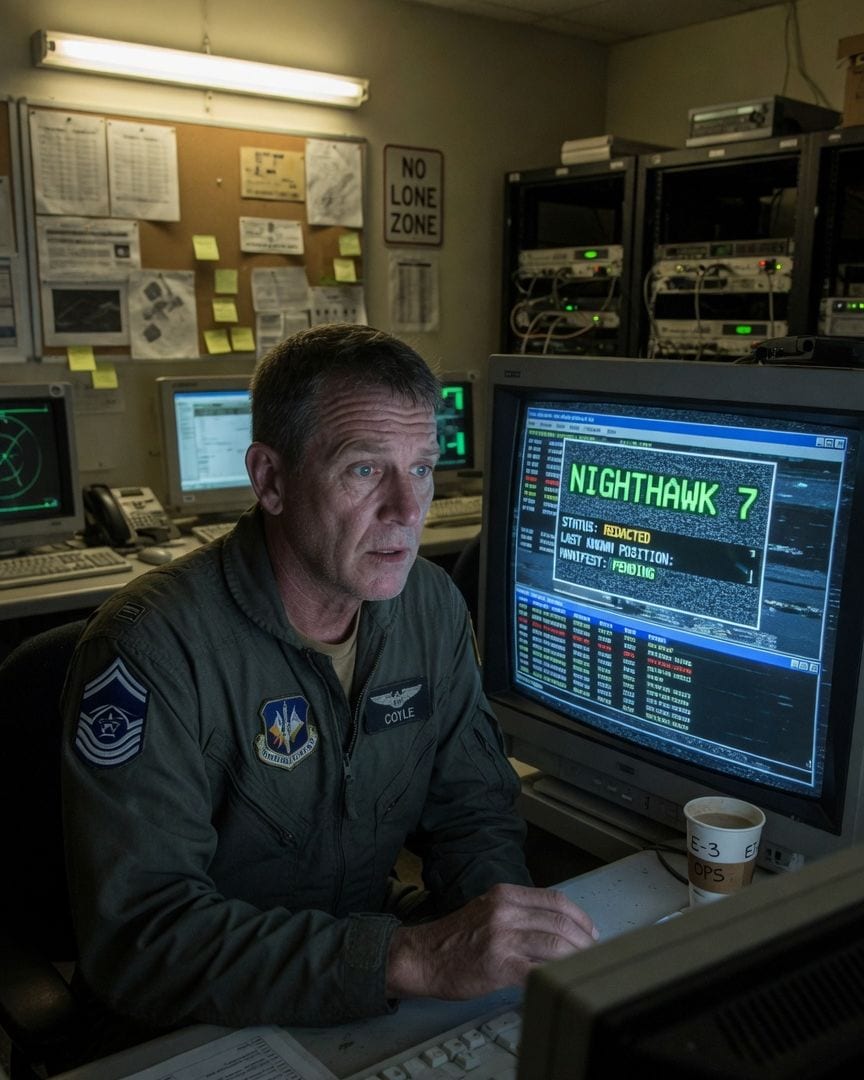
A ghost radar blip returned for Master Sergeant Coyle, three months from retirement. Its call sign: NIGHTHAWK 7, status REDACTED.
Master Sergeant George Coyle, nearly three decades in uniform, counted the last missions before his retirement. High above the black North Atlantic, his E-3 Sentry hummed with the familiar, impossible truth of a ghost radar blip. This single return squawked nothing, eluding every filter and fighter jet sent to investigate, yet the precise systems swore it was there, inbound, week after impossible week. Driven by obsession, Coyle later found a flicker of data: the call sign "NIGHTHAWK 7." Investigating further, an obscure database revealed its status as 'REDACTED,' with its last known position matching the ghost track. What forgotten project was haunting the skies, precisely where it had been scrubbed?
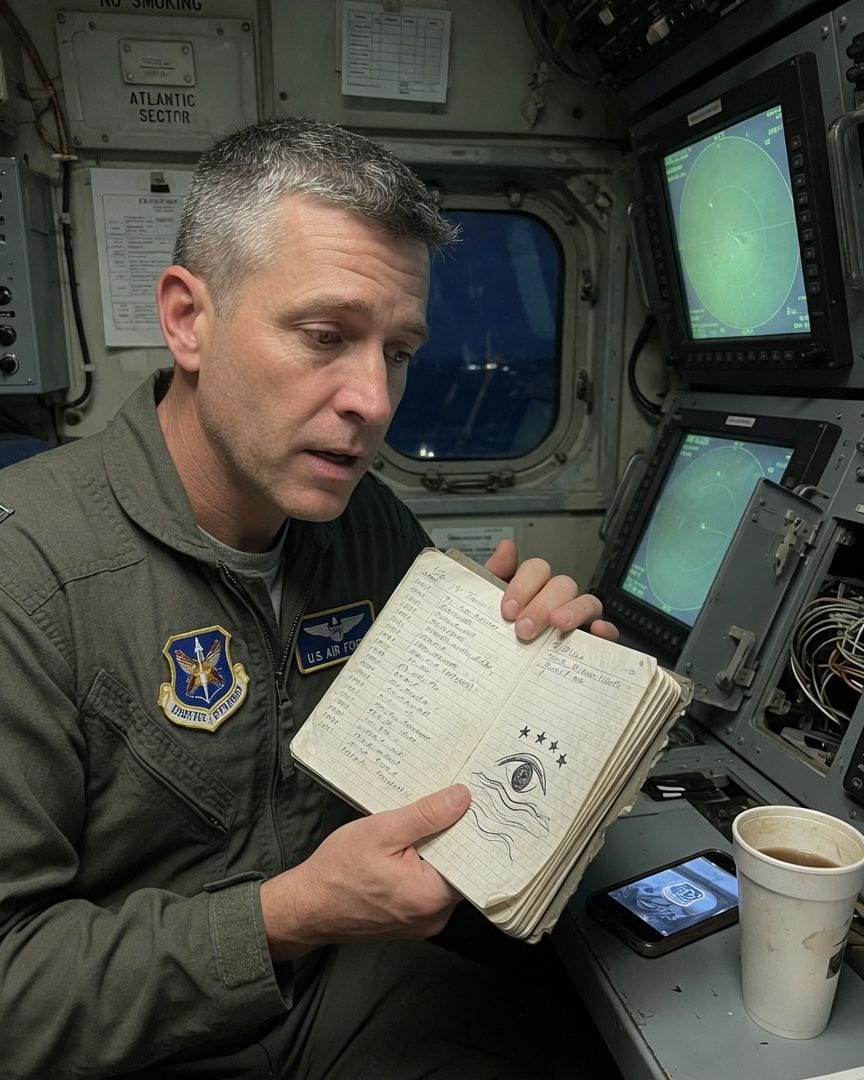
Weeks from his transfer, Master Sergeant Coyle found a Cold War logbook behind his console detailing the exact phantom blip he saw, documented since 1983.
Master Sergeant Everett Coyle yearned for his impending transfer, a clean break from the endless North Atlantic patrols. He had eighteen years of operational experience with the E-3's systems, but one anomaly, a silent blip he called 'The Traveler,' defied every explanation. Fighters found only empty sky, yet the track always returned, perfectly on schedule. During a routine console check, Coyle's fingers brushed against a hidden, spiral-bound notebook. Inside, meticulously handwritten entries detailed his exact phantom blip, recorded by other hands, spanning back to 1983, along with a chilling note: 'They say it's just a ghost. But it keeps trying to answer.'
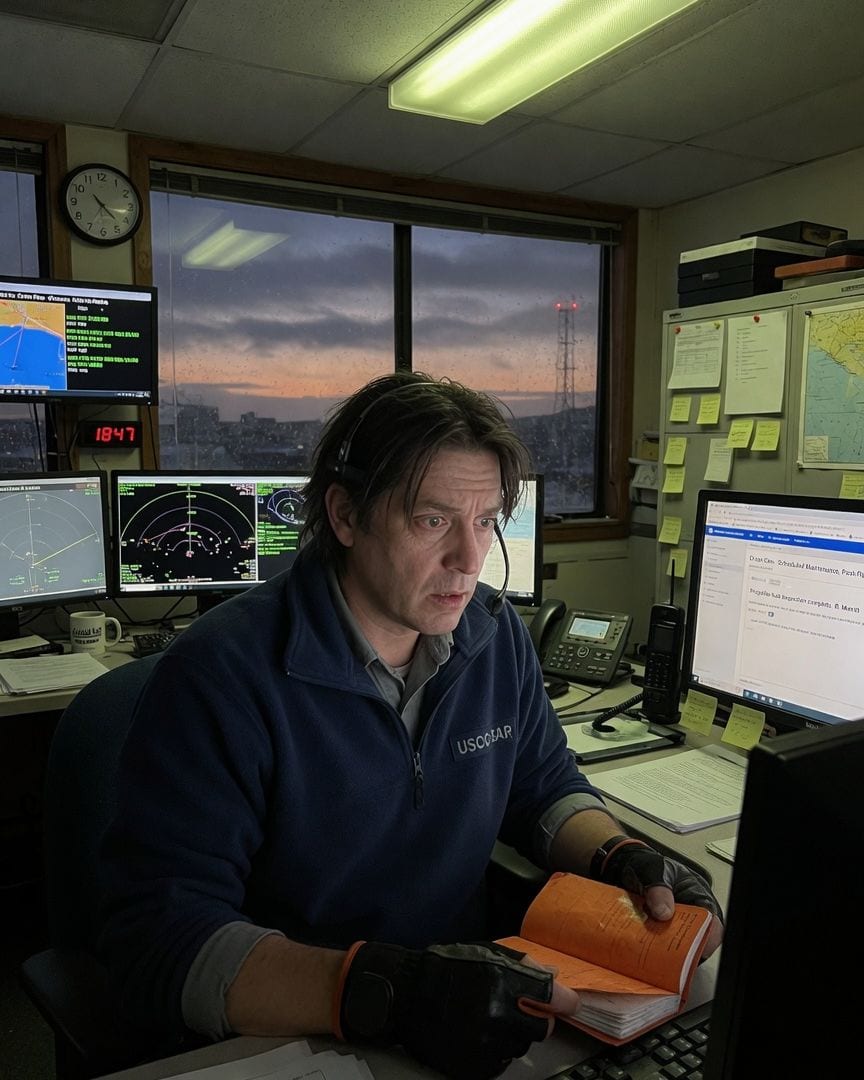
A Coast Guard coordinator found a lost plane's maintenance report, digitally signed two days after it vanished.
Dell Krznaric, a US Coast Guard Search and Rescue Coordinator, faced the grim task of standing down the search for 'Orion One,' a transport missing nine souls for eleven hours as sundown approached over the frigid Aleutian waters. His critical rescue window was closing fast. When a fishing trawler found an empty life raft, Dell discovered a survival log inside—its last entry dated eight hours into the future, reporting an engine sound yet to be heard. Later, he found a maintenance report for the lost aircraft, digitally signed by Loadmaster R. Merritt, dated two days after its presumed loss. The system accepted the impossible signature, leaving Dell to wonder how a lost plane's records could still be writing from a future that hadn't arrived.
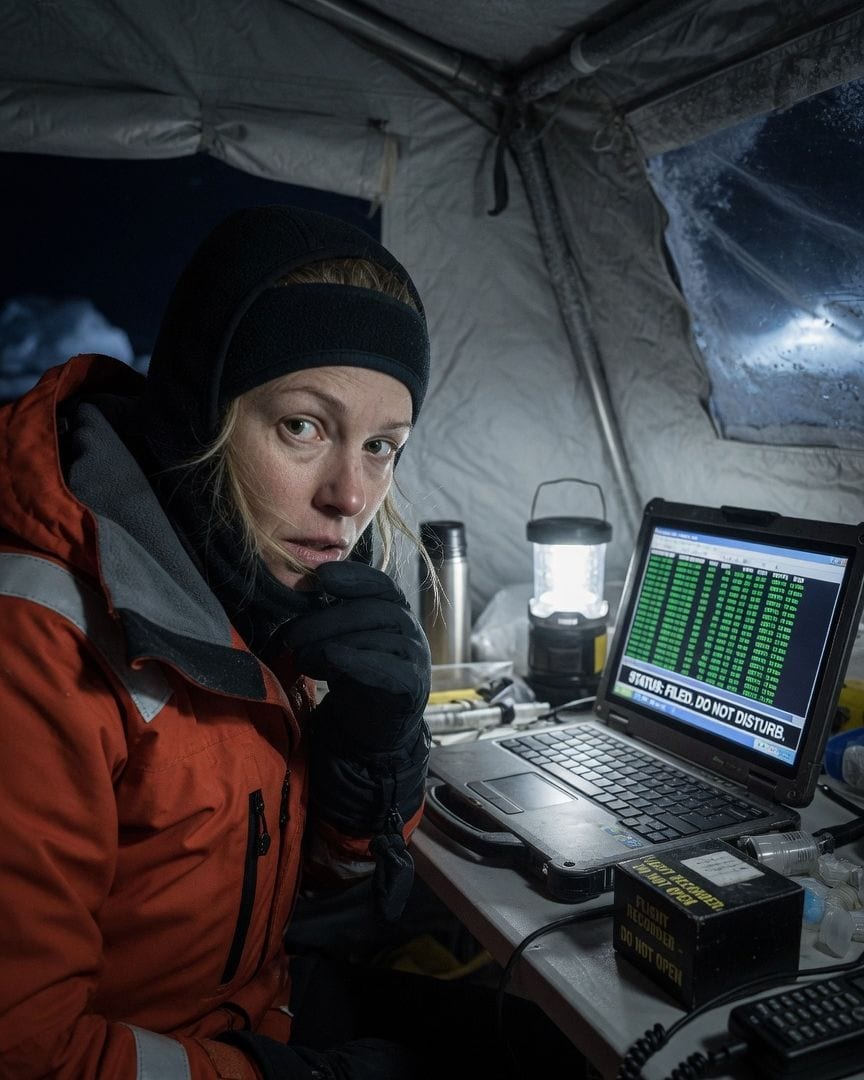
A glaciologist finds a Cold War plane 60 feet down in Greenland ice, its navigation lights still burning after sixty years.
Glaciologist Ines Faurholt skied across the vast, blinding Greenland ice cap when her path was abruptly blocked by a dark, corroded antenna mast. Beneath it, sixty feet down in ancient ice, a Cold War reconnaissance aircraft sat with its navigation lights eerily burning and its cockpit clock steadily keeping time. The sight was a violation of everything Ines knew about time and preservation in this frozen world. She called for a team, and days later, they extracted the plane's flight recorder, revealing data that showed the aircraft still flying years after its disappearance.
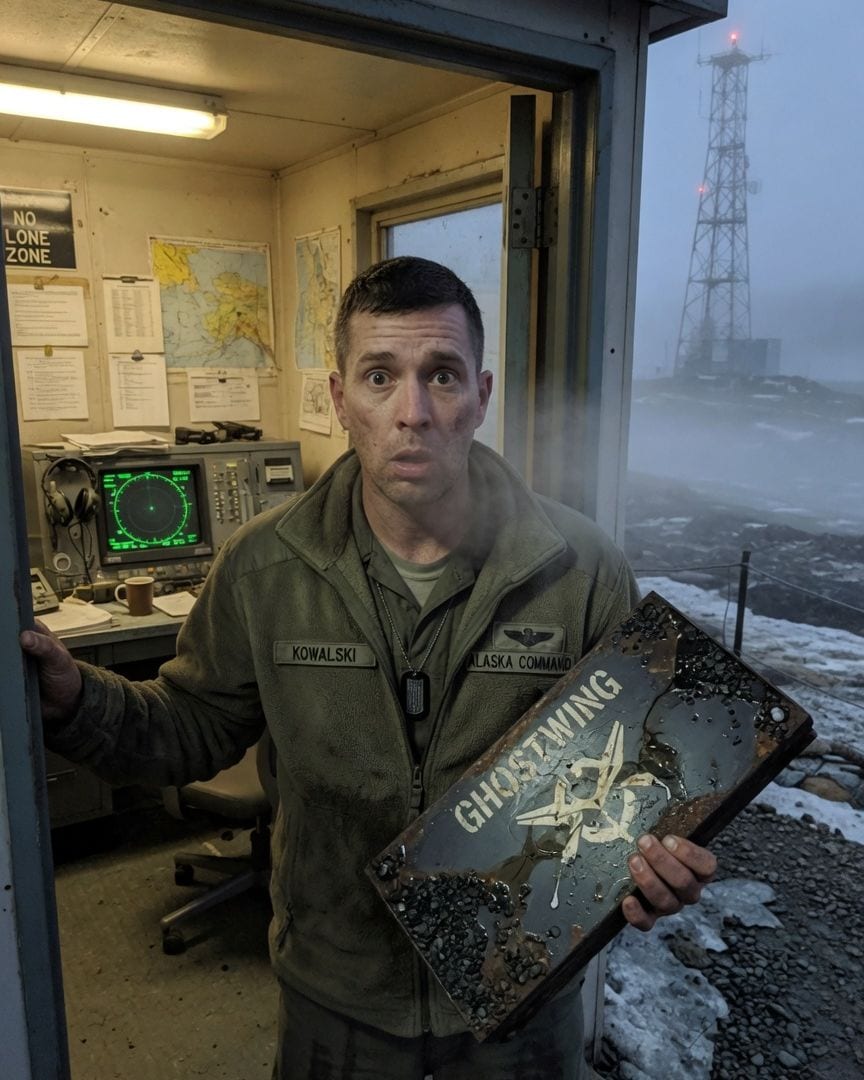
On his last rotation, Airman Kowalski heard a pilot cleared for landing by a tower that had vanished decades ago.
High atop Mount Chugach, Airman Eric Kowalski was counting down his last lonely rotation before transfer, the silence of the Aleutian airwaves his only companion. But then, his headset crackled with an urgent emergency call: a pilot in distress, cleared for landing by a controller whose facility had been decommissioned decades ago. As the phantom voices faded, a third, calm voice cut through the static, addressing him by a name that wasn't his. What impossible signal had broken through the silence, and who was Sowell?
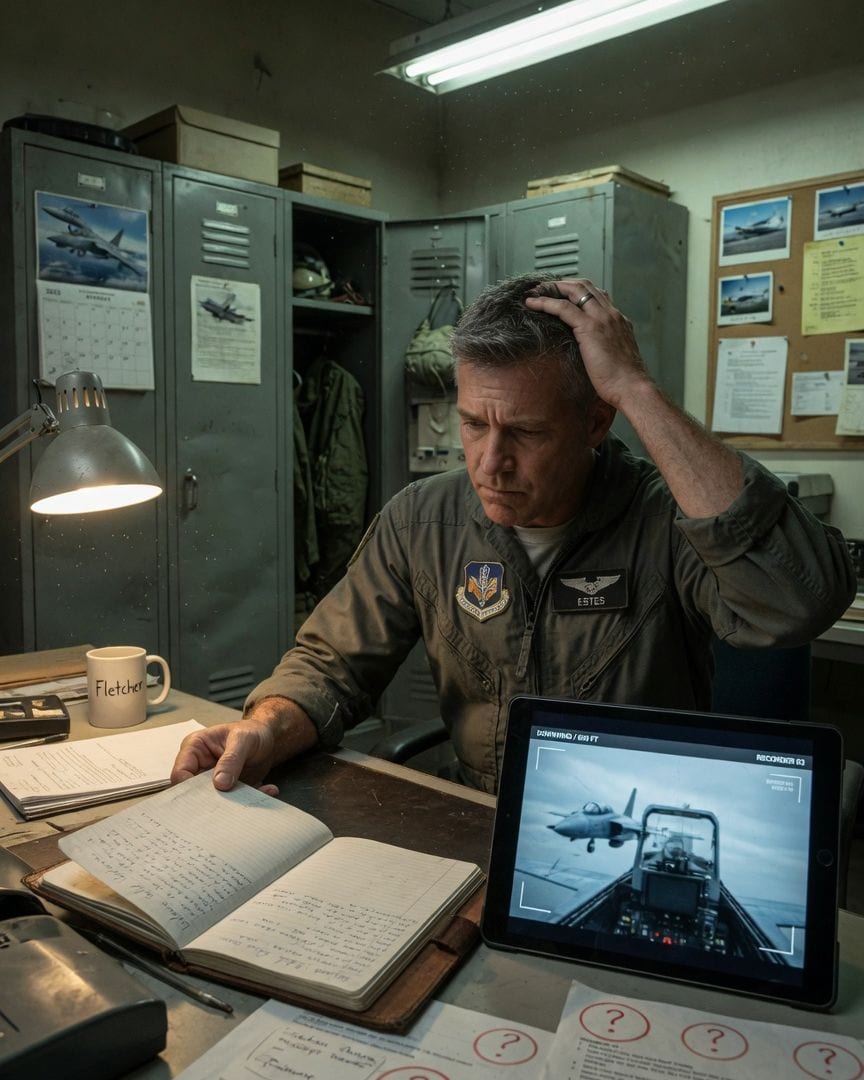
A Chief Warrant Officer's HUD tape shows a phantom jet, impossibly close, off his wing. Forty years ago, another Cold War pilot logged the same impossible sight.
Chief Warrant Officer Nathaniel Estes, a pilot whose career hinged on absolute precision, was under evaluation for a critical promotion. His nightly review of HUD tapes from routine Mojave test flights was a meticulous habit, but for a week, it revealed an impossible detail. At precisely 800 feet, one frame showed a sleek, experimental jet tucked impossibly close off his left wing—a craft ground radar never detected. When his maintenance chief found no equipment fault, Estes unearthed a dusty, decades-old logbook detailing identical phantom sightings from 1978. What unseen presence shadowed the desert skies?