A condolence card arrived for me, postmarked from a road that vanished decades ago.
The fluorescent lights of Boots hummed, a low, constant buzz that always felt a little too bright. 'Prescription for Farrell,' Gloria, the pharmacist, called out, her voice flat, as if reciting a grocery list. I stepped forward, confused.
I hadn't ordered anything, and my doctor, Dr. Reynolds, hadn't called in any new scripts. I was sure of it; I’d just had my annual check-up last month. Gloria handed me a small, white bag, her eyes meeting mine briefly.
'I'm sorry you'll be needing these,' she said, her tone quiet, almost sympathetic.
I took the bag, my fingers brushing against the cool plastic. My name, Sarah Farrell, and my exact date of birth were printed clearly on the label. Below it, a medication I’d never heard of.
My hand trembled slightly, a strange premonition fluttering in my stomach. It had to be a mistake, right? Some system error, a mix-up with another Sarah Farrell.
I thanked Gloria automatically, then left the store, the unfamiliar prescription feeling heavy in my hand.
At home, the rational explanations started to fray. The name, the DOB – they were too precise. I typed the medication name into my search bar: 'Axonogen 7.' The results chilled me to the bone.
It was not a common antibiotic or a simple painkiller. It was a specialized drug for a rare, degenerative neurological condition. Prognosis 7. Something I’d never been diagnosed with. Something I didn't even know I was susceptible to.
I stared at the bottle, the quiet dread settling deep in my gut, a cold knot forming right beneath my ribs. It couldn't be for me. It simply couldn't.
The next day, I tried to return the medication. Gloria just shook her head, her expression unyielding. 'Once dispensed, it's yours, love,' she said, without making eye contact. I pressed, insisting there was a mistake, that I hadn't ordered it.
She just pointed to my name on the label. 'It's got your name, doesn't it?' Dr. Reynolds' office confirmed no new prescriptions were issued under my name, their receptionist sounding increasingly impatient.
I called my insurance, the hospital, anyone I could think of. Each conversation ended with a dead end, a polite but firm denial. They had no record of Axonogen 7 being prescribed to me.
I tried to rationalize it – a mix-up, a prank, an administrative error gone spectacularly wrong. But the label, with my name, my exact DOB, the rare medication, felt too specific, too personal to be a random glitch.
It felt targeted.
A week later, another piece arrived, an unwelcome addition to the growing pile of unease. A thick, cream-colored envelope, addressed simply to 'Sarah Farrell,' no return address. The paper felt strangely heavy, almost formal. Inside, a condolence card.
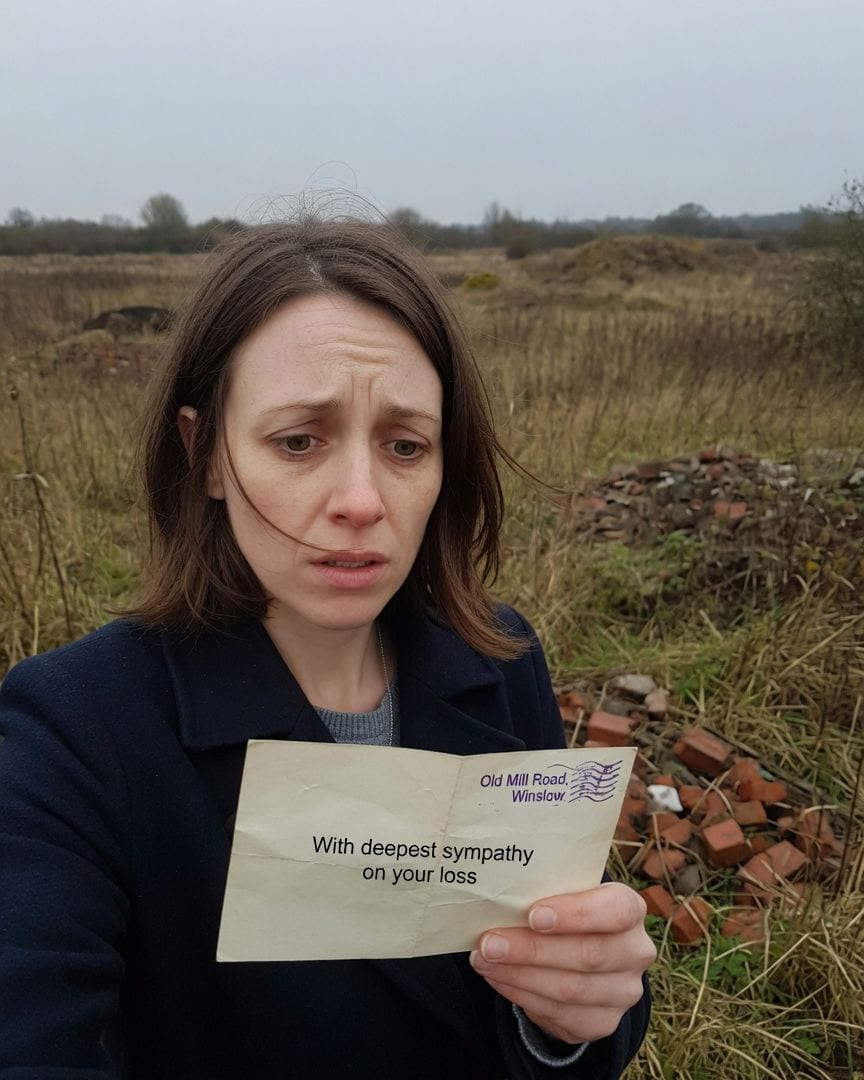
The message was generic, a printed 'With deepest sympathy on your loss,' devoid of any personal touch. But the postmark caught my eye: 'Old Mill Road, Winslow.' Winslow was only about an hour from me.
I called Elliot, my friend, and asked him about Old Mill Road. 'That's been an empty field for years, Sarah,' he said, sounding genuinely puzzled.
'They cleared out the old mill and houses for a development that never happened, decades ago. Why?' I just said I'd tell him later. The card implied a death.
And the postmark implied it came from a place that no longer existed.
Elliot, curious despite his skepticism, drove me out there the next afternoon. We pulled onto a narrow, unpaved track that quickly dissolved into an overgrown expanse of weeds and wild grasses.
There was no sign of a road, no houses, just a vast, desolate field stretching out under a dull, gray sky.
A few crumbling bricks, half-buried in the dirt, were the only evidence of anything having ever stood here, like scattered teeth from a long-lost smile.
I stepped out of the car, the wind whipping my hair around my face. It felt cold, even for late autumn.
I held the cream-colored condolence card, its edges damp from my sweaty grip, the 'Old Mill Road, Winslow' postmark a stark, impossible detail against the emptiness. The card was for me. It implied my death.
A shiver ran down my spine, a cold, unmistakable sensation of being watched, even though we were utterly alone in that desolate, forgotten field. The wind seemed to carry a whisper, just beyond my hearing.
The condolence card was just the beginning. Over the next few weeks, more letters arrived, always addressed to me, always postmarked from places that no longer existed, or were never residential to begin with.
The consistency of the impossible addresses was what truly unnerved me.
A birthday card, arriving a full week before my actual birthday, its envelope slightly warped, was postmarked from 'Fairfax Quarry, Easton' – a disused mining site, all jagged rocks and rusted machinery now.
The message inside was just 'Happy Birthday,' printed in a font that looked like it belonged on a tombstone.
Then, a few days later, a chillingly specific warning about 'avoiding the path less traveled today,' which arrived the morning I almost swerved into a ditch avoiding a deer on a winding back road I rarely used.
It was too accurate, too timely. Each letter was mundane in its printed content, yet terrifying in its impossible origin and unerring accuracy.
I started a map, pinning the 'nowhere' addresses to my corkboard: Old Mill Road, Fairfax Quarry, then 'Vance Woods, Reynolds.' A pattern emerged – the letters came on a schedule, almost ritualistic, every few days.
Elliot, initially trying to find logical explanations for each new letter – a disgruntled ex, an elaborate prank – grew visibly disturbed. He helped me research, digging through old county records and local history archives.
We found a mention of 'Prescott's Surveyors' in an ancient, leather-bound local history book, tucked away on a dusty shelf.
The text described them as a family known for their extensive, almost obsessive mapping of regional land use, going back generations. And sure enough, their surveys covered all the sites from which my letters were postmarked. Vance Woods, Reynolds.
Old Mill Road, Winslow. Fairfax Quarry, Easton. They were all on Prescott family maps, sometimes with strange, coded symbols.
My investigation didn't go unnoticed. Small, unnerving things began to happen, like the subtle creaks from the floorboards above me, when I knew my upstairs neighbor was out of town. My mail, while always delivered, sometimes felt… re-handled.
A slight crease where there shouldn't be one on an inner envelope, a flap not quite sealed properly, as if someone had steamed it open and then tried to reseal it.
I’d catch glimpses of a dark sedan, parked a few streets over from my apartment, for hours at a time, always facing my building, its windows tinted dark.
The dread in my stomach shifted from simple confusion to a creeping, undeniable sense of being actively hunted, of being observed like an animal in a glass cage.
One afternoon, as I was pinning another 'nowhere' address – 'Stone Hollow, Millbrook' – onto my map, my phone rang. Unknown number. My heart hammered against my ribs like a trapped bird.
I hesitated, my thumb hovering over the green button, then answered, my voice a tentative whisper. Silence. A faint rustling sound, like paper being softly smoothed, then nothing.
I held my breath, listening, but no voice came, just the hollow hum of an open line. I hung up, my hand shaking so violently the phone almost slipped from my grasp.
Moments later, a text message popped up on my screen. No sender ID, just a blank contact. The message read: 'You're getting close, Sarah Farrell.' My blood ran cold, a glacial current seizing my veins. They knew I was looking.
They knew my name, and they were watching. Actively watching.
Unnerved but more determined than ever, I visited the local historical society, a dusty, quiet building filled with forgotten artifacts and the smell of old paper and dust motes dancing in the sunbeams.
I specifically asked about Prescott's Surveyors and any records related to Old Mill Road, Fairfax Quarry, or Vance Woods.
The archivist, a man in his late sixties with sharp, calm eyes and neatly combed white hair, looked at me, a flicker of something unreadable in his gaze. He introduced himself as Leonard Prescott. His family.
'Ah, the Farrell line,' he murmured, a faint, knowing smile playing on his lips, as if he’d been expecting me all his life. 'We've been expecting you, in a way.'
He led me to a back room, away from the main display, a smaller space filled with ancient tomes and yellowed maps rolled into brittle scrolls. The air in here was colder, somehow, despite the lack of a discernible draft.
He pulled out a large, leather-bound ledger from a locked wooden cabinet, its pages brittle with age, the leather worn smooth in places.
'My family has a long history,' he explained, his voice even and soft, 'of observing certain local lineages. A duty, you might say.' He opened the ledger to a meticulously kept index, his finger tracing a line.
'Farrell, Sarah,' I read, my breath catching in my throat, a sudden, sharp pain in my chest. He flipped to the correct page, his movements precise and unhurried.
In elegant, precise script, my full name, my date of birth, and then, below it, 'pending event: Prognosis 7.' The entry was dated a full decade before I was even born. July 14, 1980. I was born in 1990.
The mysterious prescription, the letters from nowhere, the surveillance – it all clicked into a horrifying, coherent pattern, like the tumblers of a lock falling perfectly into place.
He watched my face, his expression unchanging, unwavering, as I stared at the irrefutable evidence of a life pre-written, a fate carved out before I even existed.
The silence in the room seemed to press in on me, heavy and suffocating.
My mind reeled, trying to process the implications of my name, my future, laid out in a ledger from before my existence. 'Prognosis 7,' the same rare degenerative condition from the mysterious prescription bottle.
It wasn't a mix-up, it was a prophecy. A plan. It wasn't a warning, it was a record. My own life was just an entry in a book, a statistic.
Before I could even formulate a question, before I could ask how, or why, the quiet hum of my phone vibrated in my pocket, pulling me back to the present with a jolt. It was an unknown number, again.
My fingers, numb and clumsy, fumbled for it, and then answered. I held the phone to my ear, my gaze still fixed, transfixed, on the chilling entry in the ancient ledger, the elegant script of my own pre-determined fate.
A calm, deep voice, unmistakably the same one from the text message, spoke into my ear, 'Sarah Farrell. You've found the ledger. Good.'
The words were soft, intimate, as if the caller was standing right beside me, watching me read my own fate.
Leonard Prescott remained utterly calm, his eyes holding mine with an unsettling serenity that was far more terrifying than any anger or threat. He didn't deny the phone call, didn't even acknowledge it.
His gaze was fixed on the ledger, then back to me. 'It's quite simple, Sarah,' he began, gesturing to the heavy, leather-bound book. 'My family has, for centuries, been the custodians of certain bloodlines in this region.
Your family, the Farrells, carries a specific genetic marker that leads to 'Prognosis 7,' a rare, degenerative condition. We've tracked its progression across generations. It's a remarkably predictable pattern.'
He explained that the prescription I received was a pre-emptive measure, calculated decades in advance based on the historical pattern of my lineage. It was a medication designed to slow the progression, to manage the inevitable.
The 'Letters From Nowhere' were their traditional means of monitoring and communicating, marking milestones, offering warnings, and sometimes, as with the condolence card, acknowledging an inevitable outcome. He called them 'signals.'
The 'nowhere' addresses weren't random; they corresponded to ancestral lands or specific points in the Farrell family's history, symbolic markers of their ongoing observation.
'We've always been here,' he said, a faint, almost imperceptible smile touching his lips, 'observing, preparing, guiding. It is our duty.'
He spoke of it as a matter of fact, a responsibility passed down through his family, devoid of malice or even emotion.
The horror wasn't in a villain or a monster, but in the cold, detached coherence of an ancient, impersonal system that had my life charted out before I even took my first breath. My entire existence was a project.
My voice, when I finally found it, was a raw whisper, barely audible in the quiet room. 'Why? Why my family? What gives you the right?' Leonard's calm didn't waver.
His hands rested on the ledger, almost caressing the worn leather. 'It is simply the pattern, Sarah. The way things are. Our role is to observe and, at times, to guide.
We do not judge or interfere beyond that which is necessary for the lineage's well-being.' He reached into a drawer in the old desk beside him and pulled out the original prescription bottle, the very one I'd received from Gloria.
He pushed it across the table towards me, its white plastic a contrast to the ancient wood. 'This is the path to manage the inevitable. We've prepared it for you, as we have for your ancestors. It will afford you...
comfort.'
The calm acceptance in his voice, the utter lack of apology or remorse, was more terrifying than any direct threat. He genuinely believed this was natural, an ancient, honorable duty, a service even.
I stared at the bottle, then at his placid face, feeling a profound, crushing sense of powerlessness.
There was no enemy to fight, no person to argue with, just an unyielding, ancient system, personified by this man who felt no compunction.
I pushed the bottle back across the table, shaking my head, a tremor running through my whole body. 'No,' I managed, my voice stronger now, though still hoarse. 'No. I won't be another entry in your book.'
I stood up, my chair scraping loudly against the floor, the sound echoing in the unnerving silence. I couldn't stay. I had to get out.
I turned and fled the historical society, the sound of my own footsteps echoing behind me, like a frantic drumbeat.
Leonard Prescott watched me go, his expression unreadable, a placid, almost sad look in his eyes, as if observing a predictable, yet regrettable, deviation from a predetermined course.
I tried to put it behind me. The prescription bottle, which I had taken in my flight, went into the deepest part of my trash bin, buried under coffee grounds and old takeout. I blocked all unknown numbers.
I avoided the general areas of the 'nowhere' addresses, driving miles out of my way to steer clear. But the feeling of being watched, of being known, never truly left. It was a permanent shadow.
I'd sometimes see a dark sedan, parked subtly a few streets from my apartment, and wonder. Every time the mail arrived, a cold knot of dread tightened in my stomach. I checked the postmarks, always.
The dread was a quiet companion now, a constant hum beneath the surface of my life, a low-frequency hum that never quite faded.
I sat at my kitchen table, the early morning light barely touching the new condolence card addressed to me.
It was postmarked from 'Vance Woods, Reynolds,' a place I now knew was another empty field, another ancestral marker on their cursed map.
I stared at it, then at my reflection in the dark window, my face pale, my eyes hollow. I hadn't taken the medication. My hand, resting on the card, trembled slightly.
Elliot Vance called Sarah's phone again, for the fifth time that day. He left another message, 'Hey, just checking in. You haven't picked up in a week. Everything okay?' He paused, then added, 'It's just...
I saw Leonard Prescott at the old mill site today. He was just standing there, looking out at the field. He looked calm.'
The phone, on Sarah's kitchen counter, did not ring again.
His eyes were... almost serene.
If this one got to you
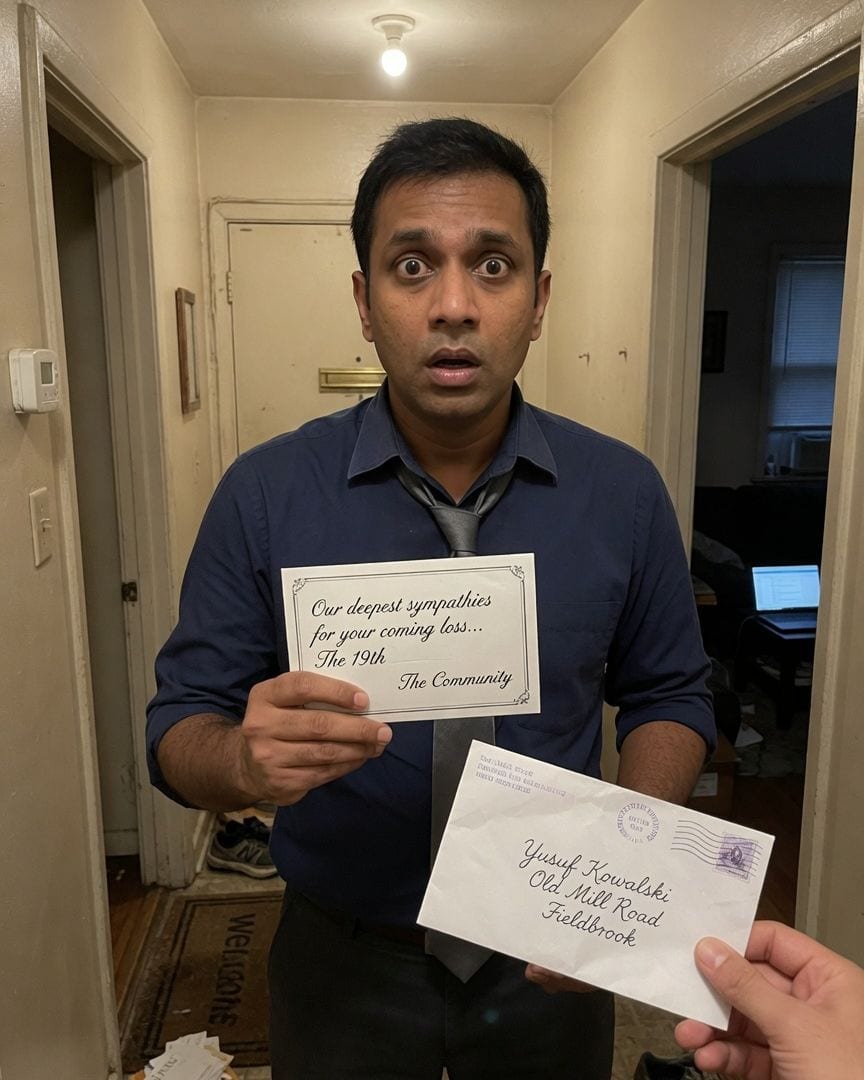
My bus driver knows my name, Yusuf, and said 'not long now.' Today is the 18th. He added a date this morning: the 19th.
My morning bus commute is a predictable comfort until driver Bernard Ellison addresses me by name. I've never told him Yusuf. Then, he adds a quiet, 'Not long now... The 19th.' Today is the 18th, and his words leave me with an inexplicable dread.
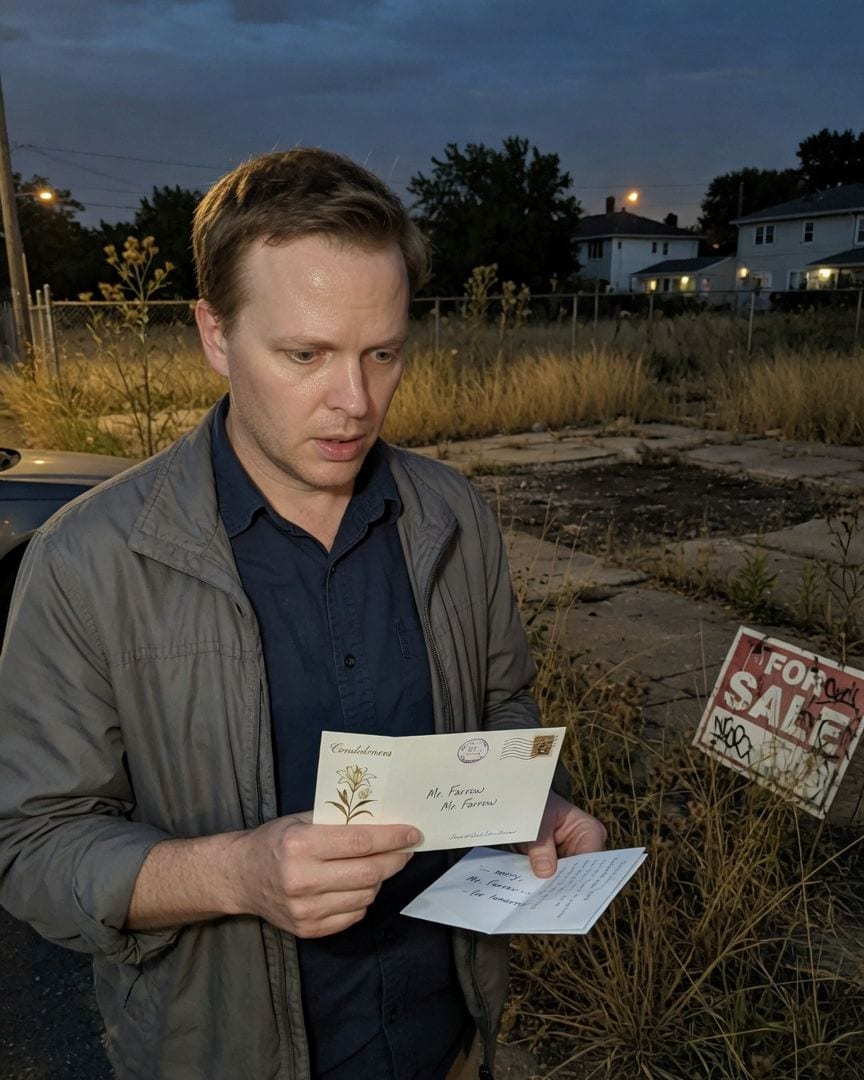
My waiter apologized for tomorrow's plans I hadn't made. He stared at his own handwriting, swore he didn't write it.
My quiet, solitary life was routine until a condolence card arrived, addressed to me for an unknown loss. The postmark, '14 Elm St.', was unsettling enough, but driving there revealed the impossible truth: the address was nothing but an empty lot.
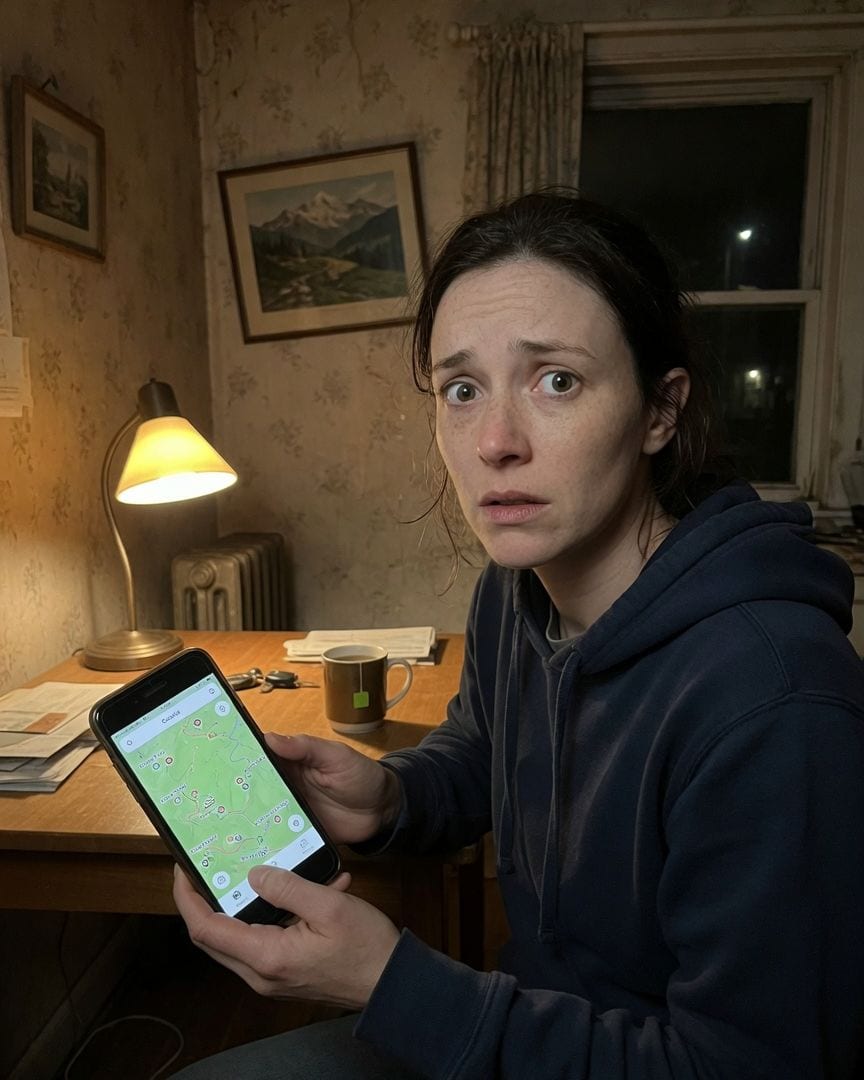
My hiking app scrubbed the hill's name from the map, on a phone that's been in airplane mode for two days.
I just moved to town and hiked a local hill, 'Cathan Tor,' according to my phone's app. But when I mentioned the name to the mechanic, he froze, dropped his wrench, and whispered, 'Don't say that name, Colette.'
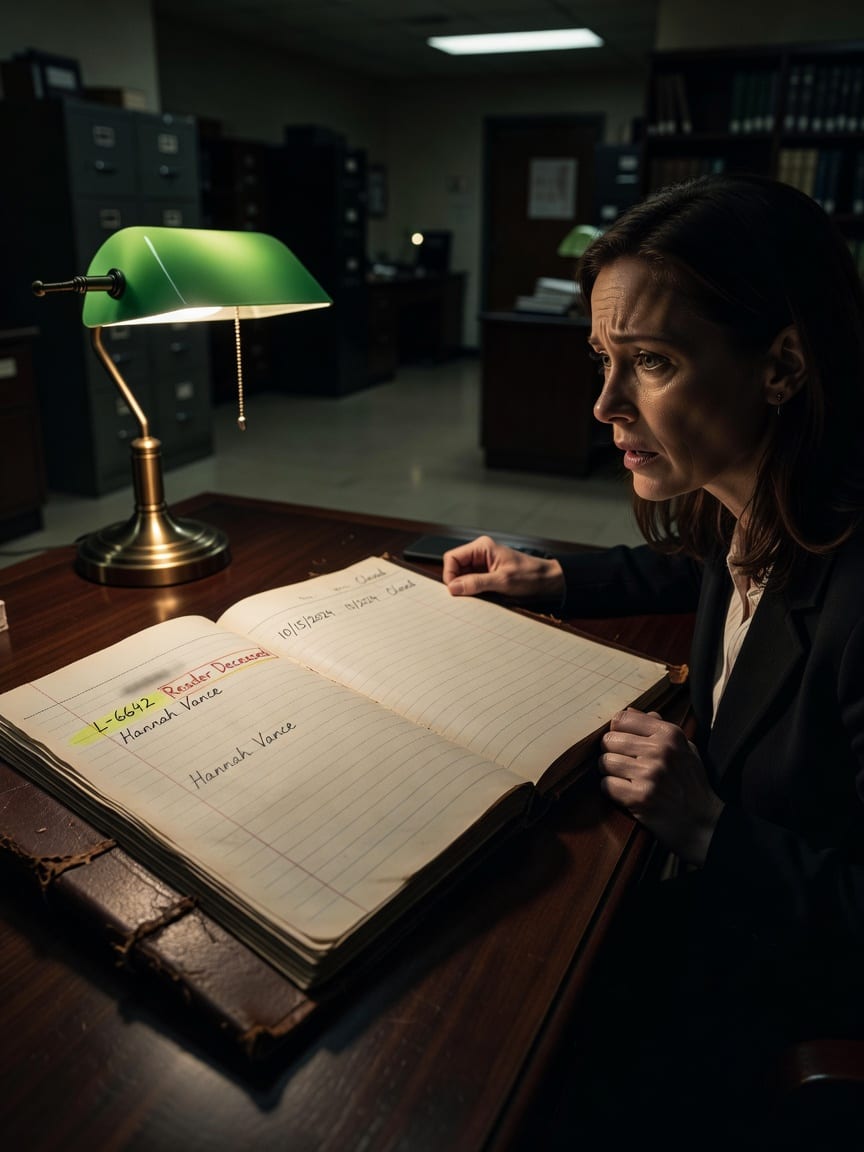
My library card number L-6642 was issued to me at seven — and the ledger shows that number has marked a reader 'deceased' every twelve years since 1949.
Returning my late father's library card to the old town library felt like a small act of closure. But the senior librarian's ancient ledger revealed a chilling pattern of 'reader deceased' entries tied to specific card numbers and borrowed books. My unease turned to cold dread when I secretly found my own name penciled in, marked for a future 'reader deceased' entry.
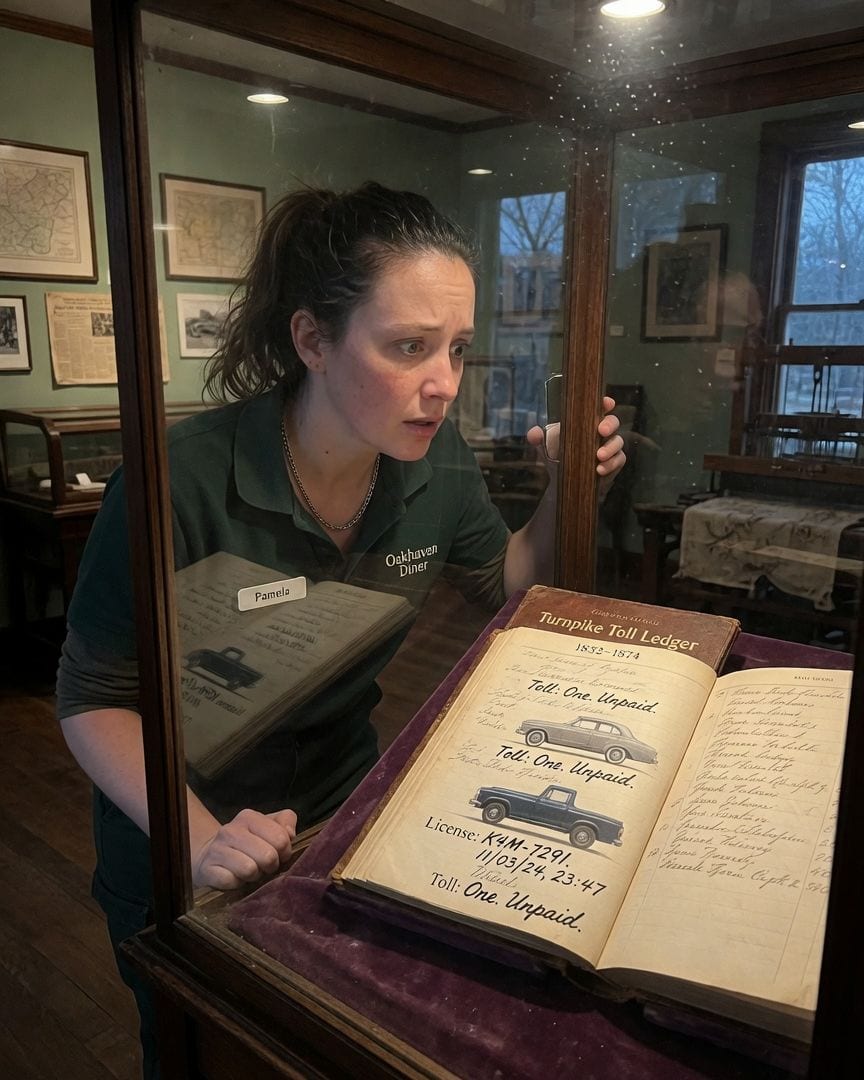
My car stalled at the old turnpike milestone, after dark. The toll ledger, closed in 1874, then listed my car, my stall time, and a toll of one, unpaid.
I had just moved to Oakhaven when my old sedan died on a dark, winding road by an infamous turnpike milestone. The next day, I found my car's exact registration and stall time written in fresh ink in a 150-year-old, locked museum ledger, marked 'Toll: One. Unpaid.' The curator dismissed it as a prank, but her white knuckles and strained voice hinted at something far more unsettling.
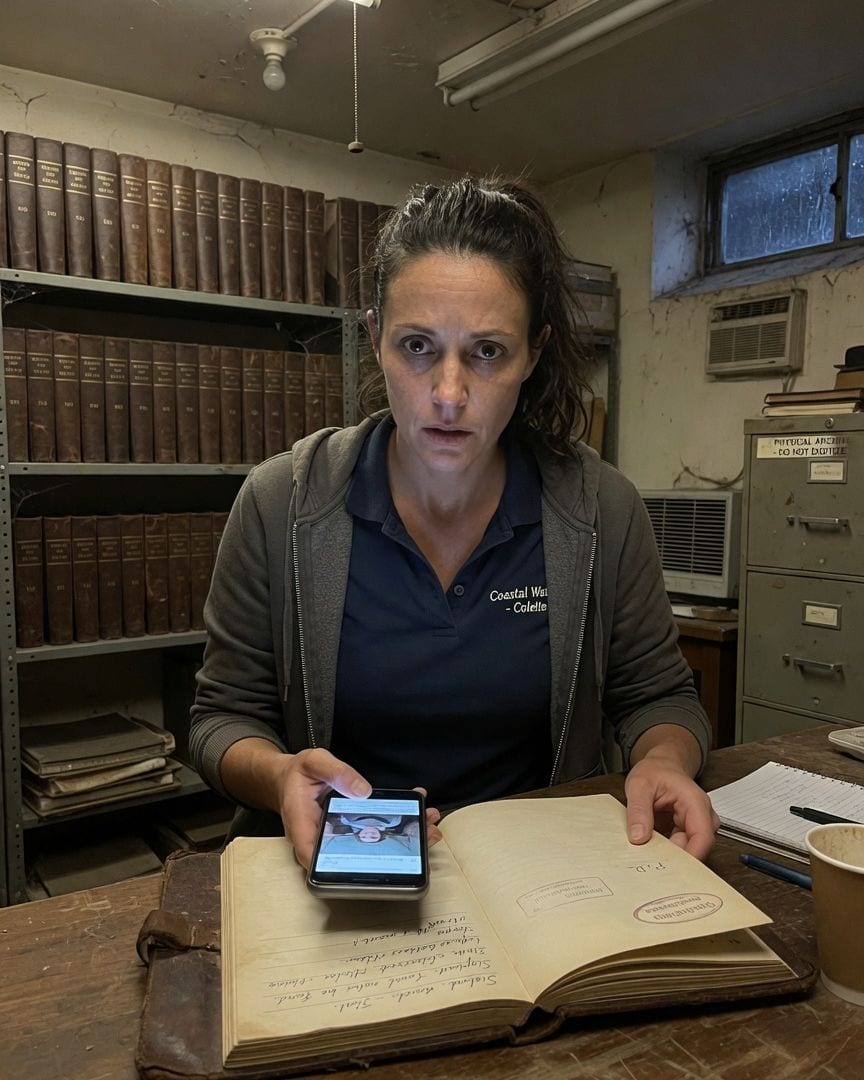
My coastguard log noted Sighting 9 again tonight, a light where no vessel showed. The old logs carry Sighting 9 off Skerry Point at 3:14am every tenth year since 1954, always 'nothing found,' always 'send no boat.'
On my watchtower night shift, the radar screen glowed green and the ocean was quiet. Then, a familiar light appeared off Skerry Point, exactly on cue, just as it had every tenth year for decades. But digging deeper, I found a hidden stamp in an old logbook: 'Operation Skerry. Status: Complete.' It left me with a chilling sense of finality.