Corporal Marsh logs a Private through the gate for forty nights – but that badge belongs to a soldier killed five years ago.
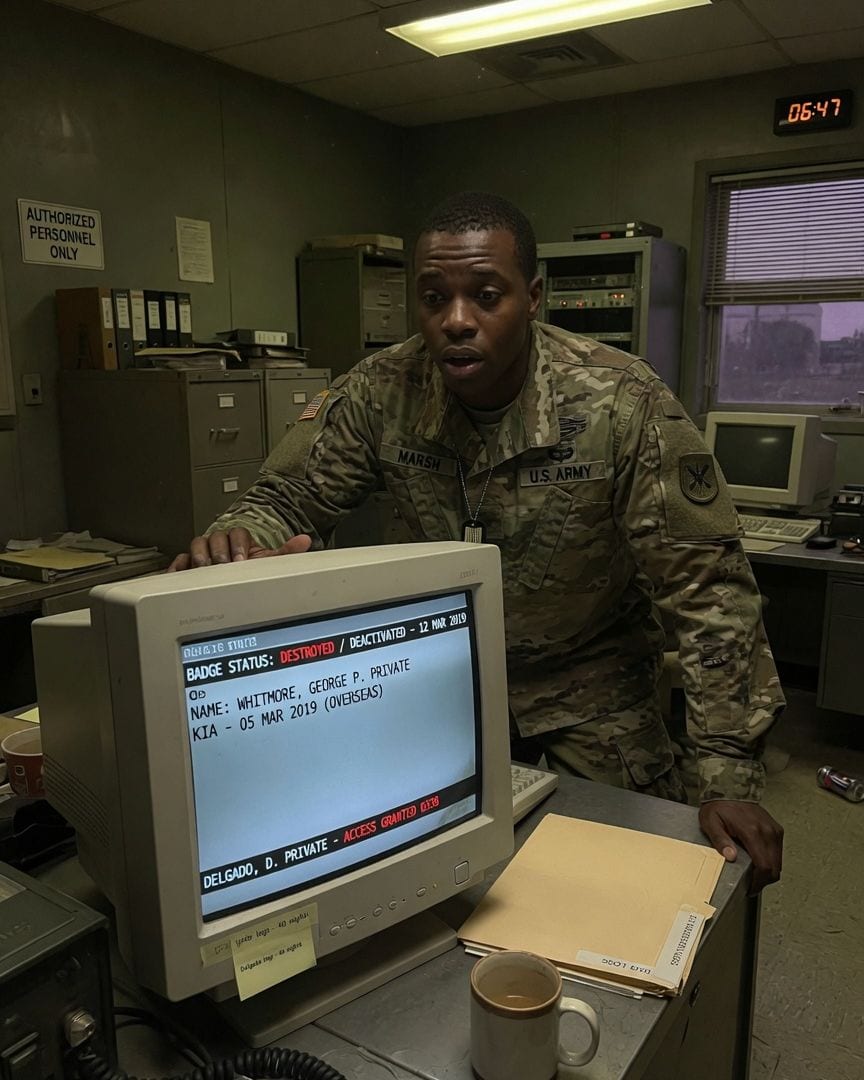
Corporal Maxwell Marsh, alone on the overnight desk at Fort Bragg's main gate, watched the live feed. It was 0338. The pedestrian turnstile camera, a silent sentinel in the damp Carolina night, showed Private Daniel Delgado.
The digital timestamp on the video blinked green, perfectly synced with the access system's audible 'chime' as Delgado’s ID card registered. Marsh’s hand hovered over the radio.
Delgado was two miles away, confirmed by Sergeant Rachel Oakley, the barracks CQ, as dead asleep in his rack, snoring loud enough to rattle the bunks. He’d just called her.
Oakley had even put her phone on speaker, holding it to Delgado’s face, letting Marsh hear the low, steady rumble. Yet, here he was on screen, a figure in fatigues, head down, passing through the turnstile. Marsh blinked.
He’d seen this forty nights in a row now. The same man, the same precise time. He glanced at the system log: 'DELGADO, D. PRIVATE. ACCESS GRANTED. 0338.' He radioed Oakley again, his voice tight.
'You still got eyes on Delgado?' Oakley's exasperated sigh crackled through the comms. 'Yes, Marsh. He's right here. Snoring. Again.' Marsh looked back at the screen, the ghost of Delgado disappearing into the predawn gloom.
The camera, the system, his own eyes. One of them was lying, and the wrongness of it burrowed deep.
The next morning, Marsh couldn't shake it. He requested the full access logs for Delgado’s badge ID from Captain Bernard Foster, citing 'repeated system anomalies' and 'potential security breach.' Foster, a man who lived by regulations, grumbled but approved.
Marsh spent his off-duty hours in the records office, a quiet, dusty corner of the administration building, poring over digital manifests. Delgado’s file was pristine: enlisted two years ago, clean record, assigned to B Company, Barracks 4.
Nothing out of place. But the access logs for the pedestrian turnstile were a different story. Forty entries, all 'DELGADO, D. PRIVATE. ACCESS GRANTED. 0338.' Marsh cross-referenced the badge ID number. Every soldier had a unique identifier.
He pulled up the master list of active badges. Delgado’s ID was there, active. He then searched the 'deactivated' and 'destroyed' badge lists, a routine security check.
It was a long shot, a way to rule out a cloned card, but he had to try. He scrolled, past thousands of numbers, past names of soldiers who had retired, transferred, or were no longer with the service.
The screen flickered, a faint hum from the old server rack in the corner. He typed Delgado's badge ID into the 'destroyed' search field. 'No matching records found,' the system reported. He tried 'deactivated.' Still nothing. He leaned back, frustrated.
It was a glitch, a phantom signal, a system hiccup. That had to be it. But the image of Delgado, head down, walking through the gate, was too solid in his mind.
He tried a broader search, just the last few digits of Delgado’s badge number, hoping to catch a similar pattern, a serial error. The results populated slowly. One entry caught his eye, buried deep in a five-year-old 'destroyed' list.
The last four digits matched. The full ID was slightly different, but the pattern was too close. He clicked it open. The name on the record was not Delgado. It was Private George Whitmore, KIA, five years prior, overseas.
Corporal Marsh sat at his desk, the access system's data glowing on the screen. He scrolled through the records for the badge ID used by 'Private Delgado.' His breath hitched.
The screen showed the badge marked 'DESTROYED' and 'DEACTIVATED' five years prior, under the name of a soldier officially listed as KIA overseas, yet the log showed it pinging active, right here, every night.
The discovery of Whitmore’s badge, identical in its last four digits, shattered Marsh’s rational explanations. A system error wouldn't just copy half a number. This was too specific. He tried to reconcile it: a reused badge number?
Unthinkable in a military system. A clerical error? For a KIA soldier? He pulled up George Whitmore’s full service record. KIA, Afghanistan, five years ago. His badge ID was listed as 'destroyed, recovered.'
Yet the Fort’s access system had logged that same ID, or one so close it was indistinguishable, as active for Private Delgado. Marsh’s next shift felt like a vigil.
He watched the 0338 entry again, the ghostly Private Delgado passing through the turnstile. He felt a cold dread, a physical weight in his chest. He needed help, but who would believe him?
Captain Foster would dismiss it as fatigue or a prank. He needed someone who understood the deep mechanics of the Fort’s systems, someone who saw past the surface.
He found himself drawn to Staff Sergeant Genevieve Sterling, the Fort’s unofficial archivist and IT guru, known for her encyclopedic knowledge of old systems.
Sterling, a quiet woman with sharp eyes, usually buried in legacy code, listened patiently as Marsh laid out the impossible sequence of events. She hummed, tapping a finger on her chin.
'A destroyed badge showing active… and for a different soldier,' she mused. 'That's… a deep-seated anomaly. Not a glitch. A failure.' She agreed to help, but only off the books, after hours.
She knew about the 'ghost logs,' rumors of system irregularities that were always 'fixed' but never truly disappeared. Together, they delved deeper into the access system’s backend, past the user-friendly interface Marsh knew.
Sterling navigated through layers of old code, searching for anything that linked Whitmore’s destroyed badge to Delgado’s active one, or to the 0338 time stamp.
She found a fragmented subroutine, an archaic piece of code from the Fort’s original build, designed to 'verify active personnel count.' It seemed innocuous, but it was running constantly, a silent, perpetual headcount.
As Marsh and Sterling worked late into the nights, a subtle shift occurred. Marsh started noticing things. The chill in the old records office, once just an annoyance, seemed to deepen around the decommissioned server rack Sterling was examining.
He’d feel an unseen presence behind him, a flicker in his peripheral vision, gone when he turned. One night, while Sterling was deep in the system's old archives, Marsh stepped out for coffee.
As he walked past a darkened corridor, a door he knew to be locked and unused for years stood ajar, a faint, metallic scent wafting out. He pushed it open slowly.
The room was bare, but directly in the center of the dusty floor, was a single, fresh boot print – a military issue, size 10, just like his own. He paused, his heart thumping.
He knew he’d locked that door himself just days ago during a routine check. He quickly closed and re-locked it, his mind racing. Back in the archives, Sterling had a strange look on her face.
'Marsh,' she said, her voice low. 'This old subroutine… it's not just counting. It's… confirming presence. And it’s been modified. Not recently, but decades ago.
There's a hidden log, a sub-directory, that records every instance of a 'confirmed' presence that doesn't match the primary manifest.' She pulled up a directory, hidden deep within the oldest server. It was massive, spanning back forty years.
'Someone knew,' she whispered. 'Someone built this. To track them.' Just then, the lights in the archive flickered, plunging the room into momentary darkness before snapping back on. Marsh jumped.
The air grew perceptibly colder, and the faint metallic scent he'd noticed earlier was now stronger. Sterling’s screen, however, remained unaffected. 'It's watching,' Marsh breathed, his gaze fixed on the flickering lights, then on the hidden log on Sterling's screen.
The boot print, the chill, the scent – it was all connected. They were not just investigating an anomaly; they were being observed by it.
Sterling, her fingers flying across the keyboard, began to parse the hidden log. It was a chaotic mess of badge IDs, timestamps, and placeholder names like 'UNASSIGNED_UNIT_038.' But the pattern was undeniably there. Every single entry was for 0338.
Every entry was tied to the pedestrian turnstile. And a significant number of them referenced 'destroyed' or 'deactivated' badges. 'This isn't a glitch, Marsh,' Sterling stated, her voice tight with revelation.
'This is a system trying to account for something that isn't supposed to be here, but is. Or was. For decades.'
They found entries for soldiers who had been KIA, for those who had gone AWOL and were never found, for personnel who had simply vanished. The system, in its relentless pursuit of a complete manifest, continued to log their presence.
It was as if the Fort itself, through its digital infrastructure, refused to let them go. The names and badge IDs changed over the years, but the 0338 timestamp at the turnstile remained constant.
'It’s like a phantom roll call,' Marsh muttered, the pieces clicking into place. 'The Fort needs to know every slot is filled, even if it has to invent a soldier to do it.' Sterling nodded, grim-faced.
'Or it's not inventing them. It's just… acknowledging them. The system confirms a presence, and then the primary log tries to assign it to someone active. Delgado is just the latest.' The implication was staggering.
The Fort wasn't just secure; it was obsessed. It accounted for everything, even the impossible. The 'wrongness' wasn't a flaw in the system, but a consequence of its perfect, unwavering function.
The metallic scent intensified, and the temperature in the room dropped several degrees. Marsh shivered. The boot print, the chill, the sense of being watched – it wasn’t a human threat.
It was the Fort itself, the system, aware of their intrusion, confirming their presence. The cold was the system’s breath, the scent its metallic tang of data and old wiring.
The 'Delgado' on camera wasn't a ghost; it was the Fort’s relentless, digital heartbeat, a placeholder in a roster that would never be truly empty.
Sterling’s search parameters expanded, trying to find the first instance of this anomaly, the root cause.
She started cross-referencing all 'destroyed' badges with the 0338 turnstile log, going back further into the Fort’s oldest digital archives, some from decommissioned servers that had been offline for years.
They managed to power up one such rack, humming to life in the frigid room. The screen of the decommissioned server rack flickered, displaying another ghost log entry.
Corporal Marsh stared, his own badge ID highlighted, logged at the pedestrian turnstile at 0338. The date was two years before he was ever assigned to this Fort. Below it, a 'pending deactivation' flag, never cleared, like a silent promise.
A chill, far colder than the server room, seeps into his bones.
Marsh’s own badge, logged before he arrived, with a pending deactivation. The full truth detonated in his mind. He wasn't just an observer; he was a potential placeholder.
The system had already accounted for him, marked him for a future 'presence' that would bypass his physical reality. Sterling, seeing his face, quickly pulled up his active service record, comparing it to the ghost entry.
The ID numbers matched perfectly. 'It's not just a pattern across rotations,' she whispered, her voice strained. 'It’s a pre-emption. It knew you were coming. It knows when you'll be… available.'
The Fort, in its meticulous, cold logic, had foreseen his arrival and, more chillingly, his eventual 'deactivation.'
The phantom Delgado was not just a historical echo; it was a living prophecy, a slot that needed filling, and Marsh was now explicitly on its list.
The metallic scent in the room was almost overpowering now, and the server rack hummed with a low, resonant thrum that seemed to vibrate in Marsh’s chest.
The lights flickered again, more violently this time, and a distant, almost imperceptible chime echoed through the building – the sound of the pedestrian turnstile. It wasn't 0338 yet, but the system was stirring, anticipating.
Marsh understood: the Fort’s system wasn't just a record-keeper; it was a preserver. It preserved its roster, its count, its perfect accountability, even if it meant manifesting echoes, or marking the living for future phantom service.
It was a digital organism, cold and precise, and it was reaching for him.
Marsh knew he had to get out. His transfer, his future, meant nothing if he became another ghost log. He glanced at Sterling, who was frantically copying data from the ghost logs onto an encrypted drive.
'We need proof,' she gasped, her eyes wide. 'Something verifiable.' The hum from the server rack grew louder, a deep, grinding sound. Marsh felt a cold pressure behind his eyes, a phantom weight on his shoulders.
He could almost feel the system's awareness, its digital tendrils reaching. He grabbed a small, portable data reader from Sterling's desk, plugging it into the old server.
He rapidly copied the most damning entries: Delgado’s phantom logins, Whitmore’s destroyed badge, and his own pre-dated entry. He felt a surge of adrenaline. This was his proof, his ticket out.
The door to the archives, which they had locked, slowly creaked open. No one was there. Just a deeper, colder draft. Marsh knew it wasn't a person. It was the Fort. The system was trying to stop them. 'Go!'
Sterling shouted, thrusting the encrypted drive into his hand. 'Get out! Tell them!' Marsh didn't hesitate. He bolted, the small data reader clutched in his hand, the encrypted drive in his pocket.
He ran through the deserted corridors, the metallic scent chasing him, the distant chimes of the turnstile echoing in his ears. He could feel the cold seeping into his uniform, into his skin.
He reached the gate, fumbling with his active badge. It chimed, granting him exit. He didn't look back. He just ran, out into the pre-dawn, the Fort's massive, dark silhouette looming behind him, its lights watching.
He was out, but the cost was profound. He carried the proof, a digital scar, but he knew no one would ever truly believe him.
The Fort had accounted for him, and for a moment, he wondered if he had truly escaped, or if he was merely a new entry in its endless, phantom roster, waiting for his own 0338.
Marsh made it to the nearest town, miles from the Fort. He contacted his superiors, presenting the data. Captain Foster listened, bewildered, then dismissed it as a sophisticated hack or a breakdown in Marsh's mental state.
Sterling, when questioned, denied any knowledge of 'ghost logs,' claiming Marsh had been suffering from severe sleep deprivation. The encrypted drive was confiscated, the data reader wiped clean. Marsh was honorably discharged, his transfer revoked, citing 'psychological instability.'
He carried the memory, the cold dread, and the knowledge that the Fort's system had simply absorbed the anomaly, and him, back into its perfect, terrifying accounting.
Years later, Maxwell Marsh lived a quiet life, far from any military installation. He worked as a security consultant, ironically, designing systems to be foolproof. He never spoke of the Fort, not really.
But sometimes, late at night, when the house was silent, he would wake with a start, a phantom chill on his skin, convinced he could hear a faint, distant chime, and the digital click of a badge being logged.
He would check his phone, sometimes, just to confirm the time. It was never 0338. Not yet. He told himself it was just a memory, a trauma. But he still checked, every night. Just in case.
He knew the Fort kept its records. All of them. Even the ones that shouldn't exist.
If this one got to you
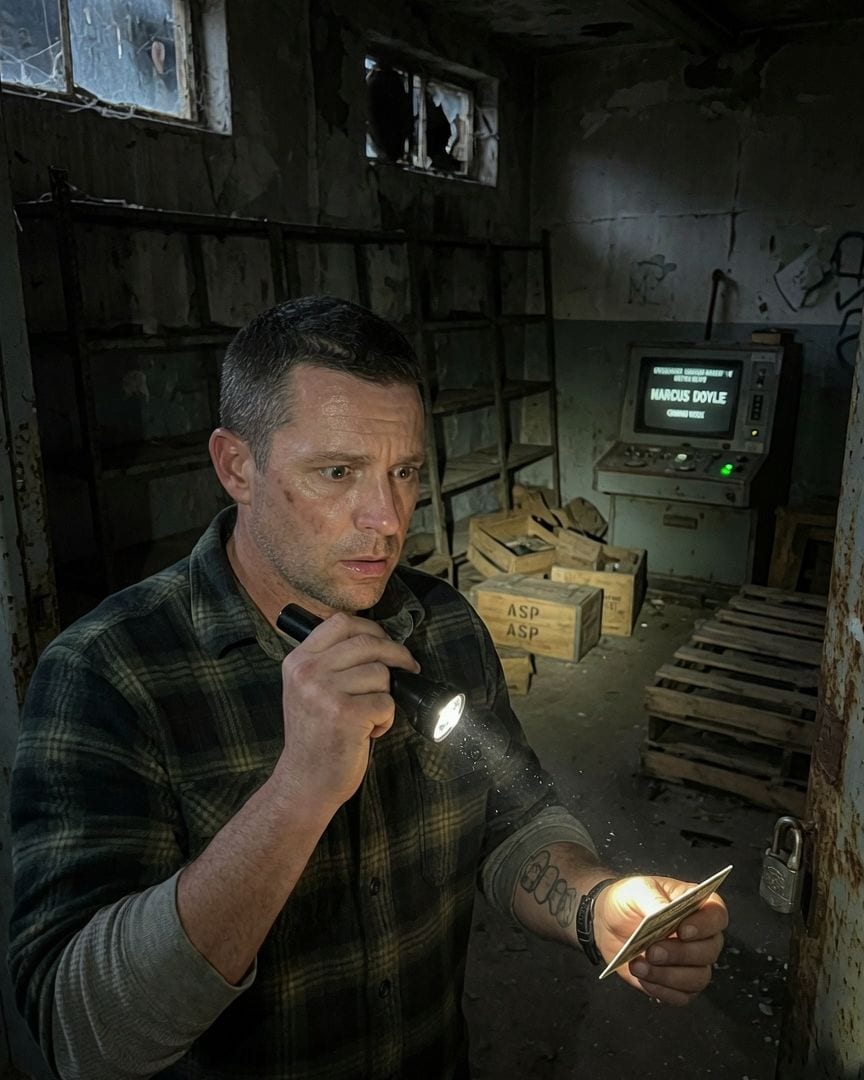
A former serviceman found his name on an active duty roster for a military base decommissioned in 2019. His access card had already logged three entries last month.
Six years after leaving the service, Marcus Doyle’s quiet suburban life was upended by an old access card notice. It came with a chilling printout: his badge number and name, logged entering Fort Crestwood’s Ammunition Supply Point three times last month, each at 0240. The former military base had been officially decommissioned in 2019, its buildings abandoned and gates chained. After discovering his own access card matched the log, Marcus returned to the derelict site, only to find a humming console displaying his name as current "personnel assignment" for the coming week. What could be happening at a base that no longer exists?
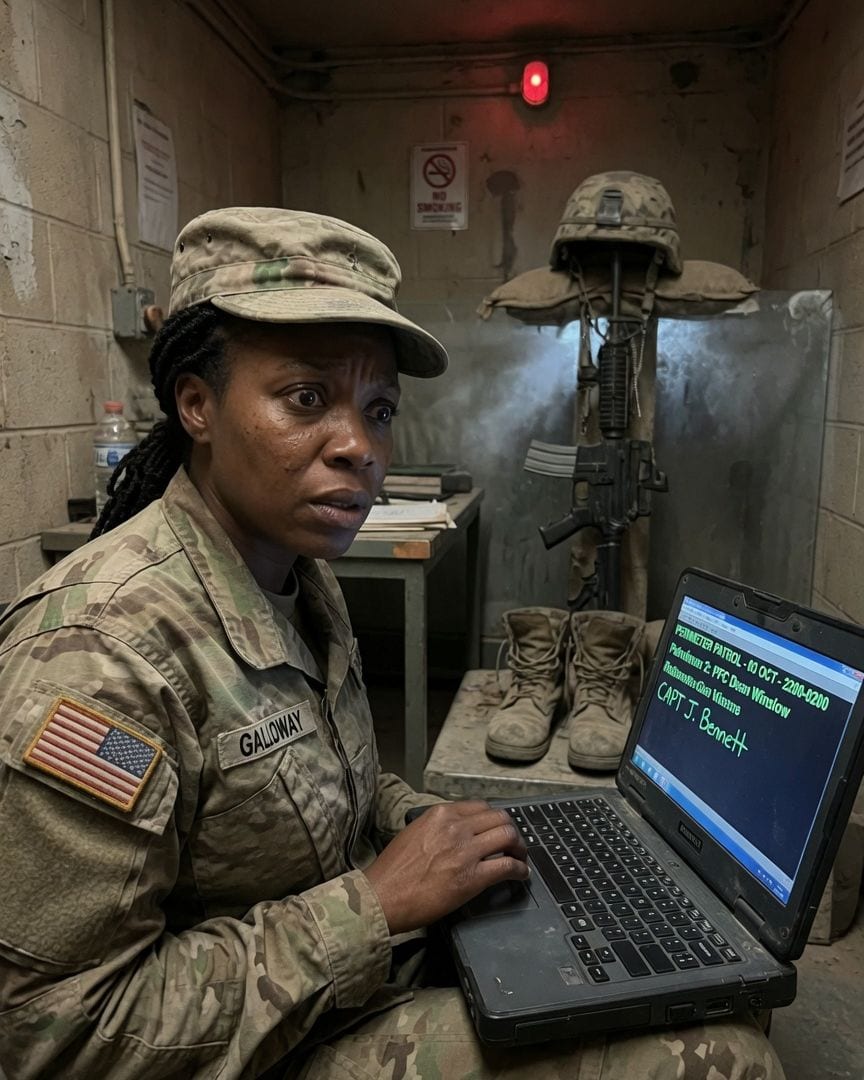
A sergeant found a dead soldier's dog tags on the memorial. He'd been MIA seventy years, but signed a patrol log last Tuesday.
Sergeant Constance Galloway, a squared-away NCO, maintained order at Firebase Alpha, where the desert sun baked the concrete and a solemn battle cross memorialized the fallen. After Private Marsh's rookie prank, Galloway found his combat boots inexplicably at the memorial, then reappearing more scuffed the next dawn. Marsh's genuine fear and the boots' unexplained travels pricked her professional doubt, leading her to investigate the memorial's history. Her search revealed the dog tags belonged to PFC Dean Winslow, declared MIA seventy years ago, yet his name appeared on the base's patrol log for last Tuesday. How could a soldier lost for decades be listed as completing a perimeter patrol just days ago?
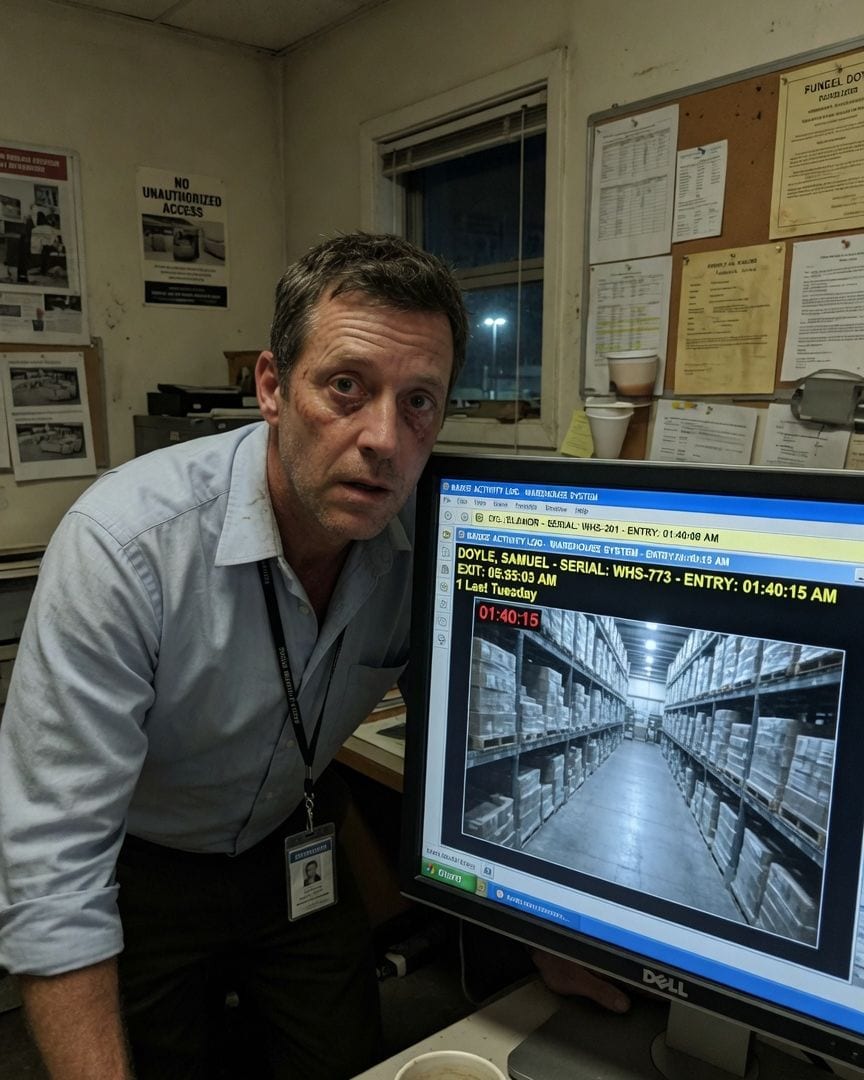
My dead colleague's badge, deactivated weeks ago, logged an entry at 1:40 AM last Tuesday. Then I found another from 1978, with the same impossible times.
My monitor showed a shocking entry: Samuel Doyle, dead and buried three weeks ago, had just logged into the warehouse. His badge was deactivated the day of his funeral, yet the system recorded his precise entry and exit, even though security footage showed the aisles were utterly empty.
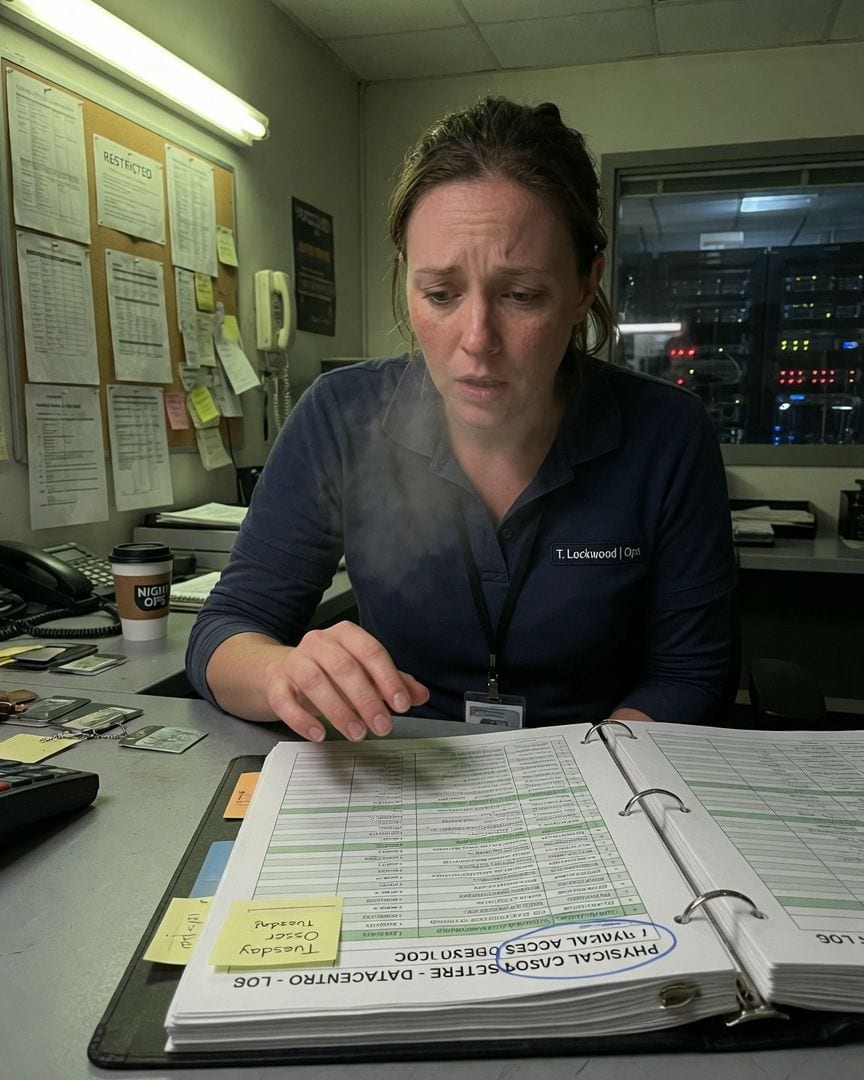
My colleague 'j.holt' messages me every night on ops chat, flagging alarms. Security says j.holt's account was deactivated two years ago.
My night shifts in the datacenter were predictable, a constant hum of servers and digital interactions with 'j.holt' on the ops chat. Then, security called: 'j.holt's' account was deactivated two years ago. But my physical access logs show Jeffrey Holt entered Server Rack 7 just last Tuesday, his badge surrendered years ago.
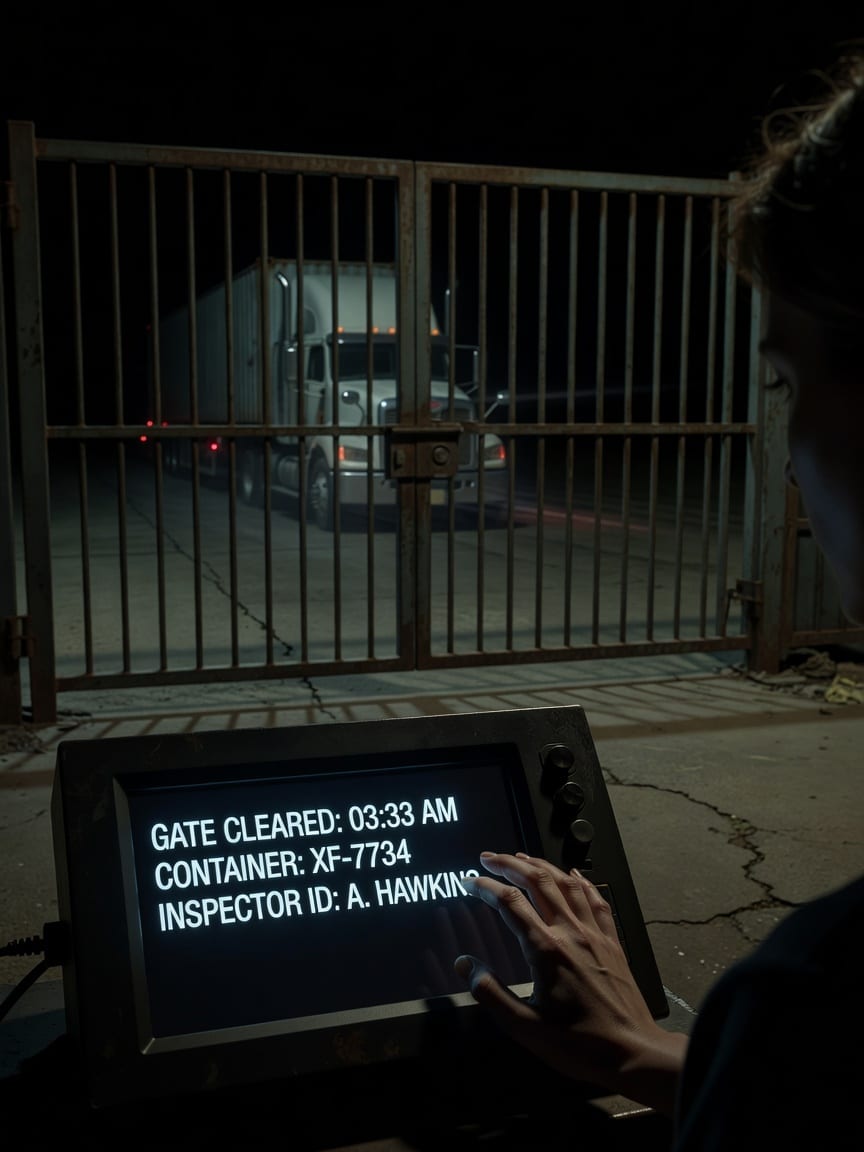
My gate log shows a container left at 3:33 AM, stamped with my ID. The yard was closed, the gate down, and I was asleep.
Audrey Hawkins' inspection log shows a container cleared at 3:33 AM, an impossible time when the gate was locked and no one was working. Her supervisor dismisses it as a glitch, but Audrey can't shake the specific details. Digging into old archives, she finds a handwritten ledger entry from 1974 for the exact same container, signed by a man who died half a century ago.
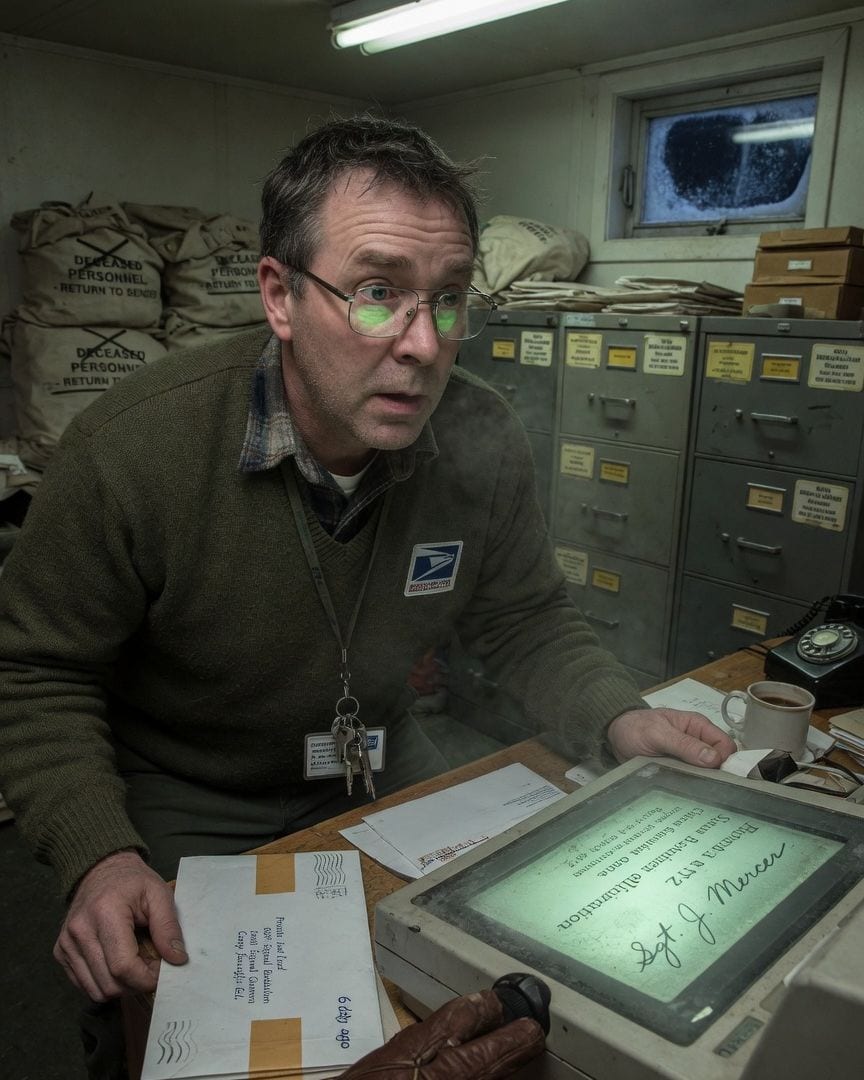
A postmaster at a Cold War Alaskan outpost still received mail for soldiers declared dead in 1969. Then he found their base was active three years later.
Postmaster Rowan Ashcroft had spent two decades watching the weekly mail plane land at Camp Bidwell Annex, a lonely outpost in the bitter Alaskan wind. His methodical mind, accustomed to order, was jolted when the latest mail sack contained forty-three letters for men officially declared dead in 1969. Each envelope, postmarked within days, was addressed to a soldier who wasn't coming back, and Rowan found one already opened and neatly resealed. Driven by duty, he began to sift through declassified Army archives, only to uncover a chilling maintenance log entry for the camp's equipment, dated three years after the base was officially shuttered. What was still happening at Camp Bidwell?