My coworker Sy isn't on the crew list. No one else has ever heard of him.
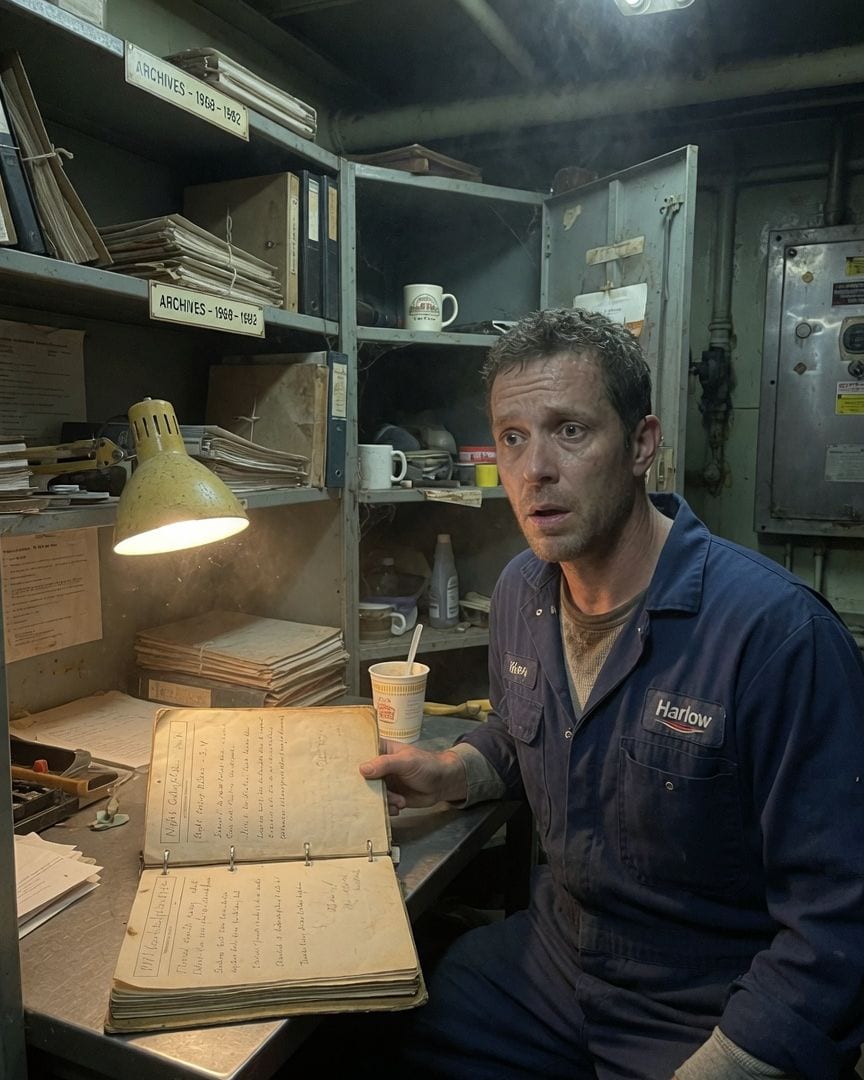
The hum of the platform was a constant companion out here, a deep, mechanical exhale that vibrated through the steel decks. It was 3 AM, prime time for night shift supervisor coffee and instant noodles in the galley.
Sy, one of the roughnecks, sat across from me, a chipped ceramic mug with a faded rig logo in his hand, steam curling up from his ramen.
He was a quiet guy, Sy, mostly, but every night, without fail, he'd tell me the same three corny jokes.
"Why don't scientists trust atoms?" he asked, a faint smile playing on his lips. I braced myself for the punchline I’d heard a hundred times.
"Because they make up everything," I finished for him, and he chuckled anyway, a warm, familiar sound in the cold, echoing space.
It was a comforting ritual, these three jokes over noodles, a small pocket of normalcy in the middle of the dark, isolated ocean.
We’d just gotten to the third one—a truly terrible joke about a fish with no eyes—when the comms crackled.
"Harlow, my office. Now." George Coleman, our Offshore Installation Manager. His voice was usually calm, but there was an edge to it tonight.
I left Sy still stirring his noodles and walked the familiar corridors to Coleman’s office. He was sitting at his desk, the glow of his monitor illuminating his face. It looked… harder than usual. He gestured for me to sit.
"Roland," he said, not bothering with pleasantries. "Tell me about Sy."
I blinked. "Sy? He's a good man, OIM. Solid roughneck. He's usually in the galley around this time, tells me the same three jokes over noodles. Helps break up the night."
I felt a sudden, strange urge to defend Sy, though I didn't know why.
Coleman nodded slowly, his eyes fixed on me. He turned his monitor slightly. Digital crew manifests, archived records, dates scrolling back five years. He navigated through the database, his finger tracing lines on the screen. "You say he's a roughneck?"
"Yeah. Late thirties, early forties maybe. Quiet, but reliable."
Coleman scrolled for another minute, then turned the screen fully toward me. His face was grim. "There's no man named Sy on this rotation, Roland. Or the last one. Or any rotation in the system for the past five years.
And he's certainly not licensed to be offshore at all."
My stomach dropped. I stared at the blank search results, the empty data fields where Sy’s name should have been. It had to be a mistake. A glitch.
The rest of my shift was a blur of unease. A prank, I kept telling myself. Coleman’s a joker, always has been, maybe he's just messing with me.
But the sternness in his eyes, the way his jaw had been set, wasn’t a joke. I checked the comms logs for the last few weeks; I always talked to Sy, logged his shift reports. Nothing.
No outgoing calls, no incoming, nothing with his name. It was like talking into a void.
The next shift, I searched. Subtly at first. I walked into the galley at 3 AM. Sy’s usual chair was empty. Not just empty, but unused. No crumbs, no faint stain where his mug usually sat.
The air in the galley was cold, lifeless, without his quiet presence. I made myself instant noodles, the ritual hollow without his familiar voice asking about atoms.
I tried asking other roughnecks. "Hey, you seen Sy around?" I'd ask casually. Or, "Sy told me a great joke the other night…" They'd look at me, blank-faced. "Who?" one guy asked, genuinely confused.
Another just shrugged, "Don't know anyone by that name, chief." Their reactions weren’t dismissive; they were honestly perplexed. As if I’d spoken a foreign word.
I checked the physical sign-in sheets, the ones everyone had to initial at the start and end of their shifts. Nothing. No 'Sy.' The emergency roster, listing every soul on board for safety drills, was equally barren.
My rational mind screamed for an explanation, for a mundane error, a misplaced record. But every check only deepened the void where Sy should have been.
Finally, driven by a desperate need for something, I went looking for his mug. I remembered him keeping it in a storage closet near the galley, tucked away on a shelf with other forgotten crew items.
It was chipped, a faded rig logo barely visible beneath a coffee stain. I found the closet, pushed aside some cleaning supplies, and there it was. His mug. Exactly where it should be.
It felt real, substantial, cold and heavy in my hand. But it was the only piece of him I could find. No uniform, no personal items, no trace of a locker. Just the mug.
And it screamed that I wasn't imagining him, but it also offered no explanation for his absence from every single official record.
The gnawing unease became a physical ache. I needed answers. I used my supervisor access to gain entry to the platform’s oldest paper archives, a musty room filled with metal shelving and dusty binders dating back decades.
I was looking for anything, any anomaly, any mention of a 'Sy' who might have worked here and vanished without a trace.
Hours passed, my head buried in crumbling paper, the air thick with the smell of old glue and salt.
Deep within a smudged, handwritten maintenance log from 1971, tucked between an entry for a boiler inspection and a repair to a galley fridge, I found it. An entry, out of chronological order, for 'Night Galley Duties.'
The name listed was 'S. Y.' And next to it, scrawled in faint pencil, a note that chilled me to the bone: 'Discharged - no record of departure.'
I stared at the faded ink, the same initials, the same role, the impossible disappearance, and a cold dread settled in my chest, knowing this wasn't just about my Sy, but something far older, far more wrong.
The 'S. Y.' entry in that old logbook was a needle in a haystack, but it was there. I cross-referenced it with other logs from around that time, my heart thumping a hollow rhythm against my ribs.
I found similar, anomalous entries—not many, but enough to form a pattern. Names that appeared once, then vanished. Always associated with mundane, repetitive night shifts: galley duty, isolated equipment checks, generator monitoring.
Roles that needed a consistent presence, a silent pair of hands, when most of the platform was asleep.
I knew who I had to talk to. Malcolm Ford, a senior roughneck, sixty years old, with eyes that had seen more sunrises and sunsets out here than anyone else.
He was a quiet man, grizzled and lean, a walking archive of the platform's long history. I found him in the mess hall, picking at a plate of lukewarm stew.
"Malcolm," I started, trying to keep my voice casual, "I was looking through some old records. Heard a story, you know, about some old timers who just… left. No fanfare, just gone."
He slowly chewed a mouthful of stew, his gaze distant. "This platform keeps its own secrets, son. Always has." He didn't look at me directly, instead studying a faint scratch on the table’s laminate.
"Some things, best not to go looking too deep for them."
I pushed, despite the subtle warning in his tone. "I found an entry. From '71. 'S. Y.' for Night Galley Duties. Said 'Discharged - no record of departure.'"
Malcolm stopped chewing. His spoon clattered softly against the bowl. He went completely still. Then, very slowly, he met my gaze. His eyes were ancient, filled with a knowledge that tasted like rust and salt.
"Some folks," he said, his voice a low rasp, "they just belong here, you know? More than others." He looked away, back at the scratch on the table.
He didn't elaborate, but the words hung in the air, heavy and loaded. I realized Malcolm wasn't dismissing me; he was warning me, acknowledging an unspoken truth that I had stumbled upon.
My investigation grew bolder. I started comparing old platform blueprints to the current layouts, looking for inconsistencies, for anomalies in forgotten spaces. The platform itself felt different now, no longer a purely mechanical structure, but something… aware.
One night, I left a specific wrench – a heavy pipe wrench, distinct from the others – on a workbench in a rarely used section of the lower deck, marking its exact position with a piece of chalk.
The next morning, it was gone. I checked the security cameras in the corridor, the ones that covered that section, but the feed was grainy, static-laced, a blur of white noise during the hours I’d been away.
When I returned to my own workbench in the main workshop, several decks above, there it was. The wrench. Meticulously cleaned, gleaming, resting on a freshly wiped cloth.
It was a clear message, a violation of my space, a demonstration of unseen presence.
Later that week, I found a new, neatly folded, but anonymously placed, safety pamphlet tucked into my locker. It wasn't standard issue. Its cover depicted a lone, shadowy figure on a vast, empty deck, gazing out at a featureless horizon.
The title, printed in stark white letters, read: 'Mind the Silence.' It wasn’t a direct threat, not with words, but the implication was chilling. Someone, or something, knew I was digging.
I started to feel eyes on me, not human eyes, but the watchful presence of the platform itself.
The low hum in the pipes seemed to intensify when I was alone, a whisper in the echoing corridors that seemed to follow me, always just at the edge of hearing, a cold breath on the back of my neck.
I cornered Malcolm Ford again, this time in the deafening, rhythmic hum of the engine room. There was no escape in here, no casual passersby.
I laid out my findings, the 'S. Y.' log, the pattern of vanishing names, the wrench, the safety pamphlet. The silent warnings. Malcolm looked tired, resigned, his face etched with the weight of years.
"Alright, son," he began, his voice raspy, barely audible over the roar of the engines. "You asked, so I'll tell you what the old timers say. What they whispered when the sea was rough and the lights flickered."
He leaned in closer, his voice dropping to a conspiratorial murmur. "They say this platform, deep beneath the waves, is like a living thing. An ancient mechanism with its own needs. Its own… rhythms."
He paused, letting the words sink in. "Sometimes," Malcolm continued, "it needs to fill a gap. A routine, a presence, to keep things… stable. Especially when the shifts are quiet, when folks are sleeping, and the platform feels too… empty."
He described how, when a specific, often mundane, role became vacant or critical during these long, quiet night shifts, the platform would 'manifest' a temporary crew member.
"They're not ghosts, Roland," he said, his gaze unwavering. "They're… echoes. Projections. Almost real, but not quite. They do the job, keep the rhythm going. Tell their jokes." He nodded slowly toward the engine’s relentless thrum.
"And then, when the need passes, or they've done their part, they just… fade. No records, no goodbyes. No sign they were ever here. Just like your Sy. Just like that 'S. Y.' in the old logbook."
The pieces clicked into place, Sy’s existence, his non-existence, the old log entry. The cold galley, the empty chair, the silent warnings.
All of it was suddenly terribly coherent, a monstrous pattern that had been playing out for decades in the heart of this steel beast.
My own Sy, the jokes, the noodles, the quiet companionship—it was all part of the platform’s ancient, insidious design.
Reeling from the implications, a new, more terrifying question clawed its way into my throat. "What happens to them, Malcolm? These manifestations? Do they just… disappear? Go back to… wherever they came from?"
Malcolm’s gaze sharpened, losing its weariness, gaining a strange, almost pitying intensity that sent a fresh wave of dread through me.
He slowly pushed a laminated duty roster across the table, one of the master copies, listing every role, every shift, every crew member. His finger, calloused and stained with oil, traced a path to a section labeled 'Long-Term Staffing Projections.'
He tapped a blank slot, several weeks out, for 'Night Galley Attendant.' Beneath it, in bold red letters that seemed to pulse in the dim engine room light, was 'TBD - Internal Candidate.'
Malcolm then looked up, his eyes meeting Roland’s, and I saw not just a warning, but a terrible recognition. The old man’s lips barely moved as he whispered, "Sometimes, Roland, they don't disappear. Sometimes, someone else… fills the role."
Malcolm's whisper, "Sometimes, someone else… fills the role," echoed in the engine room, twisting the hum of the machinery into a hungry growl. He didn't need to say more, but he did, his voice heavy with a grim resignation.
He explained the final, horrifying layer of the truth. "The platform doesn't just create these echoes, Roland.
Sometimes, when a living crew member gets too close, when they understand too much, when they become too intertwined with its routines… the platform absorbs them."
He described a slow, insidious process where the individual's identity, their will, their very presence, becomes a vessel for the platform's need. "They become the next manifestation," Malcolm finished, his voice barely a breath. "Like a replacement part.
They fill the role, perfectly. They tell the jokes. They stir the noodles. Until they, too, are replaced by the next one. The cycle keeps turning."
A profound chill settled over me, colder than any ocean wind. I was the 'Internal Candidate.' My Sy, who had seemed so real, so grounded, was just a role waiting to be filled.
And I, in my naive search for answers, in my efforts to understand, had opened myself up to the platform's silent, hungry intelligence.
Every clue, every vanished name, every warning, the wrench, the pamphlet—all of it now snapped into a coherent, monstrous shape. I wasn’t just observing the pattern; I was becoming it.
I had been drawn in, assimilated into the rhythm, marked for absorption. The jokes, the routine, the connection with Sy… it hadn’t been about companionship. It had been about preparing me for a role. His role.
Panic surged through me, cold and sharp. I had to leave. I had to get off this platform, now. I found George Coleman, still in his office, signing off on reports.
I tried to explain, stumbling over my words, the 'living platform,' the 'manifestations,' the 'absorption.' He listened, his brow furrowed, but his gaze was distant, already dismissing me.
"Roland," he said, finally, his voice calm, rational. "I understand the isolation out here. It gets to everyone eventually. You’re stressed, exhausted. You need some shore leave, that's all. A good long break."
I didn't argue. I just nodded, already moving, packing my bag with a frantic energy I hadn't felt in years.
Clothes, toiletries, the chipped ceramic mug with the faded rig logo, which now felt like a lead weight in my hand. I had to get on the next chopper.
As I walked toward the helipad, my bag heavy on my shoulder, the platform’s familiar hum seemed to intensify, vibrating in my bones, a deep, resonant chord that started in my feet and climbed into my skull.
I felt a strange, compelling pull, a powerful urge, not toward the distant, windy helipad, but back towards the galley.
A profound sense of quiet duty washed over me, a feeling that I was exactly where I needed to be, that my place was here, on this platform, doing what needed to be done.
Sy’s three jokes, precise and familiar, began to play in my mind, clear as a bell, perfectly timed. "Why don't scientists trust atoms?" My steps faltered.
I looked at the helipad, the chopper a distant speck, a faint promise of escape. Then I looked back at the galley entrance, a warm, inviting light spilling into the corridor, a promise of routine, of belonging.
The urge to escape, the terror, the panic—it all receded, replaced by a profound, unshakeable calm. My hand, as if of its own accord, reached for the galley door.
George Coleman sighed, marking Roland Harlow's file as 'Transferred - No current assignment.' The chopper manifest listed Roland Harlow as 'off-platform,' destination 'TBD.' Another good man, burnt out by the isolation. It happened.
He’d need to put in a request for a new night supervisor. The platform continued its relentless rhythm, the drills humming, the pipes vibrating, the galley light burning bright through the quiet hours.
Life on the rig moved on, smoothly, efficiently, as it always did. The empty chair in the galley, once Sy's, then Roland's, simply awaited its next occupant.
A few weeks later, a new roughneck, a quiet man named Hugo Hayes, arrived on the platform. He quickly settled into the night shift routine, finding comfort in the structured isolation.
Around 3 AM, he’d often find himself in the galley, making instant noodles, drawn to a specific chair at the small, scarred table.
He’d sit there, and when the new night supervisor, a young woman named Rachel Hayes, came in for her coffee break, Hugo would find himself telling her the same three jokes, perfectly timed, as if he’d been telling them for years.
If this one got to you
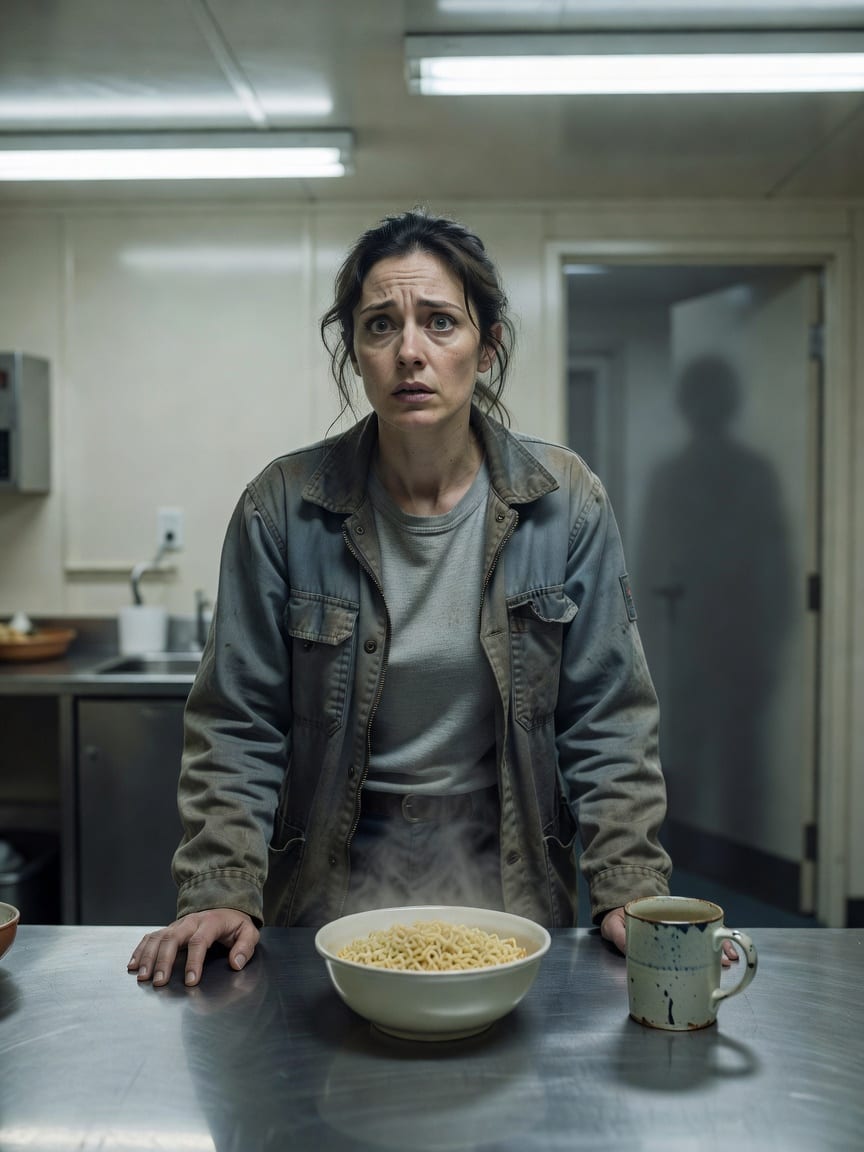
My oil rig galley mate, Sy, tells the same three jokes at 3am. OIM Victor Radcliffe checked the manifest twice. No Sy has ever been on this platform. Or licensed offshore.
On the North Sea platform, my nightly routine with coworker Sy was a comforting constant. But when the chopper manifest came up short, I learned the man I knew, the one who left his mug every night, doesn't actually exist.
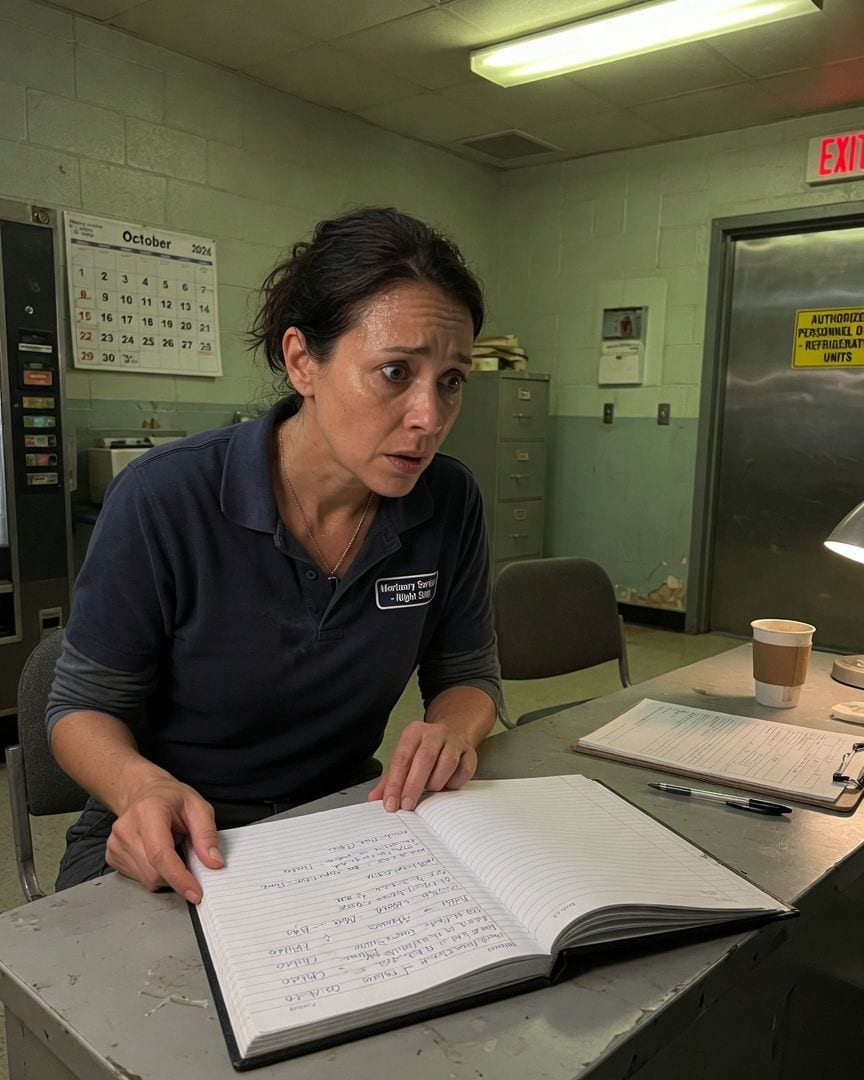
My co-worker just handed me a clipboard. The hospital says he was never here.
My night shift in the hospital mortuary was a quiet routine, usually just me and my co-attendant, Sowka. We'd shared months of logging fridge temperatures and signing releases, a seamless partnership. But then payroll bounced my overtime, stating Sowka didn't exist, and the chair opposite mine was suddenly, chillingly, empty.
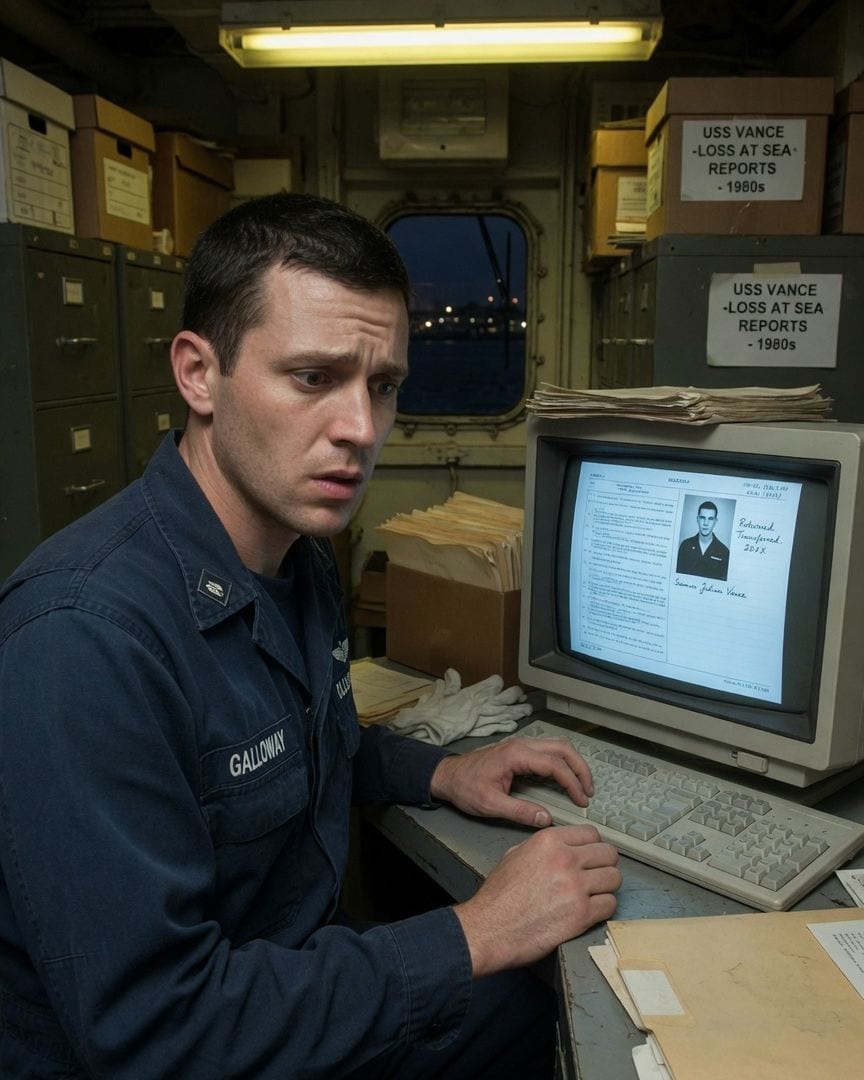
Petty Officer Galloway logged a sailor onto his ship. The man died at sea 40 years ago.
Petty Officer Joel Galloway scanned a sailor's ID on the USS Vance quarterdeck. The man's name, 'Seaman Julian Vance,' and his out-of-date uniform pricked at Galloway's memory. Later, the ship's berthing count came back one over, with an extra entry in the system but no physical body.
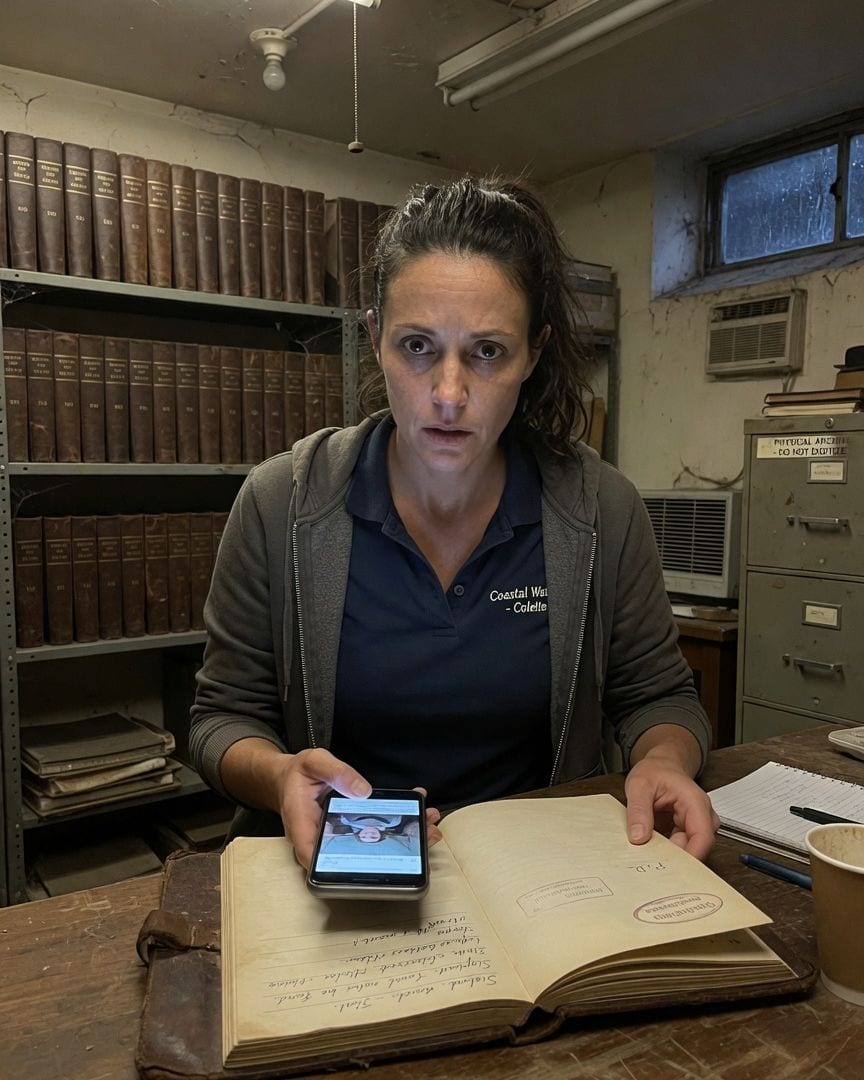
My coastguard log noted Sighting 9 again tonight, a light where no vessel showed. The old logs carry Sighting 9 off Skerry Point at 3:14am every tenth year since 1954, always 'nothing found,' always 'send no boat.'
On my watchtower night shift, the radar screen glowed green and the ocean was quiet. Then, a familiar light appeared off Skerry Point, exactly on cue, just as it had every tenth year for decades. But digging deeper, I found a hidden stamp in an old logbook: 'Operation Skerry. Status: Complete.' It left me with a chilling sense of finality.
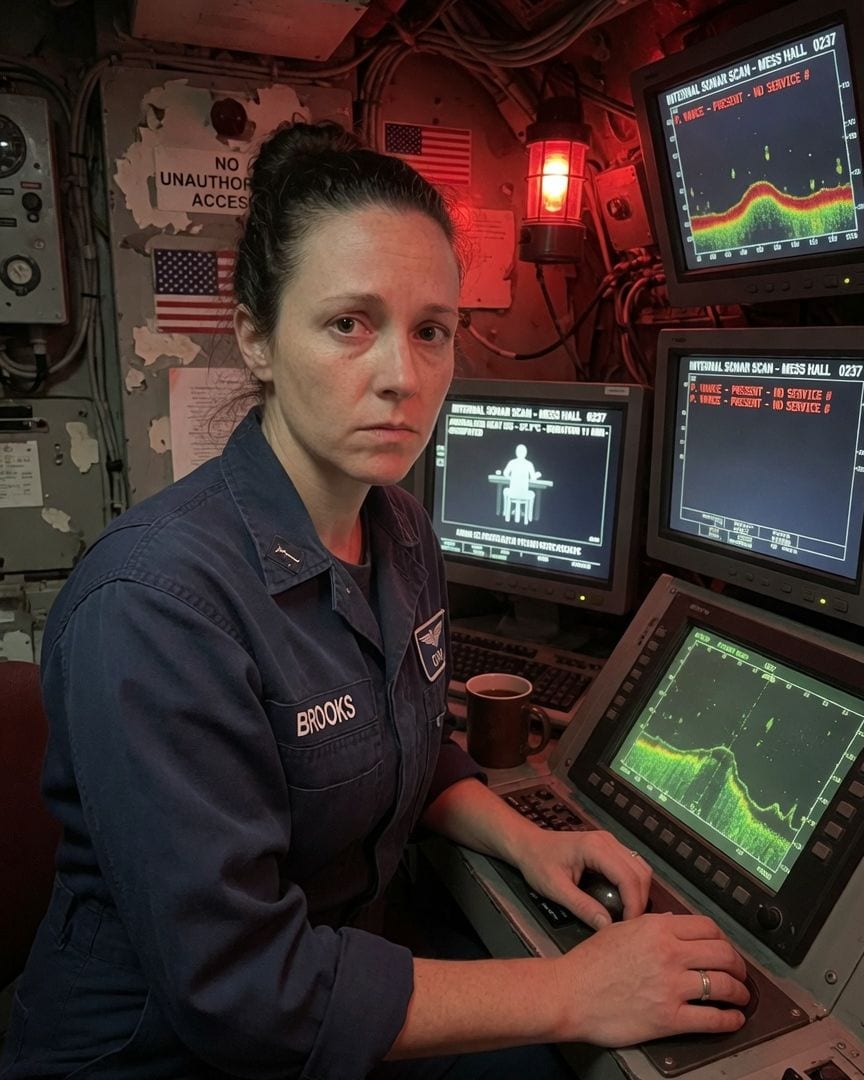
A Chief Petty Officer reviewed her submarine's sonar logs, finding a human heat signature where security cameras saw nothing, then the manifest listed an extra man who couldn't be deleted.
Chief Petty Officer Charlotte Brooks felt the weight of her submarine's impending decommissioning, its long service ending soon after a decade as her home. The quiet hum of the USS *Artemis* was broken when a nervous messcook reported seeing a shadow eating alone in the mess hall, then finding one plate short but a perfectly clean tray. Though skeptical, Charlotte checked the security feeds, which showed nothing, yet her sonar logs revealed a distinct human heat signature in the same spot, then abruptly vanish. Her dread deepened when the boat's manifest confirmed 101 souls instead of 100, listing a mysterious 'P. Vance' with no details, whose entry all systems refused to delete.
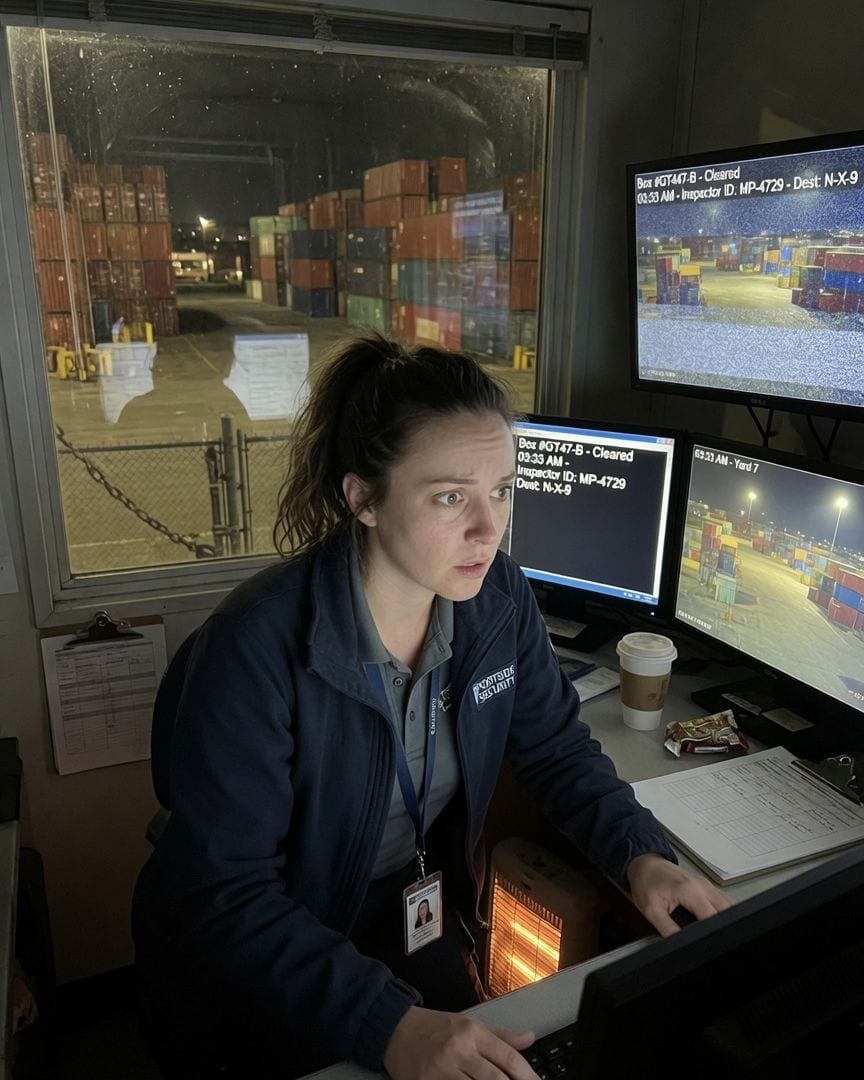
The log says a container cleared my gate at 3:33 AM, stamped with my ID — but the gate was chained and locked, and the yard beyond it was dark and empty. No truck was ever booked.
My night shift at Portside Container Terminal is usually a predictable drone of monitors and stale coffee. But then I saw a familiar guard, Arthur Larsen, on a live feed, smiling unsettlingly at the camera. The next morning, my supervisor searched for him; the employee database returned 'No results found.'