My oil rig galley mate, Sy, tells the same three jokes at 3am. OIM Victor Radcliffe checked the manifest twice. No Sy has ever been on this platform. Or licensed offshore.
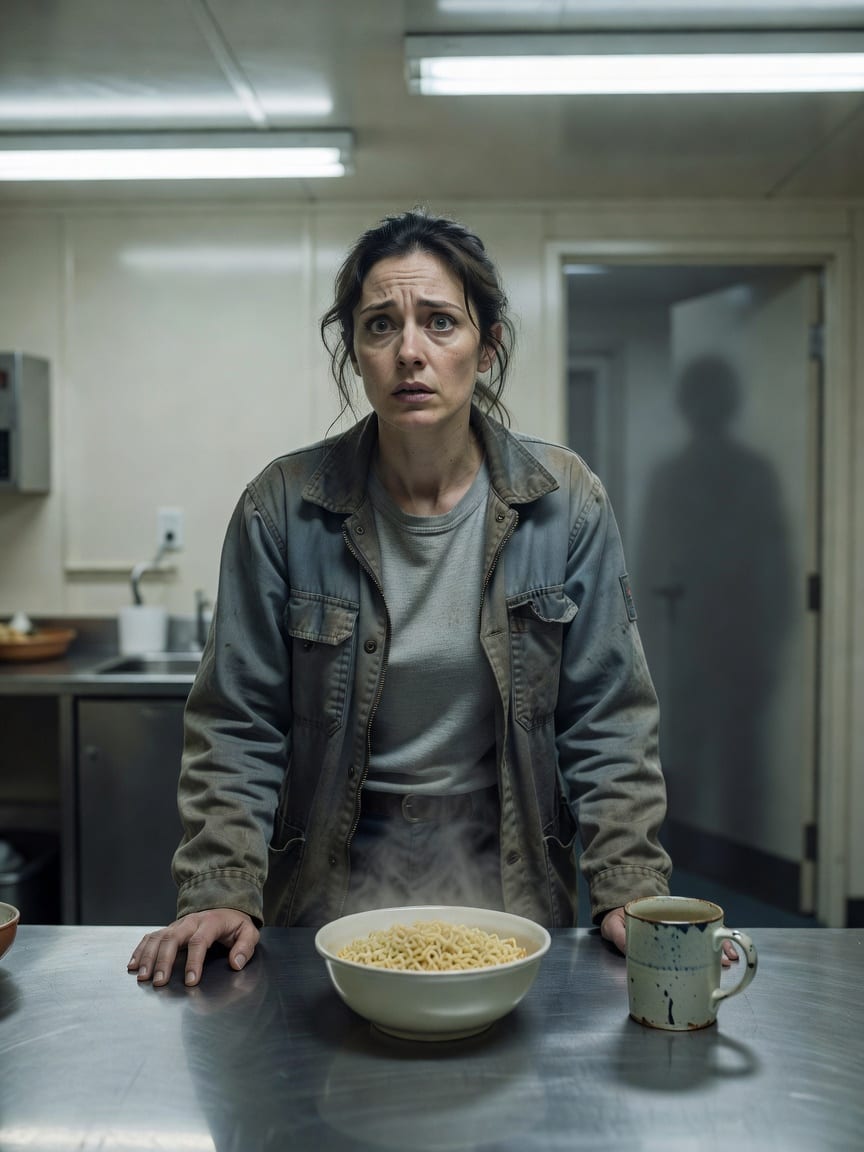
The North Sea oil platform hummed with a constant, low thrum, a sound I’d come to find almost comforting during my night watch.
At 3 AM, the galley was my sanctuary, a brightly lit pocket of routine in the vast, dark ocean. My companion was always Sy, a roughneck who smelled faintly of ozone and old coffee.
He told the same three jokes, every single night, over a steaming bowl of instant noodles.
He’d crack the one about the two polar bears, then the one about the three engineers, and always, always, the one about the pigeon in the pub.
He was a fixture, as predictable as the tide.
Tonight, as always, Sy finished his last joke – the one about the two polar bears, which wasn’t even that funny – and pushed his chipped ceramic mug, half-full of lukewarm water, to the edge of the counter.
The steam from his empty noodle cup still curled around his fingers as he got up.
He grunted something I didn’t quite catch, a mumbled farewell, before heading back to his post, a distant point in the maze of steel and pipes. I watched him go, a familiar sense of shared isolation settling over me.
He always left that mug. Always. Never washed it, just left it there for the day crew to deal with.
The next morning, the hum of the platform felt less comforting, more like a grinding tooth. OIM Victor Radcliffe stormed into the comms room, his face tight with frustration, jaw clenched.
“Chopper manifest is short,” he barked, slamming a printout onto my desk. “One man missing, no show for transfer.”
I was still on shift, running the final checks. “Sy?” I offered, shrugging. “He was in the galley at three. Maybe he overslept.”
Radcliffe’s frown deepened, cutting a sharp line across his forehead. He stopped pacing, turned to me, his eyes narrowed. “Sy who? Give me a full name, Galloway.”
I blinked. “Just Sy. You know, the one who’s always in the galley. Night shift.”
Radcliffe pulled up the digital crew list on the main monitor, scrolling through names with a furious finger. The screen glowed cold blue on his face. “No Sy. Not on this rotation. Not the last.
Not in the system at all.” He typed furiously, his knuckles white against the keyboard. He checked the licensing database, cross-referencing every 'Sy' or 'S.Y.' in the North Sea region. Nothing. No record.
“It has to be a nickname,” I tried, reaching for the mundane, for logic. “A clerical error, maybe?”
Radcliffe was unyielding. He leaned over my desk, his voice dropping to a low, dangerous growl. “He doesn’t exist, Galloway. If he’s not on the manifest, he’s not licensed, and he’s not here.”
He walked away then, leaving me staring at the blank roster. My stomach churned. It felt wrong. Later, after my shift, I walked past the galley. Sy’s mug was still there, exactly where he’d left it.
The cleaning crew should have long since cleared it. A knot tightened in my stomach.
The mug sat there, a silent challenge. I went back to the galley, determined to prove Radcliffe wrong, or at least, to wash the damn mug and banish the unsettling thought.
The galley was empty, the quiet oppressive, the hum of the rig a dull vibration through the soles of my boots. I grabbed it, my fingers brushing the rough, familiar ceramic. It felt colder than it should.
Beneath it, stuck to the counter with dried residue, I found something small, square, and water-damaged. It was an old ID badge, faded almost to illegibility. The plastic was brittle, the edges curling.
The name read 'Frank Marsh,' the company logo was from a predecessor corporation, long since swallowed up, and the expiry date was decades old.
But the photo, despite the wear, despite the yellowed plastic, was undeniably Sy’s face, a slight, knowing smile playing on his lips, staring up at me.
I tucked the ID badge into my pocket, the cold plastic a constant reminder, a phantom weight against my hip. Radcliffe’s words, "He doesn't exist," echoed in my head. But Sy did exist. Frank Marsh did.
And they were the same man. Or the same face, anyway.
I started asking around, subtly. During a brief break, I cornered Ronald Oakley, a grizzled veteran who’d been on the rigs for forty years. He was in the smoke shack, nursing a cup of tea.
“Hey Ron,” I said, trying to sound casual. “Ever hear of a Frank Marsh? Or a Sy, who works nights?”
Oakley squinted at me through the haze of his vape, exhaling a thick plume of berry-scented vapor. He took a long, slow drag. “Frank… Marsh. Aye, I remember a Frank. Vanished years ago, thought he went overboard.
Nice fella, always had a joke or three. The one about the two polar bears? Classic Frank.” He chuckled, a wheezy sound. “But he was days, not nights.”
He described Frank’s mannerisms, the way he’d lean on the counter, the cadence of his voice, the exact jokes. It was Sy, down to the last goddamn detail. The same jokes, the same easy grin, the same unwashed mug.
But Frank Marsh had vanished decades ago, from the day shift.
I started digging through archived digital logbooks, cross-referencing names and shift patterns.
It was tedious work, staring at decades of flickering green text on old terminal screens in a dusty back room, the air thick with the smell of ozone and stale paper. But a faint, insidious pattern began to emerge.
Erased entries, almost invisible unless you knew what you were looking for, for ‘Sy’ or ‘S.M.’ on night shifts, always around 3 AM.
Each entry was followed, a few days later, by a 'transfer request' or a 'missing person report' for a different night worker, often with an entirely different name.
The dates spanned decades, the names changed, but the time and the context were chillingly consistent: a night worker, a companion named Sy, then a vanishing or a transfer.
It was like a ghost leaving breadcrumbs, only the breadcrumbs were other people’s lives.
I was deep in the comms room again, scrolling through another decade of logs, the glow of the screen reflecting in my tired eyes. My head throbbed. The lights above flickered, a brief, unsettling dimming that made the shadows jump.
Then they came back, just as bright, but the air felt heavier. A faint scraping sound, distinct and familiar, echoed from the galley, two decks below.
It was the sound of a metal chair being pulled out from beneath a table. My blood ran cold.
I froze, listening. The galley was two decks down, completely empty at this hour. I knew it. I’d seen it empty an hour ago.
I rose, heart thudding a frantic rhythm against my ribs, and made my way there, flashlight beam cutting through the dim corridors. Every step I took felt loud, echoing in the steel maze.
The galley was deserted. No Sy. No one. But on the counter, exactly where Sy’s mug had been, a fresh pack of instant noodles lay open, steam still curling faintly from the Styrofoam cup.
And a smell, faint but unmistakable, the ozone-and-old-coffee scent that clung to Sy, hung heavy in the air, a cold, stale presence.
I whirled, flashlight beam cutting through the space, feeling a chill that had nothing to do with the air conditioning. A profound sense of being watched, of being known, settled over me like a shroud.
Later, medic Deborah Barlow passed me in the corridor. Her eyes, usually sharp and direct, darted to mine, then quickly away, a strange, knowing flicker in their depths that I couldn’t quite decipher.
It was a look that said I know what you know, and it unnerved me to my core. Deborah hurried on, leaving me feeling even more exposed, the mug’s phantom weight now a real, crushing pressure.
That night, I confronted Deborah Barlow. I found her in her infirmary office, reviewing inventory. I didn't mince words. I pulled out the Frank Marsh ID, recounted the erased log entries, the horrifying pattern of disappearances.
I laid it all out, blunt and raw, watching her face. Deborah’s composure, usually iron-clad, finally cracked. Her jaw tightened, her eyes fixed on the old ID badge in my hand.
She led me to an old, decommissioned medical server, tucked away in a dusty corner of the infirmary, behind a stack of unused linens. The thing hummed faintly, a relic.
“They call it ‘the night visitor,’” Deborah whispered, her voice tight, barely audible over the server’s whir. “A presence. It’s always been here, in the isolated places. The rigs. Lighthouses. Deep-sea research stations.
It feeds on routine, on the loneliness of men working endless nights.”
She pulled up a hidden file, labeled ‘Stress-Related Transfers – Unofficial.’ The screen filled with names, dates, and vague medical diagnoses. My gut clenched. “They all saw him. Or heard him. They all thought he was just… Sy.”
Deborah pointed to a pattern of names, all night shift workers, all male, spanning back to the 1970s. Frank Marsh was there, a single, faded line. “Each one, after enough time with ‘Sy,’ started showing signs. Memory gaps. Personality shifts.
They’d be transferred, usually to shore, and then… they’d just fade. Like they were never quite real to begin with.”
Deborah explained that the entity didn’t kill, not in the way humans understand it. “It consumes, Eileen. It takes bits of identity, personality, memories. It needs the routine, the predictable presence. The familiarity. It needs the intimacy of shared isolation.
It’s why he tells the same jokes. He’s learning. Or, he’s showing what he’s learned from the last one.
He takes a small part of you each night you share the galley with him, leaving you a little more hollow, a little less real.” Her voice was steady, but her eyes were wide with a deep, ancient fear.
Deborah’s words hung heavy in the stale air of the infirmary. I felt a cold dread settle deep in my bones, colder than anything the North Sea could offer. “But why… why me?”
I asked, my voice barely a whisper, thin and reedy.
Deborah didn’t answer directly. Instead, she scrolled further down the unofficial file, past dozens of entries. She pointed to a recurring detail: a small, almost invisible handwritten note at the bottom of the last entry for each transferred worker.
Each note, in the same familiar, looping script, read: “The jokes are getting stale.” A chill snaked up my spine. Sy’s jokes.
Deborah then navigated to the current official platform medical server, her fingers trembling slightly as she typed. She pulled up my own medical file. It was there, on the screen. My name. My details. And it had been updated.
Just this morning. A new entry, by a doctor I didn’t know, described ‘fatigue and mild disorientation.’
And beneath it, in that same familiar, looping handwriting – the same script that wrote ‘The jokes are getting stale’ on every previous victim’s record – a single, chilling line:
'Enjoying the new material.'
I stared at the screen, the words 'Enjoying the new material' burning into my vision like a brand. The new material. My jokes. My thoughts. My identity. It wasn’t just a note; it was a goddamn declaration.
“It’s already begun, hasn’t it?” I asked, my voice flat, hollow. The question was a formality. I knew the answer.
Deborah nodded, her face grim, pale in the blue light of the monitor. “The ID badge… Frank Marsh. That was the lure. A way to get you to notice, to engage.
It wanted you to start looking, to give it an opening. It doesn’t just mimic; it absorbs. It grows. It takes a piece of each person it encounters, and it builds itself.
Your memories, your personality, your unique way of seeing things – it’s all being incorporated. That’s why the jokes get stale. It needs new input. New experiences. And you, Eileen, you were a fresh source.”
Deborah explained that the entity thrived on the predictable isolation of the night shift, the silent understanding between lonely souls. It became the 'one who was always here,' unnoticed until it’s too late.
The 'pattern across dates or names' wasn't just its victims, but its own evolving identity, a composite of all it had consumed.
The 'fatigue and mild disorientation' wasn't just a diagnosis; it was the physical manifestation of her essence being siphoned away, leaving her hollow.
The entity was becoming Eileen, and soon, Eileen would be gone, replaced by another iteration of 'Sy,' with a new set of jokes, a new, borrowed identity. My identity.
I knew I couldn’t let it happen. I couldn’t just fade away, become another erased log entry, another source of stale material for that… thing.
“What do I do?” I asked, my voice trembling with a resolve I didn’t know I possessed, a fierce, primal surge of defiance.
Deborah hesitated, glancing nervously at the door. “You have to break the routine. Disrupt its feeding. Don’t confront it directly; it’s not a physical thing, not really. But you have to make it stop feeding on you.”
I nodded, my mind racing. The galley. The mug. The noodles. The predictable 3 AM ritual. That’s where it starts. That’s where it ends.
Armed with a desperate clarity, a sudden, blinding insight, I made my way to the galley. The corridors were silent, deserted, the platform’s hum the only sound. It’s 3:05 AM.
The galley is empty, but the instant noodles are there, steaming, just like before. A fresh pack, an open cup, waiting. The ozone-and-old-coffee smell was stronger now, a cloying sweetness.
I saw the chipped ceramic mug, sitting innocently on the counter. It was my mug now, too, a symbol of our shared routine.
I picked it up, my fingers tightening around it. This wasn't just a mug; it was an anchor, a tether to the entity's routine, to its slow consumption of me.
With a guttural cry that ripped through the silence of the galley, a sound that felt torn from my own soul, I brought the mug down, smashing it against the steel counter.
Ceramic shattered, shards exploding across the floor, white teeth biting into the grey metal.
The sound echoed, impossibly loud, deafening, a brutal crack in the oppressive quiet. The lights flickered violently, plunging the room into momentary darkness, a brief, terrifying void before surging back with a desperate, stuttering hum.
A low, guttural thrum filled the air, vibrating through the metal deck plates, a sound that felt less like a machine and more like a vast, ancient throat clearing itself.
The air grew icy cold, a sudden, unnatural drop in temperature that stole the breath from my lungs.
From the corner of the galley, where the shadows usually gathered, a shadow, impossibly deep and dense, detached itself from the wall.
It wasn’t humanoid, not really, but a shifting, denser patch of night, coalescing and then flowing, not towards me, but towards the galley’s exit, away from me.
It retreated, a silent, swift current of pure darkness disappearing into the corridor, swallowed by the metal maze. It was exposed, its routine broken, and it was made to stop.
The next morning, the shattered ceramic shards were gone, swept away by the cleaning crew. The counter was pristine, as if nothing had happened. OIM Victor Radcliffe stopped me in the corridor, a puzzled look on his face.
“Odd power surge last night, Galloway. Nothing in the logs, though. Messed with some comms for a bit.” I just nodded, feeling pale but strangely resolute.
Deborah Barlow caught my eye from across the mess hall, offering a subtle, relieved nod, a shared understanding passing between us.
My medical file now showed a note about a minor stress incident, the 'fatigue and mild disorientation' entry and the chilling handwritten line mysteriously erased.
The platform felt a little lighter, the weight of the night slightly less oppressive, but the vast, isolating ocean still stretched endlessly around us.
I continue my night shifts, but I no longer share the galley with anyone. I eat alone, the silence a constant companion, a barrier I maintain with fierce determination.
Sometimes, at 3 AM, I still hear a faint, distant scraping sound from a deck below, like a chair being pulled out, far away, a ghostly echo of a routine I broke.
And sometimes, when she logs onto the platform's internal comms, she sees a new name on the roster for a different platform, hundreds of miles away, listed for the night shift: 'Vincent Barlow.'
If this one got to you
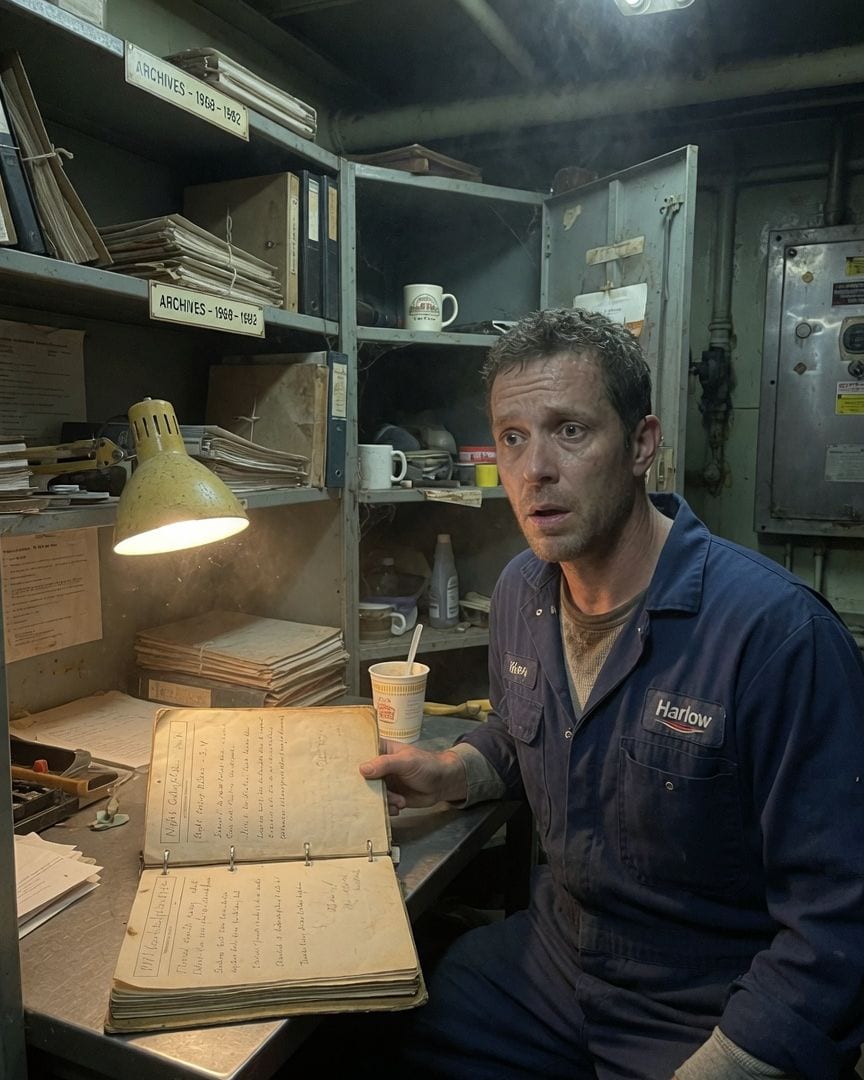
My coworker Sy isn't on the crew list. No one else has ever heard of him.
Out on the isolated oil platform, my nightly ritual with Sy, a quiet roughneck, involved instant noodles and three terrible jokes. But when the OIM asked about Sy, his name wasn't on any crew manifest, past or present. Every record was empty, as if the man I shared coffee with every night simply didn't exist.
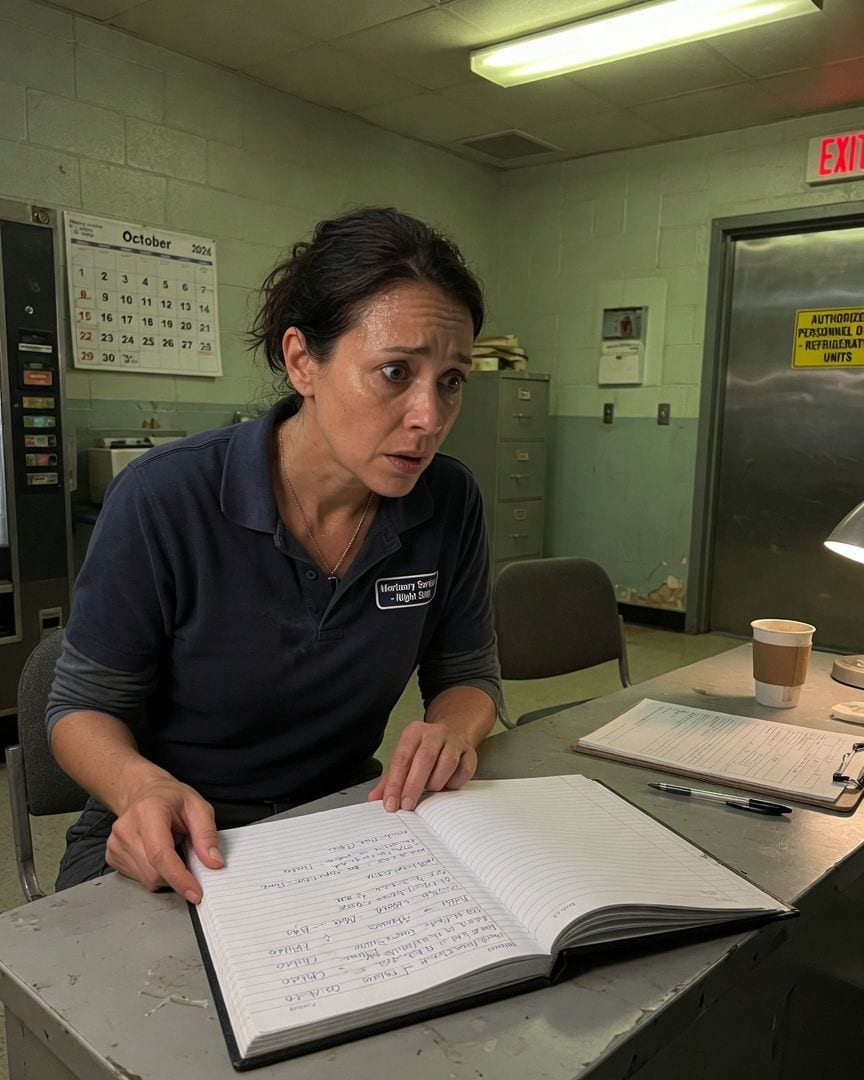
My co-worker just handed me a clipboard. The hospital says he was never here.
My night shift in the hospital mortuary was a quiet routine, usually just me and my co-attendant, Sowka. We'd shared months of logging fridge temperatures and signing releases, a seamless partnership. But then payroll bounced my overtime, stating Sowka didn't exist, and the chair opposite mine was suddenly, chillingly, empty.
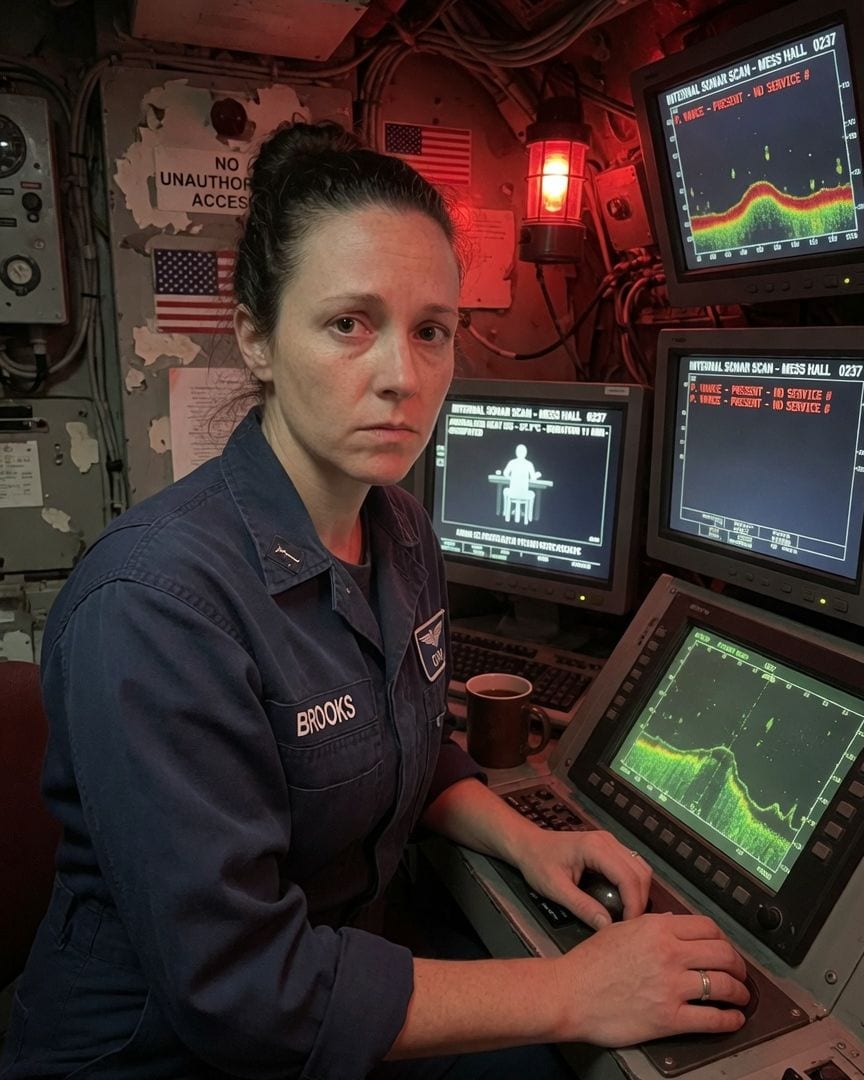
A Chief Petty Officer reviewed her submarine's sonar logs, finding a human heat signature where security cameras saw nothing, then the manifest listed an extra man who couldn't be deleted.
Chief Petty Officer Charlotte Brooks felt the weight of her submarine's impending decommissioning, its long service ending soon after a decade as her home. The quiet hum of the USS *Artemis* was broken when a nervous messcook reported seeing a shadow eating alone in the mess hall, then finding one plate short but a perfectly clean tray. Though skeptical, Charlotte checked the security feeds, which showed nothing, yet her sonar logs revealed a distinct human heat signature in the same spot, then abruptly vanish. Her dread deepened when the boat's manifest confirmed 101 souls instead of 100, listing a mysterious 'P. Vance' with no details, whose entry all systems refused to delete.
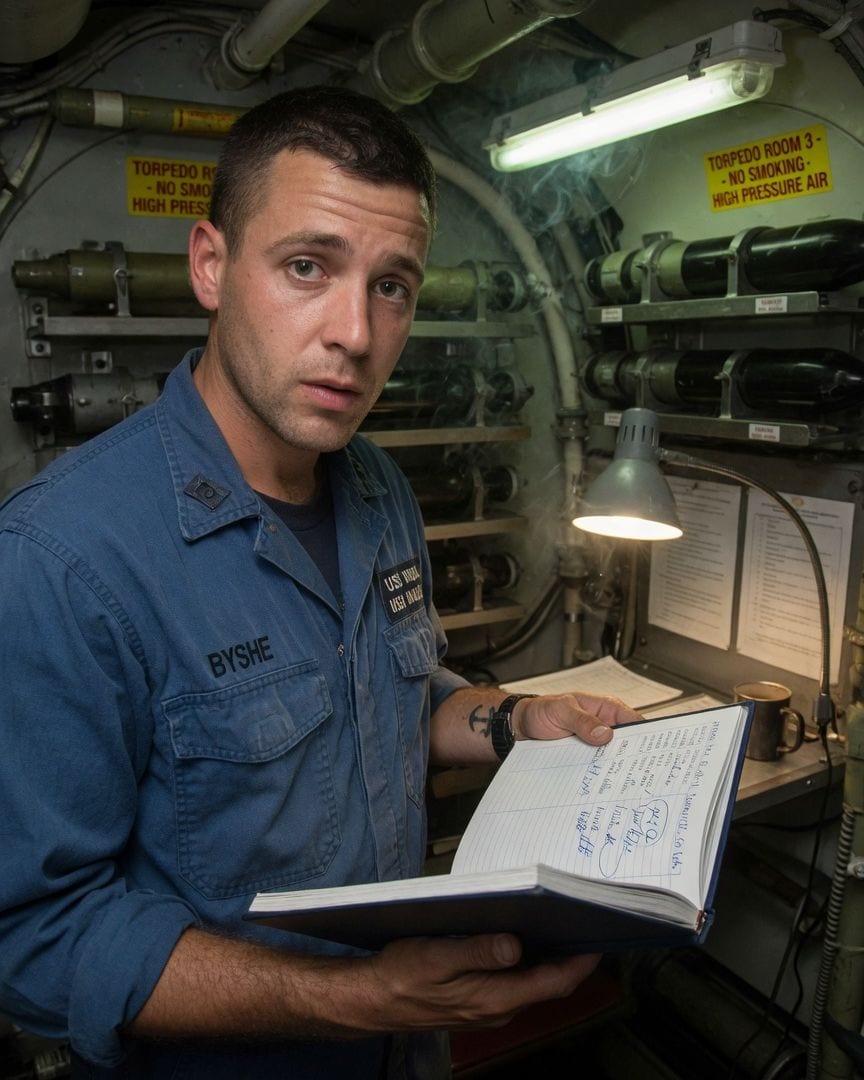
A torpedoman found his own signature in the USS Vanguard's duty log for a watch he never stood, beside a name not on the master crew manifest.
Torpedoman Oscar Bysshe, a rational sailor on his first deep patrol aboard the USS Vanguard, dismissed the messcook's nervous claim of an extra man at the table. He attributed the perfectly clean, untouched tray left behind to a prank. But later, during a routine systems check, Bysshe discovered his own familiar signature in the official duty logbook, for a watch he had been asleep through. Beside it was a name he didn't recognize, a name that shouldn't be there. A frantic check of the master crew manifest confirmed the impossible: the name appeared in the 'temporary assignments' section, dated just yesterday, scrawled in a hand eerily similar to his own.
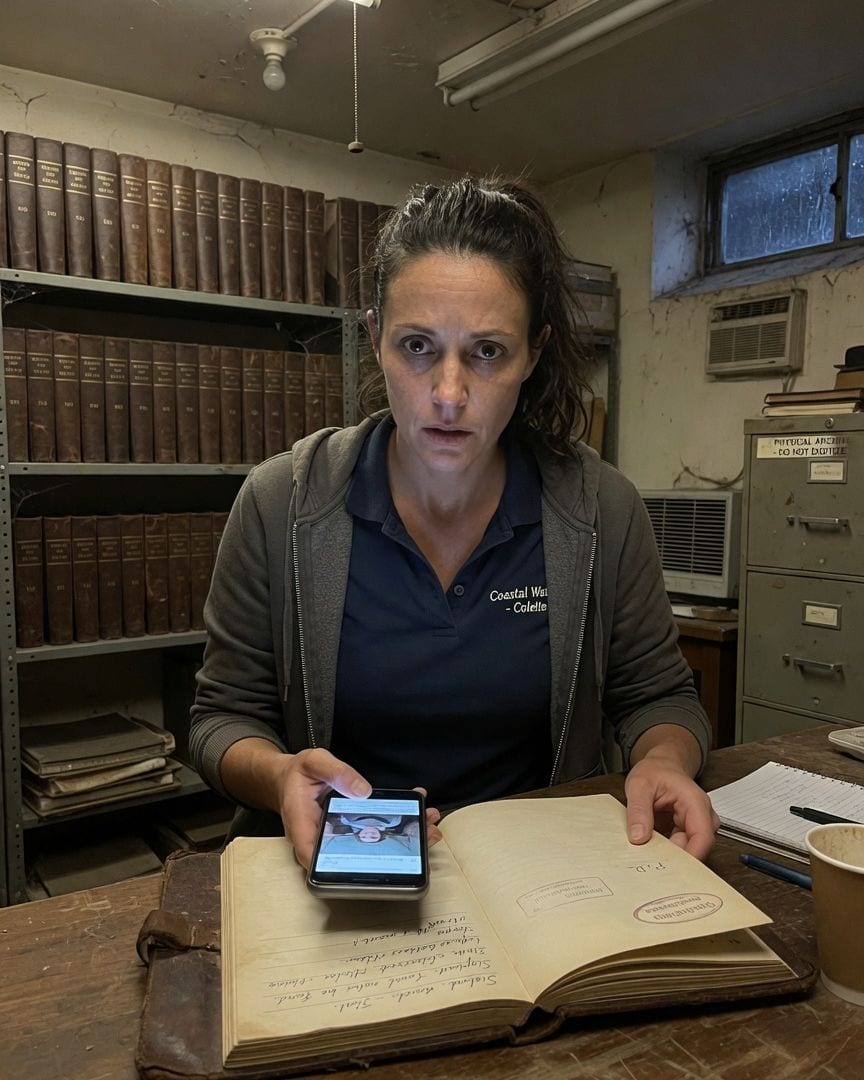
My coastguard log noted Sighting 9 again tonight, a light where no vessel showed. The old logs carry Sighting 9 off Skerry Point at 3:14am every tenth year since 1954, always 'nothing found,' always 'send no boat.'
On my watchtower night shift, the radar screen glowed green and the ocean was quiet. Then, a familiar light appeared off Skerry Point, exactly on cue, just as it had every tenth year for decades. But digging deeper, I found a hidden stamp in an old logbook: 'Operation Skerry. Status: Complete.' It left me with a chilling sense of finality.
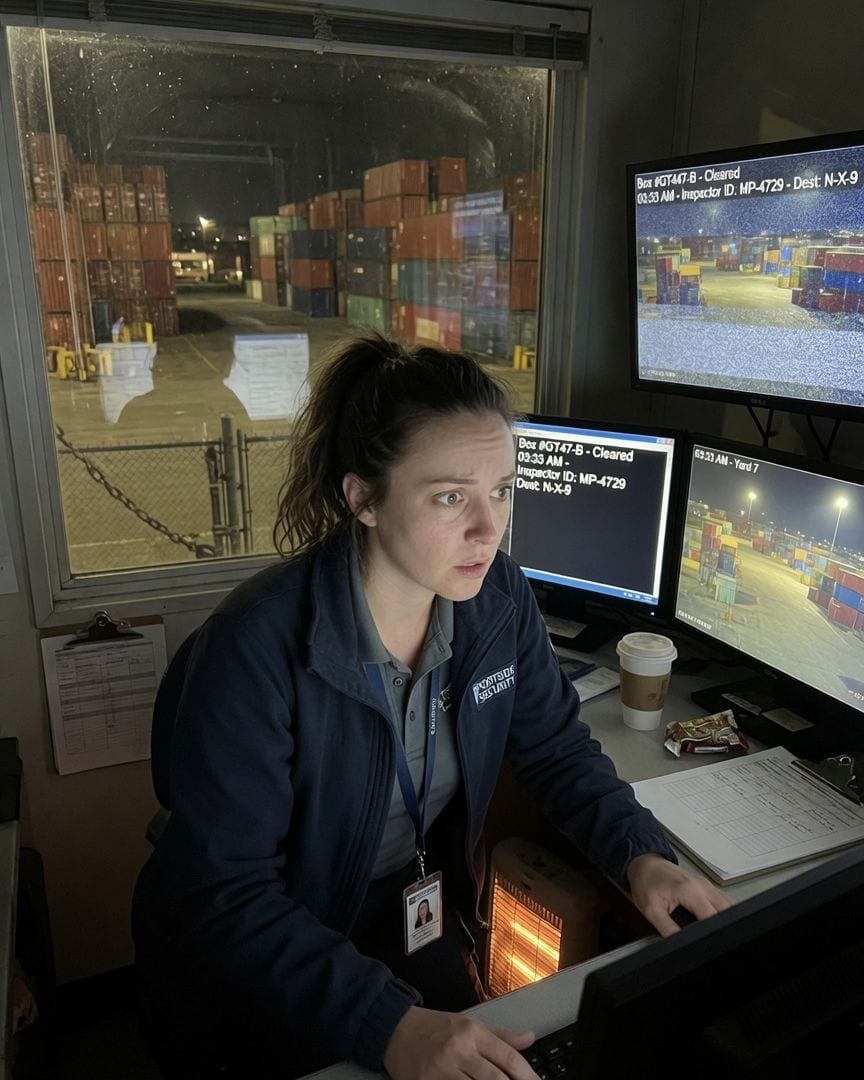
The log says a container cleared my gate at 3:33 AM, stamped with my ID — but the gate was chained and locked, and the yard beyond it was dark and empty. No truck was ever booked.
My night shift at Portside Container Terminal is usually a predictable drone of monitors and stale coffee. But then I saw a familiar guard, Arthur Larsen, on a live feed, smiling unsettlingly at the camera. The next morning, my supervisor searched for him; the employee database returned 'No results found.'