My dead brother's handwriting keeps arriving on cards, postmarked from the level crossing where he died. He never wrote to me.
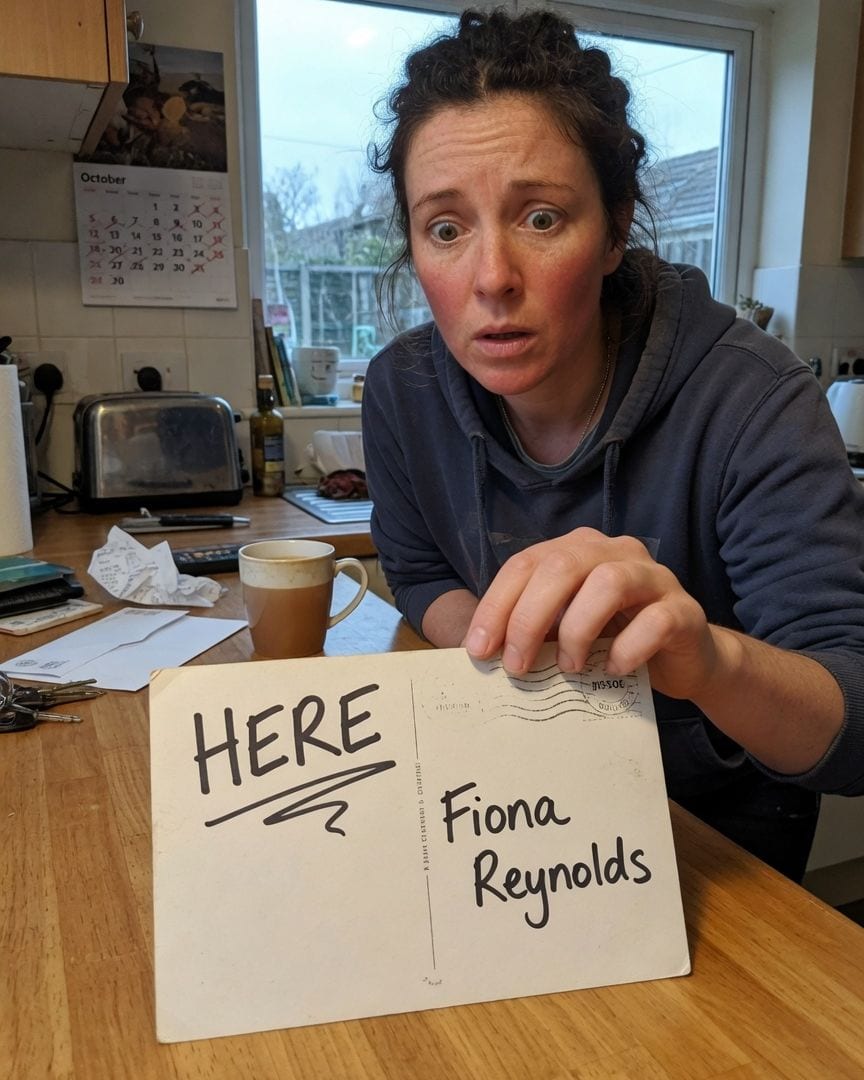
The third card lay on my kitchen counter, cold and stark against the warm wood. 'HERE,' it said, the single word an icy whisper. It was addressed to me, Fiona Reynolds, in James’s distinctive, sprawling hand. My brother.
My brother, who died at nineteen, fifteen years ago, at the Bissoe level crossing. He never wrote to me in his life, not a single letter, not even a birthday card.
The first card had arrived a week before, postmarked from Bissoe, just the word 'soon.' I’d tried to rationalise it, told myself it was some sick, twisted prank. Some local kid with too much time and a cruel streak.
Marie, my mother, had dismissed it as impossible, a terrible joke, but her voice had been brittle. Then came the second, a week later: 'sooner.' The knot in my stomach tightened, cold and specific.
I knew James’s hand, the specific curve of his 'J,' the way he always forgot to cross his 't's. It was undeniable. The impossible postmark, the impossible handwriting, all converging on me. And now 'HERE.'
Who would do this? And from Bissoe, that desolate stretch of land that’s just an empty field now, where a keeper’s cottage stood until the seventies, where James’s car had met the freight train that morning.
I picked up the card. The thick cardstock felt strangely substantial, almost heavy, in my fingers. It wasn't a prank. The cold certainty of it settled deep in my bones. This was targeted. This was for me.
The next morning, I drove to Bissoe. The crossing was exactly as I remembered, perhaps even more desolate. Two sets of rusted tracks bisecting a narrow, overgrown lane.
The air hung heavy and still, not a breath of wind, despite the grey, cloud-laden sky. I parked my car, the only vehicle for miles, the crunch of gravel under my tires unnaturally loud in the silence.
There was no sign of a former cottage, only wild grasses and forgotten foundations overgrown with brambles and ivy, barely visible beneath the tangled undergrowth.
I walked the perimeter, feeling a strange, inexplicable pull towards a particular spot near the tracks. Nothing discernible, just a patch of slightly less dense foliage, a few broken bricks. It was a feeling, not a sight.
A cold spot, a subtle pressure on my skin.
I’d tried to find local archives or a historical society online, but everything was either closed for the day or too far to reach quickly.
A lone, weathered sign, faded by years of sun and rain, pointed to a small community library in a nearby village, seven miles away. It was my only lead.
Inside, the librarian, Samuel Delaney, a man with kind, tired eyes behind thick spectacles, looked up from a stack of re-shelved books. I asked him about the Bissoe crossing, the old keeper’s cottage, its demolition.
Samuel offered vague details, mentioned local legends about the crossing being 'unlucky' or 'having its due,' but he dismissed them with a gentle wave of his hand, as old wives' tales.
"Just old stories," he'd said, his voice soft. "People like to find patterns where there aren't any."
I pressed him about any records, any old maps that might show the exact footprint of the cottage. He seemed reluctant at first, then sighed, getting up to rummage through a dusty cupboard.
He produced a faded ordnance survey map from the 1960s, its edges brittle. The cottage’s outline was clearly marked, a tiny rectangle, surprisingly close to where I had felt that strange pull.
The dread deepened, no longer ambient but specific, rooted to this empty, quiet place.
Back at Bissoe, armed with the old map, I returned to the exact spot where the keeper's cottage once stood. The ground was uneven, littered with broken bricks and rusted metal fragments, testament to its long-ago demolition.
The air felt colder here, stagnant. I kicked at a particularly stubborn clump of brambles, trying to clear a path, and my boot nudged something hard and unyielding. It was buried deeper than the other debris, more solid.
Curiosity, a dangerous animal, overrode my growing unease. I knelt in the damp earth, pulling back the thorny vines, scraping away handfuls of soil with my bare hands.
Beneath a thick layer of moss and grime, a small, rough-hewn stone marker began to emerge. It was barely larger than my hand, weathered grey, its surface rough against my fingertips.
As I cleaned it, my fingers tracing faint, deeply etched letters, a cold jolt went through me. The name 'FIONA' emerged, clear and stark, followed by the impossible date: '1957.'
The marker, cold and heavy, was still in my pocket. 1957. I wasn't born until 1989. The impossibility of it chewed at me. I called Samuel Delaney again, my voice tight. I didn’t mention the stone directly, not yet.
I just asked about the name 'Fiona' in local records from the 1950s, specifically any connection to the Bissoe area. Samuel was initially dismissive, then hesitant.
He mentioned a few old families, some with similar names, but nothing concrete tied to the crossing itself, not that he recalled. His voice was less certain than before.
I spent days poring over online archives, old newspaper clippings, my laptop screen glowing late into the night.
I found articles about the cottage's demolition, vague mentions of 'unexplained incidents' around the crossing prior to its closure, but nothing that made sense of my name on that stone.
I researched local folklore, finding fragmented, unsettling references to 'the crossing's due'—a nebulous idea of a price paid for safe passage, or for certain lives being spared. The deeper I dug, the more the mundane explanations crumbled into dust.
The screen glowed, mocking my attempts at logic.
I pressed Samuel again, this time about the marker. I sent him a photo of the stone, its impossible inscription stark on the screen. His face, when he called me back, was pale, his voice a strained whisper.
He finally admitted his own family, the Delaneys, had been the last keepers of the Bissoe crossing, before its demolition. He said there were 'stories,' things his grandfather had written down.
He spoke of an old family ledger, a chronicle passed down, but he’d always dismissed it as mere superstition. His unease was palpable, a contrast to his earlier academic detachment. My own chill deepened.
The thread was pulling taut, and I was on the end of it.
The investigation wasn't unnoticed. I started noticing small, unsettling changes in my home. A window in the living room, which I swore I’d latched tightly every night, now slightly ajar in the mornings.
The faint, earthy scent of damp soil, like something recently disturbed, in my usually clean living room. It wasn’t a strong smell, just a ghost of it, but it was there, persistent.
Then came the phone call. My mobile rang late one evening, a number I didn’t recognise. I answered, but there was only silence on the other end. No breathing, no static, just an unnerving void that stretched out.
Just as I was about to hang up, a faint, distant train whistle echoed through the line, impossibly clear, as if the call was coming from Bissoe itself, from the very tracks. My hand trembled as I ended the call.
The next morning, another card arrived. Identical to the others in size and cardstock, but this one was addressed simply to 'Fiona,' no surname.
And the handwriting, while still mimicking James’s, was subtly off, less confident, more like a crude, childish imitation. It was a single word: 'NEAR.' A cold dread settled over me, heavy and suffocating.
The sender knew I was digging, knew I was close. The entity behind the cards wasn't just sending messages; it was watching me, learning me, drawing me in.
The intimacy of the name, the mimicry of my brother’s hand, now felt like a violation, a twisted form of recognition. I was no longer just an observer; I was the target.
I drove straight to Samuel Delaney's house, the 'NEAR' card clutched in my hand, my knuckles white. I burst in, demanding answers, barely knocking. I threw the card and the photo of the 'FIONA 1957' marker onto his antique desk.
The old man, visibly shaken by my intensity, finally relented. He admitted his family had kept the Bissoe crossing not just as a job, but as custodians of a grim, unspoken pact.
“My grandfather called it the ‘crossing’s due’,” he whispered, his voice hoarse, barely audible over my ragged breathing. “A balance. For every life spared, one was eventually claimed. A return.”
He led me to a hidden compartment beneath a loose floorboard, extracting a thick, leather-bound ledger, its pages brittle with age, the smell of old paper and dust filling the air. “This is the record. My ancestors kept it.
A chronicle of the claims.”
He opened it carefully, the leather creaking. “The crossing… it’s not just tracks. It’s a presence. It takes. And it uses what’s familiar to draw them in. Faces, voices, even handwriting.” My mind reeled.
James’s cards, the impossible postmark, the train whistle on the phone line—it all clicked into place, falling into a terrifying, coherent pattern. “James…” I started, my voice barely a whisper. Samuel nodded, his eyes filled with sorrow, avoiding mine.
“James’s death was no accident, Fiona. He was… the crossing’s claim. A return. For someone else.”
I stared at him, a cold, sickening realization dawning, tightening around my chest like iron bands. “For who?”
Samuel hesitated, then pointed a trembling finger to an entry in the ledger from the 1950s. It listed a 'Fiona' and a date. “The marker,” he said. “That was a Fiona from my grandfather’s time. She was claimed.
The name… it reappears when the cycle comes for another.” He then explained the concept of 'the channel that uses your name,' how the crossing could mimic familiar things to guide its chosen. The handwriting, the voice—it wasn't James.
It was the crossing itself, speaking to me, calling me.
Samuel turned the brittle pages of the ledger, his finger tracing faded ink. He showed me entries for generations of claims, each one a life taken at the crossing, each entry meticulous, horrifying.
The sheer volume of names, dates, terse notes about ‘return’ and ‘due’ was overwhelming. He explained that the 'due' was cyclical, a balance maintained. The Delaneys were merely the record-keepers.
He stopped at a page near the end, the ink fresher, less faded than the centuries-old entries. My breath caught in my throat. I saw James Reynolds’s name, his age, the date of his death, clearly marked as a ‘claim.’
The ledger made it starkly clear: James hadn't died by accident. He had been taken.
Samuel’s hand, trembling slightly, moved to the blank line immediately below James’s entry. “The crossing… it demands a return,” he whispered, his voice barely audible, thick with dread. “For lives that were… spared.”
My eyes scanned the page, my vision blurring, then widened in horror. On the next line, freshly dated today, was my own full name: 'Fiona Reynolds.'
And in that same unsettling, mimicked hand I now knew too well, beneath my name, was the single, chilling word: 'HERE.'
Days later, Samuel Delaney reported Fiona Reynolds missing. Her car was found abandoned at Bissoe, its doors unlocked, keys in the ignition, but Fiona was never seen again.
Samuel returned the ledger to its hidden compartment, its final entry for Fiona Reynolds stark and undeniable. The crossing was quiet, as it always was, waiting.
If this one got to you
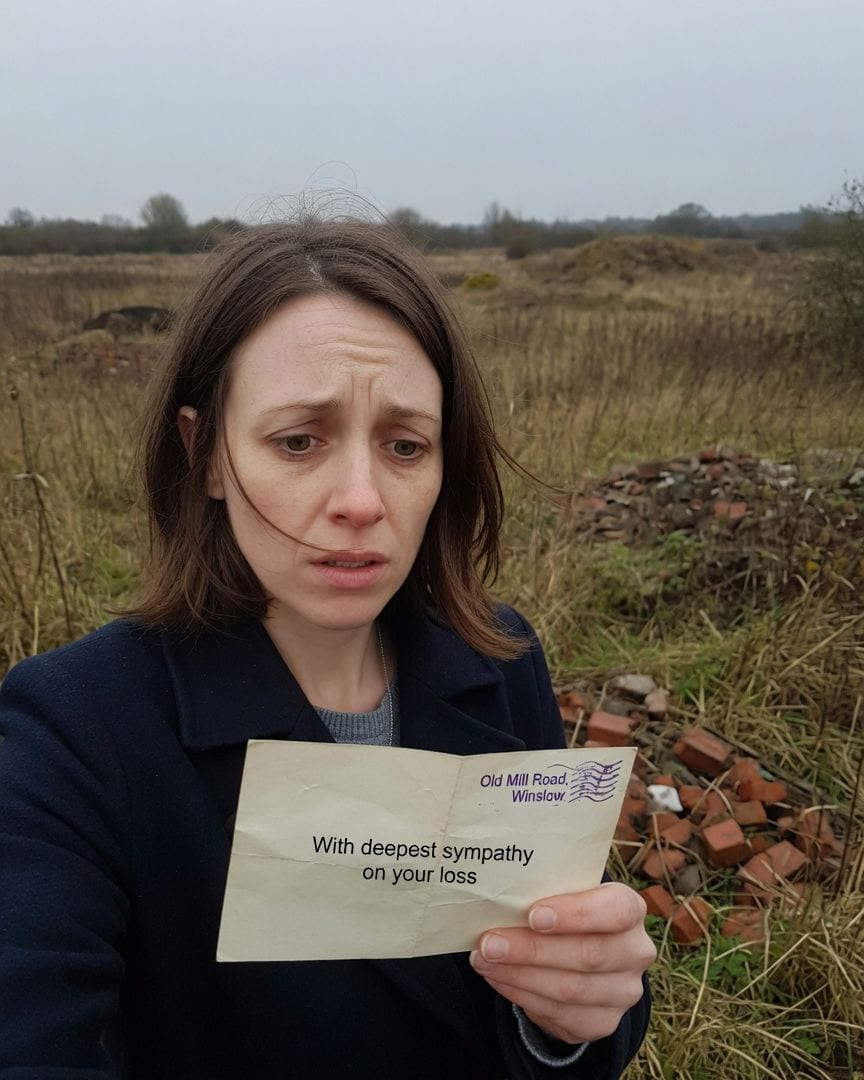
A condolence card arrived for me, postmarked from a road that vanished decades ago.
The fluorescent hum of Boots was routine until Gloria called my name for an unexpected prescription. My name and exact date of birth were clearly printed on the label, but the medication, Axonogen 7, was for a rare, degenerative neurological condition. I had just had my annual check-up, and my doctor had issued no such script. I simply couldn't be needing these.
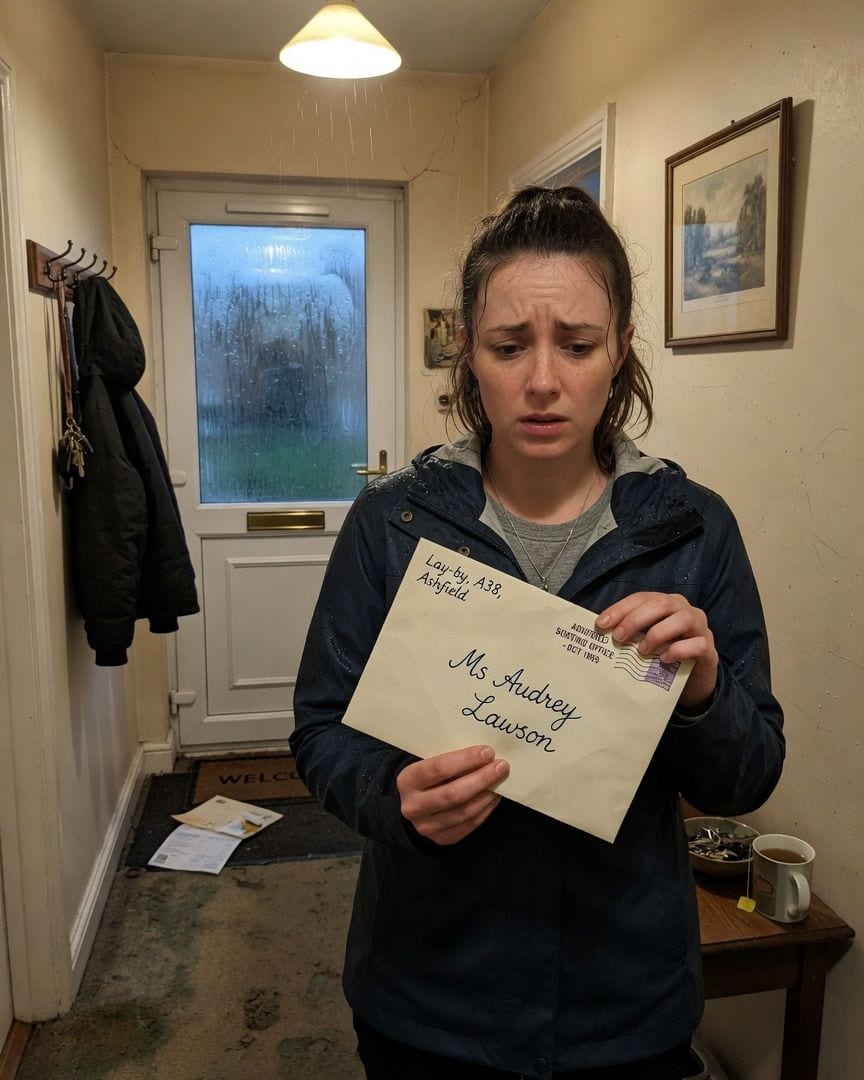
My condolence card arrived for a death that never happened, postmarked from a sorting office that closed before I was born.
My first envelope arrived on a Tuesday, nestled with bills. It bore my full name and a return address for an A38 lay-by that held only a crash barrier. But the postmark read ASHFIELD SORTING OFFICE – OCT 1985, an office decommissioned before I was even born.
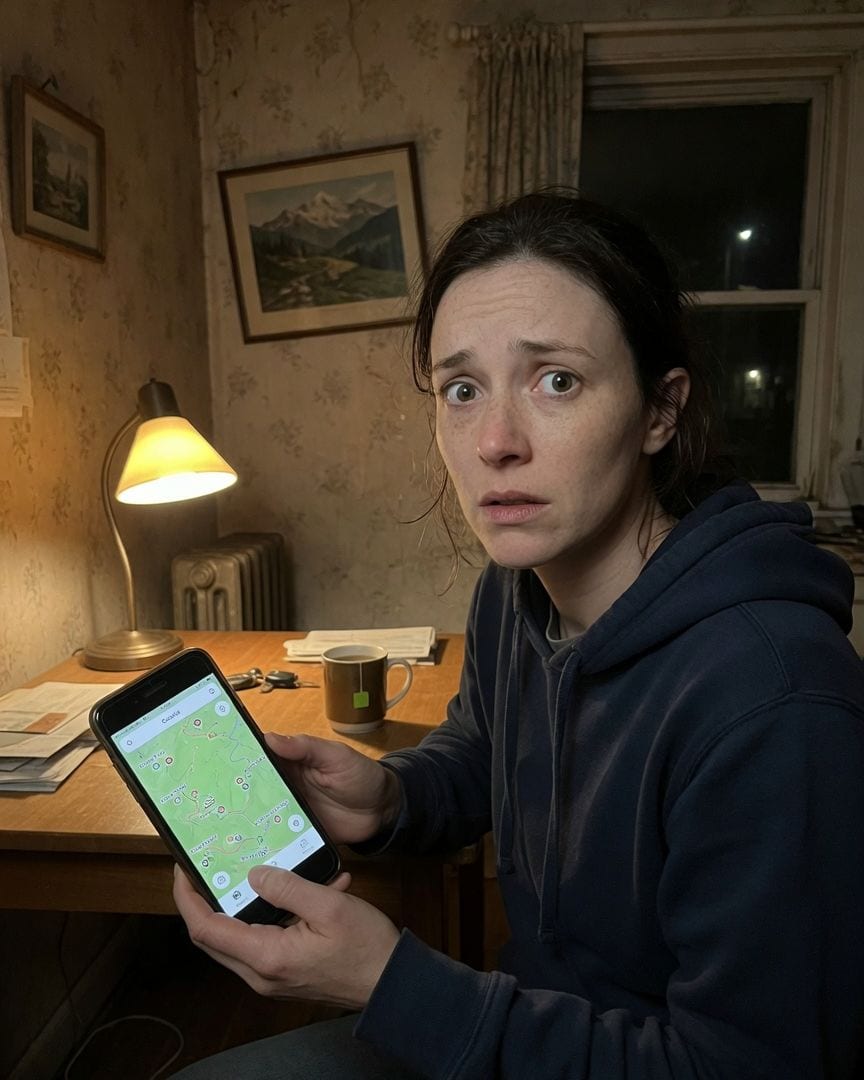
My hiking app scrubbed the hill's name from the map, on a phone that's been in airplane mode for two days.
I just moved to town and hiked a local hill, 'Cathan Tor,' according to my phone's app. But when I mentioned the name to the mechanic, he froze, dropped his wrench, and whispered, 'Don't say that name, Colette.'
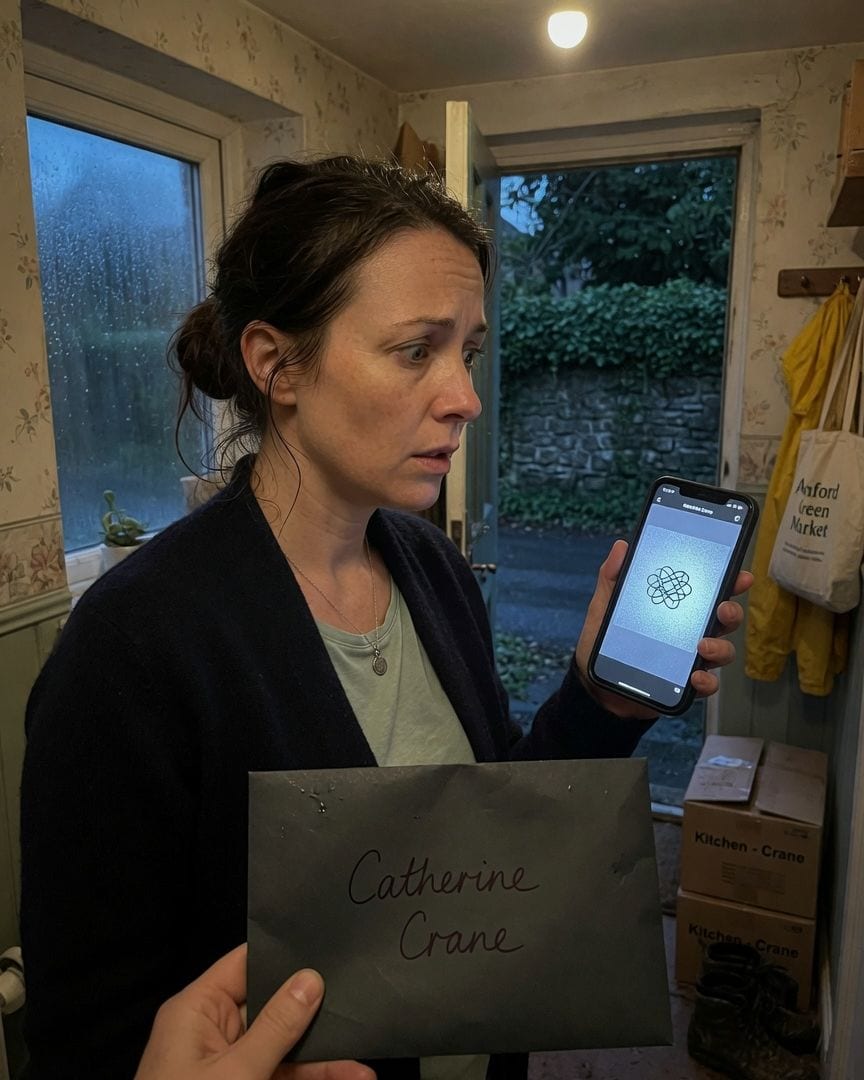
My postman warned me: never use the old pillar box. Royal Mail logs a collection every day, one item, signed by no one.
Moving to Ashford Green, I dismissed my postman's strange warning about the old pillar box by the ford. But after my own letter vanished inside it, I returned at midnight. Then, a dark, unstamped envelope slowly slid *out* of the slot, addressed to me.
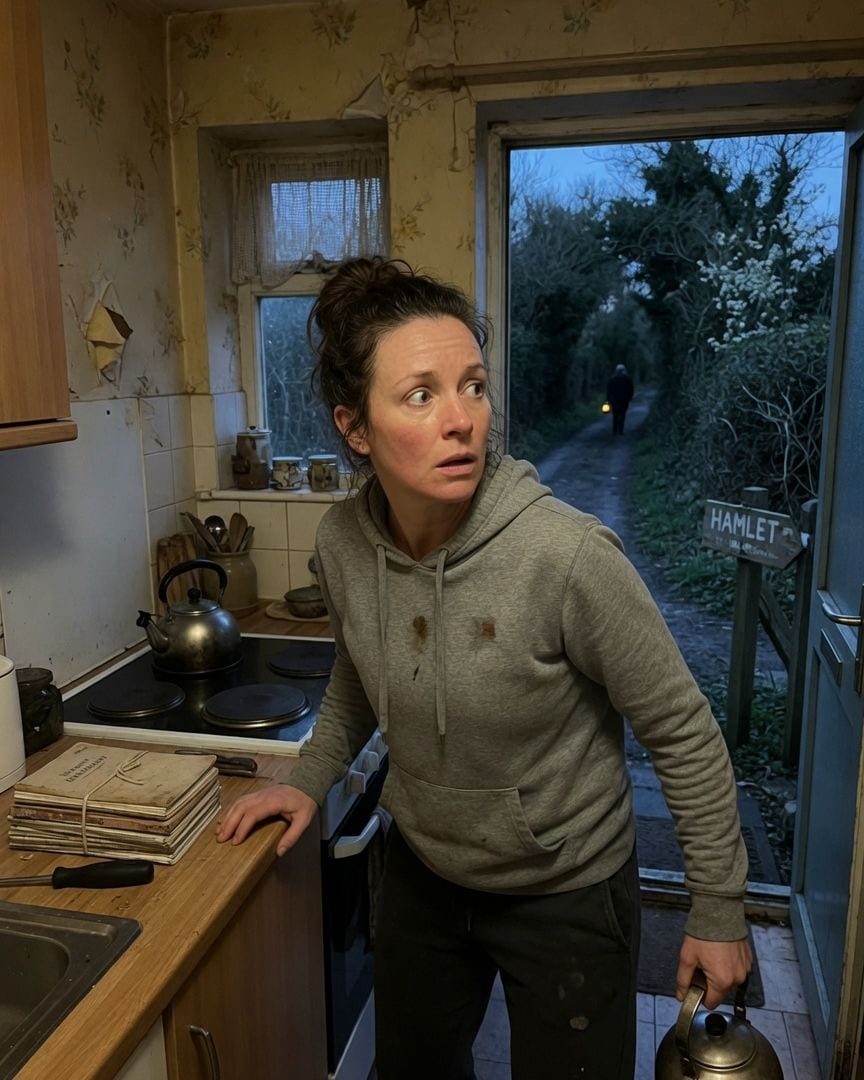
My side gate opens onto a dirt lane between hedgerows, not the close, and a figure with a lantern comes up it toward me.
My side gate normally opens onto the familiar tarmac of the close, but lately, it's opened to a narrow, overgrown dirt lane instead. Three times now, at dusk, I've seen a man with an old-fashioned lantern walking unhurriedly up this impossible lane towards my house. Each time, when I dare to look again, the lane is gone, leaving only the bins and a racing heart.
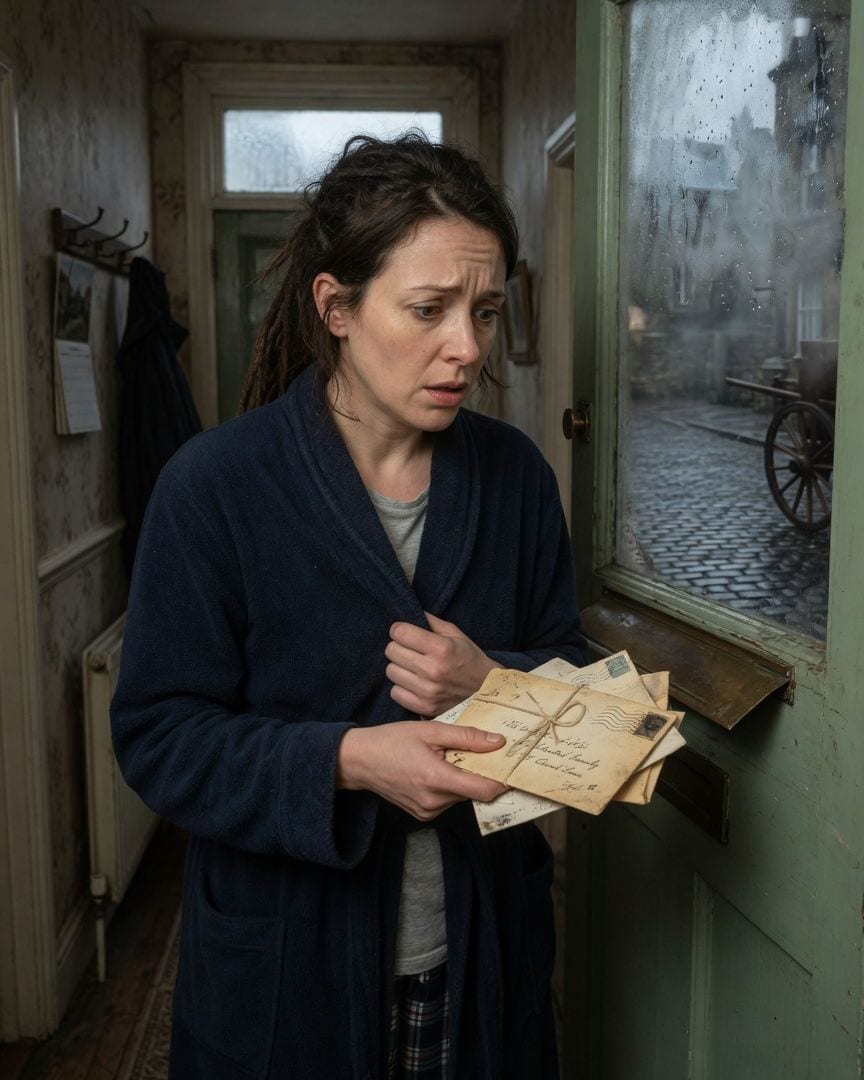
Seventy years ago, a hidden journal recorded my door opening to the wrong street and receiving Lockwood post.
I'd only recently moved into my inherited house, a quiet place on the edge of town. One grey morning, a distinct clatter from the front door's post flap caught my attention. Reaching down, I expected my gravel path, but instead, the flap showed a dark, cobbled street that wasn't mine. A bundle of warm, old letters, addressed to 'The Lockwood Family,' slid through, before the vision flickered and was gone.