A dive supervisor exploring a Cold War sealer found its logbook on a wheelhouse shelf, with an entry dated this morning.
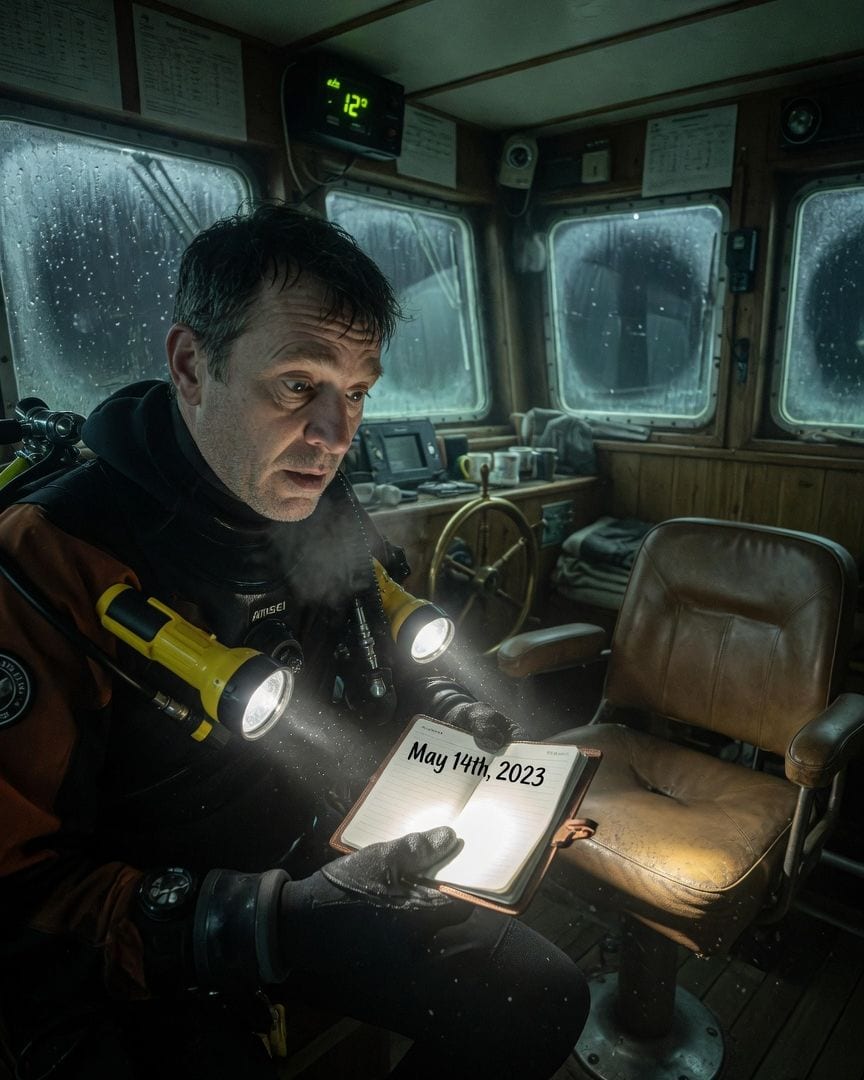
Dive supervisor Hugo Amsel felt the cold seep through his drysuit, a familiar ache in the Bering Sea.
His submersible’s powerful lights cut through the abyssal gloom, finally settling on the 'Wynn Portal,' a sealer vanished without a trace in 1991. The wreck sat upright on the silty bottom, eerily intact. No hull breaches, no twisted metal.
Her wheelhouse windows, thirty-two years submerged, were impossibly clear, free of growth, as if freshly wiped.
Through the glass, the ship's helm was turned hard to starboard, locked in place, and the rudder angle indicator glowed with an electric green light, showing ten degrees.
It was a small detail, a minor electrical anomaly after decades, but something about the perfect preservation of the light and the rigid helm bothered Hugo. He held his breath, watching.
The indicator, a needle fixed by rust and time, twitched. A full degree, then another, settling at twelve degrees to starboard. It held there, unwavering, a ghost still at the wheel.
Hugo signaled Paul Thornton, his lead diver, to approach. “Rudder angle just changed,” he reported, his voice tight over comms. Paul’s response was a disbelieving grunt. “Must be a current playing tricks, boss. Or a faulty gauge.”
But Hugo knew the deep Bering currents, and this wreck was too massive, too settled, to be swayed by anything subtle enough to only move a needle. He dismissed Paul’s suggestion instantly; this wasn't an eddy.
They spent another hour documenting the exterior, the hull perfectly preserved, her name, 'Wynn Portal,' still legible in faded black paint. The ship’s hatches were dogged from the inside, every one of them sealed tight.
No indication of forced entry or hurried abandonment. Against protocol, Hugo made the call. “We’re going in. Paul, secure the breach charge.” The small explosion was precise, opening a hatch near the stern without compromising the structural integrity.
Inside, the air was cold, still, and strangely fresh, without the expected stench of decay or trapped seawater. The ship’s interior was pristine, frozen in time.
They navigated through narrow corridors, the beam of Hugo’s light dancing over bunks with neatly folded blankets, a galley with unwashed plates stacked on a counter. Finally, they reached the wheelhouse.
The air here was even colder, almost dry, despite the breach. The helm was still at twelve degrees. Paul pointed to a small, leather-bound book on a shelf next to the chart table. “Logbook, boss.” Hugo carefully opened it.
The final entry, written in a confident, familiar hand he recognized from old photos as Captain Roland Larsen’s, was dated 'May 14th, 2023'. The ink was a deep, unsettling black, and appeared barely dry.
Hugo’s gloved finger brushed the page. The ink didn't smudge, but its freshness was undeniable. May 14th, 2023. Today.
Thirty-two years after the Wynn Portal vanished, Captain Larsen had apparently made a log entry, this very morning, from the bottom of the Bering Sea. He looked up, his flashlight beam sweeping the wheelhouse.
The captain’s chair was empty, but a faint indent remained on the worn cushion, as if someone had just risen from it. Paul’s voice crackled, “Boss? What is it?”
Hugo could only stare at the date, then at the empty chair, then back at the impossible, wet ink. He felt a profound, stomach-lurching wrongness.
The ship wasn't just preserved; it was still living, still operating, still writing its own history. And he was standing inside it.
Back on the surface, the discovery of the logbook entry threw Hugo’s team into disarray.
Paul argued it was a hoax, a macabre joke by a previous diver, but the pristine condition of the wreck and the unbroken wheelhouse windows made that impossible.
No diver could have accessed it, placed the book, and resealed everything without leaving a trace. Hugo meticulously photographed the logbook, then carefully sealed it in a watertight container.
The official report from Bering Salvage would be a nightmare to write. He knew the Navy would be involved now, given the impossible details. Days turned into a week.
The Wynn Portal was declared an exclusion zone, awaiting specialized recovery that would surely be months, if not years, away. Hugo, however, couldn't let it go.
His mind replayed the impossible sequence of events, searching for a rational explanation that simply wasn't there.
He reached out to Julian Abbott, a retired records clerk he knew from a previous declassification project, a man with a reputation for finding the unfindable in government archives. “Julian, I need anything on the Wynn Portal.
Not just the disappearance, but any subsequent investigations, any theories, anything off-the-books. And search for anything similar – inexplicable maritime disappearances in the Bering or North Pacific.” Julian, intrigued by Hugo's unusual urgency, agreed to dig.
A few days later, Julian called. “Hugo, this is… odd. The official file on the Wynn Portal is surprisingly thin. Almost sterile. But I found a cross-reference in a file marked ‘Unaccounted Maritime Incidents – Bering Sector, Classified.’
It’s heavily redacted, but there are mentions of other vessels, similar circumstances, going back decades. All perfectly preserved, all found with… anomalies. And a recurring phrase: ‘Primary Observer Designation.’
It’s like someone was tracking not just the disappearances, but the people who found them.” The dread tightened in Hugo’s chest. He wasn’t just looking at a single anomaly. He was looking at a pattern.
Hugo felt a chill that had nothing to do with the Bering Sea. “Primary Observer Designation?” he repeated, the words tasting metallic in his mouth. “What does that mean?”
Julian’s voice, usually dry and academic, had a tremor Hugo had never heard before. “It’s vague, but it seems to refer to the first responders, the ones who make initial contact with these… incidents.
The ones who go in and report what they find.” He paused, the silence on the line stretching. “And there’s a pattern, Hugo. Every single 'Primary Observer' listed in these cross-referenced files… they all eventually vanished themselves.
Not officially, not on paper, not like the ships. Just… gone. Later listed as 'Secondary Subjects' in subsequent reports, with their original case files closed as 'Observer Transitioned.'” A cold sweat broke over Hugo.
He looked out his office window at the gray, churning sea, the distant outlines of fishing boats barely visible through the mist. “Julian,” Hugo said, his voice a low rasp, “I was the primary observer for the Wynn Portal.”
There was a beat of silence on the line, heavy and suffocating, punctuated only by the faint crackle of the connection. “Yes, Hugo,” Julian finally said, his voice barely a whisper. “I noticed. And there’s more.
I’ve been trying to get deeper into that classified file, the ‘Alpha-7’ designation it kept referring to. But my access has been revoked. And I’ve had… visitors. Unmarked sedan, two men in dark suits.
They asked about my research into ‘unauthorized declassification requests.’ They knew I was looking for you.” Hugo felt a prickle on the back of his neck. He walked to the window again, scanning the street below, the deserted parking lot.
Nothing. Just a few fishing trucks and the usual sparse traffic. But the feeling persisted, a distinct sense of being watched, an invisible pressure building around him.
The file wasn't just history; it was a live document, and he was now a part of its present tense.
Hugo knew he had to meet Julian in person. They arranged a clandestine meeting at a quiet, out-of-the-way diner, miles from any official presence.
It was the kind of place where the coffee was lukewarm and the pie crust flaky, and no one paid attention to anyone else. Julian arrived looking haggard, his usual meticulous appearance replaced by rumpled clothes and anxious eyes.
He slid a thick, brown envelope across the table, its surface crinkled from being hastily folded. “I pulled what I could, Hugo, before they locked me out completely. This is a partial printout of the 'Observer-Subject Protocol Alpha-7' file.
It’s… it’s a manual, Hugo. Not for recovery, but for monitoring.” Hugo opened the envelope, his hands trembling slightly, the cheap diner paper feeling strangely heavy.
The first page detailed a long-standing, covert operation by a shadowy government entity, referred to only as 'The Archive.' Its mission: to track and document 'anomalous maritime collections' – the clinical euphemism for the vanishing ships.
“They know about it,” Hugo whispered, his eyes scanning the dense, clinical text. “They’ve known for decades.” Julian nodded grimly. “They haven’t found the source, or how to stop it. They just… record.
And they’ve identified a pattern: the 'Primary Observers' of these collected vessels become ‘Secondary Subjects’ within a specific timeframe after initial contact. It’s like… a lure. Or a natural progression.”
Hugo flipped through the pages, the rustling sound loud in the quiet diner. There were detailed profiles of the vanished ships, cross-referenced with weather patterns, magnetic anomalies, and even the psychological profiles of the crews.
And then, a section titled 'Subject Designation Criteria,' listing specific traits common to the 'Primary Observers.' Hugo recognized himself in the description: 'highly rational, methodical, drawn to inexplicable patterns, with a history of deep-sea salvage or exploration.'
The words on the page chilled him to the bone. The file wasn't just confirming a pattern; it was describing him, predicting his fate. The rudder indicator, the fresh logbook entry – they weren't just anomalies.
They were part of a sophisticated, ongoing process, a lure designed to draw in the next 'observer.' The Wynn Portal wasn't just a wreck; it was a bait, and he had taken it.
Julian pointed to a specific page, a table with dates and names printed in a fading dot-matrix font. “Look here, Hugo. This is the list of 'Primary Observers' who have transitioned to 'Secondary Subject' status.
The dates of their initial observation, and the dates of their… disappearance.” Hugo’s eyes scanned the column of names. Paul Hartley, 1978. William Sinclair, 1985. Elena Lawson, 1999.
All names he recognized from maritime history, disappearances that had baffled the world. Then, at the bottom of the column, in a section marked 'Active Monitoring,' a single entry stood out from the others, the ink surprisingly crisp.
Julian’s finger traced a line on the faded document, landing on 'Amsel, Hugo. Current Status: Monitoring.' A date was next to it: 'May 14th, 2023.' The same date as Captain Larsen’s impossible logbook entry.
Hugo looked at his own name, cold dread washing over him, realizing the file wasn't just a record of the past, but a predictive ledger of the future.
The same day he found the Wynn Portal, the same day the captain made his impossible entry, Hugo Amsel had been entered into 'The Archive’s' active monitoring list.
He wasn't just investigating the pattern; he was the next part of it. The diner’s fluorescent lights hummed, casting a sickly yellow glow on the table, making the shadows deep and unsettling.
Outside, a dark sedan, previously unnoticed, slowly pulled away from the curb, its engine a low thrum that faded into the city noise. Julian, seeing Hugo’s face, pushed his coffee cup away. “Hugo, you have to get out. Now.”
Hugo and Julian made a desperate escape, Julian's beat-up sedan weaving through the city streets, the dark sedan not far behind, a persistent shadow. Hugo, heart pounding against his ribs, clutched the file like a lifeline. “What is it?”
he demanded, his voice strained. “What is 'The Archive' collecting? What does it want with us?” Julian, driving with a grim determination, explained, his eyes darting to the rearview mirror. “The agency believes it’s an ancient, sub-oceanic intelligence.
Not hostile, not malicious, but… alien. Incomprehensible. It perceives life, particularly organized, complex life, as 'data' to be cataloged. The ships, the crews – they’re not destroyed. They’re filed. Preserved.
The rudder indicators, the log entries, the perfectly maintained interiors… it’s all part of the entity’s simulation, its way of keeping the 'records' current. It wants to maintain the illusion of continued operation for its collection.
The 'Observer-Subject Protocol' is how it updates its collection. It draws in those who are predisposed to investigate, to understand, to be 'filed' in turn.”
Hugo remembered the impossible freshness of the Wynn Portal, the moving rudder, the dry ink, all of it. It wasn't a trick of the light or a current.
It was the entity, maintaining its collection, making it appear 'alive' to draw in the next 'observer.' The 'unaccounted maritime incidents' were just entries in a vast, incomprehensible ledger.
The agency had known for decades, watching helplessly, documenting the process, even unwittingly facilitating it by identifying and tracking potential 'observers' like Hugo. Every clue, every impossible detail, now clicked into place with horrifying coherence.
The dread wasn't in a monster, but in a vast, patient, utterly indifferent intelligence that saw humanity as nothing more than specimens for an eternal archive.
Julian, knowing they couldn't outrun 'The Archive's' reach indefinitely, drove them to a secluded, forgotten dock, far from the city’s light. A derelict pier stretched into the black water, barnacled pilings groaning in the tide.
“There’s an old fishing trawler here,” Julian said, gesturing to a rust-streaked vessel tied up at the end of the dock. “Registered to a shell company I set up years ago. Untraceable. Get on it, Hugo.
Go deep into the Pacific. Disappear.” Hugo hesitated, the file heavy in his hands. “What about you?” Julian gave a weary, almost accepting smile. “I’m already in their system. I’ve probably bought you all the time I can.
I’ll try to scramble the trail, buy you a little more. But you have to go.” The dark sedan, its headlights like predator’s eyes, pulled into view at the end of the dock, cutting through the pre-dawn gloom.
Hugo knew this was his only chance. He gripped Julian’s hand, a silent farewell passing between them, a desperate acknowledgment of what was happening. He boarded the trawler, quickly fumbling with the keys, starting its old diesel engine.
It coughed to life with a plume of black smoke. As the boat chugged away from the dock, he saw the two men from the sedan emerge, moving with a chilling, unhurried efficiency toward Julian.
Julian stood his ground, a defiant, frail figure against the approaching darkness, not running, just waiting. Hugo turned the trawler's wheel, pushing the throttle forward. He looked back one last time.
Julian was gone, swallowed by the shadows, the men in suits now at the edge of the pier, watching Hugo's boat, their forms barely visible in the fading light.
As the trawler picked up speed, gaining momentum against the current, Hugo felt a profound sense of loss, but also a chilling understanding. He wasn't just escaping.
He was trying to outrun a designation, a name in a file that had already been signed. He was fleeing not from a physical threat, but from an invisible, patient system that had marked him for collection.
He was now a fugitive from a cosmic archivist. He knew he couldn’t fight it, only delay it. His only hope was to become truly lost, to become an anomaly even to 'The Archive's' vast, indifferent gaze.
The trawler vanished into the vastness of the Pacific. Julian Abbott was reported missing a week later, presumed to have taken his own life, leaving behind no note or trace.
The declassified files he had given Hugo were never officially found, effectively vanishing from all records. Bering Salvage resumed normal operations, the Wynn Portal project quietly reassigned to a different contractor, its unusual details buried under layers of new bureaucracy.
The two men in suits, belonging to 'The Archive,' continued their silent work, their pursuit of Hugo Amsel now a long-term, low-priority task in their endless monitoring.
The sea remained vast and indifferent, occasionally yielding new 'unaccounted incidents,' each one added to the ever-growing ledger. The system continued, patient and unseen.
Weeks later, far from any shipping lanes, Hugo Amsel stared at the stars from the deck of his trawler. He was alone, truly alone, with nothing but the endless ocean and the chilling knowledge he carried.
He knew 'The Archive' was out there, always watching, always waiting. He would spend the rest of his life trying to outrun a name on a list. He reached into his pocket, pulling out a small, waterproofed satellite phone.
He had only one contact left programmed into it, a number Julian had given him for emergencies, a last resort to a deep-cover contact who might offer a shred of help.
He stared at the screen, the cursor blinking over the 'Call' button. The vastness of the ocean pressed in around him, cold and indifferent, mirroring the entity that had marked him. He didn't press it. He knew it wouldn’t matter.
He was already filed.
If this one got to you
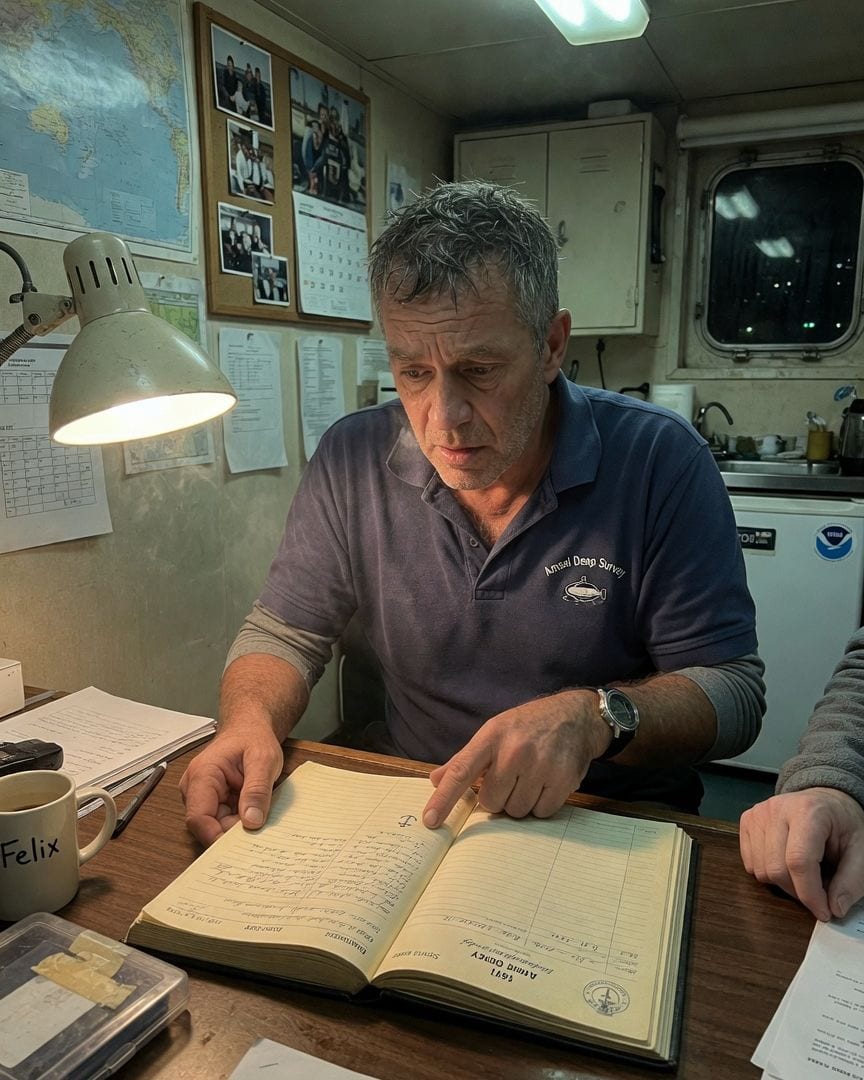
On his final deep-sea survey, a submersible pilot watches a 32-year-old Cold War wreck's rudder shift two degrees.
Deep-sea surveyor Hugo Amsel embarked on his final major dive, anticipating a quiet retirement after decades exploring the crushing pressures of the deep. His submersible's lights cut through the murky green, revealing the *Wynn Portal*, a sealer vanished in 1991, eerily preserved with unnervingly clear windows, free of any marine growth. Then, the inexplicable: the wreck's rudder angle indicator, softly lit, twitched two degrees further to starboard. Later, inside the wheelhouse, Hugo found the ship's official logbook, its final entry dated three days *after* the vessel's recorded disappearance, hundreds of miles north. How could a ship vanish, only to log a journey days later, from a place it never reached?
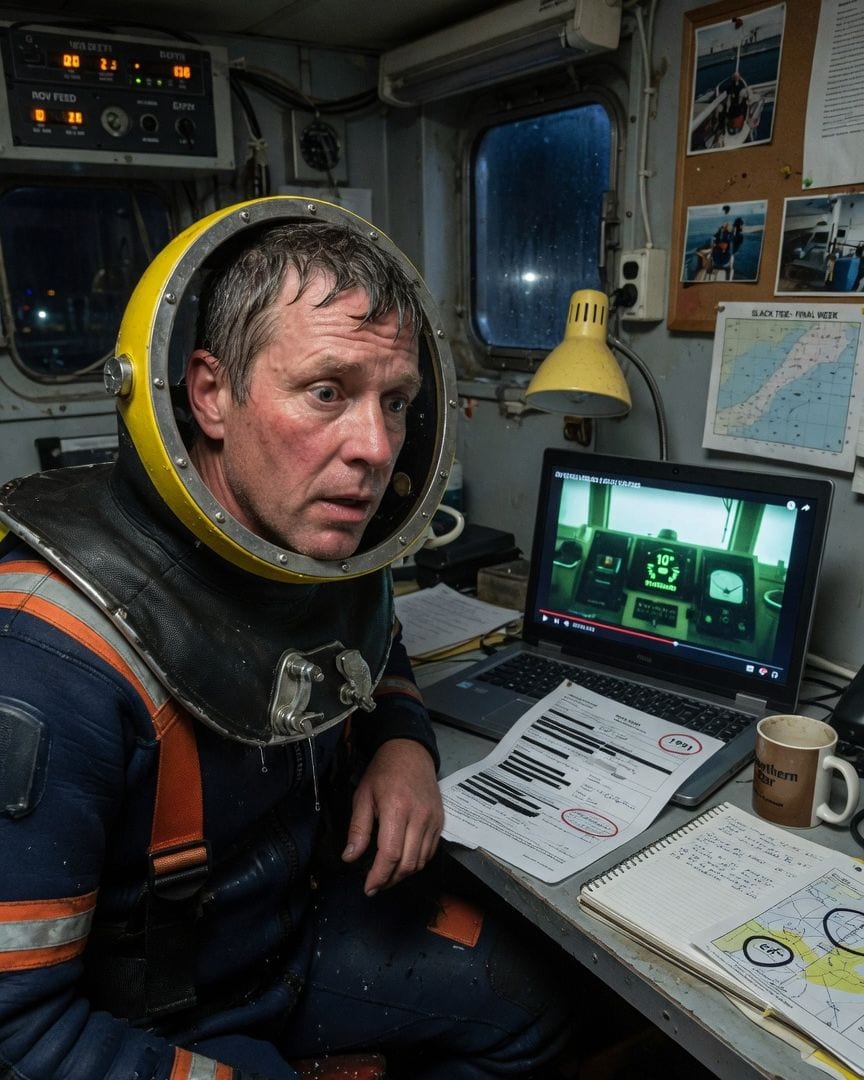
A deep-sea surveyor's final dive into a 1991 wreck found a logbook dated 2023, and a figure watching him.
Deep-sea surveyor Hugo Amsel faced the final week of his Bering Sea survey, under immense pressure to find conclusive evidence before the short season closed. In the abyssal gloom, he located the *Wynn Portal*, a sealer lost with fourteen crew in 1991, surprisingly intact. Through its clear wheelhouse window, he saw a rudder indicator glowing green, an impossible light on a dead ship. Later, on a second dive, he found a leather logbook tucked beneath the helm, open to a page clearly dated 2023. As he stared, a shadow inside the window shifted, coalescing into a figure watching him from the depths.
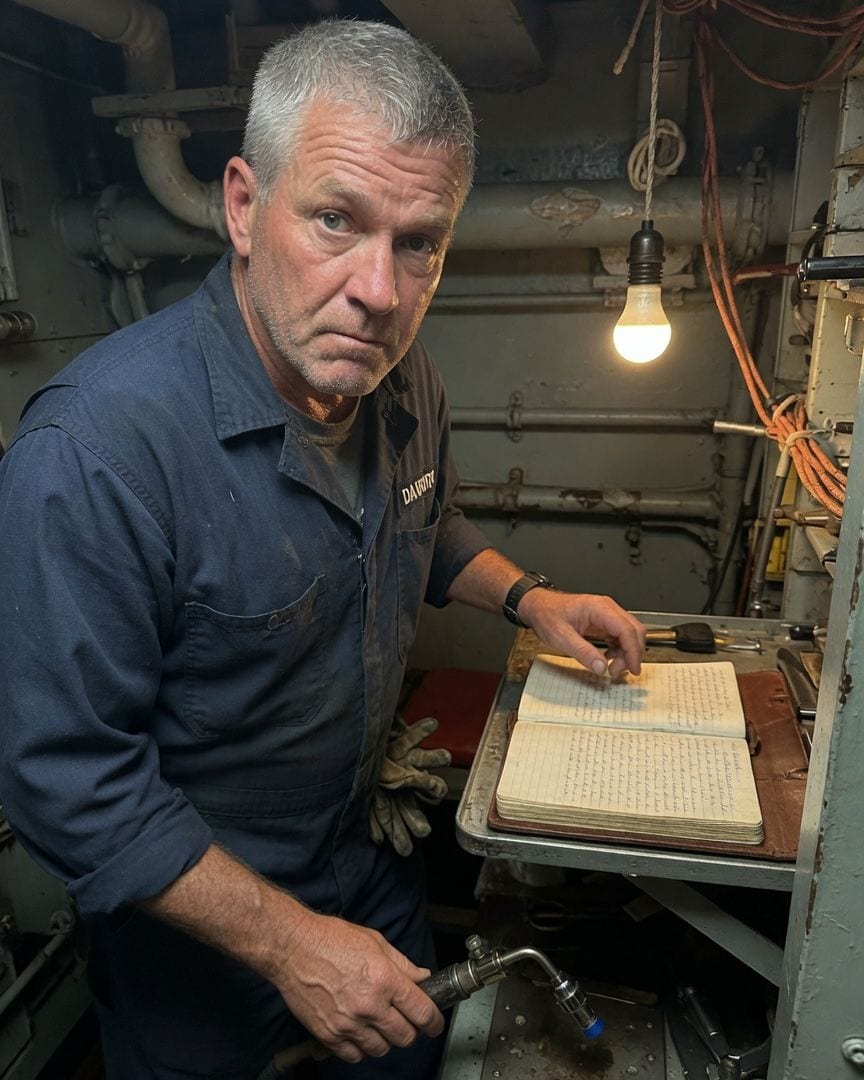
A week from shore duty, Chief Danforth cut a hatch where his ship's plans showed solid steel. An hour later, the wall was seamless, but the Cold War logbook from inside appeared under his mattress.
Chief Petty Officer Raymond Danforth, just a week from ending three decades of service, was intimately familiar with every pipe and plate of the guided-missile destroyer Weatherall. During a mid-cruise overhaul, his gloved hand found a sealed hatch where schematics promised only a solid bulkhead. He cut through the impossible seam to reveal a small, dry compartment, softly lit, containing a logbook filled with an unsettlingly familiar hand. When he returned an hour later with a witness, the hatch was gone, the wall seamless. Later that night, the same logbook appeared beneath his mattress, its pages revealing an entry: 'Petty Officer Howard Montgomery, missing, 1972.' How could a compartment vanish, yet leave its secrets behind?
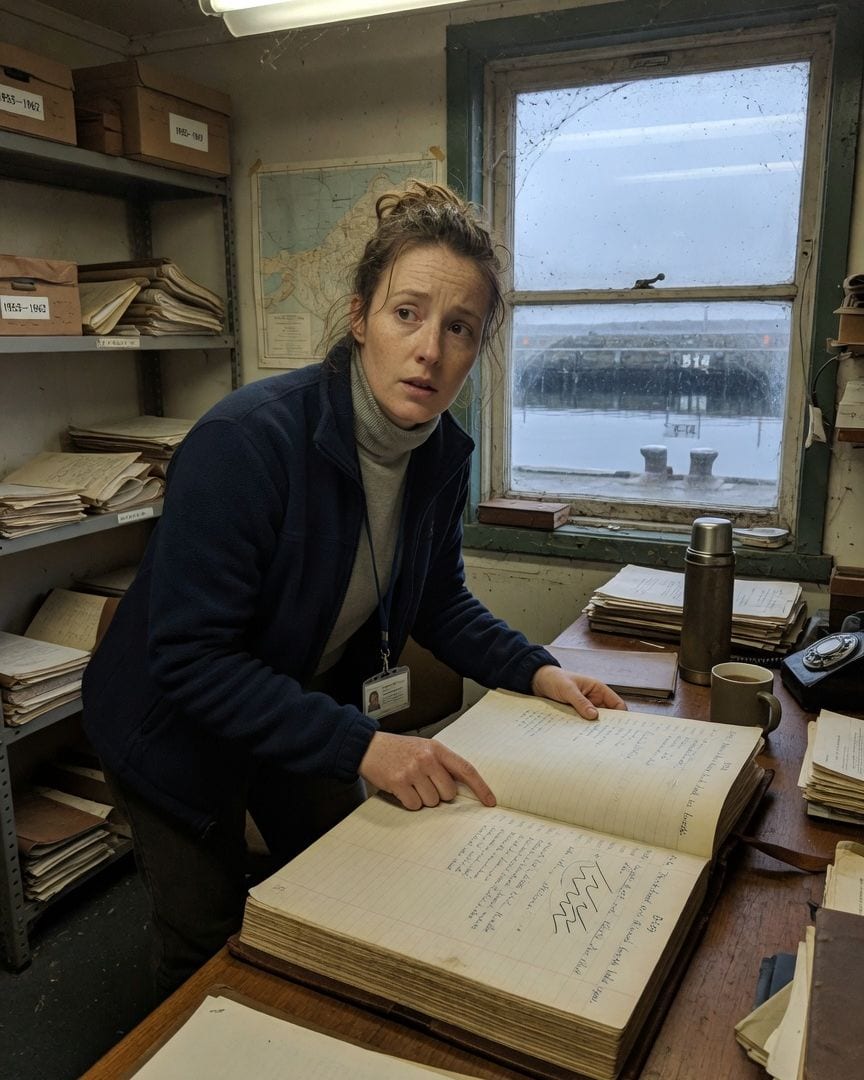
My harbour ledger shows Berth 14 let to a trawler every few years, but it's always empty. Each entry reads 'not returned to sea, berth held open'.
My job as Harbour Master's Assistant is managing the berth ledger, tracking every vessel. But Berth 14 holds a strange paradox: my book says it's let, yet it's always empty. Each entry for that berth closes with the same cryptic note – 'not returned to sea, berth held open' – a pattern stretching back to 1955.
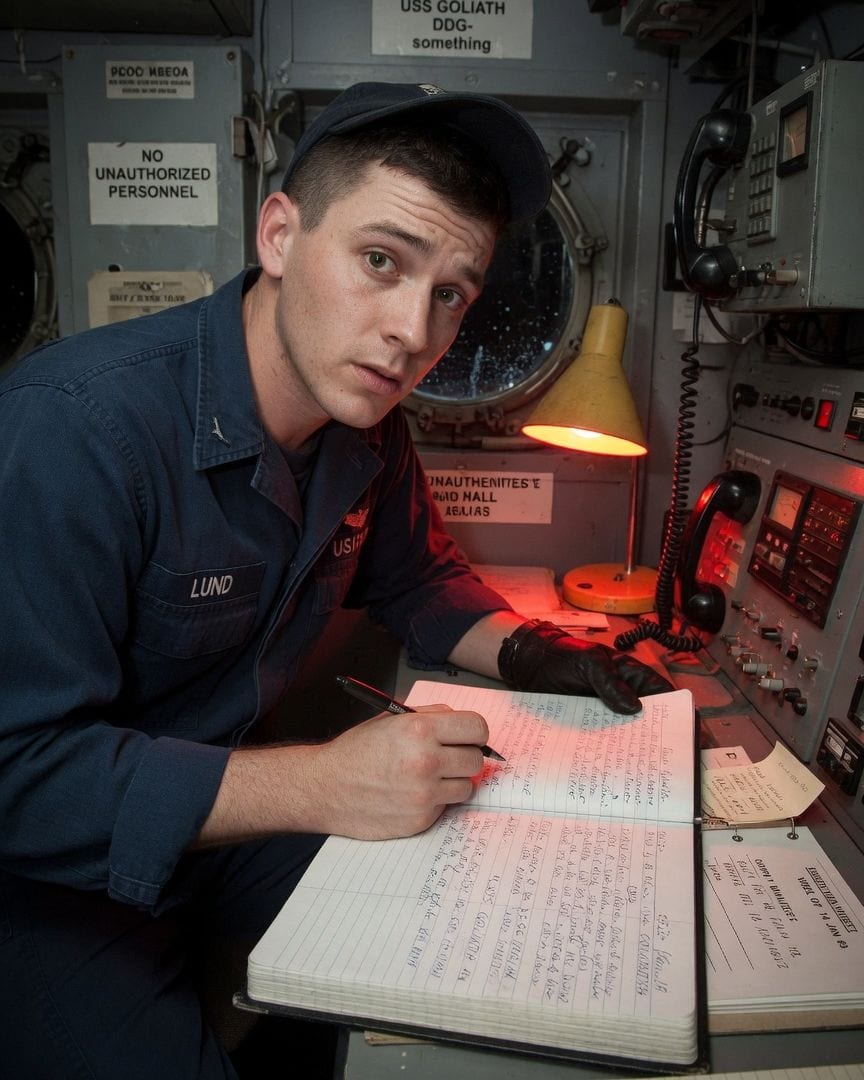
Petty Officer Lund heard his own captain's mayday: the Cold War USS Goliath was sinking, two hundred miles astern.
Petty Officer Marco Lund kept a lonely vigil in the USS Goliath's radio room, the destroyer battling the North Atlantic in deep winter 1983. Suddenly, a garbled mayday broke through: his own ship, his own captain, reporting they were going down two hundred miles astern. Though the bridge confirmed the Goliath was fine, the same chilling call came again an hour later, stronger and from the exact waters they had just crossed. Deeply unsettled, Marco began searching ship logs, eventually discovering a phantom entry: an identical mayday, logged a week prior, pressed into the very paper beneath his own.
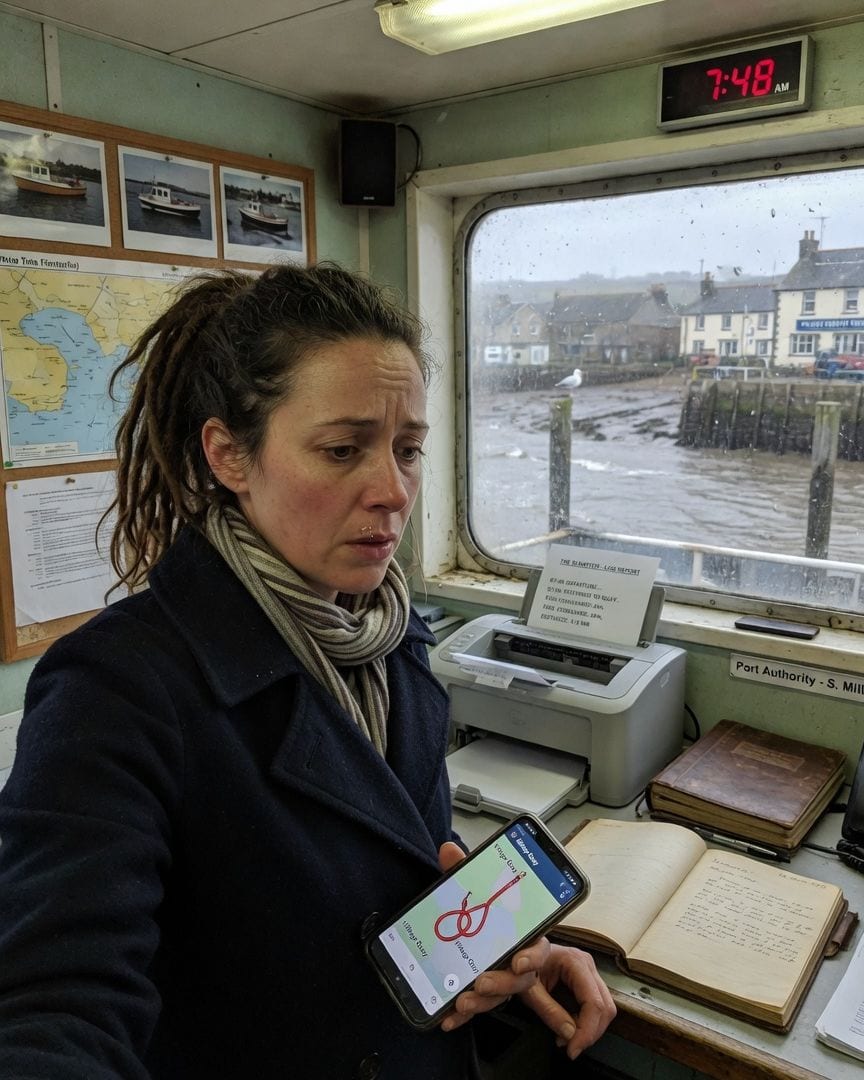
My morning ferry crossed for 40 minutes. The destination town just disappeared.
I board 'The Seawitch' every Tuesday for the familiar eight-minute estuary crossing. But this morning, after making good time, Captain Bernard and I watched the town quay simply fail to appear. Instead, our ferry repeatedly returned to the very same village quay we'd just left, despite burning fuel and advancing the clock.