My electoral roll shows Elector 114 at 9 Bell Court has a new name this year. But the old rolls list a different person for 114 every election since 1950.
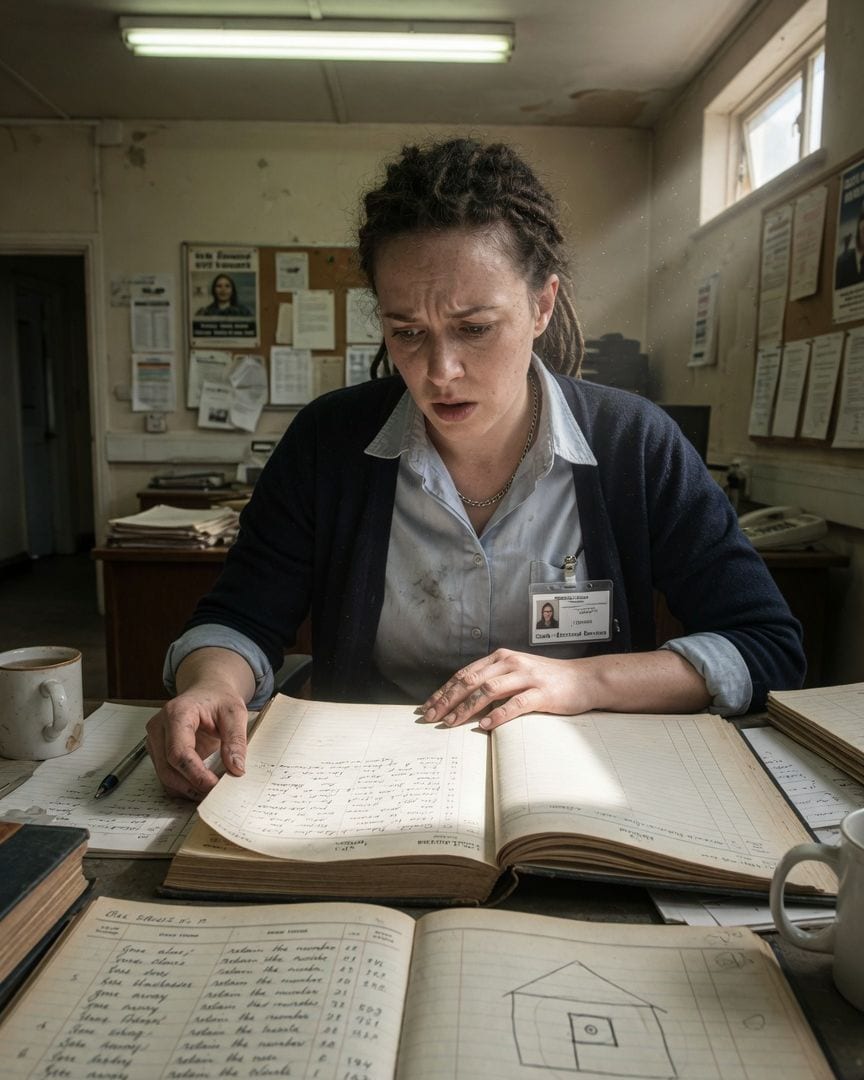
The ink on my fingers was already smudged, a fine grey powder from the old paper, even though the shift had barely started.
As a municipal clerk, I spent most mornings wrestling with the electoral roll returns, cross-referencing names, addresses, and numbers. It was monotonous work, the kind where you could almost hear your own thoughts echo in the quiet office.
Today, however, something snagged.
I pulled the ledger for 9 Bell Court, a neat, three-bedroom semi-detached on the older side of town. Elector 114 was listed with a new name this year: a Mr. Arthur Finch. Standard enough.
But something about the address, maybe just the way the light hit the page, made me pause. I wasn't sure why, but I felt a small, inexplicable urge to check the past.
I reached for the older, heavier ledgers, the ones with the canvas covers and brittle pages. Dust motes danced in the strip of sunlight from the high window as I opened the 1990s book. Elector 114, 9 Bell Court.
A different name. Struck through, with a neat, familiar hand-written note beside it: gone away, retain the number to the house. I frowned. An error, perhaps, carried forward? I flipped back to the 1980s. Same number, same address, another different name. Again, gone away, retain the number to the house. The 70s. The 60s.
All the way back to 1950. Every single entry for Elector 114 at 9 Bell Court was a different person, each struck through, each bearing that exact same, unsettlingly precise note. It wasn't an error.
It was a pattern, one that sat like a stone in my gut.
The detail about Elector 114, 9 Bell Court, kept snagging at the edges of my thoughts all morning.
I told myself it was just an oddity, a quirk of some long-forgotten local bylaw, maybe a historical clerical error that had simply been perpetuated.
Maybe the house had been some sort of communal property, or a boarding house, and the 'elector number' was tied to the room rather than the person.
It was a stretch, but it was a rational stretch, and my brain craved a rational explanation.
Yet, that specific phrase – retain the number to the house – felt too deliberate, too formal for a simple note. It wasn’t a casual observation; it was an instruction. And the consistency of it, across seventy years of distinct handwriting, implied a continuous understanding.
During a quiet afternoon, when the fluorescent lights hummed louder than usual and Jeffrey Maddox was out on a long lunch, I decided to pull a few more dusty old electoral ledgers.
I started with the addresses immediately surrounding 9 Bell Court, thinking maybe it was a street-specific anomaly. Nothing. Then I picked a few random books from across the decades, leafing through pages, looking for anything similar.
It was a long shot, I told myself, a silly rabbit hole.
But the quiet office seemed to press in around me, the smell of old paper and dust thickening in the air. My fingers, already grimy, turned another page. Then another. And my heart gave a cold, distinct lurch.
There it was. Not 9 Bell Court. A completely different address, on the other side of town. Elector 237. A name, struck through.
And beside it, written in the same neat, almost calligraphic script as some of the older 114 entries, the exact same note: gone away, retain the number to the house. My breath hitched. I found another. Elector 41 at an address near the old train station.
Same thing. And another. And another.
The mundane explanation crumbled into dust, replaced by a growing, specific unease that spread through my chest like ink on blotting paper.
I didn't stop. My rational mind, the part that usually kept me tethered, was suddenly overwhelmed by a deep, specific dread. My fingers, smudged black with ancient dust, moved faster, tracing line after line through the oldest ledgers.
The fluorescent lights overhead seemed to buzz louder, almost an accusation.
I found them in clusters now, hidden among the ordinary entries. Elector numbers, reissued again and again, each bearing that same chilling instruction.
I was hunched over the enormous, bound books, the smell of damp paper and decades-old glue filling my nostrils. Then, in the earliest register, almost hidden by the yellowed, brittle paper, I found it.
A whole section, towards the back, where several of these reissued numbers were grouped together, almost like an index. Each entry was marked with a faded, almost illegible symbol. A small, stylized house.
And in its single, unblinking window, a tiny, almost imperceptible eye.
It wasn’t just a pattern. It was a coded system, a widespread, deliberate mechanism I couldn't even begin to comprehend.
The stylized house with the eye in its window haunted me. It was too specific, too unsettling to be random. I couldn't shake the image.
The sheer scale of the reissued numbers, all tied to that cryptic note and now this symbol, felt like a breach in the quiet order of things. I knew I couldn't just drop it.
I started to discreetly search the council archives, a vast, dimly lit cavern of obsolete documents and forgotten records in the basement.
I told my supervisor, Mr. Davies, that I was researching for a "historical property survey" – a plausible enough cover.
I looked for anything related to 'elector retention,' 'designated properties,' or even the strange house-eye symbol, though I knew the symbol was a long shot. Days turned into a week.
My hair picked up the smell of mildew and stale paper, and my eyes ached from reading microfiche. I waded through mundane planning documents, old town meeting minutes, building permits. Nothing.
Then, buried beneath a stack of fire inspection reports from the 1970s, I stumbled upon an obscure, unindexed box. It was plain cardboard, unlabelled, taped shut with yellowed packing tape.
Inside, wrapped in brown paper, were internal council memos, faded but legible. I unfolded one. The date was 1968. It mentioned 'Protocol 7B for Bell Court and associated properties.'
Another memo, undated but clearly from the same era, discussed 'succession planning' for 'continuous occupancy' regarding select municipal addresses. The language was bureaucratic, dry, almost chillingly detached. Continuous occupancy. Like a utility, or a public service.
I cross-referenced property tax records for 9 Bell Court. Consistent, low tax rate. No ownership changes for decades, just a steady stream of new 'occupants' listed on the electoral rolls. It made a cold kind of sense.
Later that week, I tried to casually question Joan Delaney, the oldest clerk in our department, a woman who'd seen decades of council come and go.
She was nearing retirement, her hair a wispy white cloud, her hands gnarled but steady.
"Joan," I started, trying to sound nonchalant as I sorted some old files, "I was looking at some of the really old rolls, from the fifties. Some of the language is… interesting.
Like 'elector retention' and 'gone away, retain the number to the house.' Do you remember anything about those old procedures?"
Joan paused, her pen hovering over a form. Her gaze drifted to the window, then back to me. "Oh, those," she said, her voice flat, almost dismissive. "That's just how things are done, dear. Been that way since I started.
Some properties, they just need… maintaining stability. For the town. That's all." She offered a vague, unsettling smile. "Old ways are the best ways, sometimes."
Her composure, her lack of surprise, was more unsettling than any explanation could have been.
I returned to the archives, drawn by a growing, sickening certainty that I was getting closer. Joan's quiet indifference had only solidified my resolve. This wasn't some historical clerical error. This was something active, ongoing.
My hunch led me to a back corner, behind a towering shelf of obsolete planning maps that looked like they hadn't been touched since the council was formed. There, tucked away, was a small, sealed wooden box. No label.
Just dust. And etched into the lid, faded but undeniable, was the same stylized house with the single, unblinking eye. My heart thudded against my ribs. This was it.
As my fingers brushed the rough wood, a voice made me jump so violently I almost dropped the box. "Looking for something, Vivian?"
Jeffrey Maddox stood behind me, just a few feet away. His usual easy smile, the one that usually creased the corners of his eyes, was gone. His expression was strangely intense, unreadable.
The air in the archives, already still and cool, seemed to drop a few degrees further.
"Just… historical property stuff," I managed, trying to sound casual, my hand frozen on the box. "For the survey."
He nodded slowly, his eyes fixed on the box, then on me. "Some things are better left undisturbed," he said, his voice soft, almost a whisper, but firm enough to carry. "Old procedures, you know. They have their reasons.
Best not to poke around too much in the past."
He lingered for a moment, his gaze unwavering, before he finally turned and walked away, his footsteps echoing softly up the concrete stairs.
I watched him go, a shiver running down my spine that had nothing to do with the archive's chill.
Later that day, back at my desk, the incident with Jeffrey replayed in my mind. The way his eyes had lingered on the box. His warning. I felt a cold knot of anxiety tighten in my stomach.
I reached for my top drawer, the one where I kept my personal notes – the printouts of the Protocol 7B memos, my handwritten list of all the 'retained' electors, even the crudely sketched symbol of the house-eye.
The drawer was slightly ajar. I distinctly remembered closing it firmly before lunch.
I knew I couldn’t ignore it anymore. The subtle warnings, Jeffrey’s strange intensity, the quiet acceptance from Joan. It all pointed to something far more deliberate than I’d imagined.
My hand trembled slightly as I placed the printouts of the 'Protocol 7B' memos and my list of the reissued elector numbers beside the faded symbol sketch on Joan Delaney’s desk.
Her gaze, when she looked up, was calm, almost knowing.
"Joan," I began, my voice low, hoping Jeffrey hadn't returned from whatever errand he'd been on. "What exactly is 'Protocol 7B'? And what does 'retain the number to the house' really mean?"
She sighed, a slow, weary sound, her gaze drifting to the window. The afternoon sun, weak and watery, cast long shadows across the office floor.
"It’s always been this way, dear," she said, her voice flat, devoid of emotion, as if she were reading from a long-outdated manual. "Since before I started, and I started when your parents were in primary school."
She looked at me then, her eyes clear, unwavering. "Certain properties, 'Designated Properties,' are tied to long-standing agreements. Protocols. To ensure continuous occupancy. The council, we manage the 'transitions.'"
She said the word 'transitions' with a bureaucratic calm that was chilling. "When an occupant 'goes away,' we find a new one. Carefully. It's for stability. For the town’s… well-being. A sort of quiet continuity."
A cold wash of understanding, bitter and metallic, flooded my senses. Gone away wasn't a simple departure. It was a managed event. A removal. And the reissued numbers? They weren't errors, or quirks, or even placeholders. They were administrative labels.
The framework for a chillingly efficient system. The office felt suddenly colder, the air thick and heavy around us. My stomach twisted.
"Who are they?" I whispered, my voice barely audible. "The occupants? What happens to them when they… go away?"
Joan just looked at me, a tiny, almost imperceptible shake of her head. "That's not for us to know, dear. We just manage the records. The continuity."
Her composure wasn’t cruel; it was simply the calm of someone who had long since made peace with an unsettling truth.
Joan, seeing the dawning horror in my eyes, reached into a bottom drawer of her desk. It was the same drawer where she kept her spare pens and a packet of digestive biscuits.
She pulled out something wrapped in plain, brown paper. It was worn, the edges frayed. "This is the real one, dear," she said, her voice softer now, almost sympathetic. "For Designated Properties. It’s all in here.
Protocol 7B, the whole thing."
She pushed the worn, leather-bound register across the desk. It was thicker, heavier than any electoral ledger, its cover dark with age and handling. The air around it felt strangely dense.
My hands shook as I opened it, the leather creaking faintly.
Inside, the pages were filled with addresses, codes, and dates, meticulously recorded in various hands, some elegant, some crude, spanning decades.
I found 9 Bell Court, and all the 'Protocol 7B' details were there, in stark bureaucratic language: 'Succession Protocol initiated,' 'Occupant selection criteria met,' 'Transition period: 72 hours.' It detailed every step.
My eyes scanned down the list, a cold dread building in my chest. Each entry was a punch to my stomach. More addresses I recognized, scattered across town. The sense of a widespread, active system solidified into an unshakeable certainty.
Then I saw it. Not just 9 Bell Court, not just the other familiar numbers from my own research. An entry for my own street. My breath hitched, a sharp gasp caught in my throat.
14 Easton Road.
And right beside it, the same chilling notation: 'retain the number to the house.' Followed by a recent date. The exact month I had moved into my new house.
I stumbled back to Joan's desk, the heavy register clutched tight in my numb hands. The air in the office, once merely a little too warm, now felt suffocating. "My house?"
I whispered, the word catching, scraping in my throat. "14 Easton Road… is a Designated Property?"
Joan nodded slowly, her expression unreadable. Not malicious, not even sad. Just… accepting. "A Designated Property, Vivian. Like others. The occupants are carefully selected, integrated into the community. Their 'departures' are managed, their 'successors' found."
She spoke of it with a terrifyingly detached calm, like a farmer discussing crop rotation, or a bureaucrat reviewing inventory. "It maintains a certain fabric, a continuity of presence. A subtle influence within the town. Keeps things… stable."
The full truth detonated in my mind, a silent, internal explosion. There was no monster under the bed. No grand conspiracy of evil, no shadowy organization plotting world domination. Just a cold, calculated, bureaucratic system.
The 'gone away' wasn't voluntary, not a move to another town. It was an arranged transition. A removal. The electoral numbers were administrative placeholders, ensuring the town’s 'fabric' remained undisturbed, its quiet influence maintained.
Every clue, every strange note, every calm glance from Jeffrey, every dismissive comment from Joan, clicked into a horrifyingly coherent pattern. It wasn't about malice; it was about order. About control.
I wasn't an investigator anymore. I was an occupant. And I had just found my own operating manual.
The full truth left me hollowed, a cold, dry ache in my chest where my heart used to be. I understood now that there was no 'stopping' it, no exposing it in any conventional sense.
The system was too vast, too normalized, too deeply embedded in the quiet machinery of the council. It wasn’t a conspiracy; it was simply how things were.
My own property was part of it; to expose it would be to implicate myself, to unmask a truth that the town didn't even perceive as wrong. It was the air they breathed, the water they drank.
I looked at Joan, her calm, knowing eyes. I thought of Jeffrey, his soft warning. I saw not malice, but a quiet, weary acceptance, the composure of those who had always known and simply managed 'how things are done.'
They weren't perpetrators; they were custodians. The horror was in their complete lack of horror, their everyday composure. They were just doing their jobs.
I was left with the terrible knowledge, a chilling understanding that could not be undone or acted upon. There was no escape, not in the traditional sense, because the 'threat' wasn't an external force.
It was the established order, a quiet, bureaucratic dread that had always been there, flowing beneath the surface of everyday life. I was simply left knowing, and the knowing was a permanent, indelible mark, etched into my very being.
The world outside the office window continued, oblivious, perfectly stable.
I continued my work at the council. My hands moved with practiced efficiency across the forms, sorting, checking, entering. Everything I saw, every name, every address, every reissued number, was now filtered through the lens of the 'Designated Properties.'
The system was everywhere. I noted the new faces moving into familiar houses, their names replacing the ones struck from the roll. The council maintained its continuity, its quiet influence.
Sometimes, I caught an almost imperceptible glance between older staff members—a knowing, quiet acknowledgment of the continuous cycle, a silent understanding passing between them.
The town outside the window appeared unchanged, bustling with ordinary life, its coffee shops, its schools, its familiar parks. But to me, it was now a meticulously managed stage, its continuity carefully curated, its human parts interchangeable.
I sit at my desk, a stack of new electoral forms before me. The fluorescent lights hum. The faint smell of old paper and stale coffee hangs in the air. I pick up the next one.
It’s for Elector 114 at 9 Bell Court. A new name. Another new name.
I pick up my pen, strike through the old name, and quietly reissues the number.
If this one got to you
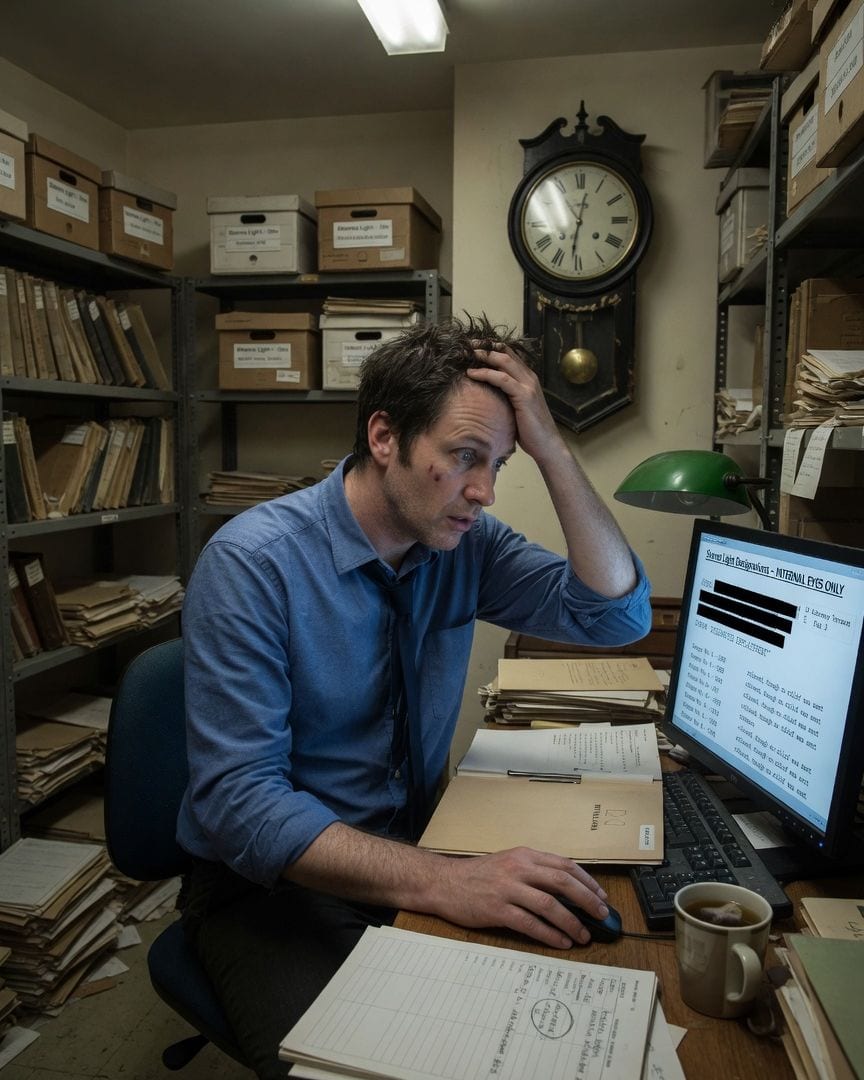
I found my street address in a century-old lighthouse file, printed decades before I lived there.
As a maritime archivist, my world revolves around forgotten lives and dusty ledgers. But the Skerne Light files broke that quiet rhythm, revealing a chilling pattern: 'Keeper number 6' relieved, though no relief was sent, repeating for decades. Now, an internal document with a strange code has led me to a redacted entry, revealing my own street address, decades before I ever lived there.
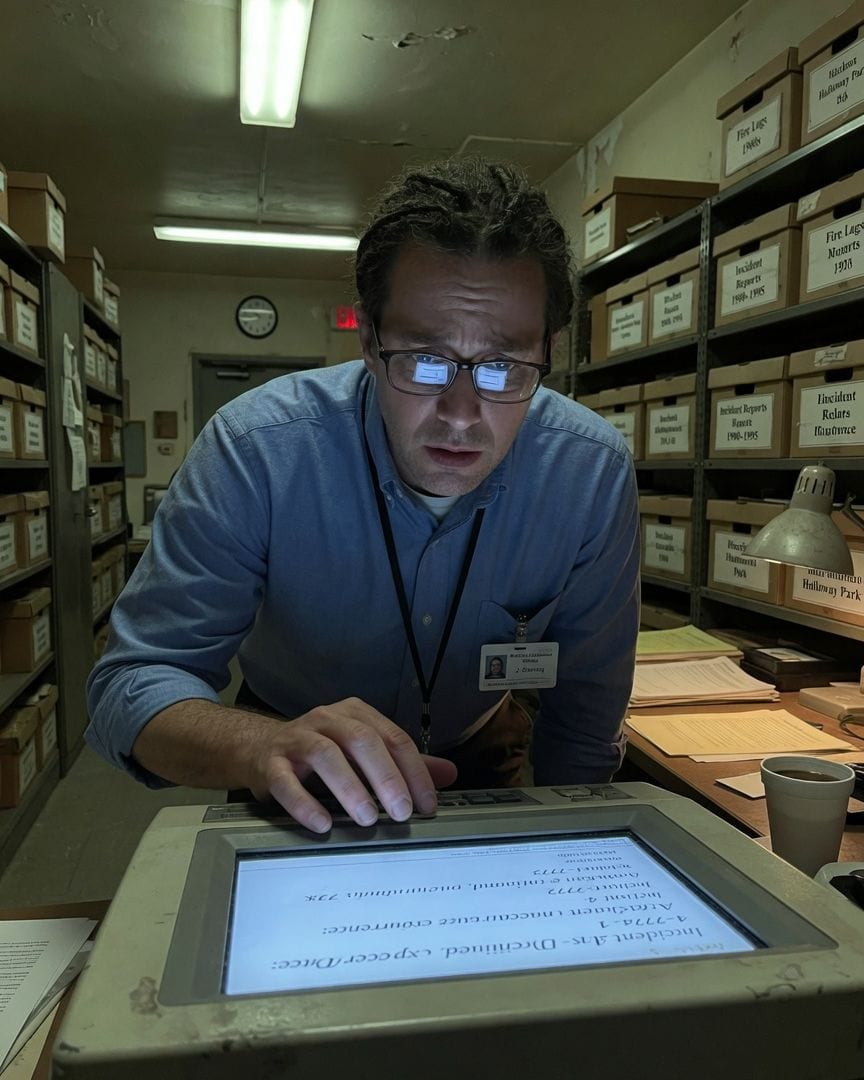
My old rope works fire log repeats the same 3:14am blaze, same incident number, across 1967, 1980, 1993. Each ends: 'origin undetermined, expect recurrence.'
As an Archival Digitization Officer, my days are spent scanning old records. I was numbly working through fire service logs when Incident 4-772 caught my eye: the same structural fire, same time, same number, repeated across different decades. Each entry ended with the chilling, identical phrase: 'origin undetermined, expect recurrence.'
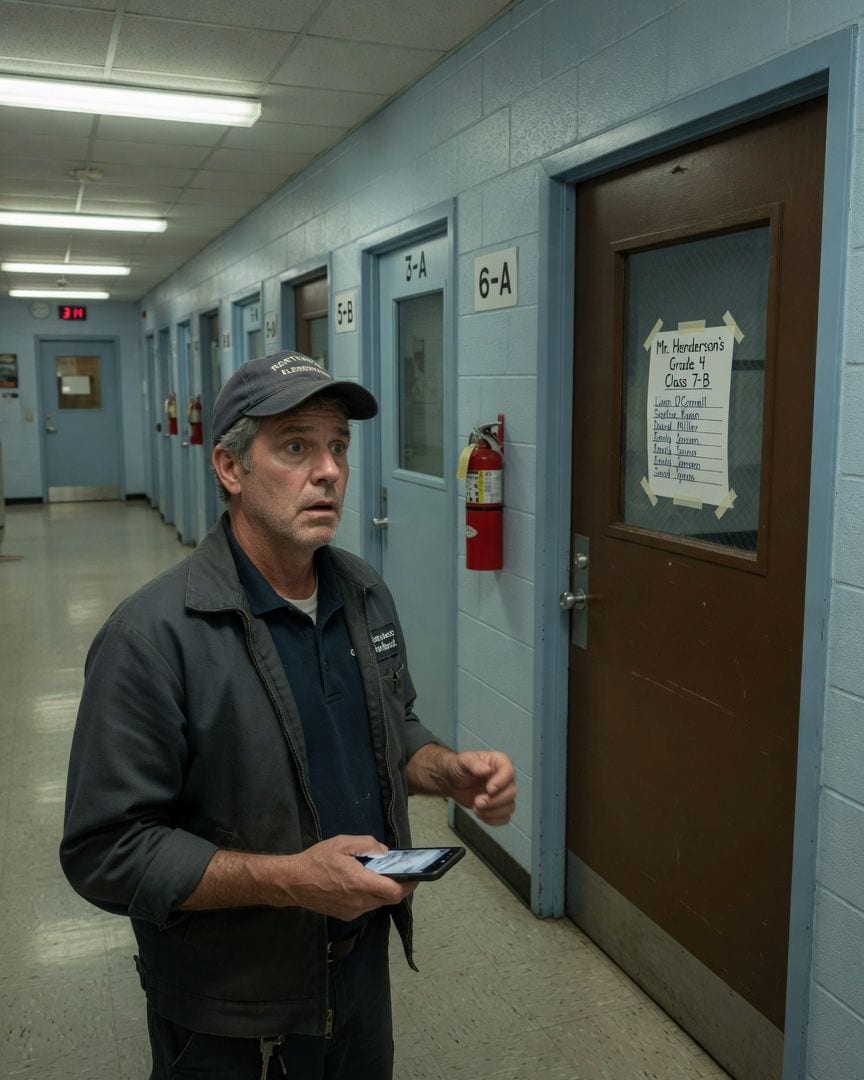
My classroom doors counted twenty-three last night. The extra one had a class list taped inside, names of children who've never been at this school.
My job as night caretaker at Northwood Elementary is routine: 22 classrooms, all accounted for. But one night, an impossible 23rd door appeared in the science block, nestled where only a wall should be. It bore a class list of students and a teacher who don't exist in any school record. Then, in an old logbook, I found that exact same list, dated 40 years ago.
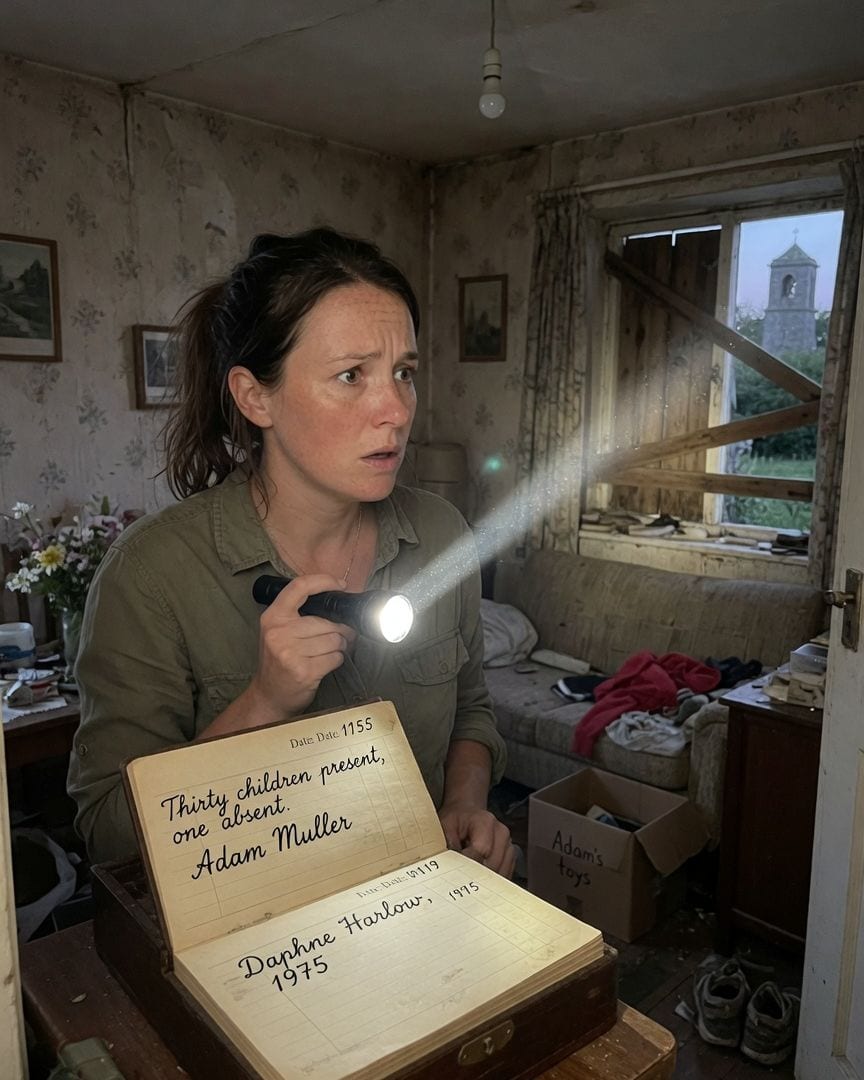
My son rang the old school bell. The attendance register, visible through the boarded window, now shows today's date and his name marked 'absent'.
We moved to a quiet village for peace, but my six-year-old son Adam found the old, boarded-up schoolhouse. Locals warned us, "Never ring the old school bell." That Tuesday, Adam rang it. Later, I saw his name on the school's long-closed attendance register, marked 'absent' in impossibly fresh ink from today.
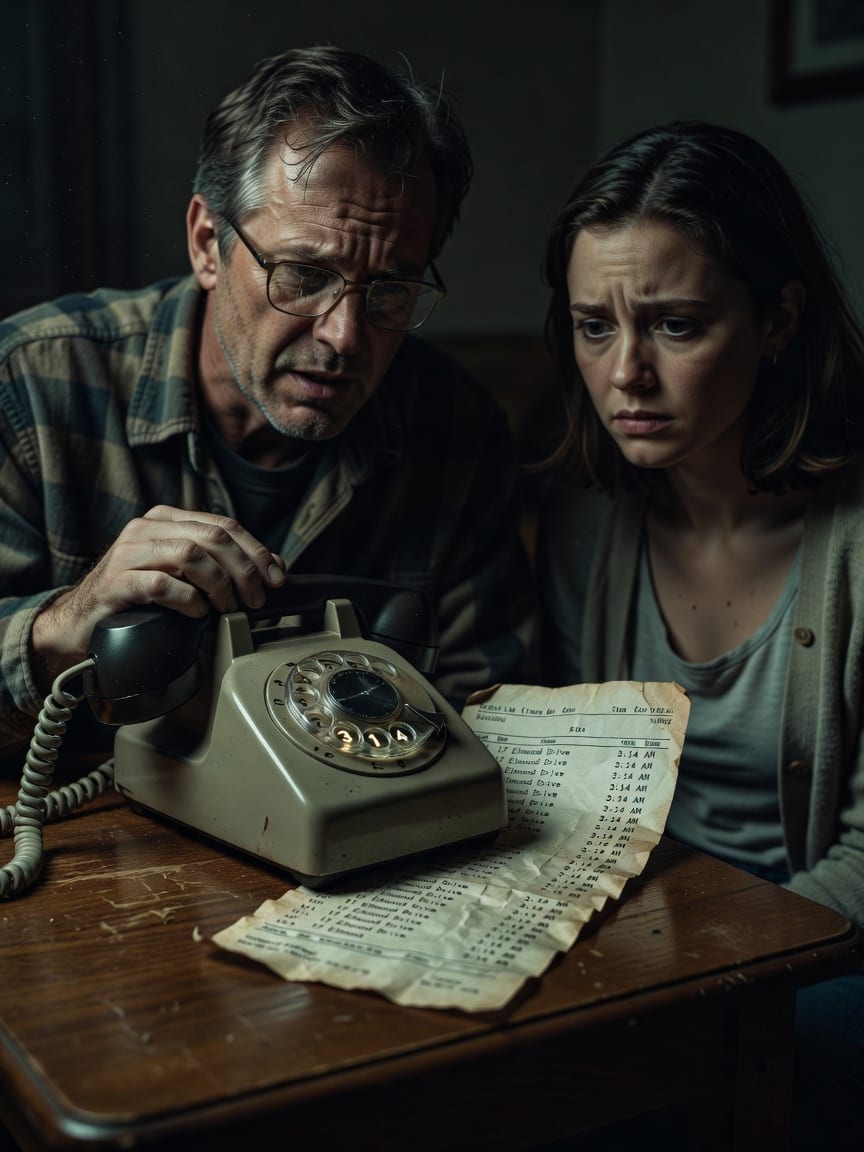
My phone bill itemised forty calls from my number to a house demolished in 1990. Each call at 3:14 AM, lasting eleven minutes. The bill arrived postmarked from a flattened building.
I expected the usual mobile bill, but my landline statement listed forty calls from my number to '17 Elmwood Drive.' That address was for a house torn down in 1990, a vacant lot I remembered from childhood. The phone company insisted the calls were legitimate, leaving me profoundly unsettled by the impossible charges.
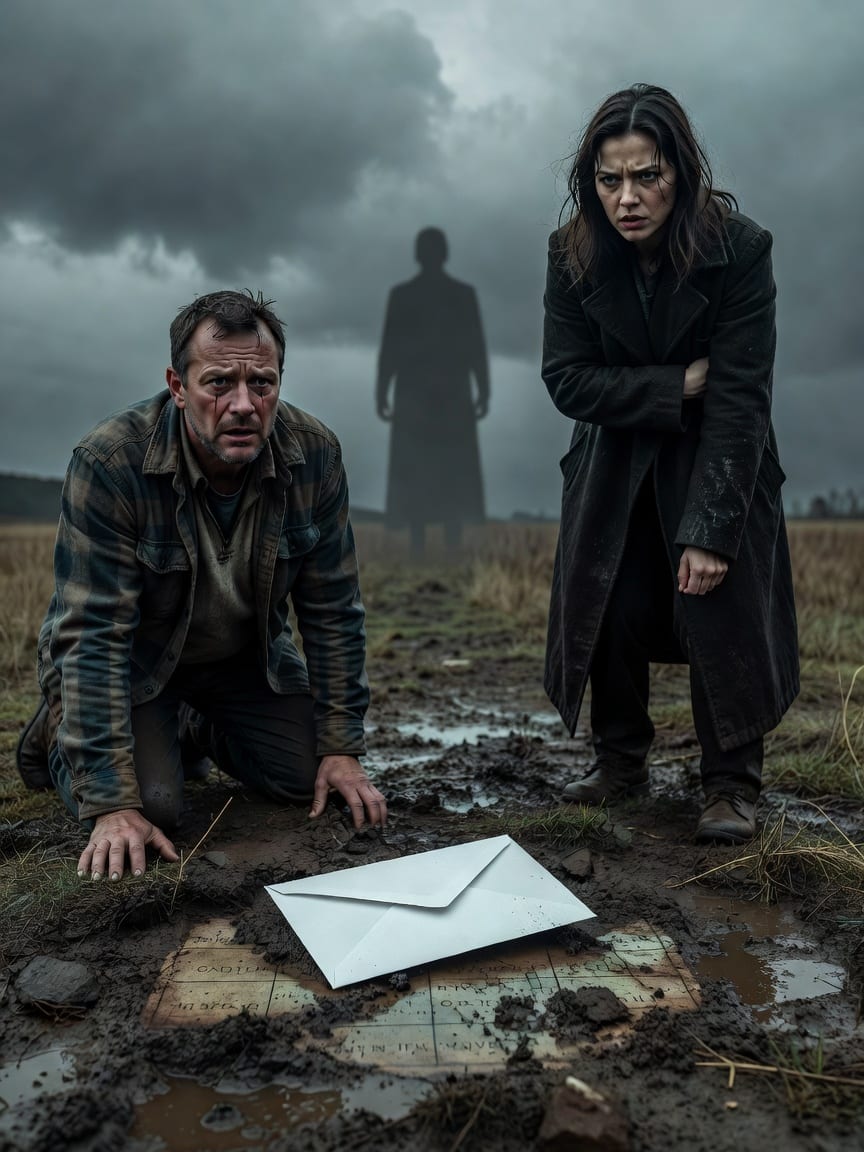
My mail carrier delivers polling cards to Nine Acre Field. It floods, they say. The tithe map shows nine family plots there.
As the new county archivist, I was used to quiet days poring over dusty records. But then I found an empty field, Nine Acre, was receiving current-year polling cards and utility notices for nine distinct addresses. When I investigated, I unearthed a perfectly crisp, current-year tax bill, buried in its soil, surprisingly warm against my fingers.