My face, with my mole, in a 1978 flood photo. I was born seven years later.
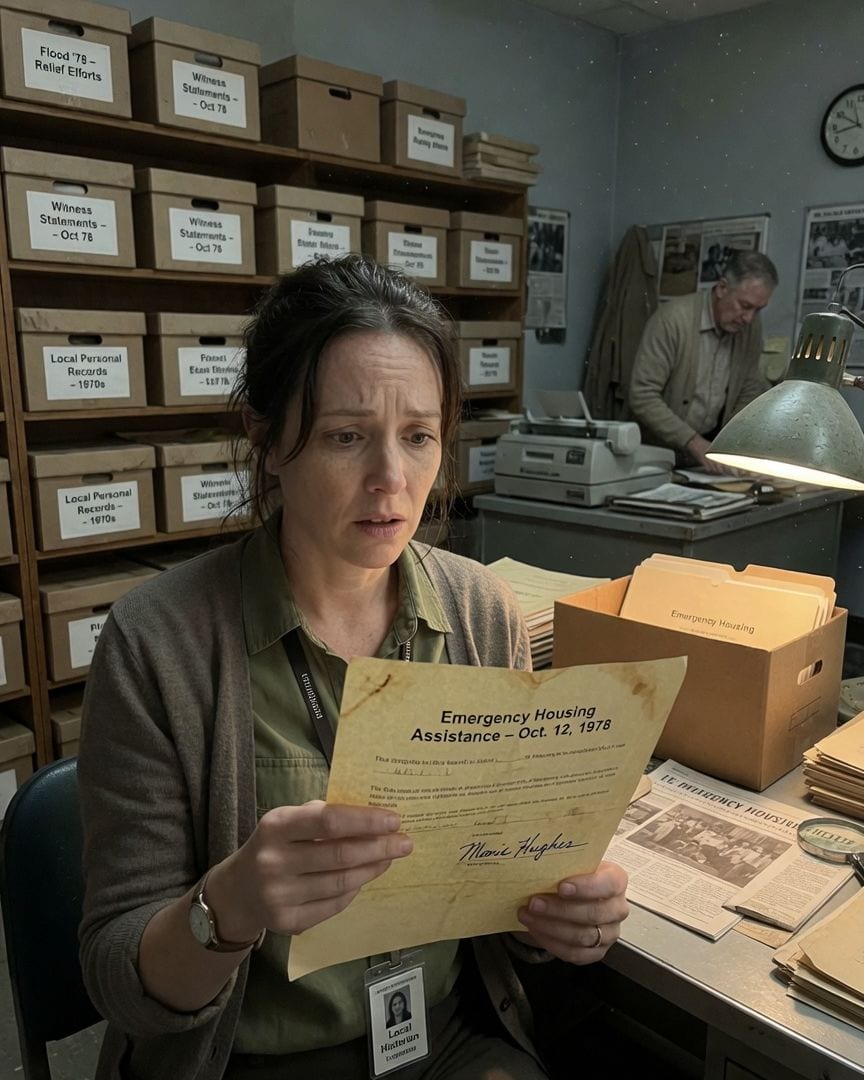
The air in the town archives always smelled the same: old paper, a faint metallic tang from the shelving, and that dry, cool dust that settles into everything.
I, Monica Hughes, a local historian and journalist, was buried in boxes, researching the devastating Ohio River Valley flood of 1978.
It was a slow, meticulous process, sifting through brittle newspaper clippings and official reports, trying to piece together the human cost.
My fingers brushed against a stack of local newspaper prints. One large, black-and-white photo caught my eye. A crowd of people, sodden and anxious, gathered on the muddy levee, watching the swollen, churning river.
I traced the faces, grim and weary. And then I stopped.
Second row, slightly left of center, a woman in a soaked rain slicker. Her hair plastered to her forehead, but her face was clear. My breath caught. My face. The small, distinct mole near my left eye.
The tiny, almost imperceptible crookedness of my front tooth, a detail only I usually noticed. My heart hammered against my ribs, a sudden, frantic rhythm. It couldn't be. I was born in 1985. Seven years after this photograph was taken.
Edmund Reynolds, the town archivist, a quiet man in his sixties with eyes that seemed to hold endless patience, was at his desk across the room. I brought him the photo, my hand shaking slightly.
He studied it, then retrieved the original negative from a heavy, climate-controlled drawer. He held it up to the light, then examined the print under a magnifying glass. "Original, Monica," he said, his voice soft, unhurried. "No sign of alteration."
He pointed to the faded caption beneath the photo. Among a list of names, labeled 'local residents observing relief efforts,' was 'Monica Hughes.' Spelled exactly like mine.
I tried to laugh it off, a strangled, hollow sound. "Bizarre coincidence, right? A distant relative, maybe." But the image, the mole, the name… it was undeniably me. The photograph burned into my mind, a cold, impossible fact.
The air in the archives suddenly felt heavier, the silence more profound, pressing down on me.
The image of my impossible past self clung to me, a persistent chill that no rational thought could dislodge. I couldn’t just let it go.
Over the next few days, I returned to the archives, ostensibly continuing my flood research, but now with a laser focus on anything and everything related to the 1978 flood and, more disturbingly, the name 'Monica Hughes.'
I sifted through boxes of yellowed relief effort documents, stacks of witness statements, and damaged property claims. Most were official typescripts, formal and impersonal.
Then, near the bottom of a box marked 'Emergency Housing – Oct. 78,' I found a handwritten form. It was a request for emergency housing assistance, dated October 12, 1978. My heart jumped.
The signature at the bottom was 'Monica Hughes.'
I stared at it, a knot tightening in my stomach.
It wasn’t just the name; it was the way the 'M' looped, a particular flourish at the start, the sharp, almost aggressive angle of the 'H,' the slightly elongated 's' that trailed off to the right – it was my own distinctive handwriting, as familiar as my reflection in a mirror.
I wrote the same way. I still wrote the same way.
I tried to rationalize it, running through every possibility I could conjure. A forgery? But why bother, and for such a mundane form? A distant relative with the same name and an identical script?
The odds of that felt astronomical, a mockery of chance. A cruel prank?
But the paper was old, brittle at the edges, the ink faded to a sepia ghost, and the form was buried deep in an untouched box, undisturbed for decades.
The mundane explanations felt thin, translucent, failing to cover the stark, impossible truth staring back at me.
The old wooden shelving around me seemed to creak, a long, drawn-out sound, as if the entire structure of the archive was sighing under the weight of some unseen burden.
I discreetly took a photo of the signature with my phone and sent it to a former colleague, Sarah Jenkins, a retired forensic document examiner I’d worked with years ago on a historical forgery case.
Her reply came back within hours, terse, professional, and chilling: "Statistically impossible for two unrelated individuals to produce identical signature characteristics. This is your hand, Monica. Unmistakably."
A cold dread settled deep in my bones, spreading outward from my chest. I returned to the archives, the old building feeling suddenly vast and watchful, the silence no longer comforting, but menacing.
Edmund Reynolds was at his usual desk, meticulously cataloging a tray of microfiches. But as I walked past, his gaze drifted to me, a faint, almost imperceptible shift in his calm demeanor, like a ripple on perfectly still water.
Driven by a desperate need to find any mundane record of a 'Monica Hughes' in 1978 – a driver's license, a utility bill, anything that might point to a normal, traceable person – I pulled another box from a shelf marked 'Local Personal Records – 1970s.'
Tucked into a folder of old library circulation records, brittle and brittle, I found a worn library card application. It was dated June 1978. The name 'Monica Hughes' was printed neatly in the space for the applicant's name.
And beneath it, in the space for applicant’s signature, was my own distinctive, unmistakable handwriting, loops and angles and all. The archive room felt suddenly enormous, the quiet pressing down like a physical weight, suffocating me.
The library card didn’t just add to the stack of impossible evidence; it shattered my last defense of rational explanation. This wasn’t a one-off anomaly, a fluke photo. This was a life.
A bureaucratic, documented, my life, lived seven years before I was born.
I dedicated every spare moment, every hour outside my day job, to the archives. I systematically unearthing every single mention of 'Monica Hughes' from 1978. The records began to paint a disturbingly complete picture.
A utility bill for a small apartment on Willow Street, postmarked January 1978. A voter registration card, signed and dated March. A receipt from the local general store for a new pair of boots, October.
Even a school enrollment form for a 'Vivian Carter,' listed as her younger sister, attending the elementary school that fall. Each document, mundane on its own, collectively built a phantom existence, a ghost of a paper trail.
And critically, almost every one of them bore my signature, my distinctive loops and angles, a silent, undeniable proof.
I even found a bank statement, quarterly, showing small, regular deposits and withdrawals – a normal rhythm of life, rent, groceries, a trip to the movie theater.
I tried to find a living 'Monica Hughes Sr.' or any family from that Willow Street address, but every lead dissolved into dead ends. The census records for the county showed no Monica Hughes born before 1985.
It was as if this 1978 Monica Hughes had simply appeared, lived a quiet, unremarkable year, and then vanished without a trace, leaving only her handwriting and a paper trail that insisted on her impossible, undeniable presence.
The lamplight on my desk, usually a warm beacon, seemed to hum with a strange, low frequency as I sorted the documents, a vibration I felt in my teeth.
My relentless digging, my obsessive pursuit of the ghost of myself, did not go unnoticed. Edmund Reynolds, the archivist, began to materialize whenever I was deep in my research.
He’d appear silently, offer seemingly innocuous help, gently suggesting I look in a different section, or remarking on the fragility of certain old files.
More than once, I realized he had subtly steered me away from specific boxes, his suggestions always delivered with that same placid, unhurried calm.
His calm eyes, which I had once found kind and reassuring, now held a detached observation that sent shivers down my spine. It was the gaze of someone watching an experiment unfold, rather than a colleague struggling with a mystery.
Then, one afternoon, while at home, a new layer of dread settled in. I received an anonymous email. The subject line was blank. The body contained a single, chilling sentence: 'Some histories are best left undisturbed.'
The sender's address was a string of random characters, untraceable. I felt a prickle on my skin, a sudden, acute awareness of being watched, not just in the archives, but everywhere.
My apartment, once a refuge, now felt thin-walled, every creak and groan a potential sign of intrusion.
I started noticing familiar cars parked a little too long down my street, shadows shifting too slowly in my peripheral vision as I drove.
The danger was no longer an abstract historical puzzle; it was personal, immediate, and quietly closing in.
Armed with a stack of her impossible 1978 records, my hands trembling slightly, I finally confronted Edmund. I laid them out on his desk: the flood relief form, the library card, the utility bill, the school enrollment form for 'Vivian.'
A lifetime, or at least a year, of an impossible person.
"Explain this, Edmund," I demanded, my voice tight, brittle. "Explain how I existed seven years before I was born. Explain my own signature on these documents."
He didn't flinch. He picked up the library card, tracing my signature with a slender, almost delicate finger. "A remarkable hand, Monica," he said, his voice as calm as still water, without a ripple of surprise or concern.
"Consistent through the years. A very distinctive loop on the 'M'." He didn't deny it. He didn't offer a mundane explanation.
Instead, he began to speak, not directly answering my questions, but weaving a chilling narrative about the town’s 'resilience.' He spoke of the floods as "cleansing events," and how, afterwards, the town always seemed to "re-establish its core."
He said that certain "patterns" emerged, certain "threads" that needed to be rewoven into the fabric of the community. "Some names," he explained, his gaze distant, "are essential for the town’s continuity. They reappear.
Like the river, the town itself is cyclical. It rebuilds, it renews, and certain elements are always central to that process."
He walked to a locked, ornate cabinet behind his desk, its dark wood gleaming faintly in the dim light. He retrieved an ancient, heavy ledger, bound in dark, scuffed leather, its spine thick with age.
He placed it on the desk between us. Its pages were thick, yellowed, filled with meticulous copperplate script, each letter a work of art.
The air in his office suddenly felt thick, heavy, as if the walls themselves were listening, absorbing his every word.
He opened it, slowly, deliberately, to a section marked '1978 Flood Re-entries.' My eyes scanned the page, my breath catching in my throat. There, among a list of names, in the same elegant script, was 'Monica Hughes.'
And next to it, her signature – my signature – and a chilling, clinical note: 'Re-entry Cycle 7. Role: Witness/Recorder.'
My breath hitched, catching painfully in my chest. "Re-entry Cycle?" I whispered, the words tasting like ash, like something dredged up from the deep.
Edmund nodded, his gaze distant, as if looking through me, or perhaps through time itself. He turned the heavy pages of the ledger, his fingers unhurried, moving past the 1978 entries. He showed me the '1947 Flood Re-entries' section.
And there, again: 'Monica Hughes,' with her assigned role. And beneath it, 'Vivian Carter,' and even 'Edmund Reynolds,' listed with similar roles, similar chilling notes.
The same distinctive signatures, slightly different hands, yes, but undeniably the same underlying pattern, the same loops and angles, a familial script across generations.
The dread intensified, morphing from confusion to a cold, horrifying understanding. This wasn't just a record of the past; it was a blueprint, a repeating cast of characters in a dark, ongoing play. A script for lives.
Edmund then slowly, deliberately, turned to the very last page of the ledger. It was blank, untouched by ink. But at the top, a faded heading, almost too faint to read, declared: 'Next Re-entry Cycle: [Date in the near future].'
And beneath it, in faint, almost ethereal script, my name, 'Monica Hughes,' was already etched into the paper, waiting for its turn.
The ancient ledger seemed to radiate a cold, deep hum, a vibration I could feel in my teeth, through the soles of my feet.
Edmund watched my face, a flicker of something akin to sorrow, or perhaps just profound resignation, in his usually placid eyes.
"The town needs its anchors, Monica," he explained, his voice barely above a whisper, yet resonating deeply in the quiet office. "Especially after a great loss, a disruption like a flood. We don't understand how it works, precisely.
But the pattern ensures stability. It ensures the town always re-establishes its core, its identity."
He gestured to the open ledger, then to the shelves of other books and files that lined the walls. "These aren't just records of who was here. They are the instructions for who will be here.
The memory of the town isn't just stored; it’s re-enacted." He revealed that the archival institution was not merely preserving history, but actively facilitating its recurrence.
He showed her even older ledgers, dating back centuries, each detailing similar 're-entry cycles' after fires, plagues, and other disasters that had threatened to erase the town.
The names, the roles, the very handwriting, were echoes across time, a terrifying continuum.
"I am one such anchor," Edmund admitted, a ghost of a smile touching his lips. "Always the archivist. And you, Monica Hughes, are always the witness, the recorder.
Your role is to find the inconsistencies, to document the truth, and in doing so, to solidify the pattern for the next cycle.
You were always scheduled for this cycle, your birth a re-manifestation, guided by these very books, by this institution." Every impossible clue, every contradictory record, every chilling detail I had uncovered, clicked into place with a horrifying, perfect coherence.
The light in the room, filtered through thick, old glass, seemed to take on an amber hue, making everything feel preserved, unchanging, frozen in an endless loop.
A wave of nausea washed over me, cold and debilitating. "No," I choked out, pushing back from the desk, knocking my chair askew. "I'm not a pattern. I'm me. I’m Monica Hughes, born in 1985."
I tried to flee, to run from the suffocating truth, from the suffocating history, but Edmund moved with an unsettling grace, blocking my path to the door.
"There is no escaping the pattern, Monica," he said, his voice gentle but firm, resonating with an authority I hadn’t heard before. "It is inherent to the town, to its very soil, its water.
These records merely give it form, structure. They tell the river where to flow."
He led me away from his office, deeper into the archives, down a narrow, dusty corridor I’d never noticed before, to a deeper, darker vault, a place I hadn't known existed.
The air in the vault was still, heavy, almost viscous, as if time itself had slowed to a crawl around us.
Inside, on a pedestal, rested a single, ancient, unbound ledger. Its pages were made of an almost translucent material, not paper, glowing faintly in the dim light. He opened it, carefully, to a page marked '1985.'
There, in script even older and more elegant than any she'd seen, was an entry: 'Monica Hughes. Re-entry Source: 1978 Flood Cycle. Guardian: Edmund Reynolds.'
And then, a list of details: her birth date, her physical traits, even the mole and the crooked tooth. But the parentage listed was not my own. My parents weren't my parents.
"This is your true birth record," Edmund said, his voice resonating in the quiet vault. "The record of your re-patterning." He reached out, his hand closing gently around my wrist.
In his touch, I felt a profound, inexplicable sense of belonging, a deep, resonant pull that settled into my bones.
It was as if I had always known this, a hidden truth now finally brought to the surface, and I realized, with a chilling certainty, that I couldn't, didn't want to, resist.
I continued my work at the local historical society. My movements were more deliberate, my gaze often fixed on something unseen, something beyond the yellowed pages and dusty shelves.
I still lived in my apartment, went through the motions of a normal life, but the world outside felt slightly less real, a stage for an unending play, a continuous re-enactment.
I wrote my local history pieces, but they were now imbued with a quiet reverence for the town's unyielding continuity, the invisible threads that bound generations, the cycles that held us all.
The old records no longer contradicted me; they defined me, gave me purpose. I maintained a meticulous order, ensuring every document, every entry, was precisely where it belonged, each one a vital piece of the ongoing pattern.
The archive, once a place of discovery, had become a place of duty.
The old building now seemed to breathe with a deep, slow rhythm, a living entity I was now part of, its pulse beating in time with my own.
One quiet evening, alone in the archives, the familiar scent of old paper and dust settling around me like a comfortable blanket, I was cataloging a box of newly acquired, unremarkable town ledgers.
I pulled one out, its cover blank, its pages untouched, waiting. I opened it to the first page, the paper pristine, smelling faintly of clean linen. It was a birth record. Dated for next year.
For a child named 'Felix Prescott.' I carefully, methodically, took out my fountain pen, its nib poised over the blank line for 'Re-entry Source.'
A year later, a young couple, new to town, visited the historical society, looking for information on local schools. The archivist, Monica Hughes, greeted them from behind her desk, her gaze steady, a faint, knowing smile touching her lips.
"Welcome," she says. "We've been expecting you."
If this one got to you
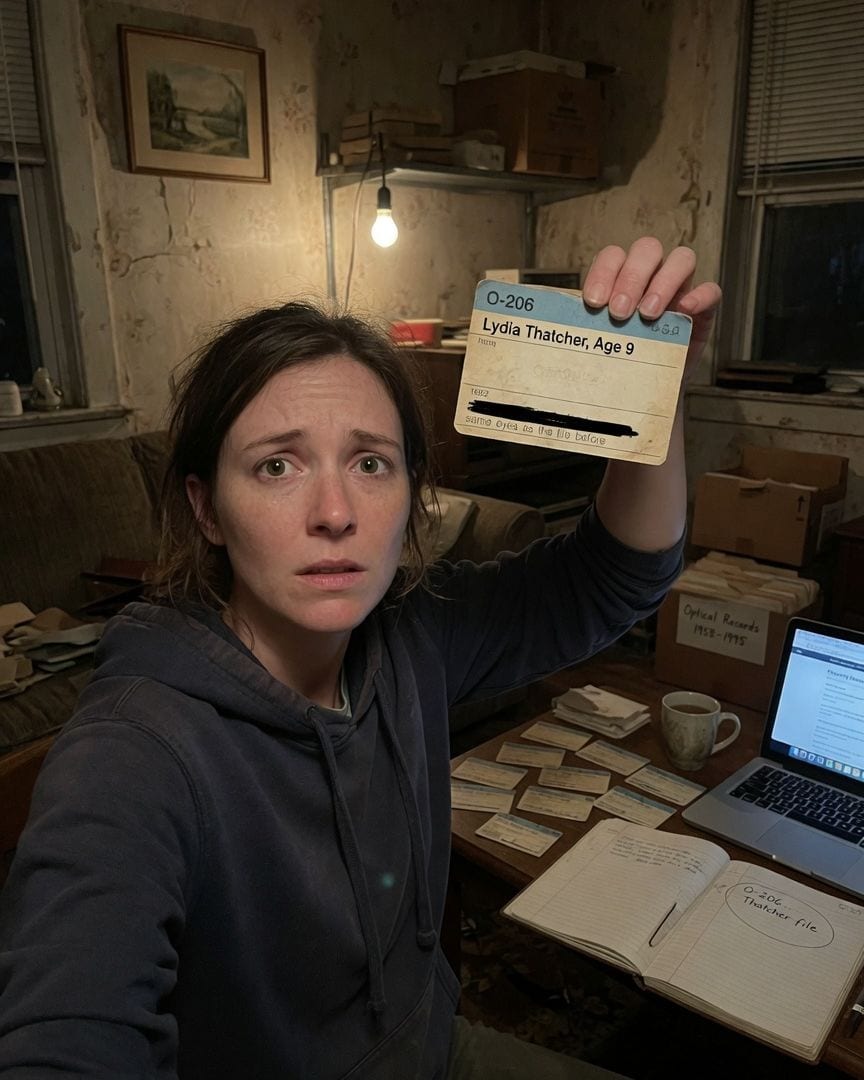
My own optical card is dated 1962, with my name on it. I wasn't born until 1993.
Sifting through old patient files from my former optical practice, I found my own O-206 card. It had my name, Lydia Thatcher, and my current home address printed on it. But the card was dated 1962, decades before I was even born, and a redacted note mentioned 'same eyes.'
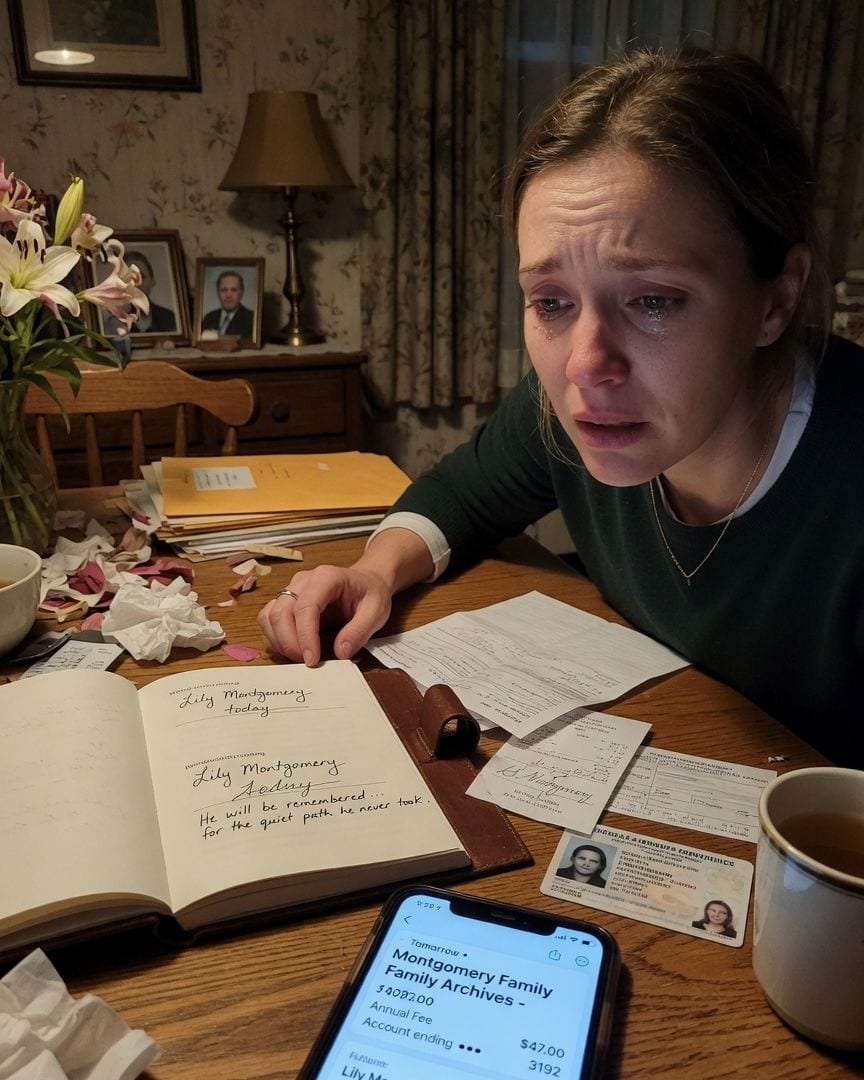
My handwriting was in the condolence book. Dated before my uncle died. Words I'd never choose.
At Uncle Howard's funeral, grief-stricken, I signed the condolence book. But later, flipping back through the pages, I found my own distinct handwriting on an entry dated the previous morning—before he had even died. The words beneath my name were chilling, a judgment I would never make.
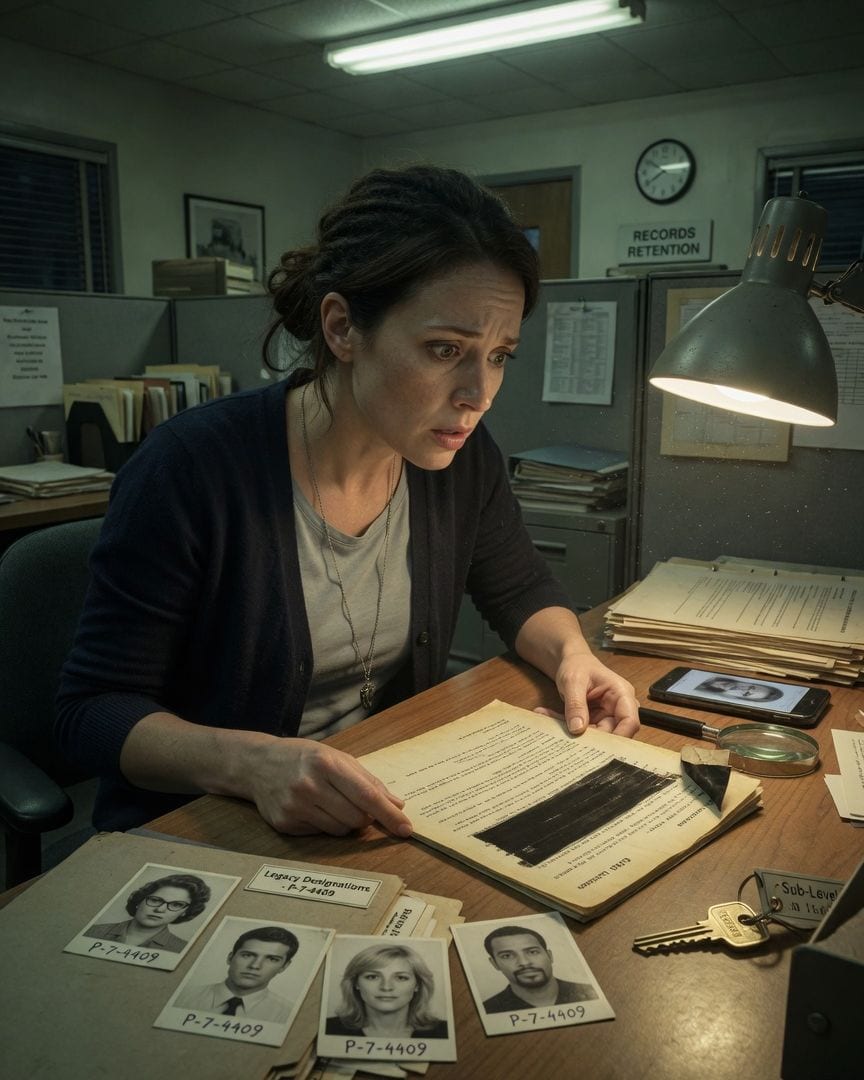
My passport file has four strangers' faces in it. They all share my number, issued since 1966, and none were ever surrendered.
I went to renew my passport, expecting a routine process. Instead, the clerk found four prior applications under my number, each with a different name and face, all 'issued and not surrendered.' Digging deeper, I uncovered a redacted memo that linked one of these mysterious designations to my own childhood street and my mother’s maiden name, years before I was even born.
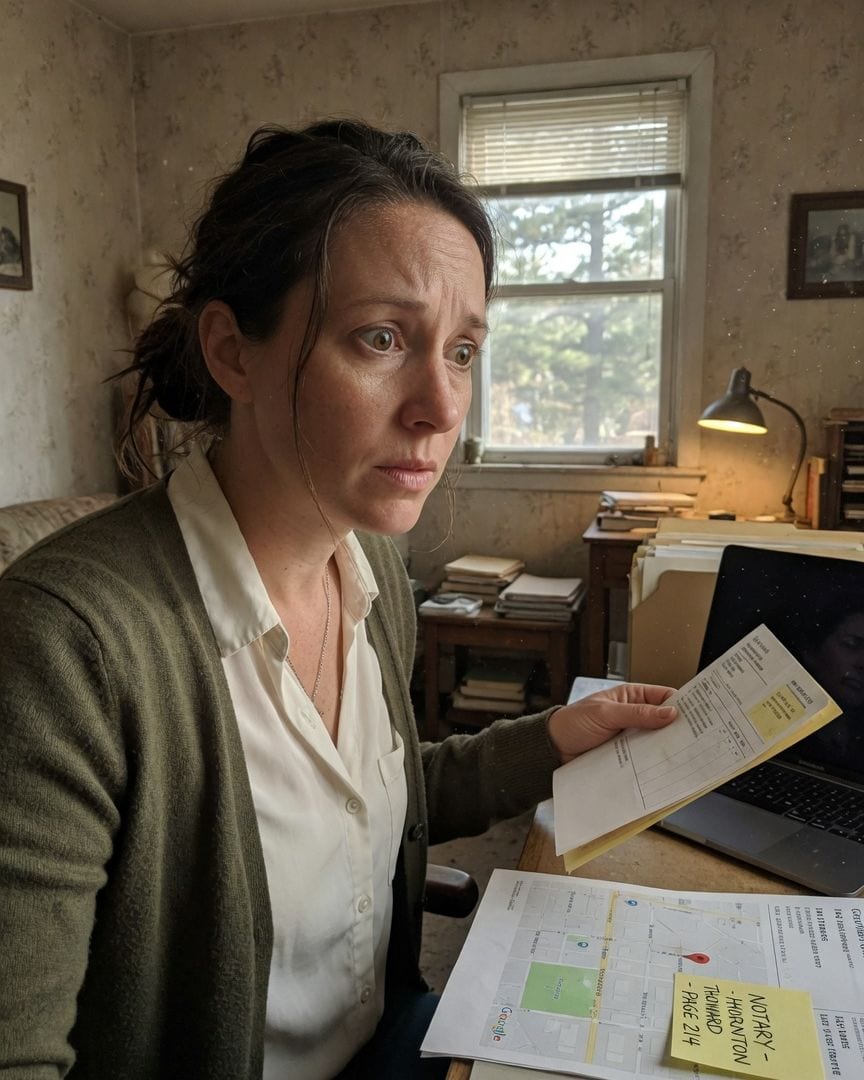
My signature is in a notary's book for an accident I wasn't in. I've never even met the man.
My name is Janet Caldwell, and my life is perfectly ordinary. Or so I thought, until a notary's register revealed my distinct signature on a document. It was dated May 14th, 2014, a day I was confined to a hospital bed, miles away.
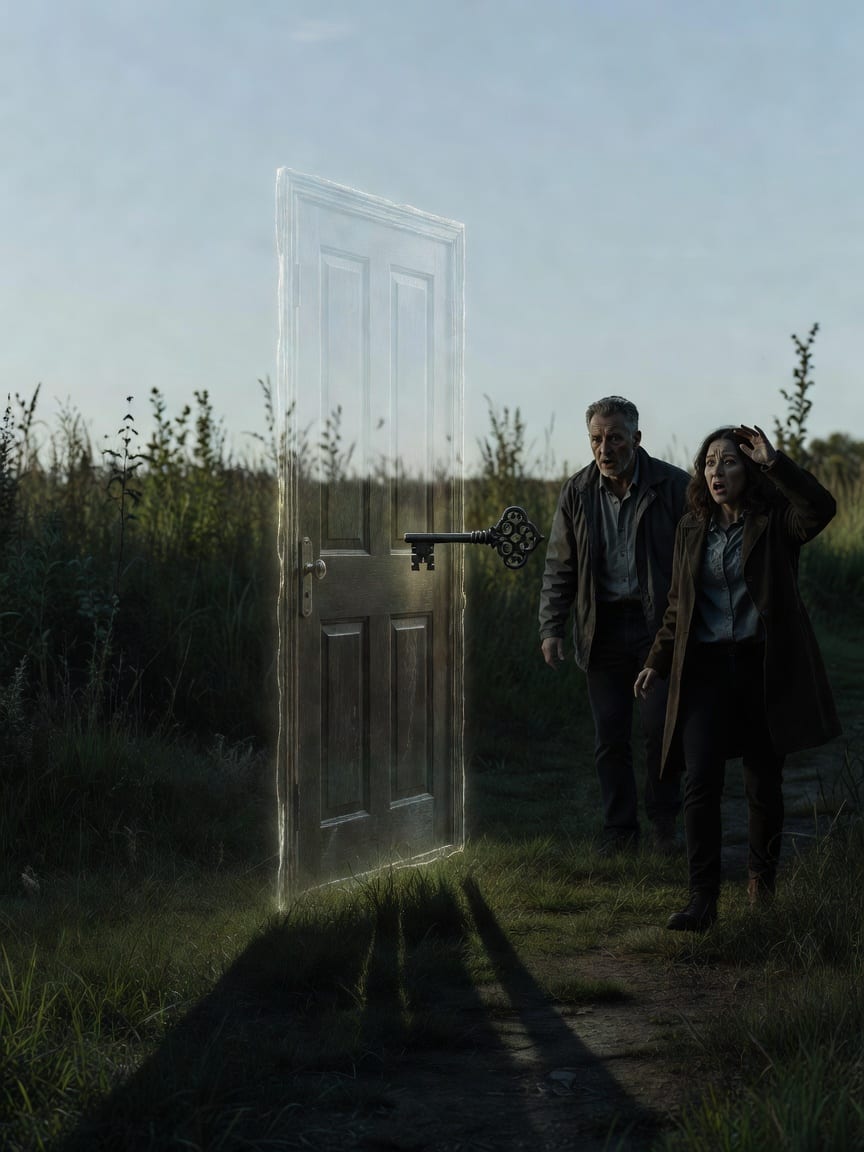
My name was on a package lodged in 1974. I wasn't born until 1985. Inside was a key and a note: 'You know which door. Not yet.'
I'm Elena Radcliffe, 38, and a solicitor's letter just arrived for me about a package. The firm's records state it was lodged in 1974, years before I was born. Now I've found an old newspaper article reporting a woman with my exact name vanished that very year.
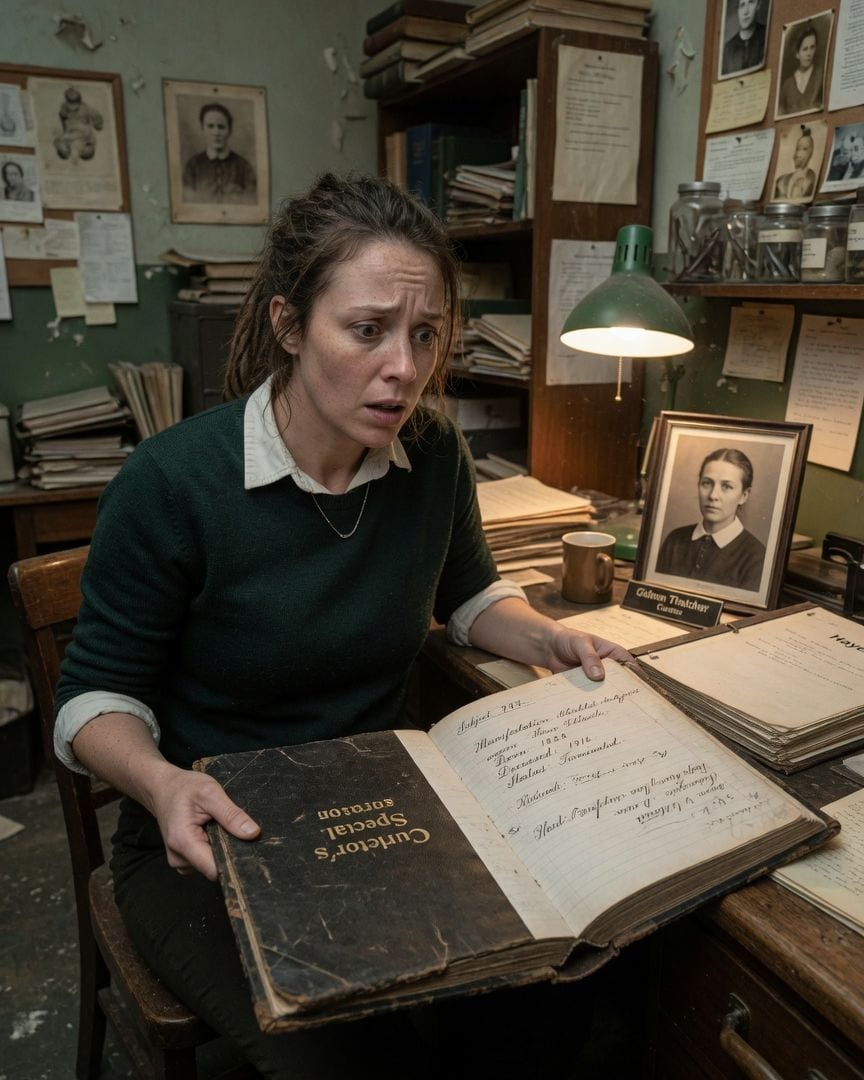
My face, cast in plaster in 1888, stares back from a museum display. They DNA tested a hair from inside the mask. It’s me.
The hushed, cool air of the Museum of Medical History always gave me a strange reverence, until I stopped. Inside a display case, among other plaster death masks, was one labeled 'Theresa Whitfield, 1888.' It was undeniably my face, exact in every detail, down to the faint bump on my nose.