My father takes his coffee black now. He put three sugars in it every morning of my life. He looks at the sugar bowl like it's from another man's house.

My father, Gideon Bishop, came back from the sea three weeks ago, eighteen months after his boat, The Sea Siren, was found derelict near Blackwater Shoals. The town had given up, posted his obituary, but I hadn't.
Every day felt like an open wound, the horizon a mocking line. Then the call came: he'd been found, alive, on an old fishing trawler drifting near the same shoals.
Relief had washed over me, a physical ache that buckled my knees. My dad. He was back. I’d cried until I was sick, then laughed until my throat was raw. It felt like a miracle.
Until the first morning coffee. Every morning of my life, my father took his coffee with three sugars. It was his ritual, a small, sweet constant, as predictable as the tide.
So I set the ceramic sugar bowl beside his cup, a small gesture of normalcy returned, a silent welcome home. He picked up his mug, still steaming, took a slow sip of the black liquid.
His eyes, usually crinkled with warmth, flickered to the sugar bowl. Not at me, not at the sugar, but at the bowl itself.
His gaze was flat, distant, as if I had handed him something from another man's house, a relic he’d never seen before, or worse, something he’d forgotten how to use.
He didn't say a word, just took another sip, his coffee black, unsweetened. A cold knot tightened in my stomach. I tried to rationalize it – trauma, the ordeal, changed tastes from eighteen months lost at sea.
But the certainty, a cold, hard stone, began to form: this simple, small thing was profoundly wrong.
The 'wrongness' of the coffee habit became a constant, quiet hum beneath the surface of our days. He seemed the same, talked the same, his voice the familiar rumble I'd longed for, but every small detail felt like a performance.
A subtle shift in his humor, a beat too long before he responded to a shared memory. Nothing I could put my finger on, just an unsettling feeling, like listening to a song played in the wrong key.
One afternoon, needing to ground myself, I decided to clean out his study, a room untouched since he’d left. Dust motes danced in the sunlight, illuminating a life suspended.
The smell of old paper, pipe tobacco, and sea salt hung heavy in the air. Tucked under a pile of old charts, charts I’d helped him fold as a girl, I found it: his fishing journal.
A sturdy, leather-bound book he’d kept religiously for decades, detailing catches, weather, and the subtle shifts of the sea. It was waterlogged, pages warped and stained with what looked like brine, but still intact, remarkably preserved.
I carried it to the window seat, carefully turned the brittle pages, a wave of nostalgia washing over me as I recognized his familiar script.
Entries about hauling in cod, the sting of salt spray on his face, the quiet camaraderie of the deep. Stories of storms weathered and impossible catches. Then, towards the back, a page. My breath hitched.
It was dated a full three months after he’d gone missing. My father, lost at sea, gone. This entry should not exist.
The handwriting was unmistakably his, etched with his familiar heavy strokes, but the ink was strangely fresh, almost vibrant against the faded, sea-stained paper of the preceding pages.
The entry didn't describe fish or weather, but a 'darkness that breathes,' a 'singing cold,' and then, in a scrawled, crude sketch, a symbol I didn't recognize, followed by a description of 'the stone, smooth and black, that hums with the deep.'
It detailed an impossible encounter, a place beyond charted waters, and a 'gift' offered by something ancient and vast. My hands trembled, the brittle paper rustling.
This wasn't just a journal; it was a ghost, a message from beyond the grave. My father was gone for eighteen months. This entry should not exist.
The sketch in the journal, crude but distinct, showed a smooth, dark, ovoid stone.
The description of it 'humming' resonated with an unplaceable, low thrum I’d sometimes felt in the house since Gideon’s return, a vibration I’d dismissed as old pipes or my imagination.
But it was the symbol, intricately carved into the stone in the sketch, that made my blood run cold.
Just yesterday, while helping Gideon mend a torn fishing net down by the docks, I’d noticed a new scar on the back of his right hand, a small, pale mark I couldn’t remember seeing before.
It was faint, almost imperceptible, hidden by the weathered skin, but it was undeniably there. And it was the exact shape of the symbol in the journal sketch.
My heart hammered against my ribs, a frantic drum against the sudden, crushing weight of certainty. This wasn't just wrong; it was impossible.
I looked up from the impossible journal entry, my eyes drawn across the living room as if pulled by an invisible string. 'Gideon' was sitting in his armchair, reading the evening newspaper, the familiar rustle of pages the only sound.
He lowered it slowly, deliberately, his gaze meeting mine. A faint, unreadable smile played on his lips, and his eyes, usually warm with paternal affection, glinted with an unnerving, knowing stillness.
He hadn't said a word, hadn't moved, but he was watching me, a predator calculating its next move.
The silent watch from 'Gideon' was a cold, constant pressure. I pretended to be engrossed in the journal, my fingers tracing the impossible date and the chilling sketch, while every nerve ending screamed. I couldn't confront him, not yet.
Not without more. I needed answers, something concrete to anchor this spiraling dread, something that ruled out my own hysteria. The journal entry mentioned 'Blackwater Shoals, where the currents drag the lost deeper.' I knew that stretch of sea.
It was notoriously treacherous, a graveyard for ships, a place even the most seasoned fishermen gave wide berth.
I decided to visit Bernard Easton, an old family friend and a retired fisherman who knew the local waters like the back of his hand.
He’d fished those shoals for fifty years and had been a close friend of my father’s since they were boys. If anyone knew the old stories, it was Bernard.
I found him mending a net outside his weathered cottage, the smell of salt and tar thick in the air, a gulls’ cry overhead. He looked up, his face creasing into a welcoming smile. 'Kathleen!
Haven't seen you since Gideon came back. How's the old sea dog doing?' I forced a smile. 'He's... getting there. Just adjusting.'
I casually brought up the shoals, asking about any old legends or unusual occurrences, trying to keep my voice light. Bernard's jovial expression tightened. He paused his work, his gnarled hands still on the twine.
The air seemed to grow heavier. 'Blackwater Shoals,' he rumbled, his voice lower than usual. 'Best to leave that place alone, Kathleen. The sea holds its secrets, and sometimes… sometimes it gives back more than it takes.'
He looked out at the distant, grey horizon, his eyes troubled, lost in some old memory. The wind picked up, rattling the loose panes in his windows.
I pressed him, mentioning the journal, the strange encounter, keeping it vague. He grew visibly uncomfortable, shaking his head. 'Your father was a good man,' he said, his voice flat. 'What happened to him was a tragedy.
No good comes from digging up old ghosts, especially from that stretch of water. Some things are better left buried.'
He didn't offer to elaborate, just kept repeating his warnings, his gaze darting nervously towards the road that led back to town, as if expecting someone. His evasiveness, his fear, spoke volumes.
It wasn’t a dismissal; it was a confirmation of something darker, something he knew but was terrified to speak of.
Bernard's unease had been palpable, a silent alarm bell that clanged inside my head. After my visit, the feeling of being watched intensified.
It wasn't overt, no lurking shadows or direct confrontations, but a creeping sense of presence, like a cold draft that followed me from room to room.
I'd leave a book on local maritime legends open on my nightstand, the pages marked with a bookmark, only to find it neatly closed, slipped back into the bookshelf the next morning.
My laptop, which I'd used to research ancient symbols and deep-sea phenomena mentioned in the journal, would sometimes be found with its browser history mysteriously cleared, all my careful searches wiped clean.
Once, I walked into the living room and saw 'Gideon' standing by the window, his back to me, staring out at the sea, utterly still.
As I entered, he turned, a flicker of something unreadable, something cold and ancient, in his eyes before his usual placid expression settled back into place.
'Just enjoying the view, darling,' he said, but his voice, usually warm with that familiar rumble, felt like a hollow echo, a perfect mimicry with no soul behind it.
A few days later, the quiet observation became too much. I called Bernard again, hoping to push him further, tell him what I'd found in the journal.
He answered, but his voice was strained, hushed, as if someone was listening on the line. 'Kathleen,' he said, 'I can't talk about this. Not now. Not ever. Just… leave it be. For your own good.'
He hung up abruptly, the dial tone a shrill accusation, leaving me with a chilling certainty: someone had gotten to Bernard. Someone knew I was digging, knew I was close.
The danger was no longer just a creeping dread in my home; it was a tangible threat, reaching out, silencing the few people who might hold answers. It was real. It was here.
The silence from Bernard was a heavier weight than his evasions. It wasn't just fear now; it was complicity, or resignation. I knew I had to act, before he was silenced permanently.
I drove back to his cottage, the journal clutched in my hand. He looked pale, haggard, when he opened the door, his eyes darting to the empty road.
'Bernard, you have to tell me,' I pleaded, pushing the journal into his hands, open to the impossible entry. 'This is my father's writing, but it's dated after he was lost. And look at this symbol, this stone.
What the hell happened?' He stared at the page, his face a mask of old, terrified memories. 'You shouldn't have seen this,' he whispered, his voice cracking, barely audible above the rising wind. 'They told me to keep quiet.
Said it was for the best.'
I pushed, my voice sharp with desperation. 'Who told you? What happened? My father was found on a derelict boat, not his own. What was he doing there? Why won't he talk about it?' Bernard finally broke.
He ushered me inside, his hands trembling as he poured us both strong, dark tea that I couldn't bring myself to touch.
'Your father's boat, The Sea Siren, was found empty, abandoned, months before he was,' Bernard began, his voice barely a whisper, haunted. 'The currents out by Blackwater are tricky. She was a wreck, half-sunk. We all assumed he was gone.
But a year later, another derelict, an old trawler from the 50s, washed up near Blackwater Shoals. And Gideon… he was on it. Alive. But… different.'
Bernard's eyes were wide, bloodshot, haunted. 'He was clutching something, Kathleen. A stone. Smooth, dark, just like the one in that sketch. The authorities, they called it a piece of ballast, a geological anomaly. Dismissed it. But I saw it.
It hummed, a low vibration in the air, just like the journal says. And Gideon… he never spoke of it. Never. Acted like it was just another day at sea, no memory of being lost, nothing. Just… back.'
He took a shaky breath, the mug rattling in his hands. 'It's happened before, you see. Not often. But every few generations, someone goes missing in the Shoals. And then, sometimes, someone comes back. Not always them, not quite.
A habit reversed. A memory off. And always… always a stone.' He pointed to the symbol in the journal, his finger trembling. 'That mark. I’ve seen it before. On other artifacts, found by other fishermen, dismissed as curiosities, too.
The sea… it gives back, but not always what it takes. Sometimes, it sends back a copy.' The journal entry, the coffee, the scar, the strange hum – it all clicked into a horrifying, coherent picture.
My father hadn't just changed; he'd been replaced.
Bernard slumped back in his chair, exhausted, but the confession had ignited a new, colder fear in me, one that spread like ice through my veins. 'Other artifacts? Other marks?' I demanded, the words tumbling out.
'You mean this isn't just about my father? This is… a pattern?' Bernard nodded slowly, his gaze distant, lost in the shadows of the past. 'My own grandfather saw it.
Knew a man who came back from the Shoals, perfectly fine, except he started carving strange symbols into every piece of wood he touched. Died a few years later, still carving.
They found a stone, just like yours, buried in his garden, humming with a low vibration.' He paused, then stood, shuffling to an old, dusty chest in the corner, the wooden floorboards groaning under his weight.
He rummaged through yellowed newspapers and forgotten fishing gear, the scent of mildew and old fish rising, until he finally pulled out a thick, leather-bound album.
He flipped through brittle, sepia-toned pages, until he found it. An old, faded photograph. A group of burly fishermen from decades ago, laughing, holding up a record catch on a sun-drenched beach.
But in the background, impossibly clear, stood another figure. A man who looked exactly like my father, Gideon. Same build, same distinctive profile, the way he held his head.
But he was dressed in old-fashioned, rough-spun clothes, and he was standing not on the beach, but knee-deep in the churning surf of Blackwater Shoals.
And in his hand, held aloft, was a smooth, dark, ovoid stone, its outline unmistakable even in the blurry image. Bernard shoved the photo into my hands, his voice a ragged whisper, his eyes wide with desperate truth.
'It's been doing this a long, long time, Kathleen. It doesn't just take. It replaces.'
The photograph, brittle with age, shook in my trembling hands. It wasn't just my father; it was generations. The dread became a cold, solid certainty, freezing me from the inside out. Bernard, his voice raspy, confirmed my unspoken fear.
'That's not your father, not really. That's another… return. From the same place, the same deep. The Shoals are a thin place, Kathleen. A place where things from elsewhere can slip through.'
He looked at me, his eyes full of pity and terror. 'They take what's lost, and they send back… an echo. A perfect copy, almost.'
He explained that the entity wasn't a monster in the traditional sense, not evil with malice or hunger.
It was simply a mimic, a perfect, cold imitation, drawn to the familiar warmth of human connection, trying to fill the void it left. The stones, he said, were not just markers.
They were anchors, a piece of the entity's true form, left behind to signify its presence, or perhaps, to maintain the connection between its world and ours. 'It learns,' Bernard said, his voice barely a whisper. 'It watches.
It takes on the form, the memories, the voice. But there are always tells. A habit reversed. A forgotten fear. A new scar that shouldn't be there, on the wrong hand. And always, the stone.'
He pointed to the symbol on the stone in the old photograph, then to the scar on the back of my hand. 'It marks them. And it marks the ones who know.'
My own scar, my father's coffee, the impossible journal entry – every clue now clicked into a horrifying, coherent pattern.
The entity didn't just mimic; it observed, it learned, and it left behind traces of its ancient, unknowable nature, a pattern woven through the very fabric of our town's history, always emerging from the treacherous embrace of Blackwater Shoals.
Confrontation was impossible. What would I say? 'You're not my father, you're an ancient mimic from the deep'? He would deny it, of course, his placid mask unyielding.
Or worse, his placid mask might slip entirely, revealing whatever cold, alien awareness lay beneath. I had to live with this truth, this cold, quiet dread. Bernard had mentioned Gideon was found clutching a stone, the same kind of artifact.
I knew I had to find it. It was the only concrete proof, the anchor of this impossible reality, the thing that proved I wasn't just losing my mind.
I returned home, the photograph hidden, the journal tucked away, my mind a storm of terrifying clarity. 'Gideon' was in the kitchen, humming a tuneless melody as he prepared dinner, the clatter of pots and pans unnervingly normal.
He looked up, his smile perfectly normal, perfectly warm. 'Everything alright, darling?' he asked. 'Just fine, Dad,' I lied, the word catching in my throat, tasting like ash.
I retreated to his study, my heart pounding a frantic rhythm against my ribs. If the stone was an anchor, a part of its true form, it would be guarded, hidden. It would be close.
I searched his old sea chest, the one he'd brought back from his 'return,' the one he’d claimed was always his, despite the faded paint and unfamiliar name carved into the lid.
It was filled with barnacle-encrusted keepsakes and water-damaged charts, the smell of brine and old wood heavy. My fingers brushed against something hard, smooth, tucked deep beneath a folded oilskin, almost entirely concealed. I pulled it out.
It was roughly ovoid, fitting perfectly in my palm, and utterly, profoundly black. Not the black of coal, but of absorbed light, of endless depth, like looking into a piece of the cosmos itself.
Etched into its surface was the familiar, unsettling symbol from the journal and the photograph, the same one now a pale scar on the back of my hand.
As I held it, a faint, rhythmic hum vibrated through my bones, a low, resonant thrum that seemed to echo the deep, cold singing my father's journal had described.
It was impossibly smooth, impossibly heavy, and impossibly cold to the touch, despite the warmth of the room. This artifact, this impossible stone, could not exist in any natural world. Yet, it was real. Tangible. Checkable.
The ordinary explanation died, choked by the hum and the cold, replaced by the crushing weight of the truth. I knew what I held. I knew what it meant.
And I knew I had to live beside it, beside him, for the rest of my life.
The stone was hidden away, wrapped in old canvas, buried deep in the earth beneath the old oak in the backyard. My secret, my burden. I never spoke of it, never revealed the truth to anyone, not even Bernard again.
It was too dangerous, too alien. 'Gideon' continued his life, a perfect imitation, entirely convincing to the rest of the world. He went fishing, he chatted with neighbors, he laughed at old jokes.
He still took his coffee black, always black.
I lived beside him, a prisoner of my own knowledge, watching for the tells, listening for the hum I now knew wasn't just my imagination, forever aware of the silent, ancient thing that wore my father's face.
The dread became a quiet companion, a part of the everyday, a constant, low thrum beneath the surface of my existence. It was my life now.
Years passed. The scar on my hand faded to a pale whisper, but it was still there, a secret brand. 'Gideon' was older now, his hair silver, his movements a little slower, but the subtle wrongness, the performative normalcy, remained.
He sat at the kitchen table, reading the morning newspaper, the aroma of black coffee filling the air. The ceramic sugar bowl sat on the counter, untouched. He raised the mug to his lips, taking a slow sip.
He glanced up, his eyes meeting mine across the table, a faint, wrong smile playing on his lips, a smile that didn't quite reach his unnervingly still eyes. He didn't need the sugar. He never did.
If this one got to you
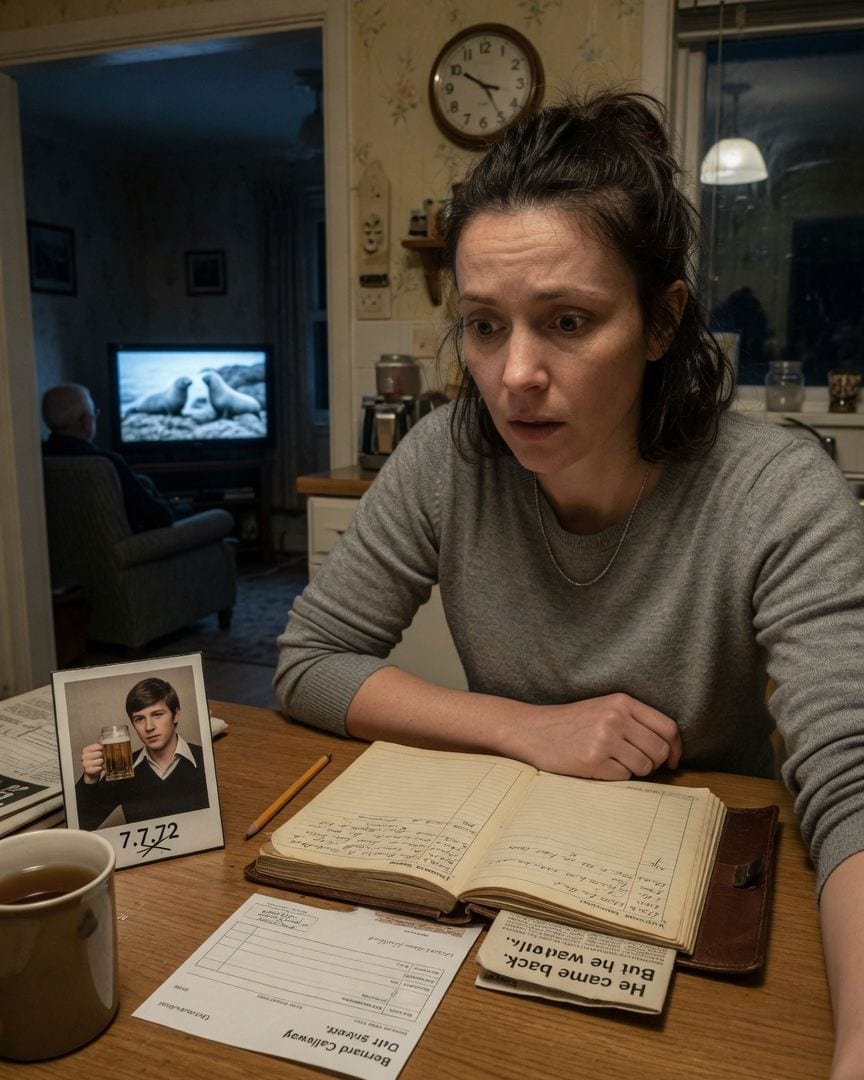
My father's bank slip had uncrossed '7's. He swore he never had that habit.
My father, Bernard, returned three months ago, a miracle after being presumed lost at sea. But a bank statement revealed a disturbing detail: the '7's in his signature were uncrossed. For decades, he'd meticulously crossed every '7', yet now he denied ever having the habit.
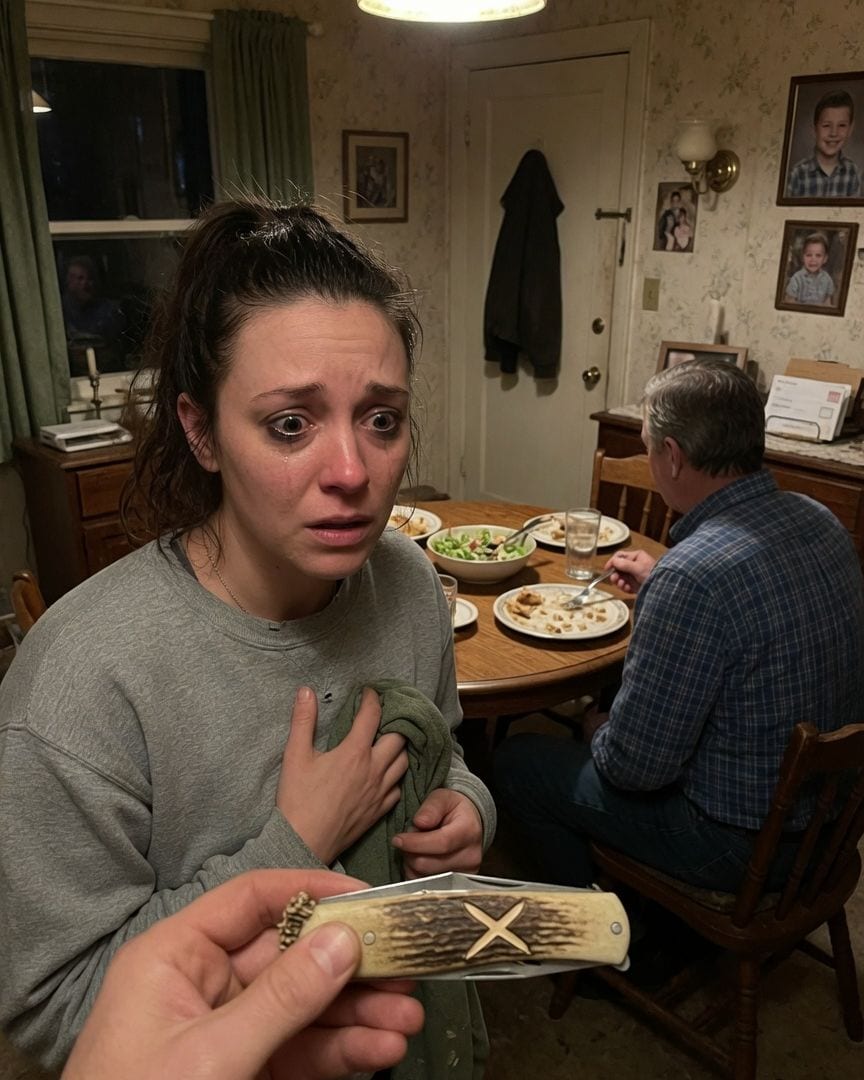
My father took the wrong chair at dinner this week. He said it was always his, facing away from the door, and ate.
My father returned after six days gone, disoriented but seemingly unharmed. Yet, the man sitting at our dinner table, claiming his old place, felt subtly wrong. Then I found his beloved pocketknife, missing from his side, hidden in the attic with a strange, new symbol carved into its handle.
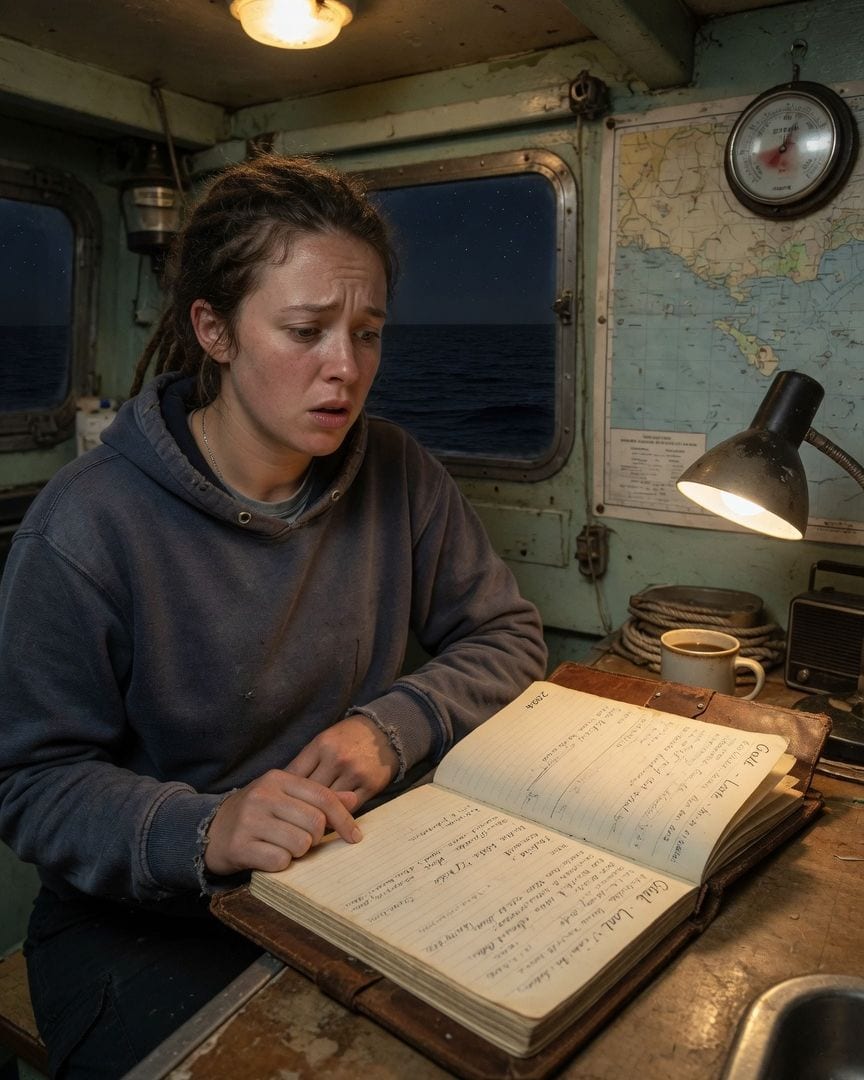
My skipper's logbook showed tomorrow's gale already written, in his dead father's hand, from 1969. I whistled on deck.
Working as a deckhand on the Skerry, I accidentally whistled, breaking a quiet rule Benjamin the skipper had given me. Later, I found the ship's logbook open to today's date, with an entry reading 'Gale - Loss' and the year '1969,' written in Benjamin's long-dead father's hand. He drowned off this very boat in 1969.
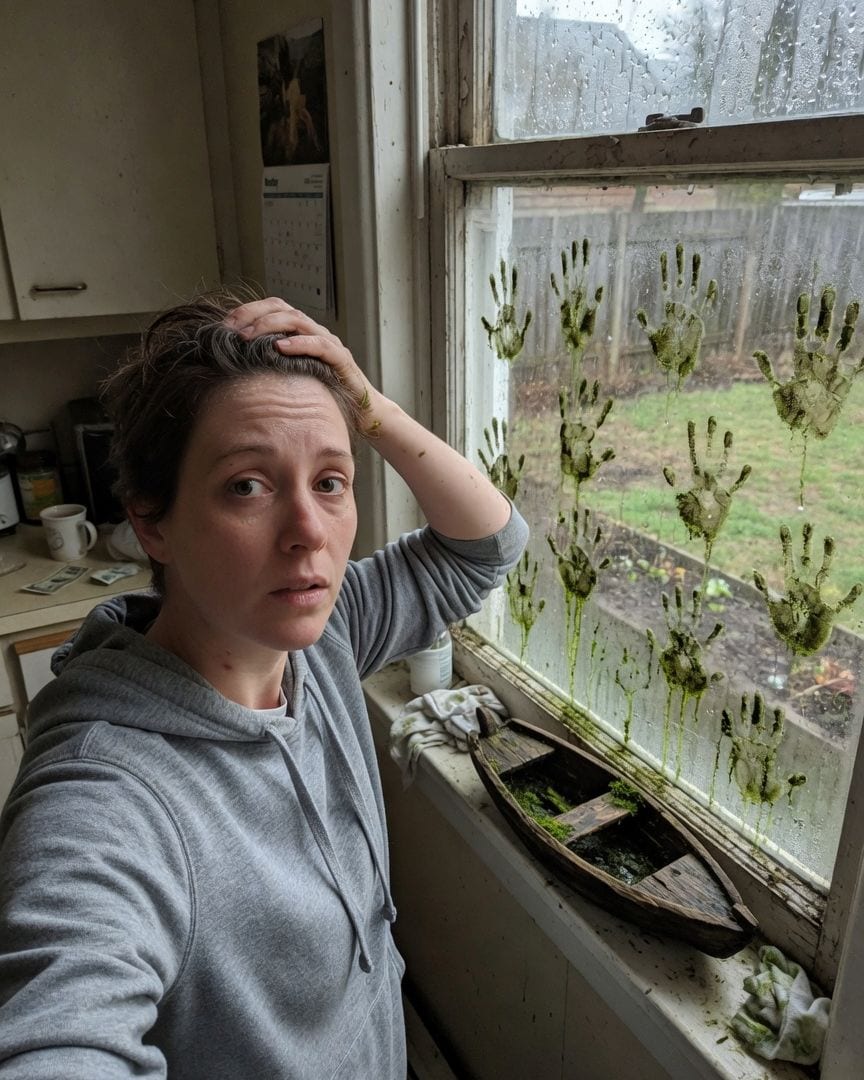
Wet moss handprints cover my kitchen window. My kitchen backs onto no water at all.
Monday morning, I found small, perfect handprints pressed against the *inside* of my kitchen window. They were wet and outlined in dark green moss, an impossible sight since my sealed window backs only onto a patch of lawn, with no water nearby. I ran my hand over them; they felt damp and cold.
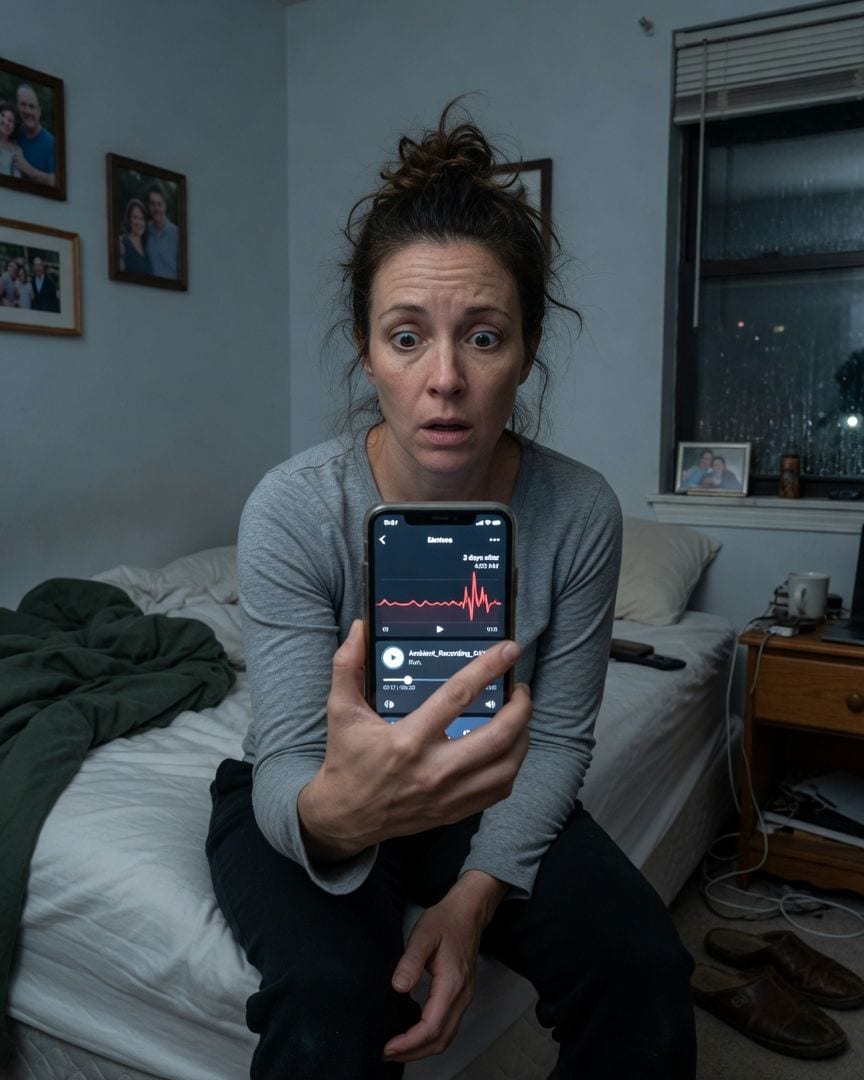
My dead father's smartwatch recorded his heart racing, like a man running hard, for eleven minutes at 4 AM three days after he passed. Then it went flat for good.
A week after my father passed, I was sifting through his digital footprint when I plugged in his old smartwatch. Deep in the data, I found an audio file, inexplicably recorded, that held a guttural whisper, unmistakably not his voice. It said one word: 'Run.'
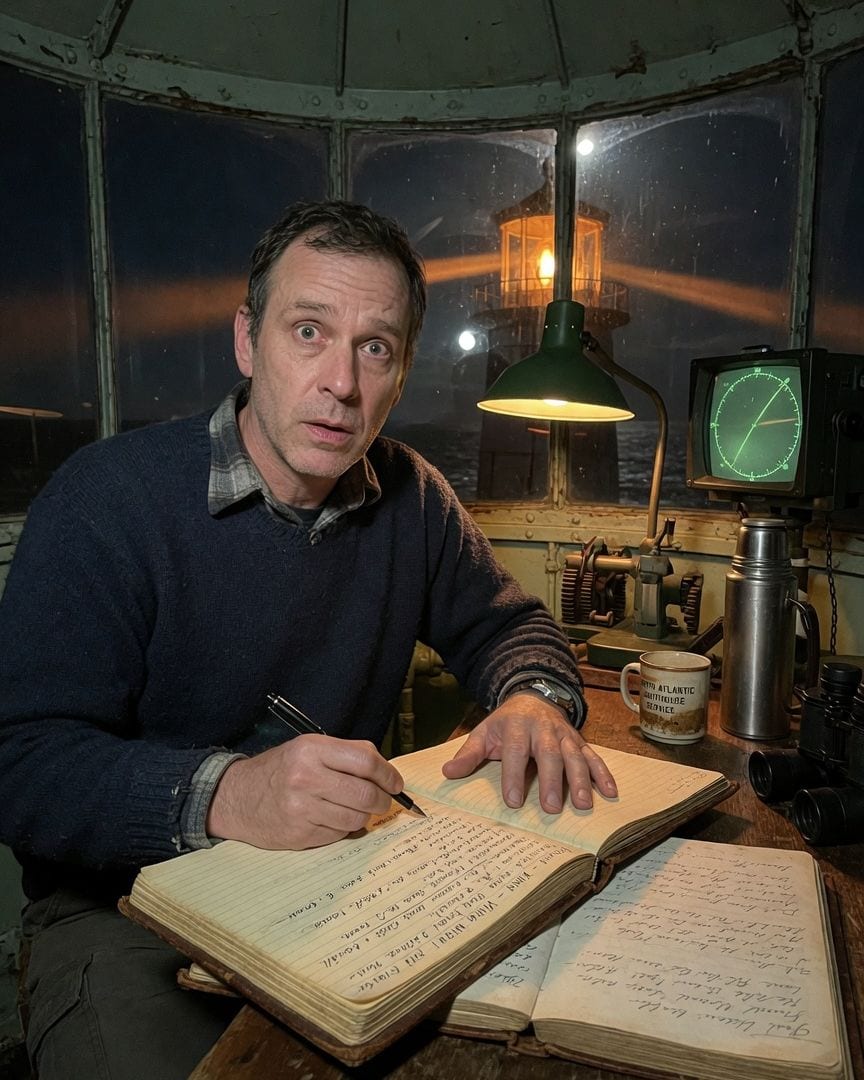
My lighthouse log has my own 3 AM entry for a phantom ship. I was alone in the tower, and I wrote no such thing.
Perched in the lantern room for my usual 2-6 AM watch, I reached for the thick logbook. But the 3:00 AM entry, under my own name, detailed a vessel I never saw. The words were in my own ink, yet I had never written them.