Wet moss handprints cover my kitchen window. My kitchen backs onto no water at all.
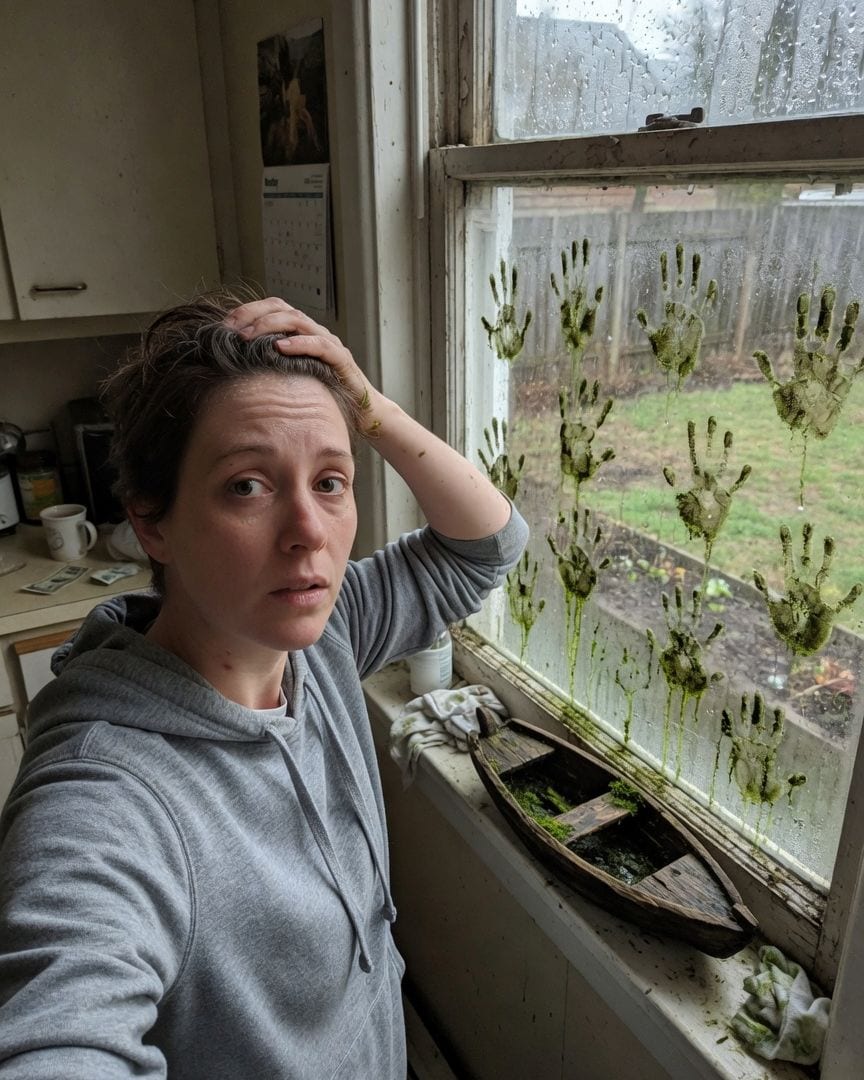
It was Monday morning, still cool and damp from a night of rain, when I found them. My kitchen window, the one that backs onto the small, fenced yard, was covered in them.
Small, perfect handprints, the kind a toddler would make, pressed against the inside of the glass. They weren't just smudged with dirt; they were wet, outlined in dark green moss. The impossible part?
My kitchen backs onto no water at all. Just a patch of lawn, a narrow flowerbed, and a sturdy wooden fence. There’s not even a bird bath within twenty feet.
I ran a hand over the glass. The prints felt real, damp and cold against my palm, leaving a faint green smear on my skin. I tried to make sense of it, to explain it away.
Maybe I’d left the window open a crack? But it was sealed tight. Maybe I’d just missed them yesterday? But the sun had been blazing through that window Sunday afternoon. I would have seen them.
I knew about the stream, of course. Everyone in town did. Nathan Mercer, the scout leader, had been the first to tell me about it a few weeks after I moved in.
He’d cornered me by the community garden, cheerful as ever, pointing at the distant line of trees. 'That’s the stepping stones,' he’d said, nodding. 'There’s a local kids’ rule: don’t cross the stream there after the church clock’s stopped chiming.'
I’d laughed, said that was oddly specific. He’d just nodded, a strange quiet settling in his eyes, and told me the clock stopped in 1990. So, really, no one crossed at all, day or night.
It was a local joke, but his tone hadn't been joking.
The thing is, Sunday, I crossed it. To save a mile walking back from the woods, I’d just hop-scotched across those stones. The prints, delicate, unnervingly small, and utterly impossible, felt like a silent accusation.
A prank, I thought again, trying to cling to the rational. A bunch of teenagers with a water hose and some green paint, maybe.
I checked the lock on the window again – old, but secure, latched tightly from the inside. No signs of forced entry, no scratches on the frame. I even went outside, walked the entire perimeter of my small, fenced yard.
The ground was firm from the overnight rain, but undisturbed. No muddy footprints leading up to the window, no scuff marks on the fence, no overturned bins that could’ve served as a makeshift ladder. Nothing.
The grass was too short to hide anything. It was baffling.
Frustrated, I started cleaning the glass with a spray bottle and a cloth, scrubbing at the stubborn moss. That’s when my finger caught on something tiny and hard.
It was wedged deep into the seam of the old wooden window frame, almost invisible from the outside, hidden by the frame’s aged, peeling paint.
I had to pry it out with a fingernail, the wood splintering slightly under the effort.
It was a small, crudely carved wooden boat. Not a child’s toy from today, not with its lack of bright plastic or clean lines. This was heavy, waterlogged, the wood dark and swollen.
It was stained with the same dark green moss that outlined the handprints on my window, ingrained in every grain. It looked like it had been floating, or submerged, for a very, very long time.
The wood was so old it felt almost petrified, cold and dense in my palm. It wasn’t mine. It didn’t look like anything a local child would play with today – no bright colours, no synthetic sails.
Just a heavy, moss-covered chunk of ancient wood. How had it gotten there? Why had I only just noticed it, nestled so deeply? The impossible prints, this silent, waterlogged relic. Nothing about it made ordinary sense.
My mind came up blank.
I took the boat to the town library, clutching it tightly, hoping Robert Bishop, the elderly archivist, might have some obscure knowledge, some local oddity it connected to.
He was at his usual desk, a mountain of yellowed papers surrounding him. He took the boat, turned it over in his hand, a flicker of something unreadable in his eyes before he simply grunted, 'Old toys.
Kids lose them all the time. Nothing to fuss over.' He pushed it back across the counter, dismissing me with a wave of his hand.
Unsatisfied, I started browsing the local history archives, feeling a strange pull towards the older records, anything about the stream. That’s when I saw it. A faded newspaper clipping from 1965, almost brittle to the touch.
The headline screamed: 'Local Boy Lost in Stream, Body Unrecovered.' My heart lurched. Seven-year-old James Ashford, it read, last seen near the stepping stones.
And then, a sentence that made my blood run cold: 'His most cherished possession, a small, hand-carved wooden boat, has also not been found.'
There was a blurry, grainy photo of a boy, maybe five or six, holding up a toy. It was identical. The same shape, the same crude carving. The moss-stained wood in my hand suddenly felt heavy, charged.
I looked up from the clipping, my own breath caught in my throat, to find Robert Bishop watching me from across the room. His expression was unnervingly calm, his eyes fixed on me, dark and knowing.
He hadn't moved a muscle.
I held up the clipping, then the wooden boat. 'This isn't just an old toy, Robert,' I said, my voice tight. 'This is his toy. James Ashford. He went missing near the stream in 1965.'
Robert sighed, a long, weary sound, as if I’d just unearthed something he’d rather keep buried. 'Just a local legend, Susan,' he said, his voice flat. 'A sad story we tell to keep kids safe from the water.
Always has been.' But his eyes, old and tired, betrayed a deeper, weary knowledge, a flicker of something far more complex than a simple cautionary tale. He wouldn't meet my gaze directly.
Unsatisified, a cold knot forming in my stomach, I drove out to the stream. The stepping stones were quiet, almost overgrown with thick moss and ferns. The water flowed low, murmuring over ancient rocks.
I walked the banks, my eyes scanning the soft, damp mud. And then I saw them: faint, small indentations in the earth, too numerous and too close together to be a single person.
They were everywhere, like many small feet had recently passed, disturbed the bank, and then vanished. It wasn't one child, it was many.
Back at the library, the quiet hum of the fluorescent lights felt oppressive. I wasn't leaving until I found something more.
I dove deeper into the archives, moving past the more recent records, researching historical records of child disappearances around the stream.
It was slow, painstaking work, sifting through decades of town council minutes, old police reports, and even more forgotten newspaper clippings. But a disturbing pattern emerged. Not just James Ashford.
Several children reported missing over the last century, all near the stepping stones, their bodies never found, their cases closing with a chilling lack of resolution. The dates spanned decades, a recurring, tragic rhythm.
The next day, a shift in the town's quiet attention felt palpable. It was a subtle thing, a lingering glance from Karen Sutton at the grocery store, a sudden hush when I walked into the diner.
I noticed Nathan Mercer, the scout leader, ostensibly pruning hedges outside my house, his gaze lingering on my kitchen window. He saw me watching him and put down his shears, approaching my fence. His tone was hushed, almost conspiratorial.
'Some things are best left alone, Susan,' he warned, his eyes scanning the street, as if checking for listeners. 'For everyone's peace.' He didn't elaborate, just nodded gravely and went back to his pruning, a strange tension radiating from him.
Later that evening, after the sun had set and the streetlights cast long, shifting shadows, I found a note slipped under my front door. It was handwritten, on brittle, yellowed paper, the ink faded to a pale sepia.
The script was a looping, old-fashioned hand. It simply read: 'DON'T LOOK FOR THEM. THEY FIND YOU.' The message wasn't a threat of violence, not a warning to fear for my personal safety.
It was something far more chilling, a desperate plea to stop, hinting at a danger more profound than any individual threat, a secret kept by the very quiet of the town.
I returned to Robert Bishop, the note clutched in one hand, my collection of clippings and notes spread across the library table. 'This isn't just a legend, Robert,' I said, my voice barely steady. 'This is a pattern.
Look at the dates. Look at the missing children. All near the stream. All their bodies gone. What's happening here?' I pushed him, demanding a real explanation, something beyond 'sad stories' and 'local lore.'
Robert stared at the papers, then at my face. He exhaled slowly, his gaze distant, as if seeing beyond the library walls, beyond the town itself.
His voice dropped to a low, gravelly whisper, barely audible above the ancient clock ticking in the corner. 'The stream... it gives things back,' he confessed, his gaze fixed on some point in the far distance. 'Not whole.
Not quite right. The clock... it stopped because they made it stop. It was a warning. For generations, we've just... managed it.'
He explained that crossing the stepping stones, especially after the 'clock's stopped' – which, since 1990, was always – opened a temporary way. A threshold.
It allowed the lost children to return, drawn by memory or familial ties, anchored to the one who crossed.
The handprints on my window, the small wooden boat, the faint indentations by the stream – it all clicked into place with a terrible, sickening coherence. The town's agreement, he revealed, was a desperate, quiet pact.
To prevent panic, to keep the true nature of the stream a secret, and to discreetly ensure the 'returned' don't stay. To guide them back, or wait for them to fade.
Robert pushed an old, leather-bound town register across the table, its pages brittle with age, the leather cracked and worn. 'They don't always come back to the one who crossed, Susan,' he said, his voice flat, devoid of emotion.
'Sometimes, they find their way back to a living family member. A grandchild. A niece. The ones who remember them, or who carry their bl**d.'
My eyes scanned the faded entries, a list of names and dates of town residents, some marked with cryptic annotations I couldn't understand. I saw the name 'Ashford' again, several times, not just James, but others, stretching back through generations.
I traced a line of descent, a family tree sketched in generations of faded ink. And then I saw it: a familiar set of initials, 'E.A.,' next to a date in the 1950s. Eleanor Ashford. My great-aunt Eleanor Ashford.
James's sister.
The pattern wasn't just a local phenomenon, a cycle of tragedy for others. It was a recurring cycle, and it linked directly to my own family. I wasn’t just an observer. I was an unwitting participant.
A beacon for the lost.
The realization hit me with sickening clarity. My own family, long before I’d moved here, had deep roots in this town. Eleanor Ashford, my great-aunt, was James Ashford's sister.
The 'children' weren't just drawn to the stream itself, but to bloodlines, to the echoes of their families, a yearning for what they'd lost.
Robert confirmed it, his voice heavy with generations of dread, with the weight of knowing this terrible truth. 'You were the anchor, Susan,' he explained, his gaze steady, unwavering.
'When you crossed, James found his way back, drawn to you, his kin.' He elaborated on the cycle, the grim rhythm of the town.
Every time the threshold was breached, he said, a portal opened, and the lost children, guided by their ancient ties, attempted to return. They were not malicious, not monsters. They were just lost, forever searching for home.
The church clock, he revealed, the one that had stopped chiming in 1990, wasn't just old.
It had been intentionally silenced after a particularly strong manifestation, a desperate act to permanently close the 'after midnight' window, making the crossing always dangerous.
The town's 'management' involved a grim understanding: the 'returned' were not truly alive, and their presence caused a slow, insidious drain on the living, a chilling of the soul, a subtle fraying of reality.
All the clues clicked into place, a horrifying tapestry woven from familial grief and communal burden.
I knew what I had to do. The 'children' were not evil, just lost, stuck between worlds, reaching out across the divide.
I felt James's presence growing stronger, a cold spot in the air, the faint handprints now appearing not just on my kitchen window, but inside my house, ghostly outlines on the cool linoleum, leading towards the stream.
I took the small wooden boat, now imbued with an unsettling resonance, heavy and cold in my hand – the last tangible link to James, a physical memory of a life cut short.
I walked back to the stepping stones, a sense of grim determination hardening my resolve. Nathan Mercer was already there, waiting, leaning against an old oak tree, a grim, resigned look on his face. He didn't try to stop me.
He simply watched, his hands tucked into his pockets. I approached the stream's edge, not throwing the boat, not discarding it, but gently placing it on the damp earth near the stones, near the edge of the water.
I spoke softly to the water, to the unseen presence, promising remembrance, promising peace, but also asking them to stay on their side, to find their rest, to finally let go.
A profound stillness descended, the air growing impossibly cold, then warming as if a heavy weight, an unbearable sorrow, had finally lifted.
When I returned home, the handprints on my window were gone, leaving only the faint, clean glass, wiped utterly clean.
A quiet relief settled over the town, a subtle easing of the collective tension I hadn’t even fully registered until it was gone. Robert Bishop offered a rare, genuine smile, a silent thank you that spoke volumes.
Nathan Mercer nodded to me when I saw him later that week, his gaze holding a new, weary respect, a shared understanding of the burden we now both carried.
The oppressive quiet around the stream, the sense of something unseen lingering, was replaced by a natural tranquility, the gentle murmur of flowing water.
I meticulously cleaned the last traces of moss from my window, the glass now clear and unmarred, but the memory of the prints, of what they represented, was etched into my mind, a permanent scar.
The immediate sense of dread had lessened, but the chilling knowledge remained, a permanent shadow woven into the fabric of my life.
I stayed in the town. Occasionally, I exchanged knowing glances with Nathan or Robert, a silent acknowledgement of the truth we all carried, a truth hidden beneath the mundane rhythms of our lives.
I never crossed the stream at the stepping stones again.
But sometimes, late at night, in the deep quiet before dawn, I hear it: a faint, distant chime, a single, solitary bell tolling from the church tower that has been silent for decades.
It tolls once, then fades, just before sunrise.
The church clock still chimes, sometimes, just once, in the deep quiet before dawn.
If this one got to you
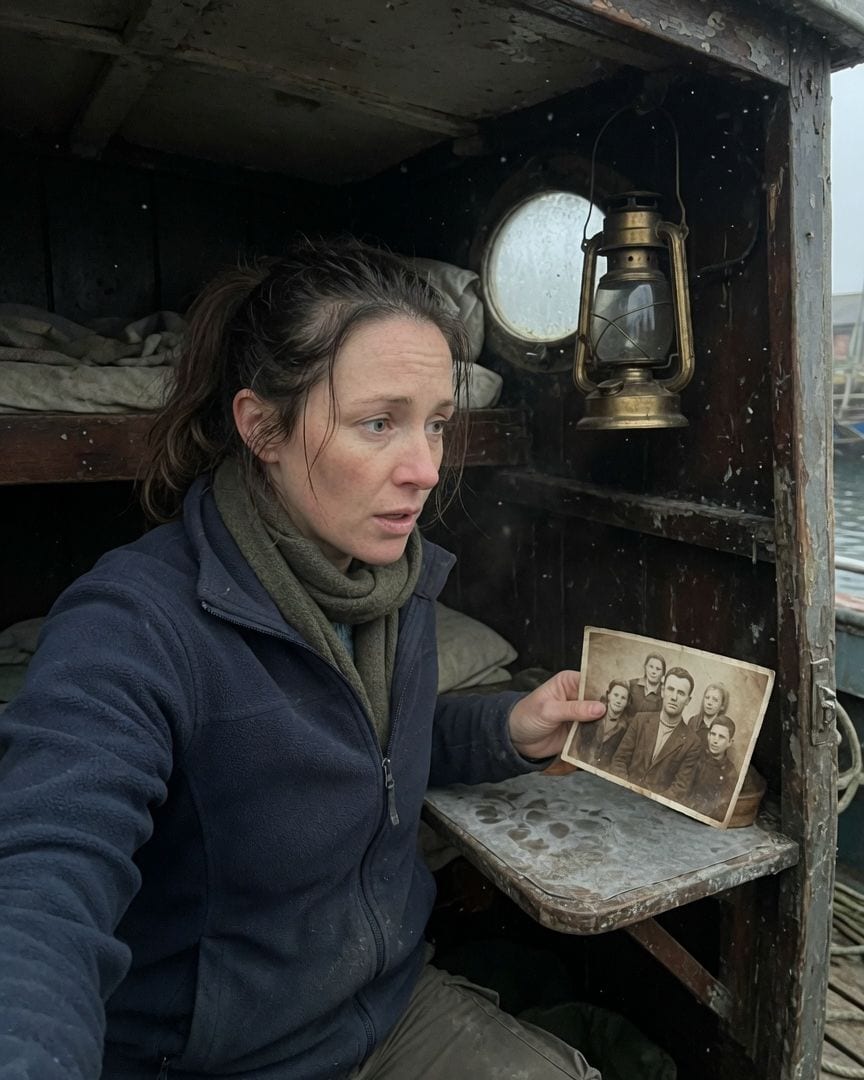
My harbour counted fourteen boats out, but fifteen came back. The last one has my name on it, tied to a berth empty since the war.
I cherished the crisp morning air in Port Blossom, watching the fishing fleet return. Fourteen boats had chugged out before dawn, but that morning, a fifteenth, older boat glided silently into the harbour. It tied itself to the very end berth, unused since the war, and painted on its stern was my family name: Walsh.
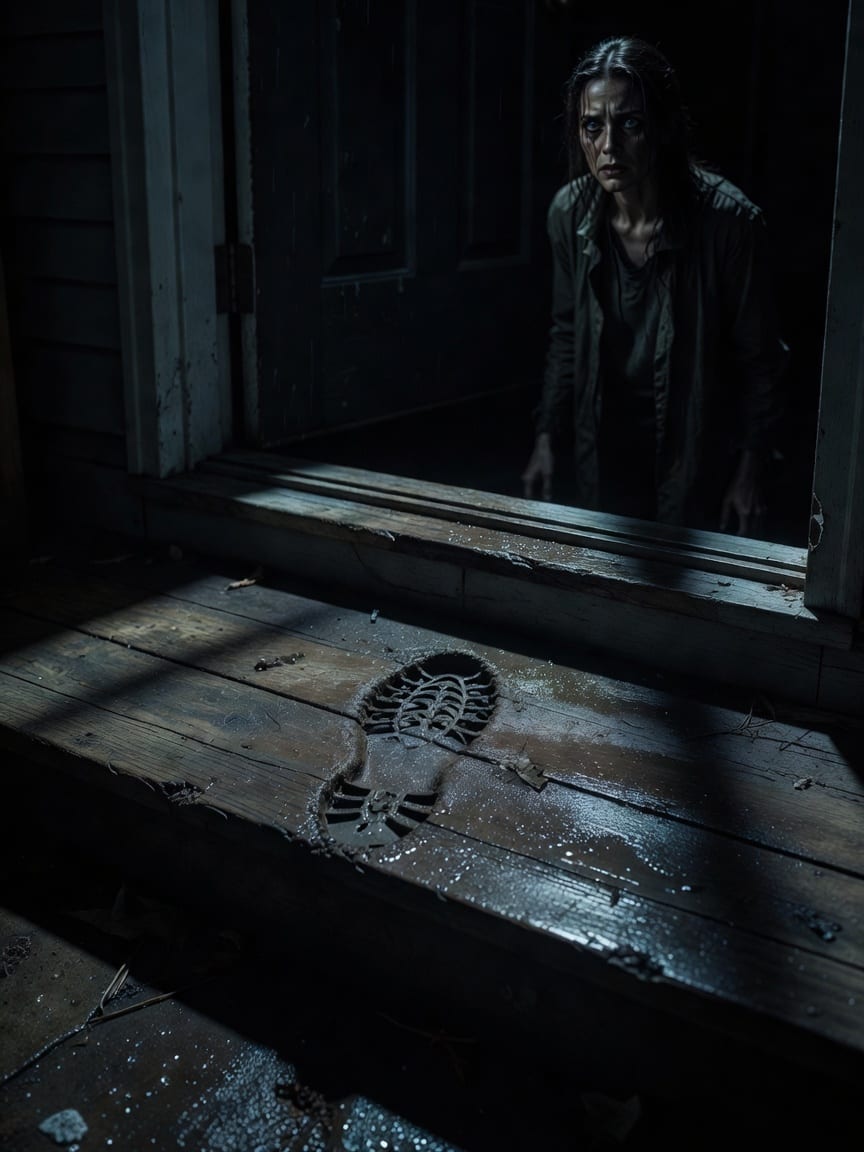
My landlord's only rule: never let the outside tap run after sundown. Last week it dripped. This morning, wet bootprints ringed the back step from the tap to my door, all the same size. The tap was off.
We'd just settled into Waterside House, with its strange landlord rule about the outside tap. After the washer broke, I found perfect, wet bootprints leading from the tap to our back door, but the tap was cranked completely off, tighter than I could manage.
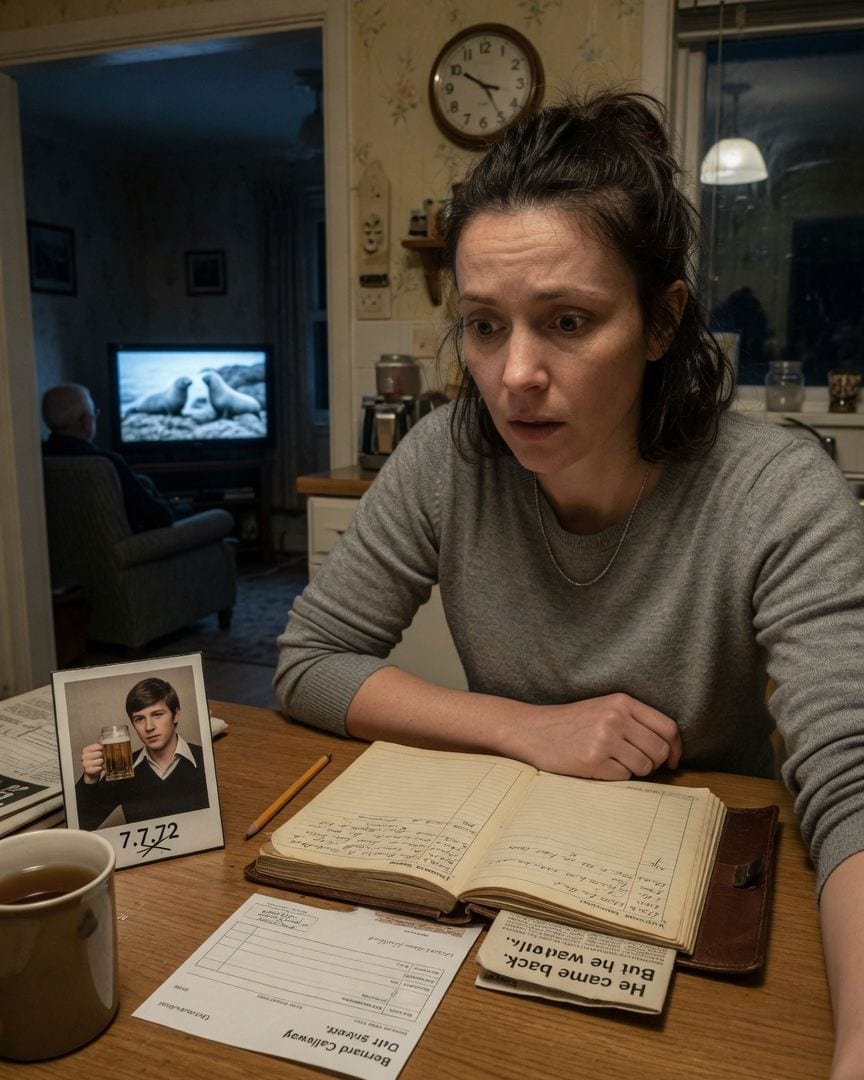
My father's bank slip had uncrossed '7's. He swore he never had that habit.
My father, Bernard, returned three months ago, a miracle after being presumed lost at sea. But a bank statement revealed a disturbing detail: the '7's in his signature were uncrossed. For decades, he'd meticulously crossed every '7', yet now he denied ever having the habit.
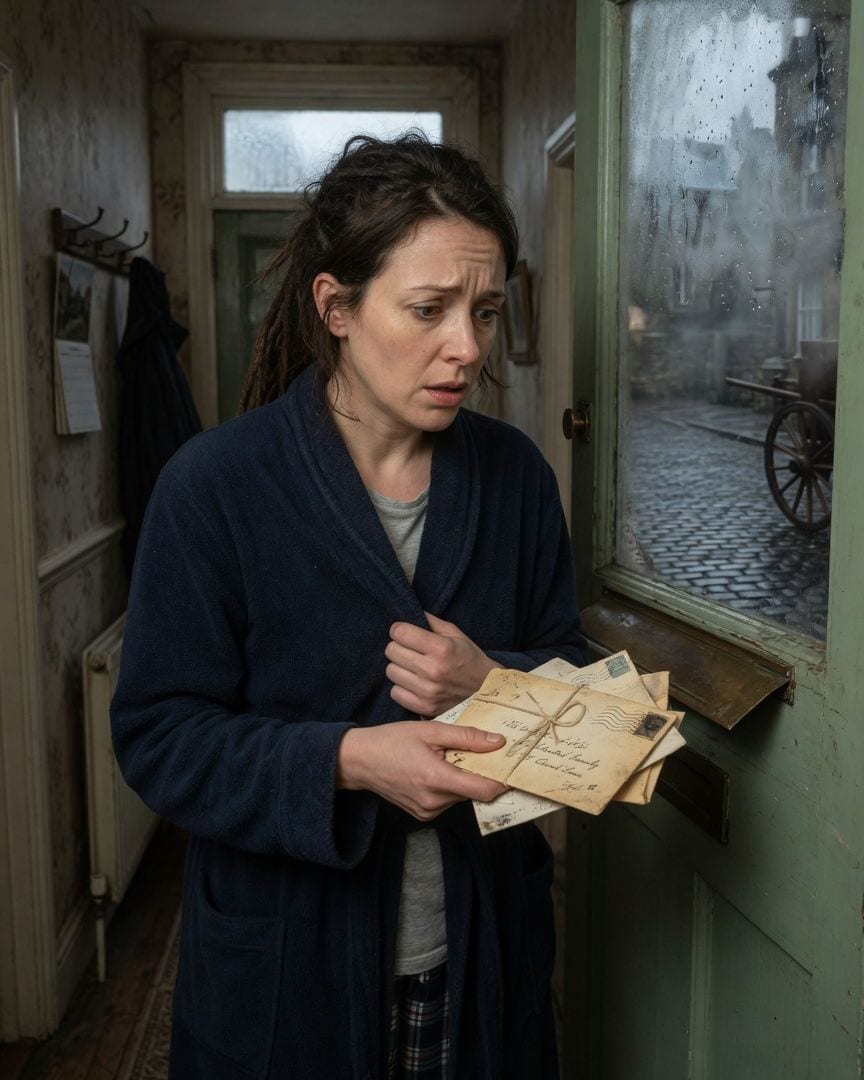
Seventy years ago, a hidden journal recorded my door opening to the wrong street and receiving Lockwood post.
I'd only recently moved into my inherited house, a quiet place on the edge of town. One grey morning, a distinct clatter from the front door's post flap caught my attention. Reaching down, I expected my gravel path, but instead, the flap showed a dark, cobbled street that wasn't mine. A bundle of warm, old letters, addressed to 'The Lockwood Family,' slid through, before the vision flickered and was gone.
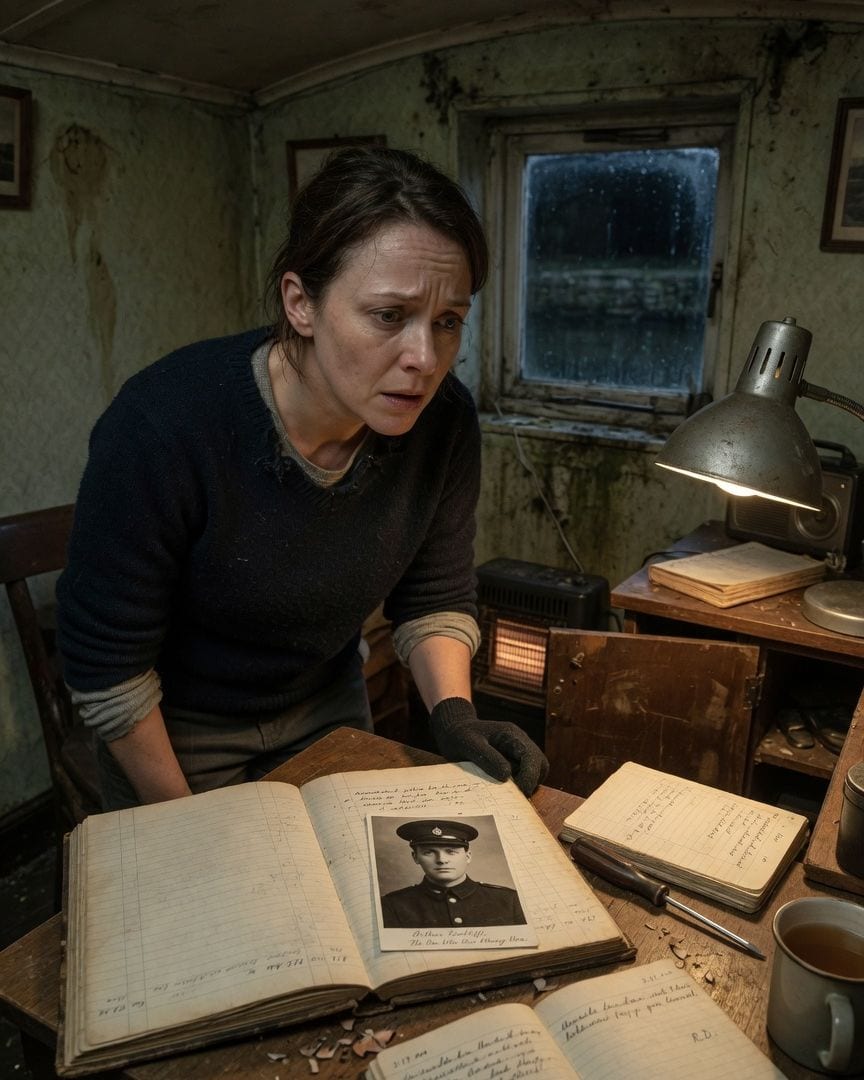
My canal lock logged a boat at 3:17am, gates cycling shut. No vessel radioed, and the water never moved.
Working the night shift at the lock house, I distinctly remember securing the gates and then logging a narrowboat passage at 3:17 AM in my usual precise hand. But the canal outside was black and perfectly still, the water level unchanged, with no boat ever having radioed in. My own logbook entry sat there, an undeniable record of an impossible event.
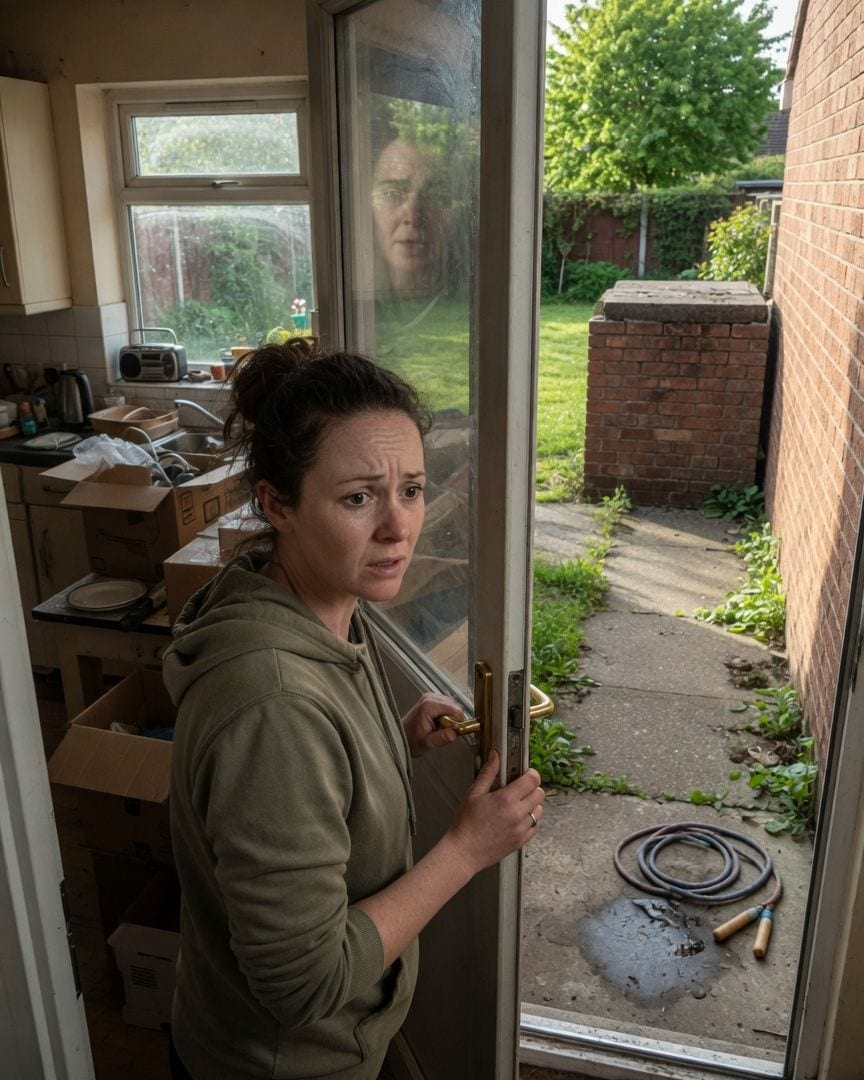
Children skip in my garden at 3:30 on school days. They're on the concrete by the coal bunker, where there's no room. The rope they leave is always damp.
I kept hearing children skipping outside my kitchen window, even though there was nowhere for them to play. Every time I looked, the narrow side return was empty, but a damp skipping rope lay on the concrete. Then, my old cleaning cupboard opened onto a vibrant, old-fashioned garden, where two small figures stared back with unnervingly blank eyes.