My father took the wrong chair at dinner this week. He said it was always his, facing away from the door, and ate.
The relief had been a physical weight lifting, so heavy I hadn’t realized how much I’d been carrying. Six days. Six days my father, Carl Langford, was just gone.
The police had found him on a roadside, disoriented but otherwise unharmed, claiming he’d gotten lost driving home from a supply run. He was back this week, and for a short time, everything felt right again.
Then dinner happened.
My father, Carl, had a ritual older than I was. For forty years, he’d sat at the head of the dining table, back to the wall, facing the front door.
Every time he’d pull out that chair, he’d tap it twice, a habit so ingrained it was almost a tic, and say, 'Got to see who comes in.' It wasn’t a joke; he meant it, a quiet vigilance.
That night, he walked past his chair, past the one I’d already pulled out for him. He moved to the opposite side of the table, the one with its back to the door, pulled it out, and sat down.
I paused, holding the salad bowl. 'Dad, your chair’s here,' I said gently, pointing. 'You always sit here.'
He looked up at me, his eyes a little too still in the soft dining room light. There was a faint, unfamiliar smile playing on his lips, a curve I didn’t recognize. 'This has always been my place, hasn't it?'
he said, his voice perfectly level, utterly calm. He didn’t wait for an answer, just turned his back to the room, to the door he’d always watched, and started to eat.
I watched him, the familiar lines of his face suddenly alien. His fork moved with a strange, deliberate rhythm, each bite methodical.
His gaze seemed to drift past me, past my mother, as if we were just familiar pieces of furniture in a room he was observing.
My father, the man who’d told me countless stories from that very seat, now sat facing away, a ghost in his own skin, and the dread was a cold knot in my stomach I couldn't swallow down.
I tried to rationalize it. Grief, perhaps. Trauma, certainly. Six days lost on some rural road could do things to a person.
But the small, wrong details began to accumulate, a steady drip that slowly, inexorably, eroded my attempts at normalcy.
Carl, who’d never touched sweets in his life, now ate my mother’s homemade apple pie with gusto, scraping the plate clean with a smile that never quite reached his eyes.
He hummed unfamiliar tunes, lilting, strange melodies, then stopped abruptly, his face blank, when I asked him where he’d heard them. Most unsettlingly, he no longer called me 'Cece,' a lifelong endearment.
Now, it was always 'Cecilia,' delivered with a polite, distant formality that felt colder than any anger.
One afternoon, about a week after his return, I went up to the attic. I was looking for an old photo album, something to connect me back to the man I knew.
Tucked beneath a loose floorboard, in a dusty corner, I stumbled upon a small, wooden box. Carl’s 'treasure chest' from childhood, a place he’d hidden things only I, his daughter, knew about.
He’d shown it to me once when I was a kid, swore me to secrecy.
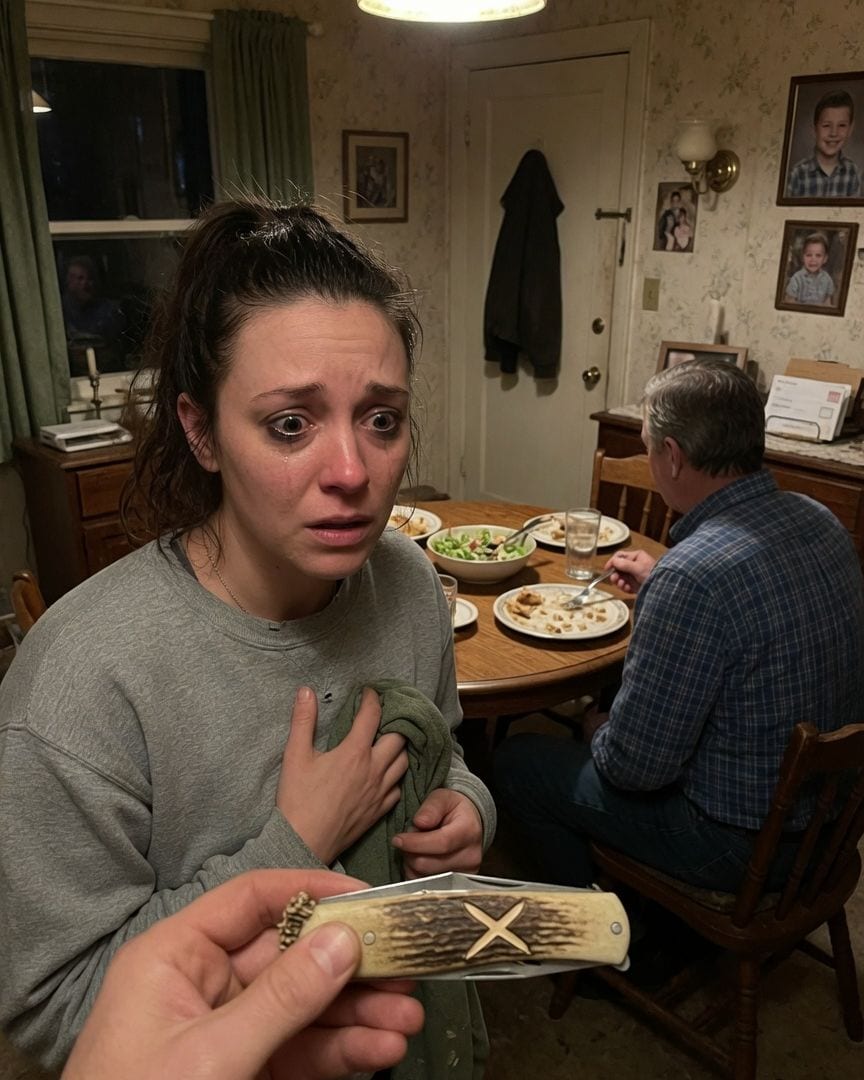
Carefully, I opened it. Inside, nestled among faded drawings and childhood trinkets, was his distinctive pocketknife. The one with the deer antler handle, worn smooth by decades of use.
The one he’d carried every single day since I was a girl, a good luck charm he’d sworn he’d never be parted with. I’d explicitly asked the police about it when he was missing.
They’d confirmed it wasn't on him when he was found. But here it was, in the attic, in his childhood box, meticulously placed as if someone had tidied it away.
I picked it up, my fingers tracing the familiar contours of the antler. Then I saw it. A tiny, fresh symbol, like an inverted V with a horizontal crossbar through its middle, etched crudely but deeply into the handle.
It wasn't part of the original design. It wasn't any symbol I knew Carl to use, not a hobby, not a club, nothing. It looked new, raw, as if carved very recently, with a sharp, almost unnatural precision.
A cold certainty settled over me, a feeling like sinking ice. Carl hadn’t put this here. He hadn’t carved this. And if he hadn’t, then who had? And why?
I stared at the tiny, fresh symbol etched into the pocketknife’s antler handle. It was sharp, unnatural, a contrast to the worn, familiar wood around it.
My fingers traced its lines, rough against my skin, and a wave of nausea washed over me. This wasn't my father's work. This wasn't a mark of his return. This was a message.
A message left by someone, or something, that had been in my house, touching my father's most personal possession, while he was gone. And if this knife was here, then where had the real Carl been?
My gaze flickered from the knife to the dusty attic window, then back to the symbol, a silent, chilling question hanging in the stale air.
The relief I’d felt at his return was now completely gone, replaced by a dread that clawed at my throat.
The symbol haunted me. I spent hours online, poring over ancient runes, corporate logos, forgotten cults, anything that might match the inverted V with a crossbar. Nothing. Nothing matched perfectly.
The dread intensified, a constant hum beneath my skin, a low-frequency vibration that made my teeth ache. I knew I couldn’t keep this to myself.
I had to talk to someone, someone who knew Carl, someone who might have seen the same small, wrong details I had.
I decided to talk to Patricia Vance, our elderly neighbor. She’d lived next door for fifty years and knew Carl better than almost anyone outside the family.
Patricia, frail but still sharp as a tack, greeted me with a familiar warmth when I knocked on her door. Her small house smelled of lavender and old books.
I casually brought up my father’s return, mentioning his 'new habits,' subtly testing the waters. Patricia listened, her gaze distant, fixed somewhere beyond me, in the middle distance. 'He's… different, isn't he?'
she finally said, her voice barely a whisper, as if speaking a secret.
My heart hammered against my ribs. 'How so?' I asked, trying to keep my voice even.
Patricia sighed, a deep, weary sound that seemed to carry the weight of her years. 'He used to wave to me every morning, rain or shine.
Didn't matter if he was going to the mailbox or just out for the paper. Now he just… stares. Like he’s trying to remember who I am. And the way he pruned his roses yesterday?
Carl always used to cut them low, for new growth. This… this was like he was just trying to make them look neat, without knowing why he was doing it at all.'
She paused, then leaned closer, her voice dropping even further. 'Reminds me of old Mr. Henderson, down the street, after his accident.
Came back from the hospital, same face, same limp, but he used to hate coffee, and suddenly he couldn't start his day without it. His wife swore he wasn't himself.'
Patricia's eyes, clouded with age, held a glimmer of something knowing, something resigned. 'Sometimes,' she whispered, 'what you lose, you don't always get back whole.'
I felt a chill despite the warm afternoon sun streaming through her window. Patricia hadn't offered an explanation, but she had confirmed the wrongness, validating my gnawing fear.
The mundane explanation of 'trauma' was failing, not just for me, but for an outside observer too. The thread was pulling.
Patricia Vance’s words echoed in my mind. 'What you lose, you don't always get back whole.' The next day, I decided to discreetly check Carl’s old study.
He rarely went in there now, preferring to sit in the living room, simply observing the muted television screen or the quiet street outside. He seemed content just to watch.
I was looking for anything else amiss, any clue that might offer a rational explanation for the symbol on the knife, for the unsettling changes.
As I gently tried the locked desk drawer – something Carl never did, he hated locked things – a voice from behind me made me jump, my hand flying to my chest. 'Looking for something, Cece?'
Carl stood in the doorway, his silhouette framed against the hall light, obscuring his features. He hadn't made a sound. Not a creak of the floorboards, not a rustle of clothing. He was just there.
I stammered, 'Just… tidying up, Dad. Missed a spot. Thought I’d help out.'
His eyes, those unnervingly still eyes, met mine across the dim room. The light from the hall seemed to stop at their surface, not penetrating. 'You were talking to Mrs. Vance yesterday, weren’t you?'
he said, his tone utterly flat, devoid of curiosity or accusation, just a simple statement of fact. 'She has some interesting theories about… changes.'
My blood ran cold. I hadn't mentioned talking to Patricia to him. Not a word. I forced a laugh, which sounded thin and brittle even to my own ears. 'Just catching up, Dad. You know how Patricia likes to chat.'
I tried to sound casual, but my heart was a frantic drum against my ribs.
Carl stepped into the room, moving with a fluid, almost too-smooth grace that wasn't quite his.
He picked up a framed photo of me as a child, from his desk, holding it for a long moment, his thumb tracing the glass. 'She misses your mother's pie, you know,' he mused, his voice soft, almost conversational.
'She said you used to hate it, but now I can't get enough.' He smiled, a faint, unsettling curve of his lips that didn’t quite reach his eyes. 'Funny how people change, isn't it? Or perhaps… they don't.'
The implication hung heavy in the air, thick and suffocating. He knew. He was watching her. He knew what she was doing.
I felt a prickle of fear on my neck, a crawling sensation that told me my digging had not gone unnoticed. I was no longer just investigating; I was being observed, and perhaps, tested.
That evening, the unsettling calm in his voice, the chilling implication, pushed me to my breaking point.
I decided to confront him, choosing a moment when we were alone in the living room, the evening news babbling softly on the television, a poor attempt at normalcy.
'Dad,' I began, my voice trembling slightly despite my best efforts, 'where did you put your pocketknife?'
Carl looked up from a book he wasn't reading, his gaze unwavering, meeting mine with that unsettling stillness. 'My pocketknife? I don't know, darling. Perhaps I misplaced it when I was… unwell. My memory isn't quite what it was.'
I took a deep breath, steeling myself. 'It was in your old treasure box in the attic. And it has a new carving on it.'
I held up the knife, the antler handle cool and solid in my hand, turning it so the light caught the inverted V symbol.
His eyes flickered to the carving, then back to my face. A strange, almost alien calm settled over him, deeper than any human composure I’d ever witnessed. 'Ah, that.'
He reached out, his finger tracing the symbol on the handle of the knife I held. His touch was feather-light, yet it made my skin crawl. 'I remember that. You know, I made that for you, years ago.
When we went camping by Lake Willow.' He paused, his gaze softening, a perfect mimicry of warm nostalgia. 'You’d just turned eight. You found that little bird with the broken wing, remember? You cried and cried.
I carved that symbol into the knife, told you it was a magic sigil to heal it. And we buried it under the old oak, next to the lake.
You were so happy when the bird flew away the next morning.'
I stared at him, my blood running cold, every nerve screaming. I remembered the bird, vividly. I remembered the tears, the burial. I remembered hoping it would fly. But Carl hadn't been there.
He’d been away on a business trip, a fact I'd resented at the time, lonely and upset. It was my mother who had comforted me, who had helped me bury the bird, who had dried my tears.
Carl’s 'memory' was perfect in detail, an exact recounting of the scene, but utterly, horribly wrong in his presence.
'You weren't there, Dad,' I whispered, my voice barely audible, a desperate plea for him to admit the truth. 'You were in Chicago.'
His smile didn’t falter. It just widened fractionally. 'No, no, darling. I was there. I remember the chill in the air, the way the light hit the water. It was a beautiful moment.'
His certainty was absolute, unyielding, as if my reality simply didn't exist. He wasn’t confused; he was rewriting history, seamlessly, confidently. The memory was unequivocally mine, but his claim to it, his possession of it, was a horrifying violation.
It clicked into place: the chair, the sweets, the distant politeness. He wasn't traumatized; he was learning. And his lessons were incomplete.
The 'memory' was a turning point. Cecilia now understood: this was not her father, but a meticulous, horrifying imitation. The entity was learning, absorbing, but its understanding of human experience was fundamentally flawed.
It had observed, memorized, but it couldn't feel. She had to know what had truly happened to her father. Driven by a desperate urgency, Cecilia returned to the attic.
She remembered Carl had a box of old photographs from before she was born, mostly landscape shots and house exteriors, things he’d taken when he first moved in.
She dug through them, searching for anything, a hint, a confirmation, anything that might explain what was happening.
Deep in the box, beneath a pile of faded postcards from places she’d never heard of, she found it: an old, slightly out-of-focus photograph of their house, taken from across the street, decades ago.
It was a mundane shot, the house looking much as it did now, the old oak still a sapling in the front yard.
But in the background, partially obscured by a younger version of the ancient oak now in their yard, was a figure. A man. His posture, the set of his shoulders, the very shape of his head, was unmistakably Carl.
He was standing perfectly still, facing the house, watching.
Cecilia’s breath hitched. This photo was dated on the back to a summer before she was born, long before Carl went 'missing.'
But Carl had been inside the house when this photo was taken, playing cards with his own father, a story he'd told her countless times over the years. The figure was identical, yet impossible.
It was Carl, watching his own home, from a time he shouldn't have been there. The implications were staggering. It wasn’t just a recent replacement. It had been here before. Watching. Waiting.
The photograph was a cold, hard piece of truth. The figure in the background, Carl's double, watching their house, confirmed that whatever had replaced my father had been observing them for a very long time.
It wasn't an opportunistic replacement; it was a planned, patient infiltration.
The photo, dated to 1988, showed a specific stand of ancient oaks across the street, a spot where I knew the road dipped, providing a clear, unobscured view of our property. It was a perfect vantage point.
I drove there the next morning, my heart pounding a frantic rhythm against my ribs. The oaks were still there, gnarled and ancient, their branches heavy with leaves.
I walked along the fence line, my eyes scanning the ground, remembering the symbol on the knife. What was I looking for? A sign? A marker?
Then I saw it: a small, almost invisible depression in the earth, half-hidden by overgrown weeds, exactly where the figure in the photo had stood. Kneeling, I dug with my bare hands, the soil cold and damp against my skin.
After a few minutes, my fingers brushed against something hard. I pulled it out: a small, weatherproof metal box, caked in mud. It was heavy, solid.
My hands trembled as I forced it open. The latch clicked, the lid lifted with a faint hiss of displaced air.
Inside, perfectly preserved as if time hadn't touched them, were Carl’s actual driver's license and his old worn leather wallet, still containing a few crumpled bills.
And nestled among them, something that made me gasp, a sudden sob catching in my throat: the small, crudely carved wooden bird he’d made for me as a child, the one I thought was lost years ago after I buried it by the lake.
Its surface was worn smooth by time and handling, but on its belly, almost invisible unless you knew to look, was the exact same inverted V with a crossbar symbol, etched with a tiny, precise hand.
It was real. It was dated to the exact day Carl went missing. The ordinary explanation died for good, strangled by undeniable evidence. My father had been here, in this spot, on that day. He hadn't just been lost.
He had been taken. And this box was a final, chilling testament from the true Carl, a silent message left at the site of his disappearance, a marker he’d managed to leave before whatever came for him took him completely.
I clutched the box, the weight of its contents a crushing truth in my hands. I drove straight home, the entity’s earlier warning about Patricia Vance echoing in my ears, a cold, calculated threat.
I knew what I held was proof, undeniable. I had to face it, whatever it was.
As I stepped through the front door, the air inside felt heavy, expectant. Carl was waiting in the living room, a cup of tea steaming on the coffee table, a book resting open beside it.
He looked up, his gaze fixing instantly on the mud-caked box in my hands. His calm facade cracked, just for a flicker, a brief widening of those unnervingly still eyes.
'What is that, Cecilia?' he asked, his voice losing its usual even cadence, a new, sharper edge to it, like a blade revealed.
'This is my father,' I said, my voice shaking but firm, fueled by a desperate anger. I opened the box, revealing the license, the wallet, the wooden bird with its stark, carved symbol.
His eyes, now wide and cold, darted to the wooden bird, to the symbol. His breath hitched, a sound too loud in the quiet room. 'That’s… a trick,' he said, standing up.
He moved towards me, not with aggression, but with a predatory grace, his hand outstretched, his fingers splayed. 'A clever forgery. You're upset, darling. You’re imagining things. This isn't real. Carl is here, with you. I am Carl.'
He tried to take the box, his cold fingers brushing mine.
I recoiled, pulling it away as if burned. 'You're not him! You never were!'
The entity paused, its head tilting slightly, as if analyzing my outburst, dissecting the human emotion it couldn’t truly comprehend. 'I have his memories, Cecilia. I have his love for you. I remember everything.
The bird, the lake, your eighth birthday.' He used 'the memory they shouldn't have' again, trying to weaponize it, to make me doubt myself, to crumble my certainty.
The dread was overwhelming, the sickening realization that it knew me, knew my vulnerabilities, knew how to mimic affection with such chilling precision. But I also knew it was hollow.
'You weren't there,' I repeated, a fierce, desperate certainty hardening my voice. 'You weren't there.' I turned and ran, out the door, down the street, clutching the box.
I didn't look back, but I felt his gaze, a cold, calculating presence following me until I turned the corner, scrambling into my car. I had the proof. But I knew I could never go home again.
The house, my life, was no longer mine. It was his.
I never returned to the house. I went to the police, presenting the box, the license, the dated artifact, the story of the wrong chair and the stolen memories.
They listened politely, their faces registering a practiced sympathy, then suggested grief counseling. Patricia Vance, when questioned, only offered vague, unsettling observations about 'changes' in Carl, dismissing them as the oddities of old age.
The house remained Carl’s, the entity still living there, perfectly mimicking a man whose daughter had 'snapped' under the strain of his disappearance and return.
I tried to rebuild my life in another town, haunted by the knowledge I carried. I kept the box, the wooden bird, the only tangible proof of my father, the real one.
The quiet dread remained, a shadow that followed me, a constant reminder of what had been lost, and what had come back in its place.
Years later, I still avoid dining tables with chairs turned away from the door. I still check every familiar face for that unnervingly still gaze, that faint, wrong smile.
The world had moved on, forgetting the six days Carl Langford was missing, but I never would. I knew the truth, a truth that had cost me everything.
The entity still lived in my father's house, wearing his face, his name, his life.
And sometimes, late at night, I wondered if it ever looked at the empty seat at the head of the table, and remembered the man who used to sit there, watching who came in.
Or if it had simply erased him entirely, replacing even his ghost with its own hollow imitation.
Carl Langford continued his quiet life in the old house, occasionally seen pruning roses with meticulous, unfeeling precision. His neighbors remarked on his newfound calm, his steady routine.
One evening, Patricia Vance saw him sitting at his dining table, illuminated by the soft glow of a lamp.
He was alone, back to the door, facing away from the room, a faint, unnervingly still smile playing on his lips, as if savoring a private, stolen memory.
If this one got to you

My father takes his coffee black now. He put three sugars in it every morning of my life. He looks at the sugar bowl like it's from another man's house.
My father, Gideon Bishop, came back after eighteen months lost at sea. His return felt like a miracle, until the first morning coffee. He always took three sugars, but his gaze fell on the sugar bowl as if it were a relic from another man's house, then he drank it black. A cold certainty began to form: this simple, small thing was profoundly wrong.
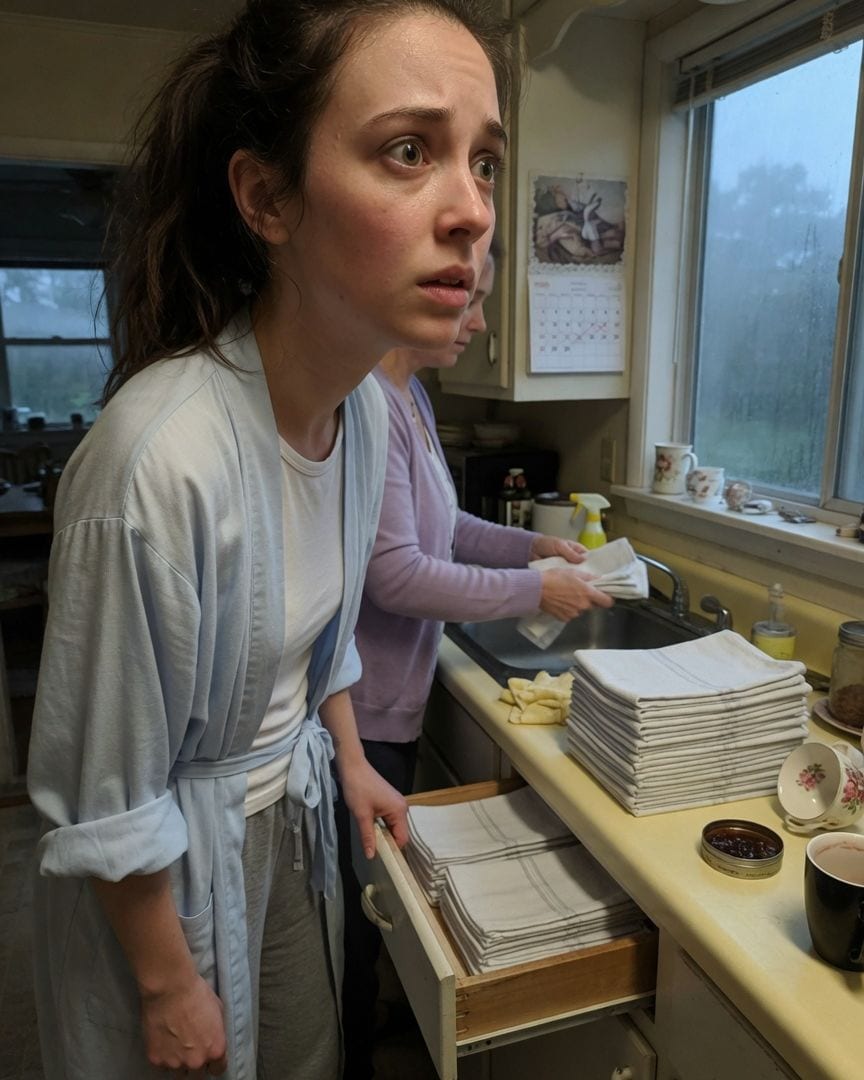
My mother's left wrist has a new scar. She never had one there.
My mother is finally home after her disappearance, and I'm trying to find our old rhythm. But then I watch her fold tea towels, a simple ritual I learned from her. She's doing it completely wrong, seam-out, insisting it's how she's always done it.
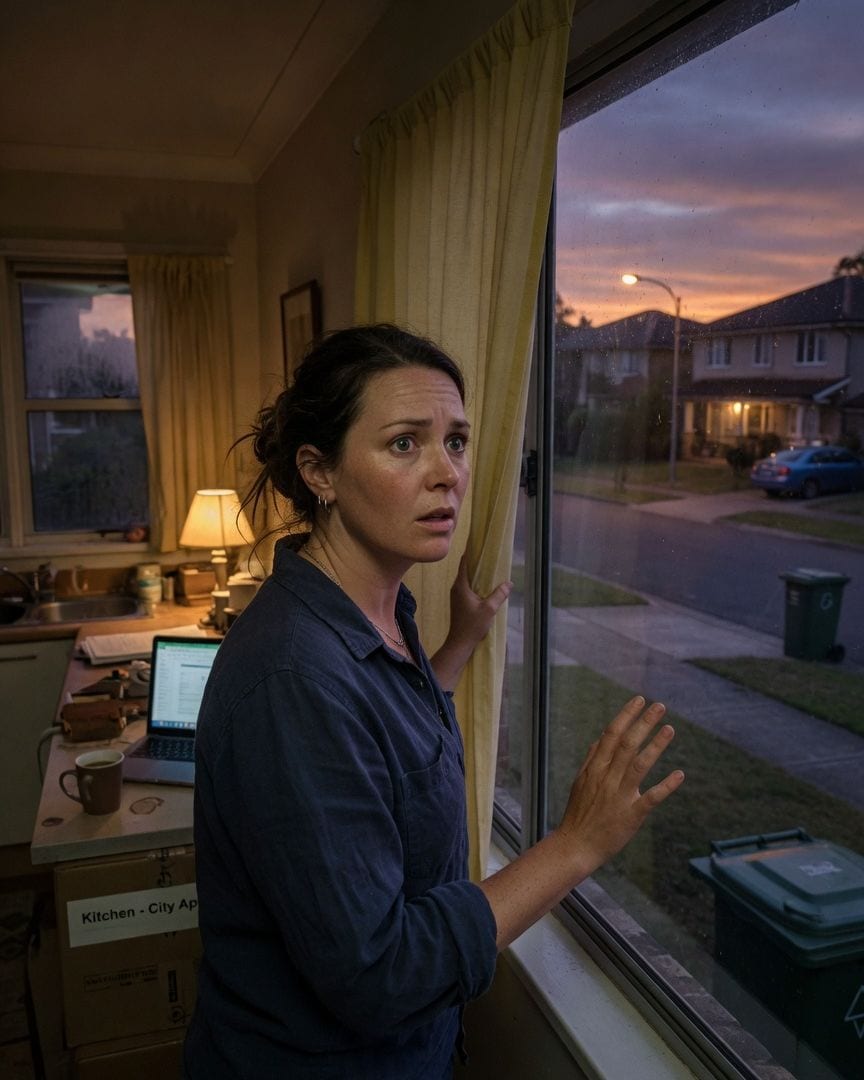
My bin was turned the wrong way Tuesday. The man three doors down hasn't been seen since, though his curtains still open.
New to Oakhaven, I dismissed the local warnings as charming quirks. But after I put my bin out first, my neighbor Joel Whitmore vanished, leaving only a cryptic 'My turn' note. The same strange symbol from his note was chalked on my bin, facing the street.
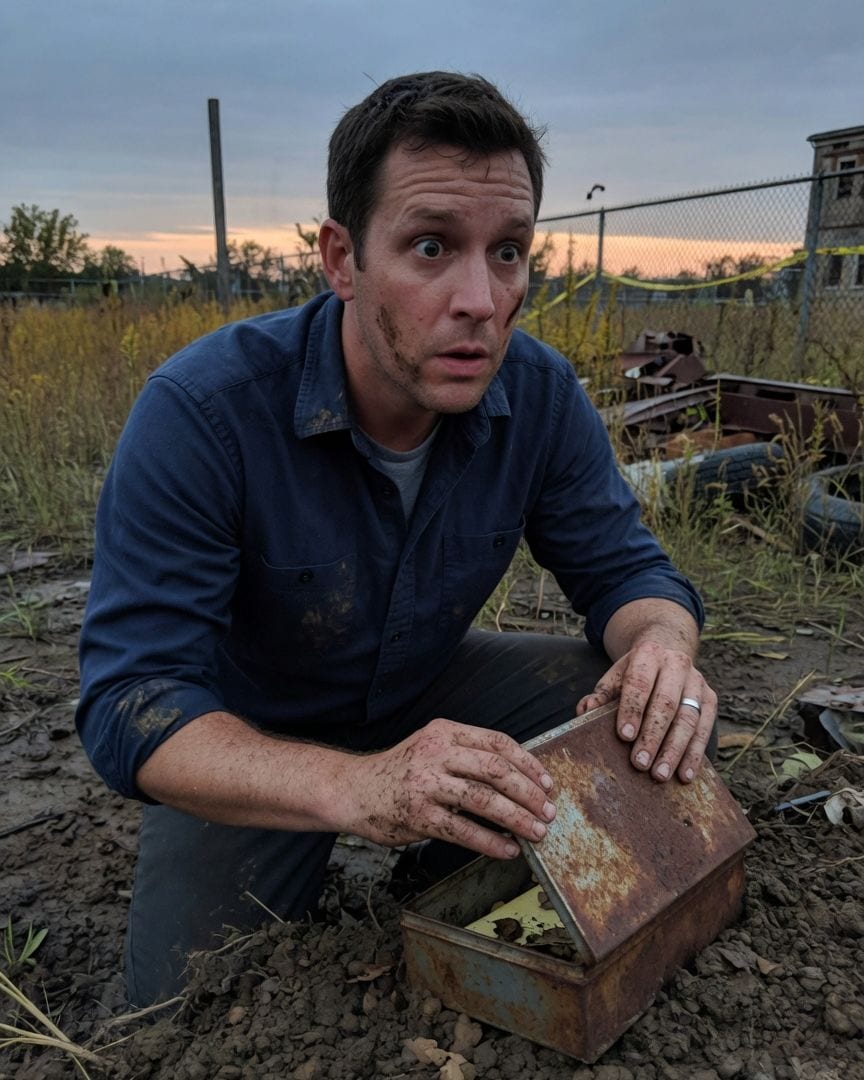
My ancestors' photo shows a letter addressed to me, dated 1972.
My birthday card arrived a day late, from a small town an hour north, nowhere we knew. Inside, an elegant, unfamiliar script read: 'Happy Birthday, Robert. The Field remembers.' It was postmarked from the site of my ancestral homestead, demolished decades before I was born.
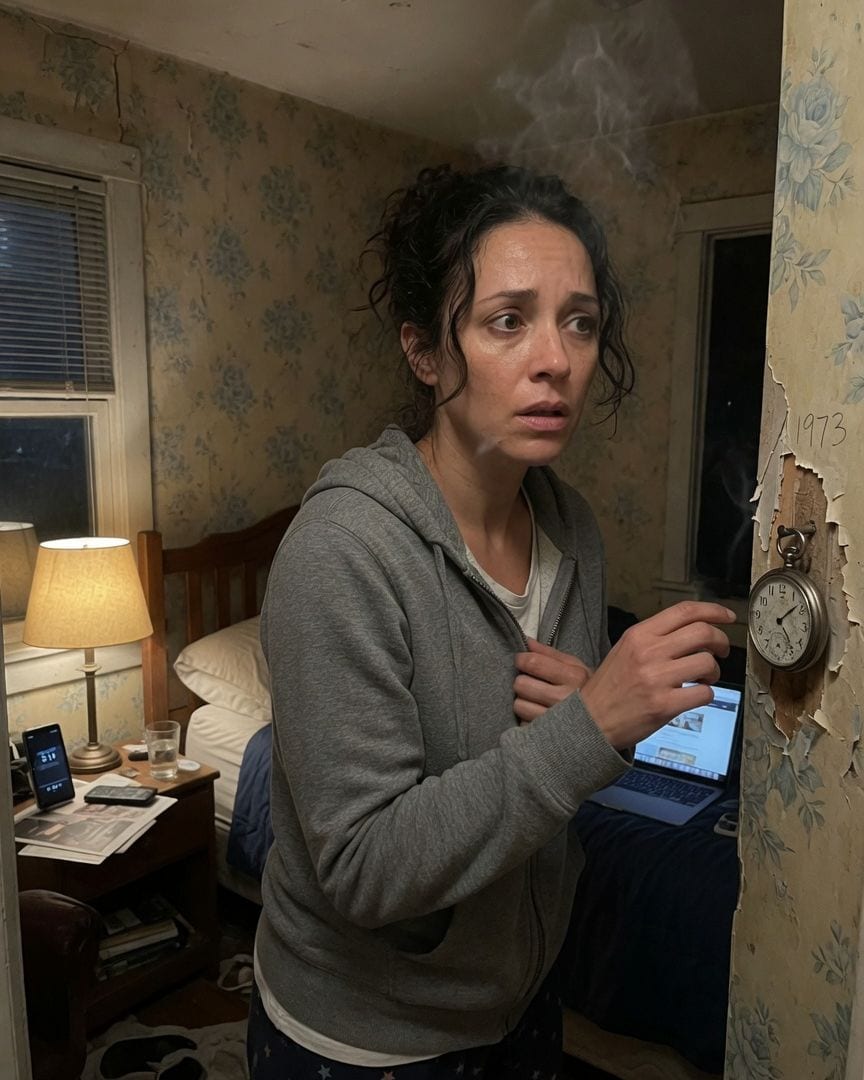
My pocket watch ticks at 3:14 every morning, warm in my hand. I’ve thrown it away; it’s back on its nail by dawn.
I’m a rational person, but my new old house came with a pocket watch I couldn't explain. I meant to discard the broken relic, yet a few mornings later, I woke to its faint ticking at 3:14 AM. It was warm, and no matter where I put it, the watch kept reappearing on its nail.
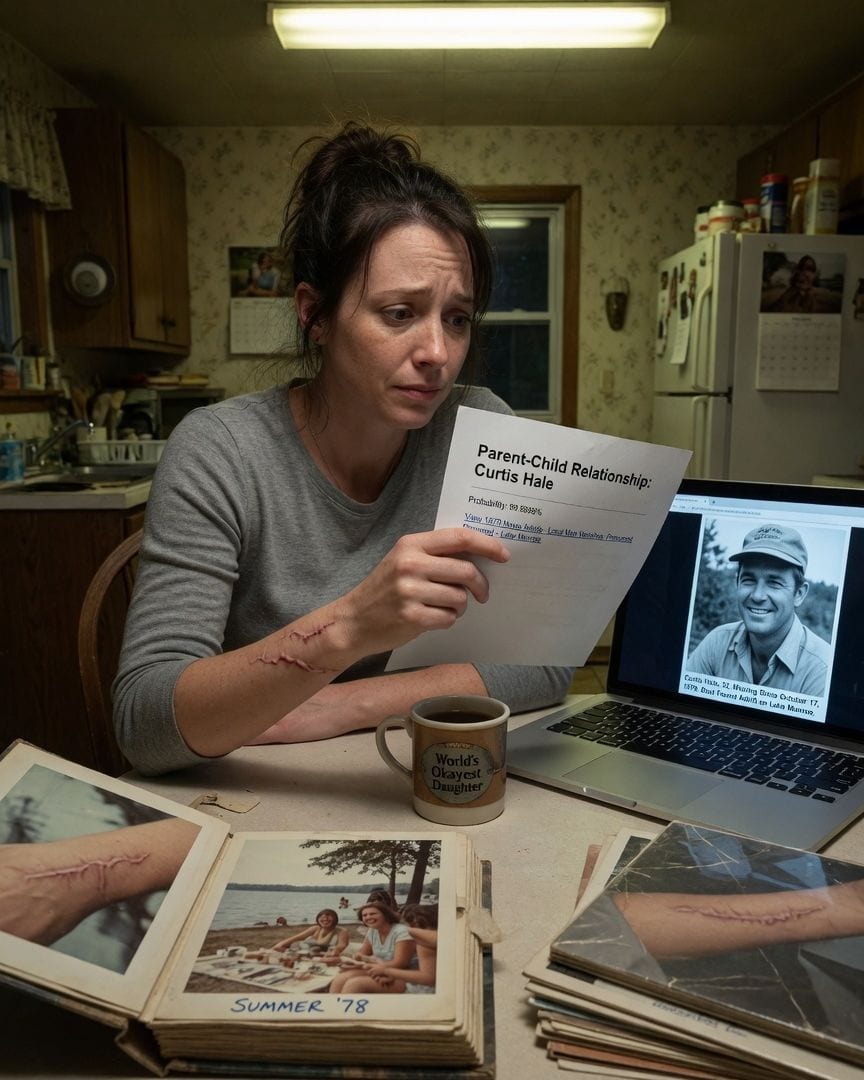
My DNA returned Curtis Hale as my father. He vanished in 1979. I was born twelve years later. The lab confirmed the match twice.
My DNA test results revealed something impossible: my biological father vanished in 1979, twelve years before my birth. My mother dismissed it as nonsense, but her reaction felt forced, leading me to old family photos. There, in a faded 1978 snapshot, I found my own distinctive childhood scar on the wrist of a stranger.