My fingerprints matched a man's 1971 arrest card. I've never been to that city, nor used that name. The examiner just stared at my hands.
The fluorescent hum of Russell Sheppard’s office felt colder than usual. I sat across from him, Fiona Walsh, a fraud auditor whose world was built on clear ledgers and irrefutable facts, watching him.
He was 55, forensic fingerprint examiner, his face a map of professional composure, but today, it was grim. A routine audit had required all staff, even me, to provide prints.
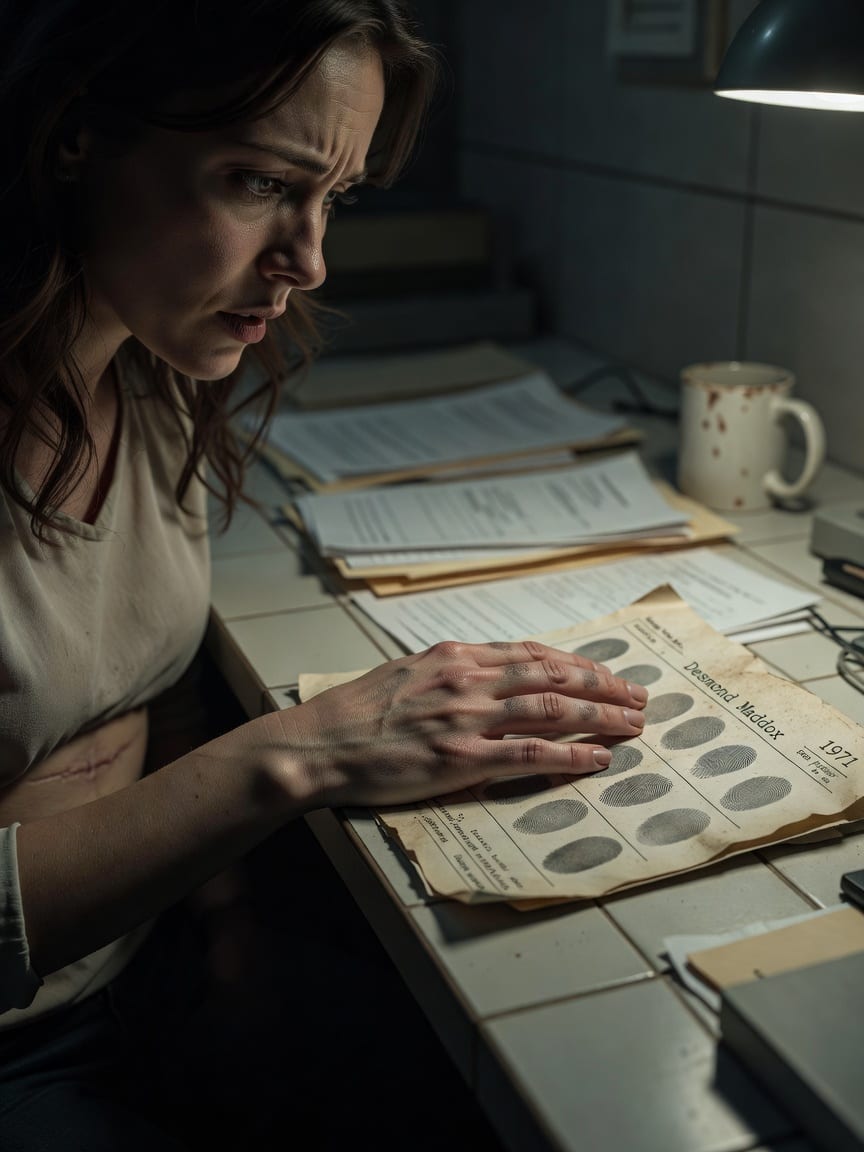
He didn't speak, just slid two ten-prints across the polished desktop. One was my fresh ink, still faintly greasy at the edges. The other, a yellowed booking card, dated 1971. The name jumped out: Desmond Maddox. The city: New Haven.
I’d never been to New Haven in my life.
I leaned closer, my rational mind already constructing explanations: a smudge, a mix-up, some ancient clerical error. But my eyes saw what his silent finger indicated. Ridge for ridge. Whorl for whorl.
Every detail, every pattern on the old card, was an exact, undeniable match to my own prints. Not similar. Identical. My breath caught, a cold knot forming in my stomach.
I looked up, searching his eyes for some flicker of doubt, some hint of a prank. Russell just sat there, utterly still, his gaze fixed not on the cards, but on my hands resting on the desk.
He waited, his silence louder than any shout, for me to speak, to explain the match that, by every law of biology and common sense, shouldn't exist. The impossible truth hung in the air, cold and undeniable.
My initial shock gave way to a cold, analytical drive. If my fingerprints were tied to a ghost, I needed to know who Desmond Maddox was.
I started with online searches, finding only a sparse, unsettling record: arrested in New Haven in 1971 for petty theft. Then, a few weeks later, the case was marked ‘closed/disappeared.’ No death certificate, no further trace in any public database.
It was as if he’d simply ceased to be.
The next morning, I drove the three hours to New Haven. The old courthouse, where Maddox had been processed, was a looming, grey stone building, its architecture heavy with forgotten bureaucracy.
Inside, the air was thick with the scent of old paper and dust. The current clerk, a young woman with a perpetually distracted air, was little help until I pressed her.
I asked about anyone who might remember the early 70s. She finally directed me to Reginald Carver, a 70-year-old retired city historian.
I found Carver in a cramped office filled with stacks of dusty boxes and microfiche readers, a human relic amidst the city’s past.
He was gaunt, his skin like old parchment, and he waved me off dismissively when I mentioned Maddox’s name. "Some things just vanish, young lady," he rasped, his voice dry as autumn leaves. "Best to let them.
Digging only stirs up more dust, and some of that dust bites."
He added, almost as an afterthought, his gaze drifting towards a grimy window, "The old city hall held a lot of secrets, before they tore out that whole wing. Back then, records were… looser."
As I left, I felt a faint, inexplicable chill. It wasn’t the temperature. I noticed a strange, bricked-up archway in the courthouse basement, not on any blueprints I could find, radiating that same cold.
It was too perfect, too sealed to be just a forgotten doorway.
Back home, the weight of the impossible match and Maddox's vanishing act pressed in on me. My mind spun, trying to force disparate facts into a coherent narrative. None emerged.
I stepped into the shower, hoping the hot water would ease the cold dread that had taken root in my bones. It did little. Absentmindedly, my fingers traced my own body, a familiar ritual.
They brushed against a faint, almost invisible surgical scar on my lower left ribcage, a tiny, old line I'd never truly noticed or questioned before. It was just there, a part of me, perfectly healed.
Suddenly, a memory flashed: a fleeting detail from the blurry microfiche of Desmond Maddox's arrest report – a note about a 'minor laceration, left side' and a 'surgical repair' weeks before his disappearance. My heart pounded against my ribs.
I stared at the scar in the steamed mirror, the cold water now feeling like ice, the impossible connection crystallizing.
The next morning, I tried to dismiss the scar as coincidence. A childhood injury, long forgotten. I called my mother, her voice fuzzy with sleep. "Mom, did I ever have surgery as a kid? Anything on my left side?"
She was adamant. "No, darling. Not a stitch. You were a healthy, clumsy child, but never a surgery." I dug out my childhood doctor's records, scanned them, then called their office. No record of any procedure.
The scar was real, inexplicable, and directly contradicted my entire lived history. It shouldn't exist.
I returned to New Haven, the bricked-up archway and Reginald Carver’s words echoing in my head. This time, he was visibly wary when I found him in his cluttered office. His face was tight, his eyes darting.
"I told you to let sleeping dogs lie," he rasped, clutching a stack of brittle ledgers. "Some truths are better left buried." I pulled out my phone, showing him a photo of my ribcage, pointing to the faint line.
"Desmond Maddox had a 'minor laceration' and 'surgical repair' here, Mr. Carver. I have this scar. My fingerprints match his."
His eyes widened, fixed on the photo, then on my face. He swallowed hard. "After his arrest," he began, his voice barely a whisper, "Maddox wasn't held in the main cells.
He was taken to a specific, obscure wing of the old city hall. It wasn't even technically part of the police department. Just… a section."
He recalled 'specialists' coming and going, hushed conversations, and Maddox’s file being 'handled differently' than any other. "They were very quiet about it," he whispered, looking over his shoulder, his gaze lingering on the closed office door, "Too quiet."
He told me that wing had been sealed off a few months later, 'renovated' into storage, and then ultimately demolished as part of a city revitalization project. "Like it never existed," he mumbled. "But I remember it."
My digging was noticed. One evening, returning to my apartment, I found my door slightly ajar. My heart hammered. I pushed it open slowly, expecting to find chaos, something stolen. Nothing. Everything was in its place.
But on my kitchen counter, next to my laptop, lay a single old, faded photograph. It was a shot of the New Haven city hall’s bricked-up archway, clearly from the 1970s, before it was completely sealed.
A chill ran down my spine; I'd only mentioned that archway to Carver. No one else. I picked up the photo, its edges soft with age. Who put it there? And how did they know?
Later that night, while researching old city ordinances online, trying to find any obscure reference to the now-demolished wing, my computer screen flickered violently. The bright display glitched, pixelated into static for a heart-stopping second.
Then, a single, garbled message flashed across the display, stark white on black: 'STOP LOOKING.' It was gone before I could react, before I could even screenshot it, leaving only my research page, pristine and innocent.
My hands trembled, cold sweat prickling my skin. The implication was clear, cold, and personal: someone was watching me, someone connected to the past and to Desmond Maddox, someone who didn't want me to unravel the truth.
I confronted Reginald Carver one last time. We met in a quiet, forgotten corner of the public library, surrounded by the hushed rustle of turning pages and the comforting, yet now hollow, smell of old books.
I placed the old photograph of the bricked-up archway on the table between us. Then, with a shaking hand, I pulled up the photo of my scar again. My voice was low but firm, cutting through the silence.
"My fingerprints match his. My body bears his mark. Someone is watching me. What happened to Desmond Maddox, Mr. Carver?"
He looked from the photo of the archway to my scar, then to my desperate face. The fear in his eyes was palpable, but so was a strange sense of resignation. He finally broke.
"I was a junior clerk then," he whispered, leaning closer, his voice hoarse. "Just a kid. But I was told to process Maddox's file with extreme secrecy. No copies. No public record beyond the initial arrest."
He fidgeted with a loose thread on his sweater. "Maddox was part of a 'program' – that’s what the higher-ups called it. An experimental project.
Run by a clandestine research division, operating out of that sealed wing of the old city hall. The one you found."
My breath hitched. "A program? What kind of program?"
Carver's eyes, wide and ancient, held a distant horror. "They called it… identity imprinting," he whispered, the words barely audible. "Or biometric transfer. They used… unclaimed individuals. People no one would miss. Maddox was one of their early, successful subjects."
He explained that the program was shut down abruptly, its files sealed, and the wing demolished to bury the truth. A city project, a convenient cover.
"They never said how it worked," he continued, "only that Maddox's 'identity' was successfully transferred to a new, younger 'host' after his body was... disposed of. Made sure nothing was left of him. Nothing. Except the record.
And… perhaps… a piece of him." My mind reeled. The fingerprints. The scar. The vanished man. The sealed facility. A horrifying pattern was snapping into focus, a mosaic of impossible truths.
The truth Carver told me was horrific. My body, my very identity, a vessel. Desperate for medical proof to refute Carver's impossible story, or at least understand my own physiology, I immediately booked an appointment for a full-body MRI.
I needed to know my body was hers. That it was mine. The scan was long and invasive, the hum of the machine a constant, unnerving drone, vibrations rattling through me.
Afterwards, the radiologist, Dr. Charlotte Ellsworth, 45, a calm, professional woman, called me back into her office.
Dr. Ellsworth's expression was unreadable as she sat me down and pulled up the scan images on a large monitor. The room was cool, clinical, the only sound the soft whir of the computer.
She pointed to a tiny, dense anomaly deep within my left ribcage, precisely where the old scar was. "It's not a tumor, Ms. Walsh. Not a foreign object from an accident.
It's perfectly spherical, metallic, no bigger than a pea, fused to your bone tissue. Utterly inert." She paused, her gaze flicking to my face. "It's been there for decades. And it's not possible."
She then pulled up a faded, grainy X-ray from Desmond Maddox's old medical file – an X-ray I had obtained through an anonymous tip after Carver's confession.
The same impossible, pea-sized metallic implant was clearly visible in the exact same location. Dr. Ellsworth looked at me, then at the scans, then back at my face, her eyes wide with dawning horror.
Dr. Charlotte Ellsworth was stunned. She confirmed the implant was real, undeniable, and a perfect match to Desmond Maddox's historical X-ray. The implications rippled through the sterile room.
"Such technology," she murmured, her voice laced with disbelief, "was decades ahead of its time in 1971." I, now utterly convinced, revealed Carver's story about the 'identity imprinting' program.
Dr. Ellsworth, a rational scientist grounded in observable facts, was forced to consider the impossible.
Together, we found obscure, declassified papers mentioning a Cold War-era 'bio-signature persistence' project, vaguely hinting at human trials and 'biometric host integration.' The language was dense, redacted, and chillingly vague.
The implant, Dr. Ellsworth theorized, was likely a marker, a tracking device, or perhaps even a crucial component in the transfer process itself, designed to ensure the new 'host' retained the biometric data of the 'donor.'
The coherence was terrifying: my fingerprints, the inexplicable scar, the vanished man, the sealed facility, the impossible implant – it all fit.
My body wasn't just mine; it was a living archive, a chilling testament to a buried experiment that succeeded beyond its creators' wildest, or most horrifying, dreams.
I knew I couldn't stay. The dread was not just that my identity wasn't truly my own, but that the institution behind it might still exist, still be watching. They'd found me once. They could again.
I meticulously gathered all my evidence: the fingerprint reports, photos of my scar, the MRI scans, Desmond Maddox's file, the declassified papers, and a discreetly recorded confession from Reginald Carver, knowing he would never testify publicly.
I understood that no one would believe me without irrefutable proof, and even then, the implications were too profound for the world to accept.
I decided to expose it, but not from my current life. I emptied my bank accounts, sold my apartment, and resigned from my job without notice, severing all ties.
I prepared to disappear, to become a ghost, carrying the weight of this impossible truth. As I packed my last bag, folding a worn t-shirt, a faint, rhythmic tapping sounded from outside my window, like a branch against the glass.
But there were no trees nearby, only the brick wall of the building next door. I froze, listening, my breath held tight in my chest. The tapping stopped.
I glanced at my reflection in the dark window – and for a split second, saw not my own eyes, but a flicker of something older, colder, looking back, before it vanished.
Fiona Walsh vanished without a trace. Her apartment sold quickly. Her colleagues assumed she simply moved on, perhaps to a new city for a fresh start.
The police briefly investigated her disappearance but found no foul play, only a meticulously cleared life.
The files she compiled – the fingerprint reports, the MRI scans, the old documents – were found months later in a secure, anonymous cloud drive, encrypted with layers of obsolete military-grade protocols, and dismissed by authorities as the rambling of a troubled mind.
The world, unburdened by impossible truths, quietly moved on.
Years pass. Fiona, now living under a new name in a remote coastal town, keeps to herself. She is a quiet presence, always looking over her shoulder, a phantom in her own life.
She often traces the faint scar on her ribcage, a constant, unsettling reminder of the truth she carries.
One day, while walking on the deserted beach, she sees a local fisherman, an old man with tired eyes, staring at her from his boat. He approaches, his gait slow, a strange, knowing look on his weathered face.
"You have his eyes," he says, his voice raspy, surprisingly clear above the roar of the waves. Fiona freezes, her heart seizing. "Who?" she asks, her voice barely a whisper.
The old man just shakes his head slowly, a faint, sad smile playing on his lips, a secret held for decades. "The one who came before. Desmond."
He turns and walks away, leaving Fiona standing alone, the waves crashing around her, the cold dread settling deep. The dread never leaves her; she knows she carries him.
If this one got to you
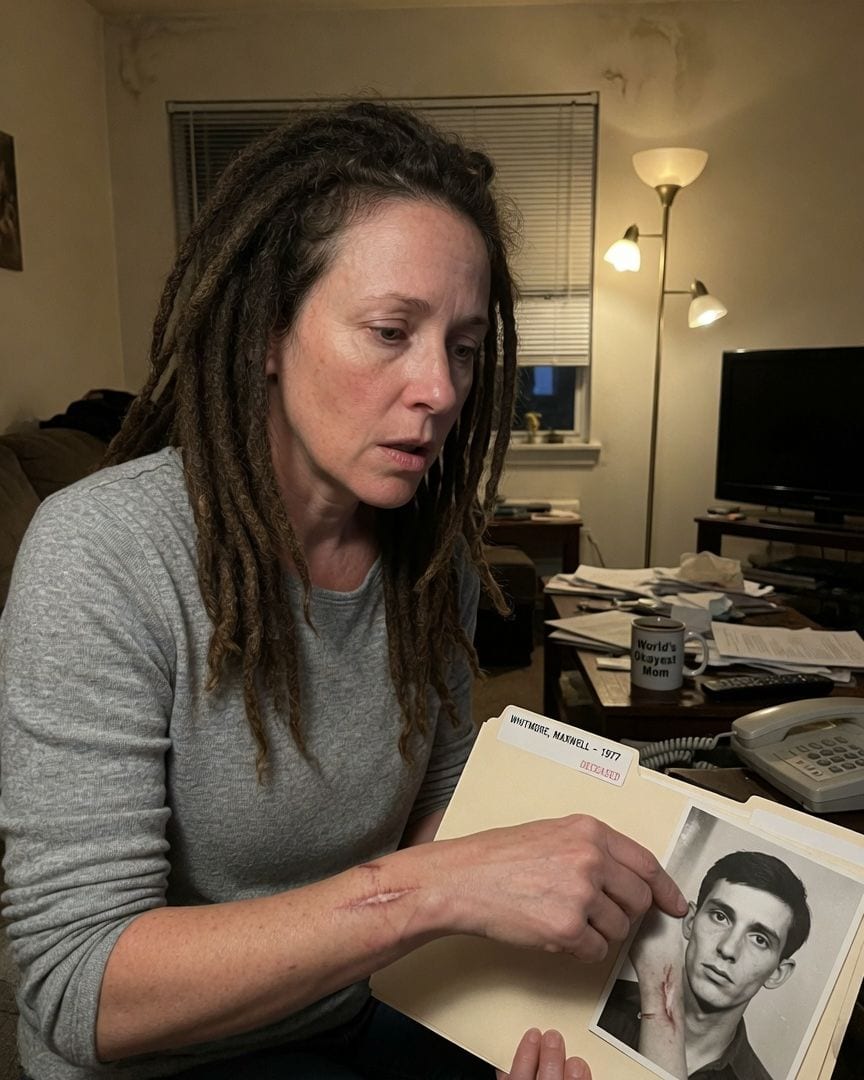
My fingerprints perfectly match a dead man's. He died in prison in 1980, but the bureau insists our hands are identical.
My distant cousin's arrest led to a routine fingerprint check, but the results were anything but normal. A bureau examiner confirmed my prints were identical to an inmate who died in custody decades ago. Then I saw his mugshot: the faint scar on his wrist was the exact same as my own unique birthmark.
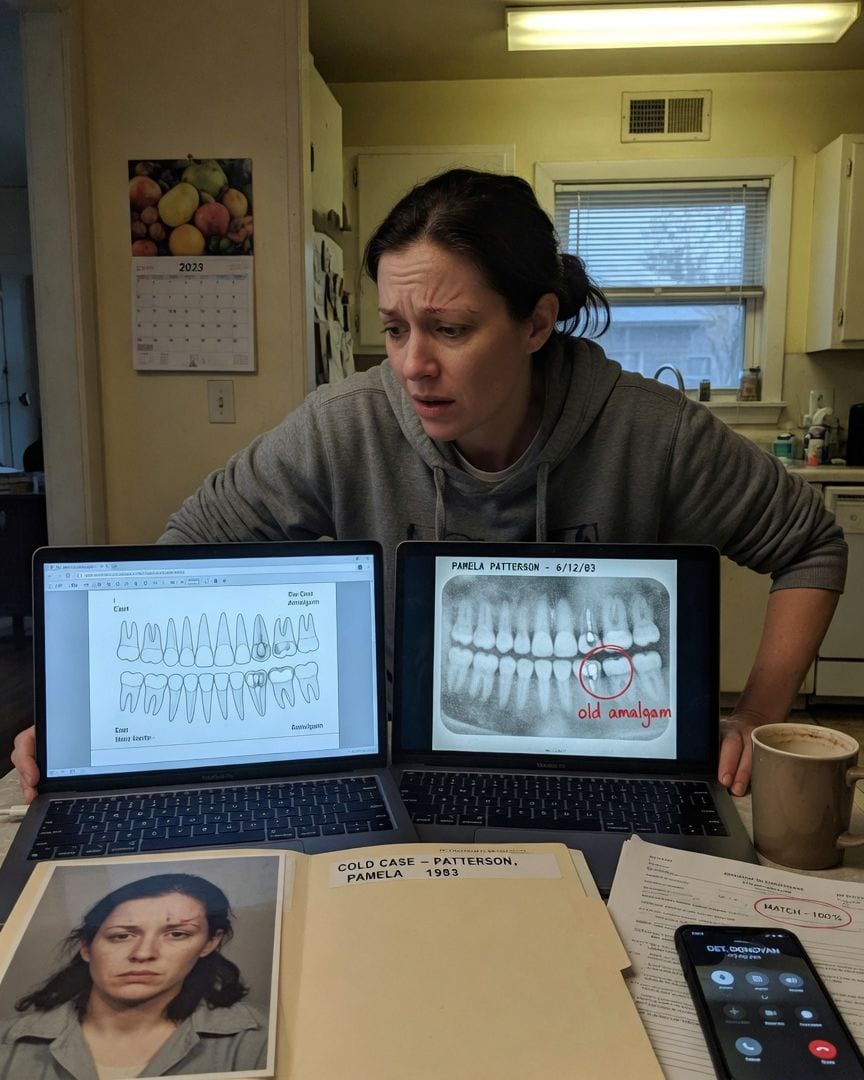
I gave a swab to be ruled out of a 1983 murder, but my DNA matched a hair from the scene exactly — and that hair belonged to a victim recorded dead there in 1983.
I gave a routine cheek swab for a 1983 cold case, barely thinking about it. But then Detective Donovan called, telling me my DNA matched the victim's hair exactly. The impossible truth: I wasn't born until 1991.
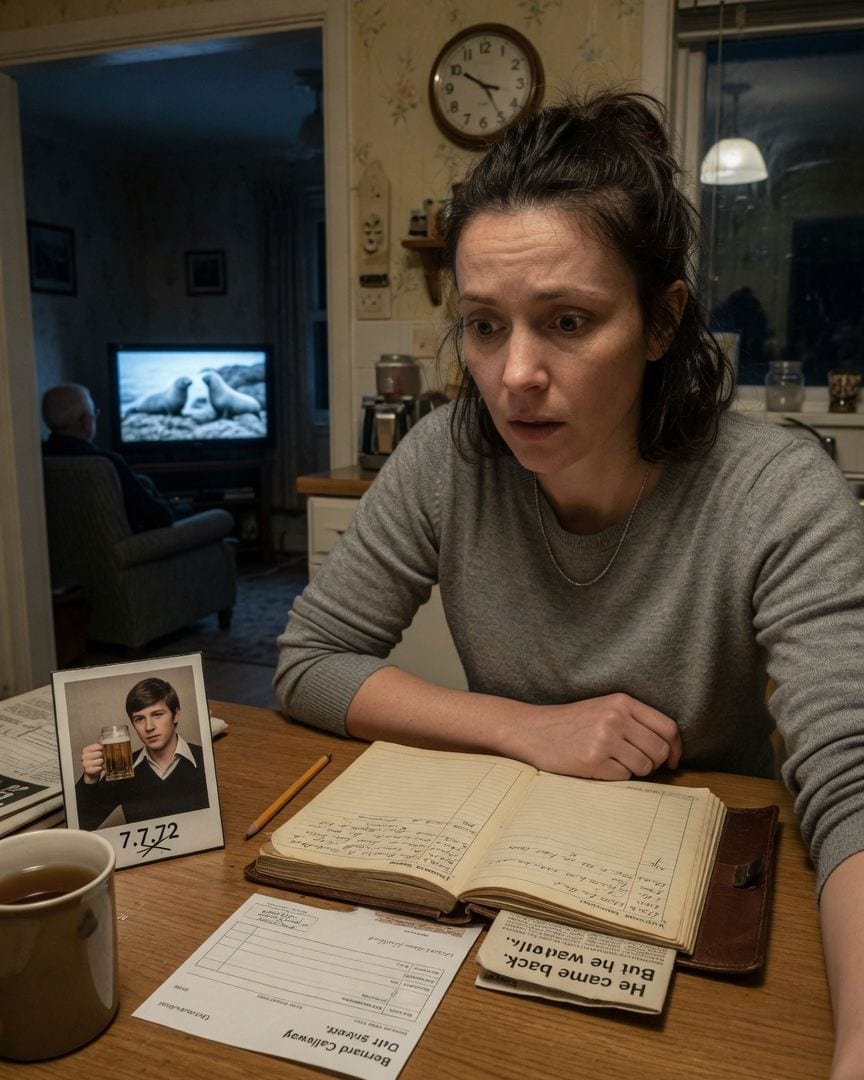
My father's bank slip had uncrossed '7's. He swore he never had that habit.
My father, Bernard, returned three months ago, a miracle after being presumed lost at sea. But a bank statement revealed a disturbing detail: the '7's in his signature were uncrossed. For decades, he'd meticulously crossed every '7', yet now he denied ever having the habit.
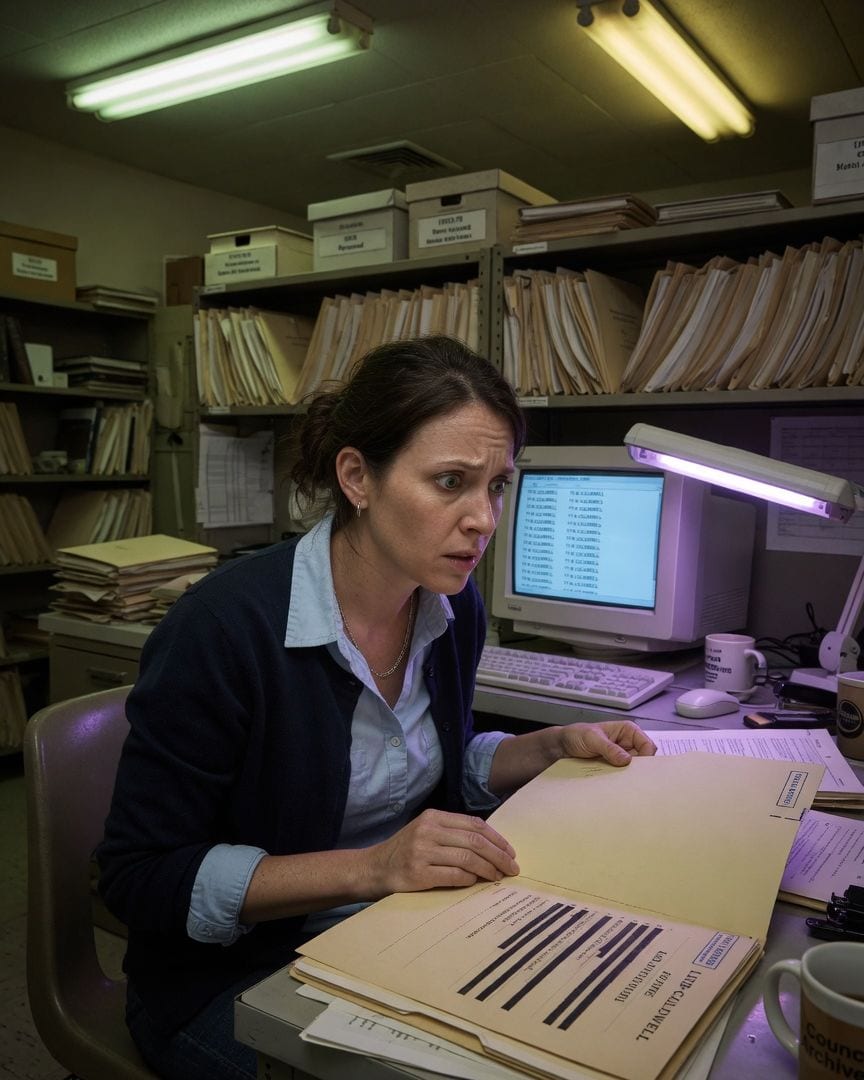
My employer's security file holds a vetting report on me dated nine years before I ever applied. It has my full name and my parents' address — with only one line, the source who referred me, blacked out.
Working a routine data audit, I pull my own security file. The issue date is nine years before I even applied for the job. Then, hidden within an old archive file, I find my current address etched under a blacked-out line.
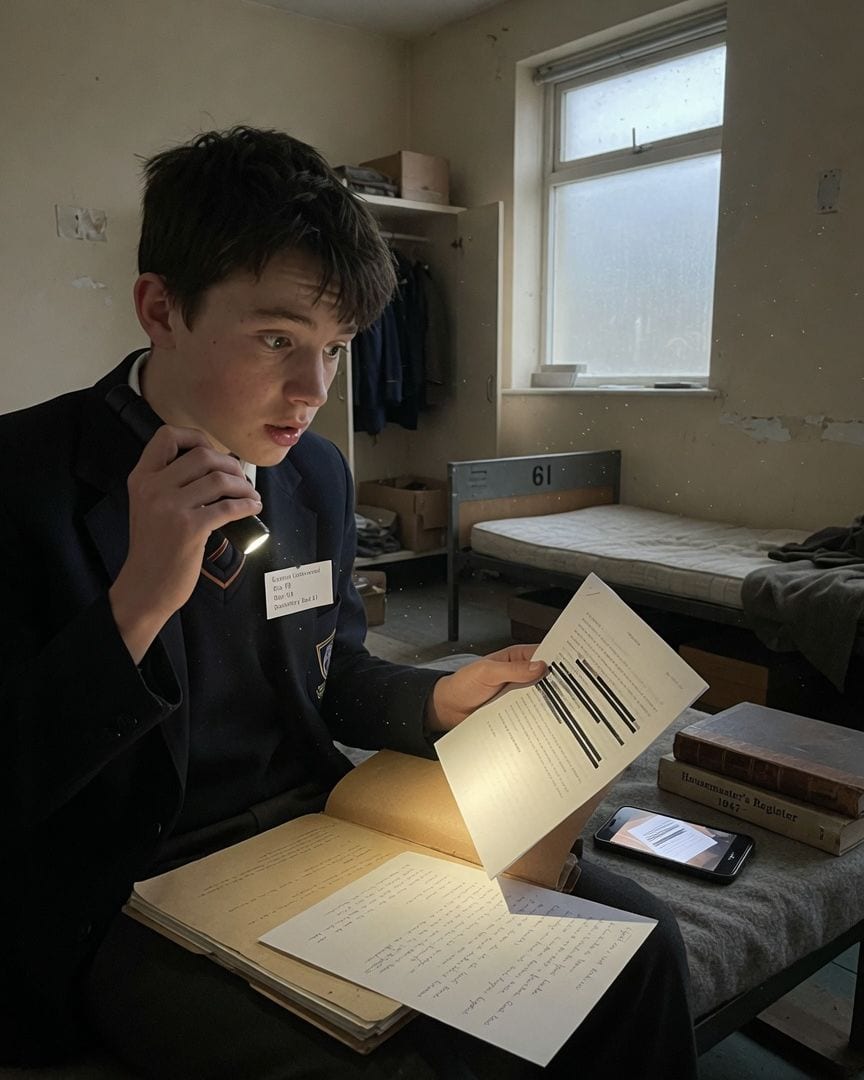
My boarding school bed number was 61, and the archive shows a boy assigned it every eight years since 1947, each leaving mid-term with the bed 'to remain made up'.
I found my matriculation card, listing me as 'Boy 61, Dormitory Bed 61.' Later, an old ledger revealed every boy assigned that bed since 1947 left mid-term, with an unsettling note: 'bed to remain made up.' Our housemaster’s recent scribble, 'as the others,' only deepened the dread around my own assigned bed.
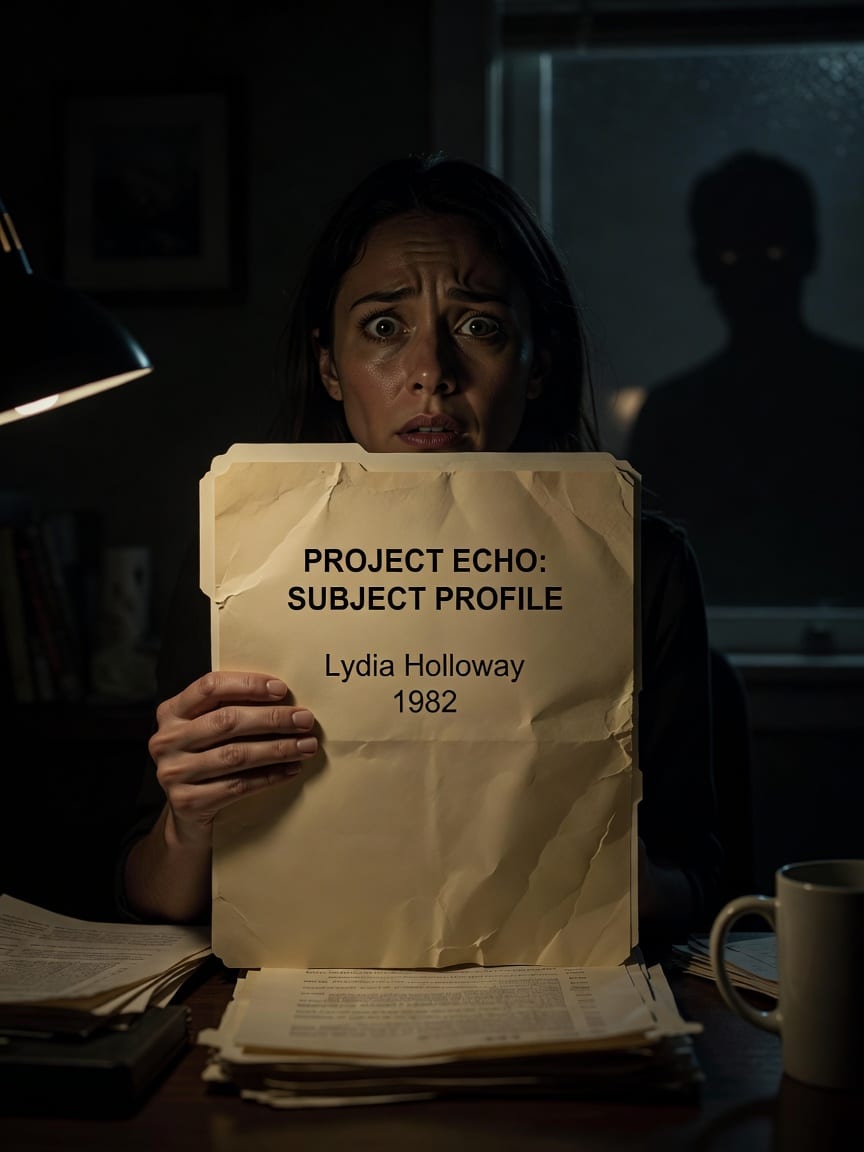
My own signature is on a Baltimore police report for a hit-and-run I never witnessed. The officer remembers my university sweatshirt.
I was settling into a quiet Tuesday evening when Baltimore PD called, asking about a witness statement I supposedly gave. They described my faded green university sweatshirt, seen at a hit-and-run last Friday. But my sweatshirt was in my dresser, and I was home in Seattle.