A former Coast Guard pilot found a survival kit from a chopper lost in 1993. The rations inside expire in 2030.
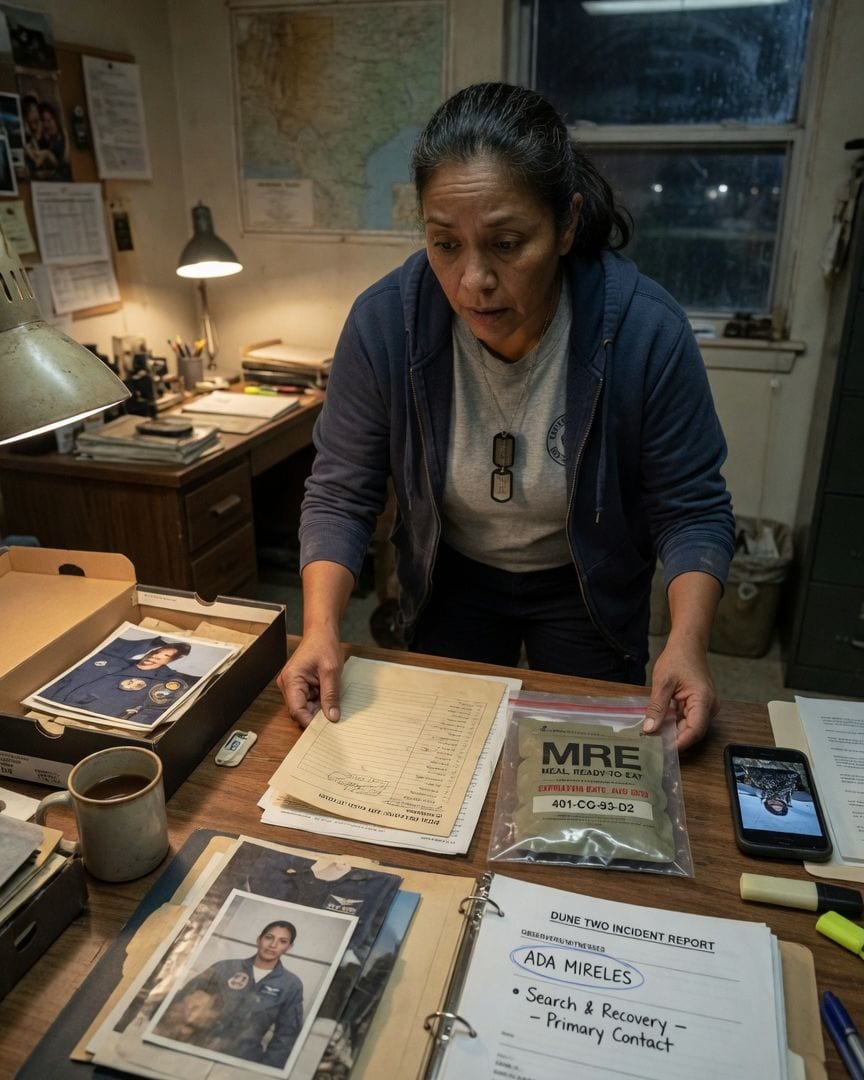
Ada Mireles, 52, a former Coast Guard pilot, traced the call from Galveston back to the shrimper who’d found it.
Her hands trembled slightly as she held the grainy photo on her phone: a corroded metal seat pan, unmistakably from a Coast Guard helicopter, snagged in a net.
The barnacles and rust told a story of decades underwater, but it wasn't the decay that chilled her. It was the small, sealed survival kit nestled inside, its contents visible through a clear plastic pouch.
Her eyes zoomed in on the MRE packet, its official, stamped expiration date clearly reading: 'AUG 2030'. The Dune Two, the helicopter she had searched for so desperately in her youth, had gone down in 1993. Thirty-seven years ago.
The date made no sense. She scrolled through other pictures the shrimper had sent: a water-damaged flashlight, a foil emergency blanket, all part of the standard issue kit. But always, the impossible date on the rations.
She rubbed at her temples, trying to rationalize it away. A misprint? A batch error? But the Coast Guard was meticulous. Their equipment wasn't prone to such glaring mistakes, especially not on survival gear.
The salt air of the Gulf, even through the phone line, seemed to carry a new, unsettling quality.
Ada drove the Texas coast, the salt air doing little to clear her head. The drive to the Coast Guard station felt longer than usual, the familiar stretch of highway now infused with a strange anticipation.
At the facility, the recovered seat pan was laid out in a sterile evidence room, smelling faintly of brine and disinfectant. The survival kit sat beside it, removed from its corroded housing. The rations were real.
The 2030s date was real. Ada picked up one of the packets, running her thumb over the embossed numbers. It was impossible, yet here it was, tangible under her touch.
She had packed kits like this for years during her active duty, every serial number etched into her memory, a protocol ingrained by relentless training. The consistency, the precision, was paramount.
Back home, she dug through an old shoebox she kept in her closet, filled with fading mementos and meticulously kept records from her Coast Guard days.
Her fingers brushed past an old uniform patch, a faded photo of her flight crew, until she found them: her personal packing lists. She’d always been fastidious.
She found the list for the very batch of survival kits assigned to Dune Two’s squadron in 1993. Her eyes scanned the neat columns of numbers and descriptions.
The serial number for the kit found in the seat pan, 401-CG-93-D2, was right there, next to her signature. She recognized her own looping handwriting, a habit she’d since broken. The record was undeniable.
Her hand had signed for a kit that, by all accounts, should have had an expiration date somewhere in the late nineties, maybe early 2000s at the absolute latest. But 2030? It was a cold, quiet absurdity.
Ada requested the full incident report for Dune Two. It took several calls, several days of bureaucratic navigation, but eventually, Coast Guard archivist Marcus Prescott, a man with neatly combed gray hair and an unsettlingly placid expression, called her.
He had the file ready. Ada drove back to the station, the quiet hum of her truck a contrast to the buzzing in her mind. Prescott's office was small, crammed with shelves of binders and old microfiche readers.
He retrieved a thick binder, its cover faded from years of storage. Among the standard search-and-rescue logs and accident investigations, a thin, unmarked manila folder was tucked into a plastic sleeve at the very back. It was almost an afterthought.
Ada pulled it out, her fingers brushing against the cool plastic. Inside, a faded, official-looking document, clearly older than the rest, was stapled to a blank page.
It listed the crew of Dune Two, their ranks and serial numbers, exactly as she remembered them from the briefings. Then, under a separate heading, 'Observers/Witnesses,' her own name, Ada Mireles, was typed.
Next to it, a handwritten note in precise blue ink read: 'Search & Recovery – Primary Contact.' Ada’s breath caught in her throat.
She had searched for Dune Two, yes, flown the last sortie before they called off the hunt, but only after it vanished. She was never a 'primary contact' to its disappearance.
The phrase felt like a heavy, cold hand on her shoulder.
Ada confronted Marcus Prescott with the document the next morning. She laid it flat on his cluttered desk, the handwritten note stark against the pale paper. He glanced at her name, then the note, his placid expression unwavering.
Not a flicker of surprise or concern crossed his face. 'A misfile, perhaps,' he suggested, his voice smooth, devoid of any inflection. 'Or a pre-mission planning document that never got updated. Happens with these older records.'
Ada pressed him, asking why her name, specifically, would appear in such a capacity for an incident she only responded to. His answers remained evasive, bureaucratic, a polite wall of officialese. The calm was unnerving.
He offered no further explanation, simply smiled a thin, neutral smile and suggested she might find other discrepancies in old documents. Ada left, her mind reeling. The quiet denial felt more damning than any outburst.
She couldn't shake the feeling Marcus knew more, that his placid demeanor was a carefully constructed mask. She started calling old colleagues, former Coast Guard personnel, anyone who might have had a peripheral connection to Dune Two's disappearance.
Most remembered it as a tragic, unsolved mystery, a black mark on the Coast Guard's record, and offered condolences for her continued search.
But then she found Eleanor Caldwell, 75, a retired radar operator who had been on shift that night in '93.
Eleanor's memory was hazy, fractured by time, but she recalled a 'blip' from that time, a ghost contact that had 'unhappened' in the official logs.
'It was there,' Eleanor rasped over the phone, her voice frail but insistent, 'and then it just… wasn't. Like a clerical error on the screen, but it wasn't.'
A week later, a package arrived from Eleanor, a plain brown wrapper with no return address, just a P.O. box number. Inside was a grainy, faded printout of a radar screen from the night Dune Two went missing.
It showed Dune Two's transponder signal, clear as day, a solid green dot. And then, another, smaller, impossibly fast contact, a faint streak moving directly into Dune Two's position. Both vanished in the very next frame.
The empty space on the paper where they should have been pulsed with a silent, impossible truth.
The next morning, a plain brown envelope appeared in Ada’s mailbox. No stamp, no return address, just her name scrawled on the front in unfamiliar block letters. The paper felt thick, institutional.
Inside was a single sheet of paper: a photocopy of a page from a Coast Guard regulation manual. A section on 'Unauthorized Access to Declassified Material' was highlighted with a neat yellow marker, precise and deliberate.
Ada felt a cold prickle on her skin, a distinct sensation of being watched. She scanned her street, her gaze sweeping past her neighbor's parked cars, the familiar oak trees.
A dark blue sedan, unfamiliar, was parked two houses down, its windows tinted. It seemed too clean, too still.
It was gone by midday when she checked again, but she saw it again the next morning, in the same spot, and the day after that, always just a little too far to discern its make, always too dark to see inside.
She tried to catch a glimpse of the driver once, pretending to get her mail at the curb, but the windows remained opaque, reflecting only the gray sky.
One evening, as she watered her porch plants, a mundane, calming ritual, she felt a distinct chill, a sense of being watched from the sedan. The feeling was so strong it raised the hairs on her arms.
She turned quickly, her heart thumping against her ribs, but the car was empty, the driver’s side door slightly ajar, as if someone had just stepped out and vanished.
The message was clear, precise, and chilling: someone knew she was digging, and they were watching her every move.
Ada returned to Marcus Prescott’s office, the radar printout clutched in her hand. The paper was creased from her grip, the impossible blips a silent scream. She laid it on his desk, flattening it with a determined hand.
'This is what Dune Two encountered,' she stated, her voice tight, barely above a whisper. 'And this is why my name is in that file, why they called me the 'Primary Contact'.'
Marcus studied the printout, his gaze lingering on the impossible blip that converged with Dune Two’s signal. He sighed, a sound of weary resignation, as if this was an old, familiar conversation he’d had countless times.
'Sometimes, Ms. Mireles,' he began, his voice still unnervingly calm, 'things move off the grid. Anomalies.' He didn't deny the blip. He didn't offer a mundane explanation, didn't suggest a faulty sensor or a weather phenomenon.
Instead, he opened a locked drawer in his old wooden desk and pulled out another file, thinner, older, its cover stamped 'DECLASSIFIED - REDACTED.' The paper inside felt crisp, somehow more significant than the yellowed reports.
Inside was an internal memo, dated just days after Dune Two’s disappearance, from an unnamed, higher authority. It referred to 'Asset Dune Two, status: filed.' Ada frowned, reading the words again. 'Filed?'
Marcus leaned back in his creaking chair, his hands steepled on his desk. 'It's a bureaucratic term, Ms. Mireles. Not 'lost.' Not 'destroyed.' It means removed from active service, all records sealed, contents repatriated to secure storage.'
He paused, meeting her eyes with a gaze that seemed to hold centuries of quiet knowledge. 'Sometimes, elements are updated before being filed.' He gestured vaguely toward the future-dated rations, the first impossible detail that had drawn Ada into this.
The words were clinical, detached, devoid of any human emotion, but the implication was a cold, creeping dread.
The Coast Guard wasn't just covering up a conventional crash; they were managing something impossible, something that defied the laws of physics, and they had a chillingly precise language for it.
The air in the office, normally stale, now felt heavy, charged with unspoken truths.
Ada’s mind raced, connecting the dots: the impossible rations, the vanishing blip, the calm, bureaucratic language Marcus used to describe the unthinkable. The pieces began to click into place, forming a terrifyingly coherent picture. 'And my name in the file?'
she asked, her voice barely a whisper, the dread tightening its grip around her chest. 'What does 'Primary Contact' mean in this context?'
Marcus was silent for a long moment, his eyes unreadable, reflecting only the dim light from the overhead fluorescent fixture. The quiet stretched, thick and oppressive, making the old office feel claustrophobic.
Then, with a slow, deliberate movement, he pulled a small, modern tablet from his desk drawer. It was sleek, professional, utterly out of place in his dusty, paper-filled office, a jarring contrast between old-world bureaucracy and cutting-edge technology.
He tapped a few times, his fingers moving with practiced ease, a fluid motion that suggested long familiarity, then rotated the screen toward her. It was a live feed of a database, clean and stark in its digital presentation.
Ada’s breath hitched. Her name, Ada Mireles, was highlighted in a bright, unmistakable yellow. Under 'Current Status' it read: 'Active Investigation Target. Primary Contact: Marcus Prescott. Projected Disposition: Pending.'
The date displayed prominently at the top of the screen was today's date.
Ada stared at the tablet, a cold knot forming in her stomach, a leaden weight sinking through her. 'What is this?' she demanded, her voice hoarse, barely her own. 'What does 'Projected Disposition: Pending' mean?'
Marcus met her gaze, his calm unwavering, almost serene. He folded his hands on the desk, his expression utterly devoid of malice, which somehow made his words even more terrifying. 'It means, Ms. Mireles, that your investigation has flagged you.
You've become a 'primary contact' for the Dune Two incident, just as the file you found stated. The institution monitors anyone who gets too close to 'filed' assets.'
He explained, in the same even tone, that Dune Two wasn't lost to the sea; it was recovered by them after an encounter with 'The Thing on the Scope,' the impossible blip Eleanor Caldwell had seen.
The crew, too, was 'processed.'
The future-dated rations were a deliberate, calculated detail left in the kit, a 'bread crumb,' as he called it, a test for future 'contacts' like her, designed to pique the curiosity of someone with the right background and the tenacity to follow the thread.
'We manage these anomalies,' Marcus stated, his voice devoid of any personal judgment, 'for stability. The world needs to remain coherent, Ms. Mireles. And sometimes, coherence requires… adjustments.'
Every planted clue, from the impossible rations to the vanishing blip, to her own name now appearing on a live, actively updated file, clicked into place with horrifying precision.
The dread was not in a sudden shock, but in the terrifying, rational coherence of it all, a cold, perfect logic that justified the unimaginable.
Marcus offered Ada a choice, his voice still quiet, almost gentle, as if he were discussing a mundane career change. 'You can become part of the system, Ms. Mireles. Help us manage the filed assets.
Your skills and your insight would be invaluable.' He gestured vaguely around his office, at the shelves of binders, the microfiche readers, the clean tablet. 'Or you, too, will be filed.'
Ada felt a wave of nausea, a sudden, dizzying lurch in her gut. The air in the room grew heavy, cold, as if the temperature had dropped ten degrees.
The quiet hum of the fluorescent lights seemed to amplify, a high-pitched whine that grated on her nerves. 'No,' she whispered, her voice trembling, refusing to be drawn into his chillingly reasonable world. 'I won't be part of this.'
She pushed back from the desk, trying to stand, to escape the suffocating calm of his presence, the quiet horror of his words. Marcus rose with an unsettling grace, his movement fluid and noiseless, blocking the office door.
He didn't raise his voice, didn't make a sudden move, didn't threaten in any overt way. His eyes, however, were utterly devoid of warmth, reflecting only the cold light of the overhead fluorescent fixture, flat and expressionless.
'You know too much, Ada,' he said, his voice flat, final, like a verdict delivered. 'The file needs to be closed.' The room seemed to shrink around her, the quiet hum of the fluorescent lights suddenly oppressive, almost deafening.
The air grew thicker, heavier, pressing down on her. The file was still being signed, and Ada Mireles was the next entry.
Ada Mireles's small coastal house in Texas was put up for sale a few months later. A 'For Sale' sign, faded by the sun and salt, sat crookedly in the overgrown front yard, leaning slightly against a dying rose bush.
The windows of the house reflected the empty sky, like vacant eyes. The new owners, a young couple relocating from out of state, found an old shoebox in the attic, tucked away beneath a stack of old towels.
It was filled with yellowed papers and photographs. Tucked at the bottom was a meticulously organized packing list from 1993, detailing survival kit contents. The serial numbers, including 401-CG-93-D2, were still clearly visible in Ada’s precise, looping handwriting.
They laughed about her old-fashioned meticulousness and threw the box in the trash.
The file on Dune Two, marked 'Closed,' was updated in the Coast Guard's archives. A new entry, dated the day Ada Mireles disappeared, simply stated: 'Primary Contact: Ada Mireles. Status: Filed.'
If this one got to you
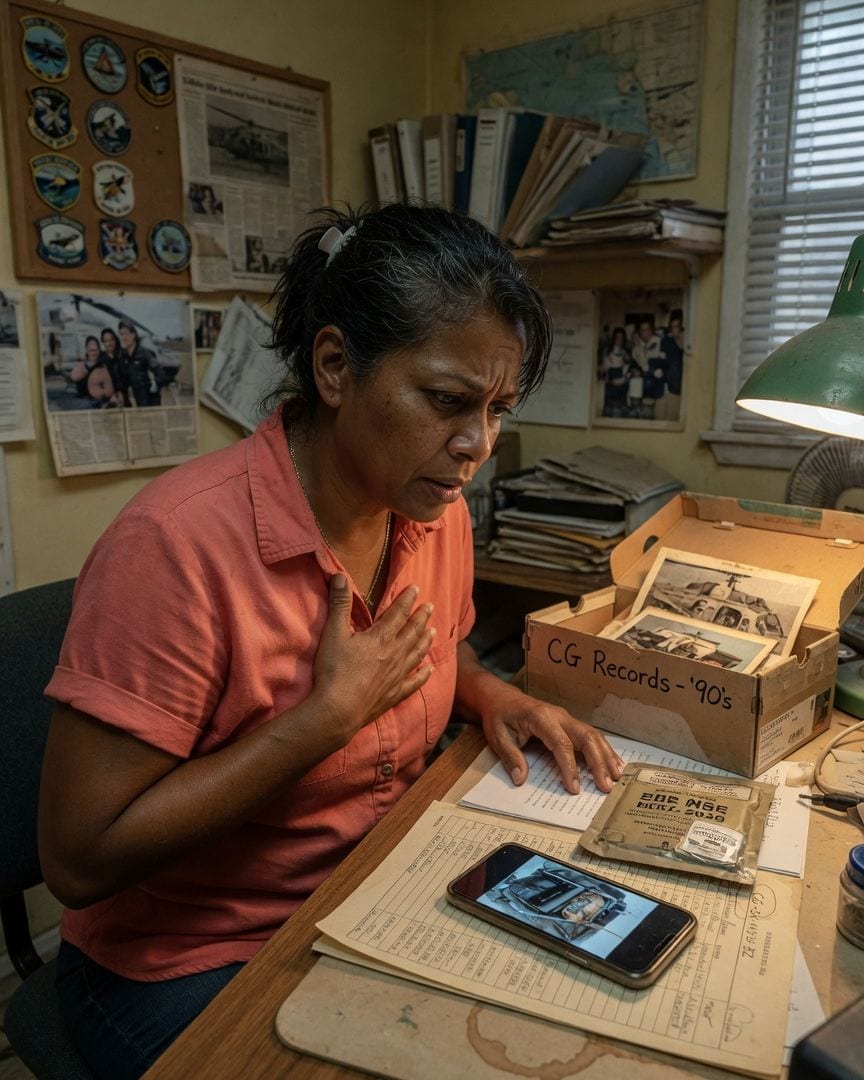
A retired Coast Guard pilot found the survival kit she packed in 1993 — sealed with rations expiring in 2034.
Retired Coast Guard pilot Ada Mireles thought her days of search-and-rescue were long past, but a call about a shrimper's net dragged her back to a decision that had haunted her for decades: the lost helicopter Dune Two. On a humid Texas dock, she found Dune Two's corroded seat pan, and inside its emergency kit, surprisingly pristine MREs. Ada's breath hitched as she traced the printed date on the ration packet: "EXP: 2034" – an impossibility, as she had personally packed that very kit in 1993 with MREs that didn't even exist yet. Every rational explanation failed, and the dread tightened its grip, leaving her to wonder how a kit she sealed decades ago could hold food from the future.
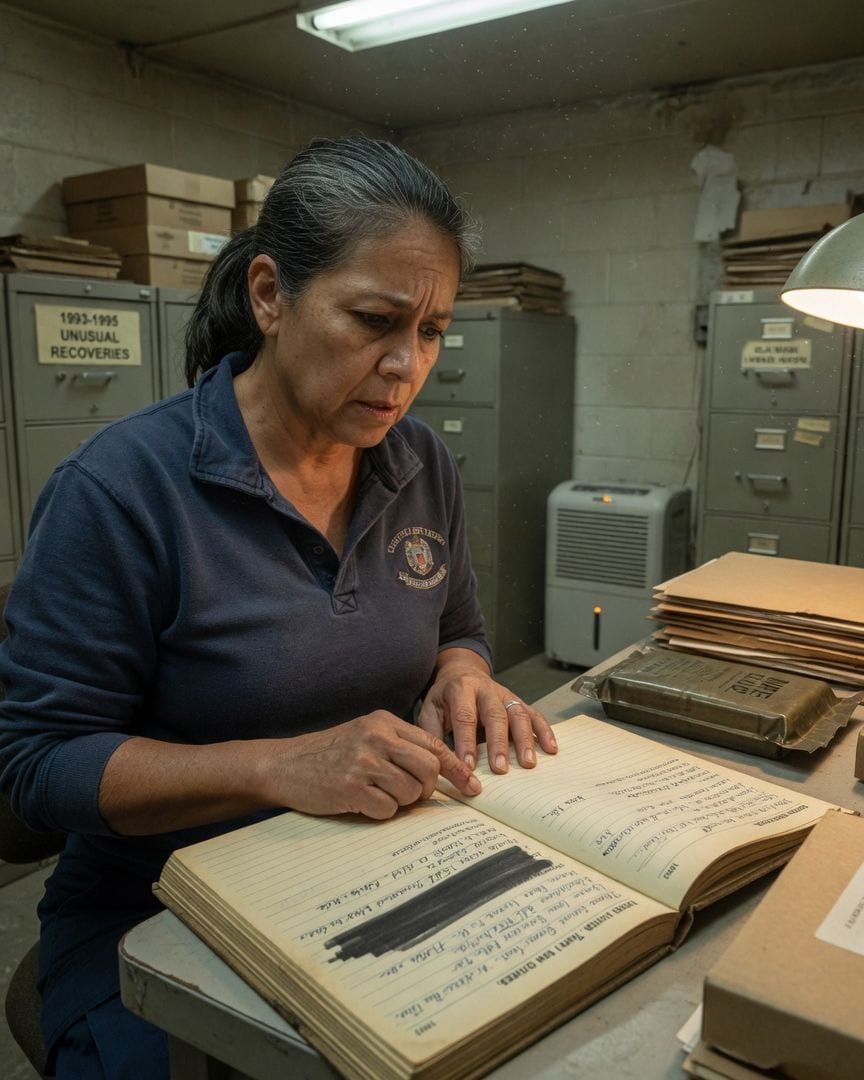
A retired Coast Guard pilot found her lost helicopter’s survival MREs, sealed for decades, stamped ‘EXP 203X.’
Ada Mireles, a retired Coast Guard pilot, faced a chilling discovery in the sterile evidence room. For decades, she had searched for Dune Two, the helicopter that vanished in '93, and now its mangled seat pan had been recovered from the Gulf. Among the debris, a sealed survival kit yielded MREs, their plastic casings cool and slick, but a pre-flight habit revealed an impossible expiration date: 'EXP 203X.' This future date defied all logic, sending her to dusty archives where a duplicate logbook entry for Dune Two recorded a kit issued in 1995, expiring in the 2030s, alongside a cryptic 'Project CHRONOS' note.
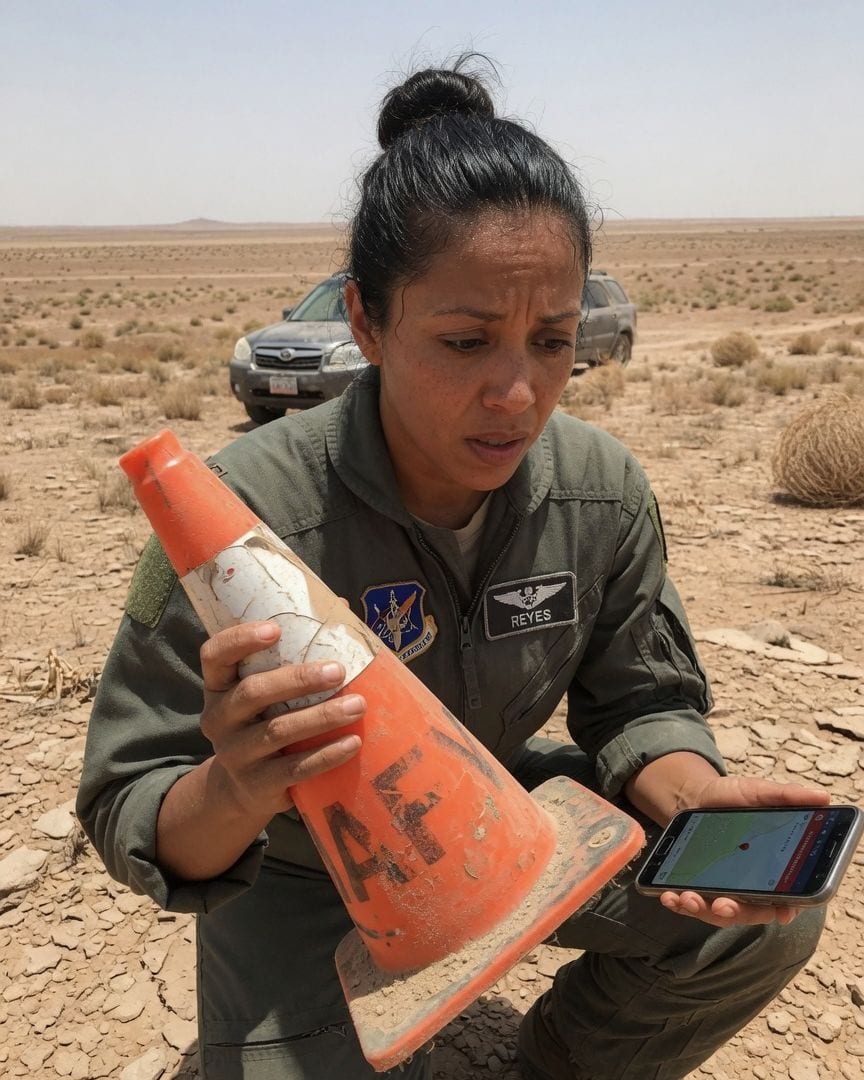
A fighter pilot's emergency landing saved her life, but the airfield was decommissioned in 2005. She found its official marker cone in the empty desert.
Captain Elena Reyes faced a dire situation: low on fuel and a storm blocking her home field, leaving one desperate divert option. A calm voice guided her to Outpost 73, and she landed her F-16 with immense relief, grateful for the lit runway and the man waving wands. However, her relief shattered when her home tower reported Outpost 73 had been decommissioned in 2005, its coordinates now just empty scrub. Faced with a career-ending inquiry, Reyes insisted on what she saw, driving to the desolate coordinates where a half-buried airfield marker cone proved her impossible landing was real. How could a ghost airfield leave physical proof?
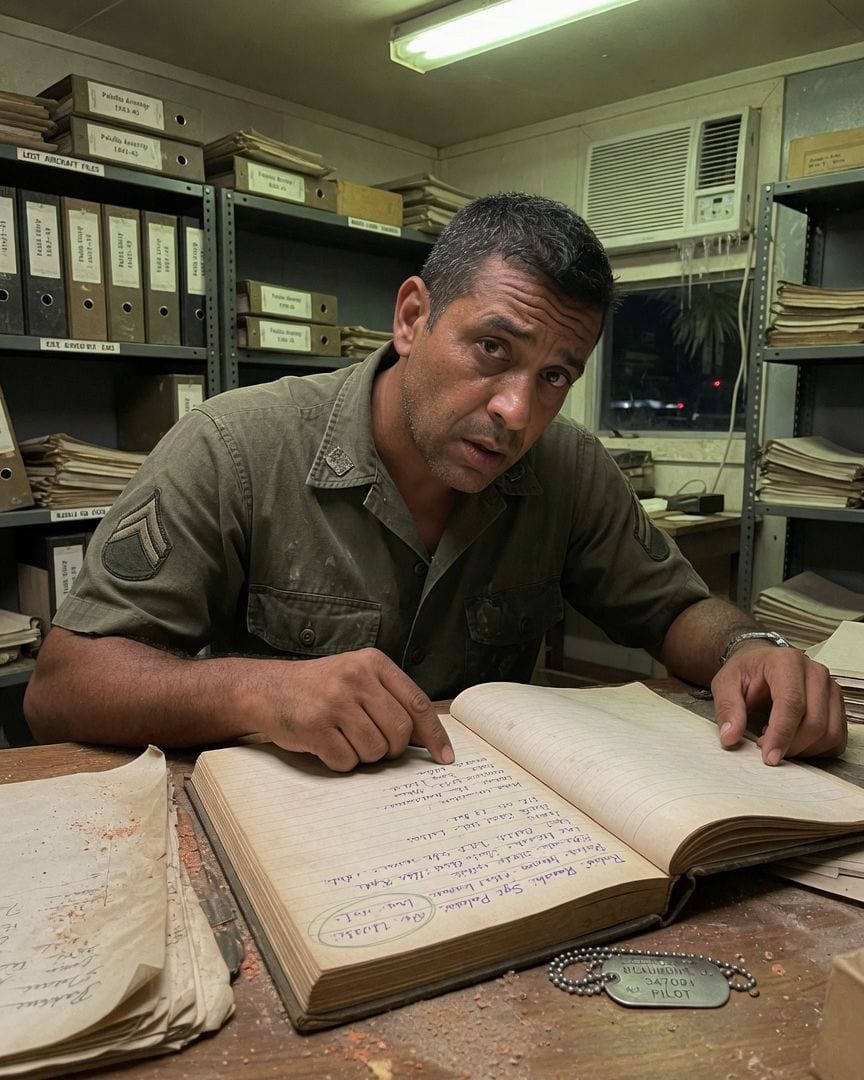
A sergeant's last watch on a forgotten outpost: His own name appeared on an 80-year-old crash manifest.
Sergeant Leon Pulaski spent his last night at the remote Peleliu Atoll Airstrip, its final closure imminent, listening to the rhythmic sigh of the Pacific. Just after 0330, a garbled distress call pierced the silence, requesting the field for a plane with a tail number, 'Ghost Two-Niner-Niner,' retired since World War II. Though Pulaski, disciplined and rational, logged the impossible call as a phantom, the crash crew later found a fresh gouge in the coral and a shard of cockpit glass, still warm, where no wreck existed. His quiet unease only deepened when he discovered a dog tag belonging to a pilot declared lost eighty years prior. But the true chill landed when he found his own name on that same eighty-year-old crash manifest.
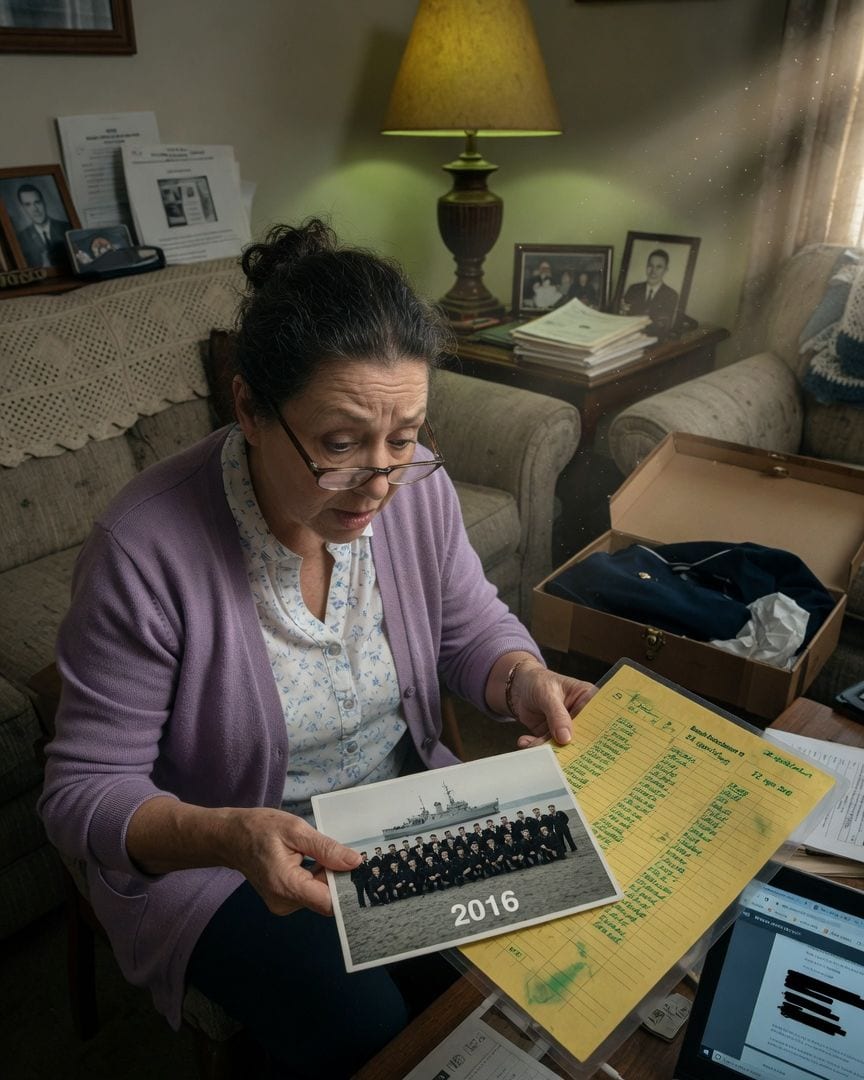
Marisol Frayne unlatched her husband's old footlocker. A photo inside showed his ship, pristine in 2016, three years after the Navy declared it lost.
Marisol Frayne, 62, finally unlatched her husband’s old footlocker in 2024, eleven years after the Navy declared his ship, the Kaskillan, lost at sea. Dust motes danced in the afternoon light as she lifted the lid, releasing the scent of old canvas and cedar. Inside, beneath his perfectly folded dress blues, she found a photograph of David and his crew standing before a pristine Kaskillan. Her breath caught: the photo was dated 2016, three years after the official reports claimed the ship vanished with all hands. Marisol's methodical search then revealed official logs showing a K-class vessel designation active in 2016, leaving a chilling void where her husband's fate should have been.
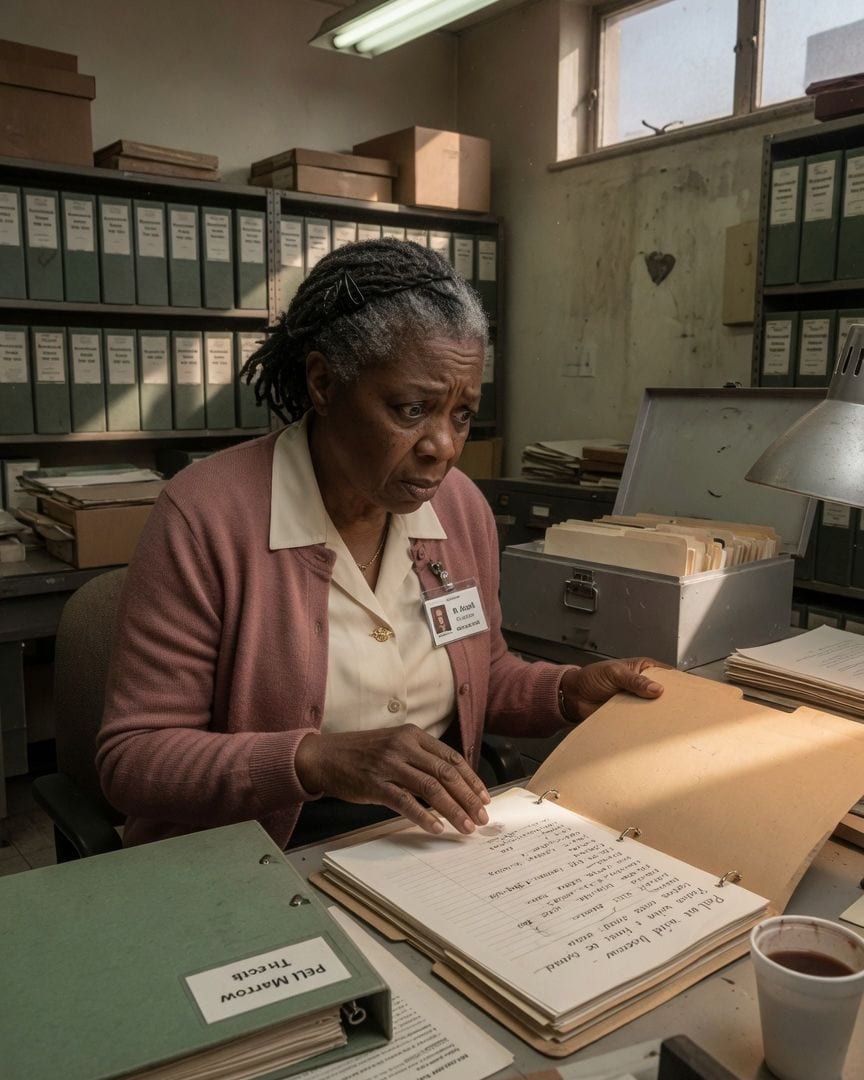
A records clerk's archive file for a Cold War reconnaissance plane lost in 1968 showed it flew yesterday to her own building.
Marguerite Ansell, a records clerk nearing her final week before retirement, meticulously audited Cold War-era files. In the cool, dusty archive, she pulled a file for an oiler declared missing in 1951. Inside, she found a fueling schedule with entries stretching into the present, the last dated just eleven days ago. Then, a second lost ship revealed a similar impossible log, and a cold certainty began to bloom in her chest. Deep in the shadows, Marguerite found an unmarked steel box containing a file for a reconnaissance plane lost in 1968. Its flight log showed a final flight yesterday, to the precise coordinates of her own archive building.