Fort Vashon's lone guard heard precise knocks on her window, then felt them from *inside* the locked shack.
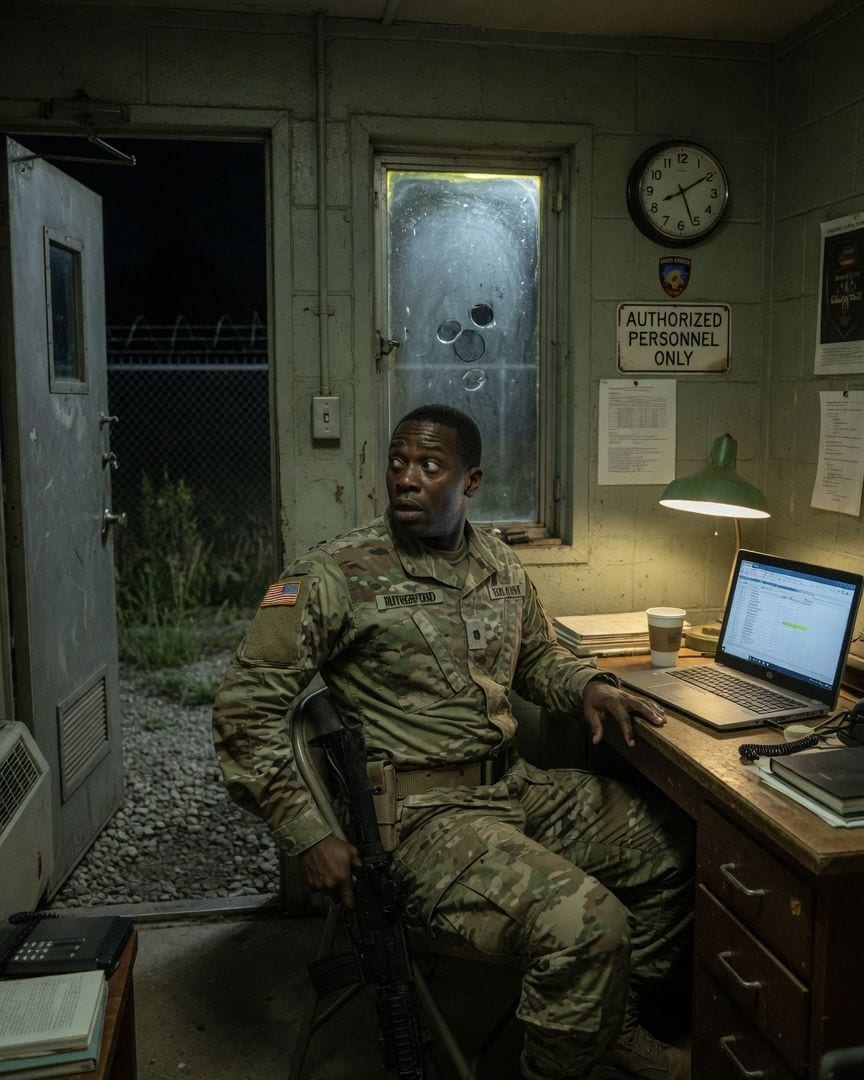
Specialist Ndiaye Pulled the Fort Vashon Back Gate Alone That Night.
The wind, raw and insistent, whipped off the coastal bluff, rattling the single window of the guard shack at Fort Vashon's back gate. Inside, Specialist Renee Ndiaye shivered, pulling her collar tighter.
It was a lonely post, especially now, with the flu outbreak leaving her on solo shifts. The clock on the wall crept past midnight, each minute stretching.
Then it came. A precise, deliberate rap on the glass of her window, from the cleared side of the perimeter wire. Ndiaye’s head snapped up.
She scanned the empty gravel apron, the floodlights illuminating nothing but sparse weeds and the chain-link fence. The motion lights snapped on, casting harsh shadows, then clicked off, plunging the area back into the dimmer glow of the perimeter lamps.
Nothing moved.
A minute later, it happened again. Three sharp knocks, just as distinct, just as close. This time, Ndiaye didn't bother to check the perimeter first. Her breath hitched.
She forced herself not to turn her head, her gaze fixed straight ahead, hands tightening on her rifle. The third knock came anyway, a sound she felt in her teeth, from the glass six inches behind her, inside the shack.
She spun, weapon raised, covering the small, cramped interior. The stale air hung heavy, disturbed only by her ragged breathing. Nothing. Only the rhythmic creak of the door in the wind.
Her report of 'unexplained noise' the next morning was met with a dismissive nod from Captain Vance, who chalked it up to fatigue and the isolation.
Staff Sergeant Julian Rutherford took over the next shift change. He listened to Ndiaye’s account, a flicker of something unreadable in his eyes, but he only nodded, offering a perfunctory 'get some rest, Specialist.'
As he checked in at the main gate, pulling up the electronic duty roster for the back gate, he saw it: an extra, unassigned entry for his shift.
A blank space where a name should have been, but its very presence shifted the numbers out of sync. He frowned, his finger hovering over the delete button. A system error, probably.
He pressed it, watched the line vanish, only for it to immediately reappear, a cold, digital ghost on the screen, stubborn and persistent.
On his own shift, the back gate post felt heavier than usual. An unsettling quiet pressed in from all sides, deeper than the usual isolation. Julian paced the small shack, then stepped outside, his rifle held loosely.
The wind had died down, replaced by a strange, almost absolute stillness. He heard it then, a faint, rhythmic scratching, like something heavy dragging, from beyond the perimeter wire.
He pulled his flashlight from his belt, shining it towards the sound. The beam cut through the dark, illuminating the cleared zone, the gravel apron, and the fence. Nothing moved.
He walked slowly, weapon ready, towards the source of the noise. The scratching had stopped. When he reached the perimeter, he lowered his light to the damp earth near the fence line.
There, etched in the mud, were heavy boot prints. They led out of the cleared zone, crossing the wire at a point where the fence was slightly bent, almost as if someone had just pushed through.
Julian tracked them for a few yards, then paused. The prints circled back, inexplicably, crossing the wire again, then ended abruptly near the base of the guard shack. No sign of anyone. No other prints. The ground beyond was undisturbed.
Returning inside, a knot tightening in his stomach, Julian reviewed Ndiaye’s log entry from the night before. 'Unexplained noise.' The words now carried a new weight, stripping away the dismissal.
He logged into the base’s archaic server, accessing archived duty rosters for the back gate, scrolling through decades of records. His fingers worked the mouse, driven by a growing unease.
He discovered a recurring anomaly: an extra, unassigned name consistently appearing on shifts, particularly when the post was short-staffed or assigned to a single guard.
The specific names changed over the years – 'Unknown,' 'Placeholder,' or sometimes just a blank line that refused to be erased – but the 'extra slot' remained a persistent, unaddressed error. It was always there, an invisible occupant.
He also found a faded record from nearly forty years ago. A 'transfer' from Fort Vashon for a Private David Ford. The unit attached to Ford’s name, however, was unfamiliar, not one that had ever served at this fort.
It was a detail that snagged in Julian’s mind, out of place, like everything else he was finding.
Julian, attempting to reconcile Ford’s record with the current roster, felt a cold tendril of dread begin to uncoil in his gut. He knew where to look next.
He headed to an old, disused supply shed on the far side of the base, a forgotten building known for housing decades of forgotten paperwork and dusty equipment. The air inside was thick and cold.
Dust motes danced like tiny galaxies in the single beam of his flashlight as he pushed aside leaning stacks of boxes.
Tucked away in a corner, beneath a pile of moldering requisitions, he found a cardboard box labeled 'Gate Logs - Obsolete.' Inside, he unearthed a worn, leather-bound journal.
Its pages were filled with cramped, fading handwritten entries for the back gate, a succession of names and dates. He began to read, his light fixed on the scrawled script.
Entry after entry detailed 'knocks,' 'shadows,' and 'extra presences' mirroring Ndiaye’s experience. He saw entries often followed by a terse note about a guard’s 'transfer' or unexplained absence, sometimes just a blank space where a follow-up should have been.
One particular entry, dated 30 years ago, made the hair on his arms stand on end. The writer described a night of profound, unnerving quiet, followed by hearing 'my own name called from the dark.'
Beneath it, scrawled with crude, unsettling precision, was a drawing: a tall, gaunt figure standing just outside the guard shack, its face obscured, a void, but its outline eerily precise against the implied darkness.
The journal abruptly cut off mid-sentence, the pen stroke trailing into nothing. Julian felt a profound chill, a cold weight of dread that was far older than he was, pressing down on him.
Julian spent his off-duty hours meticulously cross-referencing the unofficial journal entries with official Fort Vashon records. The mess of names, dates, and incidents began to coalesce into a chilling pattern.
He found several instances where guards mentioned in the journal, reporting 'extra' presences or strange incidents, later appeared in official logs as 'transferred' or 'discharged for mental instability' with unusual haste. The timing was too precise to be coincidence.
A guard writes about three knocks, then a month later, they are gone. A cold line on a manifest.
The 'extra' entry on the official roster often appeared after one of these unexplained incidents, sometimes within days, sometimes replacing the vanished guard’s own name.
He knew he needed to talk to someone. He sought out Sergeant Preston Ashford, a grizzled supply NCO known for his encyclopedic memory of the fort’s history.
Julian approached him under the pretense of 'historical research' for a unit project, hoping to pick his brain without raising alarms. Ashford, hunched over a pile of forms in the dusty supply room, was cagey.
His eyes, sharp and knowing, darted to the back gate on a map tacked to the wall, then back to Julian. He hinted at 'things that stick' to the fort, particularly around that isolated post, but refused to be explicit.
He offered a cryptic warning, his voice low, almost a whisper: 'Some things, Staff Sergeant, you don’t count with a manifest. And you sure as hell don’t try to count what isn’t real.'
A cold draft seemed to pass through the room.
Julian also reviewed security camera footage from the back gate for recent shifts. He fast-forwarded through hours of static views, but the 'extra' presence never showed up clearly.
Only strange glitches, brief moments where motion sensors triggered but nothing was visible, or shadows that appeared, then vanished, just beyond the perimeter line, too fast for the eye, too slow for the camera to dismiss as simply wind-blown debris.
The camera’s digital timestamp seemed to stutter, almost imperceptibly, each time the motion lights snapped on over an empty space.
Julian’s persistent inquiries about old records and the back gate did not go unnoticed. A week later, Captain Vance called him into his office, his face tight with annoyance. The air in the room felt thin, charged with unspoken frustration.
Vance leaned back in his chair, his eyes fixed on Julian. "Rutherford, your transfer papers are almost finalized. Your wife, Vivian, is already making arrangements. Why are you suddenly obsessed with superstitious nonsense and forty-year-old records?"
He tapped a file on his desk, not looking at it. "This unofficial 'investigation' of yours. It’s unprofessional. I’m chalking it up to pre-transfer stress, but consider this a stern warning. You have a clean record.
Don’t jeopardize it now, not when your family is waiting for you to finish your service honorably." His words were calm, but the menace was clear. "Drop it."
Later that night, back at the back gate for another solo shift, the isolation felt different, heavier. Julian sat in the shack, the unofficial journal open on the console, its crude drawing of the gaunt figure staring up at him.
The silence outside felt less like absence and more like a held breath. He heard it then, distinct, almost breathy, a whisper from just outside the shack, calling his name: 'Rutherford.'
He froze, every muscle locking. His heart hammered against his ribs, a frantic bird trapped in a cage. Slowly, agonizingly slowly, he turned his head towards the window. The motion lights flickered on, then off, over an empty apron. Nothing.
He grabbed his rifle, checked his perimeter, weapon ready, finding nothing but the wind now rustling through the dead leaves. The feeling of being watched, however, was palpable, a cold weight on his shoulders that made his skin crawl.
As he walked back to the shack, his flashlight beam swept the ground. Near the door, where the earth was damp from a recent drizzle, he saw it: a single, fresh boot print. Perfectly matching his own boot.
It hadn't been there minutes ago.
Shaken by the whisper and the impossible boot print, Julian knew he couldn’t dismiss it anymore. He couldn't go to Captain Vance; Vance would only issue another warning. He had to go back to Ashford.
The next morning, Julian found the grizzled supply sergeant organizing boxes in a dim storage area, muttering to himself.
Julian laid out the unofficial journal, open to the page with the crude drawing, and detailed the recurring 'extra' entries on the electronic rosters, the strange boot print, and the whisper.
He spoke quickly, words tumbling out, conveying the genuine fear that had begun to hollow him out.
Ashford, seeing the cold, unshakeable certainty in Julian’s eyes, finally broke his decades-long silence. He led Julian to a back corner, away from any ears, and spoke in a low, gravelly voice. "It’s known, Staff Sergeant. Among the old timers.
'The Sentinel.' That’s what they called it." He took a slow breath, his gaze distant. "It’s not just a ghost. Not a statistical error. It’s a placeholder.
An echo of those who went missing from that back gate over the decades."
Ashford recounted the chilling story of Private David Ford, his voice dropping to a near whisper. "Young kid. Barely twenty. Vanished from the back gate during a severe blizzard, almost forty years ago now. His post was found empty.
Rifle propped against the shack wall, just like he’d left it. But no footprints led away into the snow. Not a single one. Like he just… dissolved." Ashford closed his eyes for a moment.
"Ford’s name, or just an unassigned 'extra' entry, was the first to consistently appear on the roster for the back gate after that. Like it was holding his place. Or… replacing him."
The sergeant’s eyes opened, fixing on Julian. "The knocks, Rutherford. The knocks are The Sentinel’s way. Its ritual. It’s marking the next one. The replacement."
The dread solidified in Julian’s gut, a heavy, cold mass. The Sentinel wasn’t just a presence; it was a terrifying, self-perpetuating process. It was collecting. It was replacing.
And it had been doing it for generations, weaving new names into its fabric, leaving a digital ghost in their stead.
Julian, reeling from Ashford’s confession, felt a frantic urgency take hold. He rushed back to his barracks room, the cold dread turning his blood to ice.
He pulled out the faded personnel file he had found earlier, the one for Private David Ford, the first 'extra' entry, the one whose name now echoed with a terrible significance.
He understood why the name had felt so familiar, so unsettling, during his earlier research. It wasn't just the fact of a missing person; it was the way it connected.
He looked closer at the file, at a small, smudged detail in Ford’s transfer papers – the official record of his last known status, the last bureaucratic trace of a man who had simply ceased to be.
There, in faded ink, a witness signature for Ford's final check-out: 'P. Rutherford.'
Not Julian. But his father. Patrick Rutherford.
His father, who had served briefly at Fort Vashon before Julian was born. The realization hit him with an icy force, a physical blow. His family was always named in it.
His father was here, at this fort, at this gate, during Ford’s disappearance. And somehow, his father was directly involved in the last official acknowledgement of the first 'extra,' the first blank space The Sentinel had created.
The Sentinel wasn’t just a recurring anomaly; it was something that specifically targeted those connected to its past, a generational curse, an inheritance of shadow.
Julian looked at his own name, 'J. Rutherford,' typed neatly on his impending transfer papers, his heart a cold, dead weight in his chest.
The dread extended beyond his own life, reaching back into his lineage, a pre-ordained mark that had been waiting for him, all along.
Julian, desperate for answers, knew he had to talk to his father. He called Patrick Rutherford under the guise of discussing 'military history' for his impending transfer, his voice tight with an urgency he struggled to conceal.
His father, initially evasive and uncomfortable, his tone guarded, eventually cracked under Julian’s quiet, persistent questioning.
"Ford? David Ford?" his father’s voice came over the line, strained. "God, I haven’t thought about that in decades." He confessed a dark, long-buried secret.
He confirmed his presence at Fort Vashon during Private Ford’s disappearance, admitting he was one of the guards who found the empty post. "It was just… empty," Patrick whispered, the memory still raw. "His rifle, leaning against the wall.
No tracks in the snow. Just… gone."
He described a brief, almost imperceptible feeling of 'something else' being present, a chilling emptiness that settled over the back gate that night, but he had dismissed it as the shock of the event, the aftermath of the blizzard.
He also revealed that for weeks after Ford vanished, he felt a persistent sense of being watched, especially when alone, and heard faint whispers of his own name when no one was around.
"I just thought I was stressed, son," Patrick confessed, his voice thick with old fear. "I put in for a transfer immediately, wanting to get away from the 'bad luck' of the place. I just wanted out."
He confirmed the signature on Ford’s transfer papers was indeed his, a detail he had tried to erase from his memory for almost forty years. He warned Julian, his voice strained, "Get out now, son, don’t look back.
That place… it takes things."
Julian connected the final dots, the pieces clicking into place with horrifying precision. The Sentinel wasn’t merely a placeholder. It was a predatory entity that consumed isolated guards, weaving them into its fabric, an invisible addition to its ranks.
And then, it marked their bloodline, ensuring a continuous cycle of 'replacements' for the empty posts it created. The knocks, the extra name on the roster, the whispers – they were all preparations, a claiming, a generational trap.
He was next.
Julian knew he was next. Despite his frantic attempts, Captain Vance dismissed his 'superstitious' claims as nonsense, his face hardening into a mask of stone.
He flatly denied Julian's request to change his next solo back gate shift, threatening disciplinary action so close to his transfer. "You’ll report for duty, Rutherford, or I’ll ensure that transfer never goes through."
Desperate, Julian prepared for the inevitable. He cleaned and loaded his weapon, but he also took the unofficial journal and a small voice recorder, determined to leave proof if he couldn’t escape.
He arrived at the back gate. The night was eerily quiet, the air heavy with an unspoken presence. The moon, a thin sliver, offered little light.
Julian sat in the shack, the journal clutched in his left hand, the voice recorder in his right, thumb hovering over the 'record' button. At precisely the time Ndiaye had described, three deliberate knocks rapped on the guard shack window.
Julian didn’t turn, his breath held tight in his chest. A second later, the knock came from behind him, on the glass six inches from his ear, on the inside.
He spun, firing his weapon into the empty space where the sound originated, the shot echoing hollowly across the desolate landscape, swallowed by the vast, silent night. The sound was swallowed, like a rock dropping into deep water.
He kept the recorder running, its small red light blinking steadily. He saw a fleeting shadow, impossibly tall and gaunt, just beyond the perimeter wire, an outline against the dark, then it was gone.
He spent the rest of the night on edge, every one of his senses screaming, constantly checking the perimeter, his rifle never leaving his grasp.
As dawn began to break, painting the sky in pale grays, he heard it again, a whisper: 'Rutherford.' But this time, it sounded like his own voice, distorted, echoing back from the dark, from just outside the shack.
He barely made it to the end of his shift, leaving the back gate post feeling hollowed out, but with the journal and the recording as tangible, undeniable proof.
He knew he had to escape, but the cost, he realized, was already paid.
Julian filed his transfer papers early the next morning, citing an 'urgent personal emergency,' overriding Vance’s objections. He left Fort Vashon within hours, never looking back.
Captain Vance, frustrated by the sudden, irregular departure and Julian’s 'unsubstantiated claims' – which Julian had attempted to report, only to be met with skepticism and dismissal – logged it as an early, if unusual, transfer.
Specialist Ndiaye, still at Fort Vashon, remained assigned to the back gate, often alone due to the lingering flu.
The official electronic roster for the back gate duty still showed that persistent, unassigned entry, an extra name that no one could place, cycling through the digital columns.
Julian was home with Vivian, trying to rebuild his life in a new city, far from the coastal fort, but the dread clung to him like a shroud.
He had the journal and the recording, locked away in a safe, knowing no one in his new life would ever believe him.
He tried to forget Fort Vashon, to silence the echoes, but sometimes, in the quiet of his new home, he could still hear the whisper, his own voice, distorted, calling his name.
One evening, as he sat watching television, his wife, Vivian, asked him about a strange noise she heard from the garage, a faint, rhythmic tapping. Julian froze, listening intently. It was three distinct knocks, deliberate and unmistakable.
He counted them, each one a hammer blow to his chest. Vivian looked at him, concern etched on her face. "What was that?" she asked.
Julian just stared at the closed garage door, his blood running cold, the whisper now clear in his mind: 'Rutherford.' His name.
The next morning, Julian's truck was found parked neatly in the driveway, its keys on the seat. The garage door stood open, and the house was empty. On the passenger seat, a small voice recorder was found, blinking red.
Its last recording contained only the sound of three deliberate knocks, followed by a faint, distorted whisper repeating a single name: 'Rutherford.' The garage door stood open, and the house was empty.
If this one got to you
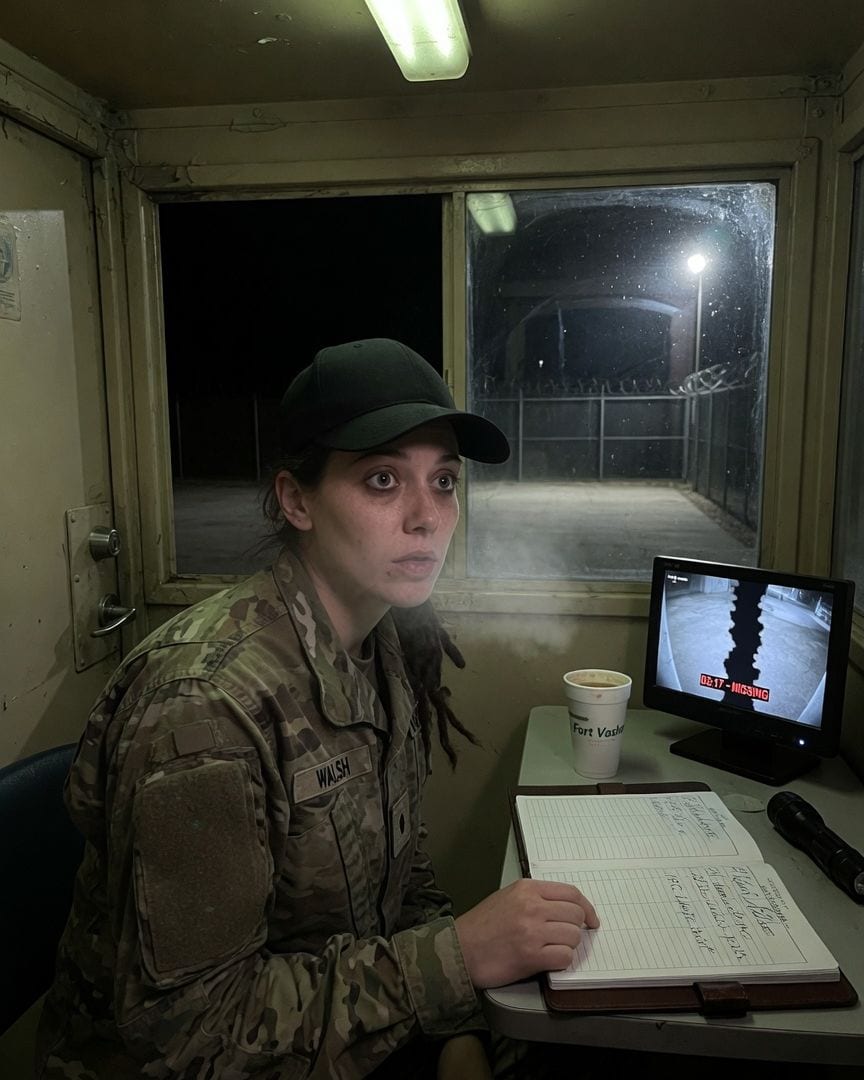
Alone on guard duty, Specialist Rose Walsh heard three knocks. The third came from six inches behind her ear, *inside* her locked shack.
Specialist Rose Walsh endured a lonely overnight shift at Fort Vashon's desolate back gate, the only guard on duty after a severe flu outbreak decimated the roster. The bitter wind howled, but it couldn't explain the sharp, deliberate knuckle raps on her guard shack window. The third knock came from just inches behind her ear, *inside* the locked shack, and its security footage simply vanished. Her physical duty log then revealed a fresh signature for 'PFC Lambert, J.' for her solitary post, a name consistently appearing in other remote posts. Who was this phantom guard, and why did their path lead to Rose?
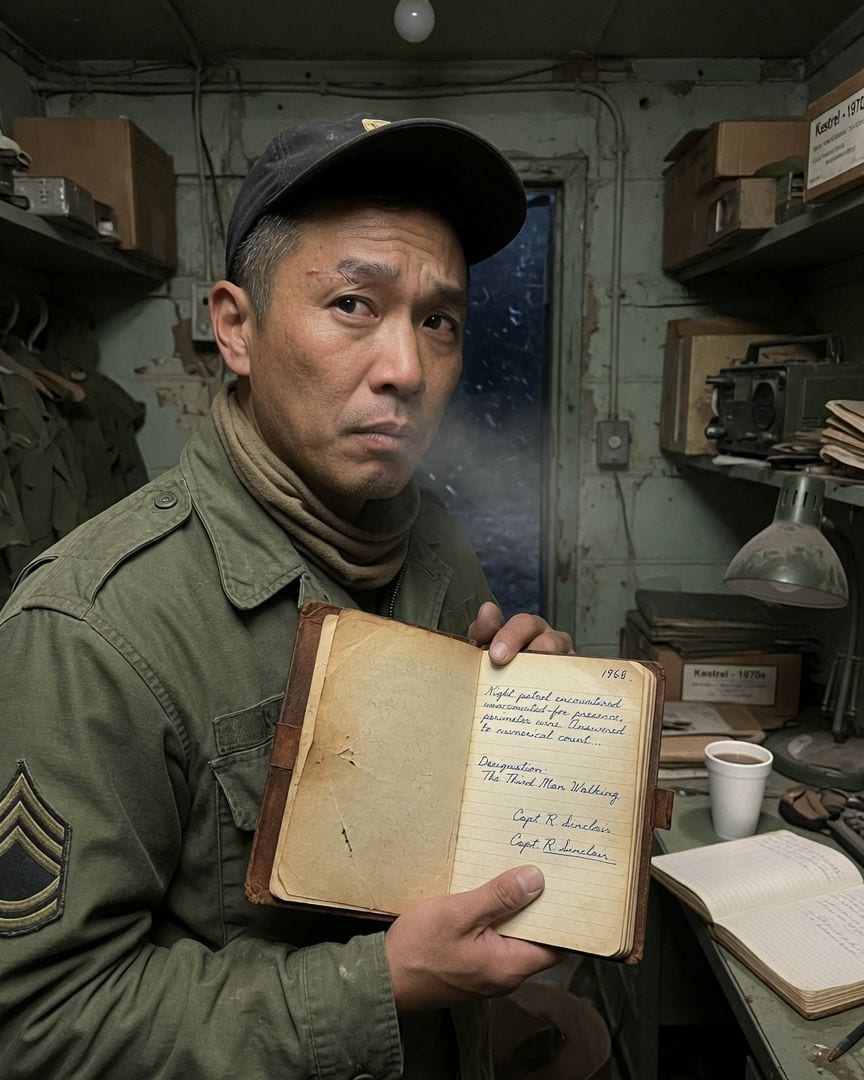
A patrol leader's final count at Cold War Firebase Kestrel found four men. A raspy fifth voice answered, 'Five.'
Sergeant Julian Aoki, a career NCO, prepared for his final perimeter sweep of Firebase Kestrel, a remote outpost days from decommissioning. He aimed to leave the desolate, windswept plateau with a clean manifest before the relief column arrived at dawn. As he called out his four-man patrol’s numbers, a raspy, barely audible fifth voice answered 'Five,' though only four men stood before him. Later, a fifth set of heavy boot prints appeared in the dust, matching his stride back to the wire, a silent, invisible companion. Dismissing it as fatigue, Aoki later found a disused, leather-bound logbook describing identical perimeter encounters, including a 'Third Man Walking' in 1968. Could this unsettling record be more than just old superstition?
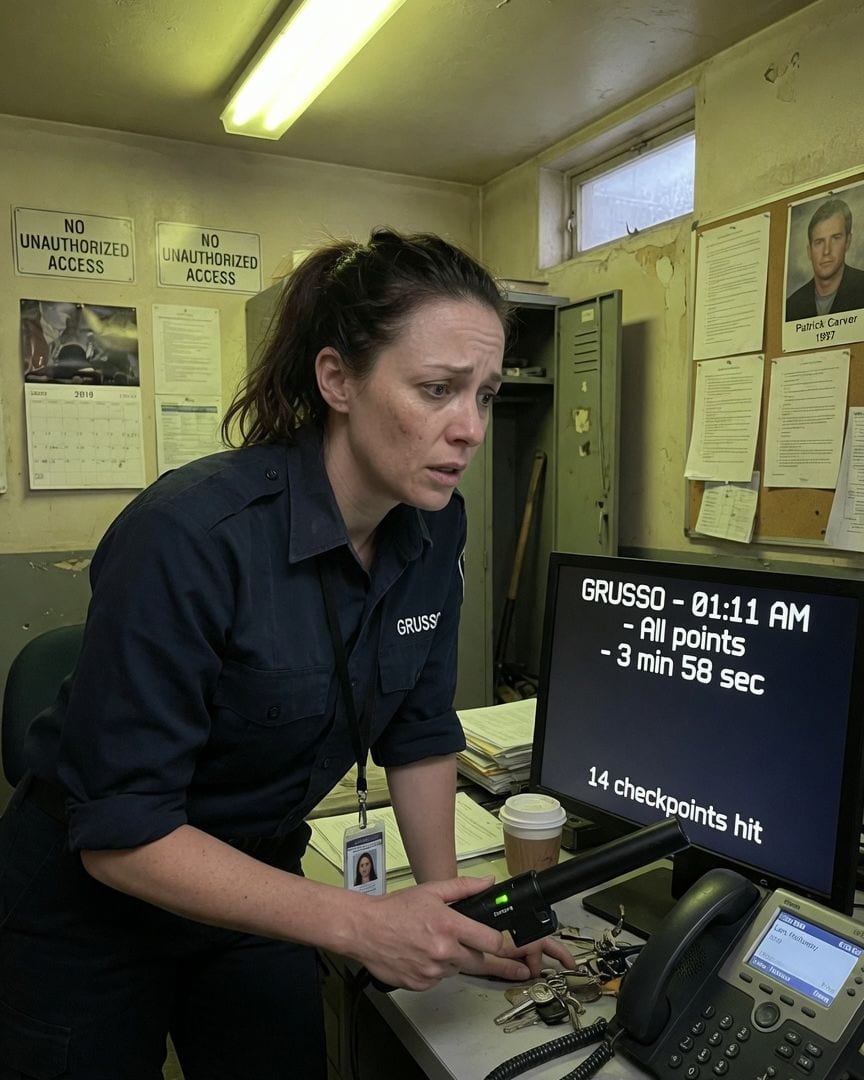
My security wand logged a full round at 1:11 AM in under four minutes. It was in the charger. Every tap is logged as mine.
Finishing my night shift, all I wanted was to get home. But the dock readout screen showed my security wand logged a full patrol at 1:11 AM, completed in just under four minutes. I knew my wand had been charging right beside the monitor the entire time, yet the log, under my ID, confirmed the impossible.
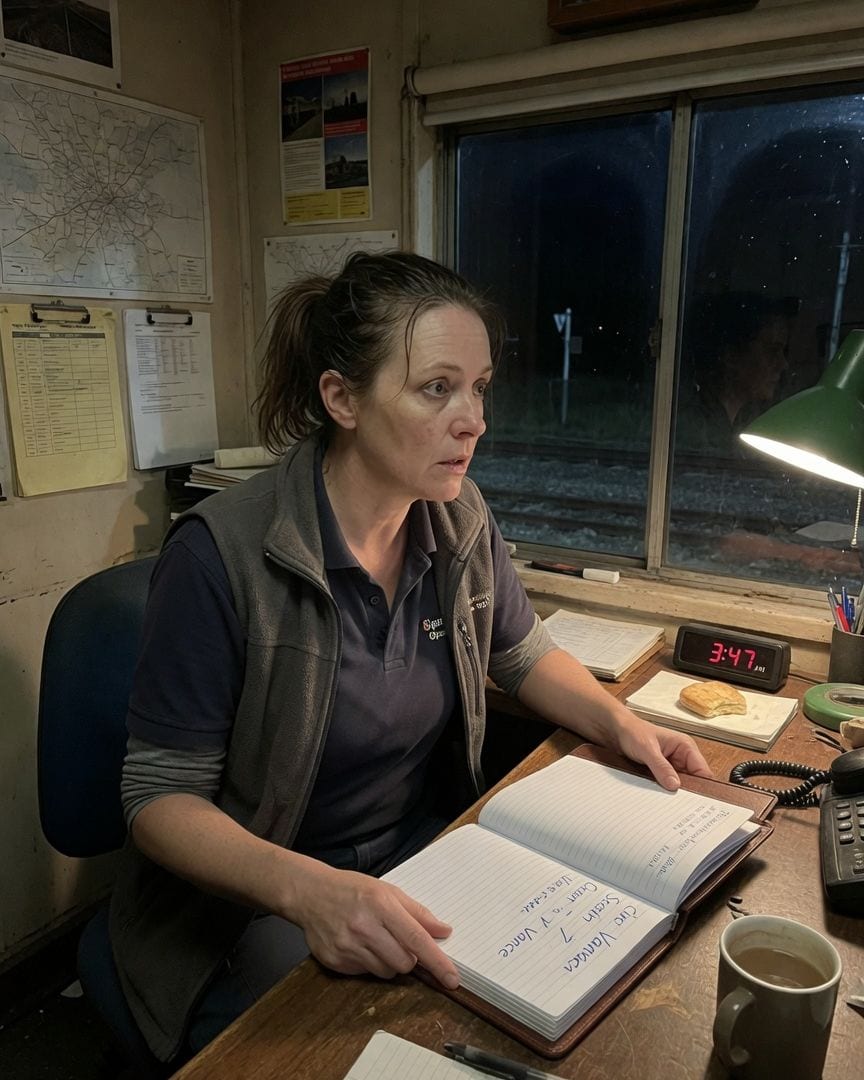
My linesman taps twice on my window at 3 AM. Control says he retired and passed years ago.
My routine at the rural signal cabin was regular: the linesman's double tap on the window at 3 AM. But then my supervisor called, revealing the linesman I knew, Warren Vance, had died five years ago. Now, an impossible entry in my official logbook, with his signature and timestamped from my shift, proves someone else was there.
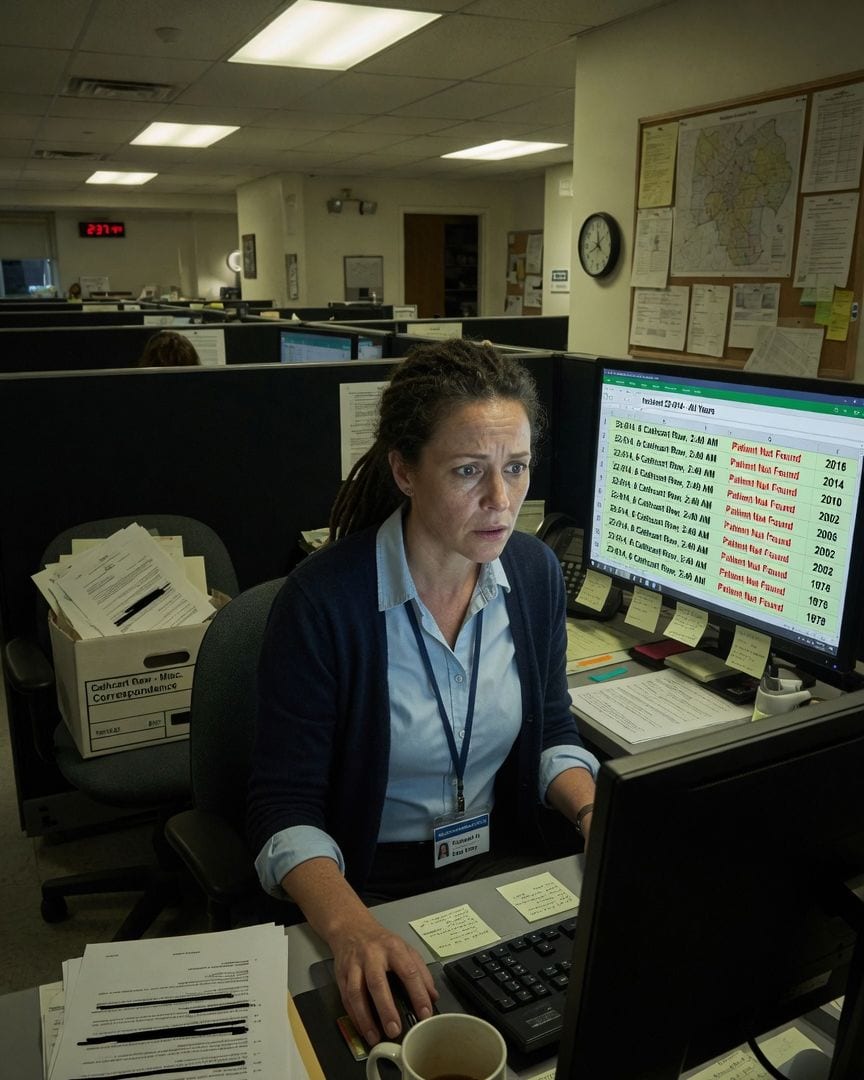
My computer log shows the same 2:40 AM call to Cathcart Row, every four years since 1978, always closed 'patient not found'.
Working data entry for the County Ambulance Trust, I found a routine incident logged as 'Patient Not Found.' But digging deeper, I discovered the exact same phantom call had repeated every four years for over forty years, always at the same address, always at 2:40 AM. Then I found a heavily redacted memo linking it to my own street.
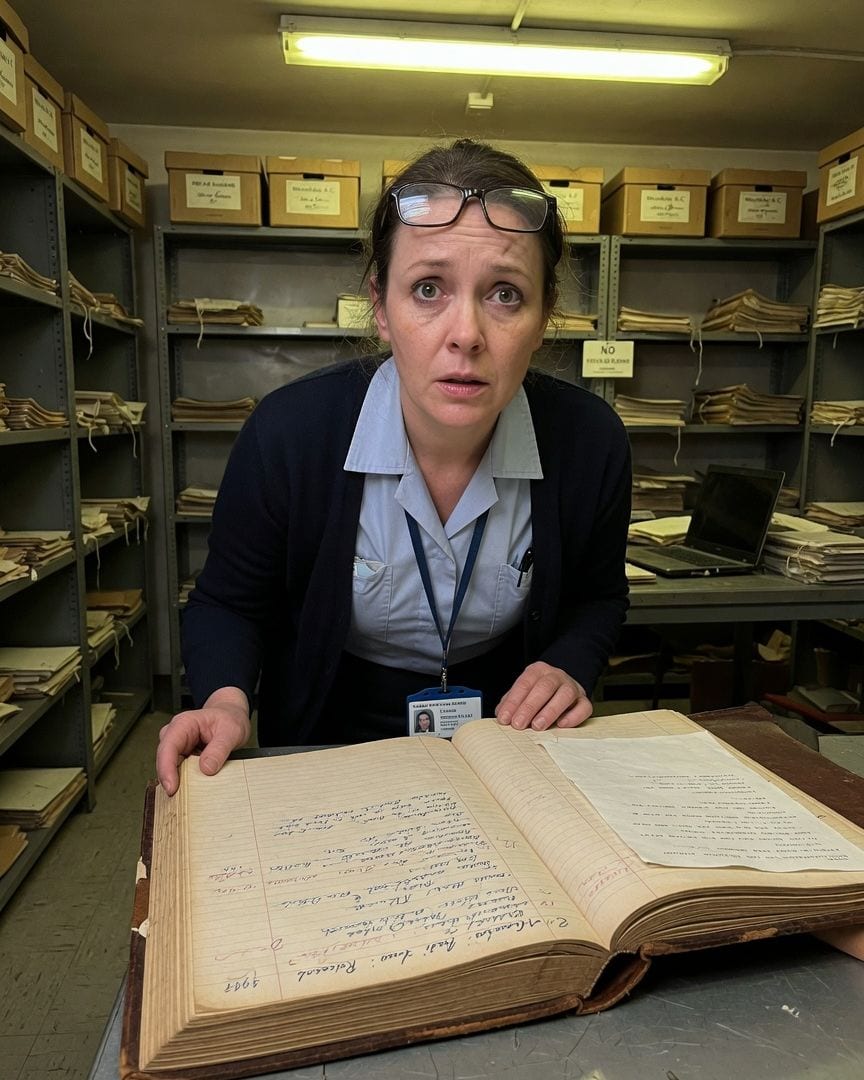
My ambulance trust's incident log shows callout 22-014 to 6 Cathcart Row at 2:40 AM. Every four years, the same call, same address. Always 'patient not found'.
My job involves tedious data entry for ambulance calls, but Incident 22-014 was different. It appeared every four years, always at 2:40 AM, always closed as 'patient not found.' Digging into the dusty physical archives, I found an entry from 1961 for the exact same incident, but its resolution read: 'Subject Secured. Relocated to "Holding".'